Many custom options...


And formats...



Asia in Chinese...
Buy an Asia in Chinese calligraphy wall scroll here!
Personalize your custom “Asia in Chinese” project by clicking the button next to your favorite “Asia in Chinese” title below...
2. Azerbaijan
3. Egypt
4. Israel
5. Bhutan
6. India
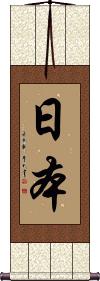
7. Japan
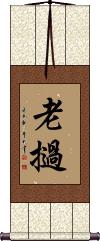
8. Laos
9. Myanmar
10. Oman
11. Thailand
12. Yemen
13. East Timor
14. Lebanon
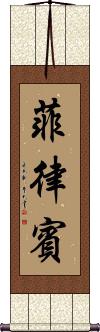
15. Philippines
16. Qatar
17. Syria
18. Turkey
19. Turkmenistan
20. Armenia
21. Cyprus
22. Maldives
23. Sri Lanka
24. Indonesia
25. Kazakhstan
26. Saudi Arabia
27. Taiwan
28. Tajikistan
30. Iran
31. Russia
32. Iraq
33. Bangladesh
34. Palestine
35. Bahrain
36. Mongolia
37. South Korea
38. Tibet
39. Cambodia
40. North Korea
41. Malaysia
42. Pakistan
43. Pitcairn Island
45. Vietnam
46. Afghanistan
47. Kuwait
48. Nepal
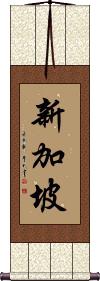
49. Singapore
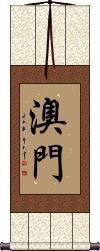
50. MacAo / MacAu
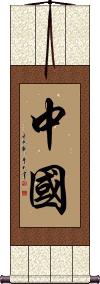
51. China
52. Hong Kong
53. Accountant / CPA
54. Thao
55. Meiya
56. Aysia
57. Mercury
58. Husband and Wife
59. Hard Work
60. Aryan
62. Idea / Concept
63. Wine
64. Ritsu
65. Archer
66. Siew
68. Woo
70. Acupuncture
72. Tung
73. East
74. Hoang
75. Huynh
76. Peace / Harmony
77. Leopard / Panther / Jaguar
79. Emperor
80. Cherry Blossom
81. Le
83. Diamond
84. Morality of Mind
85. Chess
89. Dynasty
90. Zeng
91. Bushido / The Way of the Samurai
92. Archer
93. Shaolin
94. Mind Body Spirit
95. Empress
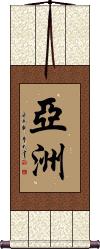
Asia / Asian Continent
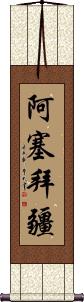
Azerbaijan
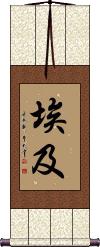
Egypt
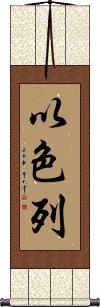
Israel
Bhutan
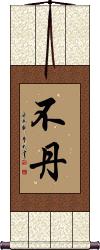
India
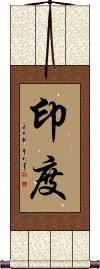
This is the Chinese and Japanese Kanji name for the country of India, occasionally referred to as Hindustan.
See Also: Asia
Japan
Laos
Myanmar
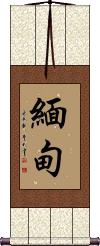
This is the Chinese name for the country of Myanmar (formerly known as Burma).
This is occasionally used in Japanese (especially in historic documents) with the same meaning (though they also have a Katakana name for Myanmar/Burma).
See Also: Asia
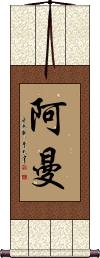
Oman
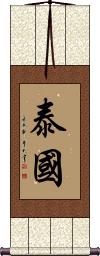
Thailand
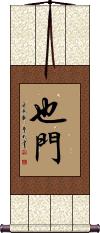
Yemen
East Timor
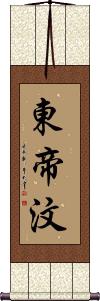
This is the Chinese name for the country of East Timor (the common name for Timor-Leste).
See Also: Asia
Lebanon
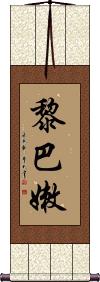
Philippines
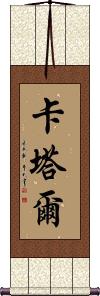
Qatar
Syria
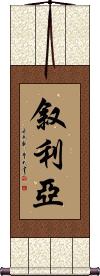
Turkey
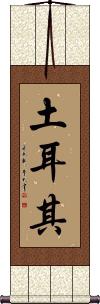
Turkmenistan
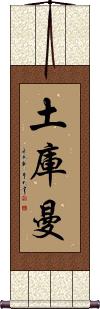
Armenia
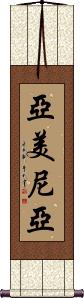
Cyprus
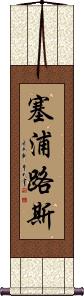
Maldives
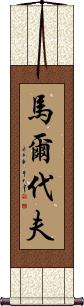
Sri Lanka
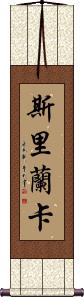
Indonesia
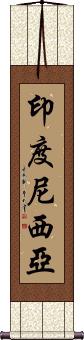
Kazakhstan
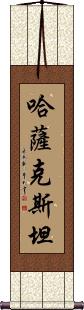
Saudi Arabia
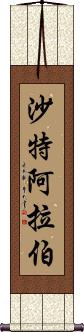
Taiwan
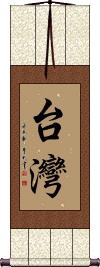
台灣 is the Chinese name for the Republic of China which is more commonly known as Taiwan.
The island of Taiwan is actually considered a renegade province of mainland China. It became the last holdout of the former government of China after Chairman Mao took power during the revolution that followed WWII.
Note: There are a few ways to write Taiwan: 台湾 / 薹灣 / 台灣.
If you need a certain version, just let me know in the "Special Instructions" tab when you order.
See Also: Asia
Tajikistan
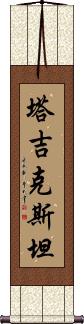
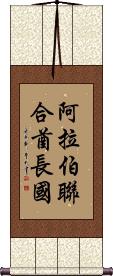
United Arab Emirates
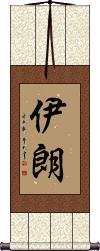
Iran
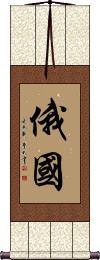
Russia
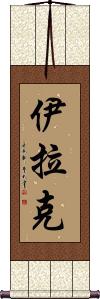
Iraq
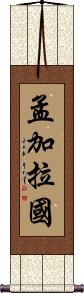
Bangladesh
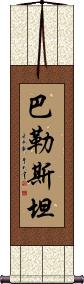
Palestine
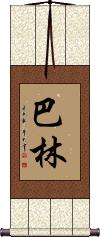
Bahrain
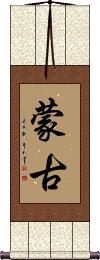
Mongolia
South Korea
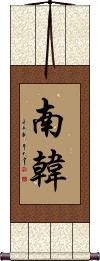
南韓 is the common Chinese name for the country of South Korea.
The official English name being Republic of Korea.
See Also: North Korea | Asia
Tibet
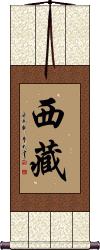
西藏 is the Chinese and Japanese name for Tibet.
It is a vast area in southwest China for which the Chinese government has little control (except in the capital of Llasa). During your travels in Tibet (outside of Llasa) you will find it is rough country full of ruthless bandits and honorable and upright Living Buddhas. There are about 2000 Living Buddhas in Tibet, and at least 10 times more bandits ready to ambush you on the road or trail.
On the eastern frontier of Tibet, you will find the place designated to be Shangri-la. It's a friendly village of Tibetans and is the gateway to greater Tibet.
The full official Chinese name is Tibet Autonomous Region or 西藏自治區|西藏自治区. The name here, 西藏 is quite old - from several dynasties ago.
Cambodia
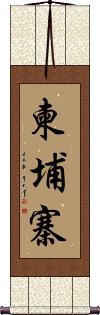
North Korea
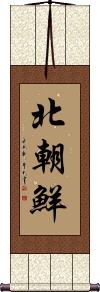
北朝鮮 is the Chinese and Japanese name for the country of North Korea.
The official English name being Democratic People's Republic of Korea.
See Also: South Korea | Asia
Malaysia
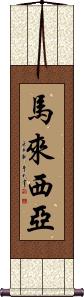
Pakistan
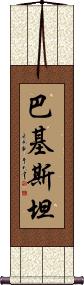
This is the Chinese name for the country of Pakistan.
See Also: India | Afghanistan | Asia
Pitcairn Island
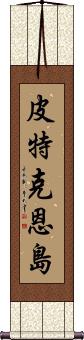
This is the Chinese name for the country of the Pitcairn Island (overseas territory of the United Kingdom).
See Also: Asia | United Kingdom
Turks and Caicos Islands
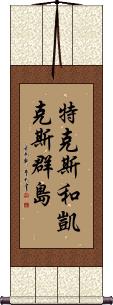
This is the Chinese name for the Turks and Caicos Islands (overseas territory of the United Kingdom).
Note: Sometimes a different fourth character is used.
See Also: Asia | United Kingdom
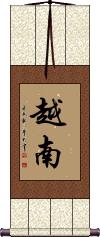
Vietnam
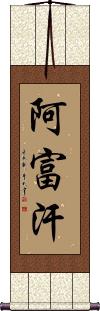
Afghanistan
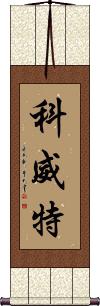
Kuwait
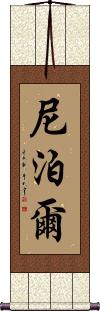
Nepal
Singapore
MacAo / MacAu
China
Hong Kong
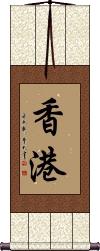
This is the Chinese and Japanese name for the Special Administrative Region (SAR) of The Peoples Republic of China known as Hong Kong (formerly a British administrated territory).
The romanization “Hong Kong” is probably a British approximation of the Cantonese pronunciation for this land.
See Also: Great Britain | China | Macao | Taiwan | Singapore | Japan | Vietnam | Korea | Asia
Accountant / CPA
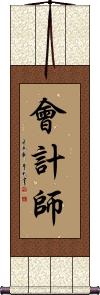
會計師 is the occupational or legal title of an accountant in Chinese and Korean.
In Asia, particular studies and certifications are needed to obtain this title. Therefore, this is the closest match to the English term for Certified Public Accountant. Such a professional might have a sign on his desk or a name badge that has his/her name on it and this title in Chinese characters. It's not too common to see this on a wall scroll in Asia, but you can take such liberties in the west.
Thao
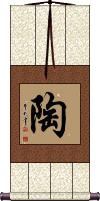
陶 is the Chinese character for the surname Thao.
The surname Thao (or Thao/Thor) is prominent among the Hmong people in Southeast Asia (Laos, Vietnam, China), representing a major clan name, but also appears in Vietnam as a given name (Thảo, meaning "herb" or "respectful") or as a surname with Chinese roots (陶/Tao). It signifies a strong connection to Hmong clan identity and Vietnamese cultural values like filial piety, appearing across Asia and in diaspora communities.
Meiya
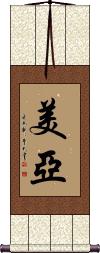
This is a common transliteration to Mandarin Chinese for the name Meiya.
The literal meaning is “Beautiful Asia.”
Aysia
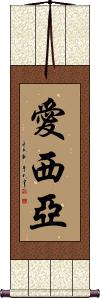
愛西亞 is the transliteration to Mandarin Chinese for the name Aysia.
The meaning is “Love West Asia,” although it will be read as a name, rather than this meaning by most.
Mercury
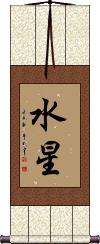
水星 is the title for the planet Mercury in Chinese, Japanese Kanji, and old Korean Hanja.
The literal meaning is “water star.” This title has been used to refer to Mercury in much of Asia for the past 2200 years or longer.
Husband and Wife
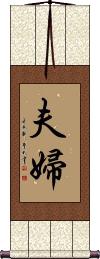
夫婦 are the Chinese characters, old Korean Hanja, and Japanese Kanji for “Husband and Wife.”
This can also be translated as a married couple, spouses, couple, or pair.
This is not a common selection for a calligraphy wall scroll in Asia but if it has a special meaning for you, go for it.
Hard Work
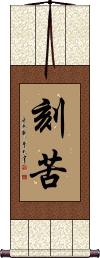
刻苦 is “hard work” in Chinese characters, Japanese Kanji, and old Korean Hanja.
If working hard is important to you, maybe this word will state your belief on your wall (this is not a common title to see on a wall scroll in Asia).
Aryan
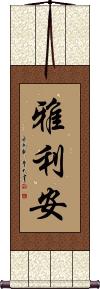
This is a common transliteration to Mandarin Chinese for the name Aryan.
This is also a Chinese loanword derived from the Sanskrit ārya. The term “Aryan” can be better described as “Indo-Iranian” or “Indo-European.” You'll also see this word used when referring to “Indo-Aryan languages” of Southern Asia.
Goddess of Compassion
Long or more formal Japanese version of this title
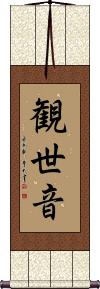
観世音 is the more extended and more formal Japanese version of Bodhisattva of Compassion or Guan Yin.
In Japanese, this is pronounced Kanzeon. The Chinese version is a bit more common in Asia, but in Japanese, they use a slight variation of the first character. Choose this version only if your intended audience is specifically Japanese.
Idea / Concept
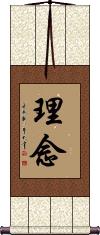
理念/理唸 means idea, notion, concept, principle, theory, philosophy*, or doctrine in Chinese, Japanese Kanji, and old Korean Hanja.
This word is OK for a wall scroll, although it's more commonly used as an oral/informal word in Asia.
* This is not the title for philosophy but rather is about having a certain philosophy or approach to something.
Wine
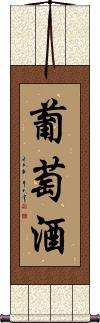
葡萄酒 is the Chinese, Japanese Kanji, and old Korean Hanja for wine.
Very specifically, this is for grape wine (an important distinction in Asia where most wines were rice-based until western influences came into play).
The first word, 葡萄 literally means grape (or grapevine), and 酒 means alcohol (generic term for alcohol, sake, wine, liquor).
Ritsu
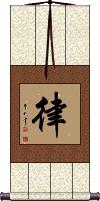
While this character literally means law, regulation or rules, it's also a surname Lü in Chinese and name Ritsu in Japanese.
In more ancient times (and for some people still), this can refer to East Asian criminal code, or vinaya (rules for the monastic community). For Japanese Buddhists, this can be the Ritsu school.
In some context, this can refer to certain musical scales used in Asia.
Archer
Ancient title for Archer
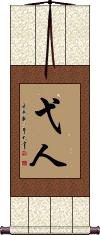
弋人 is the ancient way to write archer in both Chinese, Korean and Japanese.
If you carried a bow into battle in an army of ancient Asia, this would be your title.
Note: 弋人 is an antiquated term that is rarely used in modern Chinese, Korean or Japanese. Beyond archer, this can also mean a ceremonial hunter in Japanese.
Note: This title is so old, that most Asian people will not recognize this as a normal word. It has not been in regular use for many generations.
Siew
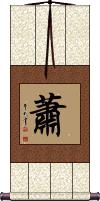
The name 蕭 is a common Chinese surname, especially in Southeast Asia (Malaysia, Singapore).
The Siew transliteration is found primarily in global Chinese diaspora communities.
Siew is one of many possible romanizations which include: Siow, Sio, Siaw, Siu, Shiu, Xiao, Hsiao, Seow, Shaw. These depend on the dialect and probably how your great-grandparents wrote it out when they immigrated. The meaning is mugwort or gloomy.
The Original Mind
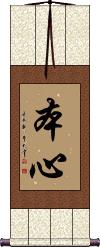
In Zen Buddhism, 本心 means “original mind” or “original heart,” which refers to one's Buddha-nature present from birth.
This can also be translated as true feelings, real intention, one's own heart, one's right mind, one's senses, one's conscience, or fundamental mind.
Note: 心 can mean heart or mind - thought in ancient Asia to be the same organ.

伍 is a Cantonese surname that can romanize as Woo.
There is more than one Woo: The surname "Woo" (우/吳/胡/禹/武) is common in East Asia, primarily Chinese and Korean, stemming from various characters with different origins, often romanized from Cantonese (like 吳 Wú or 胡 Hú) or Korean (like 禹), meaning leadership, history, or related to ancient states and figures like Yu the Great, symbolizing diligence and heritage.
Respect / Honor / Esteem
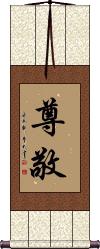
尊敬 is how to express the ideas of respect, honor, reverence, esteem, nobility, and sometimes the state of being noble, all in one word. Most of the time, this is used as “giving respect,” but depending on the context, it can suggest that you should try to be “worthy of respect.”
Although pronounced differently, the Chinese characters, Japanese Kanji, and Korean Hanja are the same across these languages. This is an indication that this word is very old and crosses many barriers and cultures in the Orient (East Asia).
Acupuncture
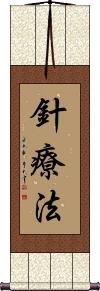
針療法 is one of two ways to write acupuncture in Chinese and Japanese.
The first character means “needle” or “pin.” The second character means “to treat” or “to cure.” The last character means “method” or “way.”
This is the only reasonable selection if your audience is Japanese. This is the formal way to express acupuncture in Chinese, so this version is universal in most of Asia (the best all-around choice in most cases).
Goddess of Compassion
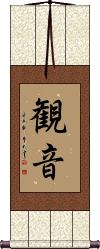
観音 is the specifically Japanese version of Bodhisattva of Compassion or Guan Yin.
In Japanese, this is pronounced Kannon and occasionally spelled Kwannon. The Chinese version is a bit more commonly seen in Asia. However, in Japanese, there is a slight variation with the first character.
Some time ago, a camera company in Japan named their company after this Buddhist deity. That camera company is still known as Canon (they chose a “C” instead of a “K” when they Romanized this name).
Tung

董 is a Cantonese surname that romanizes as Tung.
This is not the only Tung: The surname Tung is primarily of Chinese origin, a Cantonese/Mandarin romanization for several Chinese characters (like 董, 童, 佟, 東) meaning things like "supervise," "child," or "east," often linked to leadership or nature (pine tree). It's also found in Vietnamese contexts as "Tùng," meaning "pine," and signifies a connection to East Asian heritage, prevalent in China, Hong Kong, US, and Southeast Asia.
East
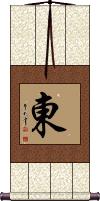
東 is the direction East in Chinese, Japanese Kanji, and old Korean Hanja.
Sometimes used as an abbreviation for the Eastern Hemisphere.
This can also be the surname Dong in China.
In Japan, this can be an abbreviation for a kind of six-stringed zither, or the personal name, Yamato.
東 is used as a suffix for many words in Asia. In fact, it's part of the CJK word 東方 meaning Orient or Oriental. The word 東方 more literally translates as “Eastern Kingdoms,” “Eastern Countries,” or simply “The East.”
Hoang
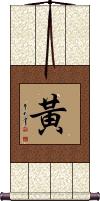
黃 is the original Chinese character for the Vietnamese surname Hoang or Hoàng.
This is one of the most common Vietnamese surnames. It originates from the Chinese surname Huang (黃), meaning "yellow," and also used for "phoenix" or "bright/luminous," signifying nobility and leadership, popular across East Asia and among the Vietnamese diaspora, often sharing roots with Korean Hwang and Chinese Wang.
Adopted in Vietnam where it signifies imperial lineage, courage (phoenix), or brightness, with variations like Hoàng (northern) and Huỳnh (southern).
Huynh
黃 is the original Chinese character for the Vietnamese surname Huynh or Huỳnh.
黃 is one of the most common Vietnamese surnames. It originates from the Chinese surname Huang (黃), meaning "yellow," and also used for "phoenix" or "bright/luminous," signifying nobility and leadership, popular across East Asia and among the Vietnamese diaspora, often sharing roots with Korean Hwang and Chinese Wang.
Adopted in Vietnam where it signifies imperial lineage, courage (phoenix), or brightness, with variations like Hoàng (northern) and Huỳnh (southern).
Peace / Harmony
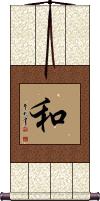
和 is the simplest form of peace and harmony.
和 can also be translated as the peaceful ideas of gentle, mild, kind, and calm. With a more harmonious context, it can be translated as union, together with, on good terms with, or on friendly terms.
Most people would just translate this character as peace and/or harmony. 和 is a very popular character in Asian cultures - you can even call it the “peace symbol” of Asia. In fact, this peace and harmony character was seen repeatedly during the opening ceremony of the 2008 Olympic Games in Beijing (a major theme of the games).
In old Chinese poems and literature, you might see this used as a kind of "and." As in two things summed together. As much as you could say, "the sun and moon," you could say "the sun in harmony with the moon."
See Also: Inner Peace | Patience | Simplicity
Leopard / Panther / Jaguar
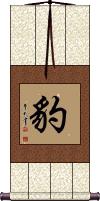
豹 is the Chinese and Japanese word for the big cat known as a leopard, panther, or Jaguar.
This can refer to most cats of the Panthera genus as well as the Puma genus (but this is not used for most kinds of lions, except smaller ones like the mountain lion).
Because Jaguars are not native to Asia, the characters for “American continent” is usually added before this character to specifically designate a Jaguar.
This also kind of means Panther or Leopard in Korean Hanja but in modern Korean, they add a Hangul character to complete the word.
The Red Thread of Fate
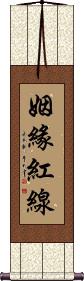
姻緣紅線 is the legendary red string of destiny that binds all soul mates or lovers together.
In ancient Chinese culture, a mythological matchmaker named 月老 (Yuè Lǎo) was the controller of the fate that led lovers to meet. He did this by tying a celestial red string to the ankle of each person. Sometime during their life, they will meet and marry as fate dictates.
While the origin of the red string comes from China, it has spread to other parts of Asia (such as Japan, where it's known as 赤い糸).
Emperor
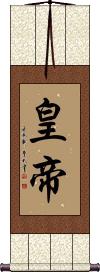
皇帝 means emperor in Chinese, Japanese, and old Korean.
From times of old, the emperors of Asia ruled under the authority of God himself. One definition of an emperor is a ruler put in power by God. This definition separates emperors from the various kings in Chinese history (although defining who is a king versus an emperor gets vague sometimes).
Occasionally, the emperor's wife was widowed, and she took the role of an empress until her death (see our entry for empress if that is what you are looking for).
Cherry Blossom
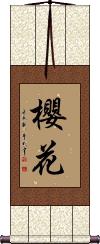
櫻花 is how to write “cherry blossom” in Chinese and traditional Japanese Kanji.
The first character means “cherry” or sometimes “cherry tree.”
The second character means “flowers” or “blossoms.”
Oddly, my Chinese dictionary also defines these two characters as “Japanese oriental cherry tree” or “Oriental cherry blossom.” However, the first character is the only one that means “cherry,” so it can refer to any cherry blossoms in the whole world (not just those in Asia).
 There is an alternate version of the first character, which has become the standard for Japanese Kanji. If you want this version, instead of the one shown to the upper left, please click on the Kanji shown to the right instead of the button above. Although this is an alternate form in Chinese, most Chinese people will think this is just the Japanese version (Chinese people
don’t
necessarily know the history and all alternate forms of Chinese characters from the past). Therefore, this version shown to the right is best if your audience is Japanese (though most Japanese will recognize the form shown in the upper left).
There is an alternate version of the first character, which has become the standard for Japanese Kanji. If you want this version, instead of the one shown to the upper left, please click on the Kanji shown to the right instead of the button above. Although this is an alternate form in Chinese, most Chinese people will think this is just the Japanese version (Chinese people
don’t
necessarily know the history and all alternate forms of Chinese characters from the past). Therefore, this version shown to the right is best if your audience is Japanese (though most Japanese will recognize the form shown in the upper left).
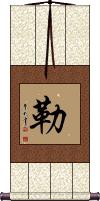
勒 is a Chinese surname that romanizes as Le or Lè and comes from ancient place names (Shu-Le) or ethnic groups like the Huns.
Use caution: There are other surnames in Asia that romanize as Le; here are a few:
Vietnamese (Lê): Most common usage, from Chinese 黎 (Lí), signifying a major royal family like the Lê Dynasty (1428–1788).
Chinese (樂 - Lè): Means "happiness" or "joy," from historical figures or noble lineages.
Korean: Can be a variant of Li or Lee, representing different Chinese characters (e.g., 黎, 呂).
Military Discipline
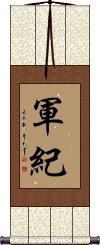
軍紀 means military discipline or military principles.
If maintaining your military discipline is important to you personally or important to your military unit, this is the wall scroll to have up behind your desk. In fact, it's the kind of thing I expect to see behind the desk of a First Sergeant or maybe a hardcore NCO.
Note: In some rare contexts, it could be extended to mean “morale,” but “discipline” is much closer to the commonly-held definition.
Note: This term is not well-known outside the military services in Asia (not used by the common person).
See Also: Self-Discipline
Diamond
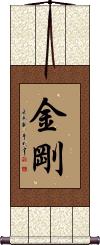
金剛 is a common way to call diamonds in Chinese and Japanese.
Traditionally, there were not that many diamonds that made their way to Asia, so this word does not have the deep cultural significance that it does in the west (thanks mostly to De Beers' marketing). Therefore, this word was kind of borrowed from other uses.
This title can also refer to vajra (a Sanskrit word meaning both thunderbolt and diamond that originally refers to an indestructible substance); hard metal; pupa of certain insects; Vajrapani, Buddha's warrior attendant; King Kong; adamantine; Buddhist symbol of the indestructible truth.
Morality of Mind
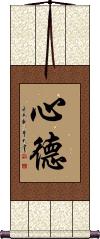
The idea of 心德 or “morality of mind” goes along with 行德 or “wu de” (martial morality or virtues of the warrior).
Here, the first character is a representation of your heart or mind.
The second character refers to morality or virtue.
This can also be translated as “morality of heart,” “virtue of heart,” or “virtue of the mind.”
Since ancient times in Asia, the idea of your mind (where your soul resides and your thought originates) has been associated with the heart. Just as in western culture, where we say “it comes from the heart” or “heartfelt emotions,” there is a belief that your heart and mind are one and the same (medical science now begs to differ).
See Also: Morality of Deed | Martial Morality
Chess
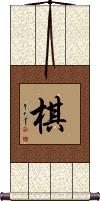
棋 is the most simple or generic way to write “chess” in Asia.
棋 is part of other more specific words for board games of strategy such as the western version of chess, Chinese chess, Weiqi, or Go.
In Japanese, this single character is pronounced “Go” and often refers to the game known in the west as “Go” (not just the 5-in-a-row version but also the complicated encirclement game of strategy known in China as Weiqi).
In Chinese, this can be more ambiguous as to which game of chess you speak.
If you like any version of chess, or games of intense strategy, this can be the character to hang on the wall in your game room.
Namaste - Greeting
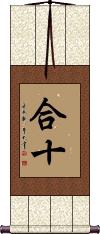
The word namaste comes from Sanskrit and is a common greeting in the Hindi and Nepali languages exchanged by devout Hindu or Buddhist people in Southern Asia (especially India).
合十 is the Chinese form (not well-known in Japan) of this word which is used to describe a Buddhist (or Hindu) greeting with palms closed together prayerfully, generally at chest level. However, this selection of characters describes the act and is not a word spoken during the greeting. Words or a greeting are seldom spoken when two Buddhists meet. The greeting is silent and respectful but composed completely of body language.
Note that the greeting namaste and the act of placing palms together are used both as a hello and goodbye (like the word aloha in Hawaiian).
If you are looking for a welcoming hello and goodbye, you may want to consider gassho or a simple welcome.
Family / Household
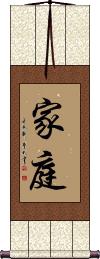
家庭/傢庭 is a common way to express family, household, or home in Chinese, Japanese Kanji, and old Korean Hanja.
However, for a wall scroll, we recommend the single-character form (which is just the first character of this two-character word). If you want that, just click here: Family Single-Character
The first character means “family” or “home.” The second means “courtyard” or “garden.” When combined, the meaning is a bit different, as it becomes “household” or “family.” The home and/or property traditionally has a strong relationship with family in Asia. Some Chinese, Korean, and Japanese families have lived in the same house for 7 or more generations!
Word of God / The Gospel
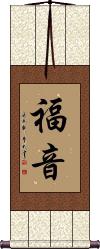
福音 is the Chinese, Korean and Japanese word for “Gospel” or “Word of God.”
福音 is a specifically Christian word in Asia (not used for any other religion).
The first character means blessing, good fortune, or good luck. This first character is a special character used throughout China to bring good tidings and fortune - especially during Chinese New Year. The second character means sound, noise, or news.
Together, these characters create a word that means “The Good News” or “The Sound of Good Fortune.”
When read by a Chinese or Japanese person, this word is always perceived as “The Christian Gospel,” “Word of God,” or even “The Voice of God.”
See Also: Christianity | Jesus Christ | God of Abraham
Dynasty
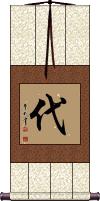
代 is the word used to designate dynasties in Asia.
代 alone can mean generation; age; period; historical era; eon; world; society; reign; era. 代 comes after the name of the dynasty, for example, the Tang Dynasty is the “Tang Dai” in Chinese.
Some have suggested that the word dynasty comes from the Chinese word “dai” (as “dai” sounds like the first syllable of a dynasty). However, the word dynasty is derived from the Greek word δυναστεία (dunasteia) meaning lordship and/or domination.
Sometimes this word is used in a different context where it can mean to represent or substitute. In this case, it can mean representative of; on behalf of; acting for, e.g. to offer incense in place of another.
In ancient Japan, this could also be a “shiro” (a unit of land area equal to one-fiftieth of a tan or about 20 square miles).
Zeng
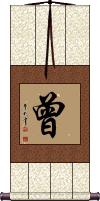
The surname Zeng (曾) is predominantly Chinese, originating from an ancient state, meaning "high" or "add," and is a very common name, especially in southern China and Taiwan, with variations like Tsang (Cantonese) or Chen/Chan (Southeast Asia).
Origin: Descendants of the ancient State of Zeng (鄫) from the Xia Dynasty (c. 2070–1600 BC).
Meaning: "High" or "add" in ancient Chinese.
History: The state was granted to a son of Emperor Shao Kang; the name was simplified to 曾 (Zeng) by a prince fleeing to the Lu Kingdom.
Prevalence: 32nd most common in mainland China, 16th in Taiwan.
Variations: Tsang (Cantonese), Tsen, Chen, Cheng (Malaysia/Singapore), Tjan (Indonesia), Jung (Thailand), Chan (Philippines).
Bushido / The Way of the Samurai
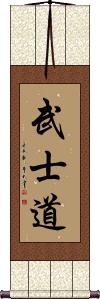
武士道 is the title for “The Code of the Samurai.”
Sometimes called “The Seven Virtues of the Samurai,” “The Bushido Code,” or “The Samurai Code of Chivalry.”
This would be read in Chinese characters, Japanese Kanji, and old Korean Hanja as “The Way of the Warrior,” “The Warrior's Way,” or “The Warrior's Code.”
It's a set of virtues that the Samurai of Japan and ancient warriors of China and Korea had to live and die by. However, while known throughout Asia, this title is mostly used in Japan and thought of as being of Japanese origin.
The seven commonly-accepted tenets or virtues of Bushido are Rectitude 義, Courage 勇, Benevolence 仁, Respect 礼(禮), Honour 名誉, Honesty 誠, and Loyalty 忠実. These tenets were part of oral history for generations, thus, you will see variations in the list of Bushido tenets depending on who you talk to.
See our page with just Code of the Samurai / Bushido here
Archer
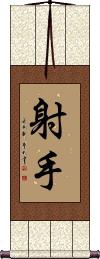
射手 means archer, shooter, or marksman in Chinese, Japanese Kanji, and old Korean Hanja.
Depending on the context, it can also mean “goal-getter” in Chinese. This would also be the word for a bowman.
射手 is modern in Asia, meaning that it's only been in use for a few hundred years. However, the more ancient version of the archer is often not even recognized by the current generation of Chinese and Japanese people.
The first character means “shoot” or “fire” (in the context of a gun or bow). It's also a suffix for radioactive things (in the context of chemistry) - radioactive things “fire off” electrons. In Japanese, the first Kanji is a short name and suffix for archery.
The second character means “hand,” but the hand can also mean a person, in the same way, that a “farmhand” is a person in English.
Shaolin
Little Forest
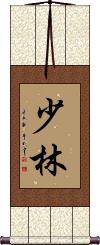
The 少林 or Shaolin monks of China have been practicing the art of Kung Fu for thousands of years. While there are many schools of Kung Fu in China, Shaolin are one of the more religiously devout and disciplined.
The title of Shaolin actually refers to a specific Buddhist monastery. It should be noted that the Shaolin were famous in China long before the Kung Fu TV show. Their fame in China is due to the monks' heroic and swift rescue of an emperor during the Tang Dynasty. Most Chinese people are not keenly aware of the Kung Fu TV show and have no idea who David Carradine is or anything about his character, Kwai Chang Caine.
Note: The literal meaning of 少林 is “little forest.”
The fame of the Shaolin has spread all over Asia, as even though this is a Chinese title, the same characters are used in Japanese with the same meaning.
Mind Body Spirit
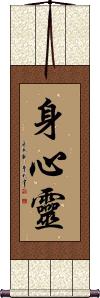
身心靈 is probably the best way to express the idea of “Body, Mind, and Spirit” in Chinese and old Korean Hanja. We are actually using the word “heart” here because, for thousands of years, the heart was thought to be the place where your thoughts, feelings, and emotions came from. We do something similar in the west when we say “warm-hearted” or “I love you with all of my heart.” In this context, heart = mind in Asian language and culture.
The very literal translation of these three characters is “body, heart & spirit,” which could also be interpreted as “body, mind & soul.”
We have arranged these characters in this order because it simply “feels” like the proper order in the Chinese language. Word lists like this are not so common for calligraphy artwork, so we must be careful to put them in the most natural order. It should be noted that this is not a common title in Asia, nor is it considered an actual phrase (as it lacks a clear subject, verb, and object).
 In Japanese Kanji, they use an alternate form of the character for soul or spirit. If you want this using the Japanese alternate, please click on the Kanji shown to the right instead of the button above.
Japanese disclaimer: This is not a natural phrase/list in Japanese. While not totally-natural in Chinese, this word list is best if your audience is Chinese.
Empress
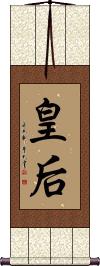
皇后 is the title of empress/emperess, the female form of the emperor.
皇后 is used in Chinese, Japanese Kanji, and old Korean Hanja.
While the emperor's reign was for life, if he died, his wife would hold his power. In this case, a woman was the ultimate ruler of the greater part of East Asia (now China) until her death and the succession of the emperor's firstborn son to lead the empire. Numerous times in various Chinese dynasties, an empress took power in this way.
The first character means emperor by itself.
The second character alone can mean “wife of an emperor or king” (the first character clarifies that we are talking about an empress and not a queen). It can also mean sovereign or last offspring, depending on context.
Note: In some books, this word is translated as queen. While only incorrect if you get technical (because an empress is theoretically a higher level than a queen), the meaning is very similar.
皇后 is sometimes used for the title of queen, but more technically, this is the wife of the emperor (a higher level than a queen).
In Wine there is Truth
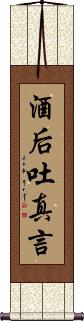
酒后吐真言 / 酒後吐真言 is a nice Asian proverb if you know a vintner or wine seller - or wine lover - although the actual meaning might not be exactly what you think or hope.
The literal meaning is that someone drinking wine is more likely to let the truth slip out. It can also be translated as “People speak their true feelings after drinking alcohol.”
It's long believed in many parts of Asia that one can not consciously hold up a facade of lies when getting drunk, and therefore the truth will come out with a few drinks.
I've had the experience where a Korean man would not trust me until I got drunk with him (I was trying to gain access to the black market in North Korea which is tough to do as an untrusted outsider) - so I think this idea is still well-practiced in many Asian countries.
 VS
VS 
Please note that there are two common ways to write the second character of this phrase. The way it's written will be left up to the mood of the calligrapher, unless you let us know that you have a certain preference.
Japanese Snapping Turtle / Chinese Soft Shell Turtle
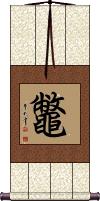
鼈 refers to a species of turtle.
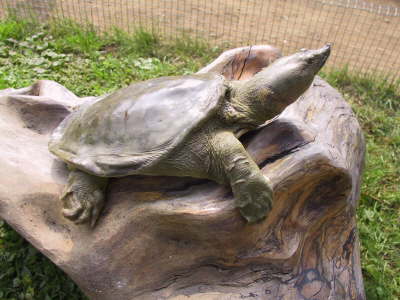
鼈 is Trionyx Sinensis.
鼈 refers to different turtles in different languages. See individual language notes below:
Japanese: 鼈 means “snapping turtle” or “mud turtle.” But rarely used as a single Kanji like this in Japanese.
Chinese: 鼈 means soft-shelled turtle. A specific species, Trionyx Sinensis is native to Asia.
In China, this species is related to the “wang ba,” a soft-shelled turtle sometimes known in English as a banjo turtle (due to its long neck, and general shape). Unfortunately, there is a word, “wang ba dan” which means the egg of this species of turtle. That term has come to mean “bastard” in Chinese (a turtle hatches from an abandoned egg, and does not know who his mother or father is). 鼈 is not a good selection for a wall scroll if your audience is Chinese.
In Korean, this character can be pronounced (though most Koreans would have to look it up in a dictionary). It has not been in common use in Korea for at least a few hundred years.
General notes: You may notice that the bottom half of this character is the same as some other turtle-related titles. That bottom half is actually an ancient character that means “toad.”  Though not seen in this way today, most turtle-related characters hold the meaning of “a toad with a shell” in their ancient origin. That toad character is rarely used alone anymore but you can see what it looks like in the image to the right.
Kirin / Giraffe / Mythical Creature
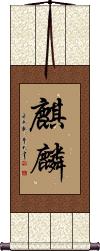
麒麟 is the title of a mythical beast of Asia.
The animal is thought to be related to the giraffe, and in some ways, it is a giraffe. However, it is often depicted with the horns of a dragon or deer and sometimes with the body like a horse, but many variations exist.
In Japanese, it is pronounced “Kirin” as in “Kirin Ichiban” beer.
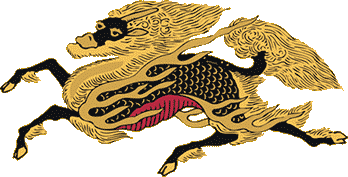
Notes:
1. This is sometimes spelled as “kylin.”
2. In Japanese, this is the only Kanji word for giraffe. Therefore in Japan, this word needs context to know whether you are talking about the mythical creature or the long-necked giraffe of Africa.
3. Apparently, this was the first word used for regular giraffes in China (some were brought from Africa to China during the Ming Dynasty - probably around the year 1400). Though the mythical creature may have existed before, the name “qilin” was given to the “new giraffe.” This is because, more than 600 years ago, giraffes somewhat matched the mythical creature's description when Chinese people saw them for the first time. Later, to avoid such an ambiguous title, a three-character word was devised to mean a “giraffe of Africa.” The characters for “qilin” shown here are only for the mythological version in modern Chinese.
4. More information about the qilin / kirin from Wikipedia.
5. This creature is sometimes translated as the “Chinese Unicorn,” although it is generally portrayed with two horns. I think this is done more for the fantasy aspect of the unicorn and because most westerners don't know what a qilin or kirin is (this avoids a long explanation by the translator).
6. In Korean, this can mean kirin or simply giraffe (usually, the mythological creature is what they would think of when seeing these characters alone on a wall scroll).
This in-stock artwork might be what you are looking for, and ships right away...
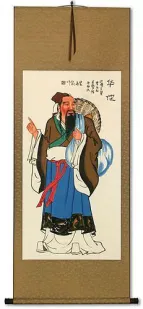
Gallery Price: $200.00
Your Price: $79.88
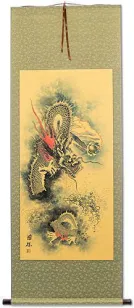
Gallery Price: $240.00
Your Price: $138.88
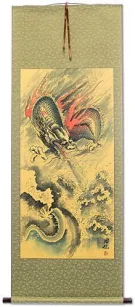
Gallery Price: $240.00
Your Price: $138.88

Gallery Price: $240.00
Your Price: $138.88
Gallery Price: $240.00
Your Price: $148.88

Gallery Price: $240.00
Your Price: $148.88


Gallery Price: $90.00
Your Price: $49.88
Gallery Price: $90.00
Your Price: $49.88
Gallery Price: $90.00
Your Price: $49.88
Gallery Price: $90.00
Your Price: $49.88
The following table may be helpful for those studying Chinese or Japanese...
| Title | Characters | Romaji (Romanized Japanese) | Various forms of Romanized Chinese | |
| Asia Asian Continent | 亞洲 亚洲 | yà zhōu / ya4 zhou1 / ya zhou / yazhou | ya chou / yachou | |
| Azerbaijan | 阿塞拜疆 | ā sài bài jiāng a1 sai4 bai4 jiang1 a sai bai jiang asaibaijiang | a sai pai chiang asaipaichiang |
|
| Egypt | 埃及 | āi jí / ai1 ji2 / ai ji / aiji | ai chi / aichi | |
| Israel | 以色列 | yǐ sè liè yi3 se4 lie4 yi se lie yiselie | i se lieh iselieh |
|
| Bhutan | 不丹 | bù dān / bu4 dan1 / bu dan / budan | pu tan / putan | |
| India | 印度 | in do / indo | yìn dù / yin4 du4 / yin du / yindu | yin tu / yintu |
| Japan | 日本 | nippon / nihon nipon / nihon | rì běn / ri4 ben3 / ri ben / riben | jih pen / jihpen |
| Laos | 老撾 老挝 | lǎo wō / lao3 wo1 / lao wo / laowo | ||
| Myanmar | 緬甸 缅甸 | men den / menden | miǎn diàn mian3 dian4 mian dian miandian | mien tien mientien |
| Oman | 阿曼 | ā màn / a1 man4 / a man / aman | ||
| Thailand | 泰國 泰国 | tài guó / tai4 guo2 / tai guo / taiguo | t`ai kuo / taikuo / tai kuo | |
| Yemen | 也門 也门 | yě mén / ye3 men2 / ye men / yemen | yeh men / yehmen | |
| East Timor | 東帝汶 东帝汶 | dōng dì wèn dong1 di4 wen4 dong di wen dongdiwen | tung ti wen tungtiwen |
|
| Lebanon | 黎巴嫩 | lí bā nèn li2 ba1 nen4 li ba nen libanen | li pa nen lipanen |
|
| Philippines | 菲律賓 菲律宾 | fēi lǜ bīn fei1 lv4 bin1 fei lv bin feilvbin | fei lü pin feilüpin |
|
| Qatar | 卡塔爾 卡塔尔 | kǎ tǎ ěr ka3 ta3 er3 ka ta er kataer | k`a t`a erh kataerh ka ta erh |
|
| Syria | 叙利亞 叙利亚 | xù lì yà xu4 li4 ya4 xu li ya xuliya | hsü li ya hsüliya |
|
| Turkey | 土耳其 | tǔ ěr qí tu3 er3 qi2 tu er qi tuerqi | t`u erh ch`i tuerhchi tu erh chi |
|
| Turkmenistan | 土庫曼 土库曼 | tǔ kù màn tu3 ku4 man4 tu ku man tukuman | t`u k`u man tukuman tu ku man |
|
| Armenia | 亞美尼亞 亚美尼亚 | yà měi ní yà ya4 mei3 ni2 ya4 ya mei ni ya yameiniya | ||
| Cyprus | 塞浦路斯 | sāi pǔ lù sī sai1 pu3 lu4 si1 sai pu lu si saipulusi | sai p`u lu ssu saipulussu sai pu lu ssu |
|
| Maldives | 馬爾代夫 马尔代夫 | mǎ ěr dài fū ma3 er3 dai4 fu1 ma er dai fu maerdaifu | ma erh tai fu maerhtaifu |
|
| Sri Lanka | 斯里蘭卡 斯里兰卡 | sī lǐ lán kǎ si1 li3 lan2 ka3 si li lan ka sililanka | ssu li lan k`a ssulilanka ssu li lan ka |
|
| Indonesia | 印度尼西亞 印度尼西亚 | yìn dù ní xī yà yin4 du4 ni2 xi1 ya4 yin du ni xi ya yindunixiya | yin tu ni hsi ya yintunihsiya |
|
| Kazakhstan | 哈薩克斯坦 哈萨克斯坦 | hā sà kè sī tǎn ha1 sa4 ke4 si1 tan3 ha sa ke si tan hasakesitan | ha sa k`o ssu t`an hasakossutan ha sa ko ssu tan |
|
| Saudi Arabia | 沙特阿拉伯 | shā tè ā lā bó sha1 te4 a1 la1 bo2 sha te a la bo shatealabo | sha t`e a la po shatealapo sha te a la po |
|
| Taiwan | 台湾 / 薹灣 / 台灣 台湾 | tai wan / taiwan | tái wān / tai2 wan1 / tai wan / taiwan | t`ai wan / taiwan / tai wan |
| Tajikistan | 塔吉克斯坦 | tǎ jí kè sī tǎn ta3 ji2 ke4 si1 tan3 ta ji ke si tan tajikesitan | t`a chi k`o ssu t`an tachikossutan ta chi ko ssu tan |
|
| United Arab Emirates | 阿拉伯聯合酋長國 阿拉伯联合酋长国 | ā lā bó lián hé qiú cháng guó a1 la1 bo2 lian2 he2 qiu2 chang2 guo2 a la bo lian he qiu chang guo alabolianheqiuchangguo | a la po lien ho ch`iu ch`ang kuo alapolienhochiuchangkuo a la po lien ho chiu chang kuo |
|
| Iran | 伊朗 | yī lǎng / yi1 lang3 / yi lang / yilang | i lang / ilang | |
| Russia | 俄國 俄国 | é guó / e2 guo2 / e guo / eguo | o kuo / okuo | |
| Iraq | 伊拉克 | yī lā kè yi1 la1 ke4 yi la ke yilake | i la k`o ilako i la ko |
|
| Bangladesh | 孟加拉國 孟加拉国 | mèng jiā lā guó meng4 jia1 la1 guo2 meng jia la guo mengjialaguo | meng chia la kuo mengchialakuo |
|
| Palestine | 巴勒斯坦 | bā lè sī tǎn ba1 le4 si1 tan3 ba le si tan balesitan | pa le ssu t`an palessutan pa le ssu tan |
|
| Bahrain | 巴林 | bā lín / ba1 lin2 / ba lin / balin | pa lin / palin | |
| Mongolia | 蒙古 | mouko / moko | měng gǔ / meng3 gu3 / meng gu / menggu | meng ku / mengku |
| South Korea | 南韓 南韩 | nán hán / nan2 han2 / nan han / nanhan | ||
| Tibet | 西藏 | seizou / chibetto seizo / chibetto | xī zàng / xi1 zang4 / xi zang / xizang | hsi tsang / hsitsang |
| Cambodia | 柬埔寨 | kanbojia | jiǎn pǔ zhài jian3 pu3 zhai4 jian pu zhai jianpuzhai | chien p`u chai chienpuchai chien pu chai |
| North Korea | 北朝鮮 北朝鲜 | kita chousen kitachousen kita chosen | běi cháo xiǎn bei3 chao2 xian3 bei chao xian beichaoxian | pei ch`ao hsien peichaohsien pei chao hsien |
| Malaysia | 馬來西亞 马来西亚 | mǎ lái xī yà ma3 lai2 xi1 ya4 ma lai xi ya malaixiya | ma lai hsi ya malaihsiya |
|
| Pakistan | 巴基斯坦 | bā jī sī tǎn ba1 ji1 si1 tan3 ba ji si tan bajisitan | pa chi ssu t`an pachissutan pa chi ssu tan |
|
| Pitcairn Island | 皮特克恩島 皮特克恩岛 | pí tè kè ēn dǎo pi2 te4 ke4 en1 dao3 pi te ke en dao pitekeendao | p`i t`e k`o en tao pitekoentao pi te ko en tao |
|
| Turks and Caicos Islands | 特克斯和凱克斯群島 特克斯和凯克斯群岛 | tè kè sī huò kǎi kè sī qún dǎo te4 ke4 si1 huo4 kai3 ke4 si1 qun2 dao3 te ke si huo kai ke si qun dao tekesihuokaikesiqundao | t`e k`o ssu huo k`ai k`o ssu ch`ün tao te ko ssu huo kai ko ssu chün tao |
|
| Vietnam | 越南 | betonamu | yuè nán / yue4 nan2 / yue nan / yuenan | yüeh nan / yüehnan |
| Afghanistan | 阿富汗 | ā fù hàn a1 fu4 han4 a fu han afuhan | ||
| Kuwait | 科威特 | kē wēi tè ke1 wei1 te4 ke wei te keweite | k`o wei t`e koweite ko wei te |
|
| Nepal | 尼泊爾 尼泊尔 | ní bó ěr ni2 bo2 er3 ni bo er niboer | ni po erh nipoerh |
|
| Singapore | 新加坡 | xīn jiā pō xin1 jia1 po1 xin jia po xinjiapo | hsin chia p`o hsinchiapo hsin chia po |
|
| MacAo MacAu | 澳門 澳门 | ào mén / ao4 men2 / ao men / aomen | ||
| China | 中國 中国 | chū goku / chūgoku | zhōng guó zhong1 guo2 zhong guo zhongguo | chung kuo chungkuo |
| Hong Kong | 香港 | hon kon / honkon | xiāng gǎng xiang1 gang3 xiang gang xianggang | hsiang kang hsiangkang |
| Accountant CPA | 會計師 会计师 | kuài jì shī kuai4 ji4 shi1 kuai ji shi kuaijishi | k`uai chi shih kuaichishih kuai chi shih |
|
| Thao | 陶 | táo / tao2 / tao | t`ao / tao | |
| Meiya | 美亞 美亚 | měi yà / mei3 ya4 / mei ya / meiya | ||
| Aysia | 愛西亞 爱西亚 | ài xī yà ai4 xi1 ya4 ai xi ya aixiya | ai hsi ya aihsiya |
|
| Mercury | 水星 | sui shou / suishou / sui sho | shuǐ xīng shui3 xing1 shui xing shuixing | shui hsing shuihsing |
| Husband and Wife | 夫婦 | fuu fu / fuufu / fu fu | fū fù / fu1 fu4 / fu fu / fufu | |
| Hard Work | 刻苦 | kokku / koku | kè kǔ / ke4 ku3 / ke ku / keku | k`o k`u / koku / ko ku |
| Aryan | 雅利安 | yǎ lì ān ya3 li4 an1 ya li an yalian | ||
| Goddess of Compassion | 観世音 | kan ze on / kanzeon | guān shì yīn guan1 shi4 yin1 guan shi yin guanshiyin | kuan shih yin kuanshihyin |
| Idea Concept | 理念 / 理唸 理念 | ri nen / rinen | lǐ niàn / li3 nian4 / li nian / linian | li nien / linien |
| Wine | 葡萄酒 | bu dou shu / bu dou sake budoushu / budousake bu do shu / bu do sake | pú tao jiǔ pu2 tao5 jiu3 pu tao jiu putaojiu | p`u t`ao chiu putaochiu pu tao chiu |
| Ritsu | 律 | ritsu | lǜ / lu:4 / lu: | lü |
| Archer | 弋人 | yokujin | yì rén / yi4 ren2 / yi ren / yiren | i jen / ijen |
| Siew | 蕭 萧 | xiāo / xiao1 / xiao | hsiao | |
| The Original Mind | 本心 | hon shin / honshin | běn xīn / ben3 xin1 / ben xin / benxin | pen hsin / penhsin |
| Woo | 伍 | wǔ / wu3 / wu | ||
| Respect Honor Esteem | 尊敬 | sonkei | zūn jìng / zun1 jing4 / zun jing / zunjing | tsun ching / tsunching |
| Acupuncture | 針療法 针疗法 | hari ryou hou hariryouhou hari ryo ho | zhēn liáo fǎ zhen1 liao2 fa3 zhen liao fa zhenliaofa | chen liao fa chenliaofa |
| Goddess of Compassion | 観音 | kan non / kannon | guān yīn / guan1 yin1 / guan yin / guanyin | kuan yin / kuanyin |
| Tung | 董 | dǒng / dong3 / dong | tung | |
| East | 東 东 | higashi / tou higashi / to | dōng / dong1 / dong | tung |
| Hoang | 黃 黄 | huáng / huang2 / huang | ||
| Huynh | 黃 黄 | huáng / huang2 / huang | ||
| Peace Harmony | 和 | wa | hé / he2 / he | ho |
| Leopard Panther Jaguar | 豹 | hyou / hyo | bào / bao4 / bao | pao |
| The Red Thread of Fate | 姻緣紅線 姻缘红线 | yīn yuán hóng xiàn yin1 yuan2 hong2 xian4 yin yuan hong xian yinyuanhongxian | yin yüan hung hsien yinyüanhunghsien |
|
| Emperor | 皇帝 | koutei / kotei | huáng dì / huang2 di4 / huang di / huangdi | huang ti / huangti |
| Cherry Blossom | 櫻花 樱花 / 桜花 | ouka / oka | yīng huā / ying1 hua1 / ying hua / yinghua | |
| Le | 勒 | lè / le4 / le | ||
| Military Discipline | 軍紀 军纪 | gun ki / gunki | jūn jì / jun1 ji4 / jun ji / junji | chün chi / chünchi |
| Diamond | 金剛 金刚 | kon gou / kongou / kon go | jīn gāng / jin1 gang1 / jin gang / jingang | chin kang / chinkang |
| Morality of Mind | 心德 | xīn dé / xin1 de2 / xin de / xinde | hsin te / hsinte | |
| Chess | 棋 | go | qí / qi2 / qi | ch`i / chi |
| Namaste - Greeting | 合十 | gou juu / goujuu / go ju | hé shí / he2 shi2 / he shi / heshi | ho shih / hoshih |
| Family Household | 家庭 / 傢庭 家庭 | ka tei / katei | jiā tíng / jia1 ting2 / jia ting / jiating | chia t`ing / chiating / chia ting |
| Word of God The Gospel | 福音 | fukuin | fú yīn / fu2 yin1 / fu yin / fuyin | |
| Dynasty | 代 | dai | dài / dai4 / dai | tai |
| Zeng | 曾 | zēng / zeng1 / zeng | tseng | |
| Bushido The Way of the Samurai | 武士道 | bu shi do / bushido | wǔ shì dào wu3 shi4 dao4 wu shi dao wushidao | wu shih tao wushihtao |
| Archer | 射手 | i te / sha shu ite / shashu | shè shǒu / she4 shou3 / she shou / sheshou | |
| Shaolin | 少林 | sho rin / shorin | shǎo lín / shao3 lin2 / shao lin / shaolin | |
| Mind Body Spirit | 身心靈 / 身心霊 身心灵 | mi shin rei mishinrei | shēn xīn líng shen1 xin1 ling2 shen xin ling shenxinling | shen hsin ling shenhsinling |
| Empress | 皇后 | kou gou / kougou / ko go | huáng hòu huang2 hou4 huang hou huanghou | |
| In Wine there is Truth | 酒后吐真言 / 酒後吐真言 酒后吐真言 | jiǔ hòu tǔ zhēn yán jiu3 hou4 tu3 zhen1 yan2 jiu hou tu zhen yan jiuhoutuzhenyan | chiu hou t`u chen yen chiuhoutuchenyen chiu hou tu chen yen |
|
| Japanese Snapping Turtle Chinese Soft Shell Turtle | 鼈 | suppon / supon | biē / bie1 / bie | pieh |
| Kirin Giraffe Mythical Creature | 麒麟 | kirin | qí lǐn / qi2 lin3 / qi lin / qilin | ch`i lin / chilin / chi lin |
| In some entries above you will see that characters have different versions above and below a line. In these cases, the characters above the line are Traditional Chinese, while the ones below are Simplified Chinese. | ||||

Successful Chinese Character and Japanese Kanji calligraphy searches within the last few hours...



