Many custom options...


And formats...



Traditional in Chinese / Japanese...
Buy a Traditional calligraphy wall scroll here!
Personalize your custom “Traditional” project by clicking the button next to your favorite “Traditional” title below...
1. Chinese Traditional Medicine
6. Honor
8. Sakuragi
10. Sakuragi
11. Doctor
12. Respect
13. France
14. Musician
15. English / Briton / Person from England
16. Gemini
17. Patriot
18. Shinto Muso-Ryu
19. Ford
20. Tactics of War
21. Lion Dance
22. Navy SEALS
23. Prosperity
26. Twins
27. Doctor
28. Chidokan
31. Unwavering Hall / Fudoshinkan
32. Sesshin
35. Matsubayashi-Ryu Karate-Do
36. Nekogami
37. Drunken Fist
38. Kansei Engineering / Sense Engineering
39. Manga
41. Kunshi no Ken
43. Shiatsu-Do
44. Isshin-Kai
45. Uechi-Ryu
46. Independent Spirit / Independent Heart
47. Cherry Blossom
49. Three Treasures of Chinese Medicine
50. Broken Hearted
51. Shotokan
52. Animal Kingdom
53. The Lord's Prayer / Luke 11:2-4
55. Aiki Budo
56. The Lord's Prayer / Mathew 6:9-13
57. Prosperity
58. Life Energy / Spiritual Energy
59. Year-In Year-Out Have Abundance
60. Banzai / Wansui
61. Banzai
62. Taekwondo
63. Turtle
65. Taekwondo Tenets / Spirit of Taekwon-do
66. Reiki
67. Hapkido
Chinese Traditional Medicine
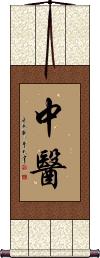
中醫 is how to write “Chinese traditional medicine.”
The original medicine consists of herbal remedies derived from over 3000 years of research.
A Traditional Warm Welcome
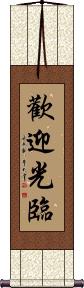
歡迎光臨 would be the ultimate Chinese “welcome mat.” Except it will be on your wall, and people will not step on it.
In a somewhat literal translation, you could say it means “I feel happy as I welcome you, as you have brought a shining light to this place with your arrival,” or more simply, “I am happy you've come as your presents brightens up the place.”
It has become common for this greeting to be announced by the staff upon the arrival of any customer into a fancy store in China. You will also see these characters on the “welcome mats” in front of 4 and 5-star hotels in China.
Having this on a wall scroll is an extra nice touch. I have seen a few horizontal scrolls with this phrase on the wall behind the reception desk of better hotels or near the front door of fine shops. At the fanciest department stores and restaurants in China, several greeters (almost always young women) will stand by the front door, all wearing sashes with this phrase embroidered. As you walk in, they will bow and say “huan ying guang lin” to welcome you to the establishment.
Note: The first two and last two characters do make words in Korean Hanja but are seldom used as a sentence like this in Korean.
Beauty of Nature
Ka-Chou-Fuu-Getsu
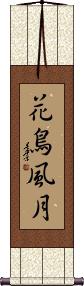
花鳥風月 is the Japanese Kanji proverb for “Beauties of Nature.”
The dictionary definition is “the traditional themes of natural beauty in Japanese aesthetics.”
The Kanji each represents an element of nature that constitutes beauty in traditional Japanese art and culture.
The Kanji breakdown:
花 = ka = flower (also pronounced “hana”)
鳥 = chou = bird (also pronounced “tori”).
風 = fuu = wind (also pronounced “kaze”).
月 = getsu = moon (also pronounced “tsuki”)
Eastern Europe
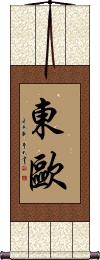
This is the Chinese, old Korean Hanja, and traditional Japanese name for Eastern Europe.
 Please note that Japanese use an alternate/simplified version of the character for Europe - it also happens to be the same simplification used in mainland China. Click on the character to the right if you want the Japanese/Simplified version of this two-character Eastern Europe calligraphy.
Western Europe
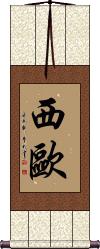
This is the Chinese, old Korean Hanja, and traditional Japanese name for Western Europe.
Please note that Japanese use an alternate/simplified version of the character for Europe - it also happens to be the same simplification used in mainland China. Click on the character to the right if you want the Japanese/Simplified version of this two-character Western Europe calligraphy.
Honor
(Modern Japanese version)
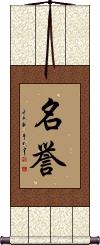
名譽 is a version of honor that is about having or earning the respect of others and about your reputation.
It is the status of being worthy of honor (not to be confused with doing honorable things or specific actions - see our other “honor” listing for that).
 Both modern Japanese and modern mainland Chinese use the same simplified version of the second character of honor. You can make a special request for the traditional second character as shown to the right (just click on that character to the right of you want to order that version). Before WWII, both Japan and China used the traditional form but modern Japanese and Chinese use this simplified form. Koreans still use the traditional form when they are not writing in their modern Hangul glyphs.
This is also a virtue of the Samurai Warrior
See our page with just Code of the Samurai / Bushido here
Cherry Blossom / Sakura
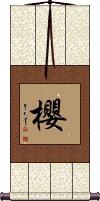
櫻 is the single-character (short) way to write “cherry blossom” or “cherry tree” in Chinese and traditional Japanese Kanji.
 There is an alternate version of this character, which has become the standard for Japanese Kanji. If you want this version, instead of the one shown to the upper left, please click on the Kanji shown to the right instead of the button above. Although this is an alternate form in Chinese, most Chinese people will think this is just the Japanese version (Chinese people
don’t
necessarily know the history and all alternate forms of Chinese characters from the past). Therefore, this version shown to the right is best if your audience is Japanese (though most Japanese will recognize the form shown in the upper left).
There is an alternate version of this character, which has become the standard for Japanese Kanji. If you want this version, instead of the one shown to the upper left, please click on the Kanji shown to the right instead of the button above. Although this is an alternate form in Chinese, most Chinese people will think this is just the Japanese version (Chinese people
don’t
necessarily know the history and all alternate forms of Chinese characters from the past). Therefore, this version shown to the right is best if your audience is Japanese (though most Japanese will recognize the form shown in the upper left).
Sakuragi
sakuraki
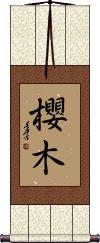
櫻木 is the Japanese surname Sakuragi or Sakuraki in the traditional form.
Post-WWII language reforms simplified the first Kanji making it now written as 桜木.
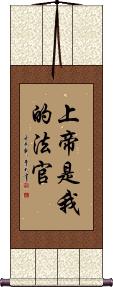
God is my Judge
Sakuragi
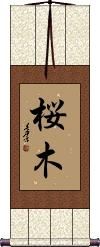
桜木 is the Japanese surname Sakuragi.
In the past, before WWII, it would be common to see Sakuragi in the traditional form of 櫻木.
Doctor
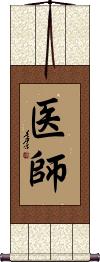
医師 is the most common title used to refer to medical doctors or physicians in modern Japanese Kanji.
Before WWII, this would be written 醫師 in Japan (same as Traditional Chinese).
Respect
Politeness, Gratitude and Propriety
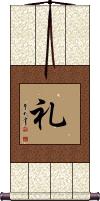
礼 is one of the five tenets of Confucius.
Beyond respect, 礼 can also be translated as propriety, good manners, politeness, rite, worship, or an expression of gratitude.
We show respect by speaking and acting with courtesy. We treat others with dignity and honor the rules of our family, school, and nation. Respect yourself, and others will respect you.
 Please note that Japanese use this simplified 礼 version of the original 禮 character for respect. 礼 also happens to be the same simplification used in mainland China. While 禮 is the traditional and original version, 礼 has been used as a shorthand version for many centuries. Click on the big 禮 character to the right if you want the Traditional Chinese and older Japanese versions.
This is also a virtue of the Samurai Warrior
See our page with just Code of the Samurai / Bushido here
See Also: Confucius
France
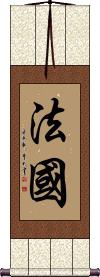
法國 is the most common title for the country of France.
This version is the traditional form in Chinese and Japanese. In Simplified Chinese and modern Japanese, it's written 法国.
Musician
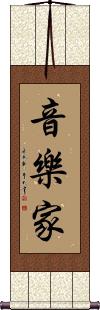
音樂家 is how to write “musician” in most Asian languages.
There is more than one way to express “musician” in China, but this is the traditional and most respectful title.
 The second character has morphed a bit in Japanese Kanji. If you want the specifically modern Japanese version, please click on the Kanji to the right, instead of the button above. The version shown to the left was used in ancient Japan, prior to the Japanese language reformations after WWII (so technically,
it’s
still Japanese).
The second character has morphed a bit in Japanese Kanji. If you want the specifically modern Japanese version, please click on the Kanji to the right, instead of the button above. The version shown to the left was used in ancient Japan, prior to the Japanese language reformations after WWII (so technically,
it’s
still Japanese).
English / Briton / Person from England
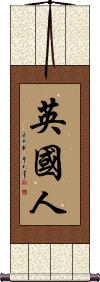
英國人 is the traditional Chinese and Japanese way to write British person, Briton, English person, Englishman, Englishwoman, etc.
In modern Japan, the middle character has been simplified, making it 英国人. This same simplification is used in mainland China as well.
Gemini Zodiac Symbol / Sign
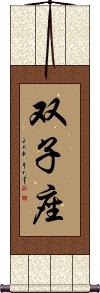
雙子座 is the Japanese way to write Gemini (twins) from western astrology.
This also happens to be the Simplified Chinese version of this title - however, I recommend the Traditional Chinese version if your audience is Chinese.
See Also: Chinese Zodiac
Patriot
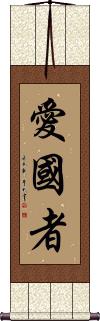
愛國者 is the most common way to write patriot in Traditional Chinese and old Korean Hanja.
In another context, this can refer to the MIM-104 Patriot surface-to-air missile.
This literally translates as “love [of] country person.”
Shinto Muso-Ryu
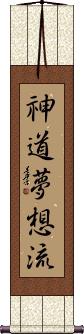
神道夢想流 is Shintō Musō-ryū, or Shindō Musō-ryū.
This is usually used in the context of jōdō, a traditional school of the Japanese martial art of jōjutsu (the art of wielding the short staff).
Ford
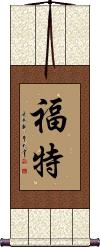
福特 is the name Ford transliterated into Mandarin Chinese.
This is also the short form for Ford Motor Company and Ford automobiles in China. The long version is 福特汽車 in Traditional Chinese or 福特汽车 in Simplified Chinese.
Tactics of War
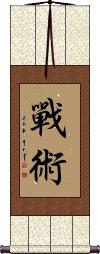
戰術 can mean “tactics of war,” “battle tactics” or simply “tactics” (being that warfare is implied in that English word).
This word is written in the ancient and traditional form of Chinese, Japanese, and Korean.

In modern Japan, the first character has been simplified or modified. If you want the modern Japanese Kanji version, just click on that character shown to the right.
Lion Dance
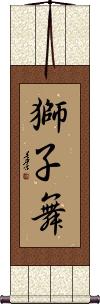
獅子舞 is the Japanese title for lion dancing.
This refers to the Japanese version borrowed from traditional Chinese culture. The Japanese version almost always features a red-faced lion with a green cloak with a white pattern.
Lion Dance
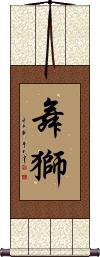
舞獅 is the Chinese title for “lion dance.”
舞獅 is the traditional Chinese costumed dance seen at festivals (especially Chinese New Year), ceremonies, and often at the beginning of Chinese martial arts events.
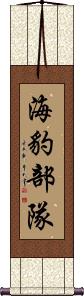
海豹部隊 is the title for United States Navy SEALs in Chinese. The U.S. part is implied, as few, if any, other nations claim to have sailors with the title “navy seals.”
Sometimes the term 海豹突击队 (Simplified) or 海豹突擊隊 (Traditional) is also used in Chinese. It means “Seal Commando Team.”
Prosperity
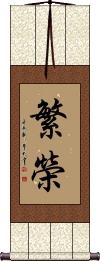
繁榮 means “prosperous,” “flourishing,” or “thriving” when used regarding a person.
However, when used about a whole country, it can mean a “booming economy.”
繁榮 is the traditional Chinese, ancient Japanese Kanji, and ancient Korean Hanja version of prosperity.
 Note: If you order this from the Japanese master calligrapher, the second character may look more like the Kanji shown to the right. If you want a different form, please note that in the special instructions for your order.
Muso Jikiden Eishin-Ryu
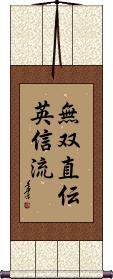
無双直伝英信流 is the modern way to write the Japanese martial arts term, Musō Jikiden Eishin-Ryū (iaido style).
Sometimes the second Kanji is written as 雙, and the fourth Kanji is written 傳, making the full title 無雙直傳英信流. See the other version of this title if you want that traditional version.
Abundance and Prosperity
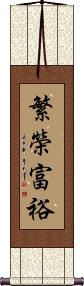
繁榮富裕 is a proverb about “Prosperity and Abundance.”
This presents and reinforces the ideas of being prosperous, a booming economy, well-to-do, well-off, wealthy, riches, and opulence.
While this is the ancient/traditional Chinese way to write this, most Japanese can fully read and understand it. It's also the correct form of old Korean Hanja (though few Koreans of the current generation will be able to read this).
See Also: Good Fortune
Twins
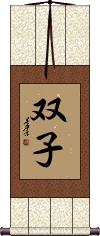
双子 means twins or twin in Japanese Kanji.
双子 is also a way to write twins in Simplified Chinese. In Traditional Chinese and old Japanese, it's 雙子.
This can also be a Japanese place name, Futago.
Doctor
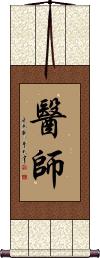
醫師 is the title used to refer to medical doctors or physicians in old Korean Hanja.
Notes:
Also means “doctor” in Chinese but is not the most commonly used title.
醫師 is the ancient/traditional form of doctor in Japanese (they simplified the first character to 医 in Japan after WWII).
Chidokan
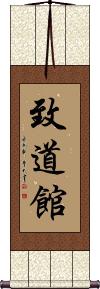
致道館 is the name Chidokan.
Chidōkan was established in 1805. The original Chidōkan school was located in Tsuruoka, Japan.
The original school taught a combination of traditional Chinese literature, Ogasawara-ryū etiquette, Chinese medicine and martial arts alongside Confucianism.
This Too Shall Pass
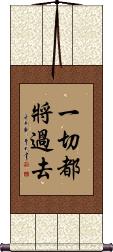
一切都將過去 is a phrase that means “this too shall pass” in Chinese.
This should be a reminder on your wall that no matter how bad things get, difficulties in life are transient and will go away in time.
This is not the only way to express this idea, as there are also 这一切都会过去 and 一切都会过去.
The version we are using here is more traditional sounding.
Five Element Dojo

This is the title “5 Element Dojo” in Japanese Kanji.
Sometimes, the five elements are expressed in Japanese as 五大 (Godai) (earth, water, fire, wind, void) instead of the Chinese/Traditional 五行 (Gogyo) (wood, fire, water, earth, metal), so you might want 五大道場 instead. Let me know when ordering if that is the case.
Unwavering Hall / Fudoshinkan

不動心館 can be translated as “Fudoshinkan,” or “Immovable Mind Hall.”
Fudoshinkan (不動心館) refers to various Japanese martial arts schools, primarily focusing on Aikido, Iaido (sword art), and Jodo (short staff), emphasizing the concept of Fudoshin (不動心) – a calm, immovable mind in the face of challenge, reflecting traditional samurai spirit through dynamic training and inner peace
Immovable mind; unwavering composure. Hall/school (as in -kan / -gwan).
Sesshin
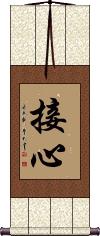
接心 is a Japanese Buddhist term meaning concentration or a period of intensive zazen.
While 接心 is the most common way to write this, other variants include 攝心 (Traditional Chinese), 摂心 (alternate Japanese), and 摄心 (Simplified Chinese). If you need any of these alternate forms, just let me know and I will set it up with the calligrapher for you.
While this is a Japanese term, it will be recognized by most Chinese folks at a Japanese Buddhist term and they will pronounce it as “jiē xīn” in Mandarin.
Kingdom of Heaven
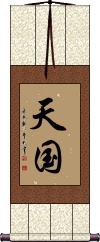
天国 is the same meaning and pronunciation as our other entry for “Kingdom of Heaven,” but the second character was simplified in Japan and mainland China to this version.
Choose the appearance that you like best (they will be somewhat universally understood - as most people are aware of this simplification in places where they still use all traditional characters - such as Taiwan and Hong Kong). You can consider the other version to be the “ancient version.”
Muso Jikiden Eishin-Ryu
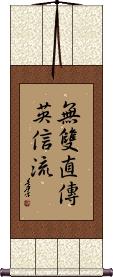
無雙直傳英信流 is the traditional or old way to write the Japanese martial arts title, Musō Jikiden Eishin-Ryū (iaido style).
In modern Japanese, the second and fourth Kanji are different, making them 無双直伝英信流.
Musō Jikiden Eishin-Ryū is arguably the most renowned Japanese sword art school, with a history dating back to the early 1600s.
Matsubayashi-Ryu Karate-Do
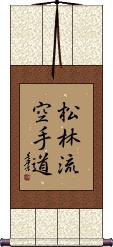
鬆林流空手道 is the Japanese title for the Matsubayashi-Ryu Karate-Do school of martial arts.
If directly translated, it means “Pine Forest Style Empty Hand Way.”
Notes:
1. 松林流 can be pronounced Matsubayashi-Ryū or Shōrin-Ryū. This can be confusing as Shōrin can also represent 少林 which refers to the Shaolin (little forest) style.
2. 松 can also be written in the traditional form of 鬆.
Nekogami
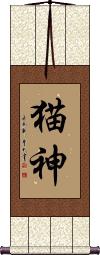
貓神 is the title Nekogami or “Cat God” in Japanese.
This can also be pronounced “neko shin” or “neko kami.”
猫神 is the modern Japanese version, before WWII, this would have been written 貓神 (just the first Kanji varies).
This also makes sense in Chinese, though the traditional version, 貓神, would be better for Chinese calligraphy.
Drunken Fist
(A legitimate style of Kung Fu)
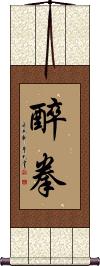
醉拳 is Drunken Fist, a traditional Chinese martial art/technique of Kung Fu.
It is a northern style of martial art that imitates a drunk person in its movements. Many staggering movements serve to deceive the opponent and keep them off-balance.
Some consider Drunken Fist to be among the more complex styles of martial arts due to the need for robust joints and fingers.
See Also: Drunken Monkey
Kansei Engineering / Sense Engineering
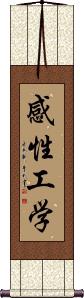
In short, 感性工學 or Kansei engineering involves collecting data on human experiences with a product and then designing or engineering improvements based on those experiences or “senses.”
Some may define Kansei as “engineering around the human experience.”
There is a lot more to know about Kansei, but if you are looking for this word, you probably already know the big picture.
Note: This term is very new in China and is only used by businesses, factories, and engineers that are implementing TQM principles. While the characters have the same base meaning in both languages, this is a Japanese title that flows back into the Chinese language (in history, most things flowed from China to Japan). To a Chinese person unfamiliar with this concept, they may interpret this as “sense vocational studies,” which doesn't make much sense. You may have to explain the intended meaning to some Chinese viewers. But that can make it a great conversation piece.
Kansei is also a newer term in Korean and is only used in certain parts of the industry, with the definition of “Sensory Engineering.” Not yet in widespread use in Korea.
Above is the modern Japanese version of this title. The last character has a Traditional Chinese version, making this 感性工學 instead of 感性工学. If you want the Traditional Chinese version, please include special instructions or email me so that I make sure the calligrapher writes the version you want.
See Also: Kaizen
Manga
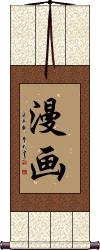
漫画 is the Japanese word for cartoon, comic, caricature, or comic strip.
The older traditional form is 漫畫 and is sometimes still used in Taiwan and China (and occasionally in Japan) when referring specifically to Japanese comics.
You'll see the same 漫画 used in Mainland China as well since 画 is not just the modern Japanese form but also the Simplified Chinese version of the original 畫.
Courtesy / Etiquette
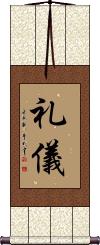
In Japanese, 礼儀 means “manners,” “courtesy,” or “etiquette.”
This also clearly means etiquette in Chinese, though the first Japanese Kanji has been “modernized” and happens to be the same as the modern Simplified Chinese version. Therefore, this word will be understood by both Japanese and Chinese people but best if your audience is mostly Japanese (Chinese people would generally prefer the ancient Traditional Chinese version).
Kunshi no Ken

君子の拳 is “Kunshi no Ken” in Japanese.
The meaning is literally “Noble Fist” or “Fist of Nobility” but it's often used to describe the effort to concentrate on cultivating oneself to become a well-rounded, respectful individual.
You will see 君子の拳 sometimes written in the full Kanji form of 君子之拳. Both versions mean the same thing. If you want this more traditional Kanji version, just let me know when you place your order.
Physical Strength
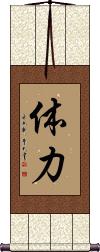
体力 means “physical strength” or “physical power.”
The first character was first simplified in Japan. Later, that simplified version became the standard in mainland China. Just in case you want this version, it is offered here. I suggest it if your audience is Japanese. Most Chinese know the older traditional version, which looks like 體力.
体力 can also be defined: stamina; endurance; physical strength; resilience; resistance to disease; clout; stability.
Shiatsu-Do
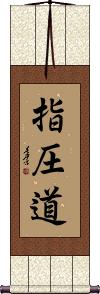
指圧道 is the title for Shiastu-Do, the Japanese way of finger pressure.
Shitsu-Do is about applying special finger pressure to points on the body thought to be connected to pathways called “meridians.” Shiatsu is a healthful way to get your 気 or 氣 (ki energy) flowing properly.
Note: This title can also be written in the older 指壓道 form (just the middle character has an ancient/traditional form used before WWII).
You might even see 指压道 which uses the Simplified Chinese form of the second character.
Isshin-Kai
Isshin Society

一心会 is the Japanese martial arts title “Isshinkai” or “Isshin-Kai.”
It literally means “One Heart Association” or “Single-Heart Club.” This title is often associated with Isshin-Ryu Aikido and Isshin-Ryu Karate-Do. This title is an appropriate name for a dojo that teaches these styles.
In calligraphy, 一心会 conveys legitimacy, unity, and shared standards.
一心会 is understood as Chinese and Korean Hanja (though written as 一心會 in Traditional Chinese, and in modern times, 일심회 in Korean Hangul).
Uechi-Ryu
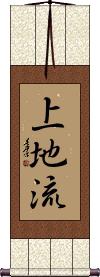
上地流 or Uechi-Ryū is the short name for a traditional style of Okinawan karate.
Uechi-Ryū is named after its creator, Kanbun Uechi. Uechi was an Okinawan man who left at the age of 19 for China to study Chinese martial arts and medicine.
The meaning of this title is “Uechi Flow,” “Uechi Style,” or “Uechi School.” Although, the name 上地 or Uechi can mean “higher stages of practice” in the Buddhist context. Therefore, you can stretch the meaning to be “Higher-Stages-of-Practice Style.”
Independent Spirit / Independent Heart
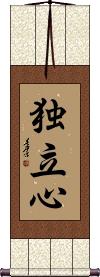
獨立心 means independent spirit or independent heart in Japanese.
The first two characters mean independent or independence. The third character means spirit, heart, or mind.
獨立心 is a Japanese term, although Chinese people could guess the meaning (the characters make sense individually in Chinese but are not often used this way). Also, the first character would be written 獨 in Traditional Chinese versus 独 which is the Simplified Chinese and modern Japanese version.
Cherry Blossom
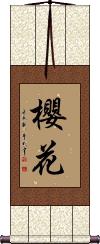
櫻花 is how to write “cherry blossom” in Chinese and traditional Japanese Kanji.
The first character means “cherry” or sometimes “cherry tree.”
The second character means “flowers” or “blossoms.”
Oddly, my Chinese dictionary also defines these two characters as “Japanese oriental cherry tree” or “Oriental cherry blossom.” However, the first character is the only one that means “cherry,” so it can refer to any cherry blossoms in the whole world (not just those in Asia).
There is an alternate version of the first character, which has become the standard for Japanese Kanji. If you want this version, instead of the one shown to the upper left, please click on the Kanji shown to the right instead of the button above. Although this is an alternate form in Chinese, most Chinese people will think this is just the Japanese version (Chinese people
don’t
necessarily know the history and all alternate forms of Chinese characters from the past). Therefore, this version shown to the right is best if your audience is Japanese (though most Japanese will recognize the form shown in the upper left).
Songahm Taekwondo
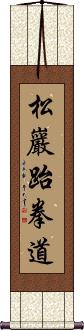
松巖跆拳道 is the title Songahm Taekwondo.
If you want this written in Korean Hangul instead of Hanja, click on the Hangul characters below the Korean flag above.
Note, Songahm is usually written in Hanja as 松巖. However, in Traditional Chinese, it would be 鬆巖, and in modern Japanese, it can be 松岩 (but not known in this context - I think it's a small train station and place in Japan).
Technically, all of these can also be Korean Hanja so that you might see these variations in use. If you need a version other than 松巖, just let me know when you order.
Three Treasures of Chinese Medicine
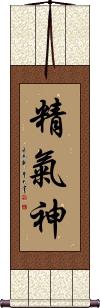
精, 氣, 神 are the characters jing, qi, and shen.
As a set, these three characters are known in English as the treasures of traditional Chinese medicine, the treasures of Qi Gong, or the three treasures of Taoism / Daoism.
Sometimes this set is titled 三寶 (sānbǎo) or “three treasures,” but here, we're writing each treasure out.
Here's how these characters are perceived in this context...
Jing: nutritive essence; refined; perfected; pure
Qi: vitality; energy; force; breath; vigor
Shen: spirit; soul; mind; being
To keep it simple, you can use “essence, vitality, and spirit” to define these.
Broken Hearted
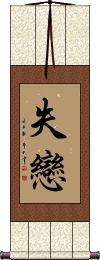
In Chinese, this can mean losing one's love; to breaking up (in a romantic relationship); to feel jilted.
In Japanese Kanji, this means disappointing love, broken heart, unrequited love, or being lovelorn.
失戀 is also valid in old Korean Hanja, which means unrequited love, unreturned love, a disappointment in love, or a broken heart.
Note: In modern Japan, they will tend to write the more simple 失恋 form instead of 失戀. If you order this from the Japanese master calligrapher, expect the more simple modern version to be written (unless you give us instructions to use the older or more traditional version).
Shotokan
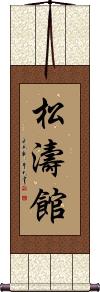
松濤館 are the Kanji characters that make up the title for Shotokan.
This should be considered a Japanese-only title. It does make sense and is pronounceable in Chinese and Korean but only as a title for a building (perhaps a martial arts hall) surrounded by pine trees. Also, the first two characters were simplified in both Japanese and Chinese. The third character was simplified in Chinese but not Japanese.
Upon request, we can offer the fully traditional Chinese version but be sure you know what you are asking for.
Note: This would be understood in Chinese and Korean Hanja by a person from those cultures who is familiar with martial arts and various schools of Japanese karate.
Animal Kingdom
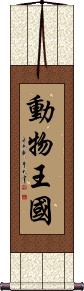
動物王國 is literally what it says.
There is even a TV show in China that is similar to Wild Kingdom or what you would currently see on the Discovery Channel that has this same title.
For your information: In the Chinese way of thinking, the Tiger is the king of the animal kingdom (lions are not native to China, so the tiger took the role that we have given to the lion in our western way of thinking).
The modern Japanese version has a slight variation on the last character (国 instead of 國). Let me know if you want the modern Japanese version (國 would be considered the old or traditional version).
The Lord's Prayer / Luke 11:2-4
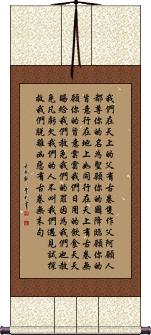
Here is the Lord's Prayer in Chinese from Luke 11:2-4.
The Chinese text with punctuation is:
Part of 11:2 ...我们在天上的父,有古卷只作父阿愿人都尊你的名为圣。愿你的国降临。愿你的旨意行在地上,如同行在天上。有古卷无愿你的旨意云云。
11:3 我们日用的饮食,天天赐给我们。
11:4 赦免我们的罪,因为我们也赦免凡亏欠我们的人。不叫我们遇见试探。救我们脱离凶恶。有古卷无末句。
Note that punctuation is not included in traditional Chinese calligraphy artwork.
From KJV, this is:
Part of 11:2 ...Our Father which art in heaven, Hallowed be thy name. Thy kingdom come. Thy will be done, as in heaven, so in earth.
11:3 Give us day by day our daily bread.
11:4 And forgive us our sins; for we also forgive everyone that is indebted to us. And lead us not into temptation, but deliver us from evil.
Shotokan Karate-Do
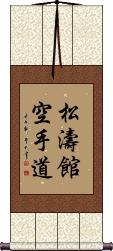
鬆濤館空手道 art the Japanese Kanji that make up the title for Shotokan Karate.
This should be considered a Japanese-only title. It does make sense and is pronounceable in Chinese and Korean but only as a title for a building (perhaps a martial arts hall) surrounded by pine trees - followed by the characters for “The empty hand method” (kong shou dao / Karate-do). Also, the first two characters were simplified in both Japanese and Chinese. The third character was simplified in Chinese but not Japanese.
Upon request, we can offer the fully traditional Chinese version but be sure you know what you are asking for.
Note: This would be understood in Chinese and Korean Hanja by a person from those cultures familiar with martial arts and various schools of Japanese karate.
Aiki Budo
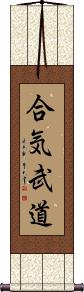
合気武道 is the title Aiki-Budo or “Aiki Martial Arts” in Japanese Kanji.
合 means “union” or “harmony.”
気/氣 means “universal energy” or “spirit.”
武 means “martial” or “military.”
道 means “way” or “method.”
合気武道 is the modern Japanese way to write this. You may also see 合氣武道, where the second character is written in the older traditional (pre-1945) form. If you want this written 合氣武道, just include a note or email with your order.
合氣武道 are all Chinese characters as well, so I included the Chinese pronunciation above. However, while it can be understood in Chinese, this is not a common term in that language and is not used in any Chinese martial arts. Also, 気 is only used in Japan - Chinese will understand 気 to be the Japanese form of 氣.
See Also: Martial Arts | Hapkido
The Lord's Prayer / Mathew 6:9-13
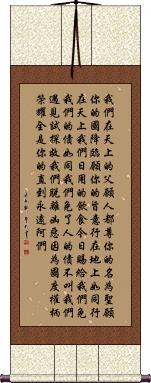
Here is the Lord's Prayer in Chinese from Mathew 6:9-13.
The Chinese text with punctuation is:
Part of 6:9 ...我们在天上的父,愿人都尊你的名为圣。
6:10 愿你的国降临,愿你的旨意行在地上,如同行在天上。
6:11 我们日用的饮食,今日赐给我们。
6:12 免我们的债,如同我们免了人的债。
6:13 不叫我们遇见试探,救我们脱离凶恶,因为国度,权柄,荣耀,全是你的,直到永远,阿们。
Note that punctuation is not included in traditional Chinese calligraphy artwork.
From KJV, this is:
Part of 6:9 ...Our Father which art in heaven, Hallowed be thy name.
6:10 Thy kingdom come. Thy will be done in earth, as it is in heaven.
6:11 Give us this day our daily bread.
6:12 And forgive us our debts, as we forgive our debtors.
6:13 And lead us not into temptation, but deliver us from evil: For thine is the kingdom, and the power, and the glory, forever. Amen.
Prosperity
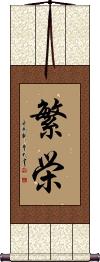
繁栄 is the same “prosperity” as the Traditional Chinese version, except for a slight change in the way the second character is written (it's the Japanese Kanji deviation from the original/ancient Chinese form).
Chinese people will still be able to read this, though you should consider this to be the Japanese form (better if your audience is Japanese).


Sometimes, the Kanji form shown to the right is used in Japanese. It will depend on the calligrapher's mood as to which form you may receive. If you have a preference, please let us know at the time of your order.
Life Energy / Spiritual Energy
Chi Energy: Essence of Life / Energy Flow
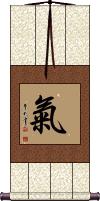
This 氣 energy flow is a fundamental concept of traditional Asian culture.
氣 is romanized as “Qi” or “Chi” in Chinese, “Gi” in Korean, and “Ki” in Japanese.
Chi is believed to be part of everything that exists, as in “life force” or “spiritual energy.” It is most often translated as “energy flow” or literally as “air” or “breath.” Some people will simply translate this as “spirit,” but you must consider the kind of spirit we're talking about. I think this is weighted more toward energy than spirit.
The character itself is a representation of steam (or breath) rising from rice. To clarify, the character for rice looks like this: 
Steam was apparently seen as visual evidence of the release of “life energy” when this concept was first developed. The Qi / Chi / Ki character is still used in compound words to mean steam or vapor.
The etymology of this character is a bit complicated. It's suggested that the first form of this character from bronze script (about 2500 years ago) looked like these samples: 

However, it was easy to confuse this with the character for the number three. So the rice radical was added by 221 B.C. (the exact time of this change is debated). This first version with the rice radical looks like this: 
The idea of Qi / Chi / Ki is really a philosophical concept. It's often used to refer to the “flow” of metaphysical energy that sustains living beings. Yet there is much debate that has continued for thousands of years as to whether Qi / Chi / Ki is pure energy or consists partially or fully of matter.
You can also see the character for Qi / Chi / Ki in common compound words such as Tai Chi / Tai Qi, Aikido, Reiki, and Qi Gong / Chi Kung.
In the modern Japanese Kanji, the rice radical has been changed into two strokes that form an X.
 The original and traditional Chinese form is still understood in Japanese, but we can also offer that modern Kanji form in our custom calligraphy. If you want this Japanese Kanji, please click on the character to the right instead of the “Select and Customize” button above.
More language notes: This is pronounced like “chee” in Mandarin Chinese, and like “key” in Japanese.
This is also the same way to write this in Korean Hanja where it is Romanized as “gi” and pronounced like “gee” but with a real G-sound, not a J-sound.
Though Vietnamese no longer use Chinese characters in their daily language, this character is still widely known in Vietnam.
See Also: Energy | Life Force | Vitality | Life | Birth | Soul
Year-In Year-Out Have Abundance
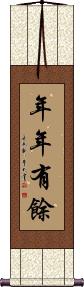
年年有餘 is a common proverb or wish of prosperity you'll hear around the time of Chinese New Year.
Directly translated character by character, it means “Year Year Have Surplus.” A more natural English translation including the deeper meaning would be “Every Year may you Have Abundance in your life.”
On a side note, this phrase often goes with a gift of something related to fish. This is because the last character, “yu” which means surplus or abundance, has exactly the same pronunciation in Mandarin as the word for “fish.”
This is also one of the most common titles for traditional paintings that feature koi fish.
In China, this phrase might make an odd wall scroll - a customer asked especially for this common phrase which is why it appears here. See my other abundance-related words if you want a wall scroll that will seem more comfortable in Chinese culture.
Note: This can be pronounced in Korean, but it's not a commonly used term.
See Also: Prosperity | Good Fortune
Banzai / Wansui
Old Japanese / Traditional Chinese & Korean
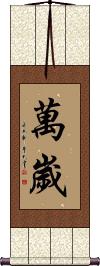
萬歲 is the traditional Chinese, Korean Hanja, and ancient Japanese way of writing banzai.
In modern times, the first character was simplified in Japan and China. So you might want to select the other entry for universal readability.
While it has become a popular, if not an odd, thing to scream as you jump out of an airplane (preferably with a parachute attached), banzai is actually a very old Asian way to say “hooray.” The Japanese word “banzai” comes from the Chinese word “wan sui,” which means “The age of 10,000 years.” It is actually a wish that the Emperor or the Empire live that long.
Imagine long ago when the Emperor made a rare public appearance. 萬歲 is what all people would yell to their leader in respect.
So if you like it as a hooray, or you want to wish someone that they live for 10,000 years, this is the calligraphy for you.
Other translations include Cheers! (not the drinking kind), hurrah!, long live [name]!, and congratulations!
To other things with banzai in their names, I am still waiting for the promised sequel to Buckaroo Banzai.
Notes: Sometimes people confuse banzai with bonsai. A bonsai is a miniature tree. They have nothing to do with each other.
Banzai
Modern Japanese Version
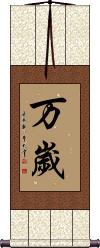
万歲 is the modern Japanese way to write banzai.
We've made two almost identical entries for this word, with just a variation on the first character. In the last century, 萬 was simplified to 万 in Japan and China. The new generation will expect it to be written as 万 but the old generation can still read the more traditional 萬 form. You must make your determination as to what version is best for you. If your audience is mostly Japanese, I suggest 万歲.
While it has become a popular, if not an odd, thing to scream as you jump out of an airplane (preferably with a parachute attached), banzai is actually a very old Asian way to say “hooray.” The Japanese word “banzai” comes from the Chinese word “wan sui” which means “The age of 10,000 years.” It is actually a wish that the Emperor or the Empire live that long.
Imagine long ago when the Emperor made a rare public appearance. This is what all of the people would yell to their leader in respect.
So if you like it as a hooray, or you want to wish someone that they live for 10,000 years, this is the calligraphy for you.
To other things with banzai in their names, I am still waiting for the promised sequel to Buckaroo Banzai.
Other translations: hurrah, long life, congratulations, cheers, live long.
Notes: Sometimes people confuse banzai with bonsai. A bonsai is a miniature tree. They have nothing to do with each other. Further, Bonzai is not a word at all - although it would make a great name for a calcium supplement for older people.
Taekwondo
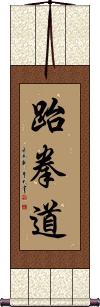
跆拳道 is one of the most widespread types of martial arts in the world as well as being an Olympic sport. Taekwondo was born in Korea with influences of Chinese and Japanese styles combined with traditional Korean combat skills. Some will define it as the “Korean art of empty-handed self-defense.”
In the simplest translation, the first character means “kick,” the second character can mean either “fist” or “punching,” and the third means “way” or “method.” Altogether, you could say this is the “Kick Punch Method.” When heard or read in various Asian languages, all will automatically think of this famous Korean martial art. It is written the same in Japanese Kanji, Chinese, and Korean Hanja characters - so the appearance of the characters is universal. However, you should note that there is another way to write this in modern Korean Hangul characters, which looks like the image to the right. 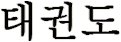
We suggest the original Korean Hanja (Chinese characters) for a wall scroll, but if you need the Hangul version, you must use master calligrapher Cao Bin: Order Taekwondo in Korean Hangul
Note: Taekwondo is sometimes Romanized as Tae-Kwondo, Tae Kwon Do, Taekwon-do, Taegwondo, Tae Gweon Do, Tai Kwon Do, Taikwondo, Taekwando, Tae Kwan Do and in Chinese Taiquandao, Tai Quan Dao, Taichuando, or Tai Chuan Tao.
Turtle
...also means tortoise
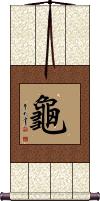
龜 is the generic term for turtle in Chinese and old Korean Hanja. It's like saying “turtle” (or “tortoise”) without being specific about the species of turtle.
Please note that there are many special characters in Chinese and a few in Japanese that denote specific species of turtle and do not include this character. We can't possibly cover all of these species, but if you want a certain one, such as “loggerhead” or a “leatherback,” just contact me, and I'll do my best to research your special species.
If you noticed, I said species names that do not include this character. This is because, in much the same way we can do it in English by just saying, “loggerhead” instead of “loggerhead turtle,” the same can be done in Chinese and Japanese.
 This may be hard to believe, but the image shown to the right is an alternate version of this character, which is currently used in Japan. This was originally an alternate form in ancient China for turtle - but it's so obscure now that most Chinese people would just think this is the Japanese version of turtle (I did a lot of research on this). The version shown in the upper left is traditional Chinese (also used in Korea 100+ years ago). It will generally not be recognized by the new generation of Japanese people. If your audience is Japanese, please click on the Kanji image shown to the right to have the calligrapher write that version (instead of clicking the button above).
Note: In Japanese, this Kanji is also a representation of long life. This is related to the fact that a tortoise can live for hundreds of years.
Wing Chun Fist Maxims
Wing Chun Kuen Kuit
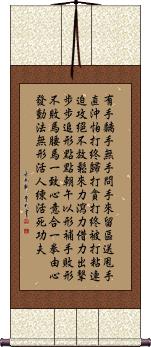
This text is the chant or poem of Wing Chun.
I call it a “chant” because it was meant to be a somewhat rhythmic poem to help practitioners memorize many aspects of Wing Chun.
1 有手黐手,無手問手
2 來留區送, 甩手直沖
3 怕打終歸打, 貪打終被打
4 粘連迫攻, 絕不放鬆
5 來力瀉力, 借力出擊
6 步步追形, 點點朝午
7 以形補手, 敗形不敗馬
8 腰馬一致, 心意合一
9 拳由心發, 動法無形
10 活人練活死功夫
You will see this referred to as “Wing Chun Kuem Kuit.” This Cantonese romanization is popular in the west (and there is no official way to romanize Cantonese, so many variations exist). In Mandarin, it would be, “Yong Chun Quan Jue.” The last character (kuit or kyut from Cantonese, jue or chüeh from Mandarin) kind of means “secrets of the art.” It's a short way to write 口訣, meaning “mnemonic chant” or “rhyme for remembering.”
In the west (especially in the military), we often use acronyms to remember things. There are no initials to make acronyms in Chinese, so in ancient times, chants like this are used to remember vast amounts of information.
I will presume you already know the meaning of the 10 maxims, so I will skip that to keep this calligraphy entry from getting too large.
Some think 练拳者必记 is the title but that just says, “(When) training (the) fist, people should remember:.” Therefore, I've not included that in the calligraphy. However, you can put a note in the special instructions if you want it added.
Note: On a traditional calligraphy wall scroll, the characters will be written in vertical columns, starting from the right, and proceeding left.
Note: This is an except and variation from a huge 口訣. These 10 maxims are used extensively in Wing Chun training, and you’ll find them all over the internet. Just know there is a much longer version out there, along with several variations and excepts like this one. If you know of, or want a different version, just contact me, and I will add it for you.
Taekwondo Tenets / Spirit of Taekwon-do
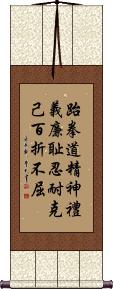
跆拳道精神禮義廉耻忍耐克己百折不屈 is General Choi's writing that is often called “The Tenets of Taekwon-do.”
The actual title would be translated as “Taekwondo Spirit” or “The Spirit of Taekwondo.” It was originally written in Korean Hanja (Chinese characters used in Korea for about 1600 years).
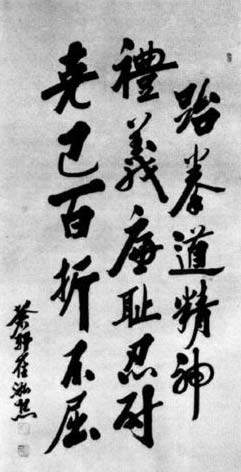
General Choi's original calligraphy is shown to the right. Your custom calligraphy will be unique, and not an exact match, as each calligrapher has their own style.In modern times, the common form of written Korean is Hangul (a phonetic character set). The table below shows the text in Hangul and Hanja along with a pronunciation guide and a brief English translation:
| Traditional Korean Hanja | Modern Korean Hangul | Pronunciation | English |
| 跆拳道精神 | 태권도정신 | tae gweon do jeong sin | Taekwondo Spirit |
| 禮儀 | 예의 | ye yi | Courtesy / Etiquette / Propriety / Decorum / Formality |
| 廉耻 | 염치 | yeom ci | Integrity / Sense of Honor |
| 忍耐 | 인내 | in nae | Patience / Perseverance / Endurance |
| 克己 | 극기 | geug gi | Self-Control / Self-Denial / Self-Abnegation |
| 百折不屈 | 백절불굴 | baeg jeor bur gur | Indomitable Spirit (Undaunted even after repeated attacks from the opponent) |
| Note that the pronunciation is the official version now used in South Korea. However, it is different than what you may be used to. For instance, “Taekwon-do” is “tae gweon do.” This new romanization is supposed to be closer to actual Korean pronunciation. | |||
Reiki
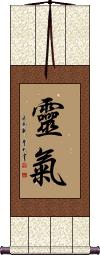
靈氣 is the title of a healing practice now found globally but with origins in Japan.
Special note: Outside of the context of the healing practice of Reiki, this means “aura” or “spiritual essence that surrounds all living things.” A Japanese person unfamiliar with the practice will take the “aura” meaning.
Reiki is a technique for stress reduction and relaxation that also heals. It can be compared to massage but is based on the idea that an unseen “life force energy” flows through us and is what causes us to be alive. If your life force energy is low, you'll be more likely to get sick or feel stressed. If your life force energy is abundant and flowing well, you become more capable of being happy and healthy.
There is a lot of information available if you want to Google this term - my job is to offer the calligraphy while you can decide if it is right for you.

Note: We are showing the ancient (traditional) form of the Reiki Kanji. I have seen Reiki written with the slightly simplified version and this more classic form. If you want the form of Reiki with the two strokes in the shape of an X on the second character and the modern first character, simply click on the Kanji characters to the right.
Note: 靈氣 is also a Chinese word, but in Chinese, these characters create a word that refers to a smart person or someone with high aspirations. It is not read as a healing method in Chinese.
In Korean Hanja, this can be read as a “mysterious atmosphere” by a Korean who is not familiar with the practice of Reiki (still has a cool meaning in Korean).
Hapkido
Korean Martial Art of re-directing force
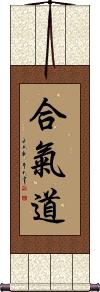
Hapkido or 合氣道 is a mostly-defensive martial art in Korea.
Hapkido has some connection to the Aikido of Japan. They are written with the same characters in both languages. However, it should be noted that the Korean Hanja characters shown here are the traditional Chinese form - but in modern Japan, the middle character was slightly simplified.
Note: You can consider this to be the older Japanese written form of Aikido. Titles on older books and signs about Aikido use this form.
The connection between Japanese Aikido and Korean Hapkido is muddled in history. The issue is probably due to the difficult relationship between the two countries around WWII. Many Koreans became virtual slaves to the Japanese during that period. After WWII, many things in Korea were disassociated from having any Japanese origin. The relationship has greatly mellowed out now.
Looking at the characters, the first means “union” or “harmony.”
The second character means “universal energy” or “spirit.”
The third means “way” or “method.”
One way to translate this into English is the “Harmonizing Energy Method.” This makes sense, as Hapkido has more to do with redirecting energy than fighting strength against strength.
More Hapkido info
More notes:
1. Sometimes Hapkido is Romanized as “hap ki do,” “hapki-do” “hab gi do” or “hapgido.”
2. Korean Hanja characters are actually Chinese characters that usually hold the same meaning in both languages. There was a time when these characters were the standard and only written form of Korean. The development of modern Korean Hangul characters is a somewhat recent event in the greater scope of history. There was a time when Chinese characters were the written form of many languages in places known in modern times as North Korea, South Korea, Japan, Vietnam, Singapore, Hong Kong, Taiwan, Mainland China, and a significant portion of Malaysia. Even today, more people in the world can read Chinese characters than English.
3. While these Korean Hanja characters can be pronounced in Chinese, this word is not well-known in China and is not considered part of the Chinese lexicon.
This in-stock artwork might be what you are looking for, and ships right away...
Gallery Price: $178.00
Your Price: $98.88
Gallery Price: $340.00
Your Price: $188.88
Gallery Price: $106.00
Your Price: $58.88

Gallery Price: $60.00
Your Price: $36.88

Gallery Price: $60.00
Your Price: $36.88


Gallery Price: $60.00
Your Price: $36.88

Gallery Price: $60.00
Your Price: $36.88


Gallery Price: $60.00
Your Price: $36.88

Gallery Price: $60.00
Your Price: $36.88
These search terms might be related to Traditional:
A Moment of Time is as Precious as Gold
Black or White Cat Matters Not as Long as It Can Catch Mice
Celestial Dragon / Tian Long
Changquan / Long Fist
Do Not Take Action Until the Time is Right
Each Time You Stumble and Fall, You Gain Experience and Wisdom
Eternal / Long-Lasting
Fear Not Long Roads; Fear Only Short Ambition
Forever Young / Long Life
High Mountain Long River
Live Long and Prosper
Longevity / Long Life
Longevity / Long Life Wishes
Not Long for This World
Shen Long
Time
Time and Tide Wait for No Man
Time Heals All Wounds
Time is as Precious as Gold
Time is Gold
Time is Money
Time is More Valuable Than Jade
Time Waits for No One
The following table may be helpful for those studying Chinese or Japanese...
| Title | Characters | Romaji (Romanized Japanese) | Various forms of Romanized Chinese | |
| Chinese Traditional Medicine | 中醫 中医 | zhōng yī / zhong1 yi1 / zhong yi / zhongyi | chung i / chungi | |
| A Traditional Warm Welcome | 歡迎光臨 欢迎光临 | huān yíng guāng lín huan1 ying2 guang1 lin2 huan ying guang lin huanyingguanglin | huan ying kuang lin huanyingkuanglin |
|
| Beauty of Nature | 花鳥風月 | ka chou fuu getsu kachoufuugetsu ka cho fu getsu | ||
| Eastern Europe | 東歐 东欧 | tou ou / touou / to o | dōng ōu / dong1 ou1 / dong ou / dongou | tung ou / tungou |
| Western Europe | 西歐 西欧 | sei ou / seiou / sei o | xī ōu / xi1 ou1 / xi ou / xiou | hsi ou / hsiou |
| Honor | 名譽 名誉 | meiyo | míng yù / ming2 yu4 / ming yu / mingyu | ming yü / mingyü |
| Cherry Blossom Sakura | 櫻 樱 / 桜 | sakura | yīng / ying1 / ying | |
| Sakuragi | 櫻木 | sakuragi sakuraki | ||
| God is my Judge | 上帝是我的法官 | shàng dì shì wǒ de fǎ guān shang4 di4 shi4 wo3 de fa3 guan1 shang di shi wo de fa guan shangdishiwodefaguan | shang ti shih wo te fa kuan shangtishihwotefakuan |
|
| Sakuragi | 桜木 | sakuragi | ||
| Doctor | 医師 / 醫師 医师 | i shi / ishi | ||
| Respect | 禮 礼 | rei | lǐ / li3 / li | |
| France | 法國 法国 | furansu | fà guó / fa4 guo2 / fa guo / faguo | fa kuo / fakuo |
| Musician | 音樂家 音乐家 / 音楽家 | ongakuka | yīn yuè jiā yin1 yue4 jia1 yin yue jia yinyuejia | yin yüeh chia yinyüehchia |
| English Briton Person from England | 英國人 英国人 | ei koku jin eikokujin | yīng guó rén ying1 guo2 ren2 ying guo ren yingguoren | ying kuo jen yingkuojen |
| Gemini Zodiac Symbol Sign | 雙子座 双子座 | futago-za | shuāng zǐ zuò shuang1 zi3 zuo4 shuang zi zuo shuangzizuo | shuang tzu tso shuangtzutso |
| Patriot | 愛國者 爱国者 | ài guó zhě ai4 guo2 zhe3 ai guo zhe aiguozhe | ai kuo che aikuoche |
|
| Shinto Muso-Ryu | 神道夢想流 | shin tou mu sou ryuu shintoumusouryuu shin to mu so ryu | ||
| Ford | 福特 | fú tè / fu2 te4 / fu te / fute | fu t`e / fute / fu te | |
| Tactics of War | 戰術 / 戦術 战术 | senjutsu | zhàn shù / zhan4 shu4 / zhan shu / zhanshu | chan shu / chanshu |
| Lion Dance | 獅子舞 | shi shi mai shishimai | ||
| Lion Dance | 舞獅 舞狮 | wǔ shī / wu3 shi1 / wu shi / wushi | wu shih / wushih | |
| Navy SEALS | 海豹部隊 海豹部队 | hǎi bào bù duì hai3 bao4 bu4 dui4 hai bao bu dui haibaobudui | hai pao pu tui haipaoputui |
|
| Prosperity | 繁榮 繁荣 | han ei / hanei | fán róng / fan2 rong2 / fan rong / fanrong | fan jung / fanjung |
| Muso Jikiden Eishin-Ryu | 無雙直傳英信流 無双直伝英信流 | mu sou jiki den ei shin ryuu musoujikideneishinryuu mu so jiki den ei shin ryu | ||
| Abundance and Prosperity | 繁榮富裕 繁荣富裕 | hanei yuuhuku haneiyuuhuku hanei yuhuku | fán róng fù yù fan2 rong2 fu4 yu4 fan rong fu yu fanrongfuyu | fan jung fu yü fanjungfuyü |
| Twins | 雙子 双子 | futago | ||
| Doctor | 醫師 医师 | i shi / ishi | yī shī / yi1 shi1 / yi shi / yishi | i shih / ishih |
| Chidokan | 致道館 | chi dou kan chidoukan chi do kan | zhì dào guǎn zhi4 dao4 guan3 zhi dao guan zhidaoguan | chih tao kuan chihtaokuan |
| This Too Shall Pass | 一切都將過去 一切都将过去 | yī qiè dōu jiāng guò qù yi1 qie4 dou1 jiang1 guo4 qu4 yi qie dou jiang guo qu yiqiedoujiangguoqu | i ch`ieh tou chiang kuo ch`ü ichiehtouchiangkuochü i chieh tou chiang kuo chü |
|
| Five Element Dojo | 五行道場 | go gyou dou jou gogyoudoujou go gyo do jo | ||
| Unwavering Hall Fudoshinkan | 不動心館 | fudōshin-kan | bù dòng xīn guǎn bu4 dong4 xin1 guan3 bu dong xin guan budongxinguan | pu tung hsin kuan putunghsinkuan |
| Sesshin | 接心 | sesshin / seshin | jiē xīn / jie1 xin1 / jie xin / jiexin | chieh hsin / chiehhsin |
| Kingdom of Heaven | 天國 天国 | tengoku | tiān guó / tian1 guo2 / tian guo / tianguo | t`ien kuo / tienkuo / tien kuo |
| Muso Jikiden Eishin-Ryu | 無雙直傳英信流 無双直伝英信流 | mu sou jiki den ei shin ryuu musoujikideneishinryuu mu so jiki den ei shin ryu | ||
| Matsubayashi-Ryu Karate-Do | 松林流空手道 | matsu bayashi ryuu kara te dou matsu bayashi ryu kara te do | ||
| Nekogami | 貓神 猫神 | neko gami / nekogami | māo shén / mao1 shen2 / mao shen / maoshen | |
| Drunken Fist | 醉拳 | suiken | zuì quán / zui4 quan2 / zui quan / zuiquan | tsui ch`üan / tsuichüan / tsui chüan |
| Kansei Engineering Sense Engineering | 感性工學 感性工学 | kansei kougaku kanseikougaku kansei kogaku | gǎn xìng gōng xué gan3 xing4 gong1 xue2 gan xing gong xue ganxinggongxue | kan hsing kung hsüeh kanhsingkunghsüeh |
| Manga | 漫画 | manga | màn huà / man4 hua4 / man hua / manhua | |
| Courtesy Etiquette | 礼儀 / 禮儀 礼仪 | rei gi / reigi | lǐ yì / li3 yi4 / li yi / liyi | li i / lii |
| Kunshi no Ken | 君子の拳 | kun shi no ken kunshinoken | ||
| Physical Strength | 體力 体力 | tairyoku | tǐ lì / ti3 li4 / ti li / tili | t`i li / tili / ti li |
| Shiatsu-Do | 指圧道 | shiatsudou / shiatsudo | ||
| Isshin-Kai | 一心会 / 一心會 一心会 | isshin kai / isshinkai / ishin kai | yī xīn huì yi1 xin1 hui4 yi xin hui yixinhui | i hsin hui ihsinhui |
| Uechi-Ryu | 上地流 | ue chi ryuu uechiryuu ue chi ryu | ||
| Independent Spirit Independent Heart | 獨立心 独立心 | dokuritsushin | ||
| Cherry Blossom | 櫻花 樱花 / 桜花 | ouka / oka | yīng huā / ying1 hua1 / ying hua / yinghua | |
| Songahm Taekwondo | 松巖跆拳道 | sōng yán tái quán dào song1 yan2 tai2 quan2 dao4 song yan tai quan dao songyantaiquandao | sung yen t`ai ch`üan tao sungyentaichüantao sung yen tai chüan tao |
|
| Three Treasures of Chinese Medicine | 精氣神 精气神 | jīng qì shén jing1 qi4 shen2 jing qi shen jingqishen | ching ch`i shen chingchishen ching chi shen |
|
| Broken Hearted | 失戀 失恋 | shitsuren | shī liàn / shi1 lian4 / shi lian / shilian | shih lien / shihlien |
| Shotokan | 鬆濤館 松涛館 | shou tou kan shoutoukan sho to kan | sōng tāo guǎn song1 tao1 guan3 song tao guan songtaoguan | sung t`ao kuan sungtaokuan sung tao kuan |
| Animal Kingdom | 動物王國 动物王国 | doubutsu oukoku doubutsuoukoku dobutsu okoku | dòng wù wáng guó dong4 wu4 wang2 guo2 dong wu wang guo dongwuwangguo | tung wu wang kuo tungwuwangkuo |
| The Lord's Prayer Luke 11:2-4 | 我們在天上的父有古卷隻作父阿願人都尊你的名為聖願你的國降臨願你的旨意行在地上如同行在天上有古卷無願你的旨意雲雲我們日用的飲食天天賜給我們赦免我們的罪因為我們也赦免凡虧欠我們的人不叫我們遇見試探救我們脫離凶惡有古卷無末句 我们在天上的父有古卷只作父阿愿人都尊你的名为圣愿你的国降临愿你的旨意行在地上如同行在天上有古卷无愿你的旨意云云我们日用的饮食天天赐给我们赦免我们的罪因为我们也赦免凡亏欠我们的人不叫我们遇见试探救我们脱离凶恶有古卷无末句 | wǒ men zài tiān shàng de fù yǒu gǔ juǎn zhǐ zuò fù ā yuàn rén dōu zūn nǐ de míng wèi shèng yuàn nǐ de guó jiàng lín yuàn nǐ de zhǐ yì xíng zài dì shàng rú tóng xíng zài tiān shàng yǒu gǔ juǎn wú yuàn nǐ de zhǐ yì yún yún wǒ men rì yòng de yǐn shí tiān tiān cì gěi wǒ men shè miǎn wǒ men de zuì yīn wèi wǒ men yě shè miǎn fán kuī qiàn wǒ men de rén bù jiào wǒ men yù jiàn shì tàn jiù wǒ men tuō lí xiōng è yǒu gǔ juǎn wú mò jù wo3 men zai4 tian1 shang4 de fu4 you3 gu3 juan3 zhi3 zuo4 fu4 a1 yuan4 ren2 dou1 zun1 ni3 de ming2 wei4 sheng4 yuan4 ni3 de guo2 jiang4 lin2 yuan4 ni3 de zhi3 yi4 xing2 zai4 di4 shang4 ru2 tong2 xing2 zai4 tian1 shang4 you3 gu3 juan3 wu2 yuan4 ni3 de zhi3 yi4 yun2 yun2 wo3 men ri4 yong4 de yin3 shi2 tian1 tian1 ci4 gei3 wo3 men she4 mian3 wo3 men de zui4 yin1 wei4 wo3 men ye3 she4 mian3 fan2 kui1 qian4 wo3 men de ren2 bu4 jiao4 wo3 men yu4 jian4 shi4 tan4 jiu4 wo3 men tuo1 li2 xiong1 e4 you3 gu3 juan3 wu2 mo4 ju4 wo men zai tian shang de fu you gu juan zhi zuo fu a yuan ren dou zun ni de ming wei sheng yuan ni de guo jiang lin yuan ni de zhi yi xing zai di shang ru tong xing zai tian shang you gu juan wu yuan ni de zhi yi yun yun wo men ri yong de yin shi tian tian ci gei wo men she mian wo men de zui yin wei wo men ye she mian fan kui qian wo men de ren bu jiao wo men yu jian shi tan jiu wo men tuo li xiong e you gu juan wu mo ju | wo men tsai t`ien shang te fu yu ku chüan chih tso fu a yüan jen tou tsun ni te ming wei sheng yüan ni te kuo chiang lin yüan ni te chih i hsing tsai ti shang ju t`ung hsing tsai t`ien shang yu ku chüan wu yüan ni te chih i yün yün wo men jih yung te yin shih t`ien t`ien tz`u kei wo men she mien wo men te tsui yin wei wo men yeh she mien fan k`uei ch`ien wo men te jen pu chiao wo men yü chien shih t`an chiu wo men t`o li hsiung o yu ku chüan wu mo chü wo men tsai tien shang te fu yu ku chüan chih tso fu a yüan jen tou tsun ni te ming wei sheng yüan ni te kuo chiang lin yüan ni te chih i hsing tsai ti shang ju tung hsing tsai tien shang yu ku chüan wu yüan ni te chih i yün yün wo men jih yung te yin shih tien tien tzu kei wo men she mien wo men te tsui yin wei wo men yeh she mien fan kuei chien wo men te jen pu chiao wo men yü chien shih tan chiu wo men to li hsiung o yu ku chüan wu mo chü |
|
| Shotokan Karate-Do | 鬆濤館空手道 松涛館空手道 | shou tou kan kara te dou shoutoukankaratedou sho to kan kara te do | sōng tāo guǎn kōng shǒu dào song1 tao1 guan3 kong1 shou3 dao4 song tao guan kong shou dao songtaoguankongshoudao | sung t`ao kuan k`ung shou tao sungtaokuankungshoutao sung tao kuan kung shou tao |
| Aiki Budo | 合氣武道 合気武道 | ai ki bu dou aikibudou ai ki bu do | hé qì wǔ dào / / | |
| The Lord's Prayer Mathew 6:9-13 | 我們在天上的父願人都尊你的名為聖願你的國降臨願你的旨意行在地上如同行在天上我們日用的飲食今日賜給我們免我們的債如同我們免了人的債不叫我們遇見試探救我們脫離凶惡因為國度權柄榮耀全是你的直到永遠阿們 我们在天上的父愿人都尊你的名为圣愿你的国降临愿你的旨意行在地上如同行在天上我们日用的饮食今日赐给我们免我们的债如同我们免了人的债不叫我们遇见试探救我们脱离凶恶因为国度权柄荣耀全是你的直到永远阿们 | wǒ men zài tiān shàng de fù yuàn rén dōu zūn nǐ de míng wèi shèng yuàn nǐ de guó jiàng lín yuàn nǐ de zhǐ yì xíng zài dì shàng rú tóng xíng zài tiān shàng wǒ men rì yòng de yǐn shí jīn rì cì gěi wǒ men miǎn wǒ men de zhài rú tóng wǒ men miǎn le rén de zhài bù jiào wǒ men yù jiàn shì tàn jiù wǒ men tuō lí xiōng è yīn wèi guó dù quán bǐng róng yào quán shì nǐ de zhí dào yǒng yuǎn ā men wo3 men zai4 tian1 shang4 de fu4 yuan4 ren2 dou1 zun1 ni3 de ming2 wei4 sheng4 yuan4 ni3 de guo2 jiang4 lin2 yuan4 ni3 de zhi3 yi4 xing2 zai4 di4 shang4 ru2 tong2 xing2 zai4 tian1 shang4 wo3 men ri4 yong4 de yin3 shi2 jin1 ri4 ci4 gei3 wo3 men mian3 wo3 men de zhai4 ru2 tong2 wo3 men mian3 le ren2 de zhai4 bu4 jiao4 wo3 men yu4 jian4 shi4 tan4 jiu4 wo3 men tuo1 li2 xiong1 e4 yin1 wei4 guo2 du4 quan2 bing3 rong2 yao4 quan2 shi4 ni3 de zhi2 dao4 yong3 yuan3 a1 men wo men zai tian shang de fu yuan ren dou zun ni de ming wei sheng yuan ni de guo jiang lin yuan ni de zhi yi xing zai di shang ru tong xing zai tian shang wo men ri yong de yin shi jin ri ci gei wo men mian wo men de zhai ru tong wo men mian le ren de zhai bu jiao wo men yu jian shi tan jiu wo men tuo li xiong e yin wei guo du quan bing rong yao quan shi ni de zhi dao yong yuan a men | wo men tsai t`ien shang te fu yüan jen tou tsun ni te ming wei sheng yüan ni te kuo chiang lin yüan ni te chih i hsing tsai ti shang ju t`ung hsing tsai t`ien shang wo men jih yung te yin shih chin jih tz`u kei wo men mien wo men te chai ju t`ung wo men mien le jen te chai pu chiao wo men yü chien shih t`an chiu wo men t`o li hsiung o yin wei kuo tu ch`üan ping jung yao ch`üan shih ni te chih tao yung yüan a men wo men tsai tien shang te fu yüan jen tou tsun ni te ming wei sheng yüan ni te kuo chiang lin yüan ni te chih i hsing tsai ti shang ju tung hsing tsai tien shang wo men jih yung te yin shih chin jih tzu kei wo men mien wo men te chai ju tung wo men mien le jen te chai pu chiao wo men yü chien shih tan chiu wo men to li hsiung o yin wei kuo tu chüan ping jung yao chüan shih ni te chih tao yung yüan a men |
|
| Prosperity | 繁栄 繁荣 | hanei | fán róng / fan2 rong2 / fan rong / fanrong | fan jung / fanjung |
| Life Energy Spiritual Energy | 氣 气 / 気 | ki | qì / qi4 / qi | ch`i / chi |
| Year-In Year-Out Have Abundance | 年年有餘 年年有馀 | nián nián yǒu yú nian2 nian2 you3 yu2 nian nian you yu niannianyouyu | nien nien yu yü niennienyuyü |
|
| Banzai Wansui | 萬歲 万岁 | banzai / manzai | wàn suì / wan4 sui4 / wan sui / wansui | |
| Banzai | 万歲 / 萬歲 万岁 | banzai | wàn suì / wan4 sui4 / wan sui / wansui | |
| Taekwondo | 跆拳道 | te kon do / tekondo | tái quán dào tai2 quan2 dao4 tai quan dao taiquandao | t`ai ch`üan tao taichüantao tai chüan tao |
| Turtle | 龜 龟 / 亀 | kame | guī / gui1 / gui | kuei |
| Wing Chun Fist Maxims | 有手黐手無手問手來留區送甩手直沖怕打終歸打貪打終被打粘連迫攻絕不放鬆來力瀉力借力出擊步步追形點點朝午以形補手敗形不敗馬腰馬一致心意合一拳由心發動法無形活人練活死功夫 有手黐手无手问手来留区送甩手直冲怕打终归打贪打终被打粘连迫攻绝不放松来力泻力借力出击步步追形点点朝午以形补手败形不败马腰马一致心意合一拳由心发动法无形活人练活死功夫 | |||
| Taekwondo Tenets Spirit of Taekwon-do | 跆拳道精神禮義廉耻忍耐克己百折不屈 跆拳道精神礼义廉耻忍耐克己百折不屈 | tái quán dào jīng shén lǐ yì lián chǐ rěn nài kè jǐ bǎi zhé bù qū tai2 quan2 dao4 jing1 shen2 li3 yi4 lian2 chi3 ren3 nai4 ke4 ji3 bai3 zhe2 bu4 qu1 tai quan dao jing shen li yi lian chi ren nai ke ji bai zhe bu qu | t`ai ch`üan tao ching shen li i lien ch`ih jen nai k`o chi pai che pu ch`ü tai chüan tao ching shen li i lien chih jen nai ko chi pai che pu chü |
|
| Reiki | 靈氣 灵气 霊気 | reiki | líng qì / ling2 qi4 / ling qi / lingqi | ling ch`i / lingchi / ling chi |
| Hapkido | 合氣道 合气道 | ai ki do / aikido | hé qì dào he2 qi4 dao4 he qi dao heqidao | ho ch`i tao hochitao ho chi tao |
| In some entries above you will see that characters have different versions above and below a line. In these cases, the characters above the line are Traditional Chinese, while the ones below are Simplified Chinese. | ||||

Successful Chinese Character and Japanese Kanji calligraphy searches within the last few hours...



