Many custom options...


And formats...



Good Fortune in Chinese / Japanese...
Buy a Good Fortune calligraphy wall scroll here!
Personalize your custom “Good Fortune” project by clicking the button next to your favorite “Good Fortune” title below...
1. Year-In Year-Out Have Abundance
6. Happiness / Fortune / Lucky
8. Good Luck
10. Destiny / Fate
12. Five Red Bats
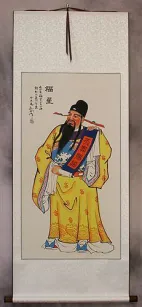
13. Lucky Star
14. Bat
15. Longevity / Long Life Wishes
17. Serendipity / Happy Coincidence
18. Serendipity / Lucky Coincidence
19. Dragon and Phoenix Brings Luck
20. Prosperity
Year-In Year-Out Have Abundance
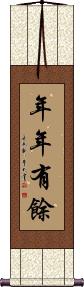
年年有餘 is a common proverb or wish of prosperity you'll hear around the time of Chinese New Year.
Directly translated character by character, it means “Year Year Have Surplus.” A more natural English translation including the deeper meaning would be “Every Year may you Have Abundance in your life.”
On a side note, this phrase often goes with a gift of something related to fish. This is because the last character, “yu” which means surplus or abundance, has exactly the same pronunciation in Mandarin as the word for “fish.”
This is also one of the most common titles for traditional paintings that feature koi fish.
In China, this phrase might make an odd wall scroll - a customer asked especially for this common phrase which is why it appears here. See my other abundance-related words if you want a wall scroll that will seem more comfortable in Chinese culture.
Note: This can be pronounced in Korean, but it's not a commonly used term.
See Also: Prosperity
Abundance and Prosperity
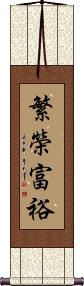
繁榮富裕 is a proverb about “Prosperity and Abundance.”
This presents and reinforces the ideas of being prosperous, a booming economy, well-to-do, well-off, wealthy, riches, and opulence.
While this is the ancient/traditional Chinese way to write this, most Japanese can fully read and understand it. It's also the correct form of old Korean Hanja (though few Koreans of the current generation will be able to read this).
Abundance / Prosperous
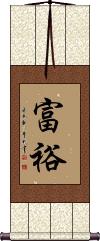
富裕 means prosperous, having an abundance, well-to-do, or well-off.
It's a simple word that suggests “you have made it” in Chinese, Japanese Kanji, and Korean Hanja.
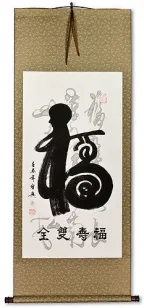
Good Luck / Good Fortune
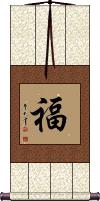
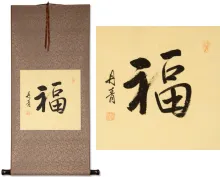
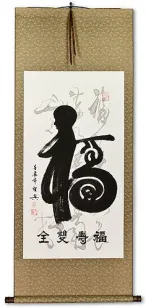
福 is pronounced “fu” in Chinese.
The character “fu” is posted by virtually all Chinese people on the doors of their homes during the Spring Festival (closely associated with the Chinese New Year).
One tradition from the Zhou Dynasty (beginning in 256 B.C.) holds that putting a fu symbol on your front door will keep the goddess of poverty away.
福 literally means good fortune, prosperity, blessed, blessedness, happiness, and fulfillment.
You'll also see this character in Vietnam (where Chinese characters were the written form until a romanization reform) where it is pronounced Phúc - a word commonly used in Vietnamese names because of its good meaning.
See Also: Lucky
House of Good Fortune
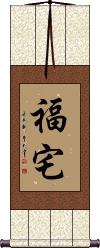
福宅 is perhaps the Chinese equivalent of “This blessed house” or perhaps “home sweet home.”
This phrase literally means “Good fortune house” or “Good luck household.” It makes any Chinese person who sees it feel that good things happen in the home in which this calligraphy is hung.
Happiness / Fortune / Lucky
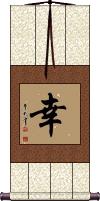
幸 can mean happiness, good fortune, good luck, and in the old days, good harvest or bounty.
Note: From Japanese, this character is sometimes romanized as “sachi,” and is often pronounced “kou” or sometimes “rei” when used in compound words with other Kanji.
Opportunity / Good Luck
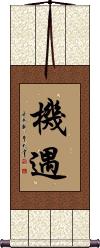
機遇 is the kind of opportunity that comes via good luck or good fortune.
This word is sometimes translated as “stroke of good luck.”
While there are other ways to express “opportunity,” I think this version is best for a calligraphy wall scroll or portrait.
Note: In Korean Hanja, this would also mean “Meeting someone under strange circumstances.”
See Also: Good Luck
Good Luck
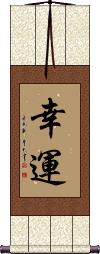
幸運 can be translated as “good luck,” fortunate, lucky, and/or “good fortune” in Chinese, Korean and Japanese.
Occasionally, this is also translated as a type of happiness or a short way to write serendipity.
Fate / Chance Meeting
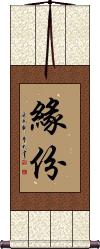
緣份 specifically represents the fate or destiny that brings two people together.
This is like the chance meeting of two people that leads sometime later to marriage.
This could also be the chance meeting of two business people who become partners and build a huge and successful company.
This idea is often associated with a fateful meeting leading to good fortune.
Some will define this word as “Destiny brings you two together” or “Meant to be.”
 Note: The second character can also be written without the left radical, as shown to the right. If you have a preference, please let use know in the special instructions for your project. There is no difference in meaning or pronunciation, just two (alternate) ways to write the same character.
See Also: Soulmates
Destiny / Fate
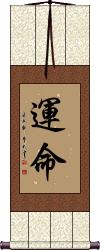
These two characters contain the ideas of fate, destiny, fortune, and luck in Chinese, Japanese Kanji, and old Korean Hanja.
運命 is often defined as “a person's fate” or “personal fate” in various dictionaries.
These two characters can be reversed (written in either order) and yield roughly the same meaning.
This particular character order is more common in old Korean and less common in modern Chinese.
See Also: Good Luck
Destiny / Fate
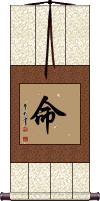
命 is often translated as “destiny.”
Sometimes this character is simply translated as “life” but more in terms of one's lot in life. In a certain context, this can mean command or decree (generally from a king or emperor). Of course, such a decree is part of fate and leads you to fulfill your destiny.
In Chinese, this word leans toward the fate or destiny definition.
In Korean, it is usually read simply as “life.”
In Japanese, it can mean all definitions shown above, depending on context.
Word of God / The Gospel
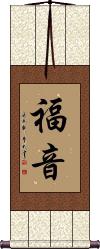
福音 is the Chinese, Korean and Japanese word for “Gospel” or “Word of God.”
福音 is a specifically Christian word in Asia (not used for any other religion).
The first character means blessing, good fortune, or good luck. This first character is a special character used throughout China to bring good tidings and fortune - especially during Chinese New Year. The second character means sound, noise, or news.
Together, these characters create a word that means “The Good News” or “The Sound of Good Fortune.”
When read by a Chinese or Japanese person, this word is always perceived as “The Christian Gospel,” “Word of God,” or even “The Voice of God.”
See Also: Christianity | Jesus Christ | God of Abraham
Five Red Bats
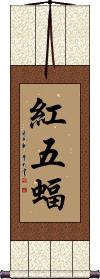
紅五蝠 is a play on words in Chinese because of some homophones.
The first thing you need to know is that the word for bat, 蝠, sounds exactly like the word for good fortune, 福. Thus, bats are often associated with good luck and good fortune in Chinese culture.
Five bats (五福 / 五蝠) means “five fortunes,” referring to luck, prosperity, wealth, happiness, and longevity.
The word red, 红, has the same sound as 宏 meaning vast, great, or magnificent. Therefore, a red bat means “vast fortune.”
Altogether, five red bats represent vast reaches of the five fortunes.
Lucky Star
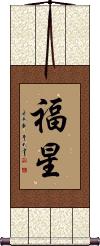
福星 is the lucky star, one of three Chinese deities (三星 or Three Stars) representing fortune/luck, prosperity, and longevity.
In Japanese, this can be the given name Fukusei - with the same “lucky star” or “star of good fortune” meaning.
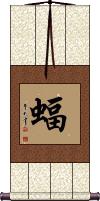
蝠 is the simplest way to write bat in Chinese and old Korean Hanja.
This also means bat in Japanese but is almost never written alone like this (it's often part of other titles for vampire bats or fruit bats).
In Chinese culture, the bat is a good luck charm, as the pronunciation is very similar to the word for “good luck” or “good fortune.” The character for bat (蝠) even looks like the good luck (福) character.
Longevity / Long Life Wishes
A wish for a long and prosperous life
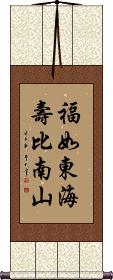
福如東海壽比南山 is a phrase that means “May you have good fortune as great as the eastern oceans, and may your life last as long as the southern mountains.”
In ancient Chinese mythology, the eastern oceans and southern mountains are where God resides (basically it is the same as saying “heaven”). So it's like saying, “May your good fortune and life be as vast as the heavens.”
There is also a longer, 14-character version of this phrase. Also, this can be cut into two scrolls (with half the phrase on each side - great for hanging on either side of a doorway). Just let me know if you'd like a special version (there is an additional cost).
Longevity / Long Life Wishes
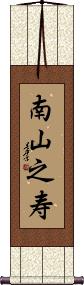
南山之壽 is a wish for long life for someone. The first part of this Japanese phrase is “Nan Zan,” which means “south mountain.” This mountain is one of the good wishes, good fortune, and prosperity. The title is often used as a salutation of good wishes.
The third Kanji is just a connector, and the last Kanji means long life or longevity.
I guess you could translate this phrase as “May your life be as long as Nan Zan is tall.”
Love and Happiness
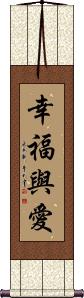
幸福與愛 is “happiness and love” in Chinese.
There is a suggestion of “good fortune” in the version of happiness used here.
Serendipity / Happy Coincidence
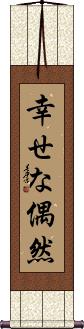
幸せな偶然 is one of many ways to express serendipity in Japanese.
The first two characters mean happiness, good fortune, luck, or blessing.
In the middle is a Japanese Hiragana character connecting these words/ideas.
The last two Kanji mean incidentally, by chance, randomly, unexpectedly, suddenly, accident, fortuity, or by coincidence.
Note: Because this selection contains some special Japanese Hiragana characters, it should be written by a Japanese calligrapher.
Serendipity / Lucky Coincidence
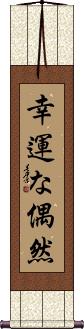
幸運な偶然 is one of many ways to express serendipity in Japanese.
The first two Kanji mean fortunate, lucky, fortune, or good luck.
In the middle is a Japanese Hiragana character connecting these words/ideas.
The last two Kanji mean incidentally, by chance, randomly, unexpectedly, suddenly, accident, fortuity, or by coincidence.
Dragon and Phoenix Brings Luck
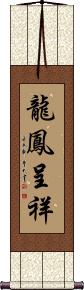
龍鳳呈祥 is often seen at weddings and other celebrations in China.
It suggests that the dragon and phoenix will bring you auspicious tidings.
The first character is a dragon.
The second is a phoenix.
The third is presents or brings.
And the last means auspicious, propitious, or luck.
Throughout China, the dragon and phoenix are symbols of good fortune. You will see these auspicious figures as decorative symbols on everything from buildings, furniture, wedding costumes, and sculptures in public parks to caskets and items used in ceremonies.
Prosperity
(also means salary)
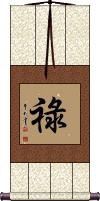
祿 is occasionally used in China to mean prosperity or good fortune.
祿 once meant the “official's salary” in old feudal China and Korea (obviously, the officials lived well, so you can imagine how this was associated with the idea of being prosperous).
祿 is only used in Korean historical documents for “salary.” In old Japanese, this means fief, allowance, stipend, reward, pension, grant, and sometimes happiness depending on context. It's very obscure in modern Japanese.
We have other entries that are better suited for a prosperity wall scroll. This entry just addresses “the coffee cup issue” where this character has been used on coffee cups and tee-shirts. However, without context, the meaning is ambiguous to some.
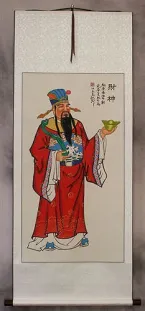
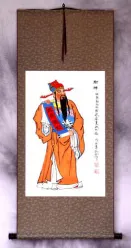
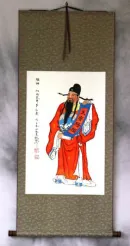
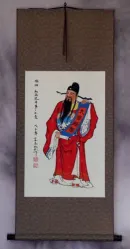
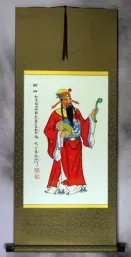
This in-stock artwork might be what you are looking for, and ships right away...



The following table may be helpful for those studying Chinese or Japanese...
| Title | Characters | Romaji (Romanized Japanese) | Various forms of Romanized Chinese | |
| Year-In Year-Out Have Abundance | 年年有餘 年年有馀 | nián nián yǒu yú nian2 nian2 you3 yu2 nian nian you yu niannianyouyu | nien nien yu yü niennienyuyü |
|
| Abundance and Prosperity | 繁榮富裕 繁荣富裕 | hanei yuuhuku haneiyuuhuku hanei yuhuku | fán róng fù yù fan2 rong2 fu4 yu4 fan rong fu yu fanrongfuyu | fan jung fu yü fanjungfuyü |
| Abundance Prosperous | 富裕 | fu yuu / fuyuu / fu yu | fù yù / fu4 yu4 / fu yu / fuyu | fu yü / fuyü |
| Good Luck Good Fortune | 福 | fuku | fú / fu2 / fu | |
| House of Good Fortune | 福宅 | fú zhái / fu2 zhai2 / fu zhai / fuzhai | fu chai / fuchai | |
| Happiness Fortune Lucky | 幸 | saki / sachi / rei / rē | xìng / xing4 / xing | hsing |
| Opportunity Good Luck | 機遇 机遇 | jī yù / ji1 yu4 / ji yu / jiyu | chi yü / chiyü | |
| Good Luck | 幸運 幸运 | kou un / kouun / ko un | xìng yùn / xing4 yun4 / xing yun / xingyun | hsing yün / hsingyün |
| Fate Chance Meeting | 緣份 / 緣分 缘份 / 缘分 | yuán fèn / yuan2 fen4 / yuan fen / yuanfen | yüan fen / yüanfen | |
| Destiny Fate | 運命 运命 | un mei / unmei | yùn mìng / yun4 ming4 / yun ming / yunming | yün ming / yünming |
| Destiny Fate | 命 | inochi / mei | mìng / ming4 / ming | |
| Word of God The Gospel | 福音 | fukuin | fú yīn / fu2 yin1 / fu yin / fuyin | |
| Five Red Bats | 紅五蝠 红五蝠 | hóng wǔ fú hong2 wu3 fu2 hong wu fu hongwufu | hung wu fu hungwufu |
|
| Lucky Star | 福星 | fukusei | fú xīng / fu2 xing1 / fu xing / fuxing | fu hsing / fuhsing |
| Bat | 蝠 | fú / fu2 / fu | ||
| Longevity Long Life Wishes | 福如東海壽比南山 福如东海寿比南山 | fú rú dōng hǎi shòu bǐ nán shān fu2 ru2 dong1 hai3 shou4 bi3 nan2 shan1 fu ru dong hai shou bi nan shan furudonghaishoubinanshan | fu ju tung hai shou pi nan shan fujutunghaishoupinanshan |
|
| Longevity Long Life Wishes | 南山之壽 南山之寿 | nan zan no jyu nanzannojyu | ||
| Love and Happiness | 幸福與愛 幸福与爱 | xìng fú yǔ ài xing4 fu2 yu3 ai4 xing fu yu ai xingfuyuai | hsing fu yü ai hsingfuyüai |
|
| Serendipity Happy Coincidence | 幸せな偶然 | shiawa se na guu zen shiawasenaguuzen shiawa se na gu zen | ||
| Serendipity Lucky Coincidence | 幸運な偶然 | kou un na guu zen kouunnaguuzen ko un na gu zen | ||
| Dragon and Phoenix Brings Luck | 龍鳳呈祥 龙凤呈祥 | lóng fèng chéng xiáng long2 feng4 cheng2 xiang2 long feng cheng xiang longfengchengxiang | lung feng ch`eng hsiang lungfengchenghsiang lung feng cheng hsiang |
|
| Prosperity | 祿 禄 | fuchi | lù / lu4 / lu | |
| In some entries above you will see that characters have different versions above and below a line. In these cases, the characters above the line are Traditional Chinese, while the ones below are Simplified Chinese. | ||||

Successful Chinese Character and Japanese Kanji calligraphy searches within the last few hours...



