Many custom options...


And formats...



Not what you want?
Try other similar-meaning words, fewer words, or just one word.
Nine Abstract Koi Fish in Chinese / Japanese...
Buy a Nine Abstract Koi Fish calligraphy wall scroll here!
Personalize your custom “Nine Abstract Koi Fish” project by clicking the button next to your favorite “Nine Abstract Koi Fish” title below...
Switched to secondary search mode due to lack of results using primary.
These secondary results may not be very accurate. Try a different but similar meaning word or phrase for better results. Or...
Look up Nine Abstract Koi Fish in my Japanese Kanji & Chinese Character Dictionary(My dictionary is a different system then the calligraphy search you just tried)
If you want a special phrase, word, title, name, or proverb, feel free to contact me, and I will translate your custom calligraphy idea for you.
1. Year-In Year-Out Have Abundance
3. Without a big net, how can you catch fish?
5. Drain the pond to get all the fish
6. Fish
8. Goldfish
9. Words Have Enormous Weight: One Word Worth Nine Caldrons
10. Koi Fish
11. Carp / Koi Fish
13. Ku-Dan
14. Kun
15. Kyojitsu: Falsehood and Truth
16. Mermaid
17. Mermaid / Merman
18. Nine
19. Facing the Wall Nine Years
20. Shaolin Temple
21. Shark
23. Suzuki
25. Trigger Fish
26. Tuna
27. Have a Walking Stick at the Ready Before You Stumble
28. Yellow
29. Pisces
Year-In Year-Out Have Abundance
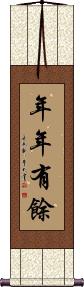
年年有餘 is a common proverb or wish of prosperity you'll hear around the time of Chinese New Year.
Directly translated character by character, it means “Year Year Have Surplus.” A more natural English translation including the deeper meaning would be “Every Year may you Have Abundance in your life.”
On a side note, this phrase often goes with a gift of something related to fish. This is because the last character, “yu” which means surplus or abundance, has exactly the same pronunciation in Mandarin as the word for “fish.”
This is also one of the most common titles for traditional paintings that feature koi fish.
In China, this phrase might make an odd wall scroll - a customer asked especially for this common phrase which is why it appears here. See my other abundance-related words if you want a wall scroll that will seem more comfortable in Chinese culture.
Note: This can be pronounced in Korean, but it's not a commonly used term.
See Also: Prosperity | Good Fortune
Beautiful Woman Proverb
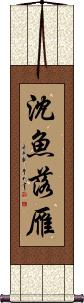
沈魚落雁 is an old proverb that literally means “fish sink, goose alights.”
...But this takes some explaining. This is a proverb from Zhuangzi (莊子), who lived in the late 4th century BC.
This figuratively refers to female beauty that is so captivating that even the birds and beasts take notice.
Perhaps a better and more accurate way to describe this is to say that it speaks of the charms of a uniquely beautiful woman who is so beautiful that fish stay on the bottom of the water and flying wild geese fall from the sky in shame.
This proverb is so famous that it is also known and used in Japan (same characters, different pronunciation).
Note: This can also be written 沉魚落雁 instead of 沈魚落雁 (just the first character varies slightly).
Without a big net, how can you catch fish?
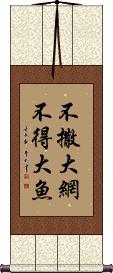
不撒大網不得大魚 is a Chinese proverb that literally translates as: [if one does] not cast a big net, [one can] not get big fish.
Figuratively, this means: One cannot make great accomplishments without making great efforts or taking great pains.
This is sort of the fishing version of, “No pain, no gain.”
Daruma / Damo

達磨 in Japanese usually refers to Daruma, a tumbling doll with a round red-painted body.
In Japan, Daruma is a good-luck doll which is supposed to in the shape of Bodhidharma, with a blank eye to be completed when a person's wish is granted.
達磨 is also Bodhidharma or Dharma. 達磨 comes from an ancient word that means holding fast and keeping ordinances, statutes, laws, or practice.
This is also a title for Damo, or Bodhidharma, the twenty-eighth Indian and first Chinese patriarch, who arrived in China A.D. 520, the reputed founder of the Chan or Intuitional School in China. He is described as son of a king in southern India. He famously engaged in silent meditation for nine years.
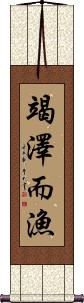
Drain the pond to get all the fish
Kill the goose that lays the golden eggs
In 632 BC, Duke Wen of the Kingdom of Jin was about to lead an army against the forces of the Kingdom of Chu.
The Duke asked one of his advisers, Jiu Fan, how they could win the impending battle, as they were drastically outnumbered.
Jiu Fan said, “All is fair in war,” and suggested a plan of dishonorable tactics (cheating).
The Duke was unsure of this advice, so he asked another adviser, Yong Ji, who replied, “If you catch fish by draining the pond, you can certainly get all the fish. But there will be no fish the following year. You can cheat this one time in battle, but such tactics can only be used once, as the enemy will be wise in future encounters.”
The Duke heard the words of his wiser adviser but cheated to gain victory in the battle. However, he rewarded Yong Ji more than Jiu Fan at the victory celebration, stating that while Jiu Fan's advice gained one victory, the wise words of Yong Ji would last forever.
This Chinese idiom/proverb is still used, over 2600 years later to remind people not to burn bridges, cheat, or dishonor themselves in exchange for a short-term gain while sacrificing the future.
竭澤而漁 is very similar to the meaning of the English phrase, “Kill the goose that lays the golden eggs.”
Fish
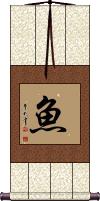
魚 is the character that means fish in Chinese, Japanese Kanji, and old Korean Hanja.
A Bright Future
Incredible 10,000-Mile Flight of the Peng
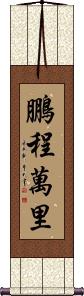
鵬程萬里 is an ancient Chinese proverb used in modern times to wish someone a long and successful career.
It's really about the 10,000 Flight of the Peng (Peng, also known as Roc is a mythical fish that can turn into a bird and take flight).
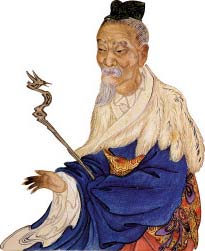
莊子
Zhuangzi or Chuang Tzu
Breaking down each character:
1. Peng or Roc (a kind of bird).
2. Journey (in this case, a flight).
3. 10,000 (Ten Thousand).
4. Li is a unit of distance often referred to as a “Chinese Mile,” though the real distance is about half a kilometer.
Direct Translation: “Peng's Journey [of] 10,000 Li.”
Literal meaning: “The 10,000-Li Flying Range Of The Roc.”
Perceived meaning: “To have a bright future” or “To go far.”
This proverb/idiom comes from the book of Zhuangzi or Chuang Tzu. It tells the tale of a huge fish that could turn into a gigantic bird. This bird was called a “peng” and was many miles long. This legendary size allowed the Peng to fly from the Northern Sea to the Southern Sea in a single bound.
Wishing someone “a Peng's Journey of 10,000 Li” will imply that they can travel far without stopping and will have great success, a long career, and a prosperous future.
Goldfish
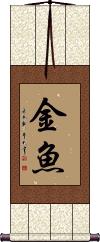
金魚 is the title for goldfish in Chinese and Japanese.
There was a time in ancient China when only the Emperor could possess the actual yellow-gold colored fish. This is why alternate coloration such as orange, black, red, and white was bred. Many believe this is why colors other than yellow-gold are more common for “goldfish” in pet shops today.
Words Have Enormous Weight: One Word Worth Nine Caldrons
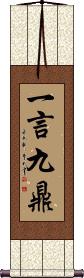
一言九鼎 is an ancient Chinese proverb used in modern times to talk of profound or powerful words.
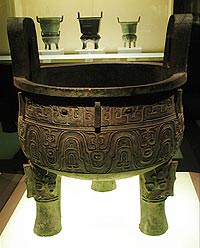 The literal meaning is “one word [worth] nine [sacred] tripods.” The tripod is a highly-prized three-legged (sometimes four-legged) metal pot or kettle of ancient China. They are often made of bronze, and the Emperor would have large ones gilded in gold. See the image to the right for an example.
Koi Fish
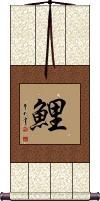
鯉 is the Japanese Kanji that created the title “koi fish.” 鯉 is pronounced “koi” in Japanese.
Here is the reality: 鯉 actually means “carp” in Chinese, Japanese Kanji, and old Korean Hanja. Koi fish really are carp (by species) and were bred to obtain colorful variations in ancient China. Some generations later, some of these colorful fish were transported to Japan, where they also became vastly popular.
Note: Please see our other entry for koi fish (Nishiki Goi) which is a more normal selection for a Japanese koi fish enthusiast to have on their wall.
Carp / Koi Fish
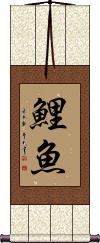
鯉魚 is one Chinese title for what westerners call “koi fish.”
This literally means “carp fish” (which is what koi fish really are).
You probably want the other title, which is more specific to the colorful fish that you are thinking of. Look for “Nishiki Goi” on our website.
Koi Fish / Nishiki Goi
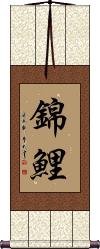
If you like or collect and maintain koi fish, 錦鯉 is the wall scroll for you.
Technically, this is a certain and revered species of “koi fish” in Japan, but it is the most normal selection for a wall scroll (more normal than the actual Kanji for “koi” or “fish” alone.
This literally means “brocade carp” or “embroidered carp.” This term is also used to mean the same thing in China (which is the origin of koi fish breeding and cultivation, several generations before they became popular in Japan).
For those of you that don't know, the Kanji for “koi” (which is pronounced “goi” in this entry) really means “carp.” If you want the word that means “koi fish,” it would just be the generic word for “carp fish.” That would include both colorful carp and the more mundane gray carp (the ones people eat if they don't mind lots of bones).
Ku-Dan

九段 is a Japanese Kanji word that means “ninth degree” (in martial arts, go, shogi, etc.).
九段 is the ninth black belt rank in Japanese martial arts.
The first Kanji means nine or ninth in Japanese.
The second Kanji means step, grade, rank, or level.
Kun
Sea Creature
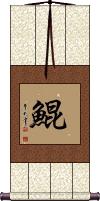
A 鲲 (Kun) is a famous sea monster, often associated or used interchangeably with a 鵬 (Peng).
鯤 is comparable to Leviathan or Jonah's whale.
In Chinese mythology, the Kun is a giant fish said to be able to turn into a bird.
鯤 and the mythological creature is also known in Japanese and Korean. However, in some contexts, this character can refer to fry (fish babies).
Kyojitsu: Falsehood and Truth
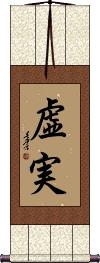
虚実 is a Japanese word that means “falsehood [and] truth” or “fiction [and] fact.”
This concept is used in warfare, gameplay, and martial arts strategies. 虚実 can be a strategy of real and/or deceptive moves. This gets to some Sun Tzu Art of War stuff where in warfare a strategic move is either a real and serious move or it is a deceptive blow.
Let's explore each character in more depth:
虚 was originally written 虛 (there is a very subtle difference in the strokes at the bottom of the character) and means unpreparedness, falsehood, emptiness, void, abstract theory, empty or unoccupied, diffident or timid, false, humble or modest, virtual, or in vain.
In the Buddhist context, 虛 represents the Pali/Sanskrit word “śūnya,” meaning empty, vacant, unreal, unsubstantial, untrue, space, humble, or in vain.
In ancient Eastern/Chinese astronomy, 虛 represents the “Emptiness” constellation (one of the 28 mansions in the sky).
実 was originally 實 in Chinese (they currently write it as 实 in Simplified Chinese) with the meaning, truth, reality, sincerity, honesty, fidelity, and substance.
The Buddhist context is similar, adding real, true, honest, really, solid, definitely, sincere, solid, fixed, full, to fill, fruit, kernel, verily, in fact, the supreme fact, or ultimate reality to the definition.
Mermaid
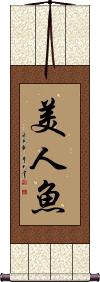
Mermaid / Merman
(Unisex)
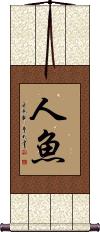
人魚 is the Japanese Kanji, Korean Hanja, and Chinese word for “merman” or “mermaid.”
It literally means “human fish.”
人魚 is a non-gender-specific or unisex word in all three languages.
Nine
The number nine
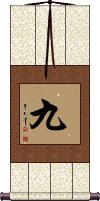
九 is the number nine in Chinese, Japanese Kanji, and old Korean Hanja.
九 is a strange selection for a wall scroll, so it's here mostly for reference. I guess it's OK if the number nine is important to you.
 Because this character is rather simple (just two strokes), there is an anti-fraud way to write nine on bank documents. This version is shown to the right.
Facing the Wall Nine Years
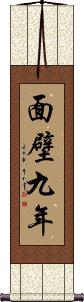
面壁九年 is a Buddhist term that means “facing a wall for nine years.”
This refers to the Bodhidharma who stared at a wall in meditation at the Shaolin Temple (or in a cave) for nine years until reaching full enlightenment.
Shaolin Temple
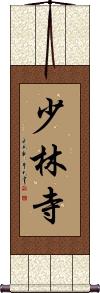
少林寺 is the full title of the Shaolin Temple.
This refers to the Buddhist monastery famous for its kung fu monks.
少林寺 is also known in Japanese, where they use the same characters but romanize them as Shourinji or Shōrinji.
Some believe this monastery and temple represent where Bodhidharma sat with his face to a wall for nine years, leading to his discovery of enlightenment and the establishment of Buddhism in China.
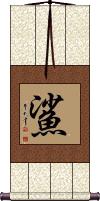
This single Chinese character means shark.
However, in Japanese, it can refer to the family of goby fish.
鯊 is good if you're looking for the word shark in Chinese and Japanese folks might misunderstand it.
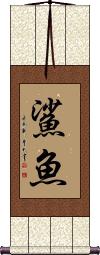
鯊魚 means shark (literally “shark fish”) in Chinese.
Sit in Meditation
Zazen
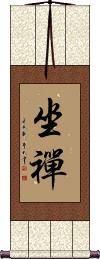
坐禪 describes the act of sitting in a state of deep meditation.
You'll notice that the second character is Chan/Zen (often used to title the meditative form of Buddhism).
In Korean Hanja, this means “religious meditation” (roughly the same as the Chinese definition).
Buddhists may define this as sitting in dhyāna, abstract meditation, fixed abstraction, or contemplation.
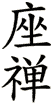 Japanese note: This will make sense in Japanese but the Kanji shown to the left are partially in ancient/traditional Japanese form. Japanese Buddhists may use 坐禪, 坐禅, 座禪, or 座禅. The most standard/modern Japanese form of this word is shown to the right. Click on the Kanji to the right (instead of the button above) if you want this specifically Japanese version.
Suzuki
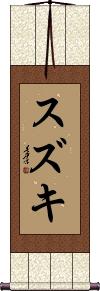
This is the Japanese Katakana name for Suzuki (Japanese automobile and motorcycle manufacturer).
This name can also refer to a fish (specifically a sea bass or perch).
Note: Because this title is entirely Japanese Katakana, it should be written by a Japanese calligrapher.
Teach A Man To Fish
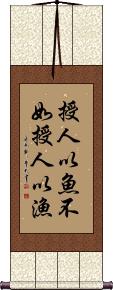
授人以魚不如授人以漁 is the Chinese version of the proverb, “Give a man a fish and you feed him for a day; teach a man to fish and you feed him for a lifetime.”
This implies that knowledge is the best charity.
Trigger Fish
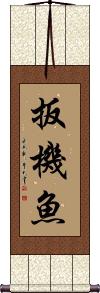
扳機魚 is the Chinese title for the Trigger Fish.
Tuna
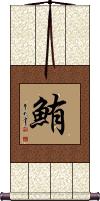
鮪 is the Chinese and Japanese character for tuna.
In Chinese, this is usually used to mean the “little tunny” (Euthynnus alletteratus), the most common tuna in the Atlantic Ocean. However, it can refer to any fish of the Thunnus genus.
In Japanese, it can refer to the Pacific bluefin tuna (Thunnus orientalis).
Have a Walking Stick at the Ready Before You Stumble
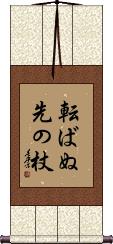
転ばぬ先の杖 is a Japanese proverb that literally translates as: Have a walking stick ready before stumbling.
This is similar to the English idiom, “A stitch in time saves nine.”
In simple terms, this means: Always being prepared in advance.
Note: Because this selection contains some special Japanese Hiragana characters, it should be written by a Japanese calligrapher.
See Also: Fix Roof Before the Rain; Dig the Well Before You Are Thirsty
Yellow
Yellow Color
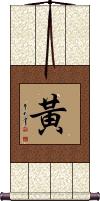
黃 is the single character for the color yellow in Chinese.
This can be a Chinese surname Huang or a Korean surname Hwang.
In China, yellow is traditionally the color of the emperor. In fact, there was a time when only the emperor could wear yellow clothing or own yellow pet fish.
Note: Goldfish were bred originally in China for the emperor. When the perfect yellow fish was bred, all but the emperor were banned from owning any. Thus a more orange-colored goldfish dominated the market.
Notes: 黃 is not a common selection for a wall scroll. In certain contexts in China, yellow can refer to pornography or vice.
 This character is written with a slight variation in Simplified Chinese and modern Japanese. Click on the image to the right if you want this alternate version.
Pisces Zodiac Symbol / Sign
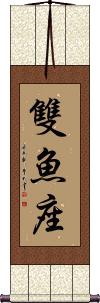
雙魚座 is the Chinese way to write Pisces (fish) from western astrology.
Please note this version is only used in Chinese (see the other version if Japanese is your audience).
See Also: Chinese Zodiac
Pisces Zodiac Symbol / Sign
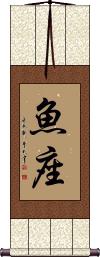
魚座 is the Japanese way to write Pisces (fish) of western astrology.
Please note this version is only used in Japanese (see the other version if Chinese is your audience).
See Also: Chinese Zodiac
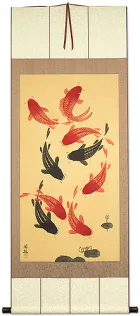
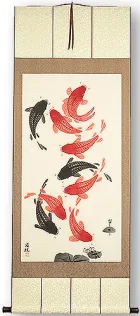
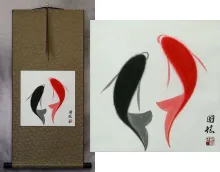
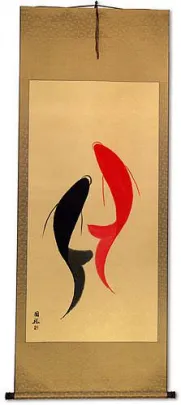
This in-stock artwork might be what you are looking for, and ships right away...
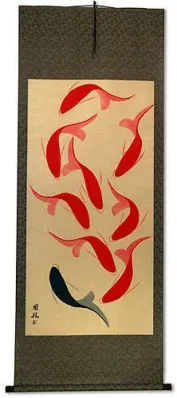
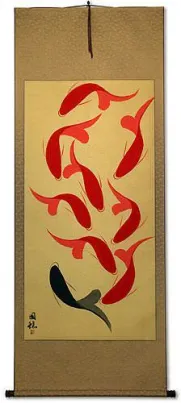
Gallery Price: $160.00
Your Price: $88.88
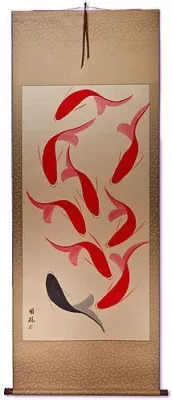
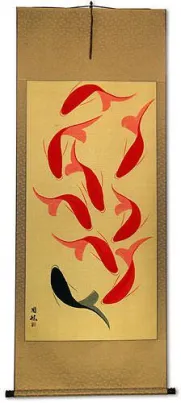
Gallery Price: $500.00
Your Price: $248.88
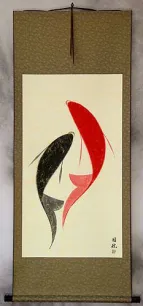
Gallery Price: $90.00
Your Price: $59.00

Gallery Price: $90.00
Your Price: $45.00


The following table may be helpful for those studying Chinese or Japanese...
| Title | Characters | Romaji (Romanized Japanese) | Various forms of Romanized Chinese | |
| Year-In Year-Out Have Abundance | 年年有餘 年年有馀 | nián nián yǒu yú nian2 nian2 you3 yu2 nian nian you yu niannianyouyu | nien nien yu yü niennienyuyü |
|
| Beautiful Woman Proverb | 沈魚落雁 沈鱼落雁 | chin gyo raku gan chingyorakugan | chén yú luò yàn chen2 yu2 luo4 yan4 chen yu luo yan chenyuluoyan | ch`en yü lo yen chenyüloyen chen yü lo yen |
| Without a big net, how can you catch fish? | 不撒大網不得大魚 不撒大网不得大鱼 | bù sā dà wǎng bù dé dà yú bu4 sa1 da4 wang3 bu4 de2 da4 yu2 bu sa da wang bu de da yu busadawangbudedayu | pu sa ta wang pu te ta yü pusatawangputetayü |
|
| Daruma Damo | 達磨 达磨 | daruma | dá mó / da2 mo2 / da mo / damo | ta mo / tamo |
| Drain the pond to get all the fish | 竭澤而漁 竭泽而渔 | jié zé ér yú jie2 ze2 er2 yu2 jie ze er yu jiezeeryu | chieh tse erh yü chiehtseerhyü |
|
| Fish | 魚 鱼 | sakana / gyo / uo | yú / yu2 / yu | yü |
| A Bright Future | 鵬程萬里 鹏程万里 | péng chéng wàn lǐ peng2 cheng2 wan4 li3 peng cheng wan li pengchengwanli | p`eng ch`eng wan li pengchengwanli peng cheng wan li |
|
| Goldfish | 金魚 金鱼 | kin gyo / kingyo | jīn yú / jin1 yu2 / jin yu / jinyu | chin yü / chinyü |
| Words Have Enormous Weight: One Word Worth Nine Caldrons | 一言九鼎 | yī yán jiǔ dǐng yi1 yan2 jiu3 ding3 yi yan jiu ding yiyanjiuding | i yen chiu ting iyenchiuting |
|
| Koi Fish | 鯉 鲤 | koi | lǐ / li3 / li | |
| Carp Koi Fish | 鯉魚 鲤鱼 | lǐ yú / li3 yu2 / li yu / liyu | li yü / liyü | |
| Koi Fish Nishiki Goi | 錦鯉 锦鲤 | nishiki goi nishikigoi | jǐn lǐ / jin3 li3 / jin li / jinli | chin li / chinli |
| Ku-Dan | 九段 | ku dan / kudan | ||
| Kun | 鯤 鲲 | kon | kūn / kun1 / kun | k`un / kun |
| Kyojitsu: Falsehood and Truth | 虚実 | kyo jitsu / kyojitsu | ||
| Mermaid | 美人魚 美人鱼 | měi rén yú mei3 ren2 yu2 mei ren yu meirenyu | mei jen yü meijenyü |
|
| Mermaid Merman | 人魚 人鱼 | nin gyo / ningyo | rén yú / ren2 yu2 / ren yu / renyu | jen yü / jenyü |
| Nine | 九 / 玖 | kyuu / kyu | jiǔ / jiu3 / jiu | chiu |
| Facing the Wall Nine Years | 面壁九年 | menpeki kyunen menpekikyunen | miàn bì jiǔ nián mian4 bi4 jiu3 nian2 mian bi jiu nian mianbijiunian | mien pi chiu nien mienpichiunien |
| Shaolin Temple | 少林寺 | shou rin ji shourinji sho rin ji | shào lín sì shao4 lin2 si4 shao lin si shaolinsi | shao lin ssu shaolinssu |
| Shark | 鯊 鲨 | haze | shā / sha1 / sha | |
| Shark | 鯊魚 鲨鱼 | shā yú / sha1 yu2 / sha yu / shayu | sha yü / shayü | |
| Sit in Meditation | 坐禪 坐禅 | za zen / zazen | zuò chán / zuo4 chan2 / zuo chan / zuochan | tso ch`an / tsochan / tso chan |
| Suzuki | スズキ | su zu ki / suzuki | ||
| Teach A Man To Fish | 授人以魚不如授人以漁 授人以鱼不如授人以渔 | shòu rén yǐ yú bù rú shòu rén yǐ yú shou4 ren2 yi3 yu2 bu4 ru2 shou4 ren2 yi3 yu2 shou ren yi yu bu ru shou ren yi yu | shou jen i yü pu ju shou jen i yü | |
| Trigger Fish | 扳機魚 扳机鱼 | bān jī yú ban1 ji1 yu2 ban ji yu banjiyu | pan chi yü panchiyü |
|
| Tuna | 鮪 鲔 | maguro | wěi / wei3 / wei | |
| Have a Walking Stick at the Ready Before You Stumble | 転ばぬ先の杖 | koro ba nu saki no tsue korobanusakinotsue | ||
| Yellow | 黃 黄 | hon / kou / hon / ko | huáng / huang2 / huang | |
| Pisces Zodiac Symbol Sign | 雙魚座 双鱼座 | shuāng yú zuò shuang1 yu2 zuo4 shuang yu zuo shuangyuzuo | shuang yü tso shuangyütso |
|
| Pisces Zodiac Symbol Sign | 魚座 鱼座 | uo-za | yú zuò / yu2 zuo4 / yu zuo / yuzuo | yü tso / yütso |
| In some entries above you will see that characters have different versions above and below a line. In these cases, the characters above the line are Traditional Chinese, while the ones below are Simplified Chinese. | ||||

Successful Chinese Character and Japanese Kanji calligraphy searches within the last few hours...



