Many custom options...


And formats...



Not what you want?
Try other similar-meaning words, fewer words, or just one word.
Gregs Response Was Weird English in Chinese / Japanese...
Buy a Gregs Response Was Weird English calligraphy wall scroll here!
Personalize your custom “Gregs Response Was Weird English” project by clicking the button next to your favorite “Gregs Response Was Weird English” title below...
Switched to secondary search mode due to lack of results using primary.
These secondary results may not be very accurate. Try a different but similar meaning word or phrase for better results. Or...
Look up Gregs Response Was Weird English in my Japanese Kanji & Chinese Character Dictionary(My dictionary is a different system then the calligraphy search you just tried)
If you want a special phrase, word, title, name, or proverb, feel free to contact me, and I will translate your custom calligraphy idea for you.
1. 100 Years of Happy Marriage
2. Even a fool may sometimes come up with a good idea
4. Year-In Year-Out Have Abundance
5. Optimism / Happy With Your Fate
8. Adrian
9. Akuma
10. Albert
11. Alex
12. Amazing Grace
13. Amen
15. Any success can not compensate for failure in the home
16. Archer
18. Asian Pride / Oriental Pride / AZN Pryde
19. August
20. 1000 good moves ruined by 1 bad
22. Be Happy
23. The Beatles
24. Beauty is in the eyes of the beholder
25. Beer
26. Believer
27. Benjamin
30. Bonsai / Penzai
32. English / Briton / Person from England
34. Brown
35. Bruce Lee
36. Triple Truth of Japanese Buddhism
37. Bushindo
38. Butterfly
39. Keep Calm in Face of Adversity
41. Cathie
42. Cecilia
43. Celia
44. Cesar
45. Chan
46. Chinn
48. Christmas
49. Coffee / Café
50. Community
52. Corinthians 13:4
53. Cowboy
55. Crisis equals Danger plus Opportunity?
56. Crystal
57. Daodejing / Tao Te Ching - Excerpt
58. Deanna
61. Destiny
62. Devotion / Dedication / Attentive / Focused
63. Devotion / Diligence / Vigorous / Energetic
64. Religious Devotion / Faith in God / Religious Faith
65. Diana
66. Discipline / Training / Tempering Character
67. Dog
68. Dojo / Martial Arts Studio
69. Dragon Warrior
70. Drain the pond to get all the fish
72. Edwin
73. Elmo
74. England
75. Let Us Try
76. Everything Happens for a Reason
78. Exercise
79. Faith is the bird that feels the light when the dawn is still dark
80. Fall Down Seven Times, Get Up Eight
81. Fear No Evil
82. Fear God
83. Fen
84. Filial Piety
85. The Five Principles of Reiki
86. Soccer / Football / Futbol
88. Four Noble Truths: Path Leading Away From Suffering
89. Free Spirit
91. Full Contact
100 Years of Happy Marriage
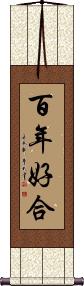
百年好合 is a wish or greeting, often heard at Chinese weddings, for a couple to have 100 good years together.
Some will translate this more naturally into English as: “May you live a long and happy life together.”
The character breakdown:
百 = 100
年 = Years
好 = Good (Happy)
合 = Together
Even a fool may sometimes come up with a good idea
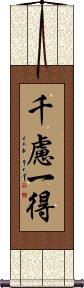
千慮一得 means “1000 tries, one success,” or “[a] thousand tries [leads to] one success.”
This proverb is a humble way to express your success, ideas, or accomplishments. As if you are a fool who just got lucky in inventing or creating something.
Translations for this proverb include:
Even without any notable ability on my part, I may still get it right sometimes by good luck.
Even a fool may sometimes come up with a good idea.
Compare this to the English idiom, “Even a broken clock is right twice a day.”
Five Reflections / Gosei
ki ryo ku ni ka ku ru na ka ri shi ka? do ryo ku ni u ra mi na ka ri shi ka?
bu sho u ni wa ta ru na ka ri shi ka?
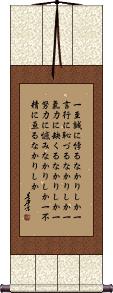
These are the “Five Reflections” of Vice Admiral Hajime Matsushita of the Japanese Imperial Navy.
These days, the Five Reflections are recited or contemplated daily by Japan Maritime Self-Defense Force recruits in training. This long proverb is popularly translated into English this way:
Hast thou not gone against sincerity?
Hast thou not felt ashamed of thy words and deeds?
Hast thou not lacked vigor?
Hast thou not exerted all possible efforts?
Hast thou not become slothful?
Note: Because this selection contains some special Japanese Hiragana characters, it should be written by a Japanese calligrapher.
Year-In Year-Out Have Abundance
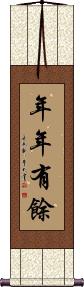
年年有餘 is a common proverb or wish of prosperity you'll hear around the time of Chinese New Year.
Directly translated character by character, it means “Year Year Have Surplus.” A more natural English translation including the deeper meaning would be “Every Year may you Have Abundance in your life.”
On a side note, this phrase often goes with a gift of something related to fish. This is because the last character, “yu” which means surplus or abundance, has exactly the same pronunciation in Mandarin as the word for “fish.”
This is also one of the most common titles for traditional paintings that feature koi fish.
In China, this phrase might make an odd wall scroll - a customer asked especially for this common phrase which is why it appears here. See my other abundance-related words if you want a wall scroll that will seem more comfortable in Chinese culture.
Note: This can be pronounced in Korean, but it's not a commonly used term.
See Also: Prosperity | Good Fortune
Optimism / Happy With Your Fate
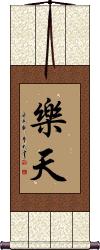
樂天 is about being optimistic and also making the best of whatever life throws at you.
This is hard to define. One dictionary defines this as “acceptance of fate and happy about it.” There is one English word equivalent, which is sanguinity or sanguinary.
You can also say that this means “Be happy with whatever Heaven provides,” or “Find happiness in whatever fate Heaven bestows upon you.” 樂天 suggests being an optimist in life.
Note: This is sometimes a given name in China.
 Please note that Japanese tend to write the first character in a slightly-different form (as seen to the right). Let us know if you have a preference when you place your order.
Accountant / CPA
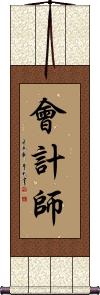
會計師 is the occupational or legal title of an accountant in Chinese and Korean.
In Asia, particular studies and certifications are needed to obtain this title. Therefore, this is the closest match to the English term for Certified Public Accountant. Such a professional might have a sign on his desk or a name badge that has his/her name on it and this title in Chinese characters. It's not too common to see this on a wall scroll in Asia, but you can take such liberties in the west.
Adamantine / King Kong
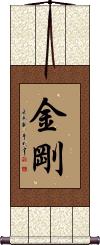
金剛 can translate as adamantine from Chinese, Japanese, and old Korean.
Other meanings and translations can include diamond, thunderbolt, Indra's indestructible weapon, a Buddhist symbol of the indestructible truth, Vajra (a mythical weapon), guardian deity, hardness, indestructibility, power, the least frangible of minerals.
The Chinese pronunciation of “Jīn Gāng” became the loanword used in English as “King Kong.” You can see King Kong as the indestructible ape guardian deity depending on how you read the story.
Adrian
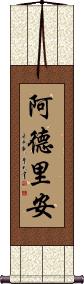
阿德里安 is the transliteration to Mandarin Chinese for the English name Adrian.
Akuma
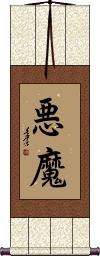
悪魔 is a Japanese word that means Devil, Demon, or Satan.
悪魔 is also the English/Japanese title for a character in Street Fighter.

 Note: In Japan, the Street Fighter is known as Gouki or Goki. This sort of means grand ghost, or great spirit. If you want this instead of the Akuma title, just click on the Goki Kanji to the right.
Albert
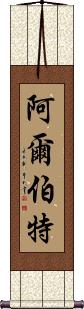
阿爾伯特 is the transliteration to Mandarin Chinese for the English name Albert.
Alex
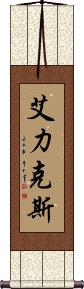
This is the most common transliteration to Mandarin Chinese for the English name Alex.
Alex
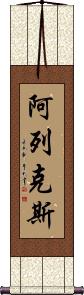
This is another/alternate transliteration to Mandarin Chinese for the English name Alex.
Amazing Grace
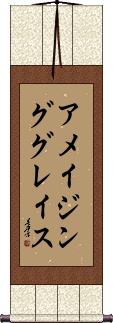
アメイジング・グレイス is the Japanese Katakana for Amazing Grace.
This phonetically sounds like the English, “Amazing Grace” but does not hold that meaning since it is a transliteration versus a translation.
Note: Because this title is entirely Japanese Katakana, it should be written by a Japanese calligrapher.
Amen

アーメン is the Japanese Katakana (phonetic Japanese) for Amen.
This sounds just like the “Amen” said in English at the end of prayers.
Note: Because this title is entirely Japanese Katakana, it should be written by a Japanese calligrapher.
Anime / Animation
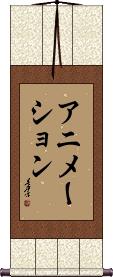
アニメーション is the word “Animation” in Japanese Katakana.
This can refer to any animated film or cartoon.
アニメーション is a loanword from English, which sounds like “Animation.”
Note: Because this title is entirely Japanese Katakana, it should be written by a Japanese calligrapher.
Any success can not compensate for failure in the home
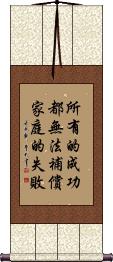
所有的成功都無法補償家庭的失敗 is a Chinese proverb that can be translated into English as “No success can compensate for failure in the home.”
Also, the word “home” can be exchanged with “family.”
Archer
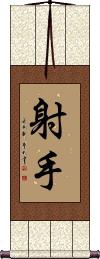
射手 means archer, shooter, or marksman in Chinese, Japanese Kanji, and old Korean Hanja.
Depending on the context, it can also mean “goal-getter” in Chinese. This would also be the word for a bowman.
射手 is modern in Asia, meaning that it's only been in use for a few hundred years. However, the more ancient version of the archer is often not even recognized by the current generation of Chinese and Japanese people.
The first character means “shoot” or “fire” (in the context of a gun or bow). It's also a suffix for radioactive things (in the context of chemistry) - radioactive things “fire off” electrons. In Japanese, the first Kanji is a short name and suffix for archery.
The second character means “hand,” but the hand can also mean a person, in the same way, that a “farmhand” is a person in English.
Sun Tzu - Art of War
military strategy, tactics, and procedure
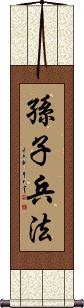
孫子兵法 is the full title of the most famous book of military proverbs about warfare.
The English title is “Sun Tzu's The Art of War.”
The last two characters have come to be known in the west as “The Art of War,” but a better translation would be “military strategy and tactics,” “military skills” or “army procedures.”
Note: Sometimes the author's name is Romanized as “Sun Zi” or “Sunzi.”
It's written the same in Chinese, Japanese Kanji, and Korean Hanja.
Asian Pride / Oriental Pride / AZN Pryde
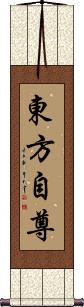
東方自尊 is the universal way to write “Asian Pride.”
We worked on this one for a long time. The effort involved both Chinese and Japanese translators and lengthy discussions. If you have been searching for this term, there is a reason that it's hard to find the way to write “Asian Pride” in Chinese and Japanese - it's because of the inherent difficulties in figuring out a universal combination of characters that can be read in all languages that use forms of Chinese characters.
This final solution that you see to the left creates a reasonable title in Chinese and an exotic (perhaps unusual) title in Japanese (This could be read as “Eastern Self-Respect” in Japanese”).
Although not as natural, it does have the same meaning as Korean Hanja, and the older generation of Vietnamese people will be able to read it.
The first two characters literally mean “Oriental” and the second two mean “pride,” “self-esteem,” or “self-respect” (we chose the most non-arrogant way to say “pride”). If you have “Asian Pride” (sometimes spelled Asian Pryde) these are the characters for you.
Note: For those who wonder, there is nothing technically wrong with the word “Oriental.” It is a correct word, and any bad meanings were created by so-called “Asian Americans” and Caucasians in the United States. To say “Asian” would not completely correct the intended meaning since that would include people from Saudi Arabia, Iraq, Iran, India, and portions of Russia.
For further proof, if you were of East Asian ancestry and born in England, you would be known as a “British Oriental” (The “Oriental stigma” is basically an American creation and, therefore, applies mainly to the American English language - where they get a bit overzealous with political correctness).
Further, since the Chinese and Japanese word for Oriental is not English, they can not be construed as having ill meaning. On one trip to China or Japan, you will find many things titled with these two characters, such as malls, buildings, and business names. These places also use “Oriental” as their English title (much as we do since our Chinese business name starts with these same two characters).
In short, the first two characters have the meaning that Americans attach to “Asian” but is more technically correct.
August
Eighth Month
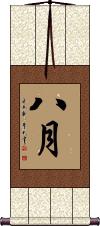
八月 is the month of August in Chinese, Japanese Kanji, and old Korean Hanja.
八月 literally means “eighth month” or “eighth moon.”
In Japanese, this can also be the female given name, Yatsuki, in much the same way August can be a female given name in English.
1000 good moves ruined by 1 bad
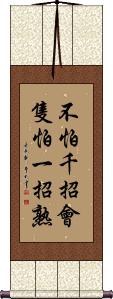
不怕千招会只怕一招熟 is a Chinese proverb that literally translates as: Do not worry about making a thousand clever moves; what [one has to] fear is one bad move.
Figuratively, this means: Even if you have made many clever moves before, one wrong move will ruin the whole game.
I compare this to the English saying, “It takes only one Aw-shit to wipe out a thousand Attaboys.”
Awesome / Awe-Inspiring
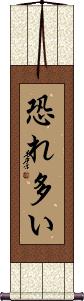
恐れ多い is a Japanese word for something awe-inspiring or awesome (in some odd context, it can refer to August).
恐れ多い is probably not appropriate for a calligraphy wall scroll unless you have a specific reason.
The word awesome is misused a lot in English or used too casually. This Japanese word is the real form of awesome, and it kind of means numerous fears and anxiety that you would feel in response to encountering something truly awesome (such as God, a tornado, a tsunami, etc.).
Note: Because this selection contains some special Japanese Hiragana characters, it should be written by a Japanese calligrapher.
Be Happy
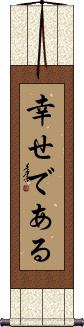
幸せである is a way to express the idea of “be happy” in Japanese.
Japanese grammar is far different than English, so the word order is the opposite of English. If you translated directly, you'd have something like “Happiness henceforth” or “Happiness hereafter.” The idea is to be happy from this moment on.
Note: Because this selection contains some special Japanese Hiragana characters, it should be written by a Japanese calligrapher.
The Beatles
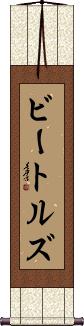
ビートルズ is the title of The Beatles in Japanese Katakana.
Sometimes written as ザ・ビートルズ with ザ (za) being a placeholder for the English word “The” - I think just the name Beatles is enough.
Note: Because this title is entirely Japanese Katakana, it should be written by a Japanese calligrapher.
Beauty is in the eyes of the beholder
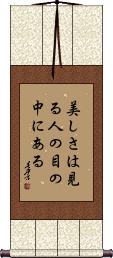
美しさは見る人の目の中にある means “Beauty is in the eyes of the beholder” in Japanese.
Japanese grammar and word order are different than English, but I will partially break this down for you:
美しさ = Beauty
は = is/relates
見る = to look/see
人の = person's
目の = eye's
中にあ = inside
る = !
Note: Because this selection contains some special Japanese Hiragana characters, it should be written by a Japanese calligrapher.
Beer
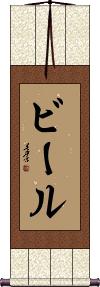
ビール is the Japanese Katakana (phonetic Japanese) for the word beer.
ビール is meant to sound like the English word beer and is thus a loanword in Japanese.
Note: Because this title is entirely Japanese Katakana, it should be written by a Japanese calligrapher.
Believer
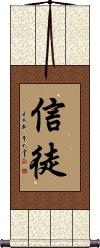
信徒 is the Chinese, Japanese Kanji, and old Korean Hanja word for “believer.”
Just as in English, this word can be used for a follower of virtually any religion.
This word can also be translated into English as layman, adherent, follower, laity, disciple, or devotee.
Benjamin
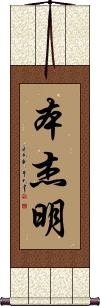
本杰明 is the transliteration to Mandarin Chinese for the English name Benjamin.
Best Friends / Buddies
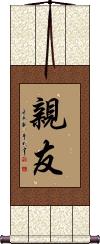
親友 is the Japanese way to say “best friend.”
The first character can mean “relative” or sometimes “parents.” The second character means “friend.” Think about the close relationship that Japanese people have with their parents and relatives, and this starts to mean “close friends.”
Some Japanese-English dictionaries also translate this as “bosom friend,” “old friend,” “intimate friend,” “buddy,” “crony” or “chum.”
Note that in Chinese, this means “relatives and friends.” It's a good meaning in Chinese, but it's not quite the same as “best friends.”
Bloodless Victory
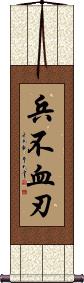
Perhaps a pacifist view or perhaps the best kind of victory; 兵不血刃 reflect this idea:
The edges of the swords not being stained with blood.
You could also translate it as: Win victory without firing a shot.
The first character means army or force. The second character means without or none. The last two characters mean bloodstained knives. So it represents a returning victorious army without bloodstained knives. 兵不血刃 is the very literal sense of this Chinese proverb. The title definition is more accurate to the way this proverb is understood.
Asking yourself why the direct or literal translation is different?
...Think of compound words in English such as “nevertheless” if we break it apart to “never the less,” we will have trouble getting the real definition of “in spite of that.” Similar things happen when multiple characters create a compounded word in Chinese.
Bonsai / Penzai
Dwarf Tree Culture
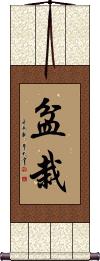
盆栽 is the word that refers to the culture, hobby, and to miniature trees themselves that have become popular around the world.
Like many things, this art migrated from China to Japan some time ago, but we tend to associate it with Japanese culture and even use the Japanese word in English.
Granted, in the present day, this hobby seems to be more popular in Japan but still has a great following in China and even a little in Korea as well.
Note: Many people confuse the title of the bonsai tree with “banzai” which is a form of “hooray” in Japanese. I have also seen it misspelled as “bansai.” The correct Romanization (Romaji) is “bonsai.”
Love Binds Us Together
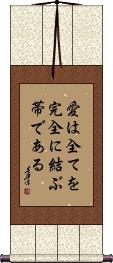
愛は全てを完全に結ぶ帯である is a Japanese phrase that suggests we (or a couple) are bound together by love.
I searched the web and found all of these English translation variations for this phrase:
Have love; The only way in which you may be completely joined together.
Love is the sash that perfectly binds us together.
Love is what binds us together
Love binds all things together in perfect unity.
This same Japanese phrase is used as part of Colossians 3:14 in at least one version of the Japanese Bible.
A few Biblical versions include:
...Charity, which is the bond of perfectness. (KJV)
...Love, which binds them all together in perfect unity. (NIV)
Note: Because this selection contains some special Japanese Hiragana characters, it should be written by a Japanese calligrapher.
English / Briton / Person from England
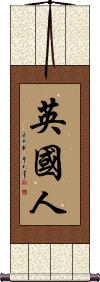
英國人 is the traditional Chinese and Japanese way to write British person, Briton, English person, Englishman, Englishwoman, etc.
In modern Japan, the middle character has been simplified, making it 英国人. This same simplification is used in mainland China as well.
Death Before Dishonor
Better to be broken jade than unbroken pottery
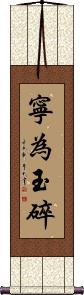
寧為玉碎 is the short version of a longer Chinese proverb which means “rather be shattered piece of jade than an unbroken piece of pottery.”
寧為玉碎 says the “rather be a broken piece of jade” part (the second half is implied - everyone in China knows this idiom).
A little more explanation:
Death is implied with the “broken” meaning. Jade is one of the most precious materials in Chinese history, and in this case, is compared with one's honor and self-worth. Pottery is just something you eat off of; it has no deep value, just as a person who has lost their honor or had none to begin with.
Thus, this means “better to die with honor than to live in shame” or words to that effect.
This is often translated in English as “Death Before Dishonor,” the famous military slogan.
I would also compare this to the English proverb, “Better to die on your feet than to live on your knees.”
Death Before Dishonor
Better to be broken jade than unbroken pottery
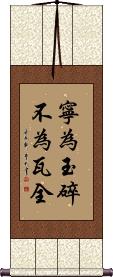
寧為玉碎不為瓦全 is the long version of a Chinese proverb that means “rather be shattered piece of jade than an unbroken piece of pottery.”
A little more explanation:
Death is implied with the “broken” meaning. Jade is one of the most precious materials in Chinese history, and in this case, is compared with one's honor and self-worth. Pottery is just something you eat off of, it has no deep value, just as a person who has lost their honor, or had none to begin with.
Thus, this means “better to die with honor than to live in shame” or words to that effect.
寧為玉碎不為瓦全 is often translated in English as “Death Before Dishonor,” the famous military slogan.
I would also compare this to the English proverb, “Better to die on your feet than to live on your knees.”
This is an idiom. It therefore doesn’t directly say exactly what it means. If you think about the English idiom, "The grass is always greener," it does not directly say "jealousy" or "envy" but everyone knows that it is implied.
Brown
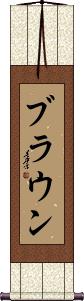
ブラウン is the name Brown in Japanese.
Please note: This sounds like the English word brown using Japanese pronunciation. It does not mean the color brown at all in Japanese.
Note: Because this title is entirely Japanese Katakana, it should be written by a Japanese calligrapher.
Bruce Lee
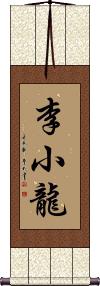
李小龍 is the real full name of Bruce Lee.
 Many people have no idea that Bruce Lee had a “real” Chinese name. In Mandarin and Cantonese, he is known as “Lǐ XiǎoLóng” and “Léi SíuLùng” respectively.
He kept his family name pronunciation (Li = Lee). 李 is a common family name that also means “plum.”
His given name 小龍 (Xiao-Long), literally means “little dragon.” 李小龍 is why you often see the character for dragon associated with Bruce Lee on various posters etc.
For a pronunciation lesson, the “X” in Romanized Mandarin is pronounced like a “sh” sound but with your tongue at the bottom of your mouth. The vowel sound in “Long” is like the English “oh,” not like the “ah” sound in the English word “long.”
If you are a big Bruce Lee fan, you should know this information, and you should have this wall scroll hanging in your room or martial arts studio.
Note: Japanese use these same Chinese characters / Kanji to write Bruce Lee's real name (with different pronunciation - which is a bit like how the name “Bruce Lee” sounds in English).
See Also: Kung Fu | Martial Arts
Triple Truth of Japanese Buddhism

人間性を再生するのは寛容な心親切な言葉奉仕と思いやりの精神 is known as the Triple Truth of Buddhism in Japanese.
The Buddha ordered that all should know this triple truth...
A generous heart, kind speech, and a life of service and compassion are the things that renew humanity.
That is the English translation most commonly used for this Japanese Buddhist phrase. You might have seen this on a coffee cup or tee shirt.
Note: Because this selection contains some special Japanese Hiragana characters, it should be written by a Japanese calligrapher.
Bushindo
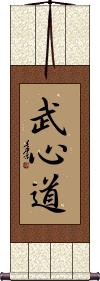
武心道 is the title for Bushindo meaning “warrior heart way” or “warrior mind way.”
In English, we might translate it as “The way of the warrior's heart.”
Butterfly
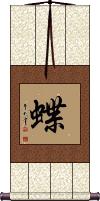
蝶 is the simplest way to write “butterfly” in Chinese, Japanese and Korean.
If you are looking at the Chinese pronunciation and Romanization, please note this is not pronounced like the English “die.”
It actually sounds like “dee-ah.” (Chinese Romanization does not exactly follow English or Latin pronunciation of Roman letters).
Keep Calm in Face of Adversity
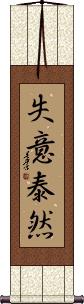
失意泰然 is a very old Japanese proverb that suggests “keeping calm and collected at times of disappointment,” or “maintaining a serene state of mind when faced with adversity.”
It's hard to relate individual character meanings to the overall meaning unless you also understand Japanese grammar. The word order is very different than English. That being said, here's the character meaning breakdown:
失 To miss, lose or fail.
意 Feelings, thoughts, meaning.
泰 Safe, peaceful.
然 Like that, in that way, however, although.
Using these definitions in English, we might say, “Although you may fail or lose, have a feeling of peace and calm.”
Canton / Guangdong
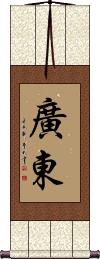
廣東 is the title of Guangdong province (Kwangtung) in south China.
In English, this place is also known as Canton, and is the root of the word Cantonese for the language, culture, and cooking style of this region.
Beyond Canton, this can be the surname Hirotou or Hiroto in Japanese though often written in the modern form of 広東 in Japan.
Cathie
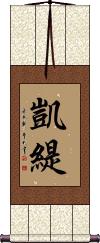
This is a common Mandarin Chinese transliteration for the female French name Cathie.
This is closer to the French pronunciation than the English name Cathie.
Cecilia
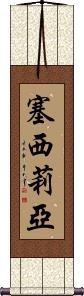
塞西莉亞 is the transliteration to Mandarin Chinese for the English name Cecilia.
Celia
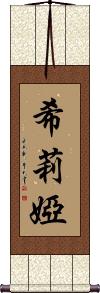
希莉婭 is the transliteration to Mandarin Chinese for the English name Celia.
Cesar
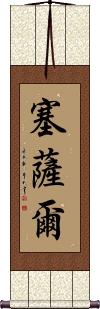
This is a 3-character transliteration to Mandarin Chinese for the Latin / Spanish name César.
I like this version better than the 2-character version, as this one is very close to the real sound of the name Cesar (both English and Spanish pronunciation).
Chan
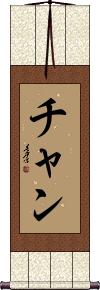
チャン is the name Chan in Japanese Katakana.
This should only be used if your English name is Chan. This is different than any variant of the Chinese surname Chan.
Note: Because this title is entirely Japanese Katakana, it should be written by a Japanese calligrapher.
Chinn
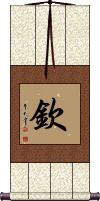
欽 is the English surname Chinn in Chinese (Mandarin).
The surname Chinn has dual origins: it's an English name from Old English meaning "chin" (a nickname) or "chasm/crevice" (topographical), and a Chinese surname, a phonetic variant of Chen (陳) or Qian (錢). If you are looking for a Chinese surname, please let me know when ordering.
Christianity / Christian
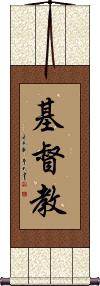
基督教 is the Chinese, Japanese and Korean word for “Christianity.”
Just as in English, this word is often used to mean “Protestant” but includes Catholics in the true definition.
It is the word used to refer to the whole “Christian religion” or “Christian Faith,” and therefore, it can be translated as “Christianity.” However, used as an adjective in regard to a person, it would translate as “Christian.” But more like saying, “His religion is Christianity,” rather than a noun form.
If you break it apart, the characters mean Base/Foundation Leading/Supervising Religion/Teaching. It makes more sense in Japanese, Chinese, and Korean. The first two characters together are translated as “Christ.” So you can also say this means “Christ's Religion” or “Christ's Teachings” when directly translated, or in reverse, “The Religion of Christ” or “The Teaching of Christ.”
Notes: The last character has a slight difference in one stroke - however, in calligraphic form, this will not be apparent. This entry can easily be read by any Korean person who knows Hanja characters (Chinese characters used in Korean).
See Also: Jesus Christ | God of Abraham
Christmas
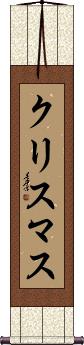
クリスマス is Christmas in Japanese.
This sounds like the English title Christmas, using Japanese sounds. This can also be used to represent the surname Christmas.
Note: Because this title is entirely Japanese Katakana, it should be written by a Japanese calligrapher.
Coffee / Café
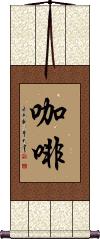
咖啡 is how they write coffee in mainland China (it's 咖逼 in Taiwan).
咖啡 is a loanword from English or Spanish. It's meant to sound like coffee or café rather than to mean coffee.
Coffee / Café
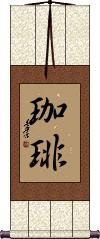
珈琲 is how they write coffee in Japan.
珈琲 is a loanword from English or Spanish. It's meant to sound like coffee or café rather than to mean coffee.
Community
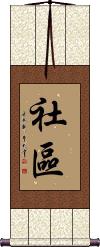
社區 is how to write community in Chinese.
社區 can mean the neighborhood you live in. It can also be used the same way we use the word community in English.
Examples: African-American community, Christian community, Asian community, etc.
If you need a special calligraphy wall scroll to describe your community, just contact me, and I’ll translate it and make it for you.
I Control My Own Destiny
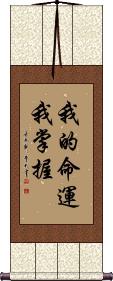
我的命運我掌握 is a way to write “I control my own destiny” in Chinese.
The direct translation is more like, “My destiny, I'm in control.” The meaning is the same, but Chinese grammar and word order vary a bit from English.
There's a few other variations, and if you want any of these, just email me:
我的命运我做主 (wo3 de ming4 yun4 wo3 zuo4 zhu3) "my destiny, I'm in charge"
我的未来我掌握 (wo3 de wei4 lai2 wo3 zhang3 wo4) "my future, I'm in control"
我的未来我做主 (wo3 de wei4 lai2 wo3 zuo4 zhu3) "My future, I'm in charge"
Corinthians 13:4
All you need to know about LOVE
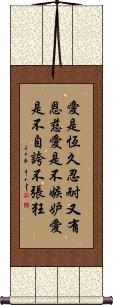
愛是恆久忍耐又有恩慈愛是不嫉妒愛是不自誇不張狂 is 1st Corinthians 13:4 in Chinese.
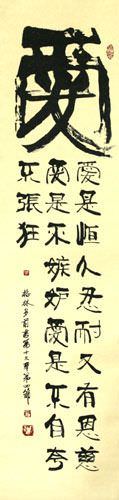
With large “love” character added.
In English, this reads:
1st Corinthians 13:4 (KJV) Charity suffereth long, and is kind; charity envieth not; charity vaunteth not itself, is not puffed up...
1st Corinthians 13:4 (NIV) Love is patient, love is kind. It does not envy, it does not boast, it is not proud.
1st Corinthians 13:4 (Basic English) Love is never tired of waiting; love is kind; love has no envy; love has no high opinion of itself, love has no pride.
The Chinese translation follows the love meaning, rather than the King James' use of “charity.” I was a little confused when writing this description with the significant differences between the NIV vs. KJV translations. After speaking to a Greek scholar about this, it would seem that the KJV has an almost errant translation with the use of “charity” in place of “love.”
We used the most popular Christian Chinese Bible, which is the Chinese Union Version (CUV). The CUV was first published in 1919. We use this so that the Chinese translation would be as accurate and standard as possible. Any Chinese Christian worth their salt will easily be able to identify this verse when they see these characters.
If you want a big “love” character written above the verse on your artwork, just make a note in the “special instructions” tab when you are customizing your artwork. There is no extra charge for that service on this special verse.
Corinthians 13:4

愛は忍耐強い。愛は情け深い。ねたまない。愛は自慢せず、高ぶらない。is 1st Corinthians 13:4 in Japanese.
In English, this reads:
1st Corinthians 13:4 (KJV) Charity suffereth long, and is kind; charity envieth not; charity vaunteth not itself, is not puffed up...
1st Corinthians 13:4 (NIV) Love is patient, love is kind. It does not envy, it does not boast, it is not proud.
1st Corinthians 13:4 (Basic English) Love is never tired of waiting; love is kind; love has no envy; love has no high opinion of itself, love has no pride.
If you want a big “love” character written above the verse on your artwork, just make a note in the “special instructions” tab when you are customizing your artwork. There is no extra charge for that service on this special verse.
Note: Because this selection contains some special Japanese Hiragana characters, it should be written by a Japanese calligrapher.
Cowboy
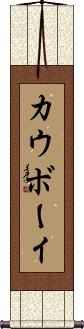
カウボーイ is how cowboy is in Japanese.
This is meant to sound like the English word “cowboy.”
Note: Because this title is entirely Japanese Katakana, it should be written by a Japanese calligrapher.
Construction Crane
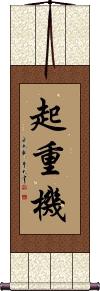
起重機 refers to the huge machine that lifts materials high into the air as crews construct huge buildings.
A customer requested this specifically after some confusion over the bird by the same name.
In an odd twist, while they don't know this name in English sounds like a bird; the building crane is jokingly called “The real national bird of China” because of the accelerated level of construction in Beijing and elsewhere ever since preparations began for the 2008 Olympics. As of 2018, construction has barely slowed.
If you want the type of construction crane that drives down the road, please note that the word is totally different for that kind of “vehicle crane.”
Crisis equals Danger plus Opportunity?
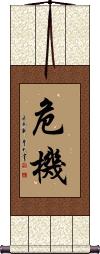
危機 means crisis in Chinese and Japanese.
Separately, the first character here does mean “danger” or “to endanger,” and the second character can mean “opportunity.”
However, I want to debunk a myth that was propagated by some westerners who did not have a clear understanding of Asian languages...
While often, Chinese/Japanese/Korean compound words (words of two or more characters) are the sum of their parts, this is not always the case. The compound is often understood with a completely different meaning than the two characters individually.
Many have said that the Chinese/Japanese/Korean word for Crisis is made up of the characters for “danger” and “opportunity.” 危機 is true when phrased this way.
However, it's not absolutely correct to say that “danger + opportunity = crisis” in Asian cultures.
English example:
If I tell you that...
Bovine creature + Guy behind the plate in baseball = Locomotive train protection

...you would think I was mad. But consider that “cow + catcher = cowcatcher,” which is the device that used to be found on steam engines to protect them if they hit an animal on the tracks. When we hear the word “cowcatcher,” we don't separate the words into their individual meanings (necessarily).
The same is true with the word for crisis in Chinese/Japanese/Korean. While you can separate the characters, few Asian people would automatically do so in their minds.
The final answer:
It is a half-truth to say, “danger plus opportunity equals crisis” in Chinese/Japanese/Korean. Use this statement and concept with caution.
Also, the second character can mean “secret” or “machine,” depending on context so I guess you have to say “a dangerous machine = crisis” or “danger + a secret = crisis.” Both of these are only slightly more ridiculous than the first premise.
PS: 危機 is probably not a great word for a scroll unless you have a special use for it.
Crystal
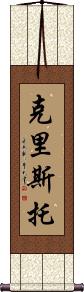
This is a common transliteration to Mandarin Chinese for the names Crystal or Krystal.
Consider also going with the meaning of crystal. The characters shown to the left sound like crystal in Mandarin but do not mean crystal (of course, the word for crystal in Chinese does not sound at all like the English word crystal).
Daodejing / Tao Te Ching - Excerpt
Excerpt from Chapter 67
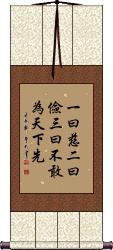
一曰慈二曰儉三曰不敢為天下先 is an excerpt from the 67th Chapter of Lao Tzu's (Lao Zi's) Te-Tao Ching (Dao De Jing).
This is the part where the three treasures are discussed. In English, we'd say these three treasures are compassion, frugality, and humility. Some may translate these as love, moderation, and lack of arrogance. I have also seen them translated as benevolence, modesty, and “Not presuming to be at the forefront in the world.” You can mix them up the way you want, as translation is not really a science but rather an art.
I should also explain that the first two treasures are single-character ideas, yet the third treasure was written out in six characters (there are also some auxiliary characters to number the treasures).
If Lao Tzu's words are important to you, then a wall scroll with this passage might make a great addition to your home.
Deanna
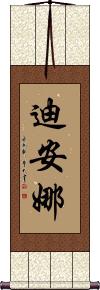
迪安娜 is the transliteration to Mandarin Chinese for the English name Deanna.
Death Before Dishonor
You can die or kill, but never dishonor or disgrace yourself
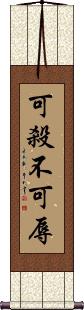
可殺不可辱 almost directly matches the idea of “Death Before Dishonor” while also being an ancient Chinese proverb.
The direct meaning is, “[you] can die/kill [but you] cannot [allow] dishonor/disgrace [upon yourself].” Chinese grammar, and especially ancient grammar, is a little different than English. Not nearly as many articles are needed, and a lot is implied.
There are many ways to express ideas similar to “Death Before Dishonor” in Chinese, and I would rate this one in the top two.
Death Before Dishonor
A soldier can die or kill, but never dishonor or disgrace himself
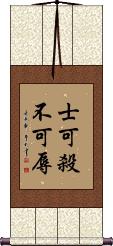
士可殺不可辱 almost directly matches the military idea of “Death Before Dishonor,” while also being an ancient Chinese proverb.
The direct meaning is, “[A] soldier/warrior can die/kill [but he/she] cannot [allow] dishonor/disgrace [upon himself/herself].” Chinese grammar, and especially ancient grammar, is a little different than English. Not nearly as many articles are needed, and a lot is implied.
There are a lot of ways to express ideas similar to “Death Before Dishonor” in Chinese, and I would rate this one in the top two.
This is the original form of this proverb with the character for “soldier/warrior” at the beginning. Most of the time, this character is dropped, becoming a five-character proverb (the soldier/warrior part is implied, even without the character being present in the proverb). We also offer a shorter version.
Death Before Dishonor
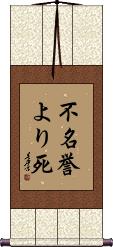
不名誉より死 is the Japanese version of “Death Before Dishonor.”
Japanese grammar is a bit different than English, so this really means something like “Rather die than to be dishonored.” However, “dishonor” is the first three Kanji, and death is the last Kanji. There are two Hiragana (より) which indicate the preference is death when comparing dishonor to death.
Note: Because this selection contains some special Japanese Hiragana characters, it should be written by a Japanese calligrapher.
Death Before Surrender
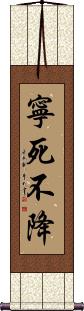
寧死不降 is an ancient Chinese proverb that can be translated as “Rather die than surrender,” “Prefer death over surrender,” “To prefer death to surrender,” or simply “No surrender.”
This is probably the closest proverb to the English proverb “Better to die on your feet than to live on your knees.”
Destiny
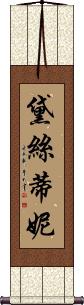
黛絲蒂妮 is the transliteration to Mandarin Chinese for the name Destiny.
This is meant to sound like the English word destiny using Chinese sounds. It does not mean destiny. If your name is Destiny, I suggest finding a word that means destiny.
Devotion / Dedication / Attentive / Focused
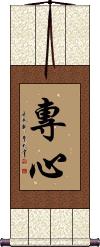
專心 makes a word that means “paying attention with your heart.”
It's often translated as “dedication,” as in “be absorbed in” or “concentrate one's efforts.” It's also used to mean “with the single mind,” “whole-heartedly,” “paying attention,” “undivided attention,” “concentration (-ed),” “engrossed,” “devotionally (listening/watching),” and/or “attentive.”
The first character means “for a particular person, occasion, or purpose,” “focused on one single thing,” “concentrated,” and sometimes, “special.”
The second character means “heart” or “mind” by itself.
My favorite translation, which comes from the Oxford Advanced Chinese/English Dictionary, is, “wholehearted devotion.”
If it seems like the meaning of this word is quite open, you are correct. The context in which the word is used matters a lot. It can mean different things depending on how you use it. This makes it kind of nice as you can decide what this means to you (within some limits). This is always positive in meaning, so even if a Chinese person reads it differently than you, it will still have a good meaning.
 In Japanese, they tend to use a variation of the second character which has one less stroke. If you want your calligraphy written this Japanese form, please click on the Kanji shown to the right instead of the button above. Note: Japanese and Chinese people will recognize either form.
Devotion / Diligence / Vigorous / Energetic
vīrya
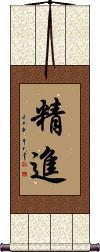
精進 is a wide-ranging word that is used in Chinese, Japanese, and Korean.
It can mean devotion, diligence, concentration, aggressive, enterprising, vigorous, energetic, purification, pushing, asceticism, assiduity, or virility. 精進 is deep, and these two characters can express ideas that take a full English phrase to describe, such as “concentration of mind,” “to forge ahead vigorously,” or “to dedicate oneself to progress.”
Used in the context of Buddhism, it means “making earnest efforts to cultivate virtue and get rid of evil” or “zeal in one's quest for enlightenment.”
Religious Devotion / Faith in God / Religious Faith
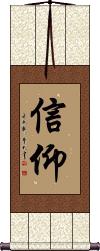
信仰 means firm belief, faith, persuasion, conviction, and sometimes religion or creed in Chinese, Japanese Kanji, and old Korean Hanja.
This clearly fits the religious connotation of the English word “devotion.”
This is often used to refer to a person of faith or a religious person.
This can be directly translated as “firm belief,” “creed,” “conviction,” or simply as “religious,” depending on context.
Some will also use this to mean “trust in God” in Japanese (though the term for God is not actually in this title).
It should be noted that this word is a little strange alone on a wall scroll.
While this can be pronounced in Japanese, it’s not a great selection for a wall scroll if your audience is Japanese.
See Also: Faith | Trust | Devotion | Trust | Trust in God
Diana
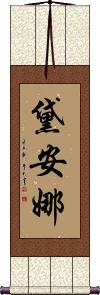
黛安娜 is the transliteration to Mandarin Chinese for the English name Diana.
Discipline / Training / Tempering Character
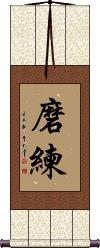
磨鍊 is a form of discipline which suggests training of the mind and character, aimed at producing self-control, obedience, etc.
One of my Chinese-English dictionaries even translates this as “tempering oneself” or turning yourself into hardened steel.
In old Korean Hanja, they use these characters in reverse order but with the same meaning. If you want the Korean version, please click this link instead of the button above: Korean version.
Dog
(another version)
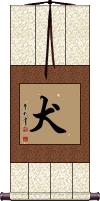
犬 is another way to write dog in Chinese and Japanese.
Just like we have words like dog, hound, pooch, and canine in English. However, this is NOT the character used to express “Year of the Dog.”
Although it is the most common way to say/write “dog” in Japanese.
See also our Chinese Zodiac page.
Dojo / Martial Arts Studio
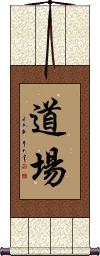
道場 is the Japanese term for a room or hall in which martial arts are taught.
道場 is often spelled “dojo” which has become a word in the English lexicon. However, the true Romaji is doujou or dōjō.
Please note: The Chinese definition of these characters is quite different. In Chinese, this is a place where Buddhist or Taoist mass is held. It could also be a place where spiritual or psychic events are performed.
Dragon Warrior
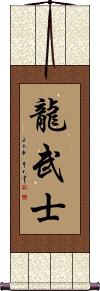
龍武士 is a generic title for “Dragon Warrior.”
Just as in English, it's a bit ambiguous. It can mean one who fights against dragons or the title of a warrior himself (imagine a warrior with a dragon symbol on his chest).
Drain the pond to get all the fish
Kill the goose that lays the golden eggs
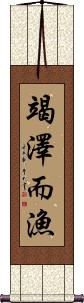
In 632 BC, Duke Wen of the Kingdom of Jin was about to lead an army against the forces of the Kingdom of Chu.
The Duke asked one of his advisers, Jiu Fan, how they could win the impending battle, as they were drastically outnumbered.
Jiu Fan said, “All is fair in war,” and suggested a plan of dishonorable tactics (cheating).
The Duke was unsure of this advice, so he asked another adviser, Yong Ji, who replied, “If you catch fish by draining the pond, you can certainly get all the fish. But there will be no fish the following year. You can cheat this one time in battle, but such tactics can only be used once, as the enemy will be wise in future encounters.”
The Duke heard the words of his wiser adviser but cheated to gain victory in the battle. However, he rewarded Yong Ji more than Jiu Fan at the victory celebration, stating that while Jiu Fan's advice gained one victory, the wise words of Yong Ji would last forever.
This Chinese idiom/proverb is still used, over 2600 years later to remind people not to burn bridges, cheat, or dishonor themselves in exchange for a short-term gain while sacrificing the future.
竭澤而漁 is very similar to the meaning of the English phrase, “Kill the goose that lays the golden eggs.”
Eagle / Falcon / Hawk
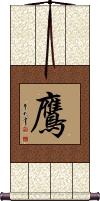
鷹 is the way to write eagle, falcon, or hawk in Chinese.
It means hawk or falcon in Japanese Kanji, and simply “eagle” in old Korean Hanja. Though we have different words for them in English, eagles, falcons, and hawks are all seen as the same general type of bird in Asian languages.
If you are looking for the Dutch surname Valk, or the German surname Falco by meaning, this would be a good character for you.
There are other multi-character words (most of them contain this character) which express different specific species of birds of prey (bald eagle, osprey, golden eagle, etc). If you need a more specific title, just contact me.
Edwin
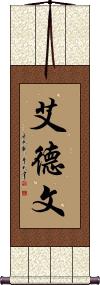
艾德文 is the transliteration to Mandarin Chinese for the English name Edwin.
Elmo
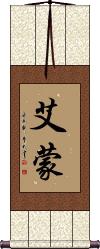
This is a common transliteration to Mandarin Chinese for the name Elmo.
This is specifically how Chinese people refer to the Sesame Street character Elmo. It does sound somewhat like the English name Elmo, but the second character does have that -ng final sound. So, it's like “Elmong.”
England
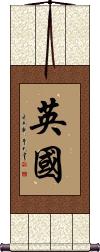
This is the Chinese name for the country of England.
See Also: Great Britain | United Kingdom | Ireland | Scotland | Northern Ireland | Europe
England
Can mean: Courage / Bravery
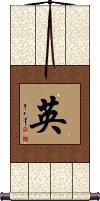
In Chinese, Japanese, and old Korean, 英 can often be confused or read as a short name for England (this character is the first syllable of the word for England, the English language, the British Pound, and other titles from the British Isles).
In some contexts, this can mean “outstanding” or even “flower.” But it will most often read as having something to do with the United Kingdom.
This is not the most common way to say hero, courage or bravery but you may see it used sometimes.
I strongly recommend that you choose another form of courage/bravery.
Let Us Try
Essayons
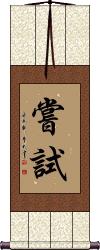
嘗試 is a close match for the English phrase “let us try” or the French word “Essayons.”
 Essayons the motto of Combat Engineers in the U.S. Army.
This word can also be translated as “to try” or “to attempt.”
Even if you're not a Combat Engineer, this word should inspire you to attempt to accomplish difficult things. If you don't try, you are certain to fail; if you do try, at least there is a chance of success.
The worst thing is not failure, the worst thing is not trying at all.
Everything Happens for a Reason
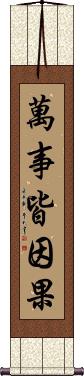
萬事皆因果 means “Everything happens for a reason” in Chinese.
The first two characters mean “all things” or “everything.”
The middle character kind of means “in all cases.”
The last two characters create a complex word that can be defined in many ways, such as “karma,” “cause and effect,” “fate,” and “every cause has its effect, as every effect arises from a cause.”
Keep in mind that Chinese grammar is a bit different than English, so trust me that this makes a natural-sounding proverb in Chinese.
Everything Happens for a Reason
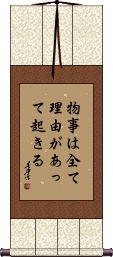
物事は全て理由があって起きる means everything happens for a reason.
However, this is a work in progress. We're still trying to decide the best way to express this in Japanese. If you order this, we might have a discussion about the best version that fits you. Here's how the characters break down by meaning (keep in mind, Japanese grammar and sentence construction is very different from English, so it doesn't make complete sense in English)...
物事 = things, everything
は particle
全て all, the whole, entirely
理由 reason
が particle
あっ be, exist, have, take place, happens
て particle
起きる to occur, to happen; to take place (usually unfavorable incidents)
Note: Because this selection contains some special Japanese Hiragana characters, it should be written by a Japanese calligrapher.
Evil Cause, Evil Result
Meaning: You reap what you sow
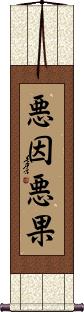
悪因悪果 is a Japanese proverb that means “Evil cause, evil effect” or “Bad causes bring bad results.”
The English equivalent is probably, “Sow evil and reap evil” or more commonly, “You reap what you sow.”
Note: 悪因悪果 is also considered to be a Buddhist phrase encompassing the idea of karmic retribution.
Exercise
(for body or mind)
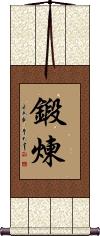
鍛煉/鍛鍊 means to exercise in much the same way we use the word exercise in English.
This can be exercising your body at the gym or exercising your mind in studies. Most of the time, this refers to physical exercise.
This can also be translated as to temper, to toughen, to train, to drill, to forge, or simply discipline.
Faith is the bird that feels the light when the dawn is still dark
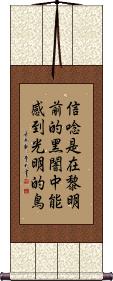
信唸是在黎明前的黑闇中能感到光明的鳥 is a philosophical poem/quote from Indian Poet and Philosopher, Rabindranath Tagore.
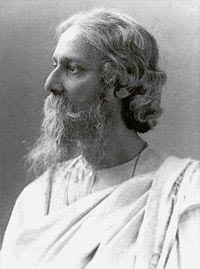
Rabindranath Tagore, 1915
This quote is not sourced, and therefore several variations exist in English. Some suggest the original was in the Bengali language.
This, of course, is the Chinese translation that has the meaning of, “Faith is the bird that feels the light and sings when the dawn is still dark.”
More about Rabindranath Tagore
Fall Down Seven Times, Get Up Eight
Always rising after a fall or repeated failures
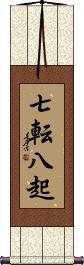
七転八起 is a Japanese proverb that relays the vicissitudes of life, with the meaning “seven times down eight times up.”
Some would more naturally translate it into English as “Always rising after a fall or repeated failures” or compare it to the English, “If at first, you don't succeed, try, try again.”
The first Kanji is literally “7.” The second means “fall down” (sometimes this Kanji means “turn around,” “revolve” or “turn over” but in this case, it holds the meaning of “fall”). The third is “8.” And the last is “get up,” “rouse,” or “rise.”
Basically, if you fail 7 times, you should recover from those events and be prepared to rise an 8th time. This also applies if it is the world or circumstances that knock you down seven times...
...just remember that you have the ability to bounce back from any kind of adversity.
Note: This can be pronounced in two ways. One is “shichi ten hakki” or “shichitenhakki.” The other is “nana korobi ya oki” also written, “nanakorobi-yaoki.”
Special Note: The second character is a Kanji that is not used in China. Therefore, please select a Japanese calligrapher for this title.
Fear No Evil
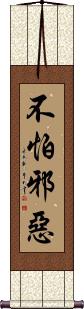
不怕邪惡 literally means “no fear of evil” in Chinese.
Chinese grammar and word order are a little different than English. 不怕邪惡 is the best way to write something that means “fear no evil” in Chinese.
The first character means “not,” “don't” or “no.”
The second means “fear.”
The last two mean “evil” but can also be translated as sinister, vicious, wickedness, or just “bad.”
Fear No Evil
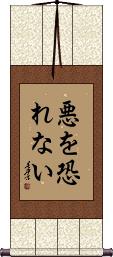
悪を恐れない is “Fear No Evil” in Japanese.
Japanese grammar and phrase construction is different than English, so this literally reads, “Evil Fear Not.”
The “evil” Kanji can also be translated as “wickedness.”
Note: Because this selection contains some special Japanese Hiragana characters, it should be written by a Japanese calligrapher.
Fear God
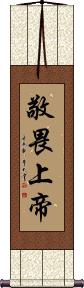
敬畏上帝 is probably the best way to translate the Christian English phrase “Fear God” into Chinese.
The first two characters mean to revere, be in awe of, or a general term of reverence. It can mean fear, but only in the context of respect or fear of authority.
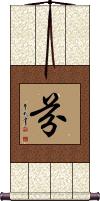
芬 is the name Fen in Chinese (Mandarin).
This is a valid surname in Chinese, but is also used for transliterations for the German/English name Fen.
Filial Piety
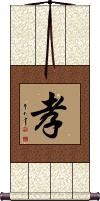
孝 represents filial piety.
Some will define this in more common English as “respect for your parents and ancestors.”
孝 is a subject deeply emphasized by the ancient philosophy and teachings of Confucius.
Some have included this in the list for the Bushido, although generally not considered part of the 7 core virtues of the warrior.
Note: 孝 is not the best of meanings when seen as a single character. Some will read the single-character form to mean “missing my dead ancestors.” However, when written as part of Confucian tenets, or in the two-character word that means filial piety, the meaning is better or read differently (context is important for this character).
We suggest one of our other two-character filial piety entries instead of this one.
The Five Principles of Reiki
Reiki Gokai

These are the five principles of Reiki.
They translate into English as...
At least for today:
Do not be angry,
Do not worry,
Be grateful,
Work with diligence,
Be kind to people.
Note: Because this selection contains some special Japanese Hiragana characters, it should be written by a Japanese calligrapher.
Soccer / Football / Futbol
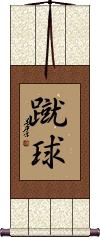
蹴球 is the title for football or soccer in Japanese Kanji and old Korean Hanja.
The sport is very popular in both Japan and Korea (Korea and Japan co-hosted the football World Cup in 2002 - a world-class sporting event held every four years that rivals the Olympics).
In Japan, they sometimes say サッカ (sakka) or フットボール (futto bouru) in place of the pronunciation shown above. 蹴球 is supposed to sound like the English word soccer and football/futbol respectively.
The first Kanji means kick and the second means ball. So technically, this means “kick ball” in Japanese and Korean (this is just an educational note - this will always be understood as the game of soccer/football).
FYI: This game would never be confused with American Football in Japan or Korea. Unlike the game of American basketball and baseball (both quite popular in Japan and Korea), there is only a vague awareness of a rugby-like game that is also called football in the USA.
Forgive and Forget
Water Under the Bridge
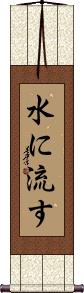
水に流す is a Japanese proverb that suggests that “water continues to flow.”
It's similar to our English phrase, “Water under the bridge.” The perceived meaning is, “Forgive and forget.”
I have also seen this translated as “Don't cry over spilled milk.”
Note: Because this selection contains some special Japanese Hiragana characters, it should be written by a Japanese calligrapher.
Four Noble Truths: Path Leading Away From Suffering
Magga
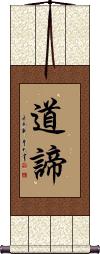
道諦 is the idea that once you have dealt with your desires and left all desire and attachment behind, only then are you on the path away from suffering (and on your way to enlightenment).
道諦 is also called the path to liberation in some English texts on Buddhism.
This term is exclusively used by devout Buddhists. It is not a common term, and is remains an unknown concept to most Chinese, Japanese and Korean people.
See Also: Buddhism | Enlightenment
Free Spirit
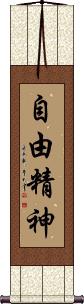
The first two characters mean freedom or liberty.
The second two characters mean spirit, heart, mind, or soul.
Together, 自由精神 is a title that is very similar to the English term “free spirit.”
See Also: Freedom | Independence
Free Spirit
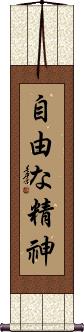
自由な精神 is very similar to the English term “free spirit.”
The first two characters mean freedom or liberty.
The middle character is a connecting Hiragana which is needed for Japanese grammar.
The last two characters mean spirit, heart, mind, or soul.
See Also: Freedom | Independence
Fudo Myo-o / Wisdom King
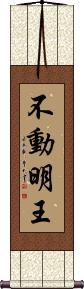
不動明王 is the fierce form of the Buddha Vairocana, and the most important of the Myō-ō or Ming Wang class of deities.
Romanized as Fudō Myō-ō, in Japanese Buddhism or Bùdòng Míngwáng / Pu-Tung Ming-Wang in Chinese Buddhism,
Originally Acala/Achala (अचल “The Immovable”), Acalanātha (अचलनाथ “Immovable Lord”) or Āryācalanātha (आर्याचलनाथ, “Noble Immovable Lord”).
In English, this deity is sometimes called “Wisdom King.”
Full Contact
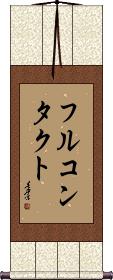
In the context of sports and martial arts, this is “full contact” in Japanese Katakana.
フルコンタクト is a loan word from English. Therefore, it's meant to sound like “full contact” in English using Japanese pronunciation.
Note: Because this title is entirely Japanese Katakana, it should be written by a Japanese calligrapher.

Successful Chinese Character and Japanese Kanji calligraphy searches within the last few hours...



