Many custom options...


And formats...



Done in Chinese / Japanese...
Buy a Done calligraphy wall scroll here!
Personalize your custom “Done” project by clicking the button next to your favorite “Done” title below...
1. Gassho
2. Good Intentions / Good Will / Good Faith
3. Battojutsu
4. Shoganai
5. Naranu Koto Wa Naranu Mono Desu
6. Confucius: Golden Rule / Ethic of Reciprocity
7. Shikataganai
8. Helpfulness
9. Self-Discipline / Will-Power
10. Flexibility
11. Do not fear the task: Cooperation will lead to success
12. Diligence
13. Do not take action until the time is right
14. Beer
15. Cooperation / Collaboration
16. The Lord's Prayer / Luke 11:2-4
18. The Lord's Prayer / Mathew 6:9-13
19. Turtle
20. Kirin / Giraffe / Mythical Creature
21. Daodejing / Tao Te Ching - Chapter 81
22. Past experience is the teacher for the future
23. Guanxi
24. Undaunted After Repeated Setbacks
Gassho
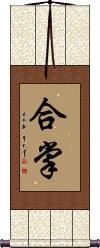
合掌 is the act of greeting someone (can also be done when departing) with hands brought together prayerfully.
In India, this would be accompanied by the verbal greeting and blessing of “Namaste.” In China, Japan, and Korea, this is how Buddhists will greet each other. Sometimes done by people who are not devout Buddhists in China, Japan, and Korea to show respect, reverence, or great thanks to someone for a gift, forgiveness, or some honor that has been bestowed.
In Japan, this is almost always associated with a deep bow. In China, where bowing is not an everyday occurrence, there may be a shallow bow, but the act will be done with deep feeling. Korean culture seems to have more bowing than China but less than Japan.
See Also: Namaste
Good Intentions / Good Will / Good Faith
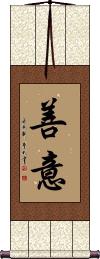
善意 is a word that means good intentions, goodwill, or to things done in good faith in Chinese, Japanese, and old Korean Hanja.
It's the reason you do good deeds or the desire you have inside yourself to do the right thing.
This can also be translated as benevolence, kindness, virtuous mind, positive mindset, or favorable sense.
善意 is also used in the legal context for things done in good faith (regardless of outcome).
In Japanese, this can be the personal name Yoshi or Yoshii.
Battojutsu
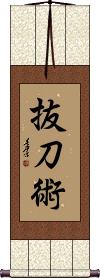
Battōjutsu or 抜刀術 is the art of sword drawing associated closely with the tradition of Kenjutsu.
Battōjutsu typically is done with a real and sharp-bladed katana and is often practiced as a form of kata.
Shoganai
Accepting Your Fate
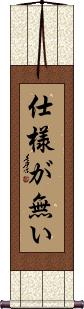
仕様が無い is a Japanese phrase that means “it can't be helped,” “it is inevitable,” and “nothing can be done.”
Some will see this as a negative (just give up), and others will see it as a suggestion to avoid futile effort.
Note: Because this selection contains some special Japanese Hiragana characters, it should be written by a Japanese calligrapher.
Naranu Koto Wa Naranu Mono Desu
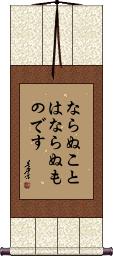
This is a Japanese proverb associated with Bushido that means “What is wrong, must not be done” or “That which must not be shall not be.”
Note: Because this title is entirely Japanese Hiragana, it should be written by a Japanese calligrapher.
Confucius: Golden Rule / Ethic of Reciprocity
Do not do to others what you do not want done to yourself
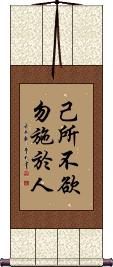
Some may think of this as a “Christian trait,” but actually, it transcends many religions.
This Chinese teaching dates back to about 2,500 years ago in China. Confucius had always taught the belief in being benevolent (ren), but this idea was hard to grasp for some of his students, as benevolence could be kind-heartedness or an essence of humanity itself.
When answering Zhong Gong's question as to what "ren" actually meant, Confucius said:
己所不欲勿施于人 or "When you go out, you should behave as if you were in the presence of a distinguished guest; when people do favors for you, act as if a great sacrifice was made for you. Whatever you wouldn't like done to you, do not do that thing to others. Don't complain at work or home.”
Hearing this, Zhong Gong said humbly, “Although I am not clever, I will do what you say.”
From this encounter, the Chinese version of the “Golden Rule” or “Ethic of Reciprocity” came to be.
The characters you see above express, “Do not do to others whatever you do not want to be done to yourself.”
See Also: Confucius Teachings | Benevolence
Shikataganai
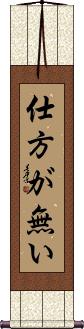
仕方が無い is Shikataganai, a Japanese phrase meaning “it cannot be helped,” or “nothing can be done about it.”
Other translations include: “It can't be helped,” “it's inevitable,” or “it's no use.”
This phrase is sometimes used in Japan to refer to when (Japanese) people as a whole must endure things that are beyond their control.
Note: Because this selection contains some special Japanese Hiragana characters, it should be written by a Japanese calligrapher.
Helpfulness
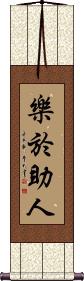
樂於助人 is about helpfulness, being of service to others, and doing thoughtful things that make a difference in their lives.
Offer your help without waiting to be asked. Ask for help when you need it. When we help each other, we get more done. We make our lives easier.
See Also: Caring | Charity | Benevolence
Self-Discipline / Will-Power
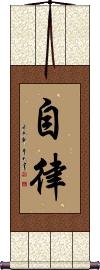
自律 means self-discipline and self-control.
It is doing what you really want to do rather than being tossed around by your feelings like a leaf in the wind. You act instead of reacting. You get things done in an orderly and efficient way. With self-discipline, you take charge of yourself.
Not sure if this one works for a Japanese audience.
See Also: Discipline | Self-Control
Flexibility
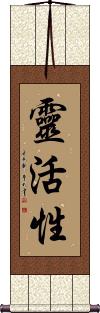
靈活性 is a Chinese and Korean word that means flexibility or being open to change.
You consider others' ideas and feelings and don't insist on your own way. Flexibility gives you creative new ways to get things done. Flexibility helps you to keep changing for the better. 靈活性 could also be defined as having a “flexible nature.”
See Also: Cooperation
Do not fear the task: Cooperation will lead to success
Do not fear strong winds waves; just be sure to row in unison
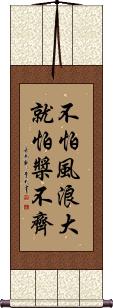
不怕风浪大就怕桨不齐 is a Chinese proverb that literally translates as: Do not fear strong winds [and] high waves; what [one should] worry about whether or not you're rowing in unison.
Figuratively, this means: However difficult the task, the key to success lies in making collective efforts.
I like to translate this as “Don't sweat the details, just get together and get it done.”
Diligence
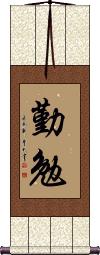
勤勉 can be translated as diligence, industrious, assiduity, assiduous, diligent, or sedulity.
Diligence is working hard and doing your absolute best. You take special care by doing things step by step. Diligence helps you to get things done with excellence and enthusiasm. Diligence leads to success.
See Also: Hard Work | Tenacity | Commitment | Passion for a Cause
Do not take action until the time is right
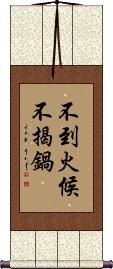
不到火候不揭锅 translates as: Don't take the lid off the pot until the food is done.
Figuratively, this means: Don't take action until the time is right.
You can take this as a call to be patient or pick just the right time to do something (not too early, not too late).
Beer
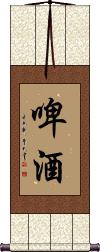
啤酒 means beer in Chinese.
This can refer to virtually any fermented grain-based alcoholic beverage that has bubbles. So this includes all kinds of ales and lagers.
In China, the grains used for beer sometimes include rice. But even in Chinese beer, the concept is the same - beer must be made with hops and yeast.
Beer was the third word I learned in Chinese, and I've toured 3 different breweries in China, Tsing Tao, Lao Shan, and Yanjing. I've done my research on this calligraphy entry!
Cooperation / Collaboration
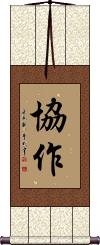
協作 is a Chinese, Japanese, and old Korean word that means cooperation or collaboration.
Cooperation is working together and sharing the load. When we cooperate, we join with others to do things that cannot be done alone. We are willing to follow the rules which keep everyone safe and happy. Together we can accomplish great things.
The first character means “united” or “to coordinate.” The second character means “to do,” “to make,” or “to compose.” Knowing this, you can understand why together, these characters create a word that can be defined as “cooperation” in Chinese, Japanese, and Korean.
It is implied that you are cooperating to create some project or product.
See Also: Partnership
The Lord's Prayer / Luke 11:2-4
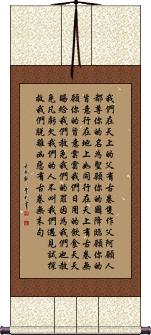
Here is the Lord's Prayer in Chinese from Luke 11:2-4.
The Chinese text with punctuation is:
Part of 11:2 ...我们在天上的父,有古卷只作父阿愿人都尊你的名为圣。愿你的国降临。愿你的旨意行在地上,如同行在天上。有古卷无愿你的旨意云云。
11:3 我们日用的饮食,天天赐给我们。
11:4 赦免我们的罪,因为我们也赦免凡亏欠我们的人。不叫我们遇见试探。救我们脱离凶恶。有古卷无末句。
Note that punctuation is not included in traditional Chinese calligraphy artwork.
From KJV, this is:
Part of 11:2 ...Our Father which art in heaven, Hallowed be thy name. Thy kingdom come. Thy will be done, as in heaven, so in earth.
11:3 Give us day by day our daily bread.
11:4 And forgive us our sins; for we also forgive everyone that is indebted to us. And lead us not into temptation, but deliver us from evil.
Kowtow - The deepest bow
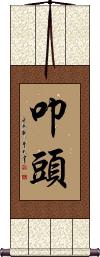
叩頭 is the term that seems to be known worldwide as kowtow.
In Japanese and Chinese, it simply means a deep bow, especially one so low that one's head touches the ground in submission. However, in western culture, it has sometimes come to mean “giving in” or “surrendering to someone else's will.” Sometimes even said of a person who stoops to flattery at the expense of their dignity.
I don't know if you would really want this on a wall scroll, but enough people have searched for this term on our website that I guess it was time to add it. It just feels strange to see such a word on a wall scroll, so please order with caution. 叩頭 is antiquated in both Japanese and Chinese. The act is seldom done anymore and is seen as an ancient ritual.
The Lord's Prayer / Mathew 6:9-13
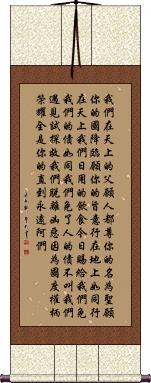
Here is the Lord's Prayer in Chinese from Mathew 6:9-13.
The Chinese text with punctuation is:
Part of 6:9 ...我们在天上的父,愿人都尊你的名为圣。
6:10 愿你的国降临,愿你的旨意行在地上,如同行在天上。
6:11 我们日用的饮食,今日赐给我们。
6:12 免我们的债,如同我们免了人的债。
6:13 不叫我们遇见试探,救我们脱离凶恶,因为国度,权柄,荣耀,全是你的,直到永远,阿们。
Note that punctuation is not included in traditional Chinese calligraphy artwork.
From KJV, this is:
Part of 6:9 ...Our Father which art in heaven, Hallowed be thy name.
6:10 Thy kingdom come. Thy will be done in earth, as it is in heaven.
6:11 Give us this day our daily bread.
6:12 And forgive us our debts, as we forgive our debtors.
6:13 And lead us not into temptation, but deliver us from evil: For thine is the kingdom, and the power, and the glory, forever. Amen.
Turtle
...also means tortoise
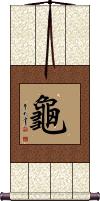
龜 is the generic term for turtle in Chinese and old Korean Hanja. It's like saying “turtle” (or “tortoise”) without being specific about the species of turtle.
Please note that there are many special characters in Chinese and a few in Japanese that denote specific species of turtle and do not include this character. We can't possibly cover all of these species, but if you want a certain one, such as “loggerhead” or a “leatherback,” just contact me, and I'll do my best to research your special species.
If you noticed, I said species names that do not include this character. This is because, in much the same way we can do it in English by just saying, “loggerhead” instead of “loggerhead turtle,” the same can be done in Chinese and Japanese.
 This may be hard to believe, but the image shown to the right is an alternate version of this character, which is currently used in Japan. This was originally an alternate form in ancient China for turtle - but it's so obscure now that most Chinese people would just think this is the Japanese version of turtle (I did a lot of research on this). The version shown in the upper left is traditional Chinese (also used in Korea 100+ years ago). It will generally not be recognized by the new generation of Japanese people. If your audience is Japanese, please click on the Kanji image shown to the right to have the calligrapher write that version (instead of clicking the button above).
Note: In Japanese, this Kanji is also a representation of long life. This is related to the fact that a tortoise can live for hundreds of years.
Kirin / Giraffe / Mythical Creature
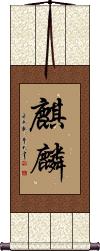
麒麟 is the title of a mythical beast of Asia.
The animal is thought to be related to the giraffe, and in some ways, it is a giraffe. However, it is often depicted with the horns of a dragon or deer and sometimes with the body like a horse, but many variations exist.
In Japanese, it is pronounced “Kirin” as in “Kirin Ichiban” beer.
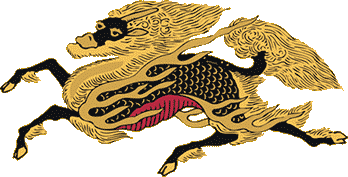
Notes:
1. This is sometimes spelled as “kylin.”
2. In Japanese, this is the only Kanji word for giraffe. Therefore in Japan, this word needs context to know whether you are talking about the mythical creature or the long-necked giraffe of Africa.
3. Apparently, this was the first word used for regular giraffes in China (some were brought from Africa to China during the Ming Dynasty - probably around the year 1400). Though the mythical creature may have existed before, the name “qilin” was given to the “new giraffe.” This is because, more than 600 years ago, giraffes somewhat matched the mythical creature's description when Chinese people saw them for the first time. Later, to avoid such an ambiguous title, a three-character word was devised to mean a “giraffe of Africa.” The characters for “qilin” shown here are only for the mythological version in modern Chinese.
4. More information about the qilin / kirin from Wikipedia.
5. This creature is sometimes translated as the “Chinese Unicorn,” although it is generally portrayed with two horns. I think this is done more for the fantasy aspect of the unicorn and because most westerners don't know what a qilin or kirin is (this avoids a long explanation by the translator).
6. In Korean, this can mean kirin or simply giraffe (usually, the mythological creature is what they would think of when seeing these characters alone on a wall scroll).
Daodejing / Tao Te Ching - Chapter 81
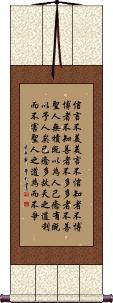
信言不美美言不信知者不博博者不知善者不多多者不善聖人無積既以為人己癒有既以予人矣已癒多故天之道利而不害聖人之道為而不爭 is the Mawangdui version of Daodejing chapter 81.
Credible words are not eloquent;
Eloquent words are not credible.
The wise are not erudite;
The erudite are not wise.
The adept are not all-around;
The all-around are not adept.
The sages do not accumulate things.
Yet the more they have done for others,
The more they have gained themselves;
The more they have given to others,
The more they have gotten themselves.
Thus, the way of tian (heaven) is to benefit without harming;
The way of sages is to do without contending.
Sincere words are not showy;
showy words are not sincere.
Those who know are not “widely learned";
those “widely learned” do not know.
The good do not have a lot;
Those with a lot are not good.
The Sage accumulates nothing.
Having used what he had for others,
he has even more.
Having given what he had to others,
what he has is even greater.
Therefore, the Way of Heaven is to benefit and not cause any harm,
The Way of Man is to act on behalf of others and not to compete with them.
True words aren't charming,
charming words aren't true.
Good people aren't contentious,
contentious people aren't good.
People who know aren't learned,
learned people don't know.
Wise souls don't hoard;
the more they do for others the more they have,
the more they give the richer they are.
The Way of heaven provides without destroying.
Doing without outdoing
is the Way of the wise.
Past experience is the teacher for the future
Past events not forgotten serve as teachers for later events.
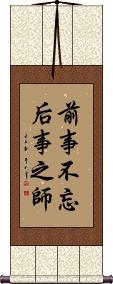
The most literal translation to English of this ancient 前事不忘后事之师 Chinese proverb is:
“Past events not forgotten serve as teachers for later events.”
However, it's been translated several ways:
Don't forget past events, they can guide you in the future.
Benefit from past experience.
Past experience, if not forgotten, is a guide for the future.
Past calamity is my teacher.
A good memory for the past is a teacher for the future.
The remembrance of the past is the teacher of the future.
If one remembers the lessons of the past; They will serve as a guide to avoid mistakes in the future.
The origin:
This proverb comes from the 5th century B.C., just before the Warring States Period in the territory now known as China.
The head of the State of Jin, Zhi Bo, seized power in a coup. He did this with help from the armies of the State of Han and Wei. Instead of being grateful for the help from Han and Wei, he treacherously took the land of Han and Wei. Never satisfied, Zhi Bo employed the armies of Han and Wei to attack and seize the State of Zhao.
The king of Zhao took advice from his minister Zhang Mengtan and secretly contacted the Han and Wei armies to reverse their plans and attack the army of Zhi Bo instead. The plan was successful, and the State of Zhao was not only saved but was set to become a powerful kingdom in the region.
Zhang Mengtan immediately submitted his resignation to a confused king of Zhao. When asked why, Zhang Mengtan said, “I've done my duty to save my kingdom, but looking back at past experience, I know sovereign kings are never satisfied with the power or land at hand. They will join others and fight for more power and more land. I must learn from past experiences, as those experiences are the teachers of future events.”
The king could not dispute the logic in that statement and accepted Zhang Mengtan's resignation.
For generations, the State of Zhao continued to fight for power and land until finally defeated and decimated by the State of Qin (which led to the birth of the Qin Dynasty in 221 B.C.).
Guanxi
The Chinese Concept of Relationship and Exchange of Favors
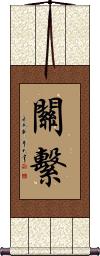
The dictionary definition is:
Relations/relationship, to concern, to affect, to have to do with, or connection.
But there's more to it...
In China, the relationship that you have with certain people can open doors for you. Having guanxi with someone also means they would never defraud you but are honor-bound to treat you fairly (of course, this goes both ways). Sometimes it is suggested that guanxi is the exchange of favors. 關繫 / 関繫 / 關係 is more about having a relationship that allows you to ask for and expect favors without shame.
There is no concept in western culture that exactly matches guanxi, but perhaps having a social or professional network is similar.
Note that there are some variations common within Chinese, Japanese Kanji, and Korean Hanja for this word... Japanese tend to use a Chinese alternate form as shown to the right for
the first character.
 There's also another alternate form of that first character (currently used as the official Simplified form in mainland China) which looks like the character shown to the right. It's basically the central radical of the alternate version shown above but without the “door radical” around it. In more free-flowing calligraphy styles, this version would be the likely choice for a calligrapher.
 In Modern Japanese, they use the character shown to the right.
They also tend to use this same form in Korean Hanja (I've only checked this word in my Korean dictionary, but it has not been confirmed by a translator's review).
 If that was not confusing enough, there is another alternate form of that second character. See right.
An Asian calligrapher of any nationality may use these forms at their discretion. However, They would tend to stick to the most common form used in their respective languages.
If you have any preference on any of these issues, please give us a special note with your order, and we'll make sure it's done the way you want.
Undaunted After Repeated Setbacks
Persistence to overcome all challenges
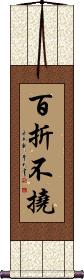
百折不撓 is a Chinese proverb that means “Be undaunted in the face of repeated setbacks.”
More directly translated, it reads, “[Overcome] a hundred setbacks, without flinching.” 百折不撓 is of Chinese origin but is commonly used in Japanese and somewhat in Korean (same characters, different pronunciation).
This proverb comes from a long, and occasionally tragic story of a man that lived sometime around 25-220 AD. His name was Qiao Xuan, and he never stooped to flattery but remained an upright person at all times. He fought to expose the corruption of higher-level government officials at great risk to himself.
Then when he was at a higher level in the Imperial Court, bandits were regularly capturing hostages and demanding ransoms. But when his own son was captured, he was so focused on his duty to the Emperor and the common good that he sent a platoon of soldiers to raid the bandits' hideout, and stop them once and for all even at the risk of his own son's life. While all of the bandits were arrested in the raid, they killed Qiao Xuan's son at first sight of the raiding soldiers.
Near the end of his career, a new Emperor came to power, and Qiao Xuan reported to him that one of his ministers was bullying the people and extorting money from them. The new Emperor refused to listen to Qiao Xuan and even promoted the corrupt Minister. Qiao Xuan was so disgusted that in protest, he resigned from his post as minister (something almost never done) and left for his home village.
His tombstone reads “Bai Zhe Bu Nao” which is now a proverb used in Chinese culture to describe a person of strong will who puts up stubborn resistance against great odds.
My Chinese-English dictionary defines these 4 characters as “keep on fighting despite all setbacks,” “be undaunted by repeated setbacks,” and “be indomitable.”
Our translator says it can mean “never give up” in modern Chinese.
Although the first two characters are translated correctly as “repeated setbacks,” the literal meaning is “100 setbacks” or “a rope that breaks 100 times.” The last two characters can mean “do not yield” or “do not give up.”
Most Chinese, Japanese, and Korean people will not take this absolutely literal meaning but will instead understand it as the title suggests above. If you want a single big word definition, it would be indefatigability, indomitableness, persistence, or unyielding.
See Also: Tenacity | Fortitude | Strength | Perseverance | Persistence
Mountain Travels Poem by Dumu

This poem was written almost 1200 years ago during the Tang dynasty.
It depicts traveling up a place known as Cold Mountain, where some hearty people have built their homes. The traveler is overwhelmed by the beauty of the turning leaves of the maple forest that surrounds him just as night overtakes the day, and darkness prevails. His heart implores him to stop, and take in all of the beauty around him.
First, before you get to the full translation, I must tell you that Chinese poetry is a lot different than what we have in the west. Chinese words simply don't rhyme in the same way that English or other western languages do. Chinese poetry depends on rhythm and a certain beat of repeated numbers of characters.
I have done my best to translate this poem keeping a certain feel of the original poet. But some of the original beauty of the poem in its original Chinese will be lost in translation.
Far away on Cold Mountain, a stone path leads upwards.
Among white clouds, people's homes reside.
Stopping my carriage I must, as to admire the maple forest at nights fall.
In awe of autumn leaves showing more red than even flowers of early spring.
Hopefully, this poem will remind you to stop, and “take it all in” as you travel through life.
The poet's name is “Du Mu” in Chinese that is: 
 .
.
The title of the poem, “Mountain Travels” is: 

You can have the title, poet's name, and even “Tang Dynasty” written as an inscription on your custom wall scroll if you like.
More about the poet:
Dumu lived from 803-852 AD and was a leading Chinese poet during the later part of the Tang dynasty.
He was born in Chang'an, a city in central China and the former capital of the ancient Chinese empire in 221-206 BC. In present-day China, his birthplace is currently known as Xi'an, the home of the Terracotta Soldiers.
He was awarded his Jinshi degree (an exam administered by the emperor's court which leads to becoming an official of the court) at the age of 25 and went on to hold many official positions over the years. However, he never achieved a high rank, apparently because of some disputes between various factions, and his family's criticism of the government. His last post in the court was his appointment to the office of Secretariat Drafter.
During his life, he wrote scores of narrative poems, as well as a commentary on the Art of War and many letters of advice to high officials.
His poems were often very realistic and often depicted everyday life. He wrote poems about everything, from drinking beer in a tavern to weepy poems about lost love.
The thing that strikes you most is the fact even after 1200 years, not much has changed about the beauty of nature, toils, and troubles of love and beer drinking.
Better Late Than Never
It's Never Too Late Too Mend
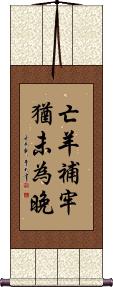
Long ago in what is now China, there were many kingdoms throughout the land. This time period is known as “The Warring States Period” by historians because these kingdoms often did not get along with each other.
Sometime around 279 B.C. the Kingdom of Chu was a large but not particularly powerful kingdom. Part of the reason it lacked power was the fact that the King was surrounded by “yes men” who told him only what he wanted to hear. Many of the King's court officials were corrupt and incompetent which did not help the situation.
The King was not blameless himself, as he started spending much of his time being entertained by his many concubines.
One of the King's ministers, Zhuang Xin, saw problems on the horizon for the Kingdom, and warned the King, “Your Majesty, you are surrounded by people who tell you what you want to hear. They tell you things to make you happy and cause you to ignore important state affairs. If this is allowed to continue, the Kingdom of Chu will surely perish, and fall into ruins.”
This enraged the King who scolded Zhuang Xin for insulting the country and accused him of trying to create resentment among the people. Zhuang Xin explained, “I dare not curse the Kingdom of Chu but I feel that we face great danger in the future because of the current situation.” The King was simply not impressed with Zhuang Xin's words.
Seeing the King's displeasure with him and the King's fondness for his court of corrupt officials, Zhuang Xin asked permission from the King that he may take leave of the Kingdom of Chu, and travel to the State of Zhao to live. The King agreed, and Zhuang Xin left the Kingdom of Chu, perhaps forever.
Five months later, troops from the neighboring Kingdom of Qin invaded Chu, taking a huge tract of land. The King of Chu went into exile, and it appeared that soon, the Kingdom of Chu would no longer exist.
The King of Chu remembered the words of Zhuang Xin and sent some of his men to find him. Immediately, Zhuang Xin returned to meet the King. The first question asked by the King was “What can I do now?”
Zhuang Xin told the King this story:
A shepherd woke one morning to find a sheep missing. Looking at the pen saw a hole in the fence where a wolf had come through to steal one of his sheep. His friends told him that he had best fix the hole at once. But the Shepherd thought since the sheep is already gone, there is no use fixing the hole.
The next morning, another sheep was missing. And the Shepherd realized that he must mend the fence at once. Zhuang Xin then went on to make suggestions about what could be done to reclaim the land lost to the Kingdom of Qin, and reclaim the former glory and integrity of the Kingdom of Chu.
The Chinese idiom shown above came from this reply from Zhuang Xin to the King of Chu almost 2,300 years ago.
It translates roughly into English as...
“Even if you have lost some sheep, it's never too late to mend the fence.”
This proverb, 亡羊补牢犹未为晚, is often used in modern China when suggesting in a hopeful way that someone change their ways, or fix something in their life. It might be used to suggest fixing a marriage, quitting smoking, or getting back on track after taking an unfortunate path in life among other things one might fix in their life.
I suppose in the same way that we might say, “Today is the first day of the rest of your life” in our western cultures to suggest that you can always start anew.
Note: This does have Korean pronunciation but is not a well-known proverb in Korean (only Koreans familiar with ancient Chinese history would know it). Best if your audience is Chinese.
These search terms might be related to Done:
Always Be Prepared
Have a Walking Stick at the Ready Before You Stumble
My Life is Complete Because of You
Reach Peace and Calm Through Meditation
Skill Acquired Through Hard Training
The True and Complete Enlightenment
Through the Ups and Downs of Life
Truth Flashed Through the Mind
Uniform / Complete / Perfect / Order
The following table may be helpful for those studying Chinese or Japanese...
| Title | Characters | Romaji (Romanized Japanese) | Various forms of Romanized Chinese | |
| Gassho | 合掌 | gasshou / gasho | hé zhǎng / he2 zhang3 / he zhang / hezhang | ho chang / hochang |
| Good Intentions Good Will Good Faith | 善意 | zen i / zeni | shàn yì / shan4 yi4 / shan yi / shanyi | shan i / shani |
| Battojutsu | 抜刀術 | battou jutsu battoujutsu batto jutsu | ||
| Shoganai | 仕様が無い | shouganai / shiyouganai shoganai / shiyoganai | ||
| Naranu Koto Wa Naranu Mono Desu | ならぬことはならぬものです | naranu koto wa naranu mono desu | ||
| Confucius: Golden Rule Ethic of Reciprocity | 己所不欲勿施於人 己所不欲勿施于人 | jǐ suǒ bú yù wù shī yú rén ji3 suo3 bu2 yu4, wu4 shi1 yu2 ren2 ji suo bu yu, wu shi yu ren jisuobuyu,wushiyuren | chi so pu yü, wu shih yü jen chisopuyü,wushihyüjen |
|
| Shikataganai | 仕方が無い | shikataganai | ||
| Helpfulness | 樂於助人 乐于助人 | lè yú zhù rén le4 yu2 zhu4 ren2 le yu zhu ren leyuzhuren | le yü chu jen leyüchujen |
|
| Self-Discipline Will-Power | 自律 | jiritsu | zì lǜ / zi4 lv4 / zi lv / zilv | tzu lü / tzulü |
| Flexibility | 靈活性 灵活性 | líng huó xìng ling2 huo2 xing4 ling huo xing linghuoxing | ling huo hsing linghuohsing |
|
| Do not fear the task: Cooperation will lead to success | 不怕風浪大就怕槳不齊 不怕风浪大就怕桨不齐 | bù pà fēng làng dà jiù pà jiǎng bù qí bu4 pa4 feng1 lang4 da4 jiu4 pa4 jiang3 bu4 qi2 bu pa feng lang da jiu pa jiang bu qi | pu p`a feng lang ta chiu p`a chiang pu ch`i pu pa feng lang ta chiu pa chiang pu chi |
|
| Diligence | 勤勉 | kinben | qín miǎn / qin2 mian3 / qin mian / qinmian | ch`in mien / chinmien / chin mien |
| Do not take action until the time is right | 不到火候不揭鍋 不到火候不揭锅 | bù dào huǒ hou bù jiē guō bu4 dao4 huo3 hou bu4 jie1 guo1 bu dao huo hou bu jie guo budaohuohoubujieguo | pu tao huo hou pu chieh kuo putaohuohoupuchiehkuo |
|
| Beer | 啤酒 | pí jiǔ / pi2 jiu3 / pi jiu / pijiu | p`i chiu / pichiu / pi chiu | |
| Cooperation Collaboration | 協作 协作 | kyou saku / kyousaku / kyo saku | xié zuò / xie2 zuo4 / xie zuo / xiezuo | hsieh tso / hsiehtso |
| The Lord's Prayer Luke 11:2-4 | 我們在天上的父有古卷隻作父阿願人都尊你的名為聖願你的國降臨願你的旨意行在地上如同行在天上有古卷無願你的旨意雲雲我們日用的飲食天天賜給我們赦免我們的罪因為我們也赦免凡虧欠我們的人不叫我們遇見試探救我們脫離凶惡有古卷無末句 我们在天上的父有古卷只作父阿愿人都尊你的名为圣愿你的国降临愿你的旨意行在地上如同行在天上有古卷无愿你的旨意云云我们日用的饮食天天赐给我们赦免我们的罪因为我们也赦免凡亏欠我们的人不叫我们遇见试探救我们脱离凶恶有古卷无末句 | wǒ men zài tiān shàng de fù yǒu gǔ juǎn zhǐ zuò fù ā yuàn rén dōu zūn nǐ de míng wèi shèng yuàn nǐ de guó jiàng lín yuàn nǐ de zhǐ yì xíng zài dì shàng rú tóng xíng zài tiān shàng yǒu gǔ juǎn wú yuàn nǐ de zhǐ yì yún yún wǒ men rì yòng de yǐn shí tiān tiān cì gěi wǒ men shè miǎn wǒ men de zuì yīn wèi wǒ men yě shè miǎn fán kuī qiàn wǒ men de rén bù jiào wǒ men yù jiàn shì tàn jiù wǒ men tuō lí xiōng è yǒu gǔ juǎn wú mò jù wo3 men zai4 tian1 shang4 de fu4 you3 gu3 juan3 zhi3 zuo4 fu4 a1 yuan4 ren2 dou1 zun1 ni3 de ming2 wei4 sheng4 yuan4 ni3 de guo2 jiang4 lin2 yuan4 ni3 de zhi3 yi4 xing2 zai4 di4 shang4 ru2 tong2 xing2 zai4 tian1 shang4 you3 gu3 juan3 wu2 yuan4 ni3 de zhi3 yi4 yun2 yun2 wo3 men ri4 yong4 de yin3 shi2 tian1 tian1 ci4 gei3 wo3 men she4 mian3 wo3 men de zui4 yin1 wei4 wo3 men ye3 she4 mian3 fan2 kui1 qian4 wo3 men de ren2 bu4 jiao4 wo3 men yu4 jian4 shi4 tan4 jiu4 wo3 men tuo1 li2 xiong1 e4 you3 gu3 juan3 wu2 mo4 ju4 wo men zai tian shang de fu you gu juan zhi zuo fu a yuan ren dou zun ni de ming wei sheng yuan ni de guo jiang lin yuan ni de zhi yi xing zai di shang ru tong xing zai tian shang you gu juan wu yuan ni de zhi yi yun yun wo men ri yong de yin shi tian tian ci gei wo men she mian wo men de zui yin wei wo men ye she mian fan kui qian wo men de ren bu jiao wo men yu jian shi tan jiu wo men tuo li xiong e you gu juan wu mo ju | wo men tsai t`ien shang te fu yu ku chüan chih tso fu a yüan jen tou tsun ni te ming wei sheng yüan ni te kuo chiang lin yüan ni te chih i hsing tsai ti shang ju t`ung hsing tsai t`ien shang yu ku chüan wu yüan ni te chih i yün yün wo men jih yung te yin shih t`ien t`ien tz`u kei wo men she mien wo men te tsui yin wei wo men yeh she mien fan k`uei ch`ien wo men te jen pu chiao wo men yü chien shih t`an chiu wo men t`o li hsiung o yu ku chüan wu mo chü wo men tsai tien shang te fu yu ku chüan chih tso fu a yüan jen tou tsun ni te ming wei sheng yüan ni te kuo chiang lin yüan ni te chih i hsing tsai ti shang ju tung hsing tsai tien shang yu ku chüan wu yüan ni te chih i yün yün wo men jih yung te yin shih tien tien tzu kei wo men she mien wo men te tsui yin wei wo men yeh she mien fan kuei chien wo men te jen pu chiao wo men yü chien shih tan chiu wo men to li hsiung o yu ku chüan wu mo chü |
|
| Kowtow - The deepest bow | 叩頭 叩头 | koutou / koto | kòu tóu / kou4 tou2 / kou tou / koutou | k`ou t`ou / koutou / kou tou |
| The Lord's Prayer Mathew 6:9-13 | 我們在天上的父願人都尊你的名為聖願你的國降臨願你的旨意行在地上如同行在天上我們日用的飲食今日賜給我們免我們的債如同我們免了人的債不叫我們遇見試探救我們脫離凶惡因為國度權柄榮耀全是你的直到永遠阿們 我们在天上的父愿人都尊你的名为圣愿你的国降临愿你的旨意行在地上如同行在天上我们日用的饮食今日赐给我们免我们的债如同我们免了人的债不叫我们遇见试探救我们脱离凶恶因为国度权柄荣耀全是你的直到永远阿们 | wǒ men zài tiān shàng de fù yuàn rén dōu zūn nǐ de míng wèi shèng yuàn nǐ de guó jiàng lín yuàn nǐ de zhǐ yì xíng zài dì shàng rú tóng xíng zài tiān shàng wǒ men rì yòng de yǐn shí jīn rì cì gěi wǒ men miǎn wǒ men de zhài rú tóng wǒ men miǎn le rén de zhài bù jiào wǒ men yù jiàn shì tàn jiù wǒ men tuō lí xiōng è yīn wèi guó dù quán bǐng róng yào quán shì nǐ de zhí dào yǒng yuǎn ā men wo3 men zai4 tian1 shang4 de fu4 yuan4 ren2 dou1 zun1 ni3 de ming2 wei4 sheng4 yuan4 ni3 de guo2 jiang4 lin2 yuan4 ni3 de zhi3 yi4 xing2 zai4 di4 shang4 ru2 tong2 xing2 zai4 tian1 shang4 wo3 men ri4 yong4 de yin3 shi2 jin1 ri4 ci4 gei3 wo3 men mian3 wo3 men de zhai4 ru2 tong2 wo3 men mian3 le ren2 de zhai4 bu4 jiao4 wo3 men yu4 jian4 shi4 tan4 jiu4 wo3 men tuo1 li2 xiong1 e4 yin1 wei4 guo2 du4 quan2 bing3 rong2 yao4 quan2 shi4 ni3 de zhi2 dao4 yong3 yuan3 a1 men wo men zai tian shang de fu yuan ren dou zun ni de ming wei sheng yuan ni de guo jiang lin yuan ni de zhi yi xing zai di shang ru tong xing zai tian shang wo men ri yong de yin shi jin ri ci gei wo men mian wo men de zhai ru tong wo men mian le ren de zhai bu jiao wo men yu jian shi tan jiu wo men tuo li xiong e yin wei guo du quan bing rong yao quan shi ni de zhi dao yong yuan a men | wo men tsai t`ien shang te fu yüan jen tou tsun ni te ming wei sheng yüan ni te kuo chiang lin yüan ni te chih i hsing tsai ti shang ju t`ung hsing tsai t`ien shang wo men jih yung te yin shih chin jih tz`u kei wo men mien wo men te chai ju t`ung wo men mien le jen te chai pu chiao wo men yü chien shih t`an chiu wo men t`o li hsiung o yin wei kuo tu ch`üan ping jung yao ch`üan shih ni te chih tao yung yüan a men wo men tsai tien shang te fu yüan jen tou tsun ni te ming wei sheng yüan ni te kuo chiang lin yüan ni te chih i hsing tsai ti shang ju tung hsing tsai tien shang wo men jih yung te yin shih chin jih tzu kei wo men mien wo men te chai ju tung wo men mien le jen te chai pu chiao wo men yü chien shih tan chiu wo men to li hsiung o yin wei kuo tu chüan ping jung yao chüan shih ni te chih tao yung yüan a men |
|
| Turtle | 龜 龟 / 亀 | kame | guī / gui1 / gui | kuei |
| Kirin Giraffe Mythical Creature | 麒麟 | kirin | qí lǐn / qi2 lin3 / qi lin / qilin | ch`i lin / chilin / chi lin |
| Daodejing Tao Te Ching - Chapter 81 | 信言不美美言不信知者不博博者不知善者不多多者不善聖人無積既以為人己癒有既以予人矣已癒多故天之道利而不害聖人之道為而不爭 信言不美美言不信知者不博博者不知善者不多多者不善圣人无积既以为人己愈有既以予人矣已愈多故天之道利而不害圣人之道为而不争 | |||
| Past experience is the teacher for the future | 前事不忘后事之師 前事不忘后事之师 | qián shì bú wàng hòu shí zhī shī qian2 shi4 bu2 wang4 hou4 shi2 zhi1 shi1 qian shi bu wang hou shi zhi shi | ch`ien shih pu wang hou shih chih shih chien shih pu wang hou shih chih shih |
|
| Guanxi | 關繫 / 関繫 / 關係 关系 / 関係 | kankei | guān xì / guan1 xi4 / guan xi / guanxi | kuan hsi / kuanhsi |
| Undaunted After Repeated Setbacks | 百折不撓 百折不挠 | hyaku setsu su tou hyakusetsusutou hyaku setsu su to | bǎi zhé bù náo bai3 zhe2 bu4 nao2 bai zhe bu nao baizhebunao | pai che pu nao paichepunao |
| Mountain Travels Poem by Dumu | 遠上寒山石徑斜白雲生處有人家停車坐愛楓林晚霜葉紅於二月花 远上寒山石径斜白云生处有人家停车坐爱枫林晚霜叶红于二月花 | yuǎn shàng hán shān shí jìng xiá bái yún shēng chù yǒu rén jiā tíng chē zuò ài fēng lín wǎn shuàng yè hóng yú èr yuè huā yuan3 shang4 han2 shan1 shi2 jing4 xia2 bai2 yun2 sheng1 chu4 you3 ren2 jia1 ting2 che1 zuo4 ai4 feng1 lin2 wan3 shuang4 ye4 hong2 yu2 er4 yue4 hua1 yuan shang han shan shi jing xia bai yun sheng chu you ren jia ting che zuo ai feng lin wan shuang ye hong yu er yue hua | yüan shang han shan shih ching hsia pai yün sheng ch`u yu jen chia t`ing ch`e tso ai feng lin wan shuang yeh hung yü erh yüeh hua yüan shang han shan shih ching hsia pai yün sheng chu yu jen chia ting che tso ai feng lin wan shuang yeh hung yü erh yüeh hua |
|
| Better Late Than Never | 亡羊補牢猶未為晚 亡羊补牢犹未为晚 | wáng yáng bǔ láo yóu wèi wéi wǎn wang2 yang2 bu3 lao2 you2 wei4 wei2 wan3 wang yang bu lao you wei wei wan | wang yang pu lao yu wei wei wan wangyangpulaoyuweiweiwan |
|
| In some entries above you will see that characters have different versions above and below a line. In these cases, the characters above the line are Traditional Chinese, while the ones below are Simplified Chinese. | ||||

Successful Chinese Character and Japanese Kanji calligraphy searches within the last few hours...



