Many custom options


And formats


Not what you want?
Try other similar-meaning words, fewer words, or just one word.
Body Ande Mind in Chinese & Japanese Calligraphy
Compare the meanings and pronunciations of the entries related to Body Ande Mind below. Choose “Customize & Buy” next to your preferred entry to personalize your calligraphy wall scroll.
Switched to secondary search mode due to lack of results using primary.
These secondary results may not be very accurate. Try a different but similar meaning word or phrase for better results. Or:
Look up Body Ande Mind in my Japanese Kanji & Chinese Character Dictionary(My dictionary is a different system then the calligraphy search you just tried)
If you want a special phrase, word, title, name, or proverb, feel free to contact me, and I will translate your custom calligraphy idea for you.
2. Dragon
5. The Spirit of Dragon and Tiger
9. A Life of Serenity Yields Understanding
10. 7. Right Mindfulness / Right Memory / Perfect Mindfulness
11. Kempo Karate / Law of the Fist Empty Hand
12. Inner Peace
13. Lingering Mind
14. Mindfulness
15. Reiki Precepts by Usui Mikao
16. Appreciation of Truth by Meditation
17. Listen to Your Heart / Follow Your Heart
18. Mind Like Water
19. Brotherly and Sisterly Love
20. My True Love
21. Spirit
22. Determination
23. Heijoshin / Presence of Mind
24. An Open Book Benefits Your Mind
25. Warrior Soul / Heroic Spirit
26. Healthy Living
27. Ken Zen Ichi Nyo
28. Peace of Mind
29. Peaceful Heart
30. Purified Spirit / Enlightened Attitude
31. Wolf
32. Clarity
33. Patience Yields Peace of Mind
34. Peaceful Heart / Peace of Mind / Calm Mind
35. Sacrifice / Devotion / Dedication
37. Spirit / Spiritual Essence
38. Three Treasures of Chinese Medicine
39. Ki Ken-Tai Icchi
40. Martial Morality / Martial Arts Ethics / Virtue
41. No Worries
42. One Heart / One Mind / Heart and Soul
43. Pain is Weakness Leaving the Body
44. Prideful Mind / Self-Respecting Heart
45. Spiritual Strength / Strength of Spirit
46. Tao / Dao of the Heart / Soul
47. Truth Flashed Through The Mind
48. Alert / On Guard / Lingering Mind
49. Body Mind Spirit
50. Buddha Heart / Mind of Buddha
51. Concentration
52. Confidence / Faithful Heart
54. Fierce and courageous training defeats the strong and protects the body.
57. Peace of Mind
58. Seishin Budo
59. Shoshin-Ryu
61. 8. Right Concentration / Perfect Concentration
62. Avatar
64. Seeing one’s Nature and becoming a Buddha
65. Bushindo
66. Keep Calm in Face of Adversity
68. Choose Life
71. Goshin-Do
73. Heart and Soul
76. Inhale
77. Jin Shin Jyutsu
81. Be Master of Mind, Not Mastered by Mind
82. Never Forget Your First Resolution
84. Pain is Weakness Leaving the Body
85. Patience Brings Peace of Mind
86. Shiatsu-Do
88. Spiritual Peace / Enlightened Peace
89. Strong bones come from hard knocks
90. Taido
91. Whole Heart
92. Ten perfect Mahayana rules
93. You are Always in My Heart
94. Ande
95. Unmoved by the Eight Winds
96. Beautiful Heart / Beautiful Mind
97. Beautiful Mind
No Mind / Mushin
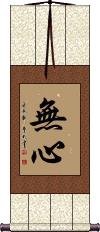
In Japanese, 無心 means innocent or without knowledge of good and evil. It literally means “without mind.”
無心 is one of the five spirits of the warrior (budo) and is often used as a Japanese martial arts tenet. Under that context, places such as the Budo Dojo define it this way: “No mind, a mind without ego. A mind like a mirror which reflects and dos not judge.” The original term was “mushin no shin,” meaning “mind of no mind.” It is a state of mind without fear, anger, or anxiety. Mushin is often described by the phrase “Mizu no Kokoro,” which means “mind like water.” The phrase is a metaphor describing the pond that clearly reflects its surroundings when calm but whose images are obscured once a pebble is dropped into its waters.
This has a good meaning in conjunction with Chan / Zen Buddhism in Japan. However, out of that context, it means mindlessness or absent-mindedness. To non-Buddhists in China, this is associated with doing something without thinking.
In Korean, this usually means indifference.
Use caution and know your audience before ordering this selection.
More info: Wikipedia: Mushin
Dragon
Year of the Dragon / Zodiac Sign
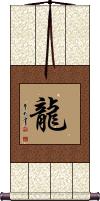
龍 is the character for dragon in Chinese, old Korean Hanja, and Japanese Kanji.
The dragon is a creature of myth and legend that dominates Chinese, Japanese, and even European folklore. In China, the dragon is the symbol of the Emperor, strength, and power, and the Chinese dragon is known as the god of water.
From the Chinese Zodiac, if you were born in the year of the Dragon, you . . .
Have a strong body and spirit.
Are full of energy.
Have vast goals.
Have a deep level of self-awareness.
Will do whatever you can to “save face.”
See also our Chinese Zodiac or Dragon Calligraphy pages.
Learning is Eternal
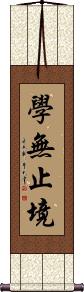
This Chinese philosophy tells of how we continue to learn throughout our lives.
This proverb can be translated in a few ways such as “Study has no end,” “Knowledge is infinite,” “No end to learning,” “There's always something new to study,” or “You live and learn.”
The deeper meaning: Even when we finish school we are still students of the world gaining more knowledge from our surroundings with each passing day.
See Also: An Open Book Benefits Your Mind | Wisdom | Learn From Wisdom
Mind of the Beginner
Shoshin
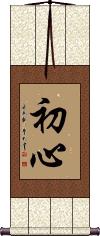
初心 is often translated in Japanese as “beginner's mind” or “beginner's spirit.”
In Chinese, the dictionary definition is “one's original intention.”
The first character means first, initial, primary, junior, beginning, or basic.
The second character means heart, mind, soul, or essence.
初心 is one of the five spirits of the warrior (budo) and is often used as a Japanese martial arts tenet. Under that context, places such as the Budo Dojo define it this way: The state of shoshin is that of a beginners mind. It is a state of awareness that always remains fully conscious, aware, and prepared to see things for the first time. The attitude of shoshin is essential to continued learning.
The Spirit of Dragon and Tiger
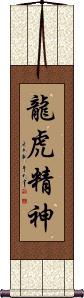
龍虎精神 means the spirit of the dragon and tiger.
It speaks to the vitality and vigor that is the nature of these two creatures.
Beyond “spirit,” the last two characters can also mean mind, soul, or heart. Therefore, you can also say this means “Heart of the Dragon and Tiger,” etc.
龍虎精神 is often titled “Ryukoseishin” in many Japanese martial arts.
Immovable Mind
fudoshin
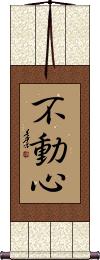
不動心 is one of the five spirits of the warrior (budo) and is often used as a Japanese martial arts tenet.
Under that context, places such as the Budo Dojo define it this way: An unshakable mind and an immovable spirit is the state of fudoshin. It is courage and stability displayed both mentally and physically. Rather than indicating rigidity and inflexibility, fudoshin describes a condition that is not easily upset by internal thoughts or external forces. It is capable of receiving a strong attack while retaining composure and balance. It receives and yields lightly, grounds to the earth, and reflects aggression back to the source.
Other translations of this title include unwavering mind, immovable mind, unwavering composure, imperturbability, steadfastness, keeping a cool head in an emergency, or keeping one's calm (during a fight).
The first two Kanji alone mean immobility, firmness, fixed, steadfastness, motionless, and idle.
The last Kanji means heart, mind, soul, or essence.
Together, these three Kanji create a title defined as “immovable mind” within the context of Japanese martial arts. However, in Chinese, it would mean “motionless heart,” and in Korean Hanja, “wafting heart” or “floating heart.”
Heart / Mind / Spirit
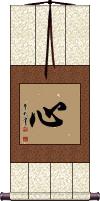
心 would often be translated as “heart.”
However, because it was believed in Chinese culture for thousands of years that your consciousness and thoughts came from the big red organ in the middle of your chest, it also means “mind” or “spirit” and sometimes even “soul.”
In Korean, beyond heart, mind, and spirit, this character can mean moral, nature, mind, affections, intentions, core, and center. In fact, it is used in Chinese to mean “center” as well but only with another character in front of it. For instance, “medical center” or even “shopping center.” Separately and alone, it will not be read with that “center” meaning unless thought of as “the center of your soul.”
Soul of a Warrior
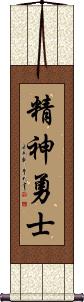
精神勇士 can mean the spirit or soul of a warrior. The first two characters can mean vigor, vitality, drive, spirit, mind, heart, mental essence, and psychological component. “your soul.”
The second two characters mean “warrior” or literally “brave soldier/man,” although some will translate this word as “hero.” Therefore, this is also how to say “soul of a hero.”
Note: This title is best for Chinese and old Korean. It does make sense in Japanese but is not a common or natural Kanji combination in Japanese.
We have two versions of this phrase. The only difference is the first two and last two characters are swapped. The version here suggests that you are the warrior or hero. The other version suggests that you admire or like the idea of the spirit of a warrior.
A Life of Serenity Yields Understanding
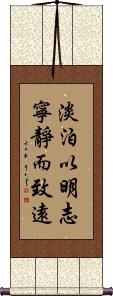
淡泊以明志寧靜而致遠 is a kind of complex ten-character proverb composed by Zhuge Liang about 1800 years ago.
淡泊以明志寧靜而致遠 is a Chinese proverb that means “Leading a simple life will yield a clear mind, and having inner peace will help you see far (into the world).”
What I have translated as “simple life” means NOT being materialistic and NOT competing in the rat race.
The last word means “far” but the deeper meaning is that you will surpass what you can currently see or understand. Perhaps even the idea of opening up vast knowledge and understanding of complex ideas.
The whole phrase has a theme that suggests that if you are NOT an aggressive, cut-throat person who fights their way to the top, no matter how many people they crush along the way, and instead seek inner peace, you will have a happier existence and be more likely to understand the meaning of life.
See Also: Tranquil / Tranquility / Serenity
7. Right Mindfulness / Right Memory / Perfect Mindfulness
Samyak Smriti / Samyak Smrti / Samma Sati
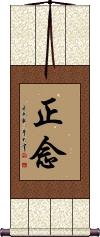
正念 is one of the Noble Eightfold Paths of Buddhism. Right Mindfulness, along with Right Effort and Right Concentration, constitute the path to Concentration or Perfect Thought.
Right Mindfulness is about remaining focused on one's body, feelings, mind, and mental qualities. It's also about being ardent, aware, and mindful, and supposes that you've already put aside worldly desire and aversion.
Monk Bhikkhu Bodhi described this as “The mind is deliberately kept at the level of bare attention, a detached observation of what is happening within us and around us in the present moment.” When practicing right mindfulness, the mind is trained to remain in the present, open, quiet, and alert, contemplating the present event.
Another definition: Ongoing mindfulness of body, feelings, thinking, and objects of thought.
This term is exclusively used by devout Buddhists. It is not a common term, and remains an unknown concept to most Japanese and Chinese people.
See Also: Buddhism | Enlightenment | Noble Eightfold Path
Kempo Karate / Law of the Fist Empty Hand
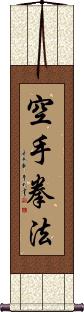
空手拳法 is the Kanji title for Kempo Karate.
The first two characters mean “karate” - technically they express “empty hand.”
The last two express “fist law” which is Romanized from Japanese as “Kenpo” or “Kempo.”
That “empty hand” translation can be understood better when you grasp the idea that karate is a martial art without weapons (other than the weapons organic to your body, such as your foot, hand, fist, etc). When you practice karate, you do so with empty hands (no weapons).
Note: There is also an antiquated way to write karate. It has the same pronunciation but a different first character which means “Tang” as in the Tang Dynasty. Some dojos use that form - let us know if you need that alternate form, and we'll add it.
Inner Peace
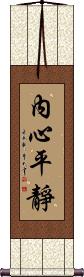
內心平靜 is a Chinese and Japanese phrase that is a direct translation of the western idea of inner peace.
The first two characters contain the idea of “heart,” “innermost being,” or “deep in the/your inner mind.”
The last two characters mean “tranquil” and “serene.”
I have seen this phrase used as “inner peace” for art prints and even on the side of coffee cups. But I think the translation is too literal. It feels like a direct translation from English rather than a nicely composed Chinese or Japanese phrase. See my other entries for “inner peace.”
See Also: Tranquil / Tranquility / Serenity | Simplicity | Worldwide Peace
Lingering Mind
Zanshin
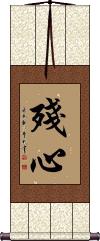
First off, 殘心 should only be used in the context of Japanese martial arts. In Chinese, it's a rather sad title (like a broken heart). In Chinese, the first character alone means destroyed, spoiled, ruined, injured, cruel, oppressive, savage, incomplete, or disabled. However, in Japanese, it's remainder, leftover, balance, or lingering.
The second character means heart, mind, soul, or essence in both languages.
殘心 is one of the five spirits of the warrior (budo) and is often used as a Japanese martial arts tenet. Under that context, places such as the Budo Dojo define it this way: The spirit of zanshin is the state of the remaining or lingering spirit. It is often described as a sustained and heightened state of awareness and mental follow-through. However, true zanshin is a state of focus or concentration before, during, and after the execution of a technique, where a link or connection between uke and nage is preserved. Zanshin is the state of mind that allows us to stay spiritually connected, not only to a single attacker but to multiple attackers and even an entire context; a space, a time, an event.
 In modern Japan (and Simplified Chinese), they use a different version of the first character, as seen to the right. Click on this character to the right instead of the button above if you want this modern Japanese version of lingering mind / zanshin.
Mindfulness
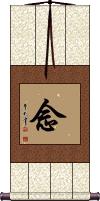
念 is the simplest way to write “mindfulness” in Chinese, Japanese Kanji, and old Korean Hanja.
念 can be defined these ways: To read; to study (a degree course); to read aloud; to miss somebody (keeping them in your mind); idea; remembrance; sense; thought; feeling; desire; concern; attention; recollection; memory; to think on/about; reflect; repeat, intone; a moment.
Obviously, the context in which the character is used determines which definition or meaning is perceived. As a single character, it's open and perhaps ambiguous. Thus, it can be read with any or all of these meanings.
念 is used in a Buddhist context (often written as 正念 or “right mindfulness”) with similar meanings of thought and contemplation.
In Japanese, this character is sometimes used as the name “Nen.”
See Also: Buddhism | Enlightenment
Reiki Precepts by Usui Mikao
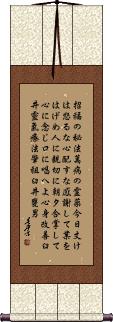
These are the precepts of Reiki that are attributed to Usui Mikao.
Here is a breakdown of the characters and a rough translation:
招福の秘法, 萬病の霊薬。
Invite blessings of [the] secret method, 10,000 illnesses of spiritual medicine.
今日丈けは: 怒るな, 心配すな, 感謝して, 業をはげめ, 人に親切に。
At least for today: Do not be angry, do not worry, be grateful, work with diligence, and be kind to people.
朝夕合掌して, 心に念じ, 口に唱へよ, 心身改善。
Morning [and] evening perform gassho (join hands), [with your] heart/mind in silent prayer, [with your] mouth chant, [thusly] mind [and] body [will] reform/improve.
臼井靈氣療法! -肇祖, 臼井甕男。
Usui Reiki Ryōhō! -Founder, Usui Mikao.
The middle portion of this is often titled, “The Five Principles of Reiki” and makes a nice calligraphy selection by itself. The Japanese text presented here can be considered the more verbose version.
Note: Because this selection contains some special Japanese Hiragana characters, it should be written by a Japanese calligrapher.
Appreciation of Truth by Meditation
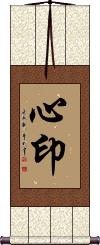
心印 is a Buddhist concept that simply stated is “appreciation of truth by meditation.”
It's a deep subject, but my understanding is that you can find truth through meditation, and once you've found the truth, you can learn to appreciate it more through further meditation. This title is not commonly used outside of the Buddhist community (your Asian friends may or may not understand it). The literal translation would be something like “the mind seal,” I've seen this term translated this way from Japanese Buddhist poetry. But apparently, the seal that is stamped deep in your mind is the truth. You just have to meditate to find it.
Soothill defines it this way: Mental impression, intuitive certainty; the mind is the Buddha-mind in all, which can seal or assure the truth; the term indicates the intuitive method of the Chan (Zen) school, which was independent of the spoken or written word.
Reference: Soothill-Hodous Dictionary of Chinese Buddhism
See Also: Zenmai / Royal Fern
Listen to Your Heart / Follow Your Heart
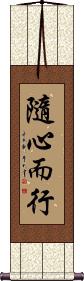
隨心而行 is the closest way to express this idea in Chinese. Literally translated, this phrase means “Allow your heart to dictate your behavior” or “Let your heart guide your conduct” in Chinese. You could also translate this as “follow your heart.” Or, with a bit of imagination, it could mean: “let your spirit be your guide.”
Note that in some cases, “heart” can mean “mind,” “soul” or even “spirit” in Chinese. In ancient China, it was thought that the big pumping organ in your chest was where your thoughts came from, or where your soul resides.
Ancient western thought followed a similar belief. Thus phrases like “I love you with all my heart” and “I give you my whole heart.”
Mind Like Water
Mizu No Kokoro
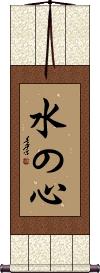
水の心 is the Japanese Buddhist and martial arts phrase, “Mizu no Kokoro,” which means “mind like water” or “heart of water.”
The phrase is a metaphor describing the pond that clearly reflects its surroundings when calm but whose images are obscured once a pebble is dropped into its waters.
Brotherly and Sisterly Love
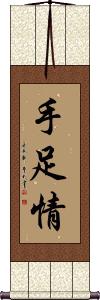
手足情 is the love between siblings.
When you love, protect, care for, and have a deep bond that only brothers or sisters can.
The actual translation is “Hand and Foot,” but the relationship between brothers or sisters is like that of hands and feet. They belong together and complete the body. Even though this says “hand and foot,” it will always be read with the brotherly and sisterly love meaning in Chinese.
Note: During the past 20 years, the “One child policy” in China is slowly making this term obsolete.
My True Love
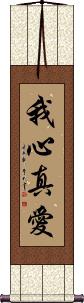
我心真愛 is a slightly poetic way to express this sentiment to someone.
The meaning is “My True Love,” but the characters directly translate as “I/Me/My Heart/Mind True/Real Love.”
Note that Chinese grammar and construction are different, so this sounds very eloquent and artsy in Chinese.
In Korean Hanja, the third character should be written differently. Just let me know when you place your order if you want that version - it will still make sense in Chinese. This phrase makes sense in Korean but is not commonly used.
Spirit
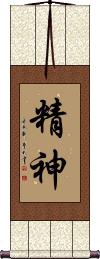
精神 is the type of spirit you have if you perform well in sports or competitions. It is the idea of having a good attitude and putting your all into something - so much so that others can see or feel your spirit. It is the essence of your being that can only be subjectively described because there are no words that can fully explain what “spirit” really is.
For your information:
My Japanese dictionary further tries to explain this word by comparing it to mind, soul, heart, or intention.
My Chinese dictionary compares these characters to meanings like vigor, vitality, drive, and mentality.
My Korean dictionary defines this as mind, spirit, and soul.
See Also: Vitality | Zen Heart / Zen Mind | Wolf Spirit / Soul of a Wolf
Determination
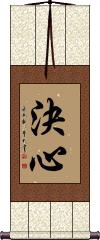
決心 is a Chinese, Japanese, and Korean word that holds the dictionary definition of determination but literally means determined heart.
The first character means to determine or determined.
The second character means heart, mind, or soul, so you can imagine that this form of determination partially means putting your heart into something. It can also be translated as resolve, resolution, or decision (as in a decision made and followed).
See Also: Sincerity and Devotion | Tenacious / Tenacity | Passions / Feelings / Emotions | Dedication | Will-Power / Self
Heijoshin / Presence of Mind
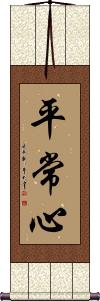
平常心 is the title Heijoshin, as associated with Kendo and Aikido schools of Japanese martial arts.
平常心 is also a word in Japanese that can mean “one's self-possession” or “presence of mind.”
In Chinese and Korean, this means “simplicity heart,” “composure,” “calmness,” or a “sense of orderliness.” In Chinese and Korean, this implies that you enjoy what you have, keep your heart in balance, and have no over-blown ambitions.
An Open Book Benefits Your Mind
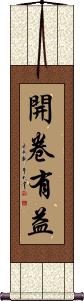
There are several ways to translate this ancient proverb. Translated literally and directly, it says, “Open roll has/yields benefit.”
To understand that, you must know a few things...
First, Chinese characters and language have deeper meanings that often are not spoken but are understood - especially with ancient texts like this. Example: It's understood that the “benefit” referred to in this proverb is to the reader's mind. Just the last character expresses that whole idea.
Second, Chinese proverbs are supposed to make you think and leave a bit of mystery to figure out.
Third, for this proverb, it should be noted that roll = book. When this proverb came about (about two thousand years ago), books were rolls of bamboo slips strung together. The first bound books like the ones we use today did not come about until about a thousand years after this proverb when they invented paper in China.
開卷有益 is a great gift for a bookworm who loves to read and increase their knowledge. Or for any friend that is or wants to be well-read.
Some other translations of this phrase:
Opening a book is profitable
The benefits of education.
Warrior Soul / Heroic Spirit
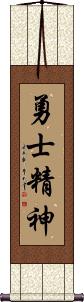
勇士精神 can mean the warrior's spirit or warrior's soul. The first two characters can mean “warrior” or literally “brave soldier/man,” although some will translate this word as “hero.” Therefore, this is also how to say “heroic spirit.”
The second two characters mean vigor, vitality, drive, spirit, mind, heart, mental essence, and psychological component. Basically “your soul.”
We have two versions of this phrase. The only difference is the first two and last two characters are swapped. The version here suggests that you admire or like the idea of the spirit of a warrior. The other version suggests that you are the warrior or hero.
Healthy Living
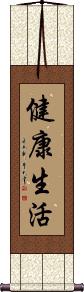
If you are into healthy living, 健康生活 might be an excellent selection for a wall scroll to hang in your home.
The first two characters speak of health, vitality, vigor, and being of sound body. The second two characters mean living or life (daily existence).
See Also: With All the Strength of Your Heart | Vitality | Strong / Healthy
Ken Zen Ichi Nyo
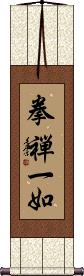
拳禪一如 is a Japanese phrase that is often translated as “train both body and spirit.”
Here's the breakdown of the words in this phrase:
拳 means fist.
禅 is zen, which means meditation.
一如 is a word that means “to be just like,” “oneness,” “true nature,” or “true character.”
So to get to the translation of “train both body and spirit,” you must understand that “fist” is representing “body” and the idea of meditation is representing “mind.”
I have to say, this is not how I would translate this. To me, it's really about training with your mind and remembering that meditation is a huge part of training, not just your fist. As the Shaolin Buddhist monks show us, meditation is just as important as physical training in martial arts.
Peace of Mind
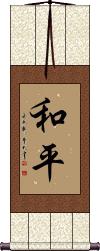
和平 is the Chinese order for these two characters, which means peace but can also be translated as amicability, specifically, or mildness. 和平 is often translated as a simple way to say “peace of mind.” This combination is used in Korean Hanja to mean “peace and harmony.”
Alone, the first character means peace and harmony.
The second character means balance when read by itself.
Note: 和平 are often seen in the opposite order in Japanese with the same meaning (You'll sometimes find them in this order in Japan, so either way is OK).
Peaceful Heart
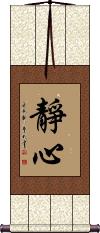
靜心 is how to write “peaceful heart” in Chinese.
The first character means peaceful, calm, and quiet. The second means heart but can also mean mind, soul, or spirit.
Because the word for heart/mind/soul is interchangeable in Chinese, this can also be translated as “a peaceful soul” or “a quiet mind.”
I have also seen this translated as “placid temperament” or “spirit of serenity,” especially in Japanese.
 While they once used the same first character form in Japan, they now use a slightly-simplified version in modern Japan (after WWII). This version is shown to the right, and can be selected for your wall scroll by clicking on that Kanji instead of the button above.
Purified Spirit / Enlightened Attitude
A Japanese martial arts title/concept
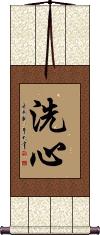
The first Kanji alone means to wash, bathe, primness, cleanse or purify.
The second Kanji means heart, mind, soul, or essence.
Together, these two Kanji create a word defined as “purified spirit” or “enlightened attitude” within Japanese martial arts.
洗心 is one of the five spirits of the warrior (budo) and is often used as a Japanese martial arts tenet. Under that context, it's often defined as a spirit that protects and harmonizes the universe. Senshin is a spirit of compassion that embraces and serves all humanity and whose function is to reconcile discord in the world. It holds all life to be sacred. It is the Buddha mind.
This title will only be familiar to Japanese who practice certain martial arts. Others may not recognize this word at all.
洗心 does not show up as a word in too many Chinese dictionaries, but it can be read and has the same meaning in Chinese.
 There is an issue with the first character. The original, and probably most correct version is shown above. However, many dojo documents and other sources have used a more simple first character. Arguments ensue about which version is correct. If you want to be correct in the Japanese language, use the “Select and Customize” button above. If you want to match the Kanji used by your dojo, click the Kanji shown to the right. There is a slightly different meaning with this first character which means before, ahead, previous, future, precedence.
Wolf
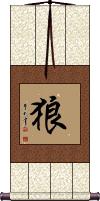
狼 is the character used to represent the elusive animal known as the wolf in both Chinese and Japanese.
If you are a fan of the wolf or the wolf means something special to you, this could make a great addition to your wall.
Do keep in mind, that much like our perception of wolves in the history of western culture, eastern cultures do not have a very positive view of wolves (save the scientific community and animal lovers). The wolf is clearly an animal that is misunderstood or feared the world over.
狼 is seldom used alone in Korean Hanja but is used in a compound word that means utter failure (as in a wolf getting into your chicken pen - or an otherwise ferocious failure). Not a good choice if your audience is Korean.
Clarity
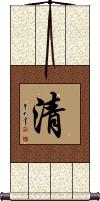
清 is a word that means clarity or clear in Chinese, Japanese Kanji, and old Korean Hanja.
Looking at the parts of this character, you have three splashes of water on the left, “life” on the top right, and the moon on the lower right.
Because of something Confucius said about 2500 years ago, you can imagine that This means “live life with clarity like bright moonlight piercing pure water.” The Confucian idea is something like “Keep clear what is pure in yourself, and let your pure nature show through.” similar to saying, “Don't pollute your mind or body, so that they remain clear.”
This might be stretching the definition of this single Chinese character but the elements are there, and “clarity” is a powerful idea.
Korean note: Korean pronunciation is given above but this character is written with a slight difference in the “moon radical” in Korean. However, anyone who can read Korean Hanja, will understand this character with no problem (this is considered an alternate form in Korean). If you want the more standard Korean Hanja form (which is an alternate form in Chinese), just let me know.
Japanese note: When reading in Japanese, this Kanji has additional meanings of pure, purify, or cleanse (sometimes to remove demons or “exorcise”). Used more in compound words in Japanese than as a stand-alone Kanji.
Patience Yields Peace of Mind
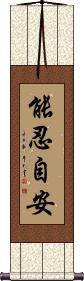
This ancient Chinese proverb can mean “Patience brings peace of mind,” “One who has patience finds peace,” and a few other ways.
Peaceful Heart / Peace of Mind / Calm Mind
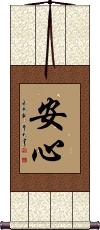
安心 can mean relief, peace of mind, feeling at ease, to be relieved, to set one's mind at rest, and easiness.
安心 is a nice word that encompasses great meanings within just two characters. Some of the other meanings include pacifying, settling the mind, and peace of mind. It's also the idea of feeling a sense of security, safety, and confidence in your state of well-being.
This can be used by everyone, but some consider it to be a Buddhist concept (You'll find it in your Zen dictionary).
Note: Can be romanized as Anshin or Anjin in Japanese.
Sacrifice / Devotion / Dedication
(complete bodily devotion)
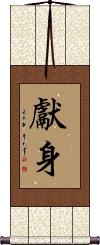
獻身 is used to describe being so devoted to something that you will make sacrifices for that goal/thing/person.
You can also translate this word as any of the following:
Sacrifice one's life for...
To dedicate oneself to...
Self-devotion
Dedication
Devote to...
Self-sacrifice
Giving your whole body to...
This can be a dedication to or for someone but is often used as a dedication or making sacrifices for your country, public service, or a cause. For instance, an Olympic athlete makes great sacrifices to train in their sport for their country and compatriots.

 While the form shown to the upper-left is considered an ancient Japanese version, in modern Japan, they use the simplified version of the first Kanji (shown to the right). Click on the Kanji at the right instead of the button above if you want this modern Japanese version.
If you are looking for a more religious meaning of devotion, see Faith.
See Also: Self-Confidence | Dedication
Shingitai / Shin Gi Tai
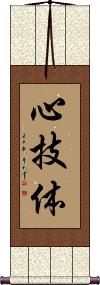
心技体 is the Japanese title “shin gi tai” or “shingitai.”
This can refer to the three elements of Sumo wrestlers or martial artists, “heart-technique-physique.”
Here is what each character represents:
心 (shin) mind, heart, and spirit.
技 (gi) skill, knowledge, and experience.
体 (tai) body and physical effort.
心技体 have the same meanings in Chinese, though this title is used much more often in Japanese.
Spirit / Spiritual Essence
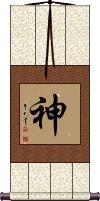
神 is the simplest way to write spirit in Chinese, Japanese Kanji, and old Korean.
This single character alone will conjure up ideas of the spiritual world. 神 can also be translated as “vital awareness” as in the fact that one must know they exist to exist (I think, therefore, I am).
Other translations include:
God, deity, mysterious, divine essence, lively, spiritual being, divinity, supernatural, soul, mind, nerves, and energy. In some extended context, it can mean genius or unusual.
Japanese romanizations vary a lot when this character is combined into other words. However, shin is the original pronunciation taken from Chinese into Japanese. You'll also see it romanized as kami, gami, jin, and a few others, depending on context.
Three Treasures of Chinese Medicine
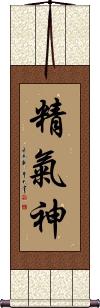
精, 氣, 神 are the characters jing, qi, and shen.
As a set, these three characters are known in English as the treasures of traditional Chinese medicine, the treasures of Qi Gong, or the three treasures of Taoism / Daoism.
Sometimes this set is titled 三寶 (sānbǎo) or “three treasures,” but here, we're writing each treasure out.
Here's how these characters are perceived in this context...
Jing: nutritive essence; refined; perfected; pure
Qi: vitality; energy; force; breath; vigor
Shen: spirit; soul; mind; being
To keep it simple, you can use “essence, vitality, and spirit” to define these.
Ki Ken-Tai Icchi
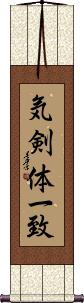
気剣体一致 is the title Ki Ken-Tai Icchi.
気 = energy, 剣 = sword, 体 = body, 一致 = synchronization/unity. So, “energy, sword, and body in unison” would be one way to translate this. Sometimes written with the possessive article, の, making it 気剣体の一致 or “Ki Ken-Tai no Icchi.” Let me know in the special instructions if you want that の character added by the calligrapher.
Martial Morality / Martial Arts Ethics / Virtue
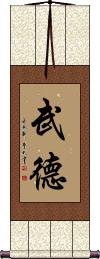
This refers to the virtue, morality, and ethics that any practitioner of martial arts should possess.
This can be used in both Chinese and Japanese in place of English terms such as “soldierly virtue,” “good conduct” (military), “warrior ethics,” and being honorable regarding any fight or competition.
In Japanese, there is a slight variation in the last character, making it 武徳 instead of 武德 in Japan. And yes, just one little horizontal stroke is omitted. If you need the Japanese version, please choose a Japanese calligrapher, or drop me a note so that I make sure you get the characters you intend.
See Also: Morality of Mind | Morality of Deed
No Worries
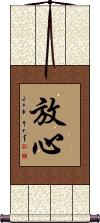
My Australian friends always say, “No worries, mate.” It's caught on with me, though I drop the “mate” part since it confuses my fellow Americans.
If you would like to express the idea of “no worries,” 放心 is the best and most natural way to say it in Chinese.
The characters you see to the left can mean “put your mind at rest” or “to be at ease.” You could literally translate “no worries,” but it doesn't “flow” like this simple Chinese version.
For your info, the first character means to release, to free, to let go, to relax, or to rest. The second character means your heart or your mind.
Note that in Japanese and Korean, this holds the similar meaning of “peace of mind” but can also mean absentmindedness or carelessness, depending on context.
One Heart / One Mind / Heart and Soul
Isshin
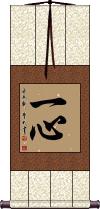
一心 can mean “one mind,” “single-minded focus,” or “wholehearted devotion,” from Chinese, Japanese Kanji, and old Korean Hanja.
Colloquially or figuratively, it means: wholeheartedly; heart and soul; of one mind; single-mindedness, wholeheartedness; one's whole heart; with the whole mind or heart; one mind in heart.
I'm not kidding, all of those came right from the dictionary for this one title.
In martial arts usage, this term emphasizes total commitment, where intent, attention, and action are unified without distraction.
In Japanese budō, it often conveys wholehearted dedication to practice or principle, whereas in Chinese usage it tends toward inner mental cultivation.
In Buddhism, this can refer to the bhūtatathatā, or the whole of things; the universe as one mind, or a spiritual unity.
In Japanese, this can be the female given name, Hitomi.
Pain is Weakness Leaving the Body
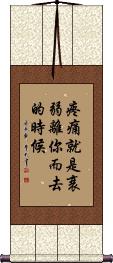
I remember this being shouted a lot during U.S. Marine Corps boot camp. 疼痛就是衰弱離你而去的時候 is how to write that phrase in Chinese. At least, this is as close as we could compose/translate it, and hold the full original meaning and connotations.
The version shown here is really, “Pain is weakness leaving your body.” Although it's said in English both ways (the or your), it works better in Chinese with “your.”
Prideful Mind / Self-Respecting Heart
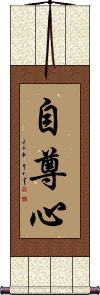
自尊心 is a Japanese and Korean word that means “pride” or “self-respect.”
The first Kanji/Hanja means oneself. The second can mean revered, valuable, precious, noble, or exalted. And the last Kanji/Hanja means heart, mind, and/or spirit.
While these characters make sense and hold the same general meaning in Chinese, this is not a normal Chinese word. This selection should only be used if your audience is Japanese or Korean.
See Also: Respect | Pride | Self-Reliance | Self-Control | Self-Discipline Martial Arts
Spiritual Strength / Strength of Spirit
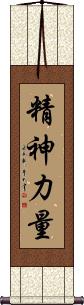
精神力量 is a title that speaks of one's soul or spirit and the capacity or strength that soul possesses.
The first two characters mean mind, heart, spirit, and/or soul.
The last two characters mean strength, capacity, or ability.
Note: Separately, these are two words in Japanese and can be pronounced, but this does not make a natural title in Japanese (best if your audience is Chinese).
Tao / Dao of the Heart / Soul
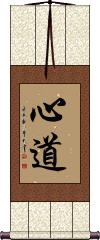
心道 means “The Way of the Heart” or “The Way of the Soul.” The first character means “heart” but can also mean soul, spirit, mind, or your essence. In this case, it is most accurately translated with the heart or soul meaning.
The second character is Dao as in Daoism. Please note, this is the same thing as Tao as in Taoism (just Romanized differently - it's always been the same in Chinese for about 2300 years.
Truth Flashed Through The Mind
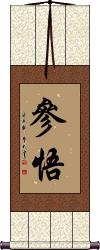
參悟 is a Chan / Zen Buddhism concept that means “to understand (mystery) from meditation” or “to see truth flash through the mind.”
參悟 is a pretty deep idea; therefore, your study and contemplation may be required before fully appreciating it.
Alert / On Guard / Lingering Mind
Zanshin
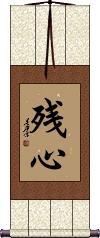
残心 is a Japanese Kanji word meaning: continued alertness; unrelaxed alertness; remaining on one's guard; lingering mind, and being prepared for a counterstrike. This context is used in martial arts, which is probably why you are looking up this word.
In archery and golf, it can be the follow-through.
In the context of love and relationships, it can be lingering affection, attachment, regret, regrets, or reluctance.
Body Mind Spirit
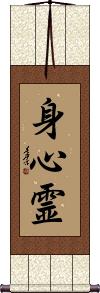
身心霊 means “body mind spirit” in Japanese.
This refers to your physical, mental, and spiritual presence.
This can also be translated as “body heart spirit” as 心 can mean mind or heart.
Note that this is a “word list” and not a proper phrase (with a subject, verb, and object) nor a typical title in Japanese. So it's not too commonly seen in Japan. However, the term 身心霊整合性医療 that refers to holistic medicine is gaining popularity.
Buddha Heart / Mind of Buddha
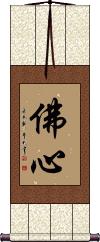
佛心 means the Buddha's mind, Buddha-heart, or the spiritually enlightened heart/mind.
The Buddha Heart is detached from good and evil and other such constructs. The Buddha Heart has mercy, compassion, and loving-kindness for all sentient life, the good, the wicked, and all in between.
The heart and mind (心) are the same concepts in the ancient Orient, so you can use heart and mind interchangeably in this context.
Concentration
Chung shin tong il
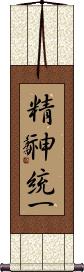
精神統一 means concentration of mind or mental concentration in old Korean Hanja and Japanese.
This concentration title is one of the 8 Key Concepts of Tang Soo Do.
You'll often see this romanized from Korean as “Chung Shin Tong Il.”
If you want to order the modern Korean Hangul version, click on the Hangul characters in the pronunciation box. Otherwise, this title is valid Korean Hanja (from the 1600 years that Korea used Chinese characters).
Confidence / Faithful Heart
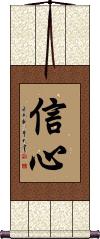
信心 is a Chinese, Japanese, and Korean word that means confidence, faith, or belief in somebody or something.
The first character means faith, and the second can mean heart or soul. Therefore, you could say this means “faithful heart” or “faithful soul.”
In Korean especially, this word has a religious connotation.
In the old Japanese Buddhist context, this was a word for citta-prasāda (clear or pure heart-mind).
In modern Japan (when read by non-Buddhists), this word is usually understood as “faith,” “belief,” or “devotion.”
See Also: Self-Confidence
Learning is Eternal
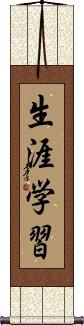
生涯學習 means “Learning is Eternal” or “Lifelong Learning,” in Japanese.
See Also: An Open Book Benefits Your Mind | Wisdom | Learn From Wisdom
Fierce and courageous training defeats the strong and protects the body.

This is a martial arts phrase that roughly translates as, “Fierce and courageous training defeats the strong and protects the body,” or “Brave and fierce training result in victory over the strong and defend the body.”
Forever In My Heart
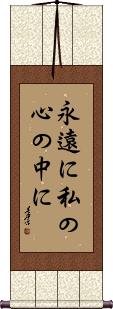
永遠に私の心の中に means “forever in my heart” or “always in my heart” in Japanese.
The character breakdown:
永遠 (eien) eternity; perpetuity; immortality; permanence.
に (ni) indicates the location of a person or thing.
私の (watashi no) my; mine.
心の中 (kokoro no naka) the middle of one's mind; the midst of one's heart.
に (ni) indicates the location of a person or thing (makes this “in” the middle of one's heart).
Note: There’s more than one way to say “Forever in My Heart” in Japanese, so you’ll find another version in our database. This is the very verbose version.
Note: Because this selection contains some special Japanese Hiragana characters, it should be written by a Japanese calligrapher.
Moral and Virtuous
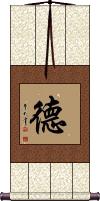
德 is the simple way to express the ideas of having virtue, morals, kindness, benevolence, goodness, etc.
德 also happens to be the first character of the Chinese word for Germany.
 There is a slight deviation in the Japanese Kanji form. If you want the modern Japanese version, please click on the special Kanji shown to the right instead of the button above. Note that the traditional Chinese form is still readable and understood by Japanese people.
See Also: Martial Morality / Martial Arts Ethics / Virtue | Chastity | Prudence / Considerate | Benevolence | Morality of Mind
Peace of Mind
(five-character version)
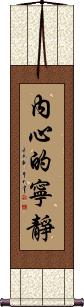
內心的寧靜 is the long way to express the idea of “peace of mind” in Chinese.
The first two characters mean heart or “innermost being.”
The middle character is a connecting modifier.
The last two characters mean peace, tranquility, or serenity.
Some may also translate this as “inner peace,” but I like our other inner-peace options for that idea.
This kind of makes sense in Korean but will have an archaic read - even by those who can understand Korean Hanja.
Seishin Budo
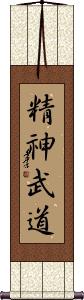
精神武道 is the Japanese martial arts title, Seishin Budo.
The first two characters, 精神, can mean vigor, vitality, drive, spiritual, mind, spirit, soul, heart, ethos, attitude, mentality, will, intention, essence, and fundamental significance.
The last two characters, 武道, are the Japanese word for martial arts (literally the Martial Way).
This title can also be romanized as Seshin Budou or Seishin Budō.
Shoshin-Ryu
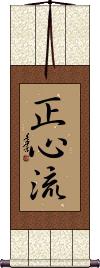
正心流 is a Japanese title that means “right heart style,” “true mind method,” or “truthful heart school.”
The first character means right, correct, greater, or true.
The second character means heart, mind, soul, or essence.
The third character means style, method, or some will translate it as a school.
Please note, there is more than one martial arts school that romanizes as Shoshin-Ryu.
Shoshin-Ryu
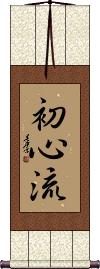
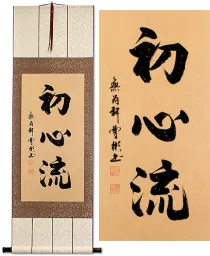
初心流 is often translated in Japanese as “beginner's mind style,” “beginner's spirit method,” or “beginner’s-mind school”
The first character means first, initial, primary, junior, beginning, or basic.
The second character means heart, mind, soul, or essence.
The third character means style, method, or some will translate it as a school.
Please note, there is more than one martial arts school that romanizes as Shoshin-Ryu.
Sit Quietly in Meditation
A state of mind
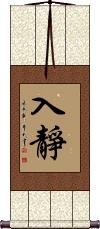
入靜 is used in Taoism and Qi Gong to describe the state you can reach while sitting quietly in meditation. It contains the idea of achieving a highly-tranquil and peaceful state. Some may describe this state as “sleeping while still awake.”
If you have a relaxation or meditation room, this is the calming wall scroll that you would want hanging in that room.
8. Right Concentration / Perfect Concentration
Samyak Samadhi / Samma Samadhi
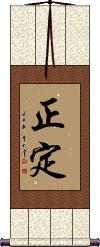
正定 is one of the Noble Eightfold Paths of Buddhism. Right Concentration, along with Right Effort and Right Mindfulness, constitute the path to Concentration or Perfect Thought.
Right Concentration has to do with leaving behind sensuality, unwholesome states, as well as pleasure and pain. 正定 is a complex idea, but once you have achieved the shedding of worldly sensation, you can truly concentrate and find a higher level of awareness.
Another definition: Concentration of mind that finds its high point in the four absorptions.
This term is exclusively used by devout Buddhists. It is not a common term, and remains an unknown concept to most Japanese and Chinese people.
See Also: Buddhism | Enlightenment | Noble Eightfold Path
Avatar
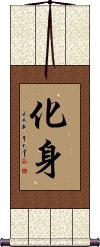
化身 is a way to say avatar in Chinese characters, Korean Hanja, and Japanese Kanji.
This is the original Buddhist idea of an avatar (not the movie). This can also mean: incarnation; reincarnation; embodiment; personification; impersonation.
化身 is the Chinese word used for the original Sanskrit, nirmāṇakāya. Alternates for nirmāṇakāya include 應身, 應化身, or 變化身. In the context of Buddhism, this is a Buddha's metamorphosic body, which has the power to assume any shape to propagate the Truth. This title, 化身, is used for the appearance of a Buddha's many forms.
Body and Earth in Unity
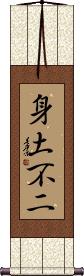
身土不二 (Shindofuni) is originally a Buddhist concept or proverb referring to the inseparability of body-mind and geographical circumstances.
This reads, “Body [and] earth [are] not two.”
Other translations or matching ideas include:
Body and land are one.
Body and earth cannot be separated.
Body earth sensory curation.
You are what you eat.
Indivisibility of the body and the land (because the body is made from food and food is made from the land).
Going further, this speaks of our human bodies and the land from which we get our food being closely connected. This phrase is often used when talking about natural and organic vegetables coming directly from the farm to provide the healthiest foods in Japan.
Character notes: 身(shin) in this context does not just mean your physical body but a concept including both body and mind.
土 (do) refers to the soil, earth, clay, land, or in some cases, locality. It's not the proper name of Earth, the planet. However, it can refer to the land or realm we live in.
Japanese note: This has been used in Japan, on and off, since 1907 as a slogan for a governmental healthy eating campaign (usually pronounced as shindofuji instead of the original shindofuni in this context). It may have been hijacked from Buddhism for this propaganda purpose, but at least this is “healthy propaganda.”
Korean note: The phrase 身土不二 was in use by 1610 A.D. in Korea, where it can be found in an early medical journal.
In modern South Korea, it's written in Hangul as 신토불이. Korea used Chinese characters (same source as Japanese Kanji) as their only written standard form of the language until about a hundred years ago. Therefore, many Koreans will recognize this as a native phrase and concept.
See Also: Strength and Love in Unity
Seeing one’s Nature and becoming a Buddha
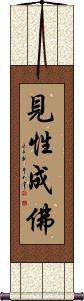
見性成佛 is a universal phrase that suggests that one may see one's nature and accomplish Buddhahood.
見性 suggests penetrating deep inside oneself to see one's “Original finally
Mind.”
成佛 refers to a sentient being who dispenses with illusions and delusions
through ascetic practice, is enlightened to the truth, and becomes a Buddha.
This is used by Mahayana, Chan, and Zen Buddhists in China, Korea, and Japan.
You will also see this with the last character written as 仏 in Japanese. In the religious context, 佛 is commonly used to mean Buddha. If you want the other version, see Kenshō Jōbutsu 見性成仏
Bushindo
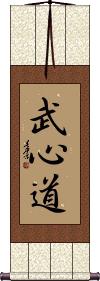
武心道 is the title for Bushindo meaning “warrior heart way” or “warrior mind way.”
In English, we might translate it as “The way of the warrior's heart.”
Keep Calm in Face of Adversity
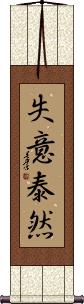
失意泰然 is a very old Japanese proverb that suggests “keeping calm and collected at times of disappointment,” or “maintaining a serene state of mind when faced with adversity.”
It's hard to relate individual character meanings to the overall meaning unless you also understand Japanese grammar. The word order is very different than English. That being said, here's the character meaning breakdown:
失 To miss, lose or fail.
意 Feelings, thoughts, meaning.
泰 Safe, peaceful.
然 Like that, in that way, however, although.
Using these definitions in English, we might say, “Although you may fail or lose, have a feeling of peace and calm.”
Calm and Open Mind
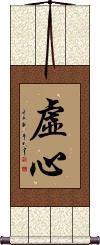
虛心 is a Buddhist term that speaks of being open-minded and/or having a calm and humble mind or heart.
Choose Life
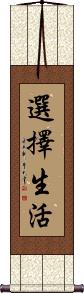
選擇生活 can mean to choose life instead of death (or suicide) or to choose to live life to the fullest.
I think of it as the key phrase used by Renton (Ewan McGregor) in the movie Trainspotting. While Chinese people will not think of Trainspotting when they see this phrase, for me, it will always be what comes near the end of this colorful rant:
Choose life. Choose a job. Choose a career. Choose a family. Choose a fucking big television. Choose washing machines, cars, compact disc players, and electrical tin can openers. Choose good health, low cholesterol, and dental insurance. Choose fixed-interest mortgage repayments. Choose a starter home. Choose your friends. Choose leisure wear and matching luggage. Choose a three-piece suite on-hire purchase in a range of fucking fabrics. Choose DIY and wondering who the fuck you are on a Sunday morning. Choose sitting on that couch watching mind-numbing, spirit-crushing game shows, stuffing fucking junk food into your mouth. Choose rotting away at the end of it all, pissing your last in a miserable home, nothing more than an embarrassment to the selfish, fucked-up brats you have spawned to replace yourself. Choose your future. Choose life.
Always in My Heart
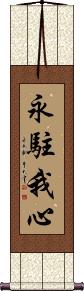
永駐我心 is one of a few ways to write “always in my heart” or “forever in my heart” in Chinese.
The first character means eternal, forever, or always.
The second character means resides, in, or stationed (in the case of troops).
The third character means me, my, or mine.
The last character means heart (but can also mean mind or soul).
Ghost / Soul / Spirit
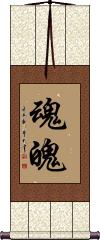
魂魄 is a Chinese, Japanese Kanji, and old Korean Hanja term for ghost, soul, or spirit.
It's used in the context of Buddhism as:
Animus and anima; the spiritual nature or mind, and the animal soul; the two are defined as mind and body or mental and physical, the invisible soul inhabiting the visible body, the former being celestial, the latter terrestrial.
Goshin-Do
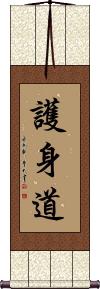
護身道 is the title for the school of martial arts known as Goshin-Do.
The literal translation of these three characters is something like “self-protection way” or “protection of the body way.”
To put this in context, the term 護身 is often used for charms or amulets that are meant to protect the wearer from harm.
Note: This phrase is pronounceable in Chinese, but it not commonly known in China.
Happiness / Contentment
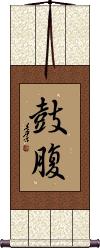
鼓腹 means happiness and contentment in Japanese Kanji.
The first Kanji represents your internal beat or drum.
The second Kanji represents your mind and body.
Together, it suggests that your internal rhythm or beat is regular, soothing, and at the proper tempo.
See Also: Salvation | Pleasure | Safety and Well-Being of the Family
Heart and Soul
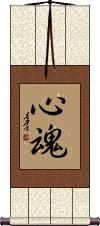
心魂 is “heart and soul” in Japanese Kanji.
The first character means heart (but can also mean mind or soul).
The last character means soul or spirit (spiritual essence).
Soul Mates at Heart
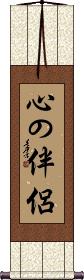
心の伴侶 is a Japanese-only title for soulmates.
心 means heart, soul, mind, core, or center. In ancient times, the heart was believed to be the mind or center of your soul and being.
の is a possessive article that connects everything here.
伴侶 means mates, companions, partners, and spouses.
This Japanese version of soulmates is about two partners, coupled or joined by their hearts.
Hishiryo / Not-Thinking
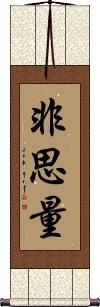
Hishiryō (非思量) literally means not-thinking.
Hishiryo can be described as a state of mind beyond thinking and non-thinking during the practice of Zazen.
Shiryō (思量) means “thinking,” and hi (非) is a prefix for negation and opposition.
Therefore, hishiryo amounts to “unthink” or “not the matter of thinking.” The word hishiryo appears in Dogen Zenji’s Fukanzazengi, Shobogenzo Zazengi, Shobogenzo Zazenshin, and Keizan Zenji’s Zazen Yojinki. It is one of the most important words used to describe zazen. Hishiryo in these writings comes from a dialogue between Yakusan Igen (745-828) and an unnamed monk, which is described in Keitoku, Dentoroku, and other Zen texts.
The above is an abridged except from School of Shodo: Hishiryo
I suggest you visit that page for a full explanation.
Inhale
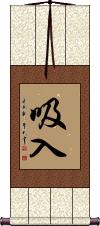
吸入 is a Chinese, Japanese, and old Korean word that means inhale, inhalation, or to breathe in.
吸 by itself can mean to inhale or suck in.
入 means to enter (in this case, the body), so it clarifies that this is the true inhalation of air into the body.
If you need a reminder to breathe (slow down and take a deep breath), this may be the word you want hanging on your wall.
Jin Shin Jyutsu
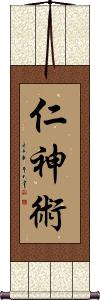
仁神術 is Jin Shin Jyutsu or Jin Shin Jutsu.
This is a practice of calming the mind and clearing the flow of Qi energy in the body. Jin Shin Jyutsu has some commonality with the practice of Reiki.
A good translation of 仁神術 would be “Benevolent Spirit Method.”
We can break that down into all of the possible meanings:
仁 = benevolence (esp. as a virtue of Confucianism), consideration, compassion, humanity, charity, kindness, or virtue.
神 = deity, soul, spirit, mysterious, psyche, god, divinity, spiritual powers, deva, divine, spiritual, or supernatural.
術 = way, method, means, art, trick, or plan. The correct romaji for this 術 Kanji should be “jutsu.” However, in martial arts, this is often written “jitsu” but in this case, “jyutsu” became common.
Happy / Open Heart

In mordern times, 開心 means to feel happy, to rejoice, or to have a great time, but directly translates as open heart.
In the Buddhist context, beyond opening the heart, it can mean to develop the mind, to initiate into truth, or awaken the mind.
開 = Open.
心 = Heart/Mind.
Not commonly used in Japanese where it might be read as open-mindeness.
Koi Fish / Nishiki Goi
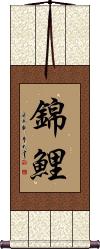
If you like or collect and maintain koi fish, 錦鯉 is the wall scroll for you.
Technically, this is a certain and revered species of “koi fish” in Japan, but it is the most normal selection for a wall scroll (more normal than the actual Kanji for “koi” or “fish” alone.
This literally means “brocade carp” or “embroidered carp.” This term is also used to mean the same thing in China (which is the origin of koi fish breeding and cultivation, several generations before they became popular in Japan).
For those of you that don't know, the Kanji for “koi” (which is pronounced “goi” in this entry) really means “carp.” If you want the word that means “koi fish,” it would just be the generic word for “carp fish.” That would include both colorful carp and the more mundane gray carp (the ones people eat if they don't mind lots of bones).
Loving Heart / One’s Love
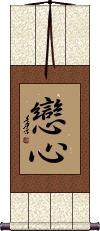
戀心 literally means “loving heart.” It can also be translated as “one's love” or “awakening of love.”
戀心 is used exclusively for love between boyfriends and girlfriends or husband and wife.
Breaking down the meaning of each Kanji, the first means love, affection, or tender passion. The second Kanji means heart, mind, or soul (most will read it as the heart).
See Also: Compassion | Love
Be Master of Mind, Not Mastered by Mind
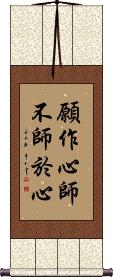
願作心師不師於心 means, “Be master of mind, rather than mastered by mind,” in Chinese.
This is not an ancient Chinese phrase but rather something we added at the request of a customer.
Never Forget Your First Resolution
Never Lose Your Beginner's Spirit
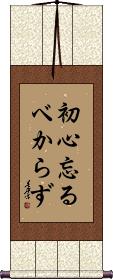
初心忘るべからず is an old Japanese proverb that suggests you try to never forget the enthusiasm you had as a child when you try new things (or even face the day-to-day). avoid having the mundane attitude that many people get with age.
You'll find this Japanese proverb translated in a few different ways. Here are some of them:
Don't forget your first resolution.
Never forget your childlike enthusiasm.
Forget not the beginner's mind.
Try never to lose your initial enthusiasm (freshness of attitude).
Note: This is sometimes written as 初心忘る可からず. The one shown above is used about 10x more often. There’s only one character difference between the two versions.
Note: Because this selection contains some special Japanese Hiragana characters, it should be written by a Japanese calligrapher.
Open and Calm Mind
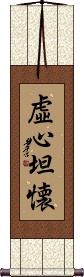
虛心坦懐 is a Japanese proverb that means “with an open and calm mind,” “with no preconceived notions,” or “without reservations.”
In some contexts, it can mean frank or candid.
If you want to remind yourself to approach each situation with no preconceptions, this is a good title for you. This can also refer to the ideas of being candid, frank, and straightforward.
Pain is Weakness Leaving the Body
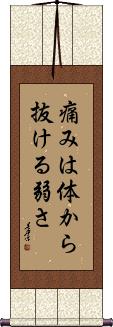
痛みは体から抜ける弱さ is how to write “pain is weakness leaving the body” in Japanese.
I remember this being shouted a lot during U.S. Marine Corps boot camp.
Note: Because this selection contains some special Japanese Hiragana characters, it should be written by a Japanese calligrapher.
Patience Brings Peace of Mind
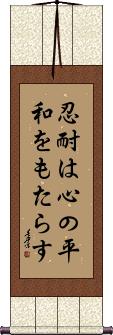
忍耐は心の平和をもたらす means “patience brings peace of mind,” in Japanese.
Note: Because this selection contains some special Japanese Hiragana characters, it should be written by a Japanese calligrapher.
Shiatsu-Do
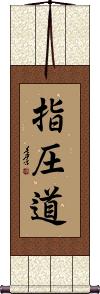
指圧道 is the title for Shiastu-Do, the Japanese way of finger pressure.
Shitsu-Do is about applying special finger pressure to points on the body thought to be connected to pathways called “meridians.” Shiatsu is a healthful way to get your 気 or 氣 (ki energy) flowing properly.
Note: This title can also be written in the older 指壓道 form (just the middle character has an ancient/traditional form used before WWII).
You might even see 指压道 which uses the Simplified Chinese form of the second character.
Spiritual Soul Mates
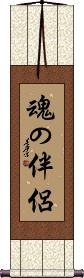
魂の伴侶 is a Japanese-only title for soulmates.
魂 means soul, spirit, immortal soul (the part of you that lives beyond your physical body), or the conscious mind. In the Buddhist context, this is vijñāna or viññāṇa (consciousness, life force, or mind).
の is a possessive article that connects everything here.
伴侶 means mates, companions, partners, and spouses.
Spiritual Peace / Enlightened Peace
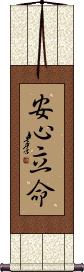
These Japanese Kanji, 安心立命, can mean “religious enlightenment” or “spiritual peace gained through faith.”
Other dictionaries define as “spiritual peace and enlightenment” or “keeping an unperturbed mind through faith.”
My Buddhist dictionary defines it as “spiritual peace and realization of enlightenment.”
In the Zen school, this is about settling one's body and life; attaining complete peace, and establishing one's course of life in accord with the ultimate reality.
Strong bones come from hard knocks
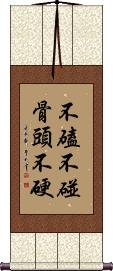
不磕不碰骨頭不硬 is a Chinese proverb that literally translates as: Without being knocked around a bit, [one's] bones won't become hard.
Figuratively, this means: One can't become strong without first being tempered by “hard knocks.”
While true for everyone, this sounds like the “Iron Body” form of Kung Fu, where practitioners' bodies are beaten (and often bone fractured) in order to become stronger.
For the rest of us, this is just about how we can be tempered and build character through the hardships in our lives.
This is not a common title for a wall scroll in China.
Taido
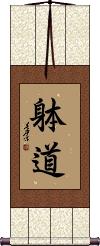
Taidō (The Way of the Body) is a style of Karate practiced in Japan and popular worldwide.
Taidō or 躰道 traces a lineage from Genseiryū (玄制流), which came from Shuri-te (首里手), one of the original martial arts schools of ancient Okinawa.
The first character 躰 is a variant of the original Chinese character 體. In modern Japan, they tend to use 体, a more simple character form. 体 is also the modern Simplified Chinese form of 體.
The 躰 character is correct for this 躰道 martial arts title. But it can be confusing with so many variants out there, not to mention other homophonic Japanese words that also romanize as Taidō or Taidou.
To have a bit more fun with this 躰 character, it has a 身 radical on the left, which sets it apart. The meaning doubles up on the “body” as 身 (shin) is a character that also means body in Japanese and Chinese. On the right is 本, which often means root, stem, origin, source, or fundamental (but can also mean “book” in some contexts). This has deviated from the original 體 which was 骨 (bone) + 豊 (vessel). Hence, the body was your “bone vessel” in ancient Asia.
The meaning of 躰, as well as 體 and 体, is usually translated as the body. When related to the physical body, it can also refer to the torso, trunk, build, physique, or the constitution of a person. As an extension of this, it can also refer to someone's health (good body = good health).
However, depending on the context, it can encompass other meanings such as form, style, system, experience, aspect, corpus, corporeal, substance, or essentials.
The second character, 道, is recognized and well-known as the “Way” and is the same “do” as in Karate-do or Aikido.
Whole Heart
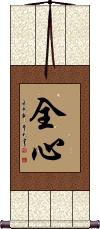
全心 is a short title that means “with heart and soul” or “one's whole heart.”
It literally reads “whole heart” or “complete mind.”
The first character means all, whole, entire, or complete.
The second character means heart but can also refer to the mind or soul.
Ten perfect Mahayana rules
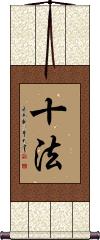
十法 is the title of the ten perfect or perfecting Mahāyāna rules.
The order of rules is as follows:
1. right belief.
2. right conduct.
3. right spirit.
4. the joy of the bodhi mind.
5. joy in the dharma.
6. joy in meditation.
7. pursuing the correct dharma.
8. obedience to, or accordance with dharma.
9. departing from pride, desire, etc.
10. comprehending the inner teaching of Buddha and taking no pleasure in attaining such knowledge or noting the ignorance of others.
This title is only used in the context of Buddhism. Japanese and Chinese people who are not familiar with Buddhism will not recognize this title.
You are Always in My Heart
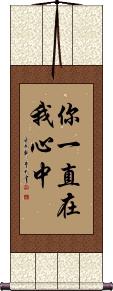
你一直在我心中 means “You are always in my heart” in Chinese.
你 = You
一直 = Always
在 = In/At
我 = Me/My
心中 = Heart/Mind
The idea or definition of heart and mind overlap somewhat in ancient Chinese, so this can also mean “You are always in my mind.”
Ande
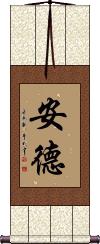
安德 is the name Ande in Chinese (Mandarin).
Ande
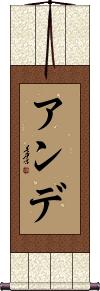
アンデ is the name Ande in Japanese Katakana.
Note: Because this title is entirely Japanese Katakana, it should be written by a Japanese calligrapher.
Unmoved by the Eight Winds

八風吹不動 is an ancient Buddhist phrase from about 1000 years ago.
Literal meaning: “The Eight Winds cannot move [me].”
The original famous anecdote is from Song Dynasty China, involving the poet-official 蘇東坡 (Su Dongpo / Su Shi, 1037–1101) and Zen master 佛印 (Foyin).
Su Dongpo wrote 八風吹不動,一屁打過江
“The Eight Winds cannot move me; Yet one fart blows me across the river.”
Foyin’s irreverent reply exposed Su Dongpo’s ego, which is kind of a classic Zen/Chan teaching story.
利 gain
衰 loss
毀 disgrace
譽 praise
稱 honor
譏 ridicule
苦 suffering
樂 pleasure
“The Eight Winds cannot move [him / the mind].”
“Unmoved by the Eight Winds.”
“The Eight Winds do not move me.”
“Not moved by the Eight Winds.”
“Unshaken by the Eight Winds.”
“Unaffected by the Eight Winds.”
“Unmoved by worldly forces.”
“Steadfast against the Eight Winds.”
“Remaining unmoved amid the Eight Winds.”
There is a shorter Japanese Zen version, 八風不動, which drops the middle character. Often romanized as happū fudō. The romanization of 八風吹不動 is arguably happū fukedomo ugokazu or happū sui fudō.
Beautiful Heart / Beautiful Mind
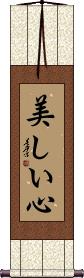
美しい心 means “beautiful heart” or “beautiful mind,” in Japanese.
The word for “heart” also means “mind” and sometimes “soul” in ancient Asia.
Note: Because this selection contains some special Japanese Hiragana characters, it should be written by a Japanese calligrapher.
Beautiful Mind
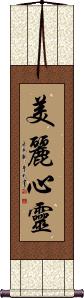
美麗心靈 means “Beautiful Mind” in Chinese.
美麗心靈 is also the Chinese title of the 2001 movie of the same name.
Beautiful Heart / Beautiful Spirit
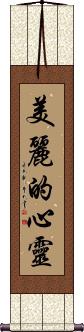
美麗的心靈 means a beautiful heart, a beautiful mind, or a beautiful spirit in Chinese.
Blood Sweat and Tears
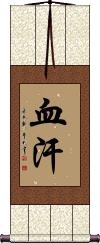
血汗 is a short Chinese and Japanese word that literally means “blood and sweat” but can be used to mean “blood, sweat, and tears.”
The first character means blood, and the second is sweat (but tears can be a category of salty water excreted by the body).
This in-stock artwork might be what you are looking for, and ships right away...


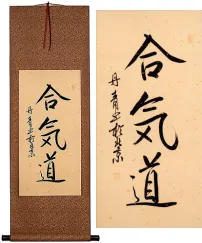

Successful Chinese Character and Japanese Kanji calligraphy searches within the last few hours...