Many custom options...


And formats...



Less in Chinese / Japanese...
Buy a Less calligraphy wall scroll here!
Personalize your custom “Less” project by clicking the button next to your favorite “Less” title below...
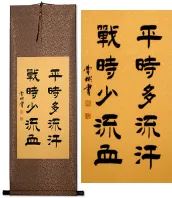
1. The More We Sweat in Training, The Less We Bleed in Battle
2. Cry in the Dojo - Laugh on the Battlefield
4. Mauro
5. Arisa
6. Atticus
7. Mayte
8. Melissa
9. Surya
10. Debby
11. Jenni
12. Rejane
13. Ringo
14. Darcie
15. Declan
16. Regis
17. Valery
18. Wendelin
19. Eliane
20. Ferdinand
21. Gilberte
23. Jose
24. Jared
25. Elisha
26. Wanderlust
27. Yujin
28. Ma
29. Terry
30. Isaac
31. The Beatles
32. Order From Chaos
33. Easter
34. Taijutsu
35. Wisdom
36. Chaos / Anarchy / Confusion / Mayhem
37. Archer
38. Destiny / Fate
39. I Need You
42. Love and Honor
43. Lau
44. Respect out of fear is never genuine; Reverence out of respect is never false
45. No Fear
46. Reiki Precepts by Usui Mikao
47. Love and Honor
48. Gassho
49. No Pain No Gain
50. God of Zion / God of Abraham
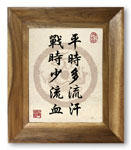
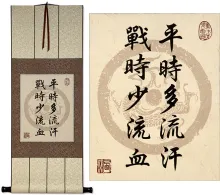
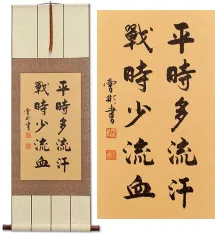
The More We Sweat in Training, The Less We Bleed in Battle
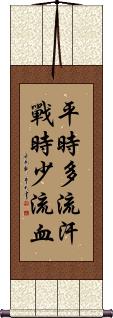
There is more than one way to translate the ancient Chinese military proverb, 平时多流汗战时少流血. Here are a few interpretations:
A drop of sweat spent in a drill is a drop of blood saved in war.
More practice will give one a better chance of success in real situations.
The more you sweat in training, the less you bleed in battle.
I heard this many times when I was a U.S. Marine but I had no idea at the time that it was actually an old Chinese proverb.
See Also: Blood Sweat and Tears
Cry in the Dojo - Laugh on the Battlefield
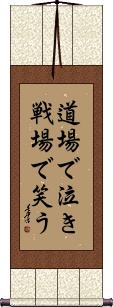
道場で泣き戦場で笑う is a Japanese phrase that means “Cry in the dojo, laugh on the battlefield.”
You'll see this phrase in a lot of dojos as a kind of philosophical joke.
Note: Because this selection contains some special Japanese Hiragana characters, it should be written by a Japanese calligrapher.
See Also: The More We Sweat in Training the Less We Bleed in Battle
Shinken Shobu
Death Match
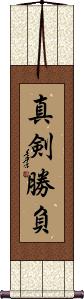
In modern Japanese, 真剣勝負 means to take something very seriously.
The literal and historical meaning is “real sword battle.” In old times, a Samurai apprentice would practice with a wooden practice sword. Once trained and qualified, they would wield a real steel sword made for battle and killing. They were ready for a “death match” or Shinken Shobu.
真剣 is an adjective that has come to mean serious/earnest. The literal translation is “real sword.”
勝負 in the simplest terms, means match, contest, game, or bout. Depending on the context, it could also mean victory or defeat, winning and losing, or the outcome of a battle.
There is a suggestion in Shinken Shobu that you train with serious and real intent, as we should train with the same fervor and dedication as if the battle was real. “Train as we fight.”
See Also: The More We Sweat in Training the Less We Bleed in Battle | Cry in the Dojo - Laugh on the Battlefield
Mauro
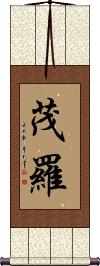
This is a less-common Mandarin Chinese transliteration for the name Mauro.
Arisa
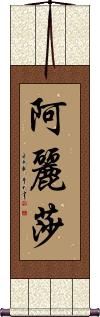
This is a less-common transliteration to Mandarin Chinese for the name Arisa.
Atticus
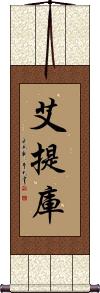
This is a less-common transliteration to Mandarin Chinese for the name Atticus.
Mayte
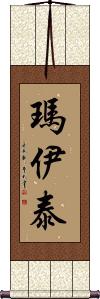
This is a less-common Mandarin Chinese transliteration for the name Mayte.
Melissa
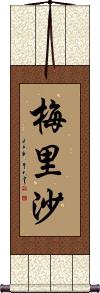
This is a less-common transliteration to Mandarin Chinese for the name Melissa.
Surya
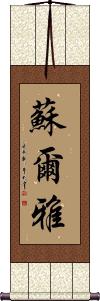
This is a less-common transliteration to Mandarin Chinese for the name Surya.
Debby
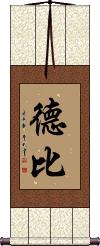
This is a less-common Mandarin Chinese transliteration for the female name Debby.
Jenni
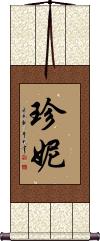
This is a less-common Mandarin Chinese transliteration for the female name Jenni.
Rejane
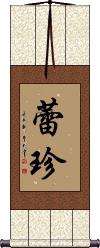
This is a less-common Mandarin Chinese transliteration for the female name Rejane.
Ringo
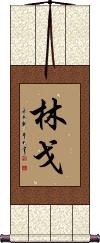
This is a less-common Mandarin Chinese transliteration for the male name Ringo.
Darcie
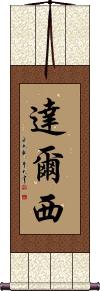
This is a less common Mandarin Chinese transliteration for the male name Darcie.
Declan
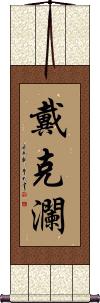
戴克瀾 is a less-common transliteration to Mandarin Chinese for the name Declan.
Regis
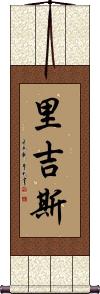
里吉斯 is a less-common transliteration to Mandarin Chinese for the name Regis.
Valery
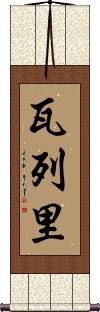
瓦列里 is a less-common transliteration to Mandarin Chinese for the name Valery.
Wendelin
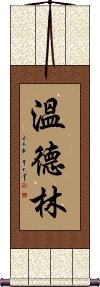
溫德林 is a less-common transliteration to Mandarin Chinese for the name Wendelin.
Eliane
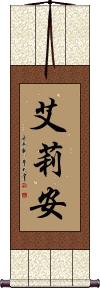
This is another less-common Mandarin Chinese transliteration for the female French name Eliane.
Ferdinand
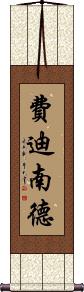
This is a less-common but more verbose transliteration to Mandarin Chinese for the name Ferdinand.
Gilberte
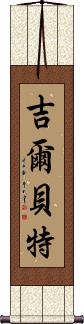
This is a less-common Mandarin Chinese transliteration for the female French name Gilberte.
Loyalty / Devotion
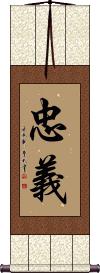
忠義 is another form of loyalty or devotion.
In Chinese, this is more specifically about being loyal and devoted to your friends.
In Japanese, this is more often used to mean loyalty to your country or nation.
Except for the slight difference noted above between Japanese and Chinese, this word is understood universally in Chinese, Japanese Kanji, and old Korean Hanja. It can also be used to describe devotion or fidelity.
It should be noted that this Kanji combination is being used less and less in modern Japan (this is a better choice if your audience is Chinese, though any Japanese person will clearly understand it).
Jose
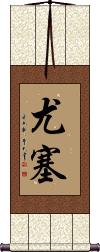
This is a less-common Mandarin Chinese transliteration for the male Latin name José or Jose.
Jared
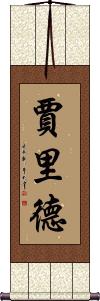
賈里德 is a less-common transliteration for the name Jared in Mandarin Chinese.
You probably want the other one.
Elisha
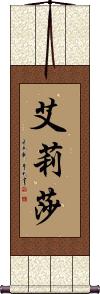
艾莉莎 is a less-common transliteration for the name Elisha.
Same pronunciation, just a different second character. Neither way is wrong.
Wanderlust
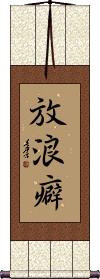
放浪癖 is the Japanese word for wanderlust.
In less flattering translations, this can mean vagrant habits or vagabondism.
Yujin
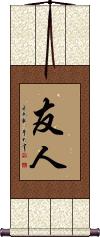
This is a less-common way to write “friend” in Chinese and Japanese.
This is also a given name Yuujin or Yujin, or another romanization for the given name Tomohito.
Ma
Surname
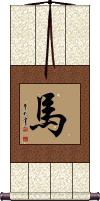
馬 is the surname Ma in Chinese (Mandarin).
The meaning of 馬 is horse. There is a less-common Chinese surname, 麻, meaing hemp.
Terry
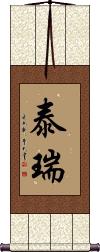
泰瑞 another slightly-less-common transliteration to Mandarin Chinese for the name Terry.
This name is unisex in Chinese.
Isaac
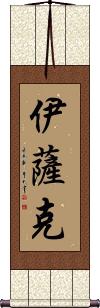
This another less common transliteration to Mandarin Chinese for the name Isaac.
This version might be more close to the Spanish or Latin version of Isaac. The first syllable is like “ee” as in “sweet.”
The Beatles
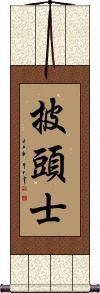
披頭士 is the most common Chinese title for the Beatles.
Of course, this refers to the famous fab-four music band of the 1960s.
Other less-common titles for the Beatles include 披頭四樂隊 and 披頭四樂團.
Order From Chaos
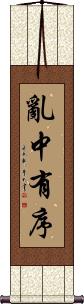
亂中有序 more or less means “order from chaos” in Chinese.
This is a little ambiguous, so other ways to translate this include ordered chaos, organized mess, order within chaos, or order within disorder.
Easter
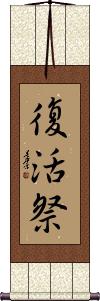
復活祭 is how the holiday of Easter is written in Japanese.
While a not a well-understood holiday in Japan (Christians being about 1% of the population), you will find stuffed Easter bunnies at the shops in the Spring.
復活祭 is a less-used way to write Easter in old Korean.
Taijutsu
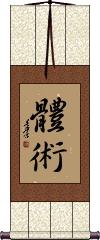
體術 is the Japanese title “Taijutsu,” which more or less means “classical form of martial arts.”
體術 is often written in a modern form, 体術 in Japan. Let me know if you want that modern form; otherwise, you'll get the ancient/classic version shown in the wall scroll sample.
Wisdom
(All-Knowing)
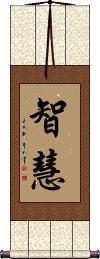
Beyond wisdom, 智慧 can be translated as knowledge, sagacity, sense, and intelligence.
The first character means “wise” or “smart,” and the second character means “intelligence.”
Note: 智慧 is used commonly in Chinese and is a less-common word in Japanese and Korean. If your audience is Japanese, I suggest our other Japanese wisdom option.
This means intellect or wisdom in Japanese too but is a more unusual way to write this word (though both versions are pronounced the same in Japanese).
See Also: Learn From Wisdom
Chaos / Anarchy / Confusion / Mayhem
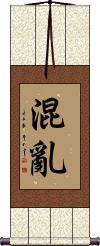
The first character means confused, dirty, muddy, or mixed.
The second character means confusion and disorder.
Together, these characters mean chaos and sometimes extended to mean a type of anarchy.
This term is often used in a less-than-literal term to describe anything in disarray. Someone might use this word in a sentence like, “My kitchen is in a state of chaos” or “my life is so chaotic.”
 Please note that Japanese use an alternate/simplified version of the second character of chaos - it also happens to be the same simplification used in mainland China. Click on the character to the right if you want the Japanese/Simplified version of this two-character chaos calligraphy.
Archer
Modern Chinese Version
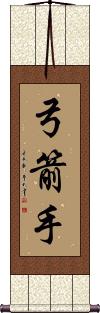
弓箭手 is how to write “archer” in modern Chinese.
弓箭手 literally means “bow arrow hand.”
There are other ways to write “archer” in Chinese, but this is probably the most common title for modern China. The other, less-common version of “archer” is also more universal because it has the same meaning in Japanese (this one is not used in Japan).
Destiny / Fate
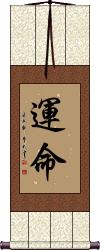
These two characters contain the ideas of fate, destiny, fortune, and luck in Chinese, Japanese Kanji, and old Korean Hanja.
運命 is often defined as “a person's fate” or “personal fate” in various dictionaries.
These two characters can be reversed (written in either order) and yield roughly the same meaning.
This particular character order is more common in old Korean and less common in modern Chinese.
See Also: Good Fortune | Good Luck
I Need You
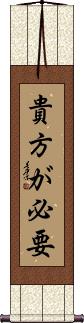
Some people like to say, “I love you” but others might want to say “I need you.” 貴方が必要 is “I need you” in Japanese.
The first two characters mean “You.”
The middle character is a connecting particle. In this case, it more or less means “are.”
The last two characters mean necessary, needed, essential, indispensable, or necessity.
The “I” in the title is implied. Effectively this means “I need you.”
Nothing / Nothingness
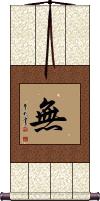
無 is the simple way to express “nothing.”
However, this single character leaves a bit of mystery as to what you might really mean if you hang it as a wall scroll. I'm not saying that's a bad thing; as you can decide what it means to you, and you won't be wrong if you stay within the general context.
More info: 無 is usually used as a suffix or prefix for Chinese and Japanese words (also old Korean). It can be compared to “un-” or “-less” in English. It can also mean “not to have,” no, none, not, “to lack,” or nothingness.
Perseverance / Fortitude
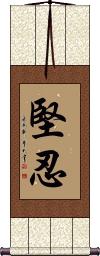
堅忍 means persistent, steadfast, fortitude, and/or perseverance.
The first character means strong, solid, firm, unyielding, or resolute.
The second character means to beat, endure, or tolerate.
Together they speak of the strength from within yourself. Some may also translate this as long-suffering in a more Biblical sense.
堅忍 is a common term in Chinese and Korean Hanja but a little less commonly used in modern Japanese Kanji. For that reason, this selection is best if your audience is Chinese or Korean.

 Note that when writing this as Kanji, Japanese will tend to write the second Kanji a little differently. If you select our Japanese master calligrapher, please expect the form where the little horizontal stroke crosses the vertical stroke. See differences in the images to the right. Technically, they are both the same character, and will be read the same in either language.
Love and Honor
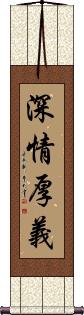
深情厚義 means to love and honor.
This is more or less the kind of thing you'd find in marriage vows.
The first two characters suggest deep love or deep emotions, passion, and feelings.
The last two characters mean generous justice or thick honor (the third character is an adjective that means generous or thick). It just means that you will honor your lover's wishes and treat them justly and righteously (fairly).
This is the longer four-character version, there is also a short and sweet two character version.
See Also: Love and Honor
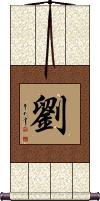
劉 is one of the most common Cantonese-Chinese surnames, often associated with the Han Dynasty, meaning "to kill" or "flow," or related to a battle-ax.
There are other characters that can be surnames which romanize as Lau from Cantonese:
柳 (Liǔ): Meaning "willow".
婁 (Lóu): Related to lunar mansions.
勞 (Láo) / 老 (Lǎo): Less common variants.
Note the romanization in the () is romanization from Mandarin. 劉 are surnames in many Chinese dialects but pronunciation and romanization varies.
Respect out of fear is never genuine; Reverence out of respect is never false
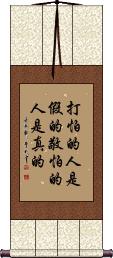
打怕的人是假的敬怕的人是真的 is a proverb that seems to be aimed at world leaders or others in power. Perhaps a suggestion to avoid the practice of “fear-mongering” opting instead for a policy of benevolence and justice.
An example: When the Bush administration told Pakistan they could either join America in the “war on terror,” or expect some bombs to be coming their way, Bush gained this kind of “less-than-genuine respect” from Pakistanis.
Leaders in places like North Korea and even Saudi Arabia reap the same bogus respect from their own citizens.
Note that calligraphers do not like to repeat the same characters in exactly the same way in the same piece of artwork. So expect the characters that are repeated to be written in different forms in the real artwork (unlike the way they are displayed to the left).
No Fear
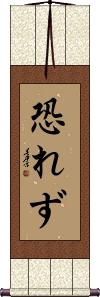
恐れず is probably the best way to express “No Fear” in Japanese.
The first Kanji and the following Hiragana character create a word that means: to fear, to be afraid of, frightened, or terrified.
The last Hiragana character serves to modify and negate the first word (put it in negative form). Basically, they carry a meaning like “without” or “keeping away.” 恐れず is almost like the English modifier “-less.”
Altogether, you get something like “Without Fear” or “Fearless.”
Here's an example of using this in a sentence: 彼女かのじょは思い切ったことを恐れずにやる。
Translation: She is not scared of taking big risks.
Note: Because this selection contains some special Japanese Hiragana characters, it should be written by a Japanese calligrapher.
Reiki Precepts by Usui Mikao (Alternate)
Alternate Version
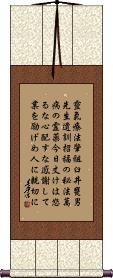
靈氣療法肇祖臼井甕男先生遺訓招福の秘法萬病の霊薬今日丈けは心配すな感謝して業を励げめ人に親切に is an alternate version of the precepts or tenets of Reiki by Usui Mikao.
It is impossible to be sure which version or versions were actually written by Usui Mikao. This is the less common of the three versions that you might see in the wild.
Here is a breakdown of the characters and a rough translation:
靈氣 療法 肇祖 臼井甕男。
Reiki therapy founder Mikao Usui
先生 遺訓。
Teacher's testament
招福の秘法, 萬病の霊薬。
Invite blessings of [the] secret method, 10,000 illnesses of spiritual medicine.
今日丈けは: 怒るな, 心配すな, 感謝して, 業をはげめ, 人に親切に。
At least for today: Do not be angry, do not worry, be grateful, work with diligence, [and] be kind to people.
Note: Because this selection contains some special Japanese Hiragana characters, it should be written by a Japanese calligrapher.
Love and Honor
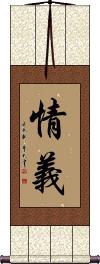
情義 means to love and honor in Chinese. 情義 is more or less the kind of thing you'd find in marriage vows.
The first character suggests emotions, passion, heart, humanity, sympathy, and feelings.
In this context, the second character means to honor your lover's wishes and treat them justly and righteously (fairly). That second character can also be translated as “obligation,” as in the obligation a husband and wife have to love each other even through difficult times.
In the context outside of a couple's relationship, this word can mean “comradeship.”
Japanese may see this more as “humanity and justice” than “love and honor.” It's probably best if your target is Chinese.
This is the short and sweet form, there is also a longer poetic form (you can find it here: Love and Honor if it’s not on the page you are currently viewing).
See Also: Love and Honor
Gassho
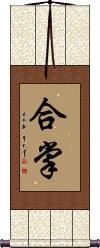
合掌 is the act of greeting someone (can also be done when departing) with hands brought together prayerfully.
In India, this would be accompanied by the verbal greeting and blessing of “Namaste.” In China, Japan, and Korea, this is how Buddhists will greet each other. Sometimes done by people who are not devout Buddhists in China, Japan, and Korea to show respect, reverence, or great thanks to someone for a gift, forgiveness, or some honor that has been bestowed.
In Japan, this is almost always associated with a deep bow. In China, where bowing is not an everyday occurrence, there may be a shallow bow, but the act will be done with deep feeling. Korean culture seems to have more bowing than China but less than Japan.
See Also: Namaste
No Pain No Gain
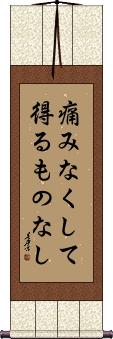
痛みなくして得るものなし is a Japanese phrase that means “no pain, no gain.”
This suggests that with pain, a gain must follow.
The pain Kanji here can also be translated as sorrow or suffering. The gain can also mean profit, advantage, or benefit. In the Japanese Buddhist context, that gain Kanji can mean rebirth in paradise, entering nirvana.
The character breakdown:
痛みなく (itami naku) pain; ache; sore; grief; distress. The naku part adds the meaning of “a lot of” or “extended”
して (shite) and then. (indicates a causative expression; acts as a connective particle)
得る (eru) to get; to acquire; to obtain; to procure; to earn; to win; to gain; to secure; to attain.
もの (mono) conjunctive particle indicating a cause or reason.
なし (nashi) none of; -less; without; no.
Note: Because this selection contains some special Japanese Hiragana characters, it should be written by a Japanese calligrapher.
God of Zion / God of Abraham
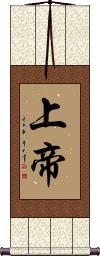
上帝 is how Chinese Christians and Jews refer to God, AKA The Judeo-Christian God.
There are Chinese Jews whose ancestry dates back to Jewish traders on the silk road. They are known as the Kaifeng Jews. Most have left China for Israel now.
There are also plenty of Christians in China of the Protestant and Catholic varieties. However, the churches are basically run by the government, and the Chinese Catholic church does not recognize the Pope.
Oddly, in my experience, I found the Chinese Protestant church to be much less political compared to Baptist and other Protestant churches that I have visited in America.
上帝 is also the typically-used title for God in Japanese.
While you may find this term in old Korean dictionaries, it is an obscure and rarely-used title for God in modern Korean.
See Also: Christianity | Jesus Christ
Bloodless Victory
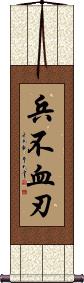
Perhaps a pacifist view or perhaps the best kind of victory; 兵不血刃 reflect this idea:
The edges of the swords not being stained with blood.
You could also translate it as: Win victory without firing a shot.
The first character means army or force. The second character means without or none. The last two characters mean bloodstained knives. So it represents a returning victorious army without bloodstained knives. 兵不血刃 is the very literal sense of this Chinese proverb. The title definition is more accurate to the way this proverb is understood.
Asking yourself why the direct or literal translation is different?
...Think of compound words in English such as “nevertheless” if we break it apart to “never the less,” we will have trouble getting the real definition of “in spite of that.” Similar things happen when multiple characters create a compounded word in Chinese.
Tai Chi Chuan / Tai Ji Quan
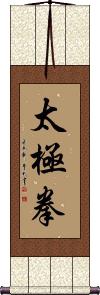
太極拳 is the famous Taoist meditation and martial art exercise. The direct translation of these characters would be something like “grand ultimate fist,” but that does not quite hit the mark for what this title really means.
An early-morning walk through any city in China near a park or an open area will yield a view of Chinese people practicing this ancient technique.
A typical scene is an old man of no less than 80 years on this earth, with a wispy white beard and perhaps a sword in one hand. He makes slow moves that are impossibly smooth. He is steady-footed and always in balance. For him, time is meaningless and proper form, and technique is far more important than speed.
For the younger generation, faster moves may look impressive and seem smooth to the casual observer. But more discipline and mental strength are needed to create perfectly smooth moves in virtual slow motion.
Note: There are two ways to Romanize these Chinese characters, as seen in the title above. The pronunciation and actual characters are the same in Chinese. If you really used English sounds/words to pronounce this, it would be something like “tie jee chew-on” (make the “chew-on” one flowing syllable).
Strong / Powerful / Force
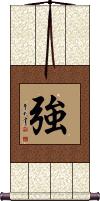
強 is a character that means strong, strength, force, powerful, better, stubborn, and stiff (yes, all of this in one character).
This “strong” has less to do with physical strength and more to do with having a winning attitude, or just having the ability to win at something.
Note that most of the time, this character is pronounced “qiang” but when used with the meaning of stubborn, unyielding, or stiff, it is pronounced “jiang” in Chinese.
Also, sometimes “qiang” is used in modern Chinese to describe people that do crazy things (For example: Bicycling from Beijing to Tibet alone). I sometimes can be found outside my Beijing apartment wearing nothing but shorts and a tee-shirt while eating ice cream during a snow storm, just to hear my neighbors call me “qiang.” Maybe they mean “strong” but perhaps they are using the new meaning of “crazy strong.”
強 can also be a Chinese surname that romanizes as Jiang in the mainland or Chiang if from Taiwan.
強 is a valid Korean Hanja character with the same meaning but is mostly used in compound Korean words.
強 is used in Japanese (though normally in compound words). In Japanese, it has the same meaning but in some contexts can mean “a little more than...” or “a little over [some amount].” Most Japanese would read this as tough, strength, stiff, hard, inflexible, obstinate, or stubborn.
The variant 彊 is sometimes seen in older literature.
This in-stock artwork might be what you are looking for, and ships right away...
Gallery Price: $106.00
Your Price: $58.88
Gallery Price: $220.00
Your Price: $112.88
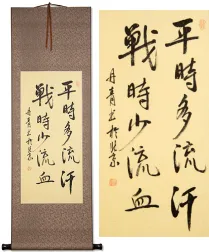
Gallery Price: $120.00
Your Price: $61.88
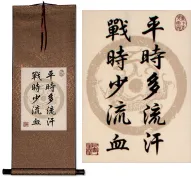
Gallery Price: $72.00
Your Price: $39.88
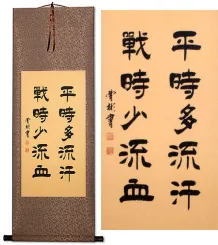
Gallery Price: $220.00
Your Price: $99.88
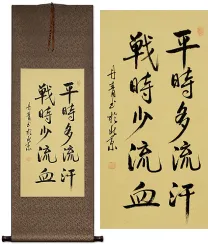
Gallery Price: $120.00
Your Price: $61.88
Gallery Price: $220.00
Your Price: $99.88

Gallery Price: $240.00
Your Price: $148.88
These search terms might be related to Less:
The following table may be helpful for those studying Chinese or Japanese...
| Title | Characters | Romaji (Romanized Japanese) | Various forms of Romanized Chinese | |
| The More We Sweat in Training, The Less We Bleed in Battle | 平時多流汗戰時少流血 平时多流汗战时少流血 | píng shí duō liú hàn zhàn shí shǎo liú xuè ping2 shi2 duo1 liu2 han4 zhan4 shi2 shao3 liu2 xue4 ping shi duo liu han zhan shi shao liu xue | p`ing shih to liu shih shao liu hsüeh ping shih to liu shih shao liu hsüeh |
|
| Cry in the Dojo - Laugh on the Battlefield | 道場で泣き戦場で笑う | doujou de naki senjou de warau dojo de naki senjo de warau | ||
| Shinken Shobu | 真剣勝負 | shinken shoubu shinkenshoubu shinken shobu | ||
| Mauro | 茂羅 茂罗 | mào luó / mao4 luo2 / mao luo / maoluo | mao lo / maolo | |
| Arisa | 阿麗莎 阿丽莎 | ā lì shā a1 li4 sha1 a li sha alisha | a li ali |
|
| Atticus | 艾提庫 艾提库 | ài tí kù ai4 ti2 ku4 ai ti ku aitiku | ai t`i k`u aitiku ai ti ku |
|
| Mayte | 瑪伊泰 玛伊泰 | mǎ yī tài ma3 yi1 tai4 ma yi tai mayitai | ma i t`ai maitai ma i tai |
|
| Melissa | 梅里沙 | méi lǐ shā mei2 li3 sha1 mei li sha meilisha | ||
| Surya | 蘇爾雅 苏尔雅 | sū ěr yǎ su1 er3 ya3 su er ya suerya | su erh ya suerhya |
|
| Debby | 德比 | dé bǐ / de2 bi3 / de bi / debi | te pi / tepi | |
| Jenni | 珍妮 | zhēn nī / zhen1 ni1 / zhen ni / zhenni | chen ni / chenni | |
| Rejane | 蕾珍 | lěi zhēn / lei3 zhen1 / lei zhen / leizhen | lei chen / leichen | |
| Ringo | 林戈 | lín gē / lin2 ge1 / lin ge / linge | lin ko / linko | |
| Darcie | 達爾西 达尔西 | dá ěr xī da2 er3 xi1 da er xi daerxi | ta erh hsi taerhhsi |
|
| Declan | 戴克瀾 戴克澜 | dài kè lán dai4 ke4 lan2 dai ke lan daikelan | tai k`o lan taikolan tai ko lan |
|
| Regis | 里吉斯 | lǐ jí sī li3 ji2 si1 li ji si lijisi | li chi ssu lichissu |
|
| Valery | 瓦列里 | wǎ liè lǐ wa3 lie4 li3 wa lie li walieli | wa lieh li waliehli |
|
| Wendelin | 溫德林 温德林 | wēn dé lín wen1 de2 lin2 wen de lin wendelin | wen te lin wentelin |
|
| Eliane | 艾莉安 | ài lì ān ai4 li4 an1 ai li an ailian | ||
| Ferdinand | 費迪南德 费迪南德 | fèi dí nán dé fei4 di2 nan2 de2 fei di nan de feidinande | fei ti nan te feitinante |
|
| Gilberte | 吉爾貝特 吉尔贝特 | jí ěr bèi tè ji2 er3 bei4 te4 ji er bei te jierbeite | chi erh pei t`e chierhpeite chi erh pei te |
|
| Loyalty Devotion | 忠義 忠义 | chuu gi / chuugi / chu gi | zhōng yì / zhong1 yi4 / zhong yi / zhongyi | chung i / chungi |
| Jose | 尤塞 | yóu sāi / you2 sai4 / you sai / yousai | yu sai / yusai | |
| Jared | 賈里德 贾里德 | jiǎ lǐ dé jia3 li3 de2 jia li de jialide | chia li te chialite |
|
| Elisha | 艾莉莎 | ài lì shā ai4 li4 sha1 ai li sha ailisha | ||
| Wanderlust | 放浪癖 | hourouheki / horoheki | ||
| Yujin | 友人 | yuuto / yuujin / tomohito yuto / yujin / tomohito | yǒu rén / you3 ren2 / you ren / youren | yu jen / yujen |
| Ma | 馬 马 | mǎ / ma3 / ma | ||
| Terry | 泰瑞 | tài ruì / tai4 rui4 / tai rui / tairui | t`ai jui / taijui / tai jui | |
| Isaac | 伊薩克 伊萨克 | yī sà kè yi1 sa4 ke4 yi sa ke yisake | i sa k`o isako i sa ko |
|
| The Beatles | 披頭士 披头士 | pī tóu shì pi1 tou2 shi4 pi tou shi pitoushi | p`i t`ou shih pitoushih pi tou shih |
|
| Order From Chaos | 亂中有序 | luàn zhōng yǒu xù luan4 zhong1 you3 xu4 luan zhong you xu luanzhongyouxu | luan chung yu hsü luanchungyuhsü |
|
| Easter | 復活祭 | fukkatsusai fukatsusai | ||
| Taijutsu | 體術 体術 | tai jutsu / taijutsu | ||
| Wisdom | 智慧 | chie | zhì huì / zhi4 hui4 / zhi hui / zhihui | chih hui / chihhui |
| Chaos Anarchy Confusion Mayhem | 混亂 混乱 | kon ran / konran | hùn luàn / hun4 luan4 / hun luan / hunluan | |
| Archer | 弓箭手 | gōng jiàn shǒu gong1 jian4 shou3 gong jian shou gongjianshou | kung chien shou kungchienshou |
|
| Destiny Fate | 運命 运命 | un mei / unmei | yùn mìng / yun4 ming4 / yun ming / yunming | yün ming / yünming |
| I Need You | 貴方が必要 | ana ta ga hitsu you anatagahitsuyou ana ta ga hitsu yo | ||
| Nothing Nothingness | 無 无 | mu | wú / wu2 / wu | |
| Perseverance Fortitude | 堅忍 坚忍 | ken nin / kennin | jiǎn rěn / jian3 ren3 / jian ren / jianren | chien jen / chienjen |
| Love and Honor | 深情厚義 深情厚义 | shēn qíng hòu yì shen1 qing2 hou4 yi4 shen qing hou yi shenqinghouyi | shen ch`ing hou i shenchinghoui shen ching hou i |
|
| Lau | 劉 刘 | liú / liu2 / liu | ||
| Respect out of fear is never genuine; Reverence out of respect is never false | 打怕的人是假的敬怕的人是真的 | dǎ pà de rén shì jiǎ de jìng pà de rén shì zhēn de da3 pa4 de ren2 shi4 jia3 de jing4 pa4 de ren2 shi4 zhen1 de da pa de ren shi jia de jing pa de ren shi zhen de | ta p`a te jen shih chia te ching p`a te jen shih chen te ta pa te jen shih chia te ching pa te jen shih chen te |
|
| No Fear | 恐れず | oso re zu / osorezu | ||
| Reiki Precepts by Usui Mikao (Alternate) | 靈氣療法肇祖臼井甕男先生遺訓招福の秘法萬病の霊薬今日丈けは怒るな心配すな感謝して業を励げめ人に親切に | reiki ryouhou chouso usui mikao sensei ikun shoufuku no hihou yorozu byou no reiyaku kyou take ke wa oko ru na shinpai suna kansha shite gou o hagemu ge me hito ni shinsetsu ni reiki ryoho choso usui mikao sensei ikun shofuku no hiho yorozu byo no reiyaku kyo take ke wa oko ru na shinpai suna kansha shite go o hagemu ge me hito ni shinsetsu ni | ||
| Love and Honor | 情義 情义 | qíng yì / qing2 yi4 / qing yi / qingyi | ch`ing i / chingi / ching i | |
| Gassho | 合掌 | gasshou / gasho | hé zhǎng / he2 zhang3 / he zhang / hezhang | ho chang / hochang |
| No Pain No Gain | 痛みなくして得るものなし | itami naku shite erumono wa nashi | ||
| God of Zion God of Abraham | 上帝 | joutei / jotei | shàng dì / shang4 di4 / shang di / shangdi | shang ti / shangti |
| Bloodless Victory | 兵不血刃 | bīng bù xuè rèn bing1 bu4 xue4 ren4 bing bu xue ren bingbuxueren | ping pu hsüeh jen pingpuhsüehjen |
|
| Tai Chi Chuan Tai Ji Quan | 太極拳 太极拳 | tai kyoku ken taikyokuken | tài jí quán tai4 ji2 quan2 tai ji quan taijiquan | t`ai chi ch`üan taichichüan tai chi chüan |
| Strong Powerful Force | 強 强 | kyou / kyo | qiáng / qiang2 / qiang | ch`iang / chiang |
| In some entries above you will see that characters have different versions above and below a line. In these cases, the characters above the line are Traditional Chinese, while the ones below are Simplified Chinese. | ||||

Successful Chinese Character and Japanese Kanji calligraphy searches within the last few hours...



