I am shipping orders on Thursday this week. News and More Info

Many custom options...

Tan Paper and Copper Silk Love Wall Scroll
Red Paper and Ivory Silk Love Wall Scroll
Orange Paper Love Scroll
Crazy Blue and Gold Silk Love Scroll


And formats...

Love Vertical Portrait
Love Horizontal Wall Scroll
Love Vertical Portrait

Follow the Way in Chinese / Japanese...

Buy a Follow the Way calligraphy wall scroll here!

Personalize your custom “Follow the Way” project by clicking the button next to your favorite “Follow the Way” title below...


  1. Follow Your Heart

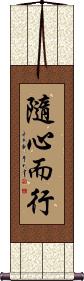
  2. Listen to Your Heart / Follow Your Heart

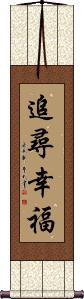
  3. Pursuit of Happiness

  4. God Bless You / God Be With You

  5. Thuan

  6. The Law of Creation and Destruction

  7. Kyokushin

  8. 1. Right Understanding / Right Perspective / Right View / Perfect View

  9. Sun Tzu: Regard Your Soldiers as Children

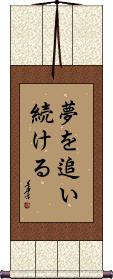
10. Pursue Your Dreams

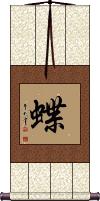
11. Butterfly

12. Alert / On Guard / Lingering Mind

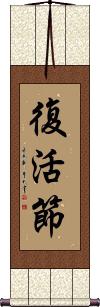
13. Easter

14. Renni

15. Walk in the Way

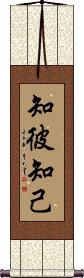
16. Know Thy Enemy, Know Thyself

17. Pursue Your Dreams

18. Tathata / Ultimate Nature of All Things

19. Cooperation / Collaboration

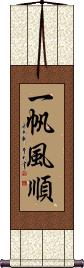
20. Smooth Sailing

21. No Pain No Gain

22. Learn New Ways From Old / Onkochishin

23. Lingering Mind

24. Art of War: 5 Points of Analysis

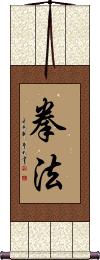
25. Kenpo / Kempo / Quan Fa / Chuan Fa


Follow Your Heart

 kimochi ni shitagau
Follow Your Heart Scroll

気持ちに従う is a Japanese phrase that means follow your heart.

The first part of this Japanese proverb means feeling, sensation, or mood.

The second part suggests the following, abiding by, or listening to this inner feeling.

In this context, you could say it means your heart, as the whole proverb suggests that you follow the feelings that you have inside.


Note: Because this selection contains some special Japanese Hiragana characters, it should be written by a Japanese calligrapher.

Listen to Your Heart / Follow Your Heart

 suí xīn ér xíng
Listen to Your Heart / Follow Your Heart Scroll

隨心而行 is the closest way to express this idea in Chinese. Literally translated, this phrase means “Allow your heart to dictate your behavior” or “Let your heart guide your conduct” in Chinese. You could also translate this as “follow your heart.” Or, with a bit of imagination, it could mean: “let your spirit be your guide.”

Note that in some cases, “heart” can mean “mind,” “soul” or even “spirit” in Chinese. In ancient China, it was thought that the big pumping organ in your chest was where your thoughts came from, or where your soul resides.
Ancient western thought followed a similar belief. Thus phrases like “I love you with all my heart” and “I give you my whole heart.”

Pursuit of Happiness

 zhuī xún xìng fú
Pursuit of Happiness Scroll

追尋幸福 is the best way to translate the English phrase “pursuit of happiness” into Chinese.

The first two characters mean “to pursue,” “to track down,” or “to search for.”

The last two mean happiness, happy, or being blessed.


See Also:  Follow Your Dreams

Pursuit of Happiness

 koufuku o motome te
Pursuit of Happiness Scroll

幸福を求めて is “Pursuit of Happiness” or “In Search of Happiness” in Japanese.

Here's how the characters break down:
幸福 (koufuku) happiness; blessedness; joy; well-being.
を (o) particle
求め (motome) to want; to seek; to pursue; to request
て (te) particle


Note: Because this selection contains some special Japanese Hiragana characters, it should be written by a Japanese calligrapher.


See Also:  Follow Your Dreams

God Bless You / God Be With You

 kami sa ma ga mamo ru you ni
God Bless You / God Be With You Scroll

神さまが守るように is about as close as you can get to, “God Bless You” in Japanese.

This literally means “[May] God Protect [You].” It can also mean “God is Always With You,” as the word in this phrase that means “protect” can also mean to follow or be with. In fact, the Japanese dictionary entry for that word reads like this: to protect; to guard; to defend; to keep (i.e. a promise); to abide; to observe; to follow.


Note: Because this selection contains some special Japanese Hiragana characters, it should be written by a Japanese calligrapher.

 shùn
 yori
 
Thuan Scroll

This is a Vietnamese surname Thuan, written here in the original Chinese character.

The meaning is to obey, to follow, favorable, comply, yield, or agreeable.

The Law of Creation and Destruction

 shì shēng miè fǎ
 zeshoumeppou
The Law of Creation and Destruction Scroll

是生滅法 is a Buddhist term for “the law of arising and ceasing,” or, “the law of creation and destruction.”

Everything has a beginning and an end, birth and death, etc. All things follow this law.

 kyoku shin
Kyokushin Scroll

極真 is the Japanese title Kyokushin.

The literal meaning is “great truth” or “ultimate truth.” However, 極真 is usually associated with the style of stand-up, full-contact karate, founded in 1964 by Masutatsu Oyama (大山倍達).

Practitioners of the Kyokushinkai Karate follow a philosophy of discipline and self-improvement.

1. Right Understanding / Right Perspective / Right View / Perfect View

Samyag Dristhi / Samyag Drsti / Samma Ditthi

 zhèng jiàn
 sei ken
1. Right Understanding / Right Perspective / Right View / Perfect View Scroll

正見 is one of the Noble Eightfold Paths of Buddhism. Right View, along with the Right Thought, constitutes the path to Wisdom.

To get to the correct view of the world, you must first understand and follow Four Noble Truths.


Note: This term is exclusively used by devout Buddhists. It is not a common term, and is remains an unknown concept to most Japanese and Chinese people.


See Also:  Buddhism | Enlightenment | Noble Eightfold Path

Sun Tzu: Regard Your Soldiers as Children

 shì cù rú yīng ér gù kě yǐ yú zhī fù shēn xī shì cù rú ài zǐ gù kě yú zhī jū sǐ
Sun Tzu: Regard Your Soldiers as Children Scroll

視卒如嬰兒故可以與之赴深溪視卒如愛子故可與之俱死 is an entry from the 10th section within the Earth/Terrain chapter of Sun Tzu's Art of War.

This is often translated as “Regard your soldiers as your children, and they will follow you into the deepest valleys. Look upon them as your own beloved sons, and they will stand by you even unto death.”

Pursue Your Dreams

 yume wo oi tsudukeru
Pursue Your Dreams Scroll

夢を追い続ける is the Japanese way to express “pursue your dreams,” “follow your dreams,” or “chase your dreams.”

If you have dreams that you want to pursue and make true, this is the phrase for you.

The first character is “dream” or “dreams.” The rest of the characters establish the idea of chasing or pursuing.


Note: Because this selection contains some special Japanese Hiragana characters, it should be written by a Japanese calligrapher.


See Also:  Pursuit of Happiness

 dié
 chou
 
Butterfly Scroll

蝶 is the simplest way to write “butterfly” in Chinese, Japanese and Korean.

If you are looking at the Chinese pronunciation and Romanization, please note this is not pronounced like the English “die.”
It actually sounds like “dee-ah.” (Chinese Romanization does not exactly follow English or Latin pronunciation of Roman letters).

Alert / On Guard / Lingering Mind

Zanshin

 zan shin
Alert / On Guard / Lingering Mind Scroll

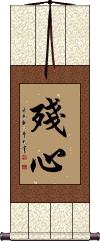
残心 is a Japanese Kanji word meaning: continued alertness; unrelaxed alertness; remaining on one's guard; lingering mind, and being prepared for a counterstrike. This context is used in martial arts, which is probably why you are looking up this word.

In archery and golf, it can be the follow-through.

In the context of love and relationships, it can be lingering affection, attachment, regret, regrets, or reluctance.

 fù huó jié
Easter Scroll

復活節 is the Chinese and old Korean way to write Easter.

Easter is not a well-known holiday in China, but Chinese Christians tend to follow the American tradition of the Easter egg ritual, etc. Non-Christians may think it's a celebration of rabbits that can lay eggs.

South Korea has a higher percentage of Christians than any other Asian country, so they celebrate Easter with plenty of enthusiasm.

 rén nī
Renni Scroll

This is a name Renni in Mandarin Chinese. The name literally means “benevolent girl” in Chinese.

I kind of made up this name when my second daughter was born. The idea came for a feeling I got after performing a benevolent act for a poor family in Southern China. I want my daughter to follow that mode, and experience the same feeling one can only experience by doing benevolent acts.

Walk in the Way

The Way of Buddha Truth
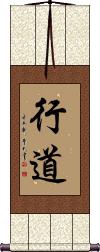
 xíng dào
 yukimichi
Walk in the Way Scroll

In Taoist and Buddhist contexts, 行道 means to “Walk in the Way.” In Buddhism, that further means to follow the Buddha truth. In some Buddhist sects, this can mean making a procession around a statue of the Buddha (always with the right shoulder towards the Buddha).

Outside of that context, this can mean route (when going somewhere), the way to get somewhere, etc.

In Japanese, this can be the surname or given name Yukimichi.

Know Thy Enemy, Know Thyself

 zhí bǐ zhí jī
Know Thy Enemy, Know Thyself Scroll

This proverb is from Sun Tzu's (Sunzi's) Art of War.

It means that if you know and understand the enemy, you also know yourself. Four secondary characters come after this in the Art of War (not included here) which suggests you cannot lose a battle when you follow this philosophy.

In a very literal and somewhat-boring way, this can also be translated as “Estimate correctly one's strength as well as that of one's opponent.”

Pursue Your Dreams

 zhuī xún mèng xiǎng
Pursue Your Dreams Scroll

追尋夢想 means “pursue your dreams,” “follow your dreams,” or “chase your dreams” in Chinese.

The first two characters mean “to pursue,” “to track down,” or “to search for.”

The last two mean dreams. This version of dreams refers to those with an element of reality (not the dreams you have when you sleep but rather your aspirations or goals in life).

This title will tell everyone that you want to make your dreams come true.


See Also:  Pursuit of Happiness

Tathata / Ultimate Nature of All Things

 zhēn rú
 shinnyo
Tathata / Ultimate Nature of All Things Scroll

真如 comes from the Sanskrit and Pali word often romanized as “tathata” or “tathatā.” Originally written, “तथता.”

It's a Buddhist term often translated as “thusness” or “suchness,” but this does not explain it.
A better explanation may be “the ultimate nature of all things” or “ultimate truth.” However, this gives it too strong of a feeling. This concept is sometimes described as being in awe of the simple nature of something - like a blade of grass blowing in the wind or ripples on water. It is what it is supposed to be, these things follow their nature. Amazing in their mundane simplicity.

Every sect of Buddhism will have a slightly different flavor or explanation, so don't get fixated on one definition.


Notes: Sometimes Buddhists use the word dharmatā, a synonym to tathatā.

In Japan, this can also be the female given name Mayuki, or the surname Majo.

Cooperation / Collaboration

 xié zuò
 kyou saku
Cooperation / Collaboration Scroll

協作 is a Chinese, Japanese, and old Korean word that means cooperation or collaboration.

Cooperation is working together and sharing the load. When we cooperate, we join with others to do things that cannot be done alone. We are willing to follow the rules which keep everyone safe and happy. Together we can accomplish great things.

The first character means “united” or “to coordinate.” The second character means “to do,” “to make,” or “to compose.” Knowing this, you can understand why together, these characters create a word that can be defined as “cooperation” in Chinese, Japanese, and Korean.

It is implied that you are cooperating to create some project or product.


See Also:  Partnership

Smooth Sailing

 yī fán fēng shùn
Smooth Sailing Scroll

一帆風順 is just what you think it means. It suggests that you are on a trouble-free voyage through life, or literally on a sailing ship or sailboat. It is often used in China as a wish for good luck on a voyage or as you set out on a new quest or career in your life. Some may use this in place of “bon voyage.”

The literal meaning is “Once you raise your sail, you will get the wind you need, and it will take you where you want to go.” Another way to translate it is “Your sail and the wind follow your will.”

This is a great gift for a mariner, sailor, adventurer, or someone starting a new career.

Note: Can be understood in Korean Hanja but is rarely used.


See Also:  Bon Voyage | Adventure | Travel

No Pain No Gain

 itami naku shite erumono wa nashi
No Pain No Gain Scroll

痛みなくして得るものなし is a Japanese phrase that means “no pain, no gain.”

This suggests that with pain, a gain must follow.

The pain Kanji here can also be translated as sorrow or suffering. The gain can also mean profit, advantage, or benefit. In the Japanese Buddhist context, that gain Kanji can mean rebirth in paradise, entering nirvana.

The character breakdown:
痛みなく (itami naku) pain; ache; sore; grief; distress. The naku part adds the meaning of “a lot of” or “extended”
して (shite) and then. (indicates a causative expression; acts as a connective particle)
得る (eru) to get; to acquire; to obtain; to procure; to earn; to win; to gain; to secure; to attain.
もの (mono) conjunctive particle indicating a cause or reason.
なし (nashi) none of; -less; without; no.


Note: Because this selection contains some special Japanese Hiragana characters, it should be written by a Japanese calligrapher.

Learn New Ways From Old / Onkochishin

New ideas coming from past history
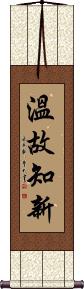
 wēn gù zhī xīn
 on ko chi shin
Learn New Ways From Old / Onkochishin Scroll

溫故知新 is a proverb from Confucius that is used in Chinese, Japanese, and Korean cultures.

It can be translated in several ways:
Coming up with new ideas based on things learned in the past.
Examine things of the past, and obtain new knowledge.
Developing new ideas based on the study of the past.
Gain new insights through restudying old issues.
Understand the present by reviewing the past.
Learning from the past.
Review the old and know the new.
Taking a lesson from the past.
Taking a lesson from the wisdom of the ancients.
Follow the old ways.

The direct translation would be, “By asking old things, know new things.”
The Character meanings breakdown this way:
溫故 = ask old
知新 = know new

Explained: To learn new things that are outside of your experience, you can learn from old things of the past. You can find wisdom in history.


溫 VS. 温

Note: Japanese use a variant of the first Kanji in modern times.
Therefore if you order this from a Japanese calligrapher, expect the first Kanji to look like 温 instead of 溫.

In addition to 温故知新 as mentioned above, this is sometimes written as 温古知新 in Japan.

Lingering Mind

Zanshin

 cán xīn
 zan shin
Lingering Mind Scroll

First off, 殘心 should only be used in the context of Japanese martial arts. In Chinese, it's a rather sad title (like a broken heart). In Chinese, the first character alone means destroyed, spoiled, ruined, injured, cruel, oppressive, savage, incomplete, or disabled. However, in Japanese, it's remainder, leftover, balance, or lingering.
The second character means heart, mind, soul, or essence in both languages.

殘心 is one of the five spirits of the warrior (budo) and is often used as a Japanese martial arts tenet. Under that context, places such as the Budo Dojo define it this way: The spirit of zanshin is the state of the remaining or lingering spirit. It is often described as a sustained and heightened state of awareness and mental follow-through. However, true zanshin is a state of focus or concentration before, during, and after the execution of a technique, where a link or connection between uke and nage is preserved. Zanshin is the state of mind that allows us to stay spiritually connected, not only to a single attacker but to multiple attackers and even an entire context; a space, a time, an event.


残In modern Japan (and Simplified Chinese), they use a different version of the first character, as seen to the right. Click on this character to the right instead of the button above if you want this modern Japanese version of lingering mind / zanshin.

Art of War: 5 Points of Analysis
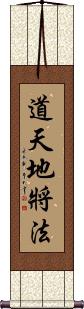
 dào tiān dì jiàng fǎ
 dou ten chi shou hou
Art of War: 5 Points of Analysis Scroll

道天地將法 is a list of five key points to analyzing your situation from the first chapter of Sun Tzu's Art of War.

This reads like a 5-part military proverb. Sun Tzu says that to sharpen your skills, you must plan. To plan well, you must know your situation. Therefore, you must consider and discuss the following:

1. Philosophy and Politics: Make sure your way or your policy is agreeable among all of your troops (and the citizens of your kingdom as well). For when your soldiers believe in you and your way, they will follow you to their deaths without hesitation and will not question your orders.

2. Heaven/Sky: Consider climate / weather. This can also mean considering whether God is smiling upon you. In the modern military, this could be waiting for clear skies so that you can have air support for an amphibious landing.

3. Ground/Earth: Consider the terrain in which the battle will take place. This includes analyzing defensible positions, and exit routes, while using varying elevations to your advantage. When you plan an ambush, you must know your terrain and the best location from which to stage that ambush. This knowledge will also help you avoid being ambushed, as you will know where the likely places in which to expect an ambush from your enemy.

4. Leadership: This applies to you as the general and your lieutenants. A leader should be smart and be able to develop good strategies. Leaders should keep their word, and if they break a promise, they should punish themselves as harshly as they would punish subordinates. Leaders should be benevolent to their troops, with almost a fatherly love for them. Leaders must have the ability to make brave and fast decisions. Leaders must have steadfast principles.

5. [Military] Methods: This can also mean laws, rules, principles, models, or systems. You must have an efficient organization in place to manage both your troops and supplies. In the modern military, this would be a combination of how your unit is organized and your SOP (Standard Operating Procedure).


Notes: This is a simplistic translation and explanation. Much more is suggested in the actual text of the Art of War (Bing Fa). It would take a lot of study to master all of these aspects. In fact, these five characters can be compared to the modern military acronyms such as BAMCIS or SMEAC.

CJK notes: I have included the Japanese and Korean pronunciations but in Chinese, Korean and Japanese, this does not make a typical phrase (with subject, verb, and object) it is a list that only someone familiar with Sun Tzu’s writings would understand.

Kenpo / Kempo / Quan Fa / Chuan Fa

 quán fǎ
 kenpou
Kenpo / Kempo / Quan Fa / Chuan Fa Scroll

拳法 is a form of martial arts that can be translated in several ways.

Some will call it “fist principles,” “the way of the fist,” or even “law of the fist.” The first character literally means fist. The second can mean law, method, way, principle, or Buddhist teaching.

Kempo is really a potluck of martial arts. Often a combination of Chinese martial arts such as Shaolin Kung Fu with Japanese martial arts such as Karate, Jujutsu (Jujitsu), Aikido, and others. You may see the term “Kempo Karate,” which basically means Karate with other disciplines added. In this way, Kempo becomes an adjective rather than a title or school of martial arts.

These facts will long be argued by various masters and students of Kempo. Even the argument as to whether it should be spelled “kenpo” or “Kempo” ensues at dojos around the world (the correct Romaji should actually be “kenpou” if you precisely follow the rules).

The benefit of Kempo is that the techniques are easier to learn and master than pure Kung Fu (wu shu). Students are often taught basic Karate moves, kicks, and punches before augmenting the basic skills with complex Kung Fu techniques. This allows students of Kempo to achieve a level where they can defend themselves or fight in a relatively short amount of time (a few years rather than a decade or more).

Because the definition of this word is so fluid, I should make some notes here:

1. Purists in Okinawa will claim that “Okinawa Kenpo” or “Ryukyu Hon Kenpo” is the original and true version of this martial art from the old kingdom. It is actually little or no connection between Okinawa Kenpo and the way the word is used elsewhere.

2. In Chinese, where these characters are pronounced “quan fa” (sometimes Romanized as “chuan fa” because the Chinese-pinyin “q” actually sounds like an English “ch” sound), these characters do not hold the connotation of being a mixed martial art. It is simply defined as “the law of the fist.”

3. My Japanese dictionary oddly defines Kenpo as the “Chinese art of self-defense.” I personally don't feel this is the most common way that people perceive the word but just something you should know.


The following table may be helpful for those studying Chinese or Japanese...

Title CharactersRomaji (Romanized Japanese)Various forms of Romanized Chinese
Follow Your Heart気持ちに従うkimochi ni shitagau
kimochinishitagau
Listen to Your Heart
Follow Your Heart
隨心而行
随心而行
suí xīn ér xíng
sui2 xin1 er2 xing2
sui xin er xing
suixinerxing
sui hsin erh hsing
suihsinerhhsing
Pursuit of Happiness追尋幸福
追寻幸福
zhuī xún xìng fú
zhui1 xun2 xing4 fu2
zhui xun xing fu
zhuixunxingfu
chui hsün hsing fu
chuihsünhsingfu
Pursuit of Happiness幸福を求めてkoufuku o motome te
koufukuomotomete
kofuku o motome te
God Bless You
God Be With You
神さまが守るようにkami sa ma ga mamo ru you ni
kamisamagamamoruyouni
kami sa ma ga mamo ru yo ni
Thuan
yorishùn / shun4 / shun
The Law of Creation and Destruction是生滅法
是生灭法
zeshoumeppou
zeshomepo
shì shēng miè fǎ
shi4 sheng1 mie4 fa3
shi sheng mie fa
shishengmiefa
shih sheng mieh fa
shihshengmiehfa
Kyokushin極真kyoku shin / kyokushin
1. Right Understanding
Right Perspective
Right View
Perfect View
正見
正见
sei ken / seikenzhèng jiàn
zheng4 jian4
zheng jian
zhengjian
cheng chien
chengchien
Sun Tzu: Regard Your Soldiers as Children視卒如嬰兒故可以與之赴深溪視卒如愛子故可與之俱死
视卒如婴儿故可以与之赴深溪视卒如爱子故可与之俱死
shì cù rú yīng ér gù kě yǐ yú zhī fù shēn xī shì cù rú ài zǐ gù kě yú zhī jū sǐ
shi4 cu4 ru2 ying1 er2 gu4 ke3 yi3 yu2 zhi1 fu4 shen1 xi1 shi4 cu4 ru2 ai4 zi3 gu4 ke3 yu2 zhi1 ju1 si3
shi cu ru ying er gu ke yi yu zhi fu shen xi shi cu ru ai zi gu ke yu zhi ju si
shih ts`u ju ying erh ku k`o i yü chih fu shen hsi shih ts`u ju ai tzu ku k`o yü chih chü ssu
shih tsu ju ying erh ku ko i yü chih fu shen hsi shih tsu ju ai tzu ku ko yü chih chü ssu
Pursue Your Dreams夢を追い続けるyume wo oi tsudukeru
yumewooitsudukeru
Butterflychou / chodié / die2 / dietieh
Alert
On Guard
Lingering Mind
残心zan shin / zanshin
Easter復活節
复活节
fù huó jié
fu4 huo2 jie2
fu huo jie
fuhuojie
fu huo chieh
fuhuochieh
Renni仁妮rén nī / ren2 ni1 / ren ni / rennijen ni / jenni
Walk in the Way行道yukimichixíng dào / xing2 dao4 / xing dao / xingdaohsing tao / hsingtao
Know Thy Enemy, Know Thyself知彼知己zhí bǐ zhí jī
zhi2 bi3 zhi2 ji1
zhi bi zhi ji
zhibizhiji
chih pi chih chi
chihpichihchi
Pursue Your Dreams追尋夢想
追寻梦想
zhuī xún mèng xiǎng
zhui1 xun2 meng4 xiang3
zhui xun meng xiang
zhuixunmengxiang
chui hsün meng hsiang
chuihsünmenghsiang
Tathata
Ultimate Nature of All Things
真如shinnyozhēn rú / zhen1 ru2 / zhen ru / zhenruchen ju / chenju
Cooperation
Collaboration
協作
协作
kyou saku / kyousaku / kyo sakuxié zuò / xie2 zuo4 / xie zuo / xiezuohsieh tso / hsiehtso
Smooth Sailing一帆風順
一帆风顺
yī fán fēng shùn
yi1 fan2 feng1 shun4
yi fan feng shun
yifanfengshun
i fan feng shun
ifanfengshun
No Pain No Gain痛みなくして得るものなしitami naku shite erumono wa nashi
Learn New Ways From Old
Onkochishin
溫故知新
温故知新
on ko chi shin
onkochishin
wēn gù zhī xīn
wen1 gu4 zhi1 xin1
wen gu zhi xin
wenguzhixin
wen ku chih hsin
wenkuchihhsin
Lingering Mind殘心
残心
zan shin / zanshincán xīn / can2 xin1 / can xin / canxints`an hsin / tsanhsin / tsan hsin
Art of War: 5 Points of Analysis道天地將法
道天地将法
dou ten chi shou hou
doutenchishouhou
do ten chi sho ho
dào tiān dì jiàng fǎ
dao4 tian1 di4 jiang4 fa3
dao tian di jiang fa
daotiandijiangfa
tao t`ien ti chiang fa
taotientichiangfa
tao tien ti chiang fa
Kenpo
Kempo
Quan Fa
Chuan Fa
拳法kenpou / kenpoquán fǎ / quan2 fa3 / quan fa / quanfach`üan fa / chüanfa / chüan fa
In some entries above you will see that characters have different versions above and below a line.
In these cases, the characters above the line are Traditional Chinese, while the ones below are Simplified Chinese.


Dictionary

Lookup Follow the Way in my Japanese & Chinese Dictionary


Successful Chinese Character and Japanese Kanji calligraphy searches within the last few hours...


50th AnniversaryAadenAadonAaroAbayaAbbasAbbeyAbhishekAbigaiAbundance and ProsperityAdamAdamarisAdapt and OvercomeAddieAdejahAdelineAdityaAdnanAdonisAdrianaAdriannaAdrielAfnanAhmadAilaAimiAishaAjayAkbarAkilaAlanaAlayaAleishaAlessaAlessandraAlexAlexandraAlexandriaAlfiAliceAlinaAlishaAlistairAliyaAllaAllahAllyAlmedaAloraAlvinAlyaAlyshaAlyssaAlyssiaAmadAmalAmelAminAmirAndreAndreiAndyAngelAnilAnishAnjaniAnnetteAnshulAntonAntonellaAntonioAnyaArelyAriaArisaArlenArmanArmandoAshrafAslamAubreeAubreyAuraAureliaAvengerAyanAydenAymanAzuraBa Gua ZhangBaileeBaileyBashaBasilBayuBeautyBeauty of NatureBellaBelovedBennettBhumikaBiancaBibiBishalBlack Tiger FistBlessed by GodBoxingBradenBradyBraedenBrennaBristolBrockBryanBubbaBuddha Dharma SanghaButterflyCallieCamdenCarenCarleenCarmenCasperChantalChanteChelleChelseaChen SurnameCherryChevelleChinoChloeChristinaClaireCode of SilenceColeCompassionConnieConnorConstanceCorbinCosmoCourageCristianCullenCyanCyrilCyrineDamarisDaniDaniealDanielleDaniloDaodejingDaodejing Tao Te Ching - Chapter 54DaphneDariaDark AngelDarrenDarrylDaruDavianDeath Before DishonorDeepikaDefenseDerrickDeterminationDevonDharmaDianaDillowDimaDivinaDogenDominicDoveDragonDragon WarriorDrewDuncanDurellDwightEdieEdwardsElaineEldiEleanorEleonorEliezerElinElishaEllieElmerElsieElviraEmanEmelineEmiliaEmmettEnlightenment

All of our calligraphy wall scrolls are handmade.

When the calligrapher finishes creating your artwork, it is taken to my art mounting workshop in Beijing where a wall scroll is made by hand from a combination of silk, rice paper, and wood.
After we create your wall scroll, it takes at least two weeks for air mail delivery from Beijing to you.

Allow a few weeks for delivery. Rush service speeds it up by a week or two for $10!

When you select your calligraphy, you'll be taken to another page where you can choose various custom options.


A nice Chinese calligraphy wall scroll

The wall scroll that Sandy is holding in this picture is a "large size"
single-character wall scroll.
We also offer custom wall scrolls in small, medium, and an even-larger jumbo size.

A professional Chinese Calligrapher

Professional calligraphers are getting to be hard to find these days.
Instead of drawing characters by hand, the new generation in China merely type roman letters into their computer keyboards and pick the character that they want from a list that pops up.

There is some fear that true Chinese calligraphy may become a lost art in the coming years. Many art institutes in China are now promoting calligraphy programs in hopes of keeping this unique form of art alive.

Trying to learn Chinese calligrapher - a futile effort

Even with the teachings of a top-ranked calligrapher in China, my calligraphy will never be good enough to sell. I will leave that to the experts.

A high-ranked Chinese master calligrapher that I met in Zhongwei

The same calligrapher who gave me those lessons also attracted a crowd of thousands and a TV crew as he created characters over 6-feet high. He happens to be ranked as one of the top 100 calligraphers in all of China. He is also one of very few that would actually attempt such a feat.


Check out my lists of Japanese Kanji Calligraphy Wall Scrolls and Old Korean Hanja Calligraphy Wall Scrolls.

Some people may refer to this entry as Follow the Way Kanji, Follow the Way Characters, Follow the Way in Mandarin Chinese, Follow the Way Characters, Follow the Way in Chinese Writing, Follow the Way in Japanese Writing, Follow the Way in Asian Writing, Follow the Way Ideograms, Chinese Follow the Way symbols, Follow the Way Hieroglyphics, Follow the Way Glyphs, Follow the Way in Chinese Letters, Follow the Way Hanzi, Follow the Way in Japanese Kanji, Follow the Way Pictograms, Follow the Way in the Chinese Written-Language, or Follow the Way in the Japanese Written-Language.

104 people have searched for Follow the Way in Chinese or Japanese in the past year.
Follow the Way was last searched for by someone else on Oct 18th, 2025