Artwork
Search:

Exact
Phrase

Oriental Outpost LogoFlagTowerwatercolor
Chinese Calligraphy Search
ArtPaintingsAsian Art Gallery

Adventures in Asian Art


There are more than 100 great martial arts titles in Japanese, Chinese, and Korean on this page - it might take a while to load if you're on dial-up

Chinese and Japanese Martial Arts Calligraphy

Here is our collection of words that are often associated with Martial Art

If you own a dojo, dojang, any kind of Asian martial arts studio, or you practice any kind of martial arts, calligraphy scrolls of the with your selection of these words will look great on your walls.

If you don't see the martial-arts-related word that you are looking for on the list below, just Post Your Request on our Forum. We'll add your word or title to this page if it matches this martial arts theme. And we can do almost any kind of phrase if you want something custom that you have not found on our website.


Quick links to words on this page...

  1. Achievement / Accomplishment
  2. Adventure
  3. Aikido
  4. Archer
  5. Art of War: 5 Points of Analysis
  6. Art of War
  7. Sun Tzu - Art of War
  8. Assassin
  9. Black Belt
10. Rank Holder
11. Bloodless Victory
12. Boxing
13. Bravery / Courage
14. Bravery
15. Bruce Lee
16. Bushido / The Way of the Samurai
17. Commitment
18. Confidence
19. Cooperation / Collaboration
20. Cooperation
21. Courage
22. Crouching Tiger Hidden Dragon
23. Danger
24. Daoism / Taoism
25. Dependable
26. Devotion
27. Devotion / Diligence
       Vigorous / Energetic

28. Devotion / Enthusiasm
29. Discipline
30. Discipline / Training
       Tempering Character

31. Discipline
32. Dojo / Martial Arts Studio
33. Dragon
34. Drunken Fist
35. Duty / Responsibility / Obligation
36. Enthusiasm
37. Enthusiasm / Warm-Hearted
38. Fair / Impartial
39. Fight / Beat Someone
40. Fight for a Goal
41. Fighter
42. Fighting Spirit
43. Filial Piety
44. Flexibility
45. Perseverance / Fortitude
46. Fortitude / Strength of Character
47. Goju Ryu Karate-Do
48. Good Health
49. Good Health / Healthy / Vigor
50. Guide / Help / Cooperate
51. Gutsy / Daring / Bold
52. Hapkido
53. Healthy Living
54. Hero
55. Hidden Dragon Crouching Tiger
56. Honesty / Fidelity
57. Honor
58. Indomitable / Persistence / Fortitude
59. Indomitable / Unyielding
60. Initiative / Leadership
61. Initiative / Proactive
62. Inner Strength
63. Integrity
64. Intelligence / Information-Gathering
65. Intensity
66. Iron Palm
67. Iron Fist
68. Jing Mo / Jing Wu
69. Judo
70. Jujitsu / Jujutsu
71. Karate-do
72. Karate
73. Katana
74. Kenpo / Kempo / Quan Fa / Chuan Fa
75. Kendo / The Way of the Sword
76. Kenjutsu / Kenjitsu
77. Knight
78. Knowledge
79. Kobudo
80. Kung Fu / Gong Fu
81. Leadership
82. Leadership / Ability to Lead
83. Learn from Wisdom
84. Lee / Plum
85. Leopard / Panther / Jaguar
86. Life Energy / Spiritual Energy
87. Listen to Your Heart / Follow Your Heart
88. Loyalty to Duty or Master
89. Loyalty
90. Loyalty - Devoted to Your Friends
91. Loyalty
92. Maintain An Army For 1000 Days,
       Use It For An Hour

93. Martial Morality
       Martial Arts Ethics / Virtue

94. Martial Arts Master
95. Martial Arts Skills
96. Martial Arts / Wu Shu
97. Martial Arts
98. Mighty / Powerful / Strong
99. Military Discipline
100. Military Engineering
101. Military Intelligence
102. Monkey Fist
103. Moral and Virtuous
104. Morality
105. Morality of Deed
106. Morality of Mind
107. Motivation
108. The Nature of Martial Arts
109. Never Give Up
110. Ninja
111. Ninjutsu / Ninjitsu
112. Nippon Karate-Do Genbu-Kai
113. No Fear
114. Northern Praying Mantis
115. Patience / Perseverance
       To Endure / Tolerant

116. Patience / Perseverance
117. Perseverance
118. Perseverance / Will-Power
119. Perseverance
       Indomitable / Invincible Fortitude

120. Perseverance
121. Power of Understanding and Wisdom
122. Pride
123. Prideful Mind / Self-Respecting Heart
124.
Respect
125. Respect / Honor / Esteem
126. Responsibility
127. Robust / Sturdy
128. Ronin / Masterless Samurai
129. Samurai
130. Scorpion
131. Self-Control
132. Self-Confidence
133. Self-Discipline / Will-Power
134. Self-Reliance
135. Self-Respect / Self-Esteem
136. Selflessness
137. Shaolin
138. Shaolin Chuan / Shao Lin Quan
139. Shinobi / Ninja Outcast
140. Shito-Ryu Ki-Me-Kan Karate-Do
141. Shogun / Japanese General
142. Chinese or Korean Army General
143. Shorinji Kempo / Kenpo
144. Shotokan Karate-Do
145. Soldiers
146. Solidarity / Cooperation
147. Southern Praying Mantis
148. Spirit
149. Strength / Ability
150. Physical Strength


All of our calligraphy is completely done by hand in the ancient way.

When the calligrapher finishes creating your artwork, it is taken to our art mounting workshop in Beijing where a wall scroll is made by hand from a combination of silk, rice paper, and wood.

After we create your wall scroll, it takes at least two weeks for air mail delivery from Beijing to you.

Therefore, allow at least 3 weeks for delivery from the time you place your order.

When you select your calligraphy, you'll be taken to another page where you can choose various custom options.


Check out all the Custom Calligraphy Options


Japanese & Chinese Calligraphy Search:

Click on a
button
to select your calligraphy and start customizing your artwork project...

Select

Achievement / Accomplishment

Mandarin: chéng jiù
Japanese: jouju
Korean: 성취

成
就

This is the word most often used in Chinese, Korean and Japanese to mean accomplishment or achievement. This word can also be used to mean success, attain a result, fulfillment, realization, or completion.

Select

Adventure

Mandarin: tàn xiǎn
Japanese: tanken
Korean: 탐험

探
險

If you lead a life of adventure (like I do), this wall scroll is for you.

Alone, the first character can mean "to explore", "to search out" or "to scout". The second character holds the meanings of "dangerous" and "rugged". Together these two character create the word that means "adventure" or "to explore".

探
険

There is a modern Japanese Kanji version of this word (shown to the right), but it more specifically means exploration or expedition rather than adventure. The version shown at the upper left is actually the old/ancient Japanese version used before WWII. Let us know if you want the modern Japanese version.

See Also...  Bon Voyage | Travel

Select

Adventure (Japanese)

Japanese: bou ken

冒
険

This is a common Japanese way to say "Adventure".

The first character can mean "to risk", "to defy" or "to dare". The second character means "inaccessible place" or "impregnable position". Together, you get the idea of why these two characters mean adventure when put them together in Japanese.

Note: The second character is a morphed Japanese Kanji. The original Chinese version is also available, and holds the same root meaning.

Select

Adventure

Chinese and Korean

Mandarin: mào xiǎn
Korean: 모험

冒
險

This is another Chinese and Korean word for "Adventure". This is more of a "risk-taking" version of adventure.

The first character can mean "brave" and "bold". The second character means "dangerous" and "rugged". Together they can be defined as a word meaning "adventure" in Chinese and Korean.

Note: Some dictionaries translate these two characters as "take a risk".

Select

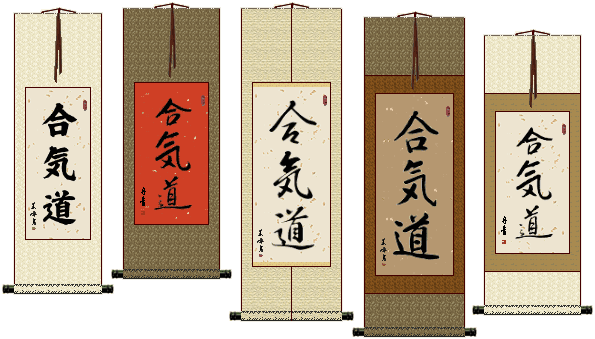
Aikido (Japanese)

Defensive form of martial arts

Mandarin: hé qì dào
Japanese: ai ki dou
Korean: 합기도

合
気
道

Aikido is often referred to as the defensive martial art. While aikido was born in Japan, it has become a somewhat famous form of defensive tactics taught to soldiers and Marines, as well as some law enforcement officers in the west.

Looking at the characters, the first means "union" or "harmony".
The second character means "universal energy" or "spirit".
The third means "way" or "method".

Please note that while these Japanese Kanji characters can be pronounced in Chinese, this word is not well-known in China and is not considered part of the Chinese lexicon.

Note: It is somewhat accepted that this is the origin of Hapkido in Korea. And other than a modern simplification to the middle Kanji of this 3-Kanji word, it is written the same in Korean Hanja.

More aikido info.

See Also...  Hapkido

Select

Archer

Mandarin: shè shǒu
Japanese: sha shu
Korean: 사수

射
手

This means archer, shooter, or marksman in Chinese, Japanese Kanji, and old Korean Hanja. Depending on context, it can also mean "goal getter" in Chinese. This would also be the word for bowman.

This word is kind of modern in Asia, meaning that it's only been in use for a few hundred years. However, the more ancient version of archer is often not even recognized by the current generation of Chinese and Japanese people.

The first character means "shoot" or "fire" (in the context of a gun or bow). It's also a suffix for radioactive things (in the context of chemistry) - radioactive things "fire off" electrons. In Japanese, that first Kanji is a shortname and suffix for archery.

The second character means "hand", but hand can also mean a person, in the same way that "farmhand" is a person in English.

Select

Archer

Ancient title, Chinese and Japanese

Mandarin: yì rén
Japanese: yokujin
Korean: 익인

弋
人

This is the ancient way to write archer in both Chinese, Korean and Japanese. If you carried a bow into battle in an army of ancient Asia, this would be your title.

Note: This is an antiquated term that is rarely used in modern Chinese, Korean or Japanese. Beyond archer, this can also mean a ceremonial hunter in Japanese.

Note: This title is so old, that most Asian people will not recognize this as a normal word. It has not been in regular use for many generations.

Back to the top of this page

Select

Archer

Modern Chinese

Mandarin: gōng jiàn shǒu
Korean: 궁전수

弓
箭
手

This is how to write "archer" in modern Chinese. It literally means "bow arrow hand". There are other ways to write "archer" in Chinese, but this is probably the most common title for modern China. The other, less-common version of archer, is also more universal, in that it has the same meaning in Japanese (this one is not used in Japan).

Select

Art of War: 5 Points of Analysis

Mandarin: dào tiān dì jiàng fǎ
Japanese: dou ten chi shou hou
Korean: 도천지장법

道
天
地
將
法

The first chapter of Sun Tzu's Art of War lists five key points to analyzing your situation. Sun Tzu says that to sharpen your skills, you must plan. To plan well, you must know your situation. Therefore, you must consider and discuss the following:

1. Philosophy and Politics: Make sure your way or your policy is agreeable among all of your troops (and the citizens of your kingdom as well). For when your soldiers believe in you and your way, they will follow you to their deaths without hesitation, and will not question your orders.

2. Heaven/Sky: Consider climate / weather. This can also mean to consider whether God is smiling on you. In the modern military, this could be waiting for clear skies so that you can have air support for an amphibious landing.

3. Ground/Earth: Consider the terrain in which the battle will take place. This includes analyzing defensible positions, exit routes, and using varying elevation to your advantage. When you plan an ambush, you must know your terrain, and the best location from which to stage that ambush. This knowledge will also help you avoid being ambushed, as you will know where the likely places in which to expect an ambush from your enemy.

4. Leadership: This applies to you as the general, and also to your lieutenants. A leader should be smart and be able to develop good strategies. Leaders should keep their word, and if they break a promise, they should punish themselves as harshly as they would punish subordinates. Leaders should be benevolent to their troops, with almost a fatherly love for them. Leaders must have the ability to make brave and fast decisions. Leaders must have steadfast principles.

5. [Military] Methods: This can also mean laws, rules, principles, model, or system. You must have an efficient organization in place to manage both your troops and supplies. In the modern military, this would be a combination of how your unit is organized, and your SOP (Standard Operating Procedure).

Notes: This is a simplistic translation and explanation. Much more is suggested in the actual text of the Art of War (Bing Fa). It would take a lot of study to master all of these aspects. In fact, these five characters can be compared to the modern military acronyms such as BAMCIS or SMEAC.

CJK notes: I have included the Japanese and Korean pronunciations, but in Chinese, Korean and Japanese, this does not make a typical phrase (with subject, verb and object) it is a list that only someone familiar with Sun Tzu's writings would understand.

Select

Art of War

Mandarin: bīng fǎ
Japanese: hyou hou
Korean: 병법

兵
法

This means "Art of War". It also part of the title of a famous book of tactics by Sun Tzu. These characters could also be translated as "military strategy and tactics", "military skills" or "army procedures". If you are a military tactician, this is the wall scroll for you.

See Also...  Military

Back to the top of this page

Select

Sun Tzu - Art of War

military strategy, tactics, and procedure

Mandarin: sūn zǐ bīng fǎ
Japanese: son shi hyou hou
Korean: 손자병법

孫
子
兵
法

This is the full title of the most famous book about warfare in the history of the world. The English title is "Sun Tzu's The Art of War".

The last two characters have come to be known in the west as "The Art of War", but a better translation would be, "military strategy and tactics", "military skills" or "army procedures".

Note: Sometimes the author's name is Romanized as "Sun Zi" or "Sunzi".

It's written the same in Chinese, Japanese Kanji and Korean Hanja.

See Also...  Military | Warrior

Select

Assassin

Mandarin: cì kè
Japanese: shikaku / shikyaku
Korean: 자객

刺
客

This is the most sophisticated way to write "assassin" in Chinese, Korean and Japanese. The unsophisticated way just means murderer.

Select

Black Belt

(Japanese Only)

Japanese: kuroobi
Korean: 흑대

黒
帯

These are the Kanji for "Black Belt" in Japanese.

This would be the gift to buy someone who is about to achieve the rank of black belt, or perhaps for yourself, like a certificate on the wall to subtly show your accomplishment.

Note: with a tiny stroke difference on the second character, this also means black belt in Korean Hanja. Let me know if you need the exact Korean version (though any Korean who can read Hanja will know this is black belt).

Back to the top of this page

Select

Rank Holder

The One Who has Achieved Rank in Martial Arts

Mandarin: yǒu duàn zhě
Japanese: yuudansha
Korean: 유단자

有
段
者

This is a Japanese term for someone who holds rank in karate, judo, etc.
This term theoretically applies to anyone with rank (above white belt). However, some schools or dojos may reserve this title for a holder of a black belt.

I'd suggest that you only order this phrase if you have honestly reached this level.

This title does kind of make sense in Chinese, but only to those Chinese who practice "kong shou dao" (karate) or when used in the context of martial arts.

Select

Bloodless Victory

Mandarin: bīng bù xuè rèn
Korean: 병불혈인

兵
不
血
刃

Perhaps a pacifist view or perhaps the best kind of victory; these characters reflect this idea:
The edges of the swords not being stained with blood.

You could also translate it as: Win victory without firing a shot.

The first character means army or force. The second character means without or none. The last two characters mean bloodstained knives. So it represents a returning victorious army without bloodstained knives. This is the very literal sense of this word/phrase. The title definition is more accurate to the way this phrase is understood.

Asking yourself why the direct or literal translation is different?
...Think of compound words in English such as "nevertheless" if we break it apart to "never the less" we will have trouble getting the real definition of "in spite of that". Similar things happen when multiple-characters are used to create a compounded word in Chinese.

Select

Boxing

Mandarin: quán jī
Korean: 권격

拳
擊

This is the term used in Chinese to refer to the original Olympic sport of combat and fighting. If you like to strap on your boxing gloves and go a few rounds, or are just a fan of boxing, this could make a nice wall scroll for you.

Note that Japanese use the same first character (which means fist) but a different Kanji for the second. Please see our Japanese boxing entry for that version.

Back to the top of this page

Select

Boxing (Japanese)

Japanese: ken tou

拳
闘

This is the term used in Japanese Kanji to refer to the original Olympic sport of combat and fighting. This can also be translated as "prize fighting".

The first Kanji means fist. The second means fight. So when literally translated, this means "fist fight" (though understood in Japanese as a more refined sport, versus street fighting).

Note: A completely different second character is used in the Chinese word for boxing, but a Chinese person would still be able to guess the meaning of these Kanji.

Select

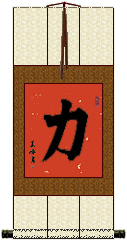
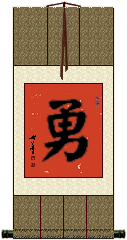
Bravery / Courage

Mandarin: yǒng
Japanese: isamu / yu-
Korean:

勇

This character can be translated as bravery or courage in Chinese, Japanese and Korean. This is the simplest form to express courage or bravery, as there is also a two character form which starts with this same character.

This character can also be translated as brave, daring, plucky or heroic.

This is also a virtue of the Samurai Warrior
See our page with just Code of the Samurai / Bushido here

Select

Bravery

Mandarin: yǒng gǎn
Japanese: yuukan
Korean: 용감

勇
敢

These characters can also be translated as: braveness, valor, heroic and/or courage in Japanese, Chinese, and Korean.

See Also...  Warrior | Courage

Back to the top of this page

Select

Bruce Lee

Mandarin: lǐ xiǎo lóng
Korean: 이소룡

李
小
龍

Bruce LeeMany people have no idea that Bruce Lee had a "real" Chinese name. In mainland China and Hong Kong he is known as "Li Xiao-Long". He kept his family name pronunciation (Li = Lee). This is a common family name that also means "plum".

His given name "Xiao-Long" literally means "little dragon". This is why you often see the character for dragon associated with Bruce Lee on various posters etc.

For a pronunciation lesson, the "X" in Romanized Chinese is pronounced like a "sh" sound but with your tongue at the bottom of your mouth. The vowel sound in "Long" is like the English "oh", not like the "ah" sound in the English word "long".

If you are a big Bruce Lee fan, you should know this information, and you should have this wall scroll hanging in your room or martial arts studio.

Note: Japanese use these same exact Chinese characters / Kanji to write Bruce Lee's real name (with different pronunciation).

See Also...  Kung Fu | Marital Arts

Select

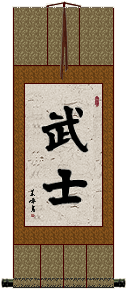
Bushido / The Way of the Samurai

Mandarin: wǔ shì dào
Japanese: bushido
Korean: 무사도

武
士
道

The Code of the Samurai

Sometimes called "The Seven Virtues of the Samurai", "The Bushido Code", or "The Samurai Code of Chivalry".

This would be read in Chinese characters, Japanese Kanji, and old Korean Hanja as "The Way of the Warrior", "The Warrior's Way", or "The Warrior's Code".

It's a set of virtues that the Samurai of Japan and ancient warriors of China and Korea had to live and die by.

See our page with just Code of the Samurai / Bushido here

See Also...  Samurai | Warrior

Select

Commitment

Mandarin: chéng nuò
Japanese: shoudaku
Korean: 승낙

承
諾

Commitment is caring deeply about something or someone. It is deciding carefully what you want to do, and then giving it 100%, holding nothing back. You give your all to a friendship, a task, or something you believe in. You finish what you start. You keep your promises.

In Chinese, this word directly means to undertake something or to make a promise to do something.

Within the idea of commitment, this word also means to make a big effort, or undertaking a great task. Outside of the commitment idea, this particular word can also mean approval, acceptance, consent, assent, acquiescence, or agreement depending on context (especially in Japanese and Korean). Therefore this word is probably best if your audience is Chinese.

See Also...  Partnership | Hard Work | Dedication

Back to the top of this page

Select

Confidence

Mandarin: xìn xīn
Japanese: shinjin
Korean: 신심

信
心

Confidence is having faith in someone. Self-confidence is trusting that you have what it takes, to handle whatever happens. You feel sure of yourself and enjoy trying new things, without letting doubts or fears hold you back. When you have confidence in others, you rely on them.

The first character means faith, and the second can mean heart or soul. So you could say this means "faithful heart" or "faithful soul". In Korean especially, this word has a religious connotation.

In Japanese, this word can mean "faith", "belief" or "devotion".

See Also...  Self-Confidence

Select

Cooperation / Collaboration

Mandarin: xié zuò
Japanese: kyousaku
Korean: 협작

協
作

Cooperation is working together and sharing the load. When we cooperate, we join with others to do things that cannot be done alone. We are willing to follow the rules which keep everyone safe and happy. Together we can accomplish great things.

The first character means "united" or "to coordinate". The second character means "to do", "to make", or "to compose". Knowing this, you can understand why together, these characters create a word that can be defined as "cooperation" in Chinese, Japanese, and Korean.

It is implied that you are cooperating to create some project or product.

See Also...  Partnership | Commitment

Select

Cooperation (Japanese / Korean)

Mandarin: xié lì
Japanese: kyouryoku
Korean:

協
力

If you look at the second character, which means "strength" or "power", and then you look at the first character, you will see that the first character seems to represent multiple "strengths" together. Thus you can visually see the meaning of this word as "stronger when working together". The combination of characters that form this word is commonly seen in Japanese Kanji and Korean Hanja, but not used in China (however, a Chinese person could probably guess the meaning, and it can be pronounced in Chinese).

It is implied that you are cooperating to create some project or product.

This can also be translated as "joint effort".

See Also...  Partnership | Commitment

Back to the top of this page

Select

Courage

Mandarin: yǒng qì
Japanese: yuuki
Korean: 용기

勇
氣

Courage is bravery in the face of fear. You do the right thing even when it is hard or scary. When you are courageous, you don't give up. You try new things. You admit mistakes. Courage is the strength in your heart.

Japanese 気While the version shown to the left is commonly used in Chinese and Korean Hanja (and ancient Japanese Kanji), please note that the second character is written with slightly fewer strokes in modern Japanese. If you want the modern Japanese version, please click on the character to the right. Both styles would be understood by native Chinese, Japanese, and many (but not all) Korean people. You should choose character based on the intended audience for your calligraphy artwork. Or pick the single-character form of bravery/courage which is universal.

See Also...  Warrior

Select

Crouching Tiger Hidden Dragon

Mandarin: wò hǔ cáng lóng
Korean: 와호장룡

臥
虎
藏
龍

This is the movie title of the Kung Fu epic that was very popular in the west a few years back. The title is actually a re-ordering of an ancient Chinese idiom that refers to undiscovered talents.

The movie was one of the most popular Chinese foreign films to ever debut in the USA, but received a lukewarm reception in China.

Note: This can be pronounced in Korean, but it's not a commonly-used term.

Select

Danger

Mandarin: wēi
Korean:

危

This means danger, peril or "to endanger". If you live a dangerous life, or want to subtly warn others that you are a dangerous person, this may be the selection for you.

This also means "danger" and sometimes "fear" in Japanese and Korean, but is seldom seen outside of compound words in those languages (as a single character, it's kind of like an abbreviation for danger in Japanese and Korean). This is also a rather odd selection for a wall scroll anyway. It's only here because people search for danger on our website.

Back to the top of this page

Select

Daoism / Taoism

Literally: The Way or Road

Mandarin: dào
Japanese: michi / -do
Korean:

道

This is the character "dao" which is sometimes written as "tao" but pronounced like "dow" in Mandarin.

This is the base of what is known as "Taoism". If you translate this literally, it can mean "the way" or "the path".

Dao is believed to be that which flows through all things, and keeps them in balance. It incorporates the ideas of yin and yang (e.g. there would be no love without hate, no light without dark, no male without female.)

The beginning of Taoism can be traced to a mystical man named
Lao Zi (604-531 BC), who followed, and added to the teachings of Confucius.

More about Taoism / Daoism here.

Note that this is pronounced "dou" and sometimes "michi" when written alone in Japanese, but pronounced "do" in word compounds such as Karate-do and Bushido. It's also "do" in Korean.

Alternate translations and meanings: road, way, path; truth, principle province.

Important Japanese note: In Japanese, this will generally be read with the road, way, or path meaning. Taoism is not as popular or well-known in Japan, so that Daoist/Taoist philosophy is not the first thing a Japanese person will think of then they read this character.

See our Taoism Page

Select

Dependable

Mandarin: jiān yì kě kào
Korean: 견의가고

堅
毅
可
靠

The first two characters mean resolute with firm determination.
The second two characters mean reliable.

Together, this creates a 4-character expression that clearly means dependable.

Select

Devotion

Mandarin: xiàn shēn
Japanese: kenshin
Korean: 헌신

獻
身

This can be translated as "to dedicate oneself to...", "self-devotion" or "dedication". Some would also translate this as "commit ones energy to", "devote to", or "self-sacrifice" (especially in Korean).

献While the form shown to the left is considered an ancient Japanese version, in modern Japan, they use the simplified version of the first Kanji (shown to the right).
Click on this Kanji instead of the button above if you want this modern Japanese version.

If you are looking for a more religious meaning, see faith.

See Also...  Confidence | Dedication

Back to the top of this page

Select

Devotion / Diligence
Vigorous / Energetic

Mandarin: jīng jìn
Japanese: shoujin
Korean: 정진

精
進

This is a wide-ranging word that is used in Chinese, Japanese, and Korean. It can mean aggressive, enterprising, vigorous, energetic, devotion, diligence, concentration of mind, purification, pushing, or assiduity. Used in the context of Buddhism, it means making earnest efforts to cultivate virtue and get rid of evil.

Select

Devotion / Enthusiasm

Mandarin: rè chéng
Japanese: nessei
Korean: 열성

熱
誠

This word is universal in Chinese, Japanese and Korean. It can mean earnestness, enthusiasm, ardor, zeal, devotion, spirit, or fervor.

Select

Discipline

Mandarin: jì lǜ
Korean: 기율

紀
律

Discipline: There are a few different ways to define this word in English. This Asian word conveys the idea of extreme self-control and perhaps self-sacrifice, and obedience. This matches what I was taught as the meaning of "discipline" when I was in the Marine Corps. There is also an additional idea of maintaining order or being orderly in your tasks.

This idea would also fit an athlete training for the Olympics who gives up many pleasures to stay focused on their training.

See Also...  Self-Control | Will-Power

Back to the top of this page

Select

Discipline / Training / Tempering Character

Mandarin: mó liàn

磨
練

This is a form of discipline which suggests training of the mind and character, aimed at producing self-control, obedience, etc.

One of my Chinese-English dictionaries even translates this as "tempering oneself" or turning yourself into hardened steel.

In old Korean Hanja, they use these characters in reverse order, but with the same meaning. If you want the Korean version, please click this link instead of the button above: Korean version.

Select

Discipline (Japanese)

Mandarin: duàn liàn
Japanese: tanren
Korean: 단련

鍛
練

This is the Japanese Kanji and Korean Hanja word that is used for discipline. This has a meaning like "forging or creating something from lots of training and practice". My Japanese dictionary translates this as, "tempering, forging, hardening, disciplining, training". This is for Japanese and Korean only. In Chinese, these characters might be translated as (physical) "exercise".

練'
練'

The modern form of the second Japanese Kanji looks like the first image to the right. The one below it is an alternate form. Because calligraphy is an art, the calligrapher could choose any of these possible forms. Let us know if you have a preference. Note that the form shown in the upper left is really the old/ancient/traditional Japanese/Chinese.

See Also...  Self-Control | Will-Power

Select

Dojo / Martial Arts Studio

Mandarin: dào cháng
Japanese: doujou
Korean: 도장

道
場

This is the Japanese term for a room or hall in which martial arts are taught. This word is often spelled "dojo" which has become a word in the English lexicon. However, the true Romaji is "doujou".

Please note: The Chinese definition of these characters is quite different. In Chinese, this is a place where Buddhist or Taoist mass is held. It could also be the place where spiritual or psychic events are performed.

Back to the top of this page

Select

Dragon

Mandarin: lóng
Japanese: ryuu / tatsu
Korean: 룡 or 용

龍

This is pretty self-explanatory. This is the creature of myth and legend that dominates Chinese, Japanese, and even European folklore. In China, the dragon is the symbol of the Emperor, strength and power, and the Chinese dragon is known as the god of water.

See: More Chinese & Japanese Dragon calligraphy & Dragon information.

Select

Drunken Fist

(A legitimate style of Kung Fu)

Mandarin: zuì quán
Japanese: suiken
Korean: 취권

醉
拳

Drunken Fist is a traditional Chinese martial art / technique of Kung Fu.

It is a northern style of martial art that imitates a drunk person in its movements. Many staggering movements serve to deceive the opponent and keep them off-balance.

Some consider Drunken Fist to be among the harder styles of martial arts due to the need for powerful joints and fingers.

See Also...  Drunken Monkey

Select

Duty / Responsibility / Obligation

Mandarin: zhí zé
Korean: 직책

職
責

If you have a sense of duty or sense of responsibility, this might be the wall scroll that you want to hang above your desk. It is a great way to quietly remind yourself to take pride in your duties at all times.

In different context, this can mean "official duties" or "position".

Back to the top of this page

Select

Enthusiasm

Mandarin: rè qíng
Japanese: netsu jou
Korean: 열정

熱
情

This is the same as the translation of "Passion for a cause" in Chinese. Enthusiasm is being cheerful, happy, and full of spirit. It is doing something wholeheartedly and eagerly. When you are enthusiastic, you have a positive attitude.

In some context, this could have a meaning of being extremely fond of something, or having fondness for a cause or person.

This Chinese word can also be translated as "sincere and warm" or literally "warm sentiment / affection".

See Also...  Motivation | Passion | Commitment | Tenacity | Happiness

Select

Enthusiasm / Warm-Hearted

Mandarin: rè xīn
Japanese: nesshin
Korean: 열심

熱
心

This is another version of Enthusiasm in Chinese, Japanese Kanji and old Korean Hanja. This literally means "warm-hearted" (can also mean warm-spirited or warm-souled).

This word is also used to express the ideas of earnestness or eagerness.

Can mean "zeal" in Japanese.

See Also...  Happiness

Select

Fair / Impartial

Mandarin: gōng píng
Japanese: kouhei
Korean: 공평

公
平

This word means impartial, fairness, and justice in Chinese, old Korean, and Japanese.

This character, on your wall, should be used to remind yourself to be fair and just in all situations of life.

See Also...  Justice | Balance

Back to the top of this page

Select

Fight / Beat Someone

Mandarin: dòu
Korean:

斗

This is how to express the act of fighting in Chinese. Generally this means fighting against someone or some force whether physically or metaphorically.

Note: There is more than one way to write this character. You will notice variations on the next page after you click "Select and Customize". If you have a preference, please let us know when you place your order.

Please note that there is a secondary pronunciation and meaning of this character. It can also mean "measuring cup" or in Japanese "sake dipper" or even "The Big Dipper". In Japanese and Korean, this does not have the fighting meaning associated with it. You should therefor select this character only if your audience is Chinese, or you are a big fan of sake dippers or The Big Dipper (as that is how it will be read by Japanese and Korean people).

Select

Fight for a Goal

Mandarin: zhēng
Korean:

爭

This is the way to express the idea of fighting for a goal. It can also mean to struggle or to argue. This is okay for a Chinese audience, and while it is a word in Korean, this character is seldom seen alone in Korean grammar.

Select

Fighter

Warrior / Soldier

Mandarin: zhàn shì
Japanese: sen shi
Korean: 전사

戰
士

The first character means war, warfare, or battle.
The second character means soldier, officer, man or pawn.

This is how to write "fighter" in Chinese, ancient Japanese Kanji and old Korean Hanja. This word can also mean soldier or warrior, but there are better terms for those two ideas. This one is more specifically "fighter" or "one who fights". This is an odd selection for a wall scroll, unless you are a boxer, ultimate fighter, or otherwise participate in combat sports.

Other translations include combatant or champion.

戦Note that after WWII, the first Kanji was reformed/simplified. This modern Japanese version is shown to the right. If you want this version, click on the Kanji to the right, instead of the button above.

See Also...  Knight | Army | Marines | Samurai | Warrior | Soldier

Back to the top of this page

Select

Fighting Spirit

The Will to Fight

Mandarin: dòu zhì

斗
志

This literally means fighting spirit. As in the spirit that a warrior, soldier, athlete or fighter must possess.

斗Note: There is more than one way to write the first character of this word. It is sometimes written like the version shown to the right (yes, it's completely different, but has the same meaning & pronunciation). If you have a preference, please let us know in the special instructions about your order, or via email.

Select

Fighting Spirit (Japanese only)

Japanese: tou shi

闘
志

This literally means "fighting spirit" or "the will to fight". As in the spirit that a warrior, soldier, athlete or fighter must possess.

Select

Filial Piety

Mandarin: xiào
Japanese: kou
Korean:

孝

This character represents filial piety. Some will define this in more common English as "respect for your parents and ancestors".

This is a subject deeply emphasized by the ancient philosophy and teachings of Confucius.

Some have included this in the list for the Bushido, although generally not considered part of the 7 core virtues of the warrior.

Note: This character is not the best of meanings when seen along as a single character. Some will read the single character form to mean "missing my dead ancestors". However, when written at part of Confucian tenets, or in the two-character word that means filial piety, the meaning is better or read differently (context is important for this character).

We suggest one of our other two-character filial piety entries instead of this one.

See our page with just Code of the Samurai / Bushido here

See Also...  Filial Piety | Confucius

Back to the top of this page

Select

Flexibility

Mandarin: líng huó xìng
Korean: 령활성 or 영활성

靈
活
性

Flexibility is being open to change. You consider others' ideas and feelings and don't insist on your own way. Flexibility gives you creative new ways to get things done. Flexibility helps you to keep changing for the better. This Chinese word could also be defined as "flexible nature".

See Also...  Cooperation

Select

Perseverance / Fortitude

Mandarin: jiǎn rěn
Japanese: ken nin
Korean: 견인

堅
忍

The first character means "strong", "solid", "firm", "unyielding" or "resolute".
The second character means "to beat", "to endure", or "to tolerate".
Together they speak of the strength from within yourself. Some may also translate this as "long-suffering" in a more Biblical sense.

This is a common term in Chinese and Korean Hanja, but a little less commonly-used in modern Japanese Kanji. For that reason, this selection is best if your audience is Chinese or Korean.

忍Note that when writing this as Kanji, Japanese will tend to write the second Kanji in the form shown to the right. If you select our Japanese master calligrapher, please expect this Kanji form (yes, it's just one stroke that is slightly different in location, crossing another stroke in the Japanese Kanji form).

Due to some odd computer coding conventions, these two character forms were combined/merged into the same code point - thus you will not see Kanji images of the more Japanese form as you select options for your wall scroll.

Select

Fortitude / Strength of Character

Mandarin: gāng yì
Japanese: gouki

剛
毅

This Japanese and Chinese word means, "resolute and firm", "fortitude", "firmness of character", "hardihood", "manliness" or "macho".

See Also...  Perseverance | Strength | Tenacity

Back to the top of this page

Select

Goju Ryu Karate-Do

Japanese: gou juu ryuu kara te dou

空
手
道
剛
柔
流


Characters shown
above are read
vertically, starting
from the right

This is the title of the Goju-Ryu Karate-Do school of martial arts.

Select

Good Health

Mandarin: jiàn kāng
Japanese: kenkou
Korean: 건강

健
康

This is the best way to express good health in Chinese, Korean and Japanese.

These characters also suggest the ideas of being solid, strong, sound, wholesome and at peace.

Can also be used to express "healthy", "vitality", or "well-being".

See Also...  Health | Vitality | Wellness

Select

Good Health / Healthy / Vigor

Also suggests being at peace

Mandarin: kāng
Japanese: kou
Korean:

康

This is a single character that means good health or vigor in Chinese, Japanese Kanji, and old Korean Hanja.

This character can also mean peaceful, at ease, or abundant in some contexts.

Please note that this is rarely seen alone in Japanese Kanji. In Japanese, it is used both for health-related compound words and to denote the kouhou through koushou eras of Japan.

In Korean, this can also be the family name "Kang" (caution: not the only family name romanized as Kang in Korean).

See Also...  Health | Vitality | Wellness

Back to the top of this page

Select

Guide / Help / Cooperate

Mandarin: tí xié
Japanese: tei kei
Korean: 제휴

提
携

This word varies a bit depending on which language you are reading it in.

This means to guide and help (younger people) in Chinese.
Cooperation or "working in concert" in Korean.
And, cooperation, tie-up, joint business, link-up in Japanese.

Select

Gutsy / Daring / Bold

Mandarin: pò lì
Japanese: hakuryoku
Korean: 박력

迫
力

This Chinese word is a form of personal strength. It is a word that describes a person who is willing to take a risk. In English we might say, "Someone with guts".

An example might be a person that is not rich, but invests a lot of money into something (knowing they could double their money, or lose it all). Win or lose, this is a person that knows or pushes their potential.

Tearing this word apart, the first character means "to compel", urgent, urge, force, imminent, or "spur on". The second means power, strong, bear, or exert.

Note: This is also a word in Japanese Kanji and Korean Hanja, but with a meaning more like force, intensity, appeal, strength, impact, force, or simply power.

Select

Hapkido

Korean Martial Art of re-directing force

Mandarin: hé qì dào
Japanese: aikido
Korean: 합기도

合
氣
道

Hapkido is a mostly-defensive martial art of Korea. It has some connection to Aikido of Japan. In fact, they are written with the same characters in both languages. However, it should be noted that the Korean Hanja characters shown here are the original and traditional Chinese form - but in modern Japan, the middle character was slightly simplified. The connection between Japanese Aikido and Korean Hapkido is a bit muddled in history. This is probably due to the relationship between the two countries - especially during WWII when many Koreans became virtual slaves for the Japanese (many Koreans are still bitter about that, so many things were disassociated from having any Japanese origin).

Looking at the characters, the first means "union" or "harmony."
The second character means "universal energy" or "spirit".
The third means "way" or "method".
One way to translate this into English is "Harmonizing Energy Method". This makes since, as Hapkido has more to do with redirecting energy, rather that fighting with strength against strength.

More Hapkido info

More notes:
1. Sometimes Hapkido is Romanized as "hap ki do", "hapki-do" "hab gi do" or "hapgido".

2. Korean Hanja characters are actually Chinese characters that usually hold the same meaning in both languages. There was a time when these characters were the standard and only written form of Korean. The development of modern Korean Hangul characters is a somewhat recent event in the greater scope of history. There was a time when Chinese characters were the written form of many languages in places known in modern times as North Korea, South Korea, Japan, Vietnam, Singapore, Hong Kong, Taiwan, Mainland China, and a significant portion of Malaysia. Even today, more people in the world can read Chinese characters than can read English.

3. While these Korean Hanja characters can be pronounced in Chinese, this word is not well-known in China and is not considered part of the Chinese lexicon.


Back to the top of this page

Select

Healthy Living

Mandarin: jiàn kāng shēng huó
Japanese: kenkou seikatsu
Korean: 건강생활

健
康
生
活

If you are into healthy living, this might be a great selection for a wall scroll to hang in your home. The first two characters speak of health, vitality, vigor and being of sound body. The second two mean living or life (daily existence).

See Also...  Strength | Vitality | Health

Select

Hero

Mandarin: yīng xióng
Japanese: eiyuu
Korean: 영웅

英
雄

This is the best way to write hero in Chinese and Japanese - especially for calligraphy. This is also the name of the Chinese movie titled Hero starring Jet Li.

The first character means brave (it can also mean British or English, but not in this case). The second character means heroic, but also suggests a male person.
My Japanese dictionary also defines this as "a great man".

Select

Hidden Dragon Crouching Tiger

An idiom describing undiscovered talent

Mandarin: cáng lóng wò hǔ
Korean: 장룡와호

藏
龍
臥
虎

You might think this title is in reverse, but actually this is the original idiom. The movie Crouching Tiger, Hidden Dragon was actually a play on words or order reversal of this old Chinese idiom.

The meaning is that both the tiger and dragon have amazing talents, but if they are out of view, you may have not discovered them. It can be said of someone with amazing ability that keeps that ability hidden.

Back to the top of this page

Select

Honesty / Fidelity

Mandarin: xìn
Japanese: shin
Korean:

信

This is another character that expresses the idea of honesty. It can also mean truth, faith, believe in, fidelity, sincerity, trust and/or confidence.

Some have included this in the list for the Bushido, although "makoto" is probably more common/popular.

Note: In some context, this character can mean letter; news or envoy. However, alone, it will generally be read with the honesty-meaning.

See our page with just Code of the Samurai / Bushido here

See Also...  Loyalty Trustworthiness Trustworthy

Select

Honor (Japanese / Simplified version)

Mandarin: míng yù
Japanese: meiyo
Korean: 명예

名
誉

This version of honor is about having or earning the respect of others and about your reputation. It is the status of being worthy of honor (not to be confused with doing honorable things or specific actions - see our other "honor" listing for that).

譽Both modern Japanese and modern mainland Chinese use the same simplified version of the second character of honor. We will automatically use the simplified version shown to the left, unless you make a special request for the traditional second character as shown to the right (just click on that character to order the traditional Chinese version). Before WWII, both Japan and China used the traditional form, but modern Japanese and Chinese are more likely to identify this simplified form. Koreans still use the traditional form when they are not writing in their modern Hangul glyphs.

This is also a virtue of the Samurai Warrior
See our page with just Code of the Samurai / Bushido here

See Also...  Integrity | Respect

Select

Indomitable / Persistence / Fortitude

Mandarin: bù qū
Japanese: fukutsu
Korean: 불굴

不
屈

This is the short form of a longer Chinese word, and also a word used in Korean and Japanese to express the idea of being indomitable. It literally means, "will not bend", "will not crouch", "will not yield", "will not flinch", or "will not submit".

Note: Some will translate this as "indomitable spirit"; however, technically, there is no character to suggest the idea of "spirit" in this word.

See Also...  Tenacity | Fortitude | Strength | Undaunted

Back to the top of this page

Select

Indomitable / Unyielding

Mandarin: bù qū bù náo
Japanese: fukutsu futou

不
屈
不
撓

This is a long word by Chinese standards. At least it is often translated as a single word into English. This simply means "Indomitable" or "Unyielding".

If you want to break it down, you can see that the first and third characters are the same. Both meaning "not" (they work as a suffix to make a negative or opposite meaning to whatever character follows). The second character means "bendable". The last means "scratched" or "bothered".
So this really means "Won't be bent, can't be bothered". I have also seen it written as "Will not crouch, will not submit". This comes from the fact that the second character can mean, "to crouch" and the last can mean "to submit" (as in "to give in" such as "submitting to the rule of someone else"). This may explain better why these four characters mean "indomitable".

Notes:
Some will translate this as "indomitable spirit"; however, technically, there is no character to suggest the idea of "spirit" in this word.
The first two characters can be a stand-alone word in Chinese.
In Japanese, this is considered to be two words (with very similar meanings).
The same characters are used in Korean, but the 2nd and 4th characters are swapped to create a word pronounced "불요불굴" in Korean.
Just let me know if you want the Korean version, which will also make sense in Japanese, and though not as natural, will also make sense in Chinese as well.

See Also...  Tenacity | Fortitude | Strength | Undaunted

Select

Initiative / Leadership

Mandarin: jī jí
Japanese: shudou
Korean: 주동

主
動

In Chinese, this word means "to take the initiative".

In Japanese and Korean, the meaning varies slightly to a meaning that leans more toward "leadership" (as in one who is leading a group or organization).

Select

Initiative / Proactive

Mandarin: jī jí
Japanese: sekkyoku
Korean: 적극

積
極

This word closely matches the way initiative is often used in English. This word can also mean active, energetic, vigorous, positive (outlook), or proactive in Chinese.

The meaning also includes positive and progressive in Japanese and Korean.

Back to the top of this page

Select

Inner Strength

Mandarin: zì qiáng
Korean: 자강

自
強

This is the kind of inner-strength that applies to a person who has will-power and can inspire themselves to do great things.

This word can also be the creed of a person that always pursues self-improvement.

Other translations: self-strengthening, striving for improvement, self-improvement, strive to become stronger, and self-renewal.

Select

Integrity

Mandarin: zhèng zhí
Japanese: shoujiki
Korean: 정직

正
直

Integrity is living by your highest values. It is being honest and sincere. Integrity helps you to listen to your conscience, to do the right thing, and to tell the truth. You act with integrity when your words and actions match. Integrity gives you self-respect and a peaceful heart.

Japanese jikiPlease note that the second Kanji sometimes has an alternate form in Japanese. Let us know if you want the alternate form shown to the right.

Note: This entry is cross-listed as "honesty" because it also fits that definition.

Beyond Integrity, this word also means "upright" and "honest" in Chinese. Means "integrity", "honesty" or "frankness" in Japanese.

See Also...  Honor | Honesty | Truth | Trust

Select

Intelligence / Information-Gathering

Mandarin: qíng bào
Japanese: jouhou
Korean: 정보

情
報

If you are a government spy, engaged in business espionage, or in some military intelligence department, this is both the title of what you are doing and what you are collecting about your enemy.

It is suggestive by itself of military intelligence, but applies to corporate intelligence if you are keeping an eye on your competition in business.

Back to the top of this page

Select

Intensity

Mandarin: qiáng liè
Japanese: kyouretsu
Korean: 강렬

強
烈

This word means intensity in regards to strength.

Note: In some context, this can mean violently strong or severe.

Select

Iron Palm

Mandarin: tiě zhǎng
Japanese: tetsu-tenohira
Korean: 철장

鐵
掌

These two characters mean "iron palm", the martial arts technique taught by Brian Gray and others.

This term can mean different things to different people. The consensus is that rather than a type or style of martial arts, this is a technique for refining hand position and strengthening of hands in order to strike blows for with maximum force and effect.

The regime may include herbal treatments and special exercises to fortify the hands.

In more extreme versions, the carpals and metacarpal bones in the hand are systematically broken, so that when they heal, they will become stronger.

Japanese note: This does make sense in Japanese (though the version shown above is the ancient form of the first Kanji) this is far from a commonly-known term.

Select

Iron Fist

Tie Quan / Tieh Chuan

Mandarin: tiě quán
Japanese: tekken
Korean: 철권

鐵
拳

This is a common theme used by various schools of martial arts.

The first character means "iron", but in some cases, can mean "indisputable".
The second character is fist.

Some schools use the older/Taiwanese way to Romanize the iron fist, so you may have seen it spelled "Tieh Chuan" instead of "Tie Quan". Neither way is technically incorrect.

Note that in Mandarin, the first part of the first character actually sounds like the English word "tea" blending into a soft "-eh" sound. The second character sounds a lot like "chew on", but as if it is one syllable.

鉄After WWII in Japan, the Kanji for iron was simplified. This new Kanji form is shown to the right. If you want this modern Japanese version, please click on the Kanji to the right, instead of the button above. The characters shown to the left would still be considered the old or ancient Japanese version of this title.

Back to the top of this page

Select

Jing Mo / Jing Wu

Mandarin: jīng wǔ
Cantonese: jing mo
Korean: 정무

精
武

This two-character title is used for a certain type of martial arts. You can translate this roughly as "Excellent Marital Arts" or "Excellence in Martial Arts". You will notice that the second character is "wu" as in wushu (martial arts) and wushi (warrior).

More information can be found at the Jing Mo website. You should probably only order this if you are a member of this association.

Note that "jing mo" is the Cantonese pronunciation of these characters. In Mandarin, they are "jing wu".
Also used in Korean, but only by those involved with martial arts who can also read Korean Hanja (a small percentage of the population).

Select

Judo

Mandarin: róu dào
Japanese: judo
Korean: 유도

柔
道

This is the martial art invented in Japan and known as "Judo" around the world.

Translated directly, it means "Gentle Way" or "Flexible Way"

More about Judo

Select

Jujitsu / Jujutsu

Mandarin: róu shù
Japanese: jujutsu
Korean: 유술

柔
術

This word has been somewhat incorrectly spelled and pronounced "Jujitsu" for some time in the English-speaking world. The correct Japanese Romaji is Jujutsu.

A little background on the word: By combining the Kanji pronounced "Ju" (which means flexible, pliable, gentle, yielding) with the Kanji pronounced "Jutsu" (which means art, or technique), we get a meaning that can be translated as "flexible technique", "gentle art" or "yielding technique".
This word does make sense in Chinese as well, although pronounced, "rou shu" in China.

The Jujutsu system has a history in Japan that started well-before the 1600's. Some see this style as a variation of the "Empty Hand Method" (Karate-do). Even the samurai of old used some Jujutsu methods in defending themselves with their unarmed hands against weapons that could pierce their heavy armor.

There are convoluted relationships between various schools and systems of martial arts, but it's generally accepted that Jujutsu led to the development of Judo and a few other variations.

Back to the top of this page

Select

Karate-do

Mandarin: kōng shǒu dào
Japanese: kara te dou
Korean: 공수도

空
手
道

Credit is given that karate started in China, but migrated and became refined, and vastly popular in Japan. The literal meaning of these characters is "empty hand method". Karate is a martial art that uses no blades of weapons other than the "natural weapons" that God gave to humans (fists and feet). The last character somehow became optional, but the meaning of that character is "method" or "the way" as in Taoism / Daoism.

Select

Karate

Mandarin: kōng shǒu
Japanese: kara te
Korean: 공수

空
手

The short, and widely-used-in-English version of karate-do without the "do" or "dao" on the end.

Literal meaning: Empty Hand.

Select

Katana

Japanese Samurai Sword

Mandarin: dāo
Japanese: katana
Korean:

刀

This is the Japanese Kanji for "sword". This refers to the style of sword carried by warriors, samurai, and shogun of ancient Japan.

With the pacification of Japan, such swords are now only used for ceremony and decoration. The true art of sword-smithing is all but lost in Japan with new sword production dedicated to making inexpensive replicas for the tourist and foreign market.

For those of you that want to ask whether I can get you a real antique sword. Let me tell you that most real Asian swords were melted down after WWII in Japan, and during the Great Leap Forward in China. Any remaining swords are family heirlooms that nobody will part with.

Please carefully note that the Japanese kanji character shown above is only for a Japanese audience. In China, this character means "knife". See our other entry for "sword" in Chinese.
Note: This can mean knife, sword, or blade in Korean, depending on context.

See Also...  Sword

Back to the top of this page

Select

Kenpo / Kempo / Quan Fa / Chuan Fa

Mandarin: quán fǎ
Japanese: kenpou
Korean: 권법

拳
法

This form of martial arts can be translated in several ways. Some will call it "fist principles" or "the way of the fist", or even "law of the fist". The first character literally means fist. The second can mean law, method, way, principle or Buddhist teaching.

Kempo is really a pot luck of martial arts. Often a combination of Chinese martial arts such as Shaolin Kung Fu with Japanese martial arts such as Karate, Jujutsu (Jujitsu), Aikido, and others. You may see the term "Kempo Karate" which basically means Karate with other disciplines added. In this way, Kempo becomes an adjective rather than a title or school of martial arts.

These facts will long be argued by various masters and students of Kempo. Even the argument as to whether it should be spelled "kenpo" or "Kempo" ensues at dojos around the world (the correct Romaji should actually be "kenpou" if you precisely follow the rules).

The benefit of Kempo is that the techniques are easier to learn and master compared to pure Kung Fu (wu shu). Students are often taught basic Karate moves, kicks, and punches before augmenting the basic skills with complex Kung Fu techniques. This allows students of Kempo achieve a level where they can defend themselves or fight in a relatively short amount of time (a few years rather than a decade or more).

Because the definition of this word is so fluid, I should make some notes here:

1. Purists in Okinawa will claim that "Okinawa Kenpo" or "Ryukyu Hon Kenpo" is the original and true version of this martial art from the old kingdom. There is actually little or no connection between Okinawa Kenpo and the way the word is used elsewhere.

2. In Chinese, where these characters are pronounced "quan fa" (sometimes Romanized as "chuan fa" because the Chinese-pinyin "q" actually sounds like an English "ch" sound), these characters do not hold the connotation of being a mixed martial art. It is simply defined as "the law of the fist".

3. In my Japanese dictionary, it oddly defines Kenpo as "Chinese art of self-defense". I personally don't feel this is the most common way that people perceive the word, but just something you should know.

Select

Kendo / The Way of the Sword (Japanese)

Mandarin: jiàn dào
Japanese: kendou
Korean: 검도

剣
道

Often associated with Kenjutsu, this word means "The way of the sword" in Japanese (and Korean with alternate form of the first character).
This is also the term used for swordsmanship and even fencing in Japanese and Korean, depending on context.

Note: These same characters are also used separately in Chinese, but this exact combination yields a common title in Japanese only (perhaps someone who is really into swords would use this in China).

Note: There is more than one way to write the "sword" character (shown above is the Japanese version - if you want the Korean version, please let me know when you place your order).

See Also...  Sword | Katana

Select

Kenjutsu / Kenjitsu

Mandarin: jiàn shù
Japanese: kenjutsu
Korean: 검술

剣
術

In Japanese, the modern definition, using simple terms is "A martial art involving swords" or "The art of the sword". However, in Chinese, this is the word for fencing (as in the Olympic sport).

I will suppose that you want this for the Japanese definition which comes from skills and techniques developed in the 15th century. At that time, Kenjutsu (or swordsmanship) was a strictly military art taught to Samurai and Bushi (soldiers). The fact that swords are rarely used in military battles anymore, and with the pacification of Japan after WWII, Kenjutsu is strictly a ceremonial practice often studied as a form of martial art (more for the discipline aspect rather than practical purpose).

Language note: The Korean definition is close the Japanese version described above. However, it should be noted that this can mean "fencing" depending on context in Japanese, Chinese, and Korean.

術Character alternative notes: Japanese tend to write the second Kanji in the form shown to the right. It is a very slight difference, and the two forms were merged under the same computer font code point (thus you will not see the Japanese version in Kanji images shown during the options selection process). If you choose our Japanese Master Calligrapher, this will be automatically written in the proper Japanese form.
Since there are about 5 common ways to write the sword character, if you are particular about which version you want, please note that in the "special instructions" when you place your order.

Romanization note: This term is often Romanized as Kenjitsu, however, following the rules of Japanese Romaji, it should be Kenjutsu.

Back to the top of this page

Select

Knight

Mandarin: qí shì
Japanese: ki shi
Korean: 기사

騎
士

The first character has the element of "horse" in it, and alone can mean "one who rides". Together, these characters can be translated as "riding soldier" or "horseman soldier", which of course can also be translated as "knight".

Can also be translated as "cavalier".

See Also...  Warrior | Horse

Select

Knowledge

Mandarin: zhī shi
Japanese: chishiki
Korean: 지식

知
識

The first character represents "to know" or "to realize". The second character alone refers to the ability to "recognize", or "realize" and can also be used to mean "knowing". Combined, these two characters have the very strong meaning of "knowledge" and in some context, "learning".

See Also...  Wisdom | Learn From Wisdom

Select

Kobudo (Japanese)

Mandarin: gǔ wǔ dào
Japanese: kubudou

古
武
道

This is the title for Kubudo, which can be defined as Okinawan weapons fighting.

The literal translation would be something like "Old Martial Way". The last two characters are often translated as "martial arts" so "Old Martial Arts" is another possible translation.

Please note that even though these are Chinese characters, and can be pronounced in Chinese, this is a Japanese only title. It is not often used nor understood in Chinese. So please consider this to only be appropriate for a Japanese audience.

Back to the top of this page

Select

Kung Fu / Gong Fu

Mandarin: gōng fu
Japanese: kanfu

功
夫

One of the most famous types of martial arts in the world - and not just because of Bruce Lee.

Some translate the meaning as "Accomplishment by Great Effort". I think this is partially true, but directly translated it literally means "Merit/Achievement/Accomplishment Man". The word "fu" can sometimes mean "husband" or "porter", but in this case, it can only mean "man". However, few in China will think "man" when they hear the word "Gong Fu" spoken.

This term is also used for things other than martial arts. In fact, it's used to refer to a person with excellent skills in crafts that require a great deal of effort such as cooking, tea ceremonies, and calligraphy.

What a lot of people don't know is that the spelling of "Kung Fu" was actually taken from the old Wade Giles form of Romanization. Using this method, the sounds of the English "G" and "K" were both written as "K" and an apostrophe after the "K" told you whether it was supposed to sound like a "G" or not. Nobody in the west knew this rule, so most people pronounce it with a "K-sound". And so Gong Fu will always be Kung Fu for most westerners.

Also, just to educate you a little more, the "O" in "Gong" has a sound like the English word "oh".

The popular Chinese dish "Kung Pao Chicken" suffers from the same problem. It should actually be "Gong Bao Chicken".

Historical note: Many will claim that Kung Fu was invented by the monks of the Shaolin monastery. This fact is argued in both directions by scholars of Chinese history. Perhaps it is more accurate to say that the Shaolin Monks brought the original fame to Kung Fu many generations ago.

Japanese note: While this does mean Jung Fu in Japanese, in most cases, Japanese will use Katakana to approximate the pronunciation of "Kung Fu". However, virtually any Japanese person who is into martial arts will recognize and understand these characters.

Select

Leadership

Mandarin: lǐng dǎo
Korean: 영도

領
導

This is the Chinese word for "Leadership". It contains the ideas of "to lead", "to direct", "to conduct" and "to guide". Putting a wall scroll with this word on your wall suggests that you are honing your leadership skills or hold a position of leadership.

Select

Leadership / Ability to Lead (Japanese Only)

Japanese: shidouryoku
Korean: 지도

指
導
力

This is the Japanese word for "Leadership". This refers to the ability to lead (or with certain adjectives added, the lack of ability to lead).

Back to the top of this page

Select

Learn from Wisdom

(When you see a wise person, try to be like them)

Mandarin: jiàn xián sī qí
Korean: 견현사제

見
賢
思
齊

When you meet a wise person, you should learn from them and be inspired to become as wise as they are.

This is a pretty long phrase in English, but in Chinese it's only four characters.
However, in Chinese the deeper meaning often surpass the dictionary definition of each character.

In this case, you should seek wise people to learn from throughout your life...
Always try to learn enough to become equal to them. It also suggests that the process of learning and seeking wisdom is a non-ending cycle.

See Also...  Knowledge

Select

Lee / Plum (Surname)

Mandarin:
Cantonese: lee
Japanese: ri / sumomo
Korean: 리 or 이

李

This is the most common Chinese character which sounds like "Lee" or "Li" and is used as a surname / family name in China. This character actually means "Plum". So it's really Mr. Plum and Mrs. Plum if you translated the name instead of romanizing.

This is not the only character in Chinese that can be romanized as "Lee" or "Li". If your family name is "Lee" or "Li" please be sure this is the correct character before you order this scroll (look at your grandparents' Chinese passports or other documents if you are an ABC and are trying to create a heritage wall scroll).

Famous people with this surname include Bruce Lee (Li Xiao-Long), Minister Li Peng, and famous Tang Dynasty poet Li Bai.

Note: This also one version of Lee that is a common Korean surname. However, it's often romanized as "Yi" and sometimes as "Ri" or "Rhee".

See Also...  Bruce Lee

Select

Leopard / Panther / Jaguar

Mandarin: bào
Japanese: hyou
Korean:

豹

This is the Chinese and Japanese word for the big cat known as a leopard, panther or Jaguar.

This can refer to most cats of the Panthera genus as well as the Puma genus (but this is not used for most kinds of lions, except smaller ones like the mountain lion).

Because Jaguars are not native to Asia, the characters for "American continent" is usually added before this character to specifically designate a Jaguar.

This also kind of means Panther or Leopard in Korean Hanja, but in modern Korean, they add a Hangul character to complete the word.

Back to the top of this page

Select

Life Energy / Spiritual Energy

Essense of Life

Mandarin:
Japanese: ki
Korean:

氣

Qi which is also Romanized as Chi in Chinese or Ki in Japanese, is a fundamental concept of traditional Asian culture. Qi is believed to be part of everything that exists, as in “life force” or “spiritual energy”. It is most often translated as “energy flow,” or literally as “air” or “breath”.

The character itself is a representation of steam (or breath) rising from rice.
米This was apparently seen as the release of energy from the rice when this concept was first developed. To clarify, the character for rice is shown to the right. The Qi / Chi / Ki character is still used in compound words to mean steam or vapor.

The idea of Qi / Chi / Ki is really a philosophical concept. It's often used to refer to the “flow” of metaphysical energy that sustains living beings. Yet there is much debate that has continued for thousands of years as to whether Qi / Chi / Ki is pure energy, or consists partially, or fully of matter.

You can also see the character for Qi / Chi / Ki in common compound words such as Tai Chi / Tai Qi, Aikido, Reiki and Qi Gong / Chi Kung.

In the modern Japanese Kanji, the rice radical has been changed into two strokes that form an X.

The original and traditional Chinese form is still understood in Japanese, but we can also offer that modern Kanji form in our custom calligraphy. If you want this Japanese Kanji, please click on the character to the right, instead of the “Select and Customize” button above.

More language notes: This is pronounced like “chee” in Mandarin Chinese, and like “key” in Japanese.
This is also the same way to write this in Korean Hanja where it is Romanized as “gi” and pronounced like “gee”, but with a real G-sound, not a J-sound.
Though Vietnamese no longer use Chinese characters in their daily language, this character is still widely known in Vietnam.

See Also...  Life Force | Vitality | Life | Birth

Select

Listen to Your Heart / Follow Your Heart

Mandarin: suí xīn ér xíng
Korean: 수심이행

隨
心
而
行

This is the closest way to express this idea in Chinese. Literally translated, this phrase means, "Allow your heart to dictate your behavior" or "Let your heart guide your conduct" in Chinese. You could also translate this as "follow your heart". Or, with a bit of imagination, it could mean: "let your spirit be your guide".

Note that in some cases, "heart" can mean "mind", "soul" or even "spirit" in Chinese. In ancient China, it was thought that the big pumping organ in your chest was where your thoughts came from, or where your soul resides.
Ancient western thought followed a similar belief. Thus phrases like "I love you with all my heart" and "I give you my whole heart".

Select

Loyalty to Duty or Master

Mandarin: zhōng
Japanese: chuu
Korean:

忠

This is the simplest way to write the word loyalty in Chinese and Japanese. A single character like this leaves the meaning open. But alone, a Chinese or Japanese person would think of loyalty to duty or loyalty to one's master (in ancient times). I suppose that it could be loyalty to your boss or company in this day in age. This character can also mean fidelity or faithfulness.

Back to the top of this page

Select

Loyalty

Japanese Chinese Korean

Mandarin: zhōng chéng
Japanese: chuusei
Korean: 충성

忠
誠

Loyalty is staying true to someone. It is standing up for something you believe in without wavering. It is being faithful to your family, country, school, friends or ideals, when the going gets tough as well as when things are good. With loyalty, you build relationships that last forever.

Notes:
1. This written form of loyalty is universal in Chinese, Japanese Kanji, and old Korean Hanja.

2. There is also a Japanese version that is part of the Bushido Code which may be more desirable depending on whether your intended audience is Japanese or Chinese.

3. This version of loyalty is sometimes translated as devotion, sincerity or allegiance.

See Also...  Honor | Trust | Integrity | Sincerity

Select

Loyalty - Devoted to Your Friends

Chinese, Korean, and Japanese

Mandarin: zhōng yì
Japanese: chuugi
Korean: 충의

忠
義

This is another form of loyalty. This is more specifically the loyalty you have to your friends. This version is understood universally in Chinese, Japanese Kanji, and old Korean Hanja. It can also be used to describe devotion or fidelity.

It should be noted that this Kanji combination is being used less and less in modern Japan (this is a better choice if your audience is Chinese, though any Japanese person will clearly understand it).

Select

Loyalty (Japanese Only)

Japanese: chuujitsu

忠
実

This is the Japanese way to write "Loyalty" - it also contains the ideas of "being faithful and true".

The second character is a modified form only used in the Japanese lexicon, however, Chinese speakers can easily guess the meaning.

This is also a virtue of the Samurai Warrior
See our page with just Code of the Samurai / Bushido here

Back to the top of this page

Select

Maintain An Army For 1000 Days,
Use It For An Hour

Mandarin:
yǎng bīng qiān rì,
yàng bīng yì shí

Korean: 양병천일용병일시

用
兵
一
時
養
兵
千
日


Characters shown
above are read
vertically, starting
from the right

Nothing could be more true. When I was in the Marine Corps, we trained for years for combat that often lasts only hours.

This phrase also reminds me of a common phrase used in the military to describe combat: "Weeks of total boredom, punctuated with five minutes of shear terror".

This may have some roots in Sun Tzu's The Art of War. Though I can not find this passage in his writings.

On the subject of the Art of War, if you have a favorite passage, we can create a custom calligraphy scroll with that phrase.

Select

Martial Morality
Martial Arts Ethics / Virtue

Mandarin: wǔ dé
Japanese: butoku
Korean: 무덕

武
德

This refers to the virtue, morality, and ethics that any practitioner of martial arts should posses. This can be used in both Chinese and Japanese in lieu of English terms such as "soldierly virtue", "good conduct" (military), "warrior ethics", and being honorable in regards to any fight or competition.

See Also...  Morality Of Mind | Morality Of Deed

Select

Martial Arts Master (Japanese Only)

Mandarin: wǔ yún zhě
Japanese: bugeisha
Korean: 무운자

武
芸
者

This is the Japanese Kanji title for "Martial Arts Master". It suggests that you have reached at least the level of black belt, and are probably to the level where you are ready to become an instructor.

Please consider carefully where you stand before ordering this phrase on a wall scroll. If you are not a master, this will make you look a bit foolish.

If you want to get this as a gift for your master at the dojo. Try to discreetly make sure this term is used in your school. Different schools and styles of Japanese martial arts use different terms. You may notice in the Romaji and the characters, this has the same characters as "geisha" which means "person skilled in arts" (what a geisha girl really is). The title here has the character for "martial", "warrior", and/or "military" in front of it. Therefore the literal translation is "martial art person".

These Kanji are valid Chinese characters and Korean Hanja, but this title does not really make sense in Chinese and not often used in Korean, though a Chinese or Korean would be able to guess the meaning by looking at the first and last characters.

Back to the top of this page

Select

Martial Arts Skills

Mandarin: wǔ jì
Japanese: bugi
Korean: 무기

武
技

This can be translated as "martial arts skills", "warrior skills", or "military skills" depending on usage. In both Japanese and Chinese, rather than meaning martial arts, this speaks more to the skills that you posses in regards to martial arts. This phrase also has a light suggestion of "having an itch to show off these skills".

Select

Martial Arts / Wu Shu

Mandarin: wǔ shù
Japanese: bujutsu
Korean: 무술

武
術

This is the very Chinese way to express "Martial Arts". Some even use this word to directly describe Kung Fu. But this is a label that fits all disciplines from Karate to Kung Fu to Taekwondo.

Note: This also means Martial Arts with the same appearance in old Korean Hanja characters and is pronounced "musul" or "musur" in Korean.

This also means "martial arts" in Japanese.

Select

Martial Arts

(Japanese)

Mandarin: wǔ dào
Japanese: budou
Korean: 무도

武
道

This is more the Japanese way to say "Martial Arts", but it's understood in Korean Hanja and Chinese too. Some will use this title to mean chivalry (the conduct of a knight) or military art. The way this word is understood would depend on the context in which it is used.

The first character means "force" or "warlike" or "essence of a warrior". The second character means "method", "path", and "the way". It is the same character used to describe/mean the philosophy of Taoism / Daoism.

Back to the top of this page

Select

Mighty / Powerful / Strong

Mandarin: qiáng dà
Japanese: kyoudai
Korean: 강대

強
大

This can mean mighty, powerful, large, formidable, or strong.

This term is often used to describe soldiers/troops/warriors, and whole armies.

Select

Military Discipline

Mandarin: jūn jì
Japanese: gunki
Korean: 군기

軍
紀

This word means military discipline or military principles.

If maintaining your military discipline is important to you personally, or important to your military unit, this is the wall scroll to have up behind your desk. In fact, it's the kind of thing I expect to see behind the desk of a First Sergeant or maybe a hardcore NCO.

Note: In some rare context, it could be extended to mean "morale", but "discipline" is much closer to the commonly-held definition.

Note: This term is not well-known outside of the military services in Asia (not used by the common person).

See Also...  Self-Discipline

Select

Military Engineering

Mandarin: gōng bīng
Japanese: kouhei
Korean: 공병

工
兵

This title means the "engineering corps" of the army or other branch of the military. The first character alone means work, worker, skill, profession, trade, craft, construction or labor. The second character means army, force or military.

See Also...  Military

Back to the top of this page

Select

Military Intelligence

Mandarin: jūn shì qíng bào
Japanese: gunji-jouhou
Korean: 군사정보

軍
事
情
報

This is the full way to say "Military Intelligence".

The first two characters mean "military affairs".

The second two characters mean "intelligence" or "information-gathering".

If you work in the G2 section of your military unit, this is the wall scroll for you.

Select

Monkey Fist

Mandarin: hóu quán
Korean: 후권

猴
拳

This literally means what you think, it's the "Monkey Fist" school of Kung Fu. A style that mimics the punches and movements of monkeys and apes.

Becoming popular during the Qing Dynasty, this style can trace its origins back to as early as the Song Dynasty. Some of the romance and popularity of this style comes from the novel "Journey to the West" which features the Monkey King and his fighting skills.

This novel and martial arts style has spawned a stream of Hong Kong movies featuring the Monkey King, and other Kung Fu style variations such as "Drunken Monkey" and "Monkey Stealing Peaches" (a technique of disabling your opponent by grabbing and yanking on his testicles).

Note: This kind of makes sense in Korean Hanja and Japanese Kanji, but probably unknown by all Koreans and Japanese except those who have an interest in this form of Kung Fu.

Select

Moral and Virtuous

Mandarin:
Japanese: toku
Korean:

德

This is the simple way to express the ideas of having virtue, morals, kindness, benevolence, goodness etc. This character also happens to be the first character of the Chinese word for Germany.

徳There is a slight deviation in the Japanese Kanji form. If you want the modern Japanese version, please click on the special Kanji shown to the right instead of the button above. Note that the traditional Chinese form is still readable and understood by Japanese people.

See Also...  Ethics | Chastity | Prudence | Benevolence | Morality

Back to the top of this page

Select

Morality

Mandarin: dào dé
Japanese: dotoku
Korean: 도덕

道
德

Beyond "morality" this can also mean ethics, ethical, morals or virtue.

徳There is a slight deviation in the Japanese Kanji form. If you want the modern Japanese version, please click on the special Kanji shown to the right instead of the button above. Note that the traditional Chinese form is still readable and understood by Japanese people.

See Also...  Chastity | Prudence

Select

Morality of Deed

Mandarin: xíng dé

行
德

The idea of "morality of deed" goes along with "wu de" (martial morality or virtues of the warrior).

Here, the first character is a representation of the actions or deeds that you engage in.
The second character refers to morality or virtue.

This translates better in English in the opposite order, as the Chinese order is literally "deed morality".

See Also...  Morality Of Mind | Martial Morality

Select

Morality of Mind

Mandarin: xīn dé

心
德

The idea of "morality of mind" goes along with "wu de" (martial morality or virtues of the warrior).

Here, the first character is a representation of your heart or mind.
The second character refers to morality or virtue.

This can also be translated as "morality of heart", "virtue of heart", or "virtue of the mind".

Note that since ancient times in Asia, the idea of your mind (the place where your soul resides, and your thought originate from) has been associated with the heart. Just as in western culture where we say "it comes from the heart", or "heartfelt emotions", there is a belief that your heart and mind are one and the same (medical science now begs to differ).

See Also...  Morality Of Deed | Martial Morality

Back to the top of this page

Select

Motivation

Chinese only

Mandarin: dòng lì
Japanese: douryoku
Korean: 동력

動
力

This word can be used for motivation - it can also mean power / motion / propulsion / force. It can be anything internal or external that keeps you going.

This is the safest way to express motivation in Chinese. If your audience is Japanese, please see the other entry for motivation. This is a word in Japanese and Korean, but it means "motive power" or "kinetic energy" (without the motivation meaning that you are probably looking for).

See Also...  Enthusiasm | Passion

Select

Motivation (Japanese / Korean)

Mandarin: dòng jī
Japanese: douki
Korean: 동기

動
機

This is a common word for motivation in Japanese and Korean. In Chinese it can have some bad connotations - so it's safer if your target audience is Japanese or Korean.

Select

The Nature of Martial Arts

Mandarin: zì rán wǔ dào
Japanese: shizen budo

自
然
武
道

The first two characters create a word that means nature, natural, or spontaneous. The last two characters are often translated as martial arts.

Back to the top of this page

Select

Never Give Up

Mandarin: yǒng bù fàng qì
Korean: 영불방기

永
不
放
棄

The first character means "eternal" or "forever", the second means "not" (together they mean "never"). The last two characters mean "give up" or "abandon". Altogether, you can translate this phrase as "never give up" or "never abandon".

Depending on how you want to read this, it is also a statement that you will never abandon your hopes, dreams, family or friends.

See Also...  Undaunted | No Fear | Hope

Select

Ninja

Mandarin: rěn zhě
Japanese: ninja

忍
者

In feudal Japan, ninja or shinobi (literally, "one who is concealed" or "one that endures") were sometimes assassins and agents of espionage. The ninja, like samurai, followed their own special code of conduct.

The role of the ninja has been romanticized in many American movies (and to a lesser extent in Japanese movies). Because the ninja-craze has taken off in the west, Japan has followed the trend and you'll see plenty of ninja-related imagery in Japan.

忍Note that when writing this as Kanji, Japanese will tend to write the first character in the form shown to the right. If you select our Japanese master calligrapher, please expect that form. Our Chinese calligraphers can also write it in the Japanese form, but only if you request it (in the special instructions about your order during checkout).

See Also...  Samurai | Warrior | Ninjitsu

Select

Ninja

(single character)

Mandarin: rěn
Japanese: nin
Korean:

忍

This is just the first character of "Ninja". It means to beat, to endure, or to tolerate. Some use this as the short form of "Ninja", but it would be more correct to use the two-character version in most cases (and for clarity). Other definitions of this Kanji include: to bear, put up with, conceal, spy or sneak. It is also a character in Korean Hanja and Chinese, but not well-known with this meaning, but rather a definition like "patience".

忍Note that when writing this as Kanji, Japanese will tend to write it in the form shown to the right. If you select our Japanese master calligrapher, please expect this Kanji form (yes, it's just one stroke that is slightly different in location, crossing another stroke in the Japanese Kanji form).

Back to the top of this page

Select

Ninjutsu / Ninjitsu

Mandarin: rěn shù
Japanese: ninjutsu

忍
術

This is the "art of the ninja" in Japanese. Most Japanese people associate ninjas with some degree of romance and reverence to Japan's ancient past. But most will accept that the ninja is an idea or way of life whose time has passed. However, this has not stopped floods of movies about ninjas and dojos offering Ninjutsu training from keeping the idea of the ninja alive in modern times.

My modern Japanese dictionary defines this term as "assassination, stealth and combat techniques", or "fighting art of the ninja".

These character are sometimes Romanized as two words: Shin obi, or Shin-obi.

忍Note that when writing this as Kanji, Japanese will tend to write the first character in the form shown to the right. Because this is specifically a Japanese title, we only suggest our Japanese master calligrapher for this selection - and you will get the form shown to the right if you do that (please ignore the fact that some of the images you see during the following pages in the options process will be the Chinese/alternate form).

Select

Nippon Karate-Do Genbu-Kai

Japanese Genbu Karate Club

Mandarin: rì běn kōng shǒu dào xuán wǔ huì
Japanese: ni ppon kara te dou gen bu kai

道
玄
武
會
日
本
空
手


Characters shown
above are read
vertically, starting
from the right

This is the title for Nippon Karate-Do Genbu-Kai.
A Japanese karate association of the Genbu school.

Note that while this title does make perfect sense in Chinese, it is really a Japanese title. In fact, the first word is "Japanese/Japan".

If you'd like your martial arts school, dojo or club added to our calligraphy database for easy ordering of a custom calligraphy wall scroll, just post your request on our Custom Asian Calligraphy Request Forum.

Select

No Fear

(two characters)

Mandarin: wú wèi
Japanese: mui
Korean: 무외

無
畏

This literally means "No Fear". But perhaps not the most natural Chinese phrase (see our other "No Fear" phrase for a more complete thought). However, this two-character version of "No Fear" seems to be a very popular way to translate this into Chinese, when we checked Chinese Google.

Note: This also means "No Fear" in Japanese and Korean, but this character pair is not often used in Japan or Korea (used somewhat by Korean Buddhists to mean fearlessness).

See Also...  Never Give Up | No Worries | Undaunted | Bravery | Courage

Back to the top of this page

Select

No Fear

(four-character version)

Mandarin: yǒng zhě wú wèi
Korean: 용자무외

勇
者
無
畏

This is a complete sentence that means literally "Brave People Have No Fear" or "A Brave Person Has No Fear" (plural or singular is not implied). We translated "No Fear" into the two variations that you will find on our website. Then we checked Chinese Google and found that others had translated "No Fear" in the exact same ways. Pick the one you like best. A great gift for your fearless friend.

Select

Northern Praying Mantis

Mandarin: táng láng quán
Korean: 당랑권

螳
螂
拳

This can be translated literally as "Praying Mantis Fist". It is sometimes called Shandong Praying Mantis after its place of origin. It was created by Wang Lang and was named after the praying mantis, an insect, the aggressiveness of which inspired the style. Shaolin records document that Wang Lang was one of the 18 masters gathered by the Shaolin Abbot Fu Ju, which dates him and Northern Praying Mantis style to the Song Dynasty (960–1279). The fact that the word "Northern" is used in the English title has more to do with were this style came from (Shandong is in northern China), but this word is absent from the Chinese title.

Select

Patience / Perseverance / To Endure / Tolerant

Mandarin: rěn nài
Japanese: nintai
Korean: 인내

忍
耐

Patience is quiet hope and trust that things will turn out right. You wait without complaining. You are tolerant and accepting of difficulties and mistakes. You picture the end in the beginning and persevere to meet your goals.

These characters can also mean "to endure", "restrain oneself" and in some context it can mean "perseverance" or "endurance".

This is also used as a tenet of Taekwondo and other Korean martial arts.

忍Note that when writing this as Kanji, Japanese will tend to write the first character in the form shown to the right. If you select our Japanese master calligrapher, please expect this Kanji form (yes, it's just one stroke that is slightly different in location, crossing another stroke in the Japanese Kanji form).

See Also...  Peace | Inner Peace | Harmony | Perseverance

Back to the top of this page

Select

Patience / Perseverance

Mandarin: rěn
Japanese: nin
Korean:

忍

This character contains the ideas of patience, perseverance and endurance. Alone, this single character can be a bit ambiguous or flexible. It can also mean to endure, to bear, to put up with or to conceal. If you want to simply decide what this character means to you within the general meaning, but keep it a mystery to others, this is a good choice.

If you want to be more direct, you may want to choose one of our other selections that mean perseverance or patience (you will see this character within those larger words/phrases).

There is a secondary meaning in Japanese, since this is the first character of the word ninja.

忍Note that when writing this as Kanji, Japanese will tend to write it in the form shown to the right. If you select our Japanese master calligrapher, please expect this Kanji form (yes, it's just one stroke that is slightly different in location, crossing another stroke in the Japanese Kanji form).

See Also...  Perseverance | Patience | Tenacious

Select

Perseverance

(Chinese)

Mandarin: jiān rèn bù bá
Korean: 견인불발

堅
韌
不
拔

Perseverance is being steadfast and persistent. You commit to your goals and overcome obstacles, no matter how long it takes. When you persevere, you don't give up...you keep going. Like a strong ship in a storm, you don't become battered or blown off course. You just ride the waves.


This translation literally means, "something so persistent or steadfast, that it is not uprootable / movable / surpassable".

See Also...  Tenacious | Devotion | Persistence | Indomitable

Select

Perseverance

(single character)

Mandarin:
Japanese: see note
Korean:

毅

This is the simplest way to express perseverance in Chinese and Korean Hanja.
This single-character version leaves a bit of mystery about what kind of perseverance you might want to convey.

In Korean, this is usually associated with "strength of character".

In Japanese, this character can be pronounced about a dozen different ways (so we have left out the Japanese pronunciation guide that normally appears above). In Japanese this Kanji would usually be translated "strong" (perhaps strong-willed).

See Also...  Tenacity | Fortitude | Strength | Undaunted

Back to the top of this page

Select

Perseverance / Will-Power

Mandarin: yì lì
Korean: 의력

毅
力

These two characters are a way to express "perseverance" with the idea of "willpower" in Chinese and old Korean Hanja. It can also mean "strong willed".

The first character means "strong" and "persistent", while the second means "strength" and "power".

Select

Perseverance / Indomitable / Invincible Fortitude

(Japanese)

Mandarin: jiān rěn bù bá
Japanese: kenninfubatsu

堅
忍
不
抜

This is the Japanese version of the 4-character perseverance title. This would be understood in Chinese but it's not commonly written this way in Chinese.

忍Note that when writing this as Kanji, Japanese sometimes write the second Kanji in the form shown to the right. Yes, it's just one stroke that is slightly different in location, crossing another stroke in this alternate Japanese Kanji form. If you have a preference, let us know when you order.

Due to some odd computer coding conventions, these two character forms were combined/merged into the same code point - thus you will not see Kanji images of more Japanese form as you select options for your scroll.

Select

Perseverance

(two characters)

Mandarin: jiān rèn
Korean: 견인

堅
韌

This is a simpler version that just holds the meaning of "fortitude", "steadfast" and "persistent".

Back to the top of this page

Select

Power of Understanding and Wisdom

Mandarin: wù xìng
Japanese: gosei
Korean: 오성

悟
性

This means the power of understanding and insight in Chinese. It is often associated with Neo-Confucianism. In that regard, it means to realize man's true nature or to find your soul, the soul of others, or the soul of the world. Some will translate this simply as the state of being "savvy".

In Japanese, this is often translated as wisdom and understanding.

Select

Pride

Mandarin: zì zūn
Cantonese: chi juen
Japanese: jison
Korean: 자존

自
尊

This word can mean "pride", "self-respect" or "self-esteem". The first character means "oneself" and the second can mean revered, valuable, precious, noble, exalted, honorable or simply "pride".

I have also seen this two-character word translated as "amour propre", self-regard, and self-pride.

This word is universal between Chinese, Japanese Kanji, and Korean Hanja written languages. It may also be understood in old Vietnamese (they once used Chinese characters as well).

Select

Pride

Mandarin: zì háo

自
豪

This word is used to convey "feeling a sense of pride". This can be the pride you feel in yourself, or the sense of pride in belonging to a certain group, team or organization.

Back to the top of this page

Select

Prideful Mind / Self-Respecting Heart
(Japanese / Korean)

Mandarin: zì zūn xīn
Japanese: jisonshin
Korean: 자존심

自
尊
心

This Japanese and Korean word means "pride" or "self-respect".

The first Kanji/Hanja means "oneself". The second can mean "revered", "valuable", "precious", "noble" or "exalted". And the last Kanji/Hanja means "heart", "mind" and/or "spirit".

While these characters make sense and hold the same general meaning in Chinese, this is not a normal Chinese word. This selection should only be used if your audience is Japanese or Korean.

See Also...  Respect | Pride | Self-Reliance | Self-Control | Self-Discipline

Select

Respect (Japanese / Simplified version)

Mandarin:
Japanese: rei
Korean: 례 or 예

礼

We show respect by speaking and acting with courtesy. We treat others with dignity and honor the rules of our family, school and nation. Respect yourself, and others will respect you.

This is also one of the five tenets of Confucius.

This character can also be translated as propriety, good manners, politeness, rite, worship or an expression of gratitude.

Chinese RespectPlease note that Japanese use a simplified version of the character for respect - it also happens to be the same simplification used in mainland China. Click on the character to the right if you want the Traditional Chinese version.

This is also a virtue of the Samurai Warrior
See our page with just Code of the Samurai / Bushido here

See Also...  Confucius

Select

Respect / Honor / Esteem

Mandarin: zūn jìng
Japanese: sonkei
Korean: 존경

尊
敬

This is how to express the ideas of respect, honor, reverence, esteem, nobility, and sometimes the state of being noble, all in one word. Most of the time this is used in the form of "giving respect", but depending on context, it can suggest that you should try to be "worthy of respect".

Although pronounced differently, the Chinese characters, Japanese Kanji, and Korean Hanja are the same across these languages. This is an indication that this word is very old, and crosses many barriers and cultures in the Orient (East Asia).

Back to the top of this page

Select

Responsibility

Mandarin: zé rèn
Japanese: sekinin
Korean: 책임

責
任

Being responsible means others can trust you to do things with excellence. Responsibility is the ability to respond ably and to make smart choices.

This word can also refer to someone who is willing to take the blame when things go wrong (instead of making excuses or passing the blame to someone else). While this is a noble idea, I think it is getting more rare these days in both eastern and western cultures.

Also associated with the idea of "duty".

Select

Robust / Sturdy

Mandarin: qiáng jiàn
Japanese: kyouken
Korean: 강건

強
健

This means robustness or sturdiness in regards to being healthy and fit. This can also be used to say "persistently good health".

Select

Ronin / Masterless Samurai

Mandarin: làng rén
Japanese: ronin
Korean: 낭인

浪
人

The Ronin have no master - The most famous are the 47 ronin created after their Lord committed suicide. This term was not exactly a positive title for the Samurai of ancient Japan. However, in recent years, movies and video games have glorified the term Ronin.

In Chinese, this term has the original meaning of a hobo, vagabond or ruffian.
In Korean Hanja, these characters would be read as adventurer, wanderer, someone without a steady job, or someone who is wasting away time.

In modern Japan, this term is used as a nickname for a high school student who has failed a college entry exam (and is trying again).

In Chinese and Korean, the Japanese definition of "Masterless Samurai" is known because of the historical context, even in Japanese, the literal translation is closer to the Chinese and Korean definitions shown above.

This will make a fine wall scroll if you are a fan of the Ronin, or see yourself as a Ronin of sorts. However, please think twice before getting a Ronin tattoo!

Back to the top of this page

Select

Samurai

Mandarin: shì
Japanese: samurai
Korean:

侍

In Japanese, this character represents the warriors that attempted to hold peace when there was no Emperor in Japan. Be cautious though, as it is an old way to express "servant" or "waiter" in Chinese and Korean. Of course, if you are a samurai, you are a servant to your Shogun-ate, Lord, or the people (which is the root meaning).

See Also...  Warrior

Select

Scorpion

Mandarin: xiē
Japanese: sasori
Korean:

蠍

This character is the word for scorpion in Chinese, Korean and Japanese.

Note: Sometimes the radical on the right side of this character is omitted. If this is an issue for you, please specify whether or not you want that radical included (otherwise, it will depend on the mood or feeling of the calligrapher).
FYI: This radical is more often omitted in Korean and Chinese. Most often kept as part of the character in Japanese.

Select

Self-Control

Mandarin: zì zhì
Japanese: jisei
Korean:

自
制

The short and sweet version of self-control.

Note: This can also mean self-restraint.

See Also...  Will-Power | Discipline

Back to the top of this page

Select

Self-Control

Mandarin: zì jǐ yì zhì
Japanese: jikoyokusei
Korean: 자기억� �

自
己
抑
制

The first two characters mean "regarding oneself", and the second two mean "to refrain" or "to restrain". So together, this has a meaning like "to restrain oneself".

See Also...  Discipline | Will-Power

Select

Self-Confidence

Mandarin: zì xìn
Japanese: jishin
Korean: 자신

自
信

This is simply the character for confidence with the character for self in front of it. The literal translation holds the same meaning in English, Chinese and Japanese.

See Also...  Confidence

Select

Self-Confidence

Mandarin: zì xìn xīn
Korean: 자신심

自
信
心

This is the long title for self-confidence. It differs from the other version, only with the addition of the character for heart or soul at the end. With that addition, you could say this means self-confident heart.

See Also...  Confidence

Back to the top of this page

Select

Self-Discipline / Will-Power

Mandarin: zì lǜ
Japanese: jiritsu
Korean: 자율

自
律

Self-discipline means self-control. It is doing what you really want to do, rather than being tossed around by your feelings like a leaf in the wind. You act instead of react. You get things done in an orderly and efficient way. With self-discipline, you take charge of yourself.

Not sure if this one works for a Japanese audience.

See Also...  Discipline | Self-Control

Select

Self-Reliance

Mandarin: zì shì
Korean: 자시

自
恃

The first character means "oneself" while the second means "to rely upon".

See Also...  Confidence | Self-Confidence

Select

Self-Respect / Self-Esteem

Mandarin: zì zūn
Japanese: jison
Korean: 자존

自
尊

This word means self-respect or self-esteem in Chinese, Korean and Japanese. It can also mean "pride in oneself".

Note: Japanese sometimes put the character for heart after these two. However, this two-character word is universal between all three languages (which is often better since more than a third of the world's population can read this version as a native word).

Back to the top of this page

Select

Selflessness

Mandarin: wú sī
Japanese: mushi
Korean: 무사

無
私

This would be literally translated as "none self" in Chinese, Korean, and Japanese. It is used to express "selflessness" or "unselfish". This is a popular term for the idea of being selfless or unselfish in modern China and Japan.
This term is not as commonly-used in Korea, but still has good meaning.

See Also...  Unselfish | Altruism

Select

Selflessness

Mandarin: wú wǒ
Japanese: muga
Korean: 무아

無
我

This is a more common way to say selflessness in Japanese. This literally means "no self" or a better translation might be "not thinking of oneself". This is also understood in Chinese and Korean. This is a very old word in CJK languages.

This is the word a Buddhist would use express the idea of selflessness or unselfishness. For Korean Buddhists it can mean self-renunciation.

See Also...  Altruism

Select

Shaolin

Mandarin: shǎo lín
Japanese: sho rin
Korean: 소림

少
林

The Shaolin monks of China have been practicing the art of Kung Fu for thousands of years. While there are many schools of Kung Fu in China, Shaolin are one of the more religiously devout and disciplined.

The title of Shaolin actually refers to a specific Buddhist monastery. It should be noted that the Shaolin were famous in China long before the Kung Fu TV show. Their fame in China is due to the monks' heroic and swift rescue an emperor during the Tang Dynasty. Most Chinese people are not keenly aware of the Kung Fu TV show, and have no idea who David Carradine is or anything about his character, Kwai Chang Caine.

Note: The literal meaning of these two characters is "little forest".

The fame of the Shaolin has spread all over Asia, as even though this is a Chinese title, the same characters are used in Japanese with the same meaning.

If you need other Shaolin-related calligraphy, just shoot me an email.

Back to the top of this page

Select

Shaolin Chuan / Shao Lin Quan

Mandarin: shǎo lín quán
Korean: 소림권

少
林
拳

This is the title of the martial art (style of Kung Fu) that is taught to the monks and students in the Shaolin Buddhist Monastery. The addition of Chuan or Quan which means fist is what signifies that you are talking about this school or form of martial arts.

Select

Shinobi / Ninja Outcast (Japanese Only)

Japanese: shino-bi

忍
び

Shinobi is a term often associated with ninjas of ancient Japan. It really means stealing (into), a spy, a sneaking thief, or a surreptitious visit to a house of ill repute. Though sometimes used to refer to an outcast ninja.

This term was somehow given a better report when various video games, TV series, and even a movie came out with this Shinobi title.

These character are sometimes Romanized as two words: Shin obi, or Shin-obi.

忍Note that when writing this as Kanji, Japanese will tend to write the first character in the form shown to the right. Because the second character is Hiragana, we only suggest our Japanese master calligrapher for this selection - and you will get the form shown to the right if you do that (please ignore the fact that some of the images you see during the following pages in the options process will be the Chinese/alternate form).

Select

Shito-Ryu Ki-Me-Kan Karate-Do (Japanese Only)

Mandarin: mì dōng liú qì mù guǎn kōng shǒu dào
Japanese: shito-ryu ki-me-kan karate-dou

館
空
手
道
糸
東
流
氣
目


Characters shown
above are read
vertically, starting
from the right

This is the title for Shito-Ryu Ki-Me-Kan Karate-Do.
A school of Karate.

Note that while this title can be pronounced in Chinese, it only makes complete sense in Japanese.

Back to the top of this page

Select

Shogun / Japanese General

Mandarin: jiāng jūn
Japanese: shougun
Korean: 장군

将
軍

In the west, when someone mentions "Shogun" we may be filled with thoughts of gallant warriors. Some might even think of the TV mini-series with Richard Chamberlain. Often westerners use the words Samurai and Shogun interchangeably. So I will clear it up really quickly...

Shogun in the simplest definition is a General. You could also use words such as commander, lord, overlord, highest ranking, or commanding officer, since "Shogun" has held some slightly ambiguous meanings at times in Japanese history.

Sometimes a Shogun was a general, other times he was the leader of a military government in Japan.

Variants of the same characters are used in China for the rank and title of a General of the People's Liberation Army (and the same term and characters have been used for the last 2200 years since the Qin Dynasty).

Select

Chinese or Korean Army General (Shogun)

Mandarin: jiāng jūn
Japanese: shougun
Korean: 장군

將
軍

There is a slight variation in the way the first character is written. This is the more Chinese and Korean Hanja version. So if you want to specifically refer to a Chinese or Korean General, this is the way. Japanese people would still easily identify this as "shogun".

Note: This term is also used for Admiral in Korean in certain context (if you need a better title for Admiral, just let me know).

Select

Shorinji Kempo / Kenpo

Mandarin: shào lín sì quán fǎ
Japanese: shourinji kenpou

少
林
寺
拳
法

This is a specific type of martial arts in Japan that claims origins in the Kung Fu practiced in the original Shaolin Monastery of China.

The first three characters mean "Shaolin Monastery" and you might notice the Japanese is pronounced in a very similar way. This is because many words were "borrowed" from the original Chinese when Japan did not have a written language and simply absorbed Chinese characters into their language around the 5th century. When a Japanese word did not exist, the Chinese pronunciation was often absorbed as well as the written form.

The last two characters mean "fist law" or "method of the fist". It has long been argued as to whether the Japanese for these characters should be Romanized as "kempo" or "kenpo". The official method should be "kenpou" but it's common to drop the "u" that comes after the "o".

I imagine if you are looking for this title, you already know what it means, so the above is simply extra information that a student of Shorinji Kempo might want to know.

Back to the top of this page

Select

Shotokan Karate-Do (Japanese Only)

Mandarin: sōng tāo guǎn kōng shǒu dào
Japanese: shou tou kan kara te dou
Korean: 송도관공수도

松
涛
館
空
手
道

These Kanji characters make up the title for Shotokan Karate.

This should be considered a Japanese-only title. It does make sense and is pronounceable in Chinese and Korean, but only as a title for a building (perhaps a martial arts hall) surrounded by pine trees - followed by the characters for "The empty hand method" (kong shou dao / Karate-do). Also, the first two characters were simplified in both Japanese and Chinese. The third character was simplified in Chinese, but not Japanese.

Upon request, we can offer the fully traditional Chinese version, but be sure you know what you are asking for.

Note: This would be understood in Chinese and Korean Hanja by a person from those cultures who is familiar with martial arts and various schools of karate.

Select

Soldiers

Mandarin: bīng
Japanese: hei
Korean:

兵

This character can be used to express soldiers, troops, a force, an army, weapons, arms, military, warfare, tactics, strategy, or warlike. The final meaning depends on context. It's also part of the Chinese title for the Terracotta soldiers. In fact, this character is usually used in compound words (words of more than one character). Sometimes this single character is the title used for the pawns in a chess game (in a related issue, this is also a nickname for soldiers with the rank of Private).

See Also...  Military | Warrior

Select

Solidarity / Cooperation

Mandarin: tuán jié
Japanese: danketsu
Korean: 단결

團
結

This means to join forces, unity, united, union, combination, cooperation or solidarity. In fact, this was part of the Chinese title used for the Solidarity workers union in Poland. In some circumstances, this can mean "hold a rally".

団This is also a word in Japanese. However, the first Japanese Kanji has morphed since being absorbed from Chinese. That Japanese form is shown to the right. If you want this modern Japanese form, just click on the Kanji to the right, instead of the button above.

Back to the top of this page

Select

Southern Praying Mantis

Mandarin: nán pài táng láng
Korean: 남파당랑

南
派
螳
螂

This can be translated literally as "Southern School Praying Mantis" or "Southern Style Praying Mantis".

Despite its name, the Southern Praying Mantis style of Chinese martial arts is unrelated to the Northern Praying Mantis style. Southern Praying Mantis is instead related most closely to fellow Hakka styles such as Dragon and more distantly to the Fujian family of styles that includes Fujian White Crane, Five Ancestors, and Wing Chun.

This style of martial arts focuses more on fighting skills rather than aesthetics.

Of course, you already knew that if you were looking for this term.

Note: This title can be pronounced and does have meaning in Korean, but only to Koreans familiar with Chinese martial arts.

Select

Spirit

Mandarin: jīng shén
Japanese: seishin
Korean: 정신

精
神

This is the kind of spirit that you have if you perform well in sports or competition. It is the idea of having a good attitude, and putting your all into something - so much so that others can see or feel your spirit. It is the essence of your being that can only be subjectively described because there are no words that can fully explain what "spirit" really is.

For your information:
My Japanese dictionary further tries to explain this word by comparing it to mind, soul, heart or intention.
My Chinese dictionary compares these characters to meanings like vigor, vitality, drive and mentality.
My Korean dictionary defines this as mind, spirit and soul.

See Also...  Vitality | Heart

Select

Strength / Ability

Mandarin: lì liàng
Japanese: riki ryou
Korean: 역량

力
量

This is a general strength term. It can refer to mental or physical strength (depending on context). This word can also be used to describe strength in terms of capability, capacity, ability and even tact. Some may translate this as power or force.

Back to the top of this page

Select

Physical Strength

(Traditional Chinese and Korean version)

Mandarin: tǐ lì
Japanese: tai ryoku
Korean: 체력

體
力

Means "physical strength", "physical power", or "physical stamina".

See Also...  Fortitude | Health

Select

Physical Strength (Japanese / Simplified version)

Mandarin: tǐ lì
Japanese: tairyoku

体
力

Means "physical strength" or "physical power".

The first character was first simplified in Japan. Then that simplified version became the standard in mainland China. Just in case you want this version, it is offered here. I suggest it if you audience is Japanese. Most Chinese know the older traditional version.

Select

Power / Strength

Mandarin:
Japanese: chikara / ryoku
Korean:

力

The simplest form of "power" or "strength".

In Japanese it is pronounced "chikara" when used alone, and "ryoku" when used in a sentence (there are also a few other possible pronunciations of this Kanji in Japanese).

In some context, this can mean ability, force, physical strength, capability, and influence.

See Also...  Strength | Vitality | Health

Back to the top of this page

Select

Strength: Strong and Solid

(Japanese)

Mandarin: qiáng gù
Japanese: kyouko
Korean: 강고

強
固

Means "firmness", "stability", "security" and "strength" in Japanese. It's not used commonly in China, but it means "powerful", "firm", "solid", "strong" or "better than others" in Chinese. There is a slight variation in the top of the first character between Chinese and Japanese. Because this is more a Japanese word, we are showing the Japanese form here.

This is also a Korean word, but Korean Hanja uses the Chinese form of the first character (one tiny stroke is a little different), so just let me now if your audience is Korean when you place your order, and we'll have it written in the Chinese/Korean version.

Select

Powerful / Strong

Mandarin: qiáng zhuàng
Japanese: kyousou
Korean: 강장

強
壯

This is an adjective that means powerful or strong. It can also be translated as able-bodied, robust, or sturdy. This version of strength suggests muscularity.

壮Note that the second character was simplified in Japan after WWII (also simplified in mainland China, but not for calligraphy). If you want the modern Japanese/simplified version, please click on the Kanji shown to the right.

See Also...  Strength | Vitality | Health

Select

Strong / Powerful

Mandarin: qiáng
Japanese: kyou
Korean:

強

This "strong" character means strength, force, powerful, better, stubborn, and stiff (yes, all of this in one character). This "strong" has less to do with physical strength and more to do with having a winning attitude, or just having the ability to win at something.

Note that most of the time, this character is pronounced "qiang", but when used with the meaning of stubborn, unyielding, or stiff, it is pronounced "jiang" in Chinese.

Also, sometimes "qiang" is used in modern Chinese to describe people that do crazy things (Example: Bicycling from Beijing to Tibet alone). I sometimes can be found outside my Beijing apartment wearing nothing but shorts and a tee-shirt while eating an ice cream during a snow storm, just to hear my neighbors call me "qiang". Maybe they mean "strong" but perhaps they are using the new meaning of "crazy strong".

Also a Korean Hanja with same meaning, but mostly used in compound words.

This is used in Japanese (though normally in compound words). In Japanese, it has the same meaning, but in some context can mean "a little more than..." or "a little over [some amount]". Most Japanese would read this as tough, strength, stiff, hard, inflexible, obstinate, or stubborn.

Back to the top of this page

Select

Strong / Robust

Mandarin: zhuàng
Japanese: sou
Korean:

壯

This "strong" character means "to strengthen" or robust. This brings images of a muscle-bound hulk of a weight lifter or body builder to an Asian person who sees this character.

Note that in Korean and Japanese, this character is normally part of compound words, and is not seen alone too often.

壮Note that the this character was simplified in Japan after WWII (also simplified in mainland China, but not for calligraphy). If you want the modern Japanese/simplified version, please click on the Kanji shown to the right.

Select

Strong / Healthy

Mandarin: jiàn
Japanese: ken
Korean:

健

This "strong" character is the more "healthy" version of strong. This is the "strong" that is appropriate for an athlete.

Beyond "healthy", it can also mean strength, persistence, vigorous or invigorated.

Select

Strong / Healthy (Japanese)

Japanese: sukoyaka

健
や
か

This is a verbose way to say strong and healthy in Japanese. This is the "strong" that is appropriate for an athlete.

Beyond "healthy", it can also mean strength, persistence, vigorous or invigorated.

Japanese also use the first Kanji to mean the same thing. This version just adds two hiragana which serve to emphasize or amplify the word and clarify the meaning.

Back to the top of this page

Select

Sword

Mandarin: jiàn
Japanese: ken / tsurugi
Korean:

劍

This Character is pronounced "jian" in Chinese. When you say it, imagine that you are making the sound of a sword as it clashes with a metal shield. This might get you closer to the correct pronunciation in Chinese.

I actually wonder if this word came from the metallic ringing sounds of a sword in battle - but such knowledge is lost in history.

The sword is a symbol of a warrior. The one thing that a soldier in ancient China lived and died by. A warrior with his skills and sword proves himself of great value. A warrior who losses his sword instantly becomes worthless.

This is an excellent scroll for someone in the military (especially officers of all services - as well as enlisted NCO Marines since they still carry swords even if mainly for ceremonial purposes). Or perhaps someone who practices variations of kung fu or tai chi that involve weapons.

Please note that while this character is understood with the sword meaning in Japanese, you might be looking for the word "katana" which also means sword in Japanese, but means "knife" in Chinese.

There are other ways to write sword, and here are a few...
Common Japanese and rare Chinese traditional form of sword Typical traditional form of sword in Chinese Old/Alternative way to write sword in Chinese Old/Alternative way to write sword in Chinese Old/Alternative way to write sword in Chinese This one kind of means Typical traditional form of sword in Chinese Common Japanese and rare Chinese traditional form of sword Old/Alternative way to write sword in Chinese Old/Alternative way to write sword in Chinese Old/Alternative way to write sword in Chinese This one kind of means Typical traditional form of sword in Chinese Typical traditional form of sword in Chinese Common Japanese and rare Chinese traditional form of sword Old/Alternative way to write sword in Chinese Old/Alternative way to write sword in Chinese Old/Alternative way to write sword in Chinese This one kind of means Typical traditional form of sword in Chinese Common Japanese and rare Chinese traditional form of sword Old/Alternative way to write sword in Chinese Old/Alternative way to write sword in Chinese Old/Alternative way to write sword in Chinese This one kind of means Typical traditional form of sword in Chinese Common Japanese and rare Chinese traditional form of sword Old/Alternative way to write sword in Chinese Old/Alternative way to write sword in Chinese Old/Alternative way to write sword in Chinese This one kind of means
If you are particular about the version you receive, please let me know when you place your order (Note: Special styles are only available from one of our master calligraphers).

Select

Sword (Japanese)

Mandarin: jiàn
Japanese: ken

剣

This is another way to write sword. This form is commonly used in Japan, though as usual, this Kanji character comes from original Chinese. This form would also be understood in Chinese (there are often several ways to write the same character), but I suggest this one only if your audience is Japanese (because they've settled on a slightly different form as the standard in China).

In Japanese, this character also means saber/sabre, blade, bayonet, stinger and even clock hand (clock hands are the "swords" of the clock).

See Also...  Katana

Select

Taekwondo

Mandarin: tái quán dào
Japanese: te kon do
Korean: 태권도

跆
拳
道

This is one of the most widespread types of martial arts in the world as well as being an Olympic sport. Taekwondo was born in Korea with influences of Chinese and Japanese styles, combined with traditional Korean combat skills. Some will define it as the "Korean art of empty-handed self-defense".

In the simplest translation, the first character means "kick", the second character can mean either "fist" or "punching" the third means "way" or "method". Altogether, you could say this is "Kick Punch Method". When heard or read in various Asian languages, all will automatically think of this famous Korean martial art. It is written the same in Japanese Kanji, Chinese, and Korean Hanja characters - so the appearance of the characters are rather universal. However, you should note that there is another way to write this in modern Korean Hangul characters which looks like the image to the right. Taekwondo Hangul Characters

We suggest the original Korean Hanja (Chinese characters) for a wall scroll, but if you really need the Hangul version, just select master calligrapher Xing An-Ping, and make a note in the special instructions box when you place your order.

Note: Taekwondo is sometimes Romanized as Tae-Kwondo, Tae Kwon Do, Taekwon-do, Taegwondo, Tae Gweon Do, Tai Kwon Do, Taikwondo, Taekwando, Tae Kwan Do and in Chinese Taiquandao, Tai Quan Dao, Taichuando, or Tai Chuan Tao.

Back to the top of this page

Select

Tai Chi Chuan / Tai Ji Quan

Mandarin: tài jí quán
Japanese: tai kyoku ken
Korean: 태극권

太
極
拳

This is the famous Taoist meditation and martial art exercise. The direct translation of these characters would be something like "grand ultimate fist", but that does not quite hit the mark for what this title really means.

An early-morning walk through any city in China near a park or open area will yield a view of Chinese people practicing this ancient technique.

The typical scene is an old man of no less than 80 years on this earth, with a wispy white beard and perhaps a sword in one hand. He makes slow moves that are impossibly smooth. He is steady-footed, and always in balance. For him, time is meaningless and proper form and technique is far more important than speed.

For the younger generation, faster moves may look impressive and seem smooth to the casual observer. But far more discipline and mental strength is needed to create perfectly smooth moves in virtual slow motion.

Note: There are two ways to Romanize these Chinese characters as seen in the title above. The pronunciation and actual characters are the same in Chinese. If you really used English sounds/words to pronounce this, it would be something like "tie jee chew-on" (just make the "chew-on" as one flowing syllable).

Select

Tai Chi / Tai Ji

Mandarin: tài jí
Japanese: taikyoku
Korean: 태극

太
極

This is the shortened title for Tai Chi Chuan or Tai Ji Quan that as sometimes used in Western countries. Basically just removing the last character which means fist. I don't recommend this two-character selection because it's not really a word without the third character in Japanese and Chinese.

Select

Tiger

Mandarin:
Japanese: tora
Korean:

虎

I will suppose you already know what a tiger is, so how about some trivia: If you look at the Japanese pronunciation, you might remember a movie called "Tora Tora Tora" which was the code word used to initiate the attack on Pearl Harbor. It simply means "Tiger Tiger Tiger".

See Also...  Flying Tiger

Back to the top of this page

Select

How can you catch tiger cubs without entering the lair of the tiger?

Nothing ventured, nothing gained

Mandarin: bú rù hǔ xué yān dé hǔ zǐ

焉
得
虎
子
不
入
虎
穴


Characters shown
above are read
vertically, starting
from the right

While perhaps no longer politically correct, this Chinese idiom is a reminder that you must take risks if you want reward.

This is similar to the English proverb, "Nothing ventured, nothing gained".

The literal word order of the Chinese is, "If (you) don't enter the tiger's lair/cave, how can (you) get/obtain tiger cubs?".

Select

Vitality

Mandarin: shēng mìng lì
Japanese: seimeiryoku
Korean: 생명력

生
命
力

This word can mean "vitality" or "libido". The first two characters mean "life" or "life force". The last character is a common word that means "strength". So together you get the meaning "life strength" which is the essence of vitality. Some will also translate this word as "good health".

See Also...  Life Force | Health

Select

Warrior

Mandarin: wǔ shì
Japanese: bu shi
Korean: 무사

武
士

The first character is the spirit or essence of a warrior. The second character means soldier, officer, or official. This character is also used appropriately enough to describe a piece of a chess game. This can also be translated as soldier, cavalier, palace guard, or samurai and sometimes as knight. I've occasionally seen this translated as strong man or tough man (gender not necessarily implied).

See Also...  Knight | Army | Marines | Samurai

Back to the top of this page

Select

Soul of a Warrior

Mandarin: jīng shén yǒng shì
Japanese: sei shin yuu shi
Korean: 정신용사

精
神
勇
士

This can be translated as the spirit or soul of a warrior. The first two characters can be translated as vigor, vitality, drive, spirit, mind, heart, mental essence and psychological component. Basically "your soul".

The second two characters mean "warrior" or literally "brave soldier/man" although some will translate this word as "hero". Therefore, this is also how to say "soul of a hero".

Note: This title is best for Chinese and old Korean. It does make sense in Japanese, but is not a common or natural Kanji combination in Japanese.

Select

Warrior Essence / Warrior Spirit

Mandarin:
Japanese: bu
Korean:

武

This character is the essence or spirit of a warrior. This character is part of the word "wu shu" which is sometimes translated as "martial arts" or "kung fu".

In more modern speech and other context, this can mean military, martial, warlike, fierce, and perhaps violent, but usually as a prefix for a longer word or phrase.

Select

Well-Disciplined

Special Military Term

Mandarin: yán zhěng

嚴
整

When reading an account of some battles in China, I came across this Chinese word. As it turns out, it's only used in military circles to describe neat, orderly, and well-disciplined troops. Perhaps this is actually closer to the meaning I was taught while in the U.S. Marines.

The first character literally means stern, serious, strict, or severe (it can also mean "air tight" or "water tight".
The second character means exact, in good order, whole, complete, and orderly.
Together, these two characters multiply each other into a word that expresses the highest military level of discipline.

See Also...  Self-Control | Will-Power

Back to the top of this page

Select

Will-Power / Self-Control

Mandarin: yì zhì lì
Japanese: ishi ryoku
Korean: 의지

意
志
力

This is the form of will power or self-control is about having the determination or tenacity to keep going.

In Japanese, this is the power of will, volition, intention, intent, or determination.

Select

Wing Chun

Mandarin: yǒng chūn
Cantonese: wing2 cheun1

詠
春

This martial arts technique has an oral history (versus a written one) so very little can be said for sure about its origins.
Wing Chun (or Wing Cheun) is a Chinese martial art that emphasizes short combat strokes.

The characters literally mean "Singing Spring" (as in springtime).

If you are wondering, the spelling and pronunciation of this martial arts style in English comes from the Cantonese pronunciation of these characters. The second character sounds similar in both Mandarin and Cantonese, but the first is quite different.

Select

Wing Chun Fist

Mandarin: yǒng chūn quán

詠
春
拳

This is the title for the "Wing Chun" school of martial arts, but with the addition of the character for "fist" on the end. So this is "Wing Chun Fist".

Back to the top of this page

Select

Wisdom

(single character)

Mandarin: zhì
Japanese: chi / akira
Korean:

智

This is the simplest way to write wisdom in Chinese, Korean Hanja and Japanese Kanji.
Being a single character, the meaning is open to interpretation, and can also mean intellect, knowledge or reason.

This character is also one of the five tenets of Confucius.

Beyond the title definitions, this also can mean, resourcefulness, or wit.

This character is sometimes included in the Bushido code, but usually not considered part of the seven key concepts of the code.

See our Wisdom in Chinese, Japanese and Korean page for more wisdom-related calligraphy.

See Also...  Learn From Wisdom | Confucius

Select

Wisdom

(All-Knowing)

Mandarin: zhì huì
Japanese: chie
Korean: 지혜

智
慧

The first character means, "wise" or "smart" and the second character means "intelligence".

I have also seen these two characters translated together as knowledge, sagacity, sense, and intelligence.

Note: This word is used commonly in Chinese and is a less-common word in Japanese and Korean. If your audience is Japanese, I suggest our other Japanese wisdom option.

This means intellect or wisdom in Japanese too, but is a more unusual way to write this word (though both versions are pronounced the same in Japanese).

See Also...  Learn From Wisdom

Select

Wisdom (Japanese)

Mandarin: zhī huì
Japanese: chie
Korean: 지혜

知
恵

The first Kanji represents "to know" or "to realize". Combined, these two Kanji mean "learn, know, and understand completely". Another way to translate this is "to know all things in their entirety".

Note: While vaguely understood in Chinese, this is only a real word in Japanese.

惠Ancient Japanese/Korean version: This is also a word in old Korean Hanja, with a slight difference in the last character - if you want that version (which is also the ancient Japanese version) please click on the character to the right, instead of the button above.

Back to the top of this page

Select

Wolf

Mandarin: láng
Japanese: okami
Korean: 낭 or 랑

狼

This is the character used to represent the elusive animal known as the wolf in both Chinese and Japanese.

If you are a fan of the wolf, or the wolf means something special to you, this could make a great addition to your wall.

Do keep in mind, that much like our preception of wolves in the history of western culture, eastern cultures do not have a very positive view of wolves (save the scientific community and animal lovers). The wolf is clearly an animal that is misunderstood or feared the world over.

This character is seldom used alone in Korean Hanja, and is used in a compound word that means utter failure (as in a wolf getting into your chicken pen - or an otherwise ferocious failure). Not a good choice if your audience is Korean.

Select

Woman Hero / Heroine

Mandarin: jīn guó yīng xióng

巾
幗
英
雄

This is a cool and somewhat ancient way to say woman hero in Chinese. This word is used in modern times to refer to an outstanding woman or a woman with great accomplishments.

In the old days, it was a title for a woman warrior (oh, did I mention that there were great female generals who led huge armies into battle in ancient China?)

Select

Heart of Judo

Mandarin: róu
Japanese: yawara
Korean:

柔

This Kanji literally means flexible, pliable, gentle, or yielding. This is also the first Kanji of the Japanese martial arts titles of Judo and Jujutsu (Jujitsu). In those cases, it's pronounced "ju" in Japanese. However, alone, the classic pronunciation is "yawara". Some translate this Kanji (in the context of martial arts) as "The Heart of Judo".

Please note that this just means pliable, gentle, and yielding in Chinese and old Korean Hanja. They do know what Judo and Jujitsu are, but if this character is seen alone in China or Korea, people generally will not think of the martial arts context.

Back to the top of this page

Select

Yin Yang

Mandarin: yīn yáng
Japanese: in you
Korean: 음양

陰
陽

These are the characters that literally mean yin and yang in written form (versus the common yin yang symbol). The first character has the element of the moon, while the second character has the element of the sun, so you can see, even in written form, they suggest the balance of opposites (of night and day). You could also translate this title as "sun and moon".

Note: This title is often misspelled as Ying Yang instead of Yin Yang.

See Also...  Taoism


Wall scroll artwork shown on this page is priced as follows:

1 character $29.88 each

2-3 characters $39.88 each

4 characters $49.88 each

5-10 characters $59.88 each


We dispatch any size order to any country worldwide for a flat rate US$9.80 P&P

After you select your calligraphy, our website will take you through the process of customizing your artwork.

Options for other mounting such as portraits are available for $12 less.

We also offer the services of a famous master calligrapher for a $40 fee on any scroll if you are looking for investment-quality calligraphy.

If you chose our famous master-calligrapher, you also get more choices for silk and paper colors and the option for larger artwork.


All of our calligraphy is completely done by hand in the ancient way.

When the calligrapher finishes creating your artwork, it is taken to our art mounting workshop in Beijing where a wall scroll is made by hand from a combination of silk, rice paper, and wood.

After we create your wall scroll, it takes at least two weeks for air mail delivery from Beijing to you.

Therefore, allow at least 3 weeks for delivery from the time you place your order.

When you select your calligraphy, you'll be taken to another page where you can choose various custom options.


See: Our list of specifically Japanese Kanji Calligraphy Wall Scrolls. And, check out Our list of specifically old Korean Hanja Calligraphy Wall Scrolls.


The following table is only helpful for those studying Chinese (or Japanese), and perhaps helps search engines to find this page when someone enters Romanized Chinese or Japanese

Title
 
Characters
Simplified
Traditional
Japanese Romaji
(Romanized Japanese)
Various forms of Hanyu-Pinyin
(Romanized Chinese)
Achievement / Accomplishment成就
成就
jouju
joju
chéng jiù
cheng jiu
cheng2 jiu4
chengjiu
Adventure探险 / 探険
探險
tankentàn xiǎn
tan xian
tan4 xian3
tanxian
Adventure (Japanese)冒険
冒険
bou ken
bo ken
n/a
Adventure冒险
冒險
n/amào xiǎn
mao xian
mao4 xian3
maoxian
Aikido (Japanese)合気道 (Modern Japanese)
合氣道 (Old Japanese/Chinese)
ai ki dou
aikidou
ai ki do
hé qì dào
he qi dao
he2 qi4 dao4
heqidao
Archer射手
射手
sha shu
shashu
shè shǒu
she shou
she4 shou3
sheshou
Archer弋人
弋人
yokujinyì rén
yi ren
yi4 ren2
yiren
Archer弓箭手
弓箭手
n/agōng jiàn shǒu
gong jian shou
gong1 jian4 shou3
gongjianshou
Art of War: 5 Points of Analysis道天地将法
道天地將法
dou ten chi shou hou
doutenchishouhou
do ten chi sho ho
dào tiān dì jiàng fǎ
dao tian di jiang fa
dao4 tian1 di4 jiang4 fa3
daotiandijiangfa
Art of War兵法
兵法
hyou hou
hyouhou
hyo ho
bīng fǎ
bing fa
bing1 fa3
bingfa
Sun Tzu - Art of War孙子兵法
孫子兵法
son shi hyou hou
sonshihyouhou
son shi hyo ho
sūn zǐ bīng fǎ
sun zi bing fa
sun1 zi3 bing1 fa3
sunzibingfa
Assassin刺客
刺客
shikaku / shikyaku
shikaku/shikyaku
cì kè
ci ke
ci4 ke4
cike
Black Belt黑帯
黑带
kuroobin/a
Rank Holder有段者
有段者
yuudansha
yudansha
yǒu duàn zhě
you duan zhe
you3 duan4 zhe3
youduanzhe
Bloodless Victory兵不血刃
兵不血刃
n/abīng bù xuè rèn
bing bu xue ren
bing1 bu4 xue4 ren4
bingbuxueren
Boxing拳击
拳擊
n/aquán jī
quan ji
quan2 ji1
quanji
Boxing (Japanese)拳斗
拳闘
ken tou
kentou
ken to
n/a
Bravery / Courage
isamu / yu-
isamu/yu-
yǒng
yong
yong3
yong
Bravery勇敢
勇敢
yuukan
yukan
yǒng gǎn
yong gan
yong3 gan3
yonggan
Bruce Lee李小龙
李小龍
n/alǐ xiǎo lóng
li xiao long
li3 xiao3 long2
lixiaolong
Bushido / The Way of the Samurai武士道
武士道
bushidowǔ shì dào
wu shi dao
wu3 shi4 dao4
wushidao
Commitment承诺
承諾
shoudaku
shodaku
chéng nuò
cheng nuo
cheng2 nuo4
chengnuo
Confidence信心
信心
shinjinxìn xīn
xin xin
xin4 xin1
xinxin
Cooperation / Collaboration协作
協作
kyousaku
kyosaku
xié zuò
xie zuo
xie2 zuo4
xiezuo
Cooperation (Japanese / Korean)协力
協力
kyouryoku
kyoryoku
xié lì
xie li
xie2 li4
xieli
Courage勇气 / 勇気
勇氣
yuuki
yuki
yǒng qì
yong qi
yong3 qi4
yongqi
Crouching Tiger Hidden Dragon卧虎藏龙
臥虎藏龍
n/awò hǔ cáng lóng
wo hu cang long
wo4 hu3 cang2 long2
wohucanglong
Danger
n/awēi
wei
wei1
wei
Daoism / Taoism
michi / -do
michi/-do
dào
dao
dao4
dao
Dependable坚毅可靠
堅毅可靠
n/ajiān yì kě kào
jian yi ke kao
jian1 yi4 ke3 kao4
jianyikekao
Devotion献身
獻身
kenshinxiàn shēn
xian shen
xian4 shen1
xianshen
Devotion / Diligence / Vigorous / Energetic精进
精進
shoujin
shojin
jīng jìn
jing jin
jing1 jin4
jingjin
Devotion / Enthusiasm热诚
熱誠
nesseirè chéng
re cheng
re4 cheng2
recheng
Discipline纪律
紀律
n/ajì lǜ
ji lv
ji4 lv4
jilv
Discipline / Training / Tempering Character磨练
磨練
n/amó liàn
mo lian
mo2 lian4
molian
Discipline (Japanese)锻练
鍛練
tanrenduàn liàn
duan lian
duan4 lian4
duanlian
Dojo / Martial Arts Studio道场
道場
doujou
dojo
dào cháng
dao chang
dao4 chang2
daochang
Dragon
ryuu / tatsu
ryuu/tatsu
ryu / tatsu
lóng
long
long2
long
Drunken Fist醉拳
醉拳
suikenzuì quán
zui quan
zui4 quan2
zuiquan
Duty / Responsibility / Obligation职责
職責
n/azhí zé
zhi ze
zhi2 ze2
zhize
Enthusiasm热情
熱情
netsu jou
netsujou
netsu jo
rè qíng
re qing
re4 qing2
reqing
Enthusiasm / Warm-Hearted热心
熱心
nesshinrè xīn
re xin
re4 xin1
rexin
Fair / Impartial公平
公平
kouhei
kohei
gōng píng
gong ping
gong1 ping2
gongping
Fight / Beat Someone
n/adòu
dou
dou4
dou
Fight for a Goal
n/azhēng
zheng
zheng1
zheng
Fighter战士 / 戦士
戰士
sen shi
senshi
zhàn shì
zhan shi
zhan4 shi4
zhanshi
Fighting Spirit斗志
斗志
n/adòu zhì
dou zhi
dou4 zhi4
douzhi
Fighting Spirit (Japanese only)闘志
闘誌
tou shi
toushi
to shi
n/a
Filial Piety
kou
ko
xiào
xiao
xiao4
xiao
Flexibility灵活性
靈活性
n/alíng huó xìng
ling huo xing
ling2 huo2 xing4
linghuoxing
Perseverance / Fortitude坚忍
堅忍
ken nin
kennin
jiǎn rěn
jian ren
jian3 ren3
jianren
Fortitude / Strength of Character刚毅
剛毅
gouki
goki
gāng yì
gang yi
gang1 yi4
gangyi
Goju Ryu Karate-Do刚柔流空手道
剛柔流空手道
gou juu ryuu kara te dou
goujuuryuukaratedou
go ju ryu kara te do
n/a
Good Health健康
健康
kenkou
kenko
jiàn kāng
jian kang
jian4 kang1
jiankang
Good Health / Healthy / Vigor
kou
ko
kāng
kang
kang1
kang
Guide / Help / Cooperate提携
提携
tei kei
teikei
tí xié
ti xie
ti2 xie2
tixie
Gutsy / Daring / Bold迫力
迫力
hakuryokupò lì
po li
po4 li4
poli
Hapkido合气道
合氣道
aikidohé qì dào
he qi dao
he2 qi4 dao4
heqidao
Healthy Living健康生活
健康生活
kenkou seikatsu
kenkouseikatsu
kenko seikatsu
jiàn kāng shēng huó
jian kang sheng huo
jian4 kang1 sheng1 huo2
jiankangshenghuo
Hero英雄
英雄
eiyuu
eiyu
yīng xióng
ying xiong
ying1 xiong2
yingxiong
Hidden Dragon Crouching Tiger藏龙卧虎
藏龍臥虎
n/acáng lóng wò hǔ
cang long wo hu
cang2 long2 wo4 hu3
canglongwohu
Honesty / Fidelity
shinxìn
xin
xin4
xin
Honor (Japanese / Simplified version)名誉
名譽
meiyomíng yù
ming yu
ming2 yu4
mingyu
Indomitable / Persistence / Fortitude不屈
不屈
fukutsubù qū
bu qu
bu4 qu1
buqu
Indomitable / Unyielding不屈不挠
不屈不撓
fukutsu futou
fukutsufutou
fukutsu futo
bù qū bù náo
bu qu bu nao
bu4 qu1 bu4 nao2
buqubunao
Initiative / Leadership主动
主動
shudou
shudo
jī jí
ji ji
ji1 ji2
jiji
Initiative / Proactive积极
積極
sekkyokujī jí
ji ji
ji1 ji2
jiji
Inner Strength自强
自強
n/azì qiáng
zi qiang
zi4 qiang2
ziqiang
Integrity正直
正直
shoujiki
shojiki
zhèng zhí
zheng zhi
zheng4 zhi2
zhengzhi
Intelligence / Information-Gathering情报
情報
jouhou
joho
qíng bào
qing bao
qing2 bao4
qingbao
Intensity强烈
強烈
kyouretsu
kyoretsu
qiáng liè
qiang lie
qiang2 lie4
qianglie
Iron Palm铁掌
鐵掌
tetsu-tenohiratiě zhǎng
tie zhang
tie3 zhang3
tiezhang
Iron Fist铁拳 / 鉄拳
鐵拳
tekkentiě quán
tie quan
tie3 quan2
tiequan
Jing Mo / Jing Wu精武
精武
n/ajīng wǔ
jing wu
jing1 wu3
jingwu
Judo柔道
柔道
judoróu dào
rou dao
rou2 dao4
roudao
Jujitsu / Jujutsu柔术
柔術
jujutsuróu shù
rou shu
rou2 shu4
roushu
Karate-do空手道
空手道
kara te dou
karatedou
kara te do
kōng shǒu dào
kong shou dao
kong1 shou3 dao4
kongshoudao
Karate空手
空手
kara te
karate
kōng shǒu
kong shou
kong1 shou3
kongshou
Katana
katanadāo
dao
dao1
dao
Kenpo / Kempo / Quan Fa / Chuan Fa拳法
拳法
kenpou
kenpo
quán fǎ
quan fa
quan2 fa3
quanfa
Kendo / The Way of the Sword (Japanese)剣道
剱道 / 劍道
kendou
kendo
jiàn dào
jian dao
jian4 dao4
jiandao
Kenjutsu / Kenjitsu剑术
剣術
kenjutsujiàn shù
jian shu
jian4 shu4
jianshu
Knight骑士
騎士
ki shi
kishi
qí shì
qi shi
qi2 shi4
qishi
Knowledge知识
知識
chishikizhī shi
zhi shi
zhi1 shi
zhishi
Kobudo (Japanese)古武道
古武道
kubudou
kubudo
gǔ wǔ dào
gu wu dao
gu3 wu3 dao4
guwudao
Kung Fu / Gong Fu功夫
功夫
kanfugōng fu
gong fu
gong1 fu
gongfu
Leadership领导
領導
n/alǐng dǎo
ling dao
ling3 dao3
lingdao
Leadership / Ability to Lead (Japanese Only)指导力
指導力
shidouryoku
shidoryoku
n/a
Learn from Wisdom见贤思齐
見賢思齊
n/ajiàn xián sī qí
jian xian si qi
jian4 xian2 si1 qi2
jianxiansiqi
Lee / Plum (Surname)
ri / sumomo
ri/sumomo

li
li3
li
Leopard / Panther / Jaguar
hyou
hyo
bào
bao
bao4
bao
Life Energy / Spiritual Energy气 / 気
ki
qi
qi4
qi
Listen to Your Heart / Follow Your Heart随心而行
隨心而行
n/asuí xīn ér xíng
sui xin er xing
sui2 xin1 er2 xing2
suixinerxing
Loyalty to Duty or Master
chuu
chu
zhōng
zhong
zhong1
zhong
Loyalty忠诚
忠誠
chuusei
chusei
zhōng chéng
zhong cheng
zhong1 cheng2
zhongcheng
Loyalty - Devoted to Your Friends忠义
忠義
chuugi
chugi
zhōng yì
zhong yi
zhong1 yi4
zhongyi
Loyalty (Japanese Only)忠実
忠實
chuujitsu
chujitsu
n/a
Maintain An Army For 1000 Days, Use It For An Hour养兵千日用兵一时
養兵千日用兵一時
n/ayǎng bīng qiān rì, yàng bīng yì shí
yang bing qian ri yang bing yi shi
yang3 bing1 qian1 ri4 yang4 bing1 yi4 shi2
Martial Morality / Martial Arts Ethics / Virtue武德
武德
butokuwǔ dé
wu de
wu3 de2
wude
Martial Arts Master (Japanese Only)武芸者
武芸者
bugeishawǔ yún zhě
wu yun zhe
wu3 yun2 zhe3
wuyunzhe
Martial Arts Skills武技
武技
bugiwǔ jì
wu ji
wu3 ji4
wuji
Martial Arts / Wu Shu武术
武術
bujutsuwǔ shù
wu shu
wu3 shu4
wushu
Martial Arts武道
武道
budou
budo
wǔ dào
wu dao
wu3 dao4
wudao
Mighty / Powerful / Strong强大
強大
kyoudai
kyodai
qiáng dà
qiang da
qiang2 da4
qiangda
Military Discipline军纪
軍紀
gunkijūn jì
jun ji
jun1 ji4
junji
Military Engineering工兵
工兵
kouhei
kohei
gōng bīng
gong bing
gong1 bing1
gongbing
Military Intelligence军事情报
軍事情報
gunji-jouhou
gunji-joho
jūn shì qíng bào
jun shi qing bao
jun1 shi4 qing2 bao4
junshiqingbao
Monkey Fist猴拳
猴拳
n/ahóu quán
hou quan
hou2 quan2
houquan
Moral and Virtuous
toku
de
de2
de
Morality道德 / 道徳
道德
dotokudào dé
dao de
dao4 de2
daode
Morality of Deed行德
行德
n/axíng dé
xing de
xing2 de2
xingde
Morality of Mind心德
心德
n/axīn dé
xin de
xin1 de2
xinde
Motivation动力
動力
douryoku
doryoku
dòng lì
dong li
dong4 li4
dongli
Motivation (Japanese / Korean)动机
動機
douki
doki
dòng jī
dong ji
dong4 ji1
dongji
The Nature of Martial Arts自然武道
自然武道
shizen budo
shizenbudo
zì rán wǔ dào
zi ran wu dao
zi4 ran2 wu3 dao4
ziranwudao
Never Give Up永不放弃
永不放棄
n/ayǒng bù fàng qì
yong bu fang qi
yong3 bu4 fang4 qi4
yongbufangqi
Ninja忍者
忍者
ninjarěn zhě
ren zhe
ren3 zhe3
renzhe
Ninja
ninrěn
ren
ren3
ren
Ninjutsu / Ninjitsu忍术
忍術
ninjutsurěn shù
ren shu
ren3 shu4
renshu
Nippon Karate-Do Genbu-Kai日本空手道玄武会
日本空手道玄武會
ni ppon kara te dou gen bu kai
nipponkaratedougenbukai
ni ppon kara te do gen bu kai
rì běn kōng shǒu dào xuán wǔ huì
ri ben kong shou dao xuan wu hui
ri4 ben3 kong1 shou3 dao4 xuan2 wu3 hui4
No Fear无畏
無畏
muiwú wèi
wu wei
wu2 wei4
wuwei
No Fear勇者无畏
勇者無畏
n/ayǒng zhě wú wèi
yong zhe wu wei
yong3 zhe3 wu2 wei4
yongzhewuwei
Northern Praying Mantis螳螂拳
螳螂拳
n/atáng láng quán
tang lang quan
tang2 lang2 quan2
tanglangquan
Patience / Perseverance / To Endure / Tolerant忍耐
忍耐
nintairěn nài
ren nai
ren3 nai4
rennai
Patience / Perseverance
ninrěn
ren
ren3
ren
Perseverance坚韧不拔
堅韌不拔
n/ajiān rèn bù bá
jian ren bu ba
jian1 ren4 bu4 ba2
jianrenbuba
Perseverance
see note
seenote

yi
yi4
yi
Perseverance / Will-Power毅力
毅力
n/ayì lì
yi li
yi4 li4
yili
Perseverance / Indomitable / Invincible Fortitude坚忍不拔
堅忍不抜 / 堅忍不拔
kenninfubatsujiān rěn bù bá
jian ren bu ba
jian1 ren3 bu4 ba2
jianrenbuba
Perseverance坚韧
堅韌
n/ajiān rèn
jian ren
jian1 ren4
jianren
Power of Understanding and Wisdom悟性
悟性
goseiwù xìng
wu xing
wu4 xing4
wuxing
Pride自尊
自尊
jisonzì zūn
zi zun
zi4 zun1
zizun
Pride自豪
自豪
n/azì háo
zi hao
zi4 hao2
zihao
Prideful Mind / Self-Respecting Heart / (Japanese / Korean)自尊心
自尊心
jisonshinzì zūn xīn
zi zun xin
zi4 zun1 xin1
zizunxin
Respect (Japanese / Simplified version)
rei
li
li3
li
Respect / Honor / Esteem尊敬
尊敬
sonkeizūn jìng
zun jing
zun1 jing4
zunjing
Responsibility责任
責任
sekininzé rèn
ze ren
ze2 ren4
zeren
Robust / Sturdy强健
強健
kyouken
kyoken
qiáng jiàn
qiang jian
qiang2 jian4
qiangjian
Ronin / Masterless Samurai浪人
浪人
roninlàng rén
lang ren
lang4 ren2
langren
Samurai
samuraishì
shi
shi4
shi
Scorpion
sasorixiē
xie
xie1
xie
Self-Control自制
自制
jiseizì zhì
zi zhi
zi4 zhi4
zizhi
Self-Control自己抑制
自己抑制
jikoyokuseizì jǐ yì zhì
zi ji yi zhi
zi4 ji3 yi4 zhi4
zijiyizhi
Self-Confidence自信
自信
jishinzì xìn
zi xin
zi4 xin4
zixin
Self-Confidence自信心
n/azì xìn xīn
zi xin xin
zi4 xin4 xin1
zixinxin
Self-Discipline / Will-Power自律
自律
jiritsuzì lǜ
zi lv
zi4 lv4
zilv
Self-Reliance自恃
自恃
n/azì shì
zi shi
zi4 shi4
zishi
Self-Respect / Self-Esteem自尊
自尊
jisonzì zūn
zi zun
zi4 zun1
zizun
Selflessness无私
無私
mushiwú sī
wu si
wu2 si1
wusi
Selflessness无我
無我
mugawú wǒ
wu wo
wu2 wo3
wuwo
Shaolin少林
少林
sho rin
shorin
shǎo lín
shao lin
shao3 lin2
shaolin
Shaolin Chuan / Shao Lin Quan少林拳
少林拳
n/ashǎo lín quán
shao lin quan
shao3 lin2 quan2
shaolinquan
Shinobi / Ninja Outcast (Japanese Only)忍び
忍び
shino-bin/a
Shito-Ryu Ki-Me-Kan Karate-Do (Japanese Only)糸东流気目馆空手道
糸東流氣目館空手道
shito-ryu ki-me-kan karate-dou
shito-ryuki-me-kankarate-dou
shito-ryu ki-me-kan karate-do
mì dōng liú qì mù guǎn kōng shǒu dào
mi dong liu qi mu guan kong shou dao
mi4 dong1 liu2 qi4 mu4 guan3 kong1 shou3 dao4
Shogun / Japanese General将军
將軍
shougun
shogun
jiāng jūn
jiang jun
jiang1 jun1
jiangjun
Chinese or Korean Army General (Shogun)将军
將軍
shougun
shogun
jiāng jūn
jiang jun
jiang1 jun1
jiangjun
Shorinji Kempo / Kenpo少林寺拳法
少林寺拳法
shourinji kenpou
shourinjikenpou
shorinji kenpo
shào lín sì quán fǎ
shao lin si quan fa
shao4 lin2 si4 quan2 fa3
shaolinsiquanfa
Shotokan Karate-Do (Japanese Only)松涛館空手道
鬆濤館空手道
shou tou kan kara te dou
shoutoukankaratedou
sho to kan kara te do
sōng tāo guǎn kōng shǒu dào
song tao guan kong shou dao
song1 tao1 guan3 kong1 shou3 dao4
songtaoguankongshoudao
Soldiers
heibīng
bing
bing1
bing
Solidarity / Cooperation团结 / 団结
團結
danketsutuán jié
tuan jie
tuan2 jie2
tuanjie
Southern Praying Mantis南派螳螂
南派螳螂
n/anán pài táng láng
nan pai tang lang
nan2 pai4 tang2 lang2
nanpaitanglang
Spirit精神
精神
seishinjīng shén
jing shen
jing1 shen2
jingshen
Strength / Ability力量
力量
riki ryou
rikiryou
riki ryo
lì liàng
li liang
li4 liang4
liliang
Physical Strength体力
體力
tai ryoku
tairyoku
tǐ lì
ti li
ti3 li4
tili
Physical Strength (Japanese / Simplified version)体力
體力
tairyokutǐ lì
ti li
ti3 li4
tili
Power / Strength
chikara / ryoku
chikara/ryoku

li
li4
li
Strength: Strong and Solid强固
強固
kyouko
kyoko
qiáng gù
qiang gu
qiang2 gu4
qianggu
Powerful / Strong强壮
強壯
kyousou
kyoso
qiáng zhuàng
qiang zhuang
qiang2 zhuang4
qiangzhuang
Strong / Powerful
kyou
kyo
qiáng
qiang
qiang2
qiang
Strong / Robust
sou
so
zhuàng
zhuang
zhuang4
zhuang
Strong / Healthy
kenjiàn
jian
jian4
jian
Strong / Healthy (Japanese)健やか
健やか
sukoyakan/a
Sword
ken / tsurugi
ken/tsurugi
jiàn
jian
jian4
jian
Sword (Japanese)
kenjiàn
jian
jian4
jian
Taekwondo跆拳道
跆拳道
te kon do
tekondo
tái quán dào
tai quan dao
tai2 quan2 dao4
taiquandao
Tai Chi Chuan / Tai Ji Quan太极拳
太極拳
tai kyoku ken
taikyokuken
tài jí quán
tai ji quan
tai4 ji2 quan2
taijiquan
Tai Chi / Tai Ji太极
太極
taikyokutài jí
tai ji
tai4 ji2
taiji
Tiger
tora
hu
hu3
hu
How can you catch tiger cubs without entering the lair of the tiger?不入虎穴焉得虎子
不入虎穴焉得虎子
n/abú rù hǔ xué yān dé hǔ zǐ
bu ru hu xue yan de hu zi
bu2 ru4 hu3 xue2 yan1 de2 hu3 zi3
buruhuxueyandehuzi
Vitality生命力
生命力
seimeiryokushēng mìng lì
sheng ming li
sheng1 ming4 li4
shengmingli
Warrior武士
武士
bu shi
bushi
wǔ shì
wu shi
wu3 shi4
wushi
Soul of a Warrior精神勇士
精神勇士
sei shin yuu shi
seishinyuushi
sei shin yu shi
jīng shén yǒng shì
jing shen yong shi
jing1 shen2 yong3 shi4
jingshenyongshi
Warrior Essence / Warrior Spirit
bu
wu
wu3
wu
Well-Disciplined严整
嚴整
n/ayán zhěng
yan zheng
yan2 zheng3
yanzheng
Will-Power / Self-Control意志力
意志力
ishi ryoku
ishiryoku
yì zhì lì
yi zhi li
yi4 zhi4 li4
yizhili
Wing Chun咏春
詠春
n/ayǒng chūn
yong chun
yong3 chun1
yongchun
Wing Chun Fist咏春拳
詠春拳
n/ayǒng chūn quán
yong chun quan
yong3 chun1 quan2
yongchunquan
Wisdom
chi / akira
chi/akira
zhì
zhi
zhi4
zhi
Wisdom智慧
智慧
chiezhì huì
zhi hui
zhi4 hui4
zhihui
Wisdom (Japanese)知恵
知惠
chiezhī huì
zhi hui
zhi1 hui4
zhihui
Wolf
okamiláng
lang
lang2
lang
Woman Hero / Heroine巾帼英雄
巾幗英雄
n/ajīn guó yīng xióng
jin guo ying xiong
jin1 guo2 ying1 xiong2
jinguoyingxiong
Heart of Judo
yawararóu
rou
rou2
rou
Yin Yang阴阳
陰陽
in you
inyou
in yo
yīn yáng
yin yang
yin1 yang2
yinyang
If you have not set up your computer to display Chinese, the characters in this table probably look like empty boxes or random text garbage.
This is why we spent hundreds of hours making images so that you could view the characters in the listings above.
If you want your Windows computer to be able to display Chinese characters you can either head to your Regional and Language options in your Win XP control panel, select the [Languages] tab and click on [Install files for East Asian Languages]. This task will ask for your Win XP CD to complete in most cases. If you don't have your Windows XP CD, or are running Windows 98, you can also download/run the simplified Chinese font package installer from Microsoft which works independently with Win 98, ME, 2000, and XP. It's a 2.5MB download, so if you are on dial up, start the download and go make a sandwich.


All custom calligraphy items are made-to-order in our little Beijing artwork-mounting workshop.
Normal delivery isjust over 3 weeksfor these handmade items.


Key / Important Pages Information Pages "How To" Pages Search Engine & Tech Stuff
Home About Us Asian Art Questions & Answers How We Make Our Wall Scrolls Site Map
Asian Art Gallery About China How Chinese Paintings are Mounted How To Care For Wall Scrolls Asian Language Tools
New Asian Art Arrivals F.A.Q. Asian Art Adventures Framing Suggestions for Chinese Art Characters
Love in Chinese/Japanese Gary's Stories Japanese & Chinese Calligraphy Search How To Frame Asian Art Asian Art Index
Strength in Chinese/Japanese Contact Us Japanese Kakejiku   Calligraphy Dictionary

Copyright Oriental Outpost 2002-2009   -   All Rights Reserved
Image Use Policy | Privacy Policy