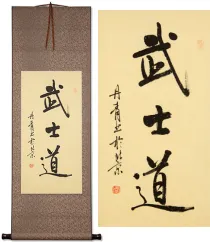
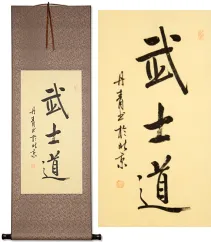
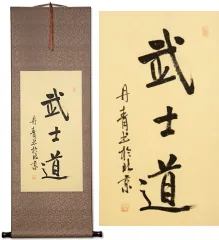
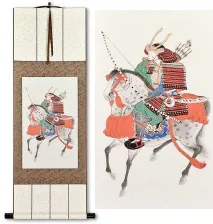
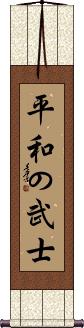
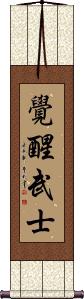
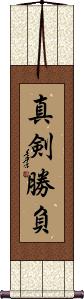
Custom Samurai Japanese Calligraphy Wall Scroll

We have many options to create artwork with Samurai Japanese Kanji on a wall scroll or portrait.


Quick links to words on this page...

  1. Samurai
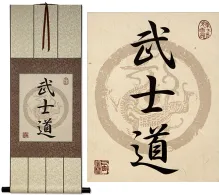
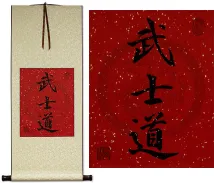
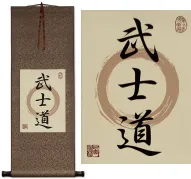
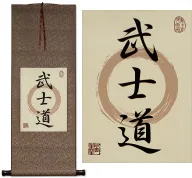
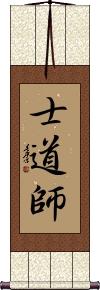
  2. Bushido / The Way of the Samurai
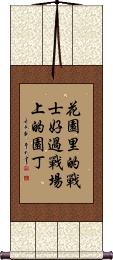
  3. In Flowers the Cherry Blossom, In Men the Samurai
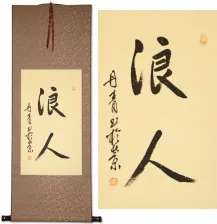
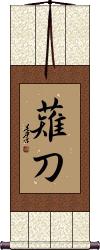
  4. Ronin / Masterless Samurai
  5. Benevolence
  6. Bravery / Courage
  7. Fighter
  8. Honesty
  9. Honor
10. Jujitsu / Jujutsu
11. Justice / Rectitude / Right Decision
12. Katana
13. Kenjutsu / Kenjitsu
14. Loyalty / Faithful / Devoted
15. Musashi
16. Ninja
17. Respect
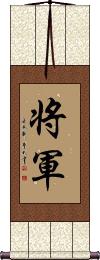
18. Shogun / Japanese General
19. Warrior
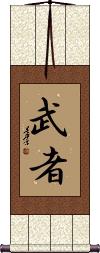
20. Warrior / Musha
21. Warrior / Fighter

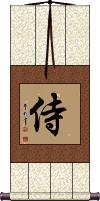
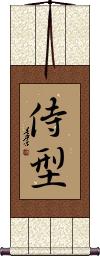
Samurai

shì
samurai
侍

In Japanese, this character represents the warriors that attempted to hold peace when there was no Emperor in Japan. Be cautious though, as it is an old way to express "servant" or "waiter" in Chinese and Korean. Of course, if you are a samurai, you are a servant to your Shogun-ate, Lord, or the people (which is the root meaning).

See Also...  Warrior

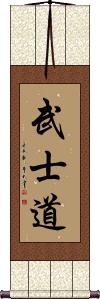
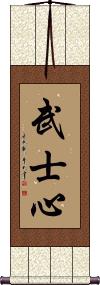
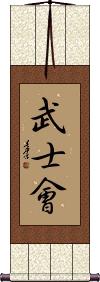
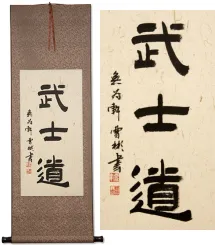
Bushido / The Way of the Samurai

wǔ shì dào
bushido
무사도
武
士
道

The Code of the Samurai

Sometimes called "The Seven Virtues of the Samurai", "The Bushido Code", or "The Samurai Code of Chivalry".

This would be read in Chinese characters, Japanese Kanji, and old Korean Hanja as "The Way of the Warrior", "The Warrior's Way", or "The Warrior's Code".

It's a set of virtues that the Samurai of Japan and ancient warriors of China and Korea had to live and die by.

See our page with just Code of the Samurai / Bushido here

See Also...  Warrior

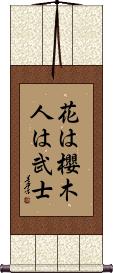
In Flowers the Cherry Blossom, In Men the Samurai

Hana wa sakura hito wa bushi

hana wa sakura hito wa bushi
人
な
武
士
花
な
櫻
木

Characters shown
above are read
vertically, starting
from the right

This phrase simply reads, "[In] Flowers it's Cherry Blossoms, [In] Men it's Warriors".

This is meant to say that of all the flowers in the world, the cherry blossom is the best. And of all men in the world, the Samurai or Warrior is the best

This phrase has been around for a long time. It's believed to have been composed sometime before the Edo Period in Japan (which started in 1603).

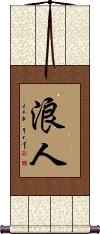
Ronin / Masterless Samurai

làng rén
rou nin
낭인
浪
人

The Ronin have no master - The most famous are the 47 ronin created after their Lord committed suicide. This term was not exactly a positive title for the Samurai of ancient Japan. However, in recent years, movies and video games have glorified the term Ronin.

In Chinese, this term has the original meaning of a hobo, vagabond or ruffian.
In Korean Hanja, these characters would be read as adventurer, wanderer, someone without a steady job, or someone who is wasting away time.

In modern Japan, this term is used as a nickname for a high school student who has failed a college entry exam (and is trying again).

In Chinese and Korean, the Japanese definition of "Masterless Samurai" is known because of the historical context, even in Japanese, the literal translation is closer to the Chinese and Korean definitions shown above.

This will make a fine wall scroll if you are a fan of the Ronin, or see yourself as a Ronin of sorts. However, please think twice before getting a Ronin tattoo!

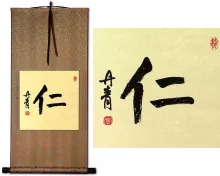
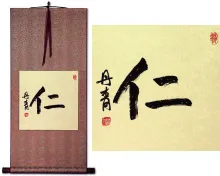
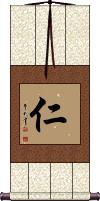
Benevolence

rén
jin
仁

Beyond "benevolence" word can be also be defined as "charity" or "mercy" depending on context.

The meaning suggests that one should pay alms to the poor, care for those in trouble, and take care of his fellow man (or woman).

This is one of the five tenets of Confucius. In fact, it is a subject in which Confucius spent a great deal of time explaining to his disciples.

I have also seen this benevolent-related word translated as perfect virtue, selflessness, love for humanity, humaneness, goodness, good will, or simply "love" in the non-romantic form.

This word is so important to me that I named my second daughter with this character. Her name is "Renni" which means "Benevolent Girl".
-Gary.


This is also a virtue of the Samurai Warrior
See our page with just Code of the Samurai / Bushido here

See Also...  Love | Altruism | Kindness | Charity | Brotherhood | Confucius

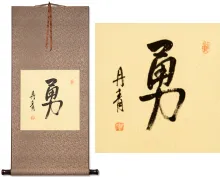
Bravery / Courage

Single Character for Courage

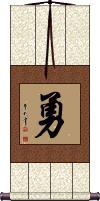
yǒng
isamu / yu-
勇

This character can be translated as bravery, courage, or fearless in Chinese, Japanese and Korean. This is the simplest form to express courage or bravery, as there is also a two character form which starts with this same character.

This character can also be translated as brave, daring, fearless, plucky or heroic.

This is also a virtue of the Samurai Warrior
See our page with just Code of the Samurai / Bushido here

See Also...  Bravery | Courage

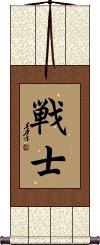
Fighter

Warrior / Soldier

zhàn shì
sen shi
전사
戰
士

The first character means war, warfare, or battle.
The second character means soldier, officer, man or pawn.

This is how to write "fighter" in Chinese, ancient Japanese Kanji and old Korean Hanja. This word can also mean soldier or warrior, but there are better terms for those two ideas. This one is more specifically "fighter" or "one who fights". This is an odd selection for a wall scroll, unless you are a boxer, ultimate fighter, or otherwise participate in combat sports.

Other translations include combatant or champion.

戦Note that after WWII, the first Kanji was reformed/simplified. This modern Japanese version is shown to the right. If you want this version, click on the Kanji to the right, instead of the button above.

See Also...  Knight | Army | Marines | Warrior | Soldier

Back to the top of this page

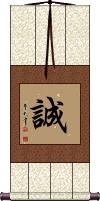
Honesty

chéng
makoto
誠

This character means truth, faith, fidelity, sincerity, trust and/or confidence.

This is also a virtue of the Samurai Warrior
See our page with just Code of the Samurai / Bushido here

See Also...  Sincerity | Sincere

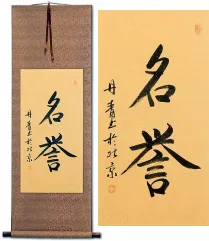
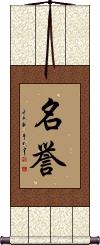
Honor (Japanese / Simplified version)

míng yù
meiyo
명예
名
誉

This version of honor is about having or earning the respect of others and about your reputation. It is the status of being worthy of honor (not to be confused with doing honorable things or specific actions - see our other "honor" listing for that).

譽Both modern Japanese and modern mainland Chinese use the same simplified version of the second character of honor. We will automatically use the simplified version shown to the left, unless you make a special request for the traditional second character as shown to the right (just click on that character to order the traditional Chinese version). Before WWII, both Japan and China used the traditional form, but modern Japanese and Chinese are more likely to identify this simplified form. Koreans still use the traditional form when they are not writing in their modern Hangul glyphs.

This is also a virtue of the Samurai Warrior
See our page with just Code of the Samurai / Bushido here

See Also...  Integrity | Respect

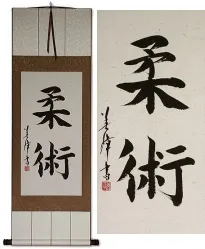
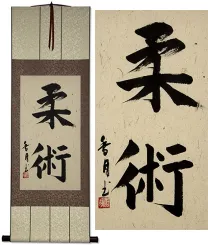
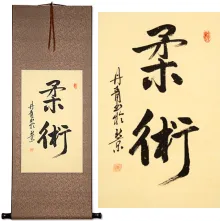
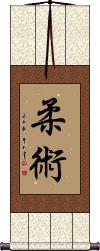
Jujitsu / Jujutsu

róu shù
juu jutsu
유술
柔
術

This word has been somewhat incorrectly spelled and pronounced "Jujitsu" for some time in the English-speaking world. The correct Japanese Romaji is Jujutsu or Juujutsu.

A little background on the word: By combining the Kanji pronounced "Ju" (which means flexible, pliable, gentle, yielding) with the Kanji pronounced "Jutsu" (which means art, or technique), we get a meaning that can be translated as "flexible technique", "gentle art" or "yielding technique".
This word does make sense in Chinese as well, although pronounced, "rou shu" in China.

The Jujutsu system has a history in Japan that started well-before the 1600's. Some see this style as a variation of the "Empty Hand Method" (Karate-do). Even the samurai of old used some Jujutsu methods in defending themselves with their unarmed hands against weapons that could pierce their heavy armor.

There are convoluted relationships between various schools and systems of martial arts, but it's generally accepted that Jujutsu led to the development of Judo and a few other variations.

Back to the top of this page

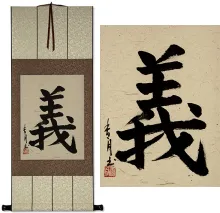
Justice / Rectitude / Right Decision


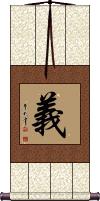
gi
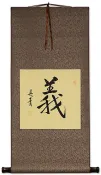
義

This is about doing the right thing or making the right decision, not because it's easy, but because it's ethically and morally correct.
No matter the outcome or result, one does not lose face if tempering proper justice.

This character can also be defined as righteousness, justice, morality, honor, or "right conduct". In more a more expanded definition, it can mean loyalty to friends, loyalty to the public good, or patriotism. This idea of loyalty and friendship comes from the fact that you will treat those you are loyal to with morality and justice.

This is also one of the five tenets of Confucius doctrine.

儀There's also an alternate version of this character sometimes seen in Bushido or Korean Taekwondo tenets. It's just the addition of a radical on the left side of the character. If you want this version, click on the image to the right instead of the button above.

This is also a virtue of the Samurai Warrior
See our page with just Code of the Samurai / Bushido here

See Also...  Judgement | Impartial | Confucius Tenets

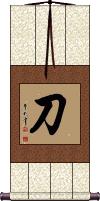
Katana

Japanese Samurai Sword

dāo
katana
刀

This is the Japanese Kanji for "sword". This refers to the style of sword carried by warriors, samurai, and shogun of ancient Japan.

With the pacification of Japan, such swords are now only used for ceremony and decoration. The true art of sword-smithing is all but lost in Japan with new sword production dedicated to making inexpensive replicas for the tourist and foreign market.

For those of you that want to ask whether I can get you a real antique sword. Let me tell you that most real Asian swords were melted down after WWII in Japan, and during the Great Leap Forward in China. Any remaining swords are family heirlooms that nobody will part with.

Please carefully note that the Japanese kanji character shown above is only for a Japanese audience. In China, this character means "knife". See our other entry for "sword" in Chinese.
Note: This can mean knife, sword, or blade in Korean, depending on context.

See Also...  Sword

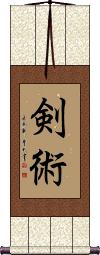
Kenjutsu / Kenjitsu

jiàn shù
kenjutsu
검술
剣
術

In Japanese, the modern definition, using simple terms is "A martial art involving swords" or "The art of the sword". However, in Chinese, this is the word for fencing (as in the Olympic sport).

I will suppose that you want this for the Japanese definition which comes from skills and techniques developed in the 15th century. At that time, Kenjutsu (or swordsmanship) was a strictly military art taught to Samurai and Bushi (soldiers). The fact that swords are rarely used in military battles anymore, and with the pacification of Japan after WWII, Kenjutsu is strictly a ceremonial practice often studied as a form of martial art (more for the discipline aspect rather than practical purpose).

Language note: The Korean definition is close the Japanese version described above. However, it should be noted that this can mean "fencing" depending on context in Japanese, Chinese, and Korean.

術Character alternative notes: Japanese tend to write the second Kanji in the form shown to the right. It is a very slight difference, and the two forms were merged under the same computer font code point (thus you will not see the Japanese version in Kanji images shown during the options selection process). If you choose our Japanese Master Calligrapher, this will be automatically written in the proper Japanese form.
Since there are about 5 common ways to write the sword character, if you are particular about which version you want, please note that in the "special instructions" when you place your order.

Romanization note: This term is often Romanized as Kenjitsu, however, following the rules of Japanese Romaji, it should be Kenjutsu.

Back to the top of this page

Loyalty / Faithful / Devoted

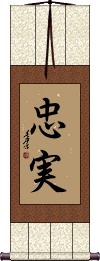
chuujitsu
忠
実

This is a Japanese way to write "Loyalty" - it also contains the ideas of being faithful, devoted, true, and obedient.

The second character is a modified form only used in the Japanese lexicon, however, Chinese speakers can easily guess the meaning.

This is also a virtue of the Samurai Warrior
See our page with just Code of the Samurai / Bushido here

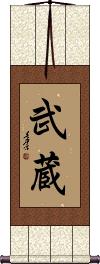
Musashi

The most famous Samurai

mu sashi
武
蔵

This is the short title for a man long in legend. Miyamoto Musashi is probably the most famous Samurai in all of Japanese history. While coming from a lower class, his new sword and fighting techniques put him on par with the best that feudal Japan had to offer. His long career started with his first duel was at age 13!

He is credited both with using two swords at once, and never losing a single battle in his career. After becoming a Buddhist, and getting older, like many old warriors, he took up a peaceful and solitary life until his death around 1645 A.D.

Note: Technically, Musashi is his given name, and Miyamoto is his surname. However, it's suggested that he assumed both of these names, and also had a few other names at childhood, as well as being given a Buddhist name. It's hard to know what to call him, as with most Kanji, there are multiple pronunciations. The characters for Musashi can also be pronounced "Takezō". But, everyone in modern times seems to know him by the name Musashi.

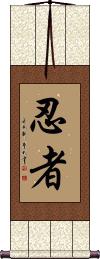
Ninja

rěn zhě
ninja
忍
者

In feudal Japan, ninja or shinobi (literally, "one who is concealed" or "one that endures") were sometimes assassins and agents of espionage. The ninja, like samurai, followed their own special code of conduct.

The role of the ninja has been romanticized in many American movies (and to a lesser extent in Japanese movies). Because the ninja-craze has taken off in the west, Japan has followed the trend and you'll see plenty of ninja-related imagery in Japan.

忍Note that when writing this as Kanji, Japanese will tend to write the first character in the form shown to the right. If you select our Japanese master calligrapher, please expect that form. Our Chinese calligraphers can also write it in the Japanese form, but only if you request it (in the special instructions about your order during checkout).

See Also...  Warrior | Ninjitsu

Back to the top of this page

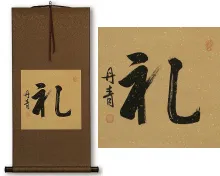
Respect (Japanese / Simplified version)

Can also be a sign of gratitude


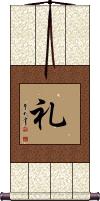
rei
례 or 예
礼

We show respect by speaking and acting with courtesy. We treat others with dignity and honor the rules of our family, school and nation. Respect yourself, and others will respect you.

This is also one of the five tenets of Confucius.

This character can also be translated as propriety, good manners, politeness, rite, worship or an expression of gratitude.

Chinese RespectPlease note that Japanese use a simplified version of the character for respect - it also happens to be the same simplification used in mainland China. Click on the character to the right if you want the Traditional Chinese version.

This is also a virtue of the Samurai Warrior
See our page with just Code of the Samurai / Bushido here

See Also...  Confucius

Shogun / Japanese General

jiāng jūn
shougun
장군
将
軍

In the west, when someone mentions "Shogun" we may be filled with thoughts of gallant warriors. Some might even think of the TV mini-series with Richard Chamberlain. Often westerners use the words Samurai and Shogun interchangeably. So I will clear it up really quickly...

Shogun in the simplest definition is a General. You could also use words such as commander, lord, overlord, highest ranking, or commanding officer, since "Shogun" has held some slightly ambiguous meanings at times in Japanese history.

Sometimes a Shogun was a general, other times he was the leader of a military government in Japan.

Variants of the same characters are used in China for the rank and title of a General of the People's Liberation Army (and the same term and characters have been used for the last 2200 years since the Qin Dynasty).

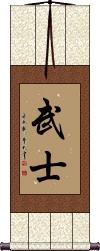
Warrior

wǔ shì
bu shi
무사
武
士

The first character is the spirit or essence of a warrior. The second character means soldier, officer, or official. This character is also used appropriately enough to describe a piece of a chess game. This can also be translated as soldier, cavalier, palace guard, or samurai and sometimes as knight. I've occasionally seen this translated as strong man or tough man (gender not necessarily implied).

By far, this is the most common way to write warrior in Chinese characters, Japanese Kanji, and old Korean Hanja.

Note: In Japanese, this is Bushi, as in Bushido.

See Also...  Knight | Army | Marines

Back to the top of this page

Warrior / Musha

mu sha
武
者

This is an alternate title for a warrior or samurai in Japanese. It is often romanized as "Musha".

The literal meaning of these Kanji is "war person", "military person", or "martial person".

Warrior / Fighter

sen shi
戦
士

This is an alternate title for warrior, soldier, fighter, or combatant in Japanese. From Japanese, this is often romanized as "Senshi".

See Also...  Knight | Army | Marines


You should look at these ready-to-ship pieces of artwork:

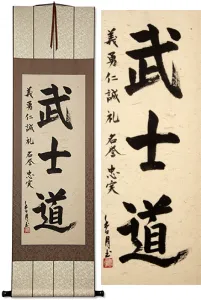
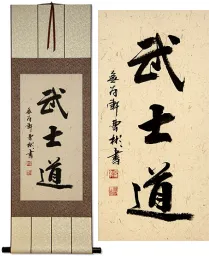
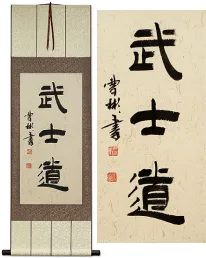
Bushido Code of the Samurai - Japanese Calligraphy Wall Scroll

Bushido Code of the Samurai
Japanese Calligraphy Wall Scroll

The way of the warrior. Created by a master calligrapher in Nara, Japan.

Typical Gallery Price: $200.00

Your Price: $98.88 
Euro €74.97 
CAD $99.15 

GBP £62.70 
AUD $92.82 


MORE INFO 

Bushido Code of the Samurai - Japanese Calligraphy Wall Scroll

Bushido Code of the Samurai
Japanese Calligraphy Wall Scroll

The way of the warrior. Created by a master calligrapher in Nara, Japan.

Typical Gallery Price: $200.00

Your Price: $98.88 
Euro €74.97 
CAD $99.15 

GBP £62.70 
AUD $92.82 


MORE INFO 

BRAVERY / COURAGE Chinese / Japanese Kanji Portrait

BRAVERY / COURAGE Chinese / Japanese Kanji Portrait

This is courage or bravery in Chinese, Japanese Kanji, and old Korean Hanja. It's one of the main tenets of the Bushido Code (The Way of the Samurai).

Typical Gallery Price: $40.00

Your Price: $16.88 

Euro €12.80 
CAD $16.93 

GBP £10.70 
AUD $15.85 


MORE INFO 

BRAVERY / COURAGE Chinese / Japanese Kanji Wall Scroll

BRAVERY / COURAGE Chinese / Japanese Kanji Wall Scroll

This is courage or bravery in Chinese, Japanese Kanji, and old Korean Hanja. It's one of the main tenets of the Bushido Code (The Way of the Samurai).

Typical Gallery Price: $65.00

Your Price: $29.88 

Euro €22.66 
CAD $29.96 

GBP £18.95 
AUD $28.05 


MORE INFO 

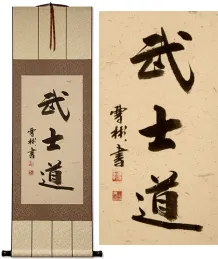
Bushido Code of the Samurai - Japanese Calligraphy Wall Scroll

Bushido Code of the Samurai
Japanese Calligraphy Wall Scroll

Discount Asian Art
Reason for discount: Very minor wrinkle

Typical Gallery Price: $60.00

Your Price: $25.00 

Euro €18.96 
CAD $25.07 

GBP £15.85 
AUD $23.47 


MORE INFO 


A nice Chinese calligraphy wall scroll

The scroll that I am holding in this picture is a "medium size"
4-character wall scroll.
As you can see, it is a great size to hang on your wall.
(We also offer custom wall scrolls in larger sizes)

A professional Chinese Calligrapher

Professional calligraphers are getting to be hard to find these days.
Instead of drawing characters by hand, the new generation in China merely type roman letters into their computer keyboards and pick the character that they want from a list that pops up.

There is some fear that true Chinese calligraphy may become a lost art in the coming years. Many art institutes in China are now promoting calligraphy programs in hopes of keeping this unique form of art alive.

Trying to learn Chinese calligrapher - a futile effort

Even with the teachings of a top-ranked calligrapher in China, my calligraphy will never be good enough to sell. I will leave that to the experts.


A high-ranked Chinese master calligrapher that I met in Zhongwei

The same calligrapher who gave me those lessons also attracted a crowd of thousands and a TV crew as he created characters over 6-feet high. He happens to be ranked as one of the top 100 calligraphers in all of China. He is also one of very few that would actually attempt such a feat.


Zippo Love Chinese Samurai Z20839
Daimyo Deep Sea Dragon Musashi Samurai Katana Sword Full Tang ... Zippo Chinese Samurai Luck Z20331. Zippo Higgen Anime Dragon Z21067 ...

Chinese Sword - Chinese Weapon
Authentic Japanese Samurai Swords, We have the oriental sword you want, including katana swords, Chinese Swords & Weapons, ninja swords & weapons

The Jewish Samurai: A Test of Faith
The Jewish Samurai: A Test of Faith ... Chinese samurai also opened a matchbox and out buzzed a fly. Whoosh, whoosh, whoosh, whoosh! ...

Jewish Samurai
A year passes and only 3 people show up, a Japanese Samurai, a Chinese ... The emperor then asks the Chinese Samurai to come in and demonstrate. ...

Chief Samurai -- ThirdAge
Japanese, Chinese and Jewish Samurai compete for the head position. ... issued the same challenge to the Chinese samurai, to come in and demonstrate why ...

Russkiy Samurai Almira, Crested Database - Chinese Crested dog
Hairless Chinese Crested dog, Russkiy Samurai AlmiraBred by: Russkiy Samurai, Russian Federation ... Contact us Help. Chinese Crested hairless & powderpuff. ...

idleriot.com: Specials - The New Samurai
... the Chinese samurai to come in and demonstrate why he should be head samurai. The Chinese samurai opens up a matchbox and out pops a little fly. WHOOOOOOSH. ...

Authentic Japanese Katana Swords for Sale | Real Samurai Weapons, Chinese Swords
Samurai weapons and Chinese swords from Paul Chen Dynasty Forge Thaitsuki ... Featured Japanese Katana Swords, Chinese Swords and Samurai Weapons... Click To Enlarge ...

Jewish Samurai
There once was a powerful Japanese emperor who needed a new chief samurai. ... "The emperor then issued the same challenge to the Chinese samurai, to ...

Samurai Swords - Real, Authentic, Japanese Samurai Swords - Paul Chen, Thaitsuki, Cold Steel, Ninja & more !
SAMURAI SWORDS,real,authentic,oriental Japanese swords,katanas,Paul Chen,Chinese ... Cold Steel Chinese War Sword. Cold Steel Chisa Katana Samurai ...

Daily Joke
... issued the same challenge to the Chinese samurai, to come in and demonstrate why ... The Chinese samurai also opened a matchbox and out buzzed a fly. ...

Russkiy Samurai Yasmina, Crested Database - Chinese Crested dog
Chinese Crested dog Powderpuff, Russian Kennel Federaston Champion(RKFCH), Russian Champion(RUSCH) Russkiy Samurai YasminaBred by: Russkiy Samurai, Russian Federation

Want Ad: "Calling all Samurai"
The emperor then asked the Chinese Samurai to come in and demonstrate. The Chinese Samurai also opened a matchbox and out popped a fly. Whoosh, whoosh goes his sword. ...

Joke
The emperor then asks the Chinese Samurai to come in and demonstrate. The Chinese Samurai opens a match box and out pops a fly. Whoosh whoosh. ...

Jewish Samurai
"The emperor then issued the same challenge to the Chinese samurai, to. come in and demonstrate why he should be chosen. The Chinese samurai ...

Samurai Archives Japanese History Page
... details of the samurai warriors and battles of Japanese History. ... Samurai Kanji Names - Glossary - Submit an Article - Downloads ... SAMURAI ARCHIVES ONLINE ...

Samurai
... the Japanese warriors: ... samurai (or bushi) were the members of the military class, the ... Samurai Archives. The Place for all Japanese Samurai ...

Japanese Samurai sword collector
Japanese Samurai swords - Sword collector interested in buying ... owners wishing to sell their Japanese Samurai sword or swords to receive ...

Japanese Samurai
The legendary Samurai warriors of ancient Japan ... Japanese Samurai warriors first came to be in the 12th century, during the ...

Japanese Samurai Armor, Samurai Armour, and Samurai Yoroi, Authentic Real Suits of Armor
Tokyo store with Japanese Samurai Armor and Armour, in Japan for 34 years! ... Very attractive, 62 plate helmet, japanese samurai suit of armor, about 200 years old ...

Japanese Swords, Switchblade Knife, Katana, Highlander, Medieval, Samurai Sword Set for Sale
Offers Japanese Samuri swords, marial art weapons, switchblade knife, medieval ... re a collector of Japanese swords, or need a Samurai sword to complete your ...

Samurai
Japanese Chainmail. Castles of Japan. Origins of the Samurai. Brief History of the Samurai ... Mon: The Japanese Family Crest by W.M. Hawley and K. K. ...

L'Asie Exotique - Japanese Samurai Dolls
Objects of use and ritual from Japan, China, Burma, Thailand, Cambodia, India, ... The samurai tradition is unique to Japanese history. ...

Japanese Samurai Helmets, Kabuto, myochin, and saotome kabuto, somen menpo mempo for samurai armor armour
... armor, japanese armour, japanese yoroi, Samurai Armor, Samurai Suits of Armor. ... affordable genuine real authentic antique japanese samurai helmets and kabuto ...

Japanese Samurai Swords Hawaii
Sale and restoration of Japanese samurai swords both antique and contemporary (shinsakuto) ... The Japanese Samurai Sword has long been recognized as the best ...

Japanese Samurai Swords and Samurai Katana and Tachi from Tokyo Japan
samurai swords, japanese swords, tachi, katana, wakizashi, shirasaya, ... Japanese Samurai Swords, Katana, Sword Blades, Tanto, Wakizashi, Tachi in ...

SAMURAI HISTORY
... of Japanese longbows and of the conventional Samurai cavalry against ... century, swords and spears became the mainstream among Japanese samurai warlords. ...

www.samuraisword.com Finest Japanese Swords (Nihonto) , Museum Quality Pieces, For Sale; Free Evaluation
... Japanese Sword ... Juyo Token Swords _ Fine Japanese Swords. New Sword Preview's _ ... Fine Japanese Prints _ Custom Sword Stands. Fine Rarities. Antique Guns _ ...

Japanese Samurai Armor (armour) - Authentic Reproduction
... functional Japanese Samurai Battle Armor (kikou, armour), Samurai Helmets ... The Japanese suit of Samurai Armor was only worn by the highest military class ...

SAMURAI
... samurai culture, samurai pictures, samurai swords and samurai in popular culture. ... Japanese Culture. Where to buy Samurai culture ...


See: Our list of specifically Japanese Kanji Calligraphy Wall Scrolls. And, check out Our list of specifically old Korean Hanja Calligraphy Wall Scrolls.

The following table is only helpful for those studying Chinese (or Japanese), and perhaps helps search engines to find this page when someone enters Romanized Chinese or Japanese

TitleCharacters
Simplified
Traditional
Japanese Romaji
(Romanized Japanese)
Various forms of Romanized Chinese
Samurai
samuraishì
shi
shih
shi4
shi
Bushido / The Way of the Samurai武士道
武士道
bushidowǔ shì dào
wu shi dao
wu shih tao
wu3 shi4 dao4
wushidao
In Flowers the Cherry Blossom, In Men the Samurai花な櫻木人な武士
花な櫻木人な武士
hana wa sakura hito wa bushi
hanawasakurahitowabushi
n/a
Ronin / Masterless Samurai浪人
浪人
rou nin
rounin
ro nin
làng rén
lang ren
lang jen
lang4 ren2
langren
Benevolence
jinrén
ren
jen
ren2
ren
Bravery / Courage
isamu / yu-
isamu/yu-
yǒng
yong
yung
yong3
yong
Fighter战士 / 戦士
戰士
sen shi
senshi
zhàn shì
zhan shi
chan shih
zhan4 shi4
zhanshi
Honesty
makotochéng
cheng
ch`eng
cheng2
cheng
cheng
cheng
Honor (Japanese / Simplified version)名誉
名譽
meiyomíng yù
ming yu
ming yü
ming2 yu4
mingyu
Jujitsu / Jujutsu柔术
柔術
juu jutsu
juujutsu
ju jutsu
róu shù
rou shu
jou shu
rou2 shu4
roushu
Justice / Rectitude / Right Decision
gi
yi
i
yi4
yi
Katana
katanadāo
dao
tao
dao1
dao
Kenjutsu / Kenjitsu剑术
剣術
kenjutsujiàn shù
jian shu
chien shu
jian4 shu4
jianshu
Loyalty / Faithful / Devoted忠実
忠實
chuujitsu
chujitsu
n/a
Musashi武蔵
武蔵
mu sashi
musashi
n/a
Ninja忍者
忍者
ninjarěn zhě
ren zhe
jen che
ren3 zhe3
renzhe
Respect (Japanese / Simplified version)
rei
li
li3
li
Shogun / Japanese General将军
將軍
shougun
shogun
jiāng jūn
jiang jun
chiang chün
jiang1 jun1
jiangjun
Warrior武士
武士
bu shi
bushi
wǔ shì
wu shi
wu shih
wu3 shi4
wushi
Warrior / Musha武者
武者
mu sha
musha
n/a
Warrior / Fighter戦士
戦士
sen shi
senshi
n/a

If you have not set up your computer to display Chinese, the characters in this table probably look like empty boxes or random text garbage.
This is why I spent hundreds of hours making images so that you could view the characters in the "samurai" listings above.
If you want your Windows computer to be able to display Chinese characters you can either head to your Regional and Language options in your Win XP control panel, select the [Languages] tab and click on [Install files for East Asian Languages]. This task will ask for your Win XP CD to complete in most cases. If you don't have your Windows XP CD, or are running Windows 98, you can also download/run the simplified Chinese font package installer from Microsoft which works independently with Win 98, ME, 2000, and XP. It's a 2.5MB download, so if you are on dial up, start the download and go make a sandwich.

Some people may refer to this entry as Kanji, Characters, in Mandarin Chinese, Characters, in Chinese Writing, in Japanese Writing, in Asian Writing, Ideograms, Chinese symbols, Hieroglyphics, Glyphs, in Chinese Letters, Hanzi, in Japanese Kanji, Pictograms, in the Chinese Written-Language, or in the Japanese Written-Language.


Copyright Oriental Outpost 2002-2011   -   All Rights Reserved
Image Use Policy Privacy Policy