Many custom options...


And formats...



Not what you want?
Try other similar-meaning words, fewer words, or just one word.
His Name in Chinese / Japanese...
Buy a His Name calligraphy wall scroll here!
Personalize your custom “His Name” project by clicking the button next to your favorite “His Name” title below...
If you would like your name in Chinese calligraphy and it does not appear below, please contact me, and I'll transliterate and add your name to our website database for you.
1. Musashi
2. Zhang Fei
3. Confucius
4. Genghis Khan
6. Engineer
7. Undaunted After Repeated Setbacks
8. A sly rabbit has three openings to its den
9. Bodhidharma
10. God of Warcraft
11. Khan
12. Bruce Lee
13. Mountain Travels Poem by Dumu
14. Jackie Chan
15. Guan Yu
16. Dogen
17. Mencius
19. Che Guevara
Musashi
The most famous Samurai
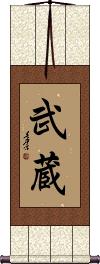
Miyamoto Musashi is probably the most famous Samurai in all of Japanese history.
武蔵 is the short title for a man long in legend. While coming from a lower class, his new sword and fighting techniques put him on par with the best that feudal Japan had to offer. His long career started with his first duel at age 13!
He is credited with using two swords at once and never losing a single battle in his career. After becoming a Buddhist, and getting older, like many old warriors, he took up a peaceful and solitary life until his death around 1645 A.D.
Note: Technically, Musashi is his given name, and Miyamoto is his surname. However, it's suggested that he assumed both of these names and had a few other names in childhood, as well as being given a Buddhist name. It's hard to know what to call him, as with most Kanji, there are multiple pronunciations. The characters for Musashi can also be pronounced Takezō. But everyone in modern times seems to know him by the name Musashi.
Zhang Fei
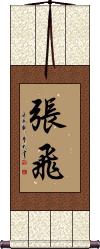
張飛 is the name of General Zhang Fei, of the Shu Kingdom. He was blood-brother of Liu Bei in the semi-historical novel “Romance of the Three Kingdoms.” Zhang Fei is famous for his heroic and fearsome fighting and his love of wine.
In Japanese, this can be the name Chouhi.
Confucius
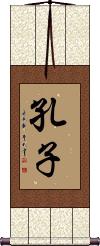
孔子 is how to write the name of the great sage, known in the West as Confucius.
His real name is Kongzi (The name Confucius is a westernized version of his name - his family name is Kong, and “zi” was added as a title of distinction).
He lived some 2500 years ago in Qufu, a town in modern-day Shandong Province of Northern China (about 6 hours south of Beijing by bus). He was a consort to Emperors, and after his death, the impact of his philosophies still served to advise emperors, officials, and common people for generations.
Also during these thousands of years, the Kong family remained powerful in China, and the Kong estate was much like the Vatican in Rome. The Kong estate existed as if on sovereign ground with its own small garrison of guards and the privileges of a kingdom within an empire.
This was true up until the time the Kong family had to flee to Taiwan in 1949 when the Red Army took victory over the Nationalists during the Revolution. The home of Confucius was later razed and all statues were defaced or stolen during the Cultural Revolution. Finally, after years of smearing his name and image, it is once again okay to celebrate the teachings of Confucius in mainland China.
Known as Khổng Tử in Vietnamese.
Genghis Khan
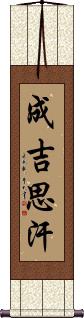
成吉思汗 is the full title for Genghis Khan (1162-1227).
Khan is the title of his position as emperor. Genghis is his name.
In Japan, this also means Genghis Khan but is sometimes used to refer to a specific Japanese mutton and vegetable dish or the slotted dome cast iron grill for preparing this dish.
Accountant / CPA
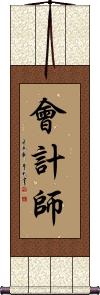
會計師 is the occupational or legal title of an accountant in Chinese and Korean.
In Asia, particular studies and certifications are needed to obtain this title. Therefore, this is the closest match to the English term for Certified Public Accountant. Such a professional might have a sign on his desk or a name badge that has his/her name on it and this title in Chinese characters. It's not too common to see this on a wall scroll in Asia, but you can take such liberties in the west.
Engineer
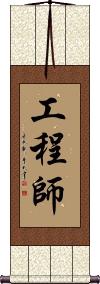
工程師 is the occupational title of an engineer in Chinese.
In China, an engineer might have a sign on his desk or a name badge with his/her name on it and this title. It's not too common to see this on a wall scroll in China, but you are allowed to take such liberties in the west.
Note that in China, a wall scroll like this is sometimes given to a teacher who builds (engineers) the spirits of their students. It's a way to honor a teacher, and in this case, the meaning departs from an occupational title.
Undaunted After Repeated Setbacks
Persistence to overcome all challenges
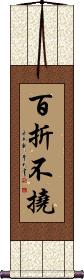
百折不撓 is a Chinese proverb that means “Be undaunted in the face of repeated setbacks.”
More directly translated, it reads, “[Overcome] a hundred setbacks, without flinching.” 百折不撓 is of Chinese origin but is commonly used in Japanese and somewhat in Korean (same characters, different pronunciation).
This proverb comes from a long, and occasionally tragic story of a man that lived sometime around 25-220 AD. His name was Qiao Xuan, and he never stooped to flattery but remained an upright person at all times. He fought to expose the corruption of higher-level government officials at great risk to himself.
Then when he was at a higher level in the Imperial Court, bandits were regularly capturing hostages and demanding ransoms. But when his own son was captured, he was so focused on his duty to the Emperor and the common good that he sent a platoon of soldiers to raid the bandits' hideout, and stop them once and for all even at the risk of his own son's life. While all of the bandits were arrested in the raid, they killed Qiao Xuan's son at first sight of the raiding soldiers.
Near the end of his career, a new Emperor came to power, and Qiao Xuan reported to him that one of his ministers was bullying the people and extorting money from them. The new Emperor refused to listen to Qiao Xuan and even promoted the corrupt Minister. Qiao Xuan was so disgusted that in protest, he resigned from his post as minister (something almost never done) and left for his home village.
His tombstone reads “Bai Zhe Bu Nao” which is now a proverb used in Chinese culture to describe a person of strong will who puts up stubborn resistance against great odds.
My Chinese-English dictionary defines these 4 characters as “keep on fighting despite all setbacks,” “be undaunted by repeated setbacks,” and “be indomitable.”
Our translator says it can mean “never give up” in modern Chinese.
Although the first two characters are translated correctly as “repeated setbacks,” the literal meaning is “100 setbacks” or “a rope that breaks 100 times.” The last two characters can mean “do not yield” or “do not give up.”
Most Chinese, Japanese, and Korean people will not take this absolutely literal meaning but will instead understand it as the title suggests above. If you want a single big word definition, it would be indefatigability, indomitableness, persistence, or unyielding.
See Also: Tenacity | Fortitude | Strength | Perseverance | Persistence
A sly rabbit has three openings to its den
-or- The crafty rabbit has three different entrances to its lair
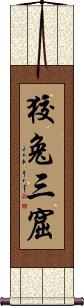
狡兔三窟 speaks to the cunning character of a sly rabbit. Such a rabbit will not have just one hole but rather a few entrances and exits from his liar.
About 2,250 years ago, a rich man told his assistant to go and buy something wonderful that he did not yet possess. He was a man that already had everything, so the assistant went to a local village that owed a great deal of money to the rich man. The assistant told the village elders that all debts were forgiven. All the villagers rejoiced and praised the rich man's name. The assistant returned to the rich man and told him he had purchased “benevolence” for him. The rich man was mildly amused but perhaps slightly confused by the action.
Sometime later, the rich man fell from the favor of the Emperor and was wiped out without a penny to his name. One day he was walking aimlessly and stumbled into the village where the debts had been forgiven. The villagers recognized the man and welcomed him with open arms, clothed, fed him, and gave him a place to live.
Without trying, the man had become like the sly and cunning rabbit. When his exit was blocked, he had another hole to emerge from - and was reborn. This story and idiom come from a book titled “The Amendment” - it's unclear whether this man actually existed or not. But the book did propel this idiom into common use in China.
Still today, this idiom about the rabbit is used in China when suggesting “backup plans,” alternate methods, and anyone with a good escape plan.
Bodhidharma
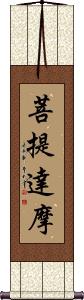
菩提達摩 is the Chinese Bodhidharma.
This refers to a man commonly known as Damo, reputed as the founder of Chan (Zen) Buddhism. His original name is believed to be Bodhitara (菩提多羅).
Note: Often, the last character is written as  versus
  .
.
God of Warcraft
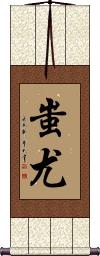
蚩尤 is the name Chi You, legendary creator of metalworking and weapons.
There is also a comet named in his honor. Some refer to him as the Chinese god of war. He is also somewhat-known in Japan as “Shiyu.”
Khan
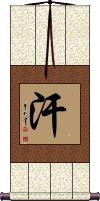
汗 is the title Khan, meaning a medieval ruler of a Tatary tribe.
Oddly, besides being a name or title, this can also mean perspiration, sweat, moisture, or condensation in Japanese and Chinese.
The most famous would be Genghis Khan, followed by his son Ögedei Khan, and grandson Khubilai Khan.
Bruce Lee
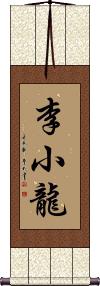
李小龍 is the real full name of Bruce Lee.
 Many people have no idea that Bruce Lee had a “real” Chinese name. In Mandarin and Cantonese, he is known as “Lǐ XiǎoLóng” and “Léi SíuLùng” respectively.
He kept his family name pronunciation (Li = Lee). 李 is a common family name that also means “plum.”
His given name 小龍 (Xiao-Long), literally means “little dragon.” 李小龍 is why you often see the character for dragon associated with Bruce Lee on various posters etc.
For a pronunciation lesson, the “X” in Romanized Mandarin is pronounced like a “sh” sound but with your tongue at the bottom of your mouth. The vowel sound in “Long” is like the English “oh,” not like the “ah” sound in the English word “long.”
If you are a big Bruce Lee fan, you should know this information, and you should have this wall scroll hanging in your room or martial arts studio.
Note: Japanese use these same Chinese characters / Kanji to write Bruce Lee's real name (with different pronunciation - which is a bit like how the name “Bruce Lee” sounds in English).
See Also: Kung Fu | Martial Arts
Mountain Travels Poem by Dumu

This poem was written almost 1200 years ago during the Tang dynasty.
It depicts traveling up a place known as Cold Mountain, where some hearty people have built their homes. The traveler is overwhelmed by the beauty of the turning leaves of the maple forest that surrounds him just as night overtakes the day, and darkness prevails. His heart implores him to stop, and take in all of the beauty around him.
First, before you get to the full translation, I must tell you that Chinese poetry is a lot different than what we have in the west. Chinese words simply don't rhyme in the same way that English or other western languages do. Chinese poetry depends on rhythm and a certain beat of repeated numbers of characters.
I have done my best to translate this poem keeping a certain feel of the original poet. But some of the original beauty of the poem in its original Chinese will be lost in translation.
Far away on Cold Mountain, a stone path leads upwards.
Among white clouds, people's homes reside.
Stopping my carriage I must, as to admire the maple forest at nights fall.
In awe of autumn leaves showing more red than even flowers of early spring.
Hopefully, this poem will remind you to stop, and “take it all in” as you travel through life.
The poet's name is “Du Mu” in Chinese that is: 
 .
.
The title of the poem, “Mountain Travels” is: 

You can have the title, poet's name, and even “Tang Dynasty” written as an inscription on your custom wall scroll if you like.
More about the poet:
Dumu lived from 803-852 AD and was a leading Chinese poet during the later part of the Tang dynasty.
He was born in Chang'an, a city in central China and the former capital of the ancient Chinese empire in 221-206 BC. In present-day China, his birthplace is currently known as Xi'an, the home of the Terracotta Soldiers.
He was awarded his Jinshi degree (an exam administered by the emperor's court which leads to becoming an official of the court) at the age of 25 and went on to hold many official positions over the years. However, he never achieved a high rank, apparently because of some disputes between various factions, and his family's criticism of the government. His last post in the court was his appointment to the office of Secretariat Drafter.
During his life, he wrote scores of narrative poems, as well as a commentary on the Art of War and many letters of advice to high officials.
His poems were often very realistic and often depicted everyday life. He wrote poems about everything, from drinking beer in a tavern to weepy poems about lost love.
The thing that strikes you most is the fact even after 1200 years, not much has changed about the beauty of nature, toils, and troubles of love and beer drinking.
Jackie Chan
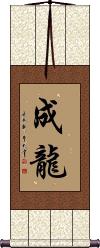
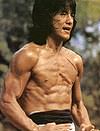 成龍 is the Chinese and Japanese stage name of Jackie Chan, a Kung Fu film and Cantonese pop star icon.
His birth name was 陳港生 (romanized as Chan Kong-sang or Can Gong-sang in Cantonese, or Chén Gǎng-shēng in Mandarin.
Guan Yu
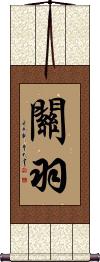
關羽 is the name Guan Yu, Army General for the Kingdom of Shu.
He is also known as Guan Gong (like saying Duke Guan or Sir Guan)
He was immortalized in the novel, “Romance of the Three Kingdoms.”
He was a fearsome fighter, also famous for his virtue and loyalty. He is worshiped by some modern-day soldiers and has the title “Warrior Saint” in China. Some believe he offers safety and protection for military servicemen.
Guan Yu lived until 219 A.D.
Dogen
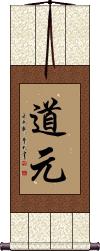
Usually, when people are looking for 道元 or “Dogen,” they are referring to the Japanese Zen monk by this name.
He lived from 1200-1253. This Dogen name or title literally means “The Way Origin” or “Beginning of the Path.” It is understood to mean “beginning of right doctrine or faith” in the context of his name and work to establish the Sōtō school of Zen in Japan.
To accomplish that task, this humble monk traveled from Japan and across China to find the more original or pure forms of Buddhism.
Mencius
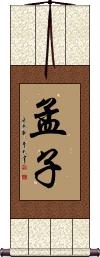
孟子 is the name Mencius in Chinese.
Mencius had the name “Mèng Kē” (孟軻) at birth. This later changed to Mèng Zǐ (孟子). He lived between 372 and 289 BCE.
Mencius was a Chinese Confucian philosopher who has often been referred to as the “Second Sage” following Confucius himself.
For disambiguation, one of the classic books of Confucianism is also titled 孟子.
Romanization of Mencius from Chinese includes Meng Tsu, Mengzi, and his original name Mengke or Meng Ko. In Japanese, he is Mōshi or Moushi.
Guan Gong / Warrior Saint
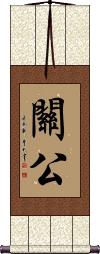
關公 is a Chinese title, Guan Gong, that means Lord Guan (The warrior saint of ancient China).
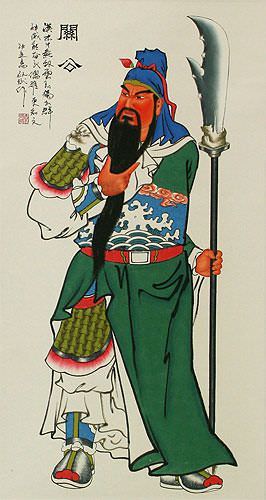 While his real name was Guan Yu / 關羽, he is commonly known by the title of Guan Gong (關公).
Some Chinese soldiers still pray to Guan Gong for protection. They would especially do this before going into battle. Statues of Guan Gong are seen throughout China.
Che Guevara
Latin American / Cuban Revolutionary
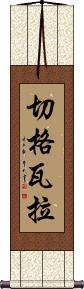
切格瓦拉 is the name “Che Guevara,” as written (transliterated) in Mandarin Chinese.
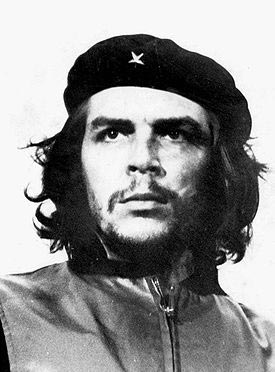 Once revered by Chinese people as a Socialist rebel, he's now just a historical figure that school children briefly learn about in China.
切格瓦拉 is because China used to be a truly-Communist/Socialist nation, and thus, other Communists and Socialists were heroes.
In modern China, with its free-market economy, those former heroes fade a little.
We are not offering the “Che” character alone, as few would associate it with Che Guevara, so you need the full name to be clear (minus Ernesto, which is his real first name).
You may want to check our...
Your name on a Chinese calligraphy scroll page
Your name on a Japanese calligraphy scroll page
...for a list of almost 5000 names.
This in-stock artwork might be what you are looking for, and ships right away...
Gallery Price: $107.00
Your Price: $59.00


The following table may be helpful for those studying Chinese or Japanese...
| Title | Characters | Romaji (Romanized Japanese) | Various forms of Romanized Chinese | |
| Musashi | 武蔵 | mu sashi / musashi | ||
| Zhang Fei | 張飛 张飞 | chou hi / chouhi / cho hi | zhāng fēi zhang1 fei1 zhang fei zhangfei | chang fei changfei |
| Confucius | 孔子 | koushi / koshi | kǒng zǐ / kong3 zi3 / kong zi / kongzi | k`ung tzu / kungtzu / kung tzu |
| Genghis Khan | 成吉思汗 | jin gi su kan jingisukan | chéng jí sī hán cheng2 ji2 si1 han2 cheng ji si han chengjisihan | ch`eng chi ssu han chengchissuhan cheng chi ssu han |
| Accountant CPA | 會計師 会计师 | kuài jì shī kuai4 ji4 shi1 kuai ji shi kuaijishi | k`uai chi shih kuaichishih kuai chi shih |
|
| Engineer | 工程師 工程师 | gōng chéng shī gong1 cheng2 shi1 gong cheng shi gongchengshi | kung ch`eng shih kungchengshih kung cheng shih |
|
| Undaunted After Repeated Setbacks | 百折不撓 百折不挠 | hyaku setsu su tou hyakusetsusutou hyaku setsu su to | bǎi zhé bù náo bai3 zhe2 bu4 nao2 bai zhe bu nao baizhebunao | pai che pu nao paichepunao |
| A sly rabbit has three openings to its den | 狡兔三窟 | jiǎo tù sān kū jiao3 tu4 san1 ku1 jiao tu san ku jiaotusanku | chiao t`u san k`u chiaotusanku chiao tu san ku |
|
| Bodhidharma | 菩提達摩 / 菩提達磨 菩提达摩 / 菩提达磨 | bo dai daru ma bodaidaruma | pú tí dá mó pu2 ti2 da2 mo2 pu ti da mo putidamo | p`u t`i ta mo putitamo pu ti ta mo |
| God of Warcraft | 蚩尤 | shi yuu / shiyuu / shi yu | chī yóu / chi1 you2 / chi you / chiyou | ch`ih yu / chihyu / chih yu |
| Khan | 汗 | kan | hàn / han4 / han | |
| Bruce Lee | 李小龍 李小龙 | bu ruu su ri buruusuri bu ru su ri | lǐ xiǎo lóng li3 xiao3 long2 li xiao long lixiaolong | li hsiao lung lihsiaolung |
| Mountain Travels Poem by Dumu | 遠上寒山石徑斜白雲生處有人家停車坐愛楓林晚霜葉紅於二月花 远上寒山石径斜白云生处有人家停车坐爱枫林晚霜叶红于二月花 | yuǎn shàng hán shān shí jìng xiá bái yún shēng chù yǒu rén jiā tíng chē zuò ài fēng lín wǎn shuàng yè hóng yú èr yuè huā yuan3 shang4 han2 shan1 shi2 jing4 xia2 bai2 yun2 sheng1 chu4 you3 ren2 jia1 ting2 che1 zuo4 ai4 feng1 lin2 wan3 shuang4 ye4 hong2 yu2 er4 yue4 hua1 yuan shang han shan shi jing xia bai yun sheng chu you ren jia ting che zuo ai feng lin wan shuang ye hong yu er yue hua | yüan shang han shan shih ching hsia pai yün sheng ch`u yu jen chia t`ing ch`e tso ai feng lin wan shuang yeh hung yü erh yüeh hua yüan shang han shan shih ching hsia pai yün sheng chu yu jen chia ting che tso ai feng lin wan shuang yeh hung yü erh yüeh hua |
|
| Jackie Chan | 成龍 成龙 | jakkii chiin jakkiichiin jaki chin | chéng lóng cheng2 long2 cheng long chenglong | ch`eng lung chenglung cheng lung |
| Guan Yu | 關羽 关羽 | guān yǔ / guan1 yu3 / guan yu / guanyu | kuan yü / kuanyü | |
| Dogen | 道元 | dou gen / dougen / do gen | dào yuán / dao4 yuan2 / dao yuan / daoyuan | tao yüan / taoyüan |
| Mencius | 孟子 | mou shi / moushi / mo shi | mèng zi / meng4 zi5 / meng zi / mengzi | meng tzu / mengtzu |
| Guan Gong Warrior Saint | 關公 关公 | guān gōng guan1 gong1 guan gong guangong | kuan kung kuankung |
|
| Che Guevara | 切格瓦拉 | qiè gé wǎ lā qie4 ge2 wa3 la1 qie ge wa la qiegewala | ch`ieh ko wa la chiehkowala chieh ko wa la |
|
| In some entries above you will see that characters have different versions above and below a line. In these cases, the characters above the line are Traditional Chinese, while the ones below are Simplified Chinese. | ||||

Successful Chinese Character and Japanese Kanji calligraphy searches within the last few hours...



