Many custom options


And formats

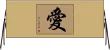

Chinese in Chinese & Japanese Calligraphy
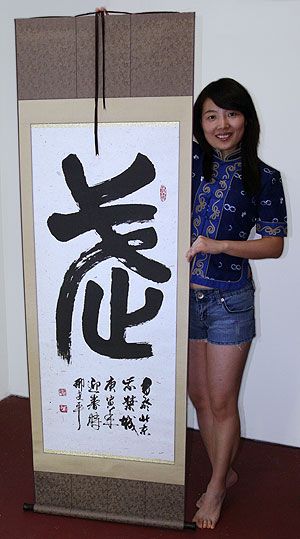
Compare the meanings and pronunciations of the entries related to Chinese below. Choose “Customize & Buy” next to your preferred entry to personalize your calligraphy wall scroll.
Martial Arts / Wushu
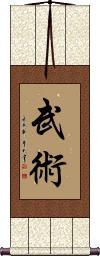
武術 is Wushu or Wu Shu, the very Chinese way to express “Martial Arts.”
Some even use this word to describe Kung Fu directly. But this is a label that fits all disciplines from Karate to Kung Fu to Taekwondo.
Note: This also means Martial Arts with the same appearance as old Korean Hanja characters and is pronounced “musul” or “musur” in Korean.
While this is best if your audience is Chinese or Korean, this also means “martial arts” in Japanese, where the popularity of this term is growing (romanized as Bujutsu or Bujitsu) in Japanese martial arts circles.
Loyalty / Devotion
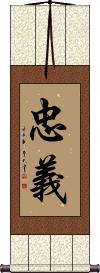
忠義 is another form of loyalty or devotion.
In Chinese, this is more specifically about being loyal and devoted to your friends.
In Japanese, this is more often used to mean loyalty to your country or nation.
Except for the slight difference noted above between Japanese and Chinese, this word is understood universally in Chinese, Japanese Kanji, and old Korean Hanja. It can also be used to describe devotion or fidelity.
It should be noted that this Kanji combination is being used less and less in modern Japan (this is a better choice if your audience is Chinese, though any Japanese person will clearly understand it).
This in-stock artwork might be what you are looking for, and ships right away...







Not the results for Chinese that you were looking for?
Below are some entries from our dictionary that may match your Chinese search:
| Characters If shown, 2nd row is Simp. Chinese |
Pronunciation Romanization |
Simple Dictionary Definition |
一 see styles |
yī yi1 i moto もと |
More info & calligraphy: One(numeric) one (chi: yī); (female given name) Moto eka. One, unity, monad, once, the same; immediately on (seeing, hearing, etc.). |
丁 see styles |
zhēng zheng1 cheng rei / re れい |
More info & calligraphy: Cho(1) (てい only) (See 甲乙丙丁) fourth rank; fourth class; fourth party (in a contract, etc.); (2) (esp. ひのと) fourth sign of the Chinese calendar; (3) (てい only) (abbreviation) (rare) (See 丁抹・デンマーク) Denmark; (surname) Rei |
丑 see styles |
chǒu chou3 ch`ou chou chuu / chu ちゅう |
More info & calligraphy: Chou(1) the Ox (second sign of the Chinese zodiac); (2) (obsolete) (See 丑の刻) hour of the Ox (around 2am, 1-3am, or 2-4am); (3) (obsolete) north-northeast; (4) (obsolete) twelfth month of the lunar calendar; (personal name) Chuu |
佛 see styles |
fú fu2 fu hotoke ほとけ |
More info & calligraphy: Buddhism / Buddha(surname) Hotoke Buddha, from budh to "be aware of", "conceive", "observe", "wake"; also 佛陀; 浮圖; 浮陀; 浮頭; 浮塔; 勃陀; 勃馱; 沒馱; 母馱; 母陀; 部陀; 休屠. Buddha means "completely conscious, enlightened", and came to mean the enlightener. he Chinese translation is 覺 to perceive, aware, awake; and 智 gnosis, knowledge. There is an Eternal Buddha, see e.g. the Lotus Sutra, cap. 16, and multitudes of Buddhas, but the personality of a Supreme Buddha, an Ādi-Buddha, is not defined. Buddha is in and through all things, and some schools are definitely Pan-Buddhist in the pantheistic sense. In the triratna 三寳 commonly known as 三寳佛, while Śākyamuni Buddha is the first "person" of the Trinity, his Law the second, and the Order the third, all three by some are accounted as manifestations of the All-Buddha. As Śākyamuni, the title indicates him as the last of the line of Buddhas who have appeared in this world, Maitreya is to be the next. As such he is the one who has achieved enlightenment, having discovered the essential evil of existence (some say mundane existence, others all existence), and the way of deliverance from the constant round of reincarnations; this way is through the moral life into nirvana, by means of self-abnegation, the monastic life, and meditation. By this method a Buddha, or enlightened one, himself obtains Supreme Enlightenment, or Omniscience, and according to Māhāyanism leads all beings into the same enlightenment. He sees things not as they seem in their phenomenal but in their noumenal aspects, as they really are. The term is also applied to those who understand the chain of causality (twelve nidānas) and have attained enlightenment surpassing that of the arhat. Four types of the Buddha are referred to: (1) 三藏佛the Buddha of the Tripiṭaka who attained enlightenment on the bare ground under the bodhi-tree; (2) 通佛the Buddha on the deva robe under the bodhi-tree of the seven precious things; (3) 別佛the Buddha on the great precious Lotus throne under the Lotus realm bodhi-tree; and (4) 圓佛the Buddha on the throne of Space in the realm of eternal rest and glory where he is Vairocana. The Hīnayāna only admits the existence of one Buddha at a time; Mahāyāna claims the existence of many Buddhas at one and the same time, as many Buddhas as there are Buddha-universes, which are infinite in number. |
儒 see styles |
rú ru2 ju ju じゅ |
More info & calligraphy: Scholar / ConfucianConfucianism; Confucianist; Chinese scholar A scholar; learned. Confucian. |
元 see styles |
yuán yuan2 yüan motoyasu もとやす |
More info & calligraphy: Won(kana only) (See 元・げん・3) yuan (monetary unit of China) (chi: yuán); (given name) Motoyasu Beginning, first, original, head; dollar; Mongol (dynasty). |
凰 see styles |
huáng huang2 huang kou / ko こう |
More info & calligraphy: Phoenix (female)(See 鳳凰,四霊) huang (female Chinese firebird); (female given name) Kō |
切 see styles |
qiè qie4 ch`ieh chieh setsu せつ |
More info & calligraphy: Che(noun or adjectival noun) (1) (See 切に,切なる) eager; earnest; ardent; kind; keen; acute; (interjection) (2) (abbreviation) (also きり) (See 切る・3) OFF (on switch) To cut, carve; a whole; urgent; the 反切 system of spelling, i. e. the combination of the initial sound of one Chinese word with the final sound of another to indicate the sound of a third, a system introduced by translators of Buddhist works; v. 反. |
危 see styles |
wēi wei1 wei ki き |
More info & calligraphy: Danger(1) danger; (2) {astron} (See 危宿,二十八宿,玄武・げんぶ・2) Chinese "rooftop" constellation (one of the 28 mansions) Perilous. |
妙 see styles |
miào miao4 miao myou / myo みょう |
More info & calligraphy: Clever / Superb / Wonderful(noun or adjectival noun) (1) strange; weird; odd; curious; (noun or adjectival noun) (2) wonder; mystery; miracle; excellence; (noun or adjectival noun) (3) cleverness; adroitness; knack; skill; (surname) Myō su, sat, mañju, sūkṣma. Wonderful, beautiful, mystic, supernatural, profound, subtle, mysterious. su means good, excellent, surpassing, beautiful, fine, easy. sat means existing, real, good. mañju means beautiful, lovely, charming. Intp. in Chinese as 不可思議 beyond thought or discussion; 絕待 special, outstanding; 無比 incomparable; 精微深遠 subtle and profound. |
宋 see styles |
sòng song4 sung son そん |
More info & calligraphy: Sung(1) (hist) Song dynasty (of China; 960-1279); Sung dynasty; (2) (hist) Liu Song dynasty (of China; 420-479); Liu Sung dynasty; (3) (hist) Song (ancient Chinese state; 11th century-286 BCE); Sung; (surname) Son The Sung dynasty, A.D. 960-1280. |
張 张 see styles |
zhāng zhang1 chang miharu みはる |
More info & calligraphy: Teoh(1) (archaism) {astron} (See 二十八宿,朱雀・すざく・2) Chinese "Extended Net" constellation (one of the 28 mansions); (suf,ctr) (2) counter for objects with stretched strings (i.e. bows, kotos), curtains, papers, etc.; (given name) Miharu extended |
律 see styles |
lǜ lu:4 lü ritsuji りつじ |
More info & calligraphy: Ritsu(1) law (esp. ancient East Asian criminal code); regulation; (2) {Buddh} vinaya (rules for the monastic community); (3) (abbreviation) (See 律宗) Ritsu (school of Buddhism); (4) (abbreviation) (See 律詩) lüshi (style of Chinese poem); (5) (also りち) (musical) pitch; (6) (See 十二律,呂・2) six odd-numbered notes of the ancient chromatic scale; (7) (abbreviation) (See 律旋) Japanese seven-tone gagaku scale, similar to Dorian mode (corresponding to: re, mi, fa, so, la, ti, do); (n,n-suf,ctr) (8) step (in traditional Eastern music, corresponding to a Western semitone); (personal name) Ritsuji vinaya, from vi-ni, to 1ead, train: discipline: v. 毘奈耶; other names are Prātimokṣa, śīla, and upalakṣa. The discipline, or monastic rules; one of the three divisions of the Canon, or Tripiṭaka, and said to have been compiled by Upāli. |
心 see styles |
xīn xin1 hsin haato / hato ハート |
More info & calligraphy: Heart / Mind / Spirit(1) (See 心・こころ・1) heart; mind; spirit; vitality; inner strength; (2) bottom of one's heart; core (of one's character); nature; (3) (usu. written as 芯) (See 芯・2) centre; center; core; heart; (4) (See 心臓・1) heart (organ); (5) {astron} (See 二十八宿) Chinese "Heart" constellation (one of the 28 mansions); (6) (archaism) (child. language) friend; (given name) Haato hṛd, hṛdaya 汗栗太 (or 汗栗馱); 紀哩馱 the heart, mind, soul; citta 質多 the heart as the seat of thought or intelligence. In both senses the heart is likened to a lotus. There are various definitions, of which the following are six instances: (1) 肉團心 hṛd, the physical heart of sentient or nonsentient living beings, e. g. men, trees, etc. (2) 集起心 citta, the ālayavijñāna, or totality of mind, and the source of all mental activity. (3) 思量心 manas, the thinking and calculating mind; (4) 緣慮心; 了別心; 慮知心; citta; the discriminating mind; (5) 堅實心 the bhūtatathatā mind, or the permanent mind; (6) 積聚精要心 the mind essence of the sutras. |
意 see styles |
yì yi4 i kokoro こころ |
More info & calligraphy: Idea / Thought / Meaning(1) feelings; thoughts; (2) meaning; (personal name) Kokoro Manas, the sixth of the ṣaḍāyatanas or six means of perception, i.e. sight, hearing, smell, taste, touch, and mind. Manas means "mind (in its widest sense as applied to all the mental powers), intellect, intelligence, understanding, perception, sense, conscience, will". M.W. It is "the intellectual function of consciousness", Keith. In Chinese it connotes thought, idea, intention, meaning, will; but in Buddhist terminology its distinctive meaning is mind, or the faculty of thought. |
斗 see styles |
dǒu dou3 tou hakaru はかる |
More info & calligraphy: Fight / Beat Someonekanji radical 68 at right; (given name) Hakaru A bushel, i. e. ten Chinese pints. |
旅 see styles |
lǚ lu:3 lü taya たや |
More info & calligraphy: Journey / Travel(hist) 500-man battalion (Zhou dynasty Chinese army); (surname) Taya |
書 书 see styles |
shū shu1 shu sho しょ |
More info & calligraphy: Book(n,n-suf) (1) book; document; (2) calligraphy (esp. Chinese); penmanship; (3) handwriting; (4) letter; note likh; to write; pustaka, a writing, book; lekha, a letter, document. |
李 see styles |
lǐ li3 li rei / re れい |
More info & calligraphy: Rhee(kana only) Japanese plum (Prunus salicina); Chinese plum; (female given name) Rei Plum. |
柳 see styles |
liǔ liu3 liu riyou / riyo りよう |
More info & calligraphy: Willow{astron} (See 二十八宿,朱雀・すざく・2) Chinese "Willow" constellation (one of the 28 mansions); (surname) Riyou A willow. |
梅 see styles |
méi mei2 mei mei / me めい |
More info & calligraphy: Ume(out-dated or obsolete kana usage) (1) Japanese apricot (Prunus mume); Chinese plum; (2) lowest (of a three-tier ranking system); (1) Japanese apricot (Prunus mume); Chinese plum; (2) lowest (of a three-tier ranking system); (surname) Mei The plum. |
楳 梅 see styles |
méi mei2 mei umezaki うめざき |
More info & calligraphy: Ume(1) Japanese apricot (Prunus mume); Chinese plum; (2) lowest (of a three-tier ranking system); (surname) Umezaki |
欲 see styles |
yù yu4 yü yoku よく |
to wish for; to desire; variant of 慾|欲[yu4] greed; craving; desire; avarice; wants; (surname) Yoku rājas, passion. Also kāma, desire, love. The Chinese word means to breathe after, aspire to, desire, and is also used as 慾 for lust, passion; it is inter alia intp. as 染愛塵 tainted with the dust (or dirt) of love, or lust. The three desires are for beauty, demeanour, and softness; the five are those of the five physical senses. |
淨 净 see styles |
jìng jing4 ching jou / jo じょう |
More info & calligraphy: Purity(female given name) Jō vimala. Clean, pure; to cleanse, purify; chastity. In Buddhism it also has reference to the place of cleansing, the latrine, etc. Also 浄 and 净. |
火 see styles |
huǒ huo3 huo hi ひ |
More info & calligraphy: Firefire; flame; blaze Fire, flame. Śikhin 尸棄; 式棄, which means fire in the sense of flame, is the name of the 999th Buddha of the kalpa preceding this. |
牛 see styles |
niú niu2 niu nyuu / nyu にゅう |
More info & calligraphy: Ox / Bull / Cow(1) cattle (Bos taurus); cow; bull; ox; calf; (2) {food} (usu. ぎゅう) (See 牛肉) beef; (3) (ぎゅう only) {astron} (See 二十八宿,玄武・げんぶ・2) Chinese "Ox" constellation (one of the 28 mansions); (surname) Nyū go, gaus; ox, bull, bullock, etc. A term applied to the Buddha Gautama as in 牛王 king of bulls, possibly because of the derivation of his name; the phrase 騎牛來牛 (or 騎牛覔牛) to ride an ox, to seek an ox, means to use the Buddha to find the Buddha. |
畢 毕 see styles |
bì bi4 pi pi ぴ |
More info & calligraphy: Yat{astron} (See 二十八宿,白虎・びゃっこ・2) Chinese "Net" constellation (one of the 28 mansions); (surname) Pi To end, final, complete, all; translit. p, v. |
磬 see styles |
qìng qing4 ch`ing ching kei / ke けい |
More info & calligraphy: Khánhsounding stone; qing; ancient Chinese chime shaped like a chevron (inverted 'v'), orig. of stone, today often metal, in Japan primarily used at Buddhist temples; (given name) Kei A piece of flat stone or metal, used as a gong, or for musical percussion. |
竜 see styles |
lóng long2 lung ryou / ryo りょう |
More info & calligraphy: Dragon / Emperor Symbol(1) dragon (esp. a Chinese dragon); (2) naga; semi-divine human-cobra chimera in Hindu and Buddhist mythology; (surname, female given name) Ryō |
簡 简 see styles |
jiǎn jian3 chien kan かん |
More info & calligraphy: Simplicity(1) (See 簡にして要を得る) (ant: 繁・1) simplicity; brevity; (2) letter; note; correspondence; (3) bamboo writing strip (in ancient China); (4) (abbreviation) (See 簡体字) simplified Chinese character; (surname) Kan A tablet, memorandum; to abridge; appoint; examine; abrupt, concise, direct. |
Click here for more Chinese results from our dictionary
The following table may be helpful for those studying Chinese or Japanese:
| Title | Characters | Romaji (Romanized Japanese) | Various forms of Romanized Chinese | |
| Martial Arts Wushu | 武術 武术 | bujutsu | wǔ shù / wu3 shu4 / wu shu / wushu | |
| Loyalty Devotion | 忠義 忠义 | chuu gi / chuugi / chu gi | zhōng yì / zhong1 yi4 / zhong yi / zhongyi | chung i / chungi |
| In some entries above you will see that characters have different versions above and below a line. In these cases, the characters above the line are Traditional Chinese, while the ones below are Simplified Chinese. | ||||

Successful Chinese Character and Japanese Kanji calligraphy searches within the last few hours...