Many custom options


And formats



Not what you want?
Try other similar-meaning words, fewer words, or just one word.
True Victory Isa Victory Over Oneself in Chinese / Japanese
Buy a True Victory Isa Victory Over Oneself calligraphy wall scroll here!
Personalize your custom “True Victory Isa Victory Over Oneself” project by clicking the button next to your favorite “True Victory Isa Victory Over Oneself” title below.
Switched to secondary search mode due to lack of results using primary.
These secondary results may not be very accurate. Try a different but similar meaning word or phrase for better results. Or:
Look up True Victory Isa Victory Over Oneself in my Japanese Kanji & Chinese Character Dictionary(My dictionary is a different system then the calligraphy search you just tried)
If you want a special phrase, word, title, name, or proverb, feel free to contact me, and I will translate your custom calligraphy idea for you.
5. Ambitious / To Improve Oneself
6. ...And this above all to thine own self be true
8. Black Belt
10. Be Yourself
11. Beauty / Beautiful / Handsome
12. Believe
15. Bodhi - Awakening Enlightenment
16. Bodhisattva
17. Body
18. You May Learn from Victory, You Will Learn from Failure
19. Seeing one’s Nature and becoming a Buddha
20. Chill Out
21. Chinese Traditional Medicine
25. You are who you hang out with
26. The True and Complete Enlightenment
27. Confucius
29. Conquering Yourself is a Sign of Strength
31. Crazy Love
33. Crisis equals Danger plus Opportunity?
34. Daodejing / Tao Te Ching - Chapter 33
35. Daodejing / Tao Te Ching - Chapter 81
36. Daodejing / Tao Te Ching - Chapter 27
37. Daodejing / Tao Te Ching - Chapter 54
39. Dedication
41. Devotion / Diligence / Vigorous / Energetic
42. Discipline / Training / Tempering Character
43. Dojo / Martial Arts Studio
44. Drain the pond to get all the fish
45. Dream Come True / Enjoy Success
46. Earth
49. Faithfulness
50. Fall Down Seven Times, Get Up Eight
53. Keep Your Feet on the Ground
54. Fierce and courageous training defeats the strong and protects the body.
55. Flourish and Blossom Everywhere
57. Forgive Yourself
58. Fu Lu Shou
60. Green
61. Gung Ho
62. Hiding in the Leaves - Hagakure
63. Hearing a Hundred Times is Not as Good as Seeing Once
64. Heijoshin / Presence of Mind
65. Home is where the heart is
66. Honesty
68. Humble / Modesty / Humility
69. I am Enough
70. Inhale
71. Intense / Serious / Deep / Profound
72. Isa
75. Nobleman
76. Safety and Well-Being of the Family
77. Katana
78. Katsu Hayabi
79. Kenpo / Kempo / Quan Fa / Chuan Fa
80. Kensho - Initial Enlightenment
81. Ken Zen Ichi Nyo
82. Meet the Buddha, Kill the Buddha
83. To Know Hardship, One Must Experience It
84. Know Your Enemy, Know Yourself, and You Cannot Lose
85. Know Your Enemy, Know Yourself, and Win 100 Battles
87. Kunshi no Ken
88. Kyojitsu: Falsehood and Truth
89. You May Learn from Victory, You Will Learn from Failure
91. Lingering Mind
92. Loyalty
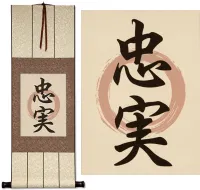
93. Loyalty / Faithful / Devoted
94. Maintain An Army For 1000 Days, Use It For An Hour
96. Knowledge of Ultimate Truth
97. Mico
98. Mind Over Matter
Ability to Adapt
ouhen nouryoku
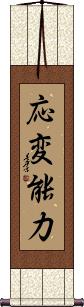
応変能力 is “the ability to take proper steps to meet the situation,” “the ability to adapt oneself to the requirement of the moment,” “the ability to adapt to circumstances,” or “adapt and overcome,” in Japanese Kanji.
Adapt Oneself
yìng biàn
ou hen
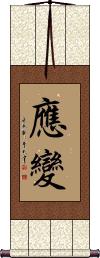
應變 means “to meet a contingency,” “to adapt oneself to changes,” or “to adapt to changes” in Chinese.
It's also used in Japanese but usually only in the context of Buddhism. 應變 is probably the shortest way to express the idea of adapting and overcoming whatever circumstances present themselves.
All Hopes Fulfilled
May All Your Wishes Come True / Everything Goes As You Wish
wàn shì rú yì
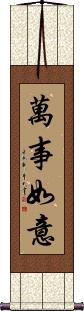
萬事如意 is a Chinese and old Korean proverb that means to have all one's wishes.
When speaking to someone, it's a way to say best wishes, all the best, may all your hopes be fulfilled, or may everything go well.
On your wall as calligraphy, it's meant to inspire all your wishes, hopes, dreams, and life to go well or come true.
Alone / A Lone Person
dokuji
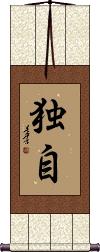
獨自 is a Japanese word that means “alone” in the context of a person by themselves.
獨自 can mean individual, solo, on one’s own, or by oneself.
See Also: I Miss You
Ambitious / To Improve Oneself
Advance and Progress
shàng jìn
jou shin
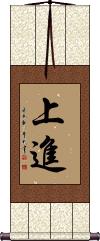
上進 is a Chinese and Japanese Kanji word that means to advance, to make progress, to do better, to be ambitious, to improve oneself, or to move forward.
This can refer to a single person, general things (such as a work project), or a whole country.
In Japanese, this is sometimes used as the given name Joushin.
...And this above all to thine own self be true
A line from Shakespeare's Hamlet
yóu qí yào jǐn de nǐ bì xū duì nǐ zì jǐ zhōng shí
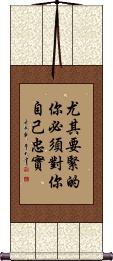
尤其要緊的你必須對你自己忠實 is the classic translation of a line from Shakespeare's Hamlet into Chinese.
Blue Dragon / Azure Dragon
qīng lóng
sei ryuu
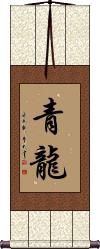
青龍 is a scholarly title for “Blue Dragon” or “Azure Dragon.”
You'll find this title used in ancient Chinese literature and astronomy. This dragon has dominion over the eastern sky or eastern heavens. The Azure Dragon is also noted for representing the spring season. Also seen as an auspicious omen.
Emperor Huizong of the Song Dynasty canonized the five colored dragons as “kings.” The Azure Dragon represents the most compassionate of kings.
In Japanese, this title is known with the same meaning but can also be a given name, Seiryuu or Seiryu.
Note, the first character can be written as  OR
OR  . Same character, just two ways to write it.
Black Belt
hēi dài
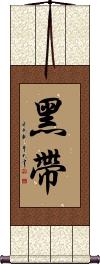
黑帶 is “black belt” in Chinese.
Many will argue whether rank systems that include a “black belt” are used in pure Chinese martial arts systems. The argument goes that it's more a Japanese idea merged into the western versions of Chinese martial arts. However, in Wushu (often referred to as Kung Fu), it's said that all students started with white belts. Over the years of training, the white belt would get dirty until finally appearing black with filth. Thus, more advanced students had darker belts.
If you want this title in Chinese, this would be the form.
 Often, the second character is written like the image to the right. If you like this version, click on this character instead of the button above.
Be True to Yourself
zuò zhēn shí de zì jǐ
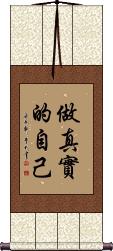
做真实的自己 means “be true to yourself” in Chinese.
Note: This is more a western-style phrase or idea, so it’s not that common to see this in Chinese.
Be True to Yourself
jibun jishin ni chuujitsu de aru
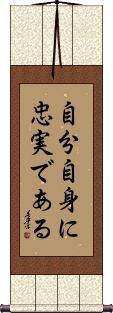
自分自身に忠実である is, “be true to yourself” in Japanese.
You could also translate this as “be true to oneself.”
Note: Because this selection contains some special Japanese Hiragana characters, it should be written by a Japanese calligrapher.
Be Yourself
zuò zì jǐ
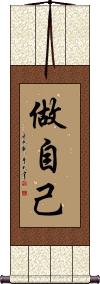
做自己 means “be yourself” in Chinese.
The first character means “to be,” “to become,” or “to act as.”
The last two characters are a word that means “oneself” or “yourself.”
Beauty / Beautiful / Handsome
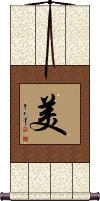
美 is often used to describe the beauty of a woman.
However, when applied to a man, it can mean handsome. It's also the first character in the word for “beauty salon” which you will see all over China and Japan.
美 can mean the given name for a girl (spell it or say it as “Mei” or “May”).
For a bit of trivia: The title for the “USA” in Chinese is “Mei Guo” which literally means “Beautiful Country.” This name was bestowed at a time before Chairman Mao came to power and decided that China didn't like the USA anymore (even though we fought together against the Japanese in WWII). But these days, Chinese people love Americans (but have a distaste for American politics and policy). But I digress...
美 is also how “Beautiful” is written in Japanese Kanji and Korean Hanja. 美 can also mean: very satisfactory; good; to be pleased with oneself; abbreviation for the USA; fine; handsome; admirable; madhura; sweet; and/or pleasant.
See Also: Beautiful Woman | Beautiful Girl
Believe
xiāng xìn
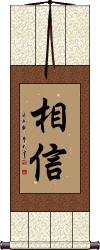
相信 is the Chinese way to say believe.
This specifically means to be convinced that something is true or to accept something as true or real.
This can also be translated as “convinced of,” “have trust in,” or “have faith in.”
Beyond / Exceed / Surpass
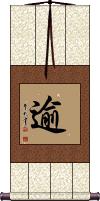
逾 means: to exceed; to go beyond; to transcend; to cross over; to jump over.
You'll see this character used in Buddhism (same meaning).
Technically, this single character is a Japanese word but is seldom used as a single Kanji in modern Japanese.
Bloodless Victory
bīng bù xuè rèn
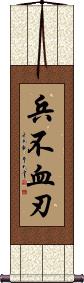
Perhaps a pacifist view or perhaps the best form of victory; 兵不血刃 reflect this idea:
The edges of the swords not being stained with blood.
You could also translate it as: Win victory without firing a shot.
The first character means army or force. The second character means without or none. The last two characters mean bloodstained knives. So it represents a returning victorious army without bloodstained knives. 兵不血刃 is the very literal sense of this Chinese proverb. The title definition is more accurate to the way this proverb is understood.
Asking yourself why the direct or literal translation is different?
...Think of compound words in English such as “nevertheless” if we break it apart to “never the less,” we will have trouble getting the real definition of “in spite of that.” Similar things happen when multiple characters create a compounded word in Chinese.
Bodhi - Awakening Enlightenment
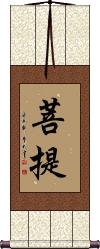
The Bodhi or 菩提 is the moment of completion in Buddhism.
It is when all things become known and you have completed your journey to enlightenment.
The reference is to the Bodhi tree where Siddhartha Gautama (the legendary man who established the Buddhist religion) achieved enlightenment. Sometimes this is referred to as “the tree of enlightenment,” but if you want the full version with the character for a tree at the end, please see the Bodhi Tree entry.
See Also: Buddhism | True Religion / Buddha Truth | Nirvana | Enlightenment
Bodhisattva
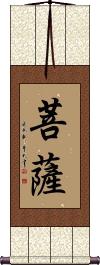
菩薩 is the title of a Buddhist deity that exists to help you reach enlightenment.
In Buddhist beliefs, a bodhisattva (bodhisatta) is dedicated to helping us achieve enlightenment. Bodhisattva means enlightenment truth which is bodhi sattva in Sanskrit.
This term is sometimes used to refer to a kindhearted person, one who will sacrifice himself/herself for others and lacks ego or desire but is instead devoted to the good and well-being of others.
See Also: True Religion / Buddha Truth | Namo Amitabha Buddha
Body
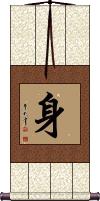
身 is how to write “body” as in your human body, in Chinese, Japanese Kanji, and Korean Hanja.
Depending on the context and certain language issues, this character can also mean: main part, hull, oneself, somebody, person, I, me, sword, lifetime, one's station in life, etc.
While this written word is universal in three languages, it still makes a rather odd selection for a wall scroll. Also, they tend to use 体 (karada) in Japanese for the body (depending on context).
See Also: Body / Karada
You May Learn from Victory, You Will Learn from Failure
bǎi shèng nán lǜ dí sān zhé nǎi liáng yī
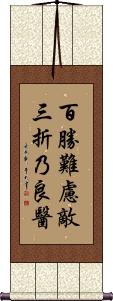
百胜难虑敌三折乃良医 is a Chinese proverb that literally translates as: [Even a general who has won a] hundred victories [may be] hard put to see through the enemy's [strategy], [but one who has] broken [his] arm three [times] [will] be a good doctor.
Figuratively, this means: One cannot always depend on past successes to guarantee future success but one can always learn from lessons drawn from failure.
See Also: Failure is the Mother of Success | Success | Time | Schooled by Experience and Hard Knocks
Seeing one’s Nature and becoming a Buddha
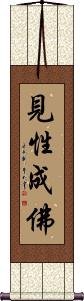
見性成佛 is a universal phrase that suggests that one may see one's nature and accomplish Buddhahood.
見性 suggests penetrating deep inside oneself to see one's “Original finally
Mind.”
成佛 refers to a sentient being who dispenses with illusions and delusions
through ascetic practice, is enlightened to the truth, and becomes a Buddha.
This is used by Mahayana, Chan, and Zen Buddhists in China, Korea, and Japan.
You will also see this with the last character written as 仏 in Japanese. In the religious context, 佛 is commonly used to mean Buddha. If you want the other version, see Kenshō Jōbutsu 見性成仏
Chill Out
reiseininaru
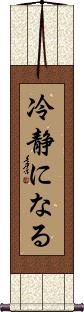
冷静になる is a Japanese phrase that means to collect oneself, to chill out, to cool off, or to recover oneself.
Note: Because this selection contains some special Japanese Hiragana characters, it should be written by a Japanese calligrapher.
Chinese Traditional Medicine
zhōng yī
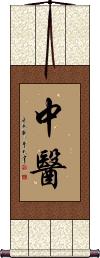
中醫 is how to write “Chinese traditional medicine.”
The original medicine consists of herbal remedies derived from over 3000 years of research.
Choose Your Own Destiny
xuǎn zé zì jǐ de mìng yùn
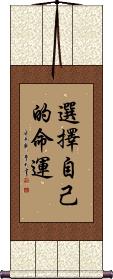
選擇自己的命運 means “Choose your destiny” or “pick your own fate” in Chinese.
Let's break down the words in this phrase here...
選擇 means to choose, pick, or select.
自己 means oneself or one's own.
的 is a possessive modifier.
命運 means fate or destiny.
Christianity / Christian
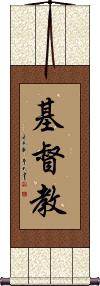
基督教 is the Chinese, Japanese, and Korean word for “Christianity.”
Just as in English, this word is often used to mean “Protestant” but includes Catholics in the true definition.
It is the word used to refer to the whole “Christian religion” or “Christian Faith,” and therefore, it can mean “Christianity.” However, used as an adjective in regard to a person, it would translate as “Christian.” But more like saying, “His religion is Christianity,” rather than a noun form.
If you break it apart, the characters mean Base/Foundation Leading/Supervising Religion/Teaching. It makes more sense in Japanese, Chinese, and Korean. The first two characters together are translated as “Christ.” So you can also say this means “Christ's Religion” or “Christ's Teachings” when directly translated, or in reverse, “The Religion of Christ” or “The Teaching of Christ.”
Notes: The last character has a slight difference in one stroke - however, in calligraphic form, this will not be apparent. This entry can easily be read by any Korean person who knows Hanja characters (Chinese characters used in Korean).
See Also: Jesus Christ | God of Zion / God of Abraham
Chushin Aikido Dojo
chuu shin ai ki dou dou jou

中心合気道道場 is the name Chushin Aikido Dojo in Japanese Kanji.
The Japanese romanization, Chushin, can also be 忠心 (Loyal-Heart) or 中真 (True Center), so let me know if you need 忠心合気道道場 or 中真合気道道場 instead of 中信合気道道場.
You are who you hang out with
āi jīn sì jīn āi yù sì yù
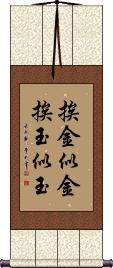
金似金挨玉似玉 is a Chinese proverb that literally translates as: [One who is] close to gold [is] like gold [and one who is] close to jade [is] like jade.
Figuratively, this means:
A good environment produces good people.
People are influenced by the company they keep.
if you hang out with good people, you are likely to become or stay good yourself. The opposite is also true. 挨This is like the moral version of “You are what you eat.”
Note: In Japanese, they have a similar phrase, 類は友を呼ぶ (rui wa tomo o yobu) Birds of a feather flock together. However, this is not a good meaning, so we’re not offering it for wall scrolls.
The True and Complete Enlightenment
zhēn jué
shinkaku
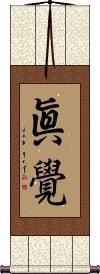
眞覺 means true and complete enlightenment.
This can refer to the perfect nirvana of the Buddha or the perception of ultimate truth or true awareness of all things (reality and unreality).
Confucius
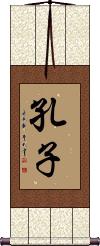
孔子 is how to write the name of the great sage, known in the West as Confucius.
His real name is Kongzi (The name Confucius is a westernized version of his name - his family name is Kong, and “zi” was added as a title of distinction).
He lived some 2500 years ago in Qufu, a town in modern-day Shandong Province of Northern China (about 6 hours south of Beijing by bus). He was a consort to Emperors, and after his death, the impact of his philosophies still served to advise emperors, officials, and common people for generations.
Also during these thousands of years, the Kong family remained powerful in China, and the Kong estate was much like the Vatican in Rome. The Kong estate existed as if on sovereign ground with its own small garrison of guards and the privileges of a kingdom within an empire.
This was true up until the time the Kong family had to flee to Taiwan in 1949 when the Red Army took victory over the Nationalists during the Revolution. The home of Confucius was later razed and all statues were defaced or stolen during the Cultural Revolution. Finally, after years of smearing his name and image, it is once again okay to celebrate the teachings of Confucius in mainland China.
Known as Khổng Tử in Vietnamese.
The Ease of the Scholar
Quote from Confucius
mò ér zhì zhī xué ér bù yàn huǐ rén bù juàn hé yòu yú wǒ zāi
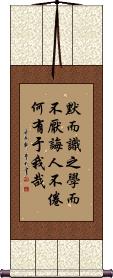
默而识之学而不厌诲人不倦何有于我哉 is a quote from the Analects of Confucius that translates as:
To quietly recite and memorize the classics,
to love learning without tiring of it,
never be bored with teaching,
How could these be difficult for me?
This is a suggestion that for a true scholar, all of these things come with ease.
This was written over 2500 years ago. The composition is in ancient Chinese grammar and phrasing. A modern Chinese person would need a background in Chinese literature to understand this without the aid of a reference.
Conquering Yourself is a Sign of Strength
zì shèng zhě qiáng yě
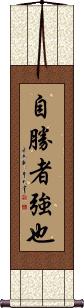
自勝者強也 means “One who conquers oneself is strong” in Chinese.
自勝 = Self-overcoming or self-conquering
者 = is
強 = Strength
也 = Also
Construction Crane
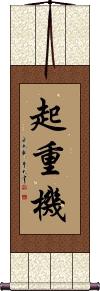
起重機 refers to the huge machine that lifts materials high into the air as crews construct huge buildings.
A customer requested this specifically after some confusion over the bird by the same name.
In an odd twist, while they don't know this name in English sounds like a bird; the building crane is jokingly called “The real national bird of China” because of the accelerated level of construction in Beijing and elsewhere ever since preparations began for the 2008 Olympics. As of 2018, construction has barely slowed.
If you want the type of construction crane that drives down the road, please note that the word is totally different for that kind of “vehicle crane.”
Crazy Love
kubittake
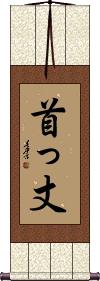
首っ丈 is a Japanese word that means “deeply in love with,” “madly in love with,” “heads over heels in love with,” or “to be crazy about.”
Unbridled Creativity
bù jū yī gé
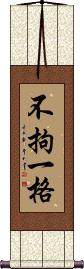
不拘一格 is a Chinese proverb that speaks of exploring different styles and not being stuck in conventional thinking.
It can also be translated as “not sticking to one pattern” or “not limited to one type (or style).” The most simple translation is “being creative” or “unbridled creativity.” Some may also say this means “not being stuck in a rut,” in the context of a designer or artist.
If you translate this, the first two characters mean “not stick to” or “not confine oneself to.”
The second two characters mean “one mode,” “one pattern,” “one form,” “one style,” or “one rule.”
Crisis equals Danger plus Opportunity?
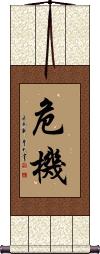
危機 means crisis in Chinese and Japanese.
Separately, the first character here does mean “danger” or “to endanger,” and the second character can mean “opportunity.”
However, I want to debunk a myth that was propagated by some westerners who did not have a clear understanding of Asian languages...
While often, Chinese/Japanese/Korean compound words (words of two or more characters) are the sum of their parts, this is not always the case. The compound is often understood with a completely different meaning than the two characters individually.
Many have said that the Chinese/Japanese/Korean word for Crisis is made up of the characters for “danger” and “opportunity.” 危機 is true when phrased this way.
However, it's not absolutely correct to say that “danger + opportunity = crisis” in Asian cultures.
English example:
If I tell you that...
Bovine creature + Guy behind the plate in baseball = Locomotive train protection

...you would think I was mad. But consider that “cow + catcher = cowcatcher,” which is the device that used to be found on steam engines to protect them if they hit an animal on the tracks. When we hear the word “cowcatcher,” we don't separate the words into their individual meanings (necessarily).
The same is true with the word for crisis in Chinese/Japanese/Korean. While you can separate the characters, few Asian people would automatically do so in their minds.
The final answer:
It is a half-truth to say, “danger plus opportunity equals crisis” in Chinese/Japanese/Korean. Use this statement and concept with caution.
Also, the second character can mean “secret” or “machine,” depending on context so I guess you have to say “a dangerous machine = crisis” or “danger + a secret = crisis.” Both of these are only slightly more ridiculous than the first premise.
PS: 危機 is probably not a great word for a scroll unless you have a special use for it.
Daodejing / Tao Te Ching - Chapter 33
zhī rén zhě zhī yě zì zhī zhě míng yě shèng rén zhě yǒu lì yě zì shèng zhě qiáng yě zhī zú zhě fù yě qiáng xíng zhě yǒu zhì yě bù zhī qí suǒ zhě jiǔ yě sǐ ér bù wáng zhě shòu yě
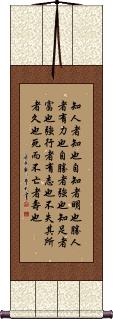
This is referred to as passage or chapter 33 of the Dao De Jing (often Romanized as “Tao Te Ching”).
These are the words of the philosopher Laozi (Lao Tzu).
The following is one translation of this passage:
To know others is wisdom;
To know oneself is acuity/intelligence.
To conquer others is power,
To conquer oneself is strength.
To know contentment is to have wealth.
To act resolutely is to have purpose.
To stay one's ground is to be enduring.
To die and yet not be forgotten is to be long-lived.
To know others is wisdom;
To know oneself is acuity/intelligence.
To conquer others is power,
To conquer oneself is strength.
To know contentment is to have wealth.
To act resolutely is to have purpose.
To stay one's ground is to be enduring.
To die and yet not be forgotten is to be long-lived.
Another translation:
To understand others is to be knowledgeable;
To understand yourself is to be wise.
To conquer others is to have strength;
To conquer yourself is to be strong.
To know when you have enough is to be rich.
To go forward with strength is to have ambition.
To not lose your place is to be long-lasting.
To die but not be forgotten -- that's true long life.
To understand others is to be knowledgeable;
To understand yourself is to be wise.
To conquer others is to have strength;
To conquer yourself is to be strong.
To know when you have enough is to be rich.
To go forward with strength is to have ambition.
To not lose your place is to be long-lasting.
To die but not be forgotten -- that's true long life.
A third translation of the second half:
He who is content is rich;
He who acts with persistence has will;
He who does not lose his roots will endure;
He who dies physically but preserves the Dao
will enjoy a long after-life.
He who is content is rich;
He who acts with persistence has will;
He who does not lose his roots will endure;
He who dies physically but preserves the Dao
will enjoy a long after-life.
Notes:
During our research, the Chinese characters shown here are probably the most accurate to the original text of Laozi. These were taken for the most part from the Mawangdui 1973 and Guodan 1993 manuscripts which pre-date other Daodejing texts by about 1000 years.
Grammar was a little different in Laozi’s time. So you should consider this to be the ancient Chinese version. Some have modernized this passage by adding, removing, or swapping articles and changing the grammar (we felt the oldest and most original version would be more desirable). You may find other versions printed in books or online - sometimes these modern texts are simply used to explain to Chinese people what the original text really means.
This language issue can be compared in English by thinking how the King James (known as the Authorized version in Great Britain) Bible from 1611 was written, and comparing it to modern English. Now imagine that the Daodejing was probably written around 403 BCE (2000 years before the King James Version of the Bible). To a Chinese person, the original Daodejing reads like text that is 3 times more detached compared to Shakespeare’s English is to our modern-day speech.
Extended notes:
While on this Biblical text comparison, it should be noted, that just like the Bible, all the original texts of the Daodejing were lost or destroyed long ago. Just as with the scripture used to create the Bible, various manuscripts exist, many with variations or copyist errors. Just as the earliest New Testament scripture (incomplete) is from 170 years after Christ, the earliest Daodejing manuscript (incomplete) is from 100-200 years after the death of Laozi.
The reason that the originals were lost probably has a lot to do with the first Qin Emperor. Upon taking power and unifying China, he ordered the burning and destruction of all books (scrolls/rolls) except those pertaining to Chinese medicine and a few other subjects. The surviving Daodejing manuscripts were either hidden on purpose or simply forgotten about. Some were not unearthed until as late as 1993.
We compared many research by various archeologists and historians before deciding on this as the most accurate and correct version. But one must allow that it may not be perfect, or the actual and original as from the hand of Laozi himself.
Daodejing / Tao Te Ching - Chapter 81
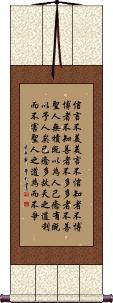
信言不美美言不信知者不博博者不知善者不多多者不善聖人無積既以為人己癒有既以予人矣已癒多故天之道利而不害聖人之道為而不爭 is the Mawangdui version of Daodejing chapter 81.
It can be translated this way:
Credible words are not eloquent;
Eloquent words are not credible.
The wise are not erudite;
The erudite are not wise.
The adept are not all-around;
The all-around are not adept.
The sages do not accumulate things.
Yet the more they have done for others,
The more they have gained themselves;
The more they have given to others,
The more they have gotten themselves.
Thus, the way of tian (heaven) is to benefit without harming;
The way of sages is to do without contending.
Credible words are not eloquent;
Eloquent words are not credible.
The wise are not erudite;
The erudite are not wise.
The adept are not all-around;
The all-around are not adept.
The sages do not accumulate things.
Yet the more they have done for others,
The more they have gained themselves;
The more they have given to others,
The more they have gotten themselves.
Thus, the way of tian (heaven) is to benefit without harming;
The way of sages is to do without contending.
Another translation:
Sincere words are not showy;
showy words are not sincere.
Those who know are not “widely learned”;
those “widely learned” do not know.
The good do not have a lot;
Those with a lot are not good.
The Sage accumulates nothing.
Having used what he had for others,
he has even more.
Having given what he had to others,
what he has is even greater.
Therefore, the Way of Heaven is to benefit and not cause any harm,
The Way of Man is to act on behalf of others and not to compete with them.
Sincere words are not showy;
showy words are not sincere.
Those who know are not “widely learned”;
those “widely learned” do not know.
The good do not have a lot;
Those with a lot are not good.
The Sage accumulates nothing.
Having used what he had for others,
he has even more.
Having given what he had to others,
what he has is even greater.
Therefore, the Way of Heaven is to benefit and not cause any harm,
The Way of Man is to act on behalf of others and not to compete with them.
And a third translation:
True words aren't charming,
charming words aren't true.
Good people aren't contentious,
contentious people aren't good.
People who know aren't learned,
learned people don't know.
Wise souls don't hoard;
the more they do for others the more they have,
the more they give the richer they are.
The Way of heaven provides without destroying.
Doing without outdoing
is the Way of the wise.
True words aren't charming,
charming words aren't true.
Good people aren't contentious,
contentious people aren't good.
People who know aren't learned,
learned people don't know.
Wise souls don't hoard;
the more they do for others the more they have,
the more they give the richer they are.
The Way of heaven provides without destroying.
Doing without outdoing
is the Way of the wise.
Daodejing / Tao Te Ching - Chapter 27
The Mastery of Effortless Skill
shàn xíng wú zhé jì shàn yán wú xiá zhé shàn shù bù yòng chóu cè shàn bì wú guān jiàn ér bù kě kāi shàn jié wú shéng yuē ér bù kě jiě shì yǐ shèng rén cháng shàn jiù rén gù wú qì rén cháng shàn jiù wù gù wú qì wù shì wèi xí míng gù shàn rén zhě bù shàn rén zhī shī bù shàn rén zhě shàn rén zhī zī bù guì qí shī bù ài qí zī suī zhì dà mí shì wèi yào miào

Chapter 27 of the Daodejing reveals a profound truth about mastery: the highest skill leaves no trace, requires no force, and appears almost invisible.
善行無轍跡,
善言無瑕謫,
善數不用籌策,
善閉無關鍵而不可開,
善結無繩約而不可解。
是以聖人常善救人,
故無棄人;
常善救物,
故無棄物。
是謂襲明。
故善人者,不善人之師;
不善人者,善人之資。
不貴其師,不愛其資,
雖智大迷,
是謂要妙。
The sage moves through life with such natural harmony that nothing seems imposed; doors need no locks, knots require no rope, and actions leave no mark behind.
This is the essence of wúwéi (effortless action), where true ability arises from deep alignment with the Tao rather than deliberate effort.
At its heart, this chapter teaches compassion without exception. The sage “abandons no one and nothing,” recognizing value in all people and all things. Even those who seem flawed or unrefined are not rejected, but understood as part of a greater whole with each person both a student and a teacher in the unfolding of life.
Laozi reminds us that wisdom is not about perfection or control, but about subtle awareness. The truly skilled individual does not rely on tools, rules, or rigid structures; instead, they embody an intuitive understanding that makes their actions naturally complete.
In this way, excellence becomes quiet, effortless, and beyond imitation.
This teaching also reflects a deeper philosophical insight: Opposites are interdependent. The “good” person learns from the “not good,” and the “not good” provides the material for growth. To reject either is to misunderstand the balance of existence itself.
As calligraphy, Daodejing Chapter 27 serves as a reminder to cultivate inner mastery rather than outward display. It is a meditation on refinement, humility, and the quiet power of skill perfected through harmony with the natural order.
Note: The Chinese text used here is based on the early Mawangdui silk manuscript tradition (2nd century BCE). The Guodian manuscripts do NOT preserve Chapter 27 in full form.
Daodejing / Tao Te Ching - Chapter 54
shàn jiàn zhě bù bá shàn bào zhě bù tuō zǐ sūn yǐ jì sì bù jué xiū zhī shēn qí dé nǎi zhēn xiū zhī jiā qí dé yǒu yú xiū zhī xiāng qí dé nǎi zhǎng xiū zhī guó qí dé nǎi féng xiū zhī yú tiān xià qí dé nǎi bó yǐ shēn guān shēn yǐ jiā guān jiā yǐ xiāng guān xiāng yǐ bāng guān bāng yǐ tiān xià guān tiān xià wú hé yǐ zhī tiān xià rán zī yǐ cǐ
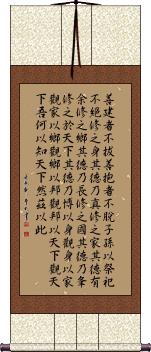
This is the Mawangdui version of Daodejing chapter 54.
What Tao plants cannot be plucked; What Tao clasps cannot slip.
By its virtue alone can one generation after another carry on the ancestral sacrifice.
Apply it to yourself, and by its power, you will be freed from dross.
Apply it to your household, and your household shall thereby have abundance.
Apply it to the village, and the village will be made secure.
Apply it to the kingdom, and the kingdom shall thereby be made to flourish.
Apply it to an empire, and the empire shall thereby be extended.
Therefore just as through oneself, one may contemplate Oneself;
So through the household one may contemplate the Household;
And through the village, one may contemplate the Village;
And through the kingdom, one may contemplate the Kingdom;
And through the empire, one may contemplate the Empire.
How do I know that the empire is so? By this.
By its virtue alone can one generation after another carry on the ancestral sacrifice.
Apply it to yourself, and by its power, you will be freed from dross.
Apply it to your household, and your household shall thereby have abundance.
Apply it to the village, and the village will be made secure.
Apply it to the kingdom, and the kingdom shall thereby be made to flourish.
Apply it to an empire, and the empire shall thereby be extended.
Therefore just as through oneself, one may contemplate Oneself;
So through the household one may contemplate the Household;
And through the village, one may contemplate the Village;
And through the kingdom, one may contemplate the Kingdom;
And through the empire, one may contemplate the Empire.
How do I know that the empire is so? By this.
Another translation:
What is firmly rooted cannot be pulled out;
What is tightly held in the arms will not slip loose;
Through this, the offering of sacrifice by descendants will never come to an end.
Cultivate it in your person, and its virtue will be genuine;
Cultivate it in the family, and its virtue will be more than sufficient;
Cultivate it in the hamlet, and its virtue will endure;
Cultivate it in the state, and its virtue will abound;
Cultivate it in the empire, and its virtue will be pervasive.
Hence look at the person through the person;
Look at the family through the family;
Look at the hamlet through the hamlet;
Look at the state through the state;
Look at the empire through the empire.
How do I know that the empire is like that?
By means of this.
What is firmly rooted cannot be pulled out;
What is tightly held in the arms will not slip loose;
Through this, the offering of sacrifice by descendants will never come to an end.
Cultivate it in your person, and its virtue will be genuine;
Cultivate it in the family, and its virtue will be more than sufficient;
Cultivate it in the hamlet, and its virtue will endure;
Cultivate it in the state, and its virtue will abound;
Cultivate it in the empire, and its virtue will be pervasive.
Hence look at the person through the person;
Look at the family through the family;
Look at the hamlet through the hamlet;
Look at the state through the state;
Look at the empire through the empire.
How do I know that the empire is like that?
By means of this.
Death Before Surrender
nìng sǐ bù xiáng
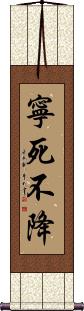
寧死不降 is an ancient Chinese proverb that can mean “Rather die than surrender,” “Prefer death over surrender,” “To prefer death to surrender,” or simply “No surrender.”
This is probably the closest proverb to the English proverb “Better to die on your feet than to live on your knees.”
Dedication
sennen
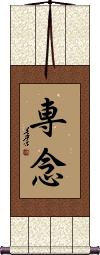
専念 is the Japanese word for dedication.
It means “give undivided attention” or “devote oneself to (something).”
Note: This can be pronounced in Korean, but it's not a commonly used term.
See Also: Sincerity and Devotion | Passions / Feelings / Emotions | Tenacious / Tenacity | Commitment
Determination to Achieve
ichi nen ho kki
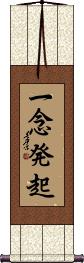
一念発起 is a Japanese proverb, “Ichinen Hokki,” which suggests being resolved to do something or having a wholehearted intention to accomplish something.
Some will translate this as “the determination to accomplish something,” or “turning over a new leaf and being determined to find success.”
Devotion / Diligence / Vigorous / Energetic
vīrya
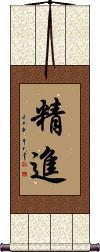
精進 is a wide-ranging word that is used in Chinese, Japanese, and Korean.
It can mean devotion, diligence, concentration, aggressive, enterprising, vigorous, energetic, purification, pushing, asceticism, assiduity, or virility. 精進 is deep, and these two characters can express ideas that take a full English phrase to describe, such as “concentration of mind,” “to forge ahead vigorously,” or “to dedicate oneself to progress.”
Used in the context of Buddhism, it means “making earnest efforts to cultivate virtue and get rid of evil” or “zeal in one's quest for enlightenment.”
Discipline / Training / Tempering Character
mó liàn
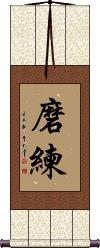
磨鍊 is a form of discipline which suggests training of the mind and character, aimed at producing self-control, obedience, etc.
One of my Chinese-English dictionaries even translates this as “tempering oneself” or turning yourself into hardened steel.
In old Korean Hanja, they use these characters in reverse order but with the same meaning. If you want the Korean version, please click this link instead of the button above: Korean version.
Dojo / Martial Arts Studio
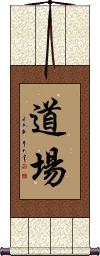
道場 is the Japanese term for a room or hall in which martial arts are taught.
道場 is often spelled “dojo” which has become a word in the English lexicon. However, the true Romaji is doujou or dōjō.
Please note: The Chinese definition of these characters is quite different. In Chinese, this is a place where Buddhist or Taoist mass is held. It could also be a place where spiritual or psychic events are performed.
Drain the pond to get all the fish
Kill the goose that lays the golden eggs
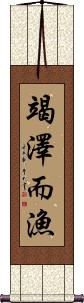
jié zé ér yú
In 632 BC, Duke Wen of the Kingdom of Jin was about to lead an army against the forces of the Kingdom of Chu.
The Duke asked one of his advisers, Jiu Fan, how they could win the impending battle, as they were drastically outnumbered.
Jiu Fan said, “All is fair in war,” and suggested a plan of dishonorable tactics (cheating).
The Duke was unsure of this advice, so he asked another adviser, Yong Ji, who replied, “If you catch fish by draining the pond, you can certainly get all the fish. But there will be no fish the following year. You can cheat this one time in battle, but such tactics can only be used once, as the enemy will be wise in future encounters.”
The Duke heard the words of his wiser adviser but cheated to gain victory in the battle. However, he rewarded Yong Ji more than Jiu Fan at the victory celebration, stating that while Jiu Fan's advice gained one victory, the wise words of Yong Ji would last forever.
This Chinese idiom/proverb is still used, over 2600 years later to remind people not to burn bridges, cheat, or dishonor themselves in exchange for a short-term gain while sacrificing the future.
竭澤而漁 is very similar to the meaning of the English phrase, “Kill the goose that lays the golden eggs.”
Dream Come True / Enjoy Success
dé zhì
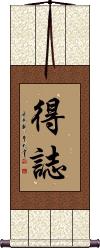
得誌 is a Chinese word that means to accomplish one's ambition, a dream come true, or to enjoy your success.
Earth
(Used in Japanese version of five elements)
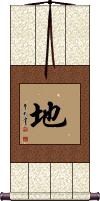
地 is the single-character element and title of the planet Earth in Chinese, old Korean Hanja, and Japanese Kanji.
Because this is a single character, the definition is a little ambiguous and can have many meanings depending on the context in which it is used. These meanings include: earth, ground, land, soil, dirt, place, territory, bottom (of a package, book, etc.), earth (one of the Japanese five elements), the region in question, the local area, skin, texture, fabric, material, weave, base, background, one's true nature, narrative (i.e. descriptive part of a story), real life, actuality, etc.
In Japanese, this Kanji can be pronounced several ways, including chi, ji, tsushi, or tsuchi.
地 is also an element of the Japanese version of the five elements (the original Chinese version uses a different version of earth).
See Also: Five Elements | Chinese Traditional Medicine
Eat Drink and Be Merry
chī hē wán lè
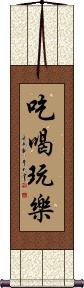
吃喝玩樂 is the short version of, “Eat, drink, and be merry.”
This is a Chinese proverb that suggests abandoning oneself to a life of pleasure.
Endure and Survive
shinogu
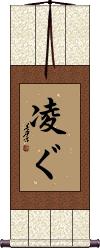
凌ぐ is a Japanese word that means to endure and survive.
The full list of definitions includes to endure, to keep out (e.g. rain), to stave off (e.g. starvation), to pull through, to get over, to survive, to surpass, to outdo, to excel, to eclipse, and/or to defy.
Faithfulness
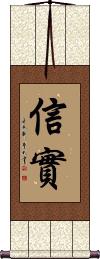
信實 means trustworthy, reliable, to believe something, to be true, and/or to be faithful.
Fall Down Seven Times, Get Up Eight
Always rising after a fall or repeated failures
shichi ten hakki / nana korobi ya oki
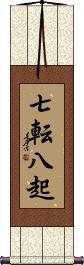
七転八起 is a Japanese proverb that relays the vicissitudes of life, with the meaning “seven times down eight times up.”
Some would more naturally translate it into English as “Always rising after a fall or repeated failures” or compare it to the English, “If at first, you don't succeed, try, try again.”
The first Kanji is literally “7.” The second means “fall down” (sometimes this Kanji means “turn around,” “revolve” or “turn over” but in this case, it holds the meaning of “fall”). The third is “8.” And the last is “get up,” “rouse,” or “rise.”
if you fail 7 times, you should recover from those events and be prepared to rise an 8th time. This also applies if it is the world or circumstances that knock you down seven times...
...just remember that you have the ability to bounce back from any type of adversity.
Note: This can be pronounced in two ways. One is “shichi ten hakki” or “shichitenhakki.” The other is “nana korobi ya oki” also written, “nanakorobi-yaoki.”
Special Note: The second character is a Kanji that is not used in China. Therefore, please select a Japanese calligrapher for this title.
Family Over Everything
jiā tíng zhì shàng
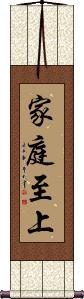
家庭至上 is a Chinese phrase that means “family above all else.”
The first two characters mean family, household, or home (they will be read as “family” in this case).
The last two characters mean supreme, paramount, or above all else.
Fantasy / Illusion
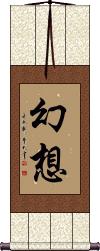
幻想 is illusions or fantasy in Chinese, Japanese Kanji, and old Korean Hanja.
This can also refer to delusion or daydreaming. It sort of means a dream or idea that cannot be true or real ( at least not in this realm).
Keep Your Feet on the Ground
Be Down-to-Earth
jiǎo tà shí dì
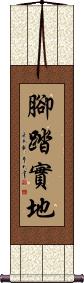
腳踏實地 is a four-character proverb that suggests that you should be practical, realistic, and grounded.
Some translate this as a suggestion to be down-to-earth.
The first character means “feet.”
The second means “step on” or “stand.”
The third means “solid,” “real,” or “true.”
The last character means “ground,” “earth,” or “terra.”
Literally, this means “[keep your] Feet Standing [on] Solid Ground.”
Fierce and courageous training defeats the strong and protects the body.
gāng yǒng zhī měng liàn shèng qiáng ér bǎo tǐ

This is a martial arts phrase that roughly translates as, “Fierce and courageous training defeats the strong and protects the body,” or “Brave and fierce training result in victory over the strong and defend the body.”
Flourish and Blossom Everywhere
biàn dì kāi huā
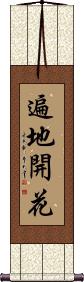
遍地開花 is a Chinese proverb that means “to blossom everywhere,” “to spring up all over the place,” or “to flourish on a large scale.”
遍地 = everywhere
開花 = opening flowers
Forgive and Forget
Water Under the Bridge
mizu ni naga su
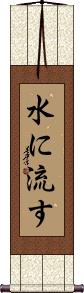
水に流す is a Japanese proverb that suggests that “water continues to flow.”
It's similar to our English phrase, “Water under the bridge.” The perceived meaning is, “Forgive and forget.”
I have also seen this translated as “Don't cry over spilled milk.”
Note: Because this selection contains some special Japanese Hiragana characters, it should be written by a Japanese calligrapher.
Forgive Yourself
yuán liàng zì jǐ
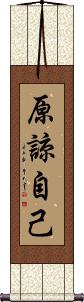
原諒自己 is how to write “forgive yourself” in Chinese.
The first two characters mean “to excuse,” “to forgive,” or “to pardon.”
The last two characters mean “self” (reflexive pronoun), “yourself,” or “oneself.”
Fu Lu Shou
fú lù shòu
fūk luhk sauh
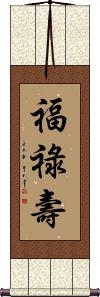
These are the short titles for Sanxing or 三星 (Three Stars).
福祿壽 are the gods of Jupiter, Ursa Major, and Sirius. Fu, Lu, and Shou represent fortune (福), presiding over the planet Jupiter, prosperity (祿), presiding over Ursa Major, and longevity (壽), presiding over Sirius.
In old Chinese folk religion, they are often represented as three old bearded wise men.
Allah / God of Islam
zhēn zhǔ
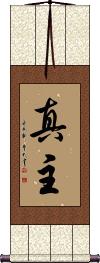
真主 is how Chinese Muslims refer to God (it literally means “True Master”).
Oddly, in China, two different names for God have emerged. Even though Muslims, Christians, and Jews all worship the same God of Abraham.
In Arabic, the word Allah is just the Arabic way to say, God. Arab Christians pray to Allah, just like Arab Muslims. Somehow in China, the title of God diverged.
If you are curious, there are millions of Muslims throughout China but especially in the northwest portion of China known as Xinjiang. Here you will find descendants of Turkmen, Persian, Arab, and other ethnicities. Some are mixed with Han-Chinese blood; others appear to be pure Turkmen. Many have fair complexions, green eyes, and light hair but all are citizens of China. A visit to Xinjiang will shift your paradigm and blow away all of your stereotypes about what it means to be Chinese.
Green
The fresh green of nature
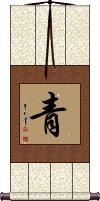
青 is nature's color and can refer to forest green, greenish-blue, or the darkest of greens.
青 and color represent nature, youth, and young people.
In the same way, we refer to green bananas and the rookie being green, the same is true in Chinese and Japanese, where, in a certain context, this can mean immature, unripe, or young.
In Japan, this can also be a female given name “Haru.” It can also be used as a given name (for either sex) in China.
Gung Ho
Working Together
gōng hé
guai
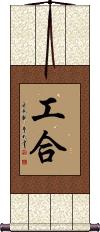
工合 is one of those Asian words that is used more in English than in the original Chinese.
Gung Ho was originally used to speak of Carlson's Raiders, a group of “Gung Ho” U.S. Marines who went on an island-hopping campaign of death during WWII.
A movie called Gung Ho came out in the mid-1940s and was later re-released in the 1950s depicting the 2nd Marine Raider Battalion, and brought this word to the mainstream.
It is still sometimes used today within the U.S. Marine Corps brotherhood to refer to a unit or group that works well together or is otherwise efficient and motivated (has good morals).
In 1986, there was a movie called Gung Ho about a Japanese company taking over an American automotive factory. They completely ignored the fact that this was a Chinese title.
It should be noted that this title actually means a condition, state, manner, or the health of something in Japanese.
Language and pronunciation notes:
Like many Asian words absorbed into common use in English, this one is drastically mispronounced. The official Romanization is “gong he” but that doesn't tell you enough. The vowel sound on the first character is like the English word “own,” now just add the g-sounds to the beginning and end. The second character is misleading, as you might think it is like the English word “he.” In reality, the vowel sound is more like the “u” in “up.”
It should also be noted that the current generation in China no longer uses or recognizes this as a common word or slogan.
Note: This can be pronounced and is a word in Japanese, though seldom used. Japanese will use a variation of “具合” instead. But still, not common.
Hiding in the Leaves - Hagakure
hagakure
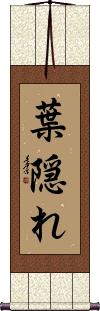
葉隠れ is the Japanese word hagakure, which means “hidden in the leaves.”
葉隠れ is also used as a semi-idiom to mean “doing good deeds without calling attention to oneself.”
Hearing a Hundred Times is Not as Good as Seeing Once
bǎi wén bù rú yī jiàn
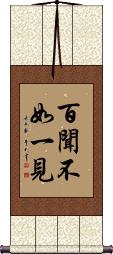
百聞不如一見 is a Chinese proverb that means “Seeing once is better than hearing one hundred times” which is similar to the idea of “Seeing is believing.”
You can also get the idea, “Seeing for oneself is better than hearing from many others.”
If you break it down directly, you get “100 hears/listens (is) not as-good (as) one sight.”
Heijoshin / Presence of Mind
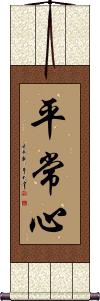
平常心 is the title Heijoshin, as associated with Kendo and Aikido schools of Japanese martial arts.
平常心 is also a word in Japanese that can mean “one's self-possession” or “presence of mind.”
In Chinese and Korean, this means “simplicity heart,” “composure,” “calmness,” or a “sense of orderliness.” In Chinese and Korean, this implies that you enjoy what you have, keep your heart in balance, and have no over-blown ambitions.
Home is where the heart is
ie to wa kokoro ga aru basho da
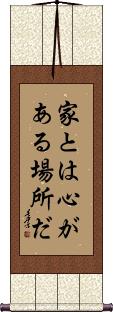
家とは心がある場所だ is, “Home is where the heart is,” in Japanese.
Most Japanese will take this to mean:
If you are with the person or at the place you love most, it becomes your true home.
Note: Because this selection contains some special Japanese Hiragana characters, it should be written by a Japanese calligrapher.
Honesty
shí
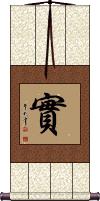
實 means real, true, honest, or solid.
It is one of several ways to express the idea of truth.
Note: In some contexts, this can carry extended meanings of reality, actuality, sincerity, or substance.
See Also: Truth | Trust Your Heart | Justice / Rectitude / Right Decision
Honesty / Fidelity
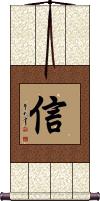
信 is another character that expresses the idea of honesty.
It can also mean truth, faith, belief in, fidelity, sincerity, trust, and/or confidence.
Some have included this in the list for the Bushido, although “makoto” is probably more common/popular.
Note: In some contexts, this character can mean a letter (mail), news, or envoy. However, alone, it will generally be read with the honesty-meaning.
See our page with just Code of the Samurai / Bushido here
See Also: Two
Humble / Modesty / Humility
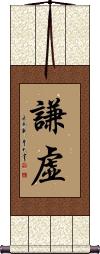
謙虚 is the most common way to say humble or modest in Japanese without a derogatory meaning (some other words suggest weakness, but this version holds a better humble meaning).
In Japanese, the first Kanji means self-effacing, humble oneself, and modesty. The second means void or emptiness.
See Also: Moderation / Temperance
I am Enough
jǐ zú yǐ
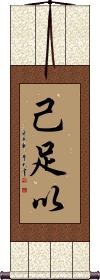
己足以 is a profound and philosophical way to say “I am enough” in Chinese.
The first character means self or oneself.
The last two characters are a word that means sufficient or enough.
Inhale
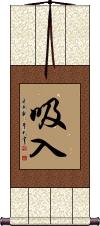
吸入 is a Chinese, Japanese, and old Korean word that means inhale, inhalation, or to breathe in.
吸 by itself can mean to inhale or suck in.
入 means to enter (in this case, the body), so it clarifies that this is the true inhalation of air into the body.
If you need a reminder to breathe (slow down and take a deep breath), this may be the word you want hanging on your wall.
Intense / Serious / Deep / Profound
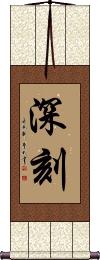
深刻 is a Chinese word that is the form of intense that describes a person who is deep, serious, and a true thinker.
If you find yourself contemplating the world and coming up with profound ideas, this might be the word for you. In some contexts (especially Korean), it can mean seriousness, gravity, or acuteness.
In Japanese, this can mean “serious problem” or can be a rare given name, Misa. You should not use this if your audience is Japanese.
yī shā
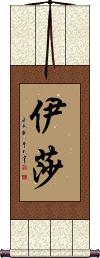
This is a common Mandarin Chinese transliteration for the female Spanish/Latin name Isa.
aisa
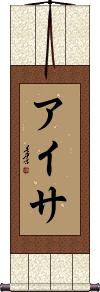
アイサ is the name Isa in Japanese.
Note: Because this title is entirely Japanese Katakana, it should be written by a Japanese calligrapher.
Progress / Ambition
shàng jìn
joushin
This Chinese and Japanese word means to make progress, to do better, ambition to improve oneself, to move forward, to advance.
This should be romanized as Joushin but is often romanized as Joshin from Japanese. It can also be a given name in Japanese.
Joushiki Wo Koeru
jou shiki wo ko e ru
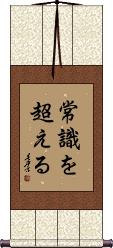
This Japanese phrase, “常識を超える” or “Jōshiki Wo Koeru” means “beyond common sense.”
常識 alone can mean “common sense,” “good sense,” “common knowledge”,“general knowledge,” “common practice,” “accepted practice,” or “social etiquette.”
The rest of the phrase indicates exceeding, overtaking, surpassing, transcending, or an idea of going beyond something.
More ways to translate this whole phrase:
Over what was known.
Surpassing common sense.
Beyond the ordinary.
Going beyond conventional knowledge.
Beyond conventional wisdom.
Note: Because this selection contains some special Japanese Hiragana characters, it should be written by a Japanese calligrapher.
Nobleman
Junzi / chun-tzu / gunja / kunshi
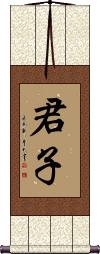
This means nobleman, person of noble character, man of virtue; wise man, or a true gentleman
君子 can be romanized as chün-tzu or jūnzǐ from Chinese and gunja from Korean. This has the same meaning in Japanese, but in another context, can be the female given name Kunshi.
Safety and Well-Being of the Family
Kanai Anzen
ka nai an zen
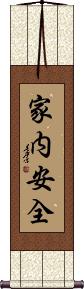
家內安全 is the Japanese way of saying “Family First.”
It's a Japanese proverb about the safety and well-being of your family and/or peace and prosperity in the household.
Some Japanese will hang an amulet in their home with these Kanji. The purpose is to keep your family safe from harm.
According to Shinto followers, hanging this in your home is seen as an invocation to God to always keep family members free from harm.
We were looking for a way to say “family first” in Japanese when this proverb came up in the conversation and research. While it doesn't say “family first,” it shows that the safety and well-being of your family is your first or most important priority. So, this proverb is the most natural way to express the idea that you put your family first.
See Also: Worldwide Wish for Peace and Prosperity
Katana
Japanese Samurai Sword
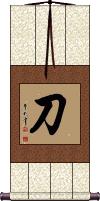
刀 is the Japanese Kanji for “sword.” This refers to the style of sword carried by warriors, samurai, and shogun of ancient Japan.
With the pacification of Japan, such swords are now only used for ceremony and decoration. The true art of sword-smithing is all but lost in Japan with new sword production dedicated to making inexpensive replicas for the tourist and foreign market.
For those of you that want to ask whether I can get you a real antique sword. Let me tell you that most real Asian swords were melted down after WWII in Japan, and during the Great Leap Forward in China. Any remaining swords are family heirlooms that nobody will part with.
Please carefully note that the Japanese kanji character shown above is only for a Japanese audience. In China, This means “knife.” See our other entry for “sword” in Chinese.
Note: 刀 can mean knife, sword, or blade in Korean, depending on context.
See Also: Sword
Katsu Hayabi
katsu hayabi
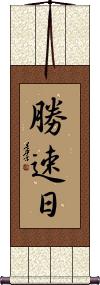
Katsu Hayabi or 勝速日 means victory at the speed of light.
勝速日 is a highly developed state in which an Aikido practitioner has reached spiritual and moral perfection.
Kenpo / Kempo / Quan Fa / Chuan Fa
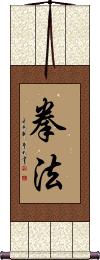
拳法 is a form of martial arts that can be translated in several ways.
Some will call it “fist principles,” “the way of the fist,” or even “law of the fist.” The first character literally means fist. The second can mean law, method, way, principle, or Buddhist teaching.
Kempo is really a potluck of martial arts. Often a combination of Chinese martial arts such as Shaolin Kung Fu with Japanese martial arts such as Karate, Jujutsu (Jujitsu), Aikido, and others. You may see the term “Kempo Karate,” which essentially means Karate with other disciplines added. In this way, Kempo becomes an adjective rather than a title or school of martial arts.
These facts will long be argued by various masters and students of Kempo. Even the argument as to whether it should be spelled “kenpo” or “Kempo” ensues at dojos around the world (the correct Romaji should actually be “kenpou” if you precisely follow the rules).
The benefit of Kempo is that the techniques are easier to learn and master than pure Kung Fu (wu shu). Students are often taught basic Karate moves, kicks, and punches before augmenting the basic skills with complex Kung Fu techniques. This allows students of Kempo to achieve a level where they can defend themselves or fight in a relatively short amount of time (a few years rather than a decade or more).
Because the definition of this word is so fluid, I should make some notes here:
1. Purists in Okinawa will claim that “Okinawa Kenpo” or “Ryukyu Hon Kenpo” is the original and true version of this martial art from the old kingdom. It is actually little or no connection between Okinawa Kenpo and the way the word is used elsewhere.
2. In Chinese, where these characters are pronounced “quan fa” (sometimes Romanized as “chuan fa” because the Chinese-pinyin “q” actually sounds like an English “ch” sound), these characters do not hold the connotation of being a mixed martial art. It is simply defined as “the law of the fist.”
3. My Japanese dictionary oddly defines Kenpo as the “Chinese art of self-defense.” I personally don't feel this is the most common way that people perceive the word but just something you should know.
Kensho - Initial Enlightenment
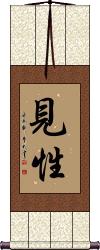
見性 has the same meaning as Satori but refers to the initial state or initial experience of enlightenment.
This can also mean “self-discovery,” “self-awareness,” or “consciousness of one's character.”
In a very religious context, this means to behold the Buddha nature within oneself.
This term is exclusively used by devout Buddhists. It is not a common term, and remains an unknown concept to most Japanese and Chinese people. Some Japanese people will dispute whether this title is valid in the Japanese language. Only order this if you are sure this title is right for you.
See Also: Buddhism | Enlightenment
Ken Zen Ichi Nyo
ken zen ichi nyo
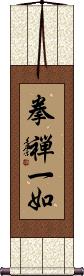
拳禪一如 is a Japanese phrase that is often translated as “train both body and spirit.”
Here's the breakdown of the words in this phrase:
拳 means fist.
禅 is zen, which means meditation.
一如 is a word that means “to be just like,” “oneness,” “true nature,” or “true character.”
So to get to the translation of “train both body and spirit,” you must understand that “fist” is representing “body” and the idea of meditation is representing “mind.”
I have to say, this is not how I would translate this. To me, it's really about training with your mind and remembering that meditation is a huge part of training, not just your fist. As the Shaolin Buddhist monks show us, meditation is just as important as physical training in martial arts.
Meet the Buddha, Kill the Buddha
butsu ni atte wa butsu o korosu
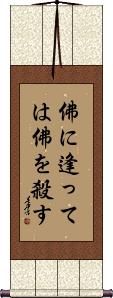
This controversial Buddhist koan means “On encountering Buddha, you should kill him.”
This is the short concise Japanese version of an original statement by ninth-century Chinese Buddhist monk Linji Yixuan, “If You Meet The Buddha On The Road, Kill Him.”
This takes some explaining... The concept here is that if you think you have seen, experienced, or achieved true enlightenment, the chances that you really have are so slim that you should kill or dismiss that idea.
Another suggestion is that one's path to becoming a Buddha is one's own, and one should not get caught up in religious fervor, and avoid “showing off” that they are a Buddhist.
Helpful references for this concept:
Lion's Roar addresses “If You Meet The Buddha On The Road, Kill Him”
Kill the Buddha
Note: Because this selection contains some special Japanese Hiragana characters, it should be written by a Japanese calligrapher.
To Know Hardship, One Must Experience It
bù dāng hé shàng bù zhī tóu lěng
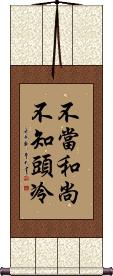
不當和尚不知頭冷 is a Chinese proverb that literally translates as: [One who has] not been a monk [does] not know [the feeling of a] cold head.
I need to explain that a Chinese Buddhist monk always has a shaved head, and thus a cold head in winter.
Figuratively, this means: One cannot know the true meaning of hardship until one has experienced it oneself.
This is an idiom in Chinese, so the figurative meaning is what people perceive when they hear or read this phrase. Just as in English, when someone says, “The grass is always greener,” one will think about the idea of jealousy, rather than the quality of one’s lawn.
Know Your Enemy, Know Yourself, and You Cannot Lose
zhí bǐ zhí jī bǎi zhàn bú dài
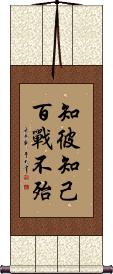
知彼知己百戰不殆 is from Sun Tzu's (Sunzi's) Art of War. It means that if you know and understand the enemy, you also know yourself, and thus with this complete understanding, you cannot lose.
This proverb is often somewhat directly translated as “Know the enemy and know yourself, and you can fight a hundred battles without defeat.”
It can also be translated as “If you know both yourself and your enemy, you can come out of hundreds of battles without danger,” or “Know your enemy, know yourself, and your victory will not be threatened.”
Know Your Enemy, Know Yourself, and Win 100 Battles
teki o shi ri o no o shi re ba hya ku sen aya u ka ra zu
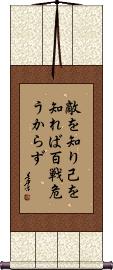
敵を知り己を知れば百戦危うからず is the longer/full Japanese version of this proverb. This means “Know your enemy, know yourself, and you will not fear a hundred battles.”
Others will translate this as “Know thy enemy, know thyself, yields victory in one hundred battles.”
Note: Because this selection contains some special Japanese Hiragana characters, it should be written by a Japanese calligrapher.
Kung Fu / Gong Fu
gōng fu
gung fu
kan fu / ku fu
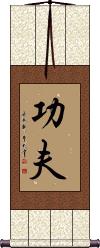
功夫 or Kung Fu is one of the most famous types of martial arts in the world - and not just because of Bruce Lee.
Some translate the meaning as “Accomplishment by Great Effort.” I think this is partially true, but directly translated, it literally means “Merit/Achievement/Accomplishment Man.” The word “fu” can sometimes mean “husband” or “porter,” but in this case, it can only mean “man.” However, few in China will think “man” when they hear the word “Gong Fu” spoken.
This term is also used for things other than martial arts. In fact, it's used to refer to a person with excellent skills in crafts that require many effort to master, such as cooking, tea ceremonies, and calligraphy.
What many people don't know is that the spelling of “Kung Fu” was actually taken from the old Wade Giles form of Romanization. Using this method, the sounds of the English “G” and “K” were both written as “K” and an apostrophe after the “K” told you it was supposed to sound like a “G.” Nobody in the west knew this rule, so most people pronounce it with a “K-sound.” And so, Gong Fu will always be Kung Fu for most westerners.
Also, just to educate you a little more, the “O” in “Gong” has a sound like the English word “oh.”
The popular Chinese dish “Kung Pao Chicken” suffers from the same problem. It should actually be “Gong Bao Chicken.”
Historical note: Many will claim that Kung Fu was invented by the monks of the Shaolin monastery. This fact is argued in both directions by scholars of Chinese history. Perhaps it is more accurate to say that the Shaolin Monks brought the original fame to Kung Fu many generations ago.
Japanese note: While most Japanese martial artists will recognize these characters, Katakana is more often used to approximate the pronunciation of “Kung Fu” with “カンフー.” Some will argue as to whether this should be considered a Japanese word at all.
See Also: Bruce Lee
Kunshi no Ken
kun shi no ken

君子の拳 is “Kunshi no Ken” in Japanese.
The meaning is literally “Noble Fist” or “Fist of Nobility” but it's often used to describe the effort to concentrate on cultivating oneself to become a well-rounded, respectful individual.
You will see 君子の拳 sometimes written in the full Kanji form of 君子之拳. Both versions mean the same thing. If you want this more traditional Kanji version, just let me know when you place your order.
Kyojitsu: Falsehood and Truth
kyo jitsu
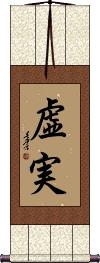
虚実 is a Japanese word that means “falsehood [and] truth” or “fiction [and] fact.”
This concept is used in warfare, gameplay, and martial arts strategies. 虚実 can be a strategy of real and/or deceptive moves. This gets to some Sun Tzu Art of War stuff where in warfare a strategic move is either a real and serious move or it is a deceptive blow.
Let's explore each character in more depth:
虚 was originally written 虛 (there is a very subtle difference in the strokes at the bottom of the character) and means unpreparedness, falsehood, emptiness, void, abstract theory, empty or unoccupied, diffident or timid, false, humble or modest, virtual, or in vain.
In the Buddhist context, 虛 represents the Pali/Sanskrit word “śūnya,” meaning empty, vacant, unreal, unsubstantial, untrue, space, humble, or in vain.
In ancient Eastern/Chinese astronomy, 虛 represents the “Emptiness” constellation (one of the 28 mansions in the sky).
実 was originally 實 in Chinese (they currently write it as 实 in Simplified Chinese) with the meaning, truth, reality, sincerity, honesty, fidelity, and substance.
The Buddhist context is similar, adding real, true, honest, really, solid, definitely, sincere, solid, fixed, full, to fill, fruit, kernel, verily, in fact, the supreme fact, or ultimate reality to the definition.
You May Learn from Victory, You Will Learn from Failure
katte erumono mo areba makete erumono mo aru
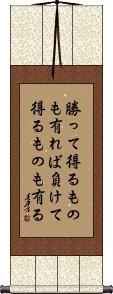
You may learn when everything goes right but the lessons learned when everything goes wrong are more vivid and lead to long-lasting wisdom.
Another way to look at this: One cannot always depend on past successes to guarantee future success but one can always learn from lessons drawn from failure.
Note: Because this selection contains some special Japanese Hiragana characters, it should be written by a Japanese calligrapher.
See Also: Failure is the Mother of Success | Success | Time | Schooled by Experience and Hard Knocks
Life Of A Samurai
issho kenmei

The 12th century phrase, 一所懸命 (Issho Kenmei) is often referred to as “Life Of A Samurai.”
Breaking it down:
一 = one
所 = place
懸 = devote
命 = life
一所懸命 literally means “to stake your life on one place.” Today, Japanese people use it to mean giving your full effort to something.
Other translations of 一所懸命 include: Very hard, with utmost effort, as hard as one can, with all one's might, for dear life, eagerly, and/or desperately.
In the context of the Samurai, it is devoting oneself to the defense of one's territory.
Originally 一生懸命 meaning “to stake your life on one birth.”
Lingering Mind
Zanshin
cán xīn
zan shin
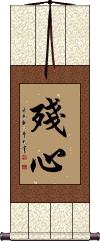
First off, 殘心 should only be used in the context of Japanese martial arts. In Chinese, it's a rather sad title (like a broken heart). In Chinese, the first character alone means destroyed, spoiled, ruined, injured, cruel, oppressive, savage, incomplete, or disabled. However, in Japanese, it's remainder, leftover, balance, or lingering.
The second character means heart, mind, soul, or essence in both languages.
殘心 is one of the five spirits of the warrior (budo) and is often used as a Japanese martial arts tenet. Under that context, places such as the Budo Dojo define it this way: The spirit of zanshin is the state of the remaining or lingering spirit. It is often described as a sustained and heightened state of awareness and mental follow-through. However, true zanshin is a state of focus or concentration before, during, and after the execution of a technique, where a link or connection between uke and nage is preserved. Zanshin is the state of mind that allows us to stay spiritually connected, not only to a single attacker but to multiple attackers and even an entire context; a space, a time, an event.
 In modern Japan (and Simplified Chinese), they use a different version of the first character, as seen to the right. Click on this character to the right instead of the button above if you want this modern Japanese version of lingering mind / zanshin.
Loyalty
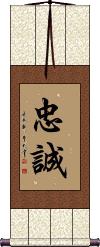
忠誠 is the written form of loyalty that is universal in Chinese, Japanese Kanji, and old Korean Hanja.
Loyalty is staying true to someone. It is standing up for something you believe in without wavering. It is being faithful to your family, country, school, friends, or ideals when the going gets tough and when things are good. With loyalty, you build relationships that last forever.
Notes:
1. There is also a Japanese version that is part of the Bushido Code which may be more desirable depending on whether your intended audience is Japanese or Chinese.
2. This version of loyalty is sometimes translated as devotion, sincerity, fidelity, or allegiance.
See Also: Honor | Trust Your Heart | Integrity | Sincerity and Faithfulness
Loyalty / Faithful / Devoted
chuujitsu / chuugi
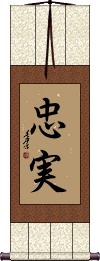
忠実 is a Japanese way to write “Loyalty” - it also contains the ideas of being faithful, devoted, true, and obedient.
The second character is a modified form only used in the Japanese lexicon; however, Chinese speakers can easily guess the meaning.
This is also a virtue of the Samurai Warrior
See our page with just Code of the Samurai / Bushido here
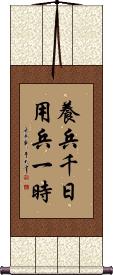
yǎng bīng qiān rì, yàng bīng yì shí
Nothing could be more true. When I was in the Marine Corps, we trained for years for combat that often lasts only hours.
養兵千日用兵一時 is a Chinese proverb that, also reminds me of a common phrase used in the military to describe combat: “Weeks of total boredom, punctuated with five minutes of sheer terror.”
This may have some roots in Sun Tzu's The Art of War. Though I cannot find this passage in his writings.
On the subject of the Art of War, if you have a favorite passage, we can create a custom calligraphy scroll with that phrase.
Makaze / True Wind
maji / makaze
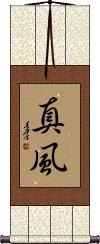
This Japanese word means southerly breeze or true wind.
This can also be a Japanese surname that is romanized as Makaze.
Knowledge of Ultimate Truth
zhēn zhì
masatoshi
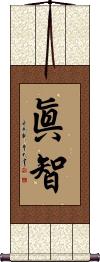
眞智 can mean the wisdom or knowledge of ultimate truth.
眞智 is also the absolute knowledge of the non-thing or that which is immaterial. This makes more sense when you consider that true wisdom includes the knowledge of both the real and unreal, or what is material and immaterial.
In Japan, 眞智 (Masatoshi) can also be a given name.
Mico
mǐ kē
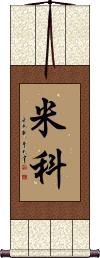
米科 is the name Mico in Chinese (Mandarin).
This is the most common version, but I like 米扣 better because the “co” part has a true “oh” sound.
Mico
mǐ kòu
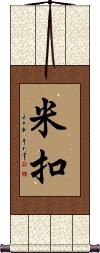
米扣 is the name Mico in Chinese (Mandarin).
I like this version best because the “co” part has a true “oh” sound.
Mind Over Matter
xīn shèng yú wù
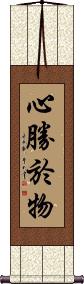
心勝於物 is how to write, “mind over matter” in Chinese.
This in-stock artwork might be what you are looking for, and ships right away...



Successful Chinese Character and Japanese Kanji calligraphy searches within the last few hours...
7th DanAadilahAalyshaAasaAbakaAbdulAbdullatifAbdulrahmanAbigailAbirAbubakarAccomplishmentAdapt and OvercomeAddyAdelAdhiAdrianoAdrielAhmadAishaAjayAjmalAkemiAkhilAlenaAlexaAlishaAliyahAmayaAmirAmirulAndreaAndrewAndyAngelinaAnshulAntonAnuragAnushaAphroditeArdiArieArielArjayArnoldAshleyAstridAudreyAveryAylaAzurBambiBayuBellaBenoitBerthaBhargavBhumikaBlazerBless This HouseBlissBodhidharmaBravenBrazilBriannaCamelliaCampbellCarissaCarterChelseaChienChikaraChumoClarisseCleoCletusCommitmentCompassionConnerConnieCorinthians 13:4Crouching Tiger Hidden DragonDaisyDanaDarnellDeath Before DishonorDelilahDellaDinhDionDirkDouglasDragon Crane TigerDrain the Pond to Get All the FishDuncanEdsonElizaEllaEllenaEmanuelEmilEmonEndoEsmeraldaEthanEvieFaizFalenoFarahFateFatemaFatimaFive PreceptsFrankieFreedomFujinGabrielGabyGeraldGerardGerardoGiacomoGigiGladysGod Bless YouGoddess of Love: VenusGolden Metal DogGuan YinGuerreroGuntherGutierrezGypsyHabibHakeemHaramitsuHariHazelHealth and WellnessHeart and SoulHidden Dragon Crouching TigerHimanshiHoratioHudsonHunterIhsanIkigaiImmortalImmortalityIn God We TrustIrineIsidorIvanIwanJacquelineJadeJanetJasmineJaydenJeet Kune DoJeriJesusJesus is My SaviorJoaquimJoelJohn 3:16JonathanJourney TravelJudoKarate-DoKatelynKathleenKatoKaylaKeanuKeilaniKesiaKinsleyKiranKobeKobukanKoriKostasKyrieLarryLaurenLeboLenoraLeungLexiLizzieLonelyLove and PeaceLove Conquers AllLoyaltyLunaMaeveMaisieMakoto No KokoroManga



