Many custom options


And formats


Not what you want?
Try other similar-meaning words, fewer words, or just one word.
Buddhism Japanese in Chinese & Japanese Calligraphy
Compare the meanings and pronunciations of the entries related to Buddhism Japanese below. Choose “Customize & Buy” next to your preferred entry to personalize your calligraphy wall scroll.
See also: Selections of just Japanese Kanji Calligraphy
3. Triple Truth of Japanese Buddhism
4. Namu Myoho Renge Kyo / Homage to Lotus Sutra
5. Four Noble Truths: Path Leading Away From Suffering
6. 6. Right Effort / Right Endeavor / Perfect Effort
7. Four Noble Truths: Suffering
8. Four Noble Truths: Desire and Attachment
10. Namu Amida Butsu
11. Reincarnation / Transmigration of Souls
14. Devotion / Diligence / Vigorous / Energetic
15. Live In The Moment / Live In The Now
16. No Mind / Mushin
Buddha / Buddhism
Hotoke
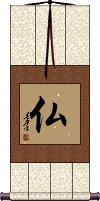
仏 is the single Japanese Kanji that can mean Buddha or Buddhism.
This Kanji was a shorthand way to write 佛 (Buddha) in Chinese (popular around the 13th century). Somehow, this became the version of this Chinese character that was absorbed into Japanese and thus became part of standard Kanji. Centuries later, this character is not recognized in China (except for those from China with a background in Chinese literature or language).
仏 is also a rare or derivative Korean Hanja form - but I doubt you will find any Korean that knows that.
Reincarnation (Buddhism)
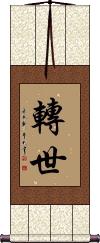
轉世 is the Buddhist idea of reincarnation or transmigration.
Other definitions of this term: “Attainer of Nirvana from within the desire realm,” “A practitioner who enters directly into Nirvana from the desire realm, without traversing the form and formless realms. One of the 27 kinds of Hinayana sages,” or simply, “to return again to this life.”
轉世 is also a Japanese title, but the first Kanji was slightly simplified after WWII. Just let us know if you want the modern Japanese version when you order.
See Also: Buddhism | Samsara / Endless Cycle of Rebirth
Triple Truth of Japanese Buddhism

人間性を再生するのは寛容な心親切な言葉奉仕と思いやりの精神 is known as the Triple Truth of Buddhism in Japanese.
The Buddha ordered that all should know this triple truth...
A generous heart, kind speech, and a life of service and compassion are the things that renew humanity.
That is the English translation most commonly used for this Japanese Buddhist phrase. You might have seen this on a coffee cup or tee shirt.
Note: Because this selection contains some special Japanese Hiragana characters, it should be written by a Japanese calligrapher.
Namu Myoho Renge Kyo / Homage to Lotus Sutra
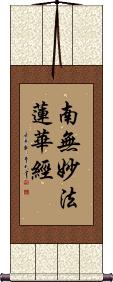
南無妙法蓮華經 is sometimes translated as the “Devotion to the Law of the Lotus Flower Scripture.”
This is a meditation chant and homage to the Lotus Sutra, used by Nichiren Buddhists in Japan.
This is also a chant used in China by certain sects of Buddhism that celebrate the deity Guanyin.
Also romanized as “Nam Myōhō Renge Kyō” or without accents as “Nam Myoho Renge Kyo.”


Original
Traditional
Version
The last character was originally written as seen on the left. Sometimes, you will see it written in the Japanese variant form as shown on the right. If you want this Japanese variant, click on the “Modern Japanese Variant” text instead of the button up by the main title of this entry.
Four Noble Truths: Path Leading Away From Suffering
Magga
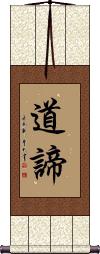
道諦 is the idea that once you have dealt with your desires and left all desire and attachment behind, only then are you on the path away from suffering (and on your way to enlightenment).
道諦 is also called the path to liberation in some English texts on Buddhism.
This term is exclusively used by devout Buddhists. It is not a common term, and remains an unknown concept to most Chinese, Japanese and Korean people.
See Also: Buddhism | Enlightenment
6. Right Effort / Right Endeavor / Perfect Effort
Samyag Vyayama / Samma Vayama
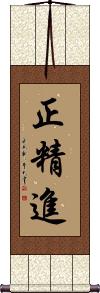
正精進 is one of the Noble Eightfold Paths of Buddhism. Right Effort, along with Right Mindfulness and Right Concentration, constitute the path to Concentration or Perfect Thought.
The proper effort is not the effort to make something particular happen. It is the effort to be aware and awake in each moment, the effort to overcome laziness and defilement, and the effort to make each activity of our daily meditation. This concept is about pursuing wholesome things that promote good karma.
Another definition: Cultivation of what is karmically wholesome and avoidance of what is karmically unwholesome.
This term is exclusively used by devout Buddhists. It is not a common term, and remains an unknown concept to most Japanese and Chinese people.
See Also: Buddhism | Enlightenment | Noble Eightfold Path
Four Noble Truths: Suffering
Dukkha
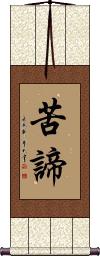
苦諦 relays that part of life in this universe is suffering.
All living things experience some form of suffering, according to Buddhist teaching.
This title is about accepting and understanding that the world is full of suffering.
This term is exclusively used by devout Buddhists. It is not a common term, and is remains an unknown concept to most Chinese, Japanese, and Korean people.
See Also: Buddhism | Enlightenment
Four Noble Truths: Desire and Attachment
Samudaya
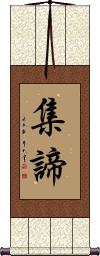
集諦 represents the idea that the core of suffering is often the concept of desire or attachment.
This can be carnal desire, monetary desire, or the attachment you have to something that you are unwilling to part with (such as a fancy car). 集諦 is a simplification of the second noble truth which is an exploration into the root causes of suffering - it's deeper than I can go in a few sentences.
This term is exclusively used by devout Buddhists. It is not a common term, and is remains an unknown concept to most Chinese, Japanese, and Korean people.
See Also: Buddhism | Enlightenment
Namo Amitabha Buddha
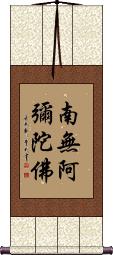
南無阿彌陀佛 is how to express “The Compassionate Amitabha Buddha” (especially for the Pure Land Buddhist Sect).
Some will translate as “Homage to Amitâbha Buddha” or “I seek refuge in the Amitâbha Buddha.”
This is valid in Chinese characters, Japanese Kanji, and old Korean Hanja.
Sometimes modern Japanese use a different version of the 4th and last Kanji, but the version shown here is the most universal.
This is used to pay homage to Amitabha Buddha.
See Also: Bodhisattva | Buddhism | Nirvana
Namu Amida Butsu
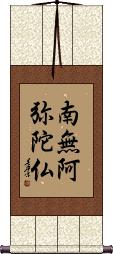
南無阿弥陀仏 is the modern Japanese version of “Namu Amida Butsu” or “The Compassionate Amitabha Buddha.”
Some will translate this as “I sincerely believe in Amitabha; Lord have mercy on me.”
This phrase especially applies to Japanese Pure Land Buddhists.
There is a universal version using ancient characters (with more strokes) for the 4th and last characters. That version is also used in Chinese, Korean, and occasionally Vietnamese.
南無阿弥陀仏 is used to pay homage to Amitabha Buddha.
See Also: Bodhisattva | Buddhism | Nirvana
Reincarnation / Transmigration of Souls
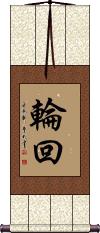
輪回 is a universal word in Japanese and Chinese that expresses the Buddhist idea of “reincarnation,” “transmigration of souls,” or “the eternal cycle of birth and death.”
In some contexts, this can also mean “karma,” and others will say it represents “samsara.”
The first character means wheel, ring, turn, circle, loop, or rotate.
The second character can be thought of as a suffix meaning “-times.” This second character can also refer to something that revolves, returns, goes back, or is a counter of the number of occurrences of some event.
Together the sum supersedes the parts, and it means reincarnation. But knowing the essence of each character may help you understand some of the meaning behind the word.
 Shown to the right is the more common way to write the second character in Japanese.
it’s
an alternate form of this character in Chinese (so neither way is technically wrong in either language). If you select a Japanese calligrapher, expect that is will look like the Kanji to the right.
See Also: Buddhism | Samsara / Endless Cycle of Rebirth
Zen / Chan / Meditation
...as in Zen Buddhism
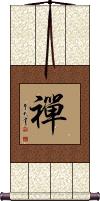
First, let's correct something: The Japanese romanization for this character, “Zen” has penetrated the English language. In English, it's almost always incorrectly used for phrases like “That's so zen.” Nobody says, “That's so meditation” - right? As the title of a sect, this would be like saying, “That's so Baptist!”
禪 by itself just means “meditation.” In that context, it should not be confined to use by any one religion or sect.
Regardless of the dictionary definition, more often than not, this character is associated with Buddhism. And here is one of the main reasons:
Zen is used as the title of a branch of Mahayana Buddhism, which strongly emphasizes meditation practice.
However, it should be noted that Buddhism came from India, and “Chan Buddhism” evolved and developed in medieval China. The Chinese character “Chan” was eventually pronounced as “Zen” in Japanese. Chan Buddhists in China have much in common with Zen Buddhists in Japan.
More about the history of Zen Buddhism here.
Please also note that the Japanese Kanji character for Zen has evolved a little in Japan, and the two boxes (kou) that you see at the top of the right side of the character have been replaced by three dots with tails.
 The original character would still be generally understood and recognized in Japanese (it's considered an ancient version in Japan) but if you want the specifically modern Japanese version, please click on the zen Kanji to the right. Technically, there is no difference between the Tensho and Reisho versions of Zen since they are ancient character styles that existed long before Japan had a written language.
 There is also an alternate/shorthand/simplified Chinese version, which has two dots or tails above the right-side radical. This version is also popular for calligraphy in China. If you want this version, just click the character to the right.
Further notes: Zen is just one of seven sects of Buddhism practiced in Japan. The others are 律 Ritsu (or Risshū), 法相 Hossō, 論 Sanron 華嚴 Kegon, 天台 Tendai, and 眞言 Shingon.
Sit in Meditation
Zazen
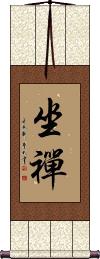
坐禪 describes the act of sitting in a state of deep meditation.
You'll notice that the second character is Chan/Zen (often used to title the meditative form of Buddhism).
In Korean Hanja, this means “religious meditation” (roughly the same as the Chinese definition).
Buddhists may define this as sitting in dhyāna, abstract meditation, fixed abstraction, or contemplation.
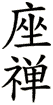 Japanese note: This will make sense in Japanese but the Kanji shown to the left are partially in ancient/traditional Japanese form. Japanese Buddhists may use 坐禪, 坐禅, 座禪, or 座禅. The most standard/modern Japanese form of this word is shown to the right. Click on the Kanji to the right (instead of the button above) if you want this specifically Japanese version.
Devotion / Diligence / Vigorous / Energetic
vīrya
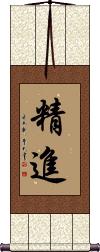
精進 is a wide-ranging word that is used in Chinese, Japanese, and Korean.
It can mean devotion, diligence, concentration, aggressive, enterprising, vigorous, energetic, purification, pushing, asceticism, assiduity, or virility. 精進 is deep, and these two characters can express ideas that take a full English phrase to describe, such as “concentration of mind,” “to forge ahead vigorously,” or “to dedicate oneself to progress.”
Used in the context of Buddhism, it means “making earnest efforts to cultivate virtue and get rid of evil” or “zeal in one's quest for enlightenment.”
Live In The Moment / Live In The Now
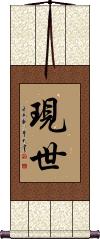
現世 is a very short way to write “live in the moment” or “live in the now” in Japanese.
This short word is open to interpretation. It's used in Japanese Buddhism to mean “the current epoch” or “the current age” (the current age is but a brief moment in the greater scope of existence). In that context, this is pronounced “utsushiyo” or “ustusiyo” in Japanese. Otherwise, it's pronounced “gensei” in Japanese.
Other translation possibilities include:
Earthly world
This world
This life
Present life
Present generation
Present incarnation
This existence
This (momentary) reality
Note: This is also a word in Chinese and old Korean Hanja. While the meaning is more or less the same, this is not recommended for a wall scroll if your audience is Chinese or Korean. This selection is best if your audience is Japanese.
No Mind / Mushin
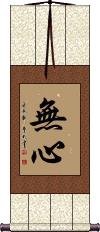
In Japanese, 無心 means innocent or without knowledge of good and evil. It literally means “without mind.”
無心 is one of the five spirits of the warrior (budo) and is often used as a Japanese martial arts tenet. Under that context, places such as the Budo Dojo define it this way: “No mind, a mind without ego. A mind like a mirror which reflects and dos not judge.” The original term was “mushin no shin,” meaning “mind of no mind.” It is a state of mind without fear, anger, or anxiety. Mushin is often described by the phrase “Mizu no Kokoro,” which means “mind like water.” The phrase is a metaphor describing the pond that clearly reflects its surroundings when calm but whose images are obscured once a pebble is dropped into its waters.
This has a good meaning in conjunction with Chan / Zen Buddhism in Japan. However, out of that context, it means mindlessness or absent-mindedness. To non-Buddhists in China, this is associated with doing something without thinking.
In Korean, this usually means indifference.
Use caution and know your audience before ordering this selection.
More info: Wikipedia: Mushin
Mercy / Compassion / Love
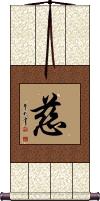
慈 is the simplest way to express the idea of compassion.
This can also mean love for your fellow humans, humanity, or living creatures. Sometimes this is extended to mean charity.
This term is often used in a Buddhist or Christian context. The concept was also spoken of by Laozi (Lao Tzu) in the Dao De Jing (Tao Te Ching).
慈 is considered the direct translation of the Sanskrit word मैत्री (maitrī) Pali word मेत्ता (mettā). In this context, it means benevolence, loving kindness, and goodwill.
This Chinese character is understood in Japanese but is usually used in compound words (not seen alone). Also used in old Korean Hanja, so it's very universal.
See Also: No Mercy | Benevolence | Forgiveness | Kindness
Shakyamuni / The Buddha
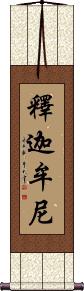
釋迦牟尼 is a transliteration of “Shakyamuni” or “Sakyamuni” in Chinese, Japanese, and old Korean.
The perceived meaning of the name is roughly translated as “Sage of the Sakyas.”
This same Buddha is also known as “Siddhartha Gautama,” “Gotama Buddha,” “Tathagata,” or simply, “The Supreme Buddha.”
Shakyamuni is the legendary man and prince who eventually established the Buddhist religion.
Note: Occasionally Romanized as “Siddhattha Gotama.”
This combination of characters is sometimes seen and used in South Korea and Japan as well (with the same meaning).
Note: 釋迦牟尼 came from the Sanskrit शाक्यमुनि and can also be romanized with diuretics as Śākyamuni.
Shakyamuni / The Buddha
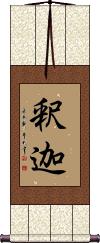
釈迦 is the way to write Shakyamuni in Japanese.
It's just two Kanji, the first is a simplified version of the one used in Chinese for Shakyamuni, and the second one is identical to the Chinese.
This refers to the Buddha (Siddhartha Gautama, 563 BCE-483 BCE) also known as Sakyamuni and Gautama Buddha.
This has a very good meaning in Japanese but is an odd selection for a wall scroll. It appears here more for reference.
Goddess of Compassion
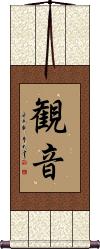
観音 is the specifically Japanese version of Bodhisattva of Compassion or Guan Yin.
In Japanese, this is pronounced Kannon and occasionally spelled Kwannon. The Chinese version is a bit more commonly seen in Asia. However, in Japanese, there is a slight variation with the first character.
Some time ago, a camera company in Japan named their company after this Buddhist deity. That camera company is still known as Canon (they chose a “C” instead of a “K” when they Romanized this name).
Goddess of Compassion
Long or more formal Japanese version of this title
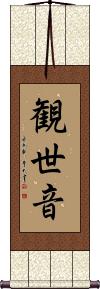
観世音 is the more extended and more formal Japanese version of Bodhisattva of Compassion or Guan Yin.
In Japanese, this is pronounced Kanzeon. The Chinese version is a bit more common in Asia, but in Japanese, they use a slight variation of the first character. Choose this version only if your intended audience is specifically Japanese.
This in-stock artwork might be what you are looking for, and ships right away...




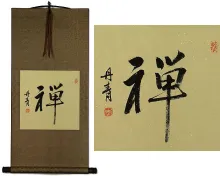


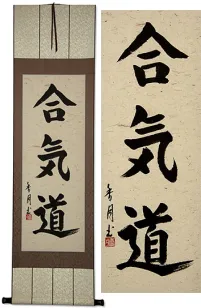

The following table may be helpful for those studying Chinese or Japanese:
| Title | Characters | Romaji (Romanized Japanese) | Various forms of Romanized Chinese | |
| Buddha Buddhism | 佛 仏 | hotoke / butsu | ||
| Reincarnation (Buddhism) | 轉世 转世 | ten sei / tensei | zhuǎn shì zhuan3 shi4 zhuan shi zhuanshi | chuan shih chuanshih |
| Triple Truth of Japanese Buddhism | 人間性を再生するのは寛容な心親切な言葉奉仕と思いやりの精神 | ningensei o saisei suruno wa kanyou na kokoro shinsetsu na kotoba houshi to omoi yari no seishin ningensei o saisei suruno wa kanyo na kokoro shinsetsu na kotoba hoshi to omoi yari no seishin | ||
| Namu Myoho Renge Kyo Homage to Lotus Sutra | 南無妙法蓮華經 / 南無妙法蓮華経 南无妙法莲华经 | na mu myou hou ren ge kyou namumyouhourengekyou na mu myo ho ren ge kyo | nán wú miào fǎ lián huá jīng nan2 wu2 miao4 fa3 lian2 hua2 jing1 nan wu miao fa lian hua jing nanwumiaofalianhuajing | nan wu miao fa lien hua ching nanwumiaofalienhuaching |
| Four Noble Truths: Path Leading Away From Suffering | 道諦 道谛 | doutai / dotai | dào dì / dao4 di4 / dao di / daodi | tao ti / taoti |
| 6. Right Effort Right Endeavor Perfect Effort | 正精進 正精进 | sei shou jin seishoujin sei sho jin | zhèng jīng jìn zheng4 jing1 jin4 zheng jing jin zhengjingjin | cheng ching chin chengchingchin |
| Four Noble Truths: Suffering | 苦諦 苦谛 | kutai | kǔ dì / ku3 di4 / ku di / kudi | k`u ti / kuti / ku ti |
| Four Noble Truths: Desire and Attachment | 集諦 集谛 | jittai | jí dì / ji2 di4 / ji di / jidi | chi ti / chiti |
| Namo Amitabha Buddha | 南無阿彌陀佛 南无阿弥陀佛 | na mu a mi da butsu namuamidabutsu | nā mó ē mí tuó fó na1 mo2 e1 mi2 tuo2 fo2 na mo e mi tuo fo namoemituofo | na mo o mi t`o fo namoomitofo na mo o mi to fo |
| Namu Amida Butsu | 南無阿弥陀仏 | namu amida butsu namuamidabutsu | ||
| Reincarnation Transmigration of Souls | 輪回 / 輪廻 轮回 | rin ne / rinne | lún huí / lun2 hui2 / lun hui / lunhui | |
| Zen Chan Meditation | 禪 禅 | zen | chán / chan2 / chan | ch`an / chan |
| Sit in Meditation | 坐禪 坐禅 | za zen / zazen | zuò chán / zuo4 chan2 / zuo chan / zuochan | tso ch`an / tsochan / tso chan |
| Devotion Diligence Vigorous Energetic | 精進 精进 | shoujin / shojin | jīng jìn / jing1 jin4 / jing jin / jingjin | ching chin / chingchin |
| Live In The Moment Live In The Now | 現世 现世 | gen sei / gensei | xiàn shì / xian4 shi4 / xian shi / xianshi | hsien shih / hsienshih |
| No Mind Mushin | 無心 无心 | mu shin / mushin | wú xīn / wu2 xin1 / wu xin / wuxin | wu hsin / wuhsin |
| Mercy Compassion Love | 慈 | ji | cí / ci2 / ci | tz`u / tzu |
| Shakyamuni The Buddha | 釋迦牟尼 释迦牟尼 | sha ka mu ni shakamuni | shì jiā móu ní shi4 jia1 mou2 ni2 shi jia mou ni shijiamouni | shih chia mou ni shihchiamouni |
| Shakyamuni The Buddha | 釈迦 | sha ka / shaka | shì jiā / shi4 jia1 / shi jia / shijia | shih chia / shihchia |
| Goddess of Compassion | 観音 | kan non / kannon | guān yīn / guan1 yin1 / guan yin / guanyin | kuan yin / kuanyin |
| Goddess of Compassion | 観世音 | kan ze on / kanzeon | guān shì yīn guan1 shi4 yin1 guan shi yin guanshiyin | kuan shih yin kuanshihyin |
| In some entries above you will see that characters have different versions above and below a line. In these cases, the characters above the line are Traditional Chinese, while the ones below are Simplified Chinese. | ||||

Successful Chinese Character and Japanese Kanji calligraphy searches within the last few hours...