Many custom options...


And formats...



Wang in Chinese / Japanese...
Buy a Wang calligraphy wall scroll here!
Personalize your custom “Wang” project by clicking the button next to your favorite “Wang” title below...
1. Wang
4. King
5. Hoang
6. Huynh
7. Jeon
8. Japanese Snapping Turtle / Chinese Soft Shell Turtle
9. King
13. Hope
15. Desire
16. Desire / Craving
17. Desire / Wish / Aspiration
18. Lewon
19. Monkey King
20. Prince
21. Queen
22. Queen / Empress
23. Queen Bee
25. Tennis
26. Vance
27. Wanda
28. Jawon
29. Antwon
30. Faith Hope Love
31. Kaio-Ken
32. Lion King
33. Marion
34. Monkey King
35. Mwangi
37. Pluto
38. Rwanda
39. Uranus
40. Wilde
41. Swank
42. Swanger
43. Swanson
44. Advance Bravely / Indomitable Spirit
45. Animal Kingdom
46. Hoes Before Bros
47. Mwangangi
48. Never Forget
49. Orchid Queen
50. Never Forget
51. United Kingdom
52. Drinking the water of a well: One should never forget who dug it
53. Without a big net, how can you catch fish?
54. Men Die for Wealth, Birds Die for Food
56. Past experience is the teacher for the future
58. Five Precepts
59. John 3:16
60. Joshua 1:9
Wang
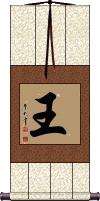
This is the surname Wang (King) in Chinese.
Wang

ワン is the name Wang in Japanese Katakana.
Note: Because this title is entirely Japanese Katakana, it should be written by a Japanese calligrapher.
Fudo Myo-o / Wisdom King
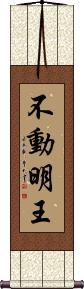
不動明王 is the fierce form of the Buddha Vairocana, and the most important of the Myō-ō or Ming Wang class of deities.
Romanized as Fudō Myō-ō, in Japanese Buddhism or Bùdòng Míngwáng / Pu-Tung Ming-Wang in Chinese Buddhism,
Originally Acala/Achala (अचल “The Immovable”), Acalanātha (अचलनाथ “Immovable Lord”) or Āryācalanātha (आर्याचलनाथ, “Noble Immovable Lord”).
In English, this deity is sometimes called “Wisdom King.”
Northern Praying Mantis
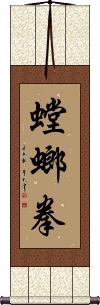
This can be translated literally as “Praying Mantis Fist.”
螳螂拳 is sometimes called Shandong Praying Mantis after its place of origin. It was created by Wang Lang and was named after the praying mantis, an insect, the aggressiveness of which inspired the style.
Shaolin records document that Wang Lang was one of the 18 masters gathered by the Shaolin Abbot Fu Ju, which dates him and Northern Praying Mantis style to the Song Dynasty (960-1279 A.D.).
The fact that the word “Northern” is used in the English title has more to do with where this style came from (Shandong is in northern China), but “north” is absent from this Chinese title.
Note: 螳螂拳 is also a title in Japanese - however, only a Japanese person who practices or is familiar with the “Praying Mantis Fist” style would recognize it.
King
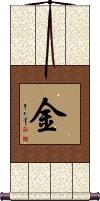
金 is how the name King is transliterated into Mandarin Chinese.
The meaning of this character is metal or gold, and it only vaguely sounds like “king”. But it was used in many articles for famous people like Larry King. If my last name was “King”, I would rather use the character 王 which means king, and romanizes as “wang” or “wong.”
Hoang
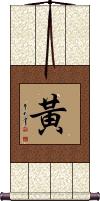
黃 is the original Chinese character for the Vietnamese surname Hoang or Hoàng.
This is one of the most common Vietnamese surnames. It originates from the Chinese surname Huang (黃), meaning "yellow," and also used for "phoenix" or "bright/luminous," signifying nobility and leadership, popular across East Asia and among the Vietnamese diaspora, often sharing roots with Korean Hwang and Chinese Wang.
Adopted in Vietnam where it signifies imperial lineage, courage (phoenix), or brightness, with variations like Hoàng (northern) and Huỳnh (southern).
Huynh
黃 is the original Chinese character for the Vietnamese surname Huynh or Huỳnh.
黃 is one of the most common Vietnamese surnames. It originates from the Chinese surname Huang (黃), meaning "yellow," and also used for "phoenix" or "bright/luminous," signifying nobility and leadership, popular across East Asia and among the Vietnamese diaspora, often sharing roots with Korean Hwang and Chinese Wang.
Adopted in Vietnam where it signifies imperial lineage, courage (phoenix), or brightness, with variations like Hoàng (northern) and Huỳnh (southern).
Jeon
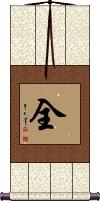
全 is the original Korean Hanja (Chinese character) for a Korean surname that romanizes as Jeon (전).
The meaning of 全 is all, whole, entire, or complete.
全 was sometimes adopted as a surname by those fleeing persecution when the Wang (royal) surname was changed.
Other Korean surnames also romanize as Jeon, but came from these characters:
田 (bat Jeon): "Field" or "farm," a common character for the surname, linked to Goryeo origins.
錢 (don Jeon): "Money," the least common character for the name.
Japanese Snapping Turtle / Chinese Soft Shell Turtle
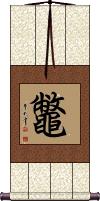
鼈 refers to a species of turtle.
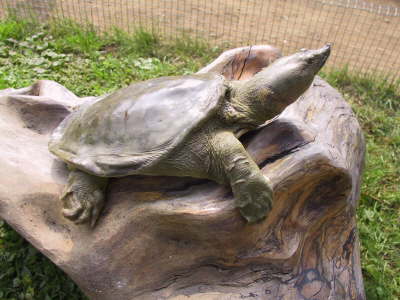
鼈 is Trionyx Sinensis.
鼈 refers to different turtles in different languages. See individual language notes below:
Japanese: 鼈 means “snapping turtle” or “mud turtle.” But rarely used as a single Kanji like this in Japanese.
Chinese: 鼈 means soft-shelled turtle. A specific species, Trionyx Sinensis is native to Asia.
In China, this species is related to the “wang ba,” a soft-shelled turtle sometimes known in English as a banjo turtle (due to its long neck, and general shape). Unfortunately, there is a word, “wang ba dan” which means the egg of this species of turtle. That term has come to mean “bastard” in Chinese (a turtle hatches from an abandoned egg, and does not know who his mother or father is). 鼈 is not a good selection for a wall scroll if your audience is Chinese.
In Korean, this character can be pronounced (though most Koreans would have to look it up in a dictionary). It has not been in common use in Korea for at least a few hundred years.
General notes: You may notice that the bottom half of this character is the same as some other turtle-related titles. That bottom half is actually an ancient character that means “toad.”  Though not seen in this way today, most turtle-related characters hold the meaning of “a toad with a shell” in their ancient origin. That toad character is rarely used alone anymore but you can see what it looks like in the image to the right.
King
王 is wang which means king. It is not pronounced the way you think in Chinese. It is more like English speakers would want to pronounce wong. It has roughly the same vowel sound as tong, song, or long in English.
Note that this means king only, not the emperor. An emperor is higher than a king, and theoretically is chosen by God, according to ancient Chinese culture. However, the definition is often blurred at various points in Asian history.
王 can also be defined as ruler, sovereign, monarch, or magnate. It is also can refer to a game piece in the chess-like Japanese strategic game of shoji.
Note: This can also be a family name in Chinese, Korean and Vietnamese (in Vietnamese it's Vương).
See Also: Queen
Profound / Powerful Words
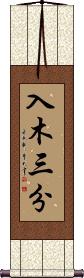
入木三分 is a four-character Chinese proverb that translates in English to a strong form of “profound” or “written with a forceful hand.”
But there is much more to the story...
The deep meaning behind this proverb comes from a man named Wan Xizhi, who lived in the third century.
He was a great writer and calligrapher whose writing style influenced generations of other writers and calligraphers.
He once wrote words on a piece of wood to be taken to an engraver.
When the engraver began to carve the characters into the wood, he found that Wang Xizhi's writing had penetrated the wood about 3/8 of an inch.
Thus people believed that his words were so powerful and profound that they caused the ink from his brush to penetrate the wood deeply.
The proverb literally means “penetrated wood three fen” (A fen is an ancient Chinese measurement of a little over 1/8 of an inch or almost 4mm).
Great Expectations
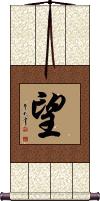
望 holds the ideas of ambition, hope, desire, aspiring to, expectations, looking towards, to gaze (into the distance), and in some contexts, full moon rising.
望 is one of those single characters that is vague but in that vagueness, it also means many things.
望 is a whole word in Chinese and old Korean but is seldom seen alone in Japanese. Still, it holds the meanings noted above in all three languages.
Aspire / Burning Desire
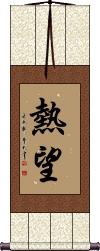
熱望 is a Chinese, Japanese Kanji, and old Korean Hanja word that means, to aspire, longing for, or burning desire.
The first character means hot, heated, or burning.
The second character means hope, expectations, aspiration, or desire.
Hope
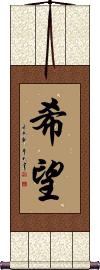
Looking Forward / Hoping
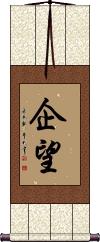
企望 is a Chinese and Japanese word that can be translated as:
to hope; to look forward; looking forward to; hoping for.
The first character means to plan. The second can mean to hope; to expect; to gaze (into the distance); to look towards. Sometimes it can mean a full moon.
Together, these characters create this word about hoping, wishing, looking forward, and dreaming about the future.
Desire
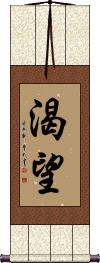
This Chinese word can mean desirous, wishful, or desire.
The first character means to thirst for [something] or to be thirsty. The second character means to hope for, to expect, to gaze (into the distance), or to look for something. The combined meaning of these two characters changes a bit, but I think it's nice to know the individual meanings to give you a better understanding of where a word comes from.
Korean definitions of this word include craving, longing, and thirst for knowledge.
Desire / Craving
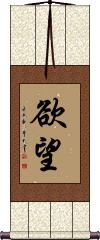
欲望 is a word that means strong desire, while some might translate it as “lust.”
The first character of this word means desire, longing, hunger, covetousness, greed, passion, desire, craving, or wish. The second character means to hope for, ambition, desire, aspire, expect, gaze (into the distance), or look for something.
Desire / Wish / Aspiration
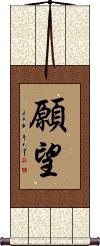
願望 means desire, wish, or aspiration in Chinese and Japanese.
Lewon
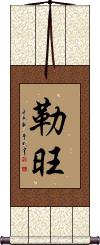
勒旺 is the name Lewon in Chinese (Mandarin).
Monkey King
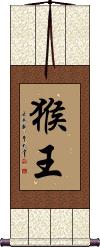
猴王 is the short title for “Monkey King.” This can refer to the character made famous by the ancient novel Journey to the West.
This literally reads “Monkey King.” However, this title is open to interpretation and could be used for someone who is the boss of the primate exhibit at the zoo or certain characters in Chinese opera.
See Also: Monkey Fist | Drunken Monkey
Prince
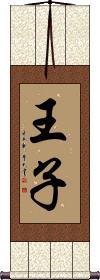
王子 is prince in Chinese characters and Japanese Kanji.
If you look at the meaning of each character, the first means king, and the second means son (or child). Thus, “King's Son,” “Son of the King,” or “King's Child” is the literal meaning of this title.
Queen
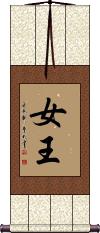
Queen / Empress
Wife of the King
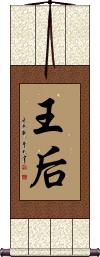
王后 is another way to write queen in Chinese, Japanese Kanji, and old Korean Hanja.
王后 is sometimes used for the title of empress.
The first character means “king,” and the second means “wife,” or a short form to say “wife of the king/emperor.” So this is literally “king's wife” or “emperor's wife.” Some will translate this as “queen consort.”
Queen Bee
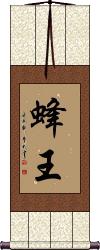
I added 蜂王 because a customer got confused about queens.
In Chinese, they do not use the same title of queen for bees as they do for humans. 蜂王 is the proper title for the queen bee of a hive.
Reality and Illusion
Buddhism Concept
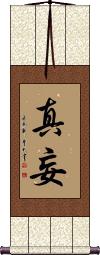
真妄 is a specifically Buddhist term that means “reality and illusion.” Out of Buddhist context, it might be read as “The real and the absurd.”
Separately, the first character means real, true, and genuine, and the second character means absurd, fantastic, or related to fantasy.
Tennis
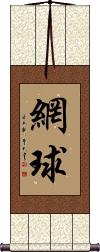
網球 is the word for tennis and/or tennis ball in Chinese.
Vance
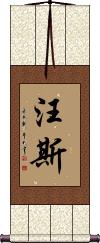
汪斯 is the name Vance in Chinese (Mandarin).
Wanda
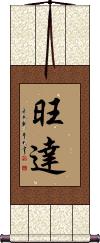
旺達 is the name Wanda in Chinese (Mandarin).
Jawon

賈旺 is the name Jawon in Chinese (Mandarin).
Antwon

安特旺 is the name Antwon in Chinese (Mandarin).
Faith Hope Love
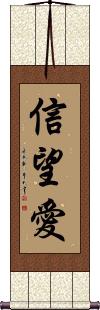
信望愛 is a Chinese list of words meaning faith, hope, and love.
This is not a typical phrase in Chinese but rather just random words strung together. There's no bad meaning, it's just not typical Chinese grammar.
Kaio-Ken
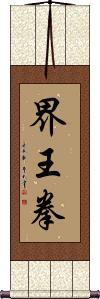
界王拳 is the name Kaioken in Japanese. The meaning is World King Fist. This title is associated with Dragon Ball Z.
This can be pronounced in Chinese, but would only be recognized by Chinese fans of Dragon Ball Z.
Kaio-Ken
This is Kaiōken in Japanese.
界 = Community, circles, world, border, or boundary.
王 = King
拳 = Fist
Often translated as World Lord Fist, Fist of the World King, Kamajamaja (Norwegian), and Leptonski Udarac (Slovenian).
Associated with Goku's attack technique in Dragon Ball Z.
Lion King
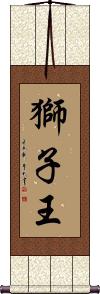
獅子王 is the Chinese title for “The Lion King” (also associated with the Disney movie).
This has the “Lion King” meaning in Japanese however, not associated with the movie you are thinking of. 獅子王 is also a Japanese surname that romanizes as Shishiou.
Marion
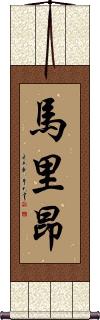
馬里昂 is the second most common transliteration to Mandarin Chinese for the name Marion.
Monkey King
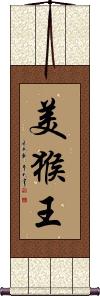
美猴王 is the specific title for “Monkey King.”
A character made famous by the ancient novel Journey to the West.
It literally means “Handsome/Beautiful Monkey King.”
See Also: Monkey Fist | Drunken Monkey
Mwangi

姆旺吉 is the name Mwangi in Chinese (Mandarin).
The Planet Neptune
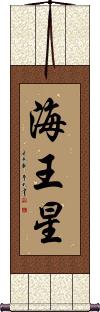
海王星 is the Japanese Kanji, old Korean Hanja, and Chinese title for the planet Neptune.
海王星 literally means “Sea God Star” (all planets end in the character that also means “star”).
Pluto
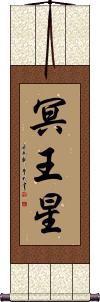
冥王星 is the Chinese, Japanese Kanji, and old Korean Hanja for Pluto (the dwarf planet or non-planet that used to be thought of as the 9th planet in the Solar system).
Rwanda
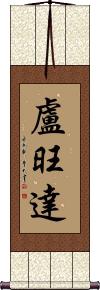
Uranus
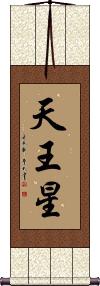
天王星 is the Chinese, Japanese Kanji, and old Korean Hanja for the planet Uranus.
Wilde

王爾德 is the name Wilde in Chinese (Mandarin).
Swank

斯旺克 is the name Swank in Chinese (Mandarin).
Swanger

斯旺格 is the name Swanger in Chinese (Mandarin).
Swanson

斯旺森 is the name Swanson in Chinese (Mandarin).
Advance Bravely / Indomitable Spirit
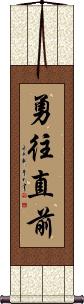
This proverb creates an image of a warrior bravely advancing against an enemy regardless of the odds.
This proverb can also be translated as “indomitable spirit” or “march fearlessly onward.”
See Also: Indomitable | Fortitude
Animal Kingdom
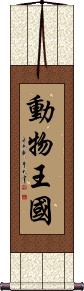
動物王國 is literally what it says.
There is even a TV show in China that is similar to Wild Kingdom or what you would currently see on the Discovery Channel that has this same title.
For your information: In the Chinese way of thinking, the Tiger is the king of the animal kingdom (lions are not native to China, so the tiger took the role that we have given to the lion in our western way of thinking).
The modern Japanese version has a slight variation on the last character (国 instead of 國). Let me know if you want the modern Japanese version (國 would be considered the old or traditional version).
Hoes Before Bros
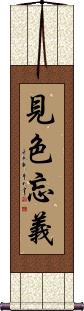
見色忘義 is a modern Chinese idiom that means to put love before loyalty or to forget loyalty when in love.
This would be roughly equivalent to the English, “Hoes before bros.”
Mwangangi

姆旺甘吉 is the name Mwangangi in Chinese (Mandarin).
Never Forget
Never forget your vow or path
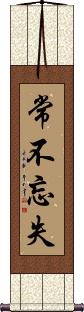
This title is used almost exclusively in a Buddhist context (not all Chinese or Japanese people will recognize it).
常不忘失 means “Never forget your vow/path” in Chinese characters and Japanese Kanji.
Orchid Queen
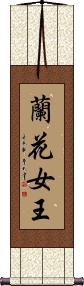
蘭花女王 is the long, clear, or verbose version of “Orchid Queen” in Chinese.
Never Forget
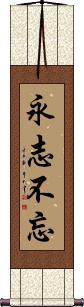
永志不忘 literally translates as “forever remember, never forget.”
But most will just understand this as “never forget” or “never forgotten” in Chinese.
United Kingdom
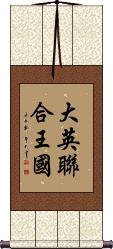
大英聯合王國 is the Chinese name for the United Kingdom.
See Also: Great Britain | England | Scotland | Ireland | Europe
Drinking the water of a well: One should never forget who dug it
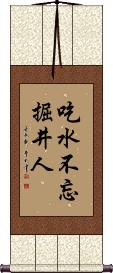
This proverb suggests that one should always be grateful to those who helped one succeed.
And remember your ancestors and those that came before you whose sacrifices made your present life better.
Some Chinese will separate the intended meaning from this proverb and translate this as “Don't forget the people who once helped you.” In Modern China, this idiom is virtually never used to refer to an actual well.
Note: This can be pronounced in Korean but it's not a commonly used phrase.
Without a big net, how can you catch fish?
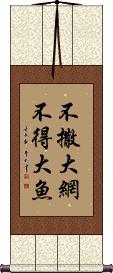
不撒大網不得大魚 is a Chinese proverb that literally translates as: [if one does] not cast a big net, [one can] not get big fish.
Figuratively, this means: One cannot make great accomplishments without making great efforts or taking great pains.
This is sort of the fishing version of, “No pain, no gain.”
Men Die for Wealth, Birds Die for Food
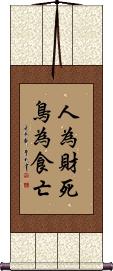
人為財死鳥為食亡 is a Chinese proverb that literally states that human beings will die for riches, just as birds will for food.
Figuratively it means that man will do anything in his means to become rich. Personally, I think dying for food is a more noble cause.
Often translated as “Men die in pursuit of wealth, birds die in pursuit of food. The 人 in this proverb just means human, so “men” is a placeholder for human with that translation - an English language problem that we have no easy gender-neutral nouns.
This proverb is meant to serve as a warning about the follies of greed.
Better Late Than Never
It's Never Too Late Too Mend
Long ago in what is now China, there were many kingdoms throughout the land. This time period is known as “The Warring States Period” by historians because these kingdoms often did not get along with each other.
Sometime around 279 B.C. the Kingdom of Chu was a large but not particularly powerful kingdom. Part of the reason it lacked power was the fact that the King was surrounded by “yes men” who told him only what he wanted to hear. Many of the King's court officials were corrupt and incompetent which did not help the situation.
The King was not blameless himself, as he started spending much of his time being entertained by his many concubines.
One of the King's ministers, Zhuang Xin, saw problems on the horizon for the Kingdom, and warned the King, “Your Majesty, you are surrounded by people who tell you what you want to hear. They tell you things to make you happy and cause you to ignore important state affairs. If this is allowed to continue, the Kingdom of Chu will surely perish, and fall into ruins.”
This enraged the King who scolded Zhuang Xin for insulting the country and accused him of trying to create resentment among the people. Zhuang Xin explained, “I dare not curse the Kingdom of Chu but I feel that we face great danger in the future because of the current situation.” The King was simply not impressed with Zhuang Xin's words.
Seeing the King's displeasure with him and the King's fondness for his court of corrupt officials, Zhuang Xin asked permission from the King that he may take leave of the Kingdom of Chu, and travel to the State of Zhao to live. The King agreed, and Zhuang Xin left the Kingdom of Chu, perhaps forever.
Five months later, troops from the neighboring Kingdom of Qin invaded Chu, taking a huge tract of land. The King of Chu went into exile, and it appeared that soon, the Kingdom of Chu would no longer exist.
The King of Chu remembered the words of Zhuang Xin and sent some of his men to find him. Immediately, Zhuang Xin returned to meet the King. The first question asked by the King was “What can I do now?”
Zhuang Xin told the King this story:
A shepherd woke one morning to find a sheep missing. Looking at the pen saw a hole in the fence where a wolf had come through to steal one of his sheep. His friends told him that he had best fix the hole at once. But the Shepherd thought since the sheep is already gone, there is no use fixing the hole.
The next morning, another sheep was missing. And the Shepherd realized that he must mend the fence at once. Zhuang Xin then went on to make suggestions about what could be done to reclaim the land lost to the Kingdom of Qin, and reclaim the former glory and integrity of the Kingdom of Chu.
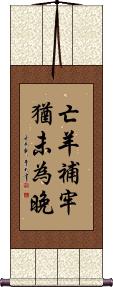
The Chinese idiom shown above came from this reply from Zhuang Xin to the King of Chu almost 2,300 years ago.
It translates roughly into English as...
“Even if you have lost some sheep, it's never too late to mend the fence.”
This proverb, 亡羊补牢犹未为晚, is often used in modern China when suggesting in a hopeful way that someone change their ways, or fix something in their life. It might be used to suggest fixing a marriage, quitting smoking, or getting back on track after taking an unfortunate path in life among other things one might fix in their life.
I suppose in the same way that we might say, “Today is the first day of the rest of your life” in our western cultures to suggest that you can always start anew.
Note: This does have Korean pronunciation but is not a well-known proverb in Korean (only Koreans familiar with ancient Chinese history would know it). Best if your audience is Chinese.
Past experience is the teacher for the future
Past events not forgotten serve as teachers for later events.
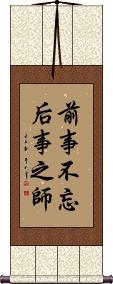
The most literal translation to English of this ancient 前事不忘后事之师 Chinese proverb is:
“Past events not forgotten serve as teachers for later events.”
However, it's been translated several ways:
Don't forget past events, they can guide you in the future.
Benefit from past experience.
Past experience, if not forgotten, is a guide for the future.
Past calamity is my teacher.
A good memory for the past is a teacher for the future.
The remembrance of the past is the teacher of the future.
If one remembers the lessons of the past; They will serve as a guide to avoid mistakes in the future.
The origin:
This proverb comes from the 5th century B.C., just before the Warring States Period in the territory now known as China.
The head of the State of Jin, Zhi Bo, seized power in a coup. He did this with help from the armies of the State of Han and Wei. Instead of being grateful for the help from Han and Wei, he treacherously took the land of Han and Wei. Never satisfied, Zhi Bo employed the armies of Han and Wei to attack and seize the State of Zhao.
The king of Zhao took advice from his minister Zhang Mengtan and secretly contacted the Han and Wei armies to reverse their plans and attack the army of Zhi Bo instead. The plan was successful, and the State of Zhao was not only saved but was set to become a powerful kingdom in the region.
Zhang Mengtan immediately submitted his resignation to a confused king of Zhao. When asked why, Zhang Mengtan said, “I've done my duty to save my kingdom, but looking back at past experience, I know sovereign kings are never satisfied with the power or land at hand. They will join others and fight for more power and more land. I must learn from past experiences, as those experiences are the teachers of future events.”
The king could not dispute the logic in that statement and accepted Zhang Mengtan's resignation.
For generations, the State of Zhao continued to fight for power and land until finally defeated and decimated by the State of Qin (which led to the birth of the Qin Dynasty in 221 B.C.).
Seven Heavenly Virtues
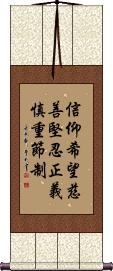
信仰希望慈善堅忍正義慎重節制 is a list in Chinese and Japanese Kanji of an interpretation of the Seven Heavenly Virtues.
1. Faith is belief in God, and the right virtues.
2. Hope is taking a positive future view that good will prevail.
3. Charity is a concern for, and active helping of, others.
4. Fortitude is never giving up.
5. Justice is being fair and equitable with others.
6. Prudence is care of and moderation with money.
7. Temperance is moderation of needed things and abstinence from things that are not needed.
The full list is here. 信仰希望慈善堅忍正義慎重節制 is a word list, not a common phrase. While all Chinese and Japanese people will recognize the words in the list, they may not understand what the list is about (unless they are familiar with the Seven Heavenly Virtues).
don’t get this as a tattoo or anything like that without first consulting a native translator in the target language. These are fine for a wall scroll but a long discussion is needed before you commit to this for a lifetime inking commitment.
Five Precepts
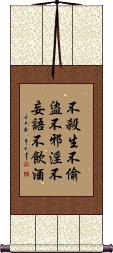
不殺生不偷盜不邪淫不妄語不飲酒 is the full list of the five precepts of Buddhism in Chinese.
There are many ways to translate or express these.
The following is one basic way:
1. Do not kill/murder.
2. Do not steal.
3. Do not commit adultery and/or sexual misconduct.
4. Do not lie or speak falsehoods.
5. Do not become intoxicated (with drugs/alcohol).
Here is another take from my favorite magazine: Lion's Roar: Five Precepts
John 3:16

神愛世人甚至將他的獨生子賜給他們叫一切信他的不至滅亡反得永生 is the full translation of John 3:16 into Chinese.
This is from the Chinese Union Bible which comes from a revised version of the King James. This Chinese Bible was originally translated and printed in 1919 (several revisions since then).
Because of the origin being the KJV, I'll say that in English, this would be, “For God so loved the world, that he gave his only begotten Son, that whosoever believeth in him should not perish but have everlasting life.”
As with any translation, there are interesting cultural and linguistic issues. For instance, the word used for “world” in Chinese can also mean “common people.” So you could say that it means “For God so loved the common people...”
This does not take away from the text, as it will be understood with the same meaning and connotation.
There is no direct Greek-to-Chinese translation in print (that I know of), so this is the best available. Of course, you can ask any Greek person of faith, and they will claim that a bit is lost from the original Greek of the New Testament to any of the English versions of the Bible in print.
Joshua 1:9
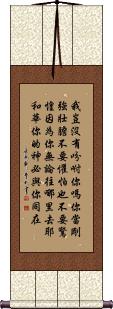
Here is the full translation of Joshua 1:9 into Chinese.
The text with punctuation:
我岂没有吩咐你吗?你当刚强壮胆。不要惧怕,也不要惊惶。因为你无论往哪里去,耶和华你的神必与你同在。
Hand-painted calligraphy does not retain punctuation.
This translation comes from the 1919 Chinese Union Bible.
For reference, from the KJV, this reads, “Have not I commanded thee? Be strong and of a good courage; be not afraid, neither be thou dismayed: for the LORD thy God is with thee whithersoever thou goest.”
Daodejing / Tao Te Ching - Chapter 33
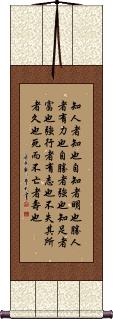
This is referred to as passage or chapter 33 of the Dao De Jing (often Romanized as “Tao Te Ching”).
These are the words of the philosopher Laozi (Lao Tzu).
To know others is wisdom;
To know oneself is acuity/intelligence.
To conquer others is power,
To conquer oneself is strength.
To know contentment is to have wealth.
To act resolutely is to have purpose.
To stay one's ground is to be enduring.
To die and yet not be forgotten is to be long-lived.
To understand others is to be knowledgeable;
To understand yourself is to be wise.
To conquer others is to have strength;
To conquer yourself is to be strong.
To know when you have enough is to be rich.
To go forward with strength is to have ambition.
To not lose your place is to be long-lasting.
To die but not be forgotten -- that's true long life.
He who is content is rich;
He who acts with persistence has will;
He who does not lose his roots will endure;
He who dies physically but preserves the Dao
will enjoy a long after-life.
Notes:
During our research, the Chinese characters shown here are probably the most accurate to the original text of Laozi. These were taken for the most part from the Mawangdui 1973 and Guodan 1993 manuscripts which pre-date other Daodejing texts by about 1000 years.
Grammar was a little different in Laozi’s time. So you should consider this to be the ancient Chinese version. Some have modernized this passage by adding, removing, or swapping articles and changing the grammar (we felt the oldest and most original version would be more desirable). You may find other versions printed in books or online - sometimes these modern texts are simply used to explain to Chinese people what the original text really means.
This language issue can be compared in English by thinking how the King James (known as the Authorized version in Great Britain) Bible from 1611 was written, and comparing it to modern English. Now imagine that the Daodejing was probably written around 403 BCE (2000 years before the King James Version of the Bible). To a Chinese person, the original Daodejing reads like text that is 3 times more detached compared to Shakespeare’s English is to our modern-day speech.
Extended notes:
While on this Biblical text comparison, it should be noted, that just like the Bible, all the original texts of the Daodejing were lost or destroyed long ago. Just as with the scripture used to create the Bible, various manuscripts exist, many with variations or copyist errors. Just as the earliest New Testament scripture (incomplete) is from 170 years after Christ, the earliest Daodejing manuscript (incomplete) is from 100-200 years after the death of Laozi.
The reason that the originals were lost probably has a lot to do with the first Qin Emperor. Upon taking power and unifying China, he ordered the burning and destruction of all books (scrolls/rolls) except those pertaining to Chinese medicine and a few other subjects. The surviving Daodejing manuscripts were either hidden on purpose or simply forgotten about. Some were not unearthed until as late as 1993.
We compared a lot of research by various archeologists and historians before deciding on this as the most accurate and correct version. But one must allow that it may not be perfect, or the actual and original as from the hand of Laozi himself.
Return to Dwell in Gardens and Fields Poem

This is Tao Yuanming's poem, “Returning to Dwell in Gardens and Fields.”
少無適俗韻 性本愛丘山。
誤落塵網中 一去三十年。
羈鳥戀舊林 池魚思故淵。
開荒南野際 抱拙歸園田。
方宅十餘畝 草屋八九間。
榆柳蔭後簷 桃李羅堂前。
暖暖遠人村 依依墟裡煙。
狗吠深巷中 雞鳴桑樹顛。
戶庭無塵雜 虛室有餘閒。
久在樊籠裡 復得返自然。
Not the results for Wang that you were looking for?
Below are some entries from our dictionary that may match your Wang search...
| Characters If shown, 2nd row is Simp. Chinese |
Pronunciation Romanization |
Simple Dictionary Definition |
望 see styles |
wàng wang4 wang yuaha ゆあは |
More info & calligraphy: Great Expectations(1) (archaism) full moon; (2) (archaism) 15th day of the lunar month; (female given name) Yuaha To look at, or for; expect, hope; towards; the full moon. |
王 see styles |
wàng wang4 wang wan わん |
More info & calligraphy: Wang(n,n-suf) (1) king; ruler; sovereign; monarch; (n,n-suf) (2) tycoon; magnate; champion; master; (n,n-suf) (3) (abbreviation) {shogi} (See 王将・おうしょう・1) king (of the senior player); (surname) Wan rāja, king, prince, royal; to rule. |
企望 see styles |
qǐ wàng qi3 wang4 ch`i wang chi wang kibou / kibo きぼう |
More info & calligraphy: Looking Forward / Hoping(noun/participle) (obsolete) making a plan and anticipating its fruition |
女王 see styles |
nǚ wáng nu:3 wang2 nü wang joou / joo じょおう |
More info & calligraphy: Queen(1) queen; (2) (じょおう, じょうおう only) female champion; (personal name) Joou |
希望 see styles |
xī wàng xi1 wang4 hsi wang yume ゆめ |
More info & calligraphy: Hope(noun/participle) hope; wish; aspiration; (female given name) Yume to yearn for |
欲望 see styles |
yù wàng yu4 wang4 yü wang yokumō よくぼう |
More info & calligraphy: Desire / Cravingdesire |
渴望 see styles |
kě wàng ke3 wang4 k`o wang ko wang |
More info & calligraphy: Desire |
熱望 热望 see styles |
rè wàng re4 wang4 je wang netsubou / netsubo ねつぼう |
More info & calligraphy: Aspire / Burning Desire(noun, transitive verb) longing for; burning desire |
猴王 see styles |
hóu wáng hou2 wang2 hou wang |
More info & calligraphy: Monkey King |
王后 see styles |
wáng hòu wang2 hou4 wang hou oukou / oko おうこう |
More info & calligraphy: Queen / Empressqueen |
王女 see styles |
wáng nǚ wang2 nv3 wang nü oujo(p); ounyo(ok) / ojo(p); onyo(ok) おうじょ(P); おうにょ(ok) |
More info & calligraphy: Princessprincess |
王子 see styles |
wáng zǐ wang2 zi3 wang tzu kimiko きみこ |
More info & calligraphy: Prince(1) prince; (2) subordinate Kumano shrine; (female given name) Kimiko prince |
網球 网球 see styles |
wǎng qiú wang3 qiu2 wang ch`iu wang chiu |
More info & calligraphy: Tennis |
蜂王 see styles |
fēng wáng feng1 wang2 feng wang |
More info & calligraphy: Queen Bee |
願望 愿望 see styles |
yuàn wàng yuan4 wang4 yüan wang ganbou(p); ganmou / ganbo(p); ganmo がんぼう(P); がんもう |
More info & calligraphy: Desire / Wish / Aspiration(noun, transitive verb) desire; wish; aspiration |
冥王星 see styles |
míng wáng xīng ming2 wang2 xing1 ming wang hsing meiousei / meose めいおうせい |
More info & calligraphy: Pluto{astron} Pluto (dwarf planet) |
天王星 see styles |
tiān wáng xīng tian1 wang2 xing1 t`ien wang hsing tien wang hsing tennousei(p); tenousei / tennose(p); tenose てんのうせい(P); てんおうせい |
More info & calligraphy: Uranus{astron} Uranus (planet) |
海王星 see styles |
hǎi wáng xīng hai3 wang2 xing1 hai wang hsing kaiousei / kaiose かいおうせい |
More info & calligraphy: The Planet Neptune{astron} Neptune (planet) |
盧旺達 卢旺达 see styles |
lú wàng dá lu2 wang4 da2 lu wang ta |
More info & calligraphy: Rwanda |
亡 see styles |
wáng wang2 wang suemaru すえまる |
to die; to lose; to be gone; to flee; deceased (n,n-suf) (1) (usu. after dates) (See 没・ぼつ・1) death; (prefix) (2) (usu. before names) (See 故・こ) the late; the deceased; (personal name) Suemaru Gone, lost, dead, ruined; not. |
亾 亡 see styles |
wáng wang2 wang |
old variant of 亡[wang2] See: 亡 |
妄 see styles |
wàng wang4 wang mō |
absurd; fantastic; presumptuous; rash mithyā; false, untrue, erroneous, wild. |
尢 see styles |
wāng wang1 wang dainomageashi だいのまげあし |
lame kanji "crooked-leg" dai radical (radical 43) |
尩 see styles |
wāng wang1 wang |
variant of 尪[wang1] |
尪 see styles |
wāng wang1 wang |
feeble; lame |
往 see styles |
wǎng wang3 wang nobori のぼり |
to go (in a direction); to; towards; (of a train) bound for; past; previous (personal name) Nobori To go; gone, past; to be going to, future. |
徃 往 see styles |
wǎng wang3 wang ō |
old variant of 往[wang3] go |
忘 see styles |
wàng wang4 wang matsuzaki まつざき |
to forget; to overlook; to neglect (personal name) Matsuzaki forget |
惘 see styles |
wǎng wang3 wang |
disappointed; perplexed |
旺 see styles |
wàng wang4 wang hikaru ひかる |
prosperous; flourishing; (of flowers) blooming; (of fire) roaring (female given name) Hikaru |
Click here for more Wang results from our dictionary
The following table may be helpful for those studying Chinese or Japanese...
| Title | Characters | Romaji (Romanized Japanese) | Various forms of Romanized Chinese | |
| Wang | 王 | wáng / wang2 / wang | ||
| Wang | ワン | wan | ||
| Fudo Myo-o Wisdom King | 不動明王 不动明王 | fu dou myou ou fudoumyouou fu do myo o | bù dòng míng wáng bu4 dong4 ming2 wang2 bu dong ming wang budongmingwang | pu tung ming wang putungmingwang |
| Northern Praying Mantis | 螳螂拳 | tou rou ken tourouken to ro ken | táng láng quán tang2 lang2 quan2 tang lang quan tanglangquan | t`ang lang ch`üan tanglangchüan tang lang chüan |
| King | 金 | jīn / jin1 / jin | chin | |
| Hoang | 黃 黄 | huáng / huang2 / huang | ||
| Huynh | 黃 黄 | huáng / huang2 / huang | ||
| Jeon | 全 | quán / quan2 / quan | ch`üan / chüan | |
| Japanese Snapping Turtle Chinese Soft Shell Turtle | 鼈 | suppon / supon | biē / bie1 / bie | pieh |
| King | 王 | ou / o | wáng / wang2 / wang | |
| Profound Powerful Words | 入木三分 | rù mù sān fēn ru4 mu4 san1 fen1 ru mu san fen rumusanfen | ju mu san fen jumusanfen |
|
| Great Expectations | 望 | bou / nozomi bo / nozomi | wàng / wang4 / wang | |
| Aspire Burning Desire | 熱望 热望 | netsubou / netsubo | rè wàng / re4 wang4 / re wang / rewang | je wang / jewang |
| Hope | 希望 | ki bou / kibou / ki bo | xī wàng / xi1 wang4 / xi wang / xiwang | hsi wang / hsiwang |
| Looking Forward Hoping | 企望 | kibou / kibo | qǐ wàng / qi3 wang4 / qi wang / qiwang | ch`i wang / chiwang / chi wang |
| Desire | 渴望 | kě wàng / ke3 wang4 / ke wang / kewang | k`o wang / kowang / ko wang | |
| Desire Craving | 欲望 | yokubou / yokubo | yù wàng / yu4 wang4 / yu wang / yuwang | yü wang / yüwang |
| Desire Wish Aspiration | 願望 愿望 | gan bou / ganbou / gan bo | yuàn wàng yuan4 wang4 yuan wang yuanwang | yüan wang yüanwang |
| Lewon | 勒旺 | lēi wàng / le4 wang4 / le wang / lewang | ||
| Monkey King | 猴王 | hóu wáng / hou2 wang2 / hou wang / houwang | ||
| Prince | 王子 | ou ji / ouji / o ji | wáng zǐ / wang2 zi3 / wang zi / wangzi | wang tzu / wangtzu |
| Queen | 女王 | jo ou / joou / jo o | nǚ wáng / nv3 wang2 / nv wang / nvwang | nü wang / nüwang |
| Queen Empress | 王后 | ou kou / oukou / o ko | wáng hòu / wang2 hou4 / wang hou / wanghou | |
| Queen Bee | 蜂王 | fēng wáng feng1 wang2 feng wang fengwang | ||
| Reality and Illusion | 真妄 | zhēn wàng zhen1 wang4 zhen wang zhenwang | chen wang chenwang |
|
| Tennis | 網球 网球 | wǎng qiú / wang3 qiu2 / wang qiu / wangqiu | wang ch`iu / wangchiu / wang chiu | |
| Vance | 汪斯 | wāng sī / wang1 si1 / wang si / wangsi | wang ssu / wangssu | |
| Wanda | 旺達 旺达 | wàng dá / wang4 da2 / wang da / wangda | wang ta / wangta | |
| Jawon | 賈旺 贾旺 | jiǎ wàng / jia3 wang4 / jia wang / jiawang | chia wang / chiawang | |
| Antwon | 安特旺 | ān tè wàng an1 te4 wang4 an te wang antewang | an t`e wang antewang an te wang |
|
| Faith Hope Love | 信望愛 信望爱 | xìn wàng ài xin4 wang4 ai4 xin wang ai xinwangai | hsin wang ai hsinwangai |
|
| Kaio-Ken | 界王拳 | kai ou ken / kaiouken / kai o ken | jiè wáng quán jie4 wang2 quan2 jie wang quan jiewangquan | chieh wang ch`üan chiehwangchüan chieh wang chüan |
| Kaio-Ken | 界王拳 | kai ou ken / kaiouken / kai o ken | jiè wáng quán jie4 wang2 quan2 jie wang quan jiewangquan | chieh wang ch`üan chiehwangchüan chieh wang chüan |
| Lion King | 獅子王 狮子王 | shi shi ou / shishiou / shi shi o | shī zǐ wáng shi1 zi3 wang2 shi zi wang shiziwang | shih tzu wang shihtzuwang |
| Marion | 馬里昂 马里昂 | mǎ lǐ wáng ma3 li3 wang2 ma li wang maliwang | ||
| Monkey King | 美猴王 | měi hóu wáng mei3 hou2 wang2 mei hou wang meihouwang | ||
| Mwangi | 姆旺吉 | mǔ wàng jí mu3 wang4 ji2 mu wang ji muwangji | mu wang chi muwangchi |
|
| The Planet Neptune | 海王星 | kaiousei / kaiosei | hǎi wáng xīng hai3 wang2 xing1 hai wang xing haiwangxing | hai wang hsing haiwanghsing |
| Pluto | 冥王星 | mei ou sei / meiousei / mei o sei | míng wáng xīng ming2 wang2 xing1 ming wang xing mingwangxing | ming wang hsing mingwanghsing |
| Rwanda | 盧旺達 卢旺达 | lú wàng dá lu2 wang4 da2 lu wang da luwangda | lu wang ta luwangta |
|
| Uranus | 天王星 | tennousei / tennosei | tiān wáng xīng tian1 wang2 xing1 tian wang xing tianwangxing | t`ien wang hsing tienwanghsing tien wang hsing |
| Wilde | 王爾德 王尔德 | wáng ěr dé wang2 er3 de2 wang er de wangerde | wang erh te wangerhte |
|
| Swank | 斯旺克 | sī wàng kè si1 wang4 ke4 si wang ke siwangke | ssu wang k`o ssuwangko ssu wang ko |
|
| Swanger | 斯旺格 | sī wàng gé si1 wang4 ge2 si wang ge siwangge | ssu wang ko ssuwangko |
|
| Swanson | 斯旺森 | sī wàng sēn si1 wang4 sen1 si wang sen siwangsen | ssu wang sen ssuwangsen |
|
| Advance Bravely Indomitable Spirit | 勇往直前 | yǒng wǎng zhí qián yong3 wang3 zhi2 qian2 yong wang zhi qian yongwangzhiqian | yung wang chih ch`ien yungwangchihchien yung wang chih chien |
|
| Animal Kingdom | 動物王國 动物王国 | doubutsu oukoku doubutsuoukoku dobutsu okoku | dòng wù wáng guó dong4 wu4 wang2 guo2 dong wu wang guo dongwuwangguo | tung wu wang kuo tungwuwangkuo |
| Hoes Before Bros | 見色忘義 见色忘义 | jiàn sè wàng yì jian4 se4 wang4 yi4 jian se wang yi jiansewangyi | chien se wang i chiensewangi |
|
| Mwangangi | 姆旺甘吉 | mǔ wàng gān jí mu3 wang4 gan1 ji2 mu wang gan ji muwangganji | mu wang kan chi muwangkanchi |
|
| Never Forget | 常不忘失 | jou fu bou shitsu joufuboushitsu jo fu bo shitsu | cháng bú wàng shī chang2 bu2 wang4 shi1 chang bu wang shi changbuwangshi | ch`ang pu wang shih changpuwangshih chang pu wang shih |
| Orchid Queen | 蘭花女王 兰花女王 | lán huā nǚ wáng lan2 hua1 nv3 wang2 lan hua nv wang lanhuanvwang | lan hua nü wang lanhuanüwang |
|
| Never Forget | 永志不忘 | yǒng zhì bù wàng yong3 zhi4 bu4 wang4 yong zhi bu wang yongzhibuwang | yung chih pu wang yungchihpuwang |
|
| United Kingdom | 大英聯合王國 大英联合王国 | dài yīng lián hé wáng guó dai4 ying1 lian2 he2 wang2 guo2 dai ying lian he wang guo daiyinglianhewangguo | tai ying lien ho wang kuo taiyinglienhowangkuo |
|
| Drinking the water of a well: One should never forget who dug it | 吃水不忘掘井人 | chī shuǐ bú wàng jué jǐng rén chi1 shui3 bu2 wang4 jue2 jing3 ren2 chi shui bu wang jue jing ren chishuibuwangjuejingren | ch`ih shui pu wang chüeh ching jen chih shui pu wang chüeh ching jen |
|
| Without a big net, how can you catch fish? | 不撒大網不得大魚 不撒大网不得大鱼 | bù sā dà wǎng bù dé dà yú bu4 sa1 da4 wang3 bu4 de2 da4 yu2 bu sa da wang bu de da yu busadawangbudedayu | pu sa ta wang pu te ta yü pusatawangputetayü |
|
| Men Die for Wealth, Birds Die for Food | 人為財死鳥為食亡 人为财死鸟为食亡 | rén wèi cái sǐ niǎo wèi shí wáng ren2 wei4 cai2 si3 niao3 wei4 shi2 wang2 ren wei cai si niao wei shi wang | jen wei ts`ai ssu niao wei shih wang jen wei tsai ssu niao wei shih wang |
|
| Better Late Than Never | 亡羊補牢猶未為晚 亡羊补牢犹未为晚 | wáng yáng bǔ láo yóu wèi wéi wǎn wang2 yang2 bu3 lao2 you2 wei4 wei2 wan3 wang yang bu lao you wei wei wan | wang yang pu lao yu wei wei wan wangyangpulaoyuweiweiwan |
|
| Past experience is the teacher for the future | 前事不忘后事之師 前事不忘后事之师 | qián shì bú wàng hòu shí zhī shī qian2 shi4 bu2 wang4 hou4 shi2 zhi1 shi1 qian shi bu wang hou shi zhi shi | ch`ien shih pu wang hou shih chih shih chien shih pu wang hou shih chih shih |
|
| Seven Heavenly Virtues | 信仰希望慈善堅忍正義慎重節制 信仰希望慈善坚忍正义慎重节制 | shinkou kibou jizen kennin seigi shinchou sessei shinko kibo jizen kennin seigi shincho sesei | xìn yǎng xī wàng cí shàn jiān rěn zhèng yì shèn zhòng jié zhì xin4 yang3 xi1 wang4 ci2 shan4 jian1 ren3 zheng4 yi4 shen4 zhong4 jie2 zhi4 xin yang xi wang ci shan jian ren zheng yi shen zhong jie zhi | hsin yang hsi wang tz`u shan chien jen cheng i shen chung chieh chih hsin yang hsi wang tzu shan chien jen cheng i shen chung chieh chih |
| Five Precepts | 不殺生不偷盜不邪淫不妄語不飲酒 不杀生不偷盗不邪淫不妄语不饮酒 | bù shā shēng bù tōu dào bù xié yín bù wàng yǔ bù yǐn jiǔ bu4 sha1 sheng1 bu4 tou1 dao4 bu4 xie2 yin2 bu4 wang4 yu3 bu4 yin3 jiu3 bu sha sheng bu tou dao bu xie yin bu wang yu bu yin jiu | pu sha sheng pu t`ou tao pu hsieh yin pu wang yü pu yin chiu pu sha sheng pu tou tao pu hsieh yin pu wang yü pu yin chiu |
|
| John 3:16 | 神愛世人甚至將他的獨生子賜給他們叫一切信他的不至滅亡反得永生 神爱世人甚至将他的独生子赐给他们叫一切信他的不至灭亡反得永生 | shén ài shì rén shèn zhì jiāng tā de dú shēng zǐ cì gè tā mén jiào yí qiè xìn tā de bú zhì miè wáng fǎn dé yǒng shēng shen2 ai4 shi4 ren2 shen4 zhi4 jiang1 ta1 de du2 sheng1 zi3 ci4 gei3 ta1 men2 jiao4 yi2 qie4 xin4 ta1 de bu2 zhi4 mie4 wang2 fan3 de2 yong3 sheng1 shen ai shi ren shen zhi jiang ta de du sheng zi ci gei ta men jiao yi qie xin ta de bu zhi mie wang fan de yong sheng | shen ai shih jen shen chih chiang t`a te tu sheng tzu tz`u kei t`a men chiao i ch`ieh hsin t`a te pu chih mieh wang fan te yung sheng shen ai shih jen shen chih chiang ta te tu sheng tzu tzu kei ta men chiao i chieh hsin ta te pu chih mieh wang fan te yung sheng |
|
| Joshua 1:9 | 我豈沒有吩咐你嗎你當剛強壯膽不要懼怕也不要驚惶因為你無論往哪里去耶和華你的神必與你同在 我岂没有吩咐你吗你当刚强壮胆不要惧怕也不要惊惶因为你无论往哪里去耶和华你的神必与你同在 | wǒ qǐ méi yǒu fēn fù nǐ ma nǐ dāng gāng qiáng zhuàng dǎn bù yào jù pà yě bù yào jīng huáng yīn wèi nǐ wú lùn wǎng nǎ lǐ qù yē hé huá nǐ de shén bì yǔ nǐ tóng zài wo3 qi3 mei2 you3 fen1 fu4 ni3 ma ni3 dang1 gang1 qiang2 zhuang4 dan3 bu4 yao4 ju4 pa4 ye3 bu4 yao4 jing1 huang2 yin1 wei4 ni3 wu2 lun4 wang3 na3 li3 qu4 ye1 he2 hua2 ni3 de shen2 bi4 yu3 ni3 tong2 zai4 wo qi mei you fen fu ni ma ni dang gang qiang zhuang dan bu yao ju pa ye bu yao jing huang yin wei ni wu lun wang na li qu ye he hua ni de shen bi yu ni tong zai | wo ch`i mei yu fen fu ni ma ni tang kang ch`iang chuang tan pu yao chü p`a yeh pu yao ching huang yin wei ni wu lun wang na li ch`ü yeh ho hua ni te shen pi yü ni t`ung tsai wo chi mei yu fen fu ni ma ni tang kang chiang chuang tan pu yao chü pa yeh pu yao ching huang yin wei ni wu lun wang na li chü yeh ho hua ni te shen pi yü ni tung tsai |
|
| Daodejing Tao Te Ching - Chapter 33 | 知人者知也自知者明也勝人者有力也自勝者強也知足者富也強行者有志也不失其所者久也死而不亡者壽也 知人者知也自知者明也胜人者有力也自胜者强也知足者富也强行者有志也不失其所者久也死而不亡者寿也 | zhī rén zhě zhī yě zì zhī zhě míng yě shèng rén zhě yǒu lì yě zì shèng zhě qiáng yě zhī zú zhě fù yě qiáng xíng zhě yǒu zhì yě bù zhī qí suǒ zhě jiǔ yě sǐ ér bù wáng zhě shòu yě zhi1 ren2 zhe3 zhi1 ye3 zi4 zhi1 zhe3 ming2 ye3 sheng4 ren2 zhe3 you3 li4 ye3 zi4 sheng4 zhe3 qiang2 ye3 zhi1 zu2 zhe3 fu4 ye3 qiang2 xing2 zhe3 you3 zhi4 ye3 bu4 zhi1 qi2 suo3 zhe3 jiu3 ye3 si3 er2 bu4 wang2 zhe3 shou4 ye3 zhi ren zhe zhi ye zi zhi zhe ming ye sheng ren zhe you li ye zi sheng zhe qiang ye zhi zu zhe fu ye qiang xing zhe you zhi ye bu zhi qi suo zhe jiu ye si er bu wang zhe shou ye | chih jen che chih yeh tzu chih che ming yeh sheng jen che yu li yeh tzu sheng che ch`iang yeh chih tsu che fu yeh ch`iang hsing che yu chih yeh pu chih ch`i so che chiu yeh ssu erh pu wang che shou yeh chih jen che chih yeh tzu chih che ming yeh sheng jen che yu li yeh tzu sheng che chiang yeh chih tsu che fu yeh chiang hsing che yu chih yeh pu chih chi so che chiu yeh ssu erh pu wang che shou yeh |
|
| Return to Dwell in Gardens and Fields Poem | 少無適俗韻性本愛丘山誤落塵網中一去三十年羈鳥戀舊林池魚思故淵開荒南野際抱拙歸園田方宅十余畝草屋八九間榆柳蔭后檐桃李羅堂前暖暖遠人村依依墟里煙狗吠深巷中雞鳴桑樹顛戶庭無塵雜虛室有余閑久在樊籠里復得返自然 少无适俗韵性本爱丘山误落尘网中一去三十年羁鸟恋旧林池鱼思故渊开荒南野际抱拙归园田方宅十余亩草屋八九间榆柳荫后檐桃李罗堂前暖暖远人村依依墟里烟狗吠深巷中鸡鸣桑树颠户庭无尘杂虚室有余闲久在樊笼里复得返自然 | shào wú shì sú yùn xìng běn ài qiū shān wù luò chén wǎng zhōng yī qù sān shí nián jī niǎo liàn jiù lín chí yú sī gù yuān kāi huāng nán yě jì bào zhuō guī yuán tián fāng zhái shí yú mǔ cǎo wū bā jiǔ jiān yú liǔ yīn hòu yán táo lǐ luó táng qián nuǎn nuǎn yuǎn rén cūn yī yī xū lǐ yān gǒu fèi shēn xiàng zhōng jī míng sāng shù diān hù tíng wú chén zá xū shì yǒu yú xián jiǔ zài fán lóng lǐ fù dé fǎn zì rán shao4 wu2 shi4 su2 yun4 xing4 ben3 ai4 qiu1 shan1 wu4 luo4 chen2 wang3 zhong1 yi1 qu4 san1 shi2 nian2 ji1 niao3 lian4 jiu4 lin2 chi2 yu2 si1 gu4 yuan1 kai1 huang1 nan2 ye3 ji4 bao4 zhuo1 gui1 yuan2 tian2 fang1 zhai2 shi2 yu2 mu3 cao3 wu1 ba1 jiu3 jian1 yu2 liu3 yin1 hou4 yan2 tao2 li3 luo2 tang2 qian2 nuan3 nuan3 yuan3 ren2 cun1 yi1 yi1 xu1 li3 yan1 gou3 fei4 shen1 xiang4 zhong1 ji1 ming2 sang1 shu4 dian1 hu4 ting2 wu2 chen2 za2 xu1 shi4 you3 yu2 xian2 jiu3 zai4 fan2 long2 li3 fu4 de2 fan3 zi4 ran2 shao wu shi su yun xing ben ai qiu shan wu luo chen wang zhong yi qu san shi nian ji niao lian jiu lin chi yu si gu yuan kai huang nan ye ji bao zhuo gui yuan tian fang zhai shi yu mu cao wu ba jiu jian yu liu yin hou yan tao li luo tang qian nuan nuan yuan ren cun yi yi xu li yan gou fei shen xiang zhong ji ming sang shu dian hu ting wu chen za xu shi you yu xian jiu zai fan long li fu de fan zi ran | shao wu shih su yün hsing pen ai ch`iu shan wu lo ch`en wang chung i ch`ü san shih nien chi niao lien chiu lin ch`ih yü ssu ku yüan k`ai huang nan yeh chi pao cho kuei yüan t`ien fang chai shih yü mu ts`ao wu pa chiu chien yü liu yin hou yen t`ao li lo t`ang ch`ien nuan nuan yüan jen ts`un i i hsü li yen kou fei shen hsiang chung chi ming sang shu tien hu t`ing wu ch`en tsa hsü shih yu yü hsien chiu tsai fan lung li fu te fan tzu jan shao wu shih su yün hsing pen ai chiu shan wu lo chen wang chung i chü san shih nien chi niao lien chiu lin chih yü ssu ku yüan kai huang nan yeh chi pao cho kuei yüan tien fang chai shih yü mu tsao wu pa chiu chien yü liu yin hou yen tao li lo tang chien nuan nuan yüan jen tsun i i hsü li yen kou fei shen hsiang chung chi ming sang shu tien hu ting wu chen tsa hsü shih yu yü hsien chiu tsai fan lung li fu te fan tzu jan |
|
| In some entries above you will see that characters have different versions above and below a line. In these cases, the characters above the line are Traditional Chinese, while the ones below are Simplified Chinese. | ||||

Successful Chinese Character and Japanese Kanji calligraphy searches within the last few hours...



