Many custom options...


And formats...



地 in Chinese / Japanese...
Buy an 地 calligraphy wall scroll here!
Personalize your custom “地” project by clicking the button next to your favorite “地” title below...
1. Earth
2. Earth Dragon
3. Gandhi
4. Haiti
6. Hell
7. Holy Land
8. Jikata
9. Oasis
10. Sanchi / Yamaji
11. Austria
12. Carter
13. Cartier
14. Madina
15. Uechi-Ryu
16. Amedeo
17. Bodhicitta: Enlightened Mind
18. Croatia
19. Keep Your Feet on the Ground
20. Flourish and Blossom Everywhere
21. Four Elements
22. Guatemala
23. Hell / Kingdom of the Underworld
24. Here And Now
25. San Diego
26. Santiago
27. Art of War: 5 Points of Analysis
28. Five Elements
30. I love you to the moon and back
31. Great Lotus Wisdom - Samadhi Wisdom
32. John 8:8
33. Daodejing / Tao Te Ching - Chapter 1
Earth
(Used in Japanese version of five elements)
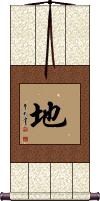
地 is the single-character element and title of the planet Earth in Chinese, old Korean Hanja, and Japanese Kanji.
Because this is a single character, the definition is a little ambiguous and can have many meanings depending on the context in which it is used. These meanings include: earth, ground, land, soil, dirt, place, territory, bottom (of a package, book, etc.), earth (one of the Japanese five elements), the region in question, the local area, skin, texture, fabric, material, weave, base, background, one's true nature, narrative (i.e. descriptive part of a story), real life, actuality, etc.
In Japanese, this Kanji can be pronounced several ways, including chi, ji, tsushi, or tsuchi.
地 is also an element of the Japanese version of the five elements (the original Chinese version uses a different version of earth).
Earth
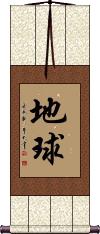
地球 is the name of the earth (our planet) in Chinese, old Korean Hanja and Japanese Kanji.
If you love the earth, or want to be reminded of where your home is in the solar system, this is the wall scroll for you.
Earth Dragon
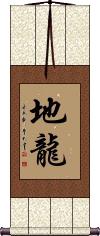
地龍 is the Earth Dragon, king of rivers and seas.
地龍 is sometimes used in Chinese as a nickname for earthworms.
Gandhi

甘地 is the name Gandhi in Chinese (Mandarin).
Haiti
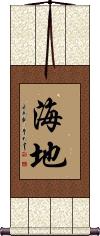
This is the Chinese name for the country of Haiti.
Heaven and Earth
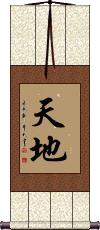
天地 is “Heaven and Earth” in Chinese, Japanese Kanji, and old Korean Hanja.
This title is used in many different contexts. It can be a general term but is also used by Buddhists and in other religions.
This can also be used to refer to all of nature, the universe, the top and bottom, the realm of life, or the sphere of existence.
Hell
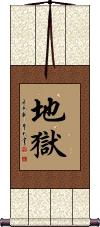
地獄 is the way that hell is written in modern Chinese, Japanese Kanji, and old Korean Hanja.
There's more than one way to express hell, but this is the one that has stood the test of time.
The first character refers to the ground or the earth.
The second character means jail or prison.
You can also translate this word as infernal, inferno, Hades, or underworld.
It should be noted that this is a somewhat terrible selection for a wall scroll. Hanging this in your home is like telling the world that your home is hell. Oddly, many people search for this on our website, so I added it for reference.
Holy Land
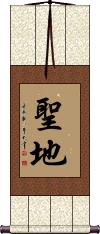
聖地 can be titled or translated in a lot of different ways: sacred ground, the Holy Land, Holy city, sacred place, Holy ground, or shrine.
I have seen all of these English translations used when coming from Chinese, Japanese, and Korean.
Jikata

This word has a few possible meanings.
It can refer to a room, hall, or place (a dojo or small theater). The dictionary suggests that in some context, this can refer to a special geisha who is talented in certain musical arts.
Oasis
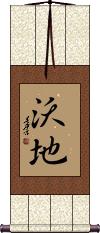
沃地 is the Japanese Kanji for fertile land or oasis.
Sanchi / Yamaji
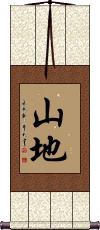
山地 means mountainous region, hilly area, or hilly country in Chinese, Japanese, and Korean.
山地 is also a Japanese surname that romanizes as Yamaji or Sanchi.
Note: This is not the only Japanese name that romanizes as Yamaji or Sanchi. Make sure this is the right one before you order.
Austria
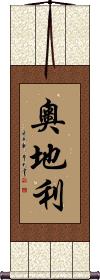
This is the Chinese name for the country of Austria.
Carter
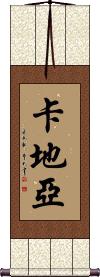
This is the most common transliteration of the name Carter into Mandarin Chinese.
Cartier
卡地亞 is the name Cartier in Chinese (Mandarin).
Madina

麥地那 is the name Madina in Chinese (Mandarin).
Uechi-Ryu
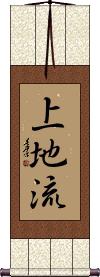
上地流 or Uechi-Ryū is the short name for a traditional style of Okinawan karate.
Uechi-Ryū is named after its creator, Kanbun Uechi. Uechi was an Okinawan man who left at the age of 19 for China to study Chinese martial arts and medicine.
The meaning of this title is “Uechi Flow,” “Uechi Style,” or “Uechi School.” Although, the name 上地 or Uechi can mean “higher stages of practice” in the Buddhist context. Therefore, you can stretch the meaning to be “Higher-Stages-of-Practice Style.”
Amedeo
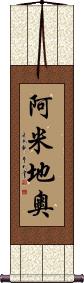
阿米地奧 is the name Amedeo in Chinese (Mandarin).
Bodhicitta: Enlightened Mind
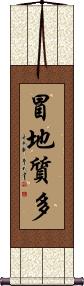
冒地質多 is a Chinese and Japanese way to write Bodhicitta.
冒地質多 is often translated as “the enlightened mind” or “enlightened heart.”
This title is strictly Buddhist and won't make sense to Chinese or Japanese people who do not have an expansive background in Buddhist terms, concepts, and scripture.
Croatia
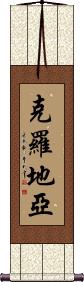
This is the Chinese name for the country of Croatia.
Keep Your Feet on the Ground
Be Down-to-Earth
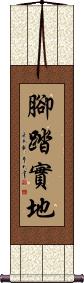
腳踏實地 is a four-character proverb that suggests that you should be practical, realistic, and grounded.
Some translate this as a suggestion to be down-to-earth.
The first character means “feet.”
The second means “step on” or “stand.”
The third means “solid,” “real,” or “true.”
The last character means “ground,” “earth,” or “terra.”
Literally, this means “[keep your] Feet Standing [on] Solid Ground.”
Flourish and Blossom Everywhere
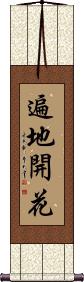
遍地開花 is a Chinese proverb that means “to blossom everywhere,” “to spring up all over the place,” or “to flourish on a large scale.”
遍地 = everywhere
開花 = opening flowers
Four Elements
Buddhist Term
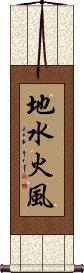
地水火風 is a Buddhist term that means “earth, water, fire, wind.”
This is often just referred to as “the four elements.” There is a more common title (the five elements) that adds wood to the mix. These four elements are used in some sects of Japanese Buddhism (not so much in Chinese).
Guatemala
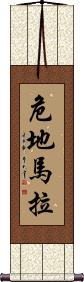
This is the Chinese name for the country of Guatemala.
Hell / Kingdom of the Underworld
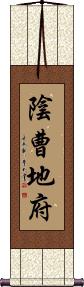
陰曹地府 can mean Hell, Hades, Kingdom of the Underworld, or the Netherworld.
When Chinese people talk about Hell, this is usually the term they use. Please note that this is a somewhat oral and informal word.
This is a really weird selection for a wall scroll, so consider this for educational purposes only.
Here And Now

此時此地 means here and now or as things stand.
此 = This
時 = Hour
此 = This
地 = Place/Land
San Diego
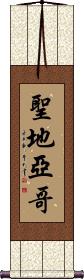
聖地亞哥 is how to write San Diego in Mandarin Chinese.
Santiago
聖地亞哥 is the transliteration to Mandarin Chinese for the Latin / Spanish name Santiago.
Art of War: 5 Points of Analysis
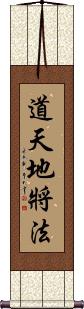
道天地將法 is a list of five key points to analyzing your situation from the first chapter of Sun Tzu's Art of War.
This reads like a 5-part military proverb. Sun Tzu says that to sharpen your skills, you must plan. To plan well, you must know your situation. Therefore, you must consider and discuss the following:
1. Philosophy and Politics: Make sure your way or your policy is agreeable among all of your troops (and the citizens of your kingdom as well). For when your soldiers believe in you and your way, they will follow you to their deaths without hesitation and will not question your orders.
2. Heaven/Sky: Consider climate / weather. This can also mean considering whether God is smiling upon you. In the modern military, this could be waiting for clear skies so that you can have air support for an amphibious landing.
3. Ground/Earth: Consider the terrain in which the battle will take place. This includes analyzing defensible positions, and exit routes, while using varying elevations to your advantage. When you plan an ambush, you must know your terrain and the best location from which to stage that ambush. This knowledge will also help you avoid being ambushed, as you will know where the likely places in which to expect an ambush from your enemy.
4. Leadership: This applies to you as the general and your lieutenants. A leader should be smart and be able to develop good strategies. Leaders should keep their word, and if they break a promise, they should punish themselves as harshly as they would punish subordinates. Leaders should be benevolent to their troops, with almost a fatherly love for them. Leaders must have the ability to make brave and fast decisions. Leaders must have steadfast principles.
5. [Military] Methods: This can also mean laws, rules, principles, models, or systems. You must have an efficient organization in place to manage both your troops and supplies. In the modern military, this would be a combination of how your unit is organized and your SOP (Standard Operating Procedure).
Notes: This is a simplistic translation and explanation. Much more is suggested in the actual text of the Art of War (Bing Fa). It would take a lot of study to master all of these aspects. In fact, these five characters can be compared to the modern military acronyms such as BAMCIS or SMEAC.
CJK notes: I have included the Japanese and Korean pronunciations but in Chinese, Korean and Japanese, this does not make a typical phrase (with subject, verb, and object) it is a list that only someone familiar with Sun Tzu’s writings would understand.
Five Elements
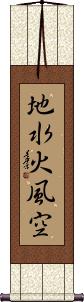
地水火風空 is the specifically-Japanese version of the five elements.
This is a little different than the ancient or original Chinese version.
The elements are written in this order:
1. Earth / Terra / Ground
2. Water
3. Fire
4. Wind / Air
5. Sky / Emptiness / Void / Ether
Note: This set of Kanji can also be romanized as “ji sui ka fuu kuu,” “jisuikafuukuu,” or “jisuikafuku.”
These can also be written in the order 地火風水空 (chi ka sui fuu kuu). Let me know when you place your order if you want the Kanji to be in this character order.
Uechi-Ryu Karate-Do
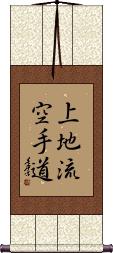
上地流空手道 is the title of the Uechi-Ryu Karate-Do school of Okinawan martial arts.
Uechi means “higher stages of practice” in a Buddhist context.
I love you to the moon and back

我愛你到地老天荒 is a Chinese version of “I love you to the moon and back.”
The literal meaning of this phrase is, “I love you from the end of the Earth to the reaches of Heaven” or more simply translated as, “I love you until the end of time.”
Great Lotus Wisdom - Samadhi Wisdom
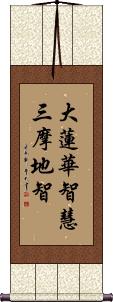
大蓮華智慧三摩地智 is the title for “The wisdom of the great lotus, samādhi-wisdom.”
This is also the penetrating wisdom of Amitābha.
John 8:8
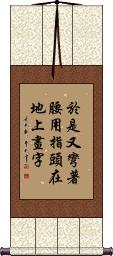
於是又彎著腰用指頭在地上畫字 is John 8:8 in Chinese.
This text is from the 1919 Chinese Union Bible.
You may know it from the KJV as:
And again he stooped down and wrote on the ground.
Daodejing / Tao Te Ching - Chapter 1
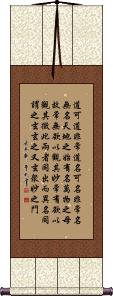
This text is the first chapter of the Daodejing / Tao Te Ching.
The Way that can be followed is not the eternal Way.
The name that can be named is not the eternal name.
The nameless is the origin of heaven and earth
While naming is the origin of a myriad of things.
Therefore, always desireless, you see the mystery
Ever desiring, you see the manifestations.
These two are the same—
When they appear, they are given different names.
This sameness is the mystery,
Mystery within mystery;
The door to all marvels.
Dr. Muller's translation of all 81 Daodejing chapters
The text reads:
道可道、非常道。名可名、非常名。 無名天地之始 有名萬物之母。故常無欲以觀其妙、常有欲以觀其徼。此兩者同出而異名。同謂之玄。玄之又玄、衆妙之門。
This classical Chinese passage comes from the Mawangdui (馬王堆帛書) text.
The Lord's Prayer / Mathew 6:9-13
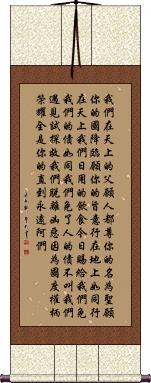
Here is the Lord's Prayer in Chinese from Mathew 6:9-13.
The Chinese text with punctuation is:
Part of 6:9 ...我们在天上的父,愿人都尊你的名为圣。
6:10 愿你的国降临,愿你的旨意行在地上,如同行在天上。
6:11 我们日用的饮食,今日赐给我们。
6:12 免我们的债,如同我们免了人的债。
6:13 不叫我们遇见试探,救我们脱离凶恶,因为国度,权柄,荣耀,全是你的,直到永远,阿们。
Note that punctuation is not included in traditional Chinese calligraphy artwork.
From KJV, this is:
Part of 6:9 ...Our Father which art in heaven, Hallowed be thy name.
6:10 Thy kingdom come. Thy will be done in earth, as it is in heaven.
6:11 Give us this day our daily bread.
6:12 And forgive us our debts, as we forgive our debtors.
6:13 And lead us not into temptation, but deliver us from evil: For thine is the kingdom, and the power, and the glory, forever. Amen.
The Lord's Prayer / Luke 11:2-4
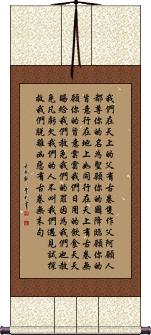
Here is the Lord's Prayer in Chinese from Luke 11:2-4.
The Chinese text with punctuation is:
Part of 11:2 ...我们在天上的父,有古卷只作父阿愿人都尊你的名为圣。愿你的国降临。愿你的旨意行在地上,如同行在天上。有古卷无愿你的旨意云云。
11:3 我们日用的饮食,天天赐给我们。
11:4 赦免我们的罪,因为我们也赦免凡亏欠我们的人。不叫我们遇见试探。救我们脱离凶恶。有古卷无末句。
Note that punctuation is not included in traditional Chinese calligraphy artwork.
From KJV, this is:
Part of 11:2 ...Our Father which art in heaven, Hallowed be thy name. Thy kingdom come. Thy will be done, as in heaven, so in earth.
11:3 Give us day by day our daily bread.
11:4 And forgive us our sins; for we also forgive everyone that is indebted to us. And lead us not into temptation, but deliver us from evil.
Not the results for 地 that you were looking for?
Below are some entries from our dictionary that may match your 地 search...
| Characters If shown, 2nd row is Simp. Chinese |
Pronunciation Romanization |
Simple Dictionary Definition |
地 see styles |
dì di4 ti hamaji はまぢ |
More info & calligraphy: Earth(n,n-suf) (1) earth; ground; land; soil; (n,n-suf) (2) place; (n,n-suf) (3) territory; (n,n-suf) (4) (See 天地無用) bottom (of a package, book, etc.); (n,n-suf) (5) (See 五大・1,土・ど・2) earth (one of the five elements); (surname) Hamaji pṛthivī, 鉢里體尾 the earth, ground; bhūmi, 歩弭 the earth, place, situation; talima, 託史麽 (or 託吏麽) ground, site; explained by 土地 earth, ground; 能生 capable of producing; 所依 that on which things rely. It is also the spiritual rank, position, or character attained by a Bodhisattva as a result of 住 remaining and developing in a given state in order to attain this 地 rank; v. 十住; 住位 and 十地. |
地方 see styles |
dì fang di4 fang5 ti fang chikata ちかた |
More info & calligraphy: Jikata(1) district; region; area; locality; (2) (See 中央・2) the country; countryside; the provinces; rural area; (3) (obsolete) (Imperial Japanese Army jargon) civilian society; (surname) Chikata |
地獄 地狱 see styles |
dì yù di4 yu4 ti yü jigoku じごく |
More info & calligraphy: Hell(1) {Buddh} hell realm; Naraka; (2) {Christn} Hell; (3) hell; misery; nightmare; inferno; (4) place where a volcano or hot springs constantly spew smoke or steam; (place-name) Jigoku naraka, 捺落迦 (or 那落迦) ; niraya 泥犂; explained by 不樂 joyless; 可厭 disgusting, hateful; 苦具, 苦器 means of suffering; if 地獄 earth-prison; 冥府 the shades, or departments of darkness. Earth-prison is generally intp. as hell or the hells; it may also be termed purgatory; one of the six gati or ways of transmigration. The hells are divided into three classes: I. Central, or radical, 根本地獄 consisting of (1) The eight hot hells. These were the original hells of primitive Buddhism, and are supposed to be located umder the southern continent Jambudvīpa 瞻部州, 500 yojanas below the surface. (a) 等活 or 更活 Saṃjīva, rebirth, where after many kinds of suffering a cold wind blows over the soul and returns it to this life as it was before, hence the name 等活. (b) 黑繩 Kaslasūtra, where the sufferer is bound with black chains and chopped or sawn asunder. (c) 線合; 衆合; 堆壓 Saṃghāta, where are multitudes of implements of torture, or the falling of mountains upon the sufferer. (d) 號呌; 呼呼; 叫喚 Raurava, hell of wailing. (e) 大呌; 大號呌; 大呼 Mahāraurava, hell of great wailing. (f) 炎熱; 燒炙 Tapana, hell of fames and burning. (g) 大熱; 大燒炙; 大炎熱 Pratāpana, hell of molten lead. (h) 無間; 河鼻旨; 阿惟越致; 阿毗至; 阿鼻; 阿毗 Avīci, unintermitted suffering, where sinners die and are reborn to suffer without interval. (2) The eight cold hells 八寒地獄. (a) 頞浮陀地獄 Arbuda, where the cold causes blisters. (b) 尼刺部陀 Nirarbuda, colder still causing the blisters to burst. (c) 頞哳吒; 阿吒吒 Atata, where this is the only possible sound from frozen lips. (d) 臛臛婆; 阿波波 Hahava or Apapa, where it is so cold that only this sound can be uttered. (e) 虎虎婆 Hāhādhara or Huhuva, where only this sound can be uttered. (f) 嗢鉢羅; 鬱鉢羅 (or 優鉢羅) Utpala, or 尼羅鳥 (or 漚) 鉢羅 Nīlotpala, where the skin is frozen like blue lotus buds. (g) 鉢特摩 Padma, where the skin is frozen and bursts open like red lotus buds. (h) 摩訶鉢特摩 Mahāpadma, ditto like great red lotus buds. Somewhat different names are also given. Cf. 倶舍論 8; 智度論 16; 涅槃經 11. II. The secondary hells are called 近邊地獄 adjacent hells or 十六遊增 each of its four sides, opening from each such door are four adjacent hells, in all sixteen; thus with the original eight there are 136. A list of eighteen hells is given in the 十八泥梨經. III. A third class is called the 孤地獄 (獨地獄) Lokāntarika, or isolated hells in mountains, deserts, below the earth and above it. Eitel says in regard to the eight hot hells that they range 'one beneath the other in tiers which begin at a depth of 11,900 yojanas and reach to a depth of 40,000 yojanas'. The cold hells are under 'the two Tchahavālas and range shaft-like one below the other, but so that this shaft is gradually widening to the fourth hell and then narrowing itself again so that the first and last hell have the shortest, those in the centre the longest diameter'. 'Every universe has the same number of hells, ' but 'the northern continent has no hell whatever, the two continents east and west of Meru have only small Lokāntarika hells... whilst all the other hells are required for the inhabitants of the southern continent '. It may be noted that the purpose of these hells is definitely punitive, as well as purgatorial. Yama is the judge and ruler, assisted by eighteen officers and a host of demons, who order or administer the various degrees of torture. 'His sister performs the same duties with regard to female criminals, ' and it may be mentioned that the Chinese have added the 血盆池 Lake of the bloody bath, or 'placenta tank' for women who die in childbirth. Release from the hells is in the power of the monks by tantric means. |
地球 see styles |
dì qiú di4 qiu2 ti ch`iu ti chiu hoshi ほし |
More info & calligraphy: EarthEarth; the globe; (female given name) Hoshi |
天地 see styles |
tiān dì tian1 di4 t`ien ti tien ti amachi あまち |
More info & calligraphy: Heaven and Earth(1) heaven and earth; the universe; the world; nature; (2) (てんち only) land; world; realm; sphere; (3) (てんち only) top and bottom; (4) (あめつち only) gods of heaven and earth; (surname) Amachi heaven and earth |
山地 see styles |
shān dì shan1 di4 shan ti yamaji やまぢ |
More info & calligraphy: Sanchi / Yamajimountainous region; mountainous district; hilly district; (place-name, surname) Yamaji |
沃地 see styles |
yokuchi よくち |
More info & calligraphy: Oasis |
海地 see styles |
hǎi dì hai3 di4 hai ti michi みち |
More info & calligraphy: Haiti(ateji / phonetic) (kana only) Haiti; (female given name) Michi |
甘地 see styles |
gān dì gan1 di4 kan ti amachi あまち |
More info & calligraphy: Gandhi(surname) Amachi |
聖地 圣地 see styles |
shèng dì sheng4 di4 sheng ti seichi / sechi せいち |
More info & calligraphy: Holy Land(1) sacred place; holy ground; the Holy Land; (2) (slang) real-life location used as a setting in a novel, film, anime, etc.; (place-name) Seichi stage of enlightenment |
卡地亞 卡地亚 see styles |
kǎ dì yà ka3 di4 ya4 k`a ti ya ka ti ya |
More info & calligraphy: Cartier |
奧地利 奥地利 see styles |
ào dì lì ao4 di4 li4 ao ti li |
More info & calligraphy: Austria |
麥地那 麦地那 see styles |
mài dì nà mai4 di4 na4 mai ti na |
More info & calligraphy: Madina |
克羅地亞 克罗地亚 see styles |
kè luó dì yà ke4 luo2 di4 ya4 k`o lo ti ya ko lo ti ya |
More info & calligraphy: Croatia |
冒地質多 冒地质多 see styles |
mào dì zhí duō mao4 di4 zhi2 duo1 mao ti chih to bōjiishitta |
More info & calligraphy: Bodhicitta: Enlightened Mind |
危地馬拉 危地马拉 see styles |
wēi dì mǎ lā wei1 di4 ma3 la1 wei ti ma la |
More info & calligraphy: Guatemala |
地水火風 地水火风 see styles |
dì shuǐ huǒ fēng di4 shui3 huo3 feng1 ti shui huo feng chisuikafuu; jisuikafuu / chisuikafu; jisuikafu ちすいかふう; じすいかふう |
More info & calligraphy: Four Elementsearth, water, fire, wind |
此時此地 此时此地 see styles |
cǐ shí cǐ dì ci3 shi2 ci3 di4 tz`u shih tz`u ti tzu shih tzu ti |
More info & calligraphy: Here And Now |
聖地亞哥 圣地亚哥 see styles |
shèng dì yà gē sheng4 di4 ya4 ge1 sheng ti ya ko |
More info & calligraphy: San Diego |
腳踏實地 脚踏实地 see styles |
jiǎo tà shí dì jiao3 ta4 shi2 di4 chiao t`a shih ti chiao ta shih ti |
More info & calligraphy: Keep Your Feet on the Ground |
遍地開花 遍地开花 see styles |
biàn dì kāi huā bian4 di4 kai1 hua1 pien ti k`ai hua pien ti kai hua |
More info & calligraphy: Flourish and Blossom Everywhere |
陰曹地府 阴曹地府 see styles |
yīn cáo dì fǔ yin1 cao2 di4 fu3 yin ts`ao ti fu yin tsao ti fu |
More info & calligraphy: Hell / Kingdom of the Underworld |
地水火風空 see styles |
chisuikafuukuu; jisuikafuukuu / chisuikafuku; jisuikafuku ちすいかふうくう; じすいかふうくう |
More info & calligraphy: Five Elements |
大蓮華智慧三摩地智 大莲华智慧三摩地智 see styles |
dà lián huá zhì huì sān mó dì zhì da4 lian2 hua2 zhi4 hui4 san1 mo2 di4 zhi4 ta lien hua chih hui san mo ti chih dai renge chie sanmajichi |
More info & calligraphy: Great Lotus Wisdom - Samadhi Wisdom |
一地 see styles |
yī dì yi1 di4 i ti ichiji いちぢ |
(personal name) Ichiji The one ground; the same ground; the Buddha-nature of all living beings i.e. as all the plants grow out of the one ground, so all good character and works grow from the one Buddha-nature. |
七地 see styles |
qī dì qi1 di4 ch`i ti chi ti nanachi ななち |
(place-name) Nanachi seventh bhūmi |
万地 see styles |
manchi まんち |
(surname) Manchi |
三地 see styles |
sān dì san1 di4 san ti mitsuchi みつち |
(surname) Mitsuchi third bhūmi |
上地 see styles |
shàng dì shang4 di4 shang ti waji わじ |
(place-name) Waji higher stages of practice |
下地 see styles |
xià dì xia4 di4 hsia ti shimoji しもぢ |
to go down to the fields; to get up from bed; to leave one's sickbed; to be born (1) groundwork; foundation; (2) inclination; aptitude; elementary knowledge (of); grounding (in); (3) undercoat; first coat; (4) (See お下地) soy sauce; (surname) Shimoji The lower regions of the 九地 q. v.; also the lower half of the 十地 in the fifty-two grades of bodhisattva development. |
Click here for more 地 results from our dictionary
The following table may be helpful for those studying Chinese or Japanese...
| Title | Characters | Romaji (Romanized Japanese) | Various forms of Romanized Chinese | |
| Earth | 地 | chi / ji / tsushi / tsuchi | dì / di4 / di | ti |
| Earth | 地球 | chi kyuu / chikyuu / chi kyu | dì qiú / di4 qiu2 / di qiu / diqiu | ti ch`iu / tichiu / ti chiu |
| Earth Dragon | 地龍 地龙 | dì lóng / di4 long2 / di long / dilong | ti lung / tilung | |
| Gandhi | 甘地 | gān dì / gan1 di4 / gan di / gandi | kan ti / kanti | |
| Haiti | 海地 | hǎi dì / hai3 di4 / hai di / haidi | hai ti / haiti | |
| Heaven and Earth | 天地 | tenchi | tiān dì / tian1 di4 / tian di / tiandi | t`ien ti / tienti / tien ti |
| Hell | 地獄 地狱 | jigoku | dì yù / di4 yu4 / di yu / diyu | ti yü / tiyü |
| Holy Land | 聖地 圣地 | seichi | shèng dì / sheng4 di4 / sheng di / shengdi | sheng ti / shengti |
| Jikata | 地方 | jikata | dì fāng / di4 fang1 / di fang / difang | ti fang / tifang |
| Oasis | 沃地 | yokuchi | ||
| Sanchi Yamaji | 山地 | san chi / yama ji sanchi / yamaji | shān dì / shan1 di4 / shan di / shandi | shan ti / shanti |
| Austria | 奧地利 奥地利 | ào dì lì ao4 di4 li4 ao di li aodili | ao ti li aotili |
|
| Carter | 卡地亞 卡地亚 | kǎ dì yà ka3 di4 ya4 ka di ya kadiya | k`a ti ya katiya ka ti ya |
|
| Cartier | 卡地亞 卡地亚 | kǎ dì yà ka3 di4 ya4 ka di ya kadiya | k`a ti ya katiya ka ti ya |
|
| Madina | 麥地那 麦地那 | mài dì nà mai4 di4 na4 mai di na maidina | mai ti na maitina |
|
| Uechi-Ryu | 上地流 | ue chi ryuu uechiryuu ue chi ryu | ||
| Amedeo | 阿米地奧 阿米地奥 | ā mǐ de ào a1 mi3 di4 ao4 a mi di ao amidiao | a mi ti ao amitiao |
|
| Bodhicitta: Enlightened Mind | 冒地質多 冒地质多 | boujiishitta bojishitta | mào dì zhì duō mao4 di4 zhi4 duo1 mao di zhi duo maodizhiduo | mao ti chih to maotichihto |
| Croatia | 克羅地亞 克罗地亚 | kè luó dì yà ke4 luo2 di4 ya4 ke luo di ya keluodiya | k`o lo ti ya kolotiya ko lo ti ya |
|
| Keep Your Feet on the Ground | 腳踏實地 脚踏实地 | jiǎo tà shí dì jiao3 ta4 shi2 di4 jiao ta shi di jiaotashidi | chiao t`a shih ti chiaotashihti chiao ta shih ti |
|
| Flourish and Blossom Everywhere | 遍地開花 遍地开花 | biàn dì kāi huā bian4 di4 kai1 hua1 bian di kai hua biandikaihua | pien ti k`ai hua pientikaihua pien ti kai hua |
|
| Four Elements | 地水火風 地水火风 | chisuikafuu chisuikafu | dì shuǐ huǒ fēng di4 shui3 huo3 feng1 di shui huo feng dishuihuofeng | ti shui huo feng tishuihuofeng |
| Guatemala | 危地馬拉 危地马拉 | wēi dì mǎ lā wei1 di4 ma3 la1 wei di ma la weidimala | wei ti ma la weitimala |
|
| Hell Kingdom of the Underworld | 陰曹地府 阴曹地府 | yīn cáo dì fǔ yin1 cao2 di4 fu3 yin cao di fu yincaodifu | yin ts`ao ti fu yintsaotifu yin tsao ti fu |
|
| Here And Now | 此時此地 此时此地 | cǐ shí cǐ dì ci3 shi2 ci3 di4 ci shi ci di cishicidi | tz`u shih tz`u ti tzushihtzuti tzu shih tzu ti |
|
| San Diego | 聖地亞哥 圣地亚哥 | shèng dì yà gē sheng4 di4 y4 ge1 sheng di y ge shengdiyge | sheng ti ko shengtiko |
|
| Santiago | 聖地亞哥 圣地亚哥 | shèng dì yà gē sheng4 di4 ya4 ge1 sheng di ya ge shengdiyage | sheng ti ya ko shengtiyako |
|
| Art of War: 5 Points of Analysis | 道天地將法 道天地将法 | dou ten chi shou hou doutenchishouhou do ten chi sho ho | dào tiān dì jiàng fǎ dao4 tian1 di4 jiang4 fa3 dao tian di jiang fa daotiandijiangfa | tao t`ien ti chiang fa taotientichiangfa tao tien ti chiang fa |
| Five Elements | 地水火風空 地水火风空 | chi sui ka fuu kuu chisuikafuukuu chi sui ka fu ku | ||
| Uechi-Ryu Karate-Do | 上地流空手道 | ue chi ryuu kara te dou uechiryuukaratedou ue chi ryu kara te do | ||
| I love you to the moon and back | 我愛你到地老天荒 我爱你到地老天荒 | wǒ ài nǐ dào dì lǎo tiān huāng wo3 ai4 ni3 dao4 di4 lao3 tian1 huang1 wo ai ni dao di lao tian huang woainidaodilaotianhuang | wo ai ni tao ti lao t`ien huang woainitaotilaotienhuang wo ai ni tao ti lao tien huang |
|
| Great Lotus Wisdom - Samadhi Wisdom | 大蓮華智慧三摩地智 大莲华智慧三摩地智 | dai renge chie sanmajichi dairengechiesanmajichi | dà lián huá zhì huì sān mó dì zhì da4 lian2 hua2 zhi4 hui4 san1 mo2 di4 zhi4 da lian hua zhi hui san mo di zhi | ta lien hua chih hui san mo ti chih |
| John 8:8 | 於是又彎著腰用指頭在地上畫字 于是又弯着腰用指头在地上画字 | yú shì yòu wān zhe yāo yòng zhǐ tou zài dì shàng huà zì yu2 shi4 you4 wan1 zhe yao1 yong4 zhi3 tou zai4 di4 shang4 hua4 zi4 yu shi you wan zhe yao yong zhi tou zai di shang hua zi | yü shih yu wan che yao yung chih t`ou tsai ti shang hua tzu yü shih yu wan che yao yung chih tou tsai ti shang hua tzu |
|
| Daodejing Tao Te Ching - Chapter 1 | 道可道非常道名可名非常名無名天地之始有名萬物之母故常無欲以觀其妙常有欲以觀其徼此兩者同出而異名同謂之玄玄之又玄衆妙之門 道可道非常道名可名非常名无名天地之始有名万物之母故常无欲以观其妙常有欲以观其徼此两者同出而异名同谓之玄玄之又玄众妙之门 | dào kě dào fēi cháng dào míng kě míng fēi cháng míng wú míng tiān dì zhī shǐ yǒu míng wàn wù zhī mǔ gù cháng wú yù yǐ guān qí miào cháng yǒu yù yǐ guān qí zhēng cǐ liǎng zhě tóng chū ér yì míng tóng wèi zhī xuán xuán zhī yòu xuán zhòng miào zhī mén dao4 ke3 dao4 fei1 chang2 dao4 ming2 ke3 ming2 fei1 chang2 ming2 wu2 ming2 tian1 di4 zhi1 shi3 you3 ming2 wan4 wu4 zhi1 mu3 gu4 chang2 wu2 yu4 yi3 guan1 qi2 miao4 chang2 you3 yu4 yi3 guan1 qi2 jiao3 ci3 liang3 zhe3 tong2 chu1 er2 yi4 ming2 tong2 wei4 zhi1 xuan2 xuan2 zhi1 you4 xuan2 zhong4 miao4 zhi1 men2 dao ke dao fei chang dao ming ke ming fei chang ming wu ming tian di zhi shi you ming wan wu zhi mu gu chang wu yu yi guan qi miao chang you yu yi guan qi jiao ci liang zhe tong chu er yi ming tong wei zhi xuan xuan zhi you xuan zhong miao zhi men | tao k`o tao fei ch`ang tao ming k`o ming fei ch`ang ming wu ming t`ien ti chih shih yu ming wan wu chih mu ku ch`ang wu yü i kuan ch`i miao ch`ang yu yü i kuan ch`i chiao tz`u liang che t`ung ch`u erh i ming t`ung wei chih hsüan hsüan chih yu hsüan chung miao chih men tao ko tao fei chang tao ming ko ming fei chang ming wu ming tien ti chih shih yu ming wan wu chih mu ku chang wu yü i kuan chi miao chang yu yü i kuan chi chiao tzu liang che tung chu erh i ming tung wei chih hsüan hsüan chih yu hsüan chung miao chih men |
|
| The Lord's Prayer Mathew 6:9-13 | 我們在天上的父願人都尊你的名為聖願你的國降臨願你的旨意行在地上如同行在天上我們日用的飲食今日賜給我們免我們的債如同我們免了人的債不叫我們遇見試探救我們脫離凶惡因為國度權柄榮耀全是你的直到永遠阿們 我们在天上的父愿人都尊你的名为圣愿你的国降临愿你的旨意行在地上如同行在天上我们日用的饮食今日赐给我们免我们的债如同我们免了人的债不叫我们遇见试探救我们脱离凶恶因为国度权柄荣耀全是你的直到永远阿们 | wǒ men zài tiān shàng de fù yuàn rén dōu zūn nǐ de míng wèi shèng yuàn nǐ de guó jiàng lín yuàn nǐ de zhǐ yì xíng zài dì shàng rú tóng xíng zài tiān shàng wǒ men rì yòng de yǐn shí jīn rì cì gěi wǒ men miǎn wǒ men de zhài rú tóng wǒ men miǎn le rén de zhài bù jiào wǒ men yù jiàn shì tàn jiù wǒ men tuō lí xiōng è yīn wèi guó dù quán bǐng róng yào quán shì nǐ de zhí dào yǒng yuǎn ā men wo3 men zai4 tian1 shang4 de fu4 yuan4 ren2 dou1 zun1 ni3 de ming2 wei4 sheng4 yuan4 ni3 de guo2 jiang4 lin2 yuan4 ni3 de zhi3 yi4 xing2 zai4 di4 shang4 ru2 tong2 xing2 zai4 tian1 shang4 wo3 men ri4 yong4 de yin3 shi2 jin1 ri4 ci4 gei3 wo3 men mian3 wo3 men de zhai4 ru2 tong2 wo3 men mian3 le ren2 de zhai4 bu4 jiao4 wo3 men yu4 jian4 shi4 tan4 jiu4 wo3 men tuo1 li2 xiong1 e4 yin1 wei4 guo2 du4 quan2 bing3 rong2 yao4 quan2 shi4 ni3 de zhi2 dao4 yong3 yuan3 a1 men wo men zai tian shang de fu yuan ren dou zun ni de ming wei sheng yuan ni de guo jiang lin yuan ni de zhi yi xing zai di shang ru tong xing zai tian shang wo men ri yong de yin shi jin ri ci gei wo men mian wo men de zhai ru tong wo men mian le ren de zhai bu jiao wo men yu jian shi tan jiu wo men tuo li xiong e yin wei guo du quan bing rong yao quan shi ni de zhi dao yong yuan a men | wo men tsai t`ien shang te fu yüan jen tou tsun ni te ming wei sheng yüan ni te kuo chiang lin yüan ni te chih i hsing tsai ti shang ju t`ung hsing tsai t`ien shang wo men jih yung te yin shih chin jih tz`u kei wo men mien wo men te chai ju t`ung wo men mien le jen te chai pu chiao wo men yü chien shih t`an chiu wo men t`o li hsiung o yin wei kuo tu ch`üan ping jung yao ch`üan shih ni te chih tao yung yüan a men wo men tsai tien shang te fu yüan jen tou tsun ni te ming wei sheng yüan ni te kuo chiang lin yüan ni te chih i hsing tsai ti shang ju tung hsing tsai tien shang wo men jih yung te yin shih chin jih tzu kei wo men mien wo men te chai ju tung wo men mien le jen te chai pu chiao wo men yü chien shih tan chiu wo men to li hsiung o yin wei kuo tu chüan ping jung yao chüan shih ni te chih tao yung yüan a men |
|
| The Lord's Prayer Luke 11:2-4 | 我們在天上的父有古卷隻作父阿願人都尊你的名為聖願你的國降臨願你的旨意行在地上如同行在天上有古卷無願你的旨意雲雲我們日用的飲食天天賜給我們赦免我們的罪因為我們也赦免凡虧欠我們的人不叫我們遇見試探救我們脫離凶惡有古卷無末句 我们在天上的父有古卷只作父阿愿人都尊你的名为圣愿你的国降临愿你的旨意行在地上如同行在天上有古卷无愿你的旨意云云我们日用的饮食天天赐给我们赦免我们的罪因为我们也赦免凡亏欠我们的人不叫我们遇见试探救我们脱离凶恶有古卷无末句 | wǒ men zài tiān shàng de fù yǒu gǔ juǎn zhǐ zuò fù ā yuàn rén dōu zūn nǐ de míng wèi shèng yuàn nǐ de guó jiàng lín yuàn nǐ de zhǐ yì xíng zài dì shàng rú tóng xíng zài tiān shàng yǒu gǔ juǎn wú yuàn nǐ de zhǐ yì yún yún wǒ men rì yòng de yǐn shí tiān tiān cì gěi wǒ men shè miǎn wǒ men de zuì yīn wèi wǒ men yě shè miǎn fán kuī qiàn wǒ men de rén bù jiào wǒ men yù jiàn shì tàn jiù wǒ men tuō lí xiōng è yǒu gǔ juǎn wú mò jù wo3 men zai4 tian1 shang4 de fu4 you3 gu3 juan3 zhi3 zuo4 fu4 a1 yuan4 ren2 dou1 zun1 ni3 de ming2 wei4 sheng4 yuan4 ni3 de guo2 jiang4 lin2 yuan4 ni3 de zhi3 yi4 xing2 zai4 di4 shang4 ru2 tong2 xing2 zai4 tian1 shang4 you3 gu3 juan3 wu2 yuan4 ni3 de zhi3 yi4 yun2 yun2 wo3 men ri4 yong4 de yin3 shi2 tian1 tian1 ci4 gei3 wo3 men she4 mian3 wo3 men de zui4 yin1 wei4 wo3 men ye3 she4 mian3 fan2 kui1 qian4 wo3 men de ren2 bu4 jiao4 wo3 men yu4 jian4 shi4 tan4 jiu4 wo3 men tuo1 li2 xiong1 e4 you3 gu3 juan3 wu2 mo4 ju4 wo men zai tian shang de fu you gu juan zhi zuo fu a yuan ren dou zun ni de ming wei sheng yuan ni de guo jiang lin yuan ni de zhi yi xing zai di shang ru tong xing zai tian shang you gu juan wu yuan ni de zhi yi yun yun wo men ri yong de yin shi tian tian ci gei wo men she mian wo men de zui yin wei wo men ye she mian fan kui qian wo men de ren bu jiao wo men yu jian shi tan jiu wo men tuo li xiong e you gu juan wu mo ju | wo men tsai t`ien shang te fu yu ku chüan chih tso fu a yüan jen tou tsun ni te ming wei sheng yüan ni te kuo chiang lin yüan ni te chih i hsing tsai ti shang ju t`ung hsing tsai t`ien shang yu ku chüan wu yüan ni te chih i yün yün wo men jih yung te yin shih t`ien t`ien tz`u kei wo men she mien wo men te tsui yin wei wo men yeh she mien fan k`uei ch`ien wo men te jen pu chiao wo men yü chien shih t`an chiu wo men t`o li hsiung o yu ku chüan wu mo chü wo men tsai tien shang te fu yu ku chüan chih tso fu a yüan jen tou tsun ni te ming wei sheng yüan ni te kuo chiang lin yüan ni te chih i hsing tsai ti shang ju tung hsing tsai tien shang yu ku chüan wu yüan ni te chih i yün yün wo men jih yung te yin shih tien tien tzu kei wo men she mien wo men te tsui yin wei wo men yeh she mien fan kuei chien wo men te jen pu chiao wo men yü chien shih tan chiu wo men to li hsiung o yu ku chüan wu mo chü |
|
| In some entries above you will see that characters have different versions above and below a line. In these cases, the characters above the line are Traditional Chinese, while the ones below are Simplified Chinese. | ||||

Successful Chinese Character and Japanese Kanji calligraphy searches within the last few hours...



