Buy a Custom Hero Chinese or Japanese Calligraphy Wall Scroll
We have many options to create artwork with the Chinese characters / Asian symbols / Japanese Kanji for Hero on a wall scroll or portrait.
If you want to create a cool Hero wall scroll, this is the place. Below you will find a few Asian symbols that express the idea of Hero.
1. Hero
2. Man of Remarkable Character / Hero
3. Woman of Strong Character / Woman Hero
5. Heroic Spirit / Great Ambition
7. Warrior Soul / Heroic Spirit
10. Brave Warrior
11. Daredevil Warrior / Soul of a Warrior
12. Dragon Warrior
14. Warrior Scholar
15. Ghost Warrior
18. Holy Warrior
19. Peaceful Warrior
20. Quiet Warrior
21. Shadow Warrior
22. Silent Warrior
24. Warrior
27. Heart of a Warrior / Samurai Heart
28. Warrior of the Heavenly Realm
29. Warrior Monk / Soldier Priest
30. Warrior / Musha
31. Warrior of God / Soldier of God
32. Warrior Saint / Saint of War
34. Warrior Soul / Spirit of a Fighter
35. Warrior Within
37. The Warrior’s Word, Dependable as Gold and Steel
39. Warrior Essence / Warrior Spirit / Martial
42. Wind Warrior
43. Inner Warrior
44. It is better to be a warrior in a garden than a gardener in a war
45. Noble Warrior
46. Warrior’s Path
47. Warrior’s Heart
49. Advance Bravely / Indomitable Spirit
51. Avenger
53. Berserker
54. Bushido / The Way of the Samurai
55. Courage to do what is right
57. Diamond
58. Eishin-Ryu
59. Fighter
61. Fighter for God
62. Fighting Spirit
63. Filial Piety
64. First Born
65. God of War
67. Guan Yu
68. Guerrero
69. In Flowers the Cherry Blossom, In Men the Samurai
70. Hua Mulan
71. Immovable Mind
73. Knight
74. Lingering Mind
75. Magnolia
76. Bushinkan
77. Marine
78. Marine Corps
79. Marine / Soldier of the Sea
80. Martial Morality / Martial Arts Ethics / Virtue
84. Morality of Deed
85. Morality of Mind
86. Ninja
87. No Mind / Mushin
88. Paladin
89. Purified Spirit / Enlightened Attitude
90. Ronin / Masterless Samurai
91. Samurai
92. Sasuke
94. Chinese or Korean Army General
96. Soldiers
97. Sumo Wrestler
98. Superman
99. Sword
100. United States Marine Corps
101. Ultimate Loyalty to Your Country
102. Zhuge Liang
103. Bushindo
104. Shobukan
105. Shorin-Ryu Shobukan
106. Miyashita
107. Kobukan
108. Meibukan
Hero
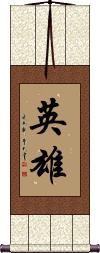
英雄 is the best way to write hero in Chinese and Japanese - especially for calligraphy.
英雄 is also the name of the Chinese movie titled Hero starring Jet Li.
The first character means brave (it can also mean British or English but not in this case).
The second character means heroic but also suggests a male person.
My Japanese dictionary also defines this as “a great man.”
Man of Remarkable Character / Hero
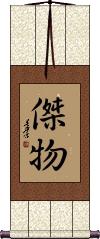
傑物 is a Japanese title that can mean “great man,” “heroic figure,” or “remarkable character.”
You would be giving someone a great honor by presenting this wall scroll to them as a gift.
Woman of Strong Character / Woman Hero
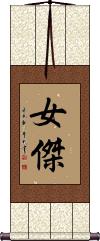
女傑 can mean brave woman, heroine, lady of character, distinguished woman, outstanding woman, and sometimes prominent woman.
Some people might use this to give a title to women like Amelia Earhart, Rosa Parks, Queen Elizabeth the First, Joan of Arc, Mulan Fa, Yevdokiya Nikolayevna Zavaliy, Harriet Tubman, Anne Frank, Clara Barton, and Jane Eyre.
I use it for a woman like Araceli Segarra (the first woman from Spain to climb Mt. Everest) and gave one of my daughters the middle name of Araceli.
Heroic Spirit
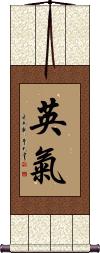
英氣 is a way to write heroic spirit in Chinese.
This may be an arrogant thing to hang on your wall.
Heroic Spirit / Great Ambition
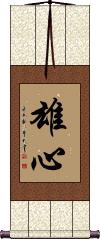
雄心 are the Chinese characters and Japanese Kanji for great ambition, lofty aspiration, or heroic spirit.
Heroic Spirit / Heroism
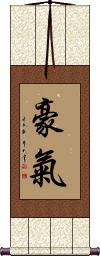
豪氣 is heroic spirit or heroism in Chinese and old Korean Hanja.
This might come across as a bit arrogant to hang on your wall.
Warrior Soul / Heroic Spirit
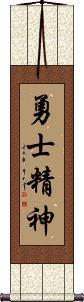
勇士精神 can be translated as the warrior's spirit or warrior's soul. The first two characters can be translated as “warrior” or literally “brave soldier/man,” although some will translate this word as “hero.” Therefore, this is also how to say “heroic spirit.”
The second two characters mean vigor, vitality, drive, spirit, mind, heart, mental essence, and psychological component. Basically “your soul.”
We have two versions of this phrase. The only difference is the first two and last two characters are swapped. The version here suggests that you admire or like the idea of the spirit of a warrior. The other version suggests that you are the warrior or hero.
Woman Hero / Heroine
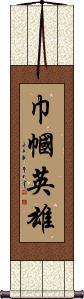
巾幗英雄 is an excellent and somewhat ancient way to say woman hero in Chinese. 巾幗英雄 is used in modern times to refer to an outstanding woman or a woman with significant accomplishments.
In the old days, it was a title for a woman warrior (oh, did I mention that there were great female generals who led massive armies into battle in ancient China?)
My Hero Academia
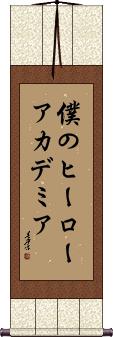
僕のヒーローアカデミア is the title “My Hero Academia” or “Boku no Hīrō Akademia” in Japanese.
Note: Because this selection contains some special Japanese Katakana characters, it should be written by a Japanese calligrapher.
Brave Warrior
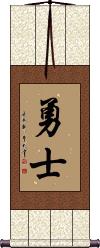
勇士 is the Chinese, Japanese Kanji, and old Korean Hanja for a brave warrior, a brave person, a hero, or a brave man.
In Japanese, this can be a given name, Yuuji.
Daredevil Warrior / Soul of a Warrior
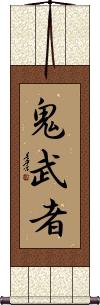
鬼武者 is an unusual title that can be translated two ways, daredevil warrior or demon warrior.
The most common is probably the daredevil warrior. However, the first character means demon, ghost, or soul of the departed. Therefore, it can mean the soul of a warrior or a demon warrior.
This title is Japanese only, and should not be used if your audience is Chinese.
Dragon Warrior
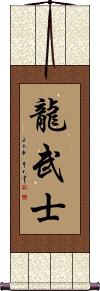
龍武士 is a generic title for “Dragon Warrior.”
Just as in English, it's a bit ambiguous. It can mean one who fights against dragons or the title of a warrior himself (imagine a warrior with a dragon symbol on his chest).
Dragon Warrior
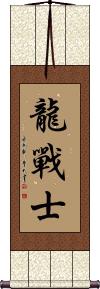
龍戰士 is another version of “Dragon Warrior.”
It's still a bit ambiguous. This one reads more like “Dragon Fighter” than “Dragon Warrior.” Perhaps you can also translate this one as “One who fights like a dragon.”
Dragon Warrior
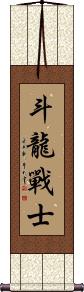
斗龍戰士 or “Dragon Warrior” is specifically one who fights against dragons.
This can also be read as “Dragon Fighter.”
Enlightened Warrior
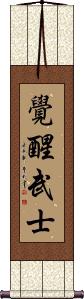
覺醒武士 is not a commonly used title in Chinese but is sometimes used in Martial arts and military contexts to refer to a warrior who seems always to be fully aware, enlightened, knowledgeable, noble, and just.
The first two characters are a word that means: to awaken; to come to realize; awakened to the truth; the truth dawns upon one; scales fall from the eyes; to become aware.
The last two characters mean warrior but can also refer to a samurai, soldier, or fighter.
Warrior Scholar
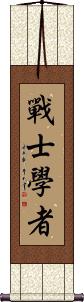
This means Warrior Scholar in Chinese.
Ghost Warrior
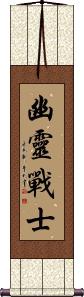
幽靈戰士 means Ghost Warrior or Ghost Soldier in Chinese.
This title is used for at least one movie and a video game (about a sniper).
Guan Gong / Warrior Saint
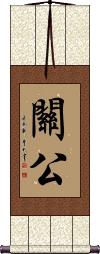
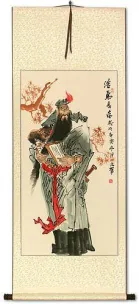
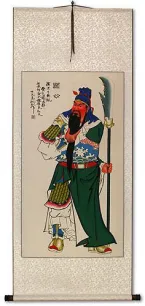
關公 is a Chinese title, Guan Gong, that means Lord Guan (The warrior saint of ancient China).
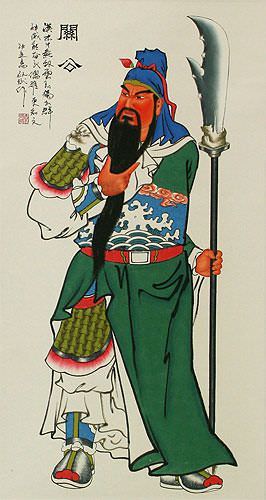 While his real name was Guan Yu / 關羽, he is commonly known by the title of Guan Gong (關公).
Some Chinese soldiers still pray to Guan Gong for protection. They would especially do this before going into battle. Statues of Guan Gong are seen throughout China.
Warrior of Heaven
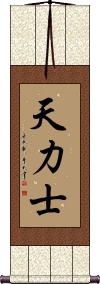
天力士 means “Heavenly Warrior,” or “Hero of Heaven,” in Chinese, old Korean, and Japanese.
Often used in a Buddhist context.
Holy Warrior
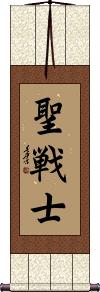
聖戦士 means “Holy Warrior,” in Japanese.
Peaceful Warrior
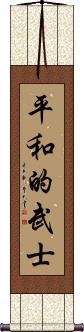
平和的武士 means “Peaceful Warrior” in Chinese. This does in fact sound like an oxymoron in Chinese - but many of you have asked for this special title.
Note this is not the same thing as “warrior for peace.”
See Also: Peace
Peaceful Warrior
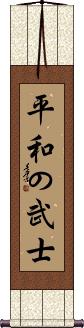
平和の武士 can be read as “Peaceful Warrior” or “Warrior for Peace” in Japanese. This sounds like an oxymoron in Japanese, so it's a weird title. Expect Japanese people to be perplexed when they see it.
Character breakdown:
平和 (heiwa) peace; harmony.
の (no) possessive particle.
武士 (bushi) warrior; samurai; soldier.
Quiet Warrior
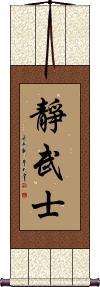
靜武士 is the shortest way to write “Quiet Warrior” or “Tranquil Warrior” in Chinese.
See Also: Peaceful Warrior
Quiet Warrior
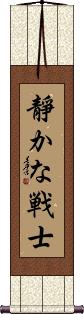
This means “Quiet Warrior” in Japanese.
Note: Because this selection contains some special Japanese Hiragana characters, it should be written by a Japanese calligrapher.
Quiet Warrior
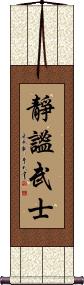
靜謐武士 means “Quiet Warrior” in Chinese.
靜謐 means quiet or tranquil.
武士 means warrior or soldier.
See Also: Peaceful Warrior
Shadow Warrior
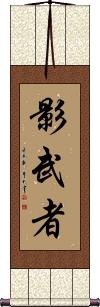
影武者 is the title for Shadow Warrior in Chinese and Japanese.
This may refer to a few video games that share this English title, or a Japanese movie called Kagemusha.
If you are looking for the Japanese TV show, that was originally 影の軍団 (Kage no Gundan), which more literally means “Army of Shadows,” but was re-titled Shadow Warrior when released outside Japan in English.
In Japan, this title can also refer to a body double or decoy of an army general or leader used to avoid assassination. It can also be somebody who does all the work (or fighting) behind the scenes (not getting much, if any, credit).

Silent Warrior
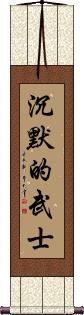
沉默的武士 is a way to write “silent warrior” in Chinese.
The first two characters mean “silent.”
The middle character is a connecting or possessive particle.
The last two characters mean “warrior.”
Silent Warrior
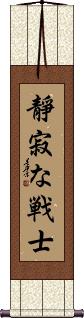
靜寂な戦士 means “silent warrior” or “quiet warrior,” in Japanese.
Spiritual Warrior
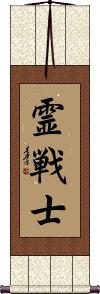
霊戦士 is a Japanese title that means “Spiritual Warrior.”
The first Kanji means spiritual.
The second Kanji means war, warfare, or battle.
The third Kanji means soldier, officer, man or pawn.
Warrior
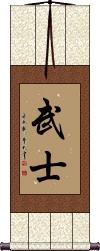
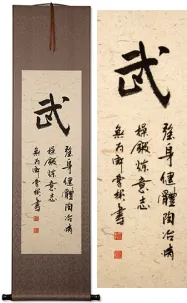
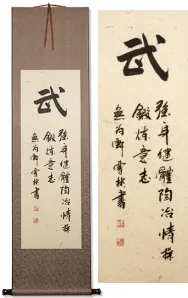
The first character, 武, is the spirit or essence of a warrior. The second character, 士, means soldier, officer, or official. 武士 is also used appropriately enough to describe a piece of a chess game. 武士 can also be translated as a soldier, cavalier, palace guard, or samurai, and sometimes as a knight. I've occasionally seen this translated as strong man or tough man (gender not necessarily implied).
By far, 武士 is the most common way to write warrior in Chinese characters, Japanese Kanji, and old Korean Hanja.
Note: In Japanese, this is Bushi, as in Bushido.
Warrior for Peace
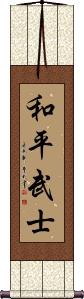
和平武士 means “Warrior for Peace” (a warrior who fights for peace) in Chinese.
Note this is not the same thing as a “peaceful warrior.”
See Also: Peace
Value of Warrior Generals
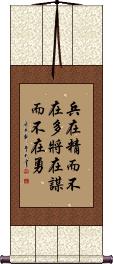
兵在精而不在多將在謀而不在勇 is a proverb that informs how it is better to have warriors of quality, rather than just a large quantity of warriors in your army/force.
This literally means: [Just as] warriors [are valued for their] quality and not [just] for quantity, [so] generals [are valued] for their tactics, not [just] for [their] bravery.
See Also: 兵在精而不在多
Heart of a Warrior / Samurai Heart
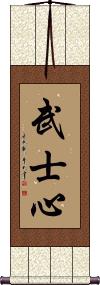
武士心 means “Warrior Heart.”
武士心 is more a Japanese title than Chinese, but it is understood in both languages.
Warrior of the Heavenly Realm
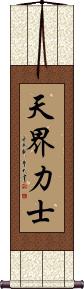
天界力士 means “warrior of the heavenly realm” in Chinese, old Korean Hanja, and Japanese Kanji.
This is also known as Narayana in Buddhism.
Warrior Monk / Soldier Priest
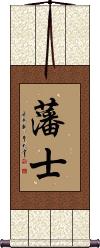
藩士 is a strange title for a wall scroll, but it may suit you if you see yourself as a warrior monk.
This title is not commonly used but will be understood in Chinese and Japanese. It can also be read as “armed monks.”
Warrior / Musha
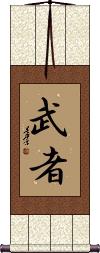
武者 is an alternate title for a warrior or samurai in Japanese. It is often romanized as “Musha.”
The literal meaning of these Kanji is “war person,” “military person,” or “martial person.”
Warrior of God / Soldier of God
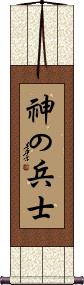
神の兵士 means “Warrior of God” or “Soldier of God” in Japanese.
Warrior Saint / Saint of War
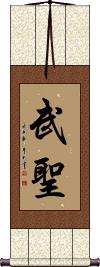
This Chinese title, Wusheng, means Saint of War.
武聖 is usually a reference to Guan Yu (關羽), also known as Guan Gong (關公).
Some Chinese soldiers still pray to Wusheng for protection. They would especially do this before going into battle.
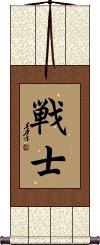
Warrior / Fighter
Senshi
Warrior Soul / Spirit of a Fighter
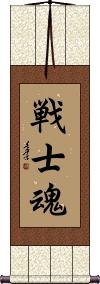
戦士魂 is “warrior soul” or “warrior spirit” in Japanese.
Here's the breakdown of the Kanji:
戦士 (senshi) warrior; soldier; combatant; fighter.
魂 (damashii/tamashii) soul; spirit; can sometimes mean “ghost.”
Warrior Within
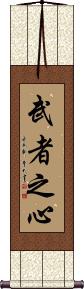
武者之心 means “Warrior Within” from the Chinese video game title, “Prince of Persia: Warrior Within.”
This more literally means “warrior or the heart” or “warrior of the soul/mind.”
The Warrior Within
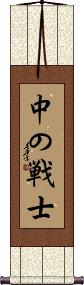
中の戦士 means “The Warrior Within” in Japanese.
The Warrior’s Word, Dependable as Gold and Steel
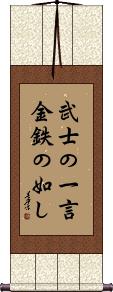
武士の一言金鉄の如し is an old Japanese proverb about the value of the word of a warrior.
Here are a couple of versions of how this can be translated:
A warrior's single word is as unchanging and reliable as gold and steel.
A warrior's promise is as dependable as gold, and his [scabbard contains] untarnished steel (a sword).
Note: Sometimes this phrase is written as 男子の一言、金鉄の如し (danshi no ichigon kintetsu no gotoshi)
Note: Because this selection contains some special Japanese Hiragana characters, it should be written by a Japanese calligrapher.
Soul of a Warrior
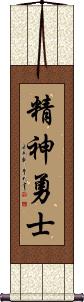
精神勇士 can be translated as the spirit or soul of a warrior. The first two characters can be translated as vigor, vitality, drive, spirit, mind, heart, mental essence, and psychological component. Basically, “your soul.”
The second two characters mean “warrior” or literally “brave soldier/man,” although some will translate this word as “hero.” Therefore, this is also how to say “soul of a hero.”
Note: This title is best for Chinese and old Korean. It does make sense in Japanese but is not a common or natural Kanji combination in Japanese.
We have two versions of this phrase. The only difference is the first two and last two characters are swapped. The version here suggests that you are the warrior or hero. The other version suggests that you admire or like the idea of the spirit of a warrior.
Warrior Essence / Warrior Spirit / Martial
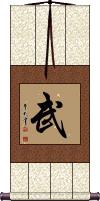
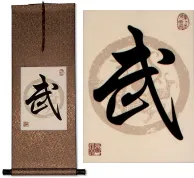
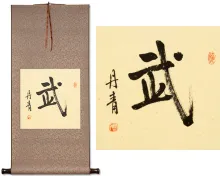
武 is the essence or spirit of a warrior. 武 is part of the word “wu shu” which is sometimes translated as “martial arts” or “kung fu.”
In more modern speech and another context, this can mean military, martial, warlike, fierce, and perhaps violent but usually as a prefix for a longer word or phrase.
Heart of a Warrior
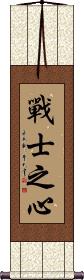
戰士之心 can mean “Heart of a Warrior” or “Heart of a Fighter” in Chinese.
Warriors of Light
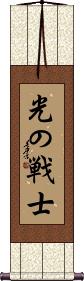
光の戦士 is the Japanese title for Warrior(s) of Light.
This usually refers to the Four Warriors of Light theme from the Final Fantasy series.
Also called Light Warriors, Warriors of the Light, Knights of Light, or Heroes of Light, depending on who is translating.
There are no direct plural forms in Japanese, so warrior or warriors is the same word, 戦士 (which can also be soldier, fighter, combatant, etc.).
Wind Warrior
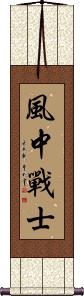
風中戰士 is the title Wind Warrior in Chinese.
Also the name of a 2005 Hong Kong movie.
Inner Warrior
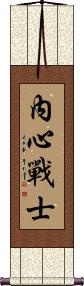
內心戰士 means Inner Warrior in Chinese.
Inner Warrior
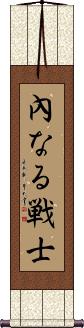
This means inner warrior in Japanese.
內なる means inner or internal.
戦士 means warrior or fighter.
Note: Because this selection contains some special Japanese Hiragana characters, it should be written by a Japanese calligrapher.
It is better to be a warrior in a garden than a gardener in a war
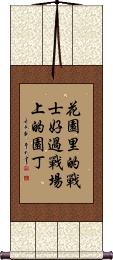
花園里的戰士好過戰場上的園丁 is the Chinese for the phrase, “It is better to be a warrior in a garden than a gardener in a war.”
This proverb is purported to come from the following exchange:
A student approaches his samurai master and says,
“Teacher, you instruct me how to fight, yet you preach to me about peace. How do I reconcile the two?”
The samurai responds,
“Because it is better to be a warrior in a garden than a gardener in a war.”
Noble Warrior
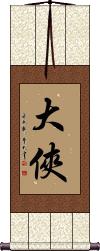
大俠 means knight, swordsman, noble warrior, or chivalrous hero in Chinese.
Warrior’s Path
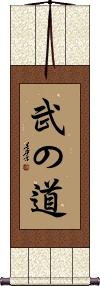
This maeans path of the warrior or warrior’s path in Japanese.
Warrior’s Heart
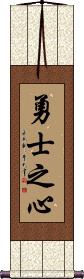
This is “Warrior’s Heart” in Chinese.
Active Duty Military
Person on Active Duty
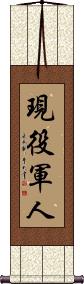
現役軍人 means “Active Duty Soldier” or literally “Active Duty Military Person.”
This title is a great way to show pride in being an active duty member of the armed forces.
The first two characters mean “active duty” and the second two characters can be translated as “military personnel,” “soldier,” or “serviceman” (it is unisex, so male or female is not indicated).
See Also: Military
Advance Bravely / Indomitable Spirit
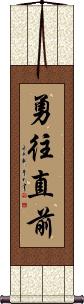
This proverb creates an image of a warrior bravely advancing against an enemy regardless of the odds.
This proverb can also be translated as “indomitable spirit” or “march fearlessly onward.”
See Also: Indomitable | Fortitude
Sun Tzu - Art of War
military strategy, tactics, and procedure
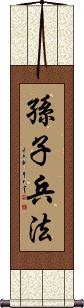
孫子兵法 is the full title of the most famous book of military proverbs about warfare.
The English title is “Sun Tzu's The Art of War.”
The last two characters have come to be known in the west as “The Art of War,” but a better translation would be “military strategy and tactics,” “military skills” or “army procedures.”
Note: Sometimes the author's name is Romanized as “Sun Zi” or “Sunzi.”
It's written the same in Chinese, Japanese Kanji, and Korean Hanja.
Avenger
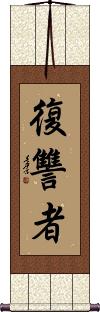
復讐者 is a Japanese Kanji title that means avenger or revenger.
The first two characters literally mean revenge or avenge.
The last character is a way to say a person (or soldier/warrior).
Altogether, you have something like, an “avenging person,” hence avenger.
Mind of the Beginner
Shoshin
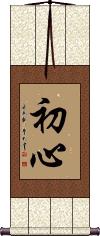
初心 is often translated in Japanese as “beginner's mind” or “beginner's spirit.”
In Chinese, the dictionary definition is “one's original intention.”
The first character means first, initial, primary, junior, beginning, or basic.
The second character means heart, mind, soul, or essence.
初心 is one of the five spirits of the warrior (budo) and is often used as a Japanese martial arts tenet. Under that context, places such as the Budo Dojo define it this way: The state of shoshin is that of a beginners mind. It is a state of awareness that always remains fully conscious, aware, and prepared to see things for the first time. The attitude of shoshin is essential to continued learning.
Berserker
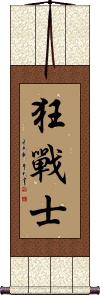
狂戰士 is the most popular way to write berserker in Chinese.
This title kind of means Norse warrior but often refers to the berserker in a fantasy role-playing game.
There is another way to write berserker in Chinese, which is 狂暴者.
Bushido / The Way of the Samurai
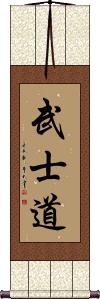
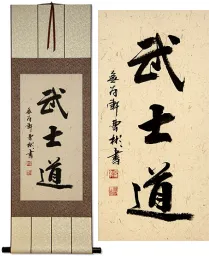
武士道 is the title for “The Code of the Samurai.”
Sometimes called “The Seven Virtues of the Samurai,” “The Bushido Code,” or “The Samurai Code of Chivalry.”
This would be read in Chinese characters, Japanese Kanji, and old Korean Hanja as “The Way of the Warrior,” “The Warrior's Way,” or “The Warrior's Code.”
It's a set of virtues that the Samurai of Japan and ancient warriors of China and Korea had to live and die by. However, while known throughout Asia, this title is mostly used in Japan and thought of as being of Japanese origin.
The seven commonly-accepted tenets or virtues of Bushido are Rectitude 義, Courage 勇, Benevolence 仁, Respect 礼(禮), Honour 名誉, Honesty 誠, and Loyalty 忠実. These tenets were part of oral history for generations, thus, you will see variations in the list of Bushido tenets depending on who you talk to.
See our page with just Code of the Samurai / Bushido here
Courage to do what is right
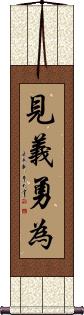
見義勇為 means the courage to do what is right in Chinese.
This could also be translated as “Never hesitate to do what is right.”
This comes from Confucian thought:
Your courage should head in an honorable direction. For example, you should take action when the goal is to attain a just result as, without honorable intent, a person’s gutsy fervor can easily lead them astray.
One who flaunts courage but disregards justice is bound to do wrong; someone who possesses courage and morality is destined to become a hero.
Some text above paraphrased from The World of Chinese - The Character of 勇
See Also: Work Unselfishly for the Common Good | Justice | Bravery
Death Before Dishonor
A soldier can die or kill, but never dishonor or disgrace himself
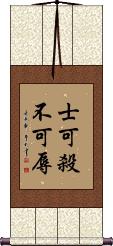
士可殺不可辱 almost directly matches the military idea of “Death Before Dishonor,” while also being an ancient Chinese proverb.
The direct meaning is, “[A] soldier/warrior can die/kill [but he/she] cannot [allow] dishonor/disgrace [upon himself/herself].” Chinese grammar, and especially ancient grammar, is a little different than English. Not nearly as many articles are needed, and a lot is implied.
There are a lot of ways to express ideas similar to “Death Before Dishonor” in Chinese, and I would rate this one in the top two.
This is the original form of this proverb with the character for “soldier/warrior” at the beginning. Most of the time, this character is dropped, becoming a five-character proverb (the soldier/warrior part is implied, even without the character being present in the proverb). We also offer a shorter version.
Diamond
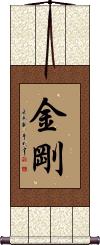
金剛 is a common way to call diamonds in Chinese and Japanese.
Traditionally, there were not that many diamonds that made their way to Asia, so this word does not have the deep cultural significance that it does in the west (thanks mostly to De Beers' marketing). Therefore, this word was kind of borrowed from other uses.
This title can also refer to vajra (a Sanskrit word meaning both thunderbolt and diamond that originally refers to an indestructible substance); hard metal; pupa of certain insects; Vajrapani, Buddha's warrior attendant; King Kong; adamantine; Buddhist symbol of the indestructible truth.
Eishin-Ryu
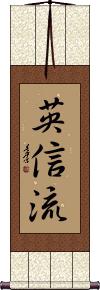
英信流 is the Japanese martial arts term, Eishin-ryu.
This can also be pronounced Hidenobu-ryu. The direct meaning is something like, hero faith school (or school of heroic faith).
Fighter
Warrior / Soldier
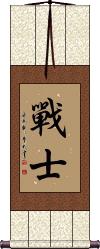
戰士 is how to write “fighter” in Chinese, ancient Japanese Kanji, and old Korean Hanja.
The first character means war, warfare, or battle.
The second character means soldier, officer, man, or pawn.
戰士 can also mean soldier or warrior. Usually this will be read as “fighter” or “one who fights.” 戰士 is an odd selection for a wall scroll unless you are a boxer, ultimate fighter, or otherwise participate in combat sports.
Other translations include combatant or champion.
 Note that after WWII, the first Kanji was reformed/simplified. This modern Japanese version is shown to the right. If you want this version, click on the Kanji to the right, instead of the button above.
Fighter / Champion
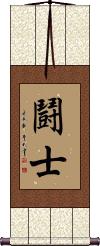
鬪士 / 闘士 is how to write “fighter” in Chinese and old Korean Hanja.
Chinese: 鬪士 / 闘士 is usually used to mean “fighter” in Chinese. It can also be translated as “warrior” or “activist.”
Korean: 鬪士 / 闘士 means fighter or champion (in terms of a fighter) in Korean Hanja.


 Note: The first character can also be written in three alternate ways, as shown to the right. Give us a note if you have a certain preference when you place your order.
Fighter for God
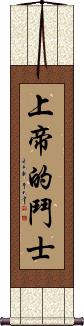
上帝的鬥士 means “God's Fighter.”
While a lot of people search for “Warrior of God,” or “Soldier of God,” this is actually the most natural way to say something like this in Chinese.
Fighting Spirit
The Will to Fight
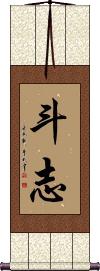
斗志 literally means fighting spirit in Chinese.
As in the spirit that a warrior, soldier, athlete, or fighter must possess.
 Note: There is more than one way to write the first character of this word. It is sometimes written like the version shown to the right (yes, it's completely different but has the same meaning & pronunciation). If you have a preference, please let us know in the special instructions about your order.
Fighting Spirit
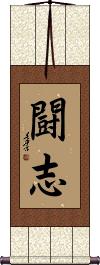
This literally means “fighting spirit” or “the will to fight.”
As in the spirit that a warrior, soldier, athlete, or fighter must possess.
Filial Piety
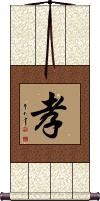
孝 represents filial piety.
Some will define this in more common English as “respect for your parents and ancestors.”
孝 is a subject deeply emphasized by the ancient philosophy and teachings of Confucius.
Some have included this in the list for the Bushido, although generally not considered part of the 7 core virtues of the warrior.
Note: 孝 is not the best of meanings when seen as a single character. Some will read the single-character form to mean “missing my dead ancestors.” However, when written as part of Confucian tenets, or in the two-character word that means filial piety, the meaning is better or read differently (context is important for this character).
We suggest one of our other two-character filial piety entries instead of this one.
First Born
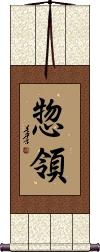
惣領 is a Japanese title for the eldest child, the oldest child, firstborn child, or child who carries on the family name.
In more ancient times, this was used to refer to the head of a warrior clan. It can also be a place name or given name “Souryou” or “Soryo” in Japanese.
God of War
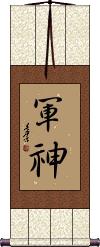
軍神 is a Japanese title meaning god of war, or war hero.
This can also be the surname Gunshin.
Guandi: God of War
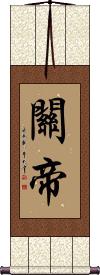
關帝 is the title, Guandi, the God of War, a deified hero of the Three Kingdoms, and a protector of Buddhism.
Guan Yu
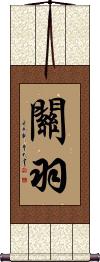
關羽 is the name Guan Yu, Army General for the Kingdom of Shu.
He is also known as Guan Gong (like saying Duke Guan or Sir Guan)
He was immortalized in the novel, “Romance of the Three Kingdoms.”
He was a fearsome fighter, also famous for his virtue and loyalty. He is worshiped by some modern-day soldiers and has the title “Warrior Saint” in China. Some believe he offers safety and protection for military servicemen.
Guan Yu lived until 219 A.D.
Guerrero
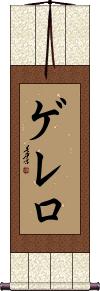
ゲレロ is the name Guerrero in Japanese.
The Spanish word Guerrero means fighter or warrior, so you could also use a translation and pick a word that means fighter instead of this transliteration.
Note: Because this title is entirely Japanese Katakana, it should be written by a Japanese calligrapher.
In Flowers the Cherry Blossom, In Men the Samurai
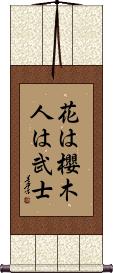
This Japanese proverb simply reads, “[In] Flowers it's Cherry Blossoms, [In] Men it's Warriors.”
花は櫻木人は武士 is meant to say that of all the flowers in the world, the cherry blossom is the best. And of all men in the world, the Samurai or Warrior is the best
This proverb has been around for a long time. It's believed to have been composed sometime before the Edo Period in Japan (which started in 1603).
Some will drop one syllable and pronounce this, “hana wa sakura hito wa bushi.” That's “sakura” instead of “sakuragi,” which is like saying “cherry blossom” instead of “cherry tree.”
The third character was traditionally written as 櫻. But in modern Japan, that became 桜. You may still see 櫻 used from time to time on older pieces of calligraphy. We can do either one, so just make a special request if you want 櫻.
Note: Because this selection contains some special Japanese Hiragana characters, it should be written by a Japanese calligrapher.
Hua Mulan
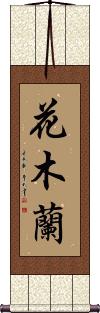
花木蘭 is the name of the famous Chinese woman warrior Hua Mulan.
She was made famous in the west by Disney's animated movie, “Mulan.”
Most of the historical information about her comes from an ancient poem. It starts with a concerned Mulan, as she is told a man from each family is to serve conscription in the army. Her father is too old, and her brother is too young. Mulan decides to take the place of her father. After twelve years of war, the army returns, and the best warriors are awarded great posts in the government and riches. Mulan turns down all offers and asks only for a good horse for the long trip home. When Mulan greets visiting comrades wearing her old clothes, they are shocked to find the warrior they rode into battle with for years is actually a woman.
Immovable Mind
fudoshin
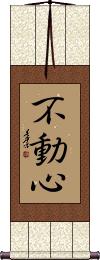
不動心 is one of the five spirits of the warrior (budo) and is often used as a Japanese martial arts tenet.
Under that context, places such as the Budo Dojo define it this way: An unshakable mind and an immovable spirit is the state of fudoshin. It is courage and stability displayed both mentally and physically. Rather than indicating rigidity and inflexibility, fudoshin describes a condition that is not easily upset by internal thoughts or external forces. It is capable of receiving a strong attack while retaining composure and balance. It receives and yields lightly, grounds to the earth, and reflects aggression back to the source.
Other translations of this title include imperturbability, steadfastness, keeping a cool head in an emergency, or keeping one's calm (during a fight).
The first two Kanji alone mean immobility, firmness, fixed, steadfastness, motionless, and idle.
The last Kanji means heart, mind, soul, or essence.
Together, these three Kanji create a title defined as “immovable mind” within the context of Japanese martial arts. However, in Chinese, it would mean “motionless heart,” and in Korean Hanja, “wafting heart” or “floating heart.”
Jing Mo / Jing Wu
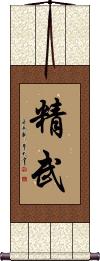
精武 is the title used for a certain type of martial arts. You can translate this roughly as “Excellent Martial Arts” or “Excellence in Martial Arts.” You will notice that the second character is “wu” as in wushu (martial arts) and wushi (warrior).
More information can be found at the Jing Mo website. You should probably only order this if you are a member of this association.
Note that “jing mo” is the Cantonese pronunciation of these characters. In Mandarin, they are “jing wu.”
Also used in Korean but only by those involved with martial arts who can also read Korean Hanja (a small percentage of the population).
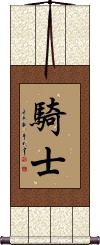
Knight
Lingering Mind
Zanshin
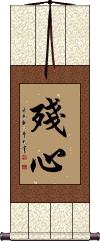
First off, 殘心 should only be used in the context of Japanese martial arts. In Chinese, it's a rather sad title (like a broken heart). In Chinese, the first character alone means destroyed, spoiled, ruined, injured, cruel, oppressive, savage, incomplete, or disabled. However, in Japanese, it's remainder, leftover, balance, or lingering.
The second character means heart, mind, soul, or essence in both languages.
殘心 is one of the five spirits of the warrior (budo) and is often used as a Japanese martial arts tenet. Under that context, places such as the Budo Dojo define it this way: The spirit of zanshin is the state of the remaining or lingering spirit. It is often described as a sustained and heightened state of awareness and mental follow-through. However, true zanshin is a state of focus or concentration before, during, and after the execution of a technique, where a link or connection between uke and nage is preserved. Zanshin is the state of mind that allows us to stay spiritually connected, not only to a single attacker but to multiple attackers and even an entire context; a space, a time, an event.
 In modern Japan (and Simplified Chinese), they use a different version of the first character, as seen to the right. Click on this character to the right instead of the button above if you want this modern Japanese version of lingering mind / zanshin.
Magnolia
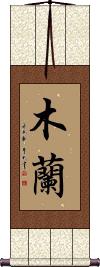
木蘭 is a general term for the magnolia (magnolia liliflora) or lily magnolia in Chinese and Japanese.
This can refer to any of the flowering plants or trees in the Magnolia genus.
In Chinese, this is also the name Mulan, as in Hua Mulan, the legendary woman warrior and folk hero of fifth-century China.
In Japanese, this can also be the female given name Mokuren.
Bushinkan
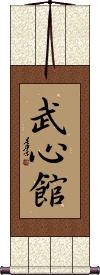
武心館 is the title for Bushinkan or Bushin-kan, which translates roughly as Warrior Heart Hall/House.
Marine
Amphibious Warrior
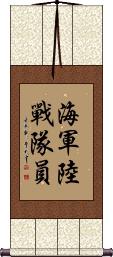
海軍陸戰隊員 is the Chinese way to express “Marine.” (as in a member of the Marine Corps). It is not country-specific, so it could be the Royal Marines, U.S. Marines, Chinese Marines, etc.
In Australian English, they would translate this as “Naval Infantryman.”
Breaking down each character this means:
“ocean/sea military/arms shore/land fighting/war/battle corps/team/group person/member.” Note that the first two characters are presented together but outside of this phrase mean “navy” (sea military).
See Also: Warrior | Military | Navy | Art of War
Marine Corps
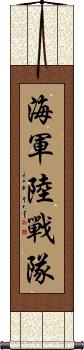
海軍陸戰隊 is the Chinese way to express “Marine Corps.” This could be the Marine Corps of virtually any country that has an amphibious military force.
Let me know if you want a more specific title, such as British Royal Marines or U.S. Marine Corps.
The Chinese title for Marines is very verbose...
Breaking down each character this means:
“ocean/sea military/arms shore/land fighting/war/battle corps/team/group.”
See Also: Military
Marine Corps
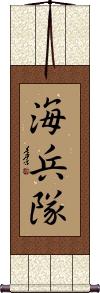
海兵隊 is the Japanese and Korean way to express “Marine Corps” or simply “Marines.” It is not specific, so this can be the Marine Corps of any country, such as the British Royal Marines to the U.S. Marines.
Breaking down each character, this means:
“ocean/sea soldiers/army corps/regiment/group.”
See Also: Military
Marine / Soldier of the Sea
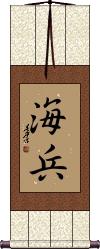
海兵 is a way to express “Marine” as in an individual “Soldier of the Sea” in Japanese Kanji and old Korean Hanja characters (not to be confused with Korean Hangul).
Breaking down each character, this means:
“ocean/sea soldier/army/warrior.”
Please note that this Japanese/Korean version kind of means “sailor” or “navy” in Chinese.
See Also: Military
Martial Morality / Martial Arts Ethics / Virtue
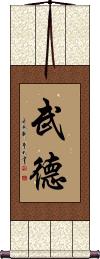
This refers to the virtue, morality, and ethics that any practitioner of martial arts should possess.
This can be used in both Chinese and Japanese in place of English terms such as “soldierly virtue,” “good conduct” (military), “warrior ethics,” and being honorable regarding any fight or competition.
In Japanese, there is a slight variation in the last character, making it 武徳 instead of 武德 in Japan. And yes, just one little horizontal stroke is omitted. If you need the Japanese version, please choose a Japanese calligrapher, or drop me a note so that I make sure you get the characters you intend.
See Also: Morality of Mind | Morality of Deed
Martial Arts Master
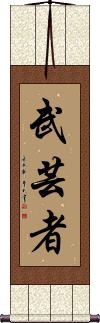
武芸者 is the Japanese Kanji title for “Martial Arts Master.” It suggests that you have reached at least the level of black belt and are probably to the level where you are ready to become an instructor.
Please consider carefully where you stand before ordering this phrase on a wall scroll. If you are not a master, this will make you look a bit foolish.
If you want to get this as a gift for your master at the dojo. Try to discreetly make sure this term is used in your school. Different schools and styles of Japanese martial arts use different terms. You may notice in the Romaji that the last two characters romanize as “geisha” which means “person skilled in arts” (what a geisha girl really is). The title here has the character for “martial,” “warrior,” and/or “military” in front of it. Therefore the literal translation is “martial art person.”
These Kanji are valid Chinese characters and Korean Hanja, but this title does not really make sense in Chinese and is not often used in Korean, though a Chinese or Korean would be able to guess the meaning by looking at the first and last characters.
Martial Arts Skills
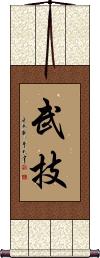
武技 can be translated as “martial arts skills,” “warrior skills,” or “military skills,” depending on usage.
In both Japanese and Chinese, rather than meaning martial arts, this speaks more to the skills that you possess in regard to martial arts. This phrase also has a light suggestion of “having the itch to show off these skills.”
Martial Arts / Budo
Way of the Warrior
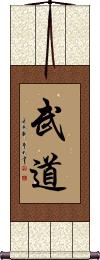
武道 is the very common Japanese way to say “Martial Arts.”
武道 is used mostly in Japanese dojos but is also understood in Chinese and Korean.
Some will use this title to mean chivalry (the conduct of a knight) or military art. The way this word is understood would depend on the context in which it is used.
The first character means “force,” “warlike,” or “essence of a warrior.”
The second character means “method,” “path,” and “the way.” It is the same character used to describe/mean the philosophy of Taoism / Daoism.
Some will also translate this as “The Way of the Warrior”; especially in the context of Korean martial arts.
Morality of Deed
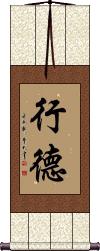
The idea of “morality of deed” goes along with 行德 or “wu de” (martial morality or virtues of the warrior).
Here, the first character is a representation of the actions or deeds that you engage in.
The second character refers to morality or virtue.
This translates better in English in the opposite order, as the Chinese order is literally “deed morality.”
See Also: Morality of Mind | Martial Morality
Morality of Mind
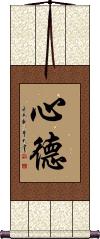
The idea of 心德 or “morality of mind” goes along with 行德 or “wu de” (martial morality or virtues of the warrior).
Here, the first character is a representation of your heart or mind.
The second character refers to morality or virtue.
This can also be translated as “morality of heart,” “virtue of heart,” or “virtue of the mind.”
Since ancient times in Asia, the idea of your mind (where your soul resides and your thought originates) has been associated with the heart. Just as in western culture, where we say “it comes from the heart” or “heartfelt emotions,” there is a belief that your heart and mind are one and the same (medical science now begs to differ).
See Also: Morality of Deed | Martial Morality
Ninja
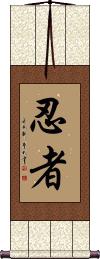
In feudal Japan, ninjas or shinobi (literally, “one who is concealed” or “one that endures”) were sometimes assassins and agents of espionage. The ninja, like samurai, followed their special code of conduct.
The role of the ninja has been romanticized in many American movies (and to a lesser extent in Japanese movies). Because the ninja craze has taken off in the west, Japan has followed the trend, and you'll see plenty of ninja-related imagery in Japan. Note that when writing this as Kanji, Japanese tend to write the first character in the form shown to the right. If you select a Japanese calligrapher, please expect that form. Our Chinese calligraphers can also write it in Japanese form, but only if you request it (in the special instructions about your order during checkout).
No Mind / Mushin
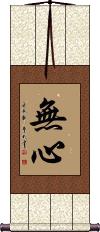
In Japanese, 無心 means innocent or without knowledge of good and evil. It literally means “without mind.”
無心 is one of the five spirits of the warrior (budo) and is often used as a Japanese martial arts tenet. Under that context, places such as the Budo Dojo define it this way: “No mind, a mind without ego. A mind like a mirror which reflects and dos not judge.” The original term was “mushin no shin,” meaning “mind of no mind.” It is a state of mind without fear, anger, or anxiety. Mushin is often described by the phrase “Mizu no Kokoro,” which means “mind like water.” The phrase is a metaphor describing the pond that clearly reflects its surroundings when calm but whose images are obscured once a pebble is dropped into its waters.
This has a good meaning in conjunction with Chan / Zen Buddhism in Japan. However, out of that context, it means mindlessness or absent-mindedness. To non-Buddhists in China, this is associated with doing something without thinking.
In Korean, this usually means indifference.
Use caution and know your audience before ordering this selection.
More info: Wikipedia: Mushin
Paladin
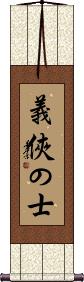
義俠の士 is how Paladin is written in Japanese.
The literal translation of this Japanese title is something like “Chivalrous Warrior.”
Purified Spirit / Enlightened Attitude
A Japanese martial arts title/concept
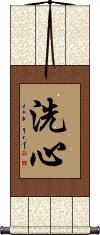
The first Kanji alone means to wash, bathe, primness, cleanse or purify.
The second Kanji means heart, mind, soul, or essence.
Together, these two Kanji create a word defined as “purified spirit” or “enlightened attitude” within Japanese martial arts.
洗心 is one of the five spirits of the warrior (budo) and is often used as a Japanese martial arts tenet. Under that context, it's often defined as a spirit that protects and harmonizes the universe. Senshin is a spirit of compassion that embraces and serves all humanity and whose function is to reconcile discord in the world. It holds all life to be sacred. It is the Buddha mind.
This title will only be familiar to Japanese who practice certain martial arts. Others may not recognize this word at all.
洗心 does not show up as a word in too many Chinese dictionaries, but it can be read and has the same meaning in Chinese.
 There is an issue with the first character. The original, and probably most correct version is shown above. However, many dojo documents and other sources have used a more simple first character. Arguments ensue about which version is correct. If you want to be correct in the Japanese language, use the "Select and Customize" button above. If you want to match the Kanji used by your dojo, click the Kanji shown to the right. There is a slightly different meaning with this first character which means before, ahead, previous, future, precedence.
Ronin / Masterless Samurai
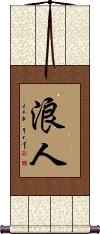
The 浪人 or Ronin have no master - The most famous are the 47 ronin created after their Lord committed suicide. This term was not a positive title for the Samurai of ancient Japan. However, in recent years, movies and video games have glorified the term Ronin.
In Chinese, this term has the original meaning of a hobo, vagabond, or ruffian.
In Korean Hanja, these characters would be read as adventurer, wanderer, someone without a steady job, or someone who is wasting away time.
In modern Japan, this term is used as a nickname for a high school student who has failed a college entry exam (and is trying again).
In Chinese and Korean, the Japanese definition of “Masterless Samurai” is known because of the historical context. Even in Japanese, the literal translation is closer to the Chinese and Korean definitions shown above.
This will make a fine wall scroll if you are a fan of the Ronin or see yourself as a Ronin of sorts. However, please think twice before getting a Ronin tattoo!
Samurai
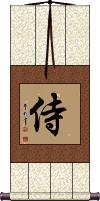
In Japanese, 侍 represents the warriors that attempted to hold peace when there was no Emperor in Japan.
Be cautious though, as it is an old way to express “servant” or “waiter” in Chinese and Korean. Of course, if you are a samurai, you are a servant to your Shogun-ate, Lord, or the people (which is the root meaning).
See Also: Warrior
Sasuke
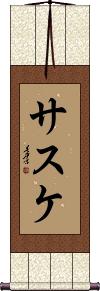
サスケ is the Japanese title of the TV show, Sasuke Rising.
サスケ is the original Japanese TV show that inspired the American Ninja Warrior, Ninja Warrior UK, and other variations.
It should be noted that in Japan, the show's title is usually displayed in capital Roman letters as “SASUKE,” rather than the Japanese text, サスケ. Although, both titles are known in Japan (you'd probably need to search for サスケ if looking to buy a Sasuke DVD in Japan).
Notes: Sasuke can also be a given name (written the same way). There are also other names that romanize as Sasuke in Japanese.
Note: Because this title is entirely Japanese Katakana, it should be written by a Japanese calligrapher.
Shogun / Japanese General
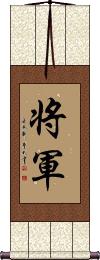
将軍 or Shogun, in the simplest definition, is a General, but you could also use words such as commander, lord, overlord, highest ranking, or commanding officer.
The title “Shogun” has held some slightly ambiguous meanings at times in Japanese history.
In the west, when someone mentions “Shogun,” we may be filled with thoughts of gallant warriors. Some might even think of the TV mini-series with Richard Chamberlain. Often westerners use the words, Samurai and Shogun interchangeably, but that's really not technically correct. In the case of the Samurai, the Shogun was a designated (by the emperor) leader of a gild of Samurai. In this context, the Shogun was a Samurai lord. Or effectively, a commanding officer of a company of Samurai - to put it in modern military terms.
Sometimes a Shogun was a general; other times, he was the leader of a military government in Japan - but not a front-line warrior like a Samurai.
Variants of the same characters are used in China for the rank and title of a General of the People's Liberation Army (and the same term and characters have been used for the last 2200 years since the Qin Dynasty).
Chinese or Korean Army General
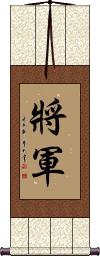
將軍 is the more Chinese and Korean Hanja version or General.
There is a slight variation in the way the first character is written compared to the Japanese Shogun (将軍) title.
So if you want to specifically refer to a Chinese or Korean General, this is the way. Japanese people would still easily identify this as “shogun.”
Note: This term is also used for Admiral in Korean in a certain context (if you need a better title for Admiral, just let me know).
Soldier of the Gods
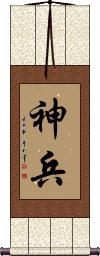
神兵 is a Japanese, Chinese, and Korean title that means “soldier dispatched by a god,” or “soldier under the protection of the gods.”
神兵 is used more in Japanese (especially in animation) than the other languages.
Soldiers
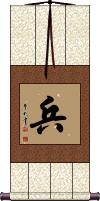
兵 can be used to express soldiers, troops, a force, an army, weapons, arms, military, warfare, tactics, strategy, or warlike.
The final meaning depends on context. It's also part of the Chinese title for the Terracotta soldiers. In fact, this character is usually used in compound words (words of more than one character). Sometimes this single character is the title used for the pawns in a chess game (in a related issue, this is also a nickname for soldiers with the rank of Private).
Sumo Wrestler
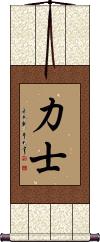
力士 literally means “strong man” but is more commonly used as a title for sumo wrestlers.
In Japanese, this is a Rikishi.
力士 is also used in Chinese and old Korean with the same meaning. Occasionally, this will also be used to refer to a strong or mighty man, hero, demigod, etc. But anyone in the CJK world will first think of a sumo wrestler before the more literary usage as a strong man or demigod.
Superman
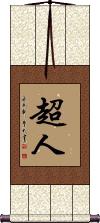
超人 is the Chinese title for the comic book hero, Superman.
In Japanese, this can also refer to a superman or superwoman but may refer to Nietzsche's ideal man of the future or the “Ubermensch” or “overman.”
超人 is also a word in old Korean Hanja but more a generic term for a super or excellent person or hero.
Sword
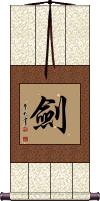
劍 is pronounced “jian” in Chinese. When you say it, imagine that you are making the sound of a sword as it clashes with a metal shield. This might get you closer to the correct pronunciation in Chinese.
I actually wonder if this word came from the metallic ringing sounds of a sword in battle - but such knowledge is lost in history.
The sword is a symbol of a warrior. The one thing that a soldier in ancient China lived and died by. A warrior with his skills and sword proves himself of great value. A warrior who losses his sword instantly becomes worthless.
劍 is an excellent scroll for someone in the military (especially officers of all services - as well as enlisted NCO Marines since they still carry swords even if mainly for ceremonial purposes). Or perhaps someone who practices variations of kung fu or tai chi that involve weapons.
Please note that while this character is understood with the sword meaning in Japanese, you might be looking for the word “katana” which also means sword in Japanese but means “knife” in Chinese.
There are other ways to write sword, and here are a few...


If you are particular about the version you receive, please let me know when you place your order (Note: Special styles are only available from one of our master calligraphers).
United States Marine Corps
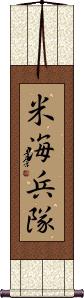
米海兵隊 is the Japanese way to write “United States Marine Corps” or simply “U.S. Marines.”
Breaking down each Kanji, this means:
“rice (American) ocean/sea soldiers/army/military corps/regiment/group.”
This title will only make sense in Japanese, it is not the same in Chinese! Make sure you know your audience before ordering a custom wall scroll.
If you are wondering about rice, America is known as “rice country” or “rice kingdom” when literally translated. The Kanji for rice is often used as an abbreviation in front of words (like a sub-adjective) to make something “American.” Americans say “rice burner” for a Japanese car and “rice rocket” for a Japanese motorcycle. If you did the same in Japanese, it would have the opposite meaning.
Note: I have not verified this but I’ve found this title used for U.S. Marines in Korean articles, so it’s most likely a normal Korean term as well (but only in Korean Hanja).
See Also: Marine Corps | Navy | Army | Art of War | Warrior | Military
Ultimate Loyalty to Your Country
The most famous tattoo in Chinese history
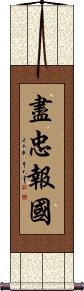
盡忠報國 is a proverb that is the tattoo worn on the back of Yue Fei, a famous Chinese warrior who lived until 1142 A.D.
The tattoo can be translated as “Serve the country with the utmost loyalty.” More literally, it means “[The] Ultimate Loyalty [is too] Duty [of] Country.”
Legend has it that this tattoo once saved his life when he was accused of treason.
The first two characters have come to create a word that means “serve the country faithfully” or “die for the country.” Note: It's more a willingness to die for one's country than the actual act of dying.
The last two characters have come to mean “Dedicate oneself to the service of one's country.”
Both of these words are probably only in the Chinese lexicon because of this famous tattoo.
If you break it down, character-by-character, here is what you get:
1. To the utmost, to the limit of something, the ultimate.
2. Loyalty or duty (a sense of duty to one's master, lord, country, or job).
3. Report, recompense, give back to (in this case, you are giving yourself to your country as payback).
4. Country, state, nation, kingdom.
Zhuge Liang
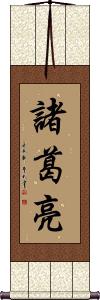
諸葛亮 is the name Zhuge Liang, written in Chinese.
Zhuge Liang lived from 181 to 234 A.D.
He was a military leader and prime minister of Shu Han (蜀漢) during the Three Kingdoms period.
He was the main hero of the fictional Romance of Three Kingdoms.
He is considered a famous sage, philosopher, and military genius.
Bushindo
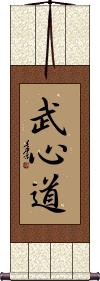
武心道 is the title for Bushindo meaning “warrior heart way” or “warrior mind way.”
In English, we might translate it as “The way of the warrior's heart.”
Shobukan
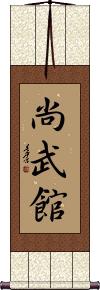
尚武館 is a title, Shobukan, meaning “Great Warrior House,” in Japanese.
Shobukan
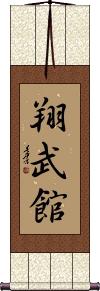
翔武館 is the title, Shobukan meaning “Soaring Warrior House,” in Japanese.
Shorin-Ryu Shobukan
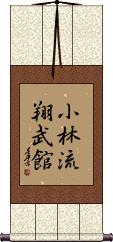
小林流翔武館 is the title, Shorin-Ryu Shobukan meaning “Little Forest Style - Soaring Warrior House” in Japanese.
There is more than one version of Shorin-Ryu and Shobukan, so make sure the characters here match the ones used at your dojo.
Miyashita
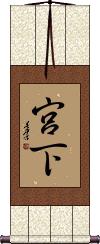
宮下 is the Japanese name Miyashita.
You may be searching for this if you are a fan of Manga Mitsudomoe or My Hero Academia.
Kobukan
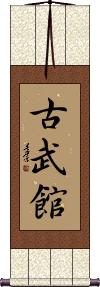
古武館 is the martial arts style Kobukan or Kobu-Kan.
The meaning is “ancient warrior hall.”
古 = Old, ancient, antique, or paleo-
武 = Martial, warrior, or military.
館 = Hall, building, school room, or an alternate word for a dojo.
Meibukan
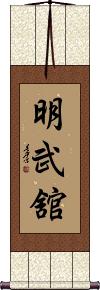
Meibukan (明武舘) is a branch of Gōjū-ryū karate. It was created by Meitoku Yagi, a student of Goju-ryu's founder, Chojun Miyagi. Meibukan means "House of the pure-minded warrior."
This in-stock artwork might be what you are looking for, and ships right away...
Gallery Price: $200.00
Your Price: $98.88
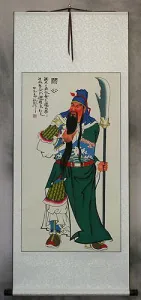
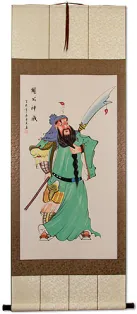
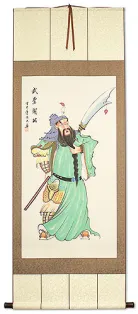
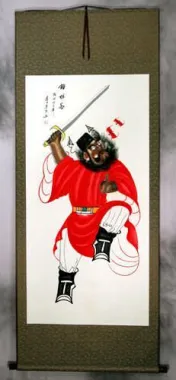
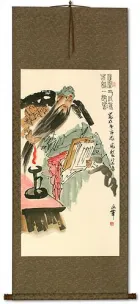
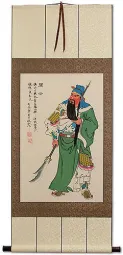
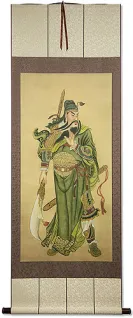
Guan Gong Warrior Saint
Large Wall Scroll
Discounted Blemished
Gallery Price: $71.00
Your Price: $39.00
Gallery Price: $158.00
Your Price: $87.77
Gallery Price: $158.00
Your Price: $87.77
Gallery Price: $72.00
Your Price: $39.88