Many custom options...


And formats...



Wan in Chinese / Japanese...
Buy a Wan calligraphy wall scroll here!
Personalize your custom “Wan” project by clicking the button next to your favorite “Wan” title below...
3. Banzai
4. Chowan
5. Davann
6. Devan
7. Devon
8. Erwan
9. Erwann
10. Euan
11. Evan
12. Ewan
13. Gevan
14. Good Night
15. Ivan
16. Ivarn
17. Ivonne
18. Iwan
19. Karwan
20. Night
21. Pawan
22. Perfection
23. Rewan
24. Savan
25. Shiwan
27. Speed Control
28. Swan
29. Swann
31. Vando
32. Vanna
33. Vientiane
34. Wanya
35. Yvaine
36. Yvan
37. Jayvan
38. Toy
39. Javan
40. Levan
41. Cowan
42. Chauvin
43. Ioan
44. Kavan
45. Antoine
46. Antwan
47. Antwann
48. Donovan
49. Ivani
50. Ivanka
51. Ivano
52. Lawand
53. Lithuania
54. Marwan
55. Paswan
56. Radwan
57. Ridwan
58. Solivan
59. Tahuanty
60. Twanna
61. Vanya
62. Alvan
63. Sirvan
64. Donavan
65. Canavan
66. Ridhwan
68. Avanzar
69. Cervantes
71. Estevan
72. Gevanski
73. Ivanis
74. A Bright Future
75. O’Donovan
76. Unbeatable
77. Ivania
78. Seize The Night
79. Ivanov
80. Cervantez
81. Everything Happens for a Reason
82. Ewangerina
83. Malwandla
84. Marc-Antoine
85. Taiwan
86. Sovanndarith
87. Lewandowski
88. Evangelista
89. Diversity
90. The incompetent boat pilot blames the river for his shortcomings
92. A House Might be Worth 1 Million Dollars, But Good Neighbors are Worth 10 Million
94. Read 10,000 Books, Travel 10,000 Miles
95. Better to Travel 10,000 Miles than Read 10,000 Books
96. My life is complete because of you
97. John 8:8
Profound / Powerful Words
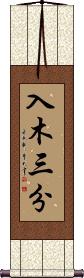
入木三分 is a four-character Chinese proverb that translates in English to a strong form of “profound” or “written with a forceful hand.”
But there is much more to the story...
The deep meaning behind this proverb comes from a man named Wan Xizhi, who lived in the third century.
He was a great writer and calligrapher whose writing style influenced generations of other writers and calligraphers.
He once wrote words on a piece of wood to be taken to an engraver.
When the engraver began to carve the characters into the wood, he found that Wang Xizhi's writing had penetrated the wood about 3/8 of an inch.
Thus people believed that his words were so powerful and profound that they caused the ink from his brush to penetrate the wood deeply.
The proverb literally means “penetrated wood three fen” (A fen is an ancient Chinese measurement of a little over 1/8 of an inch or almost 4mm).
Banzai / Wansui
Old Japanese / Traditional Chinese & Korean
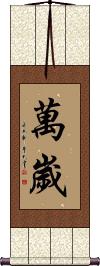
萬歲 is the traditional Chinese, Korean Hanja, and ancient Japanese way of writing banzai.
In modern times, the first character was simplified in Japan and China. So you might want to select the other entry for universal readability.
While it has become a popular, if not an odd, thing to scream as you jump out of an airplane (preferably with a parachute attached), banzai is actually a very old Asian way to say “hooray.” The Japanese word “banzai” comes from the Chinese word “wan sui,” which means “The age of 10,000 years.” It is actually a wish that the Emperor or the Empire live that long.
Imagine long ago when the Emperor made a rare public appearance. 萬歲 is what all people would yell to their leader in respect.
So if you like it as a hooray, or you want to wish someone that they live for 10,000 years, this is the calligraphy for you.
Other translations include Cheers! (not the drinking kind), hurrah!, long live [name]!, and congratulations!
To other things with banzai in their names, I am still waiting for the promised sequel to Buckaroo Banzai.
Notes: Sometimes people confuse banzai with bonsai. A bonsai is a miniature tree. They have nothing to do with each other.
Banzai
Modern Japanese Version
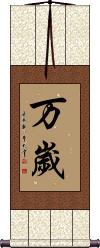
万歲 is the modern Japanese way to write banzai.
We've made two almost identical entries for this word, with just a variation on the first character. In the last century, 萬 was simplified to 万 in Japan and China. The new generation will expect it to be written as 万 but the old generation can still read the more traditional 萬 form. You must make your determination as to what version is best for you. If your audience is mostly Japanese, I suggest 万歲.
While it has become a popular, if not an odd, thing to scream as you jump out of an airplane (preferably with a parachute attached), banzai is actually a very old Asian way to say “hooray.” The Japanese word “banzai” comes from the Chinese word “wan sui” which means “The age of 10,000 years.” It is actually a wish that the Emperor or the Empire live that long.
Imagine long ago when the Emperor made a rare public appearance. This is what all of the people would yell to their leader in respect.
So if you like it as a hooray, or you want to wish someone that they live for 10,000 years, this is the calligraphy for you.
To other things with banzai in their names, I am still waiting for the promised sequel to Buckaroo Banzai.
Other translations: hurrah, long life, congratulations, cheers, live long.
Notes: Sometimes people confuse banzai with bonsai. A bonsai is a miniature tree. They have nothing to do with each other. Further, Bonzai is not a word at all - although it would make a great name for a calcium supplement for older people.
Chowan

喬萬 is the name Chowan in Chinese (Mandarin).
Davann

達萬 is the name Davann in Chinese (Mandarin).
Devan
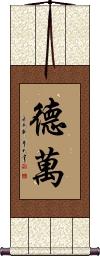
德萬 is the name Devan in Chinese (Mandarin).
Devon
德萬 is the name Devon in Chinese (Mandarin).
Erwan
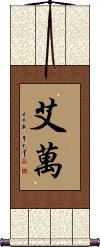
艾萬 is the name Erwan in Chinese (Mandarin).
Erwann
艾萬 is the name Erwann in Chinese (Mandarin).
Euan
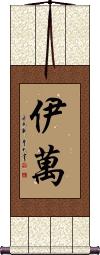
伊萬 is the name Euan in Chinese (Mandarin).
Evan
This is a common Mandarin Chinese transliteration for the male name Evan.
Ewan
伊萬 is the name Ewan in Chinese (Mandarin).
Gevan

格萬 is the name Gevan in Chinese (Mandarin).
Good Night
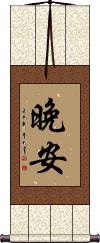
晚安 is how to write “good night” in Chinese.
This literally is a wish for an “evening of peace” or “night of calm.”
晚安 is not a normal title for a calligraphy wall scroll. It might be appropriate for a hotel front desk if anything.
Ivan
This is the most common Mandarin Chinese transliteration for the male Spanish/Latin name Ivan.
Ivan
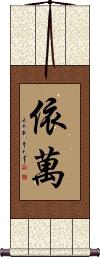
依萬 is another common transliteration to Mandarin Chinese for the name Ivan.
Ivarn
伊萬 is the name Ivarn in Chinese (Mandarin).
Ivonne
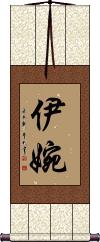
伊婉 is the name Ivonne in Chinese (Mandarin).
Iwan
伊萬 is the name Iwan in Chinese (Mandarin).
Karwan
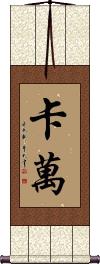
卡萬 is the name Karwan in Chinese (Mandarin).
Night
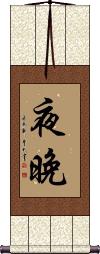
夜晚 is a two-character word that means night in Chinese.
Pawan
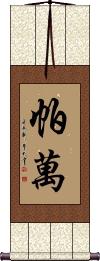
帕萬 is the name Pawan in Chinese (Mandarin).
Perfection
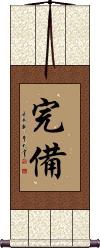
完備 is a word that means perfection in Chinese, old Korean Hanja, and Japanese Kanji.
It can also be defined as faultless, complete, completion, perfect, or to leave nothing to be desired.
There are other words that have a perfection meaning in various contexts. Buddhism has many kinds of perfection (also understood to be transcendence). If you need a different kind of perfection, please contact me.
Rewan
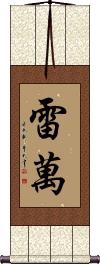
雷萬 is the name Rewan in Chinese (Mandarin).
Savan

薩萬 is the name Savan in Chinese (Mandarin).
Shiwan

施萬 is the name Shiwan in Chinese (Mandarin).
Sorrow / Feeling Sorry
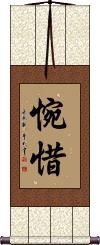
惋惜 is a Chinese word that means “to feel sorry for a person over something that should have happened.”
Note: This is a strange thing to write on a wall scroll for Chinese people.
Speed Control
Wan Geub
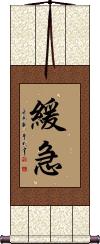
緩急 is often used as a Korean martial arts term, “speed control.” It's also one of the 8 key concepts of Tang Soo Do.
In other contexts, this can mean priority, pace, tempo, or slow and fast.
Swan
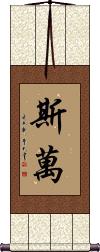
斯萬 is the transliteration to Mandarin Chinese for the name Swan.
If your name is Swan, I suggest using one of the titles we have that mean “swan” rather than this one that just sounds like “swan.”
Swann
斯萬 is the name Swann in Chinese (Mandarin).
Tenacious / Tenacity
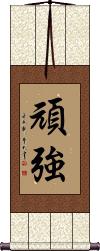
頑強 means “Tenacious,” “Hard to Defeat,” or “Dogged.”
Alone, the first character means mischievous, obstinate, or stubborn. But it loses some of the mischievous meaning when the second character is added.
The second character means strength, force, power, or better.
See Also: Determination | Dedication | Devotion | Never Give Up
Vando

萬多 is the name Vando in Chinese (Mandarin).
Vanna
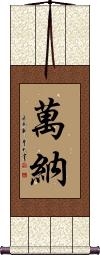
萬納 is the name Vanna in Chinese (Mandarin).
Vientiane

萬象 is the name Vientiane in Chinese (Mandarin).
Wanya
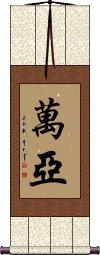
萬亞 is the name Wanya in Chinese (Mandarin).
Yvaine
伊萬 is the name Yvaine in Chinese (Mandarin).
Yvan
This is a common Mandarin Chinese transliteration for the male French name Yvan.
Jayvan

杰萬 is the name Jayvan in Chinese (Mandarin).

玩具 is the name Toy in Chinese (Mandarin).
Javan

賈萬 is the name Javan in Chinese (Mandarin).
Levan

萊萬 is the name Levan in Chinese (Mandarin).
Cowan

科萬 is the name Cowan in Chinese (Mandarin).
Chauvin

肖萬 is the name Chauvin in Chinese (Mandarin).
Ioan
伊萬 is the name Ioan in Chinese (Mandarin).
Kavan
卡萬 is the name Kavan in Chinese (Mandarin).
Antoine
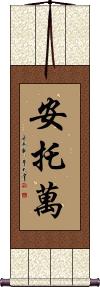
安托萬 is the name Antoine in Chinese (Mandarin).
Antwan

安特萬 is the name Antwan in Chinese (Mandarin).
Antwann
安特萬 is the name Antwann in Chinese (Mandarin).
Donovan
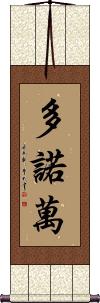
多諾萬 is the name Donovan in Chinese (Mandarin).
Ivani
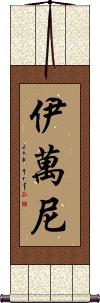
伊萬尼 is the name Ivani in Chinese (Mandarin).
Ivanka
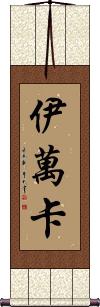
伊萬卡 is the name Ivanka in Chinese (Mandarin).
Ivano
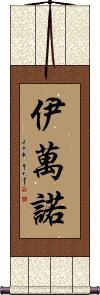
伊萬諾 is the name Ivano in Chinese (Mandarin).
Lawand
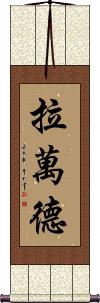
拉萬德 is the name Lawand in Chinese (Mandarin).
Lithuania
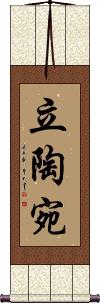
Marwan

馬爾萬 is the name Marwan in Chinese (Mandarin).
Paswan
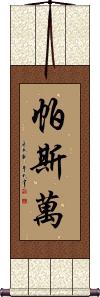
帕斯萬 is the name Paswan in Chinese (Mandarin).
Radwan
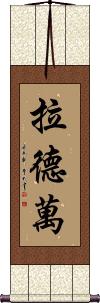
拉德萬 is the name Radwan in Chinese (Mandarin).
Ridwan
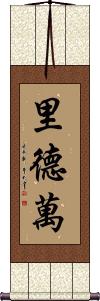
里德萬 is the name Ridwan in Chinese (Mandarin).
Solivan

索利萬 is the name Solivan in Chinese (Mandarin).
Tahuanty
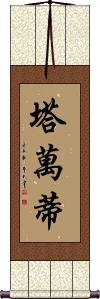
塔萬蒂 is the name Tahuanty in Chinese (Mandarin).
Twanna
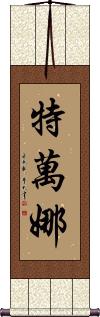
特萬娜 is the name Twanna in Chinese (Mandarin).
Vanya

萬尼亞 is the name Vanya in Chinese (Mandarin).
Alvan

阿爾萬 is the name Alvan in Chinese (Mandarin).
Sirvan

西爾萬 is the name Sirvan in Chinese (Mandarin).
多諾萬 is the name Donavan in Chinese (Mandarin).

卡納萬 is the name Canavan in Chinese (Mandarin).
Ridhwan
里德萬 is the name Ridhwan in Chinese (Mandarin).
All Hopes Fulfilled
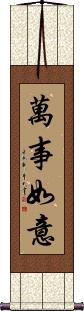
萬事如意 is a Chinese and old Korean proverb that means to have all one's wishes.
When speaking to someone, it's a way to say best wishes, all the best, may all your hopes be fulfilled, or may everything go well.
On your wall as calligraphy, it's meant to inspire all your wishes, hopes, dreams, and life to go well or come true.
Avanzar

阿萬扎爾 is the name Avanzar in Chinese (Mandarin).
Cervantes
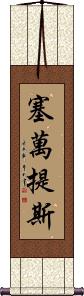
塞萬提斯 is the transliteration to Mandarin Chinese for the Latin / Spanish name Cervantes.
Eat Drink and Be Merry
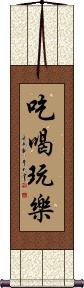
吃喝玩樂 is the short version of, “Eat, drink, and be merry.”
This is a Chinese proverb that suggests abandoning oneself to a life of pleasure.
Estevan
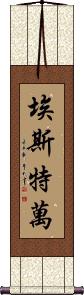
埃斯特萬 is the name Estevan in Chinese (Mandarin).
Gevanski

格萬斯基 is the name Gevanski in Chinese (Mandarin).
Ivanis

伊萬尼斯 is the name Ivanis in Chinese (Mandarin).
A Bright Future
Incredible 10,000-Mile Flight of the Peng
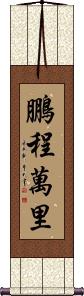
鵬程萬里 is an ancient Chinese proverb used in modern times to wish someone a long and successful career.
It's really about the 10,000 Flight of the Peng (Peng, also known as Roc is a mythical fish that can turn into a bird and take flight).
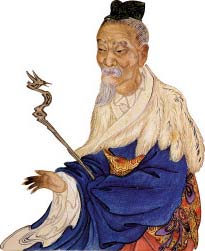
莊子
Zhuangzi or Chuang Tzu
Breaking down each character:
1. Peng or Roc (a kind of bird).
2. Journey (in this case, a flight).
3. 10,000 (Ten Thousand).
4. Li is a unit of distance often referred to as a “Chinese Mile,” though the real distance is about half a kilometer.
Direct Translation: “Peng's Journey [of] 10,000 Li.”
Literal meaning: “The 10,000-Li Flying Range Of The Roc.”
Perceived meaning: “To have a bright future” or “To go far.”
This proverb/idiom comes from the book of Zhuangzi or Chuang Tzu. It tells the tale of a huge fish that could turn into a gigantic bird. This bird was called a “peng” and was many miles long. This legendary size allowed the Peng to fly from the Northern Sea to the Southern Sea in a single bound.
Wishing someone “a Peng's Journey of 10,000 Li” will imply that they can travel far without stopping and will have great success, a long career, and a prosperous future.
O’Donovan
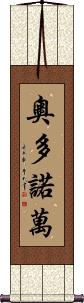
奧多諾萬 is the name O’Donovan in Chinese (Mandarin).
Unbeatable
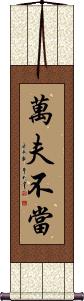
萬夫不當 is a Chinese proverb that literally means, “Unbeatable by even 10,000 men.”
This is understood to mean extremely brave and strong.
Ivania

伊萬尼亞 is the name Ivania in Chinese (Mandarin).
Seize The Night

抓住夜晚 is means “Seize The Night” in Chinese.
Ivanov

伊萬諾夫 is the name Ivanov in Chinese (Mandarin).
Cervantez
塞萬提斯 is the name Cervantez in Chinese (Mandarin).
Everything Happens for a Reason
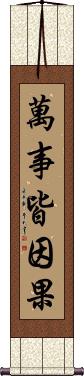
萬事皆因果 means “Everything happens for a reason” in Chinese.
The first two characters mean “all things” or “everything.”
The middle character kind of means “in all cases.”
The last two characters create a complex word that can be defined in many ways, such as “karma,” “cause and effect,” “fate,” and “every cause has its effect, as every effect arises from a cause.”
Keep in mind that Chinese grammar is a bit different than English, so trust me that this makes a natural-sounding proverb in Chinese.
Ewangerina
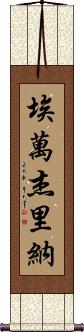
埃萬杰里納 is the name Ewangerina in Chinese (Mandarin).
Malwandla
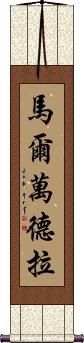
馬爾萬德拉 is the name Malwandla in Chinese (Mandarin).
Marc-Antoine
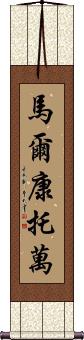
This is a common Mandarin Chinese transliteration for the male French name Marc-Antoine.
Taiwan
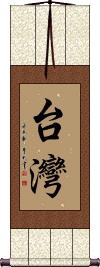
台灣 is the Chinese name for the Republic of China which is more commonly known as Taiwan.
The island of Taiwan is actually considered a renegade province of mainland China. It became the last holdout of the former government of China after Chairman Mao took power during the revolution that followed WWII.
Note: There are a few ways to write Taiwan: 台湾 / 薹灣 / 台灣.
If you need a certain version, just let me know in the "Special Instructions" tab when you order.
See Also: Asia
Sovanndarith

索萬達里斯 is the name Sovanndarith in Chinese (Mandarin).
Lewandowski

萊萬多夫斯基 is the name Lewandowski in Chinese (Mandarin).
Evangelista

埃萬杰利斯塔 is the name Evangelista in Chinese (Mandarin).
Diversity
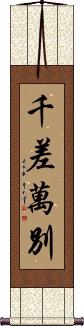
千差萬別 is used to describe “manifold diversity.”
It literally means “A thousand differences and ten thousand distinctions.”
Other translations include an infinite variety of; multifarious; being extremely varied and wide-ranging.
The third character is written differently in Japanese, so if you order this from the Japanese master calligrapher it will look like 千差万別 instead of 千差萬別.
The incompetent boat pilot blames the river for his shortcomings
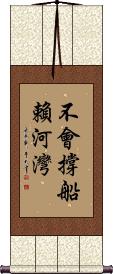
不會撐船賴河灣 literally translates as: [One who] cannot steer the boat blames the bends in the river.
Figuratively, this means: One who is incompetent always tries to shift the blame elsewhere.
This is similar to the English idiom, “a poor workman/craftsman blames his tools.”
Eat Drink and Be Merry
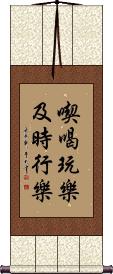
喫喝玩樂及時行樂 is just about the closest proverb to match the western idea of “Eat, drink, and be merry.”
This is a Chinese proverb that more literally means “Eat, drink, play, be merry, enjoy everything as long as you can.”
It's basically a suggestion that you try to enjoy everything in life, as long as you live, or as long as you are able.
A House Might be Worth 1 Million Dollars, But Good Neighbors are Worth 10 Million
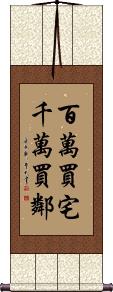
百万买宅千万买邻 is a Chinese proverb that literally translates as:
[It may cost a] million to buy a house, [but] ten million to find [good] neighbors.
Figuratively, this means:
Good neighbors are hard to find.
Good neighbors are even more important than the quality of one's house.
Better Late Than Never
It's Never Too Late Too Mend
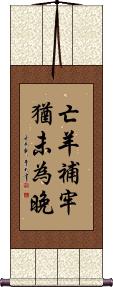
Long ago in what is now China, there were many kingdoms throughout the land. This time period is known as “The Warring States Period” by historians because these kingdoms often did not get along with each other.
Sometime around 279 B.C. the Kingdom of Chu was a large but not particularly powerful kingdom. Part of the reason it lacked power was the fact that the King was surrounded by “yes men” who told him only what he wanted to hear. Many of the King's court officials were corrupt and incompetent which did not help the situation.
The King was not blameless himself, as he started spending much of his time being entertained by his many concubines.
One of the King's ministers, Zhuang Xin, saw problems on the horizon for the Kingdom, and warned the King, “Your Majesty, you are surrounded by people who tell you what you want to hear. They tell you things to make you happy and cause you to ignore important state affairs. If this is allowed to continue, the Kingdom of Chu will surely perish, and fall into ruins.”
This enraged the King who scolded Zhuang Xin for insulting the country and accused him of trying to create resentment among the people. Zhuang Xin explained, “I dare not curse the Kingdom of Chu but I feel that we face great danger in the future because of the current situation.” The King was simply not impressed with Zhuang Xin's words.
Seeing the King's displeasure with him and the King's fondness for his court of corrupt officials, Zhuang Xin asked permission from the King that he may take leave of the Kingdom of Chu, and travel to the State of Zhao to live. The King agreed, and Zhuang Xin left the Kingdom of Chu, perhaps forever.
Five months later, troops from the neighboring Kingdom of Qin invaded Chu, taking a huge tract of land. The King of Chu went into exile, and it appeared that soon, the Kingdom of Chu would no longer exist.
The King of Chu remembered the words of Zhuang Xin and sent some of his men to find him. Immediately, Zhuang Xin returned to meet the King. The first question asked by the King was “What can I do now?”
Zhuang Xin told the King this story:
A shepherd woke one morning to find a sheep missing. Looking at the pen saw a hole in the fence where a wolf had come through to steal one of his sheep. His friends told him that he had best fix the hole at once. But the Shepherd thought since the sheep is already gone, there is no use fixing the hole.
The next morning, another sheep was missing. And the Shepherd realized that he must mend the fence at once. Zhuang Xin then went on to make suggestions about what could be done to reclaim the land lost to the Kingdom of Qin, and reclaim the former glory and integrity of the Kingdom of Chu.
The Chinese idiom shown above came from this reply from Zhuang Xin to the King of Chu almost 2,300 years ago.
It translates roughly into English as...
“Even if you have lost some sheep, it's never too late to mend the fence.”
This proverb, 亡羊补牢犹未为晚, is often used in modern China when suggesting in a hopeful way that someone change their ways, or fix something in their life. It might be used to suggest fixing a marriage, quitting smoking, or getting back on track after taking an unfortunate path in life among other things one might fix in their life.
I suppose in the same way that we might say, “Today is the first day of the rest of your life” in our western cultures to suggest that you can always start anew.
Note: This does have Korean pronunciation but is not a well-known proverb in Korean (only Koreans familiar with ancient Chinese history would know it). Best if your audience is Chinese.
Read 10,000 Books, Travel 10,000 Miles
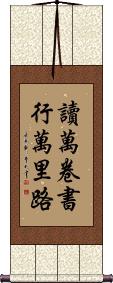
讀萬卷書行萬里路 is a lifelong suggestion for expanding your horizons by gaining knowledge, experience, and seeing the world.
Of course, this was written long ago when it was hard to travel 10,000 miles (at least 1000 years before the invention of the airplane).
With air travel and the business I'm in, I often achieve that lifetime goal on a monthly basis.
However, I am a little behind in the book count.
Note: An ancient Chinese mile (里 or lǐ) referred to in this proverb is about a third of a British/American mile. However, at that time, this was a great distance to travel.
Better to Travel 10,000 Miles than Read 10,000 Books
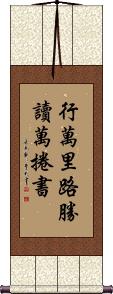
行万里路胜读万卷书 translates a few ways:
To travel ten thousand miles beats reading ten-thousand books.
Better to travel ten thousand li than to read ten thousand books. (a “li” is an ancient Chinese mile)
Traveling thousands of miles is better than reading thousands of books.
No matter how you slice it, this Chinese proverb is claiming that experience is more profound and meaningful than what you can get from a book. Go do it! Don't just read about it.
My life is complete because of you
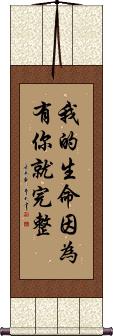
我的生命因为有你就完整 means “My life is complete because of you” in Chinese.
John 8:8
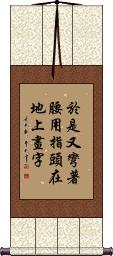
於是又彎著腰用指頭在地上畫字 is John 8:8 in Chinese.
This text is from the 1919 Chinese Union Bible.
You may know it from the KJV as:
And again he stooped down and wrote on the ground.
Mountain Travels Poem by Dumu

This poem was written almost 1200 years ago during the Tang dynasty.
It depicts traveling up a place known as Cold Mountain, where some hearty people have built their homes. The traveler is overwhelmed by the beauty of the turning leaves of the maple forest that surrounds him just as night overtakes the day, and darkness prevails. His heart implores him to stop, and take in all of the beauty around him.
First, before you get to the full translation, I must tell you that Chinese poetry is a lot different than what we have in the west. Chinese words simply don't rhyme in the same way that English or other western languages do. Chinese poetry depends on rhythm and a certain beat of repeated numbers of characters.
I have done my best to translate this poem keeping a certain feel of the original poet. But some of the original beauty of the poem in its original Chinese will be lost in translation.
Far away on Cold Mountain, a stone path leads upwards.
Among white clouds, people's homes reside.
Stopping my carriage I must, as to admire the maple forest at nights fall.
In awe of autumn leaves showing more red than even flowers of early spring.
Hopefully, this poem will remind you to stop, and “take it all in” as you travel through life.
The poet's name is “Du Mu” in Chinese that is: 
 .
.
The title of the poem, “Mountain Travels” is: 

You can have the title, poet's name, and even “Tang Dynasty” written as an inscription on your custom wall scroll if you like.
More about the poet:
Dumu lived from 803-852 AD and was a leading Chinese poet during the later part of the Tang dynasty.
He was born in Chang'an, a city in central China and the former capital of the ancient Chinese empire in 221-206 BC. In present-day China, his birthplace is currently known as Xi'an, the home of the Terracotta Soldiers.
He was awarded his Jinshi degree (an exam administered by the emperor's court which leads to becoming an official of the court) at the age of 25 and went on to hold many official positions over the years. However, he never achieved a high rank, apparently because of some disputes between various factions, and his family's criticism of the government. His last post in the court was his appointment to the office of Secretariat Drafter.
During his life, he wrote scores of narrative poems, as well as a commentary on the Art of War and many letters of advice to high officials.
His poems were often very realistic and often depicted everyday life. He wrote poems about everything, from drinking beer in a tavern to weepy poems about lost love.
The thing that strikes you most is the fact even after 1200 years, not much has changed about the beauty of nature, toils, and troubles of love and beer drinking.
Daodejing / Tao Te Ching - Chapter 1
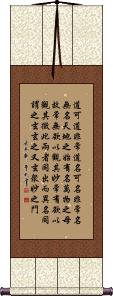
This text is the first chapter of the Daodejing / Tao Te Ching.
The Way that can be followed is not the eternal Way.
The name that can be named is not the eternal name.
The nameless is the origin of heaven and earth
While naming is the origin of a myriad of things.
Therefore, always desireless, you see the mystery
Ever desiring, you see the manifestations.
These two are the same—
When they appear, they are given different names.
This sameness is the mystery,
Mystery within mystery;
The door to all marvels.
Dr. Muller's translation of all 81 Daodejing chapters
The text reads:
道可道、非常道。名可名、非常名。 無名天地之始 有名萬物之母。故常無欲以觀其妙、常有欲以觀其徼。此兩者同出而異名。同謂之玄。玄之又玄、衆妙之門。
This classical Chinese passage comes from the Mawangdui (馬王堆帛書) text.
These search terms might be related to Wan:
Black or White Cat Matters Not as Long as It Can Catch Mice
Chill Out
Gray
Gray Color
If You Love Your Child, Send Them Out Into the World
Put Out a Burning Wood Cart With a Cup of Water
Respect Out of Fear is Never Genuine; Reverence Out of Respect is Never False
Swan / White Crane
The Weak Are Meat, the Strong Eat
The White Hairs of Old Age
There is Always a Way Out
White
White Bear / Polar Bear
White Crane
White Crane Fist
White Crane Karate
White Crane Kempo
White Crane Temple
White Dragon
White Eagle Style
White Lotus
White Stork
White Swan
White Tiger
Year-in Year-Out Have Abundance
You Are Who You Hang Out With
Not the results for Wan that you were looking for?
Below are some entries from our dictionary that may match your Wan search...
| Characters If shown, 2nd row is Simp. Chinese |
Pronunciation Romanization |
Simple Dictionary Definition |
夜晚 see styles |
yè wǎn ye4 wan3 yeh wan |
More info & calligraphy: Night |
完備 完备 see styles |
wán bèi wan2 bei4 wan pei kanbi かんび |
More info & calligraphy: Perfection(n,vs,vt,vi) (1) being fully equipped; being fully furnished; (noun or adjectival noun) (2) {math} complete |
惋惜 see styles |
wǎn xī wan3 xi1 wan hsi |
More info & calligraphy: Sorrow / Feeling Sorry |
晚安 see styles |
wǎn ān wan3 an1 wan an |
More info & calligraphy: Good Night |
玩具 see styles |
wán jù wan2 ju4 wan chü omocha(gikun)(p); omocha(sk) おもちゃ(gikun)(P); オモチャ(sk) |
More info & calligraphy: Toy(1) (kana only) toy; (2) (kana only) (person or thing treated as a) plaything |
萬歲 万岁 see styles |
wàn suì wan4 sui4 wan sui |
More info & calligraphy: Banzai / Wansui |
萬象 万象 see styles |
wàn xiàng wan4 xiang4 wan hsiang manzō |
More info & calligraphy: Vientianeall things |
頑強 顽强 see styles |
wán qiáng wan2 qiang2 wan ch`iang wan chiang gankyou / gankyo がんきょう |
More info & calligraphy: Tenacious / Tenacity(adjectival noun) (1) stubborn; dogged; persistent; tenacious; (adjectival noun) (2) tough; sturdy; hardy; strong |
伊萬卡 伊万卡 see styles |
yī wàn kǎ yi1 wan4 ka3 i wan k`a i wan ka |
More info & calligraphy: Ivanka |
立陶宛 see styles |
lì táo wǎn li4 tao2 wan3 li t`ao wan li tao wan |
More info & calligraphy: Lithuania |
丸 see styles |
wán wan2 wan wani わに |
ball; pellet; pill (n,n-suf) (1) fishball; meatball; (n,n-suf) (2) (See 丸薬) pill; (surname) Wani a pill |
刓 see styles |
wán wan2 wan |
to trim |
剜 see styles |
wān wan1 wan wan |
to scoop out; to gouge out To scoop out. |
卍 see styles |
wàn wan4 wan manji まんじ |
swastika, a sacred and auspicious symbol in Hinduism, Buddhism, and Jainism swastika (esp. a counterclockwise swastika as a Buddhist symbol); fylfot; gammadion; (given name) Manji sauvastika, 塞縛悉底迦; also styled 室利靺瑳 śrīvatsa, lucky sign, Viṣṇu's breast-curl or mark, tr. by 海雲 sea-cloud, or cirrhus. Used as a fancy form of 萬 or 萬; and is also written in a form said to resemble a curl. It is the 4th of the auspicious signs in the footprint of Buddha, and is a mystic diagram of great antiquity. To be distinguished from 卐svastika, the crampons of which turn to the right. |
卐 see styles |
wàn wan4 wan man |
swastika, a sacred and auspicious symbol in Hinduism, Buddhism, and Jainism, later adopted by Nazi Germany (Skt. svastika) |
埦 see styles |
wǎn wan3 wan |
variant of 碗[wan3] |
壪 塆 see styles |
wān wan1 wan |
col; gully |
娩 see styles |
wǎn wan3 wan |
complaisant; agreeable |
婉 see styles |
wǎn wan3 wan en えん |
graceful; tactful (female given name) En flexible |
完 see styles |
wán wan2 wan yutaka ゆたか |
to finish; to be over; whole; complete; entire (expression) (1) (at the end of a novel, film, etc.) The End; Finis; (suffix noun) (2) completion; conclusion; end; (suffix noun) (3) full provision; (given name) Yutaka to perfect |
宛 see styles |
wǎn wan3 wan ango あんご |
winding; as if (1) aim; object; purpose; end; (2) expectations; prospects; hopes; (3) something that can be relied upon; (4) (ksb:) snack served with alcoholic drink; (suffix noun) (5) pad; guard; (n-suf,n-pref) (6) blow; strike; (suffix) (7) addressed to; (8) (kana only) per; (personal name) Ango completely |
彎 弯 see styles |
wān wan1 wan |
to bend; bent; a bend; a turn (in a road etc); CL:道[dao4] |
惋 see styles |
wǎn wan3 wan |
to sigh in regret or pity; Taiwan pr. [wan4] |
抏 see styles |
wán wan2 wan |
to consume; to exhaust; to play |
挽 see styles |
wǎn wan3 wan hiki ひき |
to pull; to draw (a cart or a bow); to roll up; to coil; to carry on the arm; to lament the dead; (fig.) to pull against; to recover (surname) Hiki |
捥 see styles |
wàn wan4 wan |
to bend the wrist |
晚 see styles |
wǎn wan3 wan ban |
evening; night; late twilight |
晥 see styles |
wǎn wan3 wan |
old variant of 皖[Wan3] |
晩 see styles |
wǎn wan3 wan ban ばん |
variant of 晚[wan3] (n,adv) (1) evening; night; (2) (abbreviation) (See 晩飯・ばんめし) dinner; evening meal; (counter) (3) counter for nights; (surname) Ban Sunset, evening, twilight; late. |
椀 碗 see styles |
wǎn wan3 wan wan わん |
variant of 碗[wan3] (1) (See 碗・1) bowl (wooden); (counter) (2) counter for bowls of food or drink bowl |
Click here for more Wan results from our dictionary
The following table may be helpful for those studying Chinese or Japanese...
| Title | Characters | Romaji (Romanized Japanese) | Various forms of Romanized Chinese | |
| Profound Powerful Words | 入木三分 | rù mù sān fēn ru4 mu4 san1 fen1 ru mu san fen rumusanfen | ju mu san fen jumusanfen |
|
| Banzai Wansui | 萬歲 万岁 | banzai / manzai | wàn suì / wan4 sui4 / wan sui / wansui | |
| Banzai | 万歲 / 萬歲 万岁 | banzai | wàn suì / wan4 sui4 / wan sui / wansui | |
| Chowan | 喬萬 乔万 | qiáo wàn / qiao2 wan4 / qiao wan / qiaowan | ch`iao wan / chiaowan / chiao wan | |
| Davann | 達萬 达万 | dá wàn / da2 wan4 / da wan / dawan | ta wan / tawan | |
| Devan | 德萬 德万 | dé wàn / de2 wan4 / de wan / dewan | te wan / tewan | |
| Devon | 德萬 德万 | dé wàn / de2 wan4 / de wan / dewan | te wan / tewan | |
| Erwan | 艾萬 艾万 | ài wàn / ai4 wan4 / ai wan / aiwan | ||
| Erwann | 艾萬 艾万 | ài wàn / ai4 wan4 / ai wan / aiwan | ||
| Euan | 伊萬 伊万 | yī wàn / yi1 wan4 / yi wan / yiwan | i wan / iwan | |
| Evan | 伊萬 伊万 | yī wàn / yi1 wan4 / yi wan / yiwan | i wan / iwan | |
| Ewan | 伊萬 伊万 | yī wàn / yi1 wan4 / yi wan / yiwan | i wan / iwan | |
| Gevan | 格萬 格万 | gé wàn / ge2 wan4 / ge wan / gewan | ko wan / kowan | |
| Good Night | 晚安 | wǎn ān / wan3 an1 / wan an / wanan | ||
| Ivan | 伊萬 伊万 | yī wàn / yi1 wan4 / yi wan / yiwan | i wan / iwan | |
| Ivan | 依萬 依万 | yī wàn / yi1 wan4 / yi wan / yiwan | i wan / iwan | |
| Ivarn | 伊萬 伊万 | yī wàn / yi1 wan4 / yi wan / yiwan | i wan / iwan | |
| Ivonne | 伊婉 | yī wǎn / yi1 wan3 / yi wan / yiwan | i wan / iwan | |
| Iwan | 伊萬 伊万 | yī wàn / yi1 wan4 / yi wan / yiwan | i wan / iwan | |
| Karwan | 卡萬 卡万 | kǎ wàn / ka3 wan4 / ka wan / kawan | k`a wan / kawan / ka wan | |
| Night | 夜晚 | yè wǎn / ye4 wan3 / ye wan / yewan | yeh wan / yehwan | |
| Pawan | 帕萬 帕万 | pà wàn / pa4 wan4 / pa wan / pawan | p`a wan / pawan / pa wan | |
| Perfection | 完備 完备 | kan bi / kanbi | wán bèi / wan2 bei4 / wan bei / wanbei | wan pei / wanpei |
| Rewan | 雷萬 雷万 | léi wàn / lei2 wan4 / lei wan / leiwan | ||
| Savan | 薩萬 萨万 | sà wàn / sa4 wan4 / sa wan / sawan | ||
| Shiwan | 施萬 施万 | shī wàn / shi1 wan4 / shi wan / shiwan | shih wan / shihwan | |
| Sorrow Feeling Sorry | 惋惜 | wàn xí / wan4 xi2 / wan xi / wanxi | wan hsi / wanhsi | |
| Speed Control | 緩急 缓急 | kankyuu / kankyu | huǎn jí / huan3 ji2 / huan ji / huanji | huan chi / huanchi |
| Swan | 斯萬 斯万 | sī wàn / si1 wan4 / si wan / siwan | ssu wan / ssuwan | |
| Swann | 斯萬 斯万 | sī wàn / si1 wan4 / si wan / siwan | ssu wan / ssuwan | |
| Tenacious Tenacity | 頑強 顽强 | gan kyou / gankyou / gan kyo | wán qiáng wan2 qiang2 wan qiang wanqiang | wan ch`iang wanchiang wan chiang |
| Vando | 萬多 万多 | wàn duō / wan4 duo1 / wan duo / wanduo | wan to / wanto | |
| Vanna | 萬納 万纳 | wàn nà / wan4 na4 / wan na / wanna | ||
| Vientiane | 萬象 万象 | wàn xiàng wan4 xiang4 wan xiang wanxiang | wan hsiang wanhsiang |
|
| Wanya | 萬亞 万亚 | wàn yà / wan4 ya4 / wan ya / wanya | ||
| Yvaine | 伊萬 伊万 | yī wàn / yi1 wan4 / yi wan / yiwan | i wan / iwan | |
| Yvan | 伊萬 伊万 | yī wàn / yi1 wan4 / yi wan / yiwan | i wan / iwan | |
| Jayvan | 杰萬 杰万 | jié wàn / jie2 wan4 / jie wan / jiewan | chieh wan / chiehwan | |
| Toy | 玩具 | wán jù / wan2 ju4 / wan ju / wanju | wan chü / wanchü | |
| Javan | 賈萬 贾万 | jiǎ wàn / jia3 wan4 / jia wan / jiawan | chia wan / chiawan | |
| Levan | 萊萬 莱万 | lái wàn / lai2 wan4 / lai wan / laiwan | ||
| Cowan | 科萬 科万 | kē wàn / ke1 wan4 / ke wan / kewan | k`o wan / kowan / ko wan | |
| Chauvin | 肖萬 肖万 | xiào wàn / xiao4 wan4 / xiao wan / xiaowan | hsiao wan / hsiaowan | |
| Ioan | 伊萬 伊万 | yī wàn / yi1 wan4 / yi wan / yiwan | i wan / iwan | |
| Kavan | 卡萬 卡万 | kǎ wàn / ka3 wan4 / ka wan / kawan | k`a wan / kawan / ka wan | |
| Antoine | 安托萬 安托万 | ān tuō wàn an1 tuo1 wan4 an tuo wan antuowan | an t`o wan antowan an to wan |
|
| Antwan | 安特萬 安特万 | ān tè wàn an1 te4 wan4 an te wan antewan | an t`e wan antewan an te wan |
|
| Antwann | 安特萬 安特万 | ān tè wàn an1 te4 wan4 an te wan antewan | an t`e wan antewan an te wan |
|
| Donovan | 多諾萬 多诺万 | duō nuò wàn duo1 nuo4 wan4 duo nuo wan duonuowan | to no wan tonowan |
|
| Ivani | 伊萬尼 伊万尼 | yī wàn ní yi1 wan4 ni1 yi wan ni yiwanni | i wan ni iwanni |
|
| Ivanka | 伊萬卡 伊万卡 | yī wàn kǎ yi1 wan4 ka3 yi wan ka yiwanka | i wan k`a iwanka i wan ka |
|
| Ivano | 伊萬諾 伊万诺 | yī wàn nuò yi1 wan4 nuo4 yi wan nuo yiwannuo | i wan no iwanno |
|
| Lawand | 拉萬德 拉万德 | lā wàn dé la1 wan4 de2 la wan de lawande | la wan te lawante |
|
| Lithuania | 立陶宛 | lì táo wǎn li4 tao2 wan3 li tao wan litaowan | li t`ao wan litaowan li tao wan |
|
| Marwan | 馬爾萬 马尔万 | mǎ ěr wàn ma3 er3 wan4 ma er wan maerwan | ma erh wan maerhwan |
|
| Paswan | 帕斯萬 帕斯万 | pà sī wàn pa4 si1 wan4 pa si wan pasiwan | p`a ssu wan passuwan pa ssu wan |
|
| Radwan | 拉德萬 拉德万 | lā dé wàn la1 de2 wan4 la de wan ladewan | la te wan latewan |
|
| Ridwan | 里德萬 里德万 | lǐ dé wàn li3 de2 wan4 li de wan lidewan | li te wan litewan |
|
| Solivan | 索利萬 索利万 | suǒ lì wàn suo3 li4 wan4 suo li wan suoliwan | so li wan soliwan |
|
| Tahuanty | 塔萬蒂 塔万蒂 | tǎ wàn dì ta3 wan4 di4 ta wan di tawandi | t`a wan ti tawanti ta wan ti |
|
| Twanna | 特萬娜 特万娜 | tè wàn nà te4 wan4 na4 te wan na tewanna | t`e wan na tewanna te wan na |
|
| Vanya | 萬尼亞 万尼亚 | wàn ní yà wan4 ni2 ya4 wan ni ya wanniya | ||
| Alvan | 阿爾萬 阿尔万 | ā ěr wàn a1 er3 wan4 a er wan aerwan | a erh wan aerhwan |
|
| Sirvan | 西爾萬 西尔万 | xī ěr wàn xi1 er3 wan4 xi er wan xierwan | hsi erh wan hsierhwan |
|
| Donavan | 多諾萬 多诺万 | duō nuò wàn duo1 nuo4 wan4 duo nuo wan duonuowan | to no wan tonowan |
|
| Canavan | 卡納萬 卡纳万 | kǎ nà wàn ka3 na4 wan4 ka na wan kanawan | k`a na wan kanawan ka na wan |
|
| Ridhwan | 里德萬 里德万 | lǐ dé wàn li3 de2 wan4 li de wan lidewan | li te wan litewan |
|
| All Hopes Fulfilled | 萬事如意 万事如意 | wàn shì rú yì wan4 shi4 ru2 yi4 wan shi ru yi wanshiruyi | wan shih ju i wanshihjui |
|
| Avanzar | 阿萬扎爾 阿万扎尔 | ā wàn zhā ěr a1 wan4 zha1 er3 a wan zha er awanzhaer | a wan cha erh awanchaerh |
|
| Cervantes | 塞萬提斯 塞万提斯 | sāi wàn tí sī sai4 wan4 ti2 si1 sai wan ti si saiwantisi | sai wan t`i ssu saiwantissu sai wan ti ssu |
|
| Eat Drink and Be Merry | 吃喝玩樂 吃喝玩乐 | chī hē wán lè chi1 he1 wan2 le4 chi he wan le chihewanle | ch`ih ho wan le chihhowanle chih ho wan le |
|
| Estevan | 埃斯特萬 埃斯特万 | āi sī tè wàn ai1 si1 te4 wan4 ai si te wan aisitewan | ai ssu t`e wan aissutewan ai ssu te wan |
|
| Gevanski | 格萬斯基 格万斯基 | gé wàn sī jī ge2 wan4 si1 ji1 ge wan si ji gewansiji | ko wan ssu chi kowanssuchi |
|
| Ivanis | 伊萬尼斯 伊万尼斯 | yī wàn nī sī yi1 wan4 ni1 si1 yi wan ni si yiwannisi | i wan ni ssu iwannissu |
|
| A Bright Future | 鵬程萬里 鹏程万里 | péng chéng wàn lǐ peng2 cheng2 wan4 li3 peng cheng wan li pengchengwanli | p`eng ch`eng wan li pengchengwanli peng cheng wan li |
|
| O’Donovan | 奧多諾萬 奥多诺万 | ào duō nuò wàn ao4 duo1 nuo4 wan4 ao duo nuo wan aoduonuowan | ao to no wan aotonowan |
|
| Unbeatable | 萬夫不當 万夫不当 | wàn fū bù dāng wan4 fu1 bu4 dang1 wan fu bu dang wanfubudang | wan fu pu tang wanfuputang |
|
| Ivania | 伊萬尼亞 伊万尼亚 | yī wàn ní yà yi1 wan4 ni2 ya4 yi wan ni ya yiwanniya | i wan ni ya iwanniya |
|
| Seize The Night | 抓住夜晚 | zhuā zhù yè wǎn zhua1 zhu4 ye4 wan3 zhua zhu ye wan zhuazhuyewan | chua chu yeh wan chuachuyehwan |
|
| Ivanov | 伊萬諾夫 伊万诺夫 | yī wàn nuò fū yi1 wan4 nuo4 fu1 yi wan nuo fu yiwannuofu | i wan no fu iwannofu |
|
| Cervantez | 塞萬提斯 塞万提斯 | sāi wàn tí sī sai1 wan4 ti2 si1 sai wan ti si saiwantisi | sai wan t`i ssu saiwantissu sai wan ti ssu |
|
| Everything Happens for a Reason | 萬事皆因果 万事皆因果 | wàn shì jiē yīn guǒ wan4 shi4 jie1 yin1 guo3 wan shi jie yin guo wanshijieyinguo | wan shih chieh yin kuo wanshihchiehyinkuo |
|
| Ewangerina | 埃萬杰里納 埃万杰里纳 | āi wàn jié lǐ nà ai1 wan4 jie2 li3 na4 ai wan jie li na aiwanjielina | ai wan chieh li na aiwanchiehlina |
|
| Malwandla | 馬爾萬德拉 马尔万德拉 | mǎ ěr wàn dé lā ma3 er3 wan4 de2 la1 ma er wan de la maerwandela | ma erh wan te la maerhwantela |
|
| Marc-Antoine | 馬爾康托萬 马尔康托万 | mǎ ěr kāng tuō wàn ma3 er3 kang1 tuo1 wan4 ma er kang tuo wan maerkangtuowan | ma erh k`ang t`o wan maerhkangtowan ma erh kang to wan |
|
| Taiwan | 台湾 / 薹灣 / 台灣 台湾 | tai wan / taiwan | tái wān / tai2 wan1 / tai wan / taiwan | t`ai wan / taiwan / tai wan |
| Sovanndarith | 索萬達里斯 索万达里斯 | suǒ wàn dá lǐ sī suo3 wan4 da2 li3 si1 suo wan da li si suowandalisi | so wan ta li ssu sowantalissu |
|
| Lewandowski | 萊萬多夫斯基 莱万多夫斯基 | lái wàn duō fū sī jī lai2 wan4 duo1 fu1 si1 ji1 lai wan duo fu si ji laiwanduofusiji | lai wan to fu ssu chi laiwantofussuchi |
|
| Evangelista | 埃萬杰利斯塔 埃万杰利斯塔 | āi wàn jié lì sī tǎ ai1 wan4 jie2 li4 si1 ta3 ai wan jie li si ta aiwanjielisita | ai wan chieh li ssu t`a aiwanchiehlissuta ai wan chieh li ssu ta |
|
| Diversity | 千差萬別 千差万别 / 千差万別 | sen sa man betsu sensamanbetsu | qiān chā wàn bié qian1 cha1 wan4 bie2 qian cha wan bie qianchawanbie | ch`ien ch`a wan pieh chienchawanpieh chien cha wan pieh |
| The incompetent boat pilot blames the river for his shortcomings | 不會撐船賴河灣 不会撑船赖河湾 | bù huì chēng chuán lài hé wān bu4 hui4 cheng1 chuan2 lai4 he2 wan1 bu hui cheng chuan lai he wan buhuichengchuanlaihewan | pu hui ch`eng ch`uan lai ho wan puhuichengchuanlaihowan pu hui cheng chuan lai ho wan |
|
| Eat Drink and Be Merry | 喫喝玩樂及時行樂 吃喝玩乐及时行乐 | chī hē wán lè jí shí xíng lè chi1 he1 wan2 le4 ji2 shi2 xing2 le4 chi he wan le ji shi xing le chihewanlejishixingle | ch`ih ho wan le chi shih hsing le chih ho wan le chi shih hsing le |
|
| A House Might be Worth 1 Million Dollars, But Good Neighbors are Worth 10 Million | 百萬買宅千萬買鄰 百万买宅千万买邻 | bǎi wàn mǎi zhái qiān wàn mǎi lín bai3 wan4 mai3 zhai2 qian1 wan4 mai3 lin2 bai wan mai zhai qian wan mai lin | pai wan mai chai ch`ien wan mai lin pai wan mai chai chien wan mai lin |
|
| Better Late Than Never | 亡羊補牢猶未為晚 亡羊补牢犹未为晚 | wáng yáng bǔ láo yóu wèi wéi wǎn wang2 yang2 bu3 lao2 you2 wei4 wei2 wan3 wang yang bu lao you wei wei wan | wang yang pu lao yu wei wei wan wangyangpulaoyuweiweiwan |
|
| Read 10,000 Books, Travel 10,000 Miles | 讀萬卷書行萬里路 读万卷书行万里路 | dú wàn juǎn shū, xíng wàn lǐ lù du2 wan4 juan3 shu1 xing2 wan4 li3 lu4 du wan juan shu xing wan li lu duwanjuanshuxingwanlilu | tu wan chüan shu hsing wan li lu | |
| Better to Travel 10,000 Miles than Read 10,000 Books | 行萬里路勝讀萬捲書 行万里路胜读万卷书 | xíng wàn lǐ lù shèng dú wàn juǎn shū xing2 wan4 li3 lu4 sheng4 du2 wan4 juan3 shu1 xing wan li lu sheng du wan juan shu | hsing wan li lu sheng tu wan chüan shu | |
| My life is complete because of you | 我的生命因為有你就完整 我的生命因为有你就完整 | wǒ de shēng mìng yīn wèi yǒu nǐ jiù wán zhěng wo3 de sheng1 ming4 yin1 wei4 you3 ni3 jiu4 wan2 zheng3 wo de sheng ming yin wei you ni jiu wan zheng | wo te sheng ming yin wei yu ni chiu wan cheng | |
| John 8:8 | 於是又彎著腰用指頭在地上畫字 于是又弯着腰用指头在地上画字 | yú shì yòu wān zhe yāo yòng zhǐ tou zài dì shàng huà zì yu2 shi4 you4 wan1 zhe yao1 yong4 zhi3 tou zai4 di4 shang4 hua4 zi4 yu shi you wan zhe yao yong zhi tou zai di shang hua zi | yü shih yu wan che yao yung chih t`ou tsai ti shang hua tzu yü shih yu wan che yao yung chih tou tsai ti shang hua tzu |
|
| Mountain Travels Poem by Dumu | 遠上寒山石徑斜白雲生處有人家停車坐愛楓林晚霜葉紅於二月花 远上寒山石径斜白云生处有人家停车坐爱枫林晚霜叶红于二月花 | yuǎn shàng hán shān shí jìng xiá bái yún shēng chù yǒu rén jiā tíng chē zuò ài fēng lín wǎn shuàng yè hóng yú èr yuè huā yuan3 shang4 han2 shan1 shi2 jing4 xia2 bai2 yun2 sheng1 chu4 you3 ren2 jia1 ting2 che1 zuo4 ai4 feng1 lin2 wan3 shuang4 ye4 hong2 yu2 er4 yue4 hua1 yuan shang han shan shi jing xia bai yun sheng chu you ren jia ting che zuo ai feng lin wan shuang ye hong yu er yue hua | yüan shang han shan shih ching hsia pai yün sheng ch`u yu jen chia t`ing ch`e tso ai feng lin wan shuang yeh hung yü erh yüeh hua yüan shang han shan shih ching hsia pai yün sheng chu yu jen chia ting che tso ai feng lin wan shuang yeh hung yü erh yüeh hua |
|
| Daodejing Tao Te Ching - Chapter 1 | 道可道非常道名可名非常名無名天地之始有名萬物之母故常無欲以觀其妙常有欲以觀其徼此兩者同出而異名同謂之玄玄之又玄衆妙之門 道可道非常道名可名非常名无名天地之始有名万物之母故常无欲以观其妙常有欲以观其徼此两者同出而异名同谓之玄玄之又玄众妙之门 | dào kě dào fēi cháng dào míng kě míng fēi cháng míng wú míng tiān dì zhī shǐ yǒu míng wàn wù zhī mǔ gù cháng wú yù yǐ guān qí miào cháng yǒu yù yǐ guān qí zhēng cǐ liǎng zhě tóng chū ér yì míng tóng wèi zhī xuán xuán zhī yòu xuán zhòng miào zhī mén dao4 ke3 dao4 fei1 chang2 dao4 ming2 ke3 ming2 fei1 chang2 ming2 wu2 ming2 tian1 di4 zhi1 shi3 you3 ming2 wan4 wu4 zhi1 mu3 gu4 chang2 wu2 yu4 yi3 guan1 qi2 miao4 chang2 you3 yu4 yi3 guan1 qi2 jiao3 ci3 liang3 zhe3 tong2 chu1 er2 yi4 ming2 tong2 wei4 zhi1 xuan2 xuan2 zhi1 you4 xuan2 zhong4 miao4 zhi1 men2 dao ke dao fei chang dao ming ke ming fei chang ming wu ming tian di zhi shi you ming wan wu zhi mu gu chang wu yu yi guan qi miao chang you yu yi guan qi jiao ci liang zhe tong chu er yi ming tong wei zhi xuan xuan zhi you xuan zhong miao zhi men | tao k`o tao fei ch`ang tao ming k`o ming fei ch`ang ming wu ming t`ien ti chih shih yu ming wan wu chih mu ku ch`ang wu yü i kuan ch`i miao ch`ang yu yü i kuan ch`i chiao tz`u liang che t`ung ch`u erh i ming t`ung wei chih hsüan hsüan chih yu hsüan chung miao chih men tao ko tao fei chang tao ming ko ming fei chang ming wu ming tien ti chih shih yu ming wan wu chih mu ku chang wu yü i kuan chi miao chang yu yü i kuan chi chiao tzu liang che tung chu erh i ming tung wei chih hsüan hsüan chih yu hsüan chung miao chih men |
|
| In some entries above you will see that characters have different versions above and below a line. In these cases, the characters above the line are Traditional Chinese, while the ones below are Simplified Chinese. | ||||

Successful Chinese Character and Japanese Kanji calligraphy searches within the last few hours...



