I am shipping orders on Thursday this week. News and More Info
Not what you want?
Try other similar-meaning words, fewer words, or just one word.
Buy a Simply the Best calligraphy wall scroll here!
Personalize your custom “Simply the Best” project by clicking the button next to your favorite “Simply the Best” title below...
2. Karma
8. Bird
9. Live Strong
10. Ba Gua
11. I love you to the moon and back
12. Laugh / Smile
13. Mauritania
14. Ikebana
15. Daoism / Taoism
16. Eyeballs / Eyes
17. Everyday Life
19. Fear No Man / Fear Nothing
22. Even Monkeys Fall From Trees
23. Tactics of War
25. Cassia
26. Forest Bathing
27. Non-Violence
28. Life Force
29. Ethics / Ethical / Morality
30. Marine Corps
31. Exercise
32. Kind Words
36. New Beginning
37. Power of Understanding and Wisdom
38. Mother and Son
39. The Universe in Balance / Balanced Universe
40. Prayer / Praying
41. The Five Tenets of Confucius
42. Monkey / Ape
46. Self-Confidence
48. Inner Bliss and Peace from Meditation
49. Faithful / Honorable / Trustworthy / Fidelity / Loyalty
50. Treasure
51. Eternal Life / Future Life
52. Siddhartha
53. East
55. Honorable Death - No Surrender
56. Pride
57. Love and Respect
58. Remember
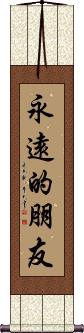
59. Eternal Friendship / Friends Forever
60. Reincarnation
61. Jesus
63. Benevolence
64. Five Elements
65. Gate
66. You must endure a harsh winter to appreciate the warmth of springtime
68. Roku-Dan / 6th Degree Black Belt
69. Tiger
70. Religious Devotion / Faith in God / Religious Faith
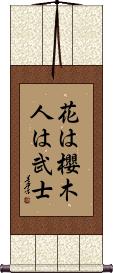
71. In Flowers the Cherry Blossom, In Men the Samurai
72. Rise and Fall / Ups and Downs
75. Ice / Frost
76. United States Marine Corps
77. Sangha
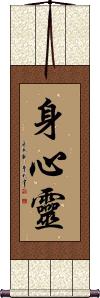
78. Mind Body Spirit
79. Appreciation of Truth by Meditation
82. Enso - Japanese Zen Circle
83. A Traditional Warm Welcome
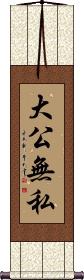
84. Unselfish: Perfectly Impartial
85. Money
86. Kirin / Giraffe / Mythical Creature
87. Reiki
88. Kenpo / Kempo / Quan Fa / Chuan Fa
89. Life Energy / Spiritual Energy
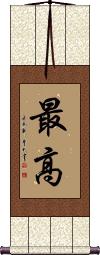
Supreme / Highest
最高 means the highest level, supreme, top, the most, or the best.
Depending on the context, it can mean the most expensive or highest quality.
宿業 is the Buddhist concept of Past Karma. Simply put, it's the sum of all the good and bad from all previous lives (perhaps earlier in your current life). This term is not commonly used outside of the Buddhist faith (you'll have a tough time finding a non-Buddhist Asian person that knows this word).
Other ways to translate this are “The karma of previous existence,” “The karma remaining from prior existences,” or simply “Former karma.”
See Also: Buddhism
命 is often translated as “destiny.”
Sometimes this character is simply translated as “life” but more in terms of one's lot in life. In a certain context, this can mean command or decree (generally from a king or emperor). Of course, such a decree is part of fate and leads you to fulfill your destiny.
In Chinese, this word leans toward the fate or destiny definition.
In Korean, it is usually read simply as “life.”
In Japanese, it can mean all definitions shown above, depending on context.
See Also: Good Fortune
夢 is the very simple word for dreams in Chinese and Japanese.
It can also mean having a vision or simply an illusion.
鳥 is simply the word for bird in Chinese, Japanese Kanji, and old Korean Hanja.
鳥 can also mean fowl, poultry, cock, or chicken.
強く生きる is “Live Strong” in Japanese.
If you are a cancer survivor, or simply support Lance Armstrong's ideas, this is a nice selection for a wall scroll.
Note that we are in no way affiliated or connected to Lance, nor his foundation.
Note: Because this selection contains some special Japanese Hiragana characters, it should be written by a Japanese calligrapher.
笑 simply means to laugh or smile.
Notes: In some contexts, it can mean “ridicule” in Korean Hanja. 笑 is not often seen alone in Japanese, though it is understood.
道教 is the title often used in both Chinese and Japanese to describe the beliefs or religion of Taoism / Daoism.
The first character is simply “dao” and the second character can be translated as “teachings,” “faith” or “doctrine.”
眼 is the simplest way to write eyes or eyeballs in Chinese, Japanese Kanji, and old Korean Hanja.
This can also mean eyesight, sight, vision, look, stare, glance, viewpoint, insight, perceptivity, the power of observation, or simply the eye.
日常生活 simply means everyday life or regular life.
You can also translate it as “Living day to day.”
無所畏懼 means “fear nothing,” but it's the closest thing in Chinese to the phrase “fear no man” which many of you have requested.
This would also be the way to say “fear nobody” and can be translated simply as “undaunted.”
僧 is the single-character or short form of Sangha, the Buddhist idea of community or order (of monks, nuns, or followers of the Buddha).
Alone, this character can simply mean “monk” (Just means monk in Japanese).
![]()
Note that when writing this as Kanji, Japanese will tend to write this in the form shown to the right. If you select our Japanese master calligrapher, please expect this special Kanji form.
創造 means to create, to bring about, to produce, or simply creative or creation.
The first character here means to create, Genesis, or origin.
The second means to make or build.
Meaning: Anyone can make a mistake
猿も木から落ちる is the Japanese proverb, “Even monkeys fall from trees.”
It suggests that even the most skilled, can make a mistake in something they should be a master of. Or, to put it simply, “Anyone can make a mistake.”
Note: Because this selection contains some special Japanese Hiragana characters, it should be written by a Japanese calligrapher.
戰術 can mean “tactics of war,” “battle tactics” or simply “tactics” (being that warfare is implied in that English word).
This word is written in the ancient and traditional form of Chinese, Japanese, and Korean.
![]()
In modern Japan, the first character has been simplified or modified. If you want the modern Japanese Kanji version, just click on that character shown to the right.
少林寺拳法 is a specific type of martial art in Japan that claims origins in the Kung Fu practiced in the original Shaolin Monastery of China.
The first three characters mean “Shaolin Monastery,” and you might notice the Japanese is pronounced in a very similar way. The reason is, many words were “borrowed” from the original Chinese when Japan did not have a written language and simply absorbed Chinese characters into their language around the 5th century. When a Japanese word did not exist, the Chinese pronunciation was often absorbed as well as the written form.
The last two characters mean “fist law” or “method of the fist.” It has long been argued as to whether the Japanese for these characters should be Romanized as “kempo” or “kenpo.” The official method should be “kenpou” but it's common to drop the “u” that comes after the “o.”
I imagine if you are looking for this title, you already know what it means, so the above is simply extra information that a student of Shorinji Kempo might want to know.
桂皮 is the Chinese, Japanese Kanji, and old Korean Hanja for cassia bark.
The usually refers to cinnamonum cassia, or simply “cassia bark.” Some will say this includes ceylon. The debate rages on how this title relates to cinnamon and ceylon.
森林浴 is the title for forest bathing or Shinrinyoku in Japanese and Senlinyu in Chinese.
This is simply the practice of spending time in a forest, often including walking or deep breathing as a form of therapy.
Also defined as forest therapy or a peaceful walk through the woods for health benefits.
非暴力 is fairly self-explanatory.
The first character means “not,” “non-,” or “un-”
The middle and last character together mean “violence,” “use of force,” or simply “violent.”
Together, these three characters would normally be translated as “nonviolence.” A great gift for your favorite peace-lover.
See Also: Peace
This Chinese, Korean and Japanese word means “life force” or simply “life.”
The first character means “life” or “birth.” The second means “life” or “fate.” Together they create the meaning of “life force,” though some will translate this as “existence” and sometimes “vitality.”
道德 is a Chinese, Japanese, and old Korean word that can also be defined as “moral principles,” morality, ethics, ethical, morals, or virtue.
The first character is the same that is associated with Daoism / Taoism. This word is also used to express morality, virtue, or simply morals.
There is a slight deviation in the Japanese Kanji form. If you want the modern Japanese version, please click on the special Kanji shown to the right instead of the button above. Note that the traditional Chinese form is still readable and understood by Japanese people.
海兵隊 is the Japanese and Korean way to express “Marine Corps” or simply “Marines.” It is not specific, so this can be the Marine Corps of any country, such as the British Royal Marines to the U.S. Marines.
Breaking down each character, this means:
“ocean/sea soldiers/army corps/regiment/group.”
See Also: Military
(for body or mind)
鍛煉/鍛鍊 means to exercise in much the same way we use the word exercise in English.
This can be exercising your body at the gym or exercising your mind in studies. Most of the time, this refers to physical exercise.
This can also be translated as to temper, to toughen, to train, to drill, to forge, or simply discipline.
In the simplest terms, 愛語 means kind words.
In the Buddhist context, this is one of the four methods of approach to people which the bodhisattvas use to guide them to the way of the Buddha.
Other translations include loving speech or simply the words of a bodhisattva.
愛語 is also a common female name, Aigo, in Japanese.
人生謳歌 means “live for what you love” in Japanese.
The first two characters mean “human life” or simply “living.” The last two characters mean “merit,” “prosperity,” or “what you enjoy.” This phrase can suggest working or staying busy for your own goals (in your career).
See Also: Prosperity
Confucian Proverb
不念舊惡 is a Chinese proverb that can be translated as “Do not recall old grievances,” or more simply as “Forgive and forget.”
The character breakdown:
不 (bù) not; no; don't.
念 (niàn) read aloud.
舊 (jiù) old; former.
惡 (è) wicked deeds; grievances; sins.
This proverb comes from the Analects of Confucius.
百聞は一見に如かず is the Japanese version of an ancient Chinese proverb that means “Seeing once is better than hearing one hundred times.”
It is the rough equivalent of “seeing is believing,” “one eye-witness is better than many hearsays,” or “a picture is worth a thousand words.”
Sometimes it's simply more prudent to verify with your own eyes.
Note: Because this selection contains some special Japanese Hiragana characters, it should be written by a Japanese calligrapher.
See Also: Hearing a Hundred Times is Not as Good as Seeing Once
伊始 is a short version of “new beginning” or simply “beginning” in Chinese characters.
You can also translate this as “from this moment on,” “starting now,” or “henceforth.”
In the day-to-day speech, this word can apply to starting a new job, beginning a new career, entering a new chapter of your life, or taking a new position (in politics, scholarship, etc.).
悟性 means the power of understanding and insight in Chinese.
It is often associated with Neo-Confucianism. In that regard, it means to realize, perceive, or have the perception of man's true nature. It can also mean finding your soul, the soul of others, or the soul of the world. Some will translate this simply as the state of being “savvy.”
In Japanese, this is often translated as wisdom and understanding.
母子 simply means “mother and son,” or the essence of the relationship and bond between mother and son.
母子 is really a single word that expresses this idea (showing how important or significant this bond is).
This is not the most common choice for a wall scroll, it is acceptable if you feel this term is important to you.
See Also: Mother and Daughter
宇宙平衡 is a proverb that is simply Universe Balanced (we might say “Balanced Universe” in English).
The first two characters mean the Universe. However, in some contexts, it can mean cosmic, cosmos, or outer space.
The second two characters mean balance or balanced (can also mean equilibrium).
祈禱 is a second way to write “prayer.”
It is a little more formal than “dao gao” but the general meaning is the same.
This Chinese/Japanese/Korean word can be translated as “to pray,” “to say one's prayers,” or simply “prayer.” Like the other common term for prayer, this term generally applies only to western religions that pray to the God of Abraham (Christians, Jews, and Muslims).
The Five Cardinal Rules / Virtues of Confucius
仁義禮智信 are the core of Confucius's philosophy.
Simply stated:
仁 = Benevolence / Charity
義 = Justice / Rectitude
禮 = Courtesy / Politeness / Tact
智 = Wisdom / Knowledge
信 = Fidelity / Trust / Sincerity
Many of these concepts can be found in various religious teachings. It should be clearly understood that Confucianism is not a religion but should instead be considered a moral code for a proper and civilized society.
This title is also labeled “5 Confucian virtues.”
If you order this from the Japanese calligrapher, expect the middle Kanji to be written in a more simple form (as seen to the right). This can also be romanized as "jin gi rei satoshi shin" in Japanese. Not all Japanese will recognize this as Confucian tenets but they will know all the meanings of the characters.
See Also: Confucius Teachings | Ethics
猿 is one of those cases when an error was made as Chinese characters were absorbed into the Japanese language during the 5th century.
In Japanese, this means monkey.
In Chinese, this means ape.
The Japanese word for ape means monkey in Chinese, so you can see how they were simply reversed.
Monkey King
孫悟空 is the name Sun Wukong, also known as the Monkey King. He is the main character with supernatural powers in the ancient Chinese novel Journey to the West.
This title is also known as the real name of the Monkey King in Japanese. This can also be the Son Goku, better known as simply Goku, a fictional character of the Dragon Ball Japanese manga series.
百聞不如一見 is a proverb that means “Better to see something once rather than hear about it one hundred times” or “Telling me about something 100 times is not as good as seeing it once.”
In English, we have the similar proverb of “Seeing is believing” but this has a bit of the “A picture paints a thousand words” meaning too.
Sometimes it's simply more prudent to verify with your own eyes.
寧死不降 is an ancient Chinese proverb that can be translated as “Rather die than surrender,” “Prefer death over surrender,” “To prefer death to surrender,” or simply “No surrender.”
This is probably the closest proverb to the English proverb “Better to die on your feet than to live on your knees.”
自信 is created by simply putting the character for “faith/believe/confidence” with the character for “oneself” in front of it.
The literal translation holds the same meaning in English, Chinese, and Japanese.
It's like a self-affirmation to say, “you can do it.”
Some may also use this to mean self-esteem or a sense of self-worth. 自信 is also how to say “believe in oneself.”
See Also: Confidence
鷹 is the way to write eagle, falcon, or hawk in Chinese.
It means hawk or falcon in Japanese Kanji, and simply “eagle” in old Korean Hanja. Though we have different words for them in English, eagles, falcons, and hawks are all seen as the same general type of bird in Asian languages.
If you are looking for the Dutch surname Valk, or the German surname Falco by meaning, this would be a good character for you.
There are other multi-character words (most of them contain this character) which express different specific species of birds of prey (bald eagle, osprey, golden eagle, etc). If you need a more specific title, just contact me.
禪悅 is a title that refers to the inner bliss and peace you can achieve from meditation.
This term transcends a few religions, including Taoism and Buddhism. It can also be translated as “joy of the mystic trance” or simply “meditative bliss.”
Amazing that such a complex idea can be expressed in just two Chinese characters. Note that the first character is Chan/Zen (Chinese/Japanese), which means “meditation” in both languages.
信義 is a word often used to describe a person with an honest and loyal reputation.
Simply put, this applies to somebody you can trust (with your life).
In Chinese, this is often defined as good faith, honor, trust, and justice.
In Korean, this word means fidelity, truthfulness, or faithfulness.
In Japanese: faith, fidelity, and loyalty. It's also a Japanese male given name when pronounced “Nobuyoshi.”
In Chinese, 珍寶 means treasure, something you value highly, or something very precious to you.
In Japanese, 珍寶 has a meaning like “rare treasure.”
珍 can mean a precious thing or treasure. 寶 can mean a jewel or gem, a treasure, or simply precious. Together these two characters reinforce each other into a word that clearly means treasure.
來世 is a word that can be used in many different ways.
It is often used to express the next life (life in heaven or wherever your soul is bound for). So it does have a religious overtone. However, it can also be used to express your life in the future - perhaps during your present lifetime.
It can also be translated as “the next world,” “the next generation,” “the time that is to come,” “otherworld,” or simply “posterity.”
See Also: Eternity | Rebirth | Reincarnation | Immortality
悉達多 is the name Siddhartha (as in Siddhartha Gautama), the personal name for Śākyamuni.
This same Buddha is also known as “Shakyamuni Gautama,” “Gotama Buddha,” or “Tathagata.”
Siddhartha Gautama was a spiritual teacher in the northern region of the Indian subcontinent who founded Buddhism. He is generally seen by Buddhists as the Supreme Buddha (Sammāsambuddha) of known human history.
The actual meaning of this name in Chinese is the realization of all aims, or simply being prosperous.
This name is sometimes romanized from the original Sanskrit or Pali as Siddhattha (from Siddhattha Gotama), Siddharth, Siddhārtha, or Sarvāthasiddha.
Siddhārtha or Sarvāthasiddha can also be written as 悉達, 悉多, 悉多頞他, or 悉陀.
東 is the direction East in Chinese, Japanese Kanji, and old Korean Hanja.
Sometimes used as an abbreviation for the Eastern Hemisphere.
This can also be the surname Dong in China.
In Japan, this can be an abbreviation for a kind of six-stringed zither, or the personal name, Yamato.
東 is used as a suffix for many words in Asia. In fact, it's part of the CJK word 東方 meaning Orient or Oriental. The word 東方 more literally translates as “Eastern Kingdoms,” “Eastern Countries,” or simply “The East.”
釋迦牟尼 is a transliteration of “Shakyamuni” or “Sakyamuni” in Chinese, Japanese, and old Korean.
The perceived meaning of the name is roughly translated as “Sage of the Sakyas.”
This same Buddha is also known as “Siddhartha Gautama,” “Gotama Buddha,” “Tathagata,” or simply, “The Supreme Buddha.”
Shakyamuni is the legendary man and prince who eventually established the Buddhist religion.
Note: Occasionally Romanized as “Siddhattha Gotama.”
This combination of characters is sometimes seen and used in South Korea and Japan as well (with the same meaning).
Note: 釋迦牟尼 came from the Sanskrit शाक्यमुनि and can also be romanized with diuretics as Śākyamuni.
This ancient Japanese proverb can be translated as “The principle of honorable death and no surrender,” or simply “No surrender.”
If you directly translate this, you get something that means “Doctrine of suicide,” or “Ideology of honorable death.”
玉砕主義 is a specifically-Japanese proverb that embraces the long history of honorable suicide or self-sacrifice for honor in Japanese culture.
自尊 can mean “pride,” “self-respect,” or “self-esteem.” The first character means “oneself,” and the second can mean revered, valuable, precious, noble, exalted, honorable, or simply “pride.”
I have also seen this two-character word translated as “amour propre,” self-regard, and self-pride.
自尊 is universal between Chinese, Japanese Kanji, and Korean Hanja written languages. It may also be understood in old Vietnamese (they once used Chinese characters as well).
Love each other and show mutual respect
相愛互敬 is a nice way to say “Love and Respect” in Chinese.
This proverb is about the mutual exchange of love and respect within a good relationship.
The first two characters create a word that means “to love each other” or “mutual love.”
The third character means mutual, interlocking, or in some contexts, “to dovetail” (as in how joints are made in fine furniture).
The last character means “to respect,” “to venerate,” “to salute,” “reverence,” or simply “respect.”
銘記 means to keep in mind, to take note of, or simply to remember, in Chinese characters and Japanese Kanji.
The first character means to engrave, inscribe, or carve an inscription.
The second character means to remember, note, mark, sign, record, history, chronicle, or annals.
When used in the context of a person, this means to engrave on the heart or to inscribe a memory in one's mind. In short, it's the idea of deeply remembering something, some event, or someone forever.
永遠的朋友 means friends that are eternal or a friendship that will last forever - you will remain the best of friends as long as you live.
The first two characters mean forever, eternal, eternity, perpetuity, immortality, and/or permanence.
The middle character links the words (it's a possessive article).
The last two characters represent friendship, or simply “friends.”
轉世 is the Buddhist idea of reincarnation or transmigration.
Other definitions of this term: “Attainer of Nirvana from within the desire realm,” “A practitioner who enters directly into Nirvana from the desire realm, without traversing the form and formless realms. One of the 27 kinds of Hinayana sages,” or simply, “to return again to this life.”
轉世 is also a Japanese title, but the first Kanji was slightly simplified after WWII. Just let us know if you want the modern Japanese version when you order.
This is simply the name “Jesus” transliterated into Chinese. 耶穌 hold a pronunciation in Mandarin that is closer to the real and original Hebrew Yeshua, instead of the incorrect way we have always pronounced Jesus in English with a hard “J” sound. While this name sounds like the real “Jesus” in Chinese, Christians in China are more likely to say “Christ” (Jidu) which holds more meaning than just sound.
If you are Latino and have been given the name “Jesus,” this is also how to write your name in Chinese.
Rather die than compromise
寧死不屈 is often translated as “Death Before Dishonor.”
The literal translation is more like, “Better die than compromise.” The last two characters mean “not to bend” or “not to bow down.” Some might even say that it means “not to surrender.” Thus, you could say this proverb means “Better to die than live on my knees” or simply “no surrender” (with the real idea being that you would rather die than surrender).
Beyond benevolence, 仁 can also be defined as “charity” or “mercy” depending on context.
The deeper meaning suggests that one should pay alms to the poor, care for those in trouble, and take care of his fellow man (or woman).
仁 is one of the five tenets of Confucius. In fact, it is a subject that Confucius spent a great deal of time explaining to his disciples.
I have also seen this benevolent-related word translated as perfect virtue, selflessness, love for humanity, humaneness, goodness, goodwill, or simply “love” in the non-romantic form.
This is also a virtue of the Samurai Warrior
See our page with just Code of the Samurai / Bushido here
五行 is the title of the five elements: wood, fire, water, earth, and metal.
The first character means five, and the second character is simply element(s).
According to ancient Chinese science, all matter in the world is comprised of these elements. One idea presented with the five elements is that when energy is added, the matter is believed to expand. When energy is removed, matter contracts. Oddly, this concept is not far from Einstein's theories and modern science. Just a few thousand years before Einstein.
More info: Wikipedia - Five Elements (Wu Xing).
See Also: Wood | Fire | Water | Earth | Metal | Five Elements
門 is the Chinese, Japanese Kanji, and old Korean Hanja for gate, door, gateway, doorway, opening, entrance, valve, or switch.
Most commonly, this is simply a gate or door.
門 is also a Chinese surname that romanizes as Men.
In Japanese, this can be surnames romanizing as Yuki, Mon, To, or Kado.
In the Buddhist context, beyond meaning a door or gate, this can be a counter for a Buddhist sect, teaching, or school (we might say “slice” of bread, this would be a “gate” of teaching). In this way, it kind of refers to one of several doors that lead to salvation or nirvana.
You must know hardship to appreciate happiness
This literally translates as: Without having experienced the cold of winter, one cannot appreciate the warmth of spring.
Figuratively, this means: One cannot truly appreciate happiness without having gone through hardship.
There are many contrasts in life. One simply cannot fully know what joy is without having experienced misery, difficulty, and pain. How could you explain “light” if you did not have “darkness” to compare it to?
Embrace hardship, as it makes the good times seem even better.
善 means goodness, virtue, good deed, charitable, benevolent, well-disposed, nice, pleasant, kind, or simply, “good.”
善 is the kind of good that applies to someone's good character, or a good person in general.
Referring to someone with this word means that they have a well-aimed moral compass, and are charitable, giving, wise, and honest. Basically, this is a blanket statement for every good trait a human can have or all the things that make someone good.
In another context, it can mean to improve or perfect something or refer to someone who is good at something.
六段 is the Japanese title for the 6th Degree or 6th Level.
This applies mostly to martial arts and earning the title of a 6th-degree black belt.
The first character is simply the number 6.
The second character is “dan” which is often translated as “degree” in the context of Japanese martial arts. 六段 means grade, rank, level. When a number is in front like this, it refers to a senior rank in martial arts or games of strategy such as go, shogi, chess, etc.
Year of the Tiger / Zodiac Sign
虎 is the character for tiger in Chinese, old Korean Hanja, and Japanese Kanji.
Since you already know what a tiger is, here's some trivia: If you look at the Japanese pronunciation, you might remember a movie called “Tora Tora Tora” which was the code word used to initiate the attack on Pearl Harbor. It simply means “Tiger Tiger Tiger.”
In Chinese culture, the tiger is considered to be the king of all animals (in much the way we see the lion in western culture).
From the Chinese Zodiac, if you were born in the year of the tiger, you . . .
Have a strong personality.
Are full of self-confidence.
Love adventure
Don't like to obey others.
See also our Chinese Zodiac or Tiger Calligraphy pages.
信仰 means firm belief, faith, persuasion, conviction, and sometimes religion or creed in Chinese, Japanese Kanji, and old Korean Hanja.
This clearly fits the religious connotation of the English word “devotion.”
This is often used to refer to a person of faith or a religious person.
This can be directly translated as “firm belief,” “creed,” “conviction,” or simply as “religious,” depending on context.
Some will also use this to mean “trust in God” in Japanese (though the term for God is not actually in this title).
It should be noted that this word is a little strange alone on a wall scroll.
While this can be pronounced in Japanese, it’s not a great selection for a wall scroll if your audience is Japanese.
See Also: Faith | Trust | Devotion | Trust | Trust in God
This Japanese proverb simply reads, “[In] Flowers it's Cherry Blossoms, [In] Men it's Warriors.”
花は櫻木人は武士 is meant to say that of all the flowers in the world, the cherry blossom is the best. And of all men in the world, the Samurai or Warrior is the best
This proverb has been around for a long time. It's believed to have been composed sometime before the Edo Period in Japan (which started in 1603).
Some will drop one syllable and pronounce this, “hana wa sakura hito wa bushi.” That's “sakura” instead of “sakuragi,” which is like saying “cherry blossom” instead of “cherry tree.”
The third character was traditionally written as 櫻. But in modern Japan, that became 桜. You may still see 櫻 used from time to time on older pieces of calligraphy. We can do either one, so just make a special request if you want 櫻.
Note: Because this selection contains some special Japanese Hiragana characters, it should be written by a Japanese calligrapher.
Eiko-Seisui
This Japanese proverb can be translated as “flourish and wither, prosper and perish,” “life is full of fortune and misfortune,” or simply “vicissitudes of life.”
栄枯盛衰 / 榮枯盛衰 is about the rise and fall of human affairs or the ups and downs of life. Prosperity comes and goes, everything is fleeting and temporary, but like waves, another swell of prosperity may come.
Here's how the Kanji break down in this proverb:
栄 = prosper; thrive; flourish; boom.
枯 = wither; die.
盛 = prosperous; flourishing; thriving; successful; energetic; vigorous; enthusiastic.
衰 = become weaker; decline; get weak; die down; subside; abate; fail.
Notes: The original version of the first character looks like the image to the right. In modern Japan, they simplified that Kanji a bit into the version shown above. If you have a preference for which style is used for your calligraphy, please let me know when you place your order.
Apparently, with that original version of the first character, this is also used in Korean Hanja. However, I have not confirmed that
it’s
used in the same way or is widely-known in Korean.
迫力 is a Chinese word that is a form of personal strength.
It is a word that describes a person who is willing to take a risk. In English, we might say, “Someone with guts.”
An example might be a person that is not rich but invests a lot of money into something (knowing they could double their money or lose it all). Win or lose, this is a person that knows or pushes their potential.
Tearing this word apart, the first character means “to compel,” urgent, urge, force, imminent, or “spur on.” The second means power, strong, bear, or exert.
Note: 迫力 is also a word in Japanese Kanji and Korean Hanja but with a meaning more like force, intensity, appeal, strength, impact, force, or simply power.
叩頭 is the term that seems to be known worldwide as kowtow.
In Japanese and Chinese, it simply means a deep bow, especially one so low that one's head touches the ground in submission. However, in western culture, it has sometimes come to mean “giving in” or “surrendering to someone else's will.” Sometimes even said of a person who stoops to flattery at the expense of their dignity.
I don't know if you would really want this on a wall scroll, but enough people have searched for this term on our website that I guess it was time to add it. It just feels strange to see such a word on a wall scroll, so please order with caution. 叩頭 is antiquated in both Japanese and Chinese. The act is seldom done anymore and is seen as an ancient ritual.
冰 is the Japanese Kanji for “ice” or “frost.”
冰 is also the way to write “ice” in old Korean Hanja.
Note: This form is not commonly used anymore in Chinese - though still understood for the most part.
FYI: There was a time when Japan did not have a written language and simply absorbed Chinese characters into their language by meaning. When this occurred around the 5th century, the character shown here was a common but alternate way to write “ice” in Chinese, so it was the one that ended up being absorbed into the Japanese language. Not long after that, a similar thing happened in Korea - although Korea has replaced virtually all of the Chinese characters they once used with the new Hangul writing system.
米海兵隊 is the Japanese way to write “United States Marine Corps” or simply “U.S. Marines.”
Breaking down each Kanji, this means:
“rice (American) ocean/sea soldiers/army/military corps/regiment/group.”
This title will only make sense in Japanese, it is not the same in Chinese! Make sure you know your audience before ordering a custom wall scroll.
If you are wondering about rice, America is known as “rice country” or “rice kingdom” when literally translated. The Kanji for rice is often used as an abbreviation in front of words (like a sub-adjective) to make something “American.” Americans say “rice burner” for a Japanese car and “rice rocket” for a Japanese motorcycle. If you did the same in Japanese, it would have the opposite meaning.
Note: I have not verified this but I’ve found this title used for U.S. Marines in Korean articles, so it’s most likely a normal Korean term as well (but only in Korean Hanja).
See Also: Marine Corps | Navy | Army | Art of War | Warrior | Military
In Buddhism, 僧伽 refers to a community of monks and/or nuns (one of the “Three Jewels”). In general terms, it can simply mean “all followers of the Buddha.”
Notes: Though there are not vast numbers of Chinese Hindus, in the Hindu faith, this term means “community together.”
The original Sanskrit word is also Romanized as samgha.
The first character means “monk.” The second character means Buddha or Shakyamuni.
僧伽 is a transliteration of the original Sanskrit, but it uses two very profound Chinese characters related to Buddhism.
Some may pronounce this as “seng qie” or “seng jia” in Mandarin (two possible pronunciations for the second character). Note that “qie” sounds like “chee-ah” using typical English pronunciation. Chinese Romanization is not actually designed to match English sounds.
![]()
Note that when writing this as Kanji, Japanese will tend to write the first character in the form shown to the right. If you select our Japanese master calligrapher, please expect this special Kanji form. However, it should also be noted that this is not a common term in Japanese (except by certain sects of Buddhism or perhaps devout Buddhists in Japan).
身心靈 is probably the best way to express the idea of “Body, Mind, and Spirit” in Chinese and old Korean Hanja. We are actually using the word “heart” here because, for thousands of years, the heart was thought to be the place where your thoughts, feelings, and emotions came from. We do something similar in the west when we say “warm-hearted” or “I love you with all of my heart.” In this context, heart = mind in Asian language and culture.
The very literal translation of these three characters is “body, heart & spirit,” which could also be interpreted as “body, mind & soul.”
We have arranged these characters in this order because it simply “feels” like the proper order in the Chinese language. Word lists like this are not so common for calligraphy artwork, so we must be careful to put them in the most natural order. It should be noted that this is not a common title in Asia, nor is it considered an actual phrase (as it lacks a clear subject, verb, and object).
In Japanese Kanji, they use an alternate form of the character for soul or spirit. If you want this using the Japanese alternate, please click on the Kanji shown to the right instead of the button above.
Japanese disclaimer: This is not a natural phrase/list in Japanese. While not totally-natural in Chinese, this word list is best if your audience is Chinese.
心印 is a Buddhist concept that simply stated is “appreciation of truth by meditation.”
It's a deep subject, but my understanding is that you can find truth through meditation, and once you've found the truth, you can learn to appreciate it more through further meditation. This title is not commonly used outside of the Buddhist community (your Asian friends may or may not understand it). The literal translation would be something like “the mind seal,” I've seen this term translated this way from Japanese Buddhist poetry. But apparently, the seal that is stamped deep in your mind is the truth. You just have to meditate to find it.
Soothill defines it this way: Mental impression, intuitive certainty; the mind is the Buddha-mind in all, which can seal or assure the truth; the term indicates the intuitive method of the Chan (Zen) school, which was independent of the spoken or written word.
Reference: Soothill-Hodous Dictionary of Chinese Buddhism
See Also: Zen
忍 contains the ideas of patience, equanimity, perseverance, forbearance, and endurance. Alone, this single character can be a bit ambiguous or flexible. It can also mean to endure, to bear, to put up with, or to conceal. If you want to simply decide what this character means to you within the general meaning but keep it a mystery to others, this is a good choice.
If you want to be more direct, you may want to choose one of our other selections that mean perseverance or patience (you will see this character within those larger words/phrases).
There is a secondary meaning in Japanese since this is the first character of the word ninja.
Note that when writing this as Kanji, Japanese will tend to write it in the form shown to the right. If you select our Japanese master calligrapher, please expect this Kanji form (yes, it's just one stroke that is slightly different in location, crossing another stroke in the Japanese Kanji form).
See Also: Perseverance | Patience | Tenacious
Secondary version of Sifu
師傅 is “sifu” as in the “master” in the context of martial arts.
But two sifu titles are floating around. This one can simply mean “skilled worker.”
Historically, this term has been used for many things, such as “The tutor of a king or emperor.” But now it's more commonly used to mean master worker or qualified worker.
Currently, within the field of skilled labor, a master (Shifu) is higher than a journeyman and is considered to be one worthy of teaching others.
Note: In the 1970s and 1980s, this term was used as a common form of polite address between people. You might say, “master, do you know where Tian'anmen Square is?” to a person on the street at that time. This usage has almost passed; however, for some reason, people still often refer to taxi cab drivers as “master” in China (though I think/hope this is fading).
In Mandarin Chinese, this is pronounced like “Sure Foo,” and in Cantonese, like “See Foo.”
The second character is the difference between this sifu and the other. In this case, the second character by itself means tutor, instructor, or teacher.
〇 is the famous Enso symbol, which you will see widely used by Japanese Zen Buddhists.
In a twist, I am starting to see Enso used more and more by Chinese Buddhists.

Here is the typical appearance of Enso artwork by Japanese calligrapher Kougetsu.
Enso is not a Japanese Kanji character. It falls more into the category of a symbol. There is some debate, but many consider Enso to be a religious symbol.
Some call this “The Circle of Enlightenment.” Others call it the “Infinity Circle.” If you actually took the meanings of the two Kanji (円相) that make up the word “En-so,” you could read it as “Mutual Circle” or “Circle of Togetherness.” I think the Enso symbol can simply mean different things to different people. Therefore, you should let it have the meaning that you perceive.
The appearance of your Enso will be determined by the artist's personal style, feeling, mood, etc.
歡迎光臨 would be the ultimate Chinese “welcome mat.” Except it will be on your wall, and people will not step on it.
In a somewhat literal translation, you could say it means “I feel happy as I welcome you, as you have brought a shining light to this place with your arrival,” or more simply, “I am happy you've come as your presents brightens up the place.”
It has become common for this greeting to be announced by the staff upon the arrival of any customer into a fancy store in China. You will also see these characters on the “welcome mats” in front of 4 and 5-star hotels in China.
Having this on a wall scroll is an extra nice touch. I have seen a few horizontal scrolls with this phrase on the wall behind the reception desk of better hotels or near the front door of fine shops. At the fanciest department stores and restaurants in China, several greeters (almost always young women) will stand by the front door, all wearing sashes with this phrase embroidered. As you walk in, they will bow and say “huan ying guang lin” to welcome you to the establishment.
Note: The first two and last two characters do make words in Korean Hanja but are seldom used as a sentence like this in Korean.
大公無私 is a Chinese proverb that comes from an old story from some time before 476 BC. About a man named Qi Huangyang, who was commissioned by the king to select the best person for a certain job in the Imperial Court.
Qi Huangyang selected his enemy for the job. The king was very confused by the selection, but Qi Huangyang explained that he was asked to find the best person for the job, not necessarily someone that he liked or had a friendship with.
Later, Confucius commented on how unselfish and impartial Qi Huangyang was by saying, “Da Gong Wu Si” which, if you look it up in a Chinese dictionary, is generally translated as “Unselfish” or “Just and Fair.”
If you translate each character, you'd have something like
“Big/Deep Justice Without Self.”
Direct translations like this leave out a lot of what the Chinese characters really say. Use your imagination, and suddenly you realize that “without self” means “without thinking about yourself in the decision” - together, these two words mean “unselfish.” The first two characters serve to drive the point home that we are talking about a concept that is similar to “blind justice.”
One of my Chinese-English dictionaries translates this simply as “just and fair.” So that is the short and simple version.
Note: This can be pronounced in Korean, but it's not a commonly used term.
See Also: Selflessness | Work Unselfishly for the Common Good | Altruism
錢 is the simplest way to say “money” in Chinese.
It can also mean cash, coins, or currency. It's also a surname, Qian, in China.
This also means coins in old Korean Hanja and Japanese Kanji (though they use a slightly alternate form in Japan, as seen to the right). In both Japan and Korea, this can simply mean “one cent.”
On the left side of this character is a radical, which means “gold” (or metal, depending on context).
On the right are two repeated radicals which currently mean “small” or “narrow” but used to kind of mean “tools” or “weapons.”
It's a bit of a stretch, but you could suggest that money = “gold weapons” or “gold tools” in Chinese. Many Chinese people would argue otherwise depending on what they know of or the way they understand the etymology of the right side radical. I've seen some who say it means “industrialized gold,” but I take that to mean “raw gold turned into coins.”
麒麟 is the title of a mythical beast of Asia.
The animal is thought to be related to the giraffe, and in some ways, it is a giraffe. However, it is often depicted with the horns of a dragon or deer and sometimes with the body like a horse, but many variations exist.
In Japanese, it is pronounced “Kirin” as in “Kirin Ichiban” beer.

Notes:
1. This is sometimes spelled as “kylin.”
2. In Japanese, this is the only Kanji word for giraffe. Therefore in Japan, this word needs context to know whether you are talking about the mythical creature or the long-necked giraffe of Africa.
3. Apparently, this was the first word used for regular giraffes in China (some were brought from Africa to China during the Ming Dynasty - probably around the year 1400). Though the mythical creature may have existed before, the name “qilin” was given to the “new giraffe.” This is because, more than 600 years ago, giraffes somewhat matched the mythical creature's description when Chinese people saw them for the first time. Later, to avoid such an ambiguous title, a three-character word was devised to mean a “giraffe of Africa.” The characters for “qilin” shown here are only for the mythological version in modern Chinese.
4. More information about the qilin / kirin from Wikipedia.
5. This creature is sometimes translated as the “Chinese Unicorn,” although it is generally portrayed with two horns. I think this is done more for the fantasy aspect of the unicorn and because most westerners don't know what a qilin or kirin is (this avoids a long explanation by the translator).
6. In Korean, this can mean kirin or simply giraffe (usually, the mythological creature is what they would think of when seeing these characters alone on a wall scroll).
靈氣 is the title of a healing practice now found globally but with origins in Japan.
Special note: Outside of the context of the healing practice of Reiki, this means “aura” or “spiritual essence that surrounds all living things.” A Japanese person unfamiliar with the practice will take the “aura” meaning.
Reiki is a technique for stress reduction and relaxation that also heals. It can be compared to massage but is based on the idea that an unseen “life force energy” flows through us and is what causes us to be alive. If your life force energy is low, you'll be more likely to get sick or feel stressed. If your life force energy is abundant and flowing well, you become more capable of being happy and healthy.
There is a lot of information available if you want to Google this term - my job is to offer the calligraphy while you can decide if it is right for you.
Note: We are showing the ancient (traditional) form of the Reiki Kanji. I have seen Reiki written with the slightly simplified version and this more classic form. If you want the form of Reiki with the two strokes in the shape of an X on the second character and the modern first character, simply click on the Kanji characters to the right.
Note: 靈氣 is also a Chinese word, but in Chinese, these characters create a word that refers to a smart person or someone with high aspirations. It is not read as a healing method in Chinese.
In Korean Hanja, this can be read as a “mysterious atmosphere” by a Korean who is not familiar with the practice of Reiki (still has a cool meaning in Korean).
拳法 is a form of martial arts that can be translated in several ways.
Some will call it “fist principles,” “the way of the fist,” or even “law of the fist.” The first character literally means fist. The second can mean law, method, way, principle, or Buddhist teaching.
Kempo is really a potluck of martial arts. Often a combination of Chinese martial arts such as Shaolin Kung Fu with Japanese martial arts such as Karate, Jujutsu (Jujitsu), Aikido, and others. You may see the term “Kempo Karate,” which basically means Karate with other disciplines added. In this way, Kempo becomes an adjective rather than a title or school of martial arts.
These facts will long be argued by various masters and students of Kempo. Even the argument as to whether it should be spelled “kenpo” or “Kempo” ensues at dojos around the world (the correct Romaji should actually be “kenpou” if you precisely follow the rules).
The benefit of Kempo is that the techniques are easier to learn and master than pure Kung Fu (wu shu). Students are often taught basic Karate moves, kicks, and punches before augmenting the basic skills with complex Kung Fu techniques. This allows students of Kempo to achieve a level where they can defend themselves or fight in a relatively short amount of time (a few years rather than a decade or more).
Because the definition of this word is so fluid, I should make some notes here:
1. Purists in Okinawa will claim that “Okinawa Kenpo” or “Ryukyu Hon Kenpo” is the original and true version of this martial art from the old kingdom. It is actually little or no connection between Okinawa Kenpo and the way the word is used elsewhere.
2. In Chinese, where these characters are pronounced “quan fa” (sometimes Romanized as “chuan fa” because the Chinese-pinyin “q” actually sounds like an English “ch” sound), these characters do not hold the connotation of being a mixed martial art. It is simply defined as “the law of the fist.”
3. My Japanese dictionary oddly defines Kenpo as the “Chinese art of self-defense.” I personally don't feel this is the most common way that people perceive the word but just something you should know.
Chi Energy: Essence of Life / Energy Flow
This 氣 energy flow is a fundamental concept of traditional Asian culture.
氣 is romanized as “Qi” or “Chi” in Chinese, “Gi” in Korean, and “Ki” in Japanese.
Chi is believed to be part of everything that exists, as in “life force” or “spiritual energy.” It is most often translated as “energy flow” or literally as “air” or “breath.” Some people will simply translate this as “spirit,” but you must consider the kind of spirit we're talking about. I think this is weighted more toward energy than spirit.
The character itself is a representation of steam (or breath) rising from rice. To clarify, the character for rice looks like this: ![]()
Steam was apparently seen as visual evidence of the release of “life energy” when this concept was first developed. The Qi / Chi / Ki character is still used in compound words to mean steam or vapor.
The etymology of this character is a bit complicated. It's suggested that the first form of this character from bronze script (about 2500 years ago) looked like these samples: 

However, it was easy to confuse this with the character for the number three. So the rice radical was added by 221 B.C. (the exact time of this change is debated). This first version with the rice radical looks like this: 
The idea of Qi / Chi / Ki is really a philosophical concept. It's often used to refer to the “flow” of metaphysical energy that sustains living beings. Yet there is much debate that has continued for thousands of years as to whether Qi / Chi / Ki is pure energy or consists partially or fully of matter.
You can also see the character for Qi / Chi / Ki in common compound words such as Tai Chi / Tai Qi, Aikido, Reiki, and Qi Gong / Chi Kung.
In the modern Japanese Kanji, the rice radical has been changed into two strokes that form an X.
The original and traditional Chinese form is still understood in Japanese, but we can also offer that modern Kanji form in our custom calligraphy. If you want this Japanese Kanji, please click on the character to the right instead of the “Select and Customize” button above.
More language notes: This is pronounced like “chee” in Mandarin Chinese, and like “key” in Japanese.
This is also the same way to write this in Korean Hanja where it is Romanized as “gi” and pronounced like “gee” but with a real G-sound, not a J-sound.
Though Vietnamese no longer use Chinese characters in their daily language, this character is still widely known in Vietnam.
See Also: Energy | Life Force | Vitality | Life | Birth | Soul
This poem was written almost 1200 years ago during the Tang dynasty.
It depicts traveling up a place known as Cold Mountain, where some hearty people have built their homes. The traveler is overwhelmed by the beauty of the turning leaves of the maple forest that surrounds him just as night overtakes the day, and darkness prevails. His heart implores him to stop, and take in all of the beauty around him.
First, before you get to the full translation, I must tell you that Chinese poetry is a lot different than what we have in the west. Chinese words simply don't rhyme in the same way that English or other western languages do. Chinese poetry depends on rhythm and a certain beat of repeated numbers of characters.
I have done my best to translate this poem keeping a certain feel of the original poet. But some of the original beauty of the poem in its original Chinese will be lost in translation.
Far away on Cold Mountain, a stone path leads upwards.
Among white clouds, people's homes reside.
Stopping my carriage I must, as to admire the maple forest at nights fall.
In awe of autumn leaves showing more red than even flowers of early spring.
Hopefully, this poem will remind you to stop, and “take it all in” as you travel through life.
The poet's name is “Du Mu” in Chinese that is: ![]()
.
The title of the poem, “Mountain Travels” is: ![]()
![]()
You can have the title, poet's name, and even “Tang Dynasty” written as an inscription on your custom wall scroll if you like.
More about the poet:
Dumu lived from 803-852 AD and was a leading Chinese poet during the later part of the Tang dynasty.
He was born in Chang'an, a city in central China and the former capital of the ancient Chinese empire in 221-206 BC. In present-day China, his birthplace is currently known as Xi'an, the home of the Terracotta Soldiers.
He was awarded his Jinshi degree (an exam administered by the emperor's court which leads to becoming an official of the court) at the age of 25 and went on to hold many official positions over the years. However, he never achieved a high rank, apparently because of some disputes between various factions, and his family's criticism of the government. His last post in the court was his appointment to the office of Secretariat Drafter.
During his life, he wrote scores of narrative poems, as well as a commentary on the Art of War and many letters of advice to high officials.
His poems were often very realistic and often depicted everyday life. He wrote poems about everything, from drinking beer in a tavern to weepy poems about lost love.
The thing that strikes you most is the fact even after 1200 years, not much has changed about the beauty of nature, toils, and troubles of love and beer drinking.
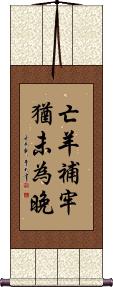
It's Never Too Late Too Mend
Long ago in what is now China, there were many kingdoms throughout the land. This time period is known as “The Warring States Period” by historians because these kingdoms often did not get along with each other.
Sometime around 279 B.C. the Kingdom of Chu was a large but not particularly powerful kingdom. Part of the reason it lacked power was the fact that the King was surrounded by “yes men” who told him only what he wanted to hear. Many of the King's court officials were corrupt and incompetent which did not help the situation.
The King was not blameless himself, as he started spending much of his time being entertained by his many concubines.
One of the King's ministers, Zhuang Xin, saw problems on the horizon for the Kingdom, and warned the King, “Your Majesty, you are surrounded by people who tell you what you want to hear. They tell you things to make you happy and cause you to ignore important state affairs. If this is allowed to continue, the Kingdom of Chu will surely perish, and fall into ruins.”
This enraged the King who scolded Zhuang Xin for insulting the country and accused him of trying to create resentment among the people. Zhuang Xin explained, “I dare not curse the Kingdom of Chu but I feel that we face great danger in the future because of the current situation.” The King was simply not impressed with Zhuang Xin's words.
Seeing the King's displeasure with him and the King's fondness for his court of corrupt officials, Zhuang Xin asked permission from the King that he may take leave of the Kingdom of Chu, and travel to the State of Zhao to live. The King agreed, and Zhuang Xin left the Kingdom of Chu, perhaps forever.
Five months later, troops from the neighboring Kingdom of Qin invaded Chu, taking a huge tract of land. The King of Chu went into exile, and it appeared that soon, the Kingdom of Chu would no longer exist.
The King of Chu remembered the words of Zhuang Xin and sent some of his men to find him. Immediately, Zhuang Xin returned to meet the King. The first question asked by the King was “What can I do now?”
Zhuang Xin told the King this story:
A shepherd woke one morning to find a sheep missing. Looking at the pen saw a hole in the fence where a wolf had come through to steal one of his sheep. His friends told him that he had best fix the hole at once. But the Shepherd thought since the sheep is already gone, there is no use fixing the hole.
The next morning, another sheep was missing. And the Shepherd realized that he must mend the fence at once. Zhuang Xin then went on to make suggestions about what could be done to reclaim the land lost to the Kingdom of Qin, and reclaim the former glory and integrity of the Kingdom of Chu.
The Chinese idiom shown above came from this reply from Zhuang Xin to the King of Chu almost 2,300 years ago.
It translates roughly into English as...
“Even if you have lost some sheep, it's never too late to mend the fence.”
This proverb, 亡羊补牢犹未为晚, is often used in modern China when suggesting in a hopeful way that someone change their ways, or fix something in their life. It might be used to suggest fixing a marriage, quitting smoking, or getting back on track after taking an unfortunate path in life among other things one might fix in their life.
I suppose in the same way that we might say, “Today is the first day of the rest of your life” in our western cultures to suggest that you can always start anew.
Note: This does have Korean pronunciation but is not a well-known proverb in Korean (only Koreans familiar with ancient Chinese history would know it). Best if your audience is Chinese.
Speak simply, while expressing your idea completely
言簡意賅 is a Chinese proverb that suggests it is better to be brief and use fewer words while still expressing your main point or idea.
In another way to explain this, one should not use 100 words when 50 will do, or being more concise with your speech.
This can also be translated as concise, compendious, “brief in form but comprehensive in scope” or succinct.
This is a bit more positive than our other proverb for brevity.
The following table may be helpful for those studying Chinese or Japanese...
| Title | Characters | Romaji (Romanized Japanese) | Various forms of Romanized Chinese | |
| Simply the Best | 最高 | sai kou / saikou / sai ko | zuì gāo / zui4 gao1 / zui gao / zuigao | tsui kao / tsuikao |
| Karma (of your past lives) | 宿業 宿业 | shukugou / shukugo | sù yè / su4 ye4 / su ye / suye | su yeh / suyeh |
| Destiny Fate | 命 | inochi / mei | mìng / ming4 / ming | |
| Calm and Collected | 沉著 沉着 | chén zhuó chen2 zhuo2 chen zhuo chenzhuo | ch`en cho chencho chen cho |
|
| Manchu Manchurian | 満州人 | man shuu jin manshuujin man shu jin | ||
| Dharma Buddhist Doctrine | 佛法 | fó fǎ / fo2 fa3 / fo fa / fofa | ||
| Dream Dreams | 夢 梦 | yume | mèng / meng4 / meng | |
| Bird | 鳥 鸟 | tori | niǎo / niao3 / niao | |
| Live Strong | 強く生きる | tsuyoku ikiru tsuyokuikiru | ||
| Ba Gua | 八卦 | bā guà / ba1 gua4 / ba gua / bagua | pa kua / pakua | |
| I love you to the moon and back | 我愛你到地老天荒 我爱你到地老天荒 | wǒ ài nǐ dào dì lǎo tiān huāng wo3 ai4 ni3 dao4 di4 lao3 tian1 huang1 wo ai ni dao di lao tian huang woainidaodilaotianhuang | wo ai ni tao ti lao t`ien huang woainitaotilaotienhuang wo ai ni tao ti lao tien huang |
|
| Laugh Smile | 笑 | e / shou / wa e / sho / wa | xiào / xiao4 / xiao | hsiao |
| Mauritania | モーリタニア | mooritania / moritania | ||
| Ikebana | 生け花 | ikebana | ||
| Daoism Taoism | 道教 | doukyou / dokyo | dào jiào / dao4 jiao4 / dao jiao / daojiao | tao chiao / taochiao |
| Eyeballs Eyes | 眼 | gan | yǎn / yan3 / yan | yen |
| Everyday Life | 日常生活 | nichi jou sei katsu nichijouseikatsu nichi jo sei katsu | rì cháng shēng huó ri4 chang2 sheng1 huo2 ri chang sheng huo richangshenghuo | jih ch`ang sheng huo jihchangshenghuo jih chang sheng huo |
| Family and Friends | 親朋好友 亲朋好友 | qīn péng hǎo yǒu qin1 peng2 hao3 you3 qin peng hao you qinpenghaoyou | ch`in p`eng hao yu chinpenghaoyu chin peng hao yu |
|
| Fear No Man Fear Nothing | 無所畏懼 无所畏惧 | wú suǒ wèi jù wu2 suo3 wei4 ju4 wu suo wei ju wusuoweiju | wu so wei chü wusoweichü |
|
| Sangha Order of Monks | 僧 | sou / so | sēng / seng1 / seng | |
| Create Creation | 創造 创造 | sou zou / souzou / so zo | chuàng zào chuang4 zao4 chuang zao chuangzao | ch`uang tsao chuangtsao chuang tsao |
| Even Monkeys Fall From Trees | 猿も木から落ちる | saru mo ki kara ochiru sarumokikaraochiru | ||
| Tactics of War | 戰術 / 戦術 战术 | senjutsu | zhàn shù / zhan4 shu4 / zhan shu / zhanshu | chan shu / chanshu |
| Shorinji Kempo Kenpo | 少林寺拳法 | shourinji kenpou shourinjikenpou shorinji kenpo | shào lín sì quán fǎ shao4 lin2 si4 quan2 fa3 shao lin si quan fa shaolinsiquanfa | shao lin ssu ch`üan fa shaolinssuchüanfa shao lin ssu chüan fa |
| Cassia | 桂皮 | keihi / kehi | guì pí / gui4 pi2 / gui pi / guipi | kuei p`i / kueipi / kuei pi |
| Forest Bathing | 森林浴 | shin rin yoku shinrinyoku | sēn lín yù sen1 lin2 yu4 sen lin yu senlinyu | sen lin yü senlinyü |
| Non-Violence | 非暴力 | hibouryoku / hiboryoku | fēi bào lì fei1 bao4 li4 fei bao li feibaoli | fei pao li feipaoli |
| Life Force | 生命 | seimei / inochi | shēng mìng sheng1 ming4 sheng ming shengming | |
| Ethics Ethical Morality | 道德 道德 / 道徳 | dou toku / doutoku / do toku | dào dé / dao4 de2 / dao de / daode | tao te / taote |
| Marine Corps | 海兵隊 海兵队 | kaiheitai | ||
| Exercise | 鍛煉 / 鍛鍊 锻炼 | duàn liàn duan4 lian4 duan lian duanlian | tuan lien tuanlien |
|
| Kind Words | 愛語 爱语 | aigo | ài yǔ / ai4 yu3 / ai yu / aiyu | ai yü / aiyü |
| Live for What You Love | 人生謳歌 | jin sei ou ka jinseiouka jin sei o ka | ||
| Forgive and Forget | 不念舊惡 不念旧恶 | bú niàn jiù è bu2 nian4 jiu4 e4 bu nian jiu e bunianjiue | pu nien chiu o punienchiuo |
|
| Seeing is Believing | 百聞は一見に如かず | hyakubun wa ikken ni shikazu hyakubunwaikkennishikazu hyakubun wa iken ni shikazu | ||
| New Beginning | 伊始 | yī shǐ / yi1 shi3 / yi shi / yishi | i shih / ishih | |
| Power of Understanding and Wisdom | 悟性 | gosei | wù xìng / wu4 xing4 / wu xing / wuxing | wu hsing / wuhsing |
| Mother and Son | 母子 | bo shi / boshi | mǔ zǐ / mu3 zi3 / mu zi / muzi | mu tzu / mutzu |
| The Universe in Balance Balanced Universe | 宇宙平衡 | u chuu hei kou uchuuheikou u chu hei ko | yǔ zhòu píng héng yu3 zhou4 ping2 heng2 yu zhou ping heng yuzhoupingheng | yü chou p`ing heng yüchoupingheng yü chou ping heng |
| Prayer Praying | 祈禱 祈祷 | kitou / kito | qǐ dǎo / qi3 dao3 / qi dao / qidao | ch`i tao / chitao / chi tao |
| The Five Tenets of Confucius | 仁義禮智信 仁义礼智信 | jin gi rei tomo nobu jingireitomonobu | rén yì lǐ zhì xìn ren2 yi4 li3 zhi4 xin4 ren yi li zhi xin renyilizhixin | jen i li chih hsin jenilichihhsin |
| Monkey Ape | 猿 | saru | yuán / yuan2 / yuan | yüan |
| Sun Wukong Son Goku | 孫悟空 孙悟空 | son go kuu / songokuu / son go ku | sūn wù kōng sun1 wu4 kong1 sun wu kong sunwukong | sun wu k`ung sunwukung sun wu kung |
| Seeing is Believing | 百聞不如一見 百闻不如一见 | bǎi wén bù rú yí jiàn bai3 wen2 bu4 ru2 yi2 jian4 bai wen bu ru yi jian baiwenburuyijian | pai wen pu ju i chien paiwenpujuichien |
|
| Death Before Surrender | 寧死不降 宁死不降 | nìng sǐ bù xiáng ning4 si3 bu4 xiang2 ning si bu xiang ningsibuxiang | ning ssu pu hsiang ningssupuhsiang |
|
| Self-Confidence | 自信 | jishin | zì xìn / zi4 xin4 / zi xin / zixin | tzu hsin / tzuhsin |
| Eagle Falcon Hawk | 鷹 鹰 | taka | yīng / ying1 / ying | |
| Inner Bliss and Peace from Meditation | 禪悅 禅悦 | chán yuè / chan2 yue4 / chan yue / chanyue | ch`an yüeh / chanyüeh / chan yüeh | |
| Faithful Honorable Trustworthy Fidelity Loyalty | 信義 信义 | shingi | xìn yì / xin4 yi4 / xin yi / xinyi | hsin i / hsini |
| Treasure | 珍寶 珍宝 | chin hou / chinhou / chin ho | zhēn bǎo / zhen1 bao3 / zhen bao / zhenbao | chen pao / chenpao |
| Eternal Life Future Life | 來世 来世 | rai-se | lái shì / lai2 shi4 / lai shi / laishi | lai shih / laishih |
| Siddhartha | 悉達多 悉达多 | shiddatta / shiddaruta | xī dá duō xi1 da2 duo1 xi da duo xidaduo | hsi ta to hsitato |
| East | 東 东 | higashi / tou higashi / to | dōng / dong1 / dong | tung |
| Shakyamuni The Buddha | 釋迦牟尼 释迦牟尼 | sha ka mu ni shakamuni | shì jiā móu ní shi4 jia1 mou2 ni2 shi jia mou ni shijiamouni | shih chia mou ni shihchiamouni |
| Honorable Death - No Surrender | 玉砕主義 | gyokusai shugi gyokusaishugi | ||
| Pride | 自尊 | jison | zì zūn / zi4 zun1 / zi zun / zizun | tzu tsun / tzutsun |
| Love and Respect | 相愛互敬 相爱互敬 | xiāng ài hù jìng xiang1 ai4 hu4 jing4 xiang ai hu jing xiangaihujing | hsiang ai hu ching hsiangaihuching |
|
| Remember | 銘記 | mei ki / meiki | míng jì / ming2 ji4 / ming ji / mingji | ming chi / mingchi |
| Eternal Friendship Friends Forever | 永遠的朋友 永远的朋友 | yǒng yuǎn de péng yǒu yong3 yuan3 de peng2 you3 yong yuan de peng you yongyuandepengyou | yung yüan te p`eng yu yungyüantepengyu yung yüan te peng yu |
|
| Reincarnation (Buddhism) | 轉世 转世 | ten sei / tensei | zhuǎn shì zhuan3 shi4 zhuan shi zhuanshi | chuan shih chuanshih |
| Jesus | 耶穌 耶稣 | yé sū / ye2 su1 / ye su / yesu | yeh su / yehsu | |
| Death Before Surrender | 寧死不屈 宁死不屈 | níng sǐ bù qū ning2 si3 bu4 qu1 ning si bu qu ningsibuqu | ning ssu pu ch`ü ningssupuchü ning ssu pu chü |
|
| Benevolence | 仁 | jin | rén / ren2 / ren | jen |
| Five Elements | 五行 | gogyou / gogyo | wǔ xíng / wu3 xing2 / wu xing / wuxing | wu hsing / wuhsing |
| Gate | 門 门 | mon | mén / men2 / men | |
| You must endure a harsh winter to appreciate the warmth of springtime | 不經冬寒不知春暖 不经冬寒不知春暖 | bù jīng dōng hán bù zhī chūn nuǎn bu4 jing1 dong1 han2 bu4 zhi1 chun1 nuan3 bu jing dong han bu zhi chun nuan | pu ching tung han pu chih ch`un nuan pu ching tung han pu chih chun nuan |
|
| Goodness Good Deed | 善 | zen | shàn / shan4 / shan | |
| Roku-Dan 6th Degree Black Belt | 六段 | roku dan / rokudan | ||
| Tiger | 虎 | tora | hǔ / hu3 / hu | |
| Religious Devotion Faith in God Religious Faith | 信仰 | shin kou / shinkou / shin ko | xìn yǎng / xin4 yang3 / xin yang / xinyang | hsin yang / hsinyang |
| In Flowers the Cherry Blossom, In Men the Samurai | 花は櫻木人は武士 花は桜木人は武士 | hana wa sakuragi hito wa bushi | ||
| Rise and Fall Ups and Downs | 栄枯盛衰 / 榮枯盛衰 荣枯盛衰 | ei ko sei sui eikoseisui | ||
| Gutsy Daring Bold | 迫力 | hakuryoku | pò lì / po4 li4 / po li / poli | p`o li / poli / po li |
| Kowtow - The deepest bow | 叩頭 叩头 | koutou / koto | kòu tóu / kou4 tou2 / kou tou / koutou | k`ou t`ou / koutou / kou tou |
| Ice Frost | 冰 氷 | koori / kori | bīng / bing1 / bing | ping |
| United States Marine Corps | 米海兵隊 | bei kai hei tai beikaiheitai | ||
| Sangha | 僧伽 | sougya / sogya | sēng qié / seng1 qie2 / seng qie / sengqie | seng ch`ieh / sengchieh / seng chieh |
| Mind Body Spirit | 身心靈 / 身心霊 身心灵 | mi shin rei mishinrei | shēn xīn líng shen1 xin1 ling2 shen xin ling shenxinling | shen hsin ling shenhsinling |
| Appreciation of Truth by Meditation | 心印 | shin nin / shinnin | xīn yìn / xin1 yin4 / xin yin / xinyin | hsin yin / hsinyin |
| Patience Perseverance | 忍 | nin | rěn / ren3 / ren | jen |
| Master Skilled Worker | 師傅 师傅 | shī fu / shi1 fu / shi fu / shifu | shih fu / shihfu | |
| Enso - Japanese Zen Circle | 〇 | en sou / ensou / en so | ||
| A Traditional Warm Welcome | 歡迎光臨 欢迎光临 | huān yíng guāng lín huan1 ying2 guang1 lin2 huan ying guang lin huanyingguanglin | huan ying kuang lin huanyingkuanglin |
|
| Unselfish: Perfectly Impartial | 大公無私 大公无私 | dà gōng wú sī da4 gong1 wu2 si1 da gong wu si dagongwusi | ta kung wu ssu takungwussu |
|
| Money | 錢 / 銭 钱 | sen | qián / qian2 / qian | ch`ien / chien |
| Kirin Giraffe Mythical Creature | 麒麟 | kirin | qí lǐn / qi2 lin3 / qi lin / qilin | ch`i lin / chilin / chi lin |
| Reiki | 靈氣 灵气 霊気 | reiki | líng qì / ling2 qi4 / ling qi / lingqi | ling ch`i / lingchi / ling chi |
| Kenpo Kempo Quan Fa Chuan Fa | 拳法 | kenpou / kenpo | quán fǎ / quan2 fa3 / quan fa / quanfa | ch`üan fa / chüanfa / chüan fa |
| Life Energy Spiritual Energy | 氣 气 / 気 | ki | qì / qi4 / qi | ch`i / chi |
| Mountain Travels Poem by Dumu | 遠上寒山石徑斜白雲生處有人家停車坐愛楓林晚霜葉紅於二月花 远上寒山石径斜白云生处有人家停车坐爱枫林晚霜叶红于二月花 | yuǎn shàng hán shān shí jìng xiá bái yún shēng chù yǒu rén jiā tíng chē zuò ài fēng lín wǎn shuàng yè hóng yú èr yuè huā yuan3 shang4 han2 shan1 shi2 jing4 xia2 bai2 yun2 sheng1 chu4 you3 ren2 jia1 ting2 che1 zuo4 ai4 feng1 lin2 wan3 shuang4 ye4 hong2 yu2 er4 yue4 hua1 yuan shang han shan shi jing xia bai yun sheng chu you ren jia ting che zuo ai feng lin wan shuang ye hong yu er yue hua | yüan shang han shan shih ching hsia pai yün sheng ch`u yu jen chia t`ing ch`e tso ai feng lin wan shuang yeh hung yü erh yüeh hua yüan shang han shan shih ching hsia pai yün sheng chu yu jen chia ting che tso ai feng lin wan shuang yeh hung yü erh yüeh hua |
|
| Better Late Than Never | 亡羊補牢猶未為晚 亡羊补牢犹未为晚 | wáng yáng bǔ láo yóu wèi wéi wǎn wang2 yang2 bu3 lao2 you2 wei4 wei2 wan3 wang yang bu lao you wei wei wan | wang yang pu lao yu wei wei wan wangyangpulaoyuweiweiwan |
|
| Brief and to the Point | 言簡意賅 言简意赅 | yán jiǎn yì gāi yan2 jian3 yi4 gai1 yan jian yi gai yanjianyigai | yen chien i kai yenchienikai |
|
| In some entries above you will see that characters have different versions above and below a line. In these cases, the characters above the line are Traditional Chinese, while the ones below are Simplified Chinese. | ||||
Successful Chinese Character and Japanese Kanji calligraphy searches within the last few hours...

All of our calligraphy wall scrolls are handmade.
When the calligrapher finishes creating your artwork, it is taken to my art mounting workshop in Beijing where a wall scroll is made by hand from a combination of silk, rice paper, and wood.
After we create your wall scroll, it takes at least two weeks for air mail delivery from Beijing to you.
Allow a few weeks for delivery. Rush service speeds it up by a week or two for $10!
When you select your calligraphy, you'll be taken to another page where you can choose various custom options.
The wall scroll that Sandy is holding in this picture is a "large size"
single-character wall scroll.
We also offer custom wall scrolls in small, medium, and an even-larger jumbo size.
Professional calligraphers are getting to be hard to find these days.
Instead of drawing characters by hand, the new generation in China merely type roman letters into their computer keyboards and pick the character that they want from a list that pops up.
There is some fear that true Chinese calligraphy may become a lost art in the coming years. Many art institutes in China are now promoting calligraphy programs in hopes of keeping this unique form
of art alive.
Even with the teachings of a top-ranked calligrapher in China, my calligraphy will never be good enough to sell. I will leave that to the experts.
The same calligrapher who gave me those lessons also attracted a crowd of thousands and a TV crew as he created characters over 6-feet high. He happens to be ranked as one of the top 100 calligraphers in all of China. He is also one of very few that would actually attempt such a feat.
Check out my lists of Japanese Kanji Calligraphy Wall Scrolls and Old Korean Hanja Calligraphy Wall Scrolls.
Some people may refer to this entry as Simply the Best Kanji, Simply the Best Characters, Simply the Best in Mandarin Chinese, Simply the Best Characters, Simply the Best in Chinese Writing, Simply the Best in Japanese Writing, Simply the Best in Asian Writing, Simply the Best Ideograms, Chinese Simply the Best symbols, Simply the Best Hieroglyphics, Simply the Best Glyphs, Simply the Best in Chinese Letters, Simply the Best Hanzi, Simply the Best in Japanese Kanji, Simply the Best Pictograms, Simply the Best in the Chinese Written-Language, or Simply the Best in the Japanese Written-Language.