Many custom options...


And formats...



Orient in Chinese / Japanese...
Buy an Orient calligraphy wall scroll here!
Personalize your custom “Orient” project by clicking the button next to your favorite “Orient” title below...
Jew / Jewish
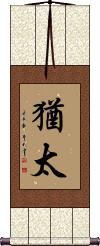
猶太 is the title for Jews or the adjective for being Jewish in Chinese.
You may be surprised to learn there are still a few native Jews in China (though many ethnic Jews moved to Israel). It's believed that they are descendants of traders who traveled the silk road between the Middle East and the Orient.
Zen Contemplation
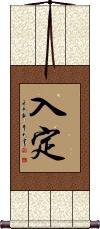
入定 is a title that can be defined as Zen contemplation in Japanese or sitting quietly in (Buddhist) meditation in Chinese. It also carries a similar meaning in Korean Hanja. Therefore, this is a universal term for meditation in the context of Buddhism throughout the Orient.
Can also be translated as “Meditatively equipoised” or “enter into meditation by stilling the karmic activities of deed, speech, and thought.”
The original Sanskrit word is samapanna. In Tibetan: snyoms par zhugs pa.
Buddha Heart / Mind of Buddha
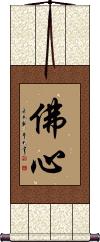
佛心 means the Buddha's mind, Buddha-heart, or the spiritually enlightened heart/mind.
The Buddha Heart is detached from good and evil and other such constructs. The Buddha Heart has mercy, compassion, and loving-kindness for all sentient life, the good, the wicked, and all in between.
The heart and mind (心) are the same concepts in the ancient Orient, so you can use heart and mind interchangeably in this context.
Respect / Honor / Esteem
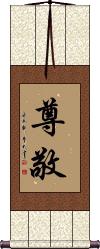
尊敬 is how to express the ideas of respect, honor, reverence, esteem, nobility, and sometimes the state of being noble, all in one word. Most of the time, this is used as “giving respect,” but depending on the context, it can suggest that you should try to be “worthy of respect.”
Although pronounced differently, the Chinese characters, Japanese Kanji, and Korean Hanja are the same across these languages. This is an indication that this word is very old and crosses many barriers and cultures in the Orient (East Asia).
East
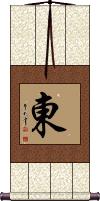
東 is the direction East in Chinese, Japanese Kanji, and old Korean Hanja.
Sometimes used as an abbreviation for the Eastern Hemisphere.
This can also be the surname Dong in China.
In Japan, this can be an abbreviation for a kind of six-stringed zither, or the personal name, Yamato.
東 is used as a suffix for many words in Asia. In fact, it's part of the CJK word 東方 meaning Orient or Oriental. The word 東方 more literally translates as “Eastern Kingdoms,” “Eastern Countries,” or simply “The East.”
Islam
(phonetic version)
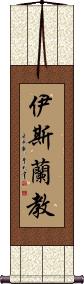
伊斯蘭教 both means and sounds like “Islam” in Mandarin Chinese.
The first three characters sound like the word “Islam,” and the last character means “religion” or “teaching.” It's the most general term for “Islam” in China. The highest concentration of Muslims in China is Xinjiang (the vast region in northwest China that was called The East Turkistan Republic until 1949 and is sometimes called Chinese Turkistan, Uyghuristan). Here you will find Uygurs, Kazakhs, Kyrgyz, and others that are descendants of Turkmen (possibly mixed with Persians and Arabs). Many of their ancestors were traders who traveled the silk road to buy and sell spices and silk and exchange other goods from the Orient and the Middle East.
I spent some time in Xinjiang and got to know this community. They are strong people who can endure much. They are friendly and love to have a good time. I was a stranger but was treated by villagers (near China's border with Afghanistan) as if I was a good friend.
However, I have heard that it's best not to cross them, as in this land, the law is the blade, and everything is “eye for an eye.” The Chinese government has little control in Xinjiang, with almost no police officers except in the capital of Urumqi (so it's a 60-hour roundtrip train ride to seek the aid of law enforcement in most cases).
While few seem devout, there are at least small mosques in every village. And you will never see a man or woman outside without a head covering.
It should be noted that these people are all citizens of China, but they are officially of the Caucasian race. A visit to Xinjiang will change your idea of what it means to be Chinese.
Not the results for Orient that you were looking for?
Below are some entries from our dictionary that may match your Orient search...
| Characters If shown, 2nd row is Simp. Chinese |
Pronunciation Romanization |
Simple Dictionary Definition |
洋 see styles |
yáng yang2 yang youji / yoji ようじ |
More info & calligraphy: Ocean(1) Occident and Orient (esp. the Occident); (2) ocean; sea; (prefix) (3) foreign; Western; European; (personal name) Yōji |
蚌 see styles |
bàng bang4 pang hamaguri はまぐり |
mussel; clam (kana only) common orient clam (Meretrix lusoria) |
蛤 see styles |
há ha2 ha hamaguri はまぐり |
used in 蛤蟆[ha2 ma5] (kana only) common orient clam (Meretrix lusoria); (irregular kanji usage) (kana only) frog; (surname) Hamaguri Bivalves, clams. |
両洋 see styles |
ryouyou / ryoyo りょうよう |
Orient and Occident; Atlantic and Pacific |
文蛤 see styles |
wén gé wen2 ge2 wen ko hamaguri はまぐり |
clam; bivalve mollusk, many spp. (kana only) common orient clam (Meretrix lusoria) |
東亜 see styles |
harutsugu はるつぐ |
East Asia; the Orient; (given name) Harutsugu |
東亞 东亚 see styles |
dōng yà dong1 ya4 tung ya toua / toa とうあ |
East Asia (out-dated kanji) East Asia; the Orient |
東方 东方 see styles |
dōng fāng dong1 fang1 tung fang higashigata ひがしがた |
east (noun - becomes adjective with の) (1) eastern direction; (noun - becomes adjective with の) (2) the Orient; (3) (ひがしかた, ひがしがた only) {MA} eastern fighter in a match (e.g. sumo wrestling); (place-name, surname) Higashigata The east, or eastern region. |
東洋 东洋 see styles |
dōng yáng dong1 yang2 tung yang harumi はるみ |
Japan (old); East Asian countries (1) (See 西洋) the East; the Orient; (East) Asia; (2) (dated) (used in China) Japan; (personal name) Harumi |
東西 东西 see styles |
dōng xi dong1 xi5 tung hsi tounishi / tonishi とうにし |
thing; stuff; person; CL:個|个[ge4],件[jian4] (noun - becomes adjective with の) (1) east and west; (noun - becomes adjective with の) (2) Orient and Occident; East and West; (interjection) (3) (とうざい only) (abbreviation) (See 東西東西) ladies and gentlemen!; your attention, please!; roll-up, roll-up; (surname) Tōnishi east and west |
東邦 see styles |
touhou / toho とうほう |
Oriental country; the Orient; (surname) Tōhou |
魏巍 see styles |
wèi wēi wei4 wei1 wei wei |
Wei Wei (1920–2008), novelist and poet, author of award-winning novel The Orient 東方|东方[Dong1 fang1] about the Korean war |
東半球 东半球 see styles |
dōng bàn qiú dong1 ban4 qiu2 tung pan ch`iu tung pan chiu higashihankyuu / higashihankyu ひがしはんきゅう |
the Eastern Hemisphere (See 西半球) eastern hemisphere; the Orient |
ハマグリ see styles |
hamaguri ハマグリ |
(kana only) common orient clam (Meretrix lusoria) |
オリエント see styles |
oriento オリエント |
(See オクシデント) Orient; (place-name) Orient |
方向づける see styles |
houkouzukeru / hokozukeru ほうこうづける |
(Ichidan verb) to direct; to guide; to orient; to orientate; to align |
方向付ける see styles |
houkouzukeru / hokozukeru ほうこうづける |
(Ichidan verb) to direct; to guide; to orient; to orientate; to align |
作意思惟不淨 see styles |
zuò yì sī wéi bù jìng zuo4 yi4 si1 wei2 bu4 jing4 tso i ssu wei pu ching sai shiyui fujō |
orient one's attention to impurity |
作意思惟慈相 see styles |
zuò yì sī wéi cí xiàng zuo4 yi4 si1 wei2 ci2 xiang4 tso i ssu wei tz`u hsiang tso i ssu wei tzu hsiang sai shiyui jisō |
to orient one's thoughts on loving kindness |
Variations: |
hamaguri; hamaguri はまぐり; ハマグリ |
(kana only) common orient clam (Meretrix lusoria) |
オリエント急行 see styles |
orientokyuukou / orientokyuko オリエントきゅうこう |
(serv) Orient Express (European long-distance passenger train service, 1883-2009); (serv) Orient Express (European long-distance passenger train service, 1883-2009) |
古代オリエント see styles |
kodaioriento こだいオリエント |
(hist) ancient Orient; ancient Near East |
洋の東西を問わず see styles |
younotouzaiotowazu / yonotozaiotowazu ようのとうざいをとわず |
(exp,adv) in all parts of the world; in all countries; anywhere in the world; both in the Occident and the Orient |
オリエント急行殺人事件 see styles |
orientokyuukousatsujinjiken / orientokyukosatsujinjiken オリエントきゅうこうさつじんじけん |
(work) Murder on the Orient Express (1934 detective novel by Agatha Christie); (wk) Murder on the Orient Express (1934 detective novel by Agatha Christie) |
Variations: |
houkouzukeru / hokozukeru ほうこうづける |
(Ichidan verb) to direct; to guide; to orient; to orientate; to align |
Variations: |
toua / toa とうあ |
East Asia; the Orient |
The following table may be helpful for those studying Chinese or Japanese...
| Title | Characters | Romaji (Romanized Japanese) | Various forms of Romanized Chinese | |
| Jew Jewish | 猶太 犹太 | yóu tài / you2 tai4 / you tai / youtai | yu t`ai / yutai / yu tai | |
| Zen Contemplation | 入定 | rù dìng / ru4 ding4 / ru ding / ruding | ju ting / juting | |
| Buddha Heart Mind of Buddha | 佛心 | busshin / bushin | fó xīn / fo2 xin1 / fo xin / foxin | fo hsin / fohsin |
| Respect Honor Esteem | 尊敬 | sonkei | zūn jìng / zun1 jing4 / zun jing / zunjing | tsun ching / tsunching |
| East | 東 东 | higashi / tou higashi / to | dōng / dong1 / dong | tung |
| Islam | 伊斯蘭教 伊斯兰教 | yī sī lán jiào yi1 si1 lan2 jiao4 yi si lan jiao yisilanjiao | i ssu lan chiao issulanchiao |
|
| In some entries above you will see that characters have different versions above and below a line. In these cases, the characters above the line are Traditional Chinese, while the ones below are Simplified Chinese. | ||||

Successful Chinese Character and Japanese Kanji calligraphy searches within the last few hours...



