Many custom options...


And formats...



Laws in Chinese / Japanese...
Buy a Laws calligraphy wall scroll here!
Personalize your custom “Laws” project by clicking the button next to your favorite “Laws” title below...
Laws

勞斯 is the name Laws in Chinese (Mandarin).
Laws
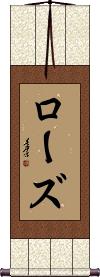
ローズ is the name Laws in Japanese Katakana.
Note: Because this title is entirely Japanese Katakana, it should be written by a Japanese calligrapher.
Discipline
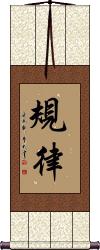
規律 is a Japanese word for discipline that relays the ideas of keeping order, and observance (of rules, laws, regulations).
This is also a word in Chinese and old Korean Hanja where it suggests that you are one who follows a certain law of behavior or has a regular and dependable pattern of behavior, personal regime, or rhythm.
See Also: Self-Control | Will-Power / Self
Koan
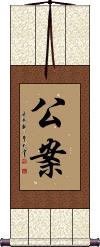
In the Buddhist context, 公案 is a Zen question for meditation.
From the Buddhist dictionary, this is:
Problems set by Zen masters, upon which thought is concentrated as a means to attain inner unity and illumination.
The secular meaning of this word can mean a judge's desk, a complex legal case, a contentious issue, a dossier, a case record, public laws, regulations, or case law.
John 14:15
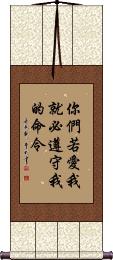
你們若愛我就必遵守我的命令 is the translation of John 14:15 into Chinese.
This comes from the Chinese Union Bible which comes from a revised King James version. This Chinese Bible was originally translated and printed in 1919 (several revisions since then).
Because of the origin being the KJV, I'll say that in English, this would be, “If ye love me, keep my commandments...”
In basic English, this would be, “If you have love for me, you will keep my laws.”
Daruma / Damo

達磨 in Japanese usually refers to Daruma, a tumbling doll with a round red-painted body.
In Japan, Daruma is a good-luck doll which is supposed to in the shape of Bodhidharma, with a blank eye to be completed when a person's wish is granted.
達磨 is also Bodhidharma or Dharma. 達磨 comes from an ancient word that means holding fast and keeping ordinances, statutes, laws, or practice.
This is also a title for Damo, or Bodhidharma, the twenty-eighth Indian and first Chinese patriarch, who arrived in China A.D. 520, the reputed founder of the Chan or Intuitional School in China. He is described as son of a king in southern India. He famously engaged in silent meditation for nine years.
Art of War: 5 Points of Analysis
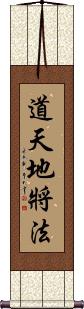
道天地將法 is a list of five key points to analyzing your situation from the first chapter of Sun Tzu's Art of War.
This reads like a 5-part military proverb. Sun Tzu says that to sharpen your skills, you must plan. To plan well, you must know your situation. Therefore, you must consider and discuss the following:
1. Philosophy and Politics: Make sure your way or your policy is agreeable among all of your troops (and the citizens of your kingdom as well). For when your soldiers believe in you and your way, they will follow you to their deaths without hesitation and will not question your orders.
2. Heaven/Sky: Consider climate / weather. This can also mean considering whether God is smiling upon you. In the modern military, this could be waiting for clear skies so that you can have air support for an amphibious landing.
3. Ground/Earth: Consider the terrain in which the battle will take place. This includes analyzing defensible positions, and exit routes, while using varying elevations to your advantage. When you plan an ambush, you must know your terrain and the best location from which to stage that ambush. This knowledge will also help you avoid being ambushed, as you will know where the likely places in which to expect an ambush from your enemy.
4. Leadership: This applies to you as the general and your lieutenants. A leader should be smart and be able to develop good strategies. Leaders should keep their word, and if they break a promise, they should punish themselves as harshly as they would punish subordinates. Leaders should be benevolent to their troops, with almost a fatherly love for them. Leaders must have the ability to make brave and fast decisions. Leaders must have steadfast principles.
5. [Military] Methods: This can also mean laws, rules, principles, models, or systems. You must have an efficient organization in place to manage both your troops and supplies. In the modern military, this would be a combination of how your unit is organized and your SOP (Standard Operating Procedure).
Notes: This is a simplistic translation and explanation. Much more is suggested in the actual text of the Art of War (Bing Fa). It would take many study to master all of these aspects. In fact, these five characters can be compared to the modern military acronyms such as BAMCIS or SMEAC.
CJK notes: I have included the Japanese and Korean pronunciations but in Chinese, Korean and Japanese, this does not make a typical phrase (with subject, verb, and object) it is a list that only someone familiar with Sun Tzu’s writings would understand.
Not the results for Laws that you were looking for?
Below are some entries from our dictionary that may match your Laws search...
| Characters If shown, 2nd row is Simp. Chinese |
Pronunciation Romanization |
Simple Dictionary Definition |
智 see styles |
zhì zhi4 chih masaru まさる |
More info & calligraphy: Wisdom(1) wisdom; (2) (Buddhist term) jnana (higher knowledge); (given name) Masaru jñāna 若那; 闍那 Knowledge; wisdom; defined as 於事理決斷也 decision or judgment as to phenomena or affairs and their principles, of things and their fundamental laws. There are numerous categories, up to 20, 48, and 77, v. 一智; 二智 and others. It is also used as a tr. of prajñā, cf. 智度. |
科 see styles |
kē ke1 k`o ko ke け |
More info & calligraphy: Coe(kana only) (See 科の木・しなのき) Japanese linden (Tilia japonica); (personal name) Ke A class, lesson, examination. |
義 义 see styles |
yì yi4 i yoshimura よしむら |
More info & calligraphy: Justice / Rectitude / Right Decision(noun - becomes adjective with の) (1) morality; righteousness; justice; honour (honor); (noun - becomes adjective with の) (2) meaning; (noun - becomes adjective with の) (3) {Buddh} teachings; doctrine; (n,n-pref) (4) nonconsanguineous relationship (i.e. of in-laws); (n,n-pref) (5) prosthesis; (surname) Yoshimura The right, proper, righteous; loyal; public-spirited, public; meaning, significance. It is used for the Skt. artha, object, purpose, meaning, etc.; also for abhidheya. |
公案 see styles |
gōng àn gong1 an4 kung an kouan / koan こうあん |
More info & calligraphy: Koan{Buddh} koan; kōan; Zen question for meditation (e.g. the sound of one hand clapping) J. kōan; 因緣 A dossier, or case-record; a cause; public laws, regulations; case-law. Problems set by Zen masters, upon which thought is concentrated as a means to attain inner unity and illumination. |
ロース see styles |
roozu ローズ |
rose; (place-name) Rhodes (South Africa); (female given name) Ro-zu; Lawes; Laws; Lose; Lowes; Rhoads; Roz |
麥克斯韋 麦克斯韦 see styles |
mài kè sī wéi mai4 ke4 si1 wei2 mai k`o ssu wei mai ko ssu wei |
More info & calligraphy: Maxwell |
制 see styles |
zhì zhi4 chih seiji / seji せいじ |
system; to control; to regulate; variant of 製|制[zhi4] (n,n-suf) system; organization; organisation; imperial command; laws; regulation; control; government; suppression; restraint; holding back; establishment; (personal name) Seiji Restrain, govern; regulations; mourning. |
彞 彝 see styles |
yí yi2 i |
ancient wine vessel; ancient sacrificial vessel; Yi ethnic group; normal nature of man; laws and rules See: 彝 |
經 经 see styles |
jīng jing1 ching tsune つね |
classics; sacred book; scripture; to pass through; to undergo; to bear; to endure; warp (textile); longitude; menstruation; channel (TCM); abbr. for economics 經濟|经济[jing1 ji4] (female given name) Tsune A warp, that which runs lengthwise; to pass through or by, past; to manage, regulate; laws, canons, classics. Skt. sūtras; threads, threaded together, classical works. Also called 契經 and 經本. The sūtras in the Tripiṭaka are the sermons attributed to the Buddha; the other two divisions are 律 the Vinaya, and 論 the śāstras, or Abhidharma; cf. 三藏. Every sūtra begins with the words 如是我聞 'Thus did I hear', indicating that it contains the words of Śākyamuni. |
贅 赘 see styles |
zhuì zhui4 chui zei / ze ぜい |
(bound form) superfluous; (bound form) (of a man) to move into the household of one's in-laws after marrying; (of the bride's parents) to have the groom join one's household extravagance; luxury |
三智 see styles |
sān zhì san1 zhi4 san chih michi みち |
(female given name) Michi The three kinds of wisdom: (1) (a) 一切智 śrāvaka and pratyeka-buddha knowledge that all the dharma or laws are 空 void and unreal; (b) 道種智 bodhisattva-knowledge. of all things in their proper discrimination; (c) 一切種智 Buddha-knowledge, or perfect knowledge of all things in their every aspect and relationship past, present, and future. Tiantai associates the above with 室, 候, 中. (2) (a) 世間智 earthly or ordinary wisdom; (b) 出世間智 supra-mundane, or spiritual (śrāvaka and pratyeka-buddha) wisdom; (c) 出世間上上智 supreme wisdom of bodhisattvas and Buddhas. v. 智度論 27, 止觀 3, and 概伽經 3. Cf. — 心三智. |
世法 see styles |
shì fǎ shi4 fa3 shih fa sehō |
Common or ordinary dharmas, i. e. truths, laws, things, etc. |
主法 see styles |
shuhou / shuho しゅほう |
main laws |
五法 see styles |
wǔ fǎ wu3 fa3 wu fa gohō |
pañcadharma. The five laws or categories, of which four groups are as follows: I. 相名五法 The five categories of form and name: (1) 相 appearances, or phenomena; (2) 名 their names; (3) 分別 sometimes called 妄想 ordinary mental discrimination of them— (1) and (2) are objective, (3) subjective; (4) 正智 corrective wisdom, which corrects the deficiencies and errors of the last: (5) 如如 the 眞如 Bhutatathata or absolute wisdom, reached through the 如理智 understanding of the law of the absolute, or ultimate truth. II. 事理五法 The five categories into which things and their principles are divided: (1) 心法 mind; (2) 心所法 mental conditions or activities; (3) 色法 the actual states or categories as conceived; (4) 不相應法 hypothetic categories, 唯識 has twenty-four, the Abhidharma fourteen; (5) 無爲法 the state of rest, or the inactive principle pervading all things; the first four are the 事 and the last the 理. III. 理智五法 cf. 五智; the five categories of essential wisdom: (1) 眞如 the absolute; (2) 大圓鏡智 wisdom as the great perfect mirror reflecting all things; (3) 平等性智 wisdom of the equal Buddha nature of all beings; (4) 妙觀察智 wisdom of mystic insight into all things and removal of ignorance and doubt; (5) 成所作智 wisdom perfect in action and bringing blessing to self and others. IV. 提婆五法 The five obnoxious rules of Devadatta: not to take milk in any form, nor meat, nor salt; to wear unshaped garments, and to live apart. Another set is: to wear cast-off rags, beg food, have only one set meal a day, dwell in the open, and abstain from all kinds of flesh, milk, etc. |
付則 see styles |
fusoku ふそく |
additional rules; by-laws; supplementary provisions; additional clauses |
会規 see styles |
kaiki かいき |
society by-laws |
佛戒 see styles |
fó jiè fo2 jie4 fo chieh bukkai |
The moral commandments of the Buddha; also, the laws of reality observed by all Buddhas. |
六法 see styles |
liù fǎ liu4 fa3 liu fa roppou / roppo ろっぽう |
(1) six codes (constitution, civil code, criminal code, commercial code, code of civil procedure, code of criminal procedure); (2) (abbreviation) (See 六法全書) Compendium of Laws is also a term for 六法念. |
十力 see styles |
shí lì shi2 li4 shih li jūriki |
Daśabala. The ten powers of Buddha, giving complete knowledge of: (1) what is right or wrong in every condition; (2) what is the karma of every being, past, present, and future; (3) all stages of dhyāna liberation, and samādhi; (4) the powers and faculties of all beings; (5) the desires, or moral direction of every being; (6) the actual condition of every individual; (7) the direction and consequence of all laws; (8) all causes of mortality and of good and evil in their reality; (9) the end of all beings and nirvāṇa; (10) the destruction of all illusion of every kind. See the 智度論 25 and the 倶舍論 29. |
十妙 see styles |
shí miào shi2 miao4 shih miao jūmyō |
The ten wonders, or incomprehensibles; there are two groups, the 迹v traceable or manifested and 本門妙 the fundamental. The 迹門十妙 are the wonder of: (1) 境妙 the universe, sphere, or whole, embracing mind, Buddha, and all things as a unity; (2) 智妙 a Buddha's all-embracing knowledge arising from such universe; (3) 行妙 his deeds, expressive of his wisdom; (4) 位妙 his attainment of all the various Buddha stages, i.e. 十住 and十地; (5) 三法妙 his three laws of 理, 慧, and truth, wisdom, and vision; (6) 感應妙 his response to appeal, i.e. his (spiritual) response or relation to humanity, for "all beings are my children"; (7) 神通妙 his supernatural powers; (8) 說法妙 his preaching; (9) 眷屬妙 his supernatural retinue; (10) 利益妙 the blessings derived through universal elevation into Buddhahood. The 本門十妙 are the wonder of (1) 本因妙 the initial impulse or causative stage of Buddhahood; (2) 本果妙 its fruit or result in eternity, joy, and purity; (3) 國土妙 his (Buddha) realm; (4) 感應妙 his response (to human needs); (5) 神通妙 his supernatural powers; (6) 說法妙 his preaching; (7) 眷屬妙 his supernatural retinue; (8) 涅槃妙 his nirvāṇa; (9) 壽命妙 his (eternal) life; (10) his blessings as above. Both groups are further defined as progressive stages in a Buddha's career. These "wonders" are derived from the Lotus sūtra. |
十智 see styles |
shí zhì shi2 zhi4 shih chih jū chi |
The ten forms of understanding. I. Hīnayāna: (1) 世俗智 common understanding; (2) 法智 enlightened understanding, i.e. on the Four Truths in this life; (3) 類智 ditto, applied to the two upper realms 上二界; (4), (5), (6), (7) understanding re each of the Four Truths separately, both in the upper and lower realms, e.g. 苦智; (8) 他心智 understanding of the minds of others; (9) 盡智 the understanding that puts an end to all previous faith in or for self, i.e. 自信智; (10) 無生智 nirvāṇa wisdom; v. 倶舍論 26. II. Mahāyāna. A Tathāgatas ten powers of understanding or wisdom: (1) 三世智 perfect understanding of past, present, and future; (2) ditto of Buddha Law; (3) 法界無礙智 unimpeded understanding of the whole Buddha-realm; (4) 法界無邊智 unlimited, or infinite understanding of the whole Buddha-realm; (5) 充滿一切智 understanding of ubiquity; (6) 普照一切世間智 understanding of universal enlightenment; (7) 住持一切世界智 understanding of omnipotence, or universal control; (8) 知一切衆生智 understanding of omniscience re all living beings; (9) 知一切法智 understanding of omniscience re the laws of universal salvation; (10) 知無邊諸佛智 understanding of omniscience re all Buddha wisdom. v. 華嚴経 16. There are also his ten forms of understanding of the "Five Seas" 五海 of worlds, living beings, karma, passions, and Buddhas. |
古制 see styles |
kosei / kose こせい |
ancient establishment; ancient laws |
国典 see styles |
kokuten こくてん |
(1) national law; laws of a nation; (2) national rites and ceremonies; (3) Japanese literature; (given name) Kokuten |
大教 see styles |
dà jiào da4 jiao4 ta chiao daikyō |
The great teaching. (1) That of the Buddha. (2) Tantrayāna. The mahātantra, yoga, yogacarya, or tantra school which claims Samantabhadra as its founder. It aims at ecstatic union of the individual soul with the world soul, Iśvara. From this result the eight great powers of Siddhi (aṣṭa-mahāsiddhi), namely, ability to (1) make one's body lighter (laghiman); (2) heavier (gaiman); (3) smaller (aṇiman); (4) larger (mahiman) than anything in the world ; (5) reach any place (prāpti) ; (6) assume any shape (prākāmya) ; (7) control all natural laws (īśitva) ; (8) make everything depend upon oneself; all at will (v.如意身 and 神足). By means of mystic formulas (Tantras or dhāraṇīs), or spells (mantras), accompanied by music and manipulation of the hands (mūdra), a state of mental fixity characterized neither by thought nor the annihilation of thought, can be reached. This consists of six-fold bodily and mental happiness (yoga), and from this results power to work miracles. Asaṅga compiled his mystic doctrines circa A.D. 500. The system was introduced into China A.D. 647 by Xuanzang's translation of the Yogācārya-bhūmi-śāstra 瑜伽師地論 ; v. 瑜. On the basis of this, Amoghavajra established the Chinese branch of the school A.D. 720 ; v. 阿目. This was popularized by the labours of Vajrabodhi A.D. 732 ; v. 金剛智. |
天理 see styles |
tiān lǐ tian1 li3 t`ien li tien li tenri てんり |
Heaven's law; the natural order of things natural laws; rule of heaven; (p,s,f) Tenri |
天道 see styles |
tiān dào tian1 dao4 t`ien tao tien tao tendou / tendo てんどう |
natural law; heavenly law; weather (dialect) (1) (てんとう only) the sun; (2) god of heaven and the earth; (3) laws governing the heavens; (4) {astron} celestial path; celestial motion; (5) {Buddh} (See 六道) deva realm (svarga); (surname, given name) Tendō deva-gati, or devasopāna, 天趣. (1) The highest of the six paths 六道, the realm of devas, i. e. the eighteen heavens of form and four of formlessness. A place of enjoyment, where the meritorious enjoy the fruits of good karma, but not a place of progress toward bodhisattva perfection. (2) The Dao of Heaven, natural law, cosmic energy; according to the Daoists, the origin and law of all things. |
契線 契线 see styles |
qì xiàn qi4 xian4 ch`i hsien chi hsien kaisen |
契經 The sutras, because they tally with the mind of man and the laws of nature. |
姻親 姻亲 see styles |
yīn qīn yin1 qin1 yin ch`in yin chin |
relation by marriage; in-laws |
婚友 see styles |
hūn yǒu hun1 you3 hun yu |
singles seeking marriage partners; in-laws and friends |
婚家 see styles |
konka こんか |
one's in-laws (esp. a woman's in-laws) |
Click here for more Laws results from our dictionary
The following table may be helpful for those studying Chinese or Japanese...
| Title | Characters | Romaji (Romanized Japanese) | Various forms of Romanized Chinese | |
| Laws | 勞斯 劳斯 | láo sī / lao2 si1 / lao si / laosi | lao ssu / laossu | |
| Laws | ローズ | roozu / rozu | ||
| Discipline | 規律 规律 | kiritsu | guī / gui1 lu:4 / gui lu: / guilu: | kuei lü / kueilü |
| Koan | 公案 | kouan / koan | gōng àn / gong1 an4 / gong an / gongan | kung an / kungan |
| John 14:15 | 你們若愛我就必遵守我的命令 你们若爱我就必遵守我的命令 | nǐ mén ruò ài wǒ jiù bì zūn shǒu wǒ de mìng lìng ni3 men2 ruo4 ai4 wo3 jiu4 bi4 zun1 shou3 wo3 de ming4 ling4 ni men ruo ai wo jiu bi zun shou wo de ming ling | ni men jo ai wo chiu pi tsun shou wo te ming ling | |
| Daruma Damo | 達磨 达磨 | daruma | dá mó / da2 mo2 / da mo / damo | ta mo / tamo |
| Art of War: 5 Points of Analysis | 道天地將法 道天地将法 | dou ten chi shou hou doutenchishouhou do ten chi sho ho | dào tiān dì jiàng fǎ dao4 tian1 di4 jiang4 fa3 dao tian di jiang fa daotiandijiangfa | tao t`ien ti chiang fa taotientichiangfa tao tien ti chiang fa |
| In some entries above you will see that characters have different versions above and below a line. In these cases, the characters above the line are Traditional Chinese, while the ones below are Simplified Chinese. | ||||

Successful Chinese Character and Japanese Kanji calligraphy searches within the last few hours...



