Many custom options


And formats



Felt in Chinese / Japanese
Buy a Felt calligraphy wall scroll here!
Personalize your custom “Felt” project by clicking the button next to your favorite “Felt” title below.
Felt

費爾特 is the name Felt in Chinese (Mandarin).
Felt

フェルト is the name Felt in Japanese Katakana.
Note: Because this title is entirely Japanese Katakana, it should be written by a Japanese calligrapher.
Five Reflections / Gosei
ki ryo ku ni ka ku ru na ka ri shi ka? do ryo ku ni u ra mi na ka ri shi ka?
bu sho u ni wa ta ru na ka ri shi ka?
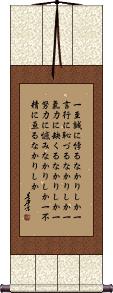
These are the “Five Reflections” of Vice Admiral Hajime Matsushita of the Japanese Imperial Navy.
These days, the Five Reflections are recited or contemplated daily by Japan Maritime Self-Defense Force recruits in training. This long proverb is popularly translated into English this way:
Hast thou not gone against sincerity?
Hast thou not felt ashamed of thy words and deeds?
Hast thou not lacked vigor?
Hast thou not exerted all possible efforts?
Hast thou not become slothful?
Note: Because this selection contains some special Japanese Hiragana characters, it should be written by a Japanese calligrapher.
Teacher / Master / Old Sage
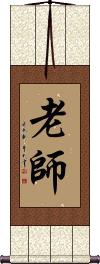
老師 directly translates as “old teacher,” “old master,” or “old sage.”
Together, they are understood as “teacher.” When you think about that, also realize that with age comes respect in Asian cultures. So calling someone old is a term of respect (not like the way we mean it in English). You could replace “old” with “respected” and be closer to how this is meant in Chinese.
Teachers, in general, are more respected by their students and the population in China. When I was a teacher in China, I certainly felt that.
This term is also used for masters of certain fields. For instance, a master calligrapher would respectfully be addressed as a “teacher.” In this case, “master” and “teacher” are synonymous.
Other artists (especially those who are famous or accomplished) should be addressed with this term. Also, some martial arts schools use this term of respect for their masters/teachers/instructors.
This title is recognized in Japanese as “roushi” with the same meaning but it’s rarely used in Japan.
Old, But More Vigorous in Spirit
Age is just a number
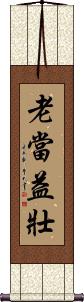
老當益壯 is a Chinese proverb that means “old but vigorous” or “hale and hearty despite the years.”
Said of someone who is more spirited when they grows older.
The story behind this Chinese proverb:
In the Eastern Han Dynasty, there was a man named Ma Yuan. He had been planning to herd animals on the frontier since he was young. When he grew up, Ma became a minor official of a county.
Once, he was sending some prisoners to another location. He felt pity for them, so he set them free, and then he fled to another county in the north. He herded animals there, and thus his dream came true. He always said: “If you want to be a great man, the poorer you are, the firmer in spirit you have to be; the older you are, the more spirited you should be.”
Later, when he was even older, Ma Yuan became a famous general of the Eastern Han Dynasty and contributed to many battles.
Not the results for Felt that you were looking for?
Below are some entries from our dictionary that may match your Felt search:
| Characters If shown, 2nd row is Simp. Chinese |
Pronunciation Romanization |
Simple Dictionary Definition |
ラシャ see styles |
raja ラジャ |
More info & calligraphy: Rasha |
フェルト see styles |
ferudo フェルド |
More info & calligraphy: Felt |
メルトン see styles |
meruton メルトン |
More info & calligraphy: Melton |
旃 see styles |
zhān zhan1 chan sen |
felt; silken banner A flag on a bent pole; to warn; translit. generally can, rarely śan, ṣan, cin, kim. |
毧 see styles |
róng rong2 jung |
down; felt |
氈 毡 see styles |
zhān zhan1 chan kamo; sen かも; せん |
felt (fabric) (See 毛氈・もうせん) carpet; rug (esp. felt) |
下敷 see styles |
shimoshiki しもしき |
(1) desk pad; sheet of plastic (or cardboard, felt, etc.) placed under writing paper; underlay; (2) being pinned under; being caught under; being trapped under; being buried under; being crushed beneath; (3) model; pattern; (surname) Shimoshiki |
差す see styles |
sasu さす |
(v5s,vi) (1) (See 射す) to shine; (v5s,vi) (2) to be visible; (v5s,vi) (3) to be tinged with; (v5s,vi) (4) to rise (of water levels); to flow in; (v5s,vi) (5) (See 気が差す,魔が差す) to be felt (i.e. as an emotion); to come over one; (transitive verb) (6) to hold up (an umbrella, etc.); to put up; to raise; (transitive verb) (7) (See 指す・5) to extend one's arm straight ahead (in dance); (transitive verb) (8) (See 挿す・1) to insert; to put in; (transitive verb) (9) (See 挿す・4) to wear (a sword) in one's belt; to wear at one's side; to carry under one's arm; (transitive verb) (10) {sumo} to insert one's arm under an opponent's arm; (transitive verb) (11) (See 刺す・4) to pole (a boat); (transitive verb) (12) (See 注す・1) to pour; to add (liquid); to serve (drinks); (transitive verb) (13) (See 点す・2) to put on (lipstick, etc.); to apply; to colour; to dye; (transitive verb) (14) to light (a fire); to burn; (transitive verb) (15) (See 鎖す) to shut; to close; to lock; to fasten; (suf,v5s) (16) (after the -masu stem of a verb) (See 止す) to stop in the midst of; to leave undone |
所受 see styles |
suǒ shòu suo3 shou4 so shou shoju |
that which is felt (experienced, etc.) |
整音 see styles |
seion / seon せいおん |
(1) audio editing (to remove noise, adjust volume, etc.); audio post-production; (2) voicing (adjustment of a piano's tone by manipulating the felt of the hammers) |
敵愾 敌忾 see styles |
dí kài di2 kai4 ti k`ai ti kai |
hatred felt toward one's enemies |
毛氈 毛毡 see styles |
máo zhān mao2 zhan1 mao chan mousen / mosen もうせん |
felt carpet; rug (esp. felt) |
氈子 毡子 see styles |
zhān zi zhan1 zi5 chan tzu |
felt (fabric) |
氈靴 毡靴 see styles |
zhān xuē zhan1 xue1 chan hsüeh |
felt boots; valenki (traditional Russian footwear) |
水松 see styles |
miru みる |
(kana only) stag seaweed (Codium fragile); green sea fingers; dead man's fingers; felty fingers; forked felt-alga; sponge seaweed; green sponge; green fleece; oyster thief; (female given name) Miru |
海松 see styles |
miru みる |
(kana only) stag seaweed (Codium fragile); green sea fingers; dead man's fingers; felty fingers; forked felt-alga; sponge seaweed; green sponge; green fleece; oyster thief; (surname, female given name) Miru |
深切 see styles |
shēn qiè shen1 qie4 shen ch`ieh shen chieh shinsetsu しんせつ |
deeply felt; heartfelt; sincere; honest (out-dated kanji) (noun or adjectival noun) kindness; gentleness |
無感 see styles |
wú gǎn wu2 gan3 wu kan |
not felt or perceived; to feel nothing about; indifferent; unimpressed |
畫氈 画毡 see styles |
huà zhān hua4 zhan1 hua chan |
felt desk pad for calligraphy |
痛切 see styles |
tòng qiè tong4 qie4 t`ung ch`ieh tung chieh tsuusetsu / tsusetsu つうせつ |
(literary) deeply felt; heartfelt (esp. involving grief or remorse) (noun or adjectival noun) keen; acute; heartfelt |
羅紗 see styles |
rasha らしゃ |
(ateji / phonetic) (kana only) felt (por: raxa); woollen cloth |
脈門 脉门 see styles |
mài mén mai4 men2 mai men |
inner side of the wrist, where the pulse is felt |
針氈 针毡 see styles |
zhēn zhān zhen1 zhan1 chen chan |
needle felting (craft); piece of felt used as a pincushion |
閨情 闺情 see styles |
guī qíng gui1 qing2 kuei ch`ing kuei ching |
women's love; passion (felt by lady) |
お釜帽 see styles |
okamabou / okamabo おかまぼう |
(obscure) bowler hat; felt hat |
ソフト see styles |
sofuto ソフト |
(adj-na,adj-no) (1) (ant: ハード・1) soft; (2) (abbreviation) {comp} (See ソフトウエア) software; (3) (abbreviation) (See ソフト帽) soft hat; felt hat; (4) (abbreviation) (See ソフトクリーム) soft serve ice cream; (5) (abbreviation) (See ソフトボール) softball |
七種衣 七种衣 see styles |
qī zhǒng yī qi1 zhong3 yi1 ch`i chung i chi chung i shichishu e |
The seven kinds of clothing, i.e. of hair, hemp, linen, felt, fine linen, wool, or silk. |
下敷き see styles |
shitajiki したじき |
(1) desk pad; sheet of plastic (or cardboard, felt, etc.) placed under writing paper; underlay; (2) being pinned under; being caught under; being trapped under; being buried under; being crushed beneath; (3) model; pattern |
中折れ see styles |
nakaore なかおれ |
(1) (abbreviation) (See 中折れ帽子) felt hat; fedora; trilby; (noun/participle) (2) stopping in the middle; being interrupted in the middle; being broken in the middle; (noun/participle) (3) (slang) prematurely going soft during intercourse |
中折帽 see styles |
nakaorebou / nakaorebo なかおれぼう |
felt hat |
Click here for more Felt results from our dictionary
The following table may be helpful for those studying Chinese or Japanese:
| Title | Characters | Romaji (Romanized Japanese) | Various forms of Romanized Chinese | |
| Felt | 費爾特 费尔特 | fèi ěr tè fei4 er3 te4 fei er te feierte | fei erh t`e feierhte fei erh te |
|
| Felt | フェルト | feruto | ||
| Five Reflections Gosei | 一至誠に悖るなかりしか一言行に恥づるなかりしか一氣力に缺くるなかりしか一努力に憾みなかりしか一不精に亘るなかりしか | shi se i ni moto ru na ka ri shi ka? gen kou ni ha zu ru na ka ri shi ka? ki ryo ku ni ka ku ru na ka ri shi ka? do ryo ku ni u ra mi na ka ri shi ka? bu sho u ni wa ta ru na ka ri shi ka? shi se i ni moto ru na ka ri shi ka? gen ko ni ha zu ru na ka ri shi ka? ki ryo ku ni ka ku ru na ka ri shi ka? do ryo ku ni u ra mi na ka ri shi ka? bu sho u ni wa ta ru na ka ri shi ka? | ||
| Teacher Master Old Sage | 老師 老师 | lǎo shī / lao3 shi1 / lao shi / laoshi | lao shih / laoshih | |
| Old, But More Vigorous in Spirit | 老當益壯 老当益壮 | lǎo dāng yì zhuàng lao3 dang1 yi4 zhuang4 lao dang yi zhuang laodangyizhuang | lao tang i chuang laotangichuang |
|
| In some entries above you will see that characters have different versions above and below a line. In these cases, the characters above the line are Traditional Chinese, while the ones below are Simplified Chinese. | ||||

Successful Chinese Character and Japanese Kanji calligraphy searches within the last few hours...



