Many custom options...


And formats...



Faith Above All in Chinese / Japanese...
Buy a Faith Above All calligraphy wall scroll here!
Personalize your custom “Faith Above All” project by clicking the button next to your favorite “Faith Above All” title below...
Switched to secondary search mode due to lack of results using primary.
These secondary results may not be very accurate. Try a different but similar meaning word or phrase for better results. Or...
Look up Faith Above All in my Japanese Kanji & Chinese Character Dictionary(My dictionary is a different system then the calligraphy search you just tried)
If you want a special phrase, word, title, name, or proverb, feel free to contact me, and I will translate your custom calligraphy idea for you.
1. Aiki Budo
2. Akita Dog / Akitainu / Akita Inu
3. ...And this above all to thine own self be true
4. Angel
6. Badger
7. Believe
10. Big Wave
11. Rank Holder
12. Brahmavihara - The Four Immeasurables
13. Christian Friend
15. Chung Do Kwan
16. Confidence / Faithful Heart
17. Confucius: Golden Rule / Ethic of Reciprocity
18. Corinthians 13:4
20. Destiny / Fate
21. Devotion / Dedication / Attentive / Focused
22. Devotion / Diligence / Vigorous / Energetic
23. Religious Devotion / Faith in God / Religious Faith
24. Doctor
25. Dogen
26. Duty / Responsibility / Obligation
27. Eishin-Ryu
28. Faith / Trusting in the Unseen
29. Faith is the bird that feels the light when the dawn is still dark
30. Faith Hope Love
31. Faith Love Peace
32. Faith
34. Fidelity / Personal Integrity / Honor
35. Five Elements Tai Chi Fist
36. Soccer / Football / Futbol
39. Good Good Study, Day Day Up
40. Good Intentions / Good Will / Good Faith
41. Grace
42. Grace from Heaven / Grace from God
43. Guanxi
44. Haidong Gumdo
45. Happy / Laughter / Cheerful Bliss
47. Heaven
50. Faithful / Honorable / Trustworthy / Fidelity / Loyalty
51. Honesty
53. Hope
54. Hyo-Jung
55. Iron Palm
56. Christ
57. Jobin
58. John 3:16
59. Johrei / Jyorei
60. Joshua 24:15
61. Jung Sim Do
62. Justice / Rectitude / Right Decision
63. Kanbukan
64. Kansei Engineering / Sense Engineering
65. Karma
67. Katana
68. Kendo / The Way of the Sword
70. Firm Belief / Strong Faith
72. Kyuki-Do
73. Life Energy / Spiritual Energy
74. Lion Judo
75. Live Laugh Love
78. Martial Arts
79. Mercy / Compassion / Buddhist Loving Kindness
80. Mi Guk Kwan
82. Ng
83. Nichiren
84. There is no god but Allah, and Muhammad is His Messenger
85. One
86. Overcome / Surpass / Rise Above
87. Perseverance
88. Undaunted After Repeated Setbacks
89. Proud / Pride / Lofty-Minded
90. Pure Land / Jodo
92. Ronin / Masterless Samurai
93. Sacrifice / Devotion / Dedication
94. Sangha
95. Self-Confidence
97. Faith Dojo
Aiki Budo
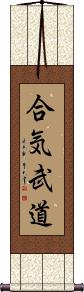
合気武道 is the title Aiki-Budo or “Aiki Martial Arts” in Japanese Kanji.
合 means “union” or “harmony.”
気/氣 means “universal energy” or “spirit.”
武 means “martial” or “military.”
道 means “way” or “method.”
合気武道 is the modern Japanese way to write this. You may also see 合氣武道, where the second character is written in the older traditional (pre-1945) form. If you want this written 合氣武道, just include a note or email with your order.
合氣武道 are all Chinese characters as well, so I included the Chinese pronunciation above. However, while it can be understood in Chinese, this is not a common term in that language and is not used in any Chinese martial arts. Also, 気 is only used in Japan - Chinese will understand 気 to be the Japanese form of 氣.
See Also: Martial Arts | Hapkido
Akita Dog / Akitainu / Akita Inu
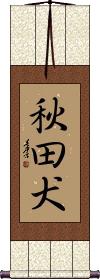
鞦田犬 is the Japanese title of the breed of dog known as an Akita.
Technically, the title above means “Akita hound” or “Akita Dog.” The literal translation of these characters is “autumn field dog.”
Note: This title is Japanese only. In China, this breed of dog is referred to as "The Japanese breed" (literally: Japanese hound).
Chinese title: 


...And this above all to thine own self be true
A line from Shakespeare's Hamlet
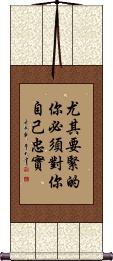
尤其要緊的你必須對你自己忠實 is the classic translation of a line from Shakespeare's Hamlet into Chinese.
Angel
(Name - Version 2)
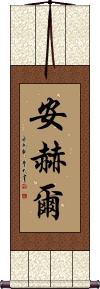
安赫爾 is another common transliteration to Mandarin Chinese for the name Angel.
This one misses the mark too - It uses a hard “H” sound to simulate the “J” sound of the “G” in this name. I don't know who transliterated these first and how it became the standard.
Again, I recommend using the meaning of Angel above.
If anything, this is the more masculine form of Angel. This is also the form commonly used for the masculine Latin name Ángel.
Great Expectations
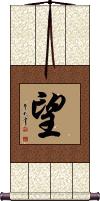
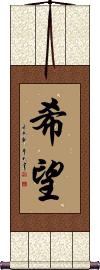
望 holds the ideas of ambition, hope, desire, aspiring to, expectations, looking towards, to gaze (into the distance), and in some contexts, full moon rising.
望 is one of those single characters that is vague but in that vagueness, it also means many things.
望 is a whole word in Chinese and old Korean but is seldom seen alone in Japanese. Still, it holds the meanings noted above in all three languages.
Badger
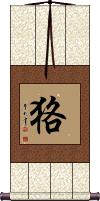
狢 is a Japanese word that means badger or “raccoon dog” (Nyctereutes procyonoides).
I have included the Chinese and Korean pronunciations above. However, this character is rarely used character in modern Chinese and Korean.
Believe
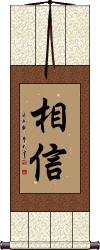
相信 is the Chinese way to say believe.
This specifically means to be convinced that something is true or to accept something as true or real.
This can also be translated as “convinced of,” “have trust in,” or “have faith in.”
Believe / Faith / Trust
śraddhā
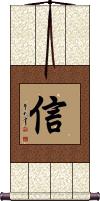
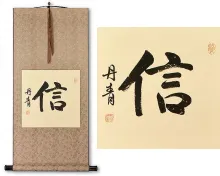
信 can mean to believe, truth, faith, fidelity, sincerity, trust, and confidence in Chinese, old Korean Hanja, and Japanese Kanji.
This single character is often part of other words with similar meanings.
It is one of the five basic tenets of Confucius.
In Chinese, it sometimes has the secondary meaning of a letter (as in the mail) depending on context but it will not be read that way when seen on a wall scroll.
In the Buddhist context, this is śraddhā (faith through hearing or being taught).
Believe in Yourself
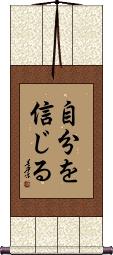
自分を信じる means “believe in yourself,” “have faith in yourself,” or “believe in myself” (can be myself or yourself depending on if you're saying it to yourself or someone else).
Note: Because this selection contains some special Japanese Hiragana characters, it should be written by a Japanese calligrapher.
Big Wave
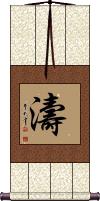
濤 is the Chinese character for “Big Wave.”
It suggests a wave unlike most, strong and powerful.
濤 is technically also a Japanese Kanji, and Korean Hanja but it's not commonly used in those Asian languages. Pronunciation in Japanese and Korean is provided above for reference only. Just order this if your audience is Chinese.
Rank Holder
The one who has achieved rank in martial arts
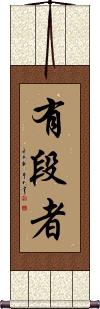
有段者 is a Japanese term for someone who holds rank in karate, judo, etc.
This term theoretically applies to anyone with rank (above a white belt). However, some schools or dojos may reserve this title for a holder of a black belt.
I'd suggest that you only order this phrase if you have honestly reached this level.
This title does kind of make sense in Chinese but only to those Chinese who practice “kong shou dao” (karate) or when used in the context of martial arts.
Brahmavihara - The Four Immeasurables
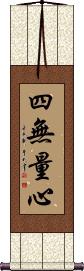
四無量心 is the cattāri brahmavihārā or catvāri apramāṇāni.
The four immeasurables, or infinite Buddha-states of mind. These four dhyānas include:
1. 慈無量心 boundless kindness, maitrī, or bestowing of joy or happiness.
2. 悲無量心 boundless pity, karuṇā, to save from suffering.
3. 喜無量心 boundless joy, muditā, on seeing others rescued from suffering.
4. 捨無量心 limitless indifference, upekṣā, i.e., rising above these emotions or giving up all things.
Christian Friend
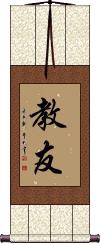
Depending on the context, 教友 can mean Christian or “friend of the same religion.”
While technically, it could be any religion, this is used mainly within the Christian faith. You can also translate this as “Christian friend” and, in some cases, “Church member.”
Christianity / Christian
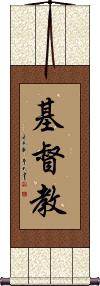
基督教 is the Chinese, Japanese and Korean word for “Christianity.”
Just as in English, this word is often used to mean “Protestant” but includes Catholics in the true definition.
It is the word used to refer to the whole “Christian religion” or “Christian Faith,” and therefore, it can be translated as “Christianity.” However, used as an adjective in regard to a person, it would translate as “Christian.” But more like saying, “His religion is Christianity,” rather than a noun form.
If you break it apart, the characters mean Base/Foundation Leading/Supervising Religion/Teaching. It makes more sense in Japanese, Chinese, and Korean. The first two characters together are translated as “Christ.” So you can also say this means “Christ's Religion” or “Christ's Teachings” when directly translated, or in reverse, “The Religion of Christ” or “The Teaching of Christ.”
Notes: The last character has a slight difference in one stroke - however, in calligraphic form, this will not be apparent. This entry can easily be read by any Korean person who knows Hanja characters (Chinese characters used in Korean).
See Also: Jesus Christ | God of Abraham
Chung Do Kwan
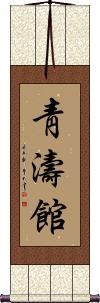
靑濤館 is the Korean martial arts style, Chung Do Kwan, meaning “Blue Wave School.”
If you want this in modern Korean Hangul characters, click on the Hangul next to the Korean flag above instead of the button above.
Also Romanized as “Cheong Do Gwan” or “Ch'ŏng Do Kwan.”
Confidence / Faithful Heart
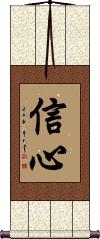
信心 is a Chinese, Japanese, and Korean word that means confidence, faith, or belief in somebody or something.
The first character means faith, and the second can mean heart or soul. Therefore, you could say this means “faithful heart” or “faithful soul.”
In Korean especially, this word has a religious connotation.
In the old Japanese Buddhist context, this was a word for citta-prasāda (clear or pure heart-mind).
In modern Japan (when read by non-Buddhists), this word is usually understood as “faith,” “belief,” or “devotion.”
See Also: Self-Confidence
Confucius: Golden Rule / Ethic of Reciprocity
Do not do to others what you do not want done to yourself
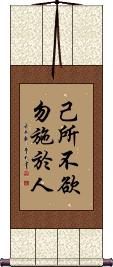
Some may think of this as a “Christian trait,” but actually, it transcends many religions.
This Chinese teaching dates back to about 2,500 years ago in China. Confucius had always taught the belief in being benevolent (ren), but this idea was hard to grasp for some of his students, as benevolence could be kind-heartedness or an essence of humanity itself.
When answering Zhong Gong's question as to what "ren" actually meant, Confucius said:
己所不欲勿施于人 or "When you go out, you should behave as if you were in the presence of a distinguished guest; when people do favors for you, act as if a great sacrifice was made for you. Whatever you wouldn't like done to you, do not do that thing to others. Don't complain at work or home.”
Hearing this, Zhong Gong said humbly, “Although I am not clever, I will do what you say.”
From this encounter, the Chinese version of the “Golden Rule” or “Ethic of Reciprocity” came to be.
The characters you see above express, “Do not do to others whatever you do not want to be done to yourself.”
See Also: Confucius Teachings | Benevolence
Corinthians 13:4
All you need to know about LOVE
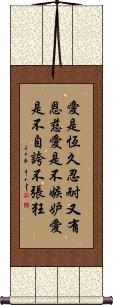
愛是恆久忍耐又有恩慈愛是不嫉妒愛是不自誇不張狂 is 1st Corinthians 13:4 in Chinese.
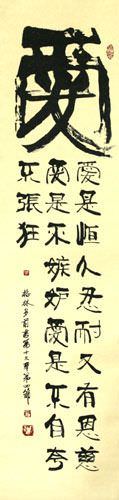
With large “love” character added.
In English, this reads:
1st Corinthians 13:4 (KJV) Charity suffereth long, and is kind; charity envieth not; charity vaunteth not itself, is not puffed up...
1st Corinthians 13:4 (NIV) Love is patient, love is kind. It does not envy, it does not boast, it is not proud.
1st Corinthians 13:4 (Basic English) Love is never tired of waiting; love is kind; love has no envy; love has no high opinion of itself, love has no pride.
The Chinese translation follows the love meaning, rather than the King James' use of “charity.” I was a little confused when writing this description with the significant differences between the NIV vs. KJV translations. After speaking to a Greek scholar about this, it would seem that the KJV has an almost errant translation with the use of “charity” in place of “love.”
We used the most popular Christian Chinese Bible, which is the Chinese Union Version (CUV). The CUV was first published in 1919. We use this so that the Chinese translation would be as accurate and standard as possible. Any Chinese Christian worth their salt will easily be able to identify this verse when they see these characters.
If you want a big “love” character written above the verse on your artwork, just make a note in the “special instructions” tab when you are customizing your artwork. There is no extra charge for that service on this special verse.
Corinthians 13:4

愛は忍耐強い。愛は情け深い。ねたまない。愛は自慢せず、高ぶらない。is 1st Corinthians 13:4 in Japanese.
In English, this reads:
1st Corinthians 13:4 (KJV) Charity suffereth long, and is kind; charity envieth not; charity vaunteth not itself, is not puffed up...
1st Corinthians 13:4 (NIV) Love is patient, love is kind. It does not envy, it does not boast, it is not proud.
1st Corinthians 13:4 (Basic English) Love is never tired of waiting; love is kind; love has no envy; love has no high opinion of itself, love has no pride.
If you want a big “love” character written above the verse on your artwork, just make a note in the “special instructions” tab when you are customizing your artwork. There is no extra charge for that service on this special verse.
Note: Because this selection contains some special Japanese Hiragana characters, it should be written by a Japanese calligrapher.
Frightful Demon / Asura
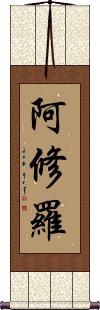
This demon title comes from the ancient Sanskrit word Asura.
阿修羅 is often used in Buddhism when describing various demons. Sometimes defined as “Fighting and battling a giant demon.”
In the context of Buddhism: This title originally meant a spirit, spirits, or even the gods (perhaps before 1700 years ago). It now generally indicates titanic demons, enemies of the gods, with whom, especially Indra, they wage constant war. They are defined as “not devas,” “ugly,” and “without wine.” There are four classes of asuras, separated according to their manner of rebirth. They can be egg-born, womb-born, transformation-born, and spawn- or water-born. Their abode is in the ocean, north of Sumeru but certain of the weaker dwell in a western mountain cave. They have realms, rulers, and palaces, as have the devas.
In terms of power, Asuras rank above humans but below most other deities. They live near the coastal foot of Mount Sumeru (on the northern side). Their domain is partially or wholly in the ocean.
Destiny / Fate
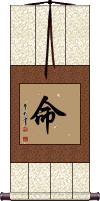
命 is often translated as “destiny.”
Sometimes this character is simply translated as “life” but more in terms of one's lot in life. In a certain context, this can mean command or decree (generally from a king or emperor). Of course, such a decree is part of fate and leads you to fulfill your destiny.
In Chinese, this word leans toward the fate or destiny definition.
In Korean, it is usually read simply as “life.”
In Japanese, it can mean all definitions shown above, depending on context.
See Also: Good Fortune
Devotion / Dedication / Attentive / Focused
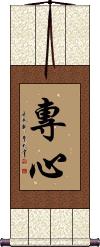
專心 makes a word that means “paying attention with your heart.”
It's often translated as “dedication,” as in “be absorbed in” or “concentrate one's efforts.” It's also used to mean “with the single mind,” “whole-heartedly,” “paying attention,” “undivided attention,” “concentration (-ed),” “engrossed,” “devotionally (listening/watching),” and/or “attentive.”
The first character means “for a particular person, occasion, or purpose,” “focused on one single thing,” “concentrated,” and sometimes, “special.”
The second character means “heart” or “mind” by itself.
My favorite translation, which comes from the Oxford Advanced Chinese/English Dictionary, is, “wholehearted devotion.”
If it seems like the meaning of this word is quite open, you are correct. The context in which the word is used matters a lot. It can mean different things depending on how you use it. This makes it kind of nice as you can decide what this means to you (within some limits). This is always positive in meaning, so even if a Chinese person reads it differently than you, it will still have a good meaning.
 In Japanese, they tend to use a variation of the second character which has one less stroke. If you want your calligraphy written this Japanese form, please click on the Kanji shown to the right instead of the button above. Note: Japanese and Chinese people will recognize either form.
Devotion / Diligence / Vigorous / Energetic
vīrya
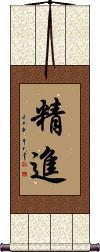
精進 is a wide-ranging word that is used in Chinese, Japanese, and Korean.
It can mean devotion, diligence, concentration, aggressive, enterprising, vigorous, energetic, purification, pushing, asceticism, assiduity, or virility. 精進 is deep, and these two characters can express ideas that take a full English phrase to describe, such as “concentration of mind,” “to forge ahead vigorously,” or “to dedicate oneself to progress.”
Used in the context of Buddhism, it means “making earnest efforts to cultivate virtue and get rid of evil” or “zeal in one's quest for enlightenment.”
Religious Devotion / Faith in God / Religious Faith
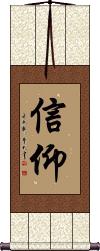
信仰 means firm belief, faith, persuasion, conviction, and sometimes religion or creed in Chinese, Japanese Kanji, and old Korean Hanja.
This clearly fits the religious connotation of the English word “devotion.”
This is often used to refer to a person of faith or a religious person.
This can be directly translated as “firm belief,” “creed,” “conviction,” or simply as “religious,” depending on context.
Some will also use this to mean “trust in God” in Japanese (though the term for God is not actually in this title).
It should be noted that this word is a little strange alone on a wall scroll.
While this can be pronounced in Japanese, it’s not a great selection for a wall scroll if your audience is Japanese.
See Also: Faith | Trust | Devotion | Trust | Trust in God
Doctor
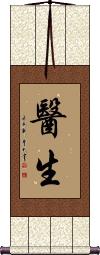
醫生 is the title used to refer to medical doctors or physicians in China.
Note: Sometimes, this same term is used in Korean, but not common.
The meaning is close to “healer [of] life” as the first character, 醫, can mean medicine, the healing art, healing, curing, medical, to cure, or to treat. The second character, 生, means birth or life.

 In Japan, they use a simplified version of the first character (医生 is also used as the Simplified Chinese version of Doctor). If you want this version, please click the characters to the right instead of the button above.
Dogen
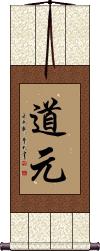
Usually, when people are looking for 道元 or “Dogen,” they are referring to the Japanese Zen monk by this name.
He lived from 1200-1253. This Dogen name or title literally means “The Way Origin” or “Beginning of the Path.” It is understood to mean “beginning of right doctrine or faith” in the context of his name and work to establish the Sōtō school of Zen in Japan.
To accomplish that task, this humble monk traveled from Japan and across China to find the more original or pure forms of Buddhism.
Duty / Responsibility / Obligation
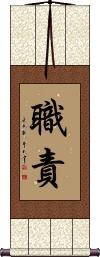
職責 is a Chinese and Korean word that means duty or responsibility.
If you have a sense of duty or sense of responsibility, this might be the wall scroll that you want to hang above your desk. It is a great way to quietly remind yourself to take pride in your duties at all times.
In a different context, this can mean “official duties” or “position.”
Eishin-Ryu
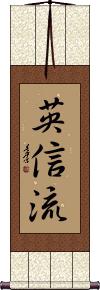
英信流 is the Japanese martial arts term, Eishin-ryu.
This can also be pronounced Hidenobu-ryu. The direct meaning is something like, hero faith school (or school of heroic faith).
Faith / Trusting in the Unseen
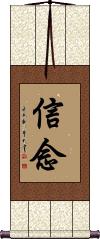
信念 expresses the idea of “having a belief” or “trusting in the unseen.”
信念 could also be translated as beliefs or convictions.
Note: Also considered to be one of the Seven Heavenly Virtues.
See Also: Devotion | Dedication | Trust
Faith is the bird that feels the light when the dawn is still dark
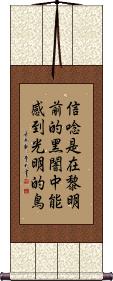
信唸是在黎明前的黑闇中能感到光明的鳥 is a philosophical poem/quote from Indian Poet and Philosopher, Rabindranath Tagore.
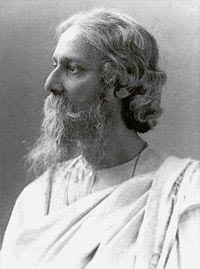
Rabindranath Tagore, 1915
This quote is not sourced, and therefore several variations exist in English. Some suggest the original was in the Bengali language.
This, of course, is the Chinese translation that has the meaning of, “Faith is the bird that feels the light and sings when the dawn is still dark.”
More about Rabindranath Tagore
Faith Hope Love
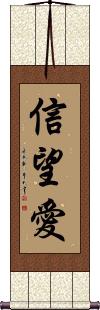
信望愛 is a Chinese list of words meaning faith, hope, and love.
This is not a typical phrase in Chinese but rather just random words strung together. There's no bad meaning, it's just not typical Chinese grammar.
Faith Hope Love
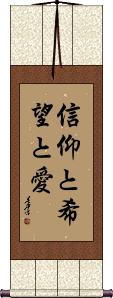
信仰と希望と愛 is a Japanese list of words (not really a phrase) meaning faith, hope, and love.
Some have associated this word list with Corinthians 13:13, though there are no specific religious connotations in this word list, and it's not directly from that Japanese Bible verse.
Note: Because this selection contains some special Japanese Hiragana characters, it should be written by a Japanese calligrapher.
Faith Love Peace
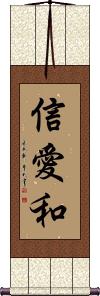
信愛和 is a word list that reads, “Faith Love Peace.”
This is not a natural phrase in Chinese or Japanese, as it lacks a subject, verb, or object. But if this is what you want, here it is.
Faith
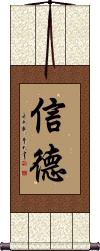
信德 is a term used often in Buddhism to express faith.
信德 is sometimes translated as the merit of the believing heart, faith of virtue, the power of faith, or virtuous faith.
In this context:
信 = Faith
德 = Virtue
Family Over Everything
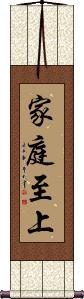
家庭至上 is a Chinese phrase that means “family above all else.”
The first two characters mean family, household, or home (they will be read as “family” in this case).
The last two characters mean supreme, paramount, or above all else.
Fidelity / Personal Integrity / Honor
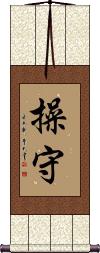
操守 is the Chinese and Japanese Kanji for personal integrity, constancy, fidelity, and honor/honour.
The original meaning of the first character is chastity, fidelity, honor, and/or faith.
The second character means to defend, guard, keep watch, and be observant.
So, this is about being observant of and guarding your integrity and honor.
Five Elements Tai Chi Fist
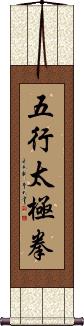
五行太極拳 is a certain school or style of Tai Chi (Taiji).
The characters literally mean “Five Elements Tai Chi Fist.”
Notes:
In Taiwan, it would be Romanized as “Wu Hsing Tai Chi Chuan” - see the standard Mandarin method above in the gray box (used in mainland China and the official Romanization used by the Library of Congress).
The last three characters are sometimes translated as “Grand Ultimate Fist,” so the whole thing can be “Five Elements Grand Ultimate Fist” if you wish.
I have not confirmed the use of this title in Korean but if it is used, it's probably only by martial arts enthusiasts. The pronunciation is correct, as shown above for Korean.
Soccer / Football / Futbol
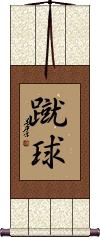
蹴球 is the title for football or soccer in Japanese Kanji and old Korean Hanja.
The sport is very popular in both Japan and Korea (Korea and Japan co-hosted the football World Cup in 2002 - a world-class sporting event held every four years that rivals the Olympics).
In Japan, they sometimes say サッカ (sakka) or フットボール (futto bouru) in place of the pronunciation shown above. 蹴球 is supposed to sound like the English word soccer and football/futbol respectively.
The first Kanji means kick and the second means ball. So technically, this means “kick ball” in Japanese and Korean (this is just an educational note - this will always be understood as the game of soccer/football).
FYI: This game would never be confused with American Football in Japan or Korea. Unlike the game of American basketball and baseball (both quite popular in Japan and Korea), there is only a vague awareness of a rugby-like game that is also called football in the USA.
Fragrant / Good Smell
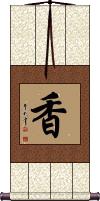
香 is the Chinese, Japanese Kanji, and old Korean Hanja that means: fragrant; sweet smelling; aromatic; savory; appetizing; perfume; incense; aroma; fragrance; scent; good smell.
Fragrance or incense is known to be one of the Buddha's messengers to stimulate faith and devotion.
Galatians 5:22-23

Here is Galatians 5:22 and a bit of 23 in Chinese.
The text with punctuation:
圣灵所结的果子,就是仁爱,喜乐,和平,忍耐,恩慈,良善,信实,温柔,节制。
Hand-painted calligraphy does not retain punctuation.
This translation is from the Chinese Union Bible.
You may know it from the KJV as:
5:22 But the fruit of the Spirit is love, joy, peace, longsuffering, gentleness, goodness, faith,
5:23 Meekness, temperance...
Good Good Study, Day Day Up
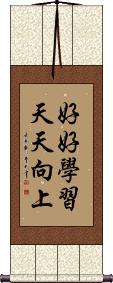
好好學習天天向上 is a famous proverb by Chairman Mao Zedong that sounds really strange when directly translated into English.
I include it in our database of phrases to illustrate how different the construction and grammar can be between Chinese and English. The direct translation is “Good Good Study, Day Day Up.” In Chinese, a repeated character/word can often serve to reinforce the idea (like saying “very” or suggesting “a lot of”). So “good good” really means “a lot of good.” While “day day” can be better translated as “day in day out.” The idea of “up” has a meaning in China of “rising above” or “improving.”
After understanding all of this, we come up with a slightly better translation of “With a lot of good study, day in and day out, we raise above.”
The more natural translation of this proverb would be something like, “study hard, and keep improving.”
Good Intentions / Good Will / Good Faith
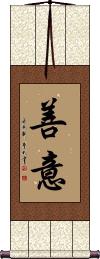
善意 is a word that means good intentions, goodwill, or to things done in good faith in Chinese, Japanese, and old Korean Hanja.
It's the reason you do good deeds or the desire you have inside yourself to do the right thing.
This can also be translated as benevolence, kindness, virtuous mind, positive mindset, or favorable sense.
善意 is also used in the legal context for things done in good faith (regardless of outcome).
In Japanese, this can be the personal name Yoshi or Yoshii.
Grace
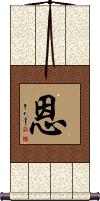
恩 is often translated as “kind act from above,” as in “The Grace of God.”
This doesn't necessarily have to come from God. It could be a favor paid to you, or help that you received (or gave). Of course, you can decide for yourself whether the grace or favor given to you by a friend is actually a gift from God.
Other possible translations of this character:
Favor / favour, acts of kindness, merits, beneficial Influence, kindness, indebtedness, obligation, and benevolent influence.
Grace from Heaven / Grace from God
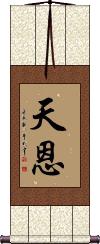
天恩 is the deepest way to say “Heaven's Grace” or “God's Grace” in Chinese.
The first character means Heaven or sky (referring, in this case, to the domain of God).
The second character means grace, blessings, benevolence, favor/favour, acts of kindness, merits, or beneficial influence.
This title can also be defined as:
Blessings of Heaven, Favor of the Emperor, Divination's luckiest day, or blessings of nature. Note: When you see “Emperor” above, remember that the Emperor, like the Pope, is theoretically chosen by God or seen as an emissary or conduit of God in ancient Asian culture. It would only be read that way in a certain context, such as “The Emperor, in his mercy, bestowed upon him Heaven's Grace, and the prisoner was set free.”
Note: Technically, this is a Japanese word too (pronounced "ten-on") but it’s rarely used in Japan anymore. Therefore, this title is best if your audience is Chinese.
Guanxi
The Chinese Concept of Relationship and Exchange of Favors
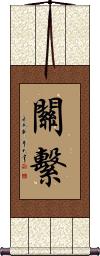
The dictionary definition is:
Relations/relationship, to concern, to affect, to have to do with, or connection.
But there's more to it...
In China, the relationship that you have with certain people can open doors for you. Having guanxi with someone also means they would never defraud you but are honor-bound to treat you fairly (of course, this goes both ways). Sometimes it is suggested that guanxi is the exchange of favors. 關繫 / 関繫 / 關係 is more about having a relationship that allows you to ask for and expect favors without shame.
There is no concept in western culture that exactly matches guanxi, but perhaps having a social or professional network is similar.
Note that there are some variations common within Chinese, Japanese Kanji, and Korean Hanja for this word... Japanese tend to use a Chinese alternate form as shown to the right for
the first character.
 There's also another alternate form of that first character (currently used as the official Simplified form in mainland China) which looks like the character shown to the right. It's basically the central radical of the alternate version shown above but without the “door radical” around it. In more free-flowing calligraphy styles, this version would be the likely choice for a calligrapher.
 In Modern Japanese, they use the character shown to the right.
They also tend to use this same form in Korean Hanja (I've only checked this word in my Korean dictionary, but it has not been confirmed by a translator's review).
 If that was not confusing enough, there is another alternate form of that second character. See right.
An Asian calligrapher of any nationality may use these forms at their discretion. However, They would tend to stick to the most common form used in their respective languages.
If you have any preference on any of these issues, please give us a special note with your order, and we'll make sure it's done the way you want.
Haidong Gumdo
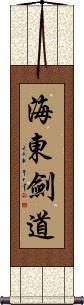
海東劍道 is the Korean martial arts style that means Eastern Sea Sword Way.
The character meanings break down this way:
海 = Sea
東 = East/Eastern
劍 = Sword
道 = Way/Path/Style/Method
This can sometimes be romanized as “Hae Dong Kum Do,” “Haidong Kendo,” “Hae Dong Geom Do,” “Haedong Geomdo,” or “Haedong Kumdo.”
If you want this written in modern Korean Hangul (해동검도) instead of Hanja (Chinese), click on the Hangul characters next to the Korean flag above, instead of the regular button.
Happy / Laughter / Cheerful Bliss
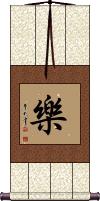
樂 is a single-character form of happiness or bliss that holds the ideas of laughing and having a good time.
This can also be translated as happy, glad, enjoyable, fun, and sometimes, music.
This a really good character if your audience is Chinese.
This is not a word seen alone very often in Korean.
 In Japanese, this character is written like the image shown to the right. If you order this from the Japanese master calligrapher, it will look like this instead of the character shown above.
Note: In Japanese, this has a meaning of comfort, ease, and enjoyment.
See Also: Joyfulness
Harusame / Spring Rain
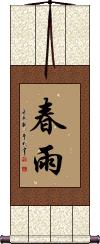
春雨 is a Japanese name that means gentle spring rain or gift from above.
It has the same meaning (and can be a given name) in Chinese.
Heaven
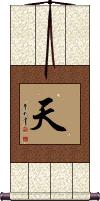
天 means “heaven” or “sky” in Chinese, Japanese Kanji, and old Korean Hanja.
The context determines if you are talking about heaven or the sky above (often they are the same concept).
When combined with other characters, words like “today” and “tomorrow” are created. While sometimes the character for “sun” is used to mean “day,” often “sky” represents “day” in Asian languages.
Example: 今天 (this sky) = “today,” 明天 (next sky) = “tomorrow” in modern Chinese and Japanese.
In Chinese culture, regardless of which religion, it's almost always assumed that God (and any other deities) live up above the sky. The concept of God living in the sky is likely the reason heaven is associated with this character.
The equation goes something like this: God's domain is the sky, thus, the sky is heaven.
Note: As a single character, this is a little ambiguous, so you might want to choose our Kingdom of Heaven selection instead.
Heavenly / Celestial
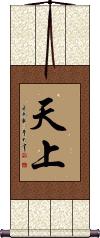
天上 is a Chinese, Japanese, and Korean word that means celestial or heavenly.
You can directly translate this as “heavens above,” or “sky above.”
Having High Principles
Do not bow down for the sake of five pecks of rice
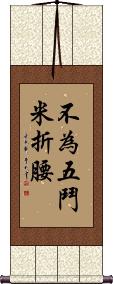
不为五斗米折腰 is a Chinese idiom/proverb that speaks of being above bribes and not losing face or honor for short-term gain.
Some may also translate the perceived meaning as “high-hearted” or “integrity beyond reproach.”
The more literal meaning is “Do not bow down for the sake of five pecks of rice.”
Faithful / Honorable / Trustworthy / Fidelity / Loyalty
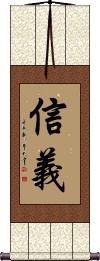
信義 is a word often used to describe a person with an honest and loyal reputation.
Simply put, this applies to somebody you can trust (with your life).
In Chinese, this is often defined as good faith, honor, trust, and justice.
In Korean, this word means fidelity, truthfulness, or faithfulness.
In Japanese: faith, fidelity, and loyalty. It's also a Japanese male given name when pronounced “Nobuyoshi.”
Honesty
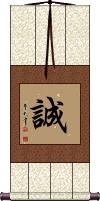
誠 means truth, faith, fidelity, sincerity, trust, and/or confidence.
As a single-character wall scroll, this suggests that you believe “honesty is the best policy,” as your personal philosophy.
This is also a virtue of the Samurai Warrior
See our page with just Code of the Samurai / Bushido here
Honesty / Fidelity
信 is another character that expresses the idea of honesty.
It can also mean truth, faith, belief in, fidelity, sincerity, trust, and/or confidence.
Some have included this in the list for the Bushido, although “makoto” is probably more common/popular.
Note: In some contexts, this character can mean a letter (mail), news, or envoy. However, alone, it will generally be read with the honesty-meaning.
See our page with just Code of the Samurai / Bushido here
See Also: Loyalty Trustworthiness Trustworthy
Hope
Hyo-Jung
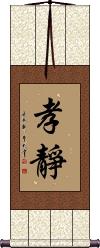
孝靜 or 효정 is the Korean given name Hyo-Jung or Hyojung.
If you want this name written in Hangul, click the Hangul characters next to the Korean flag above (instead of the big button).
Iron Palm
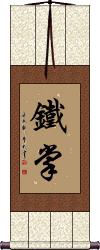
鐵掌 means “iron palm,” the martial arts technique taught by Brian Gray and others.
This term can mean different things to different people. The consensus is that rather than a type or style of martial arts, this is a technique for refining hand position and strengthening hands to strike blows with maximum force and effect.
The regime may include herbal treatments and special exercises to fortify the hands.
In more extreme versions, the carpals and metacarpal bones in the hand are systematically broken so that when they heal, they will become stronger.
Japanese note: This does make sense in Japanese (though the version shown above is the ancient form of the first Kanji), this is far from a commonly-known term.
Christ
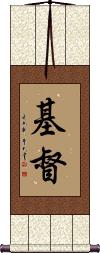
基督 is how to write “Christ” in Chinese characters, Korean Hanja, and Japanese Kanji.
This is the word used in the Chinese Union Bible (the only readily-available translation of the Bible into Chinese that I know of - published about 100 years ago). For Chinese Christians, this is the most common way to refer to Jesus Christ.
This is also the way that “Christ” is written in Japanese. But since the Japanese language is very flexible about the sounds that can be assigned to various Kanji, these characters have been assigned a pronunciation that sounds a lot like “Christ” or actually closer to the original “Christos.” In Japanese (if you don't know how the Romaji shown above in the gray box works), it sounds like “key ree sue toe” using English words/sounds. Say those four words fast, and you'll get it.
It should be noted that only Japanese Christians will be familiar with this word.
This is best defined, read, and understood with the characters together, but if you take this word for Christ apart, the first character means “fundamentals” or “foundation.” The second character can mean “leader” or “boss.”
Jobin
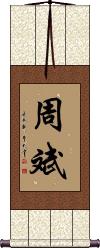
周斌 is the transliteration to Mandarin Chinese for the name Jobin.
Note if you are looking at the Romanization above: The “zh” is actually the Romanization for a soft “J” sound. And “ou” is like the English “oh.”
John 3:16

神愛世人甚至將他的獨生子賜給他們叫一切信他的不至滅亡反得永生 is the full translation of John 3:16 into Chinese.
This is from the Chinese Union Bible which comes from a revised version of the King James. This Chinese Bible was originally translated and printed in 1919 (several revisions since then).
Because of the origin being the KJV, I'll say that in English, this would be, “For God so loved the world, that he gave his only begotten Son, that whosoever believeth in him should not perish but have everlasting life.”
As with any translation, there are interesting cultural and linguistic issues. For instance, the word used for “world” in Chinese can also mean “common people.” So you could say that it means “For God so loved the common people...”
This does not take away from the text, as it will be understood with the same meaning and connotation.
There is no direct Greek-to-Chinese translation in print (that I know of), so this is the best available. Of course, you can ask any Greek person of faith, and they will claim that a bit is lost from the original Greek of the New Testament to any of the English versions of the Bible in print.
Johrei / Jyorei
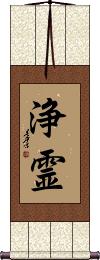
Jyorei or Johrei is a healing art that uses divine light to dissolve the spiritual impurities that are the source of all physical, emotional, and personal problems.
浄霊/浄靈 is a Japanese title that can refer to the purification of the spirit described above, but this is also the word for exorcism in Japanese.
Romanization variations include Jyorei, Johrei, Jourei and Jore. Regardless of romanization, the actual pronunciation is like "Joe Ray."
Joshua 24:15
This House Serves the LORD
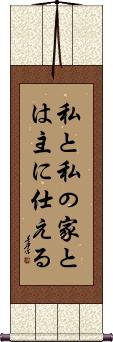
私と私の家とは、主に仕える is the last bit of Joshua 24:15 in Japanese.
Joshua 24:15 (KJV) ...as for me and my house, we will serve the LORD.
Joshua 24:15 (NIV) ...as for me and my household, we will serve the LORD.
This came from the Shinkaiyaku Japanese Bible. This is the most commonly-used Bible translation in Japan for both Protestants and Catholic Japanese folks.
I think it is a bit like having a secret code on your wall that quietly expresses to whom you are faithful.
This will be a nice gift for a friend or a wonderful expression of faith for your own home.
Note: Because this selection contains some special Japanese Hiragana characters, it should be written by a Japanese calligrapher.
Jung Sim Do
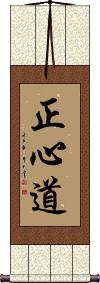
This is the Korean martial arts title Jung Sim Do.
The official romanization should be Jeong Sim Do (thought in Korean, the J is almost a "Ch" sound) and other will romanize as Jung Shin Do.
The meaning is straight/right heart way.
If you want this written in Hangul (정심도) in stead of Hanja (正心道), please click on the Hangul characters next to the Korean flag above.
Justice / Rectitude / Right Decision
Also means: honor loyalty morality righteousness
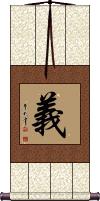
義 is about doing the right thing or making the right decision, not because it's easy but because it's ethically and morally correct.
No matter the outcome or result, one does not lose face if tempering proper justice.
義 can also be defined as righteousness, justice, morality, honor, or “right conduct.” In a more expanded definition, it can mean loyalty to friends, loyalty to the public good, or patriotism. This idea of loyalty and friendship comes from the fact that you will treat those you are loyal to with morality and justice.
義 is also one of the five tenets of Confucius's doctrine.
 There's also an alternate version of this character sometimes seen in Bushido or Korean Taekwondo tenets. It's just the addition of a radical on the left side of the character. If you want this version, click on the image to the right instead of the button above.
This is also a virtue of the Samurai Warrior
See our page with just Code of the Samurai / Bushido here
See Also: Judgment | Impartial | Confucius Tenets
Kanbukan
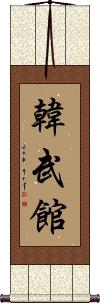
韓武館 roughly translates as “Hall of Korean Martial Arts” or “Korean Martial Hall.”
Kanbukan is one of the earliest Karate organizations established after WWII in Japan.
Note: Chinese and Korean pronunciations are included above; however, this title is only common in Japan.
Kansei Engineering / Sense Engineering
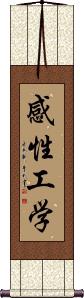
In short, 感性工學 or Kansei engineering involves collecting data on human experiences with a product and then designing or engineering improvements based on those experiences or “senses.”
Some may define Kansei as “engineering around the human experience.”
There is a lot more to know about Kansei, but if you are looking for this word, you probably already know the big picture.
Note: This term is very new in China and is only used by businesses, factories, and engineers that are implementing TQM principles. While the characters have the same base meaning in both languages, this is a Japanese title that flows back into the Chinese language (in history, most things flowed from China to Japan). To a Chinese person unfamiliar with this concept, they may interpret this as “sense vocational studies,” which doesn't make much sense. You may have to explain the intended meaning to some Chinese viewers. But that can make it a great conversation piece.
Kansei is also a newer term in Korean and is only used in certain parts of the industry, with the definition of “Sensory Engineering.” Not yet in widespread use in Korea.
Above is the modern Japanese version of this title. The last character has a Traditional Chinese version, making this 感性工學 instead of 感性工学. If you want the Traditional Chinese version, please include special instructions or email me so that I make sure the calligrapher writes the version you want.
See Also: Kaizen
Karma (of your past lives)
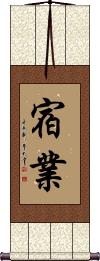
宿業 is the Buddhist concept of Past Karma. Simply put, it's the sum of all the good and bad from all previous lives (perhaps earlier in your current life). This term is not commonly used outside of the Buddhist faith (you'll have a tough time finding a non-Buddhist Asian person that knows this word).
Other ways to translate this are “The karma of previous existence,” “The karma remaining from prior existences,” or simply “Former karma.”
See Also: Buddhism
Karma - Cause and Effect
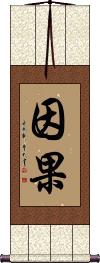
Katana
Japanese Samurai Sword
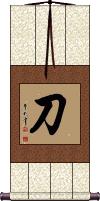
刀 is the Japanese Kanji for “sword.” This refers to the style of sword carried by warriors, samurai, and shogun of ancient Japan.
With the pacification of Japan, such swords are now only used for ceremony and decoration. The true art of sword-smithing is all but lost in Japan with new sword production dedicated to making inexpensive replicas for the tourist and foreign market.
For those of you that want to ask whether I can get you a real antique sword. Let me tell you that most real Asian swords were melted down after WWII in Japan, and during the Great Leap Forward in China. Any remaining swords are family heirlooms that nobody will part with.
Please carefully note that the Japanese kanji character shown above is only for a Japanese audience. In China, this character means “knife.” See our other entry for “sword” in Chinese.
Note: 刀 can mean knife, sword, or blade in Korean, depending on context.
See Also: Sword
Kendo / The Way of the Sword
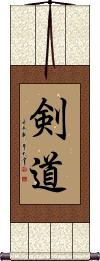
Often associated with Kenjutsu, 剱道/劍道 means “The way of the sword” in Japanese (and Korean with an alternate form of the first character).
This is also the term used for swordsmanship and even fencing in Japanese and Korean, depending on context.
Note: These same characters are also used separately in Chinese, but this exact combination yields a common title in Japanese only (perhaps someone who is really into swords would use this in China).
Note: There is more than one way to write the “sword” character (shown above is the Japanese version - if you want the Korean version, please let me know when you place your order).
Kenjutsu / Kenjitsu
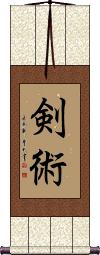
In Japanese, the modern definition, using simple terms, 剣術 is “A martial art involving swords” or “The art of the sword.”
However, in Chinese, this is the word for fencing (as in the Olympic sport).
I will suppose that you want this for the Japanese definition, which comes from skills and techniques developed in the 15th century. At that time, Kenjutsu (or swordsmanship) was a strictly military art taught to Samurai and Bushi (soldiers). The fact that swords are rarely used in military battles anymore, and with the pacification of Japan after WWII, Kenjutsu is strictly a ceremonial practice often studied as a form of martial art (more for the discipline aspect rather than practical purpose).
Language note: The Korean definition is close to the Japanese version described above. However, it should be noted that this can mean “fencing” depending on the context in Japanese, Chinese, and Korean.

 Character variation notes: There are slight variations possible with the second character. Either way is correct and understood by both Japanese and Chinese folks.
Since there are about 5 common ways to write the sword character, if you are particular about which version you want, please note that in the “special instructions” when you place your order.
Romanization note: This term is often Romanized as Kenjitsu; however, following the rules of Japanese Romaji, it should be Kenjutsu.
Firm Belief / Strong Faith
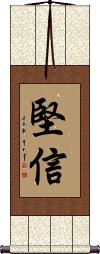
堅信 means to believe firmly, with firm faith, or without any doubt.
Japanese Christians sometimes use this term to mean the rite of confirmation.
This can also be the Japanese given name Kenshin.
Korean CKD Virtues
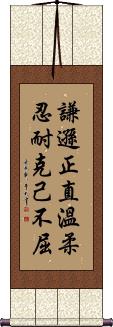
谦逊正直温柔忍耐克己不屈 are the virtues used by Choi Kwang Do Martial Arts.
| English | Hanja | Hangul | Pronunciation |
| 1. Humility (Humble / Modesty) | 謙遜 | 겸손 | gyeom son |
| 2. Honesty (Integrity) | 正直 | 정직 | jeong jig |
| 3. Gentleness | 溫柔 | 온유 | on yu |
| 4. Perseverance (To Endure) | 忍耐 | 인내 | in nae |
| 5. Self-Control (Self-Restraint) | 克己 | 극기 | geug gi |
| 6. Unbreakable Spirit (Unyielding / Unbending) | 不屈 | 불굴 | bur gur |
The characters shown here are in the ancient Korean Hanja form of writing. If you wish for a Korean Hangul form of these tenets, we can arrange that with our Master Calligrapher Xing An-Ping (click on the Hangul next to the South Korean flag above to order this in Hangul).
Kyuki-Do
Korean Martial Art
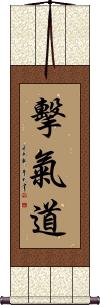
擊氣道 is the title of the Kyuki-Do form of Korean martial arts.
In Korean Hangul, it's 격기도.
While “Kyuki-Do” is the most common romanized form of this title, the official Korean romanization is actually “Gyeog Gi Do” or “Gyeoggi-Do.”
The first character means to hit, strike, attack, rout, or break.
The second means “life energy” or “atmosphere.”
The last means “the way” or “method.”
FYI: The last two characters are the same as the last two in the titles Hapkido and Aikido.
I have included Mandarin Chinese pronunciation above; However, this term would only be known by Chinese people familiar with this style of martial arts. Consider this to be a Korean-only title.
Life Energy / Spiritual Energy
Chi Energy: Essence of Life / Energy Flow
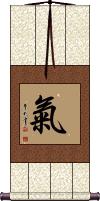
This 氣 energy flow is a fundamental concept of traditional Asian culture.
氣 is romanized as “Qi” or “Chi” in Chinese, “Gi” in Korean, and “Ki” in Japanese.
Chi is believed to be part of everything that exists, as in “life force” or “spiritual energy.” It is most often translated as “energy flow” or literally as “air” or “breath.” Some people will simply translate this as “spirit,” but you must consider the kind of spirit we're talking about. I think this is weighted more toward energy than spirit.
The character itself is a representation of steam (or breath) rising from rice. To clarify, the character for rice looks like this: 
Steam was apparently seen as visual evidence of the release of “life energy” when this concept was first developed. The Qi / Chi / Ki character is still used in compound words to mean steam or vapor.
The etymology of this character is a bit complicated. It's suggested that the first form of this character from bronze script (about 2500 years ago) looked like these samples: 

However, it was easy to confuse this with the character for the number three. So the rice radical was added by 221 B.C. (the exact time of this change is debated). This first version with the rice radical looks like this: 
The idea of Qi / Chi / Ki is really a philosophical concept. It's often used to refer to the “flow” of metaphysical energy that sustains living beings. Yet there is much debate that has continued for thousands of years as to whether Qi / Chi / Ki is pure energy or consists partially or fully of matter.
You can also see the character for Qi / Chi / Ki in common compound words such as Tai Chi / Tai Qi, Aikido, Reiki, and Qi Gong / Chi Kung.
In the modern Japanese Kanji, the rice radical has been changed into two strokes that form an X.
 The original and traditional Chinese form is still understood in Japanese, but we can also offer that modern Kanji form in our custom calligraphy. If you want this Japanese Kanji, please click on the character to the right instead of the “Select and Customize” button above.
More language notes: This is pronounced like “chee” in Mandarin Chinese, and like “key” in Japanese.
This is also the same way to write this in Korean Hanja where it is Romanized as “gi” and pronounced like “gee” but with a real G-sound, not a J-sound.
Though Vietnamese no longer use Chinese characters in their daily language, this character is still widely known in Vietnam.
See Also: Energy | Life Force | Vitality | Life | Birth | Soul
Lion Judo
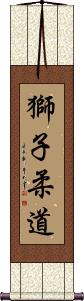
獅子柔道 is the title for Lion Judo.
This should be considered just a Japanese title, though it is pronounceable and makes sense in Chinese and Korean - so I have included the romanization for those languages above.
Live Laugh Love
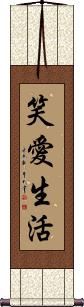
In English, the word order shown in the title is the most natural or popular. In Chinese, the natural order is a little different:
The first character means laugh (sometimes means smile).
The second character means love.
The last two characters mean “live” as in “to be alive” or “pursue life.”
Please note: 笑愛生活 is not a normal phrase in that it does not have a subject, verb, or object. It is a word list. Word lists are not common in Asian languages/grammar (at least not as normal as in English). We only added this entry because so many people requested it.
We put the characters in the order shown above, as it almost makes a single word with the meaning “A life of laughter and love.” It's a made-up word, but it sounds good in Chinese.
We removed the Japanese pronunciation guide from this entry, as the professional Japanese translator deemed it "near nonsense" from a Japanese perspective. Choose this only if your audience is Chinese and you want the fewest-possible characters to express this idea.
In Korean, this would be 소애생활 or "so ae saeng hwar" but I have not confirmed that this makes sense in Korean.
Love Faith Strength
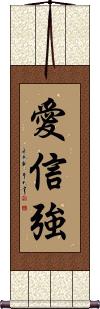
愛信強 is the shortest way to write the word list, “love faith strength.”
The first character is love, the second is faith or believe, and the third means strong or strength.
It should be noted that word lists like this are not as natural sounding in Chinese as word lists can be in English. it’s more common to have a full phrase (with subject, verb, and object) or single words on calligraphy wall scrolls in Asia.
Love Faith Strength
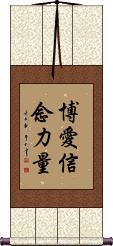
博愛信念力量 is the verbose way to write the word list, “love faith strength.”
It should be noted that word lists like this are not as natural sounding in Chinese as word lists can be in English. it’s more common to have a full phrase (with subject, verb, and object) or single words on calligraphy wall scrolls in Asia.
Loyalty / Devotion
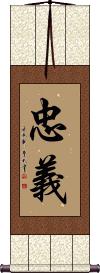
忠義 is another form of loyalty or devotion.
In Chinese, this is more specifically about being loyal and devoted to your friends.
In Japanese, this is more often used to mean loyalty to your country or nation.
Except for the slight difference noted above between Japanese and Chinese, this word is understood universally in Chinese, Japanese Kanji, and old Korean Hanja. It can also be used to describe devotion or fidelity.
It should be noted that this Kanji combination is being used less and less in modern Japan (this is a better choice if your audience is Chinese, though any Japanese person will clearly understand it).
Martial Arts
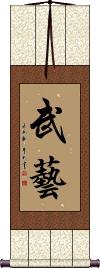
武藝 is a Korean Hanja title that means “martial arts” or “military skill.”
武藝 is also a Chinese word, but is used more often in the context of Korean martial arts.
In Korean, this is romanized as either “mu ye” or “moo ye.”
If you want to order this in modern Korean Hangul, just click the Hangul characters in the pronunciation box next to the Korean flag above.
Mercy / Compassion / Buddhist Loving Kindness
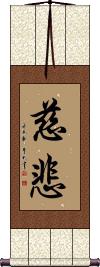
Besides the title above, 慈悲 can also be defined as clemency or lenience and sometimes the act of giving charity.
In the Buddhist context, it can be defined as “benevolence,” “loving-kindness and compassion,” or “mercy and compassion.”
This Buddhist virtue is perhaps the most important to employ in your life. All sentient beings that you encounter should be given your loving kindness. And trust me, however much you can give, it comes back. Make your life and the world a better place!
This Chinese/Japanese Buddhist term is the equivalent of Metta Karuna from Pali or Maitri Karuna from Sanskrit.
慈 can mean loving-kindness by itself.
悲 adds a component of sorrow, empathy, compassion, and sympathy for others.
See Also: Benevolence
Mi Guk Kwan
American School
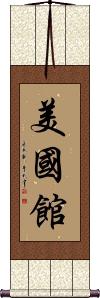
美國館 is a Korean Hanja title, which roughly means “U.S. School.”
The first two characters mean “USA” (literally: Beautiful Kingdom/Country).
The last character means “school,” “building,” and “schoolroom” in this context.
This “Mi Guk Kwan” title is used to mean “The American School of Tang Soo Do.”
If you want this in modern Korean Hangul, just click the Hangul characters in the pronunciation box next to the Korean flag above.
Better Late Than Never
It's Never Too Late Too Mend
Long ago in what is now China, there were many kingdoms throughout the land. This time period is known as “The Warring States Period” by historians because these kingdoms often did not get along with each other.
Sometime around 279 B.C. the Kingdom of Chu was a large but not particularly powerful kingdom. Part of the reason it lacked power was the fact that the King was surrounded by “yes men” who told him only what he wanted to hear. Many of the King's court officials were corrupt and incompetent which did not help the situation.
The King was not blameless himself, as he started spending much of his time being entertained by his many concubines.
One of the King's ministers, Zhuang Xin, saw problems on the horizon for the Kingdom, and warned the King, “Your Majesty, you are surrounded by people who tell you what you want to hear. They tell you things to make you happy and cause you to ignore important state affairs. If this is allowed to continue, the Kingdom of Chu will surely perish, and fall into ruins.”
This enraged the King who scolded Zhuang Xin for insulting the country and accused him of trying to create resentment among the people. Zhuang Xin explained, “I dare not curse the Kingdom of Chu but I feel that we face great danger in the future because of the current situation.” The King was simply not impressed with Zhuang Xin's words.
Seeing the King's displeasure with him and the King's fondness for his court of corrupt officials, Zhuang Xin asked permission from the King that he may take leave of the Kingdom of Chu, and travel to the State of Zhao to live. The King agreed, and Zhuang Xin left the Kingdom of Chu, perhaps forever.
Five months later, troops from the neighboring Kingdom of Qin invaded Chu, taking a huge tract of land. The King of Chu went into exile, and it appeared that soon, the Kingdom of Chu would no longer exist.
The King of Chu remembered the words of Zhuang Xin and sent some of his men to find him. Immediately, Zhuang Xin returned to meet the King. The first question asked by the King was “What can I do now?”
Zhuang Xin told the King this story:
A shepherd woke one morning to find a sheep missing. Looking at the pen saw a hole in the fence where a wolf had come through to steal one of his sheep. His friends told him that he had best fix the hole at once. But the Shepherd thought since the sheep is already gone, there is no use fixing the hole.
The next morning, another sheep was missing. And the Shepherd realized that he must mend the fence at once. Zhuang Xin then went on to make suggestions about what could be done to reclaim the land lost to the Kingdom of Qin, and reclaim the former glory and integrity of the Kingdom of Chu.
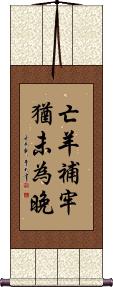
The Chinese idiom shown above came from this reply from Zhuang Xin to the King of Chu almost 2,300 years ago.
It translates roughly into English as...
“Even if you have lost some sheep, it's never too late to mend the fence.”
This proverb, 亡羊补牢犹未为晚, is often used in modern China when suggesting in a hopeful way that someone change their ways, or fix something in their life. It might be used to suggest fixing a marriage, quitting smoking, or getting back on track after taking an unfortunate path in life among other things one might fix in their life.
I suppose in the same way that we might say, “Today is the first day of the rest of your life” in our western cultures to suggest that you can always start anew.
Note: This does have Korean pronunciation but is not a well-known proverb in Korean (only Koreans familiar with ancient Chinese history would know it). Best if your audience is Chinese.
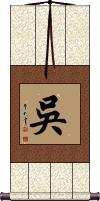
This is the surname Ng in Chinese.
吳 is sometimes romanized as Ang, Eng, Ing and Ong in the United States and Ung in Australia. In Mandarin, 吳 is usually romanized as Wu, but sometimes Woo. In Vietnamese, 吳 can be the Ngô surname.
Be careful, as 黃/黄 is another surname character that also romanizes as Ng and other variants noted above.
Nichiren
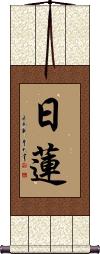
日蓮 is the title Nichiren.
This title refers to a Buddhist priest who lived from 1222 to 1282. He is the founder of the Nichiren sect of Buddhism.
According to historical documents, the Nichiren sect was established in 1252. Adding the character 宗 for sect, this would be 日蓮宗 (Nichiren sect), which is also known as the 法華宗 or Lotus sect.
According to Soothill-Hodous...
Nichiren's chief tenets are the three great mysteries 三大祕法, representing the trikāya:
1. 本尊 or chief object of worship, being the great maṇḍala of the worlds of the ten directions, or universe, i.e., the body or nirmāṇakāya of Buddha.
2. 題目 the title of the Lotus Sutra 妙法蓮華經 Myo-ho-ren-ge-kyo, preceded by Namo, or “Adoration to the scripture of the lotus of the wonderful law,” for it is Buddha's spiritual body.
3. 戒壇 the altar of the law, which is also the title of the Lotus as above; the believer, wherever he is, dwells in the Pure-land of calm light 寂光淨土, the saṃbhogakāya.
There is no god but Allah, and Muhammad is His Messenger
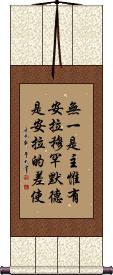
無一是主惟有安拉穆罕默德是安拉的差使 is one of the key creeds of Islam.
While perhaps more often seen in Arabic as
there are many native Chinese Muslims (especially the Hui ethnicity) that do not speak Arabic.
Instead, they use this Chinese phrase to express this idea or statement of faith.
One
The number one
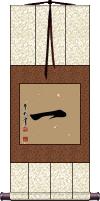
一 is “one” or “1” in Chinese, Japanese Kanji, and old Korean Hanja.
People keep searching for “one” but I'm not sure what you want. This would be a strange selection for a wall scroll, so please don't order it. Post a request on our forum if you want a phrase with “one” in it that you can't find on our site.
The “one” character is really simple, it's just one stroke. Two is two strokes and three is three strokes, from four and above, the characters get more complicated.
In some ways, the “one” character is too simple, it could be a stray mark, or added to a banking document. Therefore, the following banking anti-fraud character for “one” has developed over the last 1500 years in China and Japan:


Overcome / Surpass / Rise Above
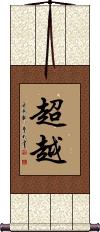
In Chinese, Japanese Kanji, and old Korean Hanja, 超越 means to overcome, surpass, transcendence, excel, exceed, go beyond, rise above, or transcend.
Perseverance
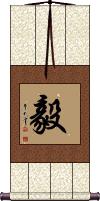
毅 is the simplest way to express perseverance in Chinese and Korean Hanja.
This single-character version leaves a bit of mystery about what kind of perseverance you might want to convey.
In Korean, this is usually associated with “strength of character.”
In Japanese, this character can be pronounced in a dozen different ways (so we have left out the Japanese pronunciation guide that normally appears above). In Japanese, this Kanji would usually be translated as “strong” (perhaps strong-willed).
Undaunted After Repeated Setbacks
Persistence to overcome all challenges
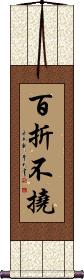
百折不撓 is a Chinese proverb that means “Be undaunted in the face of repeated setbacks.”
More directly translated, it reads, “[Overcome] a hundred setbacks, without flinching.” 百折不撓 is of Chinese origin but is commonly used in Japanese and somewhat in Korean (same characters, different pronunciation).
This proverb comes from a long, and occasionally tragic story of a man that lived sometime around 25-220 AD. His name was Qiao Xuan, and he never stooped to flattery but remained an upright person at all times. He fought to expose the corruption of higher-level government officials at great risk to himself.
Then when he was at a higher level in the Imperial Court, bandits were regularly capturing hostages and demanding ransoms. But when his own son was captured, he was so focused on his duty to the Emperor and the common good that he sent a platoon of soldiers to raid the bandits' hideout, and stop them once and for all even at the risk of his own son's life. While all of the bandits were arrested in the raid, they killed Qiao Xuan's son at first sight of the raiding soldiers.
Near the end of his career, a new Emperor came to power, and Qiao Xuan reported to him that one of his ministers was bullying the people and extorting money from them. The new Emperor refused to listen to Qiao Xuan and even promoted the corrupt Minister. Qiao Xuan was so disgusted that in protest, he resigned from his post as minister (something almost never done) and left for his home village.
His tombstone reads “Bai Zhe Bu Nao” which is now a proverb used in Chinese culture to describe a person of strong will who puts up stubborn resistance against great odds.
My Chinese-English dictionary defines these 4 characters as “keep on fighting despite all setbacks,” “be undaunted by repeated setbacks,” and “be indomitable.”
Our translator says it can mean “never give up” in modern Chinese.
Although the first two characters are translated correctly as “repeated setbacks,” the literal meaning is “100 setbacks” or “a rope that breaks 100 times.” The last two characters can mean “do not yield” or “do not give up.”
Most Chinese, Japanese, and Korean people will not take this absolutely literal meaning but will instead understand it as the title suggests above. If you want a single big word definition, it would be indefatigability, indomitableness, persistence, or unyielding.
See Also: Tenacity | Fortitude | Strength | Perseverance | Persistence
Proud / Pride / Lofty-Minded
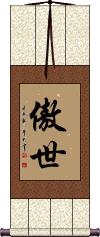
傲世 is a word used to describe someone that is very proud and holds themselves above others but with a valid (earned) reason to do so.
傲世 is what you would use to describe the way a mighty general of ancient China like Cao Cao acted or a more modern person like General Patton carried himself.
If you hang this word on your wall, it suggests that you hope to achieve that same level of pride from accomplishment.
Pure Land / Jodo
Also a sect of Buddhism
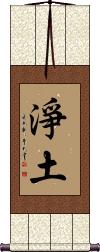
淨土 literally means “pure land” or “clean earth.”
淨土 is also the abbreviated title of a Buddhist sect that involves faith in the rebirth of Buddha Amitabha (Amitābha) in the Western Heaven. Sometimes this sect is translated as “Paradise of the West.” Other titles of this school of Buddhism include Amidism or Elysium.
See Also: Nirvana | Shin Buddhism
Reiki - Master Symbol
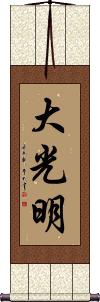
大光明 is the master symbol “Daikomyo” or “Dai Ko Myo,” which is usually associated with the healing practice of Reiki.
This title can be translated as “Great Bright Light.” This symbol, as used in Reiki, alludes to “Enlightened Nature” or the radiance of a purified soul or deity.
Pronunciations in Chinese and Korean are included above but this title has no meaning except when used by a Reiki practitioner. In fact, this title is not that well known by those outside the Reiki community in Japan.
In Chinese, this would be interpreted as “Great Bright Future” (the second two characters alone create a word that means “bright future” in Chinese).
Ronin / Masterless Samurai
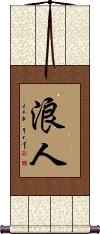
The 浪人 or Ronin have no master - The most famous are the 47 ronin created after their Lord committed suicide. This term was not a positive title for the Samurai of ancient Japan. However, in recent years, movies and video games have glorified the term Ronin.
In Chinese, this term has the original meaning of a hobo, vagabond, or ruffian.
In Korean Hanja, these characters would be read as adventurer, wanderer, someone without a steady job, or someone who is wasting away time.
In modern Japan, this term is used as a nickname for a high school student who has failed a college entry exam (and is trying again).
In Chinese and Korean, the Japanese definition of “Masterless Samurai” is known because of the historical context. Even in Japanese, the literal translation is closer to the Chinese and Korean definitions shown above.
This will make a fine wall scroll if you are a fan of the Ronin or see yourself as a Ronin of sorts. However, please think twice before getting a Ronin tattoo!
Sacrifice / Devotion / Dedication
(complete bodily devotion)
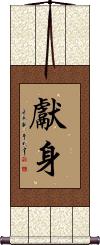
獻身 is used to describe being so devoted to something that you will make sacrifices for that goal/thing/person.
You can also translate this word as any of the following:
Sacrifice one's life for...
To dedicate oneself to...
Self-devotion
Dedication
Devote to...
Self-sacrifice
Giving your whole body to...
This can be a dedication to or for someone but is often used as a dedication or making sacrifices for your country, public service, or a cause. For instance, an Olympic athlete makes great sacrifices to train in his/her sport for their country and compatriots.

 While the form shown to the upper-left is considered an ancient Japanese version, in modern Japan, they use the simplified version of the first Kanji (shown to the right). Click on the Kanji at the right instead of the button above if you want this modern Japanese version.
If you are looking for a more religious meaning of devotion, see Faith.
See Also: Confidence | Dedication
Sangha
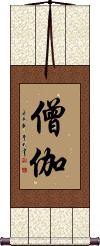
In Buddhism, 僧伽 refers to a community of monks and/or nuns (one of the “Three Jewels”). In general terms, it can simply mean “all followers of the Buddha.”
Notes: Though there are not vast numbers of Chinese Hindus, in the Hindu faith, this term means “community together.”
The original Sanskrit word is also Romanized as samgha.
The first character means “monk.” The second character means Buddha or Shakyamuni.
僧伽 is a transliteration of the original Sanskrit, but it uses two very profound Chinese characters related to Buddhism.
Some may pronounce this as “seng qie” or “seng jia” in Mandarin (two possible pronunciations for the second character). Note that “qie” sounds like “chee-ah” using typical English pronunciation. Chinese Romanization is not actually designed to match English sounds.

 Note that when writing this as Kanji, Japanese will tend to write the first character in the form shown to the right. If you select our Japanese master calligrapher, please expect this special Kanji form. However, it should also be noted that this is not a common term in Japanese (except by certain sects of Buddhism or perhaps devout Buddhists in Japan).
Self-Confidence
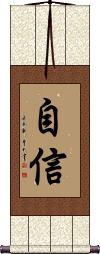
自信 is created by simply putting the character for “faith/believe/confidence” with the character for “oneself” in front of it.
The literal translation holds the same meaning in English, Chinese, and Japanese.
It's like a self-affirmation to say, “you can do it.”
Some may also use this to mean self-esteem or a sense of self-worth. 自信 is also how to say “believe in oneself.”
See Also: Confidence
Seven Heavenly Virtues
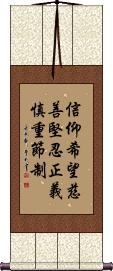
信仰希望慈善堅忍正義慎重節制 is a list in Chinese and Japanese Kanji of an interpretation of the Seven Heavenly Virtues.
1. Faith is belief in God, and the right virtues.
2. Hope is taking a positive future view that good will prevail.
3. Charity is a concern for, and active helping of, others.
4. Fortitude is never giving up.
5. Justice is being fair and equitable with others.
6. Prudence is care of and moderation with money.
7. Temperance is moderation of needed things and abstinence from things that are not needed.
The full list is here. 信仰希望慈善堅忍正義慎重節制 is a word list, not a common phrase. While all Chinese and Japanese people will recognize the words in the list, they may not understand what the list is about (unless they are familiar with the Seven Heavenly Virtues).
don’t get this as a tattoo or anything like that without first consulting a native translator in the target language. These are fine for a wall scroll but a long discussion is needed before you commit to this for a lifetime inking commitment.
Faith Dojo

Hall of the Heart / Sacred Heart

Besides the main title above, 心殿 also means “The heart or mind as a sacred hall” or “Heart Palace.”
心殿 has a Zen-influenced, introspective meaning. Popular in martial arts, meditation, or personal philosophy spaces.
The feeling of these characters is more inward and personal rather than religious.
This in-stock artwork might be what you are looking for, and ships right away...
Gallery Price: $65.00
Your Price: $39.88

Gallery Price: $61.00
Your Price: $33.88

Gallery Price: $61.00
Your Price: $33.88

Gallery Price: $61.00
Your Price: $33.88

Gallery Price: $61.00
Your Price: $33.88

Gallery Price: $61.00
Your Price: $33.88

Gallery Price: $72.00
Your Price: $39.88

Successful Chinese Character and Japanese Kanji calligraphy searches within the last few hours...



