The Name Dragon.php in Chinese/Japanese on a Personalized Wall Scroll.
Click the "Customize" button next to your name below to start your personalized Dragon.php calligraphy artwork...
Switched to secondary search mode due to lack of results using primary.
These secondary results may not be very accurate. Try a different but similar meaning word or phrase for better results. Or...
Look up Dragon.php in my Japanese Kanji & Chinese Character Dictionary(My dictionary is a different system then the calligraphy search you just tried)
If you want a special phrase, word, title, name, or proverb, feel free to contact me, and I will translate your custom calligraphy idea for you.
1. 1. Right Understanding / Right Perspective / Right View / Perfect View
3. Water Dragon
4. Wood Dragon
5. Fire Dragon
6. Earth Dragon
7. Armor
9. Black Dragon
11. Blue Dragon
12. Bruce Lee
13. Bushido Dragon
14. Celestial Dragon
15. Water Dragon / Coiled Dragon
16. Confucius: Golden Rule / Ethic of Reciprocity
17. Every Creature Has A Domain
18. Crouching Tiger Hidden Dragon
19. Doctor
21. Dragon Fist
22. The Spirit of the Dragon Horse
23. The Spirit of the Dragon Horse and Power of a Tiger
24. Dragon Lady
26. Dragon and Phoenix Brings Luck
27. The Five Animals
28. Dragon Spirit
29. The Spirit of Dragon and Tiger
30. Dragon Warrior
31. Dragon Ball Kai
33. Dragon Hall
34. Dragon Quest
35. Earth Dragon
36. Eternal Love
38. Fate / Opportunity / Chance
39. Fire Dragon
40. Five Elements
41. Flying Dragon
43. Golden Dragon
44. Green Dragon / Blue Dragon
46. Hidden Dragon Crouching Tiger
50. Home of the Auspicious Golden Dragon
51. Honor
52. Iron Dragon
53. Justice / Rectitude / Right Decision
54. Kaio-Ken
55. Kirin / Giraffe / Mythical Creature
57. Legendary Turtle
58. Leong
59. Life Energy / Spiritual Energy
60. Little Dragon
61. Lung
63. Phoenix
65. Red Dragon
66. Red Dragon / Vermillion Dragon
67. Reiki
68. Respect
69. Shen Long
71. Spirit Of The Dragon Martial Arts
72. Success
74. Sword
75. Taekwondo
76. Taotie
77. Celestial Dragon / Tian Long
78. Turtle
79. Under the Protection of the Dragon Saint
80. Water Dragon / Rain Dragon
82. White Dragon
83. Wukong / Goku
84. Wu Xing Fist
85. Yellow Dragon
87. Dragon
1. Right Understanding / Right Perspective / Right View / Perfect View
Samyag Dristhi / Samyag Drsti / Samma Ditthi
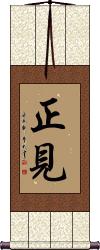
正見 is one of the Noble Eightfold Paths of Buddhism. Right View, along with the Right Thought, constitutes the path to Wisdom.
To get to the correct view of the world, you must first understand and follow Four Noble Truths.
Note: This term is exclusively used by devout Buddhists. It is not a common term, and is remains an unknown concept to most Japanese and Chinese people.
See Also: Buddhism | Enlightenment | Noble Eightfold Path
Golden/Metal Dragon
The Year of the Golden/Metal Dragon
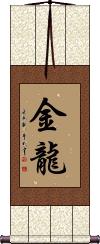
金龍 is Golden/Metal Dragon in Chinese.
In the Chinese zodiac and sexagenary (60-year) cycle, this combination occurs in years that include 1880, 1940, 2000, and 2060.
In the sexagenary cycle, this year is represented by 庚辰.
See Also: Dragon
Water Dragon
The Year of the Water Dragon
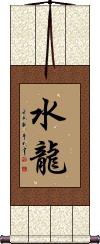
水龍 is Water Dragon in Chinese.
In the Chinese zodiac and sexagenary (60-year) cycle, this combination occurs in years that include 1892, 1952, 2012, and 2072.
In the sexagenary cycle, this year is represented by 壬辰.
See Also: Dragon
Wood Dragon
The Year of the Wood Dragon
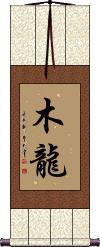
木龍 is Wood Dragon in Chinese.
In the Chinese zodiac and sexagenary (60-year) cycle, this combination occurs in years that include 1904, 1964, 2024, and 2084.
In the sexagenary cycle, this year is represented by 甲辰.
See Also: Dragon
Fire Dragon
The Year of the Fire Dragon
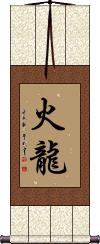
火龍 is Fire Dragon in Chinese.
In the Chinese zodiac and sexagenary (60-year) cycle, this combination occurs in years that include 1916, 1976, 2036, and 2096.
In the sexagenary cycle, this year is represented by 丙辰.
See Also: Dragon
Earth Dragon
The Year of the Earth Dragon
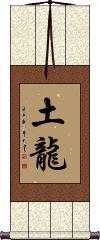
土龍 is Earth Dragon in Chinese.
In the Chinese zodiac and sexagenary (60-year) cycle, this combination occurs in years that include 1868, 1928, 1988, and 2048.
In the sexagenary cycle, this year is represented by 戊辰.
See Also: Dragon
Armor
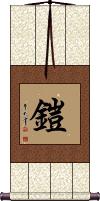
鎧 is a simple way to write armor/armour in Chinese, Japanese Kanji, and old Korean Hanja.
 This can also be Yoroi (a Japanese place name). It can also refer to mail as chain mail.
Blue Dragon / Azure Dragon
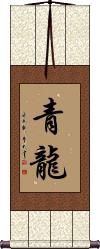
青龍 is a scholarly title for “Blue Dragon” or “Azure Dragon.”
You'll find this title used in ancient Chinese literature and astronomy. This dragon has dominion over the eastern sky or eastern heavens. The Azure Dragon is also noted for representing the spring season. Also seen as an auspicious omen.
Emperor Huizong of the Song Dynasty canonized the five colored dragons as “kings.” The Azure Dragon represents the most compassionate of kings.
In Japanese, this title is known with the same meaning but can also be a given name, Seiryuu or Seiryu.
Note, the first character can be written as  OR
OR  . Same character, just two ways to write it.
Black Dragon
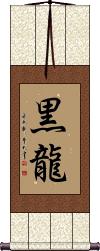
黒龍 is a generic title for “Black Dragon.”
The first character is black color.
The second means dragon.
Sometimes written as 黑龍 (just a minor variation in the first character).
Black Dragon
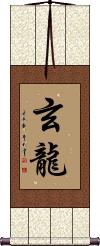
玄龍 is a sophisticated or scholarly way to say “Black Dragon.”
玄龍 is the title you'd expect in ancient Chinese literature.
The first character means black or mysterious.
The second character means dragon.
This black dragon represents a king dwelling in the depths of the mystic waters.
Black Dragon
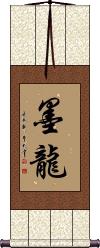
墨龍 is a cool way to say “Black Dragon.”
墨龍 is literally “Ink Dragon.” The ink part is black Chinese ink, the deepest, darkest ink available for thousands of years.
Black Dragon Ninjitsu

This is the Japanese martial arts title Black Dragon Ninjitsu or Black Dragon Ninjutsu in Kanji.
Blue Dragon
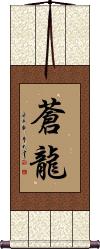
蒼龍 is one of a couple of possible titles for “blue dragon” (occasionally also translated as “green dragon”).
The first character means “deep blue” or “azure.”
The last character is dragon.
Bruce Lee
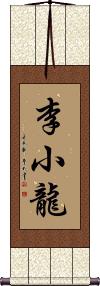
李小龍 is the real full name of Bruce Lee.
 Many people have no idea that Bruce Lee had a “real” Chinese name. In Mandarin and Cantonese, he is known as “Lǐ XiǎoLóng” and “Léi SíuLùng” respectively.
He kept his family name pronunciation (Li = Lee). 李 is a common family name that also means “plum.”
His given name 小龍 (Xiao-Long), literally means “little dragon.” 李小龍 is why you often see the character for dragon associated with Bruce Lee on various posters etc.
For a pronunciation lesson, the “X” in Romanized Mandarin is pronounced like a “sh” sound but with your tongue at the bottom of your mouth. The vowel sound in “Long” is like the English “oh,” not like the “ah” sound in the English word “long.”
If you are a big Bruce Lee fan, you should know this information, and you should have this wall scroll hanging in your room or martial arts studio.
Note: Japanese use these same Chinese characters / Kanji to write Bruce Lee's real name (with different pronunciation - which is a bit like how the name “Bruce Lee” sounds in English).
See Also: Kung Fu | Martial Arts
Bushido Dragon

This is the title Bushido Dragon in Chinese and Japanese Kanji.
In Japanese, this can also be written as 武士道竜.
Celestial Dragon
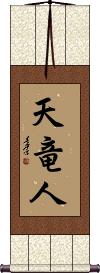
天竜人 is Celestial Dragon or Tenryūbito in Japanese.
This title is associated with the One Piece Manga/Anime series. This title is also translated in this context as “World Nobles” with the literal meaning “Heavenly Dragon Folk” or “Heaven Dragon Person/People.”
Can also be romanized as Tenryūbito, Tenryūhito, or Tenryūjin.
Water Dragon / Coiled Dragon
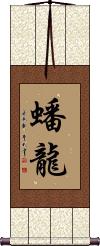
蟠龍 is sometimes seen as a lower-level of dragon or a dragon that has not-yet-reached its potential.
蟠龍 is often defined as a “lake dragon” that has not ascended to heaven.
Another way to put that is a dragon coiled on the earth, which has not yet ascended to the sky.
Confucius: Golden Rule / Ethic of Reciprocity
Do not do to others what you do not want done to yourself
Some may think of this as a “Christian trait,” but actually, it transcends many religions.
This Chinese teaching dates back to about 2,500 years ago in China. Confucius had always taught the belief in being benevolent (ren), but this idea was hard to grasp for some of his students, as benevolence could be kind-heartedness or an essence of humanity itself.
When answering Zhong Gong's question as to what "ren" actually meant, Confucius said:
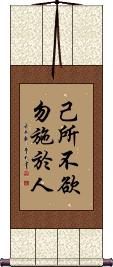
己所不欲勿施于人 or "When you go out, you should behave as if you were in the presence of a distinguished guest; when people do favors for you, act as if a great sacrifice was made for you. Whatever you wouldn't like done to you, do not do that thing to others. Don't complain at work or home.”
Hearing this, Zhong Gong said humbly, “Although I am not clever, I will do what you say.”
From this encounter, the Chinese version of the “Golden Rule” or “Ethic of Reciprocity” came to be.
The characters you see above express, “Do not do to others whatever you do not want to be done to yourself.”
See Also: Confucius Teachings | Benevolence
Every Creature Has A Domain
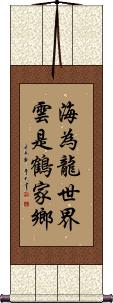
海為龍世界雲是鶴家鄉 is a somewhat poetic way to say that everyone and everything has its place in the world.
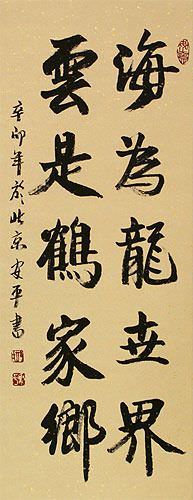 The first line (which is the column on the right) says, “The Ocean is the World of the Dragon.” The next column says, “The Clouds are the Domain of the Cranes.”
The image to the right is what this calligraphy can look like in xing-kaishu style by a Master Calligrapher.
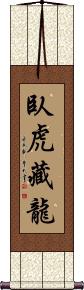
臥虎藏龍 is the movie title of the Kung Fu epic that was very popular in the west a few years back.
This is a re-ordering of an ancient Chinese proverb that refers to undiscovered talents.
The movie was one of the most popular Chinese foreign films to ever debut in the USA but received a lukewarm reception in China.
Note: This can be pronounced in Korean, but it's not a commonly used term.
Doctor
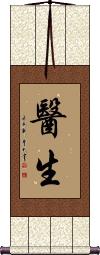
醫生 is the title used to refer to medical doctors or physicians in China.
Note: Sometimes, this same term is used in Korean, but not common.
The meaning is close to “healer [of] life” as the first character, 醫, can mean medicine, the healing art, healing, curing, medical, to cure, or to treat. The second character, 生, means birth or life.

 In Japan, they use a simplified version of the first character (医生 is also used as the Simplified Chinese version of Doctor). If you want this version, please click the characters to the right instead of the button above.
Dragon / Emperor Symbol
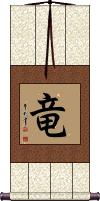
竜 is an alternate form of the dragon.
Still pronounced the same in Chinese, Japanese, and Korean.
This particular Kanji is often associated as an imperial symbol as well as representing the mythical Asian dragon. You may have seen it on the chest or flag of the emperor in old Japanese and Chinese movies.
Note: I would rate this as a non-universal alternate form. The other dragon character is by far more common, and universally understood.
We strongly recommend  if you are looking for the symbol of dragon.
Dragon Fist
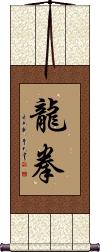
龍拳 is a title that literally means “Dragon Fist.”
The Spirit of the Dragon Horse
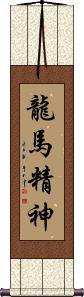
龍馬精神 is an old proverb that is used to wish someone good health and success combined as a great compliment.
The meaning is “The vigor and spirit of the legendary dragon-horse.” These four characters are often accompanied by four more which mean “...and the power and prestige of the tiger.” Here we are just offering the first part which is considered the short version.
By giving a wall scroll like this to someone, you were either wishing or telling them that they have an amazing quality. There is also a suggestion of good health - at least anyone with the vigor of a dragon horse would seem to also be in good health.
Note: In Japanese, this would be read as the spirit of 坂本龍馬 (Sakamoto_Ryōma), a beloved rebel who help abolish the old Japanese feudal system. This can be confusing, so I am declaring this proverb to be Chinese only.
The Spirit of the Dragon Horse and Power of a Tiger
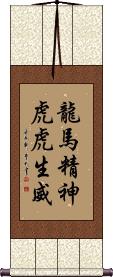
龍馬精神虎虎生威 is an old proverb that is used to wish someone great health and success combined as a great compliment.
The meaning is “The vigor and spirit of the legendary dragon-horse and the power and prestige of the tiger.”
By giving a wall scroll like this to someone, you were either wishing or telling them that they have these qualities. There is also a suggestion of good health - at least anyone with the vigor of a dragon horse would seem to also be in good health.
Dragon Lady
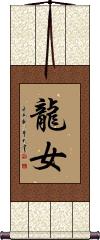
龍女 is literally “Dragon Lady” or “Dragon Woman.”
Dragon and Phoenix
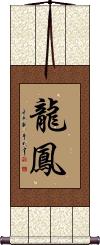
龍鳳 is the simplest way to express “Dragon and Phoenix” in Chinese and Japanese.
This title can be used to represent, “The emperor and empress,” or a metaphor for an outstanding personage.
It should be noted that this is most often used as a given name, “Ryuuhou” in Japanese. It may be read more as a name than by meaning in Japanese.
Dragon and Phoenix Brings Luck
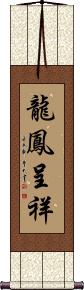
龍鳳呈祥 is often seen at weddings and other celebrations in China.
It suggests that the dragon and phoenix will bring you auspicious tidings.
The first character is a dragon.
The second is a phoenix.
The third is presents or brings.
And the last means auspicious, propitious, or luck.
Throughout China, the dragon and phoenix are symbols of good fortune. You will see these auspicious figures as decorative symbols on everything from buildings, furniture, wedding costumes, and sculptures in public parks to caskets and items used in ceremonies.
The Five Animals
Dragon Snake Tiger Leopard Crane
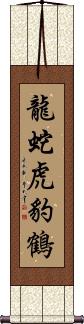
龍蛇虎豹鶴 is a list of the Chinese characters for the five animals of Shaolin Kung Fu in a comfortable order (meaning that they are in the proper order and will “feel right” to a Chinese person who views this arrangement).
Dragon Spirit
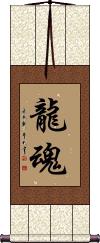
龍魂 means “Dragon Spirit” or “Dragon Ghost.”
Dragon Spirit
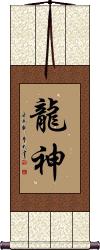
龍神 is a Chinese, Japanese Kanji, and old Korean Hanja title that can mean “dragon god,” “dragon king,” or “dragon spirit.”
In the context of Buddhism, this is one of eight kinds of spiritual beings found in Mahāyāna texts.
The Spirit of Dragon and Tiger
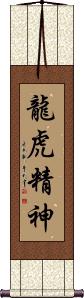
龍虎精神 means the spirit of the dragon and tiger.
It speaks to the vitality and vigor that is the nature of these two creatures.
Beyond “spirit,” the last two characters can also mean mind, soul, or heart. Therefore, you can also say this means “Heart of the Dragon and Tiger,” etc.
龍虎精神 is often titled “Ryukoseishin” in many Japanese martial arts.
Dragon Warrior
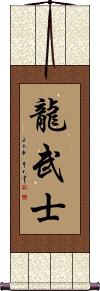
龍武士 is a generic title for “Dragon Warrior.”
Just as in English, it's a bit ambiguous. It can mean one who fights against dragons or the title of a warrior himself (imagine a warrior with a dragon symbol on his chest).
Dragon Warrior
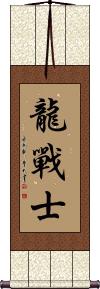
龍戰士 is another version of “Dragon Warrior.”
It's still a bit ambiguous. This one reads more like “Dragon Fighter” than “Dragon Warrior.” Perhaps you can also translate this one as “One who fights like a dragon.”
Dragon Warrior
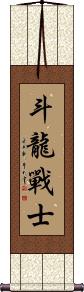
斗龍戰士 or “Dragon Warrior” is specifically one who fights against dragons.
This can also be read as “Dragon Fighter.”
Dragon Ball Kai
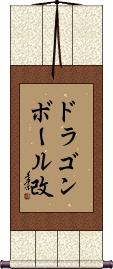
ドラゴンボール改 is the name for Doragon Bōru Kai (Dragon Ball Revised), a high-definition remastered and recut of the original Dragon Ball Z, released on the 20th anniversary.
Note: Because this selection contains some special Japanese Katakana characters, it should be written by a Japanese calligrapher.
Dragon Crane Tiger
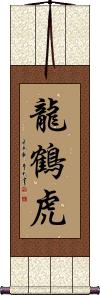
龍鶴虎 is Dragon Crane Tiger in Chinese.
Dragon Hall

龍館 can be translated as “dragon hall” or “dragon school”.
Through history, and depending on context, 館 has a lot of possible meanings such as building, shop, embassy, consulate, schoolroom, mansion, palace, manor house, castle, small fortress, or official residence (of a government official).
Dragon Quest
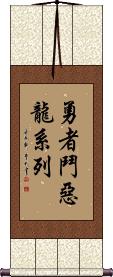
This is the title of the Nintendo Dragon Quest series/game in Chinese.
Earth Dragon
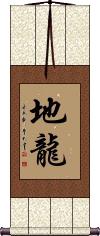
地龍 is the Earth Dragon, king of rivers and seas.
地龍 is sometimes used in Chinese as a nickname for earthworms.
Eternal Love
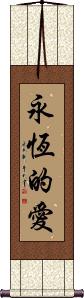
永恆的愛 is the best way to write “Eternal Love” in Chinese.
The first two characters mean eternal, eternally, everlasting, and/or perpetual.
The third character is a possessive article which sort of makes this selection mean “Love of the eternal kind.”
The last character is “love.”
This version is best if your audience is Chinese. We also have a Japanese version of eternal love.
See Also: Forever Love | Eternal Love (Japanese)
Eternal Love
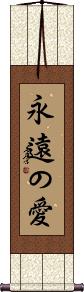
永遠の愛 is a great way to write “Eternal Love” in Japanese.
The first two characters mean eternal, eternity, perpetuity, forever, immortality, and permanence.
The third character is a possessive article which sort of makes this selection mean “Love, of the eternal kind.”
The last character is “love.”
Cultural note: Most of the time, it is taboo to use the word “love” in Japanese. For instance, a Japanese man will say, “I like you,” rather than, “I love you,” to his spouse/girlfriend. However, this entry for eternal love is acceptable because of the way it is composed.
This entry is only appropriate if your audience is Japanese. We also have a Chinese version of this eternal love.
Family / Household
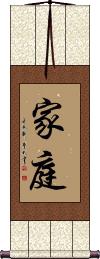
家庭/傢庭 is a common way to express family, household, or home in Chinese, Japanese Kanji, and old Korean Hanja.
However, for a wall scroll, we recommend the single-character form (which is just the first character of this two-character word). If you want that, just click here: Family Single-Character
The first character means “family” or “home.” The second means “courtyard” or “garden.” When combined, the meaning is a bit different, as it becomes “household” or “family.” The home and/or property traditionally has a strong relationship with family in Asia. Some Chinese, Korean, and Japanese families have lived in the same house for 7 or more generations!
Fate / Opportunity / Chance
The Buddhist idea of Fate
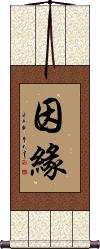
因緣 is the Buddhist concept of a chance meeting or an opportunity that presents itself by fate.
Sometimes this is used to describe a cosmic chain of events or cause and effect.
It also is used to describe predestined relationships between people - and sometimes married couples (although if you want one about marriage, try this: Fate / Destiny of Lovers.
因緣 can also be translated as origin, karma, destiny, affinity, connection, and relation. This all depends on context - seen alone on a wall scroll, this will be read with a “fate/chance” meaning by a Chinese person or a Korean person who can read Hanja.
The more complex definition of this word would be, “Direct causes and indirect conditions, which underlie the actions of all things.”
This concept is known as nidana in the original Sanskrit. Also sometimes presented as hetupratyaya (or “hetu and prataya”), which I believe is Pali.
Note: Japanese will tend to use this version of the second Kanji: 
If you order this from the Japanese master calligrapher, expect that you’ll get this version. However, this word often carries a negative connotation in Japanese (bad things happen), as it is used that way in a certain Japanese idiom. Therefore, this may not be the best choice if Japanese is your target language.
See Also: Buddhism | Opportunity
Fire Dragon
火龍 is how to write “Fire Dragon” in Chinese and Japanese Kanji.
This title is used more often in Chinese, a little lesser known in Japanese.
Five Elements
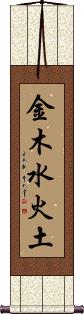
金木水火土 is a list of the Chinese characters for the five elements in a comfortable order (meaning that they “feel right” to a Chinese person who views this arrangement).
The order is metal, wood, water, fire, and earth.
Note that sometimes the metal element is translated as gold. And earth refers to soil versus the whole planet earth.
Flying Dragon
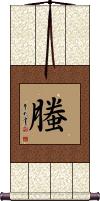
Flying Dragon Karate-Do
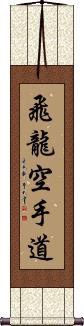
飛龍空手道 is the title Flying Dragon Karate-Do.
Golden Dragon
金龍 is the Chinese title for Golden Dragon.
The first character means gold, golden, or metal.
The second character is dragon.
This title has the same meaning in Japanese but is used mainly as a given name, Kinryu, or in reference to a certain kind of noodle soup in Japan.
Green Dragon / Blue Dragon
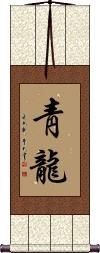
靑龍 is a title that can mean blue or green dragon.
The first character can mean blue, green, azure, or celadon.
The second character means dragon.
This is mostly a Chinese title (especially in Buddhism). It will be understood but less commonly used in Japanese and Korean.
Guan Gong / Warrior Saint
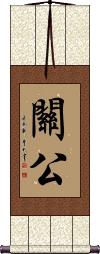
關公 is a Chinese title, Guan Gong, that means Lord Guan (The warrior saint of ancient China).
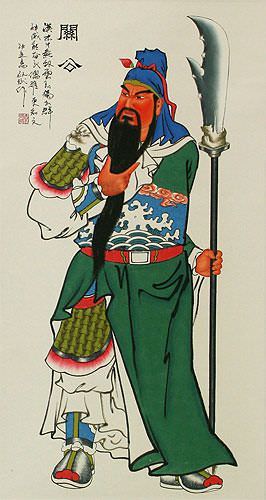 While his real name was Guan Yu / 關羽, he is commonly known by the title of Guan Gong (關公).
Some Chinese soldiers still pray to Guan Gong for protection. They would especially do this before going into battle. Statues of Guan Gong are seen throughout China.
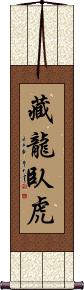
The meaning of 藏龍臥虎 is that both the tiger and dragon have amazing talents, but if they are out of view, you may not have discovered them.
This old Chinese idiom/proverb is appropriate for someone with an amazing ability that keeps that ability hidden.
You might think this title is in reverse, but actually, this is the original Chinese proverb.
The movie Crouching Tiger, Hidden Dragon, popularized this alternate version.
Flying Dragon Horse
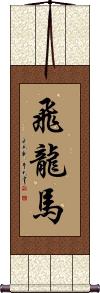
飛龍馬 is the title for a “flying dragon-horse.”
This can refer to a mythical beast or, more realistically, a very fast horse at the track.
Home of the Black Dragon
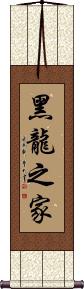
黑龍之家 was added by special request of a customer. This phase is natural in Chinese, but it is not a common or ancient title.
The first character is black.
The second is dragon.
The third is a possessive modifier (like making “dragon” into “dragon's”).
The fourth character means home (but in some context can mean “family” - however, here it would generally be understood as “home”).
Home of the Dragon
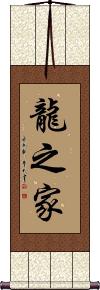
Added by special request of a customer. This phase is natural in Chinese, but it is not a common or ancient title.
The first character is dragon.
The second is a possessive modifier (like making “dragon” into “dragon's”).
The third character means home (but in some context can mean “family” - however, here, it would generally be understood as “home”).
Home of the Auspicious Golden Dragon
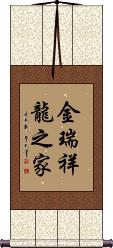
This 金瑞祥龍之家 or “home golden auspicious dragon” title was added by special request of a customer.
The first character means gold or golden.
The second and third characters hold the meaning of auspiciousness and good luck.
The fourth character is dragon.
The fifth is a possessive modifier (like making “dragon” into “dragon's”).
The last character means home (but in some context can mean “family” - however, here it would generally be understood as “home”).
Note: The word order is different than the English title because of grammar differences between English and Chinese. This phrase sounds very natural in Chinese in this character order. If written in the English word order, it would sound very strange and lose its impact in Chinese.
Note: Korean pronunciation is included above, but this has not been reviewed by a Korean translator.
Honor
(Modern Japanese version)
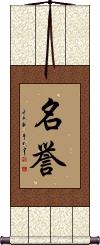
名譽 is a version of honor that is about having or earning the respect of others and about your reputation.
It is the status of being worthy of honor (not to be confused with doing honorable things or specific actions - see our other “honor” listing for that).
 Both modern Japanese and modern mainland Chinese use the same simplified version of the second character of honor. You can make a special request for the traditional second character as shown to the right (just click on that character to the right of you want to order that version). Before WWII, both Japan and China used the traditional form but modern Japanese and Chinese use this simplified form. Koreans still use the traditional form when they are not writing in their modern Hangul glyphs.
This is also a virtue of the Samurai Warrior
See our page with just Code of the Samurai / Bushido here
Iron Dragon
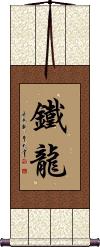
鐵龍 is the title Iron Dragon in Chinese.
Justice / Rectitude / Right Decision
Also means: honor loyalty morality righteousness
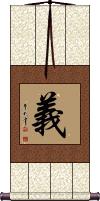
義 is about doing the right thing or making the right decision, not because it's easy but because it's ethically and morally correct.
No matter the outcome or result, one does not lose face if tempering proper justice.
義 can also be defined as righteousness, justice, morality, honor, or “right conduct.” In a more expanded definition, it can mean loyalty to friends, loyalty to the public good, or patriotism. This idea of loyalty and friendship comes from the fact that you will treat those you are loyal to with morality and justice.
義 is also one of the five tenets of Confucius's doctrine.
 There's also an alternate version of this character sometimes seen in Bushido or Korean Taekwondo tenets. It's just the addition of a radical on the left side of the character. If you want this version, click on the image to the right instead of the button above.
This is also a virtue of the Samurai Warrior
See our page with just Code of the Samurai / Bushido here
See Also: Judgment | Impartial | Confucius Tenets
Kaio-Ken
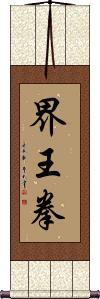
界王拳 is the name Kaioken in Japanese. The meaning is World King Fist. This title is associated with Dragon Ball Z.
This can be pronounced in Chinese, but would only be recognized by Chinese fans of Dragon Ball Z.
Kaio-Ken
This is Kaiōken in Japanese.
界 = Community, circles, world, border, or boundary.
王 = King
拳 = Fist
Often translated as World Lord Fist, Fist of the World King, Kamajamaja (Norwegian), and Leptonski Udarac (Slovenian).
Associated with Goku's attack technique in Dragon Ball Z.
Kirin / Giraffe / Mythical Creature
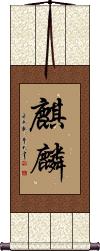
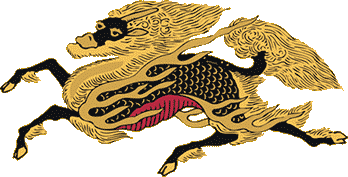
麒麟 is the title of a mythical beast of Asia.
The animal is thought to be related to the giraffe, and in some ways, it is a giraffe. However, it is often depicted with the horns of a dragon or deer and sometimes with the body like a horse, but many variations exist.
In Japanese, it is pronounced “Kirin” as in “Kirin Ichiban” beer.
Notes:
1. This is sometimes spelled as “kylin.”
2. In Japanese, this is the only Kanji word for giraffe. Therefore in Japan, this word needs context to know whether you are talking about the mythical creature or the long-necked giraffe of Africa.
3. Apparently, this was the first word used for regular giraffes in China (some were brought from Africa to China during the Ming Dynasty - probably around the year 1400). Though the mythical creature may have existed before, the name “qilin” was given to the “new giraffe.” This is because, more than 600 years ago, giraffes somewhat matched the mythical creature's description when Chinese people saw them for the first time. Later, to avoid such an ambiguous title, a three-character word was devised to mean a “giraffe of Africa.” The characters for “qilin” shown here are only for the mythological version in modern Chinese.
4. More information about the qilin / kirin from Wikipedia.
5. This creature is sometimes translated as the “Chinese Unicorn,” although it is generally portrayed with two horns. I think this is done more for the fantasy aspect of the unicorn and because most westerners don't know what a qilin or kirin is (this avoids a long explanation by the translator).
6. In Korean, this can mean kirin or simply giraffe (usually, the mythological creature is what they would think of when seeing these characters alone on a wall scroll).
Laughing Dragon Kung Fu
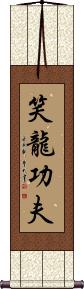
笑龍功夫 is the title for a Martial Arts studio (custom-made at by request of the owner of the studio).
Legendary Turtle
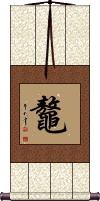
鼇 means “legendary turtle” in Chinese. 鼇 is a great mythological turtle that travels the seas. The creature is comparable to the dragon of China, however, it so happens that dragons became a bit more famous as history progressed. In modern Chinese, this character can just refer to a large sea turtle.
Note: 鼇 can be pronounced in Korean but this is a very rare Korean Hanja form - it hasn't been used in Korea for at least a few hundred years (even before they switched to Hangul characters).
Leong

梁 is the Cantonese and Hokkien surname Leong, meaning beam or bridge.
Other surname characters such as 龍 (dragon) and 連 (to link or connect) can also romanize as Leong.
Life Energy / Spiritual Energy
Chi Energy: Essence of Life / Energy Flow
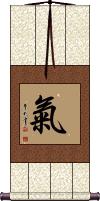
This 氣 energy flow is a fundamental concept of traditional Asian culture.
氣 is romanized as “Qi” or “Chi” in Chinese, “Gi” in Korean, and “Ki” in Japanese.
Chi is believed to be part of everything that exists, as in “life force” or “spiritual energy.” It is most often translated as “energy flow” or literally as “air” or “breath.” Some people will simply translate this as “spirit,” but you must consider the kind of spirit we're talking about. I think this is weighted more toward energy than spirit.
The character itself is a representation of steam (or breath) rising from rice. To clarify, the character for rice looks like this: 
Steam was apparently seen as visual evidence of the release of “life energy” when this concept was first developed. The Qi / Chi / Ki character is still used in compound words to mean steam or vapor.
The etymology of this character is a bit complicated. It's suggested that the first form of this character from bronze script (about 2500 years ago) looked like these samples: 

However, it was easy to confuse this with the character for the number three. So the rice radical was added by 221 B.C. (the exact time of this change is debated). This first version with the rice radical looks like this: 
The idea of Qi / Chi / Ki is really a philosophical concept. It's often used to refer to the “flow” of metaphysical energy that sustains living beings. Yet there is much debate that has continued for thousands of years as to whether Qi / Chi / Ki is pure energy or consists partially or fully of matter.
You can also see the character for Qi / Chi / Ki in common compound words such as Tai Chi / Tai Qi, Aikido, Reiki, and Qi Gong / Chi Kung.
In the modern Japanese Kanji, the rice radical has been changed into two strokes that form an X.
 The original and traditional Chinese form is still understood in Japanese, but we can also offer that modern Kanji form in our custom calligraphy. If you want this Japanese Kanji, please click on the character to the right instead of the “Select and Customize” button above.
More language notes: This is pronounced like “chee” in Mandarin Chinese, and like “key” in Japanese.
This is also the same way to write this in Korean Hanja where it is Romanized as “gi” and pronounced like “gee” but with a real G-sound, not a J-sound.
Though Vietnamese no longer use Chinese characters in their daily language, this character is still widely known in Vietnam.
See Also: Energy | Life Force | Vitality | Life | Birth | Soul
Little Dragon
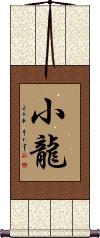
Lung
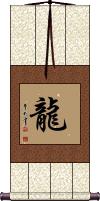
龍 is the name Lung in Chinese (Mandarin).
This is actually the character for dragon.
Legendary Phoenix
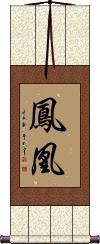
鳳凰 is the word that translates as “Legendary Phoenix” in Chinese.
This refers to the bird that, according to Chinese folklore, rose from the fiery ashes.
The phoenix and dragon are by far the most famous creatures in Chinese mythology.
Phoenix (male)
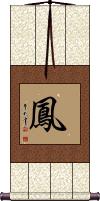
鳳 is the simplest way to write “Phoenix” in Chinese. Because the dragon is usually expressed as a single character, when you see “dragon and phoenix” written in Chinese, you'll often see this single-character version.
Please note, this is also the male element of a phoenix, so it also means “male phoenix bird.” However, some Chinese people may argue that the phoenix has a female characteristic, regardless of which character you use.
Phoenix (female)
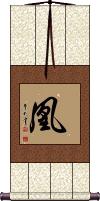
凰 is another simple way to write “Phoenix” in Chinese. 凰 is the specifically female element of a phoenix, so this is how you write “female phoenix.” 凰 is sometimes used to represent the female empress (many times in history, China was ruled by a woman, in much the same way queens came to power in Europe).
Note that the emperor is always represented as a dragon (not the male version of a phoenix).
If you see yourself as a strong woman, this might be a calligraphy scroll for you to express “woman power” or “powerful woman” in a cool way.
Mantis / Praying Mantis
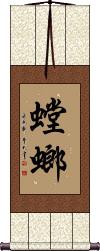
螳螂 is mantis or “praying mantis,” as it's often titled in English.
Technically speaking, this especially applies to the narrow-winged mantis (Tenodera angustipennis)
It is best to use this very common two-character Asian title for the mantis, as the second character alone can mean mantis or dragonfly (totally ambiguous).
This title is antiquated in Japanese, as they tend to write カマキリ (kama kiri) in Katakana to mean praying mantis.
 Note: There is an alternate form of this title which uses the character shown to the right instead of the first character shown above. This is uncommon in both Japan and China (if you really want it anyway, please let us know).
Red Dragon
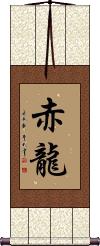
赤龍 is a generic title for “Red Dragon.”
The first character can mean red, crimson, or scarlet.
The second character is dragon.
Red Dragon / Vermillion Dragon
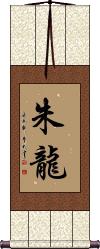
朱龍 is a sophisticated or scholarly way to say “Red Dragon.” 朱龍 is the title you'd expect in ancient Chinese literature.
The first character means red, cinnabar, or vermillion.
The second character means dragon.
It is said that the Vermillion Dragon represents kings that bestow blessings on lakes or bodies of water. This makes more sense in an ancient Chinese context.
Reiki
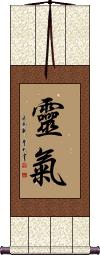
靈氣 is the title of a healing practice now found globally but with origins in Japan.
Special note: Outside of the context of the healing practice of Reiki, this means “aura” or “spiritual essence that surrounds all living things.” A Japanese person unfamiliar with the practice will take the “aura” meaning.
Reiki is a technique for stress reduction and relaxation that also heals. It can be compared to massage but is based on the idea that an unseen “life force energy” flows through us and is what causes us to be alive. If your life force energy is low, you'll be more likely to get sick or feel stressed. If your life force energy is abundant and flowing well, you become more capable of being happy and healthy.
There is a lot of information available if you want to Google this term - my job is to offer the calligraphy while you can decide if it is right for you.

Note: We are showing the ancient (traditional) form of the Reiki Kanji. I have seen Reiki written with the slightly simplified version and this more classic form. If you want the form of Reiki with the two strokes in the shape of an X on the second character and the modern first character, simply click on the Kanji characters to the right.
Note: 靈氣 is also a Chinese word, but in Chinese, these characters create a word that refers to a smart person or someone with high aspirations. It is not read as a healing method in Chinese.
In Korean Hanja, this can be read as a “mysterious atmosphere” by a Korean who is not familiar with the practice of Reiki (still has a cool meaning in Korean).
Respect
Politeness, Gratitude and Propriety
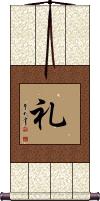
礼 is one of the five tenets of Confucius.
Beyond respect, 礼 can also be translated as propriety, good manners, politeness, rite, worship, or an expression of gratitude.
We show respect by speaking and acting with courtesy. We treat others with dignity and honor the rules of our family, school, and nation. Respect yourself, and others will respect you.
 Please note that Japanese use this simplified 礼 version of the original 禮 character for respect. 礼 also happens to be the same simplification used in mainland China. While 禮 is the traditional and original version, 礼 has been used as a shorthand version for many centuries. Click on the big 禮 character to the right if you want the Traditional Chinese and older Japanese versions.
This is also a virtue of the Samurai Warrior
See our page with just Code of the Samurai / Bushido here
See Also: Confucius
Shen Long
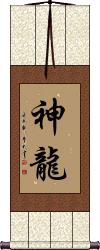
神龍 or Shen Long literally means “god dragon” or “divine dragon.”
神龍 is a spiritual dragon from Chinese mythology that controls wind, storms, clouds, and rain. Historically, farmers in China avoid offending this dragon, as it could result in a drought or flooding of their fields.
Shen Long has blue/azure scales and appears on the beautiful robes of some Chinese emperors.
Sometimes romanized as Shen Lung and sometimes written as 神竜 in Japan with the pronunciation of Shinryū or Shenron. It can also be a given name in Japan.
Southern Praying Mantis
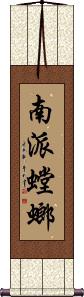
南派螳螂 can be translated literally as “Southern School Praying Mantis” or “Southern Style Praying Mantis.”
Despite its name, the Southern Praying Mantis style of Chinese martial arts is unrelated to the Northern Praying Mantis style. Southern Praying Mantis is instead related most closely to fellow Hakka styles such as Dragon and more distantly to the Fujian family of styles that includes Fujian White Crane, Five Ancestors, and Wing Chun.
This style of martial arts focuses more on fighting skills rather than aesthetics.
Of course, you already knew that if you were looking for this term.
Note: This title can be pronounced and does have meaning in Korean but only to Koreans familiar with Chinese martial arts.
Spirit Of The Dragon Martial Arts
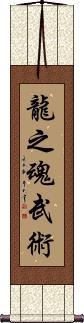
龍之魂武術 is the title Spirit Of The Dragon Martial Arts in Chinese.
This can also be translated as “Dragon Soul Martial Arts.”
Success
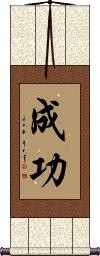
This Chinese and Japanese word for “success” is often used to refer to “career success” but is also used for other successes in life.
It matches the western dictionary definition of “The achievement of something desired, planned, or attempted.” And It's also used in this old Chinese proverb:  which means Failure is the Mother of Success.
Sometimes this word is translated as prosperity, but success, succeed, or successfully are more correct definitions.
See Also: Prosperity
Sun Wukong / Son Goku
Monkey King
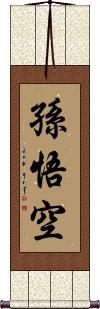
孫悟空 is the name Sun Wukong, also known as the Monkey King. He is the main character with supernatural powers in the ancient Chinese novel Journey to the West.
This title is also known as the real name of the Monkey King in Japanese. This can also be the Son Goku, better known as simply Goku, a fictional character of the Dragon Ball Japanese manga series.
Sword
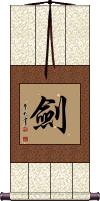
劍 is pronounced “jian” in Chinese. When you say it, imagine that you are making the sound of a sword as it clashes with a metal shield. This might get you closer to the correct pronunciation in Chinese.
I actually wonder if this word came from the metallic ringing sounds of a sword in battle - but such knowledge is lost in history.
The sword is a symbol of a warrior. The one thing that a soldier in ancient China lived and died by. A warrior with his skills and sword proves himself of great value. A warrior who losses his sword instantly becomes worthless.
劍 is an excellent scroll for someone in the military (especially officers of all services - as well as enlisted NCO Marines since they still carry swords even if mainly for ceremonial purposes). Or perhaps someone who practices variations of kung fu or tai chi that involve weapons.
Please note that while this character is understood with the sword meaning in Japanese, you might be looking for the word “katana” which also means sword in Japanese but means “knife” in Chinese.
There are other ways to write sword, and here are a few...


If you are particular about the version you receive, please let me know when you place your order (Note: Special styles are only available from one of our master calligraphers).
Taekwondo
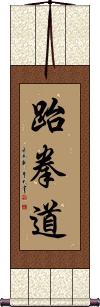
跆拳道 is one of the most widespread types of martial arts in the world as well as being an Olympic sport. Taekwondo was born in Korea with influences of Chinese and Japanese styles combined with traditional Korean combat skills. Some will define it as the “Korean art of empty-handed self-defense.”
In the simplest translation, the first character means “kick,” the second character can mean either “fist” or “punching,” and the third means “way” or “method.” Altogether, you could say this is the “Kick Punch Method.” When heard or read in various Asian languages, all will automatically think of this famous Korean martial art. It is written the same in Japanese Kanji, Chinese, and Korean Hanja characters - so the appearance of the characters is universal. However, you should note that there is another way to write this in modern Korean Hangul characters, which looks like the image to the right. 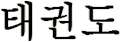
We suggest the original Korean Hanja (Chinese characters) for a wall scroll, but if you need the Hangul version, you must use master calligrapher Cao Bin: Order Taekwondo in Korean Hangul
Note: Taekwondo is sometimes Romanized as Tae-Kwondo, Tae Kwon Do, Taekwon-do, Taegwondo, Tae Gweon Do, Tai Kwon Do, Taikwondo, Taekwando, Tae Kwan Do and in Chinese Taiquandao, Tai Quan Dao, Taichuando, or Tai Chuan Tao.
Taotie

In ancient China, 饕餮 was a ferocious mythological animal and the fifth son of the dragon king.
饕餮 can also refer to a zoomorphic mask motif found on Shang and Zhou ritual bronzes.
As an adjective, this can mean gluttonous, sumptuous (banquet), covetousness, greed, avarice, or intense desire.
Celestial Dragon / Tian Long
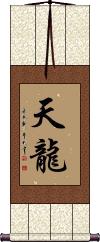
天龍 can mean Heavenly Dragon (Dragon of Heaven), Sky Dragon, Holy Dragon, Celestial Dragon, or Divine Dragon.
This can be a given name in both China and Japan (天龍 is pronounced Tenryū and sometimes written 天竜 in Japanese).
In an older Buddhist context, this can refer to Brahma, Indra, and the devas, together with the nāgas. It can also refer to celestials and snake spirits.
Turtle
...also means tortoise
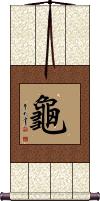
龜 is the generic term for turtle in Chinese and old Korean Hanja. It's like saying “turtle” (or “tortoise”) without being specific about the species of turtle.
Please note that there are many special characters in Chinese and a few in Japanese that denote specific species of turtle and do not include this character. We can't possibly cover all of these species, but if you want a certain one, such as “loggerhead” or a “leatherback,” just contact me, and I'll do my best to research your special species.
If you noticed, I said species names that do not include this character. This is because, in much the same way we can do it in English by just saying, “loggerhead” instead of “loggerhead turtle,” the same can be done in Chinese and Japanese.
 This may be hard to believe, but the image shown to the right is an alternate version of this character, which is currently used in Japan. This was originally an alternate form in ancient China for turtle - but it's so obscure now that most Chinese people would just think this is the Japanese version of turtle (I did a lot of research on this). The version shown in the upper left is traditional Chinese (also used in Korea 100+ years ago). It will generally not be recognized by the new generation of Japanese people. If your audience is Japanese, please click on the Kanji image shown to the right to have the calligrapher write that version (instead of clicking the button above).
Note: In Japanese, this Kanji is also a representation of long life. This is related to the fact that a tortoise can live for hundreds of years.
Under the Protection of the Dragon Saint
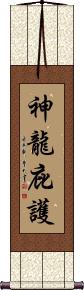
神龍庇護 is not the most common thing to say in Chinese, but it is grammatically correct and a cool title.
The first character means “supernatural or saintly.” The second is “dragon.” The last two mean protection. You could also translate this as something like “Protected by the Dragon God” or more closely “Holy Dragon.”
Water Dragon / Rain Dragon
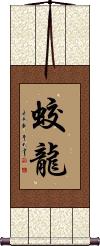
蛟龍 is the title for the water dragon is the hornless or scaled dragon. 蛟龍 is the king of all aquatic animals with the ability to control rain and floods.
In Japanese, the rain dragon can represent hidden genius. This dragon's domain is the deep murky water, thus with hidden potential. This can also be the Japanese given name Kouryuu.
The Way of the Dragon
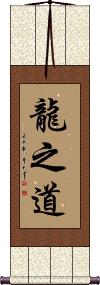
龍之道 is how the way of the dragon is written in Chinese.
龍之道 is not the same as the Chinese movie that was titled in English as “The Way of the Dragon.” 龍之道 is, rather, the literal meaning of the dragon's way. The first character is dragon, the second is a possessive article, and the third character means way or path.
The Way of the Dragon
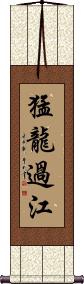
猛龍過江 is the title of the 1972 movie, “The Way of the Dragon.”
This means “Fierce dragons crossing the river.”
If you want a title that means “way of the dragon,” please see the more accurate 龍之道 3-character title.
White Dragon
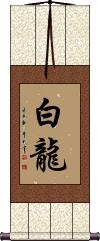
白龍 is a sophisticated or scholarly way to say “White Dragon.” 白龍 is the title you'd expect in ancient Chinese literature.
The first character means white, pure, or bright.
The second character means dragon.
The White Dragon represents a king who is virtuous and pure.
Wukong / Goku
Monkey King
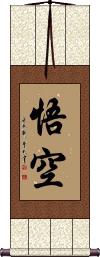
悟空 is the short name or given name of Sun Wukong, the Monkey King, from the ancient Chinese novel Journey to the West.
This title is also known as the given name of the Monkey King in Japanese. This can also be Goku, short for Son Goku, a fictional character of the Dragon Ball Japanese manga series (also based loosely on the Monkey King).
Wu Xing Fist
Five Forms Fist of Kung Fu
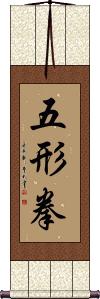
五形拳 is “Wu Xing Fist” or “Five Form Fist.”
The forms refer to Dragon, Snake, Tiger, Crane, and Leopard.
This term is used in Kung Fu, and is recognized by both Chinese and Japanese practitioners of martial arts.
Yellow Dragon
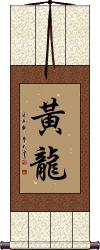
黃龍 is a sophisticated or scholarly way to say “Yellow Dragon.” 黃龍 is the title you'd expect in ancient Chinese literature.
The first character means yellow.
The second character means dragon.
The Yellow Dragon represents a king that favorably hears all petitions of his subjects.
Note: This title can be the name of Huanglong county in Yan’an, located in Shaanxi province of China.
Zen / Chan / Meditation
...as in Zen Buddhism
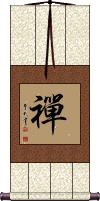
First, let's correct something: The Japanese romanization for this character, “Zen” has penetrated the English language. In English, it's almost always incorrectly used for phrases like “That's so zen.” Nobody says, “That's so meditation” - right? As the title of a sect, this would be like saying, “That's so Baptist!"
禪 by itself just means “meditation.” In that context, it should not be confined to use by any one religion or sect.
Regardless of the dictionary definition, more often than not, this character is associated with Buddhism. And here is one of the main reasons:
Zen is used as the title of a branch of Mahayana Buddhism, which strongly emphasizes meditation practice.
However, it should be noted that Buddhism came from India, and “Chan Buddhism” evolved and developed in medieval China. The Chinese character “Chan” was eventually pronounced as “Zen” in Japanese. Chan Buddhists in China have much in common with Zen Buddhists in Japan.
More about the history of Zen Buddhism here.
Please also note that the Japanese Kanji character for Zen has evolved a little in Japan, and the two boxes (kou) that you see at the top of the right side of the character have been replaced by three dots with tails.
 The original character would still be generally understood and recognized in Japanese (it's considered an ancient version in Japan) but if you want the specifically modern Japanese version, please click on the zen Kanji to the right. Technically, there is no difference between the Tensho and Reisho versions of Zen since they are ancient character styles that existed long before Japan had a written language.
 There is also an alternate/shorthand/simplified Chinese version, which has two dots or tails above the right-side radical. This version is also popular for calligraphy in China. If you want this version, just click the character to the right.
Further notes: Zen is just one of seven sects of Buddhism practiced in Japan. The others are 律 Ritsu (or Risshū), 法相 Hossō, 論 Sanron 華嚴 Kegon, 天台 Tendai, and 眞言 Shingon.
Dragon
Year of the Dragon / Zodiac Sign
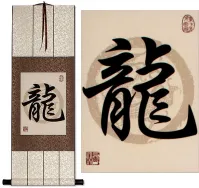
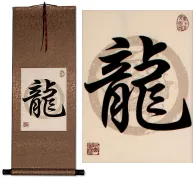
龍 is the character for dragon in Chinese, old Korean Hanja, and Japanese Kanji.
The dragon is a creature of myth and legend that dominates Chinese, Japanese, and even European folklore. In China, the dragon is the symbol of the Emperor, strength, and power, and the Chinese dragon is known as the god of water.
From the Chinese Zodiac, if you were born in the year of the Dragon, you . . .
Have a strong body and spirit.
Are full of energy.
Have vast goals.
Have a deep level of self-awareness.
Will do whatever you can to “save face.”
See also our Chinese Zodiac or Dragon Calligraphy pages.
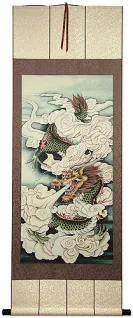
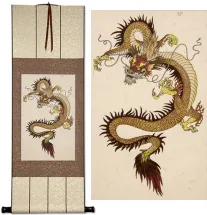
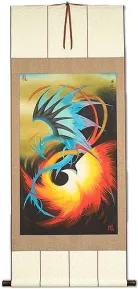
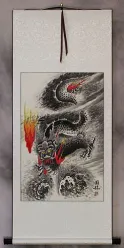
This in-stock artwork might be what you are looking for, and ships right away...
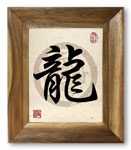
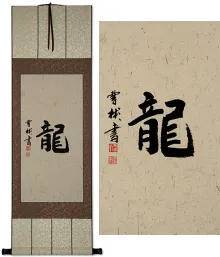

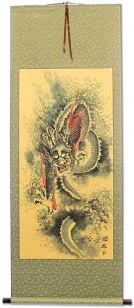
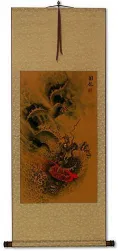
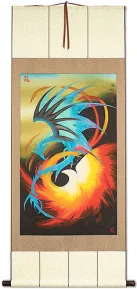
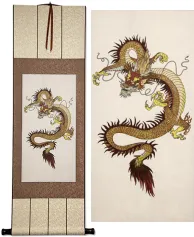
The following table may be helpful for those studying Chinese or Japanese...
| Title | Characters | Romaji (Romanized Japanese) | Various forms of Romanized Chinese | |
| 1. Right Understanding Right Perspective Right View Perfect View | 正見 正见 | sei ken / seiken | zhèng jiàn zheng4 jian4 zheng jian zhengjian | cheng chien chengchien |
| Golden/Metal Dragon | 金龍 金龙 | jīn lóng / jin1 long2 / jin long / jinlong | chin lung / chinlung | |
| Water Dragon | 水龍 水龙 | shuǐ lóng shui3 long2 shui long shuilong | shui lung shuilung |
|
| Wood Dragon | 木龍 木龙 | mù lóng / mu4 long2 / mu long / mulong | mu lung / mulung | |
| Fire Dragon | 火龍 火龙 | huǒ lóng / huo3 long2 / huo long / huolong | huo lung / huolung | |
| Earth Dragon | 土龍 土龙 | tǔ lóng / tu3 long2 / tu long / tulong | t`u lung / tulung / tu lung | |
| Armor | 鎧 铠 | yoroi | kǎi / kai3 / kai | k`ai / kai |
| Blue Dragon Azure Dragon | 青龍 / 靑龍 青龙 | sei ryuu / seiryuu / sei ryu | qīng lóng qing1 long2 qing long qinglong | ch`ing lung chinglung ching lung |
| Black Dragon | 黒龍 黒龙 | koku ryuu / kokuryuu / koku ryu | hēi lóng / hei1 long2 / hei long / heilong | hei lung / heilung |
| Black Dragon | 玄龍 玄龙 | xuān lóng xuan1 long2 xuan long xuanlong | hsüan lung hsüanlung |
|
| Black Dragon | 墨龍 墨龙 | mò lóng / mo4 long2 / mo long / molong | mo lung / molung | |
| Black Dragon Ninjitsu | 黒龍忍術 | koku ryuu nin jutsu kokuryuuninjutsu koku ryu nin jutsu | ||
| Blue Dragon | 蒼龍 苍龙 | cāng lóng cang1 long2 cang long canglong | ts`ang lung tsanglung tsang lung |
|
| Bruce Lee | 李小龍 李小龙 | bu ruu su ri buruusuri bu ru su ri | lǐ xiǎo lóng li3 xiao3 long2 li xiao long lixiaolong | li hsiao lung lihsiaolung |
| Bushido Dragon | 武士道龍 武士道龙 | bu shi do ryuu bushidoryuu bu shi do ryu | wǔ shì dào lóng wu3 shi4 dao4 long2 wu shi dao long wushidaolong | wu shih tao lung wushihtaolung |
| Celestial Dragon | 天竜人 | ten ryuu bito tenryuubito ten ryu bito | ||
| Water Dragon Coiled Dragon | 蟠龍 蟠龙 | han ryuu / hanryuu / han ryu | pān lóng / pan1 long2 / pan long / panlong | p`an lung / panlung / pan lung |
| Confucius: Golden Rule Ethic of Reciprocity | 己所不欲勿施於人 己所不欲勿施于人 | jǐ suǒ bú yù wù shī yú rén ji3 suo3 bu2 yu4, wu4 shi1 yu2 ren2 ji suo bu yu, wu shi yu ren jisuobuyu,wushiyuren | chi so pu yü, wu shih yü jen chisopuyü,wushihyüjen |
|
| Every Creature Has A Domain | 海為龍世界雲是鶴家鄉 海为龙世界云是鹤家乡 | hǎi wéi lóng shì jiè yún shì hè jiā xiāng hai3 wei2 long2 shi4 jie4 yun2 shi4 he4 jia1 xiang1 hai wei long shi jie yun shi he jia xiang | hai wei lung shih chieh yün shih ho chia hsiang | |
| Crouching Tiger Hidden Dragon | 臥虎藏龍 卧虎藏龙 | wò hǔ cáng lóng wo4 hu3 cang2 long2 wo hu cang long wohucanglong | wo hu ts`ang lung wohutsanglung wo hu tsang lung |
|
| Doctor | 醫生 医生 | yī shēng / yi1 sheng1 / yi sheng / yisheng | i sheng / isheng | |
| Dragon Emperor Symbol | 竜 | ryuu / tatsu ryu / tatsu | lóng / long2 / long | lung |
| Dragon Fist | 龍拳 龙拳 | lóng quán long2 quan2 long quan longquan | lung ch`üan lungchüan lung chüan |
|
| The Spirit of the Dragon Horse | 龍馬精神 龙马精神 | lóng mǎ jīng shén long2 ma3 jing1 shen2 long ma jing shen longmajingshen | lung ma ching shen lungmachingshen |
|
| The Spirit of the Dragon Horse and Power of a Tiger | 龍馬精神虎虎生威 龙马精神虎虎生威 | lóng mǎ jīng shén hǔ hǔ shēng wēi long2 ma3 jing1 shen2 hu3 hu3 sheng1 wei1 long ma jing shen hu hu sheng wei | lung ma ching shen hu hu sheng wei | |
| Dragon Lady | 龍女 龙女 | lóng nǚ / long2 nv3 / long nv / longnv | lung nü / lungnü | |
| Dragon and Phoenix | 龍鳳 龙凤 | ryuu hou / ryuuhou / ryu ho | lóng fèng long2 feng4 long feng longfeng | lung feng lungfeng |
| Dragon and Phoenix Brings Luck | 龍鳳呈祥 龙凤呈祥 | lóng fèng chéng xiáng long2 feng4 cheng2 xiang2 long feng cheng xiang longfengchengxiang | lung feng ch`eng hsiang lungfengchenghsiang lung feng cheng hsiang |
|
| The Five Animals | 龍蛇虎豹鶴 龙蛇虎豹鹤 | ryuu hebi tora hyou tsuru ryuuhebitorahyoutsuru ryu hebi tora hyo tsuru | lóng shé hǔ bào hè long2 she2 hu3 bao4 he4 long she hu bao he longshehubaohe | lung she hu pao ho lungshehupaoho |
| Dragon Spirit | 龍魂 龙魂 | lóng hún / long2 hun2 / long hun / longhun | lung hun / lunghun | |
| Dragon Spirit | 龍神 龙神 | ryuu jin / ryuujin / ryu jin | lóng shén long2 shen2 long shen longshen | lung shen lungshen |
| The Spirit of Dragon and Tiger | 龍虎精神 龙虎精神 | ryu ko sei shin ryukoseishin | lóng hǔ jīng shén long2 hu3 jing1 shen2 long hu jing shen longhujingshen | lung hu ching shen lunghuchingshen |
| Dragon Warrior | 龍武士 龙武士 | ryuu bu shi ryuubushi ryu bu shi | lóng wǔ shì long2 wu3 shi4 long wu shi longwushi | lung wu shih lungwushih |
| Dragon Warrior | 龍戰士 龙战士 | lóng zhàn shì long2 zhan4 shi4 long zhan shi longzhanshi | lung chan shih lungchanshih |
|
| Dragon Warrior | 斗龍戰士 斗龙战士 | dòu lóng zhàn shì dou4 long2 zhan4 shi4 dou long zhan shi doulongzhanshi | tou lung chan shih toulungchanshih |
|
| Dragon Ball Kai | ドラゴンボール改 | doragon bouru kai doragonbourukai doragon boru kai | ||
| Dragon Crane Tiger | 龍鶴虎 龙鹤虎 | lóng hè hǔ long2 he4 hu3 long he hu longhehu | lung ho hu lunghohu |
|
| Dragon Hall | 龍館 | ryū kan / ryūkan | lóng guǎn long2 guan3 long guan longguan | lung kuan lungkuan |
| Dragon Quest | 勇者鬥惡龍系列 勇者斗恶龙系列 | yǒng zhě dòu è lóng xì liè yong3 zhe3 dou4 e4 long2 xi4 lie4 yong zhe dou e long xi lie yongzhedouelongxilie | yung che tou o lung hsi lieh yungchetouolunghsilieh |
|
| Earth Dragon | 地龍 地龙 | dì lóng / di4 long2 / di long / dilong | ti lung / tilung | |
| Eternal Love | 永恆的愛 永恒的爱 | yǒng héng de ài yong3 heng2 de ai4 yong heng de ai yonghengdeai | yung heng te ai yunghengteai |
|
| Eternal Love | 永遠の愛 | ei en no ai eiennoai | ||
| Family Household | 家庭 / 傢庭 家庭 | ka tei / katei | jiā tíng / jia1 ting2 / jia ting / jiating | chia t`ing / chiating / chia ting |
| Fate Opportunity Chance | 因緣 因缘 / 因縁 | in nen / innen | yīn yuán / yin1 yuan2 / yin yuan / yinyuan | yin yüan / yinyüan |
| Fire Dragon | 火龍 火龙 | hi ryuu / hiryuu / hi ryu | huǒ lóng / huo3 long2 / huo long / huolong | huo lung / huolung |
| Five Elements | 金木水火土 | jīn mù shuǐ huǒ tǔ jin1 mu4 shui3 huo3 tu3 jin mu shui huo tu jinmushuihuotu | chin mu shui huo t`u chinmushuihuotu chin mu shui huo tu |
|
| Flying Dragon | 螣 | téng / teng2 / teng | t`eng / teng | |
| Flying Dragon Karate-Do | 飛龍空手道 飞龙空手道 | hi ryuu kara te dou hiryuukaratedou hi ryu kara te do | fēi lóng kòng shǒu dào fei1 long2 kong4 shou3 dao4 fei long kong shou dao feilongkongshoudao | fei lung k`ung shou tao feilungkungshoutao fei lung kung shou tao |
| Golden Dragon | 金龍 金龙 | kin ryuu / kinryuu / kin ryu | jīn lóng / jin1 long2 / jin long / jinlong | chin lung / chinlung |
| Green Dragon Blue Dragon | 靑龍 靑龙 | sei ryū / seiryū | qīng lóng qing1 long2 qing long qinglong | ch`ing lung chinglung ching lung |
| Guan Gong Warrior Saint | 關公 关公 | guān gōng guan1 gong1 guan gong guangong | kuan kung kuankung |
|
| Hidden Dragon Crouching Tiger | 藏龍臥虎 藏龙卧虎 | cáng lóng wò hǔ cang2 long2 wo4 hu3 cang long wo hu canglongwohu | ts`ang lung wo hu tsanglungwohu tsang lung wo hu |
|
| Flying Dragon Horse | 飛龍馬 飞龙马 | hi ryuu me / hiryuume / hi ryu me | fēi lóng mǎ fei1 long2 ma3 fei long ma feilongma | fei lung ma feilungma |
| Home of the Black Dragon | 黑龍之家 黑龙之家 | hēi lóng zhī jiā hei1 long2 zhi1 jia1 hei long zhi jia heilongzhijia | hei lung chih chia heilungchihchia |
|
| Home of the Dragon | 龍之家 龙之家 | lóng zhī jiā long2 zhi1 jia1 long zhi jia longzhijia | lung chih chia lungchihchia |
|
| Home of the Auspicious Golden Dragon | 金瑞祥龍之家 金瑞祥龙之家 | jīn ruì xiáng lóng zhī jiā jin1 rui4 xiang2 long2 zhi1 jia1 jin rui xiang long zhi jia jinruixianglongzhijia | chin jui hsiang lung chih chia | |
| Honor | 名譽 名誉 | meiyo | míng yù / ming2 yu4 / ming yu / mingyu | ming yü / mingyü |
| Iron Dragon | 鐵龍 铁龙 | tiě lóng / tie3 long2 / tie long / tielong | t`ieh lung / tiehlung / tieh lung | |
| Justice Rectitude Right Decision | 義 义 | gi | yì / yi4 / yi | i |
| Kaio-Ken | 界王拳 | kai ou ken / kaiouken / kai o ken | jiè wáng quán jie4 wang2 quan2 jie wang quan jiewangquan | chieh wang ch`üan chiehwangchüan chieh wang chüan |
| Kaio-Ken | 界王拳 | kai ou ken / kaiouken / kai o ken | jiè wáng quán jie4 wang2 quan2 jie wang quan jiewangquan | chieh wang ch`üan chiehwangchüan chieh wang chüan |
| Kirin Giraffe Mythical Creature | 麒麟 | kirin | qí lǐn / qi2 lin3 / qi lin / qilin | ch`i lin / chilin / chi lin |
| Laughing Dragon Kung Fu | 笑龍功夫 笑龙功夫 | xiào lóng gōng fu xiao4 long2 gong1 fu xiao long gong fu xiaolonggongfu | hsiao lung kung fu hsiaolungkungfu |
|
| Legendary Turtle | 鼇 | áo / ao2 / ao | ||
| Leong | 梁 | liáng / liang2 / liang | ||
| Life Energy Spiritual Energy | 氣 气 / 気 | ki | qì / qi4 / qi | ch`i / chi |
| Little Dragon | 小龍 小龙 | xiǎo lóng xiao3 long2 xiao long xiaolong | hsiao lung hsiaolung |
|
| Lung | 龍 龙 | lóng / long2 / long | lung | |
| Legendary Phoenix | 鳳凰 凤凰 | houou / ho | fèng huáng feng4 huang2 feng huang fenghuang | |
| Phoenix (male) | 鳳 凤 | ootori / otori | fèng / feng4 / feng | |
| Phoenix (female) | 凰 | ou / o | huáng / huang2 / huang | |
| Mantis Praying Mantis | 螳螂 / 蟷螂 螳螂 | tou rou / tourou / to ro | táng láng tang2 lang2 tang lang tanglang | t`ang lang tanglang tang lang |
| Red Dragon | 赤龍 赤龙 | chì lóng / chi4 long2 / chi long / chilong | ch`ih lung / chihlung / chih lung | |
| Red Dragon Vermillion Dragon | 朱龍 朱龙 | zhū lóng / zhu1 long2 / zhu long / zhulong | chu lung / chulung | |
| Reiki | 靈氣 灵气 霊気 | reiki | líng qì / ling2 qi4 / ling qi / lingqi | ling ch`i / lingchi / ling chi |
| Respect | 禮 礼 | rei | lǐ / li3 / li | |
| Shen Long | 神龍 | shenron / shinryuu shenron / shinryu | shén lóng shen2 long2 shen long shenlong | shen lung shenlung |
| Southern Praying Mantis | 南派螳螂 | nán pài táng láng nan2 pai4 tang2 lang2 nan pai tang lang nanpaitanglang | nan p`ai t`ang lang nanpaitanglang nan pai tang lang |
|
| Spirit Of The Dragon Martial Arts | 龍之魂武術 龙之魂武术 | lóng zhī hún wǔ shù long2 zhi1 hun2 wu3 shu4 long zhi hun wu shu longzhihunwushu | lung chih hun wu shu lungchihhunwushu |
|
| Success | 成功 | seikou / seiko | chéng gōng cheng2 gong1 cheng gong chenggong | ch`eng kung chengkung cheng kung |
| Sun Wukong Son Goku | 孫悟空 孙悟空 | son go kuu / songokuu / son go ku | sūn wù kōng sun1 wu4 kong1 sun wu kong sunwukong | sun wu k`ung sunwukung sun wu kung |
| Sword | 劍 剑 | ken / tsurugi | jiàn / jian4 / jian | chien |
| Taekwondo | 跆拳道 | te kon do / tekondo | tái quán dào tai2 quan2 dao4 tai quan dao taiquandao | t`ai ch`üan tao taichüantao tai chüan tao |
| Taotie | 饕餮 | tou tetsu / toutetsu / to tetsu | tāo tiè / tao1 tie4 / tao tie / taotie | t`ao t`ieh / taotieh / tao tieh |
| Celestial Dragon Tian Long | 天龍 天龙 | tenryuu / tenryu | tiān lóng tian1 long2 tian long tianlong | t`ien lung tienlung tien lung |
| Turtle | 龜 龟 / 亀 | kame | guī / gui1 / gui | kuei |
| Under the Protection of the Dragon Saint | 神龍庇護 神龙庇护 | shén lóng bì hù shen2 long2 bi4 hu4 shen long bi hu shenlongbihu | shen lung pi hu shenlungpihu |
|
| Water Dragon Rain Dragon | 蛟龍 蛟龙 | kou ryuu / kouryuu / ko ryu | jiāo jiao1 long2 jiao long jiaolong | chiao lung chiaolung |
| The Way of the Dragon | 龍之道 龙之道 | lóng zhī dào long2 zhi1 dao4 long zhi dao longzhidao | lung chih tao lungchihtao |
|
| The Way of the Dragon | 猛龍過江 猛龙过江 | měng lóng guò jiāng meng3 long2 guo4 jiang1 meng long guo jiang menglongguojiang | meng lung kuo chiang menglungkuochiang |
|
| White Dragon | 白龍 白龙 | bái lóng / bai2 long2 / bai long / bailong | pai lung / pailung | |
| Wukong Goku | 悟空 | go kuu / gokuu / go ku | wù kōng / wu4 kong1 / wu kong / wukong | wu k`ung / wukung / wu kung |
| Wu Xing Fist | 五形拳 | gokeiken | wǔ xíng quán wu3 xing2 quan2 wu xing quan wuxingquan | wu hsing ch`üan wuhsingchüan wu hsing chüan |
| Yellow Dragon | 黃龍 黄龙 | huáng lóng huang2 long2 huang long huanglong | huang lung huanglung |
|
| Zen Chan Meditation | 禪 禅 | zen | chán / chan2 / chan | ch`an / chan |
| Dragon | 龍 龙 | ryuu / tatsu ryu / tatsu | lóng / long2 / long | lung |
| In some entries above you will see that characters have different versions above and below a line. In these cases, the characters above the line are Traditional Chinese, while the ones below are Simplified Chinese. | ||||




