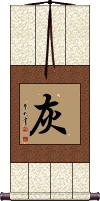
Adventures in Asian Art


Chat

Didn't find what you want?

Try these methods:
1. Use other similar-meaning words.
2. Use fewer words or just one word.
3. Post your request on our forum so we can translate it for you.

All custom calligraphy items are made-to-order in our little Beijing artwork-mounting workshop.

Hui in Chinese / Japanese...

Buy a Hui calligraphy wall scroll here!

Start your custom "Hui" project by clicking the button next to your favorite "Hui" title below...

Quick links to words on this page...

  1. Islam
  2. Opportunity
  3. Resilience / Restoration / Recovery
  4. Nippon Karate-Do Genbu-Kai
  5. The incompetent boat pilot...
  6. Fraternity
  7. Confucius: Universal Education
  8. Sorry / Apologetic / Repent / Regret
  9. The Ease of the Scholar
10. Experience is the Mother of Wisdom
11. Healing Hands
12. Live Without Regret
13. No Regrets
14. There is no god but Allah,...
15. Once in a Lifetime
16. Appreciation and Love...
17. Reincarnation / Transmigration of Souls
18. Serenity Prayer
19. Whitney
20. Wisdom / Intelligence
21. Wisdom
22. Sisterhood / Association of Women
23. Die Without Regret
24. 1000 good moves ruined by 1 bad

Prices for small custom wall scrolls start at:

Single-Character: $26.88

2 Characters: $33.88

3 Characters: $38.88

4 Characters: $43.88

7 Characters: $51.88

8 Characters: $53.88

10 Characters: $55.88

10+ Characters: $56.88

Customizations that you select may raise or lower the price. Medium size available for $7 more.

Islam

Religion of the Hui People

China huí jiào
Japan kaikyou
Korea 회교
回教

This means "Hui Religion" in Chinese. It refers specifically to the Hui people (Huizu) who have typical Oriental looks but are Muslim (practice the religion of Islam). Hui people can be found throughout China, often establishing Muslim neighborhoods in many cities.

My Japanese dictionary lists this as the all Kanji way to write Islam as well.

In Korean, the first character is used as a short name to say Muslim.

Opportunity (informal - oral)

China jī huì
Japan kikai
Korea 기회
機會

This is a common oral way to express a chance or opportunity. I don't recommend this for calligraphy artwork if your audience is Chinese, as it just would not seem right - as calligraphy is often formal and this is an informal way to say opportunity. I only made this entry because these two characters are sometimes used in the knick-knack and coffee cups with Asian characters market. For those of you with a "ji hui" coffee cup, don't worry, it does make sense.

Note: This word is slightly more formal in Korean with a meaning of "optimal timing". It's actually a good choice if your audience is Korean, but many Koreans cannot read Korean Hanja like this.
This entry also constitutes the way this word was written in Japanese before WWII and the simplification of many Kanji.

Opportunity (Japanese)

China jī huì
Japan kikai
Korea 기회
機会

This is a common way to express "opportunity" in Japanese. The first character means "chance" and the second can be translated as "meeting". So in Japanese business a "chance meeting" represents a real "opportunity".

Note that this also means opportunity in Chinese, but it's more an oral or informal word in Mandarin. Also, the second Kanji is the same as the simplified version of the hui Chinese character.

Resilience / Restoration / Recovery

China huī fù lì
恢復力

This title suggests having the power to recover, restore, rehabilitate. This can refer to yourself, someone else, or even to something, like rehabilitating a burned forest. This is the essence of resilience in life.

The first two characters are a word that means to reinstate, to resume, to restore, to recover, to regain, to rehabilitate, restoration, rehabilitation, recovery, return, replevin, improvement, recovery (from an illness), recuperation, or convalescence.

The last character means strength or power.


See Also...  Tenacity | Perseverance

Nippon Karate-Do Genbu-Kai

Japanese Genbu Karate Club

China rì běn kōng shǒu dào xuán wǔ huì
Japan ni ppon kara te dou gen bu kai
日本空手道玄武會

This is the title for Nippon Karate-Do Genbu-Kai.
A Japanese karate association of the Genbu school.

Note that while this title does make perfect sense in Chinese, it is really a Japanese title. In fact, the first word is "Japanese/Japan".


If you'd like your martial arts school, dojo or club added to our calligraphy database for easy ordering of a custom calligraphy wall scroll, just post your request on our Custom Asian Calligraphy Request Forum.

The incompetent boat pilot
blames the river for his shortcomings

China bù huì chēng chuán lài hé wān
不會撐船賴河灣

This literally translates as: [One who] cannot steer the boat blames the bends in the river.

Figuratively, this means: One who is incompetent always tries to shift the blame elsewhere.
This is similar to the English idiom, "a poor workman/craftsman blames his tools".

Fraternity

University Brotherhood / House

China xiōng dì huì
兄弟會

This is the word in Chinese for a college fraternity or some other kind of fraternal order. Literally, these characters mean "Elder brother younger brother association". The last character can also be translated as group, union, gathering, assembly, meeting, or conference.

Back to the top of this page

Confucius: Universal Education

China zì xíng shù xiū yǐ shàng wú wèi cháng wú huì yān
自行束脩以上吾未嘗無

This quote from the Analects of Confucius translates as:

For anyone who brings even the smallest token of appreciation, I have yet to refuse instruction.

Another way to put it is: If a student (or potential student) shows just an ounce of interest, desire, or appreciation for the opportunity to learn, a teacher should offer a pound of knowledge.


This was written over 2500 years ago. The composition is in ancient Chinese grammar and phrasing. A modern Chinese person would need a background in Chinese literature to understand this without aid of a reference.

Sorry / Apologetic / Repent / Regret

China hòu huǐ
Japan kou kai / go ke
Korea 후회
後悔

This is the feeling of being or feeling repentant, apologetic, and regret. This is not sorrow.

This term is often used in the context of Buddhism and other religions.


Note: This is a strange thing to write on a wall scroll for Chinese, Japanese, and Korean people - but you can bend the rules if you want in the west.

The Ease of the Scholar

Quote from Confucius

China mò ér zhì zhī xué ér bù yàn huǐ rén bù juàn hé yòu yú wǒ zāi
默而識之學而不厭誨人

This quote from the Analects of Confucius translates as:

To quietly recite and memorize the classics,
to love learning without tiring of it,
never be bored with teaching,
How could these be difficult for me?

This is a suggestion that for a true scholar, all of these things come with ease.


This was written over 2500 years ago. The composition is in ancient Chinese grammar and phrasing. A modern Chinese person would need a background in Chinese literature to understand this without aid of a reference.

Back to the top of this page

Experience is the Mother of Wisdom

China jīng yàn shì zhì huì zhī mǔ
經驗是智慧之母

It's been said that wisdom comes from good judgment, and good judgment comes from experience, while experience comes from a series of times when you used bad judgment.

This Chinese proverb makes the simplest connection between experience and wisdom.


See Also...  Failure Is The Mother Of Success | Wisdom | Learn From Wisdom

Healing Hands

China miào shǒu huí chūn
Korea 묘수회춘
妙手回春

This can be translated as "healing hands".

The first two characters are used to describe a doctor or medical professional who has admirable skill in curing disease. Literally: Wonderful or skilled hands.

The last two characters mean "Springing back to life".

Altogether, it suggests that these skilled hands can cure whatever ails you and bring you back to life. This is a great honor to bestow on your doctor or other healthcare professional that has helped you.

Live Without Regret

China shēng ér wú huǐ
Japan nama ji mu ke
生而無悔

This is how to say "live without regrets" in Mandarin Chinese.

Note: There is some debate about whether this makes sense in Japanese.


See Also...  Live For Today

Back to the top of this page

No Regrets

China wú huǐ
Japan mu ke
無悔

This is how to say "no regrets" in Mandarin Chinese. This also makes sense in Japanese though not the most common way to express "no regrets" in Japanese.


See Also...  Live For Today

There is no god but Allah,
and Muhammad is His Messenger.

China wú yī shì zhǔ wéi yǒu ān lā mù hǎn mò dé shì ān lā de chāi shǐ
無一是主惟有安拉穆罕

This is one of the key creeds of Islam.

While perhaps more often seen in Arabic as
There is no god but Allah, and Muhammad is His Messenger.
there are many native Chinese Muslims (especially the Hui ethnicity) that do not speak Arabic.

Instead, they use this Chinese phrase to express this idea or statement of faith.

Once in a Lifetime

China yī qī yī huì
Japan ichigoichie
Korea 일기일회
一期一会

This Japanese title can be translated as "for this time only", "chance meeting", "one meeting, one opportunity", "never again", or "one chance in a lifetime".

The characters literally mean "one time one meeting" - of course, the Kanji characters have meaning far beyond a direct translation like this.

Some might use this proverb to talk of an opportunity that presents itself just once in your life. It could also be the single chance-meeting with your true soul mate. Basically an expression for any event that might happen once in a lifetime.


This is primarily a Japanese title, however, there is also a Traditional Chinese (and old Korean) version of this proverb. Just the last character is different.
會The traditional form was used in Japan before WWII and in Korea prior to 1900. This title is somewhat known in China.

If you want the older traditional form, just click on the character to the right.

Back to the top of this page

Appreciation and Love
for Your Parents

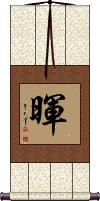
China shuí yán cùn cǎo xīn bào dé sān chūn huī
誰言寸草心報得三春暉

This is the last line of a famous poem. It is perceived as a tribute or ode to your parent's or mother from a child or children that have left home.

The poem was written by Meng Jiao during the Tang Dynasty (about 1200 years ago). The Chinese title is "You Zi Yin" which means "The Traveler's Recite".

The last line as shown here speaks of the generous and warm spring sun light which gives the grass far beyond what the little grass can could ever give back (except perhaps by showing its lovely green leaves and flourishing). The metaphor is that the sun is your mother or parents, and you are the grass. Your parents raise you and give you all the love and care you need to prepare you for the world. A debt which you can never repay, nor is repayment expected.

The first part of the poem (not written in the characters to the left) suggests that the thread in a loving mother's hands is the shirt of her traveling offspring. Vigorously sewing while wishing them to come back sooner than they left.
...This part is really hard to translate into English that makes any sense, but maybe you get the idea. We are talking about a poem that is so old that many Chinese people would have trouble reading it (as if it was the King James Version of Chinese).

Reincarnation / Transmigration of Souls

China lún huí
Japan rin ne
輪回

This is a universal word in Japanese and Chinese that expresses the Buddhist idea of "reincarnation", "transmigration of souls" or "the eternal cycle of birth and death". In some context, this can also mean "karma".

The first character means wheel, ring, turn, circle, loop or rotate.
The second character can be thought of as a suffix meaning "-times". This second character can also refer to something that revolves, returns, goes back, or a counter for the number of occurrences of some event.
Together the sum supersedes the parts and it means reincarnation. But knowing the seeing the essence of each character may help you understand some of the meaning behind the word.

廻If you request this selection from our Japanese master calligrapher, please expect that the second Kanji will look like the one shown to the right. This is the more common way to write this in Japanese. It's an alternate form of this character in Chinese (so neither way is technically wrong in either language).


See Also...  Buddhism | Rebirth

Serenity Prayer

Chinese


China shàng dì cì wǒ píng jìng qù jiē shòu wǒ suǒ bù néng gǎi biàn de wǒ yǒng qì qù gǎi biàn wǒ suǒ néng gǎi biàn de bìng wǒ zhì huì qù fēn biàn zhè liǎng zhě
上帝賜給我平靜去接受

This is the serenity prayer, as used by many 12-step programs and support groups.

In Chinese, this says:
God grant me the serenity to accept the things I cannot change, the courage to change the things I can, and the wisdom to know the difference.

Back to the top of this page

Whitney

China huì tè ní
惠特妮

This is the transliteration to Mandarin Chinese for the name Whitney

Wisdom / Intelligence

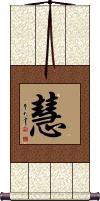
China huì
Japan e / kei
Korea
慧

This single character can be translated as wisdom, but it has more of an "intelligent" flavor. This can also mean cleverness or wit.

Japanese note: This is understood in Japanese, but seldom seen as a lone Kanji.


See Also...  Knowledge | Learning | Read

Wisdom

(All-Knowing)

China zhì huì
Japan chie
Korea 지혜
智慧

The first character means, "wise" or "smart" and the second character means "intelligence".

I have also seen these two characters translated together as knowledge, sagacity, sense, and intelligence.

Note: This word is used commonly in Chinese and is a less-common word in Japanese and Korean. If your audience is Japanese, I suggest our other Japanese wisdom option.


This means intellect or wisdom in Japanese too, but is a more unusual way to write this word (though both versions are pronounced the same in Japanese).


See Also...  Learn From Wisdom

Back to the top of this page

Wisdom (Japanese)

China zhī huì
Japan chie
Korea 지혜
知恵

The first Kanji represents "to know" or "to realize". Combined, these two Kanji mean "learn, know, and understand completely". Another way to translate this is "to know all things in their entirety".

Note: While vaguely understood in Chinese, this is only a real word in Japanese.


惠 Ancient Japanese/Korean version: This is also a word in old Korean Hanja, with a slight difference in the last character - if you want that version (which is also the ancient Japanese version) please click on the character to the right, instead of the button above.

Sisterhood / Association of Women

China fù nǚ huì
Japan fu jo kai
Korea 부녀회
婦女會

This is an expression which means "sisterhood" as in a women's association, club or group.

The first two characters mean "women".

The last character means to assemble, to meet, to gather, to see, union, group, or association.

Die Without Regret

China sǐ ér wú huǐ
死而無悔

This is how to say "die with no regrets" in Mandarin Chinese.

This proverb comes from the Analects of Confucius.


See Also...  No Regrets

Back to the top of this page

1000 good moves ruined by 1 bad

China bù pà qiān zhāo huì zhǐ pà yī zhāo shú
不怕千招會隻怕一招熟

This Chinese proverb literally translates as: Do not worry about making a thousand clever moves; what [one has to] fear is one bad move.

Figuratively, this means: Even if you have made many clever moves before, one wrong move will ruin the whole game.

I compare this to the English saying, "It takes only one Aw-shit to wipe out a thousand Attaboys".


A nice Chinese calligraphy wall scroll

The scroll that I am holding in this picture is a "medium size"
4-character wall scroll.
As you can see, it is a great size to hang on your wall.
(We also offer custom wall scrolls in larger sizes)

A professional Chinese Calligrapher

Professional calligraphers are getting to be hard to find these days.
Instead of drawing characters by hand, the new generation in China merely type roman letters into their computer keyboards and pick the character that they want from a list that pops up.

There is some fear that true Chinese calligraphy may become a lost art in the coming years. Many art institutes in China are now promoting calligraphy programs in hopes of keeping this unique form of art alive.

Trying to learn Chinese calligrapher - a futile effort

Even with the teachings of a top-ranked calligrapher in China, my calligraphy will never be good enough to sell. I will leave that to the experts.


A high-ranked Chinese master calligrapher that I met in Zhongwei

The same calligrapher who gave me those lessons also attracted a crowd of thousands and a TV crew as he created characters over 6-feet high. He happens to be ranked as one of the top 100 calligraphers in all of China. He is also one of very few that would actually attempt such a feat.


If your search is not successful, just post your request on our forum, and we'll be happy to do research or translation for any reasonable request.

Successful Chinese Character and Japanese Kanji calligraphy searches within the last few hours...


Alive
Andrew
Animals
Archer
Aries
Assassin
Beautiful
Believe
Bestfriends
Black
Blue
Brother
Buddha
Calm
Cameron
Charles
Corey
Courage
Darren
David
Diamond
Discipline
Dragon
Emily
Eric
Erin
Eternal
Faith
Family
Fernanda
Flowers
Forgiveness
Frank
Free
Freedom
Friend
Friends
Friendship
George
Good Luck
Grow
Guardian
Happy
Heart
Help
Home
Honor
Hope
House of Good Fortune
Inner Peace
Inner Strength
Jamie
Kendo
Kiss
Kung Fu
Laura
Lexi
Live for the Day
Lotus Flower
Love
Love for A Son
Love is Patient
Loyalty
Luck
Master
Money Symbol
Mother Nature
Nathan
Ninjutsu
Ninpo
No Regrets
Opportunity
Orlando
Overcome
Patience
Peace
Perserverance
Prosperity
Protect
Protector
Purple
Real
Red Color
Rick
Robert
Ruby
Ruth
Samurai
Scorpio
Scorpion
Self-restraint
Serenity
Shane
Stephen
Stone
Strength
Survive
Tai Chi
Tao Te Ching
Transcendence
Tree
True Love
Unity
William
Wisdom
Wolf

With so many searches, we had to upgrade to our own Linux server.
Of course, only one in 500 searches results in a purchase - Hey buy a wall scroll!!!


See: Our list of specifically Japanese Kanji Calligraphy Wall Scrolls. And, check out Our list of specifically old Korean Hanja Calligraphy Wall Scrolls.

The following table is only helpful for those studying Chinese (or Japanese), and perhaps helps search engines to find this page when someone enters Romanized Chinese or Japanese

Title
Characters 
Simplified
Traditional
Japanese Romaji
(Romanized Japanese)
Various forms of Romanized Chinese
Islam回教
回教
kaikyou
kaikyo
huí jiào
hui jiao
hui chiao
hui2 jiao4
huijiao
Opportunity (informal - oral)机会
機會
kikaijī huì
ji hui
chi hui
ji1 hui4
jihui
Opportunity (Japanese)机会
機會
kikaijī huì
ji hui
chi hui
ji1 hui4
jihui
Resilience / Restoration / Recovery恢复力
恢復力
n/ahuī fù lì
hui fu li
hui1 fu4 li4
huifuli
Nippon Karate-Do Genbu-Kai日本空手道玄武会
日本空手道玄武會
ni ppon kara te dou gen bu kai
nipponkaratedougenbukai
ni pon kara te do gen bu kai
rì běn kōng shǒu dào xuán wǔ huì
ri ben kong shou dao xuan wu hui
jih pen k`ung shou tao hsüan wu hui
ri4 ben3 kong1 shou3 dao4 xuan2 wu3 hui4
jih pen kung shou tao hsüan wu hui
The incompetent boat pilot
blames the river for his shortcomings
不会撑船赖河湾
不會撐船賴河灣
n/abù huì chēng chuán lài hé wān
bu hui cheng chuan lai he wan
pu hui ch`eng ch`uan lai ho wan
bu4 hui4 cheng1 chuan2 lai4 he2 wan1
buhuichengchuanlaihewan
puhuichengchuanlaihowan
pu hui cheng chuan lai ho wan
Fraternity兄弟会
兄弟會
n/axiōng dì huì
xiong di hui
hsiung ti hui
xiong1 di4 hui4
xiongdihui
Confucius: Universal Education自行束脩以上吾未尝无诲焉
自行束脩以上吾未嘗無誨焉 (note 嘗 = 嚐)
n/azì xíng shù xiū yǐ shàng wú wèi cháng wú huì yān
zi xing shu xiu yi shang wu wei chang wu hui yan
tzu hsing shu hsiu i shang wu wei ch`ang wu hui yen
zi4 xing2 shu4 xiu1 yi3 shang4 wu2 wei4 chang2 wu2 hui4 yan1
tzu hsing shu hsiu i shang wu wei chang wu hui yen
Sorry / Apologetic / Repent / Regret後悔
後悔
kou kai / go ke
koukai / goke
ko kai / go ke
hòu huǐ
hou hui
hou4 hui3
houhui
The Ease of the Scholar默而识之学而不厌诲人不倦何有于我哉
默而識之學而不厭誨人不倦何有于我哉
n/amò ér zhì zhī xué ér bù yàn huǐ rén bù juàn hé yòu yú wǒ zāi
mo er zhi zhi xue er bu yan hui ren bu juan he you yu wo zai
mo erh chih chih hsüeh erh pu yen hui jen pu chüan ho yu yü wo tsai
mo4 er2 zhi4 zhi1 xue2 er2 bu4 yan4 hui3 ren2 bu4 juan4 he2 you4 yu2 wo3 zai1
Experience is the Mother of Wisdom经验是智慧之母
經驗是智慧之母
n/ajīng yàn shì zhì huì zhī mǔ
jing yan shi zhi hui zhi mu
ching yen shih chih hui chih mu
jing1 yan4 shi4 zhi4 hui4 zhi1 mu3
jingyanshizhihuizhimu
Healing Hands妙手回春
妙手回春
n/amiào shǒu huí chūn
miao shou hui chun
miao shou hui ch`un
miao4 shou3 hui2 chun1
miaoshouhuichun
miaoshouhuichun
miao shou hui chun
Live Without Regret生而无悔
生而無悔
nama ji mu ke
namajimuke
shēng ér wú huǐ
sheng er wu hui
sheng erh wu hui
sheng1 er2 wu2 hui3
shengerwuhui
No Regrets无悔
無悔
mu ke
muke
wú huǐ
wu hui
wu2 hui3
wuhui
There is no god but Allah, and Muhammad is His Messenger.无一是主惟有安拉穆罕默德是安拉的差使
無一是主惟有安拉穆罕默德是安拉的差使
n/awú yī shì zhǔ wéi yǒu ān lā mù hǎn mò dé shì ān lā de chāi shǐ
wu yi shi zhu wei you an la mu han mo de shi an la de chai shi
wu i shih chu wei yu an la mu han mo te shih an la te ch`ai shih
wu2 yi1 shi4 zhu3 wei2 you3 an1 la1 mu4 han3 mo4 de2 shi4 an1 la1 de chai1 shi3
wu i shih chu wei yu an la mu han mo te shih an la te chai shih
Once in a Lifetime一期一会
一期一會
ichigoichieyī qī yī huì
yi qi yi hui
i ch`i i hui
yi1 qi1 yi1 hui4
yiqiyihui
ichiihui
i chi i hui
Appreciation and Love
for Your Parents
谁言寸草心报得三春晖
誰言寸草心報得三春暉
n/ashuí yán cùn cǎo xīn bào dé sān chūn huī
shui yan cun cao xin bao de san chun hui
shui yen ts`un ts`ao hsin pao te san ch`un hui
shui2 yan2 cun4 cao3 xin1 bao4 de2 san1 chun1 hui1
shui yen tsun tsao hsin pao te san chun hui
Reincarnation / Transmigration of Souls轮回
輪回 / 輪廻
rin ne
rinne
lún huí
lun hui
lun2 hui2
lunhui
Serenity Prayer上帝赐给我平静去接受我所不能改变的给我勇气去改变我所能改变的并给我智慧去分辨这两者
上帝賜給我平靜去接受我所不能改變的給我勇氣去改變我所能改變的並給我智慧去分辨這兩者
n/ashàng dì cì wǒ píng jìng qù jiē shòu wǒ suǒ bù néng gǎi biàn de wǒ yǒng qì qù gǎi biàn wǒ suǒ néng gǎi biàn de bìng wǒ zhì huì qù fēn biàn zhè liǎng zhě
shang di ci gei wo ping jing qu jie shou wo suo bu neng gai bian de gei wo yong qi qu gai bian wo suo neng gai bian de bing gei wo zhi hui qu fen bian zhe liang zhe
shang ti tz`u kei wo p`ing ching ch`ü chieh shou wo so pu neng kai pien te kei wo yung ch`i ch`ü kai pien wo so neng kai pien te ping kei wo chih hui ch`ü fen pien che liang che
shang4 di4 ci4 gei3 wo3 ping2 jing4 qu4 jie1 shou4 wo3 suo3 bu4 neng2 gai3 bian4 de gei3 wo3 yong3 qi4 qu4 gai3 bian4 wo3 suo3 neng2 gai3 bian4 de bing4 gei3 wo3 zhi4 hui4 qu4 fen1 bian4 zhe4 liang3 zhe3
shang ti tzu kei wo ping ching chü chieh shou wo so pu neng kai pien te kei wo yung chi chü kai pien wo so neng kai pien te ping kei wo chih hui chü fen pien che liang che
Whitney惠特妮
惠特妮
n/ahuì tè ní
hui te ni
hui t`e ni
hui4 te4 ni2
huiteni
huiteni
hui te ni
Wisdom / Intelligence
e / keihuì
hui
hui4
Wisdom智慧
智慧
chiezhì huì
zhi hui
chih hui
zhi4 hui4
zhihui
Wisdom (Japanese)知恵
知惠
chiezhī huì
zhi hui
chih hui
zhi1 hui4
zhihui
Sisterhood / Association of Women妇女会
婦女會
fu jo kai
fujokai
fù nǚ huì
fu nv hui
fu nü hui
fu4 nv3 hui4
funvhui
Die Without Regret死而无悔
死而無悔
n/asǐ ér wú huǐ
si er wu hui
ssu erh wu hui
si3 er2 wu2 hui3
sierwuhui
1000 good moves ruined by 1 bad不怕千招会只怕一招熟
不怕千招會隻怕一招熟
n/abù pà qiān zhāo huì zhǐ pà yī zhāo shú
bu pa qian zhao hui zhi pa yi zhao shu
pu p`a ch`ien chao hui chih p`a i chao shu
bu4 pa4 qian1 zhao1 hui4 zhi3 pa4 yi1 zhao1 shu2
pu pa chien chao hui chih pa i chao shu

If you have not set up your computer to display Chinese, the characters in this table probably look like empty boxes or random text garbage.
This is why I spent hundreds of hours making images so that you could view the characters in the "hui" listings above.
If you want your Windows computer to be able to display Chinese characters you can either head to your Regional and Language options in your Win XP control panel, select the [Languages] tab and click on [Install files for East Asian Languages]. This task will ask for your Win XP CD to complete in most cases. If you don't have your Windows XP CD, or are running Windows 98, you can also download/run the simplified Chinese font package installer from Microsoft which works independently with Win 98, ME, 2000, and XP. It's a 2.5MB download, so if you are on dial up, start the download and go make a sandwich.

Some people may refer to this entry as Hui Kanji, Hui Characters, Hui in Mandarin Chinese, Hui Characters, Hui in Chinese Writing, Hui in Japanese Writing, Hui in Asian Writing, Hui Ideograms, Chinese Hui symbols, Hui Hieroglyphics, Hui Glyphs, Hui in Chinese Letters, Hui Hanzi, Hui in Japanese Kanji, Hui Pictograms, Hui in the Chinese Written-Language, or Hui in the Japanese Written-Language.

Did you like this? Share it:


Copyright Oriental Outpost 2002-2013   -   All Rights Reserved
Image Use Policy Privacy Policy


This page of hui Chinese calligraphy dictionary search results was generated in 0.0583 seconds.