Many custom options...


And formats...



Not what you want?
Try other similar-meaning words, fewer words, or just one word.
A New Journey in Chinese / Japanese...
Buy an A New Journey calligraphy wall scroll here!
Personalize your custom “A New Journey” project by clicking the button next to your favorite “A New Journey” title below...
Switched to secondary search mode due to lack of results using primary.
These secondary results may not be very accurate. Try a different but similar meaning word or phrase for better results. Or...
Look up A New Journey in my Japanese Kanji & Chinese Character Dictionary(My dictionary is a different system then the calligraphy search you just tried)
If you want a special phrase, word, title, name, or proverb, feel free to contact me, and I will translate your custom calligraphy idea for you.
2. Year-In Year-Out Have Abundance
3. In the Abyss of Infinite Bitterness - Turn to the Shore
4. Australia
5. Banzai
7. Bodhi - Awakening Enlightenment
8. Bon Voyage
12. Crane
13. Creativity
14. Daru
16. Drunken Monkey
19. Flexibility
20. A Bright Future
21. Fresh Start
23. Happy New Year
25. The Whole Room Rocks With Laughter
26. Ice / Frost
27. Innovation
28. Ivy
29. John 3:16
30. It is the Journey, Not the Destination
31. The Destination is Nothing Without the Journey
32. A Journey of 1000 Miles Begins with a Single Step
33. Journey / Travel
35. Kansei Engineering / Sense Engineering
36. Katana
37. Katori
38. Kirin / Giraffe / Mythical Creature
40. Journey of Life
41. Lion Dance
42. Lo
45. Monkey King
46. Monkey Fist
47. Mountain Travels Poem by Dumu
48. Accept the Situation and Move On
49. Musashi
50. Never Forget Your First Resolution
51. New Beginning
52. New Caledonia
53. New Guinea
54. New Life
55. New York
56. New Zealand
57. New Moon
58. Fear not long roads; Fear only short ambition
59. Nova
60. Learn New Ways From Old / Onkochishin
61. Open the Minds of the Next Generation To Stimulate Thinking
62. Papua New Guinea
63. Undaunted After Repeated Setbacks
64. Pleasant Journey
65. Gay Pride
66. Radiance
67. Read 10,000 Books, Travel 10,000 Miles
69. Red Envelope
71. If you love your child, send them out into the world
72. Shinhan
73. Shin Kakuto-Ryu
74. Shintaido
75. Sho-Dan
76. Smooth Sailing
79. Sydney
80. Tarzan
81. Tea
82. Ten Commandments
83. Taekwondo Tenets / Spirit of Taekwon-do
84. A Journey of 1000 Miles Feels Like One
85. Turtle
1 Corinthians 13:4-8
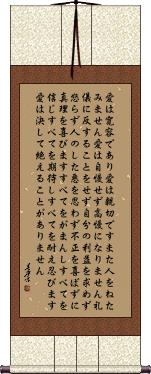
Here is 1st Corinthians 13:4-8 (just the first sentence of verse 8) in Japanese.
In the familiar NIV, this would read:
Love is patient, love is kind. It does not envy, it does not boast, it is not proud.
It does not dishonor others, it is not self-seeking, it is not easily angered, it keeps no record of wrongs.
Love does not delight in evil but rejoices with the truth.
It always protects, always trusts, always hopes, always perseveres.
Love never fails...
The Japanese text is from the 新改訳聖書 (Shinkaiyaku) or New Japanese Bible. Popular among most Protestant denominations in modern Japan.
Note: Because this selection contains some special Japanese Hiragana characters, it should be written by a Japanese calligrapher.
Year-In Year-Out Have Abundance
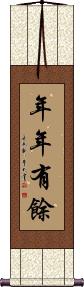
年年有餘 is a common proverb or wish of prosperity you'll hear around the time of Chinese New Year.
Directly translated character by character, it means “Year Year Have Surplus.” A more natural English translation including the deeper meaning would be “Every Year may you Have Abundance in your life.”
On a side note, this phrase often goes with a gift of something related to fish. This is because the last character, “yu” which means surplus or abundance, has exactly the same pronunciation in Mandarin as the word for “fish.”
This is also one of the most common titles for traditional paintings that feature koi fish.
In China, this phrase might make an odd wall scroll - a customer asked especially for this common phrase which is why it appears here. See my other abundance-related words if you want a wall scroll that will seem more comfortable in Chinese culture.
Note: This can be pronounced in Korean, but it's not a commonly used term.
See Also: Prosperity | Good Fortune
In the Abyss of Infinite Bitterness - Turn to the Shore
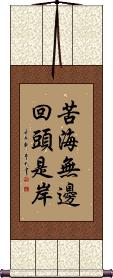
苦海無邊, 回頭是岸 can be translated almost directly as “The sea of bitterness has no bounds, turn your head to see the shore.”
Often this proverb refers to how Buddhist enlightenment can allow one to shed off the abyss of worldly suffering. But it can apply to other religions. If you find yourself trapped in the hardship of this worldly life, take a new turn, and seek a path to salvation.
Australia
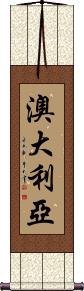
Australia
Banzai
Modern Japanese Version
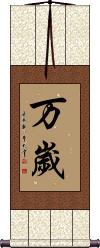
万歲 is the modern Japanese way to write banzai.
We've made two almost identical entries for this word, with just a variation on the first character. In the last century, 萬 was simplified to 万 in Japan and China. The new generation will expect it to be written as 万 but the old generation can still read the more traditional 萬 form. You must make your determination as to what version is best for you. If your audience is mostly Japanese, I suggest 万歲.
While it has become a popular, if not an odd, thing to scream as you jump out of an airplane (preferably with a parachute attached), banzai is actually a very old Asian way to say “hooray.” The Japanese word “banzai” comes from the Chinese word “wan sui” which means “The age of 10,000 years.” It is actually a wish that the Emperor or the Empire live that long.
Imagine long ago when the Emperor made a rare public appearance. This is what all of the people would yell to their leader in respect.
So if you like it as a hooray, or you want to wish someone that they live for 10,000 years, this is the calligraphy for you.
To other things with banzai in their names, I am still waiting for the promised sequel to Buckaroo Banzai.
Other translations: hurrah, long life, congratulations, cheers, live long.
Notes: Sometimes people confuse banzai with bonsai. A bonsai is a miniature tree. They have nothing to do with each other. Further, Bonzai is not a word at all - although it would make a great name for a calcium supplement for older people.
Blessings on this Home
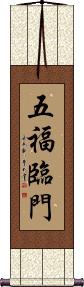
五福臨門 means “five good fortunes arrive [at the] door.”
It is understood to mean “may the five blessings descend upon this home.”
These blessings are known in ancient China to be: longevity, wealth, health, virtue, and natural death (living to old age). This is one of several auspicious sayings you might hear during the Chinese New Year.
Bodhi - Awakening Enlightenment
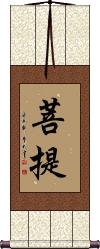
The Bodhi or 菩提 is the moment of completion in Buddhism.
It is when all things become known and you have completed your journey to enlightenment.
The reference is to the Bodhi tree where Siddhartha Gautama (the legendary man who established the Buddhist religion) achieved enlightenment. Sometimes this is referred to as “the tree of enlightenment,” but if you want the full version with the character for a tree at the end, please see the Bodhi Tree entry.
See Also: Buddhism | Buddha | Nirvana | Enlightenment
Bon Voyage
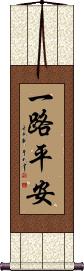
一路平安 is a wish for someone to have a pleasant journey.
It's probably the closest way to translate “bon voyage” into Chinese.
The first two characters mean one road or one path. The second two characters mean “safe and sound” or “without mishap.”
一路平安 means the same thing in Japanese but is not the most common selection for a wall scroll.
Bravery / Courage
Courage in the face of Fear
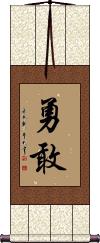
勇敢 is about courage or bravery in the face of fear.
You do the right thing even when it is hard or scary. When you are courageous, you don't give up. You try new things. You admit mistakes. This kind of courage is the willingness to take action in the face of danger and peril.
勇敢 can also be translated as braveness, valor, heroic, fearless, boldness, prowess, gallantry, audacity, daring, dauntless, and/or courage in Japanese, Chinese, and Korean. This version of bravery/courage can be an adjective or a noun. The first character means bravery and courage by itself. The second character means “daring” by itself. The second character emphasizes the meaning of the first but adds the idea that you are not afraid of taking a dare, and you are not afraid of danger.
勇敢 is more about brave behavior and not so much the mental state of being brave. You'd more likely use this to say, “He fought courageously in the battle,” rather than “He is very courageous.”
Broken Mirror Rejoined
Used in modern times for divorced couples that come back together
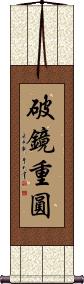
破鏡重圓 is about a husband and wife who were separated and reunited.
About 1500 years ago in China, there lived a beautiful princess named Le Chang. She and her husband Xu De Yan loved each other very much. But when the army of the Sui Dynasty was about to attack their kingdom, disposed of all of their worldly possessions and prepared to flee into exile.
They knew that in the chaos, they might lose track of each other, so the one possession they kept was a bronze mirror which is a symbol of unity for a husband and wife. They broke the mirror into two pieces, and each of them kept half of the mirror. They decided that if separated, they would try to meet at the fair during the 15th day of the first lunar month (which is the lantern festival). Unfortunately, the occupation was brutal, and the princess was forced to become the mistress of the new commissioner of the territory, Yang Su.
At the Lantern Festival the next year, the husband came to the fair to search for his wife. He carried with him his half of the mirror. As he walked through the fair, he saw the other half of the mirror for sale at a junk market by a servant of the commissioner. The husband recognized his wife's half of the mirror immediately, and tears rolled down his face as he was told by the servant about the bitter and loveless life that the princess had endured.
As his tears dripped onto the mirror, the husband scratched a poem into his wife's half of the mirror:
You left me with the severed mirror,
The mirror has returned, but absent are you,
As I gaze in the mirror, I seek your face,
I see the moon, but as for you, I see not a trace.
The servant brought the inscribed half of the mirror back to the princess. For many days, the princess could not stop crying when she found that her husband was alive and still loved her.
Commissioner Yang Su, becoming aware of this saga, realized that he could never obtain the princess's love. He sent for the husband and allowed them to reunite.
This proverb, 破鏡重圓, is now used to describe a couple who has been torn apart for some reason (usually divorce) but have come back together (or remarried).
It seems to be more common these days in America for divorced couples to reconcile and get married to each other again. This will be a great gift if you know someone who is about to remarry their ex.
Word of God / The Gospel
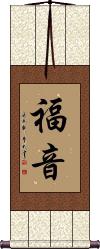
福音 is the Chinese, Korean and Japanese word for “Gospel” or “Word of God.”
福音 is a specifically Christian word in Asia (not used for any other religion).
The first character means blessing, good fortune, or good luck. This first character is a special character used throughout China to bring good tidings and fortune - especially during Chinese New Year. The second character means sound, noise, or news.
Together, these characters create a word that means “The Good News” or “The Sound of Good Fortune.”
When read by a Chinese or Japanese person, this word is always perceived as “The Christian Gospel,” “Word of God,” or even “The Voice of God.”
See Also: Christianity | Jesus Christ | God of Abraham
Crane
Graceful bird of longevity
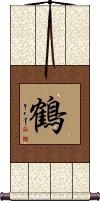
鶴 is a famous bird of China.
Known in China to be a very spiritual creature, the crane is a symbol of both longevity and the journey of the souls and spirits of ancestors.
Note: 鶴 can mean crane or stork in Japanese.
Creativity
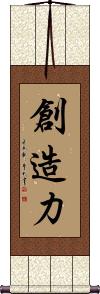
創造力 is a word that means “strength of creativity” or sort of “creativity (is your) strength.”
This can also be translated as “ingenuity.”
Creativity is the power of imagination. It is discovering your own special talents. Daring to see things in new ways and find different ways to solve problems. With your creativity, you can bring something new into the world.
The first character means “to create,” and the second means “to make or build.” Together they mean “creative.” The third character means “strength.”
Daru
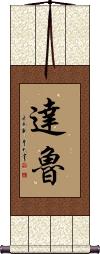
達魯 is the name Daru in Chinese (Mandarin).
Used as the name of Daru, capital of the Western Province of Papua New Guinea - also the name of the whole island in which the township resides.
Determination to Achieve
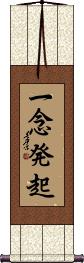
一念発起 is a Japanese proverb, “Ichinen Hokki,” which suggests being resolved to do something or having a wholehearted intention to accomplish something.
Some will translate this as “the determination to accomplish something,” or “turning over a new leaf and being determined to find success.”
Drunken Monkey
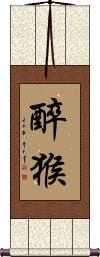
醉猴 is the short title for Drunken Monkey (often used as a title for a style of martial arts or kung fu which mimics the movements of a drunk monkey).
This martial arts style was inspired by the novel, “Journey to the West.”
See Also: Monkey Fist
Drunken Monkey Kung Fu
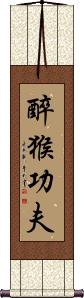
醉猴功夫 is the title for Drunken Monkey Kung Fu (Gong Fu).
The martial arts style was inspired by the novel, “Journey to the West.”
See Also: Monkey Fist
Learning is Eternal
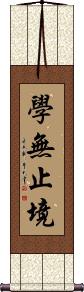
This Chinese philosophy tells of how we continue to learn throughout our lives.
This proverb can be translated in a few ways such as “Study has no end,” “Knowledge is infinite,” “No end to learning,” “There's always something new to study,” or “You live and learn.”
The deeper meaning: Even when we finish school we are still students of the world gaining more knowledge from our surroundings with each passing day.
See Also: An Open Book Benefits Your Mind | Wisdom | Learn From Wisdom
Flexibility
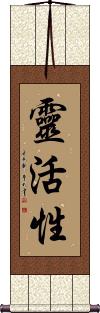
靈活性 is a Chinese and Korean word that means flexibility or being open to change.
You consider others' ideas and feelings and don't insist on your own way. Flexibility gives you creative new ways to get things done. Flexibility helps you to keep changing for the better. 靈活性 could also be defined as having a “flexible nature.”
See Also: Cooperation
A Bright Future
Incredible 10,000-Mile Flight of the Peng
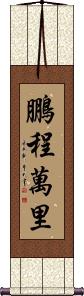
鵬程萬里 is an ancient Chinese proverb used in modern times to wish someone a long and successful career.
It's really about the 10,000 Flight of the Peng (Peng, also known as Roc is a mythical fish that can turn into a bird and take flight).
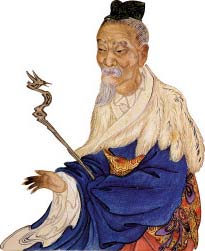
莊子
Zhuangzi or Chuang Tzu
Breaking down each character:
1. Peng or Roc (a kind of bird).
2. Journey (in this case, a flight).
3. 10,000 (Ten Thousand).
4. Li is a unit of distance often referred to as a “Chinese Mile,” though the real distance is about half a kilometer.
Direct Translation: “Peng's Journey [of] 10,000 Li.”
Literal meaning: “The 10,000-Li Flying Range Of The Roc.”
Perceived meaning: “To have a bright future” or “To go far.”
This proverb/idiom comes from the book of Zhuangzi or Chuang Tzu. It tells the tale of a huge fish that could turn into a gigantic bird. This bird was called a “peng” and was many miles long. This legendary size allowed the Peng to fly from the Northern Sea to the Southern Sea in a single bound.
Wishing someone “a Peng's Journey of 10,000 Li” will imply that they can travel far without stopping and will have great success, a long career, and a prosperous future.
Fresh Start
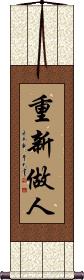
重新做人 is a Chinese proverb that means or suggests starting a new life or to make a fresh start.
Good Luck / Good Fortune
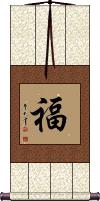
福 is pronounced “fu” in Chinese.
The character “fu” is posted by virtually all Chinese people on the doors of their homes during the Spring Festival (closely associated with the Chinese New Year).
One tradition from the Zhou Dynasty (beginning in 256 B.C.) holds that putting a fu symbol on your front door will keep the goddess of poverty away.
福 literally means good fortune, prosperity, blessed, blessedness, happiness, and fulfillment.
You'll also see this character in Vietnam (where Chinese characters were the written form until a romanization reform) where it is pronounced Phúc - a word commonly used in Vietnamese names because of its good meaning.
See Also: Lucky
Happy New Year
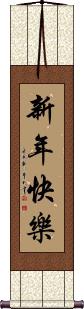
If you want to wish someone a happy new year, 新年快樂 is the way.
You can hang this up during Western New Years (Dec 31st - Jan 1st) and keep it up until after Chinese New Year which happens in either January or February of each year (it changes from year to year because China uses a lunar calendar).
Honor for Ancestors
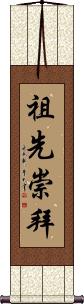
祖先崇拜 means “Appreciation and honor of your ancestors.”
This can refer to anyone from your grandparents and beyond.
The first two characters mean ancestors or forefathers.
The last two characters mean worship, adore/adoration, or admiration.
This is the kind of wall scroll that a filial son or daughter in China or Japan would hang to honor their ancestors who paved the way for the new generation.
 Japanese use a slight variation on the last Kanji. If you want this specifically Japanese version, just click on the Kanji image to the right (instead of the button above). Note that Japanese people would easily be able to identify the original Chinese form of that Kanji anyway.
They also have a similar phrase in old Korean but the first two characters are reversed - just let me know if you want that version when you place your order.
The Whole Room Rocks With Laughter
The perfect scroll if you love humor or as a gift for the comedian in your life
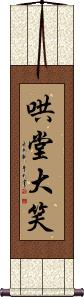
In China, 哄堂大笑 is a proverb that is used in response to a good joke or witty comment.
The story goes that Mr. Feng and Mr. He were both senior officials in the Song Dynasty (about a thousand years ago). One day, Mr. Feng walked into their shared office wearing a new pair of boots. The boots caught the eye of Mr. He who said, “New boots! - how much were they?.” Mr. Feng lifted one of the boots off the ground as if to show it off and responded, “900 coins.”
Astonished, Mr. Feng explained, “900? How can that be? - I paid 1800 coins for my boots!.” Mr. Feng then lifted his other foot off the ground and said, “This boot was also 900 coins.”
It is said that the whole room was shaking from the laughter of all that heard Mr. Feng's joke on Mr. He.
Ice / Frost
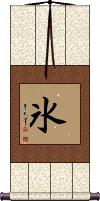
冰 is the Japanese Kanji for “ice” or “frost.”
冰 is also the way to write “ice” in old Korean Hanja.
Note: This form is not commonly used anymore in Chinese - though still understood for the most part.
FYI: There was a time when Japan did not have a written language and simply absorbed Chinese characters into their language by meaning. When this occurred around the 5th century, the character shown here was a common but alternate way to write “ice” in Chinese, so it was the one that ended up being absorbed into the Japanese language. Not long after that, a similar thing happened in Korea - although Korea has replaced virtually all of the Chinese characters they once used with the new Hangul writing system.
Innovation
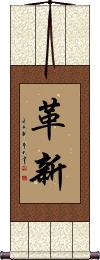
革新 means innovate or innovation in Chinese, Japanese Kanji, and old Korean Hanja.
The literal meaning is “new leather,” but you must understand that colloquially, this leather character also means renewal, reform, change, or transformation.
While the first character is leather or reform, the second character strictly means “new.”
Innovation
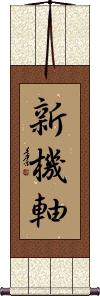
新機軸 is a Japanese word that is used to mean: innovation, new departure, new way, milestone, or breakthrough.
The literal meaning is, “new axis” or “new axle.” It's almost like saying a new wheel (like coming up with a round wheel when the previous version was square).
Please note that this also has meaning in Chinese but only would mean “new axle” without the meaning of “innovation” being associated with it. Consider this to be “Japanese only.”
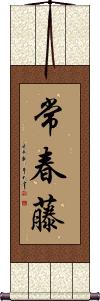
This is a common way to write “ivy” in Chinese.
There are varieties of ivy plant, and other ways to say ivy in Chinese but this version is probably the nicest. It's the one you would use if writing a poem about ivy etc.
If you want the actual meaning, this is, “Always Young Vine,” or “Ever Living Vine.” The literal meaning of the characters is more like, “Always Spring[time] Vine.” But Spring can have other representations in Chinese such as new life, youth, freshness, joyfulness, etc.
John 3:16

神愛世人甚至將他的獨生子賜給他們叫一切信他的不至滅亡反得永生 is the full translation of John 3:16 into Chinese.
This is from the Chinese Union Bible which comes from a revised version of the King James. This Chinese Bible was originally translated and printed in 1919 (several revisions since then).
Because of the origin being the KJV, I'll say that in English, this would be, “For God so loved the world, that he gave his only begotten Son, that whosoever believeth in him should not perish but have everlasting life.”
As with any translation, there are interesting cultural and linguistic issues. For instance, the word used for “world” in Chinese can also mean “common people.” So you could say that it means “For God so loved the common people...”
This does not take away from the text, as it will be understood with the same meaning and connotation.
There is no direct Greek-to-Chinese translation in print (that I know of), so this is the best available. Of course, you can ask any Greek person of faith, and they will claim that a bit is lost from the original Greek of the New Testament to any of the English versions of the Bible in print.
It is the Journey, Not the Destination
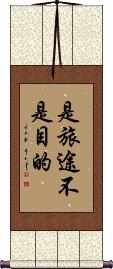
是旅途不是目的 is the English proverb, “It's the journey, not the destination,” translated into Chinese.
The Destination is Nothing Without the Journey
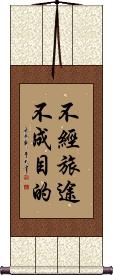
不經旅途不成目的 is the English proverb, “The destination is nothing without the journey,” translated into Chinese.
A Journey of 1000 Miles Begins with a Single Step
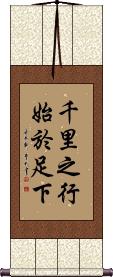
千里之行始於足下 is a Chinese proverb that means “a thousand-mile journey begins with the first step.”
This proverb figuratively means “big accomplishments come from an accumulation of little achievements made one by one.”
A Journey of 1000 Miles Begins with a Single Step
senri no michi mo ippo kara
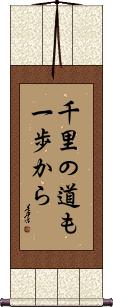
千里の道も一歩から is the Japanese version of an ancient Chinese proverb that means “a journey of a thousand miles begins with a single step.”
Some will also translate this as a 1000-mile road starts with one brick (a small amount).
In this case, the real measurement is an ancient Chinese “li” or 里, which is romanized as “ri” in Japanese. It's about half a kilometer, so three 里 would be a western mile. A journey of 333 miles begins with a single step, just doesn't sound as natural.
Note: Because this selection contains some special Japanese Hiragana characters, it should be written by a Japanese calligrapher.
Journey / Travel
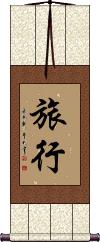
旅行 means journey or travels. It is sometimes used to refer to a vacation.
If you like a good adventure, maybe this is the word for you.
Journey / Travel
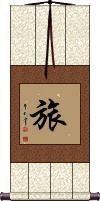
旅 is a single Chinese character, Japanese Kanji, and old Korean Hanja that means trip, travel, or journey.
In an older context, this could refer to an army brigade or a 500-man battalion from the Zhou-dynasty Chinese army.
Journey to the West
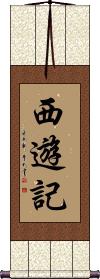
西遊記 is the original title of the novel Journey to the West.
Written during the Ming dynasty, this novel by Wu Cheng'en (吳承恩) is one of the four classic stories of Chinese literature.
Sometimes this book is titled, Pilgrimage to the West, Monkey King, or Magic Monkey.
Many movies and TV series depict or adapt portions of this story.
Kansei Engineering / Sense Engineering
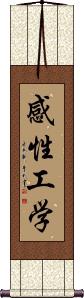
In short, 感性工學 or Kansei engineering involves collecting data on human experiences with a product and then designing or engineering improvements based on those experiences or “senses.”
Some may define Kansei as “engineering around the human experience.”
There is a lot more to know about Kansei, but if you are looking for this word, you probably already know the big picture.
Note: This term is very new in China and is only used by businesses, factories, and engineers that are implementing TQM principles. While the characters have the same base meaning in both languages, this is a Japanese title that flows back into the Chinese language (in history, most things flowed from China to Japan). To a Chinese person unfamiliar with this concept, they may interpret this as “sense vocational studies,” which doesn't make much sense. You may have to explain the intended meaning to some Chinese viewers. But that can make it a great conversation piece.
Kansei is also a newer term in Korean and is only used in certain parts of the industry, with the definition of “Sensory Engineering.” Not yet in widespread use in Korea.
Above is the modern Japanese version of this title. The last character has a Traditional Chinese version, making this 感性工學 instead of 感性工学. If you want the Traditional Chinese version, please include special instructions or email me so that I make sure the calligrapher writes the version you want.
See Also: Kaizen
Katana
Japanese Samurai Sword
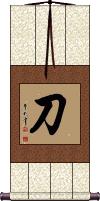
刀 is the Japanese Kanji for “sword.” This refers to the style of sword carried by warriors, samurai, and shogun of ancient Japan.
With the pacification of Japan, such swords are now only used for ceremony and decoration. The true art of sword-smithing is all but lost in Japan with new sword production dedicated to making inexpensive replicas for the tourist and foreign market.
For those of you that want to ask whether I can get you a real antique sword. Let me tell you that most real Asian swords were melted down after WWII in Japan, and during the Great Leap Forward in China. Any remaining swords are family heirlooms that nobody will part with.
Please carefully note that the Japanese kanji character shown above is only for a Japanese audience. In China, this character means “knife.” See our other entry for “sword” in Chinese.
Note: 刀 can mean knife, sword, or blade in Korean, depending on context.
See Also: Sword
Katori
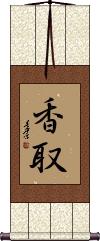
香取 is a Japanese name that romanizes as Katori.
This could refer to the ship by this name that served in the Japanese Navy until sunk by the USS Iowa in 1944. This can also be a person's name in Japan, or refer to the new city of Katori (香取市) in Chiba prefecture of Japan.
Kirin / Giraffe / Mythical Creature
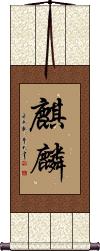
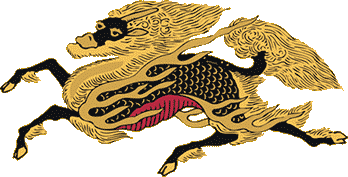
麒麟 is the title of a mythical beast of Asia.
The animal is thought to be related to the giraffe, and in some ways, it is a giraffe. However, it is often depicted with the horns of a dragon or deer and sometimes with the body like a horse, but many variations exist.
In Japanese, it is pronounced “Kirin” as in “Kirin Ichiban” beer.
Notes:
1. This is sometimes spelled as “kylin.”
2. In Japanese, this is the only Kanji word for giraffe. Therefore in Japan, this word needs context to know whether you are talking about the mythical creature or the long-necked giraffe of Africa.
3. Apparently, this was the first word used for regular giraffes in China (some were brought from Africa to China during the Ming Dynasty - probably around the year 1400). Though the mythical creature may have existed before, the name “qilin” was given to the “new giraffe.” This is because, more than 600 years ago, giraffes somewhat matched the mythical creature's description when Chinese people saw them for the first time. Later, to avoid such an ambiguous title, a three-character word was devised to mean a “giraffe of Africa.” The characters for “qilin” shown here are only for the mythological version in modern Chinese.
4. More information about the qilin / kirin from Wikipedia.
5. This creature is sometimes translated as the “Chinese Unicorn,” although it is generally portrayed with two horns. I think this is done more for the fantasy aspect of the unicorn and because most westerners don't know what a qilin or kirin is (this avoids a long explanation by the translator).
6. In Korean, this can mean kirin or simply giraffe (usually, the mythological creature is what they would think of when seeing these characters alone on a wall scroll).
Life is a Journey
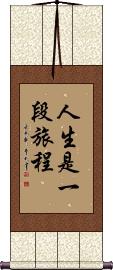
人生是一段旅程 is a proverb that means “Life is a Journey.”
If this matches your philosophy, this might be the perfect Chinese calligraphy for you.
Journey of Life
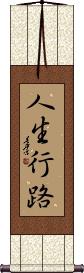
If you believe that life is a journey, this is a nice Japanese title for your wall.
人生行路 means “journey of life” in Japanese Kanji. The actual word order is more like “life (人生) journey (行路)” as Japanese grammar is a bit different than English.
Note: The “journey” part can also be translated as “road,” so this is also how to say “the road of life.”
Lion Dance
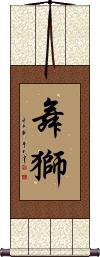
舞獅 is the Chinese title for “lion dance.”
舞獅 is the traditional Chinese costumed dance seen at festivals (especially Chinese New Year), ceremonies, and often at the beginning of Chinese martial arts events.
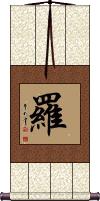
羅 is a Cantonese surname that romanizes as Lo, meaning gauze, to gather, or to catch; with a connection to fishing or trade.
Other characters also romanize as Lo:
盧 (black or rice vessel).
駱 (white horse with a black mane).
路 (road or journey).
魯 (From the ancient State of Lu).
Miyuki / Shinkou / Shinko
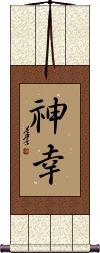
神幸 can be a Japanese surname, Shinkou or Shinko, and a Japanese female given-name Miyuki.
Technically, this means moving a shine to a new location but seldom used in that context.
Mixed Martial Arts
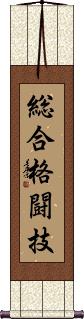
総合格闘技 is a Japanese title for mixed martial arts or MMA.
Note: Some will use other titles for this rather new word or evolving concept. This seems to be the most common right now in the Japanese language.
Monkey King
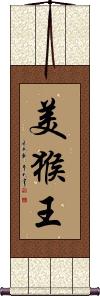
美猴王 is the specific title for “Monkey King.”
A character made famous by the ancient novel Journey to the West.
It literally means “Handsome/Beautiful Monkey King.”
See Also: Monkey Fist | Drunken Monkey
Monkey King
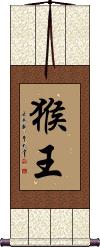
猴王 is the short title for “Monkey King.” This can refer to the character made famous by the ancient novel Journey to the West.
This literally reads “Monkey King.” However, this title is open to interpretation and could be used for someone who is the boss of the primate exhibit at the zoo or certain characters in Chinese opera.
See Also: Monkey Fist | Drunken Monkey
Monkey Fist
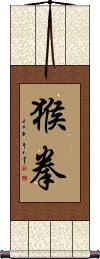
猴拳 literally means what you think, it's the “Monkey Fist” school of Kung Fu. A style that mimics the punches and movements of monkeys and apes.
Becoming popular during the Qing Dynasty, this style can trace its origins back to as early as the Song Dynasty. Some of the romance and popularity of this style comes from the novel “Journey to the West” which features the Monkey King and his fighting skills.
This novel and martial arts style has spawned a stream of Hong Kong movies featuring the Monkey King and other Kung Fu style variations such as “Drunken Monkey” and “Monkey Stealing Peaches” (a technique of disabling your opponent by grabbing and yanking on his testicles).
Note: This kind of makes sense in Korean Hanja and Japanese Kanji but probably unknown by all Koreans and Japanese except those who have an interest in this form of Kung Fu.
Mountain Travels Poem by Dumu

This poem was written almost 1200 years ago during the Tang dynasty.
It depicts traveling up a place known as Cold Mountain, where some hearty people have built their homes. The traveler is overwhelmed by the beauty of the turning leaves of the maple forest that surrounds him just as night overtakes the day, and darkness prevails. His heart implores him to stop, and take in all of the beauty around him.
First, before you get to the full translation, I must tell you that Chinese poetry is a lot different than what we have in the west. Chinese words simply don't rhyme in the same way that English or other western languages do. Chinese poetry depends on rhythm and a certain beat of repeated numbers of characters.
I have done my best to translate this poem keeping a certain feel of the original poet. But some of the original beauty of the poem in its original Chinese will be lost in translation.
Far away on Cold Mountain, a stone path leads upwards.
Among white clouds, people's homes reside.
Stopping my carriage I must, as to admire the maple forest at nights fall.
In awe of autumn leaves showing more red than even flowers of early spring.
Hopefully, this poem will remind you to stop, and “take it all in” as you travel through life.
The poet's name is “Du Mu” in Chinese that is: 
 .
.
The title of the poem, “Mountain Travels” is: 

You can have the title, poet's name, and even “Tang Dynasty” written as an inscription on your custom wall scroll if you like.
More about the poet:
Dumu lived from 803-852 AD and was a leading Chinese poet during the later part of the Tang dynasty.
He was born in Chang'an, a city in central China and the former capital of the ancient Chinese empire in 221-206 BC. In present-day China, his birthplace is currently known as Xi'an, the home of the Terracotta Soldiers.
He was awarded his Jinshi degree (an exam administered by the emperor's court which leads to becoming an official of the court) at the age of 25 and went on to hold many official positions over the years. However, he never achieved a high rank, apparently because of some disputes between various factions, and his family's criticism of the government. His last post in the court was his appointment to the office of Secretariat Drafter.
During his life, he wrote scores of narrative poems, as well as a commentary on the Art of War and many letters of advice to high officials.
His poems were often very realistic and often depicted everyday life. He wrote poems about everything, from drinking beer in a tavern to weepy poems about lost love.
The thing that strikes you most is the fact even after 1200 years, not much has changed about the beauty of nature, toils, and troubles of love and beer drinking.
Accept the Situation and Move On
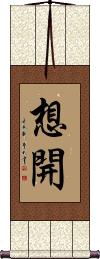
想開 is a Chinese title that translates as “move on.”
It can mean getting over a shock or bereavement. More often, it means avoiding dwelling on unpleasant things or accepting the situation and moving on. It's a suggestion to get over it and get on with life.
The literal meaning of the characters is something like “thoughts opening.” But it's understood more as getting over the same old thoughts and opening yourself up to new thoughts or ways of thinking.
Musashi
The most famous Samurai
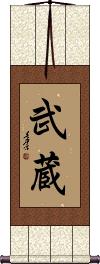
Miyamoto Musashi is probably the most famous Samurai in all of Japanese history.
武蔵 is the short title for a man long in legend. While coming from a lower class, his new sword and fighting techniques put him on par with the best that feudal Japan had to offer. His long career started with his first duel at age 13!
He is credited with using two swords at once and never losing a single battle in his career. After becoming a Buddhist, and getting older, like many old warriors, he took up a peaceful and solitary life until his death around 1645 A.D.
Note: Technically, Musashi is his given name, and Miyamoto is his surname. However, it's suggested that he assumed both of these names and had a few other names in childhood, as well as being given a Buddhist name. It's hard to know what to call him, as with most Kanji, there are multiple pronunciations. The characters for Musashi can also be pronounced Takezō. But everyone in modern times seems to know him by the name Musashi.
Never Forget Your First Resolution
Never Lose Your Beginner's Spirit
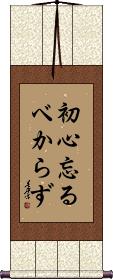
初心忘るべからず is an old Japanese proverb that suggests you try to never forget the enthusiasm you had as a child when you try new things (or even face the day-to-day). Basically, avoid having the mundane attitude that many people get with age.
You'll find this Japanese proverb translated in a few different ways. Here are some of them:
Don't forget your first resolution.
Never forget your childlike enthusiasm.
Forget not the beginner's mind.
Try never to lose your initial enthusiasm (freshness of attitude).
Note: This is sometimes written as 初心忘る可からず. The one shown above is used about 10x more often. There’s only one character difference between the two versions.
Note: Because this selection contains some special Japanese Hiragana characters, it should be written by a Japanese calligrapher.
New Beginning
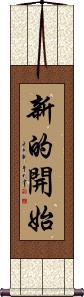
新的開始 literally means “new beginning” in Chinese characters.
The character means “new.”
The second is a possessive article connecting the ideas of new & beginning.
The last two characters can mean “to begin,” “beginning,” “to start,” “initial,” “commencement,” or “initiation.”
New Beginning
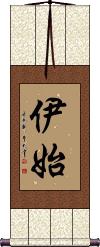
伊始 is a short version of “new beginning” or simply “beginning” in Chinese characters.
You can also translate this as “from this moment on,” “starting now,” or “henceforth.”
In the day-to-day speech, this word can apply to starting a new job, beginning a new career, entering a new chapter of your life, or taking a new position (in politics, scholarship, etc.).
New Beginning
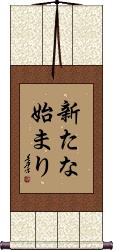
新たな始まり is a Japanese word that means “new beginning” or “new start.”
Here's the character breakdown:
新た (arata) = new; fresh; novel; newly; freshly; or this can be like the prefix “re-” like “re-start” or “reset.”
な (na) is kind of a connecting article. This glues “new” to “beginning.”
始まり (hajimari) = origin; beginning.
Note: Because this selection contains some special Japanese Hiragana characters, it should be written by a Japanese calligrapher.
New Beginning
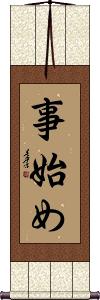
事始め is a Japanese word that means taking up a new line of work or the beginning of new things.
In another context, it can refer to starting the preparations for New Year's festivities or resuming work after the New Year's vacation.
New Beginning
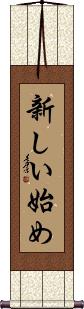
新しい始め is a verbose Japanese phrase that means “new beginning.”
The first three characters mean new, novel, fresh, recent, latest, up-to-date, or modern.
The last two characters mean beginning, start outset, opening, or origin.
Note: Because this selection contains some special Japanese Hiragana characters, it should be written by a Japanese calligrapher.
New Caledonia
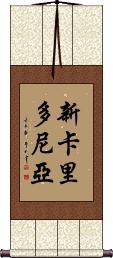
This is the Chinese name for the country of New Caledonia (overseas territory of France).
See Also: North America
New Caledonia
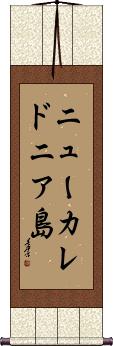
ニューカレドニア島 is the Japanese name for the island of New Caledonia.
Note: Because this selection contains some special Japanese Katakana characters, it should be written by a Japanese calligrapher.
New Guinea
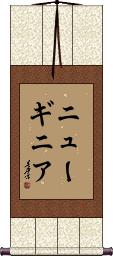
This is New Guinea in Japanese Katakana.
Note: Because this title is entirely Japanese Katakana, it should be written by a Japanese calligrapher.
New Life
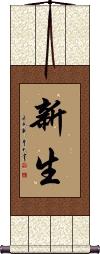
新生 literally means “new life” or “new birth” in Chinese, Japanese Kanji, and old Korean Hanja.
Depending on the context, this word can also mean newborn, new student, rebirth, new birth, or nascent.
In Japanese, this can be the given name Wakaki.
Note: This is not the most common word selection for a calligraphy wall scroll. But if you’re a westerner, you can bend the rules a bit.
New Life
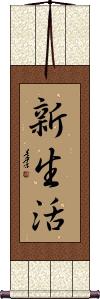
This literally means “new life” or “new livelihood” in Japanese Kanji.
新生活 is most appropriate if you are starting a new career or otherwise are starting a new chapter in your life or a new beginning.
Note: This is not the most common word selection for a calligraphy wall scroll. But if you’re a westerner, you can bend the rules a bit.
New York
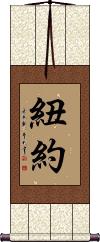
紐約 is how to write New York in Chinese.
紐約 is also the old way New York was written in Japanese.
Just as with English, this may refer to the city or the state of New York.
New York
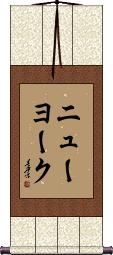
ニューヨーク is how New York is written in Japanese Katakana.
Note: Because this title is entirely Japanese Katakana, it should be written by a Japanese calligrapher.
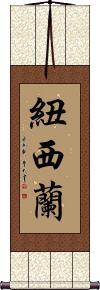
New Zealand
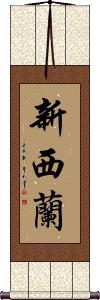
This is the Chinese name used in Mainland China for the country of New Zealand.
Note: There are two common titles for New Zealand. Just the first character changes but you might see the other title in Taiwan and Singapore.
Japanese note: This is an archaic way to write New Zealand in Japanese Kanji. In modern times,
it’s
written ニュージーランド (same pronunciation but using Katakana characters).
New Zealand
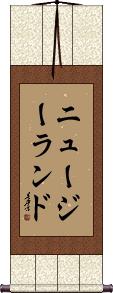
This is New Zealand in Japanese Katakana.
Note: Because this title is entirely Japanese Katakana, it should be written by a Japanese calligrapher.
New Zealand
New Moon
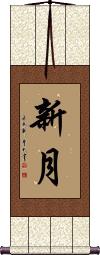
新月 literally means new moon.
This can also refer to a crescent moon or the first lunar phase that occurs every 29.53 days.
In Japanese, this can be the female given names Wakatsuki, Nidzuki, or Nitsuki. It can also be the surnames Shintsuki, Shingetsu, or Aratsuki.
Fear not long roads; Fear only short ambition
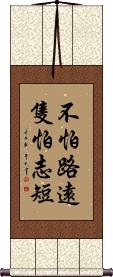
不怕路遠隻怕志短 is a Chinese proverb that literally translates as “Fear not long roads; fear only short ambition,” or “Don't fear that the road is long, only fear that your will/ambition/aspiration is short.”
Figuratively, this means: However difficult the goal is, one can achieve it as long as one is determined to do so.
Others may translate the meaning as “Don't let a lack of willpower stop you from pressing onward in your journey.”
Nova
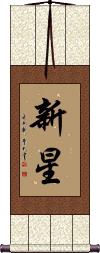
新星 is the astronomy term, Nova.
The literal meaning of these two characters is “new star.”
This can also be the Japanese surname Shinhoshi.
Learn New Ways From Old / Onkochishin
New ideas coming from past history
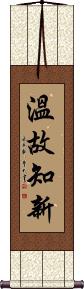
溫故知新 is a proverb from Confucius that is used in Chinese, Japanese, and Korean cultures.
It can be translated in several ways:
Coming up with new ideas based on things learned in the past.
Examine things of the past, and obtain new knowledge.
Developing new ideas based on the study of the past.
Gain new insights through restudying old issues.
Understand the present by reviewing the past.
Learning from the past.
Review the old and know the new.
Taking a lesson from the past.
Taking a lesson from the wisdom of the ancients.
Follow the old ways.
The direct translation would be, “By asking old things, know new things.”
The Character meanings breakdown this way:
溫故 = ask old
知新 = know new
Explained: To learn new things that are outside of your experience, you can learn from old things of the past. You can find wisdom in history.
 VS.
VS. 
Note: Japanese use a variant of the first Kanji in modern times.
Therefore if you order this from a Japanese calligrapher, expect the first Kanji to look like 温 instead of 溫.
In addition to 温故知新 as mentioned above, this is sometimes written as 温古知新 in Japan.
Open the Minds of the Next Generation To Stimulate Thinking
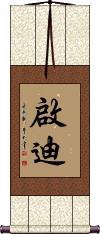
This word is often used to describe the idea of opening the minds of the young or the new generation.
See Also: Wisdom | Learning is Eternal | Learn From Wisdom
Papua New Guinea
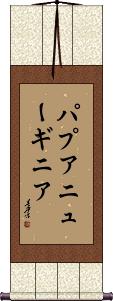
パプアニューギニア is Papua new Guinea in Japanese Katakana.
Note: Because this title is entirely Japanese Katakana, it should be written by a Japanese calligrapher.
Papua New Guinea
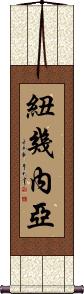
紐幾內亞 is the short name for New Guinea or Papua-New Guinea in Chinese (Mandarin).
Papua New Guinea
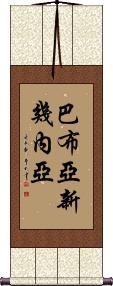
巴布亞新幾內亞 is the full name of Papua New Guinea in Chinese (Mandarin - Mainland).
In Taiwan, they use a similar version, 巴布亞紐幾內亞 (just the 4th character differs).
Undaunted After Repeated Setbacks
Persistence to overcome all challenges
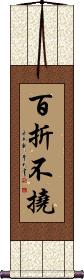
百折不撓 is a Chinese proverb that means “Be undaunted in the face of repeated setbacks.”
More directly translated, it reads, “[Overcome] a hundred setbacks, without flinching.” 百折不撓 is of Chinese origin but is commonly used in Japanese and somewhat in Korean (same characters, different pronunciation).
This proverb comes from a long, and occasionally tragic story of a man that lived sometime around 25-220 AD. His name was Qiao Xuan, and he never stooped to flattery but remained an upright person at all times. He fought to expose the corruption of higher-level government officials at great risk to himself.
Then when he was at a higher level in the Imperial Court, bandits were regularly capturing hostages and demanding ransoms. But when his own son was captured, he was so focused on his duty to the Emperor and the common good that he sent a platoon of soldiers to raid the bandits' hideout, and stop them once and for all even at the risk of his own son's life. While all of the bandits were arrested in the raid, they killed Qiao Xuan's son at first sight of the raiding soldiers.
Near the end of his career, a new Emperor came to power, and Qiao Xuan reported to him that one of his ministers was bullying the people and extorting money from them. The new Emperor refused to listen to Qiao Xuan and even promoted the corrupt Minister. Qiao Xuan was so disgusted that in protest, he resigned from his post as minister (something almost never done) and left for his home village.
His tombstone reads “Bai Zhe Bu Nao” which is now a proverb used in Chinese culture to describe a person of strong will who puts up stubborn resistance against great odds.
My Chinese-English dictionary defines these 4 characters as “keep on fighting despite all setbacks,” “be undaunted by repeated setbacks,” and “be indomitable.”
Our translator says it can mean “never give up” in modern Chinese.
Although the first two characters are translated correctly as “repeated setbacks,” the literal meaning is “100 setbacks” or “a rope that breaks 100 times.” The last two characters can mean “do not yield” or “do not give up.”
Most Chinese, Japanese, and Korean people will not take this absolutely literal meaning but will instead understand it as the title suggests above. If you want a single big word definition, it would be indefatigability, indomitableness, persistence, or unyielding.
See Also: Tenacity | Fortitude | Strength | Perseverance | Persistence
Pleasant Journey
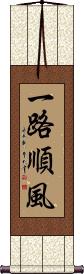
一路順風 is a Chinese and Japanese proverb that means “to have a pleasant journey,” “sailing with the wind at your back,” or as an expression to say, “everything is going well.”
Gay Pride
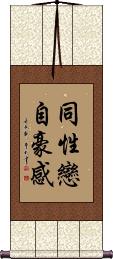
同性戀自豪感 or “Gay Pride” is a new idea in China. It's so new, that we may have just started the movement by translating this phrase.
If they ever do start having gay pride parades in China, my best guess is that these 6 characters will constitute the term they use to title the parade/movement.
Who knows, maybe in 10 years they will have a pride parade march straight past Tian'anmen Square on Chang An Street (the main drag in Beijing).
Radiance
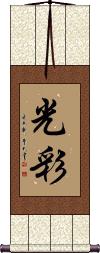
光彩 is the Chinese, Japanese Kanji, and old Korean Hanja for radiance.
Other meanings include luster, splendor/splendour, and brilliance.
光彩 is the radiance you see when a person's arrival brings happiness and joy to the room. Or the radiance on the face of a new bride etc.
If you delve into the dictionary, other forms of radiance will refer to isotopes emitting radiation. 光彩 is not related to radiation and is not the kind that causes cancer.
In Japanese, this can be several female given names such as Misa, Hikari, Hiiro, Teresa, or Arisa. And a more unisex given name of Kousai or Kosai.
Read 10,000 Books, Travel 10,000 Miles
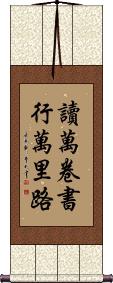
讀萬卷書行萬里路 is a lifelong suggestion for expanding your horizons by gaining knowledge, experience, and seeing the world.
Of course, this was written long ago when it was hard to travel 10,000 miles (at least 1000 years before the invention of the airplane).
With air travel and the business I'm in, I often achieve that lifetime goal on a monthly basis.
However, I am a little behind in the book count.
Note: An ancient Chinese mile (里 or lǐ) referred to in this proverb is about a third of a British/American mile. However, at that time, this was a great distance to travel.
Re-Birth / Renaissance
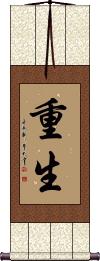
重生 is the Chinese word for rebirth. This can be used literally or metaphorically. As a metaphor, you could use this to say something like, “We are watching the rebirth of New Orleans after the disaster of Katrina.”
重生 is sometimes translated as “renaissance.”
Note: 重生 is not the Buddhist concept of reincarnation or re-birth.
See Also: Reincarnation
Red Envelope
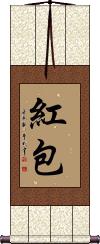
紅包 literally means “red treasure.”
Depending on the context, it can also mean “money wrapped in red as a gift,” “a bonus payment,” “a kickback,” or “a bribe.”
However, most of the time, this is an innocent gift of money in a red envelope that is given from an elder relative to a youngster. This usually happens during the Chinese New Year. It can also happen in preparation for or during a wedding in China.
紅包 is pronounced “Hong Bao” (with an “oh” vowel sound on hong) in Mandarin Chinese. Filipino Chinese call it “Ang Pao.” There are a few other variations.
Rehabilitation / Rebirth
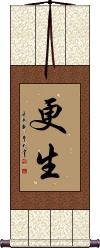
This is a Chinese, Korean and Japanese word that means rebirth or resurrection.
Other definitions include reinvigorated, rejuvenated, a new lease of life, rehabilitation, remaking one's life, starting life anew, regeneration, reorganization, rebuilding, recovery, restoration, remaking, coming back to life, revival, or resuscitation.
If you love your child, send them out into the world
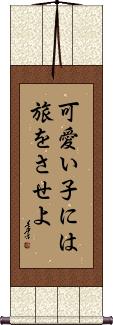
可愛い子には旅をさせよ is a Japanese proverb that means “If you love your children, send them out on a journey into the world.”
This is kind of similar to the western phrase, “Spare the rod and spoil the child.”
More literally, this reads, “Cute child, a journey granted.”
That “granted” could also be understood as “should be initiated.”
Note: Because this selection contains some special Japanese Hiragana characters, it should be written by a Japanese calligrapher.
Shinhan
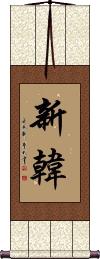
This is the Korean name Shinhan in Chinese.
This refers mostly to the Shinhan Bank of Korea, 新韓銀行. The title 新韓 literally means, “New Korea.”
Shin Kakuto-Ryu
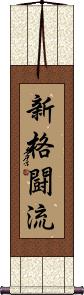
This is the title for Shinkakutō-ryū or Shin Kakuto Ryu in Japanese martial arts.
新格闘流 or Shinkakutō-ryū means “New Standard Fighting Style” or just “New Fighting Style.”
Shintaido

新体道 is Shintaido, a Japanese word translated as “New Body Way.”
Shintaido is a system of movement which aims to use the body as a means of expression and communication. Incorporating both physical and artistic elements.
Sho-Dan
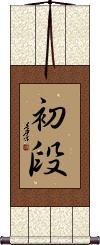
初段 is a Japanese Kanji word that literally means “beginning degree.”
初段 is the lowest black belt rank in Japanese martial arts and the game of Go.
The first Kanji means first, new, or beginning in Japanese.
Other ways to translate this title include “lowest grade” or “first grade.”
Smooth Sailing
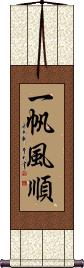
一帆風順 is just what you think it means. It suggests that you are on a trouble-free voyage through life, or literally on a sailing ship or sailboat. It is often used in China as a wish for good luck on a voyage or as you set out on a new quest or career in your life. Some may use this in place of “bon voyage.”
The literal meaning is “Once you raise your sail, you will get the wind you need, and it will take you where you want to go.” Another way to translate it is “Your sail and the wind follow your will.”
This is a great gift for a mariner, sailor, adventurer, or someone starting a new career.
Note: Can be understood in Korean Hanja but is rarely used.
See Also: Bon Voyage | Adventure | Travel
Strong / Powerful / Force
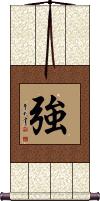
強 is a character that means strong, strength, force, powerful, better, stubborn, and stiff (yes, all of this in one character).
This “strong” has less to do with physical strength and more to do with having a winning attitude, or just having the ability to win at something.
Note that most of the time, this character is pronounced “qiang” but when used with the meaning of stubborn, unyielding, or stiff, it is pronounced “jiang” in Chinese.
Also, sometimes “qiang” is used in modern Chinese to describe people that do crazy things (For example: Bicycling from Beijing to Tibet alone). I sometimes can be found outside my Beijing apartment wearing nothing but shorts and a tee-shirt while eating ice cream during a snow storm, just to hear my neighbors call me “qiang.” Maybe they mean “strong” but perhaps they are using the new meaning of “crazy strong.”
強 can also be a Chinese surname that romanizes as Jiang in the mainland or Chiang if from Taiwan.
強 is a valid Korean Hanja character with the same meaning but is mostly used in compound Korean words.
強 is used in Japanese (though normally in compound words). In Japanese, it has the same meaning but in some contexts can mean “a little more than...” or “a little over [some amount].” Most Japanese would read this as tough, strength, stiff, hard, inflexible, obstinate, or stubborn.
The variant 彊 is sometimes seen in older literature.
Sun Wukong / Son Goku
Monkey King
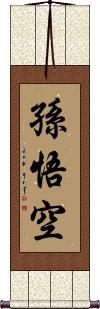
孫悟空 is the name Sun Wukong, also known as the Monkey King. He is the main character with supernatural powers in the ancient Chinese novel Journey to the West.
This title is also known as the real name of the Monkey King in Japanese. This can also be the Son Goku, better known as simply Goku, a fictional character of the Dragon Ball Japanese manga series.
Sydney
Australian city
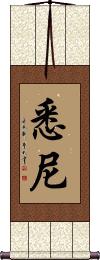
This is the Chinese name for the city of Sydney, Australia, capital of New South Wales.
Tarzan
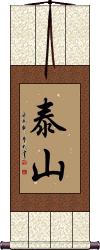
泰山 is Tarzan (a fictional character reared by apes in the jungle) in Mandarin Chinese.
The meaning of 泰山 is large mountain.
泰山 can also represent Taishan township in New Taipei City, Taiwan.
This can also be Mt. Taishan (or Tai Shan) in Shandong, the eastern sacred mountain of China.
In Japanese, this can be the surname Yasuyama or that same Mt. Taishan in China.
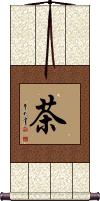
茶 means tea. It can refer to prepared tea (ready-to-drink) or dry tea leaves.
The origin of tea is China but the same character is used in Japanese Kanji, and old Korean Hanja with the exact same meaning. Japanese and Korean even borrowed the pronunciation from Chinese (pronounced “cha” in all three languages).
It's said that an early doctor (or herbologist) in ancient China kept poisoning himself as he tried different new herb concoctions. He invented tea as a means to detoxify himself as he recovered from 1 of the 76 times he nearly poisoned himself to death. Tea is seen not just as a drink but as a form of medicine used to remove impurities from the body.
The word “chai” (used in many languages to refer to various teas) is derived from this Chinese word.
茶 also means camellia, as Asian teas are often based on the leaves of camellia plant varieties.
Ten Commandments
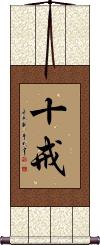
十戒 means Ten Commandments or Ten Precepts.
In the Buddhist context, these are prohibitions consisting of five commandments for the layman:
1. Not to destroy life 不殺生 Pāṇātipātāveramaṇi.
2. Not to steal 不倫盜 Adinnādānāver.
3. Not to commit adultery 不婬慾 Abrahmacaryaver.
4. Not to lie 不妄語 Musāvādāver.
5. Not to take intoxicating liquor 不飮酒 Suramereyya-Majjapamādaṭṭhānāver.
The ten commandments for the monk are the preceding five plus:
6. Not to eat food outside of regulated hours 不非時食 Vikāla-Bhojanāver.
7. Not to use garlands or perfumes 不著華鬘好香塗身 Mālā- Gandha-Vilepana-Dhāraṇa-Maṇḍana-Vibhūṣanaṭṭhānā.
8. Not to sleep on high or broad beds (chastity) 不坐高廣大牀 Uccāsayanā-Mahāsayanā.
9. Not to take part in singing, dancing, musical or theatrical performances 不歌舞倡伎不往觀聽 Nacca-Gīta-Vādita-Visūkadassanāver.
10. To refrain from acquiring uncoined or coined gold, or silver, or jewels 不得捉錢金銀寶物 Jātarūpa-Rajata-Paṭīggahaṇāver.
These original Buddhist commandments date back to about 2500 years ago. The English definitions above are followed by Chinese characters and original Pali pronunciation.
Under the Māhayāna Buddhism, these ten commands for the monk were changed, to accord with the new environment of the monk, to the following: not to kill, not to steal, to avoid all unchastity, not to lie, not to slander, not to insult, not to chatter, not to covet, not to give way to anger, to harbor no skepticism.
Taekwondo Tenets / Spirit of Taekwon-do
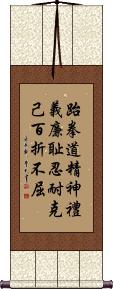
跆拳道精神禮義廉耻忍耐克己百折不屈 is General Choi's writing that is often called “The Tenets of Taekwon-do.”
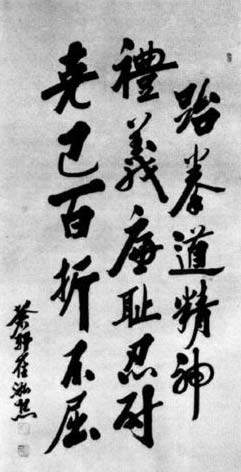
The actual title would be translated as “Taekwondo Spirit” or “The Spirit of Taekwondo.” It was originally written in Korean Hanja (Chinese characters used in Korea for about 1600 years).
General Choi's original calligraphy is shown to the right. Your custom calligraphy will be unique, and not an exact match, as each calligrapher has their own style.In modern times, the common form of written Korean is Hangul (a phonetic character set). The table below shows the text in Hangul and Hanja along with a pronunciation guide and a brief English translation:
| Traditional Korean Hanja | Modern Korean Hangul | Pronunciation | English |
| 跆拳道精神 | 태권도정신 | tae gweon do jeong sin | Taekwondo Spirit |
| 禮儀 | 예의 | ye yi | Courtesy / Etiquette / Propriety / Decorum / Formality |
| 廉耻 | 염치 | yeom ci | Integrity / Sense of Honor |
| 忍耐 | 인내 | in nae | Patience / Perseverance / Endurance |
| 克己 | 극기 | geug gi | Self-Control / Self-Denial / Self-Abnegation |
| 百折不屈 | 백절불굴 | baeg jeor bur gur | Indomitable Spirit (Undaunted even after repeated attacks from the opponent) |
| Note that the pronunciation is the official version now used in South Korea. However, it is different than what you may be used to. For instance, “Taekwon-do” is “tae gweon do.” This new romanization is supposed to be closer to actual Korean pronunciation. | |||
A Journey of 1000 Miles Feels Like One
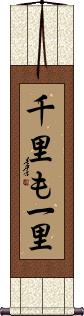
千里も一里 is a Japanese proverb that states “A journey of a thousand miles feels like only one mile.” It is understood that in the proverb, this applies when going to see the one you love.
Note that the “mile” or 里 used in this proverb is an old Chinese “li” (pronounced “ri” in Japanese). It's not actually a mile, as the measurement is really closer to 500 meters (it would take 3 of these to get close to a western mile). Still, 1000里 (333 miles) is a long way.
Turtle
...also means tortoise
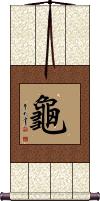
龜 is the generic term for turtle in Chinese and old Korean Hanja. It's like saying “turtle” (or “tortoise”) without being specific about the species of turtle.
Please note that there are many special characters in Chinese and a few in Japanese that denote specific species of turtle and do not include this character. We can't possibly cover all of these species, but if you want a certain one, such as “loggerhead” or a “leatherback,” just contact me, and I'll do my best to research your special species.
If you noticed, I said species names that do not include this character. This is because, in much the same way we can do it in English by just saying, “loggerhead” instead of “loggerhead turtle,” the same can be done in Chinese and Japanese.
 This may be hard to believe, but the image shown to the right is an alternate version of this character, which is currently used in Japan. This was originally an alternate form in ancient China for turtle - but it's so obscure now that most Chinese people would just think this is the Japanese version of turtle (I did a lot of research on this). The version shown in the upper left is traditional Chinese (also used in Korea 100+ years ago). It will generally not be recognized by the new generation of Japanese people. If your audience is Japanese, please click on the Kanji image shown to the right to have the calligrapher write that version (instead of clicking the button above).
Note: In Japanese, this Kanji is also a representation of long life. This is related to the fact that a tortoise can live for hundreds of years.
This in-stock artwork might be what you are looking for, and ships right away...









Successful Chinese Character and Japanese Kanji calligraphy searches within the last few hours...



