Many custom options


And formats



Utter in Chinese / Japanese
Buy an Utter calligraphy wall scroll here!
Personalize your custom “Utter” project by clicking the button next to your favorite “Utter” title below.
Utter

厄特 is the name Utter in Chinese (Mandarin).
Utter
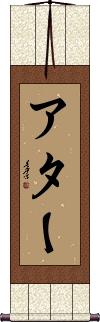
アター is the name Utter in Japanese Katakana.
Note: Because this title is entirely Japanese Katakana, it should be written by a Japanese calligrapher.
Love and Affection
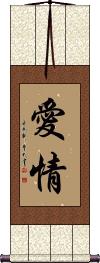
愛情 is a universal word in Japanese, Korean, and Chinese which means love and affection.
Some may translate this as “love between a man and a woman.”
Depending on the context, it can mean utter devotion or favorite.
Wolf
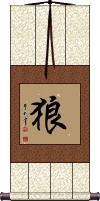
狼 is the character used to represent the elusive animal known as the wolf in both Chinese and Japanese.
If you are a fan of the wolf or the wolf means something special to you, this could make a great addition to your wall.
Do keep in mind, that much like our perception of wolves in the history of western culture, eastern cultures do not have a very positive view of wolves (save the scientific community and animal lovers). The wolf is clearly an animal that is misunderstood or feared the world over.
狼 is seldom used alone in Korean Hanja but is used in a compound word that means utter failure (as in a wolf getting into your chicken pen - or an otherwise ferocious failure). Not a good choice if your audience is Korean.
Not the results for Utter that you were looking for?
Below are some entries from our dictionary that may match your Utter search:
| Characters If shown, 2nd row is Simp. Chinese |
Pronunciation Romanization |
Simple Dictionary Definition |
吭 see styles |
kēng keng1 k`eng keng fue ふえ |
to utter (archaism) windpipe |
云う see styles |
yuu / yu ゆう iu いう |
(Godan verb with "u" ending) (1) to say; to utter; to declare; (2) to name; to call |
劫波 see styles |
jié bō jie2 bo1 chieh po kōhi |
kalpa (loanword) (Hinduism) kalpa; also劫簸; 劫跛; v. 劫. Aeon, age. The period of time between the creation and recreation ofa world or universe; also the kalpas offormation, existence, destruction, and non-existence, which four as acomplete period are called mahākalpa 大劫. Eachgreat kalpa is subdivided into four asaṇkhyeya-kalpas (阿僧企耶 i.e. numberless,incalculable): (1) kalpa of destructionsaṃvarta; (2)kalpaof utter annihilation, or empty kalpa 増滅劫; 空劫 saṃvarta-siddha; (3) kalpa of formation 成劫 vivarta; (4) kalpa ofexistence 住劫 vivartasiddha; or they may betaken in the order 成住壤空. Each of the four kalpas is subdivided into twenty antara-kalpas, 小劫 or small kalpas, so that a mahākalpaconsists of eighty small kalpas. Each smallkalpa is divided into a period of 増 increaseand 減 decrease; the increase period is ruled over by the four cakravartīs in succession, i.e. the four ages of iron,copper, silver, gold, during which the length of human life increases by oneyear every century to 84,000 years, and the length of the human body to8,400 feet. Then comes the kalpa of decreasedivided into periods of the three woes, pestilence, war, famine, duringwhich the length of human life is gradually reduced to ten years and thehuman body to 1 foot in height. There are other distinctions of the kalpas. A small kalpa isrepresented as 16,800,000 years, a kalpa as336,000,000 years, and a mahākalpa as1,334,000,000 years. There are many ways of illustrating the length of akalpa, e.g. pass a soft cloth over a solid rock40 li in size once in a hundred years, whenfinally the rock has been thus worn away a kalpa will not yet have passed; or a city of 40 li, filled with mustard seeds, one being removed everycentury till all have gone, a kalpa will notyet have passed. Cf. 成劫. |
吭氣 吭气 see styles |
kēng qì keng1 qi4 k`eng ch`i keng chi |
to utter a sound |
吭聲 吭声 see styles |
kēng shēng keng1 sheng1 k`eng sheng keng sheng |
to utter a word |
吱聲 吱声 see styles |
zhī shēng zhi1 sheng1 chih sheng |
to utter a word; to make a sound; to cheep; to squeak; also pr. [zi1 sheng1] |
唱喏 see styles |
chàng rě chang4 re3 ch`ang je chang je |
(old) to bow and utter polite phrases; to open the way (for a dignitary etc) |
塗炭 涂炭 see styles |
tú tàn tu2 tan4 t`u t`an tu tan totan とたん |
extreme distress; in utter misery misery; distress |
完敗 完败 see styles |
wán bài wan2 bai4 wan pai kanpai かんぱい |
(sports) to be trounced (by an opponent); crushing defeat (n,vs,vi) (suffering a) complete defeat; utter defeat; annihilation |
悲鳴 悲鸣 see styles |
bēi míng bei1 ming2 pei ming himei / hime ひめい |
to utter a mournful cry; wail; groan shriek; scream |
放く see styles |
koku こく |
(transitive verb) (1) (kana only) (colloquialism) to expel (from the body); to let off (a fart); to let out; (transitive verb) (2) (kana only) (vulgar) to utter (a lie, nonsense, etc.); to say; to spout (bullshit); (transitive verb) (3) (kana only) (vulgar) (See びっくらこいた) to do |
放屁 see styles |
fàng pì fang4 pi4 fang p`i fang pi houhi / hohi ほうひ |
to fart; to break wind; to talk nonsense; Utter rubbish! (n,vs,vi) breaking wind; farting; (given name) Houhi |
暢發 畅发 see styles |
chàng fā chang4 fa1 ch`ang fa chang fa chōhotsu |
to utter |
殄滅 see styles |
tenmetsu てんめつ |
(n,vs,vt,vi) complete and utter annihilation |
爲說 为说 see styles |
wéi shuō wei2 shuo1 wei shuo isetsu |
to utter |
發言 发言 see styles |
fā yán fa1 yan2 fa yen hotsugon |
to make a speech; statement; utterance; CL:個|个[ge4] to utter |
白贊 白赞 see styles |
bái zàn bai2 zan4 pai tsan byakusan |
To speak praises to the Buddha. |
盡忠 尽忠 see styles |
jìn zhōng jin4 zhong1 chin chung |
to display utter loyalty; to be loyal to the end See: 尽忠 |
真の see styles |
masano まさの |
(can act as adjective) true; real; genuine; proper; utter; (female given name) Masano |
純然 see styles |
junzen じゅんぜん |
(adj-t,adv-to) absolute; complete; utter; pure; sheer |
美事 see styles |
měi shì mei3 shi4 mei shih migoto みごと |
a fine thing; a wonderful thing (ateji / phonetic) (adjectival noun) (1) splendid; magnificent; beautiful; admirable; (2) praiseworthy act; feat; commendable deed; (adjectival noun) (3) utter (esp. defeat); total; complete |
見事 see styles |
migoto みごと |
(adjectival noun) (1) splendid; magnificent; beautiful; admirable; (2) praiseworthy act; feat; commendable deed; (adjectival noun) (3) utter (esp. defeat); total; complete |
言う see styles |
yuu / yu ゆう iu いう |
(Godan verb with "u" ending) (1) to say; to utter; to declare; (2) to name; to call; (3) to go (e.g. "the alarm went ping"); to make a noise |
謂う see styles |
yuu / yu ゆう iu いう |
(Godan verb with "u" ending) (1) to say; to utter; to declare; (2) to name; to call |
赤恥 see styles |
akahaji あかはじ |
(See 赤っ恥) great shame (endured in the public eye); deep embarrassment; profound humiliation; utter disgrace |
ど根性 see styles |
dokonjou / dokonjo どこんじょう |
utter gutsiness; plenty of guts; grit |
まっ赤 see styles |
makka まっか |
(noun or adjectival noun) (1) bright red; deep red; flushed (of face); (adjectival noun) (2) downright (e.g. lie); complete; utter |
呵婆婆 see styles |
hē pó pó he1 po2 po2 ho p`o p`o ho po po Kababa |
Hahava, or Ababa, the fourth of the eight cold hells, in which the sufferers can only utter this sound.. |
呵羅羅 呵罗罗 see styles |
hē luó luó he1 luo2 luo2 ho lo lo Karara |
Aṭaṭa the third of the eight cold hells, in which the sufferers can only utter this sound. |
土根性 see styles |
dokonjou / dokonjo どこんじょう |
(ateji / phonetic) utter gutsiness; plenty of guts; grit |
Click here for more Utter results from our dictionary
The following table may be helpful for those studying Chinese or Japanese:
| Title | Characters | Romaji (Romanized Japanese) | Various forms of Romanized Chinese | |
| Utter | 厄特 | è tè / e4 te4 / e te / ete | o t`e / ote / o te | |
| Utter | アター | ataa / ata | ||
| Love and Affection | 愛情 爱情 | aijou / aijo | ài qíng / ai4 qing2 / ai qing / aiqing | ai ch`ing / aiching / ai ching |
| Wolf | 狼 | okami | láng / lang2 / lang | |
| In some entries above you will see that characters have different versions above and below a line. In these cases, the characters above the line are Traditional Chinese, while the ones below are Simplified Chinese. | ||||

Successful Chinese Character and Japanese Kanji calligraphy searches within the last few hours...



