Many custom options...


And formats...



Tang2 in Chinese / Japanese...
Buy a Tang2 calligraphy wall scroll here!
Personalize your custom “Tang2” project by clicking the button next to your favorite “Tang2” title below...
Switched to secondary search mode due to lack of results using primary.
These secondary results may not be very accurate. Try a different but similar meaning word or phrase for better results. Or...
Look up Tang2 in my Japanese Kanji & Chinese Character Dictionary(My dictionary is a different system then the calligraphy search you just tried)
If you want a special phrase, word, title, name, or proverb, feel free to contact me, and I will translate your custom calligraphy idea for you.
1. Caramel
2. Daodejing / Tao Te Ching - Chapter 9
3. Don
4. Donahue
5. Donald
6. Donaldson
7. Donale
8. Donatella
9. Dondre
10. Donell
11. Donkor
12. Donley
13. Donn
14. Donna
15. Donnell
16. Donnelly
17. Donner
18. Donnie
19. Donnius
20. Donny
21. Donta
22. Donti
23. Downer
24. Downes
25. Downey
26. Downing
27. Gaetan
28. Tang Soo Do / Tang Hand Way
29. Law of the Fist Karate / Kempo Karate
30. MacDonald
31. McDonald
32. McDonnell
33. McDonough
35. O'Donnell
37. Sato
39. Tandra
40. Tang Hand
41. Tanguy
Caramel
Chewy Candy
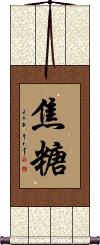
焦糖 is the word for caramel in Chinese.
This roughly translates as “coke sugar.”
Daodejing / Tao Te Ching - Chapter 9
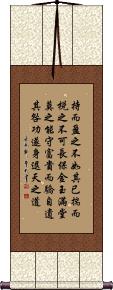
This text is the ninth chapter of the Daodejing / Tao Te Ching.
To hold until full is not as good as stopping.
An oversharpened sword cannot last long.
A room filled with gold and jewels cannot be protected.
Boasting of wealth and virtue brings your demise.
After finishing the work, withdraw.
持而盈之不如其已揣而梲之不可長保金玉滿堂莫之能守富貴而驕自遺其咎功遂身退天之道 is the Way of Heaven.
Dr. Muller's translation of all 81 Daodejing chapters
The text reads:
持而盈之、不如其已。揣而梲之、不可長保。 金玉滿堂、莫之能守。 富貴而驕、自遺其咎。 功遂身退、天之道。
This classical Chinese passage comes from the Mawangdui (馬王堆帛書) text.
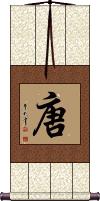
唐 is the name Don in Chinese (Mandarin).
Donahue

唐納休 is the name Donahue in Chinese (Mandarin).
Donald
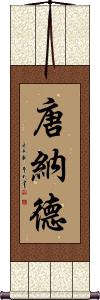
唐納德 is the name Donald in Chinese (Mandarin).
Donaldson

唐納森 is the name Donaldson in Chinese (Mandarin).
Donale

唐納 is the name Donale in Chinese (Mandarin).
Donatella
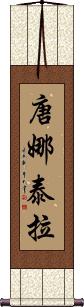
唐娜泰拉 is the name Donatella in Chinese (Mandarin).
Dondre

唐德雷 is the name Dondre in Chinese (Mandarin).
Donell

唐奈 is the name Donell in Chinese (Mandarin).
Donkor

唐科爾 is the name Donkor in Chinese (Mandarin).
Donley

唐利 is the name Donley in Chinese (Mandarin).
Donn
唐 is the name Donn in Chinese (Mandarin).
Donna
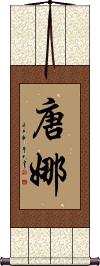
唐娜 is the name Donna in Chinese (Mandarin).
Donnell

唐納爾 is the name Donnell in Chinese (Mandarin).
Donnelly
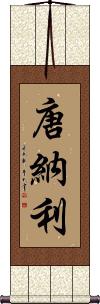
唐納利 is the name Donnelly in Chinese (Mandarin).
Donner
唐納 is the name Donner in Chinese (Mandarin).
Donnie
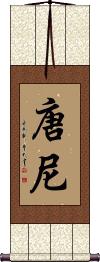
唐尼 is the name Donnie in Chinese (Mandarin).
Donnius
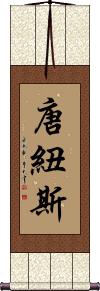
唐紐斯 is the name Donnius in Chinese (Mandarin).
Donny
唐尼 is the name Donny in Chinese (Mandarin).
Donta
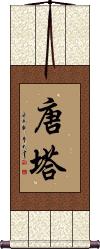
唐塔 is the name Donta in Chinese (Mandarin).
Donti

唐蒂 is the name Donti in Chinese (Mandarin).
Downer
唐納 is the name Downer in Chinese (Mandarin).
Downes

唐斯 is the name Downes in Chinese (Mandarin).
Downey
唐尼 is the name Downey in Chinese (Mandarin).
Downing

唐寧 is the name Downing in Chinese (Mandarin).
Gaetan
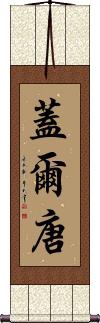
This is a common Mandarin Chinese transliteration for the male French name Gaëtan or Gaetan.
Tang Soo Do / Tang Hand Way
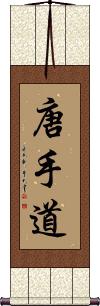
唐手道 is the alternate title for Karate-do.
This title uses a character, 唐, which represents the Tang Dynasty of China. Thus, this is often translated as the “Tang Hand Way” or incorrectly, “Tang Fist Way.”
I have also seen some call it “China Hand Way.”
Many in Korea refer to and romanize these characters as “Tang Soo Do” (당수도) where these characters refer to a kind of Korean style of Karate.
There is not a lot of information on this title but some believe that a simplified form of Kung Fu that started in China and ended up very popular in Japan used this title initially. It was later changed in Japan to a different Karate title which means “Empty Hand” (as in, without weapons).
Note: When used in Korean, this is pronounced 당수도. This title is often romanized as “Tang Soo Do,” “Tangsudo,” “Dang Su Do,” or “Dangsudo.” The last two romanizations on that list are the official Korean government romanization, though martial arts schools tend to use other non-standard versions.
Law of the Fist Karate / Kempo Karate
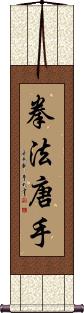
The first two characters mean “fist law” which is Romanized from Japanese as “Kenpo” or “Kempo.”
The last two are a secondary way to express “karate.”
Notes:
The more common way to express “karate” is literally “empty hand” (meaning “without weapons in your hand”). This version would be translated literally as “Tang hand” (as in the Tang Dynasty) or “China hand” (sometimes “Tang” means “China” in Japanese). Even though the character for “Tang” is used instead of “empty,” it's still pronounced “kara-te” in Japanese.
拳法唐手 is not commonly used in China - so please consider it to be a Japanese-only title.
Many Japanese people will say the last two Kanji are the old and antiquated way of saying Karate. This fact does not stop this title from existing, as these four characters are often seen in Kenpo / Kempo Dojos around the western world.
MacDonald
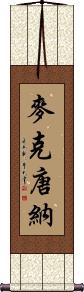
麥克唐納 is the name MacDonald in Chinese (Mandarin).
McDonald
麥克唐納 is the name McDonald in Chinese (Mandarin).
McDonnell
麥克唐納 is the name McDonnell in Chinese (Mandarin).
McDonough
麥克唐納 is the name McDonough in Chinese (Mandarin).
Northern Praying Mantis
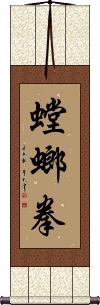
This can be translated literally as “Praying Mantis Fist.”
螳螂拳 is sometimes called Shandong Praying Mantis after its place of origin. It was created by Wang Lang and was named after the praying mantis, an insect, the aggressiveness of which inspired the style.
Shaolin records document that Wang Lang was one of the 18 masters gathered by the Shaolin Abbot Fu Ju, which dates him and Northern Praying Mantis style to the Song Dynasty (960-1279 A.D.).
The fact that the word “Northern” is used in the English title has more to do with where this style came from (Shandong is in northern China), but “north” is absent from this Chinese title.
Note: 螳螂拳 is also a title in Japanese - however, only a Japanese person who practices or is familiar with the “Praying Mantis Fist” style would recognize it.
O'Donnell
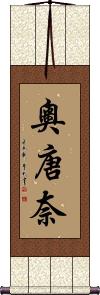
奧唐奈 is the name Odonnell or O'Donnell in Chinese (Mandarin).
Mantis / Praying Mantis
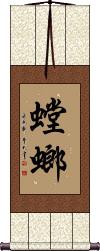
螳螂 is mantis or “praying mantis,” as it's often titled in English.
Technically speaking, this especially applies to the narrow-winged mantis (Tenodera angustipennis)
It is best to use this very common two-character Asian title for the mantis, as the second character alone can mean mantis or dragonfly (totally ambiguous).
This title is antiquated in Japanese, as they tend to write カマキリ (kama kiri) in Katakana to mean praying mantis.
 Note: There is an alternate form of this title which uses the character shown to the right instead of the first character shown above. This is uncommon in both Japan and China (if you really want it anyway, please let us know).
Sato
Japanese Surname
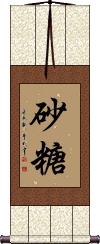
砂糖 is a Japanese surname, “Sato.”
This also means sugar or granulated sugar in both Chinese and Japanese.
There are several given names and surnames that romanize as Sato from Japanese. To see more, check out this link: Sato.
Be sure to pick the right Sato before you order a wall scroll etc.
Southern Praying Mantis
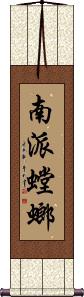
南派螳螂 can be translated literally as “Southern School Praying Mantis” or “Southern Style Praying Mantis.”
Despite its name, the Southern Praying Mantis style of Chinese martial arts is unrelated to the Northern Praying Mantis style. Southern Praying Mantis is instead related most closely to fellow Hakka styles such as Dragon and more distantly to the Fujian family of styles that includes Fujian White Crane, Five Ancestors, and Wing Chun.
This style of martial arts focuses more on fighting skills rather than aesthetics.
Of course, you already knew that if you were looking for this term.
Note: This title can be pronounced and does have meaning in Korean but only to Koreans familiar with Chinese martial arts.
Tandra
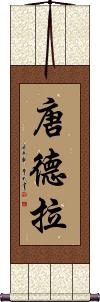
唐德拉 is the name Tandra in Chinese (Mandarin).
Tang Hand
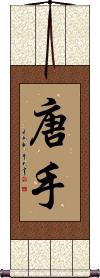
唐手 is a very seldom-used title for Karate.
This title uses a character that represents the Tang Dynasty of China. Thus, this is often translated as the “Tang Hand” or, incorrectly, “Tang Fist.”
I have also seen some call it “China Hand.”
There is not a lot of information on this title but some believe that a simplified form of Kung Fu that started in China, and ended up very popular in Japan used this title initially. It was later changed in Japan to a different Karate title which means "Empty Hand" (as in, without weapons).
I am sure that some will suggest a different history or argue a different origin. I think that nobody can be sure.
Note: Just like the more conventional Karate title, this one can have the "way" or "method" character added to the end, as in Karate-Do.
Tanguy
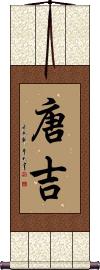
This is a common Mandarin Chinese transliteration for the male French name Tanguy.
Return to Dwell in Gardens and Fields Poem

This is Tao Yuanming's poem, “Returning to Dwell in Gardens and Fields.”
少無適俗韻 性本愛丘山。
誤落塵網中 一去三十年。
羈鳥戀舊林 池魚思故淵。
開荒南野際 抱拙歸園田。
方宅十餘畝 草屋八九間。
榆柳蔭後簷 桃李羅堂前。
暖暖遠人村 依依墟裡煙。
狗吠深巷中 雞鳴桑樹顛。
戶庭無塵雜 虛室有餘閒。
久在樊籠裡 復得返自然。
Voice of Heaven / Voices from Heaven
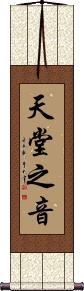
天堂之音 is a title that can be translated as either “voice of heaven” or “voices from heaven.”
The first two characters mean heaven.
The third character is a possessive article (kind of like making heaven into heaven's).
The last character means voice but can also mean sound.
Note: This can be pronounced in Korean, but it's not a commonly used term.
Not the results for Tang2 that you were looking for?
Below are some entries from our dictionary that may match your Tang2 search...
| Characters If shown, 2nd row is Simp. Chinese |
Pronunciation Romanization |
Simple Dictionary Definition |
唐 see styles |
táng tang2 t`ang tang touzaki / tozaki とうざき |
More info & calligraphy: Donn(1) (hist) Tang dynasty (of China; 618-907); T'ang dynasty; (2) (archaism) China; foreign country; (surname) Touzaki for nothing |
唐納 唐纳 see styles |
táng nà tang2 na4 t`ang na tang na |
More info & calligraphy: Donner |
焦糖 see styles |
jiāo táng jiao1 tang2 chiao t`ang chiao tang |
More info & calligraphy: Caramel |
砂糖 see styles |
shā táng sha1 tang2 sha t`ang sha tang satou / sato さとう |
More info & calligraphy: Satosugar; (surname) Satou sugar |
螳螂 see styles |
táng láng tang2 lang2 t`ang lang tang lang tourou / toro とうろう kamakiri かまきり |
More info & calligraphy: Mantis / Praying Mantis(kana only) praying mantis (esp. the narrow-winged mantis, Tenodera angustipennis) |
唐手道 see styles |
táng shǒu dào tang2 shou3 dao4 t`ang shou tao tang shou tao |
More info & calligraphy: Tang Soo Do / Tang Hand Way |
唐納德 唐纳德 see styles |
táng nà dé tang2 na4 de2 t`ang na te tang na te |
More info & calligraphy: Donald |
啺 see styles |
táng tang2 t`ang tang |
old variant of 唐[tang2] |
堂 see styles |
táng tang2 t`ang tang douzaki / dozaki どうざき |
(main) hall; large room for a specific purpose; CL:間|间[jian1]; relationship between cousins etc on the paternal side of a family; of the same clan; classifier for classes, lectures etc; classifier for sets of furniture (n,n-suf) (1) temple; shrine; chapel; (n,n-suf) (2) hall; (suffix) (3) (suffix used in company names, store names, etc.) company; (n,n-suf,n-pref) (4) (archaism) (See 表座敷) front room; (surname) Dōzaki prāsāda. A hall, temple, court. |
塘 see styles |
táng tang2 t`ang tang tomo とも |
dyke; embankment; pool or pond; hot-water bathing pool (surname, given name) Tomo |
搪 see styles |
táng tang2 t`ang tang |
to keep out; to hold off; to ward off; to evade; to spread; to coat; to smear; to daub |
棠 see styles |
táng tang2 t`ang tang |
cherry-apple |
樘 see styles |
táng tang2 t`ang tang |
pillar; door post; door or window frame; classifier for doors or windows |
溏 see styles |
táng tang2 t`ang tang |
half congealed; pond |
煻 see styles |
táng tang2 t`ang tang |
to warm; to toast |
瑭 see styles |
táng tang2 t`ang tang |
(jade) |
篖 see styles |
táng tang2 t`ang tang |
see 筕篖[hang2 tang2] |
糖 see styles |
táng tang2 t`ang tang tou / to とう |
sugar; sweets; candy; CL:顆|颗[ke1],塊|块[kuai4] sugar; (surname) Tou |
膛 see styles |
táng tang2 t`ang tang |
(bound form) hollow space |
螗 see styles |
táng tang2 t`ang tang |
variety of small cicada with a green back and a clear song (in ancient books) |
螳 see styles |
táng tang2 t`ang tang |
praying mantis |
赯 see styles |
táng tang2 t`ang tang |
red; crimson |
踼 see styles |
táng tang2 t`ang tang |
to fall flat; to fall on the face |
醣 see styles |
táng tang2 t`ang tang |
carbohydrate; old variant of 糖[tang2] |
餹 糖 see styles |
táng tang2 t`ang tang |
old variant of 糖[tang2] See: 糖 |
饄 see styles |
táng tang2 t`ang tang |
old variant of 糖[tang2] |
一堂 see styles |
yī táng yi1 tang2 i t`ang i tang ichidou / ichido いちどう |
(1) one building (hall, temple, shrine, room); (2) same room; same place; same building; (surname) Ichidou single seat |
丁糖 see styles |
dīng táng ding1 tang2 ting t`ang ting tang |
tetrose (CH2O)4, monosaccharide with four carbon atoms |
上堂 see styles |
shàng táng shang4 tang2 shang t`ang shang tang kamidou / kamido かみどう |
(place-name) Kamidou To go into the hall to expound the doctrine; to go to a temple for the purpose of worship, or bearing presents to the monks; to go to the refectory for meals. |
上膛 see styles |
shàng táng shang4 tang2 shang t`ang shang tang |
roof of the mouth; to load a gun |
Click here for more Tang2 results from our dictionary
The following table may be helpful for those studying Chinese or Japanese...
| Title | Characters | Romaji (Romanized Japanese) | Various forms of Romanized Chinese | |
| Caramel | 焦糖 | jiāo táng jiao1 tang2 jiao tang jiaotang | chiao t`ang chiaotang chiao tang |
|
| Daodejing Tao Te Ching - Chapter 9 | 持而盈之不如其已揣而梲之不可長保金玉滿堂莫之能守富貴而驕自遺其咎功遂身退天之道 持而盈之不如其已揣而梲之不可长保金玉满堂莫之能守富贵而骄自遗其咎功遂身退天之道 | chí ér yíng zhī bù rú qí yǐ chuǎi ér zhī bù kě cháng bǎo jīn yù mǎn táng mò zhī néng shǒu fù guì ér jiāo zì yí qí jiù gōng suì shēn tuì tiān zhī dào chi2 er2 ying2 zhi1 bu4 ru2 qi2 yi3 chuai3 er2 棁 zhi1 bu4 ke3 chang2 bao3 jin1 yu4 man3 tang2 mo4 zhi1 neng2 shou3 fu4 gui4 er2 jiao1 zi4 yi2 qi2 jiu4 gong1 sui4 shen1 tui4 tian1 zhi1 dao4 chi er ying zhi bu ru qi yi chuai er 棁 zhi bu ke chang bao jin yu man tang mo zhi neng shou fu gui er jiao zi yi qi jiu gong sui shen tui tian zhi dao | ch`ih erh ying chih pu ju ch`i i ch`uai erh chih pu k`o ch`ang pao chin yü man t`ang mo chih neng shou fu kuei erh chiao tzu i ch`i chiu kung sui shen t`ui t`ien chih tao chih erh ying chih pu ju chi i chuai erh chih pu ko chang pao chin yü man tang mo chih neng shou fu kuei erh chiao tzu i chi chiu kung sui shen tui tien chih tao |
|
| Don | 唐 | táng / tang2 / tang | t`ang / tang | |
| Donahue | 唐納休 唐纳休 | táng nà xiū tang2 na4 xiu1 tang na xiu tangnaxiu | t`ang na hsiu tangnahsiu tang na hsiu |
|
| Donald | 唐納德 唐纳德 | táng nà dé tang2 na4 de2 tang na de tangnade | t`ang na te tangnate tang na te |
|
| Donaldson | 唐納森 唐纳森 | táng nà sēn tang2 na4 sen1 tang na sen tangnasen | t`ang na sen tangnasen tang na sen |
|
| Donale | 唐納 唐纳 | táng nà / tang2 na4 / tang na / tangna | t`ang na / tangna / tang na | |
| Donatella | 唐娜泰拉 | táng nà tài lā tang2 na4 tai4 la1 tang na tai la tangnataila | t`ang na t`ai la tangnataila tang na tai la |
|
| Dondre | 唐德雷 | táng dé léi tang2 de2 lei2 tang de lei tangdelei | t`ang te lei tangtelei tang te lei |
|
| Donell | 唐奈 | táng nài / tang2 nai4 / tang nai / tangnai | t`ang nai / tangnai / tang nai | |
| Donkor | 唐科爾 唐科尔 | táng kē ěr tang2 ke1 er3 tang ke er tangkeer | t`ang k`o erh tangkoerh tang ko erh |
|
| Donley | 唐利 | táng lì / tang2 li4 / tang li / tangli | t`ang li / tangli / tang li | |
| Donn | 唐 | táng / tang2 / tang | t`ang / tang | |
| Donna | 唐娜 | táng nà / tang2 na4 / tang na / tangna | t`ang na / tangna / tang na | |
| Donnell | 唐納爾 唐纳尔 | táng nà ěr tang2 na4 er3 tang na er tangnaer | t`ang na erh tangnaerh tang na erh |
|
| Donnelly | 唐納利 唐纳利 | táng nà lì tang2 na4 li4 tang na li tangnali | t`ang na li tangnali tang na li |
|
| Donner | 唐納 唐纳 | táng nà / tang2 na4 / tang na / tangna | t`ang na / tangna / tang na | |
| Donnie | 唐尼 | táng ní / tang2 ni1 / tang ni / tangni | t`ang ni / tangni / tang ni | |
| Donnius | 唐紐斯 唐纽斯 | táng niǔ sī tang2 niu3 si1 tang niu si tangniusi | t`ang niu ssu tangniussu tang niu ssu |
|
| Donny | 唐尼 | táng ní / tang2 ni1 / tang ni / tangni | t`ang ni / tangni / tang ni | |
| Donta | 唐塔 | táng tǎ / tang2 ta3 / tang ta / tangta | t`ang t`a / tangta / tang ta | |
| Donti | 唐蒂 | táng dì / tang2 di4 / tang di / tangdi | t`ang ti / tangti / tang ti | |
| Downer | 唐納 唐纳 | táng nà / tang2 na4 / tang na / tangna | t`ang na / tangna / tang na | |
| Downes | 唐斯 | táng sī / tang2 si1 / tang si / tangsi | t`ang ssu / tangssu / tang ssu | |
| Downey | 唐尼 | táng ní / tang2 ni2 / tang ni / tangni | t`ang ni / tangni / tang ni | |
| Downing | 唐寧 唐宁 | táng níng tang2 ning2 tang ning tangning | t`ang ning tangning tang ning |
|
| Gaetan | 蓋爾唐 盖尔唐 | gài ěr táng gai4 er3 tang2 gai er tang gaiertang | kai erh t`ang kaierhtang kai erh tang |
|
| Tang Soo Do Tang Hand Way | 唐手道 | kara te do / karatedo | táng shǒu dào tang2 shou3 dao4 tang shou dao tangshoudao | t`ang shou tao tangshoutao tang shou tao |
| Law of the Fist Karate Kempo Karate | 拳法唐手 | ken pou kara te kenpoukarate ken po kara te | quán fǎ táng shǒu quan2 fa3 tang2 shou3 quan fa tang shou quanfatangshou | ch`üan fa t`ang shou chüanfatangshou chüan fa tang shou |
| MacDonald | 麥克唐納 麦克唐纳 | mài kè táng nà mai4 ke4 tang2 na4 mai ke tang na maiketangna | mai k`o t`ang na maikotangna mai ko tang na |
|
| McDonald | 麥克唐納 麦克唐纳 | mài kè táng nà mai4 ke4 tang2 na4 mai ke tang na maiketangna | mai k`o t`ang na maikotangna mai ko tang na |
|
| McDonnell | 麥克唐納 麦克唐纳 | mài kè táng nà mai4 ke4 tang2 na4 mai ke tang na maiketangna | mai k`o t`ang na maikotangna mai ko tang na |
|
| McDonough | 麥克唐納 麦克唐纳 | mài kè táng nà mai4 ke4 tang2 na4 mai ke tang na maiketangna | mai k`o t`ang na maikotangna mai ko tang na |
|
| Northern Praying Mantis | 螳螂拳 | tou rou ken tourouken to ro ken | táng láng quán tang2 lang2 quan2 tang lang quan tanglangquan | t`ang lang ch`üan tanglangchüan tang lang chüan |
| O'Donnell | 奧唐奈 奥唐奈 | ào táng nài ao4 tang2 nai4 ao tang nai aotangnai | ao t`ang nai aotangnai ao tang nai |
|
| Mantis Praying Mantis | 螳螂 / 蟷螂 螳螂 | tou rou / tourou / to ro | táng láng tang2 lang2 tang lang tanglang | t`ang lang tanglang tang lang |
| Sato | 砂糖 | satou / sato sato / sato | shā táng / sha1 tang2 / sha tang / shatang | sha t`ang / shatang / sha tang |
| Southern Praying Mantis | 南派螳螂 | nán pài táng láng nan2 pai4 tang2 lang2 nan pai tang lang nanpaitanglang | nan p`ai t`ang lang nanpaitanglang nan pai tang lang |
|
| Tandra | 唐德拉 | táng dé lā tang2 de2 la1 tang de la tangdela | t`ang te la tangtela tang te la |
|
| Tang Hand | 唐手 | kara te / karate | táng shǒu tang2 shou3 tang shou tangshou | t`ang shou tangshou tang shou |
| Tanguy | 唐吉 | táng jí / tang2 ji2 / tang ji / tangji | t`ang chi / tangchi / tang chi | |
| Return to Dwell in Gardens and Fields Poem | 少無適俗韻性本愛丘山誤落塵網中一去三十年羈鳥戀舊林池魚思故淵開荒南野際抱拙歸園田方宅十余畝草屋八九間榆柳蔭后檐桃李羅堂前暖暖遠人村依依墟里煙狗吠深巷中雞鳴桑樹顛戶庭無塵雜虛室有余閑久在樊籠里復得返自然 少无适俗韵性本爱丘山误落尘网中一去三十年羁鸟恋旧林池鱼思故渊开荒南野际抱拙归园田方宅十余亩草屋八九间榆柳荫后檐桃李罗堂前暖暖远人村依依墟里烟狗吠深巷中鸡鸣桑树颠户庭无尘杂虚室有余闲久在樊笼里复得返自然 | shào wú shì sú yùn xìng běn ài qiū shān wù luò chén wǎng zhōng yī qù sān shí nián jī niǎo liàn jiù lín chí yú sī gù yuān kāi huāng nán yě jì bào zhuō guī yuán tián fāng zhái shí yú mǔ cǎo wū bā jiǔ jiān yú liǔ yīn hòu yán táo lǐ luó táng qián nuǎn nuǎn yuǎn rén cūn yī yī xū lǐ yān gǒu fèi shēn xiàng zhōng jī míng sāng shù diān hù tíng wú chén zá xū shì yǒu yú xián jiǔ zài fán lóng lǐ fù dé fǎn zì rán shao4 wu2 shi4 su2 yun4 xing4 ben3 ai4 qiu1 shan1 wu4 luo4 chen2 wang3 zhong1 yi1 qu4 san1 shi2 nian2 ji1 niao3 lian4 jiu4 lin2 chi2 yu2 si1 gu4 yuan1 kai1 huang1 nan2 ye3 ji4 bao4 zhuo1 gui1 yuan2 tian2 fang1 zhai2 shi2 yu2 mu3 cao3 wu1 ba1 jiu3 jian1 yu2 liu3 yin1 hou4 yan2 tao2 li3 luo2 tang2 qian2 nuan3 nuan3 yuan3 ren2 cun1 yi1 yi1 xu1 li3 yan1 gou3 fei4 shen1 xiang4 zhong1 ji1 ming2 sang1 shu4 dian1 hu4 ting2 wu2 chen2 za2 xu1 shi4 you3 yu2 xian2 jiu3 zai4 fan2 long2 li3 fu4 de2 fan3 zi4 ran2 shao wu shi su yun xing ben ai qiu shan wu luo chen wang zhong yi qu san shi nian ji niao lian jiu lin chi yu si gu yuan kai huang nan ye ji bao zhuo gui yuan tian fang zhai shi yu mu cao wu ba jiu jian yu liu yin hou yan tao li luo tang qian nuan nuan yuan ren cun yi yi xu li yan gou fei shen xiang zhong ji ming sang shu dian hu ting wu chen za xu shi you yu xian jiu zai fan long li fu de fan zi ran | shao wu shih su yün hsing pen ai ch`iu shan wu lo ch`en wang chung i ch`ü san shih nien chi niao lien chiu lin ch`ih yü ssu ku yüan k`ai huang nan yeh chi pao cho kuei yüan t`ien fang chai shih yü mu ts`ao wu pa chiu chien yü liu yin hou yen t`ao li lo t`ang ch`ien nuan nuan yüan jen ts`un i i hsü li yen kou fei shen hsiang chung chi ming sang shu tien hu t`ing wu ch`en tsa hsü shih yu yü hsien chiu tsai fan lung li fu te fan tzu jan shao wu shih su yün hsing pen ai chiu shan wu lo chen wang chung i chü san shih nien chi niao lien chiu lin chih yü ssu ku yüan kai huang nan yeh chi pao cho kuei yüan tien fang chai shih yü mu tsao wu pa chiu chien yü liu yin hou yen tao li lo tang chien nuan nuan yüan jen tsun i i hsü li yen kou fei shen hsiang chung chi ming sang shu tien hu ting wu chen tsa hsü shih yu yü hsien chiu tsai fan lung li fu te fan tzu jan |
|
| Voice of Heaven Voices from Heaven | 天堂之音 | tiān táng zhī yīn tian1 tang2 zhi1 yin1 tian tang zhi yin tiantangzhiyin | t`ien t`ang chih yin tientangchihyin tien tang chih yin |
|
| In some entries above you will see that characters have different versions above and below a line. In these cases, the characters above the line are Traditional Chinese, while the ones below are Simplified Chinese. | ||||

Successful Chinese Character and Japanese Kanji calligraphy searches within the last few hours...



