Many custom options


And formats



Sage in Chinese / Japanese
Buy a Sage calligraphy wall scroll here!
Personalize your custom “Sage” project by clicking the button next to your favorite “Sage” title below.
1. Sage
3. Teacher / Master / Old Sage
5. The Saint
6. Confucius
7. The Saint
10. Zhuge Liang
11. Juggernaut
13. Mencius
Sage

セージ is the name Sage in Japanese Katakana.
Note: Because this title is entirely Japanese Katakana, it should be written by a Japanese calligrapher.
Tetsu / Wise Sage
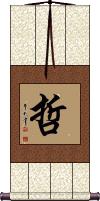
哲 is a Japanese name that is often romanized as Tetsu.
The meaning of the character can be: philosophy; wise; sage; wise man; philosopher; disciple; sagacity; wisdom; intelligence.
哲 can also be romanized as: Yutaka; Masaru; Hiroshi; Tooru; Tetsuji; Choru; Satoru; Satoshi; Akira; Aki.
Teacher / Master / Old Sage
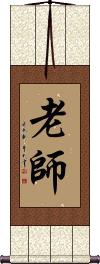
老師 directly translates as “old teacher,” “old master,” or “old sage.”
Together, they are understood as “teacher.” When you think about that, also realize that with age comes respect in Asian cultures. So calling someone old is a term of respect (not like the way we mean it in English). You could replace “old” with “respected” and be closer to how this is meant in Chinese.
Teachers, in general, are more respected by their students and the population in China. When I was a teacher in China, I certainly felt that.
This term is also used for masters of certain fields. For instance, a master calligrapher would respectfully be addressed as a “teacher.” In this case, “master” and “teacher” are synonymous.
Other artists (especially those who are famous or accomplished) should be addressed with this term. Also, some martial arts schools use this term of respect for their masters/teachers/instructors.
This title is recognized in Japanese as “roushi” with the same meaning but it’s rarely used in Japan.
Holy Man / Saint
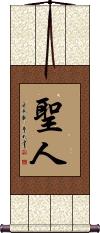
聖人 can mean saint, sage, or holy man.
Note: There is more than one way to express this idea. This one really matches “Holy man” because the second character means “human” or “person” (therefore, this could equally mean “Holy woman”).
The Saint
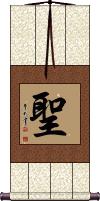
聖 is the simple, single-character religious form of “saint” in Chinese (also holds the same meaning in Japanese and Korean, though rarely used alone like this).
This can also mean holy, sage, master, or priest.
Note: 聖 is often used in compound words (words of more than one character) to create further meanings. In compounds, it can mean holy, sacred, or divine.
聖 is also used as the first word for Spanish and English place names such as “San Diego” and “St. Louis” in Chinese (not Japanese).
In the Buddhist context, this can represent ārya or sādhu. And mean a sage; wise and good; upright, or correct in all his character; sacred, holy, or saintly.
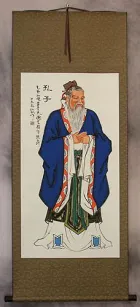
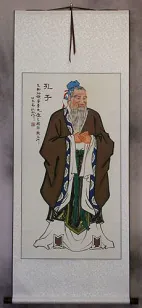
Confucius
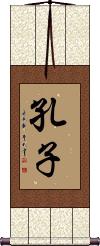
孔子 is how to write the name of the great sage, known in the West as Confucius.
His real name is Kongzi (The name Confucius is a westernized version of his name - his family name is Kong, and “zi” was added as a title of distinction).
He lived some 2500 years ago in Qufu, a town in modern-day Shandong Province of Northern China (about 6 hours south of Beijing by bus). He was a consort to Emperors, and after his death, the impact of his philosophies still served to advise emperors, officials, and common people for generations.
Also during these thousands of years, the Kong family remained powerful in China, and the Kong estate was much like the Vatican in Rome. The Kong estate existed as if on sovereign ground with its own small garrison of guards and the privileges of a kingdom within an empire.
This was true up until the time the Kong family had to flee to Taiwan in 1949 when the Red Army took victory over the Nationalists during the Revolution. The home of Confucius was later razed and all statues were defaced or stolen during the Cultural Revolution. Finally, after years of smearing his name and image, it is once again okay to celebrate the teachings of Confucius in mainland China.
Known as Khổng Tử in Vietnamese.
The Saint
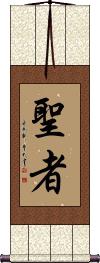
聖者 is the religious way to express the idea of “Saint” in Chinese, Korean Hanja, and Japanese Kanji.
Some may translate this as “Holy man” or “Holy person.”
Fairy / Nymph
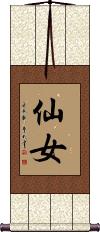
仙女 is a Chinese, Japanese Kanji, and old Korean Hanja way to write fairy or nymph.
This can also be translated as a female elf or female sage.
In Japanese, this can be the female given name, Sennyo.
Wise and Virtuous
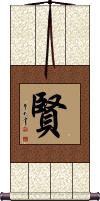
賢 is used to refer to being a wise, trustworthy, and virtuous person. But it also contains the ideas of intelligence, genius, scholarship, virtue, sage, saint, good, and excellent in character.
賢 is used in Chinese, Japanese Kanji, and old Korean Hanja. Also used in a Buddhist context with the same meaning.
Note: Can also be the male given name, Masaru, in Japanese.
Zhuge Liang
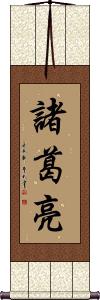
諸葛亮 is the name Zhuge Liang, written in Chinese.
Zhuge Liang lived from 181 to 234 A.D.
He was a military leader and prime minister of Shu Han (蜀漢) during the Three Kingdoms period.
He was the main hero of the fictional Romance of Three Kingdoms.
He is considered a famous sage, philosopher, and military genius.
Juggernaut
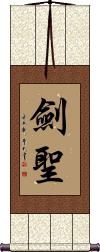
劍聖 is about the closest you can get to juggernaut in Chinese.
This more literally means “Sage of the Sword,” “Master Swordsman,” or “Sword Saint.” In Chinese terms, such a person with a divine mastery of the sword is unstoppable. Thus, the meaning of juggernaut can be derived from this term.
There is a very similar Japanese word (a slight variation on the first character) that means “Sword Saint” or “Kensei.”
Shakyamuni / The Buddha
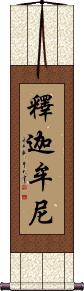
釋迦牟尼 is a transliteration of “Shakyamuni” or “Sakyamuni” in Chinese, Japanese, and old Korean.
The perceived meaning of the name is roughly translated as “Sage of the Sakyas.”
This same Buddha is also known as “Siddhartha Gautama,” “Gotama Buddha,” “Tathagata,” or simply, “The Supreme Buddha.”
Shakyamuni is the legendary man and prince who eventually established the Buddhist religion.
Note: Occasionally Romanized as “Siddhattha Gotama.”
This combination of characters is sometimes seen and used in South Korea and Japan as well (with the same meaning).
Note: 釋迦牟尼 came from the Sanskrit शाक्यमुनि and can also be romanized with diuretics as Śākyamuni.
Mencius
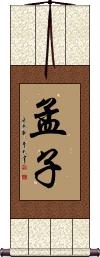
孟子 is the name Mencius in Chinese.
Mencius had the name “Mèng Kē” (孟軻) at birth. This later changed to Mèng Zǐ (孟子). He lived between 372 and 289 BCE.
Mencius was a Chinese Confucian philosopher who has often been referred to as the “Second Sage” following Confucius himself.
For disambiguation, one of the classic books of Confucianism is also titled 孟子.
Romanization of Mencius from Chinese includes Meng Tsu, Mengzi, and his original name Mengke or Meng Ko. In Japanese, he is Mōshi or Moushi.
Seishin-Kai / Seishinkai
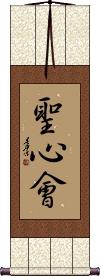
聖心会 is the Japanese martial arts title “Seishinkai” or “Seishin-Kai.”
It literally means “Sacred Heart Association” or “Pure-Heart Club.”
聖 can mean holy, sacred, saint, sage, virtuous, expert, wise and good, upright, or correct.
心 can mean heart, mind, center, core, spirit, soul, or vitality.
聖心 creates a word meaning sacred heart, or the holy mind (that of Buddha).
会 in Japanese means association, club, meeting, assembly, party, gathering, conference, athletic meet, or society.
Daodejing / Tao Te Ching - Chapter 27
The Mastery of Effortless Skill

Chapter 27 of the Daodejing reveals a profound truth about mastery: the highest skill leaves no trace, requires no force, and appears almost invisible.
善行無轍跡,
善言無瑕謫,
善數不用籌策,
善閉無關鍵而不可開,
善結無繩約而不可解。
是以聖人常善救人,
故無棄人;
常善救物,
故無棄物。
是謂襲明。
故善人者,不善人之師;
不善人者,善人之資。
不貴其師,不愛其資,
雖智大迷,
是謂要妙。
The sage moves through life with such natural harmony that nothing seems imposed; doors need no locks, knots require no rope, and actions leave no mark behind.
This is the essence of wúwéi (effortless action), where true ability arises from deep alignment with the Tao rather than deliberate effort.
At its heart, this chapter teaches compassion without exception. The sage “abandons no one and nothing,” recognizing value in all people and all things. Even those who seem flawed or unrefined are not rejected, but understood as part of a greater whole with each person both a student and a teacher in the unfolding of life.
Laozi reminds us that wisdom is not about perfection or control, but about subtle awareness. The truly skilled individual does not rely on tools, rules, or rigid structures; instead, they embody an intuitive understanding that makes their actions naturally complete.
In this way, excellence becomes quiet, effortless, and beyond imitation.
This teaching also reflects a deeper philosophical insight: Opposites are interdependent. The “good” person learns from the “not good,” and the “not good” provides the material for growth. To reject either is to misunderstand the balance of existence itself.
As calligraphy, Daodejing Chapter 27 serves as a reminder to cultivate inner mastery rather than outward display. It is a meditation on refinement, humility, and the quiet power of skill perfected through harmony with the natural order.
Note: The Chinese text used here is based on the early Mawangdui silk manuscript tradition (2nd century BCE). The Guodian manuscripts do NOT preserve Chapter 27 in full form.
Daodejing / Tao Te Ching - Chapter 81
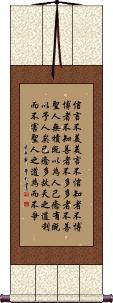
信言不美美言不信知者不博博者不知善者不多多者不善聖人無積既以為人己癒有既以予人矣已癒多故天之道利而不害聖人之道為而不爭 is the Mawangdui version of Daodejing chapter 81.
Credible words are not eloquent;
Eloquent words are not credible.
The wise are not erudite;
The erudite are not wise.
The adept are not all-around;
The all-around are not adept.
The sages do not accumulate things.
Yet the more they have done for others,
The more they have gained themselves;
The more they have given to others,
The more they have gotten themselves.
Thus, the way of tian (heaven) is to benefit without harming;
The way of sages is to do without contending.
Sincere words are not showy;
showy words are not sincere.
Those who know are not “widely learned”;
those “widely learned” do not know.
The good do not have a lot;
Those with a lot are not good.
The Sage accumulates nothing.
Having used what he had for others,
he has even more.
Having given what he had to others,
what he has is even greater.
Therefore, the Way of Heaven is to benefit and not cause any harm,
The Way of Man is to act on behalf of others and not to compete with them.
True words aren't charming,
charming words aren't true.
Good people aren't contentious,
contentious people aren't good.
People who know aren't learned,
learned people don't know.
Wise souls don't hoard;
the more they do for others the more they have,
the more they give the richer they are.
The Way of heaven provides without destroying.
Doing without outdoing
is the Way of the wise.
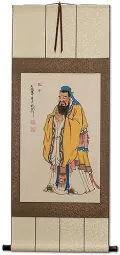
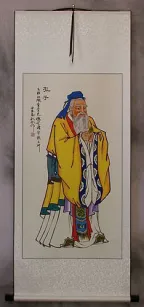
This in-stock artwork might be what you are looking for, and ships right away...
These search terms might be related to Sage:
A Wise Man Changes His Mind (But a Fool Never Will)
A Wise Person Reflecting a Thousand Times Can Still Make a Mistake
Clever
Clever / Superb / Wonderful
Mystic Lotus Wisdom of Amitabha
Scholar / Confucian
Tetsu / Wise Sage
The Ease of the Scholar
Those Who Understand Are Clever, Those Who Know Themselves Are Truly Wise
Warrior Scholar
Wise and Virtuous
Wise Woman
Wise Younger Brother
The following table may be helpful for those studying Chinese or Japanese:
| Title | Characters | Romaji (Romanized Japanese) | Various forms of Romanized Chinese | |
| Sage | セージ | seeji / seji | ||
| Tetsu Wise Sage | 哲 | tetsu | zhé / zhe2 / zhe | che |
| Teacher Master Old Sage | 老師 老师 | lǎo shī / lao3 shi1 / lao shi / laoshi | lao shih / laoshih | |
| Holy Man Saint | 聖人 圣人 | seijin | shèng rén sheng4 ren2 sheng ren shengren | sheng jen shengjen |
| The Saint | 聖 圣 | sei | shèng / sheng4 / sheng | |
| Confucius | 孔子 | koushi / koshi | kǒng zǐ / kong3 zi3 / kong zi / kongzi | k`ung tzu / kungtzu / kung tzu |
| The Saint | 聖者 圣者 | seija | shèng zhě sheng4 zhe3 sheng zhe shengzhe | sheng che shengche |
| Fairy Nymph | 仙女 | sen nyo / sennyo | xiān nǚ / xian1 nu:3 / xian nu: / xiannu: | hsien nü / hsiennü |
| Wise and Virtuous | 賢 贤 | ken | xián / xian2 / xian | hsien |
| Zhuge Liang | 諸葛亮 诸葛亮 | zhū gě liàng zhu1 ge3 liang4 zhu ge liang zhugeliang | chu ko liang chukoliang |
|
| Juggernaut | 劍聖 剑圣 | jiàn shèng jian4 sheng4 jian sheng jiansheng | chien sheng chiensheng |
|
| Shakyamuni The Buddha | 釋迦牟尼 释迦牟尼 | sha ka mu ni shakamuni | shì jiā móu ní shi4 jia1 mou2 ni2 shi jia mou ni shijiamouni | shih chia mou ni shihchiamouni |
| Mencius | 孟子 | mou shi / moushi / mo shi | mèng zi / meng4 zi5 / meng zi / mengzi | meng tzu / mengtzu |
| Seishin-Kai Seishinkai | 聖心会 / 聖心會 聖心会 | sei shin kai seishinkai | ||
| Daodejing Tao Te Ching - Chapter 27 | 善行無轍跡善言無瑕謫善數不用籌策善閉無關鍵而不可開善結無繩約而不可解是以聖人常善救人故無棄人常善救物故無棄物是謂襲明故善人者不善人之師不善人者善人之資不貴其師不愛其資雖智大迷是謂要妙 善行无辙迹善言无瑕谪善数不用筹策善闭无关键而不可开善结无绳约而不可解是以圣人常善救人故无弃人常善救物故无弃物是谓袭明故善人者不善人之师不善人者善人之资不贵其师不爱其资虽智大迷是谓要妙 | shàn xíng wú zhé jì shàn yán wú xiá zhé shàn shù bù yòng chóu cè shàn bì wú guān jiàn ér bù kě kāi shàn jié wú shéng yuē ér bù kě jiě shì yǐ shèng rén cháng shàn jiù rén gù wú qì rén cháng shàn jiù wù gù wú qì wù shì wèi xí míng gù shàn rén zhě bù shàn rén zhī shī bù shàn rén zhě shàn rén zhī zī bù guì qí shī bù ài qí zī suī zhì dà mí shì wèi yào miào shan4 xing2 wu2 zhe2 ji4 shan4 yan2 wu2 xia2 zhe2 shan4 shu4 bu4 yong4 chou2 ce4 shan4 bi4 wu2 guan1 jian4 er2 bu4 ke3 kai1 shan4 jie2 wu2 sheng2 yue1 er2 bu4 ke3 jie3 shi4 yi3 sheng4 ren2 chang2 shan4 jiu4 ren2 gu4 wu2 qi4 ren2 chang2 shan4 jiu4 wu4 gu4 wu2 qi4 wu4 shi4 wei4 xi2 ming2 gu4 shan4 ren2 zhe3 bu4 shan4 ren2 zhi1 shi1 bu4 shan4 ren2 zhe3 shan4 ren2 zhi1 zi1 bu4 gui4 qi2 shi1 bu4 ai4 qi2 zi1 sui1 zhi4 da4 mi2 shi4 wei4 yao4 miao4 shan xing wu zhe ji shan yan wu xia zhe shan shu bu yong chou ce shan bi wu guan jian er bu ke kai shan jie wu sheng yue er bu ke jie shi yi sheng ren chang shan jiu ren gu wu qi ren chang shan jiu wu gu wu qi wu shi wei xi ming gu shan ren zhe bu shan ren zhi shi bu shan ren zhe shan ren zhi zi bu gui qi shi bu ai qi zi sui zhi da mi shi wei yao miao | shan hsing wu che chi shan yen wu hsia che shan shu pu yung ch`ou ts`e shan pi wu kuan chien erh pu k`o k`ai shan chieh wu sheng yüeh erh pu k`o chieh shih i sheng jen ch`ang shan chiu jen ku wu ch`i jen ch`ang shan chiu wu ku wu ch`i wu shih wei hsi ming ku shan jen che pu shan jen chih shih pu shan jen che shan jen chih tzu pu kuei ch`i shih pu ai ch`i tzu sui chih ta mi shih wei yao miao shan hsing wu che chi shan yen wu hsia che shan shu pu yung chou tse shan pi wu kuan chien erh pu ko kai shan chieh wu sheng yüeh erh pu ko chieh shih i sheng jen chang shan chiu jen ku wu chi jen chang shan chiu wu ku wu chi wu shih wei hsi ming ku shan jen che pu shan jen chih shih pu shan jen che shan jen chih tzu pu kuei chi shih pu ai chi tzu sui chih ta mi shih wei yao miao |
|
| Daodejing Tao Te Ching - Chapter 81 | 信言不美美言不信知者不博博者不知善者不多多者不善聖人無積既以為人己癒有既以予人矣已癒多故天之道利而不害聖人之道為而不爭 信言不美美言不信知者不博博者不知善者不多多者不善圣人无积既以为人己愈有既以予人矣已愈多故天之道利而不害圣人之道为而不争 | |||
| In some entries above you will see that characters have different versions above and below a line. In these cases, the characters above the line are Traditional Chinese, while the ones below are Simplified Chinese. | ||||

Successful Chinese Character and Japanese Kanji calligraphy searches within the last few hours...



