Many custom options...


And formats...



Desire is My Life in Chinese / Japanese...
Buy a Desire is My Life calligraphy wall scroll here!
Personalize your custom “Desire is My Life” project by clicking the button next to your favorite “Desire is My Life” title below...
Give Up Desire
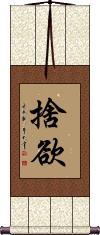
捨欲 is a Buddhist term that means to give up desire or the act of cutting off desire.
In Buddhism, our attachments, greed, and/or desires are the root of our suffering. Release them and live a happy life!
Kama - Desire Wish Longing
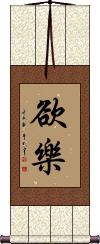
欲樂 is the Chinese and Japanese title representing the Buddhist and Jainist joys of the five desires.
Kama comes from the Pali/Sanskrit काम. The meaning is “desire, wish, longing.”
In Jainism, it can include sensual pleasure, sexual desire, and longing.
However, the Buddhist context refers more to any desire, wish, passion, longing, the pleasure of the senses, desire for, longing to and after, the aesthetic enjoyment of life, affection, or love, enjoyment of love is particularly with or without the enjoyment of sexual, sensual and erotic desire, and is often used without sexual connotations.
Reincarnation (Buddhism)
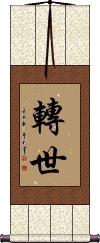
轉世 is the Buddhist idea of reincarnation or transmigration.
Other definitions of this term: “Attainer of Nirvana from within the desire realm,” “A practitioner who enters directly into Nirvana from the desire realm, without traversing the form and formless realms. One of the 27 kinds of Hinayana sages,” or simply, “to return again to this life.”
轉世 is also a Japanese title, but the first Kanji was slightly simplified after WWII. Just let us know if you want the modern Japanese version when you order.
This in-stock artwork might be what you are looking for, and ships right away...

Gallery Price: $61.00
Your Price: $33.88

Gallery Price: $61.00
Your Price: $33.88

Gallery Price: $31.00
Your Price: $16.88


Gallery Price: $61.00
Your Price: $33.88

Gallery Price: $61.00
Your Price: $33.88
Gallery Price: $47.00
Your Price: $26.00

Gallery Price: $61.00
Your Price: $33.88
Gallery Price: $31.00
Your Price: $17.00
Gallery Price: $198.00
Your Price: $109.88

Gallery Price: $61.00
Your Price: $33.88

Gallery Price: $61.00
Your Price: $33.88

Gallery Price: $61.00
Your Price: $33.88
Gallery Price: $90.00
Your Price: $35.00
Not the results for Desire is My Life that you were looking for?
Below are some entries from our dictionary that may match your Desire is My Life search...
| Characters If shown, 2nd row is Simp. Chinese |
Pronunciation Romanization |
Simple Dictionary Definition |
春 see styles |
chūn chun1 ch`un chun haruji はるじ |
More info & calligraphy: Spring Season(n,adv) (1) spring; springtime; (2) New Year; (3) prime (of life); height (of one's prosperity); heyday; (4) adolescence; puberty; (5) sexuality; sexual desire; (personal name) Haruji |
四諦 四谛 see styles |
sì dì si4 di4 ssu ti shitai したい |
More info & calligraphy: Four Noble Truths (Buddhism){Buddh} (See 苦集滅道) The Four Noble Truths catvāri-ārya-satyāni; 四聖諦; 四眞諦. The four dogmas, or noble truths, the primary and fundamental doctrines of Śākyamuni, said to approximate to the form of medical diagnosis. They are pain or 'suffering, its cause, its ending, the way thereto; that existence is suffering, that human passion (taṇhā, 欲 desire) is the cause of continued suffering, that by the destruction of human passion existence may be brought to an end; that by a life of holiness the destruction of human passion may be attained'. Childers. The four are 苦, 聚 (or 集), 滅, and 道諦, i. e. duḥkha 豆佉, samudaya 三牟提耶, nirodha 尼棲陀, and mārga 末加. Eitel interprets them (1) 'that 'misery' is a necessary attribute of sentient existence'; (2) that 'the 'accumulation' of misery is caused by the passions'; (3) that 'the 'extinction' of passion is possible; (4) mārga is 'the doctrine of the 'path' that leads to the extinction of passion'. (1) 苦 suffering is the lot of the 六趣 six states of existence; (2) 集 is the aggregation (or exacerbation) of suffering by reason of the passions; (3) 滅 is nirvana, the extinction of desire and its consequences, and the leaving of the sufferings of mortality as void and extinct; (4) 道 is the way of such extinction, i. e. the 八正道 eightfold correct way. The first two are considered to be related to this life, the last two to 出世間 a life outside or apart from the world. The four are described as the fundamental doctrines first preached to his five former ascetic companions. Those who accepted these truths were in the stage of śrāvaka. There is much dispute as to the meaning of 滅 'extinction' as to whether it means extinction of suffering, of passion, or of existence. The Nirvana Sutra 18 says that whoever accepts the four dogmas will put an end to births and deaths 若能見四諦則得斷生死 which does not of necessity mean the termination of existence but that of continued transmigration. v. 滅. |
轉世 转世 see styles |
zhuǎn shì zhuan3 shi4 chuan shih tense |
More info & calligraphy: Reincarnation (Buddhism)To return to this life. |
カーマ see styles |
kaama / kama カーマ |
More info & calligraphy: Carma |
貪 贪 see styles |
tān tan1 t`an tan tan; ton; don たん; とん; どん |
to have a voracious desire for; to covet; greedy; corrupt (1) coveting; (2) {Buddh} (usu. とん) raga (desire) rāga; colouring, dyeing, tint, red; affection, passion, vehement longing or desire; cf. M. W. In Chinese: cupidity, desire; intp. tainted by and in bondage to the five desires; it is the first in order of the 五鈍使 pañca-kleśa q. v., and means hankering after, desire for, greed, which causes clinging to earthly life and things, therefore reincarnation. |
九地 see styles |
jiǔ dì jiu3 di4 chiu ti kuji くじ |
very low land; (surname) Kuji The nine lands, i.e. the 欲界 realm of desire or sensuous realm the four 色界 realms of form or material forms; and the four 無色界 formless realms, or realms beyond form; v. 九有, 九有情居, 禪 and 定. The nine realms are:—(1) 欲界五趣地; the desire realm with its five gati, i.e. hells, hungry ghosts, animals, men, and devas. In the four form-realms are:— (2) 離生喜樂地 Paradise after earthly life, this is also the first dhyāna, or subject of meditation, 初禪. (3) 定生喜樂地 Paradise of cessation of rebirth, 二禪. (4) 離喜妙樂地 Land of wondrous joy after the previous joys, 三禪. (5) 捨念淸淨地 The Pure Land of abandonment of thought, or recollection (of past delights), 四禪. The four formless, or infinite realms, catur arūpa dhātu, are:—(6) 空無邊處地 ākāśānantyā-yatanam, the land of infinite space; also the first samādhi, 第一定. (7) 識無邊處地 vijñānānamtyāyatanam, the land of omniscience, or infinite perception, 二定. (8) 無所有處地 ākiñcanyāyatana, the land of nothingness, 三定. (9) 非想非非想處地 naivasaṁjñānā-saṁjñāyatana, the land (of knowledge) without thinking or not thinking, or where there is neither consciousness nor unconsciousness, i.e. above either; this is the 四定. Eitel says that in the last four, "Life lasts 20,000 great kalpas in the 1st, 40,000 in the 2nd, 60,000 in the 3rd, and 80,000 great kalpas in the 4th of these heavens." |
五濁 五浊 see styles |
wǔ zhuó wu3 zhuo2 wu cho gotaku |
the five impurities (Buddhism) 五滓; 五渾 The five kaṣāya periods of turbidity, impurity, or chaos, i. e. of decay; they are accredited to the 住 kalpa, see 四劫, and commence when human life begins to decrease below 20,000 years. (1) 劫濁 the kalpa in decay, when it suffers deterioration and gives rise to the ensuing form; (2) 見濁 deterioration of view, egoism, etc., arising; (3) 煩惱濁 the passions and delusions of desire, anger, stupidity, pride, and doubt prevail; (4) 衆生濁 in consequence human miseries increase and happiness decreases; (5) 命濁 human life time gradually diminishes to ten years. The second and third are described as the 濁 itself and the fourth and fifth its results. |
五障 see styles |
wǔ zhàng wu3 zhang4 wu chang goshou / gosho ごしょう |
(1) {Buddh} five hindrances (that prevent a woman from becoming a Buddha, a Brahmā, a Shakra, a devil king, or a wheel-turning king); five obstructions to women's attainment; (2) {Buddh} five hindrances (that impede ascetic practices; sensory desire, ill-will, sloth and torpor, restlessness and worry, doubt) The five hindrances, or obstacles; also 五礙; 五雲. I. Of women, i. e. inability to become Brahma-kings, Indras, Māra-kings, Caikravarti-kings, or Buddhas. II. The hindrances to the five 五力 powers, i. e. (self-) deception a bar to faith, as sloth is to zeal, anger to remembrance, hatred to meditaton, and discontent to wisdom. III. The hindrances of (1) the passion-nature, e. g. original sin; (2) of karma caused in previous lives; (3) the affairs of life; (4) no friendly or competent preceptor; (5) partial knowledge. |
涅槃 see styles |
niè pán nie4 pan2 nieh p`an nieh pan nehan ねはん |
(Buddhism) (loanword from Sanskrit) to achieve nirvana (extinction of desire and pain); to die (abbr. for 涅槃那[nie4 pan2 na4]) (1) {Buddh} nirvana; supreme enlightenment; (2) {Buddh} death; death of Buddha nirvāṇa, 'blown out, gone out, put out, extinguished'; 'liberated-from existence'; 'dead, deceased, defunct.' 'Liberation, eternal bliss'; '(with Buddhists and Jainas) absolute extinction or annihilation, complete extinction of individual existence.' M.W. Other forms are 涅槃那; 泥日; 泥洹; 泥畔 Originally translated 滅 to extinguish, extinction, put out (as a lamp or fire), it was also described as 解脫 release, 寂滅 tranquil extinction; 無爲 inaction, without effort, passiveness; 不生 no (re)birth; 安樂 calm joy; 滅度transmigration to 'extinction'. The meaning given to 'extinction' varies, e.g. individual extinction; cessation of rebirth; annihilation of passion; extinction of all misery and entry into bliss. While the meaning of individual extinction is not without advocates, the general acceptation is the extinction or end of all return to reincarnation with its concomitant suffering, and the entry into bliss. Nirvāṇa may be enjoyed in the present life as an attainable state, with entry into parinirvāṇa, or perfect bliss to follow. It may be (a) with a 'remainder', i.e. the cause but not all the effect (karma), of reincarnation having been destroyed; (b) without 'remainder', both cause and effect having been extinguished. The answer of the Buddha as to the continued personal existence of the Tathāgata in nirvāṇa is, in the Hīnayāna canon, relegated 'to the sphere of the indeterminates' (Keith), as one of the questions which are not essential to salvation. One argument is that flame when blown out does not perish but returns to the totality of Fire. The Nirvāṇa Sutra claims for nirvāṇa the ancient ideas of 常樂我淨 permanence, bliss, personality purity in the transcendental realm. Mahāyāna declares that Hīnayāna by denying personality in the transcendental realm denies the existence of the Buddha. In Mahāyāna final nirvāṇa is transcendental, and is also used as a term for the absolute. The place where the Buddha entered his earthly nirvāṇa is given as Kuśinagara, cf. 拘. |
色界 see styles |
sè jiè se4 jie4 se chieh shikikai しきかい |
{Buddh} (See 三界・1) form realm rūpadhātu, or rūpāvacara, or rūpaloka, any material world, or world of form; it especially refers to the second of the Trailokya 三界, the brahmalokas above the devalokas, comprising sixteen or seventeen or eighteen 'Heavens of Form', divided into four dhyānas, in which life lasts from one-fourth of a mahākalpa to 16,000 mahākalpas, and the average stature is from one-half a yojana to 16,000 yojanas. The inhabitants are above the desire for sex or food. The rūpadhātu, with variants, are given as— 初禪天 The first dhyāna heavens: 梵衆天 Brahmapāriṣadya, 梵輔天 Brahmapurohita or Brahmakāyika, 大梵天 Mahābrahmā. 二禪天 The second dhyāna heavens: 少光天 Parīttābha, 無量光天 Apramāṇābha, 光音天 Ābhāsvara. 三禪天 The third dhyāna heavens: 少淨天 Parīttaśubha, 無量淨天 Apramāṇaśubha, 徧淨天 Śubhakṛtsna. 四禪天 The fourth dhyāna heavens: 無雲天 Anabhraka, 福生天 Puṇyaprasava, 廣果天 Bṛhatphala, 無想天 Asañjñisattva, 無煩天 Avṛha, 無熱天 Atapa, 善現天 Sudṛśa, 善見天 Sudarśana, 色究竟天 Akaniṣṭha, 和音天 ? Aghaniṣṭha, 大自在天 Mahāmaheśvara. |
貪欲 贪欲 see styles |
tān yù tan1 yu4 t`an yü tan yü tonyoku とんよく |
{Buddh} raga (desire) Desire for and love of (the things of this life). |
不死覺 不死觉 see styles |
bù sǐ jué bu4 si3 jue2 pu ssu chüeh fushi kaku |
One of the eight 覺, the desire for long life. |
兜率陀 see styles |
dōu shuài tuó dou1 shuai4 tuo2 tou shuai t`o tou shuai to Tosotsuda |
(兜率 or 兜率哆); 兜術; 珊都史多, 珊覩史多; 鬭瑟多 Tuṣita, from tuṣ, contented, satisfied, gratified; name of the Tuṣita heaven, the fourth devaloka in the 欲界 passion realm, or desire realm between the Yama and Nirmāṇarati heavens. Its inner department is the Pure Land of Maitreya who, like Śākyamuni and all Buddhas, is reborn there before descending to earth as the next Buddha; his life there is 4,000 Tuṣita years (each day there being equal to 4000 earth-years) 584 million such years. |
出世欲 see styles |
shusseyoku しゅっせよく |
desire to succeed in life; ambition to make one's mark in the world |
化樂天 化乐天 see styles |
huà lè tiān hua4 le4 tian1 hua le t`ien hua le tien keraku ten |
Nirmāṇarati, 樂變化天 the fifth of the six desire-heavens, 640, 000 yojanas above Meru; it is next above the Tuṣita, or fourth deva. loka; a day is equal to 800 human years; life lasts for 8, 000 years; its inhabitants are eight yojanas in height, and light-emitting; mutual smiling produces impregnation and children are born on the knees by metamorphosis, at birth equal in development to human children of twelve— hence the 'joy-born heaven'. |
尼摩羅 尼摩罗 see styles |
ní mó luó ni2 mo2 luo2 ni mo lo nimara |
nirmāṇarati, 須密陀天 devas who 'delight in transformations', i. e. 化樂天 or 樂變化天; of the six devalokas of desire they occupy the fifth, where life lasts for 8, 000 years. |
涅槃縛 涅槃缚 see styles |
niè pán fú nie4 pan2 fu2 nieh p`an fu nieh pan fu nehan baku |
The fetter of nirvāṇa, i.e. the desire for it, which hinders entry upon the bodhisattva life of saving others; it is the fetter of Hīnayāna, resulting in imperfect nirvāṇa. |
二河白道 see styles |
èr hé bái dào er4 he2 bai2 dao4 erh ho pai tao nigabyakudou / nigabyakudo にがびゃくどう |
(expression) (yoji) {Buddh} the road to paradise is a white road between two rivers, one of water (wrath) and one of fire (greed) The two rivers and the white path, i.e. the path leading to life between the rivers of desire and hatred, which are compared to water and fire. |
十二因緣 十二因缘 see styles |
shí èr yīn yuán shi2 er4 yin1 yuan2 shih erh yin yüan jūni innen |
Dvādaśaṅga pratītyasamutpāda; the twelve nidānas; v. 尼 and 因; also 十二緣起; 因緣有支; 因緣率連; 因緣棘園; 因緣輪; 因緣重城; 因緣觀; 支佛觀. They are the twelve links in the chain of existence: (1) 無明avidyā, ignorance, or unenlightenment; (2) 行 saṃskāra, action, activity, conception, "dispositions," Keith; (3) 識 vijñāna, consciousness; (4) 名色 nāmarūpa, name and form; (5) 六入 ṣaḍāyatana, the six sense organs, i.e. eye, ear, nose, tongue, body, and mind; (6) 觸 sparśa, contact, touch; (7) 受 vedanā, sensation, feeling; (8) 愛 tṛṣṇā, thirst, desire, craving; (9) 取 upādāna, laying hold of, grasping; (10) 有 bhava, being, existing; (11) 生 jāti, birth; (12) 老死 jarāmaraṇa, old age, death. The "classical formula" reads "By reason of ignorance dispositions; by reason of dispositions consciousness", etc. A further application of the twelve nidānas is made in regard to their causaton of rebirth: (1) ignorance, as inherited passion from the beginningless past ; (2) karma, good and evil, of past lives; (3) conception as a form of perception; (4) nāmarūpa, or body and mind evolving (in the womb); (5) the six organs on the verge of birth; (6) childhood whose intelligence is limited to sparśa, contact or touch; (7) receptivity or budding intelligence and discrimination from 6 or 7 years; (8) thirst, desire, or love, age of puberty; (9) the urge of sensuous existence; (10) forming the substance, bhava, of future karma; (11) the completed karma ready for rebirth; (12) old age and death. The two first are associated with the previous life, the other ten with the present. The theory is equally applicable to all realms of reincarnation. The twelve links are also represented in a chart, at the centre of which are the serpent (anger), boar (ignorance, or stupidity), and dove (lust) representing the fundamental sins. Each catches the other by the tail, typifying the train of sins producing the wheel of life. In another circle the twelve links are represented as follows: (1) ignorance, a blind woman; (2) action, a potter at work, or man gathering fruit; (3) consciousness, a restless monkey; (4) name and form, a boat; (5) sense organs, a house; (6) contact, a man and woman sitting together; (7) sensation, a man pierced by an arrow; (8) desire, a man drinking wine; (9) craving, a couple in union; (10) existence through childbirth; (11) birth, a man carrying a corpse; (12) disease, old age, death, an old woman leaning on a stick. v. 十二因緣論 Pratītya-samutpāda śāstra. |
捨家棄欲 舍家弃欲 see styles |
shě jiā qì yù she3 jia1 qi4 yu4 she chia ch`i yü she chia chi yü shake kiyoku |
To leave home and cast off desire, i.e. to become a monk. |
苦集滅道 苦集灭道 see styles |
kǔ jí miè dào ku3 ji2 mie4 dao4 k`u chi mieh tao ku chi mieh tao kujuumetsudou; kujumetsudou; kushumetsudou / kujumetsudo; kujumetsudo; kushumetsudo くじゅうめつどう; くじゅめつどう; くしゅめつどう |
the Four Noble Truths (Budd.), namely: all life is suffering 苦[ku3], the cause of suffering is desire 集[ji2], emancipation comes only by eliminating passions 滅|灭[mie4], the way 道[dao4] to emancipation is the Eight-fold Noble Way 八正道[ba1 zheng4 dao4]; also called 四諦|四谛[si4 di4] {Buddh} (See 四諦) Suffering, Source of Suffering Desire, The Cessation of Suffering, The Way Leading to the Cessation of Suffering (The Four Noble Truths of Buddhism) The four axioms or truths: i. e. duḥkha, pain; samudaya, as above; nirodha, the extinguishing of pain and reincarnation; mārga, the way to such extinction; cf. 四諦. |
The following table may be helpful for those studying Chinese or Japanese...
| Title | Characters | Romaji (Romanized Japanese) | Various forms of Romanized Chinese | |
| Give Up Desire | 捨欲 舍欲 | shayoku | shě yù / she3 yu4 / she yu / sheyu | she yü / sheyü |
| Kama - Desire Wish Longing | 欲樂 欲乐 | yokuraku | yù lè / yu4 le4 / yu le / yule | yü le / yüle |
| Reincarnation (Buddhism) | 轉世 转世 | ten sei / tensei | zhuǎn shì zhuan3 shi4 zhuan shi zhuanshi | chuan shih chuanshih |
| In some entries above you will see that characters have different versions above and below a line. In these cases, the characters above the line are Traditional Chinese, while the ones below are Simplified Chinese. | ||||

Successful Chinese Character and Japanese Kanji calligraphy searches within the last few hours...



