Many custom options...


And formats...



The Real Beauty is the Beauty of the Soul in Chinese / Japanese...
Buy a The Real Beauty is the Beauty of the Soul calligraphy wall scroll here!
Personalize your custom “The Real Beauty is the Beauty of the Soul” project by clicking the button next to your favorite “The Real Beauty is the Beauty of the Soul” title below...
Switched to secondary search mode due to lack of results using primary.
These secondary results may not be very accurate. Try a different but similar meaning word or phrase for better results. Or...
Look up The Real Beauty is the Beauty of the Soul in my Japanese Kanji & Chinese Character Dictionary(My dictionary is a different system then the calligraphy search you just tried)
If you want a special phrase, word, title, name, or proverb, feel free to contact me, and I will translate your custom calligraphy idea for you.
1. Awareness
4. Battojutsu
5. Beautiful Heart / Beautiful Mind
6. Beautiful Life / Life in Perfect Harmony
8. Beautiful Heart / Beautiful Spirit
10. Beautiful Virtue
12. Believe
14. Broken Hearted
15. Bruce Lee
16. Castillo
17. Cesar
18. Open Your Heart
19. Che Guevara
20. Confidence / Faithful Heart
21. Confucius
23. Daredevil Warrior / Soul of a Warrior
24. Day
27. Delreal
28. Determination
29. Devotion / Dedication / Attentive / Focused
30. The Spirit of the Dragon Horse
31. The Spirit of the Dragon Horse and Power of a Tiger
32. Dragon Spirit
33. The Spirit of Dragon and Tiger
34. Earth
37. Eternal Life / Future Life
39. Keep Your Feet on the Ground
40. A Bright Future
43. Free Spirit
44. Soul Mates
45. Geisha
47. Goddess
48. Goddess of Beauty / Beautiful Spirit
50. Heart and Soul
53. Honesty
55. Immovable Mind
56. Impermanence
57. Independent Spirit / Independent Heart
59. Inner Beauty / Beauty of Spirit
61. Inner Peace
62. Inner Strength
63. Inspiration
64. Italy / Italia
65. Jesus
66. Three Treasures of Chinese Medicine
67. Jin Shin Jyutsu
68. A Journey of 1000 Miles Begins with a Single Step
69. Katana
70. Kishan
71. Kyojitsu: Falsehood and Truth
72. Lao Tzu / Laozi
74. Life Energy / Spiritual Energy
75. Lingering Mind
76. Listen to Your Heart / Follow Your Heart
77. Listen to Both Sides and be Enlightened, Listen to One Side and be in the Dark
78. Little Dragon
81. Lost Soul
83. Knowledge of Ultimate Truth
84. Mind Body Spirit
85. Energy Sword Body in Concert
86. Mind Like Water
88. Morality of Mind
89. My True Love
90. No Mind / Mushin
91. Nothingness
Awareness
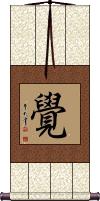
覺 can mean to feel; to figure out; thinking; awake; aware; bodhi; knowing; understanding; enlightenment; illumination; apprehend; perceive; realize.
覺 is a character that is impossible to define in a single word.
This term is often associated with Buddhism where it's understood to be: Illumination, enlightenment, or awakening in regard to the real in contrast to the seeming. However, it can also refer to enlightenment in regard to morality and evil.
Notes:
In Japanese, this can be the personal name Satoru.
In certain context, and only when pronounced as "jiao" in Chinese, it can refer to a nap, sleep or the state of sleeping. However, as a single character on a wall scroll, everyone will read this with the awareness or enlightenment context.
By no means is this the only way to write enlightenment. In fact, you should only choose this character if you are looking more for a word meaning awareness.
See Also: Enlightenment | Wisdom | Knowledge
Awesome / Really Cool
Chinese Slang
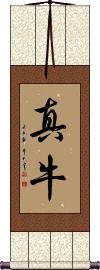
真牛 is Chinese slang for something really cool or awesome.
真牛 is probably not appropriate for a calligraphy wall scroll unless you have a specific reason.
This literally translates as “the real bull” or “the genuine cow.”
Awesome / Awe-Inspiring
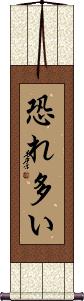
恐れ多い is a Japanese word for something awe-inspiring or awesome (in some odd context, it can refer to August).
恐れ多い is probably not appropriate for a calligraphy wall scroll unless you have a specific reason.
The word awesome is misused a lot in English or used too casually. This Japanese word is the real form of awesome, and it kind of means numerous fears and anxiety that you would feel in response to encountering something truly awesome (such as God, a tornado, a tsunami, etc.).
Note: Because this selection contains some special Japanese Hiragana characters, it should be written by a Japanese calligrapher.
Battojutsu
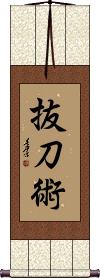
Battōjutsu or 抜刀術 is the art of sword drawing associated closely with the tradition of Kenjutsu.
Battōjutsu typically is done with a real and sharp-bladed katana and is often practiced as a form of kata.
Beautiful Heart / Beautiful Mind
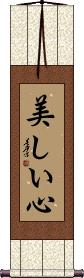
美しい心 means “beautiful heart” or “beautiful mind,” in Japanese.
The word for “heart” also means “mind” and sometimes “soul” in ancient Asia.
Note: Because this selection contains some special Japanese Hiragana characters, it should be written by a Japanese calligrapher.
Beautiful Life / Life in Perfect Harmony
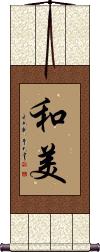
和美 is a word that means “harmonious” or, “in perfect harmony.”
The deeper meaning or more natural translation would be something like, “beautiful life.”
The first character means peace and harmony.
The second character means beautiful. But in this case, when combined with the first character, beautiful refers to being satisfied with what you have in your life. This can be having good relations, good feelings, comfort, and having enough (with no feeling of wanting).
Note: In Japanese, this is often used as the name "Wami." This title is probably more appropriate if your audience is Chinese.
Beautiful Soul
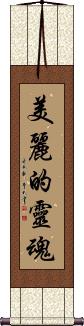
美麗的靈魂 means “Beautiful Soul” in Chinese.
The first two characters mean beautiful, beauty, or gorgeous.
The middle character connects the ideas (a possessive article).
The last two characters mean soul or spirit.
Beautiful Soul
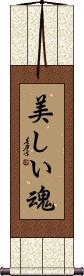
美しい魂 is a common way to write “Beautiful Soul” in Japanese.
Note: Because this selection contains some special Japanese Hiragana characters, it should be written by a Japanese calligrapher.
Beautiful Soul
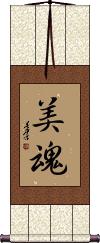
美魂 is a very short or abbreviated way to say “Beautiful Soul” in Japanese.
There is a more extended version that might be a little more natural and also closer to the intended meaning. This short title is often translated awkwardly as “Beauty Soul” in Japanese.
Beautiful Heart / Beautiful Spirit
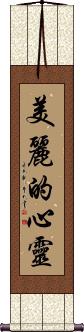
美麗的心靈 means a beautiful heart, a beautiful mind, or a beautiful spirit in Chinese.
Beautiful Spirit
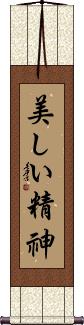
美しい精神 is a common way to write “Beautiful Spirit” in Japanese.
Note: Because this selection contains some special Japanese Hiragana characters, it should be written by a Japanese calligrapher.
Beautiful Virtue
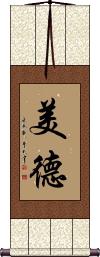
美德 written in Chinese or Korean Hanja can also mean “grace of character” or “noble virtue.”
 There is a slight variation in the modern Japanese Kanji form of the second character. If you want the modern Japanese version, please click on the special Kanji shown to the right instead of the button above. Note that the traditional Chinese form is still readable and understood by Japanese people (
it’s
the ancient Japanese form anyway).
There is a slight variation in the modern Japanese Kanji form of the second character. If you want the modern Japanese version, please click on the special Kanji shown to the right instead of the button above. Note that the traditional Chinese form is still readable and understood by Japanese people (
it’s
the ancient Japanese form anyway).
Mind of the Beginner
Shoshin
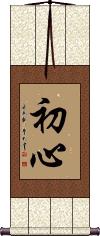
初心 is often translated in Japanese as “beginner's mind” or “beginner's spirit.”
In Chinese, the dictionary definition is “one's original intention.”
The first character means first, initial, primary, junior, beginning, or basic.
The second character means heart, mind, soul, or essence.
初心 is one of the five spirits of the warrior (budo) and is often used as a Japanese martial arts tenet. Under that context, places such as the Budo Dojo define it this way: The state of shoshin is that of a beginners mind. It is a state of awareness that always remains fully conscious, aware, and prepared to see things for the first time. The attitude of shoshin is essential to continued learning.
Believe
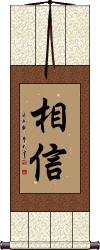
相信 is the Chinese way to say believe.
This specifically means to be convinced that something is true or to accept something as true or real.
This can also be translated as “convinced of,” “have trust in,” or “have faith in.”
Bloodless Victory
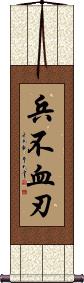
Perhaps a pacifist view or perhaps the best kind of victory; 兵不血刃 reflect this idea:
The edges of the swords not being stained with blood.
You could also translate it as: Win victory without firing a shot.
The first character means army or force. The second character means without or none. The last two characters mean bloodstained knives. So it represents a returning victorious army without bloodstained knives. 兵不血刃 is the very literal sense of this Chinese proverb. The title definition is more accurate to the way this proverb is understood.
Asking yourself why the direct or literal translation is different?
...Think of compound words in English such as “nevertheless” if we break it apart to “never the less,” we will have trouble getting the real definition of “in spite of that.” Similar things happen when multiple characters create a compounded word in Chinese.
Broken Hearted
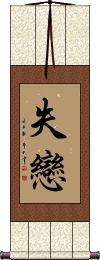
In Chinese, this can mean losing one's love; to breaking up (in a romantic relationship); to feel jilted.
In Japanese Kanji, this means disappointing love, broken heart, unrequited love, or being lovelorn.
失戀 is also valid in old Korean Hanja, which means unrequited love, unreturned love, a disappointment in love, or a broken heart.
Note: In modern Japan, they will tend to write the more simple 失恋 form instead of 失戀. If you order this from the Japanese master calligrapher, expect the more simple modern version to be written (unless you give us instructions to use the older or more traditional version).
Bruce Lee
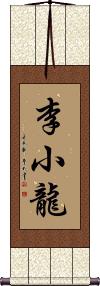
李小龍 is the real full name of Bruce Lee.
 Many people have no idea that Bruce Lee had a “real” Chinese name. In Mandarin and Cantonese, he is known as “Lǐ XiǎoLóng” and “Léi SíuLùng” respectively.
He kept his family name pronunciation (Li = Lee). 李 is a common family name that also means “plum.”
His given name 小龍 (Xiao-Long), literally means “little dragon.” 李小龍 is why you often see the character for dragon associated with Bruce Lee on various posters etc.
For a pronunciation lesson, the “X” in Romanized Mandarin is pronounced like a “sh” sound but with your tongue at the bottom of your mouth. The vowel sound in “Long” is like the English “oh,” not like the “ah” sound in the English word “long.”
If you are a big Bruce Lee fan, you should know this information, and you should have this wall scroll hanging in your room or martial arts studio.
Note: Japanese use these same Chinese characters / Kanji to write Bruce Lee's real name (with different pronunciation - which is a bit like how the name “Bruce Lee” sounds in English).
See Also: Kung Fu | Martial Arts
Castillo
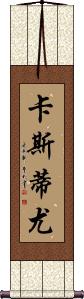
卡斯蒂尤 is the name Castillo in Chinese (Mandarin).
Even though it's not the most commonly-used transliteration, I like this version of Castillo, as it sounds more like the real Spanish pronunciation where the end of Castillo sounds like “Yo.”
Cesar
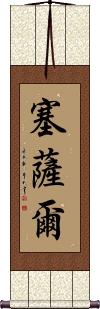
This is a 3-character transliteration to Mandarin Chinese for the Latin / Spanish name César.
I like this version better than the 2-character version, as this one is very close to the real sound of the name Cesar (both English and Spanish pronunciation).
Open Your Heart

敞開心扉 is the most common way to express the idea of “Opening your heart” in Chinese.
This phrase is made up or two words:
敞开 = To open wide, to be unrestricted.
心扉 = Inner heart or soul.
If you want it brokend down further into individual characters:
敞 = Open to the view of all people, spacious, to open wide, or to disclose.
开 = Open, to start, or the beginning.
心 = Heart/Mind
扉 = Door, gate, opening, or the title page.
So maybe you can say, “To open wide the door of your heart and mind to all.”
Other variations of “open your heart” also exist such as 打開心扉, 敞開你的心扉, 打開你的心, and Simplified Chinese 敞开心扉, 打开心扉, 敞开你的心扉, or 打开你的心. These are also correct, but not as commonly used as 敞開心扉.
Che Guevara
Latin American / Cuban Revolutionary
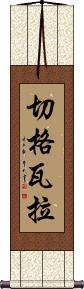
切格瓦拉 is the name “Che Guevara,” as written (transliterated) in Mandarin Chinese.
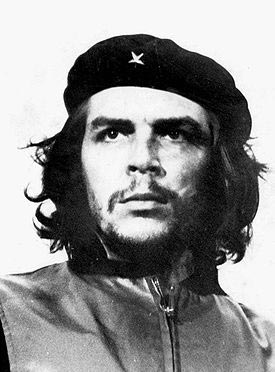 Once revered by Chinese people as a Socialist rebel, he's now just a historical figure that school children briefly learn about in China.
切格瓦拉 is because China used to be a truly-Communist/Socialist nation, and thus, other Communists and Socialists were heroes.
In modern China, with its free-market economy, those former heroes fade a little.
We are not offering the “Che” character alone, as few would associate it with Che Guevara, so you need the full name to be clear (minus Ernesto, which is his real first name).
Confidence / Faithful Heart
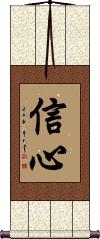
信心 is a Chinese, Japanese, and Korean word that means confidence, faith, or belief in somebody or something.
The first character means faith, and the second can mean heart or soul. Therefore, you could say this means “faithful heart” or “faithful soul.”
In Korean especially, this word has a religious connotation.
In the old Japanese Buddhist context, this was a word for citta-prasāda (clear or pure heart-mind).
In modern Japan (when read by non-Buddhists), this word is usually understood as “faith,” “belief,” or “devotion.”
See Also: Self-Confidence
Confucius
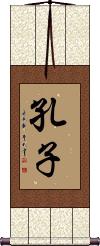
孔子 is how to write the name of the great sage, known in the West as Confucius.
His real name is Kongzi (The name Confucius is a westernized version of his name - his family name is Kong, and “zi” was added as a title of distinction).
He lived some 2500 years ago in Qufu, a town in modern-day Shandong Province of Northern China (about 6 hours south of Beijing by bus). He was a consort to Emperors, and after his death, the impact of his philosophies still served to advise emperors, officials, and common people for generations.
Also during these thousands of years, the Kong family remained powerful in China, and the Kong estate was much like the Vatican in Rome. The Kong estate existed as if on sovereign ground with its own small garrison of guards and the privileges of a kingdom within an empire.
This was true up until the time the Kong family had to flee to Taiwan in 1949 when the Red Army took victory over the Nationalists during the Revolution. The home of Confucius was later razed and all statues were defaced or stolen during the Cultural Revolution. Finally, after years of smearing his name and image, it is once again okay to celebrate the teachings of Confucius in mainland China.
Known as Khổng Tử in Vietnamese.
Construction Crane
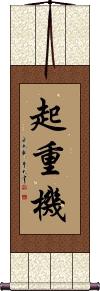
起重機 refers to the huge machine that lifts materials high into the air as crews construct huge buildings.
A customer requested this specifically after some confusion over the bird by the same name.
In an odd twist, while they don't know this name in English sounds like a bird; the building crane is jokingly called “The real national bird of China” because of the accelerated level of construction in Beijing and elsewhere ever since preparations began for the 2008 Olympics. As of 2018, construction has barely slowed.
If you want the type of construction crane that drives down the road, please note that the word is totally different for that kind of “vehicle crane.”
Daredevil Warrior / Soul of a Warrior
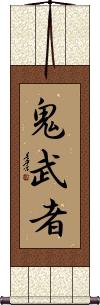
鬼武者 is an unusual title that can be translated two ways, daredevil warrior or demon warrior.
The most common is probably the daredevil warrior. However, the first character means demon, ghost, or soul of the departed. Therefore, it can mean the soul of a warrior or a demon warrior.
This title is Japanese only, and should not be used if your audience is Chinese.
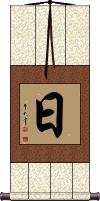
This is how to write “day” in Chinese, Japanese, and Korean Hanja.
This can also mean “Sun,” the star in the middle of the Solar system in which we live. In Japanese, it can also mean “sunshine” or even “Sunday.”
When writing the date in modern Chinese and Japanese, putting a number in front of this character indicates the day of the month. Of course, you need to indicate the month too... The month is expressed with a number followed by the character for the moon. So “three moons ten suns” would be “March 10th” or “3/10.”
Note: This is also the first character for the proper name of Japan. Remember that Japan is “The land of the rising sun”? Well, the first character for Japan means “sun” and the second means “origin” so you get the real meaning now. Sometimes, in China, this sun character can be a short name for Japan or a suffix for something of or from Japan.
Not Long for this World
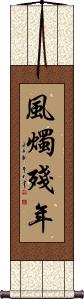
This phrase means “Old and ailing with little time left” or “Not long for this world.”
There is a real suggestion here that someone will die soon.
This was added by a special request of a customer and is perhaps, not the most positive phrase that you could put on a wall scroll.
This would be the most offensive possible gift to give to an older person - please do not do that!
Death Before Surrender
Rather die than compromise
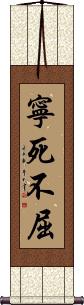
寧死不屈 is often translated as “Death Before Dishonor.”
The literal translation is more like, “Better die than compromise.” The last two characters mean “not to bend” or “not to bow down.” Some might even say that it means “not to surrender.” Thus, you could say this proverb means “Better to die than live on my knees” or simply “no surrender” (with the real idea being that you would rather die than surrender).
Delreal

德爾雷爾 is the name Del Real or Delreal in Chinese (Mandarin).
Delreal

デルリアル is the name Del Real or Delreal in Japanese Katakana.
Note: Because this title is entirely Japanese Katakana, it should be written by a Japanese calligrapher.
Determination
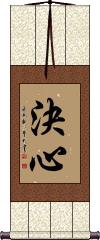
決心 is a Chinese, Japanese, and Korean word that holds the dictionary definition of determination but literally means determined heart.
The first character means to determine or determined.
The second character means heart, mind, or soul, so you can imagine that this form of determination partially means putting your heart into something. It can also be translated as resolve, resolution, or decision (as in a decision made and followed).
See Also: Devotion | Tenacious | Passion | Dedication | Will-Power
Devotion / Dedication / Attentive / Focused
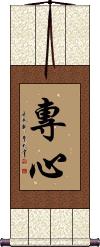
專心 makes a word that means “paying attention with your heart.”
It's often translated as “dedication,” as in “be absorbed in” or “concentrate one's efforts.” It's also used to mean “with the single mind,” “whole-heartedly,” “paying attention,” “undivided attention,” “concentration (-ed),” “engrossed,” “devotionally (listening/watching),” and/or “attentive.”
The first character means “for a particular person, occasion, or purpose,” “focused on one single thing,” “concentrated,” and sometimes, “special.”
The second character means “heart” or “mind” by itself.
My favorite translation, which comes from the Oxford Advanced Chinese/English Dictionary, is, “wholehearted devotion.”
If it seems like the meaning of this word is quite open, you are correct. The context in which the word is used matters a lot. It can mean different things depending on how you use it. This makes it kind of nice as you can decide what this means to you (within some limits). This is always positive in meaning, so even if a Chinese person reads it differently than you, it will still have a good meaning.
 In Japanese, they tend to use a variation of the second character which has one less stroke. If you want your calligraphy written this Japanese form, please click on the Kanji shown to the right instead of the button above. Note: Japanese and Chinese people will recognize either form.
The Spirit of the Dragon Horse
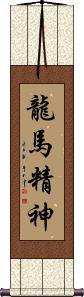
龍馬精神 is an old proverb that is used to wish someone good health and success combined as a great compliment.
The meaning is “The vigor and spirit of the legendary dragon-horse.” These four characters are often accompanied by four more which mean “...and the power and prestige of the tiger.” Here we are just offering the first part which is considered the short version.
By giving a wall scroll like this to someone, you were either wishing or telling them that they have an amazing quality. There is also a suggestion of good health - at least anyone with the vigor of a dragon horse would seem to also be in good health.
Note: In Japanese, this would be read as the spirit of 坂本龍馬 (Sakamoto_Ryōma), a beloved rebel who help abolish the old Japanese feudal system. This can be confusing, so I am declaring this proverb to be Chinese only.
The Spirit of the Dragon Horse and Power of a Tiger
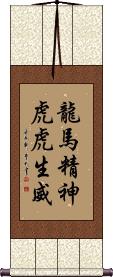
龍馬精神虎虎生威 is an old proverb that is used to wish someone great health and success combined as a great compliment.
The meaning is “The vigor and spirit of the legendary dragon-horse and the power and prestige of the tiger.”
By giving a wall scroll like this to someone, you were either wishing or telling them that they have these qualities. There is also a suggestion of good health - at least anyone with the vigor of a dragon horse would seem to also be in good health.
Dragon Spirit
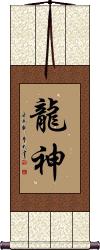
龍神 is a Chinese, Japanese Kanji, and old Korean Hanja title that can mean “dragon god,” “dragon king,” or “dragon spirit.”
In the context of Buddhism, this is one of eight kinds of spiritual beings found in Mahāyāna texts.
The Spirit of Dragon and Tiger
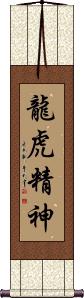
龍虎精神 means the spirit of the dragon and tiger.
It speaks to the vitality and vigor that is the nature of these two creatures.
Beyond “spirit,” the last two characters can also mean mind, soul, or heart. Therefore, you can also say this means “Heart of the Dragon and Tiger,” etc.
龍虎精神 is often titled “Ryukoseishin” in many Japanese martial arts.
Earth
(Used in Japanese version of five elements)
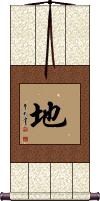
地 is the single-character element and title of the planet Earth in Chinese, old Korean Hanja, and Japanese Kanji.
Because this is a single character, the definition is a little ambiguous and can have many meanings depending on the context in which it is used. These meanings include: earth, ground, land, soil, dirt, place, territory, bottom (of a package, book, etc.), earth (one of the Japanese five elements), the region in question, the local area, skin, texture, fabric, material, weave, base, background, one's true nature, narrative (i.e. descriptive part of a story), real life, actuality, etc.
In Japanese, this Kanji can be pronounced several ways, including chi, ji, tsushi, or tsuchi.
地 is also an element of the Japanese version of the five elements (the original Chinese version uses a different version of earth).
Enigma / Mysterious
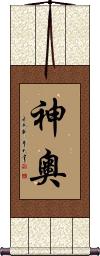
神奧 is a Chinese word that means mysterious or enigma.
This version of enigma or mystery is somewhat spiritual - as if the soul is the puzzle to be solved.
Enthusiasm / Warm-Hearted
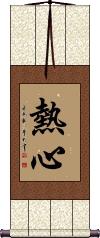
熱心 literally means “warm-hearted” (can also mean warm-spirited or warm-souled).
This is one of a few ways to say Enthusiasm in Chinese, Japanese Kanji, and old Korean Hanja.
熱心 is also used to express the ideas of earnestness or eagerness.
Can mean “zeal” in Japanese.
Eternal Life / Future Life
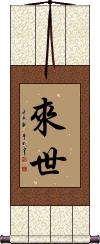
來世 is a word that can be used in many different ways.
It is often used to express the next life (life in heaven or wherever your soul is bound for). So it does have a religious overtone. However, it can also be used to express your life in the future - perhaps during your present lifetime.
It can also be translated as “the next world,” “the next generation,” “the time that is to come,” “otherworld,” or simply “posterity.”
See Also: Eternity | Rebirth | Reincarnation | Immortality
Fantasy / Illusion
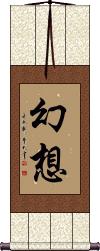
幻想 is illusions or fantasy in Chinese, Japanese Kanji, and old Korean Hanja.
This can also refer to delusion or daydreaming. It sort of means a dream or idea that cannot be true or real ( at least not in this realm).
Keep Your Feet on the Ground
Be Down-to-Earth
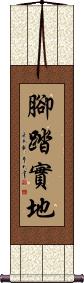
腳踏實地 is a four-character proverb that suggests that you should be practical, realistic, and grounded.
Some translate this as a suggestion to be down-to-earth.
The first character means “feet.”
The second means “step on” or “stand.”
The third means “solid,” “real,” or “true.”
The last character means “ground,” “earth,” or “terra.”
Literally, this means “[keep your] Feet Standing [on] Solid Ground.”
A Bright Future
Incredible 10,000-Mile Flight of the Peng
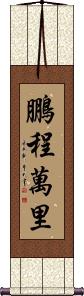
鵬程萬里 is an ancient Chinese proverb used in modern times to wish someone a long and successful career.
It's really about the 10,000 Flight of the Peng (Peng, also known as Roc is a mythical fish that can turn into a bird and take flight).
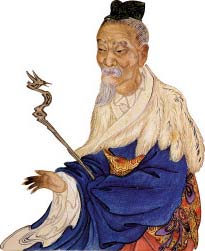
莊子
Zhuangzi or Chuang Tzu
Breaking down each character:
1. Peng or Roc (a kind of bird).
2. Journey (in this case, a flight).
3. 10,000 (Ten Thousand).
4. Li is a unit of distance often referred to as a “Chinese Mile,” though the real distance is about half a kilometer.
Direct Translation: “Peng's Journey [of] 10,000 Li.”
Literal meaning: “The 10,000-Li Flying Range Of The Roc.”
Perceived meaning: “To have a bright future” or “To go far.”
This proverb/idiom comes from the book of Zhuangzi or Chuang Tzu. It tells the tale of a huge fish that could turn into a gigantic bird. This bird was called a “peng” and was many miles long. This legendary size allowed the Peng to fly from the Northern Sea to the Southern Sea in a single bound.
Wishing someone “a Peng's Journey of 10,000 Li” will imply that they can travel far without stopping and will have great success, a long career, and a prosperous future.
Always in My Heart
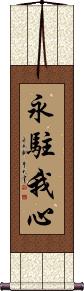
永駐我心 is one of a few ways to write “always in my heart” or “forever in my heart” in Chinese.
The first character means eternal, forever, or always.
The second character means resides, in, or stationed (in the case of troops).
The third character means me, my, or mine.
The last character means heart (but can also mean mind or soul).
Forever In My Heart
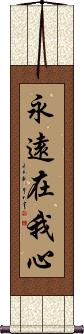
永遠在我心 means “forever in my heart” or “always in my heart” in Chinese.
This is the shorter, somewhat lyrical version of this phrase.
永遠 forever/eternal
在 at/in/exists
我 me/myself/my
心 heart/mind/soul
Free Spirit
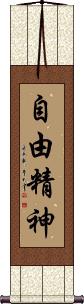
The first two characters mean freedom or liberty.
The second two characters mean spirit, heart, mind, or soul.
Together, 自由精神 is a title that is very similar to the English term “free spirit.”
See Also: Freedom | Independence
Free Spirit
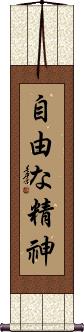
自由な精神 is very similar to the English term “free spirit.”
The first two characters mean freedom or liberty.
The middle character is a connecting Hiragana which is needed for Japanese grammar.
The last two characters mean spirit, heart, mind, or soul.
See Also: Freedom | Independence
Soul Mates
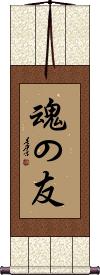
魂の友 is one of a few ways to write “Soul Mates” in Japanese.
The first Kanji means soul, spirit, ghost, immortal soul, the mind, or conscious mind. From Sanskrit, it's Vijñāna.
The middle character is a Japanese Hiragana connecting or possessive article that links the two ideas together.
The last Kanji means friends or friendship.
Geisha
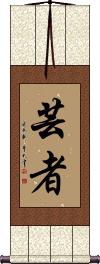
芸者 is the real basis for the way we spell geisha.
However, there are many more ways to refer to a woman that fills the role that westerners think of when they hear the word geisha.
In Japanese, these characters literally mean “artful person.” But in English, it might be better translated as “a person (woman) highly trained/accomplished in the arts.”
However, my Japanese dictionary says “a singing and dancing girl.”
Many will argue as to whether “geisha” = “prostitute” or not. My Japanese friends seem to have the opinion that a geisha is so highly trained in the art of playing musical instruments and dancing that the fact she might also be a prostitute is secondary to her performance on stage.
芸者 is a “Japanese only” term, they use a slightly different first character to express “geisha” in Chinese. Since this is a Japanese term, I have not included the Chinese version.
Ghost / Soul / Spirit
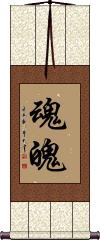
魂魄 is a Chinese, Japanese Kanji, and old Korean Hanja term for ghost, soul, or spirit.
It's used in the context of Buddhism as:
Animus and anima; the spiritual nature or mind, and the animal soul; the two are defined as mind and body or mental and physical, the invisible soul inhabiting the visible body, the former being celestial, the latter terrestrial.
Goddess
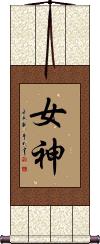
女神 is Goddess from English or Dea from Latin in both Chinese and Japanese.
The literal meaning:
女 = Female or woman.
神 = Spirit, deity, soul, or saint.
Goddess of Beauty / Beautiful Spirit
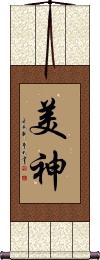
In Chinese, 美神 means Goddess of Beauty.
The first character means beauty or beautiful.
The second character means spirit (can also mean god, goddess, or soul).
Some will use this as a short way to say, “Beautiful Spirit.”
This has a similar meaning in Japanese but is used more often as a female given name in Japan. As a Japanese given name, it can be pronounced Mikami, Mikan, or Binasu.
Guan Gong / Warrior Saint
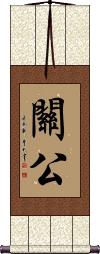
關公 is a Chinese title, Guan Gong, that means Lord Guan (The warrior saint of ancient China).
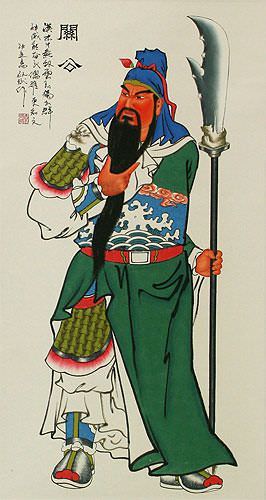 While his real name was Guan Yu / 關羽, he is commonly known by the title of Guan Gong (關公).
Some Chinese soldiers still pray to Guan Gong for protection. They would especially do this before going into battle. Statues of Guan Gong are seen throughout China.
Heart and Soul
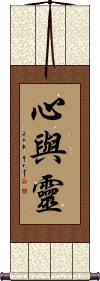
心與靈 is “heart and soul” in Chinese.
The first character means heart (but can also mean mind or soul).
The middle character is like the English “and.”
The last character means soul, spirit, or spiritual energy.
Heart and Soul
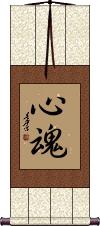
心魂 is “heart and soul” in Japanese Kanji.
The first character means heart (but can also mean mind or soul).
The last character means soul or spirit (spiritual essence).
Heart / Mind / Spirit
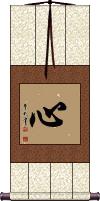
心 would often be translated as “heart.”
However, because it was believed in Chinese culture for thousands of years that your consciousness and thoughts came from the big red organ in the middle of your chest, it also means “mind” or “spirit” and sometimes even “soul.”
In Korean, beyond heart, mind, and spirit, this character can mean moral, nature, mind, affections, intentions, core, and center. In fact, it is used in Chinese to mean “center” as well but only with another character in front of it. For instance, “medical center” or even “shopping center.” Separately and alone, it will not be read with that “center” meaning unless thought of as “the center of your soul.”
Soul Mates at Heart
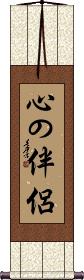
心の伴侶 is a Japanese-only title for soulmates.
心 means heart, soul, mind, core, or center. In ancient times, the heart was believed to be the mind or center of your soul and being.
の is a possessive article that connects everything here.
伴侶 means mates, companions, partners, and spouses.
This Japanese version of soulmates is about two partners, coupled or joined by their hearts.
Honesty
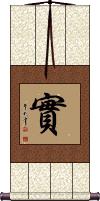
Honesty / Fidelity
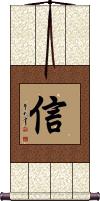
信 is another character that expresses the idea of honesty.
It can also mean truth, faith, belief in, fidelity, sincerity, trust, and/or confidence.
Some have included this in the list for the Bushido, although “makoto” is probably more common/popular.
Note: In some contexts, this character can mean a letter (mail), news, or envoy. However, alone, it will generally be read with the honesty-meaning.
See our page with just Code of the Samurai / Bushido here
See Also: Loyalty Trustworthiness Trustworthy
Immovable Mind
fudoshin
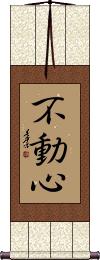
不動心 is one of the five spirits of the warrior (budo) and is often used as a Japanese martial arts tenet.
Under that context, places such as the Budo Dojo define it this way: An unshakable mind and an immovable spirit is the state of fudoshin. It is courage and stability displayed both mentally and physically. Rather than indicating rigidity and inflexibility, fudoshin describes a condition that is not easily upset by internal thoughts or external forces. It is capable of receiving a strong attack while retaining composure and balance. It receives and yields lightly, grounds to the earth, and reflects aggression back to the source.
Other translations of this title include unwavering mind, immovable mind, unwavering composure, imperturbability, steadfastness, keeping a cool head in an emergency, or keeping one's calm (during a fight).
The first two Kanji alone mean immobility, firmness, fixed, steadfastness, motionless, and idle.
The last Kanji means heart, mind, soul, or essence.
Together, these three Kanji create a title defined as “immovable mind” within the context of Japanese martial arts. However, in Chinese, it would mean “motionless heart,” and in Korean Hanja, “wafting heart” or “floating heart.”
Impermanence
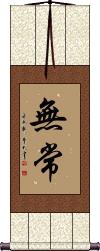
無常 is the state of being “not permanent,” “not enduring,” transitory, or evolving.
It can also mean variable or changeable. In some contexts, it can refer to a ghost that is supposed to take a soul upon death. Following that, this term can also mean to pass away or die.
In the Buddhist context, this is a reminder that everything in this world is ever-changing, and all circumstances of your life are temporary.
If you take the Buddhist philosophy further, none of these circumstances are real, and your existence is an illusion. Thus, the idea of the eternal soul is perhaps just your attachment to your ego. Once you release your attachment to all impermanent things, you will be on your way to enlightenment and Buddhahood.
Language notes for this word when used outside the context of Buddhism:
In Korean Hanja, this means uncertainty, transiency, mutability, or evanescent.
In Japanese, the definition orbits closer to the state of being uncertain.
Independent Spirit / Independent Heart
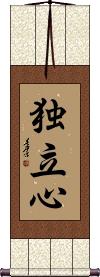
獨立心 means independent spirit or independent heart in Japanese.
The first two characters mean independent or independence. The third character means spirit, heart, or mind.
獨立心 is a Japanese term, although Chinese people could guess the meaning (the characters make sense individually in Chinese but are not often used this way). Also, the first character would be written 獨 in Traditional Chinese versus 独 which is the Simplified Chinese and modern Japanese version.
Independent Spirit
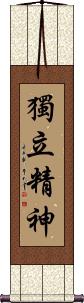
獨立精神 means independent spirit in Chinese.
The first two characters mean independent, independence, or to stand alone.
The last two characters mean spirit, spiritual, vigor, vitality, drive, mind, consciousness, thought, essence, heart, or soul.
With this information, you can make your translation combination such as “independent heart,” “stand-alone spirit,” or more creatively, “the drive to stand alone” in English. There are a lot of ways to interpret 獨立精神.
Inner Beauty / Beauty of Spirit
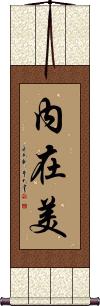
內在美 is a title that speaks of beauty on the inside.
It's not about outward or physical beauty but rather the inner beauty possessed by someone. This can also be translated as “beauty of spirit.”
Inner Beauty / Beauty of Spirit
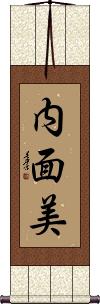
内面美 is a three-character title that speaks of beauty on the inside.
It's not about outward or physical beauty but rather the inner beauty possessed by someone. This can also be translated as “beauty of spirit.”
Inner Heart / Inner Soul
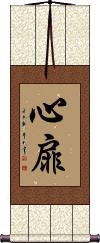
心扉 is a Chinese title meaning inner heart or soul.
Inner Peace
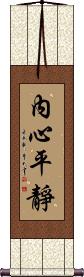
內心平靜 is a Chinese and Japanese phrase that is a direct translation of the western idea of inner peace.
The first two characters contain the idea of “heart,” “innermost being,” or “deep in the/your inner mind.”
The last two characters mean “tranquil” and “serene.”
I have seen this phrase used as “inner peace” for art prints and even on the side of coffee cups. But I think the translation is too literal. It feels like a direct translation from English rather than a nicely composed Chinese or Japanese phrase. See my other entries for “inner peace.”
See Also: Serenity | Simplicity | Peace
Inner Strength
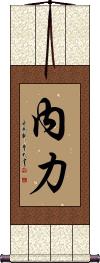
內力 is the shorter version of inner strength (can also be translated as “internal force”). The first character holds the meaning of “inner” or “internal.” The second character means “power,” “force,” or “strength.”
內力 is a Kung Fu way of talking about an inner power or strength from within. This is a way to express “inner chi.” This is something that you might hear in a real Chinese Kung Fu movie.
While understood in Chinese and Japanese, this can have a secondary meaning of “inner stress” in Japanese.
Inspiration
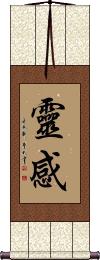
靈感 is the Chinese word closest to hitting the mark for the English word inspiration.
In a more extended context, I have even seen this translated as “brain wave.”
The first character means alert, departed soul, efficacious, quick, effective, or intelligent.
The second character means to feel, to move, to touch, or to affect.
The combined meaning of these two characters changes a bit, but I think it's nice to know the individual meanings to give you a better understanding of where a word comes from.
You could describe this word as “the thought that pops into your head just before you patent the greatest widget ever invented that everyone in the world will want.”
At least, that's the idea.
This term can also mean “intelligent thought” if you translate it directly from each character. If you are looking for inspiration or need to be inspired, this is the word for you.
 When the first character was absorbed into Japanese from Chinese, an alternate form became the standard in Japan. The Kanji shown to the right is the form currently used in Japan. This is still considered an alternate form in China to this day.
it’s
readable by both Chinese and Japanese people but if your audience is Japanese, I recommend the Kanji shown to the right - just click on that Kanji to order that version.
When the first character was absorbed into Japanese from Chinese, an alternate form became the standard in Japan. The Kanji shown to the right is the form currently used in Japan. This is still considered an alternate form in China to this day.
it’s
readable by both Chinese and Japanese people but if your audience is Japanese, I recommend the Kanji shown to the right - just click on that Kanji to order that version.
Italy / Italia
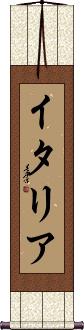
イタリア is the Japanese Katakana name for the country of Italy.
This version is the most common way to write Italy, and actually sounds a bit like the real name of Italy which is Italia.
Note: Because this title is entirely Japanese Katakana, it should be written by a Japanese calligrapher.
See Also: Europe
Jesus
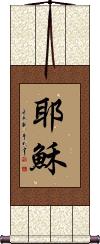
This is simply the name “Jesus” transliterated into Chinese. 耶穌 hold a pronunciation in Mandarin that is closer to the real and original Hebrew Yeshua, instead of the incorrect way we have always pronounced Jesus in English with a hard “J” sound. While this name sounds like the real “Jesus” in Chinese, Christians in China are more likely to say “Christ” (Jidu) which holds more meaning than just sound.
If you are Latino and have been given the name “Jesus,” this is also how to write your name in Chinese.
Three Treasures of Chinese Medicine
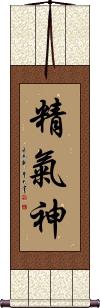
精, 氣, 神 are the characters jing, qi, and shen.
As a set, these three characters are known in English as the treasures of traditional Chinese medicine, the treasures of Qi Gong, or the three treasures of Taoism / Daoism.
Sometimes this set is titled 三寶 (sānbǎo) or “three treasures,” but here, we're writing each treasure out.
Here's how these characters are perceived in this context...
Jing: nutritive essence; refined; perfected; pure
Qi: vitality; energy; force; breath; vigor
Shen: spirit; soul; mind; being
To keep it simple, you can use “essence, vitality, and spirit” to define these.
Jin Shin Jyutsu
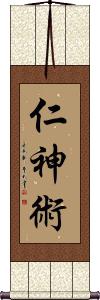
仁神術 is Jin Shin Jyutsu or Jin Shin Jutsu.
This is a practice of calming the mind and clearing the flow of Qi energy in the body. Jin Shin Jyutsu has some commonality with the practice of Reiki.
A good translation of 仁神術 would be “Benevolent Spirit Method.”
We can break that down into all of the possible meanings:
仁 = benevolence (esp. as a virtue of Confucianism), consideration, compassion, humanity, charity, kindness, or virtue.
神 = deity, soul, spirit, mysterious, psyche, god, divinity, spiritual powers, deva, divine, spiritual, or supernatural.
術 = way, method, means, art, trick, or plan. The correct romaji for this 術 Kanji should be “jutsu.” However, in martial arts, this is often written “jitsu” but in this case, “jyutsu” became common.
A Journey of 1000 Miles Begins with a Single Step
senri no michi mo ippo kara
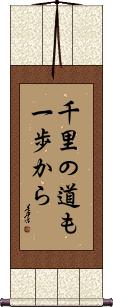
千里の道も一歩から is the Japanese version of an ancient Chinese proverb that means “a journey of a thousand miles begins with a single step.”
Some will also translate this as a 1000-mile road starts with one brick (a small amount).
In this case, the real measurement is an ancient Chinese “li” or 里, which is romanized as “ri” in Japanese. It's about half a kilometer, so three 里 would be a western mile. A journey of 333 miles begins with a single step, just doesn't sound as natural.
Note: Because this selection contains some special Japanese Hiragana characters, it should be written by a Japanese calligrapher.
Katana
Japanese Samurai Sword
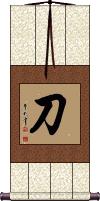
刀 is the Japanese Kanji for “sword.” This refers to the style of sword carried by warriors, samurai, and shogun of ancient Japan.
With the pacification of Japan, such swords are now only used for ceremony and decoration. The true art of sword-smithing is all but lost in Japan with new sword production dedicated to making inexpensive replicas for the tourist and foreign market.
For those of you that want to ask whether I can get you a real antique sword. Let me tell you that most real Asian swords were melted down after WWII in Japan, and during the Great Leap Forward in China. Any remaining swords are family heirlooms that nobody will part with.
Please carefully note that the Japanese kanji character shown above is only for a Japanese audience. In China, this character means “knife.” See our other entry for “sword” in Chinese.
Note: 刀 can mean knife, sword, or blade in Korean, depending on context.
See Also: Sword
Kishan
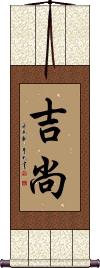
This an alternate transliteration to Mandarin Chinese for the name Kishan.
We like this one better because of the way it sounds, and the good meaning. 吉尚 is also a rare but real family name in Chinese culture.
Kyojitsu: Falsehood and Truth
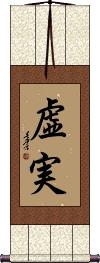
虚実 is a Japanese word that means “falsehood [and] truth” or “fiction [and] fact.”
This concept is used in warfare, gameplay, and martial arts strategies. 虚実 can be a strategy of real and/or deceptive moves. This gets to some Sun Tzu Art of War stuff where in warfare a strategic move is either a real and serious move or it is a deceptive blow.
Let's explore each character in more depth:
虚 was originally written 虛 (there is a very subtle difference in the strokes at the bottom of the character) and means unpreparedness, falsehood, emptiness, void, abstract theory, empty or unoccupied, diffident or timid, false, humble or modest, virtual, or in vain.
In the Buddhist context, 虛 represents the Pali/Sanskrit word “śūnya,” meaning empty, vacant, unreal, unsubstantial, untrue, space, humble, or in vain.
In ancient Eastern/Chinese astronomy, 虛 represents the “Emptiness” constellation (one of the 28 mansions in the sky).
実 was originally 實 in Chinese (they currently write it as 实 in Simplified Chinese) with the meaning, truth, reality, sincerity, honesty, fidelity, and substance.
The Buddhist context is similar, adding real, true, honest, really, solid, definitely, sincere, solid, fixed, full, to fill, fruit, kernel, verily, in fact, the supreme fact, or ultimate reality to the definition.
Lao Tzu / Laozi
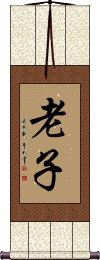
Depending on the romanization scheme you use, this man's name can be spelled Laozi, Lao Tzu, or Lao Tze. In older English usage, he was known as Laocius. He is believed to have lived around 500 B.C.
He was a Chinese philosopher, founder of Daoism/Taoism, credited with being the author of the sacred and wise book of Daoism/Taoism.
There is a theory that Lao Tzu's soul traveled to India and was reborn as the Buddha.
Life Is But A Dream
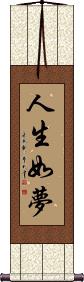
人生如夢 is an old Chinese proverb that suggests, “life is but a dream.”
This kind of follows the Buddhist idea that the world is a temporal place, where reality may not be as real as you think.
Life Energy / Spiritual Energy
Chi Energy: Essence of Life / Energy Flow
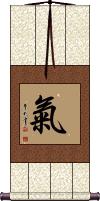
This 氣 energy flow is a fundamental concept of traditional Asian culture.
氣 is romanized as “Qi” or “Chi” in Chinese, “Gi” in Korean, and “Ki” in Japanese.
Chi is believed to be part of everything that exists, as in “life force” or “spiritual energy.” It is most often translated as “energy flow” or literally as “air” or “breath.” Some people will simply translate this as “spirit,” but you must consider the kind of spirit we're talking about. I think this is weighted more toward energy than spirit.
The character itself is a representation of steam (or breath) rising from rice. To clarify, the character for rice looks like this: 
Steam was apparently seen as visual evidence of the release of “life energy” when this concept was first developed. The Qi / Chi / Ki character is still used in compound words to mean steam or vapor.
The etymology of this character is a bit complicated. It's suggested that the first form of this character from bronze script (about 2500 years ago) looked like these samples: 

However, it was easy to confuse this with the character for the number three. So the rice radical was added by 221 B.C. (the exact time of this change is debated). This first version with the rice radical looks like this: 
The idea of Qi / Chi / Ki is really a philosophical concept. It's often used to refer to the “flow” of metaphysical energy that sustains living beings. Yet there is much debate that has continued for thousands of years as to whether Qi / Chi / Ki is pure energy or consists partially or fully of matter.
You can also see the character for Qi / Chi / Ki in common compound words such as Tai Chi / Tai Qi, Aikido, Reiki, and Qi Gong / Chi Kung.
In the modern Japanese Kanji, the rice radical has been changed into two strokes that form an X.
 The original and traditional Chinese form is still understood in Japanese, but we can also offer that modern Kanji form in our custom calligraphy. If you want this Japanese Kanji, please click on the character to the right instead of the “Select and Customize” button above.
More language notes: This is pronounced like “chee” in Mandarin Chinese, and like “key” in Japanese.
This is also the same way to write this in Korean Hanja where it is Romanized as “gi” and pronounced like “gee” but with a real G-sound, not a J-sound.
Though Vietnamese no longer use Chinese characters in their daily language, this character is still widely known in Vietnam.
See Also: Energy | Life Force | Vitality | Life | Birth | Soul
Lingering Mind
Zanshin
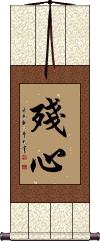
First off, 殘心 should only be used in the context of Japanese martial arts. In Chinese, it's a rather sad title (like a broken heart). In Chinese, the first character alone means destroyed, spoiled, ruined, injured, cruel, oppressive, savage, incomplete, or disabled. However, in Japanese, it's remainder, leftover, balance, or lingering.
The second character means heart, mind, soul, or essence in both languages.
殘心 is one of the five spirits of the warrior (budo) and is often used as a Japanese martial arts tenet. Under that context, places such as the Budo Dojo define it this way: The spirit of zanshin is the state of the remaining or lingering spirit. It is often described as a sustained and heightened state of awareness and mental follow-through. However, true zanshin is a state of focus or concentration before, during, and after the execution of a technique, where a link or connection between uke and nage is preserved. Zanshin is the state of mind that allows us to stay spiritually connected, not only to a single attacker but to multiple attackers and even an entire context; a space, a time, an event.
 In modern Japan (and Simplified Chinese), they use a different version of the first character, as seen to the right. Click on this character to the right instead of the button above if you want this modern Japanese version of lingering mind / zanshin.
Listen to Your Heart / Follow Your Heart
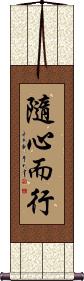
隨心而行 is the closest way to express this idea in Chinese. Literally translated, this phrase means “Allow your heart to dictate your behavior” or “Let your heart guide your conduct” in Chinese. You could also translate this as “follow your heart.” Or, with a bit of imagination, it could mean: “let your spirit be your guide.”
Note that in some cases, “heart” can mean “mind,” “soul” or even “spirit” in Chinese. In ancient China, it was thought that the big pumping organ in your chest was where your thoughts came from, or where your soul resides.
Ancient western thought followed a similar belief. Thus phrases like “I love you with all my heart” and “I give you my whole heart.”
Listen to Both Sides and be Enlightened, Listen to One Side and be in the Dark
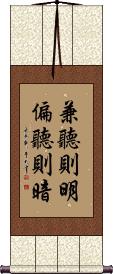
兼聽則明偏聽則暗 is an ancient Chinese proverb about getting all the information from all sides so that you truly understand a situation.
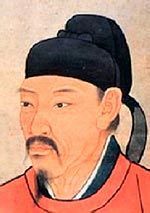
Wei Zheng
A man named Wei Zheng lived between 580-643 AD. He was a noble and wise historian and minister in the court of the early Tang Dynasty. The emperor once asked him, “What should an emperor do to understand the real-world situation, and what makes an emperor out-of-touch with reality?”
Wei Zheng replied, “Listen to both sides and you will be enlightened; listen to only one side and you will be left in the dark.”
Then Wei Zheng went on to cite examples of leaders in history that were victorious after heeding both sides of the story, and other leaders that met their doom because they believed one-sided stories which often came from flattering lips.
Please note that there is an unwritten rule when the same character appears twice in the same phrase, the calligrapher will alter the appearance so that no two characters are exactly alike in the same piece. This calligraphy has two repeating characters that will be written differently than they appear here.
Little Dragon
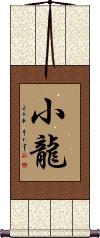
Lonely Soul / Solitary
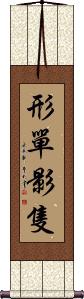
形單影隻 is a Chinese idiom that means “lonely soul” if you are a solitary person, or a lost soul, this may be the title for you.
Lonely Soul / Lost Soul
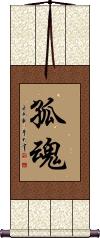
孤魂 is a Chinese title that means “lonely soul.”
In the context of being a soul without a mate or all alone, this can be translated as a “lost soul.”
Lost Soul
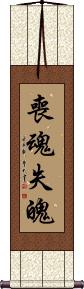
喪魂失魄 is a Chinese idiom that means “lost soul, vanished spirit.”
It relays a feeling of being distraught, at a loss, or heartbroken.
Loving Heart / One’s Love
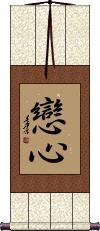
戀心 literally means “loving heart.” It can also be translated as “one's love” or “awakening of love.”
戀心 is used exclusively for love between boyfriends and girlfriends or husband and wife.
Breaking down the meaning of each Kanji, the first means love, affection, or tender passion. The second Kanji means heart, mind, or soul (most will read it as the heart).
See Also: Compassion | Love
Knowledge of Ultimate Truth
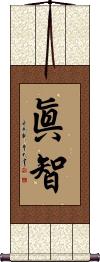
眞智 can mean the wisdom or knowledge of ultimate truth.
眞智 is also the absolute knowledge of the non-thing or that which is immaterial. This makes more sense when you consider that true wisdom includes the knowledge of both the real and unreal, or what is material and immaterial.
In Japan, 眞智 (Masatoshi) can also be a given name.
Mind Body Spirit
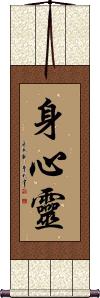
身心靈 is probably the best way to express the idea of “Body, Mind, and Spirit” in Chinese and old Korean Hanja. We are actually using the word “heart” here because, for thousands of years, the heart was thought to be the place where your thoughts, feelings, and emotions came from. We do something similar in the west when we say “warm-hearted” or “I love you with all of my heart.” In this context, heart = mind in Asian language and culture.
The very literal translation of these three characters is “body, heart & spirit,” which could also be interpreted as “body, mind & soul.”
We have arranged these characters in this order because it simply “feels” like the proper order in the Chinese language. Word lists like this are not so common for calligraphy artwork, so we must be careful to put them in the most natural order. It should be noted that this is not a common title in Asia, nor is it considered an actual phrase (as it lacks a clear subject, verb, and object).
In Japanese Kanji, they use an alternate form of the character for soul or spirit. If you want this using the Japanese alternate, please click on the Kanji shown to the right instead of the button above.
Japanese disclaimer: This is not a natural phrase/list in Japanese. While not totally-natural in Chinese, this word list is best if your audience is Chinese.
Energy Sword Body in Concert
Spirit, Sword & Body as One
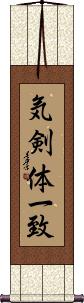
气剑体一致 often gets translated as “Mind Sword Body,” or “Spirit, Sword, and Body as One.” But I think these translations don't tell you enough about what this is really saying.
In this context, 気, which is the modern Japanese version of 氣, means spiritual and unseen energy or “life energy.” In some cases, 気 can be translated as spirit, feeling, or nature. If defined as the mind, it's more about the invisible or intangible parts of one's mind (or soul).
剣 is the Japanese version of 劍 meaning sword.
体 is the modern Japanese version of 體 meaning body.
The Kanji 一 means one, and in this case, suggests “all in one.”
The Kanji 到 means to send, deliver, or convey. But together, 一到 suggests all these things in agreement, union cooperation, or in concert.
Note: Arguments exist as to whether this should be romanized as Kikentaiitchi, Kikentaiicchi, or kikentaiichi. Technically, if you drop the last character, you get 気剣体一 and kikentaiichi (ki ken tai ichi), which is also a valid phrase.
Mind Like Water
Mizu No Kokoro
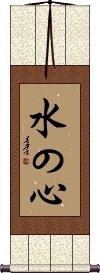
水の心 is the Japanese Buddhist and martial arts phrase, “Mizu no Kokoro,” which means “mind like water” or “heart of water.”
The phrase is a metaphor describing the pond that clearly reflects its surroundings when calm but whose images are obscured once a pebble is dropped into its waters.
Monkey Stealing Peaches
Martial arts term
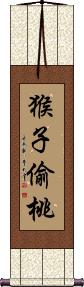
猴子偷桃 is a martial arts term that I find hilarious. I thought Stephen Chow had made this up for his Monkey King movie. After some research, it turns out to be real.
This can be translated as “monkey stealing peaches” or “monkey steals the peach.” It refers to distracting an opponent with one hand and seizing his testicles with the other.
In colloquial Chinese speech, this can refer to grabbing somebody by the balls (without any martial arts technique to the grabbing).
Morality of Mind
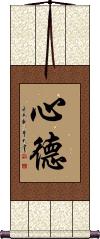
The idea of 心德 or “morality of mind” goes along with 行德 or “wu de” (martial morality or virtues of the warrior).
Here, the first character is a representation of your heart or mind.
The second character refers to morality or virtue.
This can also be translated as “morality of heart,” “virtue of heart,” or “virtue of the mind.”
Since ancient times in Asia, the idea of your mind (where your soul resides and your thought originates) has been associated with the heart. Just as in western culture, where we say “it comes from the heart” or “heartfelt emotions,” there is a belief that your heart and mind are one and the same (medical science now begs to differ).
See Also: Morality of Deed | Martial Morality
My True Love
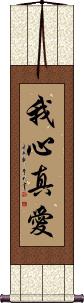
我心真愛 is a slightly poetic way to express this sentiment to someone.
The meaning is “My True Love,” but the characters directly translate as “I/Me/My Heart/Mind True/Real Love.”
Note that Chinese grammar and construction are different, so this sounds very eloquent and artsy in Chinese.
In Korean Hanja, the third character should be written differently. Just let me know when you place your order if you want that version - it will still make sense in Chinese. This phrase makes sense in Korean but is not commonly used.
My True Love
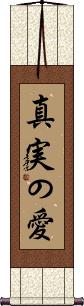
真実の愛 means “true love” or “genuine affection” in Japanese.
The first two Kanji mean true, real, genuine, or authentic.
The third Kanji is a connecting possessive article.
The last character is love or affection.
No Mind / Mushin
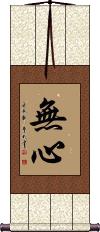
In Japanese, 無心 means innocent or without knowledge of good and evil. It literally means “without mind.”
無心 is one of the five spirits of the warrior (budo) and is often used as a Japanese martial arts tenet. Under that context, places such as the Budo Dojo define it this way: “No mind, a mind without ego. A mind like a mirror which reflects and dos not judge.” The original term was “mushin no shin,” meaning “mind of no mind.” It is a state of mind without fear, anger, or anxiety. Mushin is often described by the phrase “Mizu no Kokoro,” which means “mind like water.” The phrase is a metaphor describing the pond that clearly reflects its surroundings when calm but whose images are obscured once a pebble is dropped into its waters.
This has a good meaning in conjunction with Chan / Zen Buddhism in Japan. However, out of that context, it means mindlessness or absent-mindedness. To non-Buddhists in China, this is associated with doing something without thinking.
In Korean, this usually means indifference.
Use caution and know your audience before ordering this selection.
More info: Wikipedia: Mushin
Nothingness
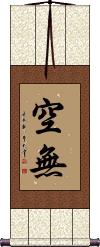
空無 is “nothingness” in a Buddhist context.
The first character means empty but can also mean air or sky (air and sky have no form).
The second character means have not, no, none, not, or to lack.
Together these characters reinforce each other into a word that means “absolute nothingness.”
I know this is a term used in Buddhism, but I have not yet figured out the context in which it is used. I suppose it can be the fact that Buddhists believe that the world is a non-real illusion, or perhaps it's about visualizing yourself as “nothing” and therefore leaving behind your desire and worldliness.
Buddhist concepts and titles often have this element of ambiguity or, rather, “mystery.” Therefore, such ideas can have different meanings to different people, and that's okay. If you don't get it right in this lifetime, there will be plenty more lifetimes to master it (whatever “it” is, and if “it” really exists at all).
Soothill defines this as “Unreality, or immateriality, of things, which is defined as nothing existing of independent or self-contained nature.”
Once in a Lifetime
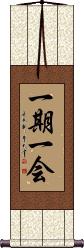
This Japanese title can be translated as “for this time only,” “chance meeting,” “one meeting, one opportunity,” “never again,” or “one chance in a lifetime.”
The characters literally mean “one time one meeting” - of course, the Kanji characters have meaning far beyond a direct translation like this.
Some might use this proverb to talk of an opportunity that presents itself just once in your life. It could also be a one-and-only chance meeting with your true soul mate. An expression of any event that might happen once in a lifetime.
This is primarily a Japanese title, however, there is also a Traditional Chinese (and old Korean) version of this proverb. Just the last character is different. The traditional form was used in Japan before WWII and in Korea prior to 1900. This title is somewhat known in China.
If you want the older traditional form, just click on the character to the right.
One Heart / One Mind / Heart and Soul
Isshin
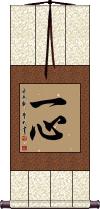
一心 can be translated as “one mind,” “single-minded focus,” or “wholehearted devotion,” from Chinese, Japanese Kanji, and old Korean Hanja.
Colloquially or figuratively, it means: wholeheartedly; heart and soul; of one mind; single-mindedness, wholeheartedness; one's whole heart; with the whole mind or heart; one mind in heart.
I'm not kidding, all of those came right from the dictionary for this one title.
In martial arts usage, this term emphasizes total commitment, where intent, attention, and action are unified without distraction.
In Japanese budō, it often conveys wholehearted dedication to practice or principle, whereas in Chinese usage it tends toward inner mental cultivation.
In Buddhism, this can refer to the bhūtatathatā, or the whole of things; the universe as one mind, or a spiritual unity.
In Japanese, this can be the female given name, Hitomi.
One frost doesn't make winter

一次霜凍不代表整個冬天 is a proverb that means “One frost doesn't make winter.”
The deeper meaning is that a single early sign of cold weather doesn't signify the full onset or severity of winter; it's about the gradual transition of seasons, patience, and not jumping to conclusions.
It's a reminder to stay resilient, wait for the real season to arrive, and not let one small event define the whole experience, similar to how one kind word can warm you for months.
While the origin of this proverb is murky (not originally Chinese, likely a modern adaptation of “One swallow does not a summer make”), this idea aligns with the Chinese solar terms (二十四節氣), which mark subtle shifts, like the transition from "cold dew" (寒露) to "frost falls" (霜降).
This in-stock artwork might be what you are looking for, and ships right away...
Gallery Price: $89.00
Your Price: $49.00
Gallery Price: $200.00
Your Price: $88.88

Gallery Price: $89.00
Your Price: $49.00
Gallery Price: $200.00
Your Price: $88.88
Gallery Price: $200.00
Your Price: $88.88
Gallery Price: $108.00
Your Price: $59.88
Gallery Price: $108.00
Your Price: $59.88
Gallery Price: $126.00
Your Price: $69.88
Gallery Price: $232.00
Your Price: $128.88
Gallery Price: $178.00
Your Price: $98.88
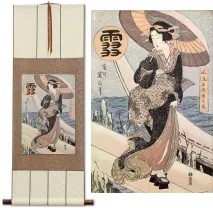
Gallery Price: $108.00
Your Price: $59.88
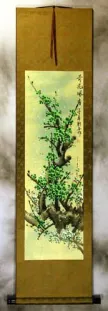
Gallery Price: $72.00
Your Price: $39.88
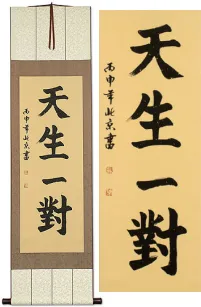

Successful Chinese Character and Japanese Kanji calligraphy searches within the last few hours...



