Many custom options


And formats



Not what you want?
Try other similar-meaning words, fewer words, or just one word.
How U Doing Today in Chinese / Japanese
Buy a How U Doing Today calligraphy wall scroll here!
Personalize your custom “How U Doing Today” project by clicking the button next to your favorite “How U Doing Today” title below.
Switched to secondary search mode due to lack of results using primary.
These secondary results may not be very accurate. Try a different but similar meaning word or phrase for better results. Or:
Look up How U Doing Today in my Japanese Kanji & Chinese Character Dictionary(My dictionary is a different system then the calligraphy search you just tried)
If you want a special phrase, word, title, name, or proverb, feel free to contact me, and I will translate your custom calligraphy idea for you.
1. One Day Seems Like 1000 Years
2. In the Abyss of Infinite Bitterness - Turn to the Shore
6. Adventurer
7. Angel
8. No man knows what he owes to his parents until he comes to have children of his own
9. Archer
10. Art of War: 5 Points of Analysis
11. Baby
12. Barrie
13. Be Like Water
14. Beauty / Beautiful / Handsome
16. Beauty Shop / Beauty Salon
17. Beijing
18. Berserker
19. Biden
20. Big Brother
21. Without a big net, how can you catch fish?
22. Black Wolf
23. Body
24. Bruce Lee
26. Carpe Diem / Seize the Day
27. Cassia
28. Cherry Blossom
29. Child
30. Chinese Traditional Medicine
31. Christmas
32. Coffee / Café
33. Do not shed a tear until you see the coffin
34. Community
35. Confucius
37. Congo
38. Collaboration / Cooperation / Synergy
39. Cowboy
40. Daisy
41. Daodejing / Tao Te Ching - Chapter 81
42. Daodejing / Tao Te Ching - Chapter 54
43. Day
44. Devotion / Dedication / Attentive / Focused
46. Dignity / Honor / Sanctity / Integrity
47. Diligence
48. Double Happiness Guest Book
49. Dragonfly
50. Drain the pond to get all the fish
51. Drink
52. Easter
53. Elmo
54. Enthusiasm
55. Enugu
56. Eternal Beauty
58. Everything Happens for a Reason
59. Example is Better than Precept
60. Excellence
61. Fang
62. The Mysterious Bond Between People
65. Fighter
67. Fire Dragon
68. The Five Principles of Reiki
69. Rise and Fall / Ups and Downs
70. Flowers Bloom and Flowers Fall
71. Flowers Bloom and Flowers Wither
72. Fong
73. Forest
74. Forgive Yourself
75. Forgive Yourself / Release Yourself
76. From This Moment Forward / From This Day Forward
77. Furinkazan
78. Galatians 5:25
79. Gassho
80. Geisha / Geigi
81. Giant Panda
82. Courage To Do What Is Right
83. God Forgive Me
84. God of Zion / God of Abraham
86. Goldfish
88. Good Good Study, Day Day Up
89. Good Intentions
90. Good Night
91. Doing good is the greatest source of happiness
92. Grand Piano
93. Dear Grandfather
94. Guam
95. Gung Ho
One Day Seems Like 1000 Years
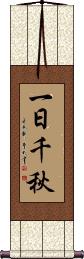
一日千秋 is a Japanese and Chinese proverb about missing someone.
一日千秋 is often used to express how hard it is to wait for someone's return or to be away from someone.
Some will translate this as “one day feels like a very long time” or “waiting for someone (something) is hard.”
You might see this romanized as a single word, Ichijitsusenshuu, or as “Ichijitsu Senshuu” from Japanese.
If you break down the characters one-by-one, we get:
一 = one/a
日 = day/sun (can also represent time or date)
千 = 1000/thousand
秋 = autumn/fall
Together, 千秋 can mean “autumn comes thousand times” (or 1000 years). It can also be read as 1000 periods of time.
However, it conveys the idea of heartache as you wait for someone you miss.
In the Abyss of Infinite Bitterness - Turn to the Shore
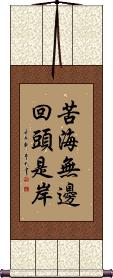
苦海無邊, 回頭是岸 can be translated almost directly as “The sea of bitterness has no bounds, turn your head to see the shore.”
Often this proverb refers to how Buddhist enlightenment can allow one to shed off the abyss of worldly suffering. But it can apply to other religions. If you find yourself trapped in the hardship of this worldly life, take a new turn, and seek a path to salvation.
Acceptance / Tolerate
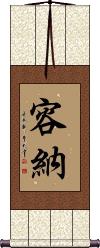
容納 speaks of being tolerant of other opinions or being accepting of other people's ideas or ways of doing things.
Other definitions of this word include having the capacity for, to accommodate, or to tolerate.
Accountant / CPA
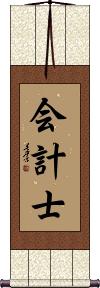
會計士 is how to write accountant (specifically CPA) in Japanese Kanji.
Adamantine / King Kong
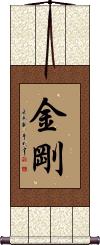
金剛 can translate as adamantine from Chinese, Japanese, and old Korean.
Other meanings and translations can include diamond, thunderbolt, Indra's indestructible weapon, a Buddhist symbol of the indestructible truth, Vajra (a mythical weapon), guardian deity, hardness, indestructibility, power, the least frangible of minerals.
The Chinese pronunciation of “Jīn Gāng” became the loanword used in English as “King Kong.” You can see King Kong as the indestructible ape guardian deity depending on how you read the story.
Adventurer
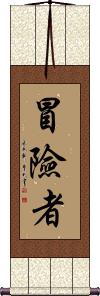
冒險者 is how to write adventurer in Chinese.
Adventurer
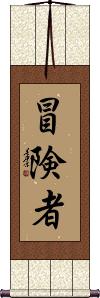
冒險者 is how to write adventurer in Japanese.
Angel
(Name - Version 2)
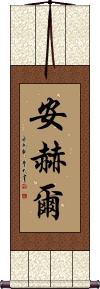
安赫爾 is another common transliteration to Mandarin Chinese for the name Angel.
This one misses the mark too - It uses a hard “H” sound to simulate the “J” sound of the “G” in this name. I don't know who transliterated these first and how it became the standard.
Again, I recommend using the meaning of Angel above.
If anything, this is the more masculine form of Angel. This is also the form commonly used for the masculine Latin name Ángel.
No man knows what he owes to his parents until he comes to have children of his own
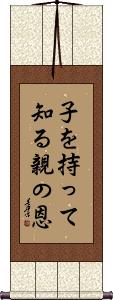
子を持って知る親の恩 literally translates as: Only after you have a baby, you would appreciate your parents (feel the way they do, etc).
This is a bit like the “walk a mile in another man's shoes” saying. it's about you cannot fully understand the plight of others until you experience it yourself. It also shows appreciation for the plight of parents.
This Japanese proverb can also be translated a few more ways:
No man knows what he owes to his parents till he comes to have children of his own.
One knows not what one owes to one's parents till one comes to have children of one's own.
Only after you have a baby, you will appreciate your parents or feel the way they do.
Only after becoming a parent yourself do you realize how much you owe [how indebted you are] to your own parents.
Note: Because this selection contains some special Japanese Hiragana characters, it should be written by a Japanese calligrapher.
Archer
Modern Chinese Version
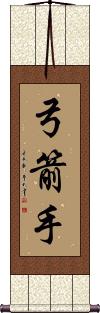
弓箭手 is how to write “archer” in modern Chinese.
弓箭手 literally means “bow arrow hand.”
There are other ways to write “archer” in Chinese, but this is probably the most common title for modern China. The other, less-common version of “archer” is also more universal because it has the same meaning in Japanese (this one is not used in Japan).
Art of War: 5 Points of Analysis
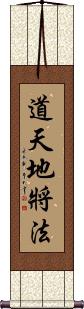
道天地將法 is a list of five key points to analyzing your situation from the first chapter of Sun Tzu's Art of War.
This reads like a 5-part military proverb. Sun Tzu says that to sharpen your skills, you must plan. To plan well, you must know your situation. Therefore, you must consider and discuss the following:
1. Philosophy and Politics: Make sure your way or your policy is agreeable among all of your troops (and the citizens of your kingdom as well). For when your soldiers believe in you and your way, they will follow you to their deaths without hesitation and will not question your orders.
2. Heaven/Sky: Consider climate / weather. This can also mean considering whether God is smiling upon you. In the modern military, this could be waiting for clear skies so that you can have air support for an amphibious landing.
3. Ground/Earth: Consider the terrain in which the battle will take place. This includes analyzing defensible positions, and exit routes, while using varying elevations to your advantage. When you plan an ambush, you must know your terrain and the best location from which to stage that ambush. This knowledge will also help you avoid being ambushed, as you will know where the likely places in which to expect an ambush from your enemy.
4. Leadership: This applies to you as the general and your lieutenants. A leader should be smart and be able to develop good strategies. Leaders should keep their word, and if they break a promise, they should punish themselves as harshly as they would punish subordinates. Leaders should be benevolent to their troops, with almost a fatherly love for them. Leaders must have the ability to make brave and fast decisions. Leaders must have steadfast principles.
5. [Military] Methods: This can also mean laws, rules, principles, models, or systems. You must have an efficient organization in place to manage both your troops and supplies. In the modern military, this would be a combination of how your unit is organized and your SOP (Standard Operating Procedure).
Notes: This is a simplistic translation and explanation. Much more is suggested in the actual text of the Art of War (Bing Fa). It would take many study to master all of these aspects. In fact, these five characters can be compared to the modern military acronyms such as BAMCIS or SMEAC.
CJK notes: I have included the Japanese and Korean pronunciations but in Chinese, Korean and Japanese, this does not make a typical phrase (with subject, verb, and object) it is a list that only someone familiar with Sun Tzu’s writings would understand.
Baby
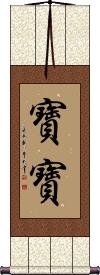
寶寶 is how Chinese people express “baby.”
The word is composed of the same character twice, and therefore literally means “double precious” or “double treasure.”
This would be a nice wall scroll to put either inside or by the door of your baby's room (not on the door, as wall scrolls swing around wildly when hung on doors that open and close a lot).
Barrie
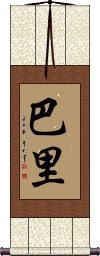
巴里 is the name Barrie transliterated to Mandarin Chinese.
In a bit of a twist, this is how Paris (as in Paris, France) is written in Japanese.
Be Like Water
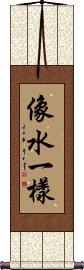
像水一樣 is a short quote from a much longer statement by Bruce Lee.
He summarized how people should be flexible to all circumstances, attacks, or situations. In the end, he exclaims, “Be like water, my friend.” 像水一樣 is the “Be like water” part alone since that seems to be what most people want.
Beauty / Beautiful / Handsome
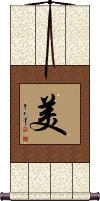
美 is often used to describe the beauty of a woman.
However, when applied to a man, it can mean handsome. It's also the first character in the word for “beauty salon” which you will see all over China and Japan.
美 can mean the given name for a girl (spell it or say it as “Mei” or “May”).
For a bit of trivia: The title for the “USA” in Chinese is “Mei Guo” which literally means “Beautiful Country.” This name was bestowed at a time before Chairman Mao came to power and decided that China didn't like the USA anymore (even though we fought together against the Japanese in WWII). But these days, Chinese people love Americans (but have a distaste for American politics and policy). But I digress...
美 is also how “Beautiful” is written in Japanese Kanji and Korean Hanja. 美 can also mean: very satisfactory; good; to be pleased with oneself; abbreviation for the USA; fine; handsome; admirable; madhura; sweet; and/or pleasant.
See Also: Beautiful Woman | Beautiful Girl
Beautiful Princess
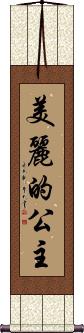
美麗的公主 is how to write beautiful princess in Chinese.
The first two characters mean feminine beauty or rather a way to say beautiful that only applies to women. The middle character is just a connecting character. The last two characters mean princess.
See Also: Queen
Beauty Shop / Beauty Salon
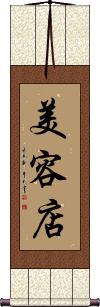
美容店 is how to write “Beauty Shop” or “Beauty Salon.”
If you own such a business, this will make a nice wall scroll to hang up - and many of your Asian customers will be able to read and appreciate it.
When traveling in China, you will see signs like this in the window of any place that offers full services of hair styling, manicures, pedicures, and often shampoo with head and back massage.
However, as a handmade wall scroll, this becomes a very fancy piece of artwork that shows the high class of your business (a great sign for your window if you don't get direct sunlight).
Beijing
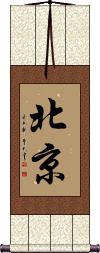
北京 is how to write Beijing, the capital of the People's Republic of China, in Chinese and Japanese.
Occasionally, you will see a romanized version, Peking or Pekin. That's the same place, just an older way to romanize the characters.
Berserker
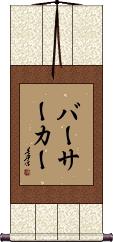
バーサーカー is how to write berserker in Japanese Katakana (phonetic Japanese).
Note: Because this title is entirely Japanese Katakana, it should be written by a Japanese calligrapher.
Biden
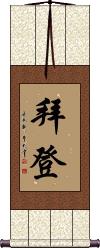
拜登 is the name Biden transliterated into Mandarin Chinese.
This is also how Chinese media refers to vice president Joe Biden.
Big Brother
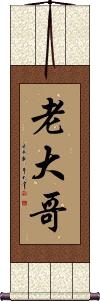
老大哥 is how to write “big brother” in Chinese.
It literally means “respected big brother.”
This does not have the same idiomatic meaning in Chinese as it does in English regarding government surveillance etc.
Without a big net, how can you catch fish?
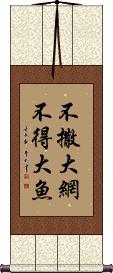
不撒大網不得大魚 is a Chinese proverb that literally translates as: [if one does] not cast a big net, [one can] not get big fish.
Figuratively, this means: One cannot make great accomplishments without making great efforts or taking great pains.
This is sort of the fishing version of, “No pain, no gain.”
Black Wolf
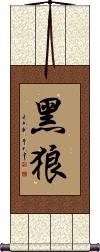
黑狼 is how the title Black Wolf is written in Chinese.
黑狼 is not a common term in Chinese but will be understood.
Body
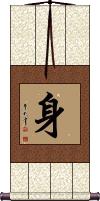
身 is how to write “body” as in your human body, in Chinese, Japanese Kanji, and Korean Hanja.
Depending on the context and certain language issues, this character can also mean: main part, hull, oneself, somebody, person, I, me, sword, lifetime, one's station in life, etc.
While this written word is universal in three languages, it still makes a rather odd selection for a wall scroll. Also, they tend to use 体 (karada) in Japanese for the body (depending on context).
See Also: Body / Karada
Bruce Lee
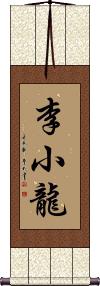
李小龍 is the real full name of Bruce Lee.
 Many people have no idea that Bruce Lee had a “real” Chinese name. In Mandarin and Cantonese, he is known as “Lǐ XiǎoLóng” and “Léi SíuLùng” respectively.
He kept his family name pronunciation (Li = Lee). 李 is a common family name that also means “plum.”
His given name 小龍 (Xiao-Long), literally means “little dragon.” 李小龍 is why you often see the character for dragon associated with Bruce Lee on various posters etc.
For a pronunciation lesson, the “X” in Romanized Mandarin is pronounced like a “sh” sound but with your tongue at the bottom of your mouth. The vowel sound in “Long” is like the English “oh,” not like the “ah” sound in the English word “long.”
If you are a big Bruce Lee fan, you should know this information, and you should have this wall scroll hanging in your room or martial arts studio.
Note: Japanese use these same Chinese characters / Kanji to write Bruce Lee's real name (with different pronunciation - which is a bit like how the name “Bruce Lee” sounds in English).
See Also: Wing Chun Kung Fu | Martial Arts
Buddhism / Buddha
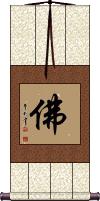
佛 is the essence of the Buddha or Buddhism.
Depending on the context, this word and character can be used to refer to the religion and lifestyle of Buddhism, or in some cases, the Buddha himself.
It is interesting to note that this word is separate from all others in the Chinese language. The sound of “fo” has only this meaning. 佛 is in contrast to many sounds in the Chinese language, which can have one of four tones, and more than 20 possible characters and meanings. This language anomaly shows how significantly Buddhism has affected China since ancient times.
More about Buddhism
佛 is also used with the same meaning in Korean Hanja.
It's used in the very religious context of Buddhism in Japan. It should be noted that there are two forms of this Kanji in use in Japan - this is the more formal/ancient version, but it's rarely seen outside of religious artwork and may not be recognized by all Japanese people.
It also acts as a suffix or first syllable for many Buddhist-related words in Chinese, Japanese, and Korean.
See our Buddhism & Zen page
See Also: Bodhisattva | Enlightenment
Carpe Diem / Seize the Day
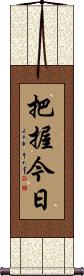
把握今日 is the closest and most natural way to express this proverb in Chinese.
The first two characters mean “to seize” but can also be translated as “take control of.”
The last two characters mean “today.”
Cassia
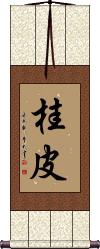
桂皮 is the Chinese, Japanese Kanji, and old Korean Hanja for cassia bark.
The usually refers to cinnamonum cassia, or simply “cassia bark.” Some will say this includes ceylon. The debate rages on how this title relates to cinnamon and ceylon.
Cherry Blossom
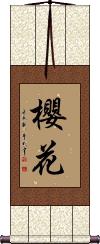
櫻花 is how to write “cherry blossom” in Chinese and traditional Japanese Kanji.
The first character means “cherry” or sometimes “cherry tree.”
The second character means “flowers” or “blossoms.”
Oddly, my Chinese dictionary also defines these two characters as “Japanese oriental cherry tree” or “Oriental cherry blossom.” However, the first character is the only one that means “cherry,” so it can refer to any cherry blossoms in the whole world (not just those in Asia).
 There is an alternate version of the first character, which has become the standard for Japanese Kanji. If you want this version, instead of the one shown to the upper left, please click on the Kanji shown to the right instead of the button above. Although this is an alternate form in Chinese, most Chinese people will think this is just the Japanese version (Chinese people
don’t
necessarily know the history and all alternate forms of Chinese characters from the past). Therefore, this version shown to the right is best if your audience is Japanese (though most Japanese will recognize the form shown in the upper left).
There is an alternate version of the first character, which has become the standard for Japanese Kanji. If you want this version, instead of the one shown to the upper left, please click on the Kanji shown to the right instead of the button above. Although this is an alternate form in Chinese, most Chinese people will think this is just the Japanese version (Chinese people
don’t
necessarily know the history and all alternate forms of Chinese characters from the past). Therefore, this version shown to the right is best if your audience is Japanese (though most Japanese will recognize the form shown in the upper left).
Child
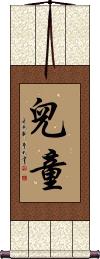
兒童 is how to write “child” in Chinese.
There are several ways to write child or offspring in Chinese, but this is the best form for calligraphy, or written (versus oral) form.
If children are essential to you, this might be the scroll you want. Or if you are a child at heart, this also works.
 In Japanese, they use a slightly-morphed version of the original Chinese first character. If you want the special Japanese version, please click on the Kanji image shown to the right, instead of the button above. Note: Japanese people would still be able to understand the Chinese version and vice versa.
See Also: One Family Under Heaven
Chinese Traditional Medicine
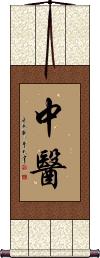
中醫 is how to write “Chinese traditional medicine.”
The original medicine consists of herbal remedies derived from over 3000 years of research.
Christmas
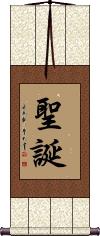
聖誕 is how to write Christmas in Chinese.
The original meaning was the Emperor's Birthday (and sometimes Confucius' birthday), but in modern times, this is almost exclusively used to refer to the western religious holiday of Christmas.
Coffee / Café
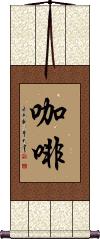
咖啡 is how they write coffee in mainland China (it's 咖逼 in Taiwan).
咖啡 is a loanword from English or Spanish. It's meant to sound like coffee or café rather than to mean coffee.
Coffee / Café
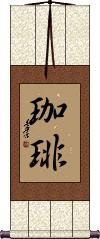
珈琲 is how they write coffee in Japan.
珈琲 is a loanword from English or Spanish. It's meant to sound like coffee or café rather than to mean coffee.
Do not shed a tear until you see the coffin
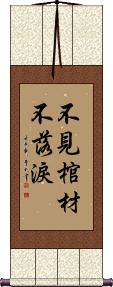
不見棺材不落淚 is a cautionary tale that suggests you are unknowingly (though it should be obvious)on a bad course.
It further suggests that you will not realize your folly until the worst has happened.
This can also be a warning of inaction until it's too late to take action. Again, not realizing your error until it's too late.
In an alternate interpretation, some will suggest this means doing something bad and not looking back - Then the worst happens.
It should be noted that this is one of the oddest selections for a wall scroll in our whole Asian calligraphy database. All of our translators are convinced that no Chinese person would ever hang this on their wall.
Community
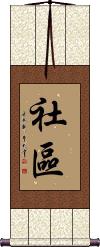
社區 is how to write community in Chinese.
社區 can mean the neighborhood you live in. It can also be used the same way we use the word community in English.
Examples: African-American community, Christian community, Asian community, etc.
If you need a special calligraphy wall scroll to describe your community, just contact me, and I’ll translate it and make it for you.
Confucius
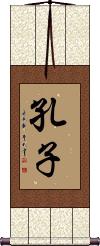
孔子 is how to write the name of the great sage, known in the West as Confucius.
His real name is Kongzi (The name Confucius is a westernized version of his name - his family name is Kong, and “zi” was added as a title of distinction).
He lived some 2500 years ago in Qufu, a town in modern-day Shandong Province of Northern China (about 6 hours south of Beijing by bus). He was a consort to Emperors, and after his death, the impact of his philosophies still served to advise emperors, officials, and common people for generations.
Also during these thousands of years, the Kong family remained powerful in China, and the Kong estate was much like the Vatican in Rome. The Kong estate existed as if on sovereign ground with its own small garrison of guards and the privileges of a kingdom within an empire.
This was true up until the time the Kong family had to flee to Taiwan in 1949 when the Red Army took victory over the Nationalists during the Revolution. The home of Confucius was later razed and all statues were defaced or stolen during the Cultural Revolution. Finally, after years of smearing his name and image, it is once again okay to celebrate the teachings of Confucius in mainland China.
Known as Khổng Tử in Vietnamese.
The Ease of the Scholar
Quote from Confucius
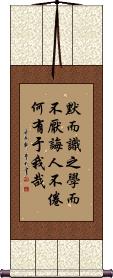
默而识之学而不厌诲人不倦何有于我哉 is a quote from the Analects of Confucius that translates as:
To quietly recite and memorize the classics,
to love learning without tiring of it,
never be bored with teaching,
How could these be difficult for me?
This is a suggestion that for a true scholar, all of these things come with ease.
This was written over 2500 years ago. The composition is in ancient Chinese grammar and phrasing. A modern Chinese person would need a background in Chinese literature to understand this without the aid of a reference.
Congo
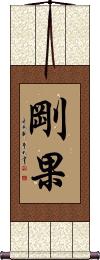
剛果 is how to write Congo in Chinese.
In Japanese, this does not mean Congo but is a word that means valor and decisiveness.
Collaboration / Cooperation / Synergy
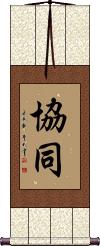
協同 is a Japanese, Chinese, and Korean word that means to cooperate, in coordination with, coordinated, collaborate, collaboration, collaborative, doing together (as equals).
Some will also use this as a short way to express the western idea of synergy (collaboration for a better result). There's a longer word, 協同作用, that adds “action” to this word and more directly means synergy.
Cowboy
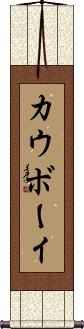
カウボーイ is how cowboy is in Japanese.
This is meant to sound like the English word “cowboy.”
Note: Because this title is entirely Japanese Katakana, it should be written by a Japanese calligrapher.
Daisy
The yellow flower
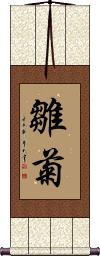
雛菊 is how they write “daisy” in Chinese and Japanese.
This is a good choice if you love daisies, or your name is Daisy. If you translated it directly, this means “chick flower” (as in baby chickens) or “baby chrysanthemum.” Of course, when an Asian person reads this, they just think “daisy.”
If you're into botany, this title represents “Bellis Perennis.”
In Japanese, this can be the female given name, Hinagiku.
Daodejing / Tao Te Ching - Chapter 81
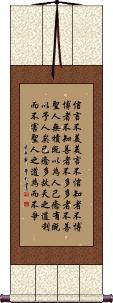
信言不美美言不信知者不博博者不知善者不多多者不善聖人無積既以為人己癒有既以予人矣已癒多故天之道利而不害聖人之道為而不爭 is the Mawangdui version of Daodejing chapter 81.
Credible words are not eloquent;
Eloquent words are not credible.
The wise are not erudite;
The erudite are not wise.
The adept are not all-around;
The all-around are not adept.
The sages do not accumulate things.
Yet the more they have done for others,
The more they have gained themselves;
The more they have given to others,
The more they have gotten themselves.
Thus, the way of tian (heaven) is to benefit without harming;
The way of sages is to do without contending.
Sincere words are not showy;
showy words are not sincere.
Those who know are not “widely learned”;
those “widely learned” do not know.
The good do not have a lot;
Those with a lot are not good.
The Sage accumulates nothing.
Having used what he had for others,
he has even more.
Having given what he had to others,
what he has is even greater.
Therefore, the Way of Heaven is to benefit and not cause any harm,
The Way of Man is to act on behalf of others and not to compete with them.
True words aren't charming,
charming words aren't true.
Good people aren't contentious,
contentious people aren't good.
People who know aren't learned,
learned people don't know.
Wise souls don't hoard;
the more they do for others the more they have,
the more they give the richer they are.
The Way of heaven provides without destroying.
Doing without outdoing
is the Way of the wise.
Daodejing / Tao Te Ching - Chapter 54
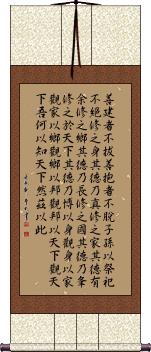
This is the Mawangdui version of Daodejing chapter 54.
By its virtue alone can one generation after another carry on the ancestral sacrifice.
Apply it to yourself, and by its power, you will be freed from dross.
Apply it to your household, and your household shall thereby have abundance.
Apply it to the village, and the village will be made secure.
Apply it to the kingdom, and the kingdom shall thereby be made to flourish.
Apply it to an empire, and the empire shall thereby be extended.
Therefore just as through oneself, one may contemplate Oneself;
So through the household one may contemplate the Household;
And through the village, one may contemplate the Village;
And through the kingdom, one may contemplate the Kingdom;
And through the empire, one may contemplate the Empire.
How do I know that the empire is so? By this.
What is firmly rooted cannot be pulled out;
What is tightly held in the arms will not slip loose;
Through this, the offering of sacrifice by descendants will never come to an end.
Cultivate it in your person, and its virtue will be genuine;
Cultivate it in the family, and its virtue will be more than sufficient;
Cultivate it in the hamlet, and its virtue will endure;
Cultivate it in the state, and its virtue will abound;
Cultivate it in the empire, and its virtue will be pervasive.
Hence look at the person through the person;
Look at the family through the family;
Look at the hamlet through the hamlet;
Look at the state through the state;
Look at the empire through the empire.
How do I know that the empire is like that?
By means of this.
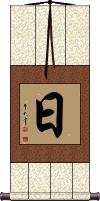
This is how to write “day” in Chinese, Japanese, and Korean Hanja.
This can also mean “Sun,” the star in the middle of the Solar system in which we live. In Japanese, it can also mean “sunshine” or even “Sunday.”
When writing the date in modern Chinese and Japanese, putting a number in front of this character indicates the day of the month. Of course, you need to indicate the month too... The month is expressed with a number followed by the character for the moon. So “three moons ten suns” would be “March 10th” or “3/10.”
Note: This is also the first character for the proper name of Japan. Remember that Japan is “The land of the rising sun”? Well, the first character for Japan means “sun” and the second means “origin” so you get the real meaning now. Sometimes, in China, this sun character can be a short name for Japan or a suffix for something of or from Japan.
Devotion / Dedication / Attentive / Focused
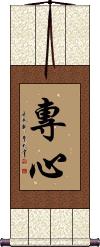
專心 makes a word that means “paying attention with your heart.”
It's often translated as “dedication,” as in “be absorbed in” or “concentrate one's efforts.” It's also used to mean “with the single mind,” “whole-heartedly,” “paying attention,” “undivided attention,” “concentration (-ed),” “engrossed,” “devotionally (listening/watching),” and/or “attentive.”
The first character means “for a particular person, occasion, or purpose,” “focused on one single thing,” “concentrated,” and sometimes, “special.”
The second character means “heart” or “mind” by itself.
My favorite translation, which comes from the Oxford Advanced Chinese/English Dictionary, is, “wholehearted devotion.”
If it seems like the meaning of this word is quite open, you are correct. The context in which the word is used matters a lot. It can mean different things depending on how you use it. This makes it useful as you can decide what this means to you (within some limits). This is always positive in meaning, so even if a Chinese person reads it differently than you, it will still have a good meaning.
 In Japanese, they tend to use a variation of the second character which has one less stroke. If you want your calligraphy written this Japanese form, please click on the Kanji shown to the right instead of the button above. Note: Japanese and Chinese people will recognize either form.
See Also: Faith | Sincerity and Devotion
Die Without Regret
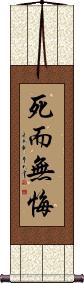
死而無悔 is how to say “die with no regrets” in Mandarin Chinese.
This proverb comes from the Analects of Confucius.
See Also: No Regrets
Dignity / Honor / Sanctity / Integrity
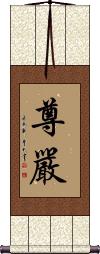
尊嚴 is a form of honor that means showing great respect for yourself, other people, and the rules you live by.
When you are honorable, you keep your word. You do the right thing regardless of what others are doing.
尊嚴 is the kind of personal honor or dignity that is of great value. If you lose this, you have lost yourself and perhaps the reputation of your family as well.
While this is not directly the same thing as “face” or “saving face” in Asian culture, it is associated with the same concept in China.
 In Japan, they currently use a more simplified second character for this word. The ancient Japanese form is the same as China but after WWII some Kanji were changed. If you want the modern Japanese version, just click on the Kanji image shown to the right, instead of the button above.
Diligence
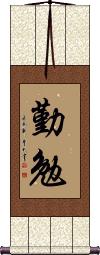
勤勉 can mean diligence, industrious, assiduity, assiduous, diligent, or sedulity.
Diligence is working hard and doing your absolute best. You take special care by doing things step by step. Diligence helps you to get things done with excellence and enthusiasm. Diligence leads to success.
See Also: Hard Work | Tenacious / Tenacity | Commitment | Passion for a Cause
Double Happiness Guest Book
Customize a special Asian guest book for your wedding
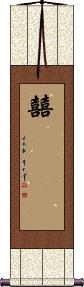
Start customizing a “Double Happiness Guest Book Wall Scroll” Here!
The paper panel length can be whatever you choose from 68cm to 135cm (27” to 53”).
If you don't mention what paper length you want in the special instructions tab (on the next page), we'll make it about 100cm (40”).
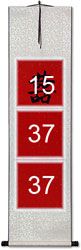
The medium-size scroll with a 33cm x 100cm (13” x 40”) paper panel can usually handle up to 89 signatures. That breaks down to 37 signatures per empty square and 15 signatures around the 囍 character. If you switch to a 135cm paper panel, add another 37 potential signatures.
We can splice two 135cm papers together, but that would be a crazy-long scroll. These are only estimates, your mileage may vary.
With silk panels, this will yield a wall scroll about 155cm (61”) long. That's enough for up to 89 signatures. Of course, that depends on if your guests just sign a brief salutation and name, or more verbose good wishes. Customer feedback is that 126 people can sign the 135cm long paper on a medium-sized scroll. If we go bigger than that, there will be a minor paper seam and an extra charge. Email me with your specifications if you need something special.
Most customers pick the festive red paper with gold flecks and white or ivory silk. Red is a good luck color in Chinese culture, thus the most popular choice. But, you can do any color combination that you want.
There is a long history of Chinese-character-use outside of mainland China. This Double Happiness character is also seen at weddings in Korea, Vietnam, Hong Kong, and Taiwan, as well as in Chinese communities in Thailand, Indonesia, and elsewhere. While Japan borrowed Chinese characters into their language, you won't see 囍 as often at Japanese weddings.
Dragonfly
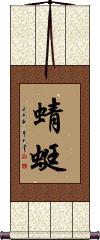
蜻蜓 is how to write dragonfly or dragonflies in Chinese.
Dragonfly
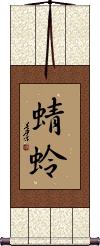
蜻蛉 is how to write dragonfly in Japanese Kanji.
Drain the pond to get all the fish
Kill the goose that lays the golden eggs
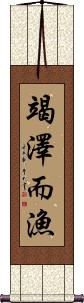
In 632 BC, Duke Wen of the Kingdom of Jin was about to lead an army against the forces of the Kingdom of Chu.
The Duke asked one of his advisers, Jiu Fan, how they could win the impending battle, as they were drastically outnumbered.
Jiu Fan said, “All is fair in war,” and suggested a plan of dishonorable tactics (cheating).
The Duke was unsure of this advice, so he asked another adviser, Yong Ji, who replied, “If you catch fish by draining the pond, you can certainly get all the fish. But there will be no fish the following year. You can cheat this one time in battle, but such tactics can only be used once, as the enemy will be wise in future encounters.”
The Duke heard the words of his wiser adviser but cheated to gain victory in the battle. However, he rewarded Yong Ji more than Jiu Fan at the victory celebration, stating that while Jiu Fan's advice gained one victory, the wise words of Yong Ji would last forever.
This Chinese idiom/proverb is still used, over 2600 years later to remind people not to burn bridges, cheat, or dishonor themselves in exchange for a short-term gain while sacrificing the future.
竭澤而漁 is very similar to the meaning of the English phrase, “Kill the goose that lays the golden eggs.”
Drink
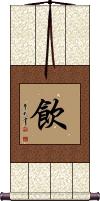
飲 is how to formally write “drink” (the verb for taking a drink or drinking) in Chinese and Japanese.
This is different than the noun for a drink. There are other ways to say/write drink, but they are more for oral/spoken language. This more formal version is appropriate if you want to write the word “drink.”
This is kind of an odd selection for a wall scroll but no bad meaning.
 In Korean Hanja, this character is generally written in the variant shown to the right.

 This can be pronounced in Japanese but this is seldom seen as a lone Kanji, and thus is not appropriate if your audience is Japanese. They will, at least, use a second Hiragana character in Japanese, as shown to the right. This is “nomi.”
 The common oral character looks like the one shown to the right. But this is not appropriate for a wall scroll.
 In some cases (often in ancient Chinese) the character shown to the right is used to mean drink. But this word refers to anything you consume in your mouth. This character is most often used to mean “eat” in modern Chinese.
Easter
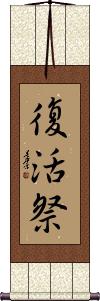
復活祭 is how the holiday of Easter is written in Japanese.
While a not a well-understood holiday in Japan (Christians being about 1% of the population), you will find stuffed Easter bunnies at the shops in the Spring.
復活祭 is a less-used way to write Easter in old Korean.
Elmo
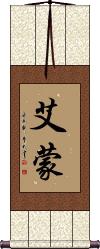
This is a common transliteration to Mandarin Chinese for the name Elmo.
This is specifically how Chinese people refer to the Sesame Street character Elmo. It does sound somewhat like the English name Elmo, but the second character does have that -ng final sound. So, it's like “Elmong.”
Enthusiasm
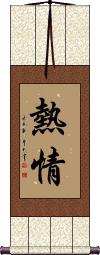
熱情 is a Chinese and Korean word for enthusiasm that can also be translated as passion (for a cause), ardency, ardor/ardour, enthusiasm, or zeal.
Enthusiasm is being warm, cheerful, happy, and full of spirit. It is doing something wholeheartedly and eagerly. When you are enthusiastic, you have a positive attitude.
In some contexts, this could mean being extremely fond of something or having a fondness for a cause or person.
This Chinese word can also be translated as “sincere and warm” or literally “warm sentiment / affection.”
See Also: Motivation | Passions / Feelings / Emotions | Commitment | Tenacious / Tenacity
Enugu
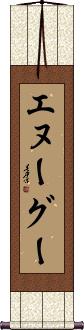
エヌーグー is the name Enugu in Japanese Katakana (phonetic Japanese).
This is also how to write the city name Enugu, Nigeria.
Note: Because this title is entirely Japanese Katakana, it should be written by a Japanese calligrapher.
Eternal Beauty
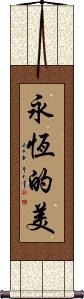
永恆的美 is how to write “Eternal Beauty” in Chinese.
Learning is Eternal
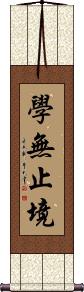
This Chinese philosophy tells of how we continue to learn throughout our lives.
This proverb can be translated in a few ways such as “Study has no end,” “Knowledge is infinite,” “No end to learning,” “There's always something new to study,” or “You live and learn.”
The deeper meaning: Even when we finish school we are still students of the world gaining more knowledge from our surroundings with each passing day.
See Also: An Open Book Benefits Your Mind | Wisdom | Learn From Wisdom
Everything Happens for a Reason
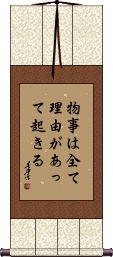
物事は全て理由があって起きる means everything happens for a reason.
However, this is a work in progress. We're still trying to decide the best way to express this in Japanese. If you order this, we might have a discussion about the best version that fits you. Here's how the characters break down by meaning (keep in mind, Japanese grammar and sentence construction is very different from English, so it doesn't make complete sense in English)...
物事 = things, everything
は particle
全て all, the whole, entirely
理由 reason
が particle
あっ be, exist, have, take place, happens
て particle
起きる to occur, to happen; to take place (usually unfavorable incidents)
Note: Because this selection contains some special Japanese Hiragana characters, it should be written by a Japanese calligrapher.
Example is Better than Precept
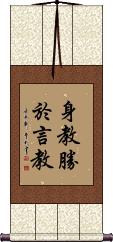
Tell somebody how to do something and they might get it.
Show them how to do it, and they will master it in no time.
身教勝於言教 can also be translated as “Behavior teaches more than words.”
See Also: Wisdom
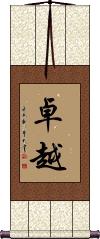
Excellence
Fang
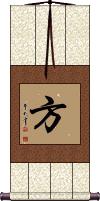
方 is the most common version of a Chinese surname that romanizes as Fong from Taiwan or Fang from mainland China.
The meaning of this character is square, upright, honest, fair and square, direction, place, or side. Sometimes 方 can refer to a method, prescription, or way of doing things.
In Japanese, this can be the given names Michi, Masani, Masashi,Tamotsu, Tadashi. It can also be Japanese surnames Hon, Hou, Ho, Fuon, Pan, Ban, Tokukata, or Kata.
The Mysterious Bond Between People
The invisible force that brings people together forever
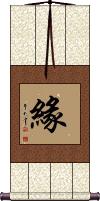
緣 represents the fate that brings and bonds people together.
緣 is a complicated single character. It can mean many different things depending on how you read it.
In Japanese, it can mean fate, destiny, a mysterious force that binds two people together, a relationship between two people, bond, link, connection, family ties, affinity, opportunity, or chance (to meet someone and start a relationship). It can also mean “someone to rely on,” relative, reminder, memento, or the female given name, Yori.
It's the same in Chinese, where it's defined as cause, reason, karma, fate, or predestined affinity.
In the Buddhist context, it's Pratyaya. This is the concept of indirect conditions, as opposed to direct causes. It's when something happens (meeting someone) by circumstance or a contributing environment. Instead of a direct cause or act, it is a conditioning cause without direct input or action by the involved people.
Occasionally, this character is used in a facetious way to say hem, seam, or edge of clothing. In this case, it's the seam that brings or holds the clothing together.
 Note: Japanese will tend to use the variant of this Kanji shown to the right. If you want this version (and are ordering this from the Japanese master calligrapher), click on the Kanji at the right instead of the button above.
Fearless / Daring
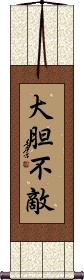
大胆不敵 is a Japanese word that can mean a few things depending on how you read it.
Popular translations include fearless, audacity (the attitude of a) daredevil, or daring.
The first two Kanji create a word that means: bold, fearless, or daring; audacious.
The last two Kanji create a word meaning: no match for, cannot beat, daring, fearless, intrepid, bold, or tough.
As with many Japanese words, the two similar-meaning words work together to multiply the meaning and intensity of the whole 4-Kanji word.
Fight / Beat Someone
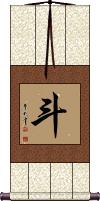
斗 is how to express the act of fighting in Chinese.
Generally, this means fighting against someone or some force whether physically or metaphorically.
Note: There is more than one way to write this character. You will notice variations on the next page after you click “Select and Customize.” If you have a preference, please let us know when you place your order.
Please note that there is a secondary pronunciation and meaning of this character. It can also mean “measuring cup” or in Japanese “sake dipper” or even “The Big Dipper.” In Japanese and Korean, this does not have the fighting meaning associated with it. You should, therefore, select this character only if your audience is Chinese, or you are a big fan of sake dippers or The Big Dipper (as that is how it will be read by Japanese and Korean people).
Fighter
Warrior / Soldier
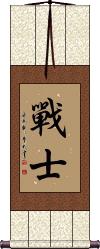
戰士 is how to write “fighter” in Chinese, ancient Japanese Kanji, and old Korean Hanja.
The first character means war, warfare, or battle.
The second character means soldier, officer, man, or pawn.
戰士 can also mean soldier or warrior. Usually this will be read as “fighter” or “one who fights.” 戰士 is an odd selection for a wall scroll unless you are a boxer, ultimate fighter, or otherwise participate in combat sports.
Other translations include combatant or champion.
 Note that after WWII, the first Kanji was reformed/simplified. This modern Japanese version is shown to the right. If you want this version, click on the Kanji to the right, instead of the button above.
Fighter / Champion
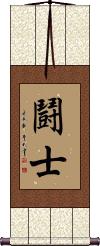
鬪士 / 闘士 is how to write “fighter” in Chinese and old Korean Hanja.
Chinese: 鬪士 / 闘士 is usually used to mean “fighter” in Chinese. It can also be translated as “warrior” or “activist.”
Korean: 鬪士 / 闘士 means fighter or champion (in terms of a fighter) in Korean Hanja.


 Note: The first character can also be written in three alternate ways, as shown to the right. Give us a note if you have a certain preference when you place your order.
Fighter / Champion
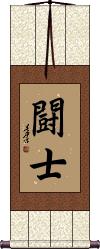
闘士 is how to write “fighter” in Japanese Kanji.
闘士 can mean “fighter for something,” militant, “champion of something/someone,” or gladiator, or may refer to a boxer in Japanese.
Fire Dragon
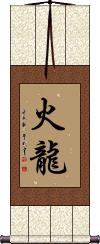
火龍 is how to write “Fire Dragon” in Chinese and Japanese Kanji.
This title is used more often in Chinese, a little lesser known in Japanese.
See Also: Dragon
The Five Principles of Reiki
Reiki Gokai

These are the five principles of Reiki.
They translate into English as...
At least for today:
Do not be angry,
Do not worry,
Be grateful,
Work with diligence,
Be kind to people.
Note: Because this selection contains some special Japanese Hiragana characters, it should be written by a Japanese calligrapher.
Rise and Fall / Ups and Downs
Eiko-Seisui
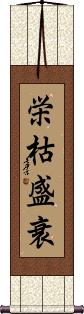
This Japanese proverb can mean “flourish and wither, prosper and perish,” “life is full of fortune and misfortune,” or simply “vicissitudes of life.”
栄枯盛衰 / 榮枯盛衰 is about the rise and fall of human affairs or the ups and downs of life. Prosperity comes and goes, everything is fleeting and temporary, but like waves, another swell of prosperity may come.
Here's how the Kanji break down in this proverb:
栄 = prosper; thrive; flourish; boom.
枯 = wither; die.
盛 = prosperous; flourishing; thriving; successful; energetic; vigorous; enthusiastic.
衰 = become weaker; decline; get weak; die down; subside; abate; fail.
 Notes: The original version of the first character looks like the image to the right. In modern Japan, they simplified that Kanji a bit into the version shown above. If you have a preference for which style is used for your calligraphy, please let me know when you place your order.
Apparently, with that original version of the first character, this is also used in Korean Hanja. However, I have not confirmed that
it’s
used in the same way or is widely-known in Korean.
Flowers Bloom and Flowers Fall
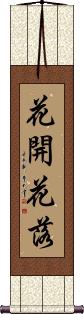
花開花落 is a complete proverb that lightly speaks of the cycle of life, or how things come and go in life.
This is used as a metaphor to suggest that youth is a temporary state that in time will pass.
This can also be used to suggest that fortunes can come and go (everything is temporary).
Note: There are two very similar versions of this proverb. The other uses a word that means wither instead of fall.
Flowers Bloom and Flowers Fall
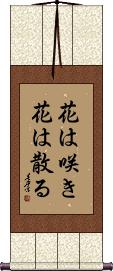
花は咲き花は散る is a Japanese proverb about the cycle of life, or how things come and go in life.
This can be used to suggest that youth, fortune, and life can come and go (everything is temporary).
Note: Because this selection contains some special Japanese Hiragana characters, it should be written by a Japanese calligrapher.
Flowers Bloom and Flowers Wither
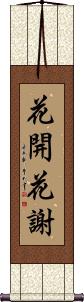
花開花謝 is a complete proverb that lightly speaks of the cycle of life, or how things come and go in life.
This is used as a metaphor to suggest that youth is a temporary state, which in time, will pass.
This proverb can be used to suggest that fortunes can come and go (everything is temporary).
Note: There are two very similar versions of this proverb. The other uses a word that means fall instead of wither.
Fong
方 is the most common version of a Chinese surname that romanizes as Fong from Taiwan or Fang from mainland China.
The meaning of this character is square, upright, honest, fair and square, direction, place, or side. Sometimes 方 can refer to a method, prescription, or way of doing things.
In Japanese, this can be the given names Michi, Masani, Masashi,Tamotsu, Tadashi. It can also be Japanese surnames Hon, Hou, Ho, Fuon, Pan, Ban, Tokukata, or Kata.
Forest
Wooded Area
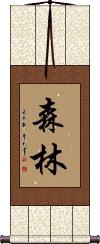
森林 is how to generically write “forest” or “woods” in Chinese, Japanese Kanji, and old Korean Hanja.
If you look at the first character, you will see that it is made up of three trees. The second is actually two trees. 森林 is one of those words that really visually expresses the meaning.
If your name is Forest, I suggest this title to represent your name.
Forgive Yourself
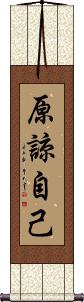
原諒自己 is how to write “forgive yourself” in Chinese.
The first two characters mean “to excuse,” “to forgive,” or “to pardon.”
The last two characters mean “self” (reflexive pronoun), “yourself,” or “oneself.”
Forgive Yourself / Release Yourself
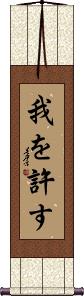
我を許す is how to write “forgive yourself” in Japanese.
The first two characters mean “regarding myself.”
The last two characters mean “to forgive,” “to excuse (from),” “to pardon,” “to release,” “to let off,” “to permit,” “to allow,” and/or “to approve.”
Note: Because this selection contains some special Japanese Hiragana characters, it should be written by a Japanese calligrapher.
From This Moment Forward / From This Day Forward
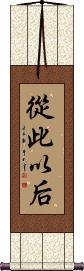
In simple terms, 從此以后 means “from now on,” but you can also interpret it as “Now is the beginning of the future” or “From this day forward.
The first two characters roughly mean “henceforth.” The last two characters mean later, afterward, following, or “in the future.”
Furinkazan
military strategy
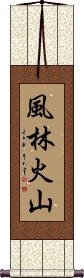
風林火山 is the battle strategy and proverb of Japanese feudal lord Takeda Shingen (1521-1573 AD).
This came from the Art of War by Chinese strategist and tactician Sun Tzu (Sunzi).
You can think of this as an abbreviation to remind officers and troops how to conduct battle.
風林火山 is a word list: Wind, Forest, Fire, Mountain.
The more expanded meaning is supposed to be...
“Swift as the wind, quiet as the forest, fierce as fire, and immovable as a mountain”
“As fast as the wind, as quiet as the forest, as daring as fire, and immovable as the mountain”
“Move as swift as the wind, stay as silent as a forest, attack as fierce as fire, undefeatable defense like a mountain”
“Move swiftly like the wind, stay silent like the forest, attack fiercely like fire, take a tactical position on the mountain”
See Also: Art of War
Galatians 5:25
If we live in the Spirit, let us also walk in the Spirit
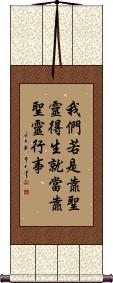
我們若是靠聖靈得生就當靠聖靈行事 is the translation of Galatians 5:25 into Mandarin Chinese via the Chinese Union Bible.
KJV: If we live in the Spirit, let us also walk in the Spirit.
NIV: Since we live by the Spirit, let us keep in step with the Spirit.
The annotation of this Chinese translation:
1.我们 wǒ men - we / us / ourselves
2.若是 ruò shì - if
3.靠 kào - depend upon / lean on / near / by / against / to support
4.圣灵 shèng líng - Holy Ghost
5.得 děi - to have to / must / ought to / degree or possibility
6.生就 shēng jiù - born one way or another (nervous, suspicious, etc.)
7.当 dàng - suitable / adequate / fitting / proper
8.靠 kào - depend upon / lean on / near / by / against / to support
9.圣灵 shèng líng - Holy Ghost
10.行事 xíng shì - how one does things / how one runs things (in this case, it suggests, “to walk in step with”)
Gassho
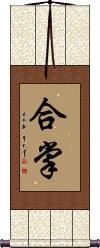
合掌 is the act of greeting someone (can also be done when departing) with hands brought together prayerfully.
In India, this would be accompanied by the verbal greeting and blessing of “Namaste.” In China, Japan, and Korea, this is how Buddhists will greet each other. Sometimes done by people who are not devout Buddhists in China, Japan, and Korea to show respect, reverence, or great thanks to someone for a gift, forgiveness, or some honor that has been bestowed.
In Japan, this is almost always associated with a deep bow. In China, where bowing is not an everyday occurrence, there may be a shallow bow, but the act will be done with deep feeling. Korean culture seems to have more bowing than China but less than Japan.
See Also: Namaste - Greeting
Geisha / Geigi
(Danger: Means prostitute in Japanese and Chinese!)
NOT APPROPRIATE FOR
CUSTOM CALLIGRAPHY
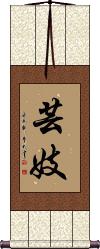
芸妓 is how to refer to a geisha that offers “special services.”
Please don't order this, it's only here for reference. 芸妓 is not appropriate for custom calligraphy!
Giant Panda
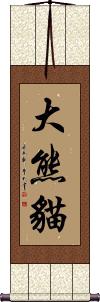
大熊貓 is how to write “giant panda” in Chinese.
大熊貓 is specific to the “giant panda,” which has black and white fur. Not to be confused with other types of smaller pandas in China.
The literal meaning of these characters is “great/big bear cat.” Chinese do think of pandas as “cat-like bears.”
Note: In Japanese, they only express Giant Panda in Katakana, which is ジャイアント パンダ” (Jaianto Panda). So we have not included that for wall scroll orders.
Courage To Do What Is Right
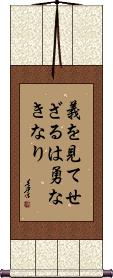
義を見てせざるは勇なきなり is a Japanese proverb that means “Knowing what is right and not doing is a want of courage.”
I've also seen it translated as:
To see what is right, yet fail to do so, is a lack of courage.
To know righteousness, but take no action is cowardice.
You are a coward if you knew what was the right thing to do, but you did not take action.
Knowing what is right without practicing it betrays one's cowardice.
Note: Because this selection contains some special Japanese Hiragana characters, it should be written by a Japanese calligrapher.
God Forgive Me
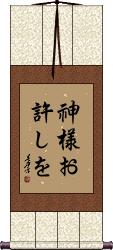
神様お許しを is how to write “God Forgive Me” in Japanese.
There is an essence of humble begging or “please” implied in this phrase.
Note: Because this selection contains some special Japanese Hiragana characters, it should be written by a Japanese calligrapher.
God of Zion / God of Abraham
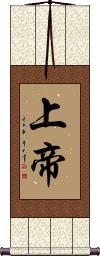
上帝 is how Chinese Christians and Jews refer to God, AKA The Judeo-Christian God.
There are Chinese Jews whose ancestry dates back to Jewish traders on the silk road. They are known as the Kaifeng Jews. Most have left China for Israel now.
There are also plenty of Christians in China of the Protestant and Catholic varieties. However, the churches are basically run by the government, and the Chinese Catholic church does not recognize the Pope.
Oddly, in my experience, I found the Chinese Protestant church to be much less political compared to Baptist and other Protestant churches that I have visited in America.
上帝 is also the typically-used title for God in Japanese.
While you may find this term in old Korean dictionaries, it is an obscure and rarely-used title for God in modern Korean.
See Also: Christ | Jesus Christ
Allah / God of Islam
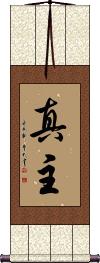
真主 is how Chinese Muslims refer to God (it literally means “True Master”).
Oddly, in China, two different names for God have emerged. Even though Muslims, Christians, and Jews all worship the same God of Abraham.
In Arabic, the word Allah is just the Arabic way to say, God. Arab Christians pray to Allah, just like Arab Muslims. Somehow in China, the title of God diverged.
If you are curious, there are millions of Muslims throughout China but especially in the northwest portion of China known as Xinjiang. Here you will find descendants of Turkmen, Persian, Arab, and other ethnicities. Some are mixed with Han-Chinese blood; others appear to be pure Turkmen. Many have fair complexions, green eyes, and light hair but all are citizens of China. A visit to Xinjiang will shift your paradigm and blow away all of your stereotypes about what it means to be Chinese.
Goldfish
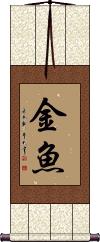
金魚 is the title for goldfish in Chinese and Japanese.
There was a time in ancient China when only the Emperor could possess the actual yellow-gold colored fish. This is why alternate coloration such as orange, black, red, and white was bred. Many believe this is why colors other than yellow-gold are more common for “goldfish” in pet shops today.
One Good Deed Each Day
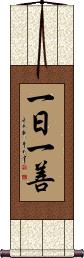
一日一善 is a Chinese, Japanese Kanji, and old Korean Hanja phrase that suggests doing a good deed each day or doing one good turn a day.
It literally reads, “One Day, One Good (Deed).”
Good Good Study, Day Day Up
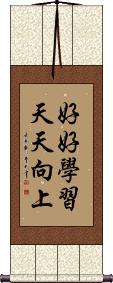
好好學習天天向上 is a famous proverb by Chairman Mao Zedong that sounds really strange when directly translated into English.
I include it in our database of phrases to illustrate how different the construction and grammar can be between Chinese and English. The direct translation is “Good Good Study, Day Day Up.” In Chinese, a repeated character/word can often serve to reinforce the idea (like saying “very” or suggesting “many”). So “good good” really means “many good.” While “day day” can be better translated as “day in day out.” The idea of “up” has a meaning in China of “rising above” or “improving.”
After understanding all of this, we come up with a slightly better translation of “With many good study, day in and day out, we raise above.”
The more natural translation of this proverb would be something like, “study hard, and keep improving.”
Good Intentions
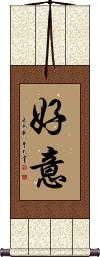
好意 is how to write good intentions in Chinese, Japanese, and old Korean Hanja.
This can also be translated as kindness, goodwill, favor/favour, courtesy, good wishes, friendliness, and/or amity.
Good Night
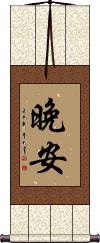
晚安 is how to write “good night” in Chinese.
This literally is a wish for an “evening of peace” or “night of calm.”
晚安 is not a normal title for a calligraphy wall scroll. It might be appropriate for a hotel front desk if anything.
Good Night
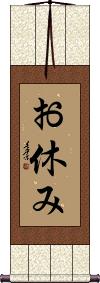
お休み is how to write “good night” in Japanese.
It literally means “taking a rest.”
お休み is not a normal title for a calligraphy wall scroll. It might be appropriate for a hotel front desk, if anything.
Note: Because this selection contains some special Japanese Hiragana characters, it should be written by a Japanese calligrapher.
Doing good is the greatest source of happiness
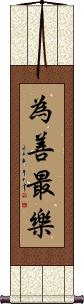
為善最樂 can mean “Doing good is the greatest source of happiness” or “doing good deeds brings the greatest joy.”
The origin is not known but is sometimes used in the context of Buddhism. However, this Chinese proverb or philosophy is a relatively mainstream idea of benevolence.
Grand Piano

大鋼琴 is how to write grand piano in Chinese.
Dear Grandfather
Paternal (Southern China)
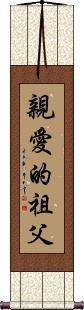
親愛的祖父 is how people in Southern China call their father's father (paternal grandfather) with the adjective/title “Dear” on the front.
Guam
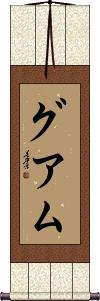
グアム is the name Guam in Japanese Katakana.
グアム is also how the island of Guam is written in Japanese. Although, they often add the Kanji for island at the end like this: グアム島.
Note: Because this title is entirely Japanese Katakana, it should be written by a Japanese calligrapher.
Gung Ho
Working Together
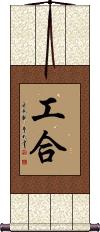
工合 is one of those Asian words that is used more in English than in the original Chinese.
Gung Ho was originally used to speak of Carlson's Raiders, a group of “Gung Ho” U.S. Marines who went on an island-hopping campaign of death during WWII.
A movie called Gung Ho came out in the mid-1940s and was later re-released in the 1950s depicting the 2nd Marine Raider Battalion, and brought this word to the mainstream.
It is still sometimes used today within the U.S. Marine Corps brotherhood to refer to a unit or group that works well together or is otherwise efficient and motivated (has good morals).
In 1986, there was a movie called Gung Ho about a Japanese company taking over an American automotive factory. They completely ignored the fact that this was a Chinese title.
It should be noted that this title actually means a condition, state, manner, or the health of something in Japanese.
Language and pronunciation notes:
Like many Asian words absorbed into common use in English, this one is drastically mispronounced. The official Romanization is “gong he” but that doesn't tell you enough. The vowel sound on the first character is like the English word “own,” now just add the g-sounds to the beginning and end. The second character is misleading, as you might think it is like the English word “he.” In reality, the vowel sound is more like the “u” in “up.”
It should also be noted that the current generation in China no longer uses or recognizes this as a common word or slogan.
Note: This can be pronounced and is a word in Japanese, though seldom used. Japanese will use a variation of “具合” instead. But still, not common.
This in-stock artwork might be what you are looking for, and ships right away...


Successful Chinese Character and Japanese Kanji calligraphy searches within the last few hours...



