I am shipping orders on Thursday this week. News and More Info

Many custom options...

Tan Paper and Copper Silk Love Wall Scroll
Red Paper and Ivory Silk Love Wall Scroll
Orange Paper Love Scroll
Crazy Blue and Gold Silk Love Scroll


And formats...

Love Vertical Portrait
Love Horizontal Wall Scroll
Love Vertical Portrait

Reason for Being in Chinese / Japanese...

Buy a Reason for Being calligraphy wall scroll here!

Personalize your custom “Reason for Being” project by clicking the button next to your favorite “Reason for Being” title below...


  1. Love Without Reason

  2. Everything Happens for a Reason

  3. Love Without Reason

  4. Everything Happens for a Reason

  5. The Mysterious Bond Between People

  6. Intelligence / Intellect

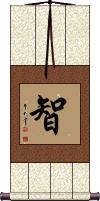
  7. Wisdom

  8. Wisdom comes from Experience

  9. Science

10. Lee

11. Awesome / Really Cool

12. Philip

13. You Only Live Once

14. Aguila

15. Death with Dignity

16. Flying / Flight / Rising Upward

17. House of Red Delights

18. Crazy / Mad

19. Yen

20. Engage with Confidence

21. Awesome / Awe-Inspiring

22. Perseverance / Fortitude

23. Good Intentions / Good Will / Good Faith

24. Proud / Pride / Lofty-Minded

25. Ikigai

26. Shit Happens

27. Body / Karada

28. Lost / Dazed and Confused

29. Heaven

30. No Pain No Gain

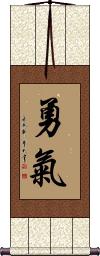
31. Bravery / Courage

32. Shorinji Kempo / Kenpo

33. Master / Skilled Worker

34. Asian Pride / Oriental Pride / AZN Pryde

35. Broken Mirror Rejoined

36. Better Late Than Never


Love Without Reason

 ai ni ri yuu wa na i
Love Without Reason Scroll

愛に理由は無い is a Japanese phrase that means “love without reason,” or “love doesn't need a reason.” It's a pretty cool phrase in Japanese


Note: Because this selection contains some special Japanese Hiragana characters, it should be written by a Japanese calligrapher.

Everything Happens for a Reason

 monogoto ha subete riyuu ga at te okiru
Everything Happens for a Reason Scroll

物事は全て理由があって起きる means everything happens for a reason.

However, this is a work in progress. We're still trying to decide the best way to express this in Japanese. If you order this, we might have a discussion about the best version that fits you. Here's how the characters break down by meaning (keep in mind, Japanese grammar and sentence construction is very different from English, so it doesn't make complete sense in English)...

物事 = things, everything
は particle
全て all, the whole, entirely
理由 reason
が particle
あっ be, exist, have, take place, happens
て particle
起きる to occur, to happen; to take place (usually unfavorable incidents)


Note: Because this selection contains some special Japanese Hiragana characters, it should be written by a Japanese calligrapher.

Love Without Reason

 ài ér wú yóu
Love Without Reason Scroll

愛而無由 is how to write “love without reason” in Mandarin Chinese (using proper grammar, etc).

This is not a commonly used or ancient phrase in Chinese.

Everything Happens for a Reason

 wàn shì jiē yīn guǒ
Everything Happens for a Reason Scroll

萬事皆因果 means “Everything happens for a reason” in Chinese.

The first two characters mean “all things” or “everything.”

The middle character kind of means “in all cases.”

The last two characters create a complex word that can be defined in many ways, such as “karma,” “cause and effect,” “fate,” and “every cause has its effect, as every effect arises from a cause.”

Keep in mind that Chinese grammar is a bit different than English, so trust me that this makes a natural-sounding proverb in Chinese.

The Mysterious Bond Between People

The invisible force that brings people together forever

 yuán
 en
 
The Mysterious Bond Between People Scroll

緣 represents the fate that brings and bonds people together.

緣 is a complicated single character. It can mean a lot of different things depending on how you read it.

In Japanese, it can mean fate, destiny, a mysterious force that binds two people together, a relationship between two people, bond, link, connection, family ties, affinity, opportunity, or chance (to meet someone and start a relationship). It can also mean “someone to rely on,” relative, reminder, memento, or the female given name, Yori.

It's the same in Chinese, where it's defined as cause, reason, karma, fate, or predestined affinity.

In the Buddhist context, it's Pratyaya. This is the concept of indirect conditions, as opposed to direct causes. It's when something happens (meeting someone) by circumstance or a contributing environment. Instead of a direct cause or act, it is a conditioning cause without direct input or action by the involved people.

Occasionally, this character is used in a facetious way to say hem, seam, or edge of clothing. In this case, it's the seam that brings or holds the clothing together.


縁Note: Japanese will tend to use the variant of this Kanji shown to the right. If you want this version (and are ordering this from the Japanese master calligrapher), click on the Kanji at the right instead of the button above.

Intelligence / Intellect

 zhì néng
 chinou
Intelligence / Intellect Scroll

These two characters mean intelligence or intelligent.

The first character means wisdom, intellect, or knowledge.

The second means ability, talent, skill, capacity, capable, able, and can even mean competent.

Together, 知能 can mean “capacity for wisdom,” “useful knowledge,” or even “mental power.” Obviously, this translates more clearly into English as “intelligence.”

Note: This is not the same word used to mean “military intelligence.” See our other entry for that.


知In modern Japan, they tend to use a version of the first character without the bottom radical. If your audience for this artwork is Japanese, please click on the Kanji to the right instead of the button above.

 zhì
 chi / tomo
 
Wisdom Scroll

智 is the simplest way to write wisdom in Chinese, Korean Hanja, and Japanese Kanji.

Being a single character, the wisdom meaning is open to interpretation, and can also mean intellect, knowledge or reason, resourcefulness, or wit.

智 is also one of the five tenets of Confucius.

智 is sometimes included in the Bushido code but is usually not considered part of the seven key concepts of the code.


See our Wisdom in Chinese, Japanese and Korean page for more wisdom-related calligraphy.


See Also:  Learn From Wisdom | Confucius

Wisdom comes from Experience

 bù jīng yī shì
Wisdom comes from Experience Scroll

不經一事 means “You can't gain knowledge without practical experience.”

This is the short form (first half) of a longer Chinese proverb. These 4 characters remind you that wisdom only comes from experience.

Science

The rules of life, the universe, and everything.

 lǐ
 kotowari
Science Scroll

At its essence, 理 means science.

理 is a very ambiguous and open term; it speaks to the reason that all things exist, and how things work from the microscopic to the cosmic level.

There are many translations for this word, including inner essence; intrinsic order; reason; logic; truth; science; natural science (esp. physics); principle; the underlying principles of the cosmos; the way of things; ruling principle; fundamental law; intrinsicality; universal basis; or essential element(s).

If you are a scientist, or just searching for “the answer to life, the universe, and everything,” this could be the character for you.

 lǐ
Lee Scroll

This is an alternate transliteration to Mandarin Chinese for the masculine western name Lee.

理 means “reason,” “logic” or sometimes, “science.”


Note: This can sometimes be used as a male given name in China. It is not the only given name that sounds like Lee or Li in China.

Awesome / Really Cool

Chinese Slang

 zhēn niú
Awesome / Really Cool Scroll

真牛 is Chinese slang for something really cool or awesome.

真牛 is probably not appropriate for a calligraphy wall scroll unless you have a specific reason.

This literally translates as “the real bull” or “the genuine cow.”

 fēi lì pǔ
Philip Scroll

菲力普 is a secondary transliteration to Mandarin Chinese for the name Philip.

Not the most popular version but valid. For no apparent reason, this one is the most popular for the “double L spelling” version.

You Only Live Once

 shēng mìng zhǐ yǒu yí cì
You Only Live Once Scroll

生命隻有一次 is the translation to Chinese of the popular English phrase, “You only live once.”

This is a more modern idea for Chinese people. The reason is, most Chinese people were taught quite the opposite idea from Buddhism.

 ā guī lā
Aguila Scroll

阿圭拉 is the name Aguila in Chinese (Mandarin).

For some reason, 阿吉拉 (sounds like “a-gee-lah” is more common. I like this version because it sounds more like the name is supposed to sound in Spanish.

Death with Dignity

 son gen shi
Death with Dignity Scroll

尊厳死 is not a good choice for a wall scroll unless you have a very specific and personal reason.

This was added at the request of a customer.

尊厳死 means “death with dignity” or “natural death” (as opposed to extending one's life unnaturally with life support).

Flying / Flight / Rising Upward

 fēi yáng
 hi you
Flying / Flight / Rising Upward Scroll

飛揚 means flight, flying, or to rise upwards in Chinese and Japanese Kanji.

飛揚 is not the most common title for a wall scroll but if you have a personal reason or this idea is important to you, then go for it.

This can also be the personal name “Hiyou” in Japanese.

House of Red Delights

 yí hóng yuàn
House of Red Delights Scroll

怡紅院 is from “The Story of the Stone” by Cao Xueqin.

For some reason, this phrase was translated as “House of Green Delights” when the novel was published in English. The translator took some liberties and believed that “green” had a more positive feel than red to a western audience. Therefore, the phrase shown to the right is “House of Red Delights” (which is the most original and correct way).

 fā kuáng
Crazy / Mad Scroll

髮狂 is the nicest/coolest way to write “crazy” in Chinese.

There are several other ways to express “insane” or “mentally disturbed,” but they are either clinical terms or very serious afflictions.

髮狂 is not a great or normal selection for a wall scroll. Please only order this if you want this idea for some personal reason.

To put it another way: It's a little crazy to have a “crazy” wall scroll.

Yen

Japanese Currency

 yuán
 yen
 
Yen Scroll

円 is Yen, the Japanese currency.

円 is the Japanese variant of the original Chinese 圓 or 圆. It means circle, entirety, whole, full, or complete. It was the slang usage that became money, dough, or moola.

Occasionally, this is used as a given name or for other interesting uses. This version of the character is seldom used in Chinese unless referring to Japanese money.

Unless you have a specific reason to request it, this is a strange selection for a wall scroll.

Engage with Confidence

 lǐ zhí qì zhuàng
Engage with Confidence Scroll

理直氣壯 is a Chinese proverb that means “to do something while knowing you’re in the right.”

This can also be translated as and is appropriate when you are:

“In the right and self-confident”
“Bold and confident with justice on one's side”
“Having the courage of one's convictions”
“Justified and forceful”
“To be confident and vigorous because reason and logic are on one's side”
“Justified and confident”

Awesome / Awe-Inspiring

 osore ooi
Awesome / Awe-Inspiring Scroll

恐れ多い is a Japanese word for something awe-inspiring or awesome (in some odd context, it can refer to August).

恐れ多い is probably not appropriate for a calligraphy wall scroll unless you have a specific reason.

The word awesome is misused a lot in English or used too casually. This Japanese word is the real form of awesome, and it kind of means numerous fears and anxiety that you would feel in response to encountering something truly awesome (such as God, a tornado, a tsunami, etc.).


Note: Because this selection contains some special Japanese Hiragana characters, it should be written by a Japanese calligrapher.

Perseverance / Fortitude

 jiǎn rěn
 ken nin
Perseverance / Fortitude Scroll

堅忍 means persistent, steadfast, fortitude, and/or perseverance.

The first character means strong, solid, firm, unyielding, or resolute.
The second character means to beat, endure, or tolerate.
Together they speak of the strength from within yourself. Some may also translate this as long-suffering in a more Biblical sense.

堅忍 is a common term in Chinese and Korean Hanja but a little less commonly used in modern Japanese Kanji. For that reason, this selection is best if your audience is Chinese or Korean.


忍忍 Note that when writing this as Kanji, Japanese will tend to write the second Kanji a little differently. If you select our Japanese master calligrapher, please expect the form where the little horizontal stroke crosses the vertical stroke. See differences in the images to the right. Technically, they are both the same character, and will be read the same in either language.

Good Intentions / Good Will / Good Faith

 shàn yì
 zen i
Good Intentions / Good Will / Good Faith Scroll

善意 is a word that means good intentions, goodwill, or to things done in good faith in Chinese, Japanese, and old Korean Hanja.

It's the reason you do good deeds or the desire you have inside yourself to do the right thing.

This can also be translated as benevolence, kindness, virtuous mind, positive mindset, or favorable sense.

善意 is also used in the legal context for things done in good faith (regardless of outcome).

In Japanese, this can be the personal name Yoshi or Yoshii.

Proud / Pride / Lofty-Minded

 ào shì
Proud / Pride / Lofty-Minded Scroll

傲世 is a word used to describe someone that is very proud and holds themselves above others but with a valid (earned) reason to do so.

傲世 is what you would use to describe the way a mighty general of ancient China like Cao Cao acted or a more modern person like General Patton carried himself.

If you hang this word on your wall, it suggests that you hope to achieve that same level of pride from accomplishment.

 ikigai
Ikigai Scroll

生き甲斐 is a Japanese word that means something one lives for, a reason for being, a purpose in life, or French, raison d'etre.

Everyone has an ikigai. Finding it requires a deep and often lengthy search for self. Finding your Ikigai is the way to also find satisfaction and meaning in life.

Your Ikigai could be almost anything. For some, it is running for president. For others, satisfaction is found in raising children.

Ikigai is why you get up in the morning; bringing meaning to your life and pursuing your Ikigai makes life worthwhile.

Shit Happens

 shì shì nán liào
Shit Happens Scroll

世事難料 is a polite Chinese version of “shit happens.” This phrase suggests that things happen (for no reason, and for which we have no control).

The first two characters mean the affairs of life, things of the world, worldly affairs, or ways of the world.

The third character means disaster, distress, problem, difficulty, difficult, hardships, troubles, or defect.

The last character in this context means: to expect, to anticipate, or to guess.

If you put this back together, you have something like, “In life, troubles [should be] expected.”

Body / Karada

 tǐ
 karada / tai / te
 
Body / Karada Scroll

体 is used in Japanese to mean “body.”

体 can also refer to the form, style, corporeal existence, appearance, identity, or state of something or someone. 體 is also used in Buddhism in regard to the corporeal existence of someone (their earthy vessel). It's kind of a broad term that can be used in a lot of different ways.

As a single character, it's usually pronounced “karada” but it can also be pronounced “tai” or “te” (Japanese pronunciation borrowed from the original Chinese).

體 is not a common Kanji to use for a wall scroll. Only select this if you have a personal and meaningful reason to do so. Also, consider this version to be “Japanese only” - see below...


體 In Chinese and old Korean Hanja, this character is written in the traditional form shown to the right. If you want this version, click on the character to the right instead of the button above.

Lost / Dazed and Confused

 mí
 mei
 
Lost / Dazed and Confused Scroll

迷 is one of those characters that can mean a lot of different things depending on context. When written alone, as a single character on a wall scroll, it opens up the possibilities and allows you to decide what it means to you.

The key definition is “to be lost.” This could be physically or mentally lost. It can be someone lost in their thoughts, lost in an ocean, or just confused about where they are. The reason for the confused state may be due to internal or external reasons.

Here are some entries from various Asian dictionaries...

Chinese: lost, confused, bewilder, crazy about, fan, enthusiast, mystery.

Japanese: lost, astray, perplexed, in doubt, err, illusion.

Korean: lost, bewildered, fascinated, deluded.

 tiān
 ten
 
Heaven Scroll

天 means “heaven” or “sky” in Chinese, Japanese Kanji, and old Korean Hanja.

The context determines if you are talking about heaven or the sky above (often they are the same concept).

When combined with other characters, words like “today” and “tomorrow” are created. While sometimes the character for “sun” is used to mean “day,” often “sky” represents “day” in Asian languages.
Example: 今天 (this sky) = “today,” 明天 (next sky) = “tomorrow” in modern Chinese and Japanese.

In Chinese culture, regardless of which religion, it's almost always assumed that God (and any other deities) live up above the sky. The concept of God living in the sky is likely the reason heaven is associated with this character.
The equation goes something like this: God's domain is the sky, thus, the sky is heaven.


Note: As a single character, this is a little ambiguous, so you might want to choose our Kingdom of Heaven selection instead.


See Also:  Heaven | God | Today | Sun

No Pain No Gain

 itami naku shite erumono wa nashi
No Pain No Gain Scroll

痛みなくして得るものなし is a Japanese phrase that means “no pain, no gain.”

This suggests that with pain, a gain must follow.

The pain Kanji here can also be translated as sorrow or suffering. The gain can also mean profit, advantage, or benefit. In the Japanese Buddhist context, that gain Kanji can mean rebirth in paradise, entering nirvana.

The character breakdown:
痛みなく (itami naku) pain; ache; sore; grief; distress. The naku part adds the meaning of “a lot of” or “extended”
して (shite) and then. (indicates a causative expression; acts as a connective particle)
得る (eru) to get; to acquire; to obtain; to procure; to earn; to win; to gain; to secure; to attain.
もの (mono) conjunctive particle indicating a cause or reason.
なし (nashi) none of; -less; without; no.


Note: Because this selection contains some special Japanese Hiragana characters, it should be written by a Japanese calligrapher.

Bravery / Courage

Courageous Energy

 yǒng qì
 yuuki
Bravery / Courage Scroll

勇氣 is one of several ways to express bravery and courage in Chinese, Japanese, and Korean.

This version is the most spiritual. This is the essence of bravery from deep within your being. This is the mental state of being brave versus actual brave behavior. You'd more likely use this to say, “He is very courageous,” rather than “He fought courageously in the battle.”

The first character also means bravery or courage when it's seen alone. With the second character added, an element of energy or spirit is added. The second character is the same “chi” or “qi” energy that Kung Fu masters focus on when they strike. For this reason, you could say this means “spirit of courage” or “brave spirit.”

This is certainly a stronger word than just the first character alone.

Beyond bravery or courage, dictionaries also translate this word as valor/valour, nerve, audacity, daring, pluck, plucky, gallantry, guts, gutsy, and boldness.

This is also one of the 8 key concepts of tang soo do.


Japanese 気 While the version shown to the left is commonly used in Chinese and Korean Hanja (and ancient Japanese Kanji), please note that the second character is written with slightly fewer strokes in modern Japanese. If you want the modern Japanese version, please click on the character to the right. Both styles would be understood by native Chinese, Japanese, and many (but not all) Korean people. You should make your selection based on the intended audience for your calligraphy artwork. Or pick the single-character form of bravery/courage which is universal.

Shorinji Kempo / Kenpo

 shào lín sì quán fǎ
 shourinji kenpou
Shorinji Kempo / Kenpo Scroll

少林寺拳法 is a specific type of martial art in Japan that claims origins in the Kung Fu practiced in the original Shaolin Monastery of China.

The first three characters mean “Shaolin Monastery,” and you might notice the Japanese is pronounced in a very similar way. The reason is, many words were “borrowed” from the original Chinese when Japan did not have a written language and simply absorbed Chinese characters into their language around the 5th century. When a Japanese word did not exist, the Chinese pronunciation was often absorbed as well as the written form.

The last two characters mean “fist law” or “method of the fist.” It has long been argued as to whether the Japanese for these characters should be Romanized as “kempo” or “kenpo.” The official method should be “kenpou” but it's common to drop the “u” that comes after the “o.”

I imagine if you are looking for this title, you already know what it means, so the above is simply extra information that a student of Shorinji Kempo might want to know.

Master / Skilled Worker

Secondary version of Sifu

 shī fu
 si fu
Master / Skilled Worker Scroll

師傅 is “sifu” as in the “master” in the context of martial arts.

But two sifu titles are floating around. This one can simply mean “skilled worker.”

Historically, this term has been used for many things, such as “The tutor of a king or emperor.” But now it's more commonly used to mean master worker or qualified worker.

Currently, within the field of skilled labor, a master (Shifu) is higher than a journeyman and is considered to be one worthy of teaching others.

Note: In the 1970s and 1980s, this term was used as a common form of polite address between people. You might say, “master, do you know where Tian'anmen Square is?” to a person on the street at that time. This usage has almost passed; however, for some reason, people still often refer to taxi cab drivers as “master” in China (though I think/hope this is fading).

In Mandarin Chinese, this is pronounced like “Sure Foo,” and in Cantonese, like “See Foo.”

The second character is the difference between this sifu and the other. In this case, the second character by itself means tutor, instructor, or teacher.

Asian Pride / Oriental Pride / AZN Pryde

 dōng fāng zì zūn
 dung fong chi juen
 tou hou zi son
Asian Pride / Oriental Pride / AZN Pryde Scroll

東方自尊 is the universal way to write “Asian Pride.”

We worked on this one for a long time. The effort involved both Chinese and Japanese translators and lengthy discussions. If you have been searching for this term, there is a reason that it's hard to find the way to write “Asian Pride” in Chinese and Japanese - it's because of the inherent difficulties in figuring out a universal combination of characters that can be read in all languages that use forms of Chinese characters.

This final solution that you see to the left creates a reasonable title in Chinese and an exotic (perhaps unusual) title in Japanese (This could be read as “Eastern Self-Respect” in Japanese”).
Although not as natural, it does have the same meaning as Korean Hanja, and the older generation of Vietnamese people will be able to read it.

The first two characters literally mean “Oriental” and the second two mean “pride,” “self-esteem,” or “self-respect” (we chose the most non-arrogant way to say “pride”). If you have “Asian Pride” (sometimes spelled Asian Pryde) these are the characters for you.

Note: For those who wonder, there is nothing technically wrong with the word “Oriental.” It is a correct word, and any bad meanings were created by so-called “Asian Americans” and Caucasians in the United States. To say “Asian” would not completely correct the intended meaning since that would include people from Saudi Arabia, Iraq, Iran, India, and portions of Russia.

For further proof, if you were of East Asian ancestry and born in England, you would be known as a “British Oriental” (The “Oriental stigma” is basically an American creation and, therefore, applies mainly to the American English language - where they get a bit overzealous with political correctness).

Further, since the Chinese and Japanese word for Oriental is not English, they can not be construed as having ill meaning. On one trip to China or Japan, you will find many things titled with these two characters, such as malls, buildings, and business names. These places also use “Oriental” as their English title (much as we do since our Chinese business name starts with these same two characters).

In short, the first two characters have the meaning that Americans attach to “Asian” but is more technically correct.

Broken Mirror Rejoined

Used in modern times for divorced couples that come back together

 pò jìng chóng yuán
Broken Mirror Rejoined Scroll

破鏡重圓 is about a husband and wife who were separated and reunited.

About 1500 years ago in China, there lived a beautiful princess named Le Chang. She and her husband Xu De Yan loved each other very much. But when the army of the Sui Dynasty was about to attack their kingdom, disposed of all of their worldly possessions and prepared to flee into exile.

They knew that in the chaos, they might lose track of each other, so the one possession they kept was a bronze mirror which is a symbol of unity for a husband and wife. They broke the mirror into two pieces, and each of them kept half of the mirror. They decided that if separated, they would try to meet at the fair during the 15th day of the first lunar month (which is the lantern festival). Unfortunately, the occupation was brutal, and the princess was forced to become the mistress of the new commissioner of the territory, Yang Su.

At the Lantern Festival the next year, the husband came to the fair to search for his wife. He carried with him his half of the mirror. As he walked through the fair, he saw the other half of the mirror for sale at a junk market by a servant of the commissioner. The husband recognized his wife's half of the mirror immediately, and tears rolled down his face as he was told by the servant about the bitter and loveless life that the princess had endured.

As his tears dripped onto the mirror, the husband scratched a poem into his wife's half of the mirror:


You left me with the severed mirror,
The mirror has returned, but absent are you,
As I gaze in the mirror, I seek your face,
I see the moon, but as for you, I see not a trace.


The servant brought the inscribed half of the mirror back to the princess. For many days, the princess could not stop crying when she found that her husband was alive and still loved her.

Commissioner Yang Su, becoming aware of this saga, realized that he could never obtain the princess's love. He sent for the husband and allowed them to reunite.

This proverb, 破鏡重圓, is now used to describe a couple who has been torn apart for some reason (usually divorce) but have come back together (or remarried).
It seems to be more common these days in America for divorced couples to reconcile and get married to each other again. This will be a great gift if you know someone who is about to remarry their ex.

Better Late Than Never

It's Never Too Late Too Mend
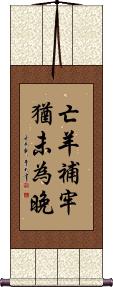
 wáng yáng bǔ láo yóu wèi wéi wǎn
Better Late Than Never Scroll

Long ago in what is now China, there were many kingdoms throughout the land. This time period is known as “The Warring States Period” by historians because these kingdoms often did not get along with each other.

Sometime around 279 B.C. the Kingdom of Chu was a large but not particularly powerful kingdom. Part of the reason it lacked power was the fact that the King was surrounded by “yes men” who told him only what he wanted to hear. Many of the King's court officials were corrupt and incompetent which did not help the situation.

The King was not blameless himself, as he started spending much of his time being entertained by his many concubines.

One of the King's ministers, Zhuang Xin, saw problems on the horizon for the Kingdom, and warned the King, “Your Majesty, you are surrounded by people who tell you what you want to hear. They tell you things to make you happy and cause you to ignore important state affairs. If this is allowed to continue, the Kingdom of Chu will surely perish, and fall into ruins.”

This enraged the King who scolded Zhuang Xin for insulting the country and accused him of trying to create resentment among the people. Zhuang Xin explained, “I dare not curse the Kingdom of Chu but I feel that we face great danger in the future because of the current situation.” The King was simply not impressed with Zhuang Xin's words.
Seeing the King's displeasure with him and the King's fondness for his court of corrupt officials, Zhuang Xin asked permission from the King that he may take leave of the Kingdom of Chu, and travel to the State of Zhao to live. The King agreed, and Zhuang Xin left the Kingdom of Chu, perhaps forever.

Five months later, troops from the neighboring Kingdom of Qin invaded Chu, taking a huge tract of land. The King of Chu went into exile, and it appeared that soon, the Kingdom of Chu would no longer exist.

The King of Chu remembered the words of Zhuang Xin and sent some of his men to find him. Immediately, Zhuang Xin returned to meet the King. The first question asked by the King was “What can I do now?”

Zhuang Xin told the King this story:

A shepherd woke one morning to find a sheep missing. Looking at the pen saw a hole in the fence where a wolf had come through to steal one of his sheep. His friends told him that he had best fix the hole at once. But the Shepherd thought since the sheep is already gone, there is no use fixing the hole.
The next morning, another sheep was missing. And the Shepherd realized that he must mend the fence at once. Zhuang Xin then went on to make suggestions about what could be done to reclaim the land lost to the Kingdom of Qin, and reclaim the former glory and integrity of the Kingdom of Chu.

The Chinese idiom shown above came from this reply from Zhuang Xin to the King of Chu almost 2,300 years ago.
It translates roughly into English as...
“Even if you have lost some sheep, it's never too late to mend the fence.”

This proverb, 亡羊补牢犹未为晚, is often used in modern China when suggesting in a hopeful way that someone change their ways, or fix something in their life. It might be used to suggest fixing a marriage, quitting smoking, or getting back on track after taking an unfortunate path in life among other things one might fix in their life.

I suppose in the same way that we might say, “Today is the first day of the rest of your life” in our western cultures to suggest that you can always start anew.

Note: This does have Korean pronunciation but is not a well-known proverb in Korean (only Koreans familiar with ancient Chinese history would know it). Best if your audience is Chinese.


This in-stock artwork might be what you are looking for, and ships right away...
Gallery Price: $26.00

Your Price: $14.00

Gallery Price: $49.00

Your Price: $27.00

Bird and Flower Wall Scroll

Bird and Flower Wall Scroll

Discounted Blemished

Gallery Price: $100.00

Your Price: $35.00

Gallery Price: $53.00

Your Price: $29.00

Oriental Modern Art Painting

Oriental Modern Art Painting

Discounted Blemished

Gallery Price: $29.00

Your Price: $16.00

Gallery Price: $31.00

Your Price: $17.00

Birds and Flowers Wall Scroll

Birds and Flowers Wall Scroll

Discounted Blemished

Gallery Price: $87.50

Your Price: $34.00

Gallery Price: $31.00

Your Price: $17.00

Gallery Price: $31.00

Your Price: $17.00

Gallery Price: $42.00

Your Price: $23.00

Asian Women Modern Art

Asian Women Modern Art

Discounted Blemished

Gallery Price: $45.00

Your Price: $25.00

O'Sensei Print Wall Scroll

O'Sensei Print
Wall Scroll

Discounted Blemished

Gallery Price: $71.00

Your Price: $39.00

Gallery Price: $35.00

Your Price: $19.00

Gallery Price: $38.00

Your Price: $21.00

Panda Bears Wall Scroll

Panda Bears Wall Scroll

Discounted Blemished

Gallery Price: $40.00

Your Price: $22.00


The following table may be helpful for those studying Chinese or Japanese...

Title CharactersRomaji (Romanized Japanese)Various forms of Romanized Chinese
Love Without Reason愛に理由は無いai ni ri yuu wa na i
ainiriyuuwanai
ai ni ri yu wa na i
Everything Happens for a Reason物事は全て理由があって起きるmonogoto ha subete riyuu ga at te okiru
monogoto ha subete riyu ga at te okiru
Love Without Reason愛而無由
爱而无由
ài ér wú yóu
ai4 er2 wu2 you2
ai er wu you
aierwuyou
ai erh wu yu
aierhwuyu
Everything Happens for a Reason萬事皆因果
万事皆因果
wàn shì jiē yīn guǒ
wan4 shi4 jie1 yin1 guo3
wan shi jie yin guo
wanshijieyinguo
wan shih chieh yin kuo
wanshihchiehyinkuo
The Mysterious Bond Between People緣 / 縁
enyuán / yuan2 / yuanyüan
Intelligence
Intellect
智能 / 知能
智能
chinou / chinozhì néng / zhi4 neng2 / zhi neng / zhinengchih neng / chihneng
Wisdomchi / tomozhì / zhi4 / zhichih
Wisdom comes from Experience不經一事
不经一事
bù jīng yī shì
bu4 jing1 yi1 shi4
bu jing yi shi
bujingyishi
pu ching i shih
puchingishih
Sciencekotowarilǐ / li3 / li
Leelǐ / li3 / li
Awesome
Really Cool
真牛zhēn niú / zhen1 niu2 / zhen niu / zhenniuchen niu / chenniu
Philip菲力普fēi lì pǔ
fei1 li4 pu3
fei li pu
feilipu
fei li p`u
feilipu
fei li pu
You Only Live Once生命隻有一次
生命只有一次
shēng mìng zhǐ yǒu yí cì
sheng1 ming4 zhi3 you3 yi2 ci4
sheng ming zhi you yi ci
shengmingzhiyouyici
sheng ming chih yu i tz`u
shengmingchihyuitzu
sheng ming chih yu i tzu
Aguila阿圭拉ā guī lā
a1 gui1 la1
a gui la
aguila
a kuei la
akueila
Death with Dignity尊厳死son gen shi
songenshi
Flying
Flight
Rising Upward
飛揚
飞扬
hi you / hiyou / hi yofēi yáng / fei1 yang2 / fei yang / feiyang
House of Red Delights怡紅院
怡红院
yí hóng yuàn
yi2 hong2 yuan4
yi hong yuan
yihongyuan
i hung yüan
ihungyüan
Crazy
Mad
髮狂
发狂
fā kuáng / fa1 kuang2 / fa kuang / fakuangfa k`uang / fakuang / fa kuang
Yen円 / 圓
円 / 圆
yenyuán / yuan2 / yuanyüan
Engage with Confidence理直氣壯
理直气壮
lǐ zhí qì zhuàng
li3 zhi2 qi4 zhuang4
li zhi qi zhuang
lizhiqizhuang
li chih ch`i chuang
lichihchichuang
li chih chi chuang
Awesome
Awe-Inspiring
恐れ多いosore ooi / osoreooi / osore oi
Perseverance
Fortitude
堅忍
坚忍
ken nin / kenninjiǎn rěn / jian3 ren3 / jian ren / jianrenchien jen / chienjen
Good Intentions
Good Will
Good Faith
善意zen i / zenishàn yì / shan4 yi4 / shan yi / shanyishan i / shani
Proud
Pride
Lofty-Minded
傲世ào shì / ao4 shi4 / ao shi / aoshiao shih / aoshih
Ikigai生き甲斐ikigai
Shit Happens世事難料
世事难料
shì shì nán liào
shi4 shi4 nan2 liao4
shi shi nan liao
shishinanliao
shih shih nan liao
shihshihnanliao
Body
Karada

karada / tai / tetǐ / ti3 / tit`i / ti
Lost
Dazed and Confused
meimí / mi2 / mi
Heavententiān / tian1 / tiant`ien / tien
No Pain No Gain痛みなくして得るものなしitami naku shite erumono wa nashi
Bravery
Courage
勇氣
勇气 / 勇気
yuuki / yukiyǒng qì / yong3 qi4 / yong qi / yongqiyung ch`i / yungchi / yung chi
Shorinji Kempo
Kenpo
少林寺拳法shourinji kenpou
shourinjikenpou
shorinji kenpo
shào lín sì quán fǎ
shao4 lin2 si4 quan2 fa3
shao lin si quan fa
shaolinsiquanfa
shao lin ssu ch`üan fa
shaolinssuchüanfa
shao lin ssu chüan fa
Master
Skilled Worker
師傅
师傅
shī fu / shi1 fu / shi fu / shifushih fu / shihfu
Asian Pride
Oriental Pride
AZN Pryde
東方自尊
东方自尊
tou hou zi son
touhouzison
to ho zi son
dōng fāng zì zūn
dong1 fang1 zi4 zun1
dong fang zi zun
dongfangzizun
tung fang tzu tsun
tungfangtzutsun
Broken Mirror Rejoined破鏡重圓
破镜重圆
pò jìng chóng yuán
po4 jing4 chong2 yuan2
po jing chong yuan
pojingchongyuan
p`o ching ch`ung yüan
pochingchungyüan
po ching chung yüan
Better Late Than Never亡羊補牢猶未為晚
亡羊补牢犹未为晚
wáng yáng bǔ láo yóu wèi wéi wǎn
wang2 yang2 bu3 lao2 you2 wei4 wei2 wan3
wang yang bu lao you wei wei wan
wang yang pu lao yu wei wei wan
wangyangpulaoyuweiweiwan
In some entries above you will see that characters have different versions above and below a line.
In these cases, the characters above the line are Traditional Chinese, while the ones below are Simplified Chinese.


Dictionary

Lookup Reason for Being in my Japanese & Chinese Dictionary


Successful Chinese Character and Japanese Kanji calligraphy searches within the last few hours...


50th AnniversaryAadenAadonAaroAbayaAbbasAbbeyAbhishekAbigaiAbundance and ProsperityAdamAdamarisAdapt and OvercomeAddieAdejahAdelineAdityaAdnanAdonisAdrianaAdriannaAdrielAfnanAguilarAhmadAilaAimiAishaAjayAkbarAkilaAlanaAlayaAleishaAlessaAlessandraAlexAlexandraAlexandriaAlfiAliceAlinaAlishaAlistairAliyaAllaAllahAllyAlmedaAloraAlvinAlyshaAlyssaAlyssiaAmadAmalAmelAminAmirAndreAndreiAndyAngelAnilAnjaniAnnetteAnshulAntonAntonellaAntonioAnyaArelyAriaArisaArlenArmanArmandoAshrafAslamAubreeAubreyAuraAureliaAvengerAyanAydenAymanAzuraBa Gua ZhangBaileeBaileyBashaBasilBayuBeautyBeauty of NatureBellaBelovedBennettBhumikaBiancaBibiBishalBlack Tiger FistBlessed by GodBoxingBradenBradyBraedenBrennaBristolBrockBryanBrysonBubbaBuddha Dharma SanghaButterflyCallieCamdenCarenCarleenCarmenCasperChantalChanteChelleChelseaChen SurnameCherryChevelleChinoChloeChop Wood Carry WaterChristinaClaireCobraCode of SilenceColeCompassionConnieConnorConstanceCorbinCosmoCourageCristianCullenCyanCyrilCyrineDamarisDaniDaniealDanielleDaniloDaodejingDaodejing Tao Te Ching - Chapter 54DaphneDariaDark AngelDarrenDarrylDaruDavianDeath Before DishonorDeepikaDefenseDerrickDeterminationDevonDharmaDianaDillowDimaDogenDominicDoveDragonDragon WarriorDrewDuncanDurellDwightEdieEdwardsElaineEldiEleanorEleonorEliezerElinElishaEllieElmerElsieElviraEmanEmelineEmiliaEmmett

All of our calligraphy wall scrolls are handmade.

When the calligrapher finishes creating your artwork, it is taken to my art mounting workshop in Beijing where a wall scroll is made by hand from a combination of silk, rice paper, and wood.
After we create your wall scroll, it takes at least two weeks for air mail delivery from Beijing to you.

Allow a few weeks for delivery. Rush service speeds it up by a week or two for $10!

When you select your calligraphy, you'll be taken to another page where you can choose various custom options.


A nice Chinese calligraphy wall scroll

The wall scroll that Sandy is holding in this picture is a "large size"
single-character wall scroll.
We also offer custom wall scrolls in small, medium, and an even-larger jumbo size.

A professional Chinese Calligrapher

Professional calligraphers are getting to be hard to find these days.
Instead of drawing characters by hand, the new generation in China merely type roman letters into their computer keyboards and pick the character that they want from a list that pops up.

There is some fear that true Chinese calligraphy may become a lost art in the coming years. Many art institutes in China are now promoting calligraphy programs in hopes of keeping this unique form of art alive.

Trying to learn Chinese calligrapher - a futile effort

Even with the teachings of a top-ranked calligrapher in China, my calligraphy will never be good enough to sell. I will leave that to the experts.

A high-ranked Chinese master calligrapher that I met in Zhongwei

The same calligrapher who gave me those lessons also attracted a crowd of thousands and a TV crew as he created characters over 6-feet high. He happens to be ranked as one of the top 100 calligraphers in all of China. He is also one of very few that would actually attempt such a feat.


Check out my lists of Japanese Kanji Calligraphy Wall Scrolls and Old Korean Hanja Calligraphy Wall Scrolls.

Some people may refer to this entry as Reason for Being Kanji, Reason for Being Characters, Reason for Being in Mandarin Chinese, Reason for Being Characters, Reason for Being in Chinese Writing, Reason for Being in Japanese Writing, Reason for Being in Asian Writing, Reason for Being Ideograms, Chinese Reason for Being symbols, Reason for Being Hieroglyphics, Reason for Being Glyphs, Reason for Being in Chinese Letters, Reason for Being Hanzi, Reason for Being in Japanese Kanji, Reason for Being Pictograms, Reason for Being in the Chinese Written-Language, or Reason for Being in the Japanese Written-Language.

86 people have searched for Reason for Being in Chinese or Japanese in the past year.
Reason for Being was last searched for by someone else on Oct 18th, 2025