Many custom options


And formats



Persons in Chinese / Japanese
Buy a Persons calligraphy wall scroll here!
Personalize your custom “Persons” project by clicking the button next to your favorite “Persons” title below.
Persons

珀森斯 is the name Persons in Chinese (Mandarin).
Persons

パーソンズ is the name Persons in Japanese Katakana.
Note: Because this title is entirely Japanese Katakana, it should be written by a Japanese calligrapher.
Hidden Dragon Crouching Tiger
Undiscovered persons of exceptional ability
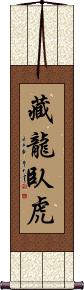
The meaning of 藏龍臥虎 is that both the tiger and dragon have amazing talents, but if they are out of view, you may not have discovered them.
This old Chinese idiom/proverb is appropriate for someone with an amazing ability that keeps that ability hidden.
You might think this title is in reverse, but actually, this is the original Chinese proverb.
The movie Crouching Tiger, Hidden Dragon, popularized this alternate version.
The Chosen One
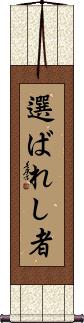
選ばれし者 is a Japanese title that means “The chosen one” but can also refer to “The select few” or “the chosen ones.”
The last character clarifies that the “one” refers to a person or persons (male or female).
This can also be written 撰ばれし者 or 択ばれし者 with the same pronunciation and meaning. The one shown above is the most common way to write it.
Note: Because this selection contains some special Japanese Hiragana characters, it should be written by a Japanese calligrapher.
These search terms might be related to Persons:
Jew / Jewish People
People’s Livelihood and Welfare
The Mysterious Bond Between People
When Three People Gather, One Becomes a Teacher
When Three People Gather, Wisdom is Multiplied
Not the results for Persons that you were looking for?
Below are some entries from our dictionary that may match your Persons search:
| Characters If shown, 2nd row is Simp. Chinese |
Pronunciation Romanization |
Simple Dictionary Definition |
愛別離苦 爱别离苦 see styles |
ài bié lí kǔ ai4 bie2 li2 ku3 ai pieh li k`u ai pieh li ku aibetsuriku あいべつりく |
More info & calligraphy: The Pain of Separation from Your Loves(yoji) {Buddh} the pain of separation from loved ones The suffering of being separated from those whom one loves. v. 八苦. |
抬 see styles |
tái tai2 t`ai tai |
to lift; to raise; (of two or more persons) to carry |
捨 舍 see styles |
shě she3 she sha しゃ |
to give up; to abandon; to give alms {Buddh} equanimity; upeksa; upekkha upekṣā, neglect, indifference, abandoning, M.W. To relinquish, renounce, abandon, reject, give. One of the chief Buddhist virtues, that of renunciation, leading to a state of "indifference without pleasure or pain" (Keith), or independence of both. v. 舍. It is defined as the mind 平等 in equilibrium, i.e. above the distinction of things or persons, of self or others; indifferent, having abandoned the world and all things and having no affections or desires. One of the seven bodhyaṅgas. Translit. sa, śa, s(r). |
三者 see styles |
sansha さんしゃ |
three persons; three parties |
両名 see styles |
ryouna / ryona りょうな |
both persons; (surname) Ryōna |
両氏 see styles |
ryoushi / ryoshi りょうし |
both persons |
両者 see styles |
ryousha / ryosha りょうしゃ |
pair; the two; both persons; both things |
二人 see styles |
futari ふたり |
two persons; two people; pair; couple; (given name) Futari |
二者 see styles |
èr zhě er4 zhe3 erh che nisha にしゃ |
both; both of them; neither (noun - becomes adjective with の) two things; two persons |
人一 see styles |
rén yī ren2 yi1 jen i jinichi じんいち |
(given name) Jin'ichi oneness of persons |
人員 人员 see styles |
rén yuán ren2 yuan2 jen yüan jinin じんいん |
staff; crew; personnel; CL:個|个[ge4] number of persons; personnel |
他身 see styles |
tā shēn ta1 shen1 t`a shen ta shen tashin |
other persons |
侠客 see styles |
kyoukyaku / kyokyaku きょうきゃく kyoukaku / kyokaku きょうかく |
self-styled humanitarian; chivalrous person; persons acting under the pretence of chivalry who formed gangs and engaged in gambling |
刹那 see styles |
chàn à chan4 a4 ch`an a chan a setsuna せつな |
(n-adv,n-t) moment (san: ksana); instant; juncture; (female given name) Setsuna kṣaṇa. An indefinite space of time, a moment, an instant; the shortest measure of time, as kalpa is the longest; it is defined as 一念 a thought; but according to another definition 60 kṣaṇa equal one finger-snap, 90 a thought 念, 4,500 a minute; there are other definitions. In each kṣaṇa 900 persons are born and die. |
品部 see styles |
tomobe ともべ |
(1) group of persons working at the imperial court (Yamato period); (2) various craftsmen and artisans under the ritsuryō system; (personal name) Tomobe |
年誼 年谊 see styles |
nián yì nian2 yi4 nien i |
camaraderie between persons who have gone through some experience in the same year |
忍界 see styles |
rěn jiè ren3 jie4 jen chieh ninkai |
sahā, or sahāloka, or sahālokadhātu. The universe of persons subject to transmigration, the universe of endurance. |
感情 see styles |
gǎn qíng gan3 qing2 kan ch`ing kan ching kanjou / kanjo かんじょう |
emotion; sentiment; affection; feelings between two persons (noun - becomes adjective with の) emotion; feeling; feelings; sentiment |
插足 see styles |
chā zú cha1 zu2 ch`a tsu cha tsu |
to squeeze in; to step in; to take part; to step between (two persons in a relationship) |
收攏 收拢 see styles |
shōu lǒng shou1 long3 shou lung |
to draw to oneself; to gather up; to collect; to fold up (an umbrella, wings etc); to assemble (a party of persons); to rope in (some people) |
梯隊 梯队 see styles |
tī duì ti1 dui4 t`i tui ti tui |
echelon (military formation); (in an organization) group of persons of one level or grade |
歷任 历任 see styles |
lì rèn li4 ren4 li jen |
(of one person) to hold the successive posts of; (of several persons) the successive (presidents etc) |
添景 see styles |
tenkei / tenke てんけい |
persons or animals added to a picture; incidental details of a picture |
湯取 see styles |
yutori ゆとり |
(irregular okurigana usage) (1) clothing to absorb dampness after bathing; yukata; (2) (abbreviation) twice-boiled rice (for sick persons); (3) (archaism) scoop for removing bilge water |
火帳 火帐 see styles |
huǒ zhàng huo3 zhang4 huo chang kochō |
The kitchen account of the rice cooked and persons served. |
点景 see styles |
tenkei / tenke てんけい |
persons or animals added to a picture; incidental details of a picture |
献名 see styles |
kenmei / kenme けんめい |
(noun/participle) {biol} patronym; scientific name in honor of a person or persons |
等觀 等观 see styles |
děng guān deng3 guan1 teng kuan tōkan |
The beholding of all things as equal, e.g. as 空 unreal, or immaterial; or of all beings without distinction, as one beholds one's child i.e. without respect of persons. |
耆那 see styles |
qín à qin2 a4 ch`in a chin a gina |
Jina, victor, he who overcomes, a title of every Buddha; also the name of various persons; the Jaina religion, the Jains. |
耶舍 see styles |
yé shè ye2 she4 yeh she Yasha |
Yaśas, or 耶舍陀 Yaśojā. There were two persons of this name: (1) a disciple of Ānanda; (2) another who is said to have 'played an important part in connection with the second synod'. |
Click here for more Persons results from our dictionary
The following table may be helpful for those studying Chinese or Japanese:
| Title | Characters | Romaji (Romanized Japanese) | Various forms of Romanized Chinese | |
| Persons | 珀森斯 | pò sēn sī po4 sen1 si1 po sen si posensi | p`o sen ssu posenssu po sen ssu |
|
| Persons | パーソンズ | paasonzu / pasonzu | ||
| Hidden Dragon Crouching Tiger | 藏龍臥虎 藏龙卧虎 | cáng lóng wò hǔ cang2 long2 wo4 hu3 cang long wo hu canglongwohu | ts`ang lung wo hu tsanglungwohu tsang lung wo hu |
|
| The Chosen One | 選ばれし者 | erabareshimono | ||
| In some entries above you will see that characters have different versions above and below a line. In these cases, the characters above the line are Traditional Chinese, while the ones below are Simplified Chinese. | ||||

Successful Chinese Character and Japanese Kanji calligraphy searches within the last few hours...



