Many custom options


And formats



Layman in Chinese / Japanese
Buy a Layman calligraphy wall scroll here!
Personalize your custom “Layman” project by clicking the button next to your favorite “Layman” title below.
Layman
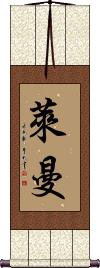
萊曼 is the name Layman in Chinese (Mandarin).
Layman

レイマン is the name Layman in Japanese Katakana.
Note: Because this title is entirely Japanese Katakana, it should be written by a Japanese calligrapher.
Believer
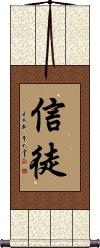
信徒 is the Chinese, Japanese Kanji, and old Korean Hanja word for “believer.”
Just as in English, this word can be used for a follower of virtually any religion.
This word can also be translated into English as layman, adherent, follower, laity, disciple, or devotee.
Sanctified by God
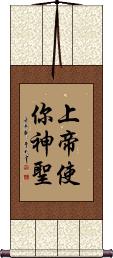
上帝使你神聖 means “Sanctified by God,” in Chinese.
This was added at the request of a customer. This may be more appropriate for a priest or reverend than a layman. But that depends on how your religion sees the order of things.
If you directly translate, you get something like, “God made you Holy.”
Here's the character breakdown:
上帝 = God
使 = Makes; Made; Let
你 = You
神聖 = Sacred; Holy; Sanctification; Divine; Hallow; Holiness
Ten Commandments
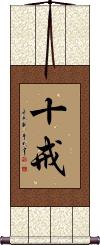
十戒 means Ten Commandments or Ten Precepts.
In the Buddhist context, these are prohibitions consisting of five commandments for the layman:
1. Not to destroy life 不殺生 Pāṇātipātāveramaṇi.
2. Not to steal 不倫盜 Adinnādānāver.
3. Not to commit adultery 不婬慾 Abrahmacaryaver.
4. Not to lie 不妄語 Musāvādāver.
5. Not to take intoxicating liquor 不飮酒 Suramereyya-Majjapamādaṭṭhānāver.
The ten commandments for the monk are the preceding five plus:
6. Not to eat food outside of regulated hours 不非時食 Vikāla-Bhojanāver.
7. Not to use garlands or perfumes 不著華鬘好香塗身 Mālā- Gandha-Vilepana-Dhāraṇa-Maṇḍana-Vibhūṣanaṭṭhānā.
8. Not to sleep on high or broad beds (chastity) 不坐高廣大牀 Uccāsayanā-Mahāsayanā.
9. Not to take part in singing, dancing, musical or theatrical performances 不歌舞倡伎不往觀聽 Nacca-Gīta-Vādita-Visūkadassanāver.
10. To refrain from acquiring uncoined or coined gold, or silver, or jewels 不得捉錢金銀寶物 Jātarūpa-Rajata-Paṭīggahaṇāver.
These original Buddhist commandments date back to about 2500 years ago. The English definitions above are followed by Chinese characters and original Pali pronunciation.
Under the Māhayāna Buddhism, these ten commands for the monk were changed, to accord with the new environment of the monk, to the following: not to kill, not to steal, to avoid all unchastity, not to lie, not to slander, not to insult, not to chatter, not to covet, not to give way to anger, to harbor no skepticism.
Not the results for Layman that you were looking for?
Below are some entries from our dictionary that may match your Layman search:
| Characters If shown, 2nd row is Simp. Chinese |
Pronunciation Romanization |
Simple Dictionary Definition |
信徒 see styles |
xìn tú xin4 tu2 hsin t`u hsin tu shinto しんと |
More info & calligraphy: Believerlayman; believer; adherent; follower; laity a believer |
十戒 see styles |
shí jiè shi2 jie4 shih chieh jukkai じゅっかい |
More info & calligraphy: Ten Commandments(1) (Buddhist term) the 10 precepts; (2) Ten Commandments; Decalogue; Decalog; (surname) Jukkai Śikṣāpada. The ten prohibitions (in Pāli form) consist of five commandments for the layman: (1) not to destroy life 不殺生 pāṇātipātāveramaṇi; (2) not to steal 不倫盜 adinnādānāver; (3) not to commit adultery 不婬慾 abrahmacaryaver.; (4) not to lie 不妄語musāvādāver.; (5) not to take intoxicating liquor 不飮酒 suramereyya-majjapamādaṭṭhānāver. Eight special commandments for laymen consist of the preceding five plus: (6) not to eat food out of regulated hours 不非時食 vikāla-bhojanāver.; (7) not to use garlands or perfumes 不著華鬘好香塗身 mālā- gandha-vilepana-dhāraṇa-maṇḍana-vibhūṣanaṭṭhānā; (8) not to sleep on high or broad beds (chastity) 不坐高廣大牀 uccāsayanā-mahāsayanā. The ten commandments for the monk are the preceding eight plus: (9) not to take part in singing, dancing, musical or theatrical performances, not to see or listen to such 不歌舞倡伎不往觀聽 nacca-gīta-vādita-visūkadassanāver.; (10) to refrain from acquiring uncoined or coined gold, or silver, or jewels 不得捉錢金銀寶物 jātarūpa-rajata-paṭīggahaṇāver. Under the Māhayāna these ten commands for the monk were changed, to accord with the new environment of the monk, to the following: not to kill, not to steal, to avoid all unchastity, not to lie, not to slander, not to insult, not to chatter, not to covet, not to give way to anger, to harbour no scepticism. |
菩薩 菩萨 see styles |
pú sà pu2 sa4 p`u sa pu sa mizoro みぞろ |
More info & calligraphy: Bodhisattva(n,n-suf) (1) {Buddh} bodhisattva; one who has reached enlightenment but vows to save all beings before becoming a buddha; (n,n-suf) (2) High Monk (title bestowed by the imperial court); (n,n-suf) (3) (See 本地垂迹説) title bestowed to Shinto kami in manifestation theory; (surname) Mizoro bodhisattva, cf. 菩提薩埵. While the idea is not foreign to Hīnayāna, its extension of meaning is one of the chief marks of Mahāyāna. 'The Bodhisattva is indeed the characteristic feature of the Mahāyāna.' Keith. According to Mahāyāna the Hinayanists, i.e. the śrāvaka and pratyekabuddha, seek their own salvation, while the bodhisattva's aim is the salvation of others and of all. The earlier intp. of bodhisattva was 大道心衆生 all beings with mind for the truth; later it became 大覺有情 conscious beings of or for the great intelligence, or enlightenment. It is also intp. in terms of leadership, heroism, etc. In general it is a Mahayanist seeking Buddhahood, but seeking it altruistically; whether monk or layman, he seeks enlightenment to enlighten others, and he will sacrifice himself to save others; he is devoid of egoism and devoted to helping others. All conscious beings having the Buddha-nature are natural bodhisattvas, but require to undergo development. The mahāsattva is sufficiently advanced to become a Buddha and enter nirvāṇa, but according to his vow he remains in the realm of incarnation to save all conscious beings. A monk should enter on the arduous course of discipline which leads to Bodhisattvahood and Buddhahood. |
レイマン see styles |
reiman / reman レイマン |
More info & calligraphy: Layman |
俗 see styles |
sú su2 su zoku(p); shoku(ok) ぞく(P); しょく(ok) |
custom; convention; popular; common; coarse; vulgar; secular (1) layman (esp. as opposed to a Buddhist monk); laity; man of the world; the world; (2) local manners; modern customs; (adj-na,adj-no) (3) common; popular; (adj-na,adj-no) (4) (ant: 雅・が・1) vulgar; low common, ordinary, usual, vulgar. |
俗人 see styles |
sú rén su2 ren2 su jen zokujin ぞくじん |
common people; laity (i.e. not priests) (1) person with low tastes; uncultured person; worldly person; (2) ordinary person (who has not entered the priesthood); layperson; layman gṛhastha, an ordinary householder; an ordinary man; the laity. |
俗家 see styles |
sú jiā su2 jia1 su chia zokke |
layman; layperson; original home of a monk secular family |
倶攞 see styles |
jù luó luǒ ju4 luo2 luo3 chü lo lo kura |
kūla, a slope, a shore; a mound; a small dagoba in which the ashes of a layman are kept. kula, a herd, family, household. |
凡眼 see styles |
bongan ぼんがん |
(through) a layman's eyes |
単称 see styles |
tanshou / tansho たんしょう |
(1) layman's terms; simple name; uncomplicated term; (can be adjective with の) (2) singular |
在家 see styles |
zài jiā zai4 jia1 tsai chia zaike ざいけ |
to be at home; (at a workplace) to be in (as opposed to being away on official business 出差[chu1 chai1]); (Buddhism etc) to remain a layman (as opposed to becoming a monk or a nun 出家[chu1 jia1]) (noun - becomes adjective with の) (1) (ざいけ only) {Buddh} (See 出家・2) layperson; layman; laywoman; laity; (2) country home; farmhouse; cottage; (place-name, surname) Zaike At home, a layman or woman, not 出家, i. e. not leaving home as a monk or nun. |
外行 see styles |
wài háng wai4 hang2 wai hang sotoyuki そとゆき |
layman; amateur (given name) Sotoyuki |
居士 see styles |
jū shì ju1 shi4 chü shih koji こじ |
(1) {Buddh} (See 大姉・だいし) grhapati (layman; sometimes used as a posthumous suffix); (2) private-sector scholar 倶欏鉢底; 迦羅越 kulapati. A chief, head of a family; squire, landlord. A householder who practises Buddhism at home without becoming a monk. The female counterpart is 女居士. The 居士傳 is a compilation giving the biography of many devout Buddhists. |
法師 法师 see styles |
fǎ shī fa3 shi1 fa shih houshi / hoshi ほうし |
one who has mastered the sutras (Buddhism) (1) Buddhist priest; bonze; (2) layman dressed like a priest; (suffix noun) (3) (usu. pronounced ぼうし) person; (surname, given name) Houshi A Buddhist teacher, master of the Law; five kinds are given— a custodian (of the sūtras), reader, intoner, expounder, and copier. |
素人 see styles |
sù rén su4 ren2 su jen sojin そじん |
untrained, inexperienced person; layman; amateur; ordinary person; non-celebrity (1) (ant: 玄人・1) amateur; layman; ordinary person; novice; (2) (See 玄人・2) respectable woman (i.e. not a prostitute, hostess, geisha); (3) (archaism) (kyb:) (See 私娼) unlicensed prostitute; (given name) Sojin |
老外 see styles |
lǎo wài lao3 wai4 lao wai |
(coll.) foreigner (esp. non Asian person); layman; amateur |
肉眼 see styles |
ròu yǎn rou4 yan3 jou yen nikugan(p); nikugen にくがん(P); にくげん |
naked eye; layman's eyes (1) (にくがん only) naked eye; (2) {Buddh} (usu. にくげん) (See 五眼) the physical eye māṃsacakṣus. Eye of flesh, the physical eye. |
芻議 刍议 see styles |
chú yì chu2 yi4 ch`u i chu i |
lit. grass-cutter's comment (humble); fig. my observation as a humble layman; my humble opinion |
優婆塞 优婆塞 see styles |
yōu pó sē you1 po2 se1 yu p`o se yu po se ubasoku うばそく |
{Buddh} (See 優婆夷) upasaka (devout male lay follower of Buddhism) (san: upāsaka) upāsaka, 優婆娑柯; 優波娑迦; 鄔波塞 (鄔波塞伽); 鄔波索迦 (or 鄔波素迦); 伊蒲塞. Originally meaning a servant, one of low caste, it became the name for a Buddhist layman who engages to observe the first five commandments, a follower, disciple, devotee. |
平信徒 see styles |
hirashinto; heishinto / hirashinto; heshinto ひらしんと; へいしんと |
layman; laity |
無畏授 无畏授 see styles |
wú wèi shòu wu2 wei4 shou4 wu wei shou mui ju |
勤授 Vīradatta, 'hero-giver,' a prominent layman, contemporary with Śākyamuni. |
白衣舍 see styles |
bái yī shè bai2 yi1 she4 pai i she byaku e sha |
the home of a white-clothed layman |
籐四郎 see styles |
toushirou / toshiro とうしろう toushiro / toshiro とうしろ |
(noun - becomes adjective with の) (colloquialism) amateur; novice; layman |
藤四郎 see styles |
fujishirou / fujishiro ふじしろう |
(noun - becomes adjective with の) (colloquialism) amateur; novice; layman; (male given name) Fujishirou |
門外漢 门外汉 see styles |
mén wài hàn men2 wai4 han4 men wai han mongaikan もんがいかん |
layman outsider; layman; amateur |
龐居士 see styles |
páng jū shì pang2 ju1 shi4 p`ang chü shih pang chü shih |
Layman Pang |
玄鑑居士 玄鉴居士 see styles |
xuán jiàn jū shì xuan2 jian4 ju1 shi4 hsüan chien chü shih Genkan koji |
An Indian, the patron of an Indian monk Dharmapāla, author of the 唯識釋論. After his death the patron gave the MS. to Xuanzang. |
維摩居士 维摩居士 see styles |
wéi mó jū shì wei2 mo2 ju1 shi4 wei mo chü shih Yuima Koji |
the Layman Vimalakīrti |
負舂居士 负舂居士 see styles |
fù chōng jū shì fu4 chong1 ju1 shi4 fu ch`ung chü shih fu chung chü shih fushō kyoshi |
layman of the pestle: Huineng |
トーシロー see styles |
tooshiroo トーシロー |
(noun - becomes adjective with の) (colloquialism) amateur; novice; layman |
Click here for more Layman results from our dictionary
The following table may be helpful for those studying Chinese or Japanese:
| Title | Characters | Romaji (Romanized Japanese) | Various forms of Romanized Chinese | |
| Layman | 萊曼 莱曼 | lái màn / lai2 man4 / lai man / laiman | ||
| Layman | レイマン | reiman | ||
| Believer | 信徒 | shinto | xìn tú / xin4 tu2 / xin tu / xintu | hsin t`u / hsintu / hsin tu |
| Sanctified by God | 上帝使你神聖 上帝使你神圣 | shèng dì shǐ nǐ shén shèng sheng4 di4 shi3 ni3 shen2 sheng4 sheng di shi ni shen sheng shengdishinishensheng | sheng ti shih ni shen sheng shengtishihnishensheng |
|
| Ten Commandments | 十戒 | jukkai / jukai | shí jiè / shi2 jie4 / shi jie / shijie | shih chieh / shihchieh |
| In some entries above you will see that characters have different versions above and below a line. In these cases, the characters above the line are Traditional Chinese, while the ones below are Simplified Chinese. | ||||

Successful Chinese Character and Japanese Kanji calligraphy searches within the last few hours...



