Many custom options


And formats



Harbour in Chinese / Japanese
Buy a Harbour calligraphy wall scroll here!
Personalize your custom “Harbour” project by clicking the button next to your favorite “Harbour” title below.
Harbour

哈伯 is the name Harbour in Chinese (Mandarin).
Harbour

ハーバー is the name Harbour in Japanese Katakana.
Note: Because this title is entirely Japanese Katakana, it should be written by a Japanese calligrapher.
Realize Your Ambitions / Embrace Your Ambition
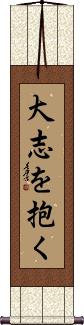
大志を抱く is a Japanese proverb that suggests you should embrace, pursue, and realize your ambitions.
The first part means ambitions or aspirations.
The last part means to embrace or to hold in your arms.
Here's the character breakdown:
大志 (taishi) ambition; aspiration.
を (o) particle
抱く (idaku) to embrace; to hold in the arms (e.g. a baby); to hug; to harbor/harbour; to bear (e.g., a grudge); to entertain (e.g., suspicion); to sleep with; to sit on eggs.
Note: Because this selection contains some special Japanese Hiragana characters, it should be written by a Japanese calligrapher.
Not the results for Harbour that you were looking for?
Below are some entries from our dictionary that may match your Harbour search:
| Characters If shown, 2nd row is Simp. Chinese |
Pronunciation Romanization |
Simple Dictionary Definition |
津 see styles |
jīn jin1 chin wataru わたる |
More info & calligraphy: Zin(1) Tsu (city in Mie); (suffix) (2) harbour; harbor; port; (suffix) (3) ferry; (given name) Wataru Ford, ferry, place of crossing a stream. |
十戒 see styles |
shí jiè shi2 jie4 shih chieh jukkai じゅっかい |
More info & calligraphy: Ten Commandments(1) (Buddhist term) the 10 precepts; (2) Ten Commandments; Decalogue; Decalog; (surname) Jukkai Śikṣāpada. The ten prohibitions (in Pāli form) consist of five commandments for the layman: (1) not to destroy life 不殺生 pāṇātipātāveramaṇi; (2) not to steal 不倫盜 adinnādānāver; (3) not to commit adultery 不婬慾 abrahmacaryaver.; (4) not to lie 不妄語musāvādāver.; (5) not to take intoxicating liquor 不飮酒 suramereyya-majjapamādaṭṭhānāver. Eight special commandments for laymen consist of the preceding five plus: (6) not to eat food out of regulated hours 不非時食 vikāla-bhojanāver.; (7) not to use garlands or perfumes 不著華鬘好香塗身 mālā- gandha-vilepana-dhāraṇa-maṇḍana-vibhūṣanaṭṭhānā; (8) not to sleep on high or broad beds (chastity) 不坐高廣大牀 uccāsayanā-mahāsayanā. The ten commandments for the monk are the preceding eight plus: (9) not to take part in singing, dancing, musical or theatrical performances, not to see or listen to such 不歌舞倡伎不往觀聽 nacca-gīta-vādita-visūkadassanāver.; (10) to refrain from acquiring uncoined or coined gold, or silver, or jewels 不得捉錢金銀寶物 jātarūpa-rajata-paṭīggahaṇāver. Under the Māhayāna these ten commands for the monk were changed, to accord with the new environment of the monk, to the following: not to kill, not to steal, to avoid all unchastity, not to lie, not to slander, not to insult, not to chatter, not to covet, not to give way to anger, to harbour no scepticism. |
港 see styles |
gǎng gang3 kang minatozaki みなとざき |
harbor; port; CL:個|个[ge4] (suffix) (in location names) harbour; (surname) Minatozaki |
湊 凑 see styles |
còu cou4 ts`ou tsou minatozaki みなとざき |
to gather together, pool or collect; to happen by chance; to move close to; to exploit an opportunity harbour; harbor; port; (surname) Minatozaki |
内港 see styles |
naikou / naiko ないこう |
inner harbour; inner harbor |
含む see styles |
fukumu ふくむ kukumu くくむ |
(transitive verb) (1) to contain; to comprise; to have; to hold; to include; to embrace; (2) to hold in the mouth; (3) to bear in mind; to understand; to harbor (grudge, etc.); to harbour; (4) to express (emotion, etc.); to imply |
女人 see styles |
nǚ ren nu:3 ren5 nü jen nyonin; jojin にょにん; じょじん |
wife woman Woman, described in the Nirvāṇa sūtra 浬槃經 9 as the "abode of all evil", 一切女人皆是衆惡之所住處 The 智度論 14 says: 大火燒人是猶可近, 淸風無形是亦可捉, 蚖蛇含毒猶亦可觸, 女人之心不可得實 "Fierce fire that would burn men may yet be approached, clear breezes without form may yet be grasped, cobras that harbour poison may yet be touched, but a woman's heart is never to be relied upon." The Buddha ordered Ānanda: "Do not Look at a woman; if you must, then do not talk with her; if you must, then call on the Buddha with all your mind"— an evidently apocryphal statement of 文句 8. |
宿す see styles |
yadosu やどす |
(transitive verb) (1) to house; to contain; to harbour (a feeling); to hold (e.g. dew on leaves); (transitive verb) (2) to carry (a baby); to be pregnant; (transitive verb) (3) (archaism) to give lodging to; to accommodate |
挟む see styles |
sashihasamu さしはさむ |
(transitive verb) (1) to interpose; to hold between; to insert; (2) to be on either side (e.g. road); to be across (e.g. street, river); to be beyond; (transitive verb) (1) to insert; (2) to interrupt; to slip in a word; (3) to harbor (e.g. doubts); to harbour; to entertain (e.g. a theory) |
港内 see styles |
kounai / konai こうない |
inside the harbour; inside the harbor |
港口 see styles |
gǎng kǒu gang3 kou3 kang k`ou kang kou minatoguchi みなとぐち |
port; harbor harbor entrance; harbour entrance; (surname) Minatoguchi |
港図 see styles |
kouzu / kozu こうず |
map of a harbor (harbour) |
港外 see styles |
kougai / kogai こうがい |
outside a port or harbor (harbour) |
港市 see styles |
koushi / koshi こうし |
(See 港湾都市) port city; harbour city; harbor city |
港津 see styles |
koushin / koshin こうしん |
(rare) (See 港・みなと) harbour; harbor; port |
港湾 see styles |
kouwan / kowan こうわん |
harbour; harbor |
港町 see styles |
minatomachi みなとまち |
port city; harbor city; harbour city; (place-name) Minatomachi |
港門 see styles |
koumon / komon こうもん |
entrance to a port; entrance to a harbour |
漁港 渔港 see styles |
yú gǎng yu2 gang3 yü kang gyokou / gyoko ぎょこう |
fishing port fishing harbour; fishing harbor |
臨港 see styles |
rinkou / rinko りんこう |
(noun - becomes adjective with の) facing (along) the harbor (harbour); (place-name) Rinkou |
良港 see styles |
liáng gǎng liang2 gang3 liang kang ryoukou / ryoko りょうこう |
good harbor good harbor (harbour); fine harbor |
銜む see styles |
fukumu ふくむ kukumu くくむ |
(transitive verb) (1) to contain; to comprise; to have; to hold; to include; to embrace; (2) to hold in the mouth; (3) to bear in mind; to understand; to harbor (grudge, etc.); to harbour; (4) to express (emotion, etc.); to imply |
人工港 see styles |
jinkoukou / jinkoko じんこうこう |
artificial harbor; artificial harbour |
入港料 see styles |
nyuukouryou / nyukoryo にゅうこうりょう |
ship's harbor charges; ship's harbour charges |
天然港 see styles |
tennenkou / tennenko てんねんこう |
natural harbor; natural harbour |
安全港 see styles |
ān quán gǎng an1 quan2 gang3 an ch`üan kang an chüan kang anzenkou / anzenko あんぜんこう |
safe harbor; safe haven safe harbour |
港湾税 see styles |
kouwanzei / kowanze こうわんぜい |
harbor duties; harbour duties |
臨港線 see styles |
rinkousen / rinkosen りんこうせん |
harbor railroad; harbour railroad; (place-name) Rinkousen |
舟着場 see styles |
funatsukiba ふなつきば |
harbour; harbor; landing place; wharf; anchorage |
船着場 see styles |
funatsukiba ふなつきば |
harbour; harbor; landing place; wharf; anchorage |
Click here for more Harbour results from our dictionary
The following table may be helpful for those studying Chinese or Japanese:
| Title | Characters | Romaji (Romanized Japanese) | Various forms of Romanized Chinese | |
| Harbour | 哈伯 | hā bó / ha1 bo2 / ha bo / habo | ha po / hapo | |
| Harbour | ハーバー | haabaa / haba | ||
| Realize Your Ambitions Embrace Your Ambition | 大志を抱く | taishi wo Idaku taishiwoIdaku | ||

Successful Chinese Character and Japanese Kanji calligraphy searches within the last few hours...



