Many custom options...


And formats...



Not what you want?
Try other similar-meaning words, fewer words, or just one word.
A House Might Be Worth 1 Million Dollars but Good Neighboors Are Worth 10 Million. in Chinese / Japanese...
Buy an A House Might Be Worth 1 Million Dollars but Good Neighboors Are Worth 10 Million. calligraphy wall scroll here!
Personalize your custom “A House Might Be Worth 1 Million Dollars but Good Neighboors Are Worth 10 Million.” project by clicking the button next to your favorite “A House Might Be Worth 1 Million Dollars but Good Neighboors Are Worth 10 Million.” title below...
Switched to secondary search mode due to lack of results using primary.
These secondary results may not be very accurate. Try a different but similar meaning word or phrase for better results. Or...
Look up A House Might Be Worth 1 Million Dollars but Good Neighboors Are Worth 10 Million. in my Japanese Kanji & Chinese Character Dictionary(My dictionary is a different system then the calligraphy search you just tried)
If you want a special phrase, word, title, name, or proverb, feel free to contact me, and I will translate your custom calligraphy idea for you.
2. Azuka
4. Banzai
5. Betelgeuse
8. Bushinkan
9. Day
10. Dragon Hall
13. A Bright Future
14. Four Noble Truths: Elimination of Desire or Attachment
15. Fraternity
16. Galatians 5:25
19. House Of Peace
21. Joshua 24:15
22. Julia
23. Love the House and Its Crow
24. The Lord's Prayer / Mathew 6:9-13
25. Meibukan
26. A House Might be Worth 1 Million Dollars, But Good Neighbors are Worth 10 Million
27. Moon
28. Where There is a Will, There is a Way
29. There’s No Place Like Home
31. Penis
32. Gay Pride
33. Read 10,000 Books, Travel 10,000 Miles
34. Reiki Precepts by Usui Mikao
35. Ririsa
36. Seishi-Kan
37. Seishin-Kan
38. Semper Fidelis / Always Faithful
40. Shobukan
42. Sun / Solar
43. Tea Fate
44. Ten
45. Ten Commandments
46. Tibet
47. Better to Travel 10,000 Miles than Read 10,000 Books
48. Unbeatable
49. Mountain Villa
50. Villa
51. Walking 100 Miles: Stopping at 90 miles, is the same as stopping half-way
Ten perfect Mahayana rules
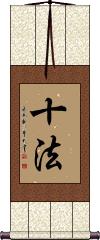
十法 is the title of the ten perfect or perfecting Mahāyāna rules.
The order of rules is as follows:
1. right belief.
2. right conduct.
3. right spirit.
4. the joy of the bodhi mind.
5. joy in the dharma.
6. joy in meditation.
7. pursuing the correct dharma.
8. obedience to, or accordance with dharma.
9. departing from pride, desire, etc.
10. comprehending the inner teaching of Buddha and taking no pleasure in attaining such knowledge or noting the ignorance of others.
This title is only used in the context of Buddhism. Japanese and Chinese people who are not familiar with Buddhism will not recognize this title.
Azuka
Japanese surname
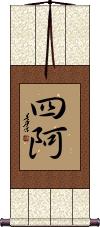
四阿 is the Japanese surname Azuka, Adzuma, Azuma, or Aoka.
This also means arbor/arbour, bower, summer house, or square gazebo.
Banzai / Wansui
Old Japanese / Traditional Chinese & Korean
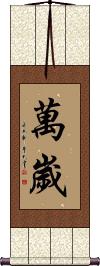
萬歲 is the traditional Chinese, Korean Hanja, and ancient Japanese way of writing banzai.
In modern times, the first character was simplified in Japan and China. So you might want to select the other entry for universal readability.
While it has become a popular, if not an odd, thing to scream as you jump out of an airplane (preferably with a parachute attached), banzai is actually a very old Asian way to say “hooray.” The Japanese word “banzai” comes from the Chinese word “wan sui,” which means “The age of 10,000 years.” It is actually a wish that the Emperor or the Empire live that long.
Imagine long ago when the Emperor made a rare public appearance. 萬歲 is what all people would yell to their leader in respect.
So if you like it as a hooray, or you want to wish someone that they live for 10,000 years, this is the calligraphy for you.
Other translations include Cheers! (not the drinking kind), hurrah!, long live [name]!, and congratulations!
To other things with banzai in their names, I am still waiting for the promised sequel to Buckaroo Banzai.
Notes: Sometimes people confuse banzai with bonsai. A bonsai is a miniature tree. They have nothing to do with each other.
Banzai
Modern Japanese Version
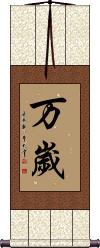
万歲 is the modern Japanese way to write banzai.
We've made two almost identical entries for this word, with just a variation on the first character. In the last century, 萬 was simplified to 万 in Japan and China. The new generation will expect it to be written as 万 but the old generation can still read the more traditional 萬 form. You must make your determination as to what version is best for you. If your audience is mostly Japanese, I suggest 万歲.
While it has become a popular, if not an odd, thing to scream as you jump out of an airplane (preferably with a parachute attached), banzai is actually a very old Asian way to say “hooray.” The Japanese word “banzai” comes from the Chinese word “wan sui” which means “The age of 10,000 years.” It is actually a wish that the Emperor or the Empire live that long.
Imagine long ago when the Emperor made a rare public appearance. This is what all of the people would yell to their leader in respect.
So if you like it as a hooray, or you want to wish someone that they live for 10,000 years, this is the calligraphy for you.
To other things with banzai in their names, I am still waiting for the promised sequel to Buckaroo Banzai.
Other translations: hurrah, long life, congratulations, cheers, live long.
Notes: Sometimes people confuse banzai with bonsai. A bonsai is a miniature tree. They have nothing to do with each other. Further, Bonzai is not a word at all - although it would make a great name for a calcium supplement for older people.
Betelgeuse
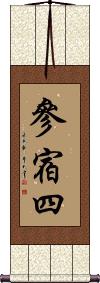
參宿四 is the title for Betelgeuse (star in the constellation Orion) in Chinese.
Also known as “α Orionis” (Alpha Orionis), Alpha Ori, or in Japan the Heike-boshi or Heike-star.
Note: 参宿 (Shēn Xiù) is the name given by ancient Chinese astronomers for a constellation of three stars (the three naked-eye visible belt stars of Orion). Therefore, 參宿四 means the Fourth Star of the constellation of Three Stars (which sounds like a joke). As telescopes got better, it should be noted that there are actually 10 stars in the constellation.
Blessings on this Home
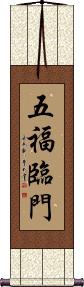
五福臨門 means “five good fortunes arrive [at the] door.”
It is understood to mean “may the five blessings descend upon this home.”
These blessings are known in ancient China to be: longevity, wealth, health, virtue, and natural death (living to old age). This is one of several auspicious sayings you might hear during the Chinese New Year.
Bless this House
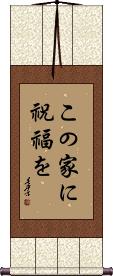
This means “Bless this house” or “Bless this home,” in Japanese.
Some may also translate this as “Bless this family,” since the Kanji for home can also mean family.
Note: Because this selection contains some special Japanese Hiragana characters, it should be written by a Japanese calligrapher.
Bushinkan
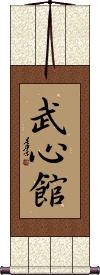
武心館 is the title for Bushinkan or Bushin-kan, which translates roughly as Warrior Heart Hall/House.
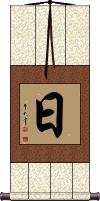
This is how to write “day” in Chinese, Japanese, and Korean Hanja.
This can also mean “Sun,” the star in the middle of the Solar system in which we live. In Japanese, it can also mean “sunshine” or even “Sunday.”
When writing the date in modern Chinese and Japanese, putting a number in front of this character indicates the day of the month. Of course, you need to indicate the month too... The month is expressed with a number followed by the character for the moon. So “three moons ten suns” would be “March 10th” or “3/10.”
Note: This is also the first character for the proper name of Japan. Remember that Japan is “The land of the rising sun”? Well, the first character for Japan means “sun” and the second means “origin” so you get the real meaning now. Sometimes, in China, this sun character can be a short name for Japan or a suffix for something of or from Japan.
Dragon Hall

龍館 can be translated as “dragon hall” or “dragon school”.
Through history, and depending on context, 館 has a lot of possible meanings such as building, shop, embassy, consulate, schoolroom, mansion, palace, manor house, castle, small fortress, or official residence (of a government official).
Diligent Study Proverb
Drill a hole in the wall to get light to read by.
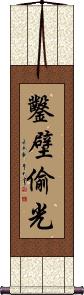
鑿壁偷光 is a Chinese proverb that means “Bore a hole in the wall to make use of the neighbor's light to study.”
This is a nice gift for a very studious person.
Kuang Heng was born during the Western Han period. He has been very fond of reading ever since he was young. However, he could not attend school since his family was poor, and he had to borrow books from people to learn.
To borrow these books, he normally did chores for people who had them. When he became older, he had to work in the field from sunrise to sunset since his family's financial situation did not improve. Thus, he tried to study at night, but he had no lamp.
One day, he noticed the light from the neighbor's house coming through a crack in the wall. This made him very happy, so he dug a larger hole from the crack and read in the light that shone through. This diligent study eventually made him an accomplished person.
Family / Household
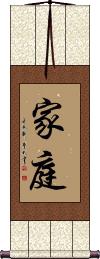
家庭/傢庭 is a common way to express family, household, or home in Chinese, Japanese Kanji, and old Korean Hanja.
However, for a wall scroll, we recommend the single-character form (which is just the first character of this two-character word). If you want that, just click here: Family Single-Character
The first character means “family” or “home.” The second means “courtyard” or “garden.” When combined, the meaning is a bit different, as it becomes “household” or “family.” The home and/or property traditionally has a strong relationship with family in Asia. Some Chinese, Korean, and Japanese families have lived in the same house for 7 or more generations!
A Bright Future
Incredible 10,000-Mile Flight of the Peng
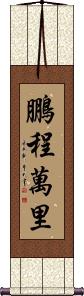
鵬程萬里 is an ancient Chinese proverb used in modern times to wish someone a long and successful career.
It's really about the 10,000 Flight of the Peng (Peng, also known as Roc is a mythical fish that can turn into a bird and take flight).
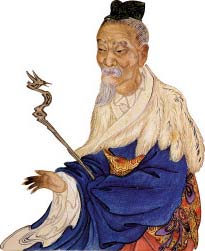
莊子
Zhuangzi or Chuang Tzu
Breaking down each character:
1. Peng or Roc (a kind of bird).
2. Journey (in this case, a flight).
3. 10,000 (Ten Thousand).
4. Li is a unit of distance often referred to as a “Chinese Mile,” though the real distance is about half a kilometer.
Direct Translation: “Peng's Journey [of] 10,000 Li.”
Literal meaning: “The 10,000-Li Flying Range Of The Roc.”
Perceived meaning: “To have a bright future” or “To go far.”
This proverb/idiom comes from the book of Zhuangzi or Chuang Tzu. It tells the tale of a huge fish that could turn into a gigantic bird. This bird was called a “peng” and was many miles long. This legendary size allowed the Peng to fly from the Northern Sea to the Southern Sea in a single bound.
Wishing someone “a Peng's Journey of 10,000 Li” will imply that they can travel far without stopping and will have great success, a long career, and a prosperous future.
Four Noble Truths: Elimination of Desire or Attachment
Nirodha
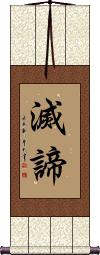
滅諦 suggests that once you eliminate desire or attachment to worldly things, only then can you achieve enlightenment.
Realize that things are impermanent. That fancy car, beautiful spouse, big house, and impressive career are things you can't take with you. These things are a flash in the pan compared to the infinite span of history, generations to come, time, and space.
This term is exclusively used by devout Buddhists. It is not a common term, and is remains an unknown concept to most Japanese, Korean, and Chinese people.
See Also: Buddhism | Enlightenment
Fraternity
University Brotherhood / House
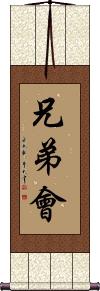
兄弟會 is the word in Chinese for a college fraternity or some other kind of fraternal order.
Literally, these characters mean “Elder brother younger brother association.” The last character can also be translated as a group, union, gathering, assembly, meeting, or conference.
Galatians 5:25
If we live in the Spirit, let us also walk in the Spirit
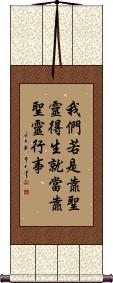
我們若是靠聖靈得生就當靠聖靈行事 is the translation of Galatians 5:25 into Mandarin Chinese via the Chinese Union Bible.
KJV: If we live in the Spirit, let us also walk in the Spirit.
NIV: Since we live by the Spirit, let us keep in step with the Spirit.
The annotation of this Chinese translation:
1.我们 wǒ men - we / us / ourselves
2.若是 ruò shì - if
3.靠 kào - depend upon / lean on / near / by / against / to support
4.圣灵 shèng líng - Holy Ghost
5.得 děi - to have to / must / ought to / degree or possibility
6.生就 shēng jiù - born one way or another (nervous, suspicious, etc.)
7.当 dàng - suitable / adequate / fitting / proper
8.靠 kào - depend upon / lean on / near / by / against / to support
9.圣灵 shèng líng - Holy Ghost
10.行事 xíng shì - how one does things / how one runs things (in this case, it suggests, “to walk in step with”)
Gecko / House Lizard
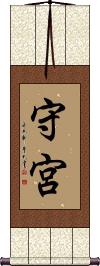
守宮 means gecko or house lizard.
This can also be the Japanese surname, Morimiya.
House of Good Fortune
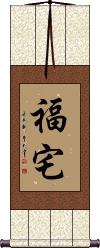
福宅 is perhaps the Chinese equivalent of “This blessed house” or perhaps “home sweet home.”
This phrase literally means “Good fortune house” or “Good luck household.” It makes any Chinese person who sees it feel that good things happen in the home in which this calligraphy is hung.
House Of Peace

和平之家 is the title “House Of Peace” in Chinese.
House of Red Delights
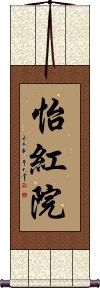
怡紅院 is from “The Story of the Stone” by Cao Xueqin.
For some reason, this phrase was translated as “House of Green Delights” when the novel was published in English. The translator took some liberties and believed that “green” had a more positive feel than red to a western audience. Therefore, the phrase shown to the right is “House of Red Delights” (which is the most original and correct way).
Joshua 24:15
This House Serves the LORD
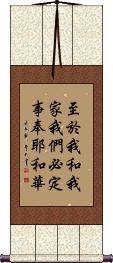
至於我和我家我們必定事奉耶和華 is the last sentence of Joshua 24:15 in Chinese.
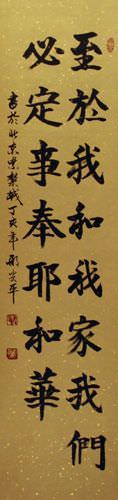
What your
calligraphy
might look like
from our
Chinese Master
Calligrapher
Joshua 24:15 (KJV) ...as for me and my house, we will serve the LORD.
Joshua 24:15 (NIV) ...as for me and my household, we will serve the LORD.
We used the only official Christian Chinese Bible that I know of so that the translation would be as accurate and standard as possible. Any Chinese Christian worth their salt will easily be able to identify this verse from the Chinese words on this scroll.
I think it is a bit like having a secret code on your wall that quietly expresses to whom you are faithful.
A great gift for your devout Christian or Jewish friend if they happen to be fond of Asian art.
Or perhaps a wonderful “conversation starter” for your own home.
Note: If you are curious, the last three characters represent the way “LORD” is used in most English Bibles. In Chinese, this is actually the phonetic name from Mandarin Chinese for “Jehovah.”
Joshua 24:15
This House Serves the LORD
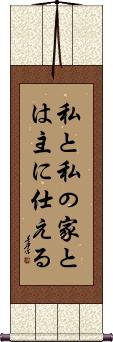
私と私の家とは、主に仕える is the last bit of Joshua 24:15 in Japanese.
Joshua 24:15 (KJV) ...as for me and my house, we will serve the LORD.
Joshua 24:15 (NIV) ...as for me and my household, we will serve the LORD.
This came from the Shinkaiyaku Japanese Bible. This is the most commonly-used Bible translation in Japan for both Protestants and Catholic Japanese folks.
I think it is a bit like having a secret code on your wall that quietly expresses to whom you are faithful.
This will be a nice gift for a friend or a wonderful expression of faith for your own home.
Note: Because this selection contains some special Japanese Hiragana characters, it should be written by a Japanese calligrapher.
Julia
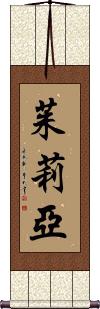
This is the most popular transliteration to Mandarin Chinese for the name Julia.
There are a few other ways to write Julia in Chinese, but this one is about 10 times more popular/common compared to any of the others.
Love the House and Its Crow
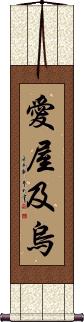
愛屋及烏 is the Chinese idiom, “Love the house and its crow.”
It speaks to the fact that if you are involved in a relationship with somebody, you are also in a relationship with everyone connected to that person. In English, we say, “Love me, love my dog.”
The Lord's Prayer / Mathew 6:9-13
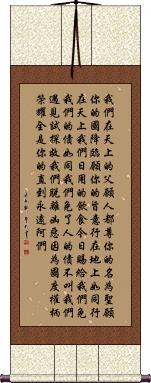
Here is the Lord's Prayer in Chinese from Mathew 6:9-13.
The Chinese text with punctuation is:
Part of 6:9 ...我们在天上的父,愿人都尊你的名为圣。
6:10 愿你的国降临,愿你的旨意行在地上,如同行在天上。
6:11 我们日用的饮食,今日赐给我们。
6:12 免我们的债,如同我们免了人的债。
6:13 不叫我们遇见试探,救我们脱离凶恶,因为国度,权柄,荣耀,全是你的,直到永远,阿们。
Note that punctuation is not included in traditional Chinese calligraphy artwork.
From KJV, this is:
Part of 6:9 ...Our Father which art in heaven, Hallowed be thy name.
6:10 Thy kingdom come. Thy will be done in earth, as it is in heaven.
6:11 Give us this day our daily bread.
6:12 And forgive us our debts, as we forgive our debtors.
6:13 And lead us not into temptation, but deliver us from evil: For thine is the kingdom, and the power, and the glory, forever. Amen.
Meibukan
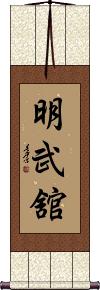
Meibukan (明武舘) is a branch of Gōjū-ryū karate. It was created by Meitoku Yagi, a student of Goju-ryu's founder, Chojun Miyagi. Meibukan means "House of the pure-minded warrior."
A House Might be Worth 1 Million Dollars, But Good Neighbors are Worth 10 Million
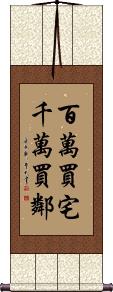
百万买宅千万买邻 is a Chinese proverb that literally translates as:
[It may cost a] million to buy a house, [but] ten million to find [good] neighbors.
Figuratively, this means:
Good neighbors are hard to find.
Good neighbors are even more important than the quality of one's house.
Moon
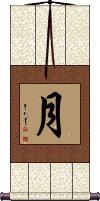
月 is how to write the title for “moon” in Chinese, Korean Hanja, and Japanese Kanji.
月 is also used to refer to the month. This is because China traditionally uses a lunar calendar, so saying “next moon” is the same as saying “next month” etc.
In modern Chinese and Japanese and old Korean, the character for a number is put in front of this moon character to represent western months. So “one moon” is January “two moons” is February etc.
If you are wondering, in the east Asian way to write dates, the character for “sun” or “day” is used with a number in front of it to express the day of the month. So “ten moons, one sun” becomes “October 1st” or “10/1” (this date happens to be Chinese National Day - The equivalent of Independence Day in the USA, Canada Day, or the Queen's Birthday).
In Japanese, 月 can be a surname that romanizes as Tsuki, Tsukizaki, or Takagetsu.
Where There is a Will, There is a Way
A determined effort can move a mountain
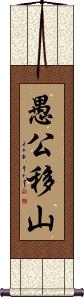
愚公移山 is the Chinese proverb (also somewhat known in Japan and Korea) for “the silly old man moves a mountain.”
Figuratively, this means “where there's a will, there's a way.”
Based on a fable of Lord Yu (愚公). He moved the soil of the mountain in front of his house. After years of effort, he finally moved the entire mountain (some versions of the story have God seeing how determined the man was, and sending two angels to whisk the mountains away).
The moral of the story: Anything can be accomplished if one works at it ceaselessly.
The Japanese version of this is 愚公山を移す (gu kou yama wo utsu su). But better to get the Chinese version, since this is originally a Chinese proverb.
See Also: Nothing is Impossible
There’s No Place Like Home
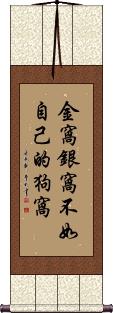
金窝银窝不如自己的狗窝 is a Chinese slang proverb that means “Golden house, [or a] silver house, not as good as my own dog house.”
It's basically saying that even a house made of gold or silver is not as good as my own home (which may only be suitable for a dog but at least it's mine).
One Family Under Heaven
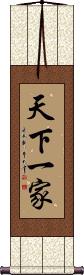
天下一家 is a proverb that can also be translated as “The whole world is one family.”
It is used to mean that all humans are related by decree of Heaven.
The first two characters can be translated as “the world,” “the whole country,” “descended from heaven,” “earth under heaven,” “the public,” or “the ruling power.”
The second two characters can mean “one family,” “a household,” “one's folks,” “a house” or “a home.” Usually, this is read as “a family.”
Note: This proverb can be understood in Japanese, though not commonly used.
Penis
NOT APPROPRIATE FOR
CUSTOM CALLIGRAPHY
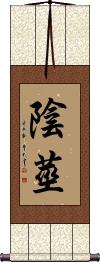
陰莖 is the most common title for penis in Chinese. There are at least 10 more ways to express “penis.”
A colloquial term used commonly in Chinese is “little brother.”
This selection is not appropriate for custom calligraphy. I only added this entry because thousands of people searched for penis on our website. You guys are weird!


Another way to say penis is "male root," pronounced "nán gēn" in Chinese, "dan kon" in Japanese, and 남근 or "nam geun" in Korean. This is shown to the right.
Gay Pride
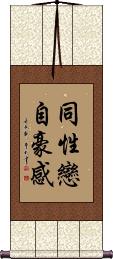
同性戀自豪感 or “Gay Pride” is a new idea in China. It's so new, that we may have just started the movement by translating this phrase.
If they ever do start having gay pride parades in China, my best guess is that these 6 characters will constitute the term they use to title the parade/movement.
Who knows, maybe in 10 years they will have a pride parade march straight past Tian'anmen Square on Chang An Street (the main drag in Beijing).
Read 10,000 Books, Travel 10,000 Miles
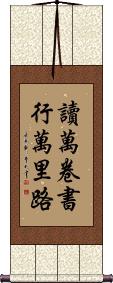
讀萬卷書行萬里路 is a lifelong suggestion for expanding your horizons by gaining knowledge, experience, and seeing the world.
Of course, this was written long ago when it was hard to travel 10,000 miles (at least 1000 years before the invention of the airplane).
With air travel and the business I'm in, I often achieve that lifetime goal on a monthly basis.
However, I am a little behind in the book count.
Note: An ancient Chinese mile (里 or lǐ) referred to in this proverb is about a third of a British/American mile. However, at that time, this was a great distance to travel.
Reiki Precepts by Usui Mikao
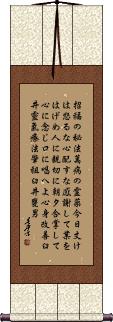
These are the precepts of Reiki that are attributed to Usui Mikao.
Here is a breakdown of the characters and a rough translation:
招福の秘法, 萬病の霊薬。
Invite blessings of [the] secret method, 10,000 illnesses of spiritual medicine.
今日丈けは: 怒るな, 心配すな, 感謝して, 業をはげめ, 人に親切に。
At least for today: Do not be angry, do not worry, be grateful, work with diligence, and be kind to people.
朝夕合掌して, 心に念じ, 口に唱へよ, 心身改善。
Morning [and] evening perform gassho (join hands), [with your] heart/mind in silent prayer, [with your] mouth chant, [thusly] mind [and] body [will] reform/improve.
臼井靈氣療法! -肇祖, 臼井甕男。
Usui Reiki Ryōhō! -Founder, Usui Mikao.
The middle portion of this is often titled, “The Five Principles of Reiki” and makes a nice calligraphy selection by itself. The Japanese text presented here can be considered the more verbose version.
Note: Because this selection contains some special Japanese Hiragana characters, it should be written by a Japanese calligrapher.
Reiki Precepts by Usui Mikao (Alternate)
Alternate Version
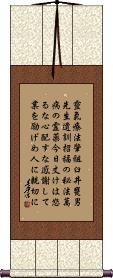
靈氣療法肇祖臼井甕男先生遺訓招福の秘法萬病の霊薬今日丈けは心配すな感謝して業を励げめ人に親切に is an alternate version of the precepts or tenets of Reiki by Usui Mikao.
It is impossible to be sure which version or versions were actually written by Usui Mikao. This is the less common of the three versions that you might see in the wild.
Here is a breakdown of the characters and a rough translation:
靈氣 療法 肇祖 臼井甕男。
Reiki therapy founder Mikao Usui
先生 遺訓。
Teacher's testament
招福の秘法, 萬病の霊薬。
Invite blessings of [the] secret method, 10,000 illnesses of spiritual medicine.
今日丈けは: 怒るな, 心配すな, 感謝して, 業をはげめ, 人に親切に。
At least for today: Do not be angry, do not worry, be grateful, work with diligence, [and] be kind to people.
Note: Because this selection contains some special Japanese Hiragana characters, it should be written by a Japanese calligrapher.
Ririsa
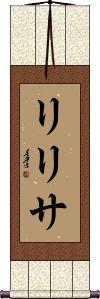
リリサ is the name Ririsa in Japanese Katakana.
This would be the western name Ririsa in Japanese. If you are looking for the original Japanese name, it will be different (search our dictionary for that - as there are at least 10 variations that romanize as a Japanese female given name Ririsa).
Note: Because this title is entirely Japanese Katakana, it should be written by a Japanese calligrapher.
Seishi-Kan

誠志館 is the martial arts style Seishi-Kan or Seishikan in Japanese Kanji.
The meaning is “House of True Will” or “House of Truth and Will”.
A few schools use a different first character for a martial arts style with the same romanization and a similar meaning, 正志館. Click here to order 正志館.
Do not confuse Seishi-Kan with Seishin-Kan! It's not the same!
Seishin-Kan

聖心館 is the martial arts style Seishin-Kan or Seishinkan in Japanese Kanji.
The meaning is “Sacred Heart Hall” or “House of the Sacred/Good Heart”.
Do not confuse Seishin-Kan with Seishi-Kan! It's not the same!
Semper Fidelis / Always Faithful
U.S. Marines Slogan
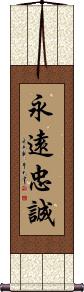
永遠忠誠 is the clearest and most natural way to translate “Semper Fidelis” or “Always Faithful” into Mandarin Chinese. 永遠忠誠 is meant explicitly for U.S. Marines who often use the shortened term “Semper Fi.”
The first two characters are a word that always means, forever, and/or eternally.
The last two characters are a word that means fidelity, loyal, and/or devotion.
I spent 10 years in the Marines, so it was a no-brainer to add this to our calligraphy database.
Shinobi / Ninja Outcast
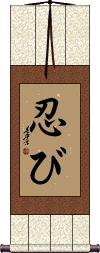
忍び (Shinobi) is a term often associated with ninjas of ancient Japan.
忍び really means stealing (into), a spy, a sneaking thief, stealth, or a surreptitious visit to a house of ill repute. However, 忍び is sometimes used to refer to an outcast ninja.
This term was somehow given a better report when various video games, TV series, and even a movie came out with this Shinobi title.
忍び are sometimes Romanized as two words: Shin obi or Shin-obi.
Note: The first character can be written as  or
or  .
.
Shobukan
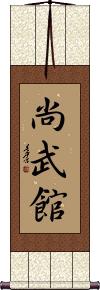
尚武館 is a title, Shobukan, meaning “Great Warrior House,” in Japanese.
Shobukan
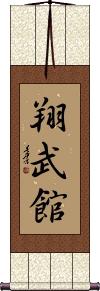
翔武館 is the title, Shobukan meaning “Soaring Warrior House,” in Japanese.
Shorin-Ryu Shobukan
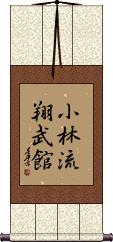
小林流翔武館 is the title, Shorin-Ryu Shobukan meaning “Little Forest Style - Soaring Warrior House” in Japanese.
There is more than one version of Shorin-Ryu and Shobukan, so make sure the characters here match the ones used at your dojo.
Sun / Solar
Also means Day, Sunshine, Sunlight, or Japan
日 is the word for sun.
It also means day and can refer to the day of the month when expressing the date.
Example: October 1st would be “10 Moons, 1 Sun.”
日 is also the first Kanji for the title of Japan (in Chinese, Japanese Kanji, and Korean Hanja). Thus, this character is used as an adjective for things that are Japanese.
Ever heard of Japan being called, “The land of the rising sun”? Well, that's what the full title of Japan means.
Depending on the context, this character can mean Sunshine or Sunlight.
Note: In Japanese, this Kanji has a variety of possible pronunciations. The pronunciation changed depending on context and how this Kanji is combined with other Kanji. When used alone, this is usually "hi" (pronounced like "hee") but sometimes it’s "nichi." When combined, it can be "tsu," "ni," "ka," and a few others.
Tea Fate
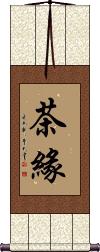
茶緣 is a special title for the tea lover. This kind of means “tea fate,” but it's more spiritual and hard to define. Perhaps the tea brought you in to drink it. Perhaps the tea will bring you and another tea-lover together. Perhaps you were already there, and the tea came to you. Perhaps it's the ah-ha moment you will have when drinking the tea.
I've been told not to explain this further, as it will either dilute or confuse the purposefully-ambiguous idea embedded in this enigma.
I happen to be the owner of a piece of calligraphy written by either the son or nephew of the last emperor of China, which is the title he wrote. It was given to me at a Beijing tea house in 2001. 茶緣 is where I learned to love tea after literally spending weeks tasting and studying everything I could about Chinese tea. I did not understand the significance of the authorship or the meaning of the title at all. Some 10 years later, I realized the gift was so profound and had such providence. Only now do I realize the value of a gift that it is too late to give proper thanks for. It was also years later that I ended up in this business and could have the artwork properly mounted as a wall scroll. It has been borrowed for many exhibitions and shows and always amazes native Chinese and Taiwanese who read the signature. This piece of calligraphy I once thought was just a bit of ink on a thin and wrinkled piece of paper, is now one of my most valued possessions. And fate has taught me to be more thankful for seemingly simple gifts.
Ten
The number ten
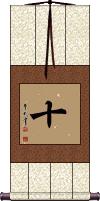
十 is the number ten in Chinese, Japanese Kanji, and old Korean Hanja.
This is a strange selection for a wall scroll, so it's here mostly for reference. I guess it's OK if the number ten is important to you.
 Because this character is rather simple (just two strokes), there is an anti-fraud way to write ten on bank documents. This variant is shown to the right.
Ten Commandments
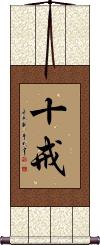
十戒 means Ten Commandments or Ten Precepts.
In the Buddhist context, these are prohibitions consisting of five commandments for the layman:
1. Not to destroy life 不殺生 Pāṇātipātāveramaṇi.
2. Not to steal 不倫盜 Adinnādānāver.
3. Not to commit adultery 不婬慾 Abrahmacaryaver.
4. Not to lie 不妄語 Musāvādāver.
5. Not to take intoxicating liquor 不飮酒 Suramereyya-Majjapamādaṭṭhānāver.
The ten commandments for the monk are the preceding five plus:
6. Not to eat food outside of regulated hours 不非時食 Vikāla-Bhojanāver.
7. Not to use garlands or perfumes 不著華鬘好香塗身 Mālā- Gandha-Vilepana-Dhāraṇa-Maṇḍana-Vibhūṣanaṭṭhānā.
8. Not to sleep on high or broad beds (chastity) 不坐高廣大牀 Uccāsayanā-Mahāsayanā.
9. Not to take part in singing, dancing, musical or theatrical performances 不歌舞倡伎不往觀聽 Nacca-Gīta-Vādita-Visūkadassanāver.
10. To refrain from acquiring uncoined or coined gold, or silver, or jewels 不得捉錢金銀寶物 Jātarūpa-Rajata-Paṭīggahaṇāver.
These original Buddhist commandments date back to about 2500 years ago. The English definitions above are followed by Chinese characters and original Pali pronunciation.
Under the Māhayāna Buddhism, these ten commands for the monk were changed, to accord with the new environment of the monk, to the following: not to kill, not to steal, to avoid all unchastity, not to lie, not to slander, not to insult, not to chatter, not to covet, not to give way to anger, to harbor no skepticism.
Tibet
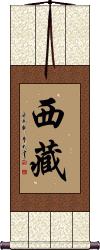
西藏 is the Chinese and Japanese name for Tibet.
It is a vast area in southwest China for which the Chinese government has little control (except in the capital of Llasa). During your travels in Tibet (outside of Llasa) you will find it is rough country full of ruthless bandits and honorable and upright Living Buddhas. There are about 2000 Living Buddhas in Tibet, and at least 10 times more bandits ready to ambush you on the road or trail.
On the eastern frontier of Tibet, you will find the place designated to be Shangri-la. It's a friendly village of Tibetans and is the gateway to greater Tibet.
The full official Chinese name is Tibet Autonomous Region or 西藏自治區|西藏自治区. The name here, 西藏 is quite old - from several dynasties ago.
Better to Travel 10,000 Miles than Read 10,000 Books
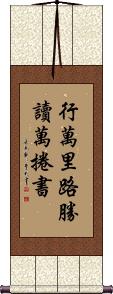
行万里路胜读万卷书 translates a few ways:
To travel ten thousand miles beats reading ten-thousand books.
Better to travel ten thousand li than to read ten thousand books. (a “li” is an ancient Chinese mile)
Traveling thousands of miles is better than reading thousands of books.
No matter how you slice it, this Chinese proverb is claiming that experience is more profound and meaningful than what you can get from a book. Go do it! Don't just read about it.
Unbeatable
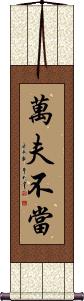
萬夫不當 is a Chinese proverb that literally means, “Unbeatable by even 10,000 men.”
This is understood to mean extremely brave and strong.
Mountain Villa
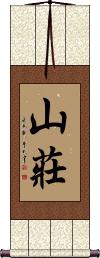
山莊 is a Chinese word that literally means “mountain villa.”
It can also be translated as a manor house or just a villa. 山莊 is used in hotel names and other fancy titles.
Villa
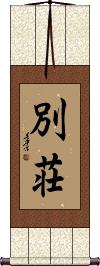
別荘 is a Japanese word meaning villa or holiday house
This can also be the Japanese surname Bessho.
Walking 100 Miles: Stopping at 90 miles, is the same as stopping half-way
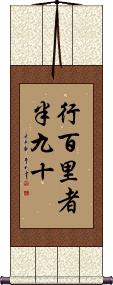
行百里者半九十 is an old Chinese proverb that speaks to the act of giving up. This phrase suggests that no matter how close you are to finishing your task or journey, giving up just before you finish is just as bad as giving up halfway.
50% finished or 90% finished, the result is the same: “You are not finished.”
You can take what you want from this proverb, but I think it suggests that you should finish what you start, and especially finish that last 10% of your journey or project so that you can honestly say “it's finished.”
Some notes: The character, 里, that I am translating as “mile” is an ancient “Chinese mile” which is actually about half a kilometer - it just doesn't sound right to say “When walking 100 half-kilometers...”
Wing Chun Fist Maxims
Wing Chun Kuen Kuit
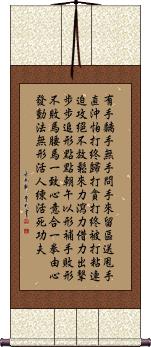
This text is the chant or poem of Wing Chun.
I call it a “chant” because it was meant to be a somewhat rhythmic poem to help practitioners memorize many aspects of Wing Chun.
1 有手黐手,無手問手
2 來留區送, 甩手直沖
3 怕打終歸打, 貪打終被打
4 粘連迫攻, 絕不放鬆
5 來力瀉力, 借力出擊
6 步步追形, 點點朝午
7 以形補手, 敗形不敗馬
8 腰馬一致, 心意合一
9 拳由心發, 動法無形
10 活人練活死功夫
You will see this referred to as “Wing Chun Kuem Kuit.” This Cantonese romanization is popular in the west (and there is no official way to romanize Cantonese, so many variations exist). In Mandarin, it would be, “Yong Chun Quan Jue.” The last character (kuit or kyut from Cantonese, jue or chüeh from Mandarin) kind of means “secrets of the art.” It's a short way to write 口訣, meaning “mnemonic chant” or “rhyme for remembering.”
In the west (especially in the military), we often use acronyms to remember things. There are no initials to make acronyms in Chinese, so in ancient times, chants like this are used to remember vast amounts of information.
I will presume you already know the meaning of the 10 maxims, so I will skip that to keep this calligraphy entry from getting too large.
Some think 练拳者必记 is the title but that just says, “(When) training (the) fist, people should remember:.” Therefore, I've not included that in the calligraphy. However, you can put a note in the special instructions if you want it added.
Note: On a traditional calligraphy wall scroll, the characters will be written in vertical columns, starting from the right, and proceeding left.
Note: This is an except and variation from a huge 口訣. These 10 maxims are used extensively in Wing Chun training, and you’ll find them all over the internet. Just know there is a much longer version out there, along with several variations and excepts like this one. If you know of, or want a different version, just contact me, and I will add it for you.
Wing Chun Fist Maxims (Part 2)
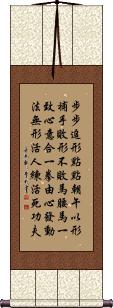
A customer asked me to split these Wing Chun maxims into two parts, so he could order a couplet.
It thought this was a good idea, so it's been added here.
6 步步追形, 點點朝午
7 以形補手, 敗形不敗馬
8 腰馬一致, 心意合一
9 拳由心發, 動法無形
10 活人練活死功夫
Be sure to order both part 1 and part 2 together. They need to be a matched set. It will be incomplete as a single wall scroll. Also, each wall scroll is handmade, so if you order them separately, weeks or months apart, they will vary a little by length, shade of paper, etc.
Rooster / Chicken
Year of the Rooster / Zodiac Sign
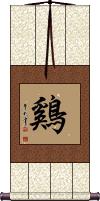
鷄 or 雞 is the character for rooster or chicken in Chinese, old Korean, and Japanese.
If you were born in the year of the rooster (chicken), you . . .
Have a unique sense of color.
Are highly principled and responsible.
Have persuasive power.
Are honest.
Have a great ability to communicate.


Please note: There are a few different ways to write rooster/chicken, as shown to the right. If you are particular about the form, please let us know when you place your order.
See also our Chinese Zodiac page.
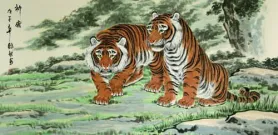
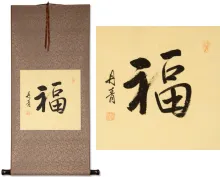
This in-stock artwork might be what you are looking for, and ships right away...
Gallery Price: $400.00
Your Price: $158.88

Gallery Price: $31.00
Your Price: $16.88
Gallery Price: $65.00
Your Price: $39.88

Gallery Price: $90.00
Your Price: $49.88



Gallery Price: $71.00
Your Price: $39.00
Gallery Price: $53.00
Your Price: $29.00


Gallery Price: $35.00
Your Price: $19.00
Gallery Price: $31.00
Your Price: $17.00
The following table may be helpful for those studying Chinese or Japanese...
| Title | Characters | Romaji (Romanized Japanese) | Various forms of Romanized Chinese | |
| Ten perfect Mahayana rules | 十法 | jippou / jipo | shí fǎ / shi2 fa3 / shi fa / shifa | shih fa / shihfa |
| Azuka | 四阿 | Azuka | ||
| Banzai Wansui | 萬歲 万岁 | banzai / manzai | wàn suì / wan4 sui4 / wan sui / wansui | |
| Banzai | 万歲 / 萬歲 万岁 | banzai | wàn suì / wan4 sui4 / wan sui / wansui | |
| Betelgeuse | 參宿四 | sān sù sì san1 su4 si4 san su si sansusi | san su ssu sansussu |
|
| Blessings on this Home | 五福臨門 五福临门 | wǔ fú lín mén wu3 fu2 lin2 men2 wu fu lin men wufulinmen | ||
| Bless this House | この家に祝福を | kono-ka ni shukufuku o kono-kanishukufukuo | ||
| Bushinkan | 武心館 | bu shin kan bushinkan | ||
| Day | 日 | hi / nichi | rì / ri4 / ri | jih |
| Dragon Hall | 龍館 | ryū kan / ryūkan | lóng guǎn long2 guan3 long guan longguan | lung kuan lungkuan |
| Diligent Study Proverb | 鑿壁偷光 凿壁偷光 | záo bì tōu guāng zao2 bi4 tou1 guang1 zao bi tou guang zaobitouguang | tsao pi t`ou kuang tsaopitoukuang tsao pi tou kuang |
|
| Family Household | 家庭 / 傢庭 家庭 | ka tei / katei | jiā tíng / jia1 ting2 / jia ting / jiating | chia t`ing / chiating / chia ting |
| A Bright Future | 鵬程萬里 鹏程万里 | péng chéng wàn lǐ peng2 cheng2 wan4 li3 peng cheng wan li pengchengwanli | p`eng ch`eng wan li pengchengwanli peng cheng wan li |
|
| Four Noble Truths: Elimination of Desire or Attachment | 滅諦 灭谛 | mettai | miè dì / mie4 di4 / mie di / miedi | mieh ti / miehti |
| Fraternity | 兄弟會 兄弟会 | xiōng dì huì xiong1 di4 hui4 xiong di hui xiongdihui | hsiung ti hui hsiungtihui |
|
| Galatians 5:25 | 我們若是靠聖靈得生就當靠聖靈行事 我们若是靠圣灵得生就当靠圣灵行事 | wǒ men ruò shì kào shèng líng shēn jiù dāng kào shèng líng xíng shì wo3 men ruo4 shi4 kao4 sheng4 ling2 dei3 shen1 jiu4 dang1 kao4 sheng4 ling2 xing2 shi4 wo men ruo shi kao sheng ling dei shen jiu dang kao sheng ling xing shi | wo men jo shih k`ao sheng ling tei shen chiu tang k`ao sheng ling hsing shih wo men jo shih kao sheng ling tei shen chiu tang kao sheng ling hsing shih |
|
| Gecko House Lizard | 守宮 守宫 | shu ku / shuku | shǒu gōng shou3 gong1 shou gong shougong | shou kung shoukung |
| House of Good Fortune | 福宅 | fú zhái / fu2 zhai2 / fu zhai / fuzhai | fu chai / fuchai | |
| House Of Peace | 和平之家 | hé píng zhī jiā he2 ping2 zhi1 jia1 he ping zhi jia hepingzhijia | ho p`ing chih chia hopingchihchia ho ping chih chia |
|
| House of Red Delights | 怡紅院 怡红院 | yí hóng yuàn yi2 hong2 yuan4 yi hong yuan yihongyuan | i hung yüan ihungyüan |
|
| Joshua 24:15 | 至於我和我家我們必定事奉耶和華 至于我和我家我们必定事奉耶和华 | zhì yú wǒ hé wǒ jiā wǒ men bì dìng shì fèng yē hé huá zhi4 yu2 wo3 he2 wo3 jia1 wo3 men bi4 ding4 shi4 feng4 ye1 he2 hua2 zhi yu wo he wo jia wo men bi ding shi feng ye he hua | chih yü wo ho wo chia wo men pi ting shih feng yeh ho hua | |
| Joshua 24:15 | 私と私の家とは主に仕える | Watashi to watashinoie to wa omo ni tsukaeru | ||
| Julia | 茱莉亞 茱莉亚 | zhū lì yà zhu1 li4 ya4 zhu li ya zhuliya | chu li ya chuliya |
|
| Love the House and Its Crow | 愛屋及烏 爱屋及乌 | ài wū jí wū ai4 wu1 ji2 wu1 ai wu ji wu aiwujiwu | ai wu chi wu aiwuchiwu |
|
| The Lord's Prayer Mathew 6:9-13 | 我們在天上的父願人都尊你的名為聖願你的國降臨願你的旨意行在地上如同行在天上我們日用的飲食今日賜給我們免我們的債如同我們免了人的債不叫我們遇見試探救我們脫離凶惡因為國度權柄榮耀全是你的直到永遠阿們 我们在天上的父愿人都尊你的名为圣愿你的国降临愿你的旨意行在地上如同行在天上我们日用的饮食今日赐给我们免我们的债如同我们免了人的债不叫我们遇见试探救我们脱离凶恶因为国度权柄荣耀全是你的直到永远阿们 | wǒ men zài tiān shàng de fù yuàn rén dōu zūn nǐ de míng wèi shèng yuàn nǐ de guó jiàng lín yuàn nǐ de zhǐ yì xíng zài dì shàng rú tóng xíng zài tiān shàng wǒ men rì yòng de yǐn shí jīn rì cì gěi wǒ men miǎn wǒ men de zhài rú tóng wǒ men miǎn le rén de zhài bù jiào wǒ men yù jiàn shì tàn jiù wǒ men tuō lí xiōng è yīn wèi guó dù quán bǐng róng yào quán shì nǐ de zhí dào yǒng yuǎn ā men wo3 men zai4 tian1 shang4 de fu4 yuan4 ren2 dou1 zun1 ni3 de ming2 wei4 sheng4 yuan4 ni3 de guo2 jiang4 lin2 yuan4 ni3 de zhi3 yi4 xing2 zai4 di4 shang4 ru2 tong2 xing2 zai4 tian1 shang4 wo3 men ri4 yong4 de yin3 shi2 jin1 ri4 ci4 gei3 wo3 men mian3 wo3 men de zhai4 ru2 tong2 wo3 men mian3 le ren2 de zhai4 bu4 jiao4 wo3 men yu4 jian4 shi4 tan4 jiu4 wo3 men tuo1 li2 xiong1 e4 yin1 wei4 guo2 du4 quan2 bing3 rong2 yao4 quan2 shi4 ni3 de zhi2 dao4 yong3 yuan3 a1 men wo men zai tian shang de fu yuan ren dou zun ni de ming wei sheng yuan ni de guo jiang lin yuan ni de zhi yi xing zai di shang ru tong xing zai tian shang wo men ri yong de yin shi jin ri ci gei wo men mian wo men de zhai ru tong wo men mian le ren de zhai bu jiao wo men yu jian shi tan jiu wo men tuo li xiong e yin wei guo du quan bing rong yao quan shi ni de zhi dao yong yuan a men | wo men tsai t`ien shang te fu yüan jen tou tsun ni te ming wei sheng yüan ni te kuo chiang lin yüan ni te chih i hsing tsai ti shang ju t`ung hsing tsai t`ien shang wo men jih yung te yin shih chin jih tz`u kei wo men mien wo men te chai ju t`ung wo men mien le jen te chai pu chiao wo men yü chien shih t`an chiu wo men t`o li hsiung o yin wei kuo tu ch`üan ping jung yao ch`üan shih ni te chih tao yung yüan a men wo men tsai tien shang te fu yüan jen tou tsun ni te ming wei sheng yüan ni te kuo chiang lin yüan ni te chih i hsing tsai ti shang ju tung hsing tsai tien shang wo men jih yung te yin shih chin jih tzu kei wo men mien wo men te chai ju tung wo men mien le jen te chai pu chiao wo men yü chien shih tan chiu wo men to li hsiung o yin wei kuo tu chüan ping jung yao chüan shih ni te chih tao yung yüan a men |
|
| Meibukan | 明武舘 | mei bu kan / meibukan | ||
| A House Might be Worth 1 Million Dollars, But Good Neighbors are Worth 10 Million | 百萬買宅千萬買鄰 百万买宅千万买邻 | bǎi wàn mǎi zhái qiān wàn mǎi lín bai3 wan4 mai3 zhai2 qian1 wan4 mai3 lin2 bai wan mai zhai qian wan mai lin | pai wan mai chai ch`ien wan mai lin pai wan mai chai chien wan mai lin |
|
| Moon | 月 | tsuki | yuè / yue4 / yue | yüeh |
| Where There is a Will, There is a Way | 愚公移山 | yū gōng yí shān yu1 gong1 yi2 shan1 yu gong yi shan yugongyishan | yü kung i shan yükungishan |
|
| There’s No Place Like Home | 金窩銀窩不如自己的狗窩 金窝银窝不如自己的狗窝 | jīn wō yín wō bù rú zì jǐ de gǒu wō jin1 wo1 yin2 wo1 bu4 ru2 zi4 ji3 de5 gou3 wo1 jin wo yin wo bu ru zi ji de gou wo | chin wo yin wo pu ju tzu chi te kou wo | |
| One Family Under Heaven | 天下一家 | tenka ikka / tenkaikka / tenka ika | tiān xià yī jiā tian1 xia4 yi1 jia1 tian xia yi jia tianxiayijia | t`ien hsia i chia tienhsiaichia tien hsia i chia |
| Penis | 陰莖 / 陰茎 阴茎 | in kei / inkei | yīn jīng / yin1 jing1 / yin jing / yinjing | yin ching / yinching |
| Gay Pride | 同性戀自豪感 同性恋自豪感 | tóng xìng liàn zì háo gǎn tong2 xing4 lian4 zi4 hao2 gan3 tong xing lian zi hao gan tongxinglianzihaogan | t`ung hsing lien tzu hao kan tunghsinglientzuhaokan tung hsing lien tzu hao kan |
|
| Read 10,000 Books, Travel 10,000 Miles | 讀萬卷書行萬里路 读万卷书行万里路 | dú wàn juǎn shū, xíng wàn lǐ lù du2 wan4 juan3 shu1 xing2 wan4 li3 lu4 du wan juan shu xing wan li lu duwanjuanshuxingwanlilu | tu wan chüan shu hsing wan li lu | |
| Reiki Precepts by Usui Mikao | 招福の秘法萬病の霊薬今日丈けは怒るな心配すな感謝して業をはげめ人に親切に朝夕合掌して心に念じ口に唱へよ心身改善臼井靈氣療法肇祖臼井甕男 | shou fuku no hihou man byou no rei yaku kyou da ke wa oko ru na shin pai su na kan sha shi te gyou wo ha ke me hito ni shin setsu ni asayuu gasshou shite kokoro ni nenji kuchi ni tonae yo shin shin kaizen usui rei ki ryou hou cho so usu i mika o sho fuku no hiho man byo no rei yaku kyo da ke wa oko ru na shin pai su na kan sha shi te gyo wo ha ke me hito ni shin setsu ni asayu gasho shite kokoro ni nenji kuchi ni tonae yo shin shin kaizen usui rei ki ryo ho cho so usu i mika o | ||
| Reiki Precepts by Usui Mikao (Alternate) | 靈氣療法肇祖臼井甕男先生遺訓招福の秘法萬病の霊薬今日丈けは怒るな心配すな感謝して業を励げめ人に親切に | reiki ryouhou chouso usui mikao sensei ikun shoufuku no hihou yorozu byou no reiyaku kyou take ke wa oko ru na shinpai suna kansha shite gou o hagemu ge me hito ni shinsetsu ni reiki ryoho choso usui mikao sensei ikun shofuku no hiho yorozu byo no reiyaku kyo take ke wa oko ru na shinpai suna kansha shite go o hagemu ge me hito ni shinsetsu ni | ||
| Ririsa | リリサ | ririsa | ||
| Seishi-Kan | 誠志館 | sei shi kan seishikan | ||
| Seishin-Kan | 聖心館 | sei shin kan seishinkan | ||
| Semper Fidelis Always Faithful | 永遠忠誠 永远忠诚 | yǒng yuǎn zhōng chéng yong3 yuan3 zhong1 cheng2 yong yuan zhong cheng yongyuanzhongcheng | yung yüan chung ch`eng yungyüanchungcheng yung yüan chung cheng |
|
| Shinobi Ninja Outcast | 忍び | shino-bi | ||
| Shobukan | 尚武館 | sho bu kan / shobukan | ||
| Shobukan | 翔武館 | sho bu kan / shobukan | ||
| Shorin-Ryu Shobukan | 小林流翔武館 | sho rin ryuu sho bu kan shorinryuushobukan sho rin ryu sho bu kan | ||
| Sun Solar | 日 | hi / nichi | rì / ri4 / ri | jih |
| Tea Fate | 茶緣 茶缘 | chá yuán / cha2 yuan2 / cha yuan / chayuan | ch`a yüan / chayüan / cha yüan | |
| Ten | 十 / 拾 十 | juu / ju | shí / shi2 / shi | shih |
| Ten Commandments | 十戒 | jukkai / jukai | shí jiè / shi2 jie4 / shi jie / shijie | shih chieh / shihchieh |
| Tibet | 西藏 | seizou / chibetto seizo / chibetto | xī zàng / xi1 zang4 / xi zang / xizang | hsi tsang / hsitsang |
| Better to Travel 10,000 Miles than Read 10,000 Books | 行萬里路勝讀萬捲書 行万里路胜读万卷书 | xíng wàn lǐ lù shèng dú wàn juǎn shū xing2 wan4 li3 lu4 sheng4 du2 wan4 juan3 shu1 xing wan li lu sheng du wan juan shu | hsing wan li lu sheng tu wan chüan shu | |
| Unbeatable | 萬夫不當 万夫不当 | wàn fū bù dāng wan4 fu1 bu4 dang1 wan fu bu dang wanfubudang | wan fu pu tang wanfuputang |
|
| Mountain Villa | 山莊 山庄 | shān zhuāng shan1 zhuang1 shan zhuang shanzhuang | shan chuang shanchuang |
|
| Villa | 別荘 | bessho / besho | ||
| Walking 100 Miles: Stopping at 90 miles, is the same as stopping half-way | 行百里者半九十 | xíng bǎi lǐ zhě bàn jiǔ shí xing2 bai3 li3 zhe3 ban4 jiu3 shi2 xing bai li zhe ban jiu shi xingbailizhebanjiushi | hsing pai li che pan chiu shih hsingpailichepanchiushih |
|
| Wing Chun Fist Maxims | 有手黐手無手問手來留區送甩手直沖怕打終歸打貪打終被打粘連迫攻絕不放鬆來力瀉力借力出擊步步追形點點朝午以形補手敗形不敗馬腰馬一致心意合一拳由心發動法無形活人練活死功夫 有手黐手无手问手来留区送甩手直冲怕打终归打贪打终被打粘连迫攻绝不放松来力泻力借力出击步步追形点点朝午以形补手败形不败马腰马一致心意合一拳由心发动法无形活人练活死功夫 | |||
| Wing Chun Fist Maxims (Part 2) | 步步追形點點朝午以形補手敗形不敗馬腰馬一致心意合一拳由心發動法無形活人練活死功夫 步步追形点点朝午以形补手败形不败马腰马一致心意合一拳由心发动法无形活人练活死功夫 | |||
| Rooster Chicken | 鷄 or 雞 鸡 or 鶏 | niwatori | jī / ji1 / ji | chi |
| In some entries above you will see that characters have different versions above and below a line. In these cases, the characters above the line are Traditional Chinese, while the ones below are Simplified Chinese. | ||||
Successful Chinese Character and Japanese Kanji calligraphy searches within the last few hours...



