Many custom options


And formats



智 in Chinese / Japanese
Buy an 智 calligraphy wall scroll here!
Personalize your custom “智” project by clicking the button next to your favorite “智” title below.
1. Wisdom
2. Chile
3. Great Wisdom
4. Inner Wisdom
5. Knowledge of Ultimate Truth
9. Wisdom
10. Great Illumination of Wisdom
11. Mystic Lotus Wisdom of Amitabha
12. Seeker of Wisdom
14. Seeking Wisdom
16. The Five Tenets of Confucius
17. Each Time You Stumble and Fall, You Gain Experience and Wisdom
18. Seeker of Wisdom
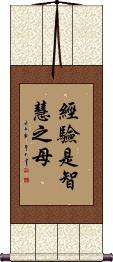
19. Experience is the Mother of Wisdom
20. A wise person reflecting a thousand times can still make a mistake
21. Those Who Understand are Clever, Those Who Know Themselves are Truly Wise
22. Wisdom comes from Experience
23. Great Lotus Wisdom - Samadhi Wisdom
24. Serenity Prayer
26. Daodejing / Tao Te Ching - Chapter 27
27. Heart Sutra
Wisdom
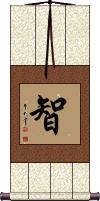
智 is the simplest way to write wisdom in Chinese, Korean Hanja, and Japanese Kanji.
Being a single character, the wisdom meaning is open to interpretation, and can also mean intellect, knowledge or reason, resourcefulness, or wit.
智 is also one of the five tenets of Confucius.
智 is sometimes included in the Bushido code but is usually not considered part of the seven key concepts of the code.
See our Wisdom in Chinese, Japanese, and Korean page for more wisdom-related calligraphy.
See Also: Learn From Wisdom | Confucius
Chile
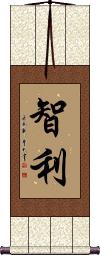
This is the Chinese name for Chile.
Great Wisdom
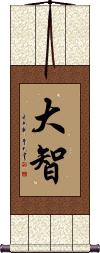
大智 is a Zen Buddhist title that means supreme wisdom, great wisdom, Buddha-wisdom, omniscience, or transcendental wisdom.
Inner Wisdom
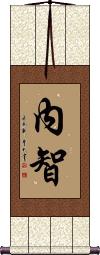
內智 is a Buddhist term that means “inner wisdom.”
Knowledge of Ultimate Truth
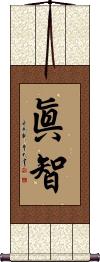
眞智 can mean the wisdom or knowledge of ultimate truth.
眞智 is also the absolute knowledge of the non-thing or that which is immaterial. This makes more sense when you consider that true wisdom includes the knowledge of both the real and unreal, or what is material and immaterial.
In Japan, 眞智 (Masatoshi) can also be a given name.
The Wisdom of the Many
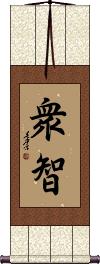
衆智 is a Japanese word that means the wisdom of the many.
Wisdom / Brilliance
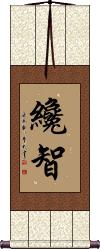
In Chinese, 纔智 means “ability and wisdom” or “ability and intelligence.”
纔智 can also be defined as brilliance or genius.
In Japanese, 纔智 takes on a meaning more of “wit and intelligence.”
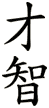 Note that the ancient/traditional form is shown above. After WWII, in both Japan and China, the first character was simplified. If you want this reformed/simplified version, just click on the characters to the right, instead of the button above. This is a good choice if your audience is Japanese.
Wisdom / Intelligence
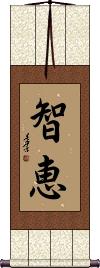
智恵 is a Japanese word that means wisdom; wit; sagacity; sense; intelligence.
In the Buddhist context, this is prajna (insight leading to enlightenment).
This can also be the Japanese female given name Norie.
See Also: Realization and Knowledge | River of Literacy | Sea of Learning | Read
Wisdom
(All-Knowing)
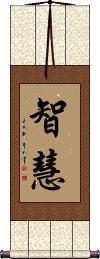
Beyond wisdom, 智慧 can mean knowledge, sagacity, sense, and intelligence.
The first character means “wise” or “smart,” and the second character means “intelligence.”
Note: 智慧 is used commonly in Chinese and is a less-common word in Japanese and Korean. If your audience is Japanese, I suggest our other Japanese wisdom option.
This means intellect or wisdom in Japanese too but is a more unusual way to write this word (though both versions are pronounced the same in Japanese).
See Also: Learn From Wisdom
Great Illumination of Wisdom
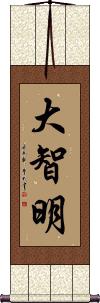
大智明 is a Zen Buddhist title that means the great illumination of wisdom.
This refers to wisdom so bright that it shines through obviously to all in its presence.
Mystic Lotus Wisdom of Amitabha
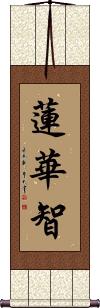
蓮華智 is the lotus or mystic wisdom of Amitābha.
It's one of the five kinds of wisdom in Buddhism.
Seeker of Wisdom
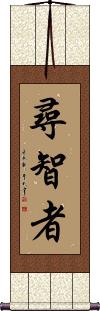
尋智者 is a Chinese title that means “Seeker of Wisdom.”
It's a little ambiguous, as you can also read this as “Seeking a Wise Person.”
Whether you are the person seeking wisdom or in the process of seeking a wise person (you will probably gain wisdom from the wise) this short phrase should suit your needs.
Intelligence / Intellect
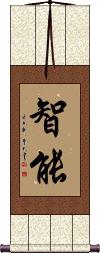
These two characters mean intelligence or intelligent.
The first character means wisdom, intellect, or knowledge.
The second means ability, talent, skill, capacity, capable, able, and can even mean competent.
Together, 知能 can mean “capacity for wisdom,” “useful knowledge,” or even “mental power.” Obviously, this translates more clearly into English as “intelligence.”
Note: This is not the same word used to mean “military intelligence.” See our other entry for that.
 In modern Japan, they tend to use a version of the first character without the bottom radical. If your audience for this artwork is Japanese, please click on the Kanji to the right instead of the button above.
Seeking Wisdom
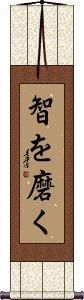
智を磨く is an old obscure Japanese phrase that means to refine, cultivate, or improve one's wisdom.
This is the mantra of one who is a seeker of wisdom. They will always want to polish, shine, refine, improve, and expand their knowledge and understanding.
Note: Because this selection contains some special Japanese Hiragana characters, it should be written by a Japanese calligrapher.
Door of Great Wisdom
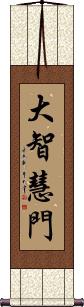
大智慧門 is the title for “The Great Wisdom Door,” or “The Gate to Great Wisdom.”
This refers to a portal to all wisdom and knowledge in Buddhism.
The Five Tenets of Confucius
The Five Cardinal Rules / Virtues of Confucius
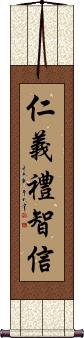
仁義禮智信 are the core of Confucius's philosophy.
Simply stated:
仁 = Benevolence / Charity
義 = Justice / Rectitude
禮 = Courtesy / Politeness / Tact
智 = Wisdom / Knowledge
信 = Fidelity / Trust / Sincerity
Many of these concepts can be found in various religious teachings. It should be clearly understood that Confucianism is not a religion but should instead be considered a moral code for a proper and civilized society.
This title is also labeled “5 Confucian virtues.”
 If you order this from the Japanese calligrapher, expect the middle Kanji to be written in a more simple form (as seen to the right). This can also be romanized as “jin gi rei satoshi shin” in Japanese. Not all Japanese will recognize this as Confucian tenets but they will know all the meanings of the characters.
See Also: Tea | Martial Morality / Martial Arts Ethics / Virtue
Each Time You Stumble and Fall, You Gain Experience and Wisdom
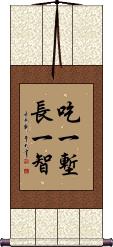
吃一塹長一智 is a Chinese proverb that means “Fall into a moat, and you will gain wisdom from the experience.”
It really suggests that the failures, troubles, frustrations, and setbacks that you encounter in your life are actually helping you to find wisdom. Some would also translate this proverb as “Learn from your mistakes” or “Learn from your experience.”
If you are studying Chinese, you will recognize the first character as “eat,” but in this case, it means to “experience” (as used in this proverb, it is suggesting that you have fallen into a moat and/or had a hard time crossing it).
Translated character by character, this whole proverb is, “Experience one moat, gain one wisdom/knowledge.”
Note: This can be pronounced in Korean, but it's not a commonly used phrase.
Seeker of Wisdom
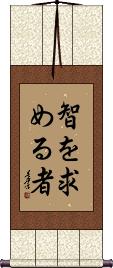
智を求める者 means “seeker of wisdom” in Japanese.
To break it down:
智 is wisdom.
を is a particle that connects wisdom to the next idea.
求める is a transitive verb that means to want, to wish for, to ask for, to seek, to search for, to look for, or to pursue.
者 is a literary way to write “person.”
Note: Because this selection contains some special Japanese Hiragana characters, it should be written by a Japanese calligrapher.
Experience is the Mother of Wisdom
It's been said that wisdom comes from good judgment, and good judgment comes from experience, while experience comes from a series of times when you used bad judgment.
經驗是智慧之母 is a Chinese proverb that makes the simplest connection between experience and wisdom.
See Also: Failure is the Mother of Success | Wisdom | Learn From Wisdom
A wise person reflecting a thousand times can still make a mistake

智者千慮,必有一失 is a Chinese proverb that literally means, “A wise person reflecting a thousand times can still make a mistake.”
Figuratively, this means that nobody is infallible.
Those Who Understand are Clever, Those Who Know Themselves are Truly Wise
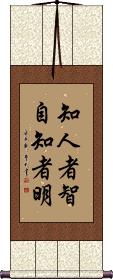
知人者智自知者明 is a Chinese proverb that means “Those who understand others are clever, but those who know themselves are truly wise.”
This proverb is derived from the teachings in Laozi's (Lao Tzu's) 道德經 or Daodejing.
Wisdom comes from Experience
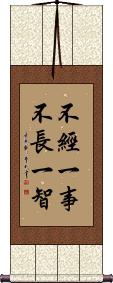
You can translate this 不经一事不长一智 Chinese proverb in a couple of ways.
The first is: You cannot gain knowledge without practice.
The second, and perhaps more popular way is: Wisdom comes from experience.
It literally means if you are inattentive to your affairs or situations you encounter, you will not gain or grow any wisdom or intellect.
Great Lotus Wisdom - Samadhi Wisdom
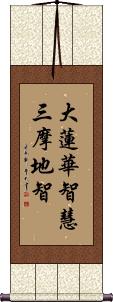
大蓮華智慧三摩地智 is the title for “The wisdom of the great lotus, samādhi-wisdom.”
This is also the penetrating wisdom of Amitābha.
Serenity Prayer
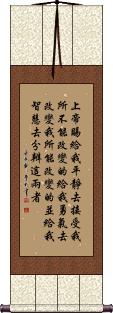
This is the serenity prayer, as used by many 12-step programs and support groups.
In Chinese, this says:
God grant me the serenity to accept the things I cannot change, the courage to change the things I can, and the wisdom to know the difference.
Shaolin Generational Poem
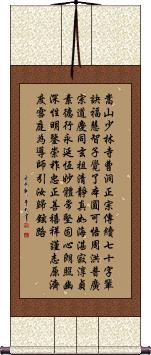
This is a poem, including a title, that celebrates the tactics and virtues of the Shaolin Kung Fu Monks for future generations.
Daodejing / Tao Te Ching - Chapter 27
The Mastery of Effortless Skill

Chapter 27 of the Daodejing reveals a profound truth about mastery: the highest skill leaves no trace, requires no force, and appears almost invisible.
善行無轍跡,
善言無瑕謫,
善數不用籌策,
善閉無關鍵而不可開,
善結無繩約而不可解。
是以聖人常善救人,
故無棄人;
常善救物,
故無棄物。
是謂襲明。
故善人者,不善人之師;
不善人者,善人之資。
不貴其師,不愛其資,
雖智大迷,
是謂要妙。
The sage moves through life with such natural harmony that nothing seems imposed; doors need no locks, knots require no rope, and actions leave no mark behind.
This is the essence of wúwéi (effortless action), where true ability arises from deep alignment with the Tao rather than deliberate effort.
At its heart, this chapter teaches compassion without exception. The sage “abandons no one and nothing,” recognizing value in all people and all things. Even those who seem flawed or unrefined are not rejected, but understood as part of a greater whole with each person both a student and a teacher in the unfolding of life.
Laozi reminds us that wisdom is not about perfection or control, but about subtle awareness. The truly skilled individual does not rely on tools, rules, or rigid structures; instead, they embody an intuitive understanding that makes their actions naturally complete.
In this way, excellence becomes quiet, effortless, and beyond imitation.
This teaching also reflects a deeper philosophical insight: Opposites are interdependent. The “good” person learns from the “not good,” and the “not good” provides the material for growth. To reject either is to misunderstand the balance of existence itself.
As calligraphy, Daodejing Chapter 27 serves as a reminder to cultivate inner mastery rather than outward display. It is a meditation on refinement, humility, and the quiet power of skill perfected through harmony with the natural order.
Note: The Chinese text used here is based on the early Mawangdui silk manuscript tradition (2nd century BCE). The Guodian manuscripts do NOT preserve Chapter 27 in full form.
Heart Sutra
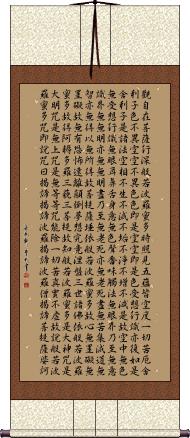
This is the Heart Sutra in Chinese as translated by Xuanzang.
The Heart Sutra is often cited as the best-known and most popular of all Buddhist scriptures.
Notes: There are too many characters for this to be done by the economy calligrapher. You must choose a Master Calligrapher.
With this many characters, and the fact that one tiny mistake wipes out hours of work, keep in mind that writing the Heart Sutra is usually a full day of work for a calligrapher. This work and personal energy should be cherished and respected. In other words, the calligrapher is not charging enough money for the value that you are getting here.
Also, you will find that as my server processes 260 characters, the customization process is a bit slow for this title.
Not the results for 智 that you were looking for?
Below are some entries from our dictionary that may match your 智 search:
| Characters If shown, 2nd row is Simp. Chinese |
Pronunciation Romanization |
Simple Dictionary Definition |
智 see styles |
zhì zhi4 chih masaru まさる |
More info & calligraphy: Wisdom(1) wisdom; (2) (Buddhist term) jnana (higher knowledge); (given name) Masaru jñāna 若那; 闍那 Knowledge; wisdom; defined as 於事理決斷也 decision or judgment as to phenomena or affairs and their principles, of things and their fundamental laws. There are numerous categories, up to 20, 48, and 77, v. 一智; 二智 and others. It is also used as a tr. of prajñā, cf. 智度. |
大智 see styles |
dà zhì da4 zhi4 ta chih hirotomo ひろとも |
More info & calligraphy: Great WisdomMahāmati; cf. 大慧; Great Wisdom, Buddha-wisdom, omniscience; a title of Mañjuśrī, as the apotheosis of transcendental wisdom. |
才智 see styles |
cái zhì cai2 zhi4 ts`ai chih tsai chih saitomo さいとも |
ability and wisdom wit and intelligence; (surname) Saitomo exceptional ability and intelligence |
智利 see styles |
zhì lì zhi4 li4 chih li noriyoshi のりよし |
More info & calligraphy: Chile(ateji / phonetic) (kana only) Chile; (male given name) Noriyoshi |
智恵 see styles |
norie のりえ |
More info & calligraphy: Wisdom / Intelligence |
智慧 see styles |
zhì huì zhi4 hui4 chih hui tomoe ともえ |
More info & calligraphy: Wisdom(1) wisdom; wit; sagacity; sense; intelligence; (2) (Buddhist term) prajna (insight leading to enlightenment); (female given name) Tomoe jñāna as 智 knowledge and prajñā as 慧 discernment, i.e. knowledge of things and realization of truth; in general knowledge and wisdom; but sometimes implying mental and moral wisdom. |
智能 see styles |
zhì néng zhi4 neng2 chih neng chinou / chino ちのう |
More info & calligraphy: Intelligence / Intellectintelligence; intellect; brains |
眞智 see styles |
zhēn zhì zhen1 zhi4 chen chih masatoshi まさとし |
More info & calligraphy: Knowledge of Ultimate TruthWisdom or knowledge of ultimate truth, or the absolute, also called 無智 knowledge of the no-thing, i.e. of the immaterial or absolute; also 聖智 sage wisdom, or wisdom of the sage. |
衆智 see styles |
shuuchi / shuchi しゅうち |
More info & calligraphy: The Wisdom of the Many |
蓮華智 莲华智 see styles |
lián huá zhì lian2 hua2 zhi4 lien hua chih renge chi |
More info & calligraphy: Mystic Lotus Wisdom of Amitabha |
大智慧門 大智慧门 see styles |
dà zhì huì mén da4 zhi4 hui4 men2 ta chih hui men dai chie mon |
More info & calligraphy: Door of Great Wisdom |
智を磨く see styles |
chiomigaku ちをみがく |
More info & calligraphy: Seeking Wisdom |
大蓮華智慧三摩地智 大莲华智慧三摩地智 see styles |
dà lián huá zhì huì sān mó dì zhì da4 lian2 hua2 zhi4 hui4 san1 mo2 di4 zhi4 ta lien hua chih hui san mo ti chih dai renge chie sanmajichi |
More info & calligraphy: Great Lotus Wisdom - Samadhi Wisdom |
一智 see styles |
yī zhì yi1 zhi4 i chih kazunori かずのり |
(personal name) Kazunori a single type of cognition |
七智 see styles |
nanachi ななち |
(female given name) Nanachi |
万智 see styles |
machi まち |
(female given name) Machi |
三智 see styles |
sān zhì san1 zhi4 san chih michi みち |
(female given name) Michi The three kinds of wisdom: (1) (a) 一切智 śrāvaka and pratyeka-buddha knowledge that all the dharma or laws are 空 void and unreal; (b) 道種智 bodhisattva-knowledge. of all things in their proper discrimination; (c) 一切種智 Buddha-knowledge, or perfect knowledge of all things in their every aspect and relationship past, present, and future. Tiantai associates the above with 室, 候, 中. (2) (a) 世間智 earthly or ordinary wisdom; (b) 出世間智 supra-mundane, or spiritual (śrāvaka and pratyeka-buddha) wisdom; (c) 出世間上上智 supreme wisdom of bodhisattvas and Buddhas. v. 智度論 27, 止觀 3, and 概伽經 3. Cf. — 心三智. |
上智 see styles |
shàng zhì shang4 zhi4 shang chih jouchi / jochi じょうち |
supreme wisdom; (place-name, surname) Jōchi intelligent |
下智 see styles |
xià zhì xia4 zhi4 hsia chih gechi |
inferior wisdom |
不智 see styles |
bù zhì bu4 zhi4 pu chih fuchi ふち |
unwise ignorance; foolishness |
世智 see styles |
shì zhì shi4 zhi4 shih chih sechi せち |
(1) worldly wisdom; gumption; (2) stingy person (世俗智) ordinary or worldly knowledge or wisdom. |
中智 see styles |
zhōng zhì zhong1 zhi4 chung chih nakatomo なかとも |
(surname) Nakatomo middling wisdom |
久智 see styles |
hisatomo ひさとも |
(personal name) Hisatomo |
乗智 see styles |
yotsunoyachi よつのやち |
(surname) Yotsunoyachi |
事智 see styles |
shì zhì shi4 zhi4 shih chih jichi |
phenomenal wisdom |
二智 see styles |
èr zhì er4 zhi4 erh chih nichi |
The two kinds of wisdom; there are various pairs. The Huayan school uses 如理智 and 如量智; the Faxiang (法相) uses 根本智 and 後得智; the Tiantai uses 權智 and 實智. (1) (a) 如理智 or 根本智, 無分別智, 正體智, 眞智, 實智 is Buddha-wisdom, or Bodhisattva real wisdom; (b) 如量智 or 後得智, the same wisdom in its limitation and relation to ordinary human affairs. (2) (a) 實智 Absolute wisdom and (b) 權智 or 方便智 | relative or temporal wisdom. (3) (a) 一切智 wisdom of the all, (b) 一切種智 wisdom of all the particulars. |
五智 see styles |
wǔ zhì wu3 zhi4 wu chih gochi ごち |
(place-name, surname) Gochi The five kinds of wisdom of the 眞言宗 Shingon School. Of the six elements 六大 earth, water, fire, air (or wind), ether (or space) 曇空, and consciousness (or mind 識 ), the first five form the phenomenal world, or Garbhadhātu, the womb of all things 胎藏界, the sixth is the conscious, or perceptive, or wisdom world, the Vajradhātu 金剛界, sometimes called the Diamond realm. The two realms are not originally apart, but one, and there is no consciousness without the other five elements. The sixth element, vijñāna, is further subdivided into five called the 五智 Five Wisdoms: (1) 法界體性智 dharmadhātu-prakṛti-jñāna, derived from the amala-vijñāna, or pure 識; it is the wisdom of the embodied nature of the dharmadhātu, defined as the six elements, and is associated with Vairocana 大日, in the centre, who abides in this samādhi; it also corresponds to the ether 空 element. (2) 大圓鏡智 adarśana-jñāna, the great round mirror wisdom, derived from the ālaya-vijñāna, reflecting all things; corresponds to earth, and is associated with Akṣobhya and the east. (3) 平等性智 samatā-jñāna, derived from mano-vijñāna, wisdom in regard to all things equally and universally; corresponds to fire, and is associated with Ratnasaṃbhava and the south. (4) 妙觀察智 pratyavekṣaṇa-jñāna, derived from 意識, wisdom of profound insight, or discrimination, for exposition and doubt-destruction; corresponds to water, and is associated with Amitābha and the west. (5) 成所作智 kṛtyānuṣṭhāna-jñāna, derived from the five senses, the wisdom of perfecting the double work of self-welfare and the welfare of others; corresponds to air 風 and is associated with Amoghasiddhi and the north. These five Dhyāni-Buddhas are the 五智如來. The five kinds of wisdom are the four belonging to every Buddha, of the exoteric cult, to which the esoteric cult adds the first, pure, all-refecting, universal, all-discerning, and all-perfecting. |
亨智 see styles |
yukitomo ゆきとも |
(male given name) Yukitomo |
人智 see styles |
jinchi じんち |
human intellect; knowledge |
仁智 see styles |
yoshinori よしのり |
benevolence and wisdom; (male given name) Yoshinori |
Click here for more 智 results from our dictionary
The following table may be helpful for those studying Chinese or Japanese:
| Title | Characters | Romaji (Romanized Japanese) | Various forms of Romanized Chinese | |
| Wisdom | 智 | chi / tomo | zhì / zhi4 / zhi | chih |
| Chile | 智利 | zhì lì / zhi4 li4 / zhi li / zhili | chih li / chihli | |
| Great Wisdom | 大智 | daichi | dà zhì / da4 zhi4 / da zhi / dazhi | ta chih / tachih |
| Inner Wisdom | 內智 内智 | nai chi / naichi | nèi zhì / nei4 zhi4 / nei zhi / neizhi | nei chih / neichih |
| Knowledge of Ultimate Truth | 眞智 | masatoshi | zhēn zhì / zhen1 zhi4 / zhen zhi / zhenzhi | chen chih / chenchih |
| The Wisdom of the Many | 衆智 | shuchi | ||
| Wisdom Brilliance | 纔智 才智 | sai chi / saichi | cái zhì / cai2 zhi4 / cai zhi / caizhi | ts`ai chih / tsaichih / tsai chih |
| Wisdom Intelligence | 智恵 | chie | ||
| Wisdom | 智慧 | chie | zhì huì / zhi4 hui4 / zhi hui / zhihui | chih hui / chihhui |
| Great Illumination of Wisdom | 大智明 | dai chi myou daichimyou dai chi myo | dà zhì míng da4 zhi4 ming2 da zhi ming dazhiming | ta chih ming tachihming |
| Mystic Lotus Wisdom of Amitabha | 蓮華智 莲华智 | renge chi / rengechi | lián huá zhì lian2 hua2 zhi4 lian hua zhi lianhuazhi | lien hua chih lienhuachih |
| Seeker of Wisdom | 尋智者 寻智者 | xún zhì zhě xun2 zhi4 zhe3 xun zhi zhe xunzhizhe | hsün chih che hsünchihche |
|
| Intelligence Intellect | 智能 / 知能 智能 | chinou / chino | zhì néng / zhi4 neng2 / zhi neng / zhineng | chih neng / chihneng |
| Seeking Wisdom | 智を磨く | chiomigaku | ||
| Door of Great Wisdom | 大智慧門 大智慧门 | dai chi e mon daichiemon | dà zhì huì mén da4 zhi4 hui4 men2 da zhi hui men dazhihuimen | ta chih hui men tachihhuimen |
| The Five Tenets of Confucius | 仁義禮智信 仁义礼智信 | jin gi rei tomo nobu jingireitomonobu | rén yì lǐ zhì xìn ren2 yi4 li3 zhi4 xin4 ren yi li zhi xin renyilizhixin | jen i li chih hsin jenilichihhsin |
| Each Time You Stumble and Fall, You Gain Experience and Wisdom | 吃一塹長一智 吃一堑长一智 | chī yí qiàn, zhǎng yí zhì chi1 yi2 qian4 zhang3 yi2 zhi4 chi yi qian zhang yi zhi chiyiqianzhangyizhi | ch`ih i ch`ien chang i chih chihichienchangichih chih i chien chang i chih |
|
| Seeker of Wisdom | 智を求める者 | chi o motomeru mono chiomotomerumono | ||
| Experience is the Mother of Wisdom | 經驗是智慧之母 经验是智慧之母 | jīng yàn shì zhì huì zhī mǔ jing1 yan4 shi4 zhi4 hui4 zhi1 mu3 jing yan shi zhi hui zhi mu jingyanshizhihuizhimu | ching yen shih chih hui chih mu | |
| A wise person reflecting a thousand times can still make a mistake | 智者千慮必有一失 智者千虑必有一失 | zhì zhě qiān lǜ bì yǒu yī shī zhi4 zhe3 qian1 lu:4 bi4 you3 yi1 shi1 zhi zhe qian lu: bi you yi shi zhizheqianlu:biyouyishi | chih che ch`ien lü pi yu i shih chihchechienlüpiyuishih chih che chien lü pi yu i shih |
|
| Those Who Understand are Clever, Those Who Know Themselves are Truly Wise | 知人者智自知者明 | zhī rén zhě zhì zì zhī zhě míng zhi1 ren2 zhe3 zhi4 zi4 zhi1 zhe3 ming2 zhi ren zhe zhi zi zhi zhe ming zhirenzhezhizizhizheming | chih jen che chih tzu chih che ming | |
| Wisdom comes from Experience | 不經一事不長一智 不经一事不长一智 | bù jīng yī shì bù zhǎng yī zhì bu4 jing1 yi1 shi4 bu4 zhang3 yi1 zhi4 bu jing yi shi bu zhang yi zhi bujingyishibuzhangyizhi | pu ching i shih pu chang i chih puchingishihpuchangichih |
|
| Great Lotus Wisdom - Samadhi Wisdom | 大蓮華智慧三摩地智 大莲华智慧三摩地智 | dai renge chie sanmajichi dairengechiesanmajichi | dà lián huá zhì huì sān mó dì zhì da4 lian2 hua2 zhi4 hui4 san1 mo2 di4 zhi4 da lian hua zhi hui san mo di zhi | ta lien hua chih hui san mo ti chih |
| Serenity Prayer | 上帝賜給我平靜去接受我所不能改變的給我勇氣去改變我所能改變的並給我智慧去分辨這兩者 上帝赐给我平静去接受我所不能改变的给我勇气去改变我所能改变的并给我智慧去分辨这两者 | shàng dì cì wǒ píng jìng qù jiē shòu wǒ suǒ bù néng gǎi biàn de wǒ yǒng qì qù gǎi biàn wǒ suǒ néng gǎi biàn de bìng wǒ zhì huì qù fēn biàn zhè liǎng zhě shang4 di4 ci4 gei3 wo3 ping2 jing4 qu4 jie1 shou4 wo3 suo3 bu4 neng2 gai3 bian4 de gei3 wo3 yong3 qi4 qu4 gai3 bian4 wo3 suo3 neng2 gai3 bian4 de bing4 gei3 wo3 zhi4 hui4 qu4 fen1 bian4 zhe4 liang3 zhe3 shang di ci gei wo ping jing qu jie shou wo suo bu neng gai bian de gei wo yong qi qu gai bian wo suo neng gai bian de bing gei wo zhi hui qu fen bian zhe liang zhe | shang ti tz`u kei wo p`ing ching ch`ü chieh shou wo so pu neng kai pien te kei wo yung ch`i ch`ü kai pien wo so neng kai pien te ping kei wo chih hui ch`ü fen pien che liang che shang ti tzu kei wo ping ching chü chieh shou wo so pu neng kai pien te kei wo yung chi chü kai pien wo so neng kai pien te ping kei wo chih hui chü fen pien che liang che |
|
| Shaolin Generational Poem | 嵩山少林寺曹洞正宗傳續七十字輩訣福慧智子覺了本圓可悟周洪普廣宗道慶同玄祖清靜真如海湛寂淳貞素德行永延恆妙體常堅固心朗照幽深性明鑒崇祚忠正善禧祥謹志原濟度雪庭為導師引汝歸鉉路 嵩山少林寺曹洞正宗传续七十字辈诀福慧智子觉了本圆可悟周洪普广宗道庆同玄祖清静真如海湛寂淳贞素德行永延恒妙体常坚固心朗照幽深性明鉴崇祚忠正善禧祥谨志原济度雪庭为导师引汝归铉路 | sōng shān shào lín sì cáo dòng zhèng zōng chuán xù qī shí zì bèi jué fú huì zhì zǐ jiào le běn yuán kě wù zhōu hóng pǔ guǎng zōng dào qìng tóng xuán zǔ qīng jìng zhēn rú hǎi zhàn jì chún zhēn sù dé xíng yong song1 shan1 shao4 lin2 si4 cao2 dong4 zheng4 zong1 chuan2 xu4 qi1 shi2 zi4 bei4 jue2 fu2 hui4 zhi4 zi3 jiao4 le5 ben3 yuan2 ke3 wu4 zhou1 hong2 pu3 guang3 zong1 dao4 qing4 tong2 xuan2 zu3 qing1 jing4 zhen1 ru2 hai3 zhan4 ji4 chun2 zhen1 su4 de2 xing2 yong song shan shao lin si cao dong zheng zong chuan xu qi shi zi bei jue fu hui zhi zi jiao le ben yuan ke wu zhou hong pu guang zong dao qing tong xuan zu qing jing zhen ru hai zhan ji chun zhen su de xing yong | sung shan shao lin ssu ts`ao tung cheng tsung ch`uan hsü ch`i shih tzu pei chüeh fu hui chih tzu chiao le pen yüan k`o wu chou hung p`u kuang tsung tao ch`ing t`ung hsüan tsu ch`ing ching chen ju hai chan chi ch`un chen su te hsing yung sung shan shao lin ssu tsao tung cheng tsung chuan hsü chi shih tzu pei chüeh fu hui chih tzu chiao le pen yüan ko wu chou hung pu kuang tsung tao ching tung hsüan tsu ching ching chen ju hai chan chi chun chen su te hsing yung |
|
| Daodejing Tao Te Ching - Chapter 27 | 善行無轍跡善言無瑕謫善數不用籌策善閉無關鍵而不可開善結無繩約而不可解是以聖人常善救人故無棄人常善救物故無棄物是謂襲明故善人者不善人之師不善人者善人之資不貴其師不愛其資雖智大迷是謂要妙 善行无辙迹善言无瑕谪善数不用筹策善闭无关键而不可开善结无绳约而不可解是以圣人常善救人故无弃人常善救物故无弃物是谓袭明故善人者不善人之师不善人者善人之资不贵其师不爱其资虽智大迷是谓要妙 | shàn xíng wú zhé jì shàn yán wú xiá zhé shàn shù bù yòng chóu cè shàn bì wú guān jiàn ér bù kě kāi shàn jié wú shéng yuē ér bù kě jiě shì yǐ shèng rén cháng shàn jiù rén gù wú qì rén cháng shàn jiù wù gù wú qì wù shì wèi xí míng gù shàn rén zhě bù shàn rén zhī shī bù shàn rén zhě shàn rén zhī zī bù guì qí shī bù ài qí zī suī zhì dà mí shì wèi yào miào shan4 xing2 wu2 zhe2 ji4 shan4 yan2 wu2 xia2 zhe2 shan4 shu4 bu4 yong4 chou2 ce4 shan4 bi4 wu2 guan1 jian4 er2 bu4 ke3 kai1 shan4 jie2 wu2 sheng2 yue1 er2 bu4 ke3 jie3 shi4 yi3 sheng4 ren2 chang2 shan4 jiu4 ren2 gu4 wu2 qi4 ren2 chang2 shan4 jiu4 wu4 gu4 wu2 qi4 wu4 shi4 wei4 xi2 ming2 gu4 shan4 ren2 zhe3 bu4 shan4 ren2 zhi1 shi1 bu4 shan4 ren2 zhe3 shan4 ren2 zhi1 zi1 bu4 gui4 qi2 shi1 bu4 ai4 qi2 zi1 sui1 zhi4 da4 mi2 shi4 wei4 yao4 miao4 shan xing wu zhe ji shan yan wu xia zhe shan shu bu yong chou ce shan bi wu guan jian er bu ke kai shan jie wu sheng yue er bu ke jie shi yi sheng ren chang shan jiu ren gu wu qi ren chang shan jiu wu gu wu qi wu shi wei xi ming gu shan ren zhe bu shan ren zhi shi bu shan ren zhe shan ren zhi zi bu gui qi shi bu ai qi zi sui zhi da mi shi wei yao miao | shan hsing wu che chi shan yen wu hsia che shan shu pu yung ch`ou ts`e shan pi wu kuan chien erh pu k`o k`ai shan chieh wu sheng yüeh erh pu k`o chieh shih i sheng jen ch`ang shan chiu jen ku wu ch`i jen ch`ang shan chiu wu ku wu ch`i wu shih wei hsi ming ku shan jen che pu shan jen chih shih pu shan jen che shan jen chih tzu pu kuei ch`i shih pu ai ch`i tzu sui chih ta mi shih wei yao miao shan hsing wu che chi shan yen wu hsia che shan shu pu yung chou tse shan pi wu kuan chien erh pu ko kai shan chieh wu sheng yüeh erh pu ko chieh shih i sheng jen chang shan chiu jen ku wu chi jen chang shan chiu wu ku wu chi wu shih wei hsi ming ku shan jen che pu shan jen chih shih pu shan jen che shan jen chih tzu pu kuei chi shih pu ai chi tzu sui chih ta mi shih wei yao miao |
|
| Heart Sutra | 觀自在菩薩行深般若波羅蜜多時照見五蘊皆空度一切苦厄舍利子色不異空空不異色色即是空空即是色受想行識亦復如是舍利子是諸法空相不生不滅不垢不淨不增不減是故空中無色無受想行識無眼耳鼻舌身意無色聲香味觸法無眼界乃至無意識界無無明亦無無明盡乃至無老死亦無老死盡無苦集滅道無智亦無得以無所得故菩提薩埵依般若波羅蜜多故心無罣礙無罣礙故無有恐怖遠離顛倒夢想究竟涅盤三世諸佛依般若波羅蜜多故得阿耨多羅三藐三菩提故知般若波羅蜜多是大神咒是大明咒是無上咒是無等等咒能除一切苦真實不虛故說般若波羅蜜多咒即說咒曰揭諦揭諦波羅揭諦波羅僧揭諦菩提薩婆訶 观自在菩萨行深般若波罗蜜多时照见五蕴皆空度一切苦厄舍利子色不异空空不异色色即是空空即是色受想行识亦复如是舍利子是诸法空相不生不灭不垢不净不增不减是故空中无色无受想行识无眼耳鼻舌身意无色声香味触法无眼界乃至无意识界无无明亦无无明尽乃至无老死亦无老死尽无苦集滅道无智亦无得以无所得故菩提萨埵依般若波罗蜜多故心无罣碍无罣碍故无有恐怖远离颠倒梦想究竟涅盘三世诸佛依般若波罗蜜多故得阿耨多罗三藐三菩提故知般若波罗蜜多是大神咒是大明咒是无上咒是无等等咒能除一切苦真实不虚故说般若波罗蜜多咒即说咒曰揭谛揭谛波罗揭谛波罗僧揭谛菩提萨婆诃 | |||
| In some entries above you will see that characters have different versions above and below a line. In these cases, the characters above the line are Traditional Chinese, while the ones below are Simplified Chinese. | ||||

Successful Chinese Character and Japanese Kanji calligraphy searches within the last few hours...



