Many custom options...


And formats...



Not what you want?
Try other similar-meaning words, fewer words, or just one word.
Great Spirit of Ai Ki in Chinese / Japanese...
Buy a Great Spirit of Ai Ki calligraphy wall scroll here!
Personalize your custom “Great Spirit of Ai Ki” project by clicking the button next to your favorite “Great Spirit of Ai Ki” title below...
Switched to secondary search mode due to lack of results using primary.
These secondary results may not be very accurate. Try a different but similar meaning word or phrase for better results. Or...
Look up Great Spirit of Ai Ki in my Japanese Kanji & Chinese Character Dictionary(My dictionary is a different system then the calligraphy search you just tried)
If you want a special phrase, word, title, name, or proverb, feel free to contact me, and I will translate your custom calligraphy idea for you.
3. Aiki O'Kami
6. Angel / Messenger of Heaven
9. Great Aspirations / Ambition
11. Banzai
12. Beast / Animal
14. You are always a beauty in your lover’s eyes
15. Beauty Shop / Beauty Salon
16. Benevolence
17. Big Dream
18. Without a big net, how can you catch fish?
19. The Big Dipper / Ursa Major
20. Black Flag Gate / Hek Ki Boen
21. Bonsai / Penzai
23. Brave the Waves
24. Bright and Promising Future
26. Cayman Islands
27. Chan
28. Mark the boat to find the lost sword / Ignoring the changing circumstances of the world
29. Commitment
30. The Confident Helmsman Inspires Confidence in the Passengers
31. Confucius
32. Confucius: Golden Rule / Ethic of Reciprocity
33. Cooperation / Collaboration
34. Crazy / Mad
35. Crisis equals Danger plus Opportunity?
36. Great Peace
37. Great Wisdom
38. Great Illumination of Wisdom
39. The Great Path has No Gate
40. Daigongen
42. Da Ji Da Li
44. Daodejing / Tao Te Ching - Excerpt
45. Dignity / Honor / Sanctity / Integrity
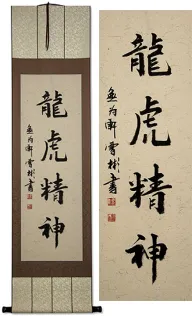
47. The Spirit of the Dragon Horse
48. The Spirit of the Dragon Horse and Power of a Tiger
49. Duty / Responsibility / Obligation
51. Great Endeavor / To Strive
52. England
53. Eternal Love
54. Falkland Islands
55. The one who retreats 50 paces mocks the one to retreats 100
56. Fighting Spirit
57. Filial Piety / Filial Conduct
58. A Bright Future
59. Flower Open / Blooming Flower
60. Flowers Fall / The End Comes
61. Gassho
62. Giant
63. Giant Panda
64. Gibraltar
66. 50th Golden Wedding Anniversary
67. Ultimate Goodness of Water
68. Great Britain
71. Greatest Love
73. Grand Master / Great Teacher
75. Hakko-Ryu
76. Hapkido
77. Healing Hands
78. Hella
79. Hero
80. Man of Remarkable Character / Hero
81. Heroic Spirit / Great Ambition
82. Hikari
83. Hong Kong
84. Hou De Zai Wu
85. Hua Mulan
87. Hung Gar
88. Hung Ga Kuen
89. Hung Kuen
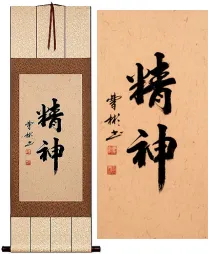
91. Inner Strength / Self-Improvement
92. Ireland
94. Joshua 24:15
95. Kaili
97. Kai Zen / Kaizen
Five Red Bats
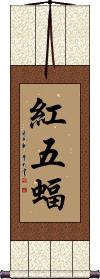
紅五蝠 is a play on words in Chinese because of some homophones.
The first thing you need to know is that the word for bat, 蝠, sounds exactly like the word for good fortune, 福. Thus, bats are often associated with good luck and good fortune in Chinese culture.
Five bats (五福 / 五蝠) means “five fortunes,” referring to luck, prosperity, wealth, happiness, and longevity.
The word red, 红, has the same sound as 宏 meaning vast, great, or magnificent. Therefore, a red bat means “vast fortune.”
Altogether, five red bats represent vast reaches of the five fortunes.
Active Duty Military
Person on Active Duty
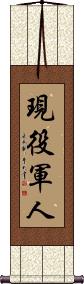
現役軍人 means “Active Duty Soldier” or literally “Active Duty Military Person.”
This title is a great way to show pride in being an active duty member of the armed forces.
The first two characters mean “active duty” and the second two characters can be translated as “military personnel,” “soldier,” or “serviceman” (it is unisex, so male or female is not indicated).
See Also: Military
Aiki O'Kami

This is the Japanese martial arts Aiki O'Kami.
The Aiki (合気/合氣) means harmonious energy. While Okami or O'kami (大神) means great spirit.
You will usually see this title written as 合氣大神, though in modern Japanese (after 1945) the second character, 氣, was simplified to 気 in Japan (and 气 in China). I suggest you use 合氣大神, but please let me know when you order if you would prefer 合気大神 instead.
Always with a Book in Hand
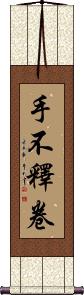
手不釋卷 is a Chinese proverb that literally means “always with a book in hand.”
It's a proverb said of a hardworking scholar or student.
This may refer to a student or scholar who is diligent and hardworking. It's a great gift for a student or scholar who loves books.
American Football
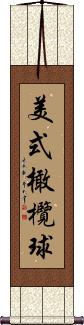
美式橄欖球 is the Chinese title for “American football” (not to be confused with international football known as soccer in the USA).
If you are a player or fan of American football, this will make a great wall scroll for your home.
The first two characters mean “American style.”
The last three characters mean football or rugby (a game involving an oblong or ovoid ball).
The “American” adjective is needed in this title to differentiate between Canadian football, Australian rules football, and rugby.
See Also: Soccer
American Football
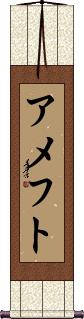
アメフト is a short word that means “American football” in Japanese.
It is supposed to sound like an abbreviated version, “ame futo” which sounds like “ah-may foot-oh” (American Football).
There's not a great standard way to say “football” in Japanese, as the sport is not popular in Japan. Other Japanese terms for football can be confused with soccer or rugby.
Note: Because this title is entirely Japanese Katakana, it should be written by a Japanese calligrapher.
See Also: Soccer
Angel / Messenger of Heaven
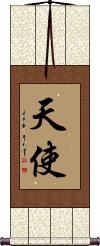
天使 is the meaning of Angel in Chinese, Japanese Kanji, and old Korean Hanja.
The first character means heaven. The second means messenger. Together it makes sense that we are talking about angels as Heaven's Messengers.
If you are an “Angel Junkie,” this may be the wall scroll for you.
I also think it's a great choice if your name happens to be Angel.
See Also: Angel
Archangel / Arch Angel
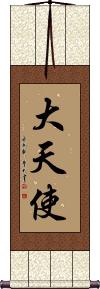
大天使 is the title Archangel in Chinese characters, Japanese Kanji, and old Korean Hanja.
The first character means big or great (in this case, it means “arch”).
The second means heaven (or sky).
The last means messenger.
The second and third characters together make the title for angel, which is literally “Heaven's Messenger.”
This title would be understood as “The Chief of all Angels,” or “The Great Angel.” Some might even say it's the boss of Angels.
See Also: Angel
I Climbed the Great Wall

登长城 means to ascend or to climb the Great Wall of China.
登長城 is the poetic and native way to express this feat.
登 means “to ascend” and is a classical verb used in inscriptions, poems, and calligraphy.
长城 is the title of the Great Wall.
This three-character phrase is concise and implies achievement rather than casual travel.
Great Aspirations / Ambition
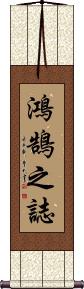
鴻鵠之誌 is a Chinese proverb that implies that having grand ambitions also means that others will not understand your great expectations and ideas.
Though the actual words come from a longer saying of Confucius, which goes, “The little swallows living under the eaves wouldn't understand the lofty ambitions of a swan (who flies far and wide).”
This Confucius quote has led to this idiomatic expression in China that means “think big.” What you'd be saying is “The lofty ambitions of a swan.”
Note that Chinese people sometimes refer to the little swallow as one who does not “think big” but is, instead, stuck in a rut or just leading a mundane life. Therefore, it's a compliment to be called a swan but not a good thing to be called a swallow.
Great Aspirations / Ambition
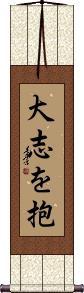
大志を抱 is a single Japanese word that kind of reads like a short proverb.
It suggests that you should have “high aims,” “ambitions,” or “aspirations” in your life.
Great Expectations
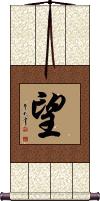
望 holds the ideas of ambition, hope, desire, aspiring to, expectations, looking towards, to gaze (into the distance), and in some contexts, full moon rising.
望 is one of those single characters that is vague but in that vagueness, it also means many things.
望 is a whole word in Chinese and old Korean but is seldom seen alone in Japanese. Still, it holds the meanings noted above in all three languages.
Banzai
Modern Japanese Version
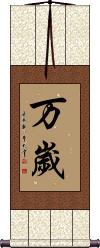
万歲 is the modern Japanese way to write banzai.
We've made two almost identical entries for this word, with just a variation on the first character. In the last century, 萬 was simplified to 万 in Japan and China. The new generation will expect it to be written as 万 but the old generation can still read the more traditional 萬 form. You must make your determination as to what version is best for you. If your audience is mostly Japanese, I suggest 万歲.
While it has become a popular, if not an odd, thing to scream as you jump out of an airplane (preferably with a parachute attached), banzai is actually a very old Asian way to say “hooray.” The Japanese word “banzai” comes from the Chinese word “wan sui” which means “The age of 10,000 years.” It is actually a wish that the Emperor or the Empire live that long.
Imagine long ago when the Emperor made a rare public appearance. This is what all of the people would yell to their leader in respect.
So if you like it as a hooray, or you want to wish someone that they live for 10,000 years, this is the calligraphy for you.
To other things with banzai in their names, I am still waiting for the promised sequel to Buckaroo Banzai.
Other translations: hurrah, long life, congratulations, cheers, live long.
Notes: Sometimes people confuse banzai with bonsai. A bonsai is a miniature tree. They have nothing to do with each other. Further, Bonzai is not a word at all - although it would make a great name for a calcium supplement for older people.
Beast / Animal
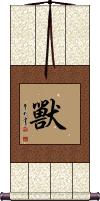
獸 means beast, animal, brute, beastly, or bestial.
Note: A strange selection for a calligraphy wall scroll.
獸 is a very generic term for a beast, so it can be one hunted for food (such as a deer or boar). It can also mean a great animal or someone who acts like a beast.
Note: In Japanese, this can be the personal name Munetada.
 In modern Japan, they use the version of this character shown to the right. If your audience in Japanese, click this special Kanji instead of the button above.
Wisdom from Hard Knocks
The school of hard knocks
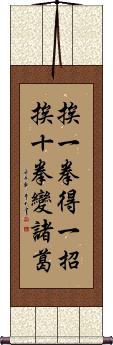
挨一拳得一招挨十拳變諸葛 is a Chinese proverb that literally translates as: Receive one blow, [and one] learns a lesson; Receive ten blows, [and one] becomes a great Zhuge [Liang].
You must first understand that a man named Zhuge Liang was one of the great strategists and philosophers in Chinese history. He's known as a man of great wisdom.
Figuratively, this phrase means:
One can learn much from failure or “hard knocks.”
You are always a beauty in your lover’s eyes
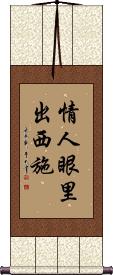
Any woman with affection for Asian art will love a gift of this Chinese proverb calligraphy on a wall scroll.
She will melt in your arms as you tell her the meaning of these characters.
Contained in this phrase is a reference to the most beautiful woman in Chinese history. Her name was Xi Shi, and she was known to have good looks that need not have fine robes or makeup. Her charms were so powerful that she brought down an entire kingdom (in a successful effort to bring honor and pride back to her people).
情人眼里出西施 is a great way to express that the woman in your life is your one love.
Beauty Shop / Beauty Salon
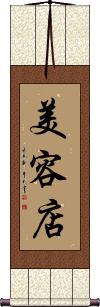
美容店 is how to write “Beauty Shop” or “Beauty Salon.”
If you own such a business, this will make a nice wall scroll to hang up - and many of your Asian customers will be able to read and appreciate it.
When traveling in China, you will see signs like this in the window of any place that offers full services of hair styling, manicures, pedicures, and often shampoo with head and back massage.
However, as a handmade wall scroll, this becomes a very fancy piece of artwork that shows the high class of your business (a great sign for your window if you don't get direct sunlight).
Benevolence
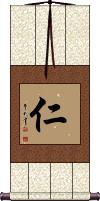
Beyond benevolence, 仁 can also be defined as “charity” or “mercy” depending on context.
The deeper meaning suggests that one should pay alms to the poor, care for those in trouble, and take care of his fellow man (or woman).
仁 is one of the five tenets of Confucius. In fact, it is a subject that Confucius spent a great deal of time explaining to his disciples.
I have also seen this benevolent-related word translated as perfect virtue, selflessness, love for humanity, humaneness, goodness, goodwill, or simply “love” in the non-romantic form.
This is also a virtue of the Samurai Warrior
See our page with just Code of the Samurai / Bushido here
Big Dream
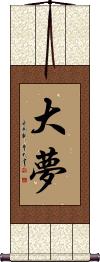
大夢 means “Big Dream” in Chinese and Japanese.
大夢 is primarily a Buddhist term referring to the great dream that represents a long and winding life that feels like a dream (since reality is an illusion anyway in Buddhism).
This can also be a female given name, Hiromu, or Oomu, in Japanese. Also, more rare unisex given names Daimu or Taimu.
Without a big net, how can you catch fish?
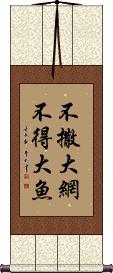
不撒大網不得大魚 is a Chinese proverb that literally translates as: [if one does] not cast a big net, [one can] not get big fish.
Figuratively, this means: One cannot make great accomplishments without making great efforts or taking great pains.
This is sort of the fishing version of, “No pain, no gain.”
The Big Dipper / Ursa Major
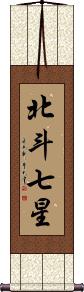
北斗七星 is a Chinese, Japanese Kanji, and old Korean Hanja title for Ursa Major, The Big Dipper, or The Great She-Bear.
You will also see the shorter title of 北斗星, and sometimes just 斗 is used to refer to the dipper when the astrological context is established.
Black Flag Gate / Hek Ki Boen
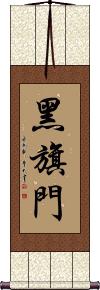
黑旗門 is often romanized as “Hek Ki Boen” in Cantonese, this is the title for a certain branch school of Wing Chun or Eng Chun martial arts.
Bonsai / Penzai
Dwarf Tree Culture
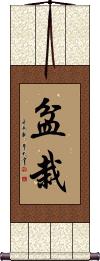
盆栽 is the word that refers to the culture, hobby, and to miniature trees themselves that have become popular around the world.
Like many things, this art migrated from China to Japan some time ago, but we tend to associate it with Japanese culture and even use the Japanese word in English.
Granted, in the present day, this hobby seems to be more popular in Japan but still has a great following in China and even a little in Korea as well.
Note: Many people confuse the title of the bonsai tree with “banzai” which is a form of “hooray” in Japanese. I have also seen it misspelled as “bansai.” The correct Romanization (Romaji) is “bonsai.”
Boys be Ambitious
Quote from William S. Clark in Japan
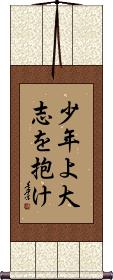
少年よ大志を抱け was a sort of motto or proverb invoked by William Clark after being hired by the Emperor of Japan in 1876 to establish a university in Hokkaido, Japan.
This phrase has been famous across all generations of Japan since that time.
More about William S. Clark's adventures in Japan.
Note: Because this selection contains some special Japanese Hiragana characters, it should be written by a Japanese calligrapher.
Brave the Waves
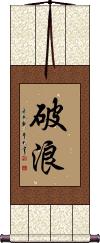
破浪 can be translated from Chinese as “braving the waves” or “bravely setting sail.”
It literally means: “break/cleave/cut [the] waves.”
破浪 is a great title to encourage yourself or someone else not to be afraid of problems or troubles.
Because of the context, this is especially good for sailors or yachtsmen and surfers too.
Note: While this can be understood in Japanese, it's not commonly used in Japan. Therefore, please consider this to be primarily a Chinese proverb.
Bright and Promising Future
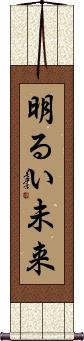
明るい未来 is a Japanese proverb that means “Bright Future.”
It suggests a lot of possibilities and potential awaits in your future. A great gift for a graduate.
The first part of this proverb literally means bright or light. The second part means the future but can also be translated as “the world to come.”
Note: Because this selection contains some special Japanese Hiragana characters, it should be written by a Japanese calligrapher.
Broken Mirror Rejoined
Used in modern times for divorced couples that come back together
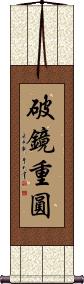
破鏡重圓 is about a husband and wife who were separated and reunited.
About 1500 years ago in China, there lived a beautiful princess named Le Chang. She and her husband Xu De Yan loved each other very much. But when the army of the Sui Dynasty was about to attack their kingdom, disposed of all of their worldly possessions and prepared to flee into exile.
They knew that in the chaos, they might lose track of each other, so the one possession they kept was a bronze mirror which is a symbol of unity for a husband and wife. They broke the mirror into two pieces, and each of them kept half of the mirror. They decided that if separated, they would try to meet at the fair during the 15th day of the first lunar month (which is the lantern festival). Unfortunately, the occupation was brutal, and the princess was forced to become the mistress of the new commissioner of the territory, Yang Su.
At the Lantern Festival the next year, the husband came to the fair to search for his wife. He carried with him his half of the mirror. As he walked through the fair, he saw the other half of the mirror for sale at a junk market by a servant of the commissioner. The husband recognized his wife's half of the mirror immediately, and tears rolled down his face as he was told by the servant about the bitter and loveless life that the princess had endured.
As his tears dripped onto the mirror, the husband scratched a poem into his wife's half of the mirror:
You left me with the severed mirror,
The mirror has returned, but absent are you,
As I gaze in the mirror, I seek your face,
I see the moon, but as for you, I see not a trace.
The servant brought the inscribed half of the mirror back to the princess. For many days, the princess could not stop crying when she found that her husband was alive and still loved her.
Commissioner Yang Su, becoming aware of this saga, realized that he could never obtain the princess's love. He sent for the husband and allowed them to reunite.
This proverb, 破鏡重圓, is now used to describe a couple who has been torn apart for some reason (usually divorce) but have come back together (or remarried).
It seems to be more common these days in America for divorced couples to reconcile and get married to each other again. This will be a great gift if you know someone who is about to remarry their ex.
Cayman Islands
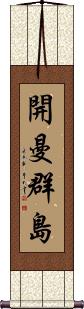
This is the Chinese name for the Cayman Islands (overseas territory of the United Kingdom and a great place to hide money).
See Also: North America | United Kingdom
Chan
Hokkien Surname
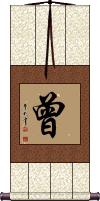
This is a Hokkien surname that is often romanized as Chan.
The meaning is great- (as in great-grandfather, grandmother, grandchild, etc.).
In some context, can mean already. In Japanese, this can be a surname that romanizes as Son.
Mark the boat to find the lost sword / Ignoring the changing circumstances of the world
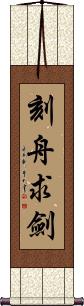
刻舟求劍 is an originally-Chinese proverb that serves as a warning to people that things are always in a state of change.
Thus, you must consider that and not depend on the old ways or a way that may have worked in the past but is no longer valid.
This idiom/proverb comes from the following story:
A man was traveling in a ferry boat across a river. With him, he carried a treasured sword. Along the way, the man became overwhelmed and intoxicated by the beautiful view and accidentally dropped his prized sword into the river. Thinking quickly, he pulled out a knife and marked on the rail of the boat where exactly he had lost his sword.
When the boat arrived on the other side of the river, the man jumped out of the boat and searched for his sword right under where he'd made the mark. Of course, the boat had moved a great distance since he made the mark, and thus, he could not find the sword.
While this man may seem foolhardy, we must take a great lesson from this parable: Circumstances change, so one should use methods to handle the change. In modern China, this is used in business to mean that one should not depend on old business models for a changing market.
This proverb dates back to the Spring and Autumn period (770–476 BC) of the territory now known as China. It has spread and is somewhat known in Japan and Korea.
Commitment
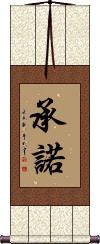
承諾 embodies the idea of commitment but also means to make a big effort or to undertake a great task.
Commitment is caring deeply about something or someone. It is deciding carefully what you want to do and then giving it 100%, holding nothing back. You give your all to a friendship, a task, or something you believe in. You finish what you start. You keep your promises.
In Chinese, this word directly means to undertake something or to make a promise to do something.
Outside of the commitment idea, this particular word can also mean approval, acceptance, consent, assent, acquiescence, or agreement, depending on context (especially in Japanese and Korean). Therefore, this word is probably best if your audience is Chinese.
See Also: Partnership | Hard Work | Dedication
The Confident Helmsman Inspires Confidence in the Passengers
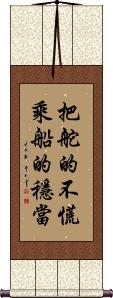
把舵的不慌乘船的稳当 is a Chinese proverb that literally translates as: [If the] helmsman is not nervous, the passengers [will feel] secure.
Figuratively, this means: If the leader appears confident, his/her followers will gain confidence also.
This is a great suggestion that a confident leader inspires confidence in his/her troops or followers. Of course, a nervous leader will create fear in troops or followers.
Confucius
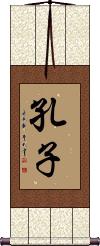
孔子 is how to write the name of the great sage, known in the West as Confucius.
His real name is Kongzi (The name Confucius is a westernized version of his name - his family name is Kong, and “zi” was added as a title of distinction).
He lived some 2500 years ago in Qufu, a town in modern-day Shandong Province of Northern China (about 6 hours south of Beijing by bus). He was a consort to Emperors, and after his death, the impact of his philosophies still served to advise emperors, officials, and common people for generations.
Also during these thousands of years, the Kong family remained powerful in China, and the Kong estate was much like the Vatican in Rome. The Kong estate existed as if on sovereign ground with its own small garrison of guards and the privileges of a kingdom within an empire.
This was true up until the time the Kong family had to flee to Taiwan in 1949 when the Red Army took victory over the Nationalists during the Revolution. The home of Confucius was later razed and all statues were defaced or stolen during the Cultural Revolution. Finally, after years of smearing his name and image, it is once again okay to celebrate the teachings of Confucius in mainland China.
Known as Khổng Tử in Vietnamese.
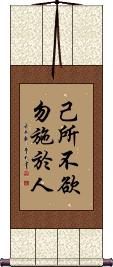
Confucius: Golden Rule / Ethic of Reciprocity
Do not do to others what you do not want done to yourself
Some may think of this as a “Christian trait,” but actually, it transcends many religions.
This Chinese teaching dates back to about 2,500 years ago in China. Confucius had always taught the belief in being benevolent (ren), but this idea was hard to grasp for some of his students, as benevolence could be kind-heartedness or an essence of humanity itself.
When answering Zhong Gong's question as to what "ren" actually meant, Confucius said:
己所不欲勿施于人 or "When you go out, you should behave as if you were in the presence of a distinguished guest; when people do favors for you, act as if a great sacrifice was made for you. Whatever you wouldn't like done to you, do not do that thing to others. Don't complain at work or home.”
Hearing this, Zhong Gong said humbly, “Although I am not clever, I will do what you say.”
From this encounter, the Chinese version of the “Golden Rule” or “Ethic of Reciprocity” came to be.
The characters you see above express, “Do not do to others whatever you do not want to be done to yourself.”
See Also: Confucius Teachings | Benevolence
Cooperation / Collaboration
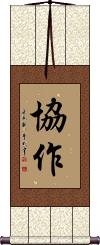
協作 is a Chinese, Japanese, and old Korean word that means cooperation or collaboration.
Cooperation is working together and sharing the load. When we cooperate, we join with others to do things that cannot be done alone. We are willing to follow the rules which keep everyone safe and happy. Together we can accomplish great things.
The first character means “united” or “to coordinate.” The second character means “to do,” “to make,” or “to compose.” Knowing this, you can understand why together, these characters create a word that can be defined as “cooperation” in Chinese, Japanese, and Korean.
It is implied that you are cooperating to create some project or product.
See Also: Partnership
Crazy / Mad
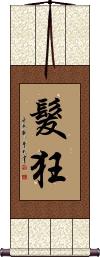
髮狂 is the nicest/coolest way to write “crazy” in Chinese.
There are several other ways to express “insane” or “mentally disturbed,” but they are either clinical terms or very serious afflictions.
髮狂 is not a great or normal selection for a wall scroll. Please only order this if you want this idea for some personal reason.
To put it another way: It's a little crazy to have a “crazy” wall scroll.
Crisis equals Danger plus Opportunity?
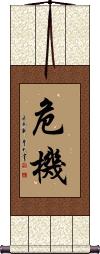
危機 means crisis in Chinese and Japanese.
Separately, the first character here does mean “danger” or “to endanger,” and the second character can mean “opportunity.”
However, I want to debunk a myth that was propagated by some westerners who did not have a clear understanding of Asian languages...
While often, Chinese/Japanese/Korean compound words (words of two or more characters) are the sum of their parts, this is not always the case. The compound is often understood with a completely different meaning than the two characters individually.
Many have said that the Chinese/Japanese/Korean word for Crisis is made up of the characters for “danger” and “opportunity.” 危機 is true when phrased this way.
However, it's not absolutely correct to say that “danger + opportunity = crisis” in Asian cultures.
English example:
If I tell you that...
Bovine creature + Guy behind the plate in baseball = Locomotive train protection

...you would think I was mad. But consider that “cow + catcher = cowcatcher,” which is the device that used to be found on steam engines to protect them if they hit an animal on the tracks. When we hear the word “cowcatcher,” we don't separate the words into their individual meanings (necessarily).
The same is true with the word for crisis in Chinese/Japanese/Korean. While you can separate the characters, few Asian people would automatically do so in their minds.
The final answer:
It is a half-truth to say, “danger plus opportunity equals crisis” in Chinese/Japanese/Korean. Use this statement and concept with caution.
Also, the second character can mean “secret” or “machine,” depending on context so I guess you have to say “a dangerous machine = crisis” or “danger + a secret = crisis.” Both of these are only slightly more ridiculous than the first premise.
PS: 危機 is probably not a great word for a scroll unless you have a special use for it.
Great Peace
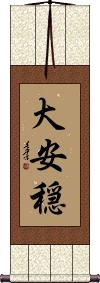
大安穏 means great peace, great repose, nirvanic peace, or great tranquility.
Great Wisdom
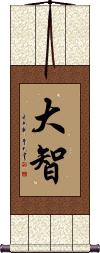
大智 is a Zen Buddhist title that means supreme wisdom, great wisdom, Buddha-wisdom, omniscience, or transcendental wisdom.
Great Illumination of Wisdom
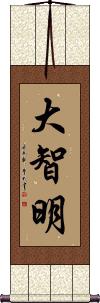
大智明 is a Zen Buddhist title that means the great illumination of wisdom.
This refers to wisdom so bright that it shines through obviously to all in its presence.
The Great Path has No Gate
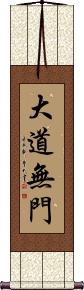
大道無門 is a Buddhist proverb that means “The Great Way has no entrance,” “The Great Way is gateless,” or “The Great Path lacks a gate.”
This can be translated in many other ways.
This concept was authored within a long sacred text by 無門慧開 (known as Wúmén Huìkāi in Chinese or Mumon Ekai in Japanese). He was a Chinese Chan Master (in Japanese, a Zen Master) who lived between 1183 and 1260 AD. His most famous work was a 48-koan collection titled “The Gateless Barrier” or “The Gateless Gate” (無門關 Wú Mén Guān in Chinese, or 無門関 Mu Mon Kan in Japanese). This calligraphy title is a notable line from this collection.
I like this reference to the source of this proverb: The Gateless Gate 無門關
Daigongen
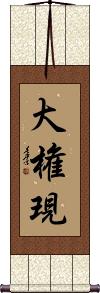
大権現 is a Japanese title, Daigongen, which means large or great incarnation.
This is sometimes equated with a great spirit or protective saint.
Daimyo / Great Name
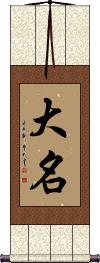
大名 is the title Daimyō in Japanese, which means “lord” or “great name.”
This has the same meaning in Chinese as “great name,” or “your distinguished name.” In ancient Japan, this referred to a feudal lord.
Also sometimes romanized from Japanese as Daimio, Daimyou, Oomiyou, or Oomyou.
Da Ji Da Li
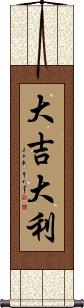
大吉大利 or “Da Ji Da Li” is a Chinese proverb that means great luck, great profit, or everything is thriving.
Daodejing / Tao Te Ching
The Great Book of Lao Tzu
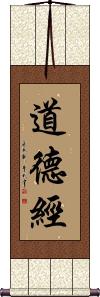
道德經 are the Chinese characters for the writings of Laozi/Lao Tzu known as the Dàodéjīng or Tao Tê Ching.
To breakdown the meaning of the characters:
道 means “way,” though many refer to it as “the Way.” It has been romanized as Tao or Dao. The Dao has been referred to by Confucius, Mencius, and other ancient Chinese philosophers.
德 means virtue, integrity, or morality.
經 in this context means canon, great book, sacred book, scripture, or classic.
Daodejing / Tao Te Ching - Excerpt
Excerpt from Chapter 67
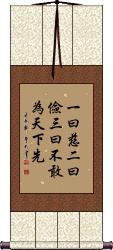
一曰慈二曰儉三曰不敢為天下先 is an excerpt from the 67th Chapter of Lao Tzu's (Lao Zi's) Te-Tao Ching (Dao De Jing).
This is the part where the three treasures are discussed. In English, we'd say these three treasures are compassion, frugality, and humility. Some may translate these as love, moderation, and lack of arrogance. I have also seen them translated as benevolence, modesty, and “Not presuming to be at the forefront in the world.” You can mix them up the way you want, as translation is not really a science but rather an art.
I should also explain that the first two treasures are single-character ideas, yet the third treasure was written out in six characters (there are also some auxiliary characters to number the treasures).
If Lao Tzu's words are important to you, then a wall scroll with this passage might make a great addition to your home.
Dignity / Honor / Sanctity / Integrity
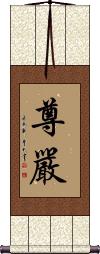
尊嚴 is a form of honor that means showing great respect for yourself, other people, and the rules you live by.
When you are honorable, you keep your word. You do the right thing regardless of what others are doing.
尊嚴 is the kind of personal honor or dignity that is of great value. If you lose this, you have lost yourself and perhaps the reputation of your family as well.
While this is not directly the same thing as “face” or “saving face” in Asian culture, it is associated with the same concept in China.
 In Japan, they currently use a more simplified second character for this word. The ancient Japanese form is the same as China but after WWII some Kanji were changed. If you want the modern Japanese version, just click on the Kanji image shown to the right, instead of the button above.
Door of Great Wisdom
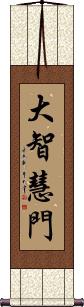
大智慧門 is the title for “The Great Wisdom Door,” or “The Gate to Great Wisdom.”
This refers to a portal to all wisdom and knowledge in Buddhism.
The Spirit of the Dragon Horse
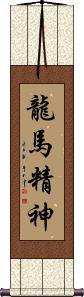
龍馬精神 is an old proverb that is used to wish someone good health and success combined as a great compliment.
The meaning is “The vigor and spirit of the legendary dragon-horse.” These four characters are often accompanied by four more which mean “...and the power and prestige of the tiger.” Here we are just offering the first part which is considered the short version.
By giving a wall scroll like this to someone, you were either wishing or telling them that they have an amazing quality. There is also a suggestion of good health - at least anyone with the vigor of a dragon horse would seem to also be in good health.
Note: In Japanese, this would be read as the spirit of 坂本龍馬 (Sakamoto_Ryōma), a beloved rebel who help abolish the old Japanese feudal system. This can be confusing, so I am declaring this proverb to be Chinese only.
The Spirit of the Dragon Horse and Power of a Tiger
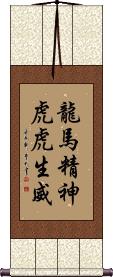
龍馬精神虎虎生威 is an old proverb that is used to wish someone great health and success combined as a great compliment.
The meaning is “The vigor and spirit of the legendary dragon-horse and the power and prestige of the tiger.”
By giving a wall scroll like this to someone, you were either wishing or telling them that they have these qualities. There is also a suggestion of good health - at least anyone with the vigor of a dragon horse would seem to also be in good health.
Duty / Responsibility / Obligation
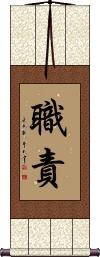
職責 is a Chinese and Korean word that means duty or responsibility.
If you have a sense of duty or sense of responsibility, this might be the wall scroll that you want to hang above your desk. It is a great way to quietly remind yourself to take pride in your duties at all times.
In a different context, this can mean “official duties” or “position.”
Earth Fire Water Air
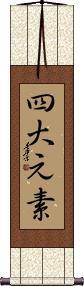
四大元素 is the title for the four classical chemical elements (fire, earth, air, and water) in Japanese.
四大 = four great/big. 元素 = elements. So 四大元素 literally means “Four Great Elements.”
Great Endeavor / To Strive
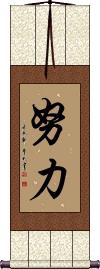
努力 means great effort; to strive; to try hard; great effort; great exertion; great endeavor (endeavour); great effort; to strive.
This “striving endeavor” word is valid in Chinese, Japanese Kanji, and old Korean Hanja.
England
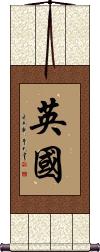
This is the Chinese name for the country of England.
See Also: Great Britain | United Kingdom | Ireland | Scotland | Northern Ireland | Europe
Eternal Love
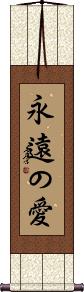
永遠の愛 is a great way to write “Eternal Love” in Japanese.
The first two characters mean eternal, eternity, perpetuity, forever, immortality, and permanence.
The third character is a possessive article which sort of makes this selection mean “Love, of the eternal kind.”
The last character is “love.”
Cultural note: Most of the time, it is taboo to use the word “love” in Japanese. For instance, a Japanese man will say, “I like you,” rather than, “I love you,” to his spouse/girlfriend. However, this entry for eternal love is acceptable because of the way it is composed.
This entry is only appropriate if your audience is Japanese. We also have a Chinese version of this eternal love.
Falkland Islands
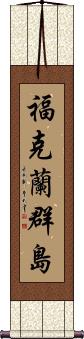
This is the Chinese name for the Falkland Islands (overseas territory of the United Kingdom).
See Also: Great Britain | United Kingdom | Africa
The one who retreats 50 paces mocks the one to retreats 100
The pot calls the kettle black
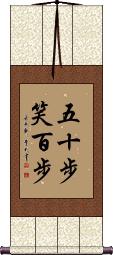
五十步笑百步 is a Chinese proverb that means the one who retreats 50 paces mocks the one who retreats 100 paces.
During the Warring States Period of what is now China (475 - 221 B.C.), the King of Wei was in love with war. He often fought with other kingdoms just for spite or fun.
One day, the King of Wei asked the philosopher Mencius, “I love my people, and all say I do the best for them. I move the people from famine-stricken areas to places of plenty and transport grains from rich areas to the poor. Nobody goes hungry in my kingdom, and I treat my people far better than other kings. But why does the population of my kingdom not increase, and why does the population of other kingdoms not decrease?”
Mencius answered, “Since you love war, I will make this example: When going to war, and the drums beat to start the attack, some soldiers flee for their lives in fear. Some run 100 paces in retreat, and others run 50 steps. Then the ones who retreated 50 paces laugh and taunt those who retreated 100 paces, calling them cowards mortally afraid of death. Do you think this is reasonable?
The King of Wei answered, “Of course not! Those who run 50 paces are just as timid as those who run 100 paces.”
Mencius then said, “You are a king who treats his subjects better than other kings treat their people, but you are so fond of war that your people suffer from great losses in battle. Therefore, your population does not grow. While other kings allow their people to starve to death, you send your people to die in war. Is there any difference?”
This famous conversation led to the six-character proverb shown here. It serves as a warning to avoid hypocrisy. It goes hand-in-hand with the western phrase, “The pot calls the kettle black,” or the Biblical phrase, “Before trying to remove a splinter from your neighbor's eye, first remove the plank from your own eye.”
Fighting Spirit
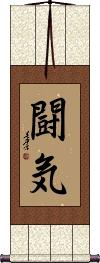
闘気 is an alternate Japanese title for “fighting spirit.”
This one is more like “fighting energy.” The second character is “ki,” the same “ki” in Aikido. This “ki” is the spiritual energy that all martial arts practitioners must master and focus on.
Filial Piety / Filial Conduct
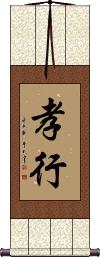
孝行 expresses the idea of filial piety or filial conduct.
While the first character means filial piety by itself, the second character adds “action.” Therefore this represents the actions you take to show your respect and obedience to your elders or ancestors.
Confucius is probably the first great advocate for filial piety.
A Bright Future
Incredible 10,000-Mile Flight of the Peng
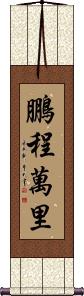
鵬程萬里 is an ancient Chinese proverb used in modern times to wish someone a long and successful career.
It's really about the 10,000 Flight of the Peng (Peng, also known as Roc is a mythical fish that can turn into a bird and take flight).
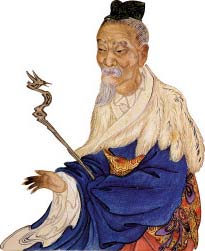
莊子
Zhuangzi or Chuang Tzu
Breaking down each character:
1. Peng or Roc (a kind of bird).
2. Journey (in this case, a flight).
3. 10,000 (Ten Thousand).
4. Li is a unit of distance often referred to as a “Chinese Mile,” though the real distance is about half a kilometer.
Direct Translation: “Peng's Journey [of] 10,000 Li.”
Literal meaning: “The 10,000-Li Flying Range Of The Roc.”
Perceived meaning: “To have a bright future” or “To go far.”
This proverb/idiom comes from the book of Zhuangzi or Chuang Tzu. It tells the tale of a huge fish that could turn into a gigantic bird. This bird was called a “peng” and was many miles long. This legendary size allowed the Peng to fly from the Northern Sea to the Southern Sea in a single bound.
Wishing someone “a Peng's Journey of 10,000 Li” will imply that they can travel far without stopping and will have great success, a long career, and a prosperous future.
Flower Open / Blooming Flower
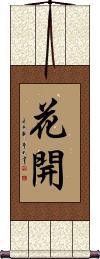
These two characters mean “flower open.”
花開 is also associated with Springtime, the beginning of something, or youth.
花開 is often followed by 花落 or “flower falls” (closes and loses its petals) which means “Things come and go” or “Youth comes and goes.”
If you like flowers and Springtime, this is a great selection for you. However, if you want the companion “flower falls” (flower withers), we offer that as a companion wall scroll or all together as a four-character phrase.
See Also: Flowers Fall
Flowers Fall / The End Comes
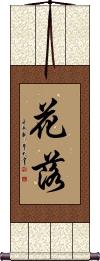
花落 means flower fall (closes and loses its petals).
It suggests nearing the end of something. A time that some might call “The sunset of life.” 花落 often follows 花開 or “flower open” to talk of the cycle of life.
We offer this as a possible companion to a “flower open” scroll (to be placed side by side or at either side of a doorway to say “things come and go” - a cool metaphor for a doorway). If placed in a doorway, it could be used to suggest to your guests that things bloom when they arrive through your door but wither when they leave (a great compliment).
See Also: Flowers Bloom
Gassho
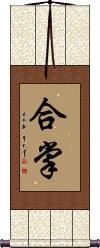
合掌 is the act of greeting someone (can also be done when departing) with hands brought together prayerfully.
In India, this would be accompanied by the verbal greeting and blessing of “Namaste.” In China, Japan, and Korea, this is how Buddhists will greet each other. Sometimes done by people who are not devout Buddhists in China, Japan, and Korea to show respect, reverence, or great thanks to someone for a gift, forgiveness, or some honor that has been bestowed.
In Japan, this is almost always associated with a deep bow. In China, where bowing is not an everyday occurrence, there may be a shallow bow, but the act will be done with deep feeling. Korean culture seems to have more bowing than China but less than Japan.
See Also: Namaste
Giant
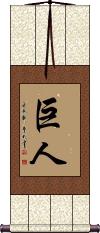
巨人 can mean giant or great person (great man or woman) in Chinese, Japanese Kanji, and old Korean Hanja.
巨人 is also the short name of the Tokyo Giants baseball team.
Sometimes the Japanese female name Mito.
Giant Panda
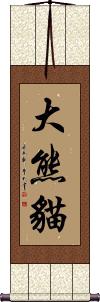
大熊貓 is how to write “giant panda” in Chinese.
大熊貓 is specific to the “giant panda,” which has black and white fur. Not to be confused with other types of smaller pandas in China.
The literal meaning of these characters is “great/big bear cat.” Chinese do think of pandas as “cat-like bears.”
Note: In Japanese, they only express Giant Panda in Katakana, which is ジャイアント パンダ” (Jaianto Panda). So we have not included that for wall scroll orders.
Gibraltar
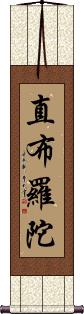
This is the Chinese name for Gibraltar (territory of the United Kingdom but also claimed by Spain).
See Also: Great Britain | Spain | Europe
Godai / Five Elements
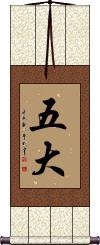
五大 is the Japanese title for the five elements.
In Japan, the five elements differ slightly from the original Chinese. Therefore, in Japanese philosophy, you have earth, water, fire, wind, and void (space).
The meaning of the first character is 5, but the second character means great or large. Some translate this as the five majors. 大 is only understood as “elements” when you have 五 in front of it.
In Buddhism, this can be short for 五大明王, or the five great and wise kings.
50th Golden Wedding Anniversary
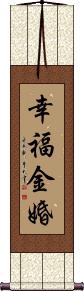
幸福金婚 means “Happy Golden Anniversary” and is a great gift for a couple who is celebrating 50 years together.
The first two characters mean happy, blessed, or happiness.
The last two characters mean “couple's golden anniversary.” It means “golden wedding” or “golden marriage,” but this is only used for the 50-year-mark of a marriage (the same way we use gold to represent 50 years in the west).
幸福金婚 is a nice title to use with an inscription. You could request something like, “Happy 50th Anniversary, Mr. and Mrs. Smith,” to be written down the side of this title in smaller Chinese characters.
Please note: This can be pronounced and understood in Japanese but not as commonly used in Japan. Japanese people who read this will understand it but might tend to feel it’s of Chinese origin.
Ultimate Goodness of Water
Quote from Lao Tzu
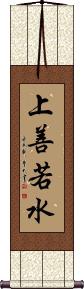
上善若水 is a quote that is sometimes presented as “Be like water.”
However, this is an ancient quote from the great philosopher Lao Tzu. It suggests that the ultimate goodness and purity (in the world) is water. Many take this as a suggestion to be like pure/good water.
Great Britain
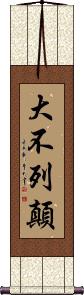
This is the Chinese name for Great Britain.
See Also: England | United Kingdom | Scotland | Ireland | Europe
Great Britain
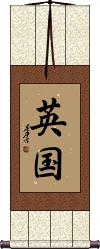
This is Great Britain written in Japanese.
Big Dream / Great Hope
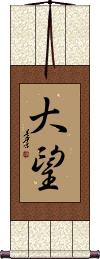
大望 is one of a few ways to write “dream big” in Japanese.
This is a good title if you want that to inspire ambition or high aspirations. 大望 is also a way to say “great expectations.”
The Great Wall of China
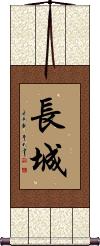
長城 is the Chinese name for the Great Wall.
Built at the northern border of China to protect from Mongol attack.
Notes:
In Japanese, this can be a surname Nagaki. Japanese often use a longer title for the Great Wall of China.
In Korean, this refers to Changsŏng (a city in Changsŏng-kun county, Chŏllanam-to province).
The Great Wall of China
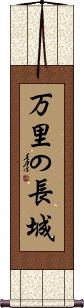
万里の長城 is the Japanese name for the Great Wall of China.
Greatest Love
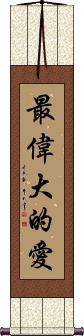
最偉大的愛 means “the greatest love” in Chinese.
Keeping in mind that Chinese is different than English, the first character is like “-est” or adding “the most” as a modifier to the next word.
The 2nd and 3rd characters mean great, mighty, and/or large.
The 4th is a possessive article.
The last is the character for love.
When you put it all together, you get a phrase that means the greatest love, enormous love, or the mightiest love.
Greatest Infinite Love
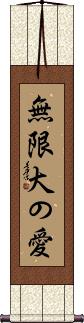
無限大の愛 is a Japanese title meaning infinite great love, unlimited great love, or eternal love.
無 means never, not, or like a prefix “un-.”
限 means limited, restricted, or bound.
大 means great or big.
の is a possessive article.
愛 means love or affection.
Grand Master / Great Teacher
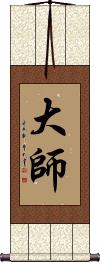
大師 is a way to title a great master, grand master, or great teacher.
This can be used in the context of martial arts or a Buddhist teacher. Thus, it can be used to title a living Buddha, Bodhisattva, or high-ranking monk.
Great Responsibility
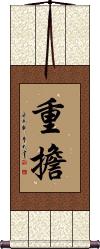
重擔 means heavy burden, difficult task, heavy load, or great responsibility.
Hakko-Ryu
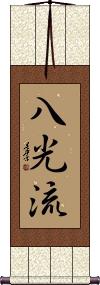
八光流 (Hakkō-Ryū) is a style of jujutsu associated with Daito-Ryu.
The title Hakko-Ryu comes from the Japanese phrase which translates as “The Style of the Eighth Light,” or more literally, “Eighth Light Style.”
The 光 character is associated with brightness or brilliance. It can be used to describe someone of great talent or potential. So the meaning goes far beyond just light.
Hapkido
Korean Martial Art of re-directing force
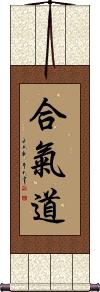
Hapkido or 合氣道 is a mostly-defensive martial art in Korea.
Hapkido has some connection to the Aikido of Japan. They are written with the same characters in both languages. However, it should be noted that the Korean Hanja characters shown here are the traditional Chinese form - but in modern Japan, the middle character was slightly simplified.
Note: You can consider this to be the older Japanese written form of Aikido. Titles on older books and signs about Aikido use this form.
The connection between Japanese Aikido and Korean Hapkido is muddled in history. The issue is probably due to the difficult relationship between the two countries around WWII. Many Koreans became virtual slaves to the Japanese during that period. After WWII, many things in Korea were disassociated from having any Japanese origin. The relationship has greatly mellowed out now.
Looking at the characters, the first means “union” or “harmony.”
The second character means “universal energy” or “spirit.”
The third means “way” or “method.”
One way to translate this into English is the “Harmonizing Energy Method.” This makes sense, as Hapkido has more to do with redirecting energy than fighting strength against strength.
More Hapkido info
More notes:
1. Sometimes Hapkido is Romanized as “hap ki do,” “hapki-do” “hab gi do” or “hapgido.”
2. Korean Hanja characters are actually Chinese characters that usually hold the same meaning in both languages. There was a time when these characters were the standard and only written form of Korean. The development of modern Korean Hangul characters is a somewhat recent event in the greater scope of history. There was a time when Chinese characters were the written form of many languages in places known in modern times as North Korea, South Korea, Japan, Vietnam, Singapore, Hong Kong, Taiwan, Mainland China, and a significant portion of Malaysia. Even today, more people in the world can read Chinese characters than English.
3. While these Korean Hanja characters can be pronounced in Chinese, this word is not well-known in China and is not considered part of the Chinese lexicon.
Healing Hands
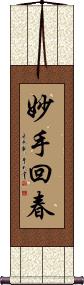
妙手回春 can be translated as “healing hands.”
The first two characters are used to describe a doctor or medical professional who has admirable skills in curing disease. Literally: Wonderful or skilled hands.
The last two characters mean “Springing back to life.”
Altogether, it suggests that these skilled hands can cure whatever ails you and bring you back to life. 妙手回春 is a great honor to bestow on your doctor or other healthcare professionals that have helped you.
Hella
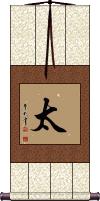
We struggled to find a word that encompasses the English, “hella” with a meaning like, “really,” “a lot,” “totally,” and/or “very.”
In Chinese, Japanese, and old Korean, 太 is a character that is often said as an adjective in front of other words, to make “good” into “too good,” or “extremely good.”
The meaning of this character from the dictionary is highest, greatest, too (much), very, extremely, fat, grand, magnificent, excellent, or great.
Hero
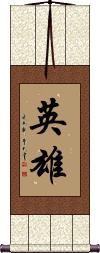
英雄 is the best way to write hero in Chinese and Japanese - especially for calligraphy.
英雄 is also the name of the Chinese movie titled Hero starring Jet Li.
The first character means brave (it can also mean British or English but not in this case).
The second character means heroic but also suggests a male person.
My Japanese dictionary also defines this as “a great man.”
Man of Remarkable Character / Hero
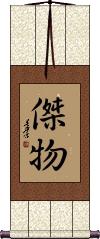
傑物 is a Japanese title that can mean “great man,” “heroic figure,” or “remarkable character.”
You would be giving someone a great honor by presenting this wall scroll to them as a gift.
Heroic Spirit / Great Ambition
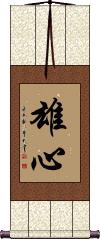
雄心 are the Chinese characters and Japanese Kanji for great ambition, lofty aspiration, or heroic spirit.
Hikari
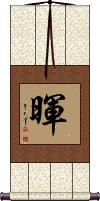
暉 is a Kanji that often represents a Japanese name romanized as Hikari.
The literal meaning can be sunshine, light, or to shine upon. It has the same meaning in Chinese and Korean. From ancient Chinese, it is a variant of 輝/辉.
Other Japanese romanizations include Hikaru, Hikatsu, Teru, Terasu, Ki, and Akira.
Hong Kong
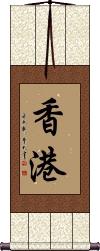
This is the Chinese and Japanese name for the Special Administrative Region (SAR) of The Peoples Republic of China known as Hong Kong (formerly a British administrated territory).
The romanization “Hong Kong” is probably a British approximation of the Cantonese pronunciation for this land.
See Also: Great Britain | China | Macao | Taiwan | Singapore | Japan | Vietnam | Korea | Asia
Hou De Zai Wu
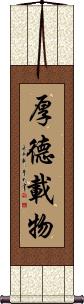
厚德載物 is a Chinese proverb that means “With great virtue, one can take charge of the world.”
Known sometimes by the romanization Hou De Zai Wu, this famous phrase suggests that being ethical is the bridge to leadership. I wish our world leaders followed this.
Hua Mulan
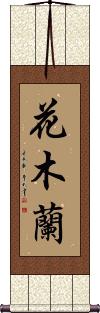
花木蘭 is the name of the famous Chinese woman warrior Hua Mulan.
She was made famous in the west by Disney's animated movie, “Mulan.”
Most of the historical information about her comes from an ancient poem. It starts with a concerned Mulan, as she is told a man from each family is to serve conscription in the army. Her father is too old, and her brother is too young. Mulan decides to take the place of her father. After twelve years of war, the army returns, and the best warriors are awarded great posts in the government and riches. Mulan turns down all offers and asks only for a good horse for the long trip home. When Mulan greets visiting comrades wearing her old clothes, they are shocked to find the warrior they rode into battle with for years is actually a woman.
Humility / Being Humble
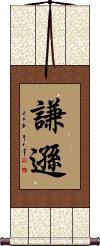
謙遜 can also be translated as being modest, humble, or unpretentious.
Being humble is considering others to be as important as yourself. You are thoughtful of their needs and willing to be of service. You don't expect others or yourself to be perfect. You learn from your mistakes. When you do great things, humility reminds you to be thankful instead of boastful.
This Humility title is also used as one of the 8 key concepts of Tang Soo Do. Often romanized as “Kyum Son.”
Also sometimes used in Japanese to express humility with an essence of modesty.
Hung Gar
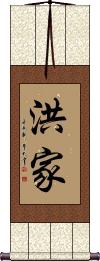
洪家 is the martial arts title Hung Ga or Hung Gar.
The first character means flood, big, immense, or great but it can also be the surname, Hong or Hung.
The last character means family or home.
This can also be read as “The Hung Family” or “The Hung Household.” This title is mostly associated with a style of Kung Fu.
Hung Ga Kuen
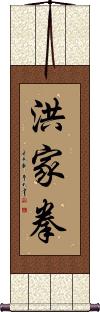
洪家拳 is the martial arts title Hung Ga Kuen.
The first character means flood, big, immense, or great but it can also be the surname, Hong or Hung.
The second character means family or home.
The last character is a fist.
Hung Kuen
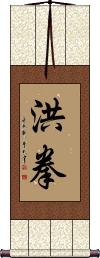
洪拳 is the martial arts title Hung Kuen.
The first character means flood, big, immense, or great but it can also be the surname, Hong or Hung.
The last character means fist.
Improvise Adapt Overcome
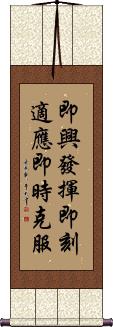
即興發揮即刻適應即時克服 is the coolest way to put together this famous word list, “Improvise Adapt Overcome.”
There are shorter ways to write “adapt,” and “overcome,” but “improvise” needs a four-character word to be expressed accurately in Chinese. To match them up, the other two are using four-character words as well. This makes it sound more natural in Chinese (though word lists are not a natural construct in Chinese grammar).
The words break down like this: 即興發揮, 即刻適應, 即時克服. I suggest the 3-column option when you customize your wall scroll. That way, the words will occupy one column each.
A great gift for a U.S. Marine, or anyone who follows this mantra.
Inner Strength / Self-Improvement
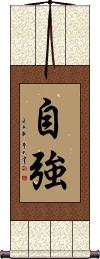
自強 is the kind of inner strength that applies to a person who has will-power and can inspire themselves to do great things.
自強 can also be the creed of a person that always pursues self-improvement.
Other translations: self-strengthening, striving for improvement, self-improvement, striving to become stronger, and self-renewal.
Ireland
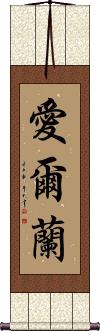
This is the Chinese name for the country of Ireland.
See Also: Northern Ireland | Great Britain | England | Scotland | United Kingdom | Europe
Isshin Ryu Karate Do
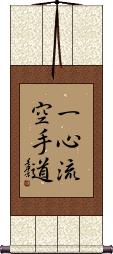
一心流空手道 is the full title for Isshin-Ryu Karate-Do.
The literal meaning is “one heart method empty hand way.”
There are other ways to translate this, but if you are looking for this title, you already know that.
This would make a great wall scroll for your dojo or private studio if you study this form of Japanese (technically from Okinawa) Karate.
Because this is a specifically-Japanese title, I strongly recommend that you select our Japanese Master Calligrapher to create this artwork.
Joshua 24:15
This House Serves the LORD
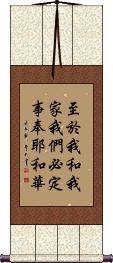
至於我和我家我們必定事奉耶和華 is the last sentence of Joshua 24:15 in Chinese.
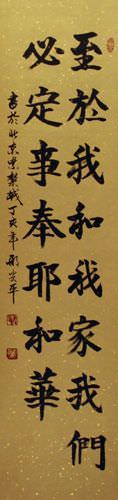
What your
calligraphy
might look like
from our
Chinese Master
Calligrapher
Joshua 24:15 (KJV) ...as for me and my house, we will serve the LORD.
Joshua 24:15 (NIV) ...as for me and my household, we will serve the LORD.
We used the only official Christian Chinese Bible that I know of so that the translation would be as accurate and standard as possible. Any Chinese Christian worth their salt will easily be able to identify this verse from the Chinese words on this scroll.
I think it is a bit like having a secret code on your wall that quietly expresses to whom you are faithful.
A great gift for your devout Christian or Jewish friend if they happen to be fond of Asian art.
Or perhaps a wonderful “conversation starter” for your own home.
Note: If you are curious, the last three characters represent the way “LORD” is used in most English Bibles. In Chinese, this is actually the phonetic name from Mandarin Chinese for “Jehovah.”
Kaili
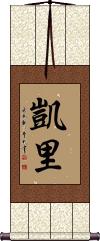
This is a common transliteration to Mandarin Chinese for the name Kaili.
It's also the name of Kaili city in Guizhou province.
I named my first daughter Kaili after visiting Kaili city and finding very friendly people there. I think this is a great English-Chinese baby name, as it is pronounceable in both languages, and the name works as a given name in both languages as well.
Happy / Open Heart

In mordern times, 開心 means to feel happy, to rejoice, or to have a great time, but directly translates as open heart.
In the Buddhist context, beyond opening the heart, it can mean to develop the mind, to initiate into truth, or awaken the mind.
開 = Open.
心 = Heart/Mind.
Not commonly used in Japanese where it might be read as open-mindeness.
Kai Zen / Kaizen
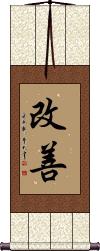
改善 means betterment, improvement, to make better, or to improve - specifically incremental and continuous improvement.
改善 became very important in post-war Japan when Edwards Deming came to Japan to teach concepts of incremental and continuous improvement (for which the big 3 auto-makers did not want to hear about at the time - even kicking Deming out of their offices). The Japanese workforce absorbed this concept when their culture was in flux and primed for change.
This kaizen term is closely associated with the western title “Total Quality Management.” Perhaps dear to my heart since I spent years studying this at university before I moved to China where TQM did not seem to exist. Slowly, this concept has entered China as well (I've actually given lectures on the subject in Beijing).
If you are trying to improve processes at your business or need to remind yourself of your continuous TQM goals, this would be a great wall scroll to hang behind your desk or in your workplace.
See Also: Kansei
This in-stock artwork might be what you are looking for, and ships right away...
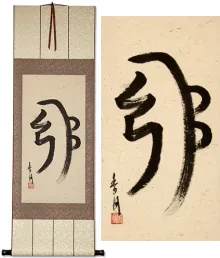
Gallery Price: $300.00
Your Price: $109.88
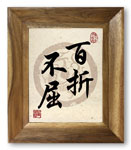

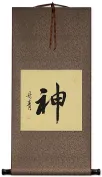
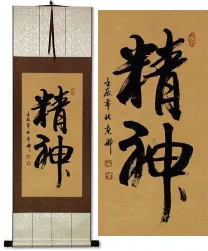
Gallery Price: $168.00
Your Price: $92.88
Gallery Price: $150.00
Your Price: $82.88

Gallery Price: $72.00
Your Price: $39.88

Gallery Price: $177.00
Your Price: $97.88

Gallery Price: $31.00
Your Price: $16.88
Gallery Price: $158.00
Your Price: $87.77
Gallery Price: $200.00
Your Price: $99.88
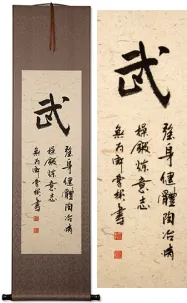
Gallery Price: $158.00
Your Price: $87.77
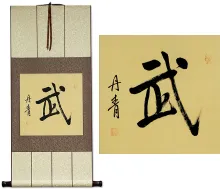
Gallery Price: $90.00
Your Price: $49.88

Gallery Price: $177.00
Your Price: $97.88

Successful Chinese Character and Japanese Kanji calligraphy searches within the last few hours...



