Artwork
Search:

Exact
Phrase

Oriental Outpost LogoFlagTowerwatercolor
Chinese Calligraphy Search
ArtPaintingsAsian Art Gallery

Adventures in Asian Art


Buy a Custom Energy Chinese or Japanese Calligraphy Wall Scroll

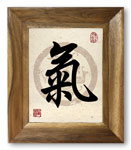
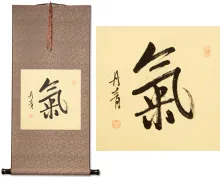
We have many options to create artwork with the Chinese characters / Asian symbols / Japanese Kanji for Energy on a wall scroll or portrait.
If you want to create a cool Energy Asian character tattoo, you can purchase that on our Chinese and Japanese Tattoo Image Service page and we'll help you select from many forms of ancient Asian symbols that express the idea of Energy.


Quick links to words on this page...


Select

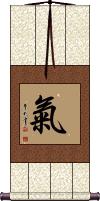
Life Energy / Spiritual Energy

Essense of Life

Mandarin:
Japanese: ki
Korean:

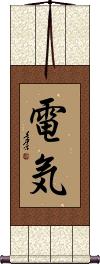
氣

Qi which is also Romanized as Chi in Chinese or Ki in Japanese, is a fundamental concept of traditional Asian culture. Qi is believed to be part of everything that exists, as in “life force” or “spiritual energy”. It is most often translated as “energy flow,” or literally as “air” or “breath”.

The character itself is a representation of steam (or breath) rising from rice.
米This was apparently seen as the release of energy from the rice when this concept was first developed. To clarify, the character for rice is shown to the right. The Qi / Chi / Ki character is still used in compound words to mean steam or vapor.

The idea of Qi / Chi / Ki is really a philosophical concept. It's often used to refer to the “flow” of metaphysical energy that sustains living beings. Yet there is much debate that has continued for thousands of years as to whether Qi / Chi / Ki is pure energy, or consists partially, or fully of matter.

You can also see the character for Qi / Chi / Ki in common compound words such as Tai Chi / Tai Qi, Aikido, Reiki and Qi Gong / Chi Kung.

In the modern Japanese Kanji, the rice radical has been changed into two strokes that form an X.

The original and traditional Chinese form is still understood in Japanese, but we can also offer that modern Kanji form in our custom calligraphy. If you want this Japanese Kanji, please click on the character to the right, instead of the “Select and Customize” button above.

More language notes: This is pronounced like “chee” in Mandarin Chinese, and like “key” in Japanese.
This is also the same way to write this in Korean Hanja where it is Romanized as “gi” and pronounced like “gee”, but with a real G-sound, not a J-sound.
Though Vietnamese no longer use Chinese characters in their daily language, this character is still widely known in Vietnam.

See Also...  Life Force | Vitality | Life | Birth | Soul

Select

Psychic Energy

Mandarin: tōng líng
Korean: 통령

通
靈

This is used to speak of something with supernatural essence, psychic power, or having magical power in Chinese.

Select

Supernatural Energy

Mandarin: chāo néng lì
Japanese: chounouryoku
Korean: 초능력

超
能
力

This word is used in both Japanese and Chinese to refer to the ability to comprehend supernatural power. Some may translate this as psychic ability, psychic power, ESP, or PSI.

Select

Fortitude / Strength of Character

Mandarin: gāng yì
Japanese: gouki

剛
毅

This Japanese and Chinese word means, "resolute and firm", "fortitude", "firmness of character", "hardihood", "manliness" or "macho".

See Also...  Perseverance | Strength | Tenacity

Select

God Give Me Strength

Mandarin:
yuàn shàng dì gěi wǒ lì liàng

我
力
量
願
上
帝
給


Characters shown
above are read
vertically, starting
from the right

This is a wish or a prayer that you might call out at a desperate time.

Translated by us for a military serviceman in Iraq - obviously he may have a need to use this phrase often, though I am not sure where he's going to find a place to hang a wall scroll.

Select

Inner Strength is Better than Outward Appearance

Mandarin: biǎo zhuàng bù rú lǐ zhuàng

如
裡
壯
表
壯
不


Characters shown
above are read
vertically, starting
from the right

This literally translates as:
[Better to be] strong inside than [to be] strong outside.

The ancient original meaning was:
[An] able [husband] outside [working to support a family is] not as good as [an] able [wife] inside [working and saving to take care of the family].

The current meaning is:
Inner strength is more important than outward appearance.

Select

Inner Strength

Mandarin: nèi zài lì liàng
Korean: 내재력량

內
在
力
量

This is the slightly-verbose way to say inner-strength. The first two characters mean "intrinsic" or "inner". The second two characters mean "power", "force" or "strength" (especially physical strength). This is more a short phrase rather than just a word in Chinese and Korean. This can sort of be understood in Japanese, but it's not normal/proper Japanese.

Back to the top of this page

Select

Inner Strength

(short version)

Mandarin: nèi lì
Japanese: nai ryoku
Korean: 내력

內
力

This is the shorter version of inner-strength (can also be translated as "internal force"). The first character holds the meaning of "inner" or "internal". The second character means "power", "force" or "strength".

This is kind of a Kung Fu way of talking about an inner power or strength from within. This is sort of a way to express "inner-chi". This is clearly something that you might hear in a real Chinese Kung Fu movie.

While understood in both Chinese and Japanese, this can have a secondary meaning of "inner stress" in Japanese.

Select

Inner Strength

Mandarin: zì qiáng
Korean: 자강

自
強

This is the kind of inner-strength that applies to a person who has will-power and can inspire themselves to do great things.

This word can also be the creed of a person that always pursues self-improvement.

Other translations: self-strengthening, striving for improvement, self-improvement, strive to become stronger, and self-renewal.

Select

Spiritual Strength
Strength of Spirit

Mandarin: jīng shén lì liàng
Japanese: seishin rikiryou

精
神
力
量

This title speaks of one's soul or spirit, and the capacity or strength that soul possesses.

The first two characters mean mind, heart, spirit, and/or soul.

The last two characters mean strength, capacity, or ability.

Note: Separately, these are two words in Japanese, and can be pronounced, but this does not make a natural title in Japanese (best if your audience is Chinese).

Back to the top of this page

Select

Strength / Ability

Mandarin: lì liàng
Japanese: riki ryou
Korean: 역량

力
量

This is a general strength term. It can refer to mental or physical strength (depending on context). This word can also be used to describe strength in terms of capability, capacity, ability and even tact. Some may translate this as power or force.

Select

Physical Strength

(Traditional Chinese and Korean version)

Mandarin: tǐ lì
Japanese: tai ryoku
Korean: 체력

體
力

Means "physical strength", "physical power", or "physical stamina".

See Also...  Fortitude | Health

Select

Physical Strength (Japanese / Simplified version)

Mandarin: tǐ lì
Japanese: tairyoku

体
力

Means "physical strength" or "physical power".

The first character was first simplified in Japan. Then that simplified version became the standard in mainland China. Just in case you want this version, it is offered here. I suggest it if you audience is Japanese. Most Chinese know the older traditional version.

Back to the top of this page

Select

Power / Strength

Mandarin:
Japanese: chikara / ryoku
Korean:

力

The simplest form of "power" or "strength".

In Japanese it is pronounced "chikara" when used alone, and "ryoku" when used in a sentence (there are also a few other possible pronunciations of this Kanji in Japanese).

In some context, this can mean ability, force, physical strength, capability, and influence.

See Also...  Strength | Vitality | Health

Select

Strength: Strong and Solid

(Japanese)

Mandarin: qiáng gù
Japanese: kyouko
Korean: 강고

強
固

Means "firmness", "stability", "security" and "strength" in Japanese. It's not used commonly in China, but it means "powerful", "firm", "solid", "strong" or "better than others" in Chinese. There is a slight variation in the top of the first character between Chinese and Japanese. Because this is more a Japanese word, we are showing the Japanese form here.

This is also a Korean word, but Korean Hanja uses the Chinese form of the first character (one tiny stroke is a little different), so just let me now if your audience is Korean when you place your order, and we'll have it written in the Chinese/Korean version.

Select

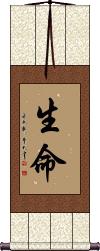
Life Force

Mandarin: shēng mìng
Japanese: seimei / inochi
Korean: 생명

生
命

This Chinese, Korean and Japanese word means "life force" or simply "life". The first character means "life" or "birth". The second means "life" or "fate". Together they create the meaning of "life force", though some will translate this as "existence" and sometimes "vitality".

See Also...  Vitality | Birth

Back to the top of this page

Select

Aikido (Japanese)

Defensive form of martial arts

Mandarin: hé qì dào
Japanese: ai ki dou
Korean: 합기도

合
気
道

Aikido is often referred to as the defensive martial art. While aikido was born in Japan, it has become a somewhat famous form of defensive tactics taught to soldiers and Marines, as well as some law enforcement officers in the west.

Looking at the characters, the first means "union" or "harmony".
The second character means "universal energy" or "spirit".
The third means "way" or "method".

Please note that while these Japanese Kanji characters can be pronounced in Chinese, this word is not well-known in China and is not considered part of the Chinese lexicon.

Note: It is somewhat accepted that this is the origin of Hapkido in Korea. And other than a modern simplification to the middle Kanji of this 3-Kanji word, it is written the same in Korean Hanja.

More aikido info.

See Also...  Martial Arts | Hapkido

Select

Birth / Life

Mandarin: shēng
Japanese: shou / iku
Korean:

生

This Chinese word means "to be born" and "to give birth". Also it's often used to refer to life itself, and sometimes "to grow".

This character is used in a lot of compound words such as "yi sheng", which means "doctor" (literally "healer of life"), "sheng ri" which means "birthday" (literally "birth day") and "xue sheng" which means student (literally "studying life" or "learner [about] life"). Few Chinese people will think of the literal meaning when this use words like doctor and student - but it is interesting to note.

This character has the same root meaning in Korean Hanja and Japanese. However, in Japanese, there are many possible pronunciations, and this can be used to mean "raw" or "unprocessed" (as in draft beer). Therefore, not be the best if your audience is Japanese.

See Also...  Life Force | Vitality

Select

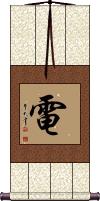
Electricity / Lightning

Mandarin: diàn
Japanese: den
Korean:

電

This is the title for electricity in Chinese, Japanese Kanji, and old Korean Hanja.

While this character means electric or electricity, it can also be used to mean lightning in Japanese and Korean.

See Also...  Thunder | Power | Rain

Back to the top of this page

Select

Exercise (for body or mind)

Mandarin: duàn liàn
Korean: 단련

鍛
煉

This means exercise in much the same way we use exercise in English. This can be exercising your body at the gym, or exercising your mind in studies. Most of the time, this refers to physical exercise.

This can also be translated as to temper, to toughen, to train, to drill, to forge, or simply discipline.

Select

Perseverance / Fortitude

Mandarin: jiǎn rěn
Japanese: ken nin
Korean: 견인

堅
忍

The first character means "strong", "solid", "firm", "unyielding" or "resolute".
The second character means "to beat", "to endure", or "to tolerate".
Together they speak of the strength from within yourself. Some may also translate this as "long-suffering" in a more Biblical sense.

This is a common term in Chinese and Korean Hanja, but a little less commonly-used in modern Japanese Kanji. For that reason, this selection is best if your audience is Chinese or Korean.

忍Note that when writing this as Kanji, Japanese will tend to write the second Kanji in the form shown to the right. If you select our Japanese master calligrapher, please expect this Kanji form (yes, it's just one stroke that is slightly different in location, crossing another stroke in the Japanese Kanji form).

Due to some odd computer coding conventions, these two character forms were combined/merged into the same code point - thus you will not see Kanji images of the more Japanese form as you select options for your wall scroll.

Select

Free Will

Mandarin: zì yóu yì zhì
Japanese: jiyuu ishi
Korean: 자유의지

自
由
意
志

This concept has existed for thousands of years that humans have the ability to understand right and wrong, then make a decision one way or the other (thus affecting their own fate).

Sources such as Confucius, Buddhist scriptures, the Qur'an and the Bible all address this idea.

As for the characters shown here, the first two mean free, freedom, or liberty. The last two simply mean "will".

See Also...  Freedom | Strong Willed | Fate

Back to the top of this page

Select

Good Health

Mandarin: jiàn kāng
Japanese: kenkou
Korean: 건강

健
康

This is the best way to express good health in Chinese, Korean and Japanese.

These characters also suggest the ideas of being solid, strong, sound, wholesome and at peace.

Can also be used to express "healthy", "vitality", or "well-being".

See Also...  Health | Vitality | Wellness

Select

Good Health / Healthy / Vigor

Also suggests being at peace

Mandarin: kāng
Japanese: kou
Korean:

康

This is a single character that means good health or vigor in Chinese, Japanese Kanji, and old Korean Hanja.

This character can also mean peaceful, at ease, or abundant in some contexts.

Please note that this is rarely seen alone in Japanese Kanji. In Japanese, it is used both for health-related compound words and to denote the kouhou through koushou eras of Japan.

In Korean, this can also be the family name "Kang" (caution: not the only family name romanized as Kang in Korean).

See Also...  Health | Vitality | Wellness

Select

Gutsy / Daring / Bold

Mandarin: pò lì
Japanese: hakuryoku
Korean: 박력

迫
力

This Chinese word is a form of personal strength. It is a word that describes a person who is willing to take a risk. In English we might say, "Someone with guts".

An example might be a person that is not rich, but invests a lot of money into something (knowing they could double their money, or lose it all). Win or lose, this is a person that knows or pushes their potential.

Tearing this word apart, the first character means "to compel", urgent, urge, force, imminent, or "spur on". The second means power, strong, bear, or exert.

Note: This is also a word in Japanese Kanji and Korean Hanja, but with a meaning more like force, intensity, appeal, strength, impact, force, or simply power.

Back to the top of this page

Select

Healthy Living

Mandarin: jiàn kāng shēng huó
Japanese: kenkou seikatsu
Korean: 건강생활

健
康
生
活

If you are into healthy living, this might be a great selection for a wall scroll to hang in your home. The first two characters speak of health, vitality, vigor and being of sound body. The second two mean living or life (daily existence).

See Also...  Strength | Vitality | Health

Select

Woman of Strong Character / Woman Hero

Mandarin: nǚ jiá
Japanese: joketsu

女
傑

This can mean brave woman, heroine, lady of character, distinguished woman, outstanding woman, and sometimes prominent woman.

In modern usage, some people might use this to give a title to women like Oprah Winfrey, Hillary Clinton, or Sarah Palin. I would rather use it for a woman like Araceli Segarra (the first woman from Spain to climb Mt. Everest).

Select

Indomitable / Persistence / Fortitude

Mandarin: bù qū
Japanese: fukutsu
Korean: 불굴

不
屈

This is the short form of a longer Chinese word, and also a word used in Korean and Japanese to express the idea of being indomitable. It literally means, "will not bend", "will not crouch", "will not yield", "will not flinch", or "will not submit".

Note: Some will translate this as "indomitable spirit"; however, technically, there is no character to suggest the idea of "spirit" in this word.

See Also...  Tenacity | Fortitude | Strength | Undaunted

Back to the top of this page

Select

Indomitable / Unyielding

Mandarin: bù qū bù náo
Japanese: fukutsu futou

不
屈
不
撓

This is a long word by Chinese standards. At least it is often translated as a single word into English. This simply means "Indomitable" or "Unyielding".

If you want to break it down, you can see that the first and third characters are the same. Both meaning "not" (they work as a suffix to make a negative or opposite meaning to whatever character follows). The second character means "bendable". The last means "scratched" or "bothered".
So this really means "Won't be bent, can't be bothered". I have also seen it written as "Will not crouch, will not submit". This comes from the fact that the second character can mean, "to crouch" and the last can mean "to submit" (as in "to give in" such as "submitting to the rule of someone else"). This may explain better why these four characters mean "indomitable".

Notes:
Some will translate this as "indomitable spirit"; however, technically, there is no character to suggest the idea of "spirit" in this word.
The first two characters can be a stand-alone word in Chinese.
In Japanese, this is considered to be two words (with very similar meanings).
The same characters are used in Korean, but the 2nd and 4th characters are swapped to create a word pronounced "불요불굴" in Korean.
Just let me know if you want the Korean version, which will also make sense in Japanese, and though not as natural, will also make sense in Chinese as well.

See Also...  Tenacity | Fortitude | Strength | Undaunted

Select

Intensity

Mandarin: qiáng liè
Japanese: kyouretsu
Korean: 강렬

強
烈

This word means intensity in regards to strength.

Note: In some context, this can mean violently strong or severe.

Select

Live Strong

Mandarin: jiān qiáng shēng huó

堅
強
生
活

While hard to translate directly, this is the best way to write "Live Strong" in Chinese. If you are a cancer survivor, or simply support Lance Armstrong's ideas, this is a nice selection for a wall scroll.

The first two characters mean strong or staunch. The last two mean living or life (daily existence). While the Chinese version is the reverse order of "Live Strong" it is the only way to write it in a natural form that is also grammatically correct.

Note that we are in no way affiliated or connected to Lance, nor his foundation. This translation is offered because of multiple requests from customers whose philosophies or ideas match those of the Live Strong idea.

See Also...  Strength | Vitality | Health | Determination | Discipline

Back to the top of this page

Select

Mighty / Powerful / Strong

Mandarin: qiáng dà
Japanese: kyoudai
Korean: 강대

強
大

This can mean mighty, powerful, large, formidable, or strong.

This term is often used to describe soldiers/troops/warriors, and whole armies.

Select

Motivation

Chinese only

Mandarin: dòng lì
Japanese: douryoku
Korean: 동력

動
力

This word can be used for motivation - it can also mean power / motion / propulsion / force. It can be anything internal or external that keeps you going.

This is the safest way to express motivation in Chinese. If your audience is Japanese, please see the other entry for motivation. This is a word in Japanese and Korean, but it means "motive power" or "kinetic energy" (without the motivation meaning that you are probably looking for).

See Also...  Enthusiasm | Passion

Select

Patience / Perseverance / To Endure / Tolerant

Mandarin: rěn nài
Japanese: nintai
Korean: 인내

忍
耐

Patience is quiet hope and trust that things will turn out right. You wait without complaining. You are tolerant and accepting of difficulties and mistakes. You picture the end in the beginning and persevere to meet your goals.

These characters can also mean "to endure", "restrain oneself" and in some context it can mean "perseverance" or "endurance".

This is also used as a tenet of Taekwondo and other Korean martial arts.

忍Note that when writing this as Kanji, Japanese will tend to write the first character in the form shown to the right. If you select our Japanese master calligrapher, please expect this Kanji form (yes, it's just one stroke that is slightly different in location, crossing another stroke in the Japanese Kanji form).

See Also...  Peace | Inner Peace | Harmony | Perseverance

Back to the top of this page

Select

Patience / Perseverance

Mandarin: rěn
Japanese: nin
Korean:

忍

This character contains the ideas of patience, perseverance and endurance. Alone, this single character can be a bit ambiguous or flexible. It can also mean to endure, to bear, to put up with or to conceal. If you want to simply decide what this character means to you within the general meaning, but keep it a mystery to others, this is a good choice.

If you want to be more direct, you may want to choose one of our other selections that mean perseverance or patience (you will see this character within those larger words/phrases).

There is a secondary meaning in Japanese, since this is the first character of the word ninja.

忍Note that when writing this as Kanji, Japanese will tend to write it in the form shown to the right. If you select our Japanese master calligrapher, please expect this Kanji form (yes, it's just one stroke that is slightly different in location, crossing another stroke in the Japanese Kanji form).

See Also...  Perseverance | Patience | Tenacious

Select

Perseverance

(Chinese)

Mandarin: jiān rèn bù bá
Korean: 견인불발

堅
韌
不
拔

Perseverance is being steadfast and persistent. You commit to your goals and overcome obstacles, no matter how long it takes. When you persevere, you don't give up...you keep going. Like a strong ship in a storm, you don't become battered or blown off course. You just ride the waves.


This translation literally means, "something so persistent or steadfast, that it is not uprootable / movable / surpassable".

See Also...  Tenacious | Devotion | Persistence | Indomitable

Select

Perseverance

(single character)

Mandarin:
Japanese: see note
Korean:

毅

This is the simplest way to express perseverance in Chinese and Korean Hanja.
This single-character version leaves a bit of mystery about what kind of perseverance you might want to convey.

In Korean, this is usually associated with "strength of character".

In Japanese, this character can be pronounced about a dozen different ways (so we have left out the Japanese pronunciation guide that normally appears above). In Japanese this Kanji would usually be translated "strong" (perhaps strong-willed).

See Also...  Tenacity | Fortitude | Strength | Undaunted

Back to the top of this page

Select

Perseverance / Will-Power

Mandarin: yì lì
Korean: 의력

毅
力

These two characters are a way to express "perseverance" with the idea of "willpower" in Chinese and old Korean Hanja. It can also mean "strong willed".

The first character means "strong" and "persistent", while the second means "strength" and "power".

Select

Perseverance / Indomitable / Invincible Fortitude

(Japanese)

Mandarin: jiān rěn bù bá
Japanese: kenninfubatsu

堅
忍
不
抜

This is the Japanese version of the 4-character perseverance title. This would be understood in Chinese but it's not commonly written this way in Chinese.

忍Note that when writing this as Kanji, Japanese sometimes write the second Kanji in the form shown to the right. Yes, it's just one stroke that is slightly different in location, crossing another stroke in this alternate Japanese Kanji form. If you have a preference, let us know when you order.

Due to some odd computer coding conventions, these two character forms were combined/merged into the same code point - thus you will not see Kanji images of more Japanese form as you select options for your scroll.

Select

Perseverance

(two characters)

Mandarin: jiān rèn
Korean: 견인

堅
韌

This is a simpler version that just holds the meaning of "fortitude", "steadfast" and "persistent".

Back to the top of this page

Select

Undaunted After Repeated Setbacks

Persistence to overcome all challenges

Mandarin:
bǎi zhé bù náo

Japanese:
hyaku setsu su tou

Korean: 백절불요

百
折
不
撓

This phrase means "Be undaunted in the face of repeated setbacks".

It comes from a long, and occasionally tragic story of a man that lived sometime around 25-220 AD. His name was Qiao Xuan and he never stooped to flattery, but remained an upright person at all times. He fought to expose corruption of higher-level government officials at great risk to himself.

Then when he was at a higher level in the Imperial Court, bandits were regularly capturing hostages and demanding ransoms. But when his own son was captured, he was so focused on his duty to the Emperor and common good that he sent a platoon of soldiers to raid the bandits' hideout, and stop them once and for all even at the risk of his own son's life. While all of the bandits were arrested in the raid, they killed Qiao Xuan's son at first sight of the raiding soldiers.

Near the end of his career a new Emperor came to power, and Qiao Xuan reported to him that one of his ministers was bullying the people and extorting money from them. The new Emperor refused to listen to Qiao Xuan and even promoted the corrupt Minister. Qiao Xuan was so disgusted that in protest he resigned his post as minister (something almost never done) and left for his home village.

His tombstone reads "Bai Zhe Bu Nao" which is now a phrase used in Chinese culture to describe a person of strong will who puts up stubborn resistance against great odds.

My Chinese-English dictionary defines these 4 characters as, "keep on fighting in spite of all setbacks", "be undaunted by repeated setbacks" and "be indomitable".

Our translator says it can mean, "never give up" in modern Chinese.

Although the first two characters are translated correctly as "repeated setbacks", the literal meaning is "100 setbacks" or "a rope that breaks 100 times". The last two characters can mean "do not yield" or "do not give up".
Most Chinese, Japanese, and Korean people will not take this absolutely literal meaning, but will instead understand it as the title suggests above.

See Also...  Tenacity | Fortitude | Strength | Perseverance

Select

Robust / Sturdy

Mandarin: qiáng jiàn
Japanese: kyouken
Korean: 강건

強
健

This means robustness or sturdiness in regards to being healthy and fit. This can also be used to say "persistently good health".

Select

Powerful / Strong

Mandarin: qiáng zhuàng
Japanese: kyousou
Korean: 강장

強
壯

This is an adjective that means powerful or strong. It can also be translated as able-bodied, robust, or sturdy. This version of strength suggests muscularity.

壮Note that the second character was simplified in Japan after WWII (also simplified in mainland China, but not for calligraphy). If you want the modern Japanese/simplified version, please click on the Kanji shown to the right.

See Also...  Strength | Vitality | Health

Back to the top of this page

Select

Strong / Powerful

Mandarin: qiáng
Japanese: kyou
Korean:

強

This "strong" character means strength, force, powerful, better, stubborn, and stiff (yes, all of this in one character). This "strong" has less to do with physical strength and more to do with having a winning attitude, or just having the ability to win at something.

Note that most of the time, this character is pronounced "qiang", but when used with the meaning of stubborn, unyielding, or stiff, it is pronounced "jiang" in Chinese.

Also, sometimes "qiang" is used in modern Chinese to describe people that do crazy things (Example: Bicycling from Beijing to Tibet alone). I sometimes can be found outside my Beijing apartment wearing nothing but shorts and a tee-shirt while eating an ice cream during a snow storm, just to hear my neighbors call me "qiang". Maybe they mean "strong" but perhaps they are using the new meaning of "crazy strong".

Also a Korean Hanja with same meaning, but mostly used in compound words.

This is used in Japanese (though normally in compound words). In Japanese, it has the same meaning, but in some context can mean "a little more than..." or "a little over [some amount]". Most Japanese would read this as tough, strength, stiff, hard, inflexible, obstinate, or stubborn.

Select

Strong / Robust

Mandarin: zhuàng
Japanese: sou
Korean:

壯

This "strong" character means "to strengthen" or robust. This brings images of a muscle-bound hulk of a weight lifter or body builder to an Asian person who sees this character.

Note that in Korean and Japanese, this character is normally part of compound words, and is not seen alone too often.

壮Note that the this character was simplified in Japan after WWII (also simplified in mainland China, but not for calligraphy). If you want the modern Japanese/simplified version, please click on the Kanji shown to the right.

Select

Strong / Healthy

Mandarin: jiàn
Japanese: ken
Korean:

健

This "strong" character is the more "healthy" version of strong. This is the "strong" that is appropriate for an athlete.

Beyond "healthy", it can also mean strength, persistence, vigorous or invigorated.

Back to the top of this page

Select

Strong and Beautiful

Mandarin: jiàn měi
Japanese: takemi
Korean: 건미

健
美

We don't really have a word like this in English, but these two characters create a word that means "strong and beautiful". It could also be translated as "healthy and beautiful".

Note: This is a word in Chinese and Korean, but it's also the family name Takemi in Japanese. The characters hold the same meaning in Japanese, but It's kind of like having the English name Stillwell, when few people would perceive the meanings of still and well.

Select

Strong / Healthy (Japanese)

Japanese: sukoyaka

健
や
か

This is a verbose way to say strong and healthy in Japanese. This is the "strong" that is appropriate for an athlete.

Beyond "healthy", it can also mean strength, persistence, vigorous or invigorated.

Japanese also use the first Kanji to mean the same thing. This version just adds two hiragana which serve to emphasize or amplify the word and clarify the meaning.

Select

Strong Hearted

Mandarin: yì zhì jiān qiáng
Korean: 의지견강

意
志
堅
強

This phrase can mean either "strong hearted", "strong willed" or "determination". The first two characters can be translated simply as "will" but also have the element of "heart" in the lower portion of both characters (they also partially carry this meaning). The last two characters mean "strong" or "staunch".

Chinese word order and grammar is a bit different than English, so in this case, they are in reverse order of English, but have the correct meaning in a natural form.

See Also...  Strong Willed | Discipline | Will-Power

Back to the top of this page

Select

Strong Woman

Mandarin: nǚ qiáng rén

女
強
人

This is the best way to say "strong woman" or "strong and independent woman" in Chinese.

Grammar in China is a bit different, so these three characters literally read as "female strength person" or "woman strong person". This might sound funny in English, but this is a natural-sounding title in Chinese.

Select

Tempering Makes Strong Steel, Hardship Develops Strong Character

Mandarin: bǎi liàn cái chéng gāng

百
煉
纔
成
鋼

This literally translates as: Only after much tempering is steel produced.

Figuratively, this means: True character must be tested in hardship.

This is a mild form of saying, "Whatever doesn't kill me, makes me stronger".

Select

Tenacious / Tenacity

Mandarin: wán qiáng
Japanese: gan kyou
Korean: 완강

頑
強

These two characters together mean "Tenacious", "Hard to Defeat", or "Dogged".

Alone, the first character means mischievous, obstinate or stubborn. But it loses some of the mischievous meaning when the second character is added.

The second character means strength, force, powerful or better.

See Also...  Determination | Dedication | Devotion | Never Give Up

Back to the top of this page

Select

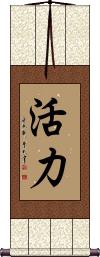
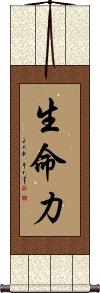
Vitality

Mandarin: shēng mìng lì
Japanese: seimeiryoku
Korean: 생명력

生
命
力

This word can mean "vitality" or "libido". The first two characters mean "life" or "life force". The last character is a common word that means "strength". So together you get the meaning "life strength" which is the essence of vitality. Some will also translate this word as "good health".

See Also...  Life Force | Health

Select

Will-Power / Self-Control

Mandarin: yì zhì lì
Japanese: ishi ryoku
Korean: 의지� �

意
志
力

This is the form of will power or self-control is about having the determination or tenacity to keep going.

In Japanese, this is the power of will, volition, intention, intent, or determination.


Wall scroll artwork shown on this page is priced as follows:

1 character $29.88 each

2-3 characters $39.88 each

4 characters $49.88 each

5-10 characters $59.88 each


We dispatch any size order to any country worldwide for a flat rate US$9.80 P&P

After you select your calligraphy, our website will take you through the process of customizing your artwork.

Options for other mounting such as portraits are available for $13 less.

We also offer the services of a famous master calligrapher for a $40 fee on any scroll if you are looking for investment-quality calligraphy.

If you chose our famous master-calligrapher, you also get more choices for silk and paper colors and the option for larger artwork.


All of our calligraphy is completely done by hand in the ancient way.

When the calligrapher finishes creating your artwork, it is taken to our art mounting workshop in Beijing where a wall scroll is made by hand from a combination of silk, rice paper, and wood.

After we create your wall scroll, it takes at least two weeks for air mail delivery from Beijing to you.

Therefore, allow at least 3 weeks for delivery from the time you place your order.

When you select your calligraphy, you'll be taken to another page where you can choose various custom options.

A nice Chinese calligraphy wall scroll

The scroll that I am holding in this picture is a "regular size"
4-character wall scroll.
As you can see, it is a great size to hang on your wall.
(We also offer custom wall scrolls in larger sizes)

A professional Chinese Calligrapher

Professional calligraphers are getting to be hard to find these days.
Instead of drawing characters by hand, the new generation in China merely type roman letters into their computer keyboards and pick the character that they want from a list that pops up.

There is some fear that true Chinese calligraphy may become a lost art in the coming years. Many art institutes in China are now promoting calligraphy programs in hopes of keeping this unique form of art alive.

Trying to learn Chinese calligrapher - a futile effort

Even with the teachings of a top-ranked calligrapher in China, my calligraphy will never be good enough to sell. I will leave that to the experts.


A high-ranked Chinese master calligrapher that I met in Zhongwei

The same calligrapher who gave me those lessons also attracted a crowd of thousands and a TV crew as he created characters over 6-feet high. He happens to be ranked as one of the top 100 calligraphers in all of China. He is also one of very few that would actually attempt such a feat.


See: Our list of specifically Japanese Kanji Calligraphy Wall Scrolls. And, check out Our list of specifically old Korean Hanja Calligraphy Wall Scrolls.


The following table is only helpful for those studying Chinese (or Japanese), and perhaps helps search engines to find this page when someone enters Romanized Chinese or Japanese

Title
 
Characters
Simplified
Traditional
Japanese Romaji
(Romanized Japanese)
Various forms of Hanyu-Pinyin
(Romanized Chinese)
Life Energy / Spiritual Energy气 / 気
ki
qi
qi4
qi
Psychic Energy通灵
通靈
n/atōng líng
tong ling
tong1 ling2
tongling
Supernatural Energy超能力
超能力
chounouryoku
chonoryoku
chāo néng lì
chao neng li
chao1 neng2 li4
chaonengli
Fortitude / Strength of Character刚毅
剛毅
gouki
goki
gāng yì
gang yi
gang1 yi4
gangyi
God Give Me Strength愿上帝给我力量
願上帝給我力量
n/ayuàn shàng dì gěi wǒ lì liàng
yuan shang di gei wo li liang
yuan4 shang4 di4 gei3 wo3 li4 liang4
yuanshangdigeiwoliliang
Inner Strength is Better than Outward Appearance表壮不如里壮
表壯不如裡壯
n/abiǎo zhuàng bù rú lǐ zhuàng
biao zhuang bu ru li zhuang
biao3 zhuang4 bu4 ru2 li3 zhuang4
biaozhuangburulizhuang
Inner Strength内在力量
內在力量
n/anèi zài lì liàng
nei zai li liang
nei4 zai4 li4 liang4
neizaililiang
Inner Strength内力
內力
nai ryoku
nairyoku
nèi lì
nei li
nei4 li4
neili
Inner Strength自强
自強
n/azì qiáng
zi qiang
zi4 qiang2
ziqiang
Spiritual Strength
Strength of Spirit
精神力量
精神力量
seishin rikiryou
seishinrikiryou
seishin rikiryo
jīng shén lì liàng
jing shen li liang
jing1 shen2 li4 liang4
jingshenliliang
Strength / Ability力量
力量
riki ryou
rikiryou
riki ryo
lì liàng
li liang
li4 liang4
liliang
Physical Strength体力
體力
tai ryoku
tairyoku
tǐ lì
ti li
ti3 li4
tili
Physical Strength (Japanese / Simplified version)体力
體力
tairyokutǐ lì
ti li
ti3 li4
tili
Power / Strength
chikara / ryoku
chikara/ryoku

li
li4
li
Strength: Strong and Solid强固
強固
kyouko
kyoko
qiáng gù
qiang gu
qiang2 gu4
qianggu
Life Force生命
生命
seimei / inochi
seimei/inochi
shēng mìng
sheng ming
sheng1 ming4
shengming
Aikido (Japanese)合気道 (Modern Japanese)
合氣道 (Old Japanese/Chinese)
ai ki dou
aikidou
ai ki do
hé qì dào
he qi dao
he2 qi4 dao4
heqidao
Birth / Life
shou / iku
shou/iku
sho / iku
shēng
sheng
sheng1
sheng
Electricity / Lightning
dendiàn
dian
dian4
dian
Exercise (for body or mind)锻炼
鍛煉 / 鍛鍊
n/aduàn liàn
duan lian
duan4 lian4
duanlian
Perseverance / Fortitude坚忍
堅忍
ken nin
kennin
jiǎn rěn
jian ren
jian3 ren3
jianren
Free Will自由意志
自由意志
jiyuu ishi
jiyuuishi
jiyu ishi
zì yóu yì zhì
zi you yi zhi
zi4 you2 yi4 zhi4
ziyouyizhi
Good Health健康
健康
kenkou
kenko
jiàn kāng
jian kang
jian4 kang1
jiankang
Good Health / Healthy / Vigor
kou
ko
kāng
kang
kang1
kang
Gutsy / Daring / Bold迫力
迫力
hakuryokupò lì
po li
po4 li4
poli
Healthy Living健康生活
健康生活
kenkou seikatsu
kenkouseikatsu
kenko seikatsu
jiàn kāng shēng huó
jian kang sheng huo
jian4 kang1 sheng1 huo2
jiankangshenghuo
Woman of Strong Character / Woman Hero女杰
女傑
joketsunǚ jiá
nv jia
nv3 jia2
nvjia
Indomitable / Persistence / Fortitude不屈
不屈
fukutsubù qū
bu qu
bu4 qu1
buqu
Indomitable / Unyielding不屈不挠
不屈不撓
fukutsu futou
fukutsufutou
fukutsu futo
bù qū bù náo
bu qu bu nao
bu4 qu1 bu4 nao2
buqubunao
Intensity强烈
強烈
kyouretsu
kyoretsu
qiáng liè
qiang lie
qiang2 lie4
qianglie
Live Strong坚强生活
堅強生活
n/ajiān qiáng shēng huó
jian qiang sheng huo
jian1 qiang2 sheng1 huo2
jianqiangshenghuo
Mighty / Powerful / Strong强大
強大
kyoudai
kyodai
qiáng dà
qiang da
qiang2 da4
qiangda
Motivation动力
動力
douryoku
doryoku
dòng lì
dong li
dong4 li4
dongli
Patience / Perseverance / To Endure / Tolerant忍耐
忍耐
nintairěn nài
ren nai
ren3 nai4
rennai
Patience / Perseverance
ninrěn
ren
ren3
ren
Perseverance坚韧不拔
堅韌不拔
n/ajiān rèn bù bá
jian ren bu ba
jian1 ren4 bu4 ba2
jianrenbuba
Perseverance
see note
seenote
se note

yi
yi4
yi
Perseverance / Will-Power毅力
毅力
n/ayì lì
yi li
yi4 li4
yili
Perseverance / Indomitable / Invincible Fortitude坚忍不拔
堅忍不抜 / 堅忍不拔
kenninfubatsujiān rěn bù bá
jian ren bu ba
jian1 ren3 bu4 ba2
jianrenbuba
Perseverance坚韧
堅韌
n/ajiān rèn
jian ren
jian1 ren4
jianren
Undaunted After Repeated Setbacks百折不挠
百折不撓

hyaku setsu su tou

hyakusetsusutou

hyaku setsu su to
bǎi zhé bù náo
bai zhe bu nao
bai3 zhe2 bu4 nao2
baizhebunao
Robust / Sturdy强健
強健
kyouken
kyoken
qiáng jiàn
qiang jian
qiang2 jian4
qiangjian
Powerful / Strong强壮
強壯
kyousou
kyoso
qiáng zhuàng
qiang zhuang
qiang2 zhuang4
qiangzhuang
Strong / Powerful
kyou
kyo
qiáng
qiang
qiang2
qiang
Strong / Robust
sou
so
zhuàng
zhuang
zhuang4
zhuang
Strong / Healthy
kenjiàn
jian
jian4
jian
Strong and Beautiful健美
健美
takemijiàn měi
jian mei
jian4 mei3
jianmei
Strong / Healthy (Japanese)健やか
健やか
sukoyakan/a
Strong Hearted意志坚强
意志堅強
n/ayì zhì jiān qiáng
yi zhi jian qiang
yi4 zhi4 jian1 qiang2
yizhijianqiang
Strong Woman女强人
女強人
n/anǚ qiáng rén
nv qiang ren
nv3 qiang2 ren2
nvqiangren
Tempering Makes Strong Steel, Hardship Develops Strong Character百炼才成钢
百煉纔成鋼
n/abǎi liàn cái chéng gāng
bai lian cai cheng gang
bai3 lian4 cai2 cheng2 gang1
bailiancaichenggang
Tenacious / Tenacity顽强
頑強
gan kyou
gankyou
gan kyo
wán qiáng
wan qiang
wan2 qiang2
wanqiang
Vitality生命力
生命力
seimeiryokushēng mìng lì
sheng ming li
sheng1 ming4 li4
shengmingli
Will-Power / Self-Control意志力
意志力
ishi ryoku
ishiryoku
yì zhì lì
yi zhi li
yi4 zhi4 li4
yizhili
If you have not set up your computer to display Chinese, the characters in this table probably look like empty boxes or random text garbage.
This is why we spent hundreds of hours making images so that you could view the characters in the "Energy" listings above.
If you want your Windows computer to be able to display Chinese characters you can either head to your Regional and Language options in your Win XP control panel, select the [Languages] tab and click on [Install files for East Asian Languages]. This task will ask for your Win XP CD to complete in most cases. If you don't have your Windows XP CD, or are running Windows 98, you can also download/run the simplified Chinese font package installer from Microsoft which works independently with Win 98, ME, 2000, and XP. It's a 2.5MB download, so if you are on dial up, start the download and go make a sandwich.


All custom calligraphy items are made-to-order in our little Beijing artwork-mounting workshop.
Normal delivery isjust over 3 weeksfor these handmade items.


Key / Important Pages Information Pages "How To" Pages Search Engine & Tech Stuff
Home About Us Asian Art Questions & Answers How We Make Our Wall Scrolls Site Map
Asian Art Gallery About China How Chinese Paintings are Mounted How To Care For Wall Scrolls Asian Language Tools
New Asian Art Arrivals F.A.Q. Asian Art Adventures Framing Suggestions for Chinese Art Characters
Love in Chinese/Japanese Gary's Stories Japanese & Chinese Calligraphy Search How To Frame Asian Art Asian Art Index
Strength in Chinese/Japanese Contact Us Japanese Kakejiku   Chinese / Japanese Dictionary

Copyright Oriental Outpost 2002-2009   -   All Rights Reserved
Image Use Policy | Privacy Policy