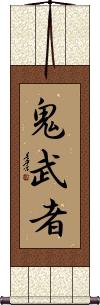
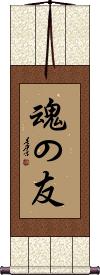
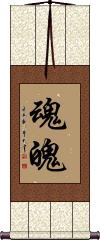
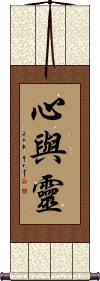
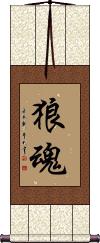
Buy a Custom Soul Chinese or Japanese Calligraphy Wall Scroll

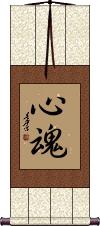
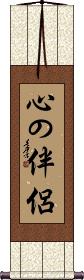
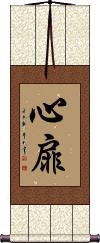
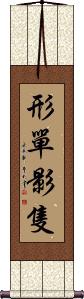
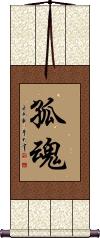
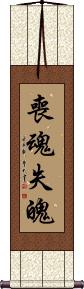
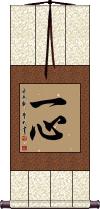
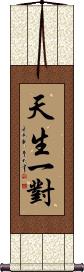
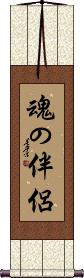
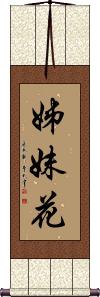
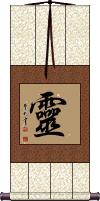
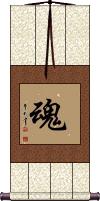
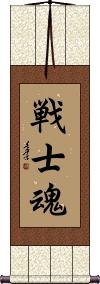
We have many options to create artwork with the Chinese characters / Asian symbols / Japanese Kanji for Soul on a wall scroll or portrait.
See also: Heart and Mind as sometimes these meanings over into soul.

Quick links to words on this page...

  1. Tao / Dao of the Heart / Soul
  2. Reincarnation / Transmigration of Souls
  3. Soul Mates
  4. Warrior Soul / Heroic Spirit
  5. Soul of a Warrior
  6. Spirit
  7. Advance Bravely / Indomitable Spirit
  8. The Spirit of the Dragon Horse
  9. The Spirit of the Dragon Horse,...
10. The Spirit of Dragon and Tiger
11. Fighting Spirit
12. Free Spirit
13. Heart / Mind / Spirit
14. Holy Spirit / Holy Ghost
15. Independent Spirit / Independent Heart
16. Indomitable Spirit
17. Inner Beauty / Beauty of Spirit
18. Life Energy / Spiritual Energy
19. Mind, Body and Spirit
20. Purified Spirit / Enlightened Attitude
21. Spirit / Spiritual Essence
22. Spirit of Taekwondo
23. Spiritual Strength ...
24. Taekwondo Tenets / Spirit of Taekwon-do
25. Warrior Essence / Warrior Spirit / Martial
26. Archangel / Arch Angel
27. Mind of the Beginner
28. Determination
29. Devotion / Dedication...
30. Devotion / Enthusiasm
31. Enthusiasm / Warm-Hearted
32. Inner Peace
33. Lingering Mind
34. Mind Like Water
35. Morality of Mind
36. My True Love
37. No Mind / Mushin

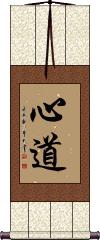
Tao / Dao of the Heart / Soul

xīn dào
心
道

This means "The Way of the Heart" or "The Way of the Soul". The first character means "heart", but can also mean soul, spirit, mind, or your essence. In this case, it is most accurately translated with the heart or soul meaning.

The second character is Dao as in Daoism. Please note, this is the same thing as Tao as in Taoism (just Romanized differently - it's always been the same in Chinese for about 2300 years.

Reincarnation / Transmigration of Souls

lún huí
rin ne
輪
回

This is a universal word in Japanese and Chinese that expresses the Buddhist idea of "reincarnation", "transmigration of souls" or "the eternal cycle of birth and death". In some context, this can also mean "karma".

The first character means wheel, ring, turn, circle, loop or rotate.
The second character can be thought of as a suffix meaning "-times". This second character can also refer to something that revolves, returns, goes back, or a counter for the number of occurrences of some event.
Together the sum supersedes the parts and it means reincarnation. But knowing the seeing the essence of each character may help you understand some of the meaning behind the word.

廻If you request this selection from our Japanese master calligrapher, please expect that the second Kanji will look like the one shown to the right. This is the more common way to write this in Japanese. It's an alternate form of this character in Chinese (so neither way is technically wrong in either language).

See Also...  Buddhism | Rebirth

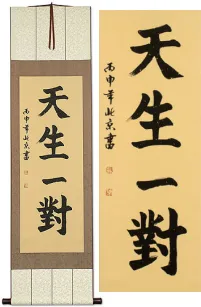
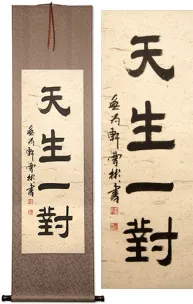
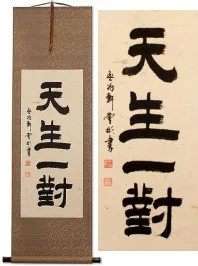
Soul Mates

tiān shēng yí duì
天
生
一
對

It was tough to find the best way to say "soul mates" in Chinese. We settled on this old way to say "A couple selected by heaven".

The first two characters together mean "natural" or "innate". Separated, they mean "heaven" and "born". The last two characters mean "couple". So this can be translated as "A couple that is together by nature", or "A couple brought together by heaven's decree", with a slight stretch, you could say "A couple born together from heaven".

It's a struggle to find the best way to describe this idea in English, but trust me, it is pretty cool and it is a great way to say "soulmates".

If you're in a happy relationship or marriage and think you have found your soul mate, this would be a wonderful wall scroll to hang in your home.

Soul Mates (literal)
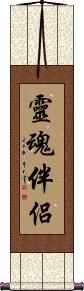
líng hún bàn lǚ
reikon hanryo
령혼반려 or 영혼반려
靈
魂
伴
侶

This is the literal translation of "Soul Mates". Meaning it is kind of the western way to express "soul mates", but translated into Chinese. The first two characters mean "soul" or "spirit". The second two characters mean "mate", "companion" or "partner".

These are also two words in Korean Hanja, but not often seen together like this - however, it does have the same good meaning in Korean.

This has good meaning in Japanese, but not a commonly-used title in Japan.

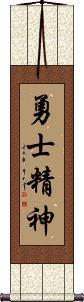
Warrior Soul / Heroic Spirit

yǒng shì jīng shén
용사정신
勇
士
精
神

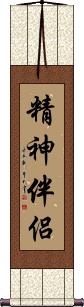
This can be translated as the warrior's spirit or warrior's soul. The first two characters can be translated as "warrior" or literally "brave soldier/man" although some will translate this word as "hero". Therefore, this is also how to say "heroic spirit".

The second two characters mean vigor, vitality, drive, spirit, mind, heart, mental essence and psychological component. Basically "your soul".

We have two versions of this phrase. The only difference is the first two and last two characters are swapped. The version here suggests that you admire or like the idea of the spirit of a warrior. The other version suggests that you are the warrior or hero.

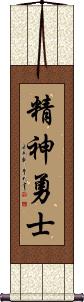
Soul of a Warrior

jīng shén yǒng shì
정신용사
精
神
勇
士

This can be translated as the spirit or soul of a warrior. The first two characters can be translated as vigor, vitality, drive, spirit, mind, heart, mental essence and psychological component. Basically "your soul".

The second two characters mean "warrior" or literally "brave soldier/man" although some will translate this word as "hero". Therefore, this is also how to say "soul of a hero".

Note: This title is best for Chinese and old Korean. It does make sense in Japanese, but is not a common or natural Kanji combination in Japanese.

We have two versions of this phrase. The only difference is the first two and last two characters are swapped. The version here suggests that you are the warrior or hero. The other version suggests that you admire or like the idea of the spirit of a warrior.

Spirit

jīng shén
sei shin
정신
精
神

This is the kind of spirit that you have if you perform well in sports or competition. It is the idea of having a good attitude, and putting your all into something - so much so that others can see or feel your spirit. It is the essence of your being that can only be subjectively described because there are no words that can fully explain what "spirit" really is.

For your information:
My Japanese dictionary further tries to explain this word by comparing it to mind, soul, heart or intention.
My Chinese dictionary compares these characters to meanings like vigor, vitality, drive and mentality.
My Korean dictionary defines this as mind, spirit and soul.

See Also...  Vitality | Heart

Back to the top of this page

Advance Bravely / Indomitable Spirit

yǒng wàng zhí qián
勇
往
直
前

This phrase creates an image of a warrior bravely advancing against an enemy regardless of the odds.

This phrase can also be translated as "indomitable spirit" or "march fearlessly onward".

See Also...  Indomitable | Fortitude

The Spirit of the Dragon Horse

lóng mǎ jīng shén
龍
馬
精
神

This is an old phrase that is used to wish someone good health and success combined as a great compliment.

The meaning is "The vigor and spirit of the legendary dragon-horse". These four characters are often accompanied by four more which mean, "...and the power and prestige of the tiger". Here we are just offering the first part which is considered the short version.

By giving a wall scroll like this to someone, you were either wishing or telling them that they have an amazing quality. There is also a suggestion of good health - at least anyone with the vigor of a dragon horse, would seem to also be in good health.

The Spirit of the Dragon Horse,
the Power of a Tiger.

lóng mǎ jīng shén hǔ hǔ shēng wēi
虎
虎
生
威
龍
馬
精
神

Characters shown
above are read
vertically, starting
from the right

This is an old phrase that is used to wish someone great health and success combined as a great compliment.

The meaning is "The vigor and spirit of the legendary dragon-horse, and the power and prestige of the tiger".

By giving a wall scroll like this to someone, you were either wishing or telling them that they have these qualities. There is also a suggestion of good health - at least anyone with the vigor of a dragon horse, would seem to also be in good health.

Back to the top of this page

The Spirit of Dragon and Tiger

lóng hǔ jīng shén
ryu ko sei shin
龍
虎
精
神

This means the spirit of the dragon and tiger. It speaks to the vitality and vigor that is the nature of these two creatures.

Beyond "spirit", the second two characters can also mean mind, soul, or heart. Therefore, you can also say this means "Heart of the Dragon and Tiger", etc.

This is often titled as "Ryukoseishin" in many Japanese martial arts.

Fighting Spirit

The Will to Fight

dòu zhì
斗
志

This literally means fighting spirit. As in the spirit that a warrior, soldier, athlete or fighter must possess.

斗Note: There is more than one way to write the first character of this word. It is sometimes written like the version shown to the right (yes, it's completely different, but has the same meaning & pronunciation). If you have a preference, please let us know in the special instructions about your order.

Fighting Spirit (Japanese only)

tou shi
闘
志

This literally means "fighting spirit" or "the will to fight". As in the spirit that a warrior, soldier, athlete or fighter must possess.

Back to the top of this page

Fighting Spirit (Japanese only)

Alternate version

tou kon
闘
魂

This is an alternate title with the meaning "fighting spirit" or "the will to fight".

Free Spirit

Chinese and Korean

zì yóu jīng shén
자유정신
自
由
精
神

The first two characters mean freedom or liberty.

The second two characters mean spirit, heart, mind, or soul.

Together, this is a title that is very similar to the English term "free spirit".

See Also...  Freedom | Independence

Free Spirit

Japanese

ji yuu na sei shin
自
由
な
精
神

The first two characters mean freedom or liberty.

The middle character is a connecting Hiragana which is needed for Japanese grammar.

The last two characters mean spirit, heart, mind, or soul.

Together, this is a title that is very similar to the English term "free spirit".

See Also...  Freedom | Independence

Back to the top of this page

Heart / Mind / Spirit

xīn
kokoro
心

This word would often be translated as “heart”. However, because it was believed in Chinese culture thousands of years that your consciousness and thoughts came from the big red organ in the middle of your chest, it also means “mind” or “spirit” and sometimes even “soul”.

In Korean, beyond heart, mind, and spirit, this character can mean moral, nature, mind, affections, intentions, core, and center. In fact, it is used in Chinese to mean "center" as well, but only with another character in front of it. For instance, "medical center" or even "shopping center". Separately and alone, it will not be read with that "center" meaning unless thought of as "the center of your soul".

Holy Spirit / Holy Ghost

shèng líng
성령
聖
靈

This is the title for the Holy Spirit or Holy Ghost as used by Jewish, Catholic and Protestant (and other Christian) Chinese people. And yes, Chinese Jews do exist, but there are not many of them.

The first character means Holy, Sacred, Saint or Sage. The second means ghost, spirit, efficacious or intelligence.

Independent Spirit / Independent Heart

dokuritsushin
독립심
独
立
心

The first two characters mean independent or independence. The third character means spirit, heart or mind.

This is a Japanese and Korean term, although Chinese people would be able to guess the meaning (the characters make sense individually in Chinese, but are not used in this order).

Back to the top of this page

Indomitable Spirit (Korean)

bǎi shé bù qū
백절불굴
百
折
不
屈

This Korean word means "indomitable spirit", at least, that is the way it is commonly translated in martial arts circles (Taekwondo, Hapkido, etc).

The literal translation is "[one] hundred [times] broken [still] don't succumb".
Or more naturally translated, "Even if attacked/beaten one hundred times, still be undaunted/indomitable".

This is also a word in Chinese, though rarely used in modern times.

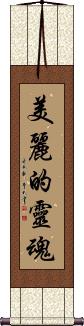
Inner Beauty / Beauty of Spirit

nèi zài měi
內
在
美

This three-character title speaks of beauty on the inside. It's not about outward or physical beauty, but rather the inner beauty possessed by someone. This can also be translated as "beauty of spirit".

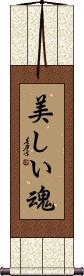
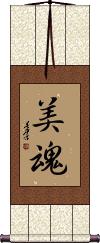
Inner Beauty / Beauty of Spirit

Japanese

nai men bi
内
面
美

This three-character title speaks of beauty on the inside. It's not about outward or physical beauty, but rather the inner beauty possessed by someone. This can also be translated as "beauty of spirit".

Back to the top of this page

Life Energy / Spiritual Energy

Essense of Life


ki
氣

Qi which is also Romanized as Chi in Chinese or Ki in Japanese, is a fundamental concept of traditional Asian culture. Qi is believed to be part of everything that exists, as in “life force” or “spiritual energy”. It is most often translated as “energy flow,” or literally as “air” or “breath”.

The character itself is a representation of steam (or breath) rising from rice.
米This was apparently seen as the release of energy from the rice when this concept was first developed. To clarify, the character for rice is shown to the right. The Qi / Chi / Ki character is still used in compound words to mean steam or vapor.

The idea of Qi / Chi / Ki is really a philosophical concept. It's often used to refer to the “flow” of metaphysical energy that sustains living beings. Yet there is much debate that has continued for thousands of years as to whether Qi / Chi / Ki is pure energy, or consists partially, or fully of matter.

You can also see the character for Qi / Chi / Ki in common compound words such as Tai Chi / Tai Qi, Aikido, Reiki and Qi Gong / Chi Kung.

In the modern Japanese Kanji, the rice radical has been changed into two strokes that form an X.

The original and traditional Chinese form is still understood in Japanese, but we can also offer that modern Kanji form in our custom calligraphy. If you want this Japanese Kanji, please click on the character to the right, instead of the “Select and Customize” button above.

More language notes: This is pronounced like “chee” in Mandarin Chinese, and like “key” in Japanese.
This is also the same way to write this in Korean Hanja where it is Romanized as “gi” and pronounced like “gee”, but with a real G-sound, not a J-sound.
Though Vietnamese no longer use Chinese characters in their daily language, this character is still widely known in Vietnam.

See Also...  Life Force | Vitality | Life | Birth

Mind, Body and Spirit

shēn xīn líng
mi shin rei
신심령
身
心
靈

This is probably the best way to express the idea of "Body, Mind and Spirit" in Chinese and old Korean Hanja. We are actually using the word for "heart" here because for thousands of years, the heart was thought to be the place where your thoughts, feelings and emotions came from. We do something similar in the west when we say "warm-hearted" or "I love you with all of my heart". In this context, heart = mind in Asian language and culture.

The very literal translation of these three characters is "body, heart & spirit" which could also be interpreted as "body mind & soul".

We have arranged these characters in this order because it simply "feels" like the proper order in the Chinese language. Word lists like this are not so common for calligraphy artwork, so we have to be careful to put them in the most natural order. It should be noted that this is not a common title in Asia, nor is it considered an actual phrase (as it lacks a clear subject, verb, and object).

In Japanese Kanji, they use an alternate form of the character for soul or spirit. If you want this using the Japanese alternate, please click on the Kanji shown to the right instead of the button above.

Japanese disclaimer: This is not a natural phrase/list in Japanese. While not totally-natural in Chinese, this word list is best if your audience is Chinese.

Purified Spirit / Enlightened Attitude

A Japanese martial arts title/concept

sen shin
先
心

The first Kanji alone means before, ahead, previous, future, precedence.

The second Kanji means heart, mind, soul, or essence.

Together, these two Kanji create a word that is defined as "purified spirit" or "enlightened attitude" within the context of Japanese martial arts.

This is one of the five spirits of the warrior (budo), and is often used as a Japanese martial arts tenet. Under that context, places such as the Budo Dojo define it this way: Senshin is a spirit that protects and harmonizes the universe. Senshin is a spirit of compassion that embraces and serves all humanity and whose function is to reconcile discord in the world. It holds all life to be sacred. It is the Buddha mind.

Back to the top of this page

Spirit / Spiritual Essence

shén
kami / shin
神

This is the simplest form of spirit. This single character alone will conjure up ideas of the spiritual world. This character can also be translated as "vital awareness" as in the fact that one must know they exist to exist (I think, therefore I am).

Other translations include:
God, mysterious, divine essence, lively, spiritual being, divinity, supernatural, soul, mind, nerves, and energy. In some extended context it can mean genius or unusual.

Spirit of Taekwondo

tái quán dào jīng shen
te kon do sei shin
태권도정신
跆
拳
道
精
神

This title means, "Taekwondo Spirit" or "The Spirit of Taekwondo". This is the title of General Choi's calligraphy often referred to as "The Tenets of Taekwon-do".

Spiritual Strength
Strength of Spirit

jīng shén lì liàng
seishin rikiryou
精
神
力
量

This title speaks of one's soul or spirit, and the capacity or strength that soul possesses.

The first two characters mean mind, heart, spirit, and/or soul.

The last two characters mean strength, capacity, or ability.

Note: Separately, these are two words in Japanese, and can be pronounced, but this does not make a natural title in Japanese (best if your audience is Chinese).

Back to the top of this page

Taekwondo Tenets / Spirit of Taekwon-do

tái quán dào jīng shén lǐ yì lián chǐ rěn nài kè jǐ bǎi zhé bù qū
태권도정신예의염치인내극기백절불굴
跆
拳
道
精
神
禮
義
廉
耻
忍
耐
克
己
百
折
不
屈

Taekwondo TenetsThis is General Choi's writing that is often called "The Tenets of Taekwon-do". The actual title would be translated as, "Taekwondo Spirit" or "The Spirit of Taekwondo". It was originally written in Korean Hanja (Chinese characters used in Korea for about 1600 years).

General Choi's original calligraphy is shown to the right. Your custom calligraphy will be unique, and not an exact match, as each calligrapher has their own style.

In modern times, the common form of written Korean is Hangul (a phonetic character set). The table below shows the text in Hangul and Hanja along with a pronunciation guide and a brief English translation:

Traditional Korean HanjaModern Korean HangulPronunciationEnglish
跆拳道精神태권도정신tae gweon do jeong sinTaekwondo Spirit
禮儀예의 or 례이ye yiCourtesy / Etiquette / Propriety / Decorum / Formality
廉耻렴치 or 염치yeom ciIntegrity / Sense of Honor
忍耐인내in naePatience / Perseverance / Endurance
克己극기geug giSelf-Control / Self-Denial / Self-Abnegation
百折不屈백절불굴baeg jeor bur gurIndomitable Spirit (Undaunted even after repeated attacks from the opponent)
Note that the pronunciation is the official version now used in South Korea. However, it is different than what you may be used to. For instance, "Taekwon-do" is "tae gweon do". This new romanization is supposed to be closer to actual Korean pronunciation.


Warrior Essence / Warrior Spirit / Martial


bu
武

This character is the essence or spirit of a warrior. This character is part of the word "wu shu" which is sometimes translated as "martial arts" or "kung fu".

In more modern speech and other context, this can mean military, martial, warlike, fierce, and perhaps violent, but usually as a prefix for a longer word or phrase.

Archangel / Arch Angel

dà tiān shǐ
대천사
大
天
使

This is the title Archangel in Chinese and old Korean Hanja.

The first character means big or great (in this case, it means "arch").
The second means heaven (or sky).
The last means messenger.

The second and third characters together make the title for angel, which is literally "Heaven's Messenger".

This title would be understood as "The Chief of all Angels", or "The Great Angel". Some might even say it's the boss of Angels.

See Also...  Angel

Back to the top of this page

Mind of the Beginner

chū xīn
shoshin
初
心

This is often translated in Japanese as "beginner's mind". In Chinese, the dictionary definition is "one's original intention".

The first character means first, initial, primary, junior, beginning, or basic.

The second character means heart, mind, soul, or essence.

This is one of the five spirits of the warrior (budo), and is often used as a Japanese martial arts tenet. Under that context, places such as the Budo Dojo define it this way: The state of shoshin is that of a beginners mind. It is a state of awareness the remains always fully conscious, aware, and prepared to see things for the first time. The attitude of shoshin is essential to continued learning.

Determination

jué xīn
kesshin
결심
決
心

You focus your energy and efforts on a task and stick with it until it is finished. Determination is using your will power to do something when it isn't easy. You are determined to meet your goals even when it is hard or you are being tested. With determination we make our dreams come true.

The first characters means "to determine" or "determined". The second character means "heart" or "soul", so you can imagine that this form of "determination" partially means to put your heart into something. It can also be translated as resolve, resolution, or decision (as in a decision made and followed).

See Also...  Devotion | Tenacious | Passion | Dedication | Will-Power

Devotion / Dedication
Attentive / Focused

zhuān xīn
sen shin
전심
專
心

This means "paying attention".

The first character means "for a particular person, occasion, or purpose", "focused on one thing", "concentrated" and sometimes, "special".

The second character means "heart" by itself.

Together, these two characters make a word that means, "paying attention with your heart". It's often translated as, "dedication", as in "be absorbed in" or "concentrate one's efforts". It's also used to mean, "concentration (-ed)" and "engrossed", "devotionally (listening/watching)", "attentive".

My favorite translation, which comes from the Oxford Advanced Chinese/English Dictionary is, "wholehearted devotion".

If it seems like the meaning of this word is quite open, you are correct. The context in which the word is used matters a lot. It can mean different things depending on how you use it. This makes it kind of nice as you can decide what this means to you (within some limits). This word is always positive in meaning, so even if a Chinese person reads it differently than you, it will still have a good meaning.

専In Japanese, they tend to use a variation of the second character which has one less stroke. If you want your calligraphy written this Japanese form, please click on the Kanji shown to the right instead of the button above. Note: Japanese and Chinese people will recognize either form.

See Also...  Faith | Devotion

Back to the top of this page

Devotion / Enthusiasm

rè chéng
nessei
열성
熱
誠

This word is universal in Chinese, Japanese Kanji and old Korean Hanja.

It can mean earnestness, enthusiasm, ardor, zeal, devotion, spirit, or fervor.

Enthusiasm / Warm-Hearted

rè xīn
nesshin
열심
熱
心

This is another version of Enthusiasm in Chinese, Japanese Kanji and old Korean Hanja. This literally means "warm-hearted" (can also mean warm-spirited or warm-souled).

This word is also used to express the ideas of earnestness or eagerness.

Can mean "zeal" in Japanese.

See Also...  Happiness

Inner Peace

nèi xīn píng jìng
naishin heizyou
내심평정
內
心
平
靜

This Chinese and Japanese phrase is a direct translation for the western idea of inner peace.

The first two characters contain the idea of "heart" and "innermost being".

The last two characters mean "tranquil" and "serene".

I have seen this phrase used as "inner peace" for art prints and even on the side of coffee cups. But I think the translation is too literal. It feels like a direct translation from English rather than a nicely composed Chinese or Japanese phrase. See my other entries for "inner peace".

See Also...  Serenity | Simplicity | Peace

Back to the top of this page

Lingering Mind

A Japanese martial arts title/concept

cán xīn
zan shin
殘
心

First off, this should only be used in context of Japanese martial arts. In Chinese, it's a rather sad title (like a broken heart). In Chinese, the first character alone means destroyed, spoiled, ruined, injured, cruel, oppressive, savage, incomplete, disabled. However, in Japanese, it's remainder, leftover, balance, or lingering.
The second character means heart, mind, soul, or essence in both languages.

This is one of the five spirits of the warrior (budo), and is often used as a Japanese martial arts tenet. Under that context, places such as the Budo Dojo define it this way: The spirit of zanshin is the state of the remaining or lingering spirit. It is often described as a sustained and heightened state of awareness and mental follow-through. However, true zanshin is a state of focus or concentration before, during, and after the execution of a technique, where a link or connection between uke and nage is preserved. Zanshin is the state of mind that allows us to stay spiritually connected, not only to a single attacker, but to multiple attackers and even an entire context; a space, a time, an event.

Mind Like Water

Mizu No Kororo

mizu no kokoro
水
の
心

This is the Japanese Buddhist and martial arts phrase, "mizu no kokoro", which means, "mind like water" or "heart of water".

The phrase is a metaphor describing the pond that clearly reflects it’s surroundings when calm, but whose images are obscured once a pebble is dropped into its waters.

Morality of Mind

xīn dé
心
德

The idea of "morality of mind" goes along with "wu de" (martial morality or virtues of the warrior).

Here, the first character is a representation of your heart or mind.
The second character refers to morality or virtue.

This can also be translated as "morality of heart", "virtue of heart", or "virtue of the mind".

Note that since ancient times in Asia, the idea of your mind (the place where your soul resides, and your thought originate from) has been associated with the heart. Just as in western culture where we say "it comes from the heart", or "heartfelt emotions", there is a belief that your heart and mind are one and the same (medical science now begs to differ).

See Also...  Morality Of Deed | Martial Morality

Back to the top of this page

My True Love

wǒ xīn zhēn ài
아심진애
我
心
真
愛

This is a slightly poetic way to express this sentiment to someone.

The meaning is "My True Love" but the characters directly translate as "I/Me/My Heart/Mind True/Real Love".

Note that Chinese grammar and construction are different, so this sounds very eloquent and artsy in Chinese.
In Korean Hanja, the third character should be written differently, just let me know when you place your order if you want that version - it will still make sense in Chinese. This phrase makes sense in Korean, but not commonly used.

No Mind / Mushin

wú xīn
mu shin
무심
無
心

In Japanese, this word means innocent, or one with no knowledge of good and evil. It literally means "without mind".

This is one of the five spirits of the warrior (budo), and is often used as a Japanese martial arts tenet. Under that context, places such as the Budo Dojo define it this way: "No mind, a mind without ego. A mind like a mirror which reflects and dos not judge." The original term was "mushin no shin", meaning, "mind of no mind." It is a state of mind without fear, anger, or anxiety. Mushin is often described by the phrase, "mizu no kokoro", which means, "mind like water". The phrase is a metaphor describing the pond that clearly reflects it’s surroundings when calm, but whose images are obscured once a pebble is dropped into its waters.

This has a good meaning in conjunction with Chan / Zen Buddhism in Japan. However, out of that context, it means mindlessness or absent-minded. To non-Buddhists in China, this is associated with doing something without thinking.
In Korean, this usually means indifference.

Use caution and know your audience before ordering this selection.

More info: Wikipedia: Mushin


You should look at these ready-to-ship pieces of artwork:

WARRIOR SPIRIT Chinese Character / Japanese Kanji Wall Scroll

WARRIOR SPIRIT Chinese Character / Japanese Kanji Wall Scroll

This "Wu" Chinese calligraphy wall scroll is a one-of-a-kind "flying brush" style of ancient seal script (zhuanshu).

Typical Gallery Price: $180.00

Your Price: $78.88 

Euro €59.94 
CAD $79.05 

GBP £49.88 
AUD $73.79 


MORE INFO 

WARRIOR SPIRIT Chinese Character / Japanese Kanji Wall Scroll

WARRIOR SPIRIT Chinese Character / Japanese Kanji Wall Scroll

This character is often associated with Kung Fu and other Asian Martial Arts.

Typical Gallery Price: $180.00

Your Price: $78.88 

Euro €59.94 
CAD $79.05 

GBP £49.88 
AUD $73.79 


MORE INFO 

Spirit of Autumn Bird and Flower Wall Scroll

Spirit of Autumn Bird and Flower Wall Scroll

The Chinese title written on this artwork means "Autumn Idea" or "Autumn Feeling". It's better-translated as "Spirit of Autumn".

Typical Gallery Price: $200.00

Your Price: $68.88 

Euro €52.34 
CAD $69.03 

GBP £43.56 
AUD $64.44 


MORE INFO 

Summer Wishes - Bird and Flower Wall Scroll

Summer Wishes
Bird and Flower Wall Scroll

The Chinese title written on this artwork means "Summer Wishes", "Essence of Summer" or "Spirit of Summer".

Typical Gallery Price: $200.00

Your Price: $58.88 

Euro €44.74 
CAD $59.01 

GBP £37.23 
AUD $55.08 


MORE INFO 

Spirit of Springtime Bird and Flower Wall Scroll

Spirit of Springtime Bird and Flower Wall Scroll

The Chinese title written on this artwork means "Spring Idea" or "Spring Feeling". It's better-translated as "Spirit of Spring".

Typical Gallery Price: $200.00

Your Price: $68.88 

Euro €52.34 
CAD $69.03 

GBP £43.56 
AUD $64.44 


MORE INFO 

Summer Wishes - Bird and Flower Wall Scroll

Summer Wishes
Bird and Flower Wall Scroll

The Chinese title written on this artwork means "Summer Wishes", "Essence of Summer" or "Spirit of Summer".

Typical Gallery Price: $200.00

Your Price: $58.88 

Euro €44.74 
CAD $59.01 

GBP £37.23 
AUD $55.08 


MORE INFO 

Colorful Blue Plum Blossom Wall Scroll

Colorful Blue Plum Blossom Wall Scroll

The title of this piece is "Strong Joints/Bones and the Soul/Spirit of Ice", which is a reference to the fact that plum blossoms bloom in the snow, and overcome icy conditions.

Your Price: $45.88 

Euro €34.86 
CAD $45.98 

GBP £29.01 
AUD $42.92 


MORE INFO 

WARRIOR SPIRIT Chinese Character / Japanese Kanji Painting

WARRIOR SPIRIT Chinese Character / Japanese Kanji Painting

This character is often associated with Kung Fu and other Asian Martial Arts.

Typical Gallery Price: $40.00

Your Price: $16.88 

Euro €12.83 
CAD $16.92 

GBP £10.67 
AUD $15.79 


MORE INFO 

Spirit - Chinese / Japanese / Korean Calligraphy Wall Scroll

Spirit
Chinese / Japanese / Korean Calligraphy Wall Scroll

This says "spirit" in Chinese, Japanese Kanji, and Korean Hanja.

Typical Gallery Price: $180.00

Your Price: $78.88 

Euro €59.94 
CAD $79.05 

GBP £49.88 
AUD $73.79 


MORE INFO 

Spirit - Chinese / Japanese / Korean Calligraphy Wall Scroll

Spirit
Chinese / Japanese / Korean Calligraphy Wall Scroll

This says "spirit" in Chinese, Japanese Kanji, and Korean Hanja. It's written in "Chaos Cursive" style.

Typical Gallery Price: $180.00

Your Price: $78.88 

Euro €59.94 
CAD $79.05 

GBP £49.88 
AUD $73.79 


MORE INFO 

Warrior Spirit - Martial - Chinese / Japanese Kanji Calligraphy Scroll

Warrior Spirit
Martial
Chinese / Japanese Kanji Calligraphy Scroll

This character is often associated with Kung Fu and other Asian Martial Arts.

Typical Gallery Price: $70.00

Your Price: $32.88 

Euro €24.98 
CAD $32.95 

GBP £20.79 
AUD $30.76 


MORE INFO 

Blooming Chinese Snow Plum Blossoms Wall Scroll

Blooming Chinese Snow Plum Blossoms Wall Scroll

The Chinese characters include the title, "Iron Bones Ice Soul".

Typical Gallery Price: $120.00

Your Price: $39.88 

Euro €30.30 
CAD $39.97 

GBP £25.22 
AUD $37.31 


MORE INFO 

Spirit of Ice - Chinese Snow Plum Blossom Wall Scroll

Spirit of Ice
Chinese Snow Plum Blossom Wall Scroll

The title of this nice snow plum blossom wall scroll can be translated as "Strong Joints/Bones and the Soul/Spirit of Ice".

Typical Gallery Price: $120.00

Your Price: $39.88 

Euro €30.30 
CAD $39.97 

GBP £25.22 
AUD $37.31 


MORE INFO 


A nice Chinese calligraphy wall scroll

The scroll that I am holding in this picture is a "medium size"
4-character wall scroll.
As you can see, it is a great size to hang on your wall.
(We also offer custom wall scrolls in larger sizes)

A professional Chinese Calligrapher

Professional calligraphers are getting to be hard to find these days.
Instead of drawing characters by hand, the new generation in China merely type roman letters into their computer keyboards and pick the character that they want from a list that pops up.

There is some fear that true Chinese calligraphy may become a lost art in the coming years. Many art institutes in China are now promoting calligraphy programs in hopes of keeping this unique form of art alive.

Trying to learn Chinese calligrapher - a futile effort

Even with the teachings of a top-ranked calligrapher in China, my calligraphy will never be good enough to sell. I will leave that to the experts.


A high-ranked Chinese master calligrapher that I met in Zhongwei

The same calligrapher who gave me those lessons also attracted a crowd of thousands and a TV crew as he created characters over 6-feet high. He happens to be ranked as one of the top 100 calligraphers in all of China. He is also one of very few that would actually attempt such a feat.


See: Our list of specifically Japanese Kanji Calligraphy Wall Scrolls. And, check out Our list of specifically old Korean Hanja Calligraphy Wall Scrolls.

The following table is only helpful for those studying Chinese (or Japanese), and perhaps helps search engines to find this page when someone enters Romanized Chinese or Japanese

TitleCharacters
Simplified
Traditional
Japanese Romaji
(Romanized Japanese)
Various forms of Romanized Chinese
Tao / Dao of the Heart / Soul心道
心道
n/axīn dào
xin dao
hsin tao
xin1 dao4
xindao
Reincarnation / Transmigration of Souls轮回
輪回 / 輪廻
rin ne
rinne
lún huí
lun hui
lun2 hui2
lunhui
Soul Mates天生一对
天生一對
n/atiān shēng yí duì
tian sheng yi dui
t`ien sheng i tui
tian1 sheng1 yi2 dui4
tianshengyidui
tienshengitui
tien sheng i tui
Soul Mates (literal)灵魂伴侣
靈魂伴侶
reikon hanryo
reikonhanryo
líng hún bàn lǚ
ling hun ban lv
ling hun pan lü
ling2 hun2 ban4 lv3
linghunbanlv
Warrior Soul / Heroic Spirit勇士精神
勇士精神
n/ayǒng shì jīng shén
yong shi jing shen
yung shih ching shen
yong3 shi4 jing1 shen2
yongshijingshen
Soul of a Warrior精神勇士
精神勇士
n/ajīng shén yǒng shì
jing shen yong shi
ching shen yung shih
jing1 shen2 yong3 shi4
jingshenyongshi
Spirit精神
精神
sei shin
seishin
jīng shén
jing shen
ching shen
jing1 shen2
jingshen
Advance Bravely / Indomitable Spirit勇往直前
勇往直前
n/ayǒng wàng zhí qián
yong wang zhi qian
yung wang chih ch`ien
yong3 wang4 zhi2 qian2
yongwangzhiqian
yungwangchihchien
yung wang chih chien
The Spirit of the Dragon Horse龙马精神
龍馬精神
n/alóng mǎ jīng shén
long ma jing shen
lung ma ching shen
long2 ma3 jing1 shen2
longmajingshen
The Spirit of the Dragon Horse, the Power of a Tiger.龙马精神虎虎生威
龍馬精神虎虎生威
n/alóng mǎ jīng shén hǔ hǔ shēng wēi
long ma jing shen hu hu sheng wei
lung ma ching shen hu hu sheng wei
long2 ma3 jing1 shen2 hu3 hu3 sheng1 wei1
The Spirit of Dragon and Tiger龙虎精神
龍虎精神
ryu ko sei shin
ryukoseishin
lóng hǔ jīng shén
long hu jing shen
lung hu ching shen
long2 hu3 jing1 shen2
longhujingshen
Fighting Spirit斗志
斗志
n/adòu zhì
dou zhi
tou chih
dou4 zhi4
douzhi
Fighting Spirit (Japanese only)闘志
闘誌
tou shi
toushi
to shi
n/a
Fighting Spirit (Japanese only)闘魂
闘魂
tou kon
toukon
to kon
n/a
Free Spirit自由精神
自由精神
n/azì yóu jīng shén
zi you jing shen
tzu yu ching shen
zi4 you2 jing1 shen2
ziyoujingshen
Free Spirit自由な精神
自由な精神
ji yuu na sei shin
jiyuunaseishin
ji yu na sei shin
n/a
Heart / Mind / Spirit
kokoroxīn
xin
hsin
xin1
xin
Holy Spirit / Holy Ghost圣灵
聖靈
n/ashèng líng
sheng ling
sheng4 ling2
shengling
Independent Spirit / Independent Heart独立心
獨立心
dokuritsushinn/a
Indomitable Spirit (Korean)百折不屈
百折不屈
n/abǎi shé bù qū
bai she bu qu
pai she pu ch`ü
bai3 she2 bu4 qu1
baishebuqu
paishepuchü
pai she pu chü
Inner Beauty / Beauty of Spirit内在美
內在美
n/anèi zài měi
nei zai mei
nei tsai mei
nei4 zai4 mei3
neizaimei
Inner Beauty / Beauty of Spirit内面美
内面美
nai men bi
naimenbi
n/a
Life Energy / Spiritual Energy气 / 気
ki
qi
ch`i
qi4
qi
chi
chi
Mind, Body and Spirit身心灵
身心靈 / 身心霊
mi shin rei
mishinrei
shēn xīn líng
shen xin ling
shen hsin ling
shen1 xin1 ling2
shenxinling
Purified Spirit / Enlightened Attitude先心
先心
sen shin
senshin
n/a
Spirit / Spiritual Essence
kami / shin
kami/shin
shén
shen
shen2
shen
Spirit of Taekwondo跆拳道精神
跆拳道精神
te kon do sei shin
tekondoseishin
tái quán dào jīng shen
tai quan dao jing shen
t`ai ch`üan tao ching shen
tai2 quan2 dao4 jing1 shen2
taiquandaojingshen
taichüantaochingshen
tai chüan tao ching shen
Spiritual Strength
Strength of Spirit
精神力量
精神力量
seishin rikiryou
seishinrikiryou
seishin rikiryo
jīng shén lì liàng
jing shen li liang
ching shen li liang
jing1 shen2 li4 liang4
jingshenliliang
Taekwondo Tenets / Spirit of Taekwon-do跆拳道精神礼义廉耻忍耐克己百折不屈
跆拳道精神禮義廉耻忍耐克己百折不屈
n/atái quán dào jīng shén lǐ yì lián chǐ rěn nài kè jǐ bǎi zhé bù qū
tai quan dao jing shen li yi lian chi ren nai ke ji bai zhe bu qu
t`ai ch`üan tao ching shen li i lien ch`ih jen nai k`o chi pai che pu ch`ü
tai2 quan2 dao4 jing1 shen2 li3 yi4 lian2 chi3 ren3 nai4 ke4 ji3 bai3 zhe2 bu4 qu1
tai chüan tao ching shen li i lien chih jen nai ko chi pai che pu chü
Warrior Essence / Warrior Spirit / Martial
bu
wu
wu3
wu
Archangel / Arch Angel大天使
大天使
n/adà tiān shǐ
da tian shi
ta t`ien shih
da4 tian1 shi3
datianshi
tatienshih
ta tien shih
Mind of the Beginner初心
初心
shoshinchū xīn
chu xin
ch`u hsin
chu1 xin1
chuxin
chuhsin
chu hsin
Determination决心
決心
kesshin
keshin
jué xīn
jue xin
chüeh hsin
jue2 xin1
juexin
Devotion / Dedication / Attentive / Focused专心
專心 / 専心 / 耑心
sen shin
senshin
zhuān xīn
zhuan xin
chuan hsin
zhuan1 xin1
zhuanxin
Devotion / Enthusiasm热诚
熱誠
nessei
nesei
rè chéng
re cheng
je ch`eng
re4 cheng2
recheng
jecheng
je cheng
Enthusiasm / Warm-Hearted热心
熱心
nesshin
neshin
rè xīn
re xin
je hsin
re4 xin1
rexin
Inner Peace内心平静
內心平靜
naishin heizyou
naishinheizyou
naishin heizyo
nèi xīn píng jìng
nei xin ping jing
nei hsin p`ing ching
nei4 xin1 ping2 jing4
neixinpingjing
neihsinpingching
nei hsin ping ching
Lingering Mind残心
殘心
zan shin
zanshin
cán xīn
can xin
ts`an hsin
can2 xin1
canxin
tsanhsin
tsan hsin
Mind Like Water水の心
水の心
mizu no kokoro
mizunokokoro
n/a
Morality of Mind心德
心德
n/axīn dé
xin de
hsin te
xin1 de2
xinde
My True Love我心真爱
我心真愛
n/awǒ xīn zhēn ài
wo xin zhen ai
wo hsin chen ai
wo3 xin1 zhen1 ai4
woxinzhenai
No Mind / Mushin无心
無心
mu shin
mushin
wú xīn
wu xin
wu hsin
wu2 xin1
wuxin

If you have not set up your computer to display Chinese, the characters in this table probably look like empty boxes or random text garbage.
This is why I spent hundreds of hours making images so that you could view the characters in the "soul" listings above.
If you want your Windows computer to be able to display Chinese characters you can either head to your Regional and Language options in your Win XP control panel, select the [Languages] tab and click on [Install files for East Asian Languages]. This task will ask for your Win XP CD to complete in most cases. If you don't have your Windows XP CD, or are running Windows 98, you can also download/run the simplified Chinese font package installer from Microsoft which works independently with Win 98, ME, 2000, and XP. It's a 2.5MB download, so if you are on dial up, start the download and go make a sandwich.

Some people may refer to this entry as Kanji, Characters, in Mandarin Chinese, Characters, in Chinese Writing, in Japanese Writing, in Asian Writing, Ideograms, Chinese symbols, Hieroglyphics, Glyphs, in Chinese Letters, Hanzi, in Japanese Kanji, Pictograms, in the Chinese Written-Language, or in the Japanese Written-Language.


Copyright Oriental Outpost 2002-2011   -   All Rights Reserved
Image Use Policy Privacy Policy