Buy a Custom Heart Chinese or Japanese Calligraphy Wall Scroll
We have many options to create artwork with the Chinese characters / Asian symbols / Japanese Kanji for Heart on a wall scroll or portrait.
If you want to create a cool Heart wall scroll, this is the place. Below you will find a few Asian symbols that express the idea of Heart.
2. Brave Heart
4. Compassionate Heart / Benevolent Heart
8. Good Heart
10. Independent Spirit / Independent Heart
11. Iron Heart
12. Lion Heart
13. Listen to Your Heart / Follow Your Heart
15. Pure Heart
16. Sincere Heart
17. Sisters at Heart
18. Respectful Heart
19. With all the strength of your heart
20. Thinking Heart
21. Tiger Heart
22. True Heart
23. Heart of a Warrior / Samurai Heart
24. Whole Heart
25. Work Together with One Heart
26. You are Always in My Heart
27. Trust Your Heart
28. Warrior’s Heart
29. Heart and Soul
32. Heart of Aikido
33. Beautiful Heart / Beautiful Mind
34. Beautiful Heart / Beautiful Spirit
35. Buddha Heart / Mind of Buddha
37. Home is where the heart is
41. One Heart / One Mind / Heart and Soul
42. Peaceful Heart / Peace of Mind / Calm Mind
43. Strong-Willed / Strong of Heart
44. Strong Hearted / Strong Willed
45. Tao / Dao of the Heart / Soul
46. To a Willing Heart, All Things Are Possible
48. Merciful Heart / The Light from a Buddha Mind
50. Bodhicitta: Enlightened Mind
51. Caring
52. Holding Flowers with Subtle Smile
53. Immovable Mind
57. Love Your Children, But Discipline Them Too
58. Mind Body Spirit
60. Spirit
Benevolent Heart
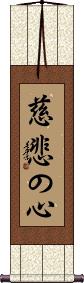
慈悲の心 means benevolent heart, compassionate heart, or merciful heart in Japanese.
This is a Japanese-only phrase and should be ordered from our Japanese master calligrapher. This is because the third character is unique Hiragana.
Chances are you are into Inuyasha and are seeking the title of chapter 471 which is often translated as “Merciful Heart.”
Brave Heart
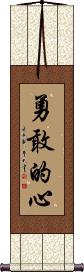
勇敢的心 is the title “Braveheart,” as in the movie starring Mel Gibson.
The character meanings break down this way:
勇敢 brave.
的 possessive particle.
心 heart/mind.
Chastity / Pure Heart
Also: Clean / Innocent / Pure
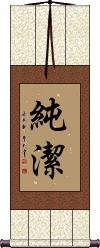
純潔 is associated with “chastity” but with the direct meaning of clean, innocent, and pure.
If you were expressing the idea of a “pure heart” in Chinese, while not literal, this would be the word you would use.
In Japanese, this word is sometimes used to express purity.
In Korean, it describes purity, chastity, virginity, and innocence (basically the same as the Chinese definition).
Compassionate Heart / Benevolent Heart
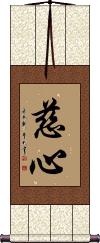
慈心 means “Compassionate Heart” or “Benevolent Heart.”
It's used in day-to-day speech to refer to someone who has the traits of benevolence, mercy, and compassion for their fellow humans.
This title is also used in Buddhism with the same profound meaning.
Forever In My Heart
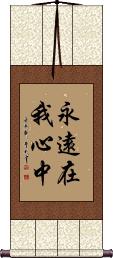
永远在我心中 means “forever in my heart” or “always in my heart” in Chinese.
Always in My Heart
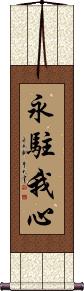
永駐我心 is one of a few ways to write “always in my heart” or “forever in my heart” in Chinese.
The first character means eternal, forever, or always.
The second character means resides, in, or stationed (in the case of troops).
The third character means me, my, or mine.
The last character means heart (but can also mean mind or soul).
Forever In My Heart
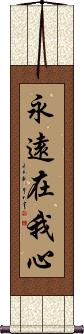
永遠在我心 means “forever in my heart” or “always in my heart” in Chinese.
This is the shorter, somewhat lyrical version of this phrase.
永遠 forever/eternal
在 at/in/exists
我 me/myself/my
心 heart/mind/soul
Forever In My Heart
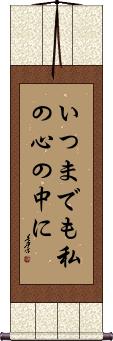
いつまでも私の心の中に means “forever in my heart” or “always in my heart” in Japanese.
Note: Because this selection contains some special Japanese Hiragana characters, it should be written by a Japanese calligrapher.
Forever In My Heart
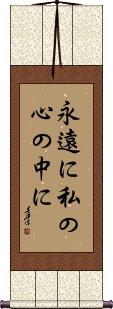
永遠に私の心の中に means “forever in my heart” or “always in my heart” in Japanese.
The character breakdown:
永遠 (eien) eternity; perpetuity; immortality; permanence.
に (ni) indicates the location of a person or thing.
私の (watashi no) my; mine.
心の中 (kokoro no naka) the middle of one's mind; the midst of one's heart.
に (ni) indicates the location of a person or thing (makes this “in” the middle of one's heart).
Note: There’s more than one way to say "Forever in My Heart" in Japanese, so you’ll find another version in our database. This is the very verbose version.
Note: Because this selection contains some special Japanese Hiragana characters, it should be written by a Japanese calligrapher.
Good Heart
A heart of kindness, benevolence, and virtuous intentions
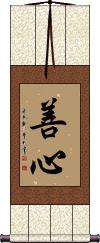
善心 literally reads “Good Heart” but is used to refer to the ideas of kindness, benevolence, philanthropy, virtuous intentions, moral sense, and conscience.
Some will also translate this as the morality of mind (as the character for the heart is often used to mean mind).
In Japanese, this can be the given name Yoshinaka.
Soul Mates at Heart
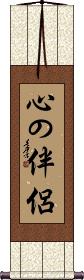
心の伴侶 is a Japanese-only title for soulmates.
心 means heart, soul, mind, core, or center. In ancient times, the heart was believed to be the mind or center of your soul and being.
の is a possessive article that connects everything here.
伴侶 means mates, companions, partners, and spouses.
This Japanese version of soulmates is about two partners, coupled or joined by their hearts.
Independent Spirit / Independent Heart
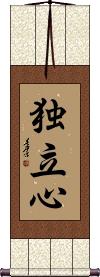
獨立心 means independent spirit or independent heart in Japanese.
The first two characters mean independent or independence. The third character means spirit, heart, or mind.
獨立心 is a Japanese term, although Chinese people could guess the meaning (the characters make sense individually in Chinese but are not often used this way). Also, the first character would be written 獨 in Traditional Chinese versus 独 which is the Simplified Chinese and modern Japanese version.
Iron Heart
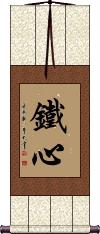
鐵心 can be translated as “iron heart,” “steel core,” or “iron mind” in Chinese and Japanese Kanji.
This is not a common term, but I added it here since so many were looking for “iron heart.” This is almost like saying you are without emotions or feelings - a very stoic person. This is not a Buddhist trait.
Lion Heart
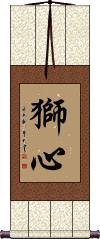
獅心 is “Lion Heart” in Chinese.
The most famous use of this title would be “Richard the Lionheart,” also known as King Richard I of England who lived 1189-1199 A.D.
Lion Heart
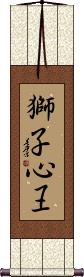
獅子心王 is the Japanese version of the nickname for King Richard the First. It means “Lion Heart King.” The full title is “リチャード獅子心王” in Japanese, or “Richard Lion Heart King.”
If you want a special version of this or a related Lion Heart title, just contact me.
Listen to Your Heart / Follow Your Heart
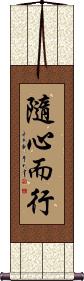
隨心而行 is the closest way to express this idea in Chinese. Literally translated, this phrase means “Allow your heart to dictate your behavior” or “Let your heart guide your conduct” in Chinese. You could also translate this as “follow your heart.” Or, with a bit of imagination, it could mean: “let your spirit be your guide.”
Note that in some cases, “heart” can mean “mind,” “soul” or even “spirit” in Chinese. In ancient China, it was thought that the big pumping organ in your chest was where your thoughts came from, or where your soul resides.
Ancient western thought followed a similar belief. Thus phrases like “I love you with all my heart” and “I give you my whole heart.”
Follow Your Heart
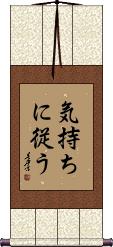
気持ちに従う is a Japanese phrase that means follow your heart.
The first part of this Japanese proverb means feeling, sensation, or mood.
The second part suggests the following, abiding by, or listening to this inner feeling.
In this context, you could say it means your heart, as the whole proverb suggests that you follow the feelings that you have inside.
Note: Because this selection contains some special Japanese Hiragana characters, it should be written by a Japanese calligrapher.
Pure Heart
Pure and Innocent
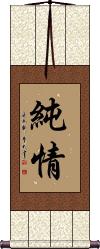
純情 means “Pure Heart” in Chinese, Japanese Kanji, and old Korean Hanja.
It's used to reflect the ideas of being “pure and innocent.”
Depending on the context in which this title is used, it can relay “self-sacrificing devotion” or, in some cases, “naïveté.”
This would be in the same way we might refer to a young girl giving her lunch money to a beggar on the street. She has a pure and precious heart but perhaps is also a bit naive.
Sincere Heart
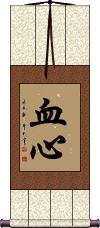
When you take 血心 apart, you find the sum is slightly different than the parts. The first character means blood, and the second means heart. It is important to note that for thousands of years, it was believed that your heart was both your soul and your mind in Asian culture. When you add blood to the heart, it is your whole being - the pure and clean dedication of your whole soul.
Most Chinese dictionaries define this as the sincerity of heart or a MEDICAL TERM!!!
Please think carefully before ordering this selection - it was only added as others have used this for coffee cups and other novelties (though perhaps naively).
Sisters at Heart
The love between sisters
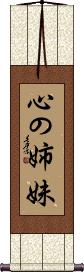
心の姉妹 is “heart of sisters,” “soul sisters,” or “sisters of the heart.”
This can be used for actual sisters to celebrate the heartfelt love they feel.
It can even be used by two women who feel a connection as if they are sisters.
Respectful Heart
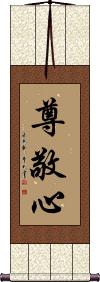
尊敬心 means respectful heart in Japanese, Chinese and Korean.
The root is 尊敬 which means respect, honor, reverence, esteem, and/or nobility. Therefore, you can also define this as an honorable heart, reverent heart, noble heart, etc.
In ancient times, it was thought your brain was the heart in your chest. Therefore, 心 or heart can also mean “mind.” Hence, 尊敬心 can also be translated as respectful mind, honorable mind, etc.
You'll see 尊敬心 romanized as Sonkeishin or Sonkeshin from Japanese.
With all the strength of your heart
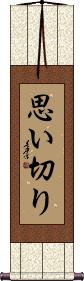
思い切り can be translated as “with all one's strength,” “with all one's heart,” “to the limits of your heart,” or “to the end of your heart/emotions.”
The character breakdown:
思い (omoi) thought; mind; heart; feelings; emotion; sentiment; love; affection; desire; wish; hope; expectation; imagination; experience
切り (kiri) bounds; limits.
Note: Because this selection contains some special Japanese Hiragana characters, it should be written by a Japanese calligrapher.
Thinking Heart
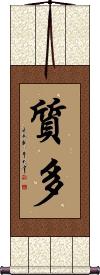
質多 is a Buddhist term that means “the heart considered as the seat of intellect” and “the thinking and reflecting mind.”
Tiger Heart
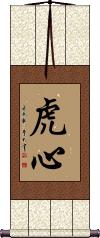
虎心 is “Tiger Heart” in Chinese and Japanese.
This can be a name and is also a rare and exotic gourmet dish served on occasion in southern China.
True Heart
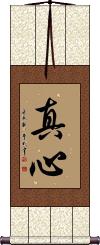
While 真心 literally reads as “true heart” or “genuine heart,” the understood meaning is sincerity, devotion, sincere, or heartfelt. Some will extend the meaning to be like “true love.” It's the idea of doing something or treating someone with genuine feelings.
真心 is valid and has the same meaning in both Chinese characters and Japanese Kanji.
Note: While not too common, this can be the female given name “Mami” in Japanese.
Heart of a Warrior / Samurai Heart
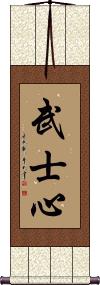
武士心 means “Warrior Heart.”
武士心 is more a Japanese title than Chinese, but it is understood in both languages.
Whole Heart
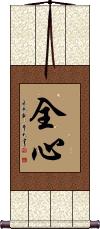
全心 is a short title that means “with heart and soul” or “one's whole heart.”
It literally reads “whole heart” or “complete mind.”
The first character means all, whole, entire, or complete.
The second character means heart but can also refer to the mind or soul.
Work Together with One Heart
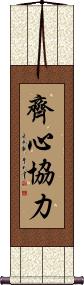
齊心協力 is a Chinese proverb that means “to work with a common purpose,” “to make concerted efforts,” “to pull together,” or “to work as one (or as if with one heart).”
You are Always in My Heart
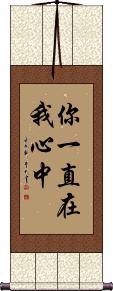
你一直在我心中 means “You are always in my heart” in Chinese.
你 = You
一直 = Always
在 = In/At
我 = Me/My
心中 = Heart/Mind
The idea or definition of heart and mind kind of overlap in ancient Chinese, so this can also mean “You are always in my mind.”
Trust Your Heart
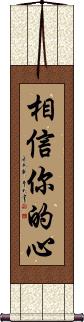
This means “Trust Your Heart” in Chinese.
Warrior’s Heart
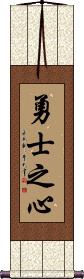
This is “Warrior’s Heart” in Chinese.
Heart and Soul
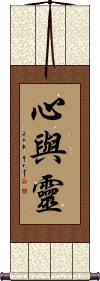
This is “heart and soul” in Chinese.
The first character means heart (but can also mean mind or soul).
The middle character is like the English “and.”
The last character means soul, spirit, or spiritual energy.
Heart and Soul
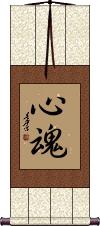
心魂 is “heart and soul” in Japanese Kanji.
The first character means heart (but can also mean mind or soul).
The last character means soul or spirit (spiritual essence).
Heart / Mind / Spirit
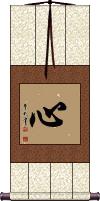
心 would often be translated as “heart.”
However, because it was believed in Chinese culture for thousands of years that your consciousness and thoughts came from the big red organ in the middle of your chest, it also means “mind” or “spirit” and sometimes even “soul.”
In Korean, beyond heart, mind, and spirit, this character can mean moral, nature, mind, affections, intentions, core, and center. In fact, it is used in Chinese to mean “center” as well but only with another character in front of it. For instance, “medical center” or even “shopping center.” Separately and alone, it will not be read with that “center” meaning unless thought of as “the center of your soul.”
Heart of a Warrior
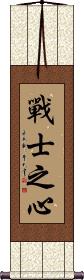
戰士之心 can mean “Heart of a Warrior” or “Heart of a Fighter” in Chinese.
Heart of Aikido
Aikido no Kokoro
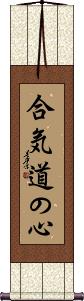
合気道の心 is often translated as “The Spirit of Aikido,” but it is more directly translated as “Heart of Aikido.”
Beautiful Heart / Beautiful Mind
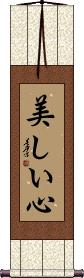
美しい心 means “beautiful heart” or “beautiful mind,” in Japanese.
The word for “heart” also means “mind” and sometimes “soul” in ancient Asia.
Note: Because this selection contains some special Japanese Hiragana characters, it should be written by a Japanese calligrapher.
Beautiful Heart / Beautiful Spirit
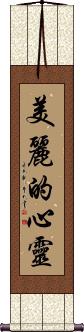
美麗的心靈 means a beautiful heart, a beautiful mind, or a beautiful spirit in Chinese.
Buddha Heart / Mind of Buddha
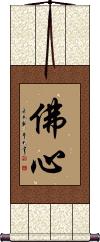
佛心 means the Buddha's mind, Buddha-heart, or the spiritually enlightened heart/mind.
The Buddha Heart is detached from good and evil and other such constructs. The Buddha Heart has mercy, compassion, and loving-kindness for all sentient life, the good, the wicked, and all in between.
The heart and mind (心) are the same concepts in the ancient Orient, so you can use heart and mind interchangeably in this context.
Enthusiasm / Warm-Hearted
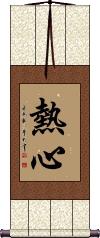
熱心 literally means “warm-hearted” (can also mean warm-spirited or warm-souled).
This is one of a few ways to say Enthusiasm in Chinese, Japanese Kanji, and old Korean Hanja.
熱心 is also used to express the ideas of earnestness or eagerness.
Can mean “zeal” in Japanese.
Home is where the heart is
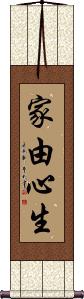
家由心生 is an old Chinese proverb that is roughly equal to the English idiom “Home is where the heart is.”
If you know Chinese, you may recognize the first character as home and the third as the heart.
Home is where the heart is
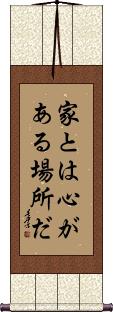
家とは心がある場所だ is, “Home is where the heart is,” in Japanese.
Most Japanese will take this to mean:
If you are with the person or at the place you love most, it becomes your true home.
Note: Because this selection contains some special Japanese Hiragana characters, it should be written by a Japanese calligrapher.
Inner Heart / Inner Soul
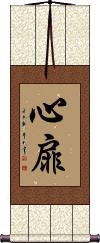
心扉 is a Chinese title meaning inner heart or soul.
Loving Heart / Compassion
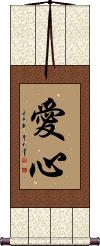
愛心 literally means “loving heart.” It can also be translated as “compassion.”
In Chinese, it carries more of a compassionate meaning.
愛心 is rarely used in Japanese anymore, so best if your audience is Chinese.
See Also: Compassion | Love
Loving Heart / One’s Love
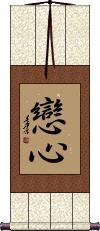
戀心 literally means “loving heart.” It can also be translated as “one's love” or “awakening of love.”
戀心 is used exclusively for love between boyfriends and girlfriends or husband and wife.
Breaking down the meaning of each Kanji, the first means love, affection, or tender passion. The second Kanji means heart, mind, or soul (most will read it as the heart).
See Also: Compassion | Love
One Heart / One Mind / Heart and Soul
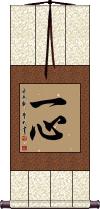
一心 literally reads as “one heart” in Chinese, Japanese Kanji, and old Korean Hanja.
Colloquially or figuratively, it means: wholeheartedly; heart and soul; of one mind; wholeheartedness; one's whole heart; with the whole mind or heart; one mind in heart.
I'm not kidding, all of those came right from the dictionary for this one title.
In Buddhism, this can refer to the bhūtatathatā, or the whole of things; the universe as one mind, or a spiritual unity.
In Japanese, this can be the female given name, Hitomi.
Peaceful Heart / Peace of Mind / Calm Mind
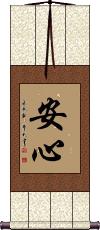
安心 can be defined as relief, peace of mind, feeling at ease, to be relieved, to set one's mind at rest, and easiness.
安心 is a nice word that encompasses great meanings within just two characters. Some of the other meanings include pacifying, settling the mind, and peace of mind. It's also the idea of feeling a sense of security, safety, and confidence in your state of well-being.
This can be used by everyone, but some consider it to be a Buddhist concept (You'll find it in your Zen dictionary).
Note: Can be romanized as Anshin or Anjin in Japanese.
Strong-Willed / Strong of Heart
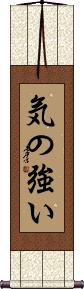
気の強い means strong-willed or strong of heart in Japanese.
Here's the character breakdown of this Japanese title:
気 (ki) spirit; mind; heart; nature; motivation; intention; feelings; essence.
の (no) possessive particle.
強い (tsuyoi) strong; powerful; mighty; potent; resistant; resilient; durable.
Note: Because this selection contains some special Japanese Hiragana characters, it should be written by a Japanese calligrapher.
Strong Hearted / Strong Willed
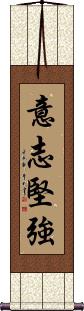
意志堅強 can mean either “strong-hearted,” “strong-willed” or “determination.”
The first two characters can be translated as “will,” “willpower,” “determination,” “volition,” “intention,” or “intent.” But, it should be noted that this first part possesses the element of “heart” in the lower portion of both characters (they also partially carry the meaning “with the whole heart”).
The last two characters mean “strong” or “staunch.”
Chinese word order and grammar are a bit different than English, so in this case, they are in reverse order of English but have the correct meaning in a natural form.
See Also: Strong Willed | Discipline | Will-Power
Tao / Dao of the Heart / Soul
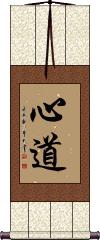
心道 means “The Way of the Heart” or “The Way of the Soul.” The first character means “heart” but can also mean soul, spirit, mind, or your essence. In this case, it is most accurately translated with the heart or soul meaning.
The second character is Dao as in Daoism. Please note, this is the same thing as Tao as in Taoism (just Romanized differently - it's always been the same in Chinese for about 2300 years.
To a Willing Heart, All Things Are Possible
Where there is a will, there is a way
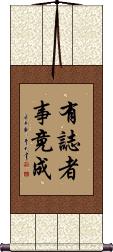
有志者事竟成 is an old Chinese proverb that has been translated many different ways into English. As you read the translations below, keep in mind that in Chinese, heart=mind.
Nothing is impossible to a willing heart.
Nothing is impossible to a willing mind.
Nothing is difficult to a willing heart.
Where there is a will, there is a way.
Nothing in the world is impossible if you set your mind to doing it.
A willful man will have his way.
If you wish it, you will do it.
A determined heart can accomplish anything.
All things are possible with a strong mind.
Zen Heart / Zen Mind
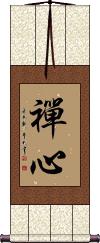
禪心 represents an image of your meditation coming from and filling your heart.
The meaning of the first character is “meditation” and the second character is usually defined as “heart” or sometimes “mind.”
There is a two-fold meaning here, as a good meditation session must start with a centered heart or mind. Yet at the same time, meditation serves to cleanse, focus, and center the heart and mind.
Merciful Heart / The Light from a Buddha Mind
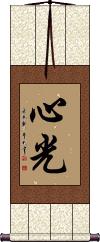
心光 can mean the light from a Buddha's mind or “merciful heart.”
This would especially be the light emanating from Amitābha.
Note that the character 心 can mean mind or heart. 光 means light or brightness - but in this context can suggest a glow of mercy or compassion.
This can also be a Japanese surname that is romanized as Shinkou or Shinko.
Set your heart ablaze
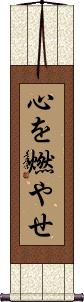
心を燃やせ is “Kokoro o Moyase” or “Set your heart ablaze” in Japanese.
Note: Because this selection contains some special Japanese Hiragana characters, it should be written by a Japanese calligrapher.
Bodhicitta: Enlightened Mind
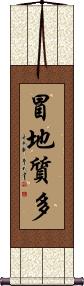
冒地質多 is a Chinese and Japanese way to write Bodhicitta.
冒地質多 is often translated as “the enlightened mind” or “enlightened heart.”
This title is strictly Buddhist and won't make sense to Chinese or Japanese people who do not have an expansive background in Buddhist terms, concepts, and scripture.
Caring
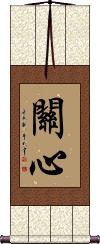
關心 means caring in Chinese.
Caring is giving love and attention to people and things that matter to you and anyone who needs help. When you care about people, you help them. You do a careful job, giving your very best effort. You treat people and things gently and respectfully. Caring makes the world a safer place.
Note: 關心 is also a word in Korean Hanja, but in Korean, it means taking interest or concern. In Korean, it's still a good word, but it doesn't quite have the “caring for a person” meaning that it does in Chinese.
See Also: Benevolence | Altruism
Holding Flowers with Subtle Smile
An idiom for heart-to-heart communication
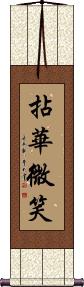
拈華微笑 is a Chinese, Korean, and Japanese Buddhist title that relays the idea of “heart-to-heart communication,” or “thought transference.”
The literal translation is, “holding a flower and subtly smiling,” or “the holding of a flower with a subtle smile.” It is the visual act and emotion that communicates more volume than words can say.
Immovable Mind
fudoshin
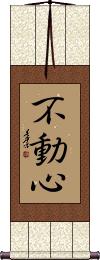
不動心 is one of the five spirits of the warrior (budo) and is often used as a Japanese martial arts tenet.
Under that context, places such as the Budo Dojo define it this way: An unshakable mind and an immovable spirit is the state of fudoshin. It is courage and stability displayed both mentally and physically. Rather than indicating rigidity and inflexibility, fudoshin describes a condition that is not easily upset by internal thoughts or external forces. It is capable of receiving a strong attack while retaining composure and balance. It receives and yields lightly, grounds to the earth, and reflects aggression back to the source.
Other translations of this title include imperturbability, steadfastness, keeping a cool head in an emergency, or keeping one's calm (during a fight).
The first two Kanji alone mean immobility, firmness, fixed, steadfastness, motionless, and idle.
The last Kanji means heart, mind, soul, or essence.
Together, these three Kanji create a title defined as “immovable mind” within the context of Japanese martial arts. However, in Chinese, it would mean “motionless heart,” and in Korean Hanja, “wafting heart” or “floating heart.”
Isshin-Kai / Isshinkai
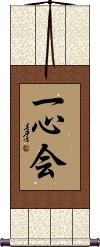
一心会 is the Japanese martial arts title “Isshinkai” or “Isshin-Kai.”
It literally means “One Heart Association” or “Single-Heart Club.” This title is often associated with Isshin-Ryu Aikido and Isshin-Ryu Karate-Do. This title is appropriate for the name of a dojo that teaches these styles.
Isshin-Ryu / Isshinryu
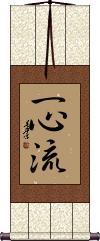
一心流 is the title for Isshin-Ryu Karate.
The literal meaning is “one heart method.” You could also translate it as “unified hearts methods.” It implies people doing things as if with one heart and mind.
The second Kanji can be defined as the heart, mind, or essence of your being. Clearly, there's a multitude of ways you can define this title in English.
See Also: Isshin-Kai
Isshin Ryu Karate Do
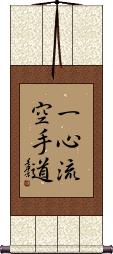
一心流空手道 is the full title for Isshin-Ryu Karate-Do.
The literal meaning is “one heart method empty hand way.”
There are other ways to translate this, but if you are looking for this title, you already know that.
This would make a great wall scroll for your dojo or private studio if you study this form of Japanese (technically from Okinawa) Karate.
Because this is a specifically-Japanese title, I strongly recommend that you select our Japanese Master Calligrapher to create this artwork.
Love Your Children, But Discipline Them Too
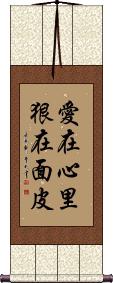
爱在心里狠在面皮 literally translates as “Love [your] children in [your] heart, [but] be stern [with them] in [your] manner.”
This is a little like saying “Love your child but don't spare the switch.”
Mind Body Spirit
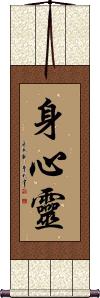
身心靈 is probably the best way to express the idea of “Body, Mind, and Spirit” in Chinese and old Korean Hanja. We are actually using the word “heart” here because, for thousands of years, the heart was thought to be the place where your thoughts, feelings, and emotions came from. We do something similar in the west when we say “warm-hearted” or “I love you with all of my heart.” In this context, heart = mind in Asian language and culture.
The very literal translation of these three characters is “body, heart & spirit,” which could also be interpreted as “body, mind & soul.”
We have arranged these characters in this order because it simply “feels” like the proper order in the Chinese language. Word lists like this are not so common for calligraphy artwork, so we must be careful to put them in the most natural order. It should be noted that this is not a common title in Asia, nor is it considered an actual phrase (as it lacks a clear subject, verb, and object).
 In Japanese Kanji, they use an alternate form of the character for soul or spirit. If you want this using the Japanese alternate, please click on the Kanji shown to the right instead of the button above.
Japanese disclaimer: This is not a natural phrase/list in Japanese. While not totally-natural in Chinese, this word list is best if your audience is Chinese.
Sincerity and Devotion
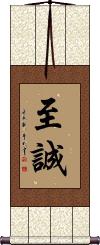
至誠 is the idea that you enter into something with the utmost sincerity and fidelity. Ideas such as devotion, honesty, and “one's true heart” are also contained in this word.
至誠 is a universal word as the Chinese, Japanese Kanji, and Korean Hanja are all identical.
Spirit
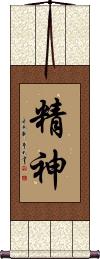
精神 is the kind of spirit you have if you perform well in sports or competitions. It is the idea of having a good attitude and putting your all into something - so much so that others can see or feel your spirit. It is the essence of your being that can only be subjectively described because there are no words that can fully explain what “spirit” really is.
For your information:
My Japanese dictionary further tries to explain this word by comparing it to mind, soul, heart, or intention.
My Chinese dictionary compares these characters to meanings like vigor, vitality, drive, and mentality.
My Korean dictionary defines this as mind, spirit, and soul.
Spiritual Strength / Strength of Spirit
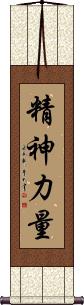
精神力量 is a title that speaks of one's soul or spirit and the capacity or strength that soul possesses.
The first two characters mean mind, heart, spirit, and/or soul.
The last two characters mean strength, capacity, or ability.
Note: Separately, these are two words in Japanese and can be pronounced, but this does not make a natural title in Japanese (best if your audience is Chinese).
Stay Strong / Iron Will
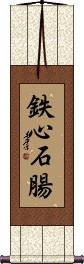
鉄心石腸 is a Japanese proverb that suggests you should have the inner-strength and will as hard and steadfast as iron.
It's the Japanese way of saying, “stay strong.” This is an especially uplifting thing to say to a person in distress or recovering from a disaster. It's kind of the survivor's creed.
If you literally translate this, it means “iron will, stone guts” or “iron heart, rock-hard bowels.”
This in-stock artwork might be what you are looking for, and ships right away...
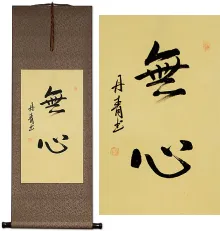
Gallery Price: $79.00
Your Price: $43.88
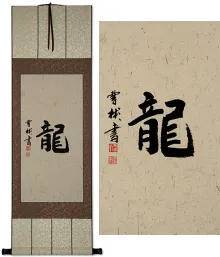
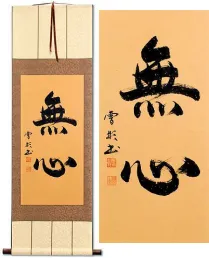
The following table may be helpful for those studying Chinese or Japanese...
| Title | Characters | Romaji (Romanized Japanese) | Various forms of Romanized Chinese | |
| Benevolent Heart | 慈悲の心 | ji hi no kokoro jihinokokoro | ||
| Brave Heart | 勇敢的心 | yǒng gǎn de xīn yong3 gan3 de xin1 yong gan de xin yonggandexin | yung kan te hsin yungkantehsin |
|
| Chastity Pure Heart | 純潔 纯洁 | jun ketsu / junketsu | chún jié / chun2 jie2 / chun jie / chunjie | ch`un chieh / chunchieh / chun chieh |
| Compassionate Heart Benevolent Heart | 慈心 | jishin | cí xīn / ci2 xin1 / ci xin / cixin | tz`u hsin / tzuhsin / tzu hsin |
| Forever In My Heart | 永遠在我心中 永远在我心中 | yǒng yuǎn zài wǒ xīn zhōng yong3 yuan3 zai4 wo3 xin1 zhong1 yong yuan zai wo xin zhong yongyuanzaiwoxinzhong | yung yüan tsai wo hsin chung yungyüantsaiwohsinchung |
|
| Always in My Heart | 永駐我心 永驻我心 | yǒng zhù wǒ xīn yong3 zhu4 wo3 xin1 yong zhu wo xin yongzhuwoxin | yung chu wo hsin yungchuwohsin |
|
| Forever In My Heart | 永遠在我心 永远在我心 | yǒng yuǎn zài wǒ xīn yong3 yuan3 zai4 wo3 xin1 yong yuan zai wo xin yongyuanzaiwoxin | yung yüan tsai wo hsin yungyüantsaiwohsin |
|
| Forever In My Heart | いつまでも私の心の中に | i tsu ma de mo watashi no kokoro no naka ni | ||
| Forever In My Heart | 永遠に私の心の中に | ei en ni watashi no kokoro no naka ni | ||
| Good Heart | 善心 | yoshinaka | shàn xīn / shan4 xin1 / shan xin / shanxin | shan hsin / shanhsin |
| Soul Mates at Heart | 心の伴侶 | kokoro no han ryo kokoronohanryo | ||
| Independent Spirit Independent Heart | 獨立心 独立心 | dokuritsushin | ||
| Iron Heart | 鐵心 铁心 | tetsu kokoro / tesshin tetsukokoro / tesshin tetsu kokoro / teshin | tiě xīn / tie3 xin1 / tie xin / tiexin | t`ieh hsin / tiehhsin / tieh hsin |
| Lion Heart | 獅心 狮心 | shī xīn / shi1 xin1 / shi xin / shixin | shih hsin / shihhsin | |
| Lion Heart | 獅子心王 狮子心王 | shi shi shin ou shishishinou shi shi shin o | ||
| Listen to Your Heart Follow Your Heart | 隨心而行 随心而行 | suí xīn ér xíng sui2 xin1 er2 xing2 sui xin er xing suixinerxing | sui hsin erh hsing suihsinerhhsing |
|
| Follow Your Heart | 気持ちに従う | kimochi ni shitagau kimochinishitagau | ||
| Pure Heart | 純情 纯情 | jun jou / junjou / jun jo | chún qíng chun2 qing2 chun qing chunqing | ch`un ch`ing chunching chun ching |
| Sincere Heart | 血心 | xuě xīn / xue3 xin1 / xue xin / xuexin | hsüeh hsin / hsüehhsin | |
| Sisters at Heart | 心の姉妹 | kokoro no shi mai kokoronoshimai | ||
| Respectful Heart | 尊敬心 | son kei shin sonkeishin | zūn jìng xīn zun1 jing4 xin1 zun jing xin zunjingxin | tsun ching hsin tsunchinghsin |
| With all the strength of your heart | 思い切り | omoi kiri / omoikiri | ||
| Thinking Heart | 質多 质多 | chitta | zhí duō / zhi2 duo1 / zhi duo / zhiduo | chih to / chihto |
| Tiger Heart | 虎心 | tora kokoro torakokoro | hǔ xīn / hu3 xin1 / hu xin / huxin | hu hsin / huhsin |
| True Heart | 真心 | mago koro / magokoro | zhēn xīn / zhen1 xin1 / zhen xin / zhenxin | chen hsin / chenhsin |
| Heart of a Warrior Samurai Heart | 武士心 | bu shi kokoro bushikokoro | wǔ shì xīn wu3 shi4 xin1 wu shi xin wushixin | wu shih hsin wushihhsin |
| Whole Heart | 全心 | zenshin | quán xīn / quan2 xin1 / quan xin / quanxin | ch`üan hsin / chüanhsin / chüan hsin |
| Work Together with One Heart | 齊心協力 齐心协力 | qí xīn xié lì qi2 xin1 xie2 li4 qi xin xie li qixinxieli | ch`i hsin hsieh li chihsinhsiehli chi hsin hsieh li |
|
| You are Always in My Heart | 你一直在我心中 | nǐ yī zhí zài wǒ xīn zhōng ni3 yi1 zhi2 zai4 wo3 xin1 zhong1 ni yi zhi zai wo xin zhong niyizhizaiwoxinzhong | ni i chih tsai wo hsin chung niichihtsaiwohsinchung |
|
| Trust Your Heart | 相信你的心 | xiàng xìn nǐ dì xīn xiang4 xin4 ni3 di4 xin1 xiang xin ni di xin xiangxinnidixin | hsiang hsin ni ti hsin hsianghsinnitihsin |
|
| Warrior’s Heart | 勇士之心 | yǒng shì zhī xīn / / | ||
| Heart and Soul | 心與靈 心与灵 | xīn yǔ líng xin1 yu3 ling2 xin yu ling xinyuling | hsin yü ling hsinyüling |
|
| Heart and Soul | 心魂 | shin kon / shinkon | ||
| Heart Mind Spirit | 心 | kokoro | xīn / xin1 / xin | hsin |
| Heart of a Warrior | 戰士之心 战士之心 | zhàn shì zhī xīn zhan4 shi4 zhi1 xin1 zhan shi zhi xin zhanshizhixin | chan shih chih hsin chanshihchihhsin |
|
| Heart of Aikido | 合気道の心 | ai ki dou no kokoro aikidounokokoro ai ki do no kokoro | ||
| Beautiful Heart Beautiful Mind | 美しい心 | utsukushii kokoro utsukushiikokoro utsukushi kokoro | ||
| Beautiful Heart Beautiful Spirit | 美麗的心靈 美丽的心灵 | měi lì de xīn líng mei3 li4 de xin1 ling2 mei li de xin ling meilidexinling | mei li te hsin ling meilitehsinling |
|
| Buddha Heart Mind of Buddha | 佛心 | busshin / bushin | fó xīn / fo2 xin1 / fo xin / foxin | fo hsin / fohsin |
| Enthusiasm Warm-Hearted | 熱心 热心 | nesshin / neshin | rè xīn / re4 xin1 / re xin / rexin | je hsin / jehsin |
| Home is where the heart is | 家由心生 | jiā yóu xīn shēng jia1 you2 xin1 sheng1 jia you xin sheng jiayouxinsheng | chia yu hsin sheng chiayuhsinsheng |
|
| Home is where the heart is | 家とは心がある場所だ | ie to wa kokoro ga aru basho da ietowakokorogaarubashoda | ||
| Inner Heart Inner Soul | 心扉 | xīn fēi / xin1 fei1 / xin fei / xinfei | hsin fei / hsinfei | |
| Loving Heart Compassion | 愛心 爱心 | ài xīn / ai4 xin1 / ai xin / aixin | ai hsin / aihsin | |
| Loving Heart One’s Love | 戀心 恋心 | koi gokoro / koigokoro | ||
| One Heart One Mind Heart and Soul | 一心 | isshin / ishin | yī shì dài yi1 shi4 dai4 yi shi dai yishidai | i shih tai ishihtai |
| Peaceful Heart Peace of Mind Calm Mind | 安心 | an shin / anshin | ān xīn / an1 xin1 / an xin / anxin | an hsin / anhsin |
| Strong-Willed Strong of Heart | 氣の強い 気の強い | ki no tsuyo i kinotsuyoi | ||
| Strong Hearted Strong Willed | 意志堅強 意志坚强 | yì zhì jiān qiáng yi4 zhi4 jian1 qiang2 yi zhi jian qiang yizhijianqiang | i chih chien ch`iang ichihchienchiang i chih chien chiang |
|
| Tao Dao of the Heart Soul | 心道 | xīn dào / xin1 dao4 / xin dao / xindao | hsin tao / hsintao | |
| To a Willing Heart, All Things Are Possible | 有志者事竟成 / 有誌者事竟成 有志者事竟成 | yǒu zhì zhě shì jìng chéng you3 zhi4 zhe3 shi4 jing4 cheng2 you zhi zhe shi jing cheng youzhizheshijingcheng | yu chih che shih ching ch`eng yuchihcheshihchingcheng yu chih che shih ching cheng |
|
| Zen Heart Zen Mind | 禪心 禅心 | zen shin / zenshin | chán xīn / chan2 xin1 / chan xin / chanxin | ch`an hsin / chanhsin / chan hsin |
| Merciful Heart The Light from a Buddha Mind | 心光 | shin kou / shinkou / shin ko | xīn guāng xin1 guang1 xin guang xinguang | hsin kuang hsinkuang |
| Set your heart ablaze | 心を燃やせ | kokoro o mo ya se kokoroomoyase | ||
| Bodhicitta: Enlightened Mind | 冒地質多 冒地质多 | boujiishitta bojishitta | mào dì zhì duō mao4 di4 zhi4 duo1 mao di zhi duo maodizhiduo | mao ti chih to maotichihto |
| Caring | 關心 关心 | guān xīn / guan1 xin1 / guan xin / guanxin | kuan hsin / kuanhsin | |
| Holding Flowers with Subtle Smile | 拈華微笑 拈华微笑 | nenge misho nengemisho | niān huá wēi xiào nian1 hua2 wei1 xiao4 nian hua wei xiao nianhuaweixiao | nien hua wei hsiao nienhuaweihsiao |
| Immovable Mind | 不動心 | fu dou shin fudoushin fu do shin | ||
| Isshin-Kai Isshinkai | 一心会 / 一心會 一心会 | isshin kai / isshinkai / ishin kai | ||
| Isshin-Ryu Isshinryu | 一心流 | i sshin ryuu isshinryuu i shin ryu | ||
| Isshin Ryu Karate Do | 一心流空手道 | i sshin ryuu kara te dou isshinryuukaratedou i shin ryu kara te do | ||
| Love Your Children, But Discipline Them Too | 愛在心里狠在面皮 / 愛在心里狠在麵皮 爱在心里狠在面皮 | ài zài xīn lǐ hèn zài miàn pì ai4 zai4 xin1 li3 hen4 zai4 mian4 pi4 ai zai xin li hen zai mian pi aizaixinlihenzaimianpi | ai tsai hsin li hen tsai mien p`i ai tsai hsin li hen tsai mien pi |
|
| Mind Body Spirit | 身心靈 / 身心霊 身心灵 | mi shin rei mishinrei | shēn xīn líng shen1 xin1 ling2 shen xin ling shenxinling | shen hsin ling shenhsinling |
| Sincerity and Devotion | 至誠 至诚 | shisei | zhì chéng zhi4 cheng2 zhi cheng zhicheng | chih ch`eng chihcheng chih cheng |
| Spirit | 精神 | sei shin / seishin | jīng shén jing1 shen2 jing shen jingshen | ching shen chingshen |
| Spiritual Strength Strength of Spirit | 精神力量 | seishin rikiryou seishinrikiryou seishin rikiryo | jīng shén lì liàng jing1 shen2 li4 liang4 jing shen li liang jingshenliliang | ching shen li liang chingshenliliang |
| Stay Strong Iron Will | 鉄心石腸 | tesshin sekichou tesshinsekichou teshin sekicho | ||
| In some entries above you will see that characters have different versions above and below a line. In these cases, the characters above the line are Traditional Chinese, while the ones below are Simplified Chinese. | ||||




