Many custom options


And formats



Rouse in Chinese / Japanese
Buy a Rouse calligraphy wall scroll here!
Personalize your custom “Rouse” project by clicking the button next to your favorite “Rouse” title below.
Rouse

勞斯 is the name Rouse in Chinese (Mandarin).
Rouse
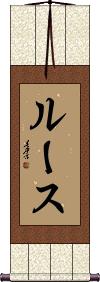
ルース is the name Rouse in Japanese Katakana.
Note: Because this title is entirely Japanese Katakana, it should be written by a Japanese calligrapher.
Fall Down Seven Times, Get Up Eight
Always rising after a fall or repeated failures
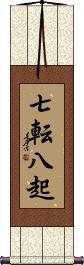
七転八起 is a Japanese proverb that relays the vicissitudes of life, with the meaning “seven times down eight times up.”
Some would more naturally translate it into English as “Always rising after a fall or repeated failures” or compare it to the English, “If at first, you don't succeed, try, try again.”
The first Kanji is literally “7.” The second means “fall down” (sometimes this Kanji means “turn around,” “revolve” or “turn over” but in this case, it holds the meaning of “fall”). The third is “8.” And the last is “get up,” “rouse,” or “rise.”
if you fail 7 times, you should recover from those events and be prepared to rise an 8th time. This also applies if it is the world or circumstances that knock you down seven times...
...just remember that you have the ability to bounce back from any type of adversity.
Note: This can be pronounced in two ways. One is “shichi ten hakki” or “shichitenhakki.” The other is “nana korobi ya oki” also written, “nanakorobi-yaoki.”
Special Note: The second character is a Kanji that is not used in China. Therefore, please select a Japanese calligrapher for this title.
These search terms might be related to Rouse:
Accept the Situation and Move On
Accept Your Mistake and Move On
Move on / Change Way of Thinking
Stir the Chaos
Wake Up to Reality
Not the results for Rouse that you were looking for?
Below are some entries from our dictionary that may match your Rouse search:
| Characters If shown, 2nd row is Simp. Chinese |
Pronunciation Romanization |
Simple Dictionary Definition |
ラウス see styles |
rauzu ラウズ |
More info & calligraphy: Routh |
奮 奋 see styles |
fèn fen4 fen fukumi ふくみ |
to exert oneself (bound form) (personal name) Fukumi To rouse, excite, exert; impetuous, energetic. |
振 see styles |
zhèn zhen4 chen furu ふる |
to shake; to flap; to vibrate; to resonate; to rise up with spirit; to rouse oneself (surname) Furu To shake, rouse, restore. |
鼓 see styles |
gǔ gu3 ku hibiki ひびき |
drum; CL:通[tong4],面[mian4]; to drum; to strike; to rouse; to bulge; to swell hand drum; (female given name) Hibiki A drum. |
叫醒 see styles |
jiào xǐng jiao4 xing3 chiao hsing |
to awaken; to wake sb up; to rouse |
喚起 唤起 see styles |
huàn qǐ huan4 qi3 huan ch`i huan chi kanki かんき |
to waken (to action); to rouse (the masses); to evoke (attention, recollection etc) (noun, transitive verb) arousal; excitation; awakening; evocation |
喚醒 唤醒 see styles |
huàn xǐng huan4 xing3 huan hsing Kanshō |
to wake sb; to rouse Hwanseong |
奮う see styles |
furuu / furu ふるう |
(transitive verb) (1) to muster (e.g. one's courage); to call forth; to rouse up; (v5u,vi) (2) to be enlivened; to be invigorated |
奮激 see styles |
fungeki ふんげき |
(noun/participle) rouse; stir; inspire |
奮發 奋发 see styles |
fèn fā fen4 fa1 fen fa funhotsu |
to rouse to vigorous action; energetic mood undertaking |
抖擻 抖擞 see styles |
dǒu sǒu dou3 sou3 tou sou tosō |
to rouse; to invigorate; to enliven; to put sb into high spirits; con brio 斗藪 dhūta; stirring up to duty; discipline. v. 頭陀. |
立つ see styles |
tatsu たつ |
(v5t,vi) (1) to stand (up); to rise; to get to one's feet; to stand on end (e.g. of hairs); to stick up; (v5t,vi) (2) to stand (in a position; of a person, tree, building, etc.); to be situated (in, on); (v5t,vi) (3) to be (in difficulties, the lead, etc.); to put oneself (in a position or situation); to take up (a position, post, etc.); to position oneself; (v5t,vi) (4) to leave (to do something); (v5t,vi) (5) (oft. written as 発つ) to depart (on a journey, trip, etc.); to leave; to set off; to start; (v5t,vi) (6) to get stuck (into; of an arrow, thorn etc.); to pierce; (v5t,vi) (7) to develop (of a haze, waves, etc.); to form (of steam, bubbles, etc.); to appear (of a rainbow, clouds, etc.); to rise (of smoke, waves, etc.); to begin to blow (of a wind, breeze, etc.); (v5t,vi) (8) to spread (of a rumour, reputation, etc.); to be become widely known; (v5t,vi) (9) to stand (for election); to run; (v5t,vi) (10) (also written as 起つ) to take action; to act; to rise (up); to rouse oneself; (v5t,vi) (11) (colloquialism) (also written as 勃つ) to have an erection; to become erect (e.g. of nipples); (v5t,vi) (12) to be established (of a policy, plan, objective, etc.); to be formed; (v5t,vi) (13) to be valid (of an argument, logic, etc.); to hold up; to hold water; to stand up (e.g. of evidence); to be logical; to be reasonable; (v5t,vi) (14) to be sustained (of a living, business, etc.); to be maintained; to survive; to be preserved (of one's reputation, honour, etc.); to be saved; (v5t,vi) (15) to start (of a season); to begin; (v5t,vi) (16) to be held (of a market); (v5t,vi) (17) to shut (of a door, shoji, etc.); to be shut; to be closed; (v5t,vi) (18) to be (the result of a division) |
起つ see styles |
tatsu たつ |
(v5t,vi) (See 立つ・10) to take action; to act; to rise (up); to rouse oneself |
開靜 开静 see styles |
kāi jìng kai1 jing4 k`ai ching kai ching kaijō |
To break the silence, i.e. rouse from sleep. |
驚醒 惊醒 see styles |
jīng xǐng jing1 xing3 ching hsing |
to rouse; to be woken by something; to wake with a start; to sleep lightly |
動かす see styles |
ugokasu うごかす |
(transitive verb) (1) to move; to shift; to stir; to budge; to change position; (transitive verb) (2) to inspire; to rouse; to move (e.g. feeling); to influence; (transitive verb) (3) to change; to alter; to deny; (transitive verb) (4) to operate; to set in motion; to get going; (transitive verb) (5) to mobilize (e.g. troops); to mobilise; to deploy; (transitive verb) (6) to manage (e.g. funds) |
気負う see styles |
kiou / kio きおう |
(v5u,vi) to get worked up; to be eager (enthusiastic); to rouse oneself |
盛上る see styles |
moriagaru もりあがる |
(v5r,vi) (1) to swell; to rise; to bulge; to be piled up; (2) to rouse; to get excited |
立たす see styles |
tatasu たたす |
(v5s,vi) (archaism) to help a person stand; to get someone to their feet; to raise; to rouse |
叩き起す see styles |
tatakiokosu たたきおこす |
(transitive verb) (1) to wake up; to rouse out of bed; (2) to knock on the door and wake someone |
引立てる see styles |
hikitateru ひきたてる |
(transitive verb) (1) to set off to advantage; to bring into prominence; to enhance; (2) to support; to favor; to favour; to promote; to patronize; (3) to rouse (spirits); (4) to march (a prisoner) off; to haul somebody off; (5) to slide (a door) shut |
欲振乏力 see styles |
yù zhèn fá lì yu4 zhen4 fa2 li4 yü chen fa li |
to try to rouse oneself but lack the strength (idiom) |
盛り上る see styles |
moriagaru もりあがる |
(v5r,vi) (1) to swell; to rise; to bulge; to be piled up; (2) to rouse; to get excited |
盛上がる see styles |
moriagaru もりあがる |
(v5r,vi) (1) to swell; to rise; to bulge; to be piled up; (2) to rouse; to get excited |
追立てる see styles |
oitateru おいたてる |
(transitive verb) (1) to drive on; to urge forward (e.g. cattle); to rouse (game from its cover); to shoo away; (2) to press a tenant to leave; to evict |
騙し騙し see styles |
damashidamashi だましだまし |
(exp,adv) (kana only) using every trick in the book; using every trick one knows; by one rouse or another; with careful coaxing; carefully (e.g. nursing a damaged vehicle) |
叩き起こす see styles |
tatakiokosu たたきおこす |
(transitive verb) (1) to wake up; to rouse out of bed; (2) to knock on the door and wake someone |
引き立てる see styles |
hikitateru ひきたてる |
(transitive verb) (1) to set off to advantage; to bring into prominence; to enhance; (2) to support; to favor; to favour; to promote; to patronize; (3) to rouse (spirits); (4) to march (a prisoner) off; to haul somebody off; (5) to slide (a door) shut |
怒りを買う see styles |
ikariokau いかりをかう |
(exp,v5u) to rouse anger; to provoke wrath; to offend |
気負い立つ see styles |
kioitatsu きおいたつ |
(v5t,vi) to get excited; to rouse oneself; to psyche oneself up; to be eager (to do) |
Click here for more Rouse results from our dictionary
The following table may be helpful for those studying Chinese or Japanese:
| Title | Characters | Romaji (Romanized Japanese) | Various forms of Romanized Chinese | |
| Rouse | 勞斯 劳斯 | láo sī / lao2 si1 / lao si / laosi | lao ssu / laossu | |
| Rouse | ルース | ruusu / rusu | ||
| Fall Down Seven Times, Get Up Eight | 七転八起 | shichi ten hakki / nana korobi ya oki shichi ten haki / nana korobi ya oki | ||
| In some entries above you will see that characters have different versions above and below a line. In these cases, the characters above the line are Traditional Chinese, while the ones below are Simplified Chinese. | ||||

Successful Chinese Character and Japanese Kanji calligraphy searches within the last few hours...



