Many custom options


And formats


Bible in Chinese & Japanese Calligraphy
Compare the meanings and pronunciations of the entries related to Bible below. Choose “Customize & Buy” next to your preferred entry to personalize your calligraphy wall scroll.
1. Holy Bible
2. Genesis
3. John 14:15
4. John 14:18
5. Joshua 24:15
6. John 3:16
7. John 8:8
8. 1 Peter 3:13
12. John 3:16
14. John 3:16
15. Joshua 1:9
16. Galatians 5:25
17. Joshua 24:15
19. Genesis 1:1
20. Proverbs 27:17
21. John 8:8
22. Psalm 23:1
23. John 3:16
24. Proverbs 3:5
25. Psalm 23:1
26. Philippians 4:13
27. Proverbs 27:17
28. Philippians 4:13
29. Genesis 2:24
30. Hebrews 13:8
32. John 14:15
33. Proverbs 3:5
34. John 14:18
35. Genesis 2:24
36. 1 Peter 3:13
37. Matthew 19:26
39. Matthew 19:26
40. John 3:17
41. Romans 8:18
42. John 14:6
43. Romans 8:18
45. Psalm 121:1-2
46. John 3:17
47. Psalm 121:1-2
48. Romans 8:28
50. John 14:6
51. Proverbs 3:5-6
52. Psalm 91:1-2
53. Isaiah 40:31
54. Romans 8:28
56. Isaiah 40:31
57. Proverbs 3:5-6
58. Jeremiah 29:11
59. Isaiah 41:10
60. Psalm 91:1-2
61. Jeremiah 29:11
63. Luke 11:2-4
64. Matthew 6:9-13
66. Psalm 23:1-6
Holy Bible
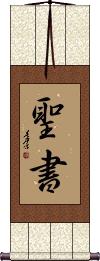
聖書 is how to write Bible in Japanese.
The first character means Holy, sacred, saint, or sage.
The second character means book (can also mean scroll or letter).
See Also: Christ | Discipline
Holy Bible
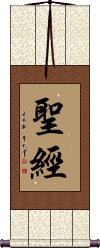
聖經 is how to write Bible in Chinese.
The first character means Holy, sacred, saint, or sage.
The second character means sacred book or scripture.
Each Sunday morning, if you are near a Catholic or Protestant Church, you will see plenty of Chinese people carrying their Bibles. Virtually every large or medium city in China has at least one Christian church. Beijing has about 14 Christian churches of Catholic and various Protestant denominations. That number doubles if you count all the church services that are for foreigners only and doubles again if you count all of the underground Christian Churches. Many Embassies (Canadian, Italian, French, etc.) offer Protestant and Catholic services. However, the U.S. Embassy is the most unfriendly in all of China, offering no such religious services, regularly denying entry, and kicking out Americans and others, whether or not they have official business.
See Also: Christ | Discipline
Genesis
First Book of the Bible
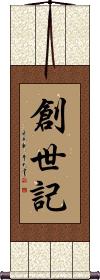
This is the Japanese and Chinese for Genesis, the first book of Moses in the Bible.
John 14:15
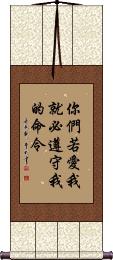
你們若愛我就必遵守我的命令 is the translation of John 14:15 into Chinese.
This comes from the Chinese Union Bible which comes from a revised King James version. This Chinese Bible was originally translated and printed in 1919 (several revisions since then).
Because of the origin being the KJV, I'll say that in English, this would be, “If ye love me, keep my commandments...”
In basic English, this would be, “If you have love for me, you will keep my laws.”
John 14:18
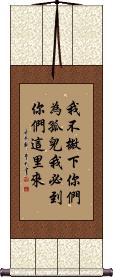
我不撇下你們為孤兒我必到你們這里來 is the translation of John 14:18 into Chinese.
This comes from the Chinese Union Bible which comes from a revised version of the King James. This Chinese Bible was originally translated and printed in 1919 (several revisions since then).
Because of the origin being the KJV, I'll say that in English, this would be, “I will not leave you comfortless: I will come to you...”
In basic English, this would be, “I will not let you be without a friend: I am coming to you.”
Joshua 24:15
This House Serves the LORD
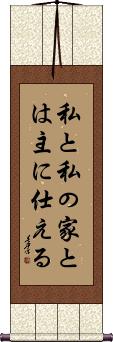
私と私の家とは、主に仕える is the last bit of Joshua 24:15 in Japanese.
Joshua 24:15 (KJV) ...as for me and my house, we will serve the LORD.
Joshua 24:15 (NIV) ...as for me and my household, we will serve the LORD.
This came from the Shinkaiyaku Japanese Bible. This is the most commonly-used Bible translation in Japan for both Protestants and Catholic Japanese folks.
I think it is a bit like having a secret code on your wall that quietly expresses to whom you are faithful.
This will be a nice gift for a friend or a wonderful expression of faith for your own home.
Note: Because this selection contains some special Japanese Hiragana characters, it should be written by a Japanese calligrapher.
John 3:16

神愛世人甚至將他的獨生子賜給他們叫一切信他的不至滅亡反得永生 is the full translation of John 3:16 into Chinese.
This is from the Chinese Union Bible which comes from a revised version of the King James. This Chinese Bible was originally translated and printed in 1919 (several revisions since then).
Because of the origin being the KJV, I'll say that in English, this would be, “For God so loved the world, that he gave his only begotten Son, that whosoever believeth in him should not perish but have everlasting life.”
As with any translation, there are interesting cultural and linguistic issues. For instance, the word used for “world” in Chinese can also mean “common people.” So you could say that it means “For God so loved the common people...”
This does not take away from the text, as it will be understood with the same meaning and connotation.
There is no direct Greek-to-Chinese translation in print (that I know of), so this is the best available. Of course, you can ask any Greek person of faith, and they will claim that a bit is lost from the original Greek of the New Testament to any of the English versions of the Bible in print.
John 8:8
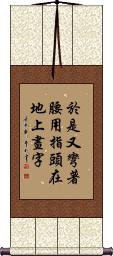
於是又彎著腰用指頭在地上畫字 is John 8:8 in Chinese.
This text is from the 1919 Chinese Union Bible.
You may know it from the KJV as:
And again he stooped down and wrote on the ground.
1 Peter 3:13
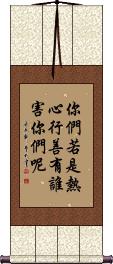
Here is 1 Peter 3:13 in Chinese.
The text with punctuation:
你们若是热心行善,有谁害你们呢?
Hand-painted calligraphy does not retain punctuation.
This translation is from the Chinese Union Bible.
You may know it from the KJV as:
And who is he that will harm you, if ye be followers of that which is good?
1 Corinthians 13:5
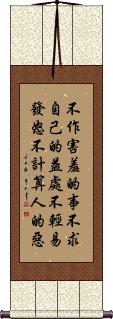
Here is 1 Corinthians 13:5 in Chinese.
The text with punctuation:
不作害羞的事。不求自己的益处。不轻易发怒。不计算人的恶。
Hand-painted calligraphy does not retain punctuation.
This translation is from the Chinese Union Bible.
You may know it from the KJV as:
Doth not behave itself unseemly, seeketh not her own, is not easily provoked, thinketh no evil.
Galatians 5:22-23

Here is Galatians 5:22 and a bit of 23 in Chinese.
The text with punctuation:
圣灵所结的果子,就是仁爱,喜乐,和平,忍耐,恩慈,良善,信实,温柔,节制。
Hand-painted calligraphy does not retain punctuation.
This translation is from the Chinese Union Bible.
You may know it from the KJV as:
5:22 But the fruit of the Spirit is love, joy, peace, longsuffering, gentleness, goodness, faith,
5:23 Meekness, temperance...
1 Corinthians 14:22
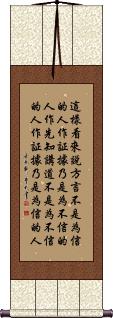
Here is 1 Corinthians 14:22 in Chinese.
The text with punctuation:
这样看来,说方言,不是为信的人作证据,乃是为不信的人。作先知讲道,不是为不信的人作证据,乃是为信的人。
Hand-painted calligraphy does not retain punctuation.
This translation is from the Chinese Union Bible.
You may know it from the KJV as:
Wherefore tongues are for a sign, not to them that believe, but to them that believe not: but prophesying serveth not for them that believe not, but for them which believe.
John 3:16 (first half)
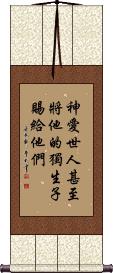
神愛世人甚至將他的獨生子賜給他們 is the first half of John 3:16 in Chinese.
It reads roughly, “For God so loved the world, that he gave his only begotten Son.”
This came directly from the Chinese Union Bible first printed in 1919.
1 Corinthians 13:4-8
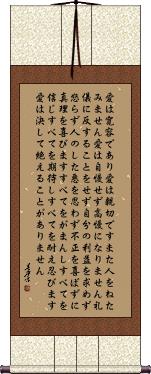
Here is 1st Corinthians 13:4-8 (just the first sentence of verse 8) in Japanese.
In the familiar NIV, this would read:
Love is patient, love is kind. It does not envy, it does not boast, it is not proud.
It does not dishonor others, it is not self-seeking, it is not easily angered, it keeps no record of wrongs.
Love does not delight in evil but rejoices with the truth.
It always protects, always trusts, always hopes, always perseveres.
Love never fails...
The Japanese text is from the 新改訳聖書 (Shinkaiyaku) or New Japanese Bible. Popular among most Protestant denominations in modern Japan.
Note: Because this selection contains some special Japanese Hiragana characters, it should be written by a Japanese calligrapher.
John 3:16
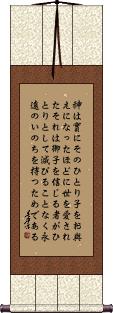
Here is the full translation of John 3:16 into Japanese.
This translation comes from the Shinkaiyaku Bible (a preferred translation by many Japanese Christians).
Just for reference, from the KJV, this reads, “For God so loved the world, that he gave his only begotten Son, that whosoever believeth in him should not perish but have everlasting life.”
Note: Because this selection contains some special Japanese Hiragana characters, it should be written by a Japanese calligrapher.
Joshua 1:9
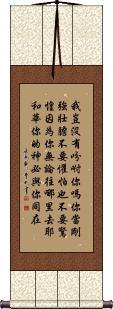
Here is the full translation of Joshua 1:9 into Chinese.
The text with punctuation:
我岂没有吩咐你吗?你当刚强壮胆。不要惧怕,也不要惊惶。因为你无论往哪里去,耶和华你的神必与你同在。
Hand-painted calligraphy does not retain punctuation.
This translation comes from the 1919 Chinese Union Bible.
For reference, from the KJV, this reads, “Have not I commanded thee? Be strong and of a good courage; be not afraid, neither be thou dismayed: for the LORD thy God is with thee whithersoever thou goest.”
Galatians 5:25
If we live in the Spirit, let us also walk in the Spirit
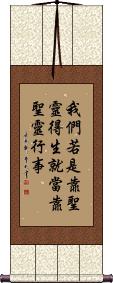
我們若是靠聖靈得生就當靠聖靈行事 is the translation of Galatians 5:25 into Mandarin Chinese via the Chinese Union Bible.
KJV: If we live in the Spirit, let us also walk in the Spirit.
NIV: Since we live by the Spirit, let us keep in step with the Spirit.
The annotation of this Chinese translation:
1.我们 wǒ men - we / us / ourselves
2.若是 ruò shì - if
3.靠 kào - depend upon / lean on / near / by / against / to support
4.圣灵 shèng líng - Holy Ghost
5.得 děi - to have to / must / ought to / degree or possibility
6.生就 shēng jiù - born one way or another (nervous, suspicious, etc.)
7.当 dàng - suitable / adequate / fitting / proper
8.靠 kào - depend upon / lean on / near / by / against / to support
9.圣灵 shèng líng - Holy Ghost
10.行事 xíng shì - how one does things / how one runs things (in this case, it suggests, “to walk in step with”)
Joshua 24:15
This House Serves the LORD
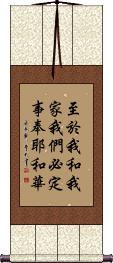
至於我和我家我們必定事奉耶和華 is the last sentence of Joshua 24:15 in Chinese.
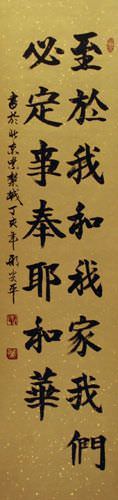
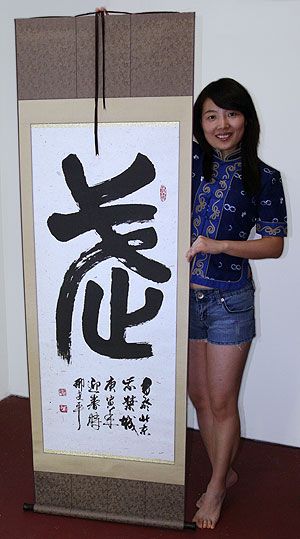
What your
calligraphy
might look like
from our
Chinese Master
Calligrapher
Joshua 24:15 (KJV) ...as for me and my house, we will serve the LORD.
Joshua 24:15 (NIV) ...as for me and my household, we will serve the LORD.
We used the only official Christian Chinese Bible that I know of so that the translation would be as accurate and standard as possible. Any Chinese Christian worth their salt will easily be able to identify this verse from the Chinese words on this scroll.
I think it is a bit like having a secret code on your wall that quietly expresses to whom you are faithful.
A great gift for your devout Christian or Jewish friend if they happen to be fond of Asian art.
Or perhaps a wonderful “conversation starter” for your own home.
Note: If you are curious, the last three characters represent the way “LORD” is used in most English Bibles. In Chinese, this is actually the phonetic name from Mandarin Chinese for “Jehovah.”
1 Corinthians 13:4
All you need to know about LOVE
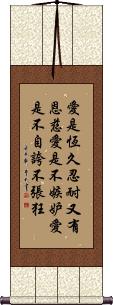
愛是恆久忍耐又有恩慈愛是不嫉妒愛是不自誇不張狂 is 1st Corinthians 13:4 in Chinese.
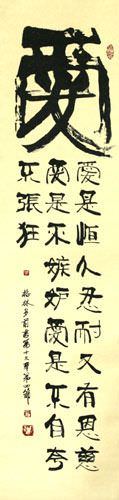
With large “love” character added.
In English, this reads:
1st Corinthians 13:4 (KJV) Charity suffereth long, and is kind; charity envieth not; charity vaunteth not itself, is not puffed up...
1st Corinthians 13:4 (NIV) Love is patient, love is kind. It does not envy, it does not boast, it is not proud.
1st Corinthians 13:4 (Basic English) Love is never tired of waiting; love is kind; love has no envy; love has no high opinion of itself, love has no pride.
The Chinese translation follows the love meaning, rather than the King James' use of “charity.” I was a little confused when writing this description with the significant differences between the NIV vs. KJV translations. After speaking to a Greek scholar about this, it would seem that the KJV has an almost errant translation with the use of “charity” in place of “love.”
We used the most popular Christian Chinese Bible, which is the Chinese Union Version (CUV). The CUV was first published in 1919. We use this so that the Chinese translation would be as accurate and standard as possible. Any Chinese Christian worth their salt will easily be able to identify this verse when they see these characters.
If you want a big “love” character written above the verse on your artwork, just make a note in the “special instructions” tab when you are customizing your artwork. There is no extra charge for that service on this special verse.
1 Corinthians 13:4

愛は忍耐強い。愛は情け深い。ねたまない。愛は自慢せず、高ぶらない。is 1st Corinthians 13:4 in Japanese.
In English, this reads:
1st Corinthians 13:4 (KJV) Charity suffereth long, and is kind; charity envieth not; charity vaunteth not itself, is not puffed up...
1st Corinthians 13:4 (NIV) Love is patient, love is kind. It does not envy, it does not boast, it is not proud.
1st Corinthians 13:4 (Basic English) Love is never tired of waiting; love is kind; love has no envy; love has no high opinion of itself, love has no pride.
If you want a big “love” character written above the verse on your artwork, just make a note in the “special instructions” tab when you are customizing your artwork. There is no extra charge for that service on this special verse.
Note: Because this selection contains some special Japanese Hiragana characters, it should be written by a Japanese calligrapher.
Genesis 1:1

This is Genesis 1:1 in Chinese, from the Chinese Union Version (和合本).
In English, the King James Version reads, “In the beginning God created the heaven and the earth.”
Genesis 1:1

This is Genesis 1:1 in Japanese, from the 1954–55 Japanese Kōgo-yaku (口語訳).
In English, the King James Version reads, “In the beginning God created the heaven and the earth.”
Note: Because this selection contains some special Japanese Hiragana characters, it should be written by a Japanese calligrapher.
Proverbs 27:17

鉄は鉄をとぐそのように人はその友の顔をとぐ is Proverbs 27:17 in Japanese, from the 1954–55 Japanese Kōgo-yaku (口語訳).
In English, the King James Version reads, “Iron sharpeneth iron; so a man sharpeneth the countenance of his friend.”
Note: Because this selection contains some special Japanese Hiragana characters, it should be written by a Japanese calligrapher.
John 8:8

This is John 8:8 in Japanese, from the 1954–55 Japanese Kōgo-yaku (口語訳).
In English, the King James Version reads, “And again he stooped down, and wrote on the ground.”
Note: Because this selection contains some special Japanese Hiragana characters, it should be written by a Japanese calligrapher.
Psalm 23:1

This is Psalm 23:1 in Japanese, from the 1954–55 Japanese Kōgo-yaku (口語訳).
In English, the King James Version reads, “The LORD is my shepherd; I shall not want.”
Note: Because this selection contains some special Japanese Hiragana characters, it should be written by a Japanese calligrapher.
John 3:16 (first half)

This is the opening sentence of John 3:16 in Japanese, using the Shinkaiyaku wording of the full-verse entry.
In English, the King James Version reads, “For God so loved the world, that he gave his only begotten Son”
Note: Because this selection contains some special Japanese Hiragana characters, it should be written by a Japanese calligrapher.
Proverbs 3:5

心をつくして主に信頼せよ自分の知識にたよってはならない is Proverbs 3:5 in Japanese, from the 1954–55 Japanese Kōgo-yaku (口語訳).
In English, the King James Version reads, “Trust in the LORD with all thine heart; and lean not unto thine own understanding.”
Note: Because this selection contains some special Japanese Hiragana characters, it should be written by a Japanese calligrapher.
Psalm 23:1

This is Psalm 23:1 in Chinese, from the Chinese Union Version (和合本).
In English, the King James Version reads, “The LORD is my shepherd; I shall not want.”
Philippians 4:13

This is Philippians 4:13 in Chinese, from the Chinese Union Version (和合本).
In English, the King James Version reads, “I can do all things through Christ which strengtheneth me.”
Proverbs 27:17

鐵磨鐵磨出刃來朋友相感也是如此 is Proverbs 27:17 in Chinese, from the Chinese Union Version (和合本).
In English, the King James Version reads, “Iron sharpeneth iron; so a man sharpeneth the countenance of his friend.”
Philippians 4:13

This is Philippians 4:13 in Japanese, from the 1954–55 Japanese Kōgo-yaku (口語訳).
In English, the King James Version reads, “I can do all things through Christ which strengtheneth me.”
Note: Because this selection contains some special Japanese Hiragana characters, it should be written by a Japanese calligrapher.
Genesis 2:24

This is Genesis 2:24 in Japanese, from the 1954–55 Japanese Kōgo-yaku (口語訳).
In English, the King James Version reads, “Therefore shall a man leave his father and his mother, and shall cleave unto his wife: and they shall be one flesh.”
Note: Because this selection contains some special Japanese Hiragana characters, it should be written by a Japanese calligrapher.
Hebrews 13:8

イエスキリストはきのうもきょうもいつまでも変ることがない is Hebrews 13:8 in Japanese, from the 1954–55 Japanese Kōgo-yaku (口語訳).
In English, the King James Version reads, “Jesus Christ the same yesterday, and to day, and for ever.”
Note: Because this selection contains some special Japanese Hiragana and Katakana characters, it should be written by a Japanese calligrapher.
1 Corinthians 13:5

This is 1 Corinthians 13:5 in Japanese, from the 1954–55 Japanese Kōgo-yaku (口語訳).
In English, the King James Version reads, “Doth not behave itself unseemly, seeketh not her own, is not easily provoked, thinketh no evil;”
Note: Because this selection contains some special Japanese Hiragana characters, it should be written by a Japanese calligrapher.
John 14:15

This is John 14:15 in Japanese, from the 1954–55 Japanese Kōgo-yaku (口語訳).
In English, the King James Version reads, “If ye love me, keep my commandments.”
Note: Because this selection contains some special Japanese Hiragana characters, it should be written by a Japanese calligrapher.
Proverbs 3:5

你要專心仰賴耶和華不可倚靠自己的聰明 is Proverbs 3:5 in Chinese, from the Chinese Union Version (和合本).
In English, the King James Version reads, “Trust in the LORD with all thine heart; and lean not unto thine own understanding.”
John 14:18

This is John 14:18 in Japanese, from the 1954–55 Japanese Kōgo-yaku (口語訳).
In English, the King James Version reads, “I will not leave you comfortless: I will come to you.”
Note: Because this selection contains some special Japanese Hiragana characters, it should be written by a Japanese calligrapher.
Genesis 2:24

This is Genesis 2:24 in Chinese, from the Chinese Union Version (和合本).
In English, the King James Version reads, “Therefore shall a man leave his father and his mother, and shall cleave unto his wife: and they shall be one flesh.”
1 Peter 3:13

そこでもしあなたがたが善に熱心であればだれがあなたがたに危害を加えようか is 1 Peter 3:13 in Japanese, from the 1954–55 Japanese Kōgo-yaku (口語訳).
In English, the King James Version reads, “And who is he that will harm you, if ye be followers of that which is good?”
Note: Because this selection contains some special Japanese Hiragana characters, it should be written by a Japanese calligrapher.
Matthew 19:26

This is Matthew 19:26 in Chinese, from the Chinese Union Version (和合本).
In English, the King James Version reads, “But Jesus beheld them, and said unto them, With men this is impossible; but with God all things are possible.”
1 Corinthians 13:8

This is 1 Corinthians 13:8 in Japanese, from the 1954–55 Japanese Kōgo-yaku (口語訳).
In English, the King James Version reads, “Charity never faileth: but whether there be prophecies, they shall fail; whether there be tongues, they shall cease; whether there be knowledge, it shall vanish away.”
Note: Because this selection contains some special Japanese Hiragana characters, it should be written by a Japanese calligrapher.
Matthew 19:26

This is Matthew 19:26 in Japanese, from the 1954–55 Japanese Kōgo-yaku (口語訳).
In English, the King James Version reads, “But Jesus beheld them, and said unto them, With men this is impossible; but with God all things are possible.”
Note: Because this selection contains some special Japanese Hiragana and Katakana characters, it should be written by a Japanese calligrapher.
John 3:17

This is John 3:17 in Japanese, from the 1954–55 Japanese Kōgo-yaku (口語訳).
In English, the King James Version reads, “For God sent not his Son into the world to condemn the world; but that the world through him might be saved.”
Note: Because this selection contains some special Japanese Hiragana characters, it should be written by a Japanese calligrapher.
Romans 8:18

This is Romans 8:18 in Japanese, from the 1954–55 Japanese Kōgo-yaku (口語訳).
In English, the King James Version reads, “For I reckon that the sufferings of this present time are not worthy to be compared with the glory which shall be revealed in us.”
Note: Because this selection contains some special Japanese Hiragana characters, it should be written by a Japanese calligrapher.
John 14:6

This is John 14:6 in Chinese, from the Chinese Union Version (和合本).
In English, the King James Version reads, “Jesus saith unto him, I am the way, the truth, and the life: no man cometh unto the Father, but by me.”
Romans 8:18

This is Romans 8:18 in Chinese, from the Chinese Union Version (和合本).
In English, the King James Version reads, “For I reckon that the sufferings of this present time are not worthy to be compared with the glory which shall be revealed in us.”
Galatians 5:22-23
Fruit of the Spirit

This is Galatians 5:22-23 in Japanese, from the 1954–55 Japanese Kōgo-yaku (口語訳).
In English, the King James Version reads, “But the fruit of the Spirit is love, joy, peace, longsuffering, gentleness, goodness, faith, meekness, temperance: against such there is no law.”
Note: Because this selection contains some special Japanese Hiragana characters, it should be written by a Japanese calligrapher.
Psalm 121:1-2

This is Psalm 121:1-2 in Japanese, from the 1954–55 Japanese Kōgo-yaku (口語訳).
In English, the King James Version reads, “I will lift up mine eyes unto the hills, from whence cometh my help. My help cometh from the LORD, which made heaven and earth.”
Note: Because this selection contains some special Japanese Hiragana characters, it should be written by a Japanese calligrapher.
John 3:17

This is John 3:17 in Chinese, from the Chinese Union Version (和合本).
In English, the King James Version reads, “For God sent not his Son into the world to condemn the world; but that the world through him might be saved.”
Psalm 121:1-2

This is Psalm 121:1-2 in Chinese, from the Chinese Union Version (和合本).
In English, the King James Version reads, “I will lift up mine eyes unto the hills, from whence cometh my help. My help cometh from the LORD, which made heaven and earth.”
Romans 8:28

This is Romans 8:28 in Chinese, from the Chinese Union Version (和合本).
In English, the King James Version reads, “And we know that all things work together for good to them that love God, to them who are the called according to his purpose.”
1 Corinthians 14:22

This is 1 Corinthians 14:22 in Japanese, from the 1954–55 Japanese Kōgo-yaku (口語訳).
In English, the King James Version reads, “Wherefore tongues are for a sign, not to them that believe, but to them that believe not: but prophesying serveth not for them that believe not, but for them which believe.”
Note: Because this selection contains some special Japanese Hiragana characters, it should be written by a Japanese calligrapher.
John 14:6

This is John 14:6 in Japanese, from the 1954–55 Japanese Kōgo-yaku (口語訳).
In English, the King James Version reads, “Jesus saith unto him, I am the way, the truth, and the life: no man cometh unto the Father, but by me.”
Note: Because this selection contains some special Japanese Hiragana and Katakana characters, it should be written by a Japanese calligrapher.
Proverbs 3:5-6

This is Proverbs 3:5-6 in Japanese, from the 1954–55 Japanese Kōgo-yaku (口語訳).
In English, the King James Version reads, “Trust in the LORD with all thine heart; and lean not unto thine own understanding. In all thy ways acknowledge him, and he shall direct thy paths.”
Note: Because this selection contains some special Japanese Hiragana characters, it should be written by a Japanese calligrapher.
Psalm 91:1-2

This is Psalm 91:1-2 in Japanese, from the 1954–55 Japanese Kōgo-yaku (口語訳).
In English, the King James Version reads, “He that dwelleth in the secret place of the most High shall abide under the shadow of the Almighty. I will say of the LORD, He is my refuge and my fortress: my God; in him will I trust.”
Note: Because this selection contains some special Japanese Hiragana characters, it should be written by a Japanese calligrapher.
Isaiah 40:31

This is Isaiah 40:31 in Japanese, from the 1954–55 Japanese Kōgo-yaku (口語訳).
In English, the King James Version reads, “But they that wait upon the LORD shall renew their strength; they shall mount up with wings as eagles; they shall run, and not be weary; and they shall walk, and not faint.”
Note: Because this selection contains some special Japanese Hiragana characters, it should be written by a Japanese calligrapher.
Romans 8:28

This is Romans 8:28 in Japanese, from the 1954–55 Japanese Kōgo-yaku (口語訳).
In English, the King James Version reads, “And we know that all things work together for good to them that love God, to them who are the called according to his purpose.”
Note: Because this selection contains some special Japanese Hiragana characters, it should be written by a Japanese calligrapher.
1 Corinthians 13:8

This is 1 Corinthians 13:8 in Chinese, from the Chinese Union Version (和合本).
In English, the King James Version reads, “Charity never faileth: but whether there be prophecies, they shall fail; whether there be tongues, they shall cease; whether there be knowledge, it shall vanish away.”
Isaiah 40:31

This is Isaiah 40:31 in Chinese, from the Chinese Union Version (和合本).
In English, the King James Version reads, “But they that wait upon the LORD shall renew their strength; they shall mount up with wings as eagles; they shall run, and not be weary; and they shall walk, and not faint.”
Proverbs 3:5-6

This is Proverbs 3:5-6 in Chinese, from the Chinese Union Version (和合本).
In English, the King James Version reads, “Trust in the LORD with all thine heart; and lean not unto thine own understanding. In all thy ways acknowledge him, and he shall direct thy paths.”
Jeremiah 29:11

This is Jeremiah 29:11 in Chinese, from the Chinese Union Version (和合本).
In English, the King James Version reads, “For I know the thoughts that I think toward you, saith the LORD, thoughts of peace, and not of evil, to give you an expected end.”
Isaiah 41:10

This is Isaiah 41:10 in Japanese, from the 1954–55 Japanese Kōgo-yaku (口語訳).
In English, the King James Version reads, “Fear thou not; for I am with thee: be not dismayed; for I am thy God: I will strengthen thee; yea, I will help thee; yea, I will uphold thee with the right hand of my righteousness.”
Note: Because this selection contains some special Japanese Hiragana characters, it should be written by a Japanese calligrapher.
Isaiah 41:10

This is Isaiah 41:10 in Chinese, from the Chinese Union Version (和合本).
In English, the King James Version reads, “Fear thou not; for I am with thee: be not dismayed; for I am thy God: I will strengthen thee; yea, I will help thee; yea, I will uphold thee with the right hand of my righteousness.”
Psalm 91:1-2

This is Psalm 91:1-2 in Chinese, from the Chinese Union Version (和合本).
In English, the King James Version reads, “He that dwelleth in the secret place of the most High shall abide under the shadow of the Almighty. I will say of the LORD, He is my refuge and my fortress: my God; in him will I trust.”
Jeremiah 29:11

This is Jeremiah 29:11 in Japanese, from the 1954–55 Japanese Kōgo-yaku (口語訳).
In English, the King James Version reads, “For I know the thoughts that I think toward you, saith the LORD, thoughts of peace, and not of evil, to give you an expected end.”
Note: Because this selection contains some special Japanese Hiragana characters, it should be written by a Japanese calligrapher.
Philippians 4:6-7

This is Philippians 4:6-7 in Chinese, from the Chinese Union Version (和合本).
In English, the King James Version reads, “Be careful for nothing; but in every thing by prayer and supplication with thanksgiving let your requests be made known unto God. And the peace of God, which passeth all understanding, shall keep your hearts and minds through Christ Jesus.”
Philippians 4:6-7

This is Philippians 4:6-7 in Japanese, from the 1954–55 Japanese Kōgo-yaku (口語訳).
In English, the King James Version reads, “Be careful for nothing; but in every thing by prayer and supplication with thanksgiving let your requests be made known unto God. And the peace of God, which passeth all understanding, shall keep your hearts and minds through Christ Jesus.”
Note: Because this selection contains some special Japanese Hiragana and Katakana characters, it should be written by a Japanese calligrapher.
Luke 11:2-4
The Lord’s Prayer

This is the Lord’s Prayer as recorded in Luke 11:2-4, from the 1954–55 Japanese Kōgo-yaku (口語訳).
In English, the King James Version reads, “And he said unto them, When ye pray, say, Our Father which art in heaven, Hallowed be thy name. Thy kingdom come. Thy will be done, as in heaven, so in earth. Give us day by day our daily bread. And forgive us our sins; for we also forgive every one that is indebted to us. And lead us not into temptation; but deliver us from evil.”
The KJV and the Japanese edition use different forms of Luke’s prayer, including a different ending.
Note: Because this selection contains some special Japanese Hiragana characters, it should be written by a Japanese calligrapher.
Matthew 6:9-13
The Lord’s Prayer

This is the Lord’s Prayer as recorded in Matthew 6:9-13, from the 1954–55 Japanese Kōgo-yaku (口語訳).
In English, the King James Version reads, “After this manner therefore pray ye: Our Father which art in heaven, Hallowed be thy name. Thy kingdom come. Thy will be done in earth, as it is in heaven. Give us this day our daily bread. And forgive us our debts, as we forgive our debtors. And lead us not into temptation, but deliver us from evil: For thine is the kingdom, and the power, and the glory, for ever. Amen.”
The closing doxology appears in the KJV and is outside the main text of this Japanese edition.
Note: Because this selection contains some special Japanese Hiragana characters, it should be written by a Japanese calligrapher.
1 Corinthians 13:4-8

愛是恆久忍耐又有恩慈愛是不嫉妒愛是不自誇不張狂不做害羞的事不求自己的益處不輕易發怒不計算人的惡不喜歡不義只喜歡真理凡事包容凡事相信凡事盼望凡事忍耐愛是永不止息先知講道之能終必歸於無有說方言之能終必停止知識也終必歸於無有 is 1 Corinthians 13:4-8 in Chinese, from the Chinese Union Version (和合本).
In English, the King James Version reads, “Charity suffereth long, and is kind; charity envieth not; charity vaunteth not itself, is not puffed up, Doth not behave itself unseemly, seeketh not her own, is not easily provoked, thinketh no evil; Rejoiceth not in iniquity, but rejoiceth in the truth; Beareth all things, believeth all things, hopeth all things, endureth all things. Charity never faileth: but whether there be prophecies, they shall fail; whether there be tongues, they shall cease; whether there be knowledge, it shall vanish away.”
Psalm 23:1-6

This is Psalm 23:1-6 in Japanese, from the 1954–55 Japanese Kōgo-yaku (口語訳).
In English, the King James Version reads, “The LORD is my shepherd; I shall not want. He maketh me to lie down in green pastures: he leadeth me beside the still waters. He restoreth my soul: he leadeth me in the paths of righteousness for his name’s sake. Yea, though I walk through the valley of the shadow of death, I will fear no evil: for thou art with me; thy rod and thy staff they comfort me. Thou preparest a table before me in the presence of mine enemies: thou anointest my head with oil; my cup runneth over. Surely goodness and mercy shall follow me all the days of my life: and I will dwell in the house of the LORD for ever.”
Note: Because this selection contains some special Japanese Hiragana characters, it should be written by a Japanese calligrapher.
Psalm 23:1-6

This is Psalm 23:1-6 in Chinese, from the Chinese Union Version (和合本).
In English, the King James Version reads, “The LORD is my shepherd; I shall not want. He maketh me to lie down in green pastures: he leadeth me beside the still waters. He restoreth my soul: he leadeth me in the paths of righteousness for his name’s sake. Yea, though I walk through the valley of the shadow of death, I will fear no evil: for thou art with me; thy rod and thy staff they comfort me. Thou preparest a table before me in the presence of mine enemies: thou anointest my head with oil; my cup runneth over. Surely goodness and mercy shall follow me all the days of my life: and I will dwell in the house of the LORD for ever.”
The following table may be helpful for those studying Chinese or Japanese:
| Title | Characters | Romaji (Romanized Japanese) | Various forms of Romanized Chinese | |
| Holy Bible | 聖書 圣书 | seisho | ||
| Holy Bible | 聖經 圣经 | shèng jīng sheng4 jing1 sheng jing shengjing | sheng ching shengching |
|
| Genesis | 創世記 创世记 | sou sei ki / souseiki / so sei ki | chuàng shì jì chuang4 shi4 ji4 chuang shi ji chuangshiji | ch`uang shih chi chuangshihchi chuang shih chi |
| John 14:15 | 你們若愛我就必遵守我的命令 你们若爱我就必遵守我的命令 | nǐ mén ruò ài wǒ jiù bì zūn shǒu wǒ de mìng lìng ni3 men2 ruo4 ai4 wo3 jiu4 bi4 zun1 shou3 wo3 de ming4 ling4 ni men ruo ai wo jiu bi zun shou wo de ming ling | ni men jo ai wo chiu pi tsun shou wo te ming ling | |
| John 14:18 | 我不撇下你們為孤兒我必到你們這里來 我不撇下你们为孤儿我必到你们这里来 | wǒ bù piě xià nǐ mén wéi gū ér wǒ bì dào nǐ mén zhè lǐ lái wo3 bu4 pie3 xia4 ni3 men2 wei2 gu1 er2 wo3 bi4 dao4 ni3 men2 zhe4 li3 lai2 wo bu pie xia ni men wei gu er wo bi dao ni men zhe li lai | wo pu p`ieh hsia ni men wei ku erh wo pi tao ni men che li lai wo pu pieh hsia ni men wei ku erh wo pi tao ni men che li lai |
|
| Joshua 24:15 | 私と私の家とは主に仕える | Watashi to watashinoie to wa omo ni tsukaeru | ||
| John 3:16 | 神愛世人甚至將他的獨生子賜給他們叫一切信他的不至滅亡反得永生 神爱世人甚至将他的独生子赐给他们叫一切信他的不至灭亡反得永生 | shén ài shì rén shèn zhì jiāng tā de dú shēng zǐ cì gè tā mén jiào yí qiè xìn tā de bú zhì miè wáng fǎn dé yǒng shēng shen2 ai4 shi4 ren2 shen4 zhi4 jiang1 ta1 de du2 sheng1 zi3 ci4 gei3 ta1 men2 jiao4 yi2 qie4 xin4 ta1 de bu2 zhi4 mie4 wang2 fan3 de2 yong3 sheng1 shen ai shi ren shen zhi jiang ta de du sheng zi ci gei ta men jiao yi qie xin ta de bu zhi mie wang fan de yong sheng | shen ai shih jen shen chih chiang t`a te tu sheng tzu tz`u kei t`a men chiao i ch`ieh hsin t`a te pu chih mieh wang fan te yung sheng shen ai shih jen shen chih chiang ta te tu sheng tzu tzu kei ta men chiao i chieh hsin ta te pu chih mieh wang fan te yung sheng |
|
| John 8:8 | 於是又彎著腰用指頭在地上畫字 于是又弯着腰用指头在地上画字 | yú shì yòu wān zhe yāo yòng zhǐ tou zài dì shàng huà zì yu2 shi4 you4 wan1 zhe yao1 yong4 zhi3 tou zai4 di4 shang4 hua4 zi4 yu shi you wan zhe yao yong zhi tou zai di shang hua zi | yü shih yu wan che yao yung chih t`ou tsai ti shang hua tzu yü shih yu wan che yao yung chih tou tsai ti shang hua tzu |
|
| 1 Peter 3:13 | 你們若是熱心行善有誰害你們呢 你们若是热心行善有谁害你们呢 | Nǐ men ruò shì rè xīn xíng shàn yǒu shéi hài nǐ men ne ni3 men ruo4 shi4 re4 xin1 xing2 shan4 you3 shei2 hai4 ni3 men ne ni men ruo shi re xin xing shan you shei hai ni men ne | ni men jo shih je hsin hsing shan yu shei hai ni men ne | |
| 1 Corinthians 13:5 | 不作害羞的事不求自己的益處不輕易發怒不計算人的惡 不作害羞的事不求自己的益处不轻易发怒不计算人的恶 | bù zuò hài xiū de shì bù qiú zì jǐ de yì chu bù qīng yì fā nù bù jì suàn rén de è bu4 zuo4 hai4 xiu1 de shi4 bu4 qiu2 zi4 ji3 de yi4 chu bu4 qing1 yi4 fa1 nu4 bu4 ji4 suan4 ren2 de e4 bu zuo hai xiu de shi bu qiu zi ji de yi chu bu qing yi fa nu bu ji suan ren de e | pu tso hai hsiu te shih pu ch`iu tzu chi te i ch`u pu ch`ing i fa nu pu chi suan jen te o pu tso hai hsiu te shih pu chiu tzu chi te i chu pu ching i fa nu pu chi suan jen te o |
|
| Galatians 5:22-23 | 聖靈所結的果子就是仁愛喜樂和平忍耐恩慈良善信實溫柔節制 圣灵所结的果子就是仁爱喜乐和平忍耐恩慈良善信实温柔节制 | shèng líng suǒ jié de guǒ zi jiù shì rén ài xǐ lè he píng rěn nài ēn cí liáng shàn xìn shí wēn róu jié zhì sheng4 ling2 suo3 jie2 de guo3 zi jiu4 shi4 ren2 ai4 xi3 le4 he ping2 ren3 nai4 en1 ci2 liang2 shan4 xin4 shi2 wen1 rou2 jie2 zhi4 sheng ling suo jie de guo zi jiu shi ren ai xi le he ping ren nai en ci liang shan xin shi wen rou jie zhi | sheng ling so chieh te kuo tzu chiu shih jen ai hsi le ho p`ing jen nai en tz`u liang shan hsin shih wen jou chieh chih sheng ling so chieh te kuo tzu chiu shih jen ai hsi le ho ping jen nai en tzu liang shan hsin shih wen jou chieh chih |
|
| 1 Corinthians 14:22 | 這樣看來說方言不是為信的人作証據乃是為不信的人作先知講道不是為不信的人作証據乃是為信的人 这样看来说方言不是为信的人作证据乃是为不信的人作先知讲道不是为不信的人作证据乃是为信的人 | zhè yàng kàn lái shuō fāng yán bù shì wéi xìn de rén zuò zhèng jù nǎi shì wéi bù xìn de rén zuò xiān zhī jiǎng dào bù shì wéi bù xìn de rén zuò zhèng jù nǎi shì wéi xìn de rén zhe4 yang4 kan4 lai2 shuo1 fang1 yan2 bu4 shi4 wei2 xin4 de ren2 zuo4 zheng4 ju4 nai3 shi4 wei2 bu4 xin4 de ren2 zuo4 xian1 zhi1 jiang3 dao4 bu4 shi4 wei2 bu4 xin4 de ren2 zuo4 zheng4 ju4 nai3 shi4 wei2 xin4 de ren2 zhe yang kan lai shuo fang yan bu shi wei xin de ren zuo zheng ju nai shi wei bu xin de ren zuo xian zhi jiang dao bu shi wei bu xin de ren zuo zheng ju nai shi wei xin de ren | che yang k`an lai shuo fang yen pu shih wei hsin te jen tso cheng chü nai shih wei pu hsin te jen tso hsien chih chiang tao pu shih wei pu hsin te jen tso cheng chü nai shih wei hsin te jen che yang kan lai shuo fang yen pu shih wei hsin te jen tso cheng chü nai shih wei pu hsin te jen tso hsien chih chiang tao pu shih wei pu hsin te jen tso cheng chü nai shih wei hsin te jen |
|
| John 3:16 (first half) | 神愛世人甚至將他的獨生子賜給他們 神爱世人甚至将他的独生子赐给他们 | shén ài shì rén shèn zhì jiāng tā de dú shēng zǐ cì gè tā mén shen2 ai4 shi4 ren2 shen4 zhi4 jiang1 ta1 de du2 sheng1 zi3 ci4 gei3 ta1 men2 shen ai shi ren shen zhi jiang ta de du sheng zi ci gei ta men | shen ai shih jen shen chih chiang t`a te tu sheng tzu tz`u kei t`a men shen ai shih jen shen chih chiang ta te tu sheng tzu tzu kei ta men |
|
| 1 Corinthians 13:4-8 | 愛は寛容であり愛は親切ですまた人をねたみません愛は自慢せず高慢になりません礼儀に反することをせず自分の利益を求めず怒らず人のした悪を思わず不正を喜ばずに真理を喜びますすべてをがまんしすべてを信じすべてを期待しすべてを耐え忍びます愛は決して絶えることがありません | ai wa kan youdeari ai wa shinsetsudesu mata hito o netamimasen ai wa jiman sezu kouman ni narimasen reigi ni hansuru koto o sezu jibun no rieki o motomezu okorazu hito no shita aku o omowazu fusei o yorokobazu ni shinri o yorokobimasu subete o gaman shi s ai wa kan yodeari ai wa shinsetsudesu mata hito o netamimasen ai wa jiman sezu koman ni narimasen reigi ni hansuru koto o sezu jibun no rieki o motomezu okorazu hito no shita aku o omowazu fusei o yorokobazu ni shinri o yorokobimasu subete o gaman shi s | ||
| John 3:16 | 神は 實に そのひとり 子をお 與えになったほどに 世を 愛された. それは 御子を 信じる 者が ひとりとして 滅びることなく 永遠のいのちを 持つためである. | kami wa, minoru ni, sono hitori ko o o atae ni natta hodo ni, yo o aisare ta. Sore wa miko o shinjiru mono ga, hitori toshite horobiru koto naku, eien no inochi o motsu tame de aru. | ||
| Joshua 1:9 | 我豈沒有吩咐你嗎你當剛強壯膽不要懼怕也不要驚惶因為你無論往哪里去耶和華你的神必與你同在 我岂没有吩咐你吗你当刚强壮胆不要惧怕也不要惊惶因为你无论往哪里去耶和华你的神必与你同在 | wǒ qǐ méi yǒu fēn fù nǐ ma nǐ dāng gāng qiáng zhuàng dǎn bù yào jù pà yě bù yào jīng huáng yīn wèi nǐ wú lùn wǎng nǎ lǐ qù yē hé huá nǐ de shén bì yǔ nǐ tóng zài wo3 qi3 mei2 you3 fen1 fu4 ni3 ma ni3 dang1 gang1 qiang2 zhuang4 dan3 bu4 yao4 ju4 pa4 ye3 bu4 yao4 jing1 huang2 yin1 wei4 ni3 wu2 lun4 wang3 na3 li3 qu4 ye1 he2 hua2 ni3 de shen2 bi4 yu3 ni3 tong2 zai4 wo qi mei you fen fu ni ma ni dang gang qiang zhuang dan bu yao ju pa ye bu yao jing huang yin wei ni wu lun wang na li qu ye he hua ni de shen bi yu ni tong zai | wo ch`i mei yu fen fu ni ma ni tang kang ch`iang chuang tan pu yao chü p`a yeh pu yao ching huang yin wei ni wu lun wang na li ch`ü yeh ho hua ni te shen pi yü ni t`ung tsai wo chi mei yu fen fu ni ma ni tang kang chiang chuang tan pu yao chü pa yeh pu yao ching huang yin wei ni wu lun wang na li chü yeh ho hua ni te shen pi yü ni tung tsai |
|
| Galatians 5:25 | 我們若是靠聖靈得生就當靠聖靈行事 我们若是靠圣灵得生就当靠圣灵行事 | wǒ men ruò shì kào shèng líng shēn jiù dāng kào shèng líng xíng shì wo3 men ruo4 shi4 kao4 sheng4 ling2 dei3 shen1 jiu4 dang1 kao4 sheng4 ling2 xing2 shi4 wo men ruo shi kao sheng ling dei shen jiu dang kao sheng ling xing shi | wo men jo shih k`ao sheng ling tei shen chiu tang k`ao sheng ling hsing shih wo men jo shih kao sheng ling tei shen chiu tang kao sheng ling hsing shih |
|
| Joshua 24:15 | 至於我和我家我們必定事奉耶和華 至于我和我家我们必定事奉耶和华 | zhì yú wǒ hé wǒ jiā wǒ men bì dìng shì fèng yē hé huá zhi4 yu2 wo3 he2 wo3 jia1 wo3 men bi4 ding4 shi4 feng4 ye1 he2 hua2 zhi yu wo he wo jia wo men bi ding shi feng ye he hua | chih yü wo ho wo chia wo men pi ting shih feng yeh ho hua | |
| 1 Corinthians 13:4 | 愛是恆久忍耐又有恩慈愛是不嫉妒愛是不自誇不張狂 爱是恒久忍耐又有恩慈爱是不嫉妒爱是不自夸不张狂 | ài shì héng jiǔ rěn nài yòu yǒu én cí ài shì bú jì dù ài shì bú zì kuā bù zhāng kuáng ai4 shi4 heng2 jiu3 ren3 nai4 you4 you3 en2 ci2 ai4 shi4 bu2 ji4 du4 ai4 shi4 bu2 zi4 kua1 bu4 zhang1 kuang2 ai shi heng jiu ren nai you you en ci ai shi bu ji du ai shi bu zi kua bu zhang kuang | ai shih heng chiu jen nai yu yu en tz`u ai shih pu chi tu ai shih pu tzu k`ua pu chang k`uang ai shih heng chiu jen nai yu yu en tzu ai shih pu chi tu ai shih pu tzu kua pu chang kuang |
|
| 1 Corinthians 13:4 | 愛は忍耐強い。愛は情け深い。ねたまない。愛は自慢せず、高ぶらない。 | ai ha nintai tsuyoi. ai ha nasakebukai. netama nai. ai ha jiman se zu, takabura nai. | ||
| Genesis 1:1 | 起初神創造天地 起初神创造天地 | qǐ chū shén chuàng zào tiān dì qi3 chu1 shen2 chuang4 zao4 tian1 di4 qi chu shen chuang zao tian di qichushenchuangzaotiandi | ch`i ch`u shen ch`uang tsao t`ien ti chi chu shen chuang tsao tien ti |
|
| Genesis 1:1 | はじめに神は天と地とを創造された。 | Hajime ni Kami wa ten to chi to o sōzō sareta. | ||
| Proverbs 27:17 | 鉄は鉄をとぐ、そのように人はその友の顔をとぐ | Tetsu wa tetsu o togu, sono yō ni hito wa sono tomo no kao o togu. | ||
| John 8:8 | そしてまた身をかがめて、地面に物を書きつづけられた。 | Soshite mata mi o kagamete, jimen ni mono o kakitsuzukerareta. | ||
| Psalm 23:1 | 主はわたしの牧者であって、わたしには乏しいことがない。 | Shu wa watashi no bokusha de atte, watashi ni wa toboshii koto ga nai. Shu wa watashi no bokusha de atte, watashi ni wa toboshi koto ga nai. | ||
| John 3:16 (first half) | 神は實にそのひとり子をお與えになったほどに世を愛された. | Kami wa jitsu ni sono hitori ko o oatae ni natta hodo ni yo o aisareta. | ||
| Proverbs 3:5 | 心をつくして主に信頼せよ、自分の知識にたよってはならない | Kokoro o tsukushite Shu ni shinrai seyo, jibun no chishiki ni tayotte wa naranai. | ||
| Psalm 23:1 | 耶和華是我的牧者我必不致缺乏 耶和华是我的牧者我必不致缺乏 | yē hé huá shì wǒ de mù zhě wǒ bì bú zhì quē fá ye1 he2 hua2 shi4 wo3 de mu4 zhe3 wo3 bi4 bu2 zhi4 que1 fa2 ye he hua shi wo de mu zhe wo bi bu zhi que fa | yeh ho hua shih wo te mu che wo pi pu chih ch`üeh fa yeh ho hua shih wo te mu che wo pi pu chih chüeh fa |
|
| Philippians 4:13 | 我靠著那加給我力量的凡事都能做 我靠着那加给我力量的凡事都能做 | wǒ kào zhe nà jiā gěi wǒ lì liàng de fán shì dōu néng zuò wo3 kao4 zhe na4 jia1 gei3 wo3 li4 liang4 de fan2 shi4 dou1 neng2 zuo4 wo kao zhe na jia gei wo li liang de fan shi dou neng zuo | wo k`ao che na chia kei wo li liang te fan shih tou neng tso wo kao che na chia kei wo li liang te fan shih tou neng tso |
|
| Proverbs 27:17 | 鐵磨鐵磨出刃來朋友相感也是如此 铁磨铁磨出刃来朋友相感也是如此 | tiě mó tiě mó chū rèn lái péng yǒu xiāng gǎn yě shì rú cǐ tie3 mo2 tie3 mo2 chu1 ren4 lai2 peng2 you3 xiang1 gan3 ye3 shi4 ru2 ci3 tie mo tie mo chu ren lai peng you xiang gan ye shi ru ci | t`ieh mo t`ieh mo ch`u jen lai p`eng yu hsiang kan yeh shih ju tz`u tieh mo tieh mo chu jen lai peng yu hsiang kan yeh shih ju tzu |
|
| Philippians 4:13 | わたしを強くして下さるかたによって、何事でもすることができる。 | Watashi o tsuyoku shite kudasaru kata ni yotte, nanigoto demo suru koto ga dekiru. | ||
| Genesis 2:24 | それで人はその父と母を離れて、妻と結び合い、一体となるのである。 | Sore de hito wa sono chichi to haha o hanarete, tsuma to musubiai, ittai to naru no de aru. | ||
| Hebrews 13:8 | イエス・キリストは、きのうも、きょうも、いつまでも変ることがない | Iesu Kirisuto wa, kinō mo, kyō mo, itsu made mo kawaru koto ga nai. | ||
| 1 Corinthians 13:5 | 不作法をしない、自分の利益を求めない、いらだたない、恨みをいだかない。 | Busahō o shinai, jibun no rieki o motomenai, iradatanai, urami o idakanai. | ||
| John 14:15 | もしあなたがたがわたしを愛するならば、わたしのいましめを守るべきである。 | Moshi anatagata ga watashi o ai suru naraba, watashi no imashime o mamoru beki de aru. | ||
| Proverbs 3:5 | 你要專心仰賴耶和華不可倚靠自己的聰明 你要专心仰赖耶和华不可倚靠自己的聪明 | nǐ yào zhuān xīn yǎng lài yē hé huá bù kě yǐ kào zì jǐ de cōng míng ni3 yao4 zhuan1 xin1 yang3 lai4 ye1 he2 hua2 bu4 ke3 yi3 kao4 zi4 ji3 de cong1 ming2 ni yao zhuan xin yang lai ye he hua bu ke yi kao zi ji de cong ming | ni yao chuan hsin yang lai yeh ho hua pu k`o i k`ao tzu chi te ts`ung ming ni yao chuan hsin yang lai yeh ho hua pu ko i kao tzu chi te tsung ming |
|
| John 14:18 | わたしはあなたがたを捨てて孤児とはしない。あなたがたのところに帰って来る。 | Watashi wa anatagata o sutete koji to wa shinai. Anatagata no tokoro ni kaette kuru. | ||
| Genesis 2:24 | 因此人要離開父母與妻子連合二人成為一體 因此人要离开父母与妻子连合二人成为一体 | yīn cǐ rén yào lí kāi fù mǔ yǔ qī zi lián hé èr rén chéng wéi yì tǐ yin1 ci3 ren2 yao4 li2 kai1 fu4 mu3 yu3 qi1 zi lian2 he2 er4 ren2 cheng2 wei2 yi4 ti3 yin ci ren yao li kai fu mu yu qi zi lian he er ren cheng wei yi ti | yin tz`u jen yao li k`ai fu mu yü ch`i tzu lien ho erh jen ch`eng wei i t`i yin tzu jen yao li kai fu mu yü chi tzu lien ho erh jen cheng wei i ti |
|
| 1 Peter 3:13 | そこで、もしあなたがたが善に熱心であれば、だれが、あなたがたに危害を加えようか | Soko de, moshi anatagata ga zen ni nesshin de areba, dare ga, anatagata ni kigai o kuwaeyō ka. Soko de, moshi anatagata ga zen ni neshin de areba, dare ga, anatagata ni kigai o kuwaeyō ka. | ||
| Matthew 19:26 | 耶穌看著他們說在人這是不能的在神凡事都能 耶稣看着他们说在人这是不能的在神凡事都能 | yē sū kàn zhe tā men shuō zài rén zhè shì bù néng de zài shén fán shì dōu néng ye1 su1 kan4 zhe ta1 men shuo1 zai4 ren2 zhe4 shi4 bu4 neng2 de zai4 shen2 fan2 shi4 dou1 neng2 ye su kan zhe ta men shuo zai ren zhe shi bu neng de zai shen fan shi dou neng | yeh su k`an che t`a men shuo tsai jen che shih pu neng te tsai shen fan shih tou neng yeh su kan che ta men shuo tsai jen che shih pu neng te tsai shen fan shih tou neng |
|
| 1 Corinthians 13:8 | 愛はいつまでも絶えることがない。しかし、預言はすたれ、異言はやみ、知識はすたれるであろう。 | Ai wa itsu made mo taeru koto ga nai. Shikashi, yogen wa sutare, igen wa yami, chishiki wa sutareru de arō. | ||
| Matthew 19:26 | イエスは彼らを見つめて言われた、「人にはそれはできないが、神にはなんでもできない事はない」。 | Iesu wa karera o mitsumete iwareta, “Hito ni wa sore wa dekinai ga, kami ni wa nan demo dekinai koto wa nai.” | ||
| John 3:17 | 神が御子を世につかわされたのは、世をさばくためではなく、御子によって、この世が救われるためである。 | Kami ga Miko o yo ni tsukawasareta no wa, yo o sabaku tame de wa naku, Miko ni yotte, kono yo ga sukuwareru tame de aru. | ||
| Romans 8:18 | わたしは思う。今のこの時の苦しみは、やがてわたしたちに現されようとする栄光に比べると、言うに足りない。 | Watashi wa omou. Ima no kono toki no kurushimi wa, yagate watashitachi ni arawasareyō to suru eikō ni kuraberu to, iu ni tarinai. Watashi wa omo. Ima no kono toki no kurushimi wa, yagate watashitachi ni arawasareyō to suru eikō ni kuraberu to, iu ni tarinai. | ||
| John 14:6 | 耶穌說我就是道路真理生命若不藉著我沒有人能到父那裡去 耶稣说我就是道路真理生命若不藉着我没有人能到父那里去 | yē sū shuō wǒ jiù shì dào lù zhēn lǐ shēng mìng ruò bú jiè zhe wǒ méi yǒu rén néng dào fù nà lǐ qù ye1 su1 shuo1 wo3 jiu4 shi4 dao4 lu4 zhen1 li3 sheng1 ming4 ruo4 bu2 jie4 zhe wo3 mei2 you3 ren2 neng2 dao4 fu4 na4 li3 qu4 ye su shuo wo jiu shi dao lu zhen li sheng ming ruo bu jie zhe wo mei you ren neng dao fu na li qu | yeh su shuo wo chiu shih tao lu chen li sheng ming jo pu chieh che wo mei yu jen neng tao fu na li ch`ü yeh su shuo wo chiu shih tao lu chen li sheng ming jo pu chieh che wo mei yu jen neng tao fu na li chü |
|
| Romans 8:18 | 我想現在的苦楚若比起將來要顯於我們的榮耀就不足介意了 我想现在的苦楚若比起将来要显于我们的荣耀就不足介意了 | wǒ xiǎng xiàn zài de kǔ chǔ ruò bǐ qǐ jiāng lái yào xiǎn yú wǒ men de róng yào jiù bù zú jiè yì le wo3 xiang3 xian4 zai4 de ku3 chu3 ruo4 bi3 qi3 jiang1 lai2 yao4 xian3 yu2 wo3 men de rong2 yao4 jiu4 bu4 zu2 jie4 yi4 le wo xiang xian zai de ku chu ruo bi qi jiang lai yao xian yu wo men de rong yao jiu bu zu jie yi le | wo hsiang hsien tsai te k`u ch`u jo pi ch`i chiang lai yao hsien yü wo men te jung yao chiu pu tsu chieh i le wo hsiang hsien tsai te ku chu jo pi chi chiang lai yao hsien yü wo men te jung yao chiu pu tsu chieh i le |
|
| Galatians 5:22-23 | しかし、御霊の実は、愛、喜び、平和、寛容、慈愛、善意、忠実、柔和、自制であって、これらを否定する律法はない。 | Shikashi, Mitama no mi wa, ai, yorokobi, heiwa, kan’yō, jiai, zen’i, chūjitsu, nyūwa, jisei de atte, korera o hitei suru rippō wa nai. Shikashi, Mitama no mi wa, ai, yorokobi, heiwa, kan’yō, jiai, zen’i, chūjitsu, nyūwa, jisei de atte, korera o hitei suru ripō wa nai. | ||
| Psalm 121:1-2 | わたしは山にむかって目をあげる。わが助けは、どこから来るであろうか。わが助けは、天と地を造られた主から来る。 | Watashi wa yama ni mukatte me o ageru. Waga tasuke wa, doko kara kuru de arō ka. Waga tasuke wa, ten to chi o tsukurareta Shu kara kuru. | ||
| John 3:17 | 因為神差他的兒子降世不是要定世人的罪乃是要叫世人因他得救 因为神差他的儿子降世不是要定世人的罪乃是要叫世人因他得救 | yīn wèi shén chāi tā de ér zi jiàng shì bú shì yào dìng shì rén de zuì nǎi shì yào jiào shì rén yīn tā dé jiù yin1 wei4 shen2 chai1 ta1 de er2 zi jiang4 shi4 bu2 shi4 yao4 ding4 shi4 ren2 de zui4 nai3 shi4 yao4 jiao4 shi4 ren2 yin1 ta1 de2 jiu4 yin wei shen chai ta de er zi jiang shi bu shi yao ding shi ren de zui nai shi yao jiao shi ren yin ta de jiu | yin wei shen ch`ai t`a te erh tzu chiang shih pu shih yao ting shih jen te tsui nai shih yao chiao shih jen yin t`a te chiu yin wei shen chai ta te erh tzu chiang shih pu shih yao ting shih jen te tsui nai shih yao chiao shih jen yin ta te chiu |
|
| Psalm 121:1-2 | 我要向山舉目我的幫助從何而來我的幫助從造天地的耶和華而來 我要向山举目我的帮助从何而来我的帮助从造天地的耶和华而来 | wǒ yào xiàng shān jǔ mù wǒ de bāng zhù cóng hé ér lái wǒ de bāng zhù cóng zào tiān dì de yē hé huá ér lái wo3 yao4 xiang4 shan1 ju3 mu4 wo3 de bang1 zhu4 cong2 he2 er2 lai2 wo3 de bang1 zhu4 cong2 zao4 tian1 di4 de ye1 he2 hua2 er2 lai2 wo yao xiang shan ju mu wo de bang zhu cong he er lai wo de bang zhu cong zao tian di de ye he hua er lai | wo yao hsiang shan chü mu wo te pang chu ts`ung ho erh lai wo te pang chu ts`ung tsao t`ien ti te yeh ho hua erh lai wo yao hsiang shan chü mu wo te pang chu tsung ho erh lai wo te pang chu tsung tsao tien ti te yeh ho hua erh lai |
|
| Romans 8:28 | 我們曉得萬事都互相效力叫愛神的人得益處就是按他旨意被召的人 我们晓得万事都互相效力叫爱神的人得益处就是按他旨意被召的人 | wǒ men xiǎo de wàn shì dōu hù xiāng xiào lì jiào ài shén de rén dé yì chù jiù shì àn tā zhǐ yì bèi zhào de rén wo3 men xiao3 de wan4 shi4 dou1 hu4 xiang1 xiao4 li4 jiao4 ai4 shen2 de ren2 de2 yi4 chu4 jiu4 shi4 an4 ta1 zhi3 yi4 bei4 zhao4 de ren2 wo men xiao de wan shi dou hu xiang xiao li jiao ai shen de ren de yi chu jiu shi an ta zhi yi bei zhao de ren | wo men hsiao te wan shih tou hu hsiang hsiao li chiao ai shen te jen te i ch`u chiu shih an t`a chih i pei chao te jen wo men hsiao te wan shih tou hu hsiang hsiao li chiao ai shen te jen te i chu chiu shih an ta chih i pei chao te jen |
|
| 1 Corinthians 14:22 | このように、異言は信者のためではなく未信者のためのしるしであるが、預言は未信者のためではなく信者のためのしるしである。 | Kono yō ni, igen wa shinja no tame de wa naku mishinja no tame no shirushi de aru ga, yogen wa mishinja no tame de wa naku shinja no tame no shirushi de aru. | ||
| John 14:6 | イエスは彼に言われた、「わたしは道であり、真理であり、命である。だれでもわたしによらないでは、父のみもとに行くことはできない」。 | Iesu wa kare ni iwareta, “Watashi wa michi de ari, shinri de ari, inochi de aru. Dare demo watashi ni yoranai de wa, chichi no mimoto ni iku koto wa dekinai.” | ||
| Proverbs 3:5-6 | 心をつくして主に信頼せよ、自分の知識にたよってはならない。すべての道で主を認めよ、そうすれば、主はあなたの道をまっすぐにされる。 | Kokoro o tsukushite Shu ni shinrai seyo, jibun no chishiki ni tayotte wa naranai. Subete no michi de Shu o mitomeyo, sō sureba, Shu wa anata no michi o massugu ni sareru. Kokoro o tsukushite Shu ni shinrai seyo, jibun no chishiki ni tayotte wa naranai. Subete no michi de Shu o mitomeyo, sō sureba, Shu wa anata no michi o masugu ni sareru. | ||
| Psalm 91:1-2 | いと高き者のもとにある隠れ場に住む人、全能者の陰にやどる人は主に言うであろう、「わが避け所、わが城、わが信頼しまつるわが神」と。 | Ito takaki mono no moto ni aru kakureba ni sumu hito, zennōsha no kage ni yadoru hito wa Shu ni iu de arō, “Waga sakedokoro, waga shiro, waga shinrai shi matsuru waga kami” to. | ||
| Isaiah 40:31 | しかし主を待ち望む者は新たなる力を得、わしのように翼をはって、のぼることができる。走っても疲れることなく、歩いても弱ることはない。 | Shikashi Shu o machinozomu mono wa arata naru chikara o e, washi no yō ni tsubasa o hatte, noboru koto ga dekiru. Hashitte mo tsukareru koto naku, aruite mo yowaru koto wa nai. | ||
| Romans 8:28 | 神は、神を愛する者たち、すなわち、ご計画に従って召された者たちと共に働いて、万事を益となるようにして下さることを、わたしたちは知っている。 | Kami wa, Kami o ai suru monotachi, sunawachi, gokeikaku ni shitagatte mesareta monotachi to tomo ni hataraite, banji o eki to naru yō ni shite kudasaru koto o, watashitachi wa shitte iru. | ||
| 1 Corinthians 13:8 | 愛是永不止息先知講道之能終必歸於無有說方言之能終必停止知識也終必歸於無有 爱是永不止息先知讲道之能终必归于无有说方言之能终必停止知识也终必归于无有 | ài shì yǒng bù zhǐ xī xiān zhī jiǎng dào zhī néng zhōng bì guī yú wú yǒu shuō fāng yán zhī néng zhōng bì tíng zhǐ zhī shí yě zhōng bì guī yú wú yǒu ai4 shi4 yong3 bu4 zhi3 xi1 xian1 zhi1 jiang3 dao4 zhi1 neng2 zhong1 bi4 gui1 yu2 wu2 you3 shuo1 fang1 yan2 zhi1 neng2 zhong1 bi4 ting2 zhi3 zhi1 shi2 ye3 zhong1 bi4 gui1 yu2 wu2 you3 ai shi yong bu zhi xi xian zhi jiang dao zhi neng zhong bi gui yu wu you shuo fang yan zhi neng zhong bi ting zhi zhi shi ye zhong bi gui yu wu you | ai shih yung pu chih hsi hsien chih chiang tao chih neng chung pi kuei yü wu yu shuo fang yen chih neng chung pi t`ing chih chih shih yeh chung pi kuei yü wu yu ai shih yung pu chih hsi hsien chih chiang tao chih neng chung pi kuei yü wu yu shuo fang yen chih neng chung pi ting chih chih shih yeh chung pi kuei yü wu yu |
|
| Isaiah 40:31 | 但那等候耶和華的必從新得力他們必如鷹展翅上騰他們奔跑卻不困倦行走卻不疲乏 但那等候耶和华的必从新得力他们必如鹰展翅上腾他们奔跑却不困倦行走却不疲乏 | dàn nà děng hòu yē hé huá de bì cóng xīn dé lì tā men bì rú yīng zhǎn chì shàng téng tā men bēn pǎo què bú kùn juàn xíng zǒu què bù pí fá dan4 na4 deng3 hou4 ye1 he2 hua2 de bi4 cong2 xin1 de2 li4 ta1 men bi4 ru2 ying1 zhan3 chi4 shang4 teng2 ta1 men ben1 pao3 que4 bu2 kun4 juan4 xing2 zou3 que4 bu4 pi2 fa2 dan na deng hou ye he hua de bi cong xin de li ta men bi ru ying zhan chi shang teng ta men ben pao que bu kun juan xing zou que bu pi fa | tan na teng hou yeh ho hua te pi ts`ung hsin te li t`a men pi ju ying chan ch`ih shang t`eng t`a men pen p`ao ch`üeh pu k`un chüan hsing tsou ch`üeh pu p`i fa tan na teng hou yeh ho hua te pi tsung hsin te li ta men pi ju ying chan chih shang teng ta men pen pao chüeh pu kun chüan hsing tsou chüeh pu pi fa |
|
| Proverbs 3:5-6 | 你要專心仰賴耶和華不可倚靠自己的聰明在你一切所行的事上都要認定他他必指引你的路 你要专心仰赖耶和华不可倚靠自己的聪明在你一切所行的事上都要认定他他必指引你的路 | nǐ yào zhuān xīn yǎng lài yē hé huá bù kě yǐ kào zì jǐ de cōng míng zài nǐ yí qiè suǒ xíng de shì shàng dōu yào rèn dìng tā tā bì zhǐ yǐn nǐ de lù ni3 yao4 zhuan1 xin1 yang3 lai4 ye1 he2 hua2 bu4 ke3 yi3 kao4 zi4 ji3 de cong1 ming2 zai4 ni3 yi2 qie4 suo3 xing2 de shi4 shang4 dou1 yao4 ren4 ding4 ta1 ta1 bi4 zhi3 yin3 ni3 de lu4 ni yao zhuan xin yang lai ye he hua bu ke yi kao zi ji de cong ming zai ni yi qie suo xing de shi shang dou yao ren ding ta ta bi zhi yin ni de lu | ni yao chuan hsin yang lai yeh ho hua pu k`o i k`ao tzu chi te ts`ung ming tsai ni i ch`ieh so hsing te shih shang tou yao jen ting t`a t`a pi chih yin ni te lu ni yao chuan hsin yang lai yeh ho hua pu ko i kao tzu chi te tsung ming tsai ni i chieh so hsing te shih shang tou yao jen ting ta ta pi chih yin ni te lu |
|
| Jeremiah 29:11 | 耶和華說我知道我向你們所懷的意念是賜平安的意念不是降災禍的意念要叫你們末後有指望 耶和华说我知道我向你们所怀的意念是赐平安的意念不是降灾祸的意念要叫你们末后有指望 | yē hé huá shuō wǒ zhī dào wǒ xiàng nǐ men suǒ huái de yì niàn shì cì píng ān de yì niàn bú shì jiàng zāi huò de yì niàn yào jiào nǐ men mò hòu yǒu zhǐ wàng ye1 he2 hua2 shuo1 wo3 zhi1 dao4 wo3 xiang4 ni3 men suo3 huai2 de yi4 nian4 shi4 ci4 ping2 an1 de yi4 nian4 bu2 shi4 jiang4 zai1 huo4 de yi4 nian4 yao4 jiao4 ni3 men mo4 hou4 you3 zhi3 wang4 ye he hua shuo wo zhi dao wo xiang ni men suo huai de yi nian shi ci ping an de yi nian bu shi jiang zai huo de yi nian yao jiao ni men mo hou you zhi wang | yeh ho hua shuo wo chih tao wo hsiang ni men so huai te i nien shih tz`u p`ing an te i nien pu shih chiang tsai huo te i nien yao chiao ni men mo hou yu chih wang yeh ho hua shuo wo chih tao wo hsiang ni men so huai te i nien shih tzu ping an te i nien pu shih chiang tsai huo te i nien yao chiao ni men mo hou yu chih wang |
|
| Isaiah 41:10 | 恐れてはならない、わたしはあなたと共にいる。驚いてはならない、わたしはあなたの神である。わたしはあなたを強くし、あなたを助け、わが勝利の右の手をもって、あなたをささえる。 | Osorete wa naranai, watashi wa anata to tomo ni iru. Odoroite wa naranai, watashi wa anata no kami de aru. Watashi wa anata o tsuyoku shi, anata o tasuke, waga shōri no migi no te o motte, anata o sasaeru. | ||
| Isaiah 41:10 | 你不要害怕因為我與你同在不要驚惶因為我是你的神我必堅固你我必幫助你我必用我公義的右手扶持你 你不要害怕因为我与你同在不要惊惶因为我是你的神我必坚固你我必帮助你我必用我公义的右手扶持你 | nǐ bú yào hài pà yīn wèi wǒ yǔ nǐ tóng zài bú yào jīng huáng yīn wèi wǒ shì nǐ de shén wǒ bì jiān gù nǐ wǒ bì bāng zhù nǐ wǒ bì yòng wǒ gōng yì de yòu shǒu fú chí nǐ ni3 bu2 yao4 hai4 pa4 yin1 wei4 wo3 yu3 ni3 tong2 zai4 bu2 yao4 jing1 huang2 yin1 wei4 wo3 shi4 ni3 de shen2 wo3 bi4 jian1 gu4 ni3 wo3 bi4 bang1 zhu4 ni3 wo3 bi4 yong4 wo3 gong1 yi4 de you4 shou3 fu2 chi2 ni3 ni bu yao hai pa yin wei wo yu ni tong zai bu yao jing huang yin wei wo shi ni de shen wo bi jian gu ni wo bi bang zhu ni wo bi yong wo gong yi de you shou fu chi ni | ni pu yao hai p`a yin wei wo yü ni t`ung tsai pu yao ching huang yin wei wo shih ni te shen wo pi chien ku ni wo pi pang chu ni wo pi yung wo kung i te yu shou fu ch`ih ni ni pu yao hai pa yin wei wo yü ni tung tsai pu yao ching huang yin wei wo shih ni te shen wo pi chien ku ni wo pi pang chu ni wo pi yung wo kung i te yu shou fu chih ni |
|
| Psalm 91:1-2 | 住在至高者隱密處的必住在全能者的蔭下我要論到耶和華說他是我的避難所是我的山寨是我的神是我所倚靠的 住在至高者隐密处的必住在全能者的荫下我要论到耶和华说他是我的避难所是我的山寨是我的神是我所倚靠的 | zhù zài zhì gāo zhě yǐn mì chù de bì zhù zài quán néng zhě de yìn xià wǒ yào lùn dào yē hé huá shuō tā shì wǒ de bì nàn suǒ shì wǒ de shān zhài shì wǒ de shén shì wǒ suǒ yǐ kào de zhu4 zai4 zhi4 gao1 zhe3 yin3 mi4 chu4 de bi4 zhu4 zai4 quan2 neng2 zhe3 de yin4 xia4 wo3 yao4 lun4 dao4 ye1 he2 hua2 shuo1 ta1 shi4 wo3 de bi4 nan4 suo3 shi4 wo3 de shan1 zhai4 shi4 wo3 de shen2 shi4 wo3 suo3 yi3 kao4 de zhu zai zhi gao zhe yin mi chu de bi zhu zai quan neng zhe de yin xia wo yao lun dao ye he hua shuo ta shi wo de bi nan suo shi wo de shan zhai shi wo de shen shi wo suo yi kao de | chu tsai chih kao che yin mi ch`u te pi chu tsai ch`üan neng che te yin hsia wo yao lun tao yeh ho hua shuo t`a shih wo te pi nan so shih wo te shan chai shih wo te shen shih wo so i k`ao te chu tsai chih kao che yin mi chu te pi chu tsai chüan neng che te yin hsia wo yao lun tao yeh ho hua shuo ta shih wo te pi nan so shih wo te shan chai shih wo te shen shih wo so i kao te |
|
| Jeremiah 29:11 | 主は言われる、わたしがあなたがたに対していだいている計画はわたしが知っている。それは災を与えようというのではなく、平安を与えようとするものであり、あなたがたに将来を与え、希望を与えようとするものである。 | Shu wa iwareru, watashi ga anatagata ni taishite idaite iru keikaku wa watashi ga shitte iru. Sore wa wazawai o ataeyō to iu no de wa naku, heian o ataeyō to suru mono de ari, anatagata ni shōrai o atae, kibō o ataeyō to suru mono de aru. | ||
| Philippians 4:6-7 | 應當一無罣慮只要凡事藉著禱告祈求和感謝將你們所要的告訴神神所賜出人意外的平安必在基督耶穌裡保守你們的心懷意念 应当一无挂虑只要凡事藉着祷告祈求和感谢将你们所要的告诉神神所赐出人意外的平安必在基督耶稣里保守你们的心怀意念 | yīng dāng yì wú guà lǜ zhǐ yào fán shì jiè zhe dǎo gào qí qiú hé gǎn xiè jiāng nǐ men suǒ yào de gào su shén shén suǒ cì chū rén yì wài de píng ān bì zài jī dū yē sū lǐ bǎo shǒu nǐ men de xīn huái yì niàn ying1 dang1 yi4 wu2 gua4 lü4 zhi3 yao4 fan2 shi4 jie4 zhe dao3 gao4 qi2 qiu2 he2 gan3 xie4 jiang1 ni3 men suo3 yao4 de gao4 su shen2 shen2 suo3 ci4 chu1 ren2 yi4 wai4 de ping2 an1 bi4 zai4 ji1 du1 ye1 su1 li3 bao3 shou3 ni3 men de xin1 huai2 yi4 nian4 ying dang yi wu gua lü zhi yao fan shi jie zhe dao gao qi qiu he gan xie jiang ni men suo yao de gao su shen shen suo ci chu ren yi wai de ping an bi zai ji du ye su li bao shou ni men de xin huai yi nian | ying tang i wu kua lü chih yao fan shih chieh che tao kao ch`i ch`iu ho kan hsieh chiang ni men so yao te kao su shen shen so tz`u ch`u jen i wai te p`ing an pi tsai chi tu yeh su li pao shou ni men te hsin huai i nien ying tang i wu kua lü chih yao fan shih chieh che tao kao chi chiu ho kan hsieh chiang ni men so yao te kao su shen shen so tzu chu jen i wai te ping an pi tsai chi tu yeh su li pao shou ni men te hsin huai i nien |
|
| Philippians 4:6-7 | 何事も思い煩ってはならない。ただ、事ごとに、感謝をもって祈と願いとをささげ、あなたがたの求めるところを神に申し上げるがよい。そうすれば、人知ではとうてい測り知ることのできない神の平安が、あなたがたの心と思いとを、キリスト・イエスにあって守るであろう。 | Nanigoto mo omoiwazuratte wa naranai. Tada, kotogoto ni, kansha o motte inori to negai to o sasage, anatagata no motomeru tokoro o Kami ni mōshiageru ga yoi. Sō sureba, jinchi de wa tōtei hakarishiru koto no dekinai Kami no heian ga, anatagata no kokoro t | ||
| Luke 11:2-4 | そこで彼らに言われた、「祈るときには、こう言いなさい、『父よ、御名があがめられますように。御国がきますように。わたしたちの日ごとの食物を、日々お与えください。わたしたちに負債のある者を皆ゆるしますから、わたしたちの罪をもおゆるしください。わたしたちを試みに会わせないでください』」。 | Soko de karera ni iwareta, “Inoru toki ni wa, kō iinasai, ‘Chichi yo, Mina ga agameraremasu yō ni. Mikuni ga kimasu yō ni. Watashitachi no higoto no shokumotsu o, hibi oatae kudasai. Watashitachi ni fusai no aru mono o mina yurushimasu kara, watashitachi Soko de karera ni iwareta, “Inoru toki ni wa, kō inasai, ‘Chichi yo, Mina ga agameraremasu yō ni. Mikuni ga kimasu yō ni. Watashitachi no higoto no shokumotsu o, hibi oatae kudasai. Watashitachi ni fusai no aru mono o mina yurushimasu kara, watashitachi | ||
| Matthew 6:9-13 | だから、あなたがたはこう祈りなさい、天にいますわれらの父よ、御名があがめられますように。御国がきますように。みこころが天に行われるとおり、地にも行われますように。わたしたちの日ごとの食物を、きょうもお与えください。わたしたちに負債のある者をゆるしましたように、わたしたちの負債をもおゆるしください。わたしたちを試みに会わせないで、悪しき者からお救いください。 | Dakara, anatagata wa kō inorinasai, ten ni imasu warera no Chichi yo, Mina ga agameraremasu yō ni. Mikuni ga kimasu yō ni. Mikokoro ga ten ni okonawareru tōri, chi ni mo okonawaremasu yō ni. Watashitachi no higoto no shokumotsu o, kyō mo oatae kudasai. Wa | ||
| 1 Corinthians 13:4-8 | 愛是恆久忍耐又有恩慈愛是不嫉妒愛是不自誇不張狂不做害羞的事不求自己的益處不輕易發怒不計算人的惡不喜歡不義只喜歡真理凡事包容凡事相信凡事盼望凡事忍耐愛是永不止息先知講道之能終必歸於無有說方言之能終必停止知識也終必歸於無有 爱是恒久忍耐又有恩慈爱是不嫉妒爱是不自夸不张狂不做害羞的事不求自己的益处不轻易发怒不计算人的恶不喜欢不义只喜欢真理凡事包容凡事相信凡事盼望凡事忍耐爱是永不止息先知讲道之能终必归于无有说方言之能终必停止知识也终必归于无有 | ài shì héng jiǔ rěn nài yòu yǒu ēn cí ài shì bú jí dù ài shì bú zì kuā bù zhāng kuáng bú zuò hài xiū de shì bù qiú zì jǐ de yì chù bù qīng yì fā nù bú jì suàn rén de è bù xǐ huan bú yì zhǐ xǐ huan zhēn lǐ fán shì bāo róng fán shì xiāng xìn fán shì pàn wàng fán shì rěn nài ài shì yǒng bù zhǐ xī xiān zhī jiǎng dào zhī néng zhōng bì guī yú wú yǒu shuō fāng yán zhī néng zhōng bì tíng zhǐ zhī shí yě zhōng bì guī yú wú yǒu ai4 shi4 heng2 jiu3 ren3 nai4 you4 you3 en1 ci2 ai4 shi4 bu2 ji2 du4 ai4 shi4 bu2 zi4 kua1 bu4 zhang1 kuang2 bu2 zuo4 hai4 xiu1 de shi4 bu4 qiu2 zi4 ji3 de yi4 chu4 bu4 qing1 yi4 fa1 nu4 bu2 ji4 suan4 ren2 de e4 bu4 xi3 huan bu2 yi4 zhi3 xi3 huan zhen1 li3 fan2 shi4 bao1 rong2 fan2 shi4 xiang1 xin4 fan2 shi4 pan4 wang4 fan2 shi4 ren3 nai4 ai4 shi4 yong3 bu4 zhi3 xi1 xian1 zhi1 jiang3 dao4 zhi1 neng2 zhong1 bi4 gui1 yu2 wu2 you3 shuo1 fang1 yan2 zhi1 neng2 zhong1 bi4 ting2 zhi3 zhi1 shi2 ye3 zhong1 bi4 gui1 yu2 wu2 you3 ai shi heng jiu ren nai you you en ci ai shi bu ji du ai shi bu zi kua bu zhang kuang bu zuo hai xiu de shi bu qiu zi ji de yi chu bu qing yi fa nu bu ji suan ren de e bu xi huan bu yi zhi xi huan zhen li fan shi bao rong fan shi xiang xin fan shi pan wang fan shi ren nai ai shi yong bu zhi xi xian zhi jiang dao zhi neng zhong bi gui yu wu you shuo fang yan zhi neng zhong bi ting zhi zhi shi ye zhong bi gui yu wu you | ai shih heng chiu jen nai yu yu en tz`u ai shih pu chi tu ai shih pu tzu k`ua pu chang k`uang pu tso hai hsiu te shih pu ch`iu tzu chi te i ch`u pu ch`ing i fa nu pu chi suan jen te o pu hsi huan pu i chih hsi huan chen li fan shih pao jung fan shih hsiang hsin fan shih p`an wang fan shih jen nai ai shih yung pu chih hsi hsien chih chiang tao chih neng chung pi kuei yü wu yu shuo fang yen chih neng chung pi t`ing chih chih shih yeh chung pi kuei yü wu yu ai shih heng chiu jen nai yu yu en tzu ai shih pu chi tu ai shih pu tzu kua pu chang kuang pu tso hai hsiu te shih pu chiu tzu chi te i chu pu ching i fa nu pu chi suan jen te o pu hsi huan pu i chih hsi huan chen li fan shih pao jung fan shih hsiang hsin fan shih pan wang fan shih jen nai ai shih yung pu chih hsi hsien chih chiang tao chih neng chung pi kuei yü wu yu shuo fang yen chih neng chung pi ting chih chih shih yeh chung pi kuei yü wu yu |
|
| Psalm 23:1-6 | 主はわたしの牧者であって、わたしには乏しいことがない。主はわたしを緑の牧場に伏させ、いこいのみぎわに伴われる。主はわたしの魂をいきかえらせ、み名のためにわたしを正しい道に導かれる。たといわたしは死の陰の谷を歩むとも、わざわいを恐れません。あなたがわたしと共におられるからです。あなたのむちと、あなたのつえはわたしを慰めます。あなたはわたしの敵の前で、わたしの前に宴を設け、わたしのこうべに油をそそがれる。わたしの杯はあふれます。わたしの生きているかぎりは必ず恵みといつくしみとが伴うでしょう。わたしはとこしえに主の宮に住むでしょう。 | Shu wa watashi no bokusha de atte, watashi ni wa toboshii koto ga nai. Shu wa watashi o midori no makiba ni fusase, ikoi no migiwa ni tomonawareru. Shu wa watashi no tamashii o ikikaerase, mina no tame ni watashi o tadashii michi ni michibikareru. Tatoi w Shu wa watashi no bokusha de atte, watashi ni wa toboshi koto ga nai. Shu wa watashi o midori no makiba ni fusase, ikoi no migiwa ni tomonawareru. Shu wa watashi no tamashi o ikikaerase, mina no tame ni watashi o tadashi michi ni michibikareru. Tatoi w | ||
| Psalm 23:1-6 | 耶和華是我的牧者我必不致缺乏他使我躺臥在青草地上領我在可安歇的水邊他使我的靈魂甦醒為自己的名引導我走義路我雖然行過死蔭的幽谷也不怕遭害因為你與我同在你的杖你的竿都安慰我在我敵人面前你為我擺設筵席你用油膏了我的頭使我的福杯滿溢我一生一世必有恩惠慈愛隨著我我且要住在耶和華的殿中直到永遠 耶和华是我的牧者我必不致缺乏他使我躺卧在青草地上领我在可安歇的水边他使我的灵魂苏醒为自己的名引导我走义路我虽然行过死荫的幽谷也不怕遭害因为你与我同在你的杖你的竿都安慰我在我敌人面前你为我摆设筵席你用油膏了我的头使我的福杯满溢我一生一世必有恩惠慈爱随着我我且要住在耶和华的殿中直到永远 | yē hé huá shì wǒ de mù zhě wǒ bì bú zhì quē fá tā shǐ wǒ tǎng wò zài qīng cǎo dì shàng lǐng wǒ zài kě ān xiē de shuǐ biān tā shǐ wǒ de líng hún sū xǐng wèi zì jǐ de míng yǐn dǎo wǒ zǒu yì lù wǒ suī rán xíng guò sǐ yìn de yōu gǔ yě bú pà zāo hài yīn wèi nǐ yǔ wǒ tóng zài nǐ de zhàng nǐ de gān dōu ān wèi wǒ zài wǒ dí rén miàn qián nǐ wèi wǒ bǎi shè yán xí nǐ yòng yóu gào le wǒ de tóu shǐ wǒ de fú bēi mǎn yì wǒ yì shēng yí shì bì yǒu ēn huì cí ài suí zhe wǒ wǒ qiě yào zhù zài yē hé huá de diàn zhōng zhí dào yǒng yuǎn ye1 he2 hua2 shi4 wo3 de mu4 zhe3 wo3 bi4 bu2 zhi4 que1 fa2 ta1 shi3 wo3 tang3 wo4 zai4 qing1 cao3 di4 shang4 ling3 wo3 zai4 ke3 an1 xie1 de shui3 bian1 ta1 shi3 wo3 de ling2 hun2 su1 xing3 wei4 zi4 ji3 de ming2 yin3 dao3 wo3 zou3 yi4 lu4 wo3 sui1 ran2 xing2 guo4 si3 yin4 de you1 gu3 ye3 bu2 pa4 zao1 hai4 yin1 wei4 ni3 yu3 wo3 tong2 zai4 ni3 de zhang4 ni3 de gan1 dou1 an1 wei4 wo3 zai4 wo3 di2 ren2 mian4 qian2 ni3 wei4 wo3 bai3 she4 yan2 xi2 ni3 yong4 you2 gao4 le wo3 de tou2 shi3 wo3 de fu2 bei1 man3 yi4 wo3 yi4 sheng1 yi2 shi4 bi4 you3 en1 hui4 ci2 ai4 sui2 zhe wo3 wo3 qie3 yao4 zhu4 zai4 ye1 he2 hua2 de dian4 zhong1 zhi2 dao4 yong3 yuan3 ye he hua shi wo de mu zhe wo bi bu zhi que fa ta shi wo tang wo zai qing cao di shang ling wo zai ke an xie de shui bian ta shi wo de ling hun su xing wei zi ji de ming yin dao wo zou yi lu wo sui ran xing guo si yin de you gu ye bu pa zao hai yin wei ni yu wo tong zai ni de zhang ni de gan dou an wei wo zai wo di ren mian qian ni wei wo bai she yan xi ni yong you gao le wo de tou shi wo de fu bei man yi wo yi sheng yi shi bi you en hui ci ai sui zhe wo wo qie yao zhu zai ye he hua de dian zhong zhi dao yong yuan | yeh ho hua shih wo te mu che wo pi pu chih ch`üeh fa t`a shih wo t`ang wo tsai ch`ing ts`ao ti shang ling wo tsai k`o an hsieh te shui pien t`a shih wo te ling hun su hsing wei tzu chi te ming yin tao wo tsou i lu wo sui jan hsing kuo ssu yin te yu ku yeh pu p`a tsao hai yin wei ni yü wo t`ung tsai ni te chang ni te kan tou an wei wo tsai wo ti jen mien ch`ien ni wei wo pai she yen hsi ni yung yu kao le wo te t`ou shih wo te fu pei man i wo i sheng i shih pi yu en hui tz`u ai sui che wo wo ch`ieh yao chu tsai yeh ho hua te tien chung chih tao yung yüan yeh ho hua shih wo te mu che wo pi pu chih chüeh fa ta shih wo tang wo tsai ching tsao ti shang ling wo tsai ko an hsieh te shui pien ta shih wo te ling hun su hsing wei tzu chi te ming yin tao wo tsou i lu wo sui jan hsing kuo ssu yin te yu ku yeh pu pa tsao hai yin wei ni yü wo tung tsai ni te chang ni te kan tou an wei wo tsai wo ti jen mien chien ni wei wo pai she yen hsi ni yung yu kao le wo te tou shih wo te fu pei man i wo i sheng i shih pi yu en hui tzu ai sui che wo wo chieh yao chu tsai yeh ho hua te tien chung chih tao yung yüan |
|
| In some entries above you will see that characters have different versions above and below a line. In these cases, the characters above the line are Traditional Chinese, while the ones below are Simplified Chinese. | ||||

Successful Chinese Character and Japanese Kanji calligraphy searches within the last few hours...