Buy a Dream Chinese or Japanese Calligraphy Wall Scroll
We have many options to create artwork with the Chinese characters / Asian symbols / Japanese Kanji for Dream on a wall scroll or portrait.
In English, we use the word "dream" to mean both the illusions of sleep, and also our future hopes and ambitions. Both ideas are contained in the entries below:
1. Big Dream
5. Dream Come True / Enjoy Success
6. Dreamer
13. Great Aspirations / Ambition
14. Realize Your Ambitions / Embrace Your Ambition
15. Heroic Spirit / Great Ambition
17. Fear not long roads; Fear only short ambition
18. Do not fear poverty; Fear low ambitions
19. Realize Your Ambitions / Ride on the Crest of Success
20. Ambition
22. Without a big net, how can you catch fish?
27. Creativity
28. Desire
29. Desire / Longing / Craving
30. Desire / Craving
31. Desire / Wish / Aspiration
32. Faith Hope Love
34. Hope
36. Idea / Thought
37. Illusion
38. Imagination
41. Meditation
42. Never Give Up
Big Dream
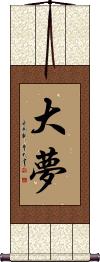
大夢 means “Big Dream” in Chinese and Japanese.
大夢 is primarily a Buddhist term referring to the great dream that represents a long and winding life that feels like a dream (since reality is an illusion anyway in Buddhism).
This can also be a female given name, Hiromu, or Oomu, in Japanese. Also, more rare unisex given names Daimu or Taimu.
Dream / Dreams
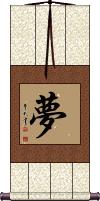
夢 is the very simple word for dreams in Chinese and Japanese.
It can also mean having a vision or simply an illusion.
Dream / Vision
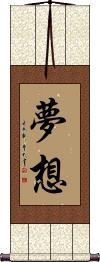
夢想 is the two-character version of dream or dreaming, which can mean “to dream of [something],” vision, imagine, or reverie.
Be careful, as, in some contexts, it can mean dreaming of something in vain.
Dream Big / Big Dreams
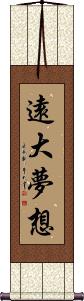
遠大夢想 is a way to say “dream big” or “big dreams” in Mandarin Chinese.
Dream Come True / Enjoy Success
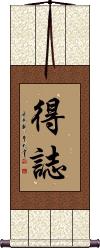
得誌 is a Chinese word that means to accomplish one's ambition, a dream come true, or to enjoy your success.
Dreamer
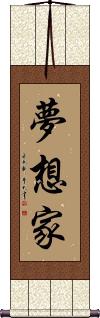
夢想家 means “dreamer” or “visionary” in Chinese, Japanese Kanji, and old Korean Hanja.
Big Dream / Great Hope
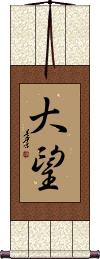
大望 is one of a few ways to write “dream big” in Japanese.
This is a good title if you want that to inspire ambition or high aspirations. 大望 is also a way to say “great expectations.”
Life Is But A Dream
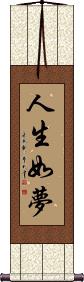
人生如夢 is an old Chinese proverb that suggests, “life is but a dream.”
This kind of follows the Buddhist idea that the world is a temporal place, where reality may not be as real as you think.
Pursue Your Dreams
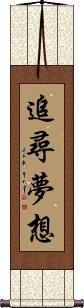
追尋夢想 means “pursue your dreams,” “follow your dreams,” or “chase your dreams” in Chinese.
The first two characters mean “to pursue,” “to track down,” or “to search for.”
The last two mean dreams. This version of dreams refers to those with an element of reality (not the dreams you have when you sleep but rather your aspirations or goals in life).
This title will tell everyone that you want to make your dreams come true.
See Also: Pursuit of Happiness
Pursue Your Dreams
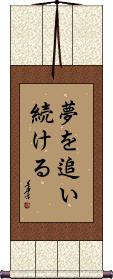
夢を追い続ける is the Japanese way to express “pursue your dreams,” “follow your dreams,” or “chase your dreams.”
If you have dreams that you want to pursue and make true, this is the phrase for you.
The first character is “dream” or “dreams.” The rest of the characters establish the idea of chasing or pursuing.
Note: Because this selection contains some special Japanese Hiragana characters, it should be written by a Japanese calligrapher.
See Also: Pursuit of Happiness
Visionary / Dreamer
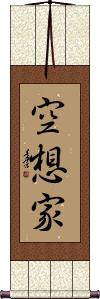
空想家 means visionary or dreamer in Japanese.
Beautiful Dreamer
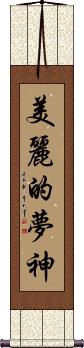
美麗的夢神 is the Chinese title for the song Beautiful Dreamer.
It translates as Beautiful Dream Saint.
Realize Your Dreams
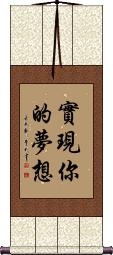
實現你的夢想 means “realize your dreams” or “live your dreams” in Chinese.
實現 means to achieve, to implement, to realize, or to bring about.
The characters 你的 effectively mean “your.”
夢想 means to dream, imagine, or have a vision.
Great Aspirations / Ambition
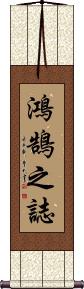
鴻鵠之誌 is a Chinese proverb that implies that having grand ambitions also means that others will not understand your great expectations and ideas.
Though the actual words come from a longer saying of Confucius, which goes, “The little swallows living under the eaves wouldn't understand the lofty ambitions of a swan (who flies far and wide).”
This Confucius quote has led to this idiomatic expression in China that means “think big.” What you'd be saying is “The lofty ambitions of a swan.”
Note that Chinese people sometimes refer to the little swallow as one who does not “think big” but is, instead, stuck in a rut or just leading a mundane life. Therefore, it's a compliment to be called a swan but not a good thing to be called a swallow.
Great Aspirations / Ambition
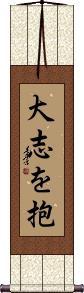
大志を抱 is a single Japanese word that kind of reads like a short proverb.
It suggests that you should have “high aims,” “ambitions,” or “aspirations” in your life.
Realize Your Ambitions / Embrace Your Ambition
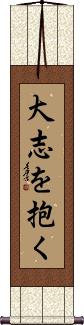
大志を抱く is a Japanese proverb that suggests you should embrace, pursue, and realize your ambitions.
The first part means ambitions or aspirations.
The last part means to embrace or to hold in your arms.
Here's the character breakdown:
大志 (taishi) ambition; aspiration.
を (o) particle
抱く (idaku) to embrace; to hold in the arms (e.g. a baby); to hug; to harbor/harbour; to bear (e.g., a grudge); to entertain (e.g., suspicion); to sleep with; to sit on eggs.
Note: Because this selection contains some special Japanese Hiragana characters, it should be written by a Japanese calligrapher.
Heroic Spirit / Great Ambition
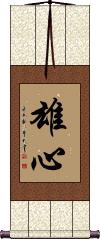
雄心 are the Chinese characters and Japanese Kanji for great ambition, lofty aspiration, or heroic spirit.
Progress / Ambition
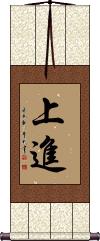
This Chinese and Japanese word means to make progress, to do better, ambition to improve oneself, to move forward, to advance.
This should be romanized as Joushin but is often romanized as Joshin from Japanese. It can also be a given name in Japanese.
Fear not long roads; Fear only short ambition
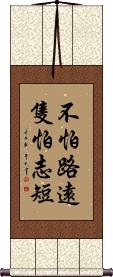
不怕路遠隻怕志短 is a Chinese proverb that literally translates as “Fear not long roads; fear only short ambition,” or “Don't fear that the road is long, only fear that your will/ambition/aspiration is short.”
Figuratively, this means: However difficult the goal is, one can achieve it as long as one is determined to do so.
Others may translate the meaning as “Don't let a lack of willpower stop you from pressing onward in your journey.”
Do not fear poverty; Fear low ambitions
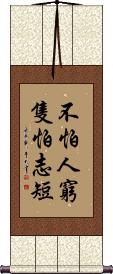
不怕人窮隻怕志短 is a Chinese proverb that literally translates as: It is not poverty that is to be feared; It is low ambition.
Figuratively, this means: It is not poverty but a lack of lofty aspiration that is to be regretted.
Realize Your Ambitions / Ride on the Crest of Success
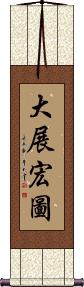
大展宏圖 is a four-character proverb used in Chinese to mean “realize your ambitions” or “exhibit your ambition and success.”
It's used to talk about someone with great career ambitions. Almost literally, it expresses the idea of someone unfolding a great career like a map or a set of blueprint plans.
Very literally translated, these four characters mean “Great unfolding of a huge map” or “Great exhibition of a colossal plan.”
Ambition
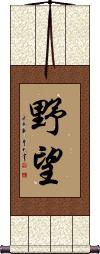
Great Expectations
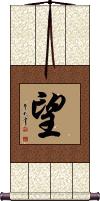
望 holds the ideas of ambition, hope, desire, aspiring to, expectations, looking towards, to gaze (into the distance), and in some contexts, full moon rising.
望 is one of those single characters that is vague but in that vagueness, it also means many things.
望 is a whole word in Chinese and old Korean but is seldom seen alone in Japanese. Still, it holds the meanings noted above in all three languages.
Without a big net, how can you catch fish?
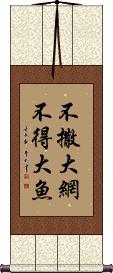
不撒大網不得大魚 is a Chinese proverb that literally translates as: [if one does] not cast a big net, [one can] not get big fish.
Figuratively, this means: One cannot make great accomplishments without making great efforts or taking great pains.
This is sort of the fishing version of, “No pain, no gain.”
Boys be Ambitious
Quote from William S. Clark in Japan
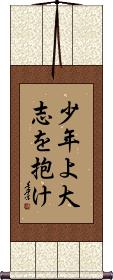
少年よ大志を抱け was a sort of motto or proverb invoked by William Clark after being hired by the Emperor of Japan in 1876 to establish a university in Hokkaido, Japan.
This phrase has been famous across all generations of Japan since that time.
More about William S. Clark's adventures in Japan.
Note: Because this selection contains some special Japanese Hiragana characters, it should be written by a Japanese calligrapher.
Create / Creation
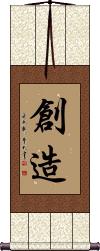
創造 means to create, to bring about, to produce, or simply creative or creation.
The first character here means to create, Genesis, or origin.
The second means to make or build.
Creative / Creativity
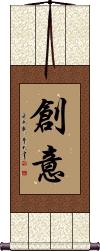
創意 is creative or creativity in Chinese characters, old Korean Hanja, and Japanese Kanji.
It can also refer to an original idea or originality.
Unbridled Creativity
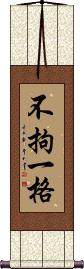
不拘一格 is a Chinese proverb that speaks of exploring different styles and not being stuck in conventional thinking.
It can also be translated as “not sticking to one pattern” or “not limited to one type (or style).” The most simple translation is “being creative” or “unbridled creativity.” Some may also say this means “not being stuck in a rut,” in the context of a designer or artist.
If you translate this, the first two characters mean “not stick to” or “not confine oneself to.”
The second two characters mean “one mode,” “one pattern,” “one form,” “one style,” or “one rule.”
Creativity
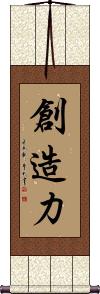
創造力 is a word that means “strength of creativity” or sort of “creativity (is your) strength.”
This can also be translated as “ingenuity.”
Creativity is the power of imagination. It is discovering your own special talents. Daring to see things in new ways and find different ways to solve problems. With your creativity, you can bring something new into the world.
The first character means “to create,” and the second means “to make or build.” Together they mean “creative.” The third character means “strength.”
Desire
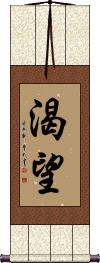
This Chinese word can mean desirous, wishful, or desire.
The first character means to thirst for [something] or to be thirsty. The second character means to hope for, to expect, to gaze (into the distance), or to look for something. The combined meaning of these two characters changes a bit, but I think it's nice to know the individual meanings to give you a better understanding of where a word comes from.
Korean definitions of this word include craving, longing, and thirst for knowledge.
Desire / Longing / Craving
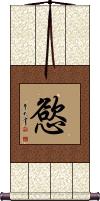
慾 means desire, longing, appetite, wish, covetousness, greed, passion, desire, avarice, and craving.
慾 is universal in Chinese, Japanese Kanji, and Korean Hanja.
The context in which this character is used determines whether the meaning is good or bad. As a single character on a wall scroll, you get to decide what the definition is to you (hopefully more toward desire than greed).
 Please note that Japanese use a simplified version of this character - it also happens to be the same simplification used in mainland China. Click on the character to the right if you want the Japanese/Simplified version of desire.
Desire / Craving
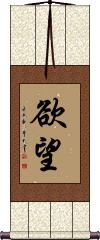
欲望 is a word that means strong desire, while some might translate it as “lust.”
The first character of this word means desire, longing, hunger, covetousness, greed, passion, desire, craving, or wish. The second character means to hope for, ambition, desire, aspire, expect, gaze (into the distance), or look for something.
Desire / Wish / Aspiration
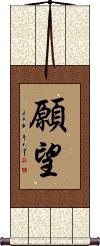
願望 means desire, wish, or aspiration in Chinese and Japanese.
Faith Hope Love
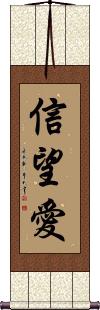
信望愛 is a Chinese list of words meaning faith, hope, and love.
This is not a typical phrase in Chinese but rather just random words strung together. There's no bad meaning, it's just not typical Chinese grammar.
Faith Hope Love
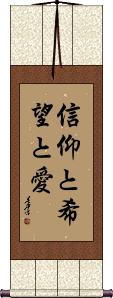
信仰と希望と愛 is a Japanese list of words (not really a phrase) meaning faith, hope, and love.
Some have associated this word list with Corinthians 13:13, though there are no specific religious connotations in this word list, and it's not directly from that Japanese Bible verse.
Note: Because this selection contains some special Japanese Hiragana characters, it should be written by a Japanese calligrapher.
Fantasy / Illusion
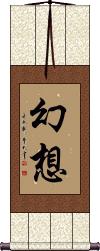
幻想 is illusions or fantasy in Chinese, Japanese Kanji, and old Korean Hanja.
This can also refer to delusion or daydreaming. It sort of means a dream or idea that cannot be true or real ( at least not in this realm).
Hope
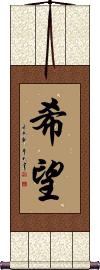
Looking Forward / Hoping
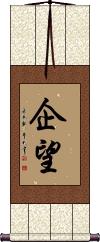
企望 is a Chinese and Japanese word that can be translated as:
to hope; to look forward; looking forward to; hoping for.
The first character means to plan. The second can mean to hope; to expect; to gaze (into the distance); to look towards. Sometimes it can mean a full moon.
Together, these characters create this word about hoping, wishing, looking forward, and dreaming about the future.
Idea / Thought
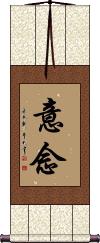
意念/意唸 means idea or thought in Chinese.
Idea / Thought
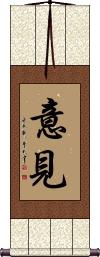
意見 means idea, thought, opinion, or view in Japanese.
This word also has a similar meaning in Chinese, just often used in China.
Illusion
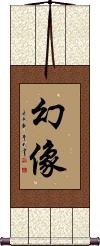
幻像 is a universal word for Illusion in Chinese, Japanese Kanji, and old Korean Hanja.
The first character means phantasm, vision, dream, illusion, apparition, or fantasy.
The second character means statue, picture, image, figure, portrait, shape, form, appearance, to be like, to resemble, to take after, to seem, or in rare/ancient context: an elephant.
 Note that the first character can be written without the left-side radical in Chinese. This form is shown to the right. Both forms are acceptable in Chinese but the character shown to the right is more likely to be read as "elephant."
See Also: Reality
Imagination
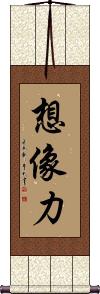
想像力 is probably the best way to express “imagination” in Chinese, Japanese Kanji, and old Korean Hanja.
It literally means “your strength to imagine.” The last character means strength or ability, while the first two mean imagine or conceptualize. My Japanese dictionary defines this as “The power of imagination.” While my Korean dictionary says, “imaginative power.”
Imagine / Imagination
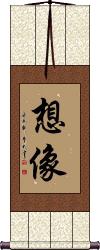
想像 is the shortest word for imagine, visualize, or imagination.
It can also mean “to guess,” (which is why I favor the 3-character version of imagination (just a third character is added to the end, which clarifies it).
Lost / Dazed and Confused
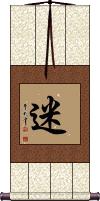
迷 is one of those characters that can mean a lot of different things depending on context. When written alone, as a single character on a wall scroll, it opens up the possibilities and allows you to decide what it means to you.
The key definition is “to be lost.” This could be physically or mentally lost. It can be someone lost in their thoughts, lost in an ocean, or just confused about where they are. The reason for the confused state may be due to internal or external reasons.
Here are some entries from various Asian dictionaries...
Chinese: lost, confused, bewilder, crazy about, fan, enthusiast, mystery.
Japanese: lost, astray, perplexed, in doubt, err, illusion.
Korean: lost, bewildered, fascinated, deluded.
Meditation
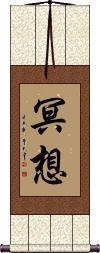
This encompasses the idea of meditation.
It's also a term used to describe a deep form of daydreaming, exploring one's imagination, the act of contemplating, or the idea of contemplation. 冥想 is often associated with Buddhism; however, the word “Zen” in Japanese (or “Chan” in Chinese) is probably more commonly used (or better known in the west).
See Also: Zen
Never Give Up
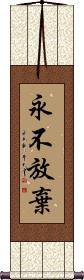
The first character means “eternal” or “forever,” and the second means “not” (together, they mean “never”). The last two characters mean “give up” or “abandon.” Altogether, you can translate this proverb as “never give up” or “never abandon.”
Depending on how you want to read this, 永不放棄 is also a statement that you will never abandon your hopes, dreams, family, or friends.
Never Give In / Never Succumb / Never Lose
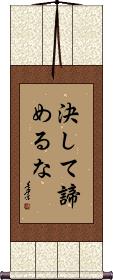
決して諦めるな is a Japanese term that informally means “never give up.”
It's also a Japanese way to say “never surrender.”
Note: Because this selection contains some special Japanese Hiragana characters, it should be written by a Japanese calligrapher.
See Also: Tenacity | Perseverance | Hope
Pursuit of Happiness
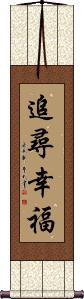
追尋幸福 is the best way to translate the English phrase “pursuit of happiness” into Chinese.
The first two characters mean “to pursue,” “to track down,” or “to search for.”
The last two mean happiness, happy, or being blessed.
See Also: Follow Your Dreams
Pursuit of Happiness
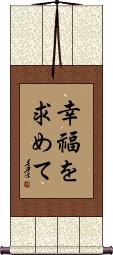
幸福を求めて is “Pursuit of Happiness” or “In Search of Happiness” in Japanese.
Here's how the characters break down:
幸福 (koufuku) happiness; blessedness; joy; well-being.
を (o) particle
求め (motome) to want; to seek; to pursue; to request
て (te) particle
Note: Because this selection contains some special Japanese Hiragana characters, it should be written by a Japanese calligrapher.
See Also: Follow Your Dreams
Reality and Illusion
Buddhism Concept
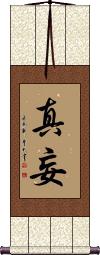
真妄 is a specifically Buddhist term that means “reality and illusion.” Out of Buddhist context, it might be read as “The real and the absurd.”
Separately, the first character means real, true, and genuine, and the second character means absurd, fantastic, or related to fantasy.
Reality and Illusion
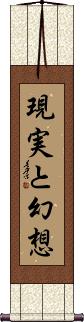
現実と幻想 is the Japanese way to write, “reality and illusion.”
Reality / Realistic
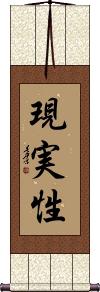
現実性 is a Japanese word that expresses the idea of reality or coming to understand what is true and real.
This can also be translated as realistic, practical, or feasible.
See Also: Illusion
Thought / Thinking / Idea
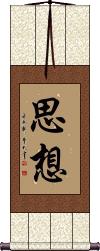
思想 means thought, thinking, or idea in Chinese, Japanese Kanji, and old Korean Hanja. Sometimes it can mean ideology, depending on context.
This can refer to someone's personality - like saying, “he is a thinker.”
Flower in the Mirror, Moon on Water
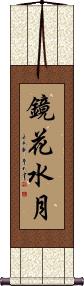
鏡花水月 is an old Asian proverb that means “flowers in a mirror and the moon reflected in the lake” or “flowers reflected on a mirror and the moon reflected on the water's surface.”
Literally, 鏡花水月 reads “Mirror Flower, Water Moon.”
Figuratively this can be used to represent a lot of different ideas. It can be used to express an unrealistic rosy view or viewing things through rose-tinted spectacles. So you can use it to relay an idea about something that is visible but has no substance,
something that can be seen but not touched, or something beautiful but unattainable such as dreams or a mirage.
This expression is used to describe things like the subtle and profound beauty of poems that cannot be described in words.
鏡 = Mirror (or lens)
花 = Flower(s)
水 = Water
月 = Moon
Can also be written 水月鏡花 (just a slight change in word/character order).
This in-stock artwork might be what you are looking for, and ships right away...

Gallery Price: $60.00
Your Price: $36.88
Gallery Price: $200.00
Your Price: $79.88
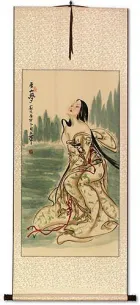
Gallery Price: $200.00
Your Price: $79.88
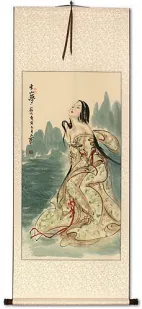
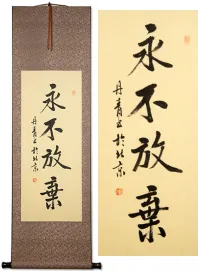
Gallery Price: $100.00
Your Price: $49.88
The following table may be helpful for those studying Chinese or Japanese...
| Title | Characters | Romaji (Romanized Japanese) | Various forms of Romanized Chinese | |
| Big Dream | 大夢 | daimu | dà mèng / da4 meng4 / da meng / dameng | ta meng / tameng |
| Dream Dreams | 夢 梦 | yume | mèng / meng4 / meng | |
| Dream Vision | 夢想 梦想 | mu sou / musou / mu so | mèng xiǎng meng4 xiang3 meng xiang mengxiang | meng hsiang menghsiang |
| Dream Big Big Dreams | 遠大夢想 远大梦想 | yuǎn dà mèng xiǎng yuan3 da4 meng4 xiang3 yuan da meng xiang yuandamengxiang | yüan ta meng hsiang yüantamenghsiang |
|
| Dream Come True Enjoy Success | 得誌 得志 | dé zhì / de2 zhi4 / de zhi / dezhi | te chih / techih | |
| Dreamer | 夢想家 梦想家 | mu sou ka / musouka / mu so ka | mèng xiǎng jiā meng4 xiang3 jia1 meng xiang jia mengxiangjia | meng hsiang chia menghsiangchia |
| Big Dream Great Hope | 大望 | tai mou / taimou / tai mo | ||
| Life Is But A Dream | 人生如夢 人生如梦 | rén shēng rú mèng ren2 sheng1 ru2 meng4 ren sheng ru meng renshengrumeng | jen sheng ju meng jenshengjumeng |
|
| Pursue Your Dreams | 追尋夢想 追寻梦想 | zhuī xún mèng xiǎng zhui1 xun2 meng4 xiang3 zhui xun meng xiang zhuixunmengxiang | chui hsün meng hsiang chuihsünmenghsiang |
|
| Pursue Your Dreams | 夢を追い続ける | yume wo oi tsudukeru yumewooitsudukeru | ||
| Visionary Dreamer | 空想家 | kuusouka / kusoka | ||
| Beautiful Dreamer | 美麗的夢神 美丽的梦神 | měi lì de mèng shén mei3 li4 de meng4 shen2 mei li de meng shen meilidemengshen | mei li te meng shen meilitemengshen |
|
| Realize Your Dreams | 實現你的夢想 实现你的梦想 | shí xiàn nǐ de mèng xiǎng shi2 xian4 ni3 de meng4 xiang3 shi xian ni de meng xiang shixiannidemengxiang | shih hsien ni te meng hsiang shihhsiennitemenghsiang |
|
| Great Aspirations Ambition | 鴻鵠之誌 鸿鹄之志 | hóng hú zhī zhì hong2 hu2 zhi1 zhi4 hong hu zhi zhi honghuzhizhi | hung hu chih chih hunghuchihchih |
|
| Great Aspirations Ambition | 大志を抱 | tai shi wo idaku taishiwoidaku | ||
| Realize Your Ambitions Embrace Your Ambition | 大志を抱く | taishi wo Idaku taishiwoIdaku | ||
| Heroic Spirit Great Ambition | 雄心 | yuushin / yushin | xióng xīn xiong2 xin1 xiong xin xiongxin | hsiung hsin hsiunghsin |
| Progress Ambition | 上進 上进 | joushin / joshin | shàng jìn shang4 jin4 shang jin shangjin | shang chin shangchin |
| Fear not long roads; Fear only short ambition | 不怕路遠隻怕志短 不怕路远只怕志短 | bú pà lù yuǎn zhǐ pà zhì duǎn bu2 pa4 lu4 yuan3 zhi3 pa4 zhi4 duan3 bu pa lu yuan zhi pa zhi duan bupaluyuanzhipazhiduan | pu p`a lu yüan chih p`a chih tuan pu pa lu yüan chih pa chih tuan |
|
| Do not fear poverty; Fear low ambitions | 不怕人窮隻怕志短 不怕人穷只怕志短 | bú pà rén qióng zhǐ pà zhì duǎn bu2 pa4 ren2 qiong2 zhi3 pa4 zhi4 duan3 bu pa ren qiong zhi pa zhi duan buparenqiongzhipazhiduan | pu p`a jen ch`iung chih p`a chih tuan pu pa jen chiung chih pa chih tuan |
|
| Realize Your Ambitions Ride on the Crest of Success | 大展宏圖 大展宏图 | dà jiǎn hóng tú da4 jian3 hong2 tu2 da jian hong tu dajianhongtu | ta chien hung t`u tachienhungtu ta chien hung tu |
|
| Ambition | 野望 | yabou / yabo | yě wàng / / | |
| Great Expectations | 望 | bou / nozomi bo / nozomi | wàng / wang4 / wang | |
| Without a big net, how can you catch fish? | 不撒大網不得大魚 不撒大网不得大鱼 | bù sā dà wǎng bù dé dà yú bu4 sa1 da4 wang3 bu4 de2 da4 yu2 bu sa da wang bu de da yu busadawangbudedayu | pu sa ta wang pu te ta yü pusatawangputetayü |
|
| Boys be Ambitious | 少年よ大志を抱け | shou nen yo tai shi o ida ke shounenyotaishioidake sho nen yo tai shi o ida ke | ||
| Create Creation | 創造 创造 | sou zou / souzou / so zo | chuàng zào chuang4 zao4 chuang zao chuangzao | ch`uang tsao chuangtsao chuang tsao |
| Creative Creativity | 創意 创意 | sou i / soui / so i | chuàng yì chuang4 yi4 chuang yi chuangyi | ch`uang i chuangi chuang i |
| Unbridled Creativity | 不拘一格 | bù jū yī gé bu4 ju1 yi1 ge2 bu ju yi ge bujuyige | pu chü i ko puchüiko |
|
| Creativity | 創造力 创造力 | souzouryoku sozoryoku | chuàng zào lì chuang4 zao4 li4 chuang zao li chuangzaoli | ch`uang tsao li chuangtsaoli chuang tsao li |
| Desire | 渴望 | kě wàng / ke3 wang4 / ke wang / kewang | k`o wang / kowang / ko wang | |
| Desire Longing Craving | 慾 欲 | yoku | yù / yu4 / yu | yü |
| Desire Craving | 欲望 | yokubou / yokubo | yù wàng / yu4 wang4 / yu wang / yuwang | yü wang / yüwang |
| Desire Wish Aspiration | 願望 愿望 | gan bou / ganbou / gan bo | yuàn wàng yuan4 wang4 yuan wang yuanwang | yüan wang yüanwang |
| Faith Hope Love | 信望愛 信望爱 | xìn wàng ài xin4 wang4 ai4 xin wang ai xinwangai | hsin wang ai hsinwangai |
|
| Faith Hope Love | 信仰と希望と愛 | shinkou to kibou to ai shinkoutokiboutoai shinko to kibo to ai | ||
| Fantasy Illusion | 幻想 | gensou / genso | huàn xiǎng huan4 xiang3 huan xiang huanxiang | huan hsiang huanhsiang |
| Hope | 希望 | ki bou / kibou / ki bo | xī wàng / xi1 wang4 / xi wang / xiwang | hsi wang / hsiwang |
| Looking Forward Hoping | 企望 | kibou / kibo | qǐ wàng / qi3 wang4 / qi wang / qiwang | ch`i wang / chiwang / chi wang |
| Idea Thought | 意念 / 意唸 意念 | yì niàn / yi4 nian4 / yi nian / yinian | i nien / inien | |
| Idea Thought | 意見 | i ken / iken | yì jiàn / yi4 jian4 / yi jian / yijian | i chien / ichien |
| Illusion | 幻像 幻像 / 幻象 | gen zou / genzou / gen zo | huàn xiàng huan4 xiang4 huan xiang huanxiang | huan hsiang huanhsiang |
| Imagination | 想像力 | souzouryoku sozoryoku | xiǎng xiàng lì xiang3 xiang4 li4 xiang xiang li xiangxiangli | hsiang hsiang li hsianghsiangli |
| Imagine Imagination | 想像 | souzou / sozo | xiǎng xiàng xiang3 xiang4 xiang xiang xiangxiang | hsiang hsiang hsianghsiang |
| Lost Dazed and Confused | 迷 | mei | mí / mi2 / mi | |
| Meditation | 冥想 | mei sou / meisou / mei so | míng xiǎng ming2 xiang3 ming xiang mingxiang | ming hsiang minghsiang |
| Never Give Up | 永不放棄 永不放弃 | yǒng bù fàng qì yong3 bu4 fang4 qi4 yong bu fang qi yongbufangqi | yung pu fang ch`i yungpufangchi yung pu fang chi |
|
| Never Give In Never Succumb Never Lose | 決して諦めるな | kesshite akirameruna kesshiteakirameruna keshite akirameruna | ||
| Pursuit of Happiness | 追尋幸福 追寻幸福 | zhuī xún xìng fú zhui1 xun2 xing4 fu2 zhui xun xing fu zhuixunxingfu | chui hsün hsing fu chuihsünhsingfu |
|
| Pursuit of Happiness | 幸福を求めて | koufuku o motome te koufukuomotomete kofuku o motome te | ||
| Reality and Illusion | 真妄 | zhēn wàng zhen1 wang4 zhen wang zhenwang | chen wang chenwang |
|
| Reality and Illusion | 現実と幻想 | gen jitsu to gen sou genjitsutogensou gen jitsu to gen so | ||
| Reality Realistic | 現実性 | gen jitsu sei genjitsusei | ||
| Thought Thinking Idea | 思想 | shisou / shiso | sī xiǎng / si1 xiang3 / si xiang / sixiang | ssu hsiang / ssuhsiang |
| Flower in the Mirror, Moon on Water | 鏡花水月 镜花水月 | kyou ka sui getsu kyoukasuigetsu kyo ka sui getsu | jìng huā shuǐ yuè jing4 hua1 shui3 yue4 jing hua shui yue jinghuashuiyue | ching hua shui yüeh chinghuashuiyüeh |
| In some entries above you will see that characters have different versions above and below a line. In these cases, the characters above the line are Traditional Chinese, while the ones below are Simplified Chinese. | ||||




