Many custom options...


And formats...



Minor in Chinese / Japanese...
Buy a Minor calligraphy wall scroll here!
Personalize your custom “Minor” project by clicking the button next to your favorite “Minor” title below...
1. Minor
2. Black Dragon
3. One who is drenched in rain does not fear drops of dew
4. Optimistic
Minor

米諾 is the name Minor in Chinese (Mandarin).
Minor

マイナー is the name Minor in Japanese Katakana.
Note: Because this title is entirely Japanese Katakana, it should be written by a Japanese calligrapher.
Black Dragon
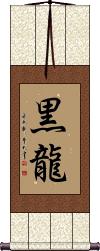
黒龍 is a generic title for “Black Dragon.”
The first character is black color.
The second means dragon.
Sometimes written as 黑龍 (just a minor variation in the first character).
One who is drenched in rain does not fear drops of dew
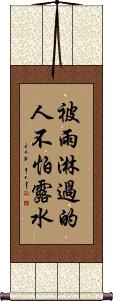
被雨淋過的人不怕露水 is a Chinese proverb that literally translates as “One who has been drenched by the rain is not afraid of dew drops.”
Figuratively, this means:
One who has gone through hardships is not afraid of (minor)setbacks.
Optimistic
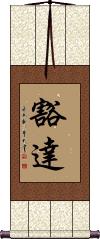
Beyond optimistic, 豁達 can also be defined as sanguine; magnanimous; open-minded; openhearted; broad-minded.
豁達 is appropriate if you are, or want to be, the kind of person who is not bothered by the little things or minor troubles of life. This signifies a person who always feels things will get better. This is great for the person who figuratively sees a window of opportunity opening even as a door closes.
While a valid word in Japanese, this is kind of antiquated, and not in common use in modern Japan.
Old, But More Vigorous in Spirit
Age is just a number
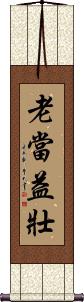
老當益壯 is a Chinese proverb that means “old but vigorous” or “hale and hearty despite the years.”
Said of someone who is more spirited when they grows older.
The story behind this Chinese proverb:
In the Eastern Han Dynasty, there was a man named Ma Yuan. He had been planning to herd animals on the frontier since he was young. When he grew up, Ma became a minor official of a county.
Once, he was sending some prisoners to another location. He felt pity for them, so he set them free, and then he fled to another county in the north. He herded animals there, and thus his dream came true. He always said: “If you want to be a great man, the poorer you are, the firmer in spirit you have to be; the older you are, the more spirited you should be.”
Later, when he was even older, Ma Yuan became a famous general of the Eastern Han Dynasty and contributed to many battles.
Double Happiness Guest Book
Customize a special Asian guest book for your wedding
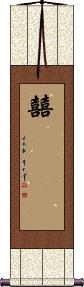
Start customizing a “Double Happiness Guest Book Wall Scroll” Here!
The paper panel length can be whatever you choose from 68cm to 135cm (27” to 53”).
If you don't mention what paper length you want in the special instructions tab (on the next page), we'll make it about 100cm (40”).
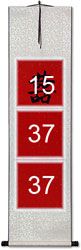
The medium-size scroll with a 33cm x 100cm (13” x 40”) paper panel can usually handle up to 89 signatures. That breaks down to 37 signatures per empty square and 15 signatures around the 囍 character. If you switch to a 135cm paper panel, add another 37 potential signatures.
We can splice two 135cm papers together, but that would be a crazy-long scroll. These are only estimates, your mileage may vary.
With silk panels, this will yield a wall scroll about 155cm (61”) long. That's enough for up to 89 signatures. Of course, that depends on if your guests just sign a brief salutation and name, or more verbose good wishes. Customer feedback is that 126 people can sign the 135cm long paper on a medium-sized scroll. If we go bigger than that, there will be a minor paper seam and an extra charge. Email me with your specifications if you need something special.
Most customers pick the festive red paper with gold flecks and white or ivory silk. Red is a good luck color in Chinese culture, thus the most popular choice. But, you can do any color combination that you want.
There is a long history of Chinese-character-use outside of mainland China. This Double Happiness character is also seen at weddings in Korea, Vietnam, Hong Kong, and Taiwan, as well as in Chinese communities in Thailand, Indonesia, and elsewhere. While Japan borrowed Chinese characters into their language, you won't see 囍 as often at Japanese weddings.
This in-stock artwork might be what you are looking for, and ships right away...


These search terms might be related to Minor:
Beloved Son / Beloved Child
Child
Child of God
Forever Young / Eternal Youth
Fountain of Youth
God Son / God Child
If You Love Your Child, Send Them Out Into the World
Junior
Lesser
Love Between Child and Parents
Minor
Petty
Small Forest
Spare the Rod, Spoil the Child
Not the results for Minor that you were looking for?
Below are some entries from our dictionary that may match your Minor search...
| Characters If shown, 2nd row is Simp. Chinese |
Pronunciation Romanization |
Simple Dictionary Definition |
小小 see styles |
xiǎo xiǎo xiao3 xiao3 hsiao hsiao shoushou / shosho しょうしょう |
More info & calligraphy: Xiaoxiao(n-adv,n) just a minute; small quantity |
マイナー see styles |
mainaa / maina マイナー |
More info & calligraphy: Minor |
加 see styles |
jiā jia1 chia kuwae くわえ |
to add; (math.) plus; to increase; to augment; (used before a disyllabic verb, often after an adverb like 不[bu4], 大[da4], 稍[shao1] etc, to indicate that the action applies to something previously mentioned, as in 稍加改良[shao1 jia1 gai3 liang2] "make some minor improvements to (it)") (1) addition; (2) (abbreviation) (See 加奈陀・カナダ) Canada; (surname) Kuwae Add, added; increase; put on. |
劣 see styles |
liè lie4 lieh retsu れつ |
inferior (prefix) {math} sub-; inferior; minor Inferior, vicious. |
合 see styles |
hé he2 ho takagou / takago たかごう |
to close; to join; to fit; to be equal to; whole; together; round (in battle); conjunction (astronomy); 1st note of pentatonic scale; old variant of 盒[he2] (1) gō; traditional unit of volume, approx. 180 ml; (2) gō; traditional unit of area, approx 0.33 square meters; (3) one-tenth of the distance from the base to the summit of a mountain; (4) {astron} (See 衝・3) conjunction; (5) (See 合計) sum; total; (6) {phil} (See 総合・1,正反合) synthesis (in dialectics); (7) minor premise (in hetuvidya); (counter) (8) counter for covered containers; (counter) (9) counter for matches, battles, etc.; (surname) Takagou Bring together, unite, unison, in accord. |
吏 see styles |
lì li4 li fumi ふみ |
minor government official or functionary (old) (archaism) government official; public official; (female given name) Fumi |
綾 绫 see styles |
líng ling2 ling rin りん |
damask; thin silk (1) (kana only) figure; design; (2) twill weave; pattern of diagonal stripes; (3) (kana only) style (of writing); figure (of speech); (4) (kana only) design; plot; plan; (5) (kana only) minor market fluctuation; technical correction; (6) (kana only) (abbreviation) cat's cradle; (7) (kana only) (abbreviation) lease rod (in a loom); (female given name) Rin |
謫 谪 see styles |
zhé zhe2 che taku |
to relegate a high official to a minor post in an outlying region (punishment in imperial China); to banish or exile; (of immortals) to banish from Heaven; to censure; to blame to condemn |
院 see styles |
yuàn yuan4 yüan in いん |
courtyard; institution; CL:個|个[ge4] (1) (See 下院・かいん) house of parliament (congress, diet, etc.); (2) graduate school; postgraduate school; (suffix) (3) (See 医院・いいん,病院・びょういん) institution (often medical); institutional building; government office; (suffix) (4) {Buddh} sub-temple; minor temple building; temple; cloister; (5) (honorific or respectful language) imperial palace; (6) (honorific or respectful language) (hist) (See 女院・にょういん) title bestowed on empresses, princesses, etc.; (suffix) (7) former (esp. of emperors, daimyos, etc.); late; (surname, female given name) In ārāma, pleasaunce, garden, grove; a monastery, hall, court. |
モブ see styles |
mobu モブ |
(1) mob; (2) {comp} minor character (in computer games, from mobile object) |
七衆 七众 see styles |
qī zhòng qi1 zhong4 ch`i chung chi chung shichishu しちしゅ |
seven orders of Buddhist disciples (monks, nuns, probationary nuns, male novices, female novices, male lay devotees, female lay devotees) The seven classes of disciples:―(1)比丘 bhikṣu,monk;(2) bhikṣuṇī a female observer of all commandments; (3) 式叉摩那śikṣamāṇa, a novice, or observer of the six commandments; (4) 沙彌 śrāmaṇera, and (5) 沙彌尼 śrāmaṇerika, male and female observers of the minor commandments; (6) 優婆塞 upāsaka, male observers of the five commandments; and (7) 優婆夷upāsikā, female ditto. The first five have left home, the last two remain at home. Tiantai makes nine groups by dividing the last two into four, two remaining at home, two leaving home and keeping the eight commandments. Others make four groups, i.e. (1), (2), (6), and (7) of the above. Tiantai also has a four-group. |
三災 三灾 see styles |
sān zāi san1 zai1 san tsai sansai さんさい |
the three calamities: fire, flood and storm The three calamities; they are of two kinds, minor and major. The minor, appearing during a decadent world-period, are sword, pestilence, and famine; the major, for world-destruction, are fire, water, and wind. 倶舍諭 12. |
些微 see styles |
xiē wēi xie1 wei1 hsieh wei |
slight; minor; small; slightly |
偏小 see styles |
piān xiǎo pian1 xiao3 p`ien hsiao pien hsiao henshō |
The partial and minor teaching of the Buddha during the first twelve years of his ministry. |
傍役 see styles |
wakiyaku わきやく |
(noun - becomes adjective with の) supporting role (actor); minor role |
兼修 see styles |
kenshuu / kenshu けんしゅう |
(noun, transitive verb) studying two subjects together (e.g. as a major and a minor) |
前座 see styles |
maeza まえざ |
(1) opening performance; opening act; curtain raiser; (2) minor performer; minor storyteller; subordinate part; (surname) Maeza |
劣弧 see styles |
rekko れっこ |
minor arc |
劣角 see styles |
rekkaku れっかく |
(See 優角) minor angle |
吏治 see styles |
lì zhì li4 zhi4 li chih |
style of governing (of minor official); achievement in office |
吏胥 see styles |
lì xū li4 xu1 li hsü |
minor official |
四禪 四禅 see styles |
sì chán si4 chan2 ssu ch`an ssu chan shizen |
(四禪天) The four dhyāna heavens, 四靜慮 (四靜慮天), i. e. the division of the eighteen brahmalokas into four dhyānas: the disciple attains to one of these heavens according to the dhyāna he observes: (1) 初禪天 The first region, 'as large as one whole universe' comprises the three heavens, Brahma-pāriṣadya, Brahma-purohita, and Mahābrahma, 梵輔, 梵衆, and 大梵天; the inhabitants are without gustatory or olfactory organs, not needing food, but possess the other four of the six organs. (2) 二禪天 The second region, equal to 'a small chiliocosmos' 小千界, comprises the three heavens, according to Eitel, 'Parīttābha, Apramāṇābha, and Ābhāsvara, ' i. e. 少光 minor light, 無量光 infinite light, and 極光淨 utmost light purity; the inhabitants have ceased to require the five physical organs, possessing only the organ of mind. (3) 三禪天 The third region, equal to 'a middling chiliocosmos '中千界, comprises three heavens; Eitel gives them as Parīttaśubha, Apramāṇaśubha, and Śubhakṛtsna, i. e. 少淨 minor purity, 無量淨 infinite purity, and 徧淨 universal purity; the inhabitants still have the organ of mind and are receptive of great joy. (4) 四禪天 The fourth region, equal to a great chiliocosmos, 大千界, comprises the remaining nine brahmalokas, namely, Puṇyaprasava, Anabhraka, Bṛhatphala, Asañjñisattva, Avṛha, Atapa, Sudṛśa, Sudarśana, and Akaniṣṭha (Eitel). The Chinese titles are 福生 felicitous birth, 無雲 cloudless, 廣果 large fruitage, 無煩 no vexations, atapa is 無熱 no heat, sudṛśa is 善見 beautiful to see, sudarśana is 善現 beautiful appearing, two others are 色究竟 the end of form, and 無想天 the heaven above thought, but it is difficult to trace avṛha and akaniṣṭha; the inhabitants of this fourth region still have mind. The number of the dhyāna heavens differs; the Sarvāstivādins say 16, the 經 or Sutra school 17, and the Sthavirāḥ school 18. Eitel points out that the first dhyāna has one world with one moon, one mem, four continents, and six devalokas; the second dhyāna has 1, 000 times the worlds of the first; the third has 1, 000 times the worlds of the second; the fourth dhyāna has 1, 000 times those of the third. Within a kalpa of destruction 壞劫 the first is destroyed fifty-six times by fire, the second seven by water, the third once by wind, the fourth 'corresponding to a state of absolute indifference' remains 'untouched' by all the other evolutions; when 'fate (天命) comes to an end then the fourth dhyāna may come to an end too, but not sooner'. |
大本 see styles |
dà běn da4 ben3 ta pen daimoto だいもと |
foundation; basic principles; (surname) Daimoto The great, chief, or fundamental book or text. Tiantai takes the 無量壽經 as the major of the three Pure Land sutras, and the 阿彌陀經 as the 小本 minor. |
小劫 see styles |
xiǎo jié xiao3 jie2 hsiao chieh shōgō |
antarā-kalpa, or intermediate kalpa; according to the 倶舍論 it is the period in which human life increases by one year a century till it reaches 84,000 with men 8,400 feet high; then it is reduced at the same rate till the life-period reaches ten years with men a foot high; these two are each a small kalpa; the 智度論 reckons the two together as one kalpa; and there are other definitions. |
小卒 see styles |
xiǎo zú xiao3 zu2 hsiao tsu shousotsu / shosotsu しょうそつ |
foot soldier; minor figure; a nobody; (chess) pawn (noun - becomes adjective with の) (colloquialism) (abbr. of 小学校卒業(者)) having completed no schooling beyond elementary school; elementary school graduate |
小名 see styles |
xiǎo míng xiao3 ming2 hsiao ming shouna / shona しょうな |
pet name for a child; childhood name (See 大名) minor feudal lord; (surname) Shouna childhood name |
小善 see styles |
xiǎo shàn xiao3 shan4 hsiao shan shouzen / shozen しょうぜん |
a small kindness; minor good deed; (surname) Shouzen small amount of goodness |
小妄 see styles |
xiǎo wàng xiao3 wang4 hsiao wang shōmō |
minor falsehood |
小官 see styles |
xiǎo guān xiao3 guan1 hsiao kuan shoukan / shokan しょうかん |
petty official; minor functionary (1) petty official; (pronoun) (2) (humble language) I; me |
小寒 see styles |
xiǎo hán xiao3 han2 hsiao han kosamu こさむ |
Lesser Cold, 23rd of the 24 solar terms 二十四節氣|二十四节气 6th-19th January (See 二十四節気) "minor cold" solar term (approx. January 6); (female given name) Kosamu |
Click here for more Minor results from our dictionary
The following table may be helpful for those studying Chinese or Japanese...
| Title | Characters | Romaji (Romanized Japanese) | Various forms of Romanized Chinese | |
| Minor | 米諾 米诺 | mǐ nuò / mi3 nuo4 / mi nuo / minuo | mi no / mino | |
| Minor | マイナー | mainaa / maina | ||
| Black Dragon | 黒龍 黒龙 | koku ryuu / kokuryuu / koku ryu | hēi lóng / hei1 long2 / hei long / heilong | hei lung / heilung |
| One who is drenched in rain does not fear drops of dew | 被雨淋過的人不怕露水 被雨淋过的人不怕露水 | bèi yǔ lín guò de rén bù pà lù shuǐ bei4 yu3 lin2 guo4 de ren2 bu4 pa4 lu4 shui3 bei yu lin guo de ren bu pa lu shui | pei yü lin kuo te jen pu p`a lu shui pei yü lin kuo te jen pu pa lu shui |
|
| Optimistic | 豁達 豁达 | katsudatsu | huò dá / huo4 da2 / huo da / huoda | huo ta / huota |
| Old, But More Vigorous in Spirit | 老當益壯 老当益壮 | lǎo dāng yì zhuàng lao3 dang1 yi4 zhuang4 lao dang yi zhuang laodangyizhuang | lao tang i chuang laotangichuang |
|
| Double Happiness Guest Book | 囍 喜喜 | xǐ / xi3 / xi | hsi | |
| In some entries above you will see that characters have different versions above and below a line. In these cases, the characters above the line are Traditional Chinese, while the ones below are Simplified Chinese. | ||||

Successful Chinese Character and Japanese Kanji calligraphy searches within the last few hours...



