Many custom options...


And formats...



Man in Chinese / Japanese...
Buy a Man calligraphy wall scroll here!
Personalize your custom “Man” project by clicking the button next to your favorite “Man” title below...
1. Trust No One / Trust No Man
3. Star Man
4. Iron Man
5. Ip Man
6. Star Man
7. Spider-Man
8. Iron Man
10. Holy Man / Saint
11. Spider-Man
12. Adonis / Handsome Young Man
13. Man of Remarkable Character / Hero
14. Time and Tide Wait for No Man
15. Flying Ace / Aviator / Bird Man
16. Time and Tide Wait for No Man
17. A Wise Man Changes His Mind
18. Fear No Man / Fear Nothing
19. No man knows what he owes to his parents until he comes to have children of his own
Trust No One / Trust No Man
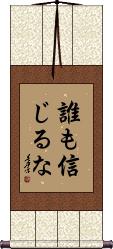
誰も信じるな is as close as you can get to the phrase “trust no man” in Japanese, though no gender is specified.
The first two characters mean everyone or anyone but change to “no one” with the addition of a negative verb.
The third through fifth characters express the idea of believing in, placing trust in, confiding in, or having faith in.
The last character makes the sentence negative (without the last character, this would mean “trust everyone,” with that last character, it's “trust no one”).
Note: Because this selection contains some special Japanese Hiragana characters, it should be written by a Japanese calligrapher.
Trust No One / Trust No Man
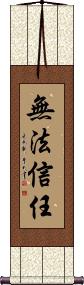
無法信任 is the kind of thing you expect to hear in a spy movie.
“Trust no one, 007!”
The first two characters express the idea of “no way” or “cannot.”
The last two characters mean “trust.”
The characters must go in this order due to Chinese grammar issues and in order to sound natural.
Note: This is not an ancient Chinese phrase by any means. It's just that we received a lot of requests for this phrase.
This is as close as you can get to the phrase “trust no man,” though technically, no gender is specified.
Man of Character
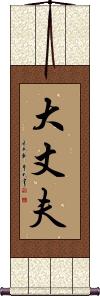
大丈夫 is a Chinese, Korean, and Japanese title that means a manly man, a man of character, a great man, or a fine figure of a man.
In Japanese, this can also be used to mean safe, all right, alright, OK, sure, or “no problem.” Used in Japanese for something that is undoubted or very acceptable.
Star Man
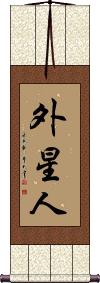
外星人 means “star man” or “space alien” in Chinese.
It is not literally man as in male, but human - as the word 人 does not have a gender attached.
Iron Man
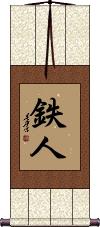
鉄人 is a Japanese title that means iron man or strong man.
鉄人 is sometimes used as a given name romanized as Tetsujin, Temujin, Tetsundo, Tetsuhito, or Tetsuto.
Ip Man
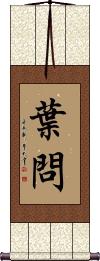
葉問 is the name of “Ip Man” or “Yip Man” (1893-1972).
He was a martial arts practitioner and master. He is perhaps most famous for being the master of Bruce Lee.
Star Man
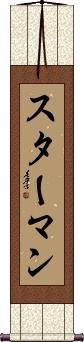
スターマン is the name Star Man in Japanese Katakana.
Note: Because this title is entirely Japanese Katakana, it should be written by a Japanese calligrapher.
Spider-Man

This is the title for Spider-Man in Japanese Katakana.
Note: Because this title is entirely Japanese Katakana, it should be written by a Japanese calligrapher.
Iron Man
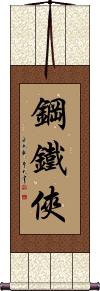
鋼鐵俠 is the Chinese title for Iron Man, the comic book superhero.
Teach A Man To Fish
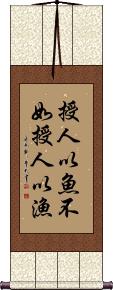
授人以魚不如授人以漁 is the Chinese version of the proverb, “Give a man a fish and you feed him for a day; teach a man to fish and you feed him for a lifetime.”
This implies that knowledge is the best charity.
Holy Man / Saint
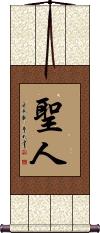
聖人 can mean saint, sage, or holy man.
Note: There is more than one way to express this idea. This one really matches “Holy man” because the second character means “human” or “person” (therefore, this could equally mean “Holy woman”).
Spider-Man

This is the title for Spider-Man in Chinese.
You will sometimes see it written 蜘蛛人.
蜘蛛俠 literally translates as “Spider Knight,” while 蜘蛛人 is “Spider Person.”
Adonis / Handsome Young Man
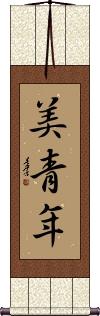
美青年 means handsome young man, or figuratively, Adonis, in Japanese.
Man of Remarkable Character / Hero
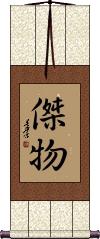
傑物 is a Japanese title that can mean “great man,” “heroic figure,” or “remarkable character.”
You would be giving someone a great honor by presenting this wall scroll to them as a gift.
Time and Tide Wait for No Man
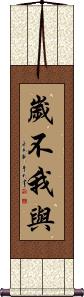
歲不我與 is a Chinese proverb that means is a way to express, “Time and tide wait for no man.”
The literal meaning of these Chinese characters is, “Years don't [for] oneself wait.” In more natural English, it's more like, “Years will pass by, with or without you.”
There is also an alternate version, 时不我待, which literally means “Time doesn't [for] oneself, wait.” In natural English, it's more like, “Time waits for no man.”
Flying Ace / Aviator / Bird Man
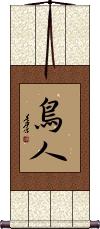
鳥人 means “bird man” or “bird person,” but it is used colloquially in Japanese to mean a flying ace or aviator.
Time and Tide Wait for No Man
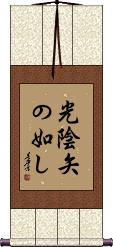
光陰矢の如し is a Japanese proverb that means “time flies like an arrow.” It's very similar to the English idiom, “time and tide wait for no man,” or “life is short.”
The Kanji breakdown:
光陰 = Time (the cycle of light and dark).
[and an]
矢 = Arrow
の = are
如し = Alike
Note: Because this selection contains some special Japanese Hiragana characters, it should be written by a Japanese calligrapher.
A Wise Man Changes His Mind (but a fool never will)
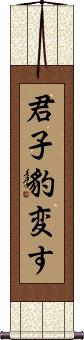
君子豹変す is a Japanese proverb that suggests that a wise man is willing to change his mind, but a fool will stubbornly never change his.
The first word is 君子 (kunshi), a man of virtue, a person of high rank, a wise man.
The second word is 豹変 (hyouhen), sudden change, complete change.
The last part, す (su), modifies the verb to a more humble form.
The “fool” part is merely implied or understood. So if wise and noble people are willing to change their minds, it automatically says that foolish people are unwilling to change.
Fear No Man / Fear Nothing
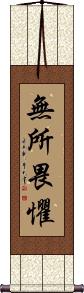
無所畏懼 means “fear nothing,” but it's the closest thing in Chinese to the phrase “fear no man” which many of you have requested.
This would also be the way to say “fear nobody” and can be translated simply as “undaunted.”
No man knows what he owes to his parents until he comes to have children of his own
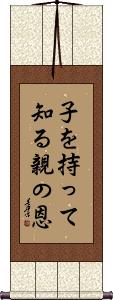
子を持って知る親の恩 literally translates as: Only after you have a baby, you would appreciate your parents (feel the way they do, etc).
This is a bit like the “walk a mile in another man's shoes” saying. Basically, it's about you cannot fully understand the plight of others until you experience it yourself. It also shows appreciation for the plight of parents.
This Japanese proverb can also be translated a few more ways:
No man knows what he owes to his parents till he comes to have children of his own.
One knows not what one owes to one's parents till one comes to have children of one's own.
Only after you have a baby, you will appreciate your parents or feel the way they do.
Only after becoming a parent yourself do you realize how much you owe [how indebted you are] to your own parents.
Note: Because this selection contains some special Japanese Hiragana characters, it should be written by a Japanese calligrapher.
Men Die for Wealth, Birds Die for Food
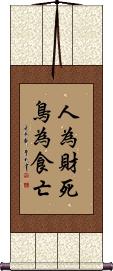
人為財死鳥為食亡 is a Chinese proverb that literally states that human beings will die for riches, just as birds will for food.
Figuratively it means that man will do anything in his means to become rich. Personally, I think dying for food is a more noble cause.
Often translated as “Men die in pursuit of wealth, birds die in pursuit of food. The 人 in this proverb just means human, so “men” is a placeholder for human with that translation - an English language problem that we have no easy gender-neutral nouns.
This proverb is meant to serve as a warning about the follies of greed.
In Flowers the Cherry Blossom, In Men the Samurai
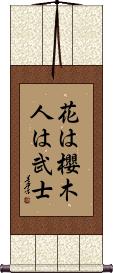
This Japanese proverb simply reads, “[In] Flowers it's Cherry Blossoms, [In] Men it's Warriors.”
花は櫻木人は武士 is meant to say that of all the flowers in the world, the cherry blossom is the best. And of all men in the world, the Samurai or Warrior is the best
This proverb has been around for a long time. It's believed to have been composed sometime before the Edo Period in Japan (which started in 1603).
Some will drop one syllable and pronounce this, “hana wa sakura hito wa bushi.” That's “sakura” instead of “sakuragi,” which is like saying “cherry blossom” instead of “cherry tree.”
The third character was traditionally written as 櫻. But in modern Japan, that became 桜. You may still see 櫻 used from time to time on older pieces of calligraphy. We can do either one, so just make a special request if you want 櫻.
Note: Because this selection contains some special Japanese Hiragana characters, it should be written by a Japanese calligrapher.
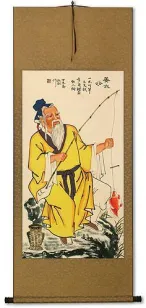
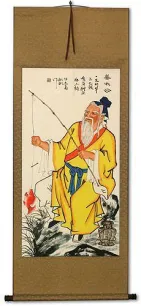
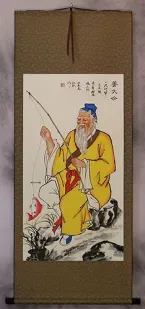
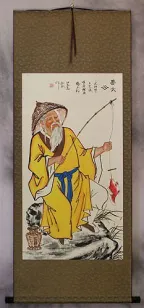
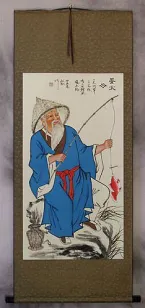
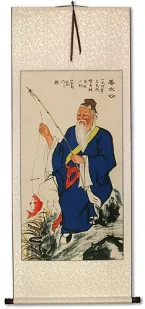
This in-stock artwork might be what you are looking for, and ships right away...
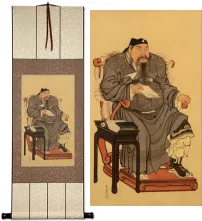
Gallery Price: $108.00
Your Price: $59.88
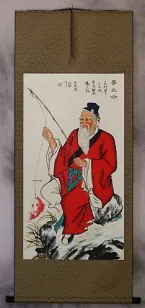
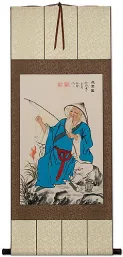
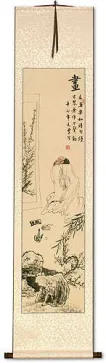
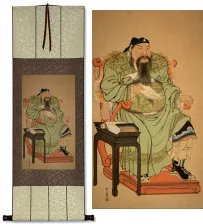
Gallery Price: $108.00
Your Price: $59.88
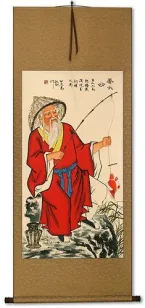
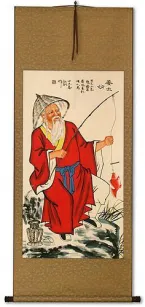

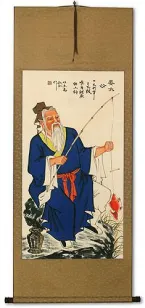
These search terms might be related to Man:
Bo Staff
Guy
Hard Work
Heaven Rewards Hard Work
Homosexual Male / Gay Male
Phoenix (Male)
Use Hard Work to Overcome Adversity
Work Together With One Heart
Work Together With One Mind
Work Unselfishly for the Common Good
Not the results for Man that you were looking for?
Below are some entries from our dictionary that may match your Man search...
| Characters If shown, 2nd row is Simp. Chinese |
Pronunciation Romanization |
Simple Dictionary Definition |
曼 see styles |
màn man4 man manei / mane まんえい |
More info & calligraphy: Mann(personal name) Man'ei Long, prolonged, extended, widespread. |
伊曼 see styles |
yī màn yi1 man4 i man |
More info & calligraphy: Inman |
安曼 see styles |
ān màn an1 man4 an man |
More info & calligraphy: Amman |
我慢 see styles |
wǒ màn wo3 man4 wo man gaman がまん |
More info & calligraphy: Gamanabhimāna, ātma-mada. Egoism exalting self and depreciating others; self-intoxication, pride. |
滿族 满族 see styles |
mǎn zú man3 zu2 man tsu |
More info & calligraphy: Manchu / Manchurian |
滿洲 满洲 see styles |
mǎn zhōu man3 zhou1 man chou |
More info & calligraphy: Manchuria |
漫畫 漫画 see styles |
màn huà man4 hua4 man hua |
More info & calligraphy: ManhuaSee: 漫画 |
舒曼 see styles |
shū màn shu1 man4 shu man |
More info & calligraphy: Schumann |
費曼 费曼 see styles |
fèi màn fei4 man4 fei man |
More info & calligraphy: Fehrman |
阿曼 see styles |
ā màn a1 man4 a man |
More info & calligraphy: Oman |
雷曼 see styles |
léi màn lei2 man4 lei man |
More info & calligraphy: Rehman |
利伯曼 see styles |
lì bó màn li4 bo2 man4 li po man |
More info & calligraphy: Lieberman |
土庫曼 土库曼 see styles |
tǔ kù màn tu3 ku4 man4 t`u k`u man tu ku man |
More info & calligraphy: Turkmenistan |
奧斯曼 奥斯曼 see styles |
ào sī màn ao4 si1 man4 ao ssu man |
More info & calligraphy: Osman |
奧特曼 奥特曼 see styles |
ào tè màn ao4 te4 man4 ao t`e man ao te man |
More info & calligraphy: Altman |
弗里曼 see styles |
fú lǐ màn fu2 li3 man4 fu li man |
More info & calligraphy: Freeman |
惠特曼 see styles |
huì tè màn hui4 te4 man4 hui t`e man hui te man |
More info & calligraphy: Whitman |
曼蘇爾 曼苏尔 see styles |
màn sū ěr man4 su1 er3 man su erh |
More info & calligraphy: Mansour |
查普曼 see styles |
chá pǔ màn cha2 pu3 man4 ch`a p`u man cha pu man |
More info & calligraphy: Chapman |
蘇萊曼 苏莱曼 see styles |
sū lái màn su1 lai2 man4 su lai man |
More info & calligraphy: Sulaiman |
諾伊曼 诺伊曼 see styles |
nuò yī màn nuo4 yi1 man4 no i man |
More info & calligraphy: Neumann |
赫爾曼 赫尔曼 see styles |
hè ěr màn he4 er3 man4 ho erh man |
More info & calligraphy: Hellman |
里士滿 里士满 see styles |
lǐ shì mǎn li3 shi4 man3 li shih man |
More info & calligraphy: Richmond |
阿萊曼 阿莱曼 see styles |
ā lái màn a1 lai2 man4 a lai man |
More info & calligraphy: Aleman |
霍夫曼 see styles |
huò fū màn huo4 fu1 man4 huo fu man |
More info & calligraphy: Hofmann |
埋 see styles |
mán man2 man uzumi うずみ |
used in 埋怨[man2 yuan4] (surname) Uzumi |
墁 see styles |
màn man4 man |
to plaster |
嫚 see styles |
màn man4 man |
insult |
屘 see styles |
mǎn man3 man |
the youngest |
幔 see styles |
màn man4 man |
curtain |
Click here for more Man results from our dictionary
The following table may be helpful for those studying Chinese or Japanese...
| Title | Characters | Romaji (Romanized Japanese) | Various forms of Romanized Chinese | |
| Trust No One Trust No Man | 誰も信じるな | dare mo shin ji ru na daremoshinjiruna | ||
| Trust No One Trust No Man | 無法信任 无法信任 | wú fǎ xìn rèn wu2 fa3 xin4 ren4 wu fa xin ren wufaxinren | wu fa hsin jen wufahsinjen |
|
| Man of Character | 大丈夫 | dai jou bu / daijoubu / dai jo bu | dà zhàng fu da4 zhang4 fu5 da zhang fu dazhangfu | ta chang fu tachangfu |
| Star Man | 外星人 | wài xīng rén wai4 xing1 ren2 wai xing ren waixingren | wai hsing jen waihsingjen |
|
| Iron Man | 鉄人 | tetsujin | ||
| Ip Man | 葉問 叶问 | yè wèn / ye4 wen4 / ye wen / yewen | yeh wen / yehwen | |
| Star Man | スターマン | sutaaman / sutaman | ||
| Spider-Man | スパイダーマン | supaidaaman supaidaman | ||
| Iron Man | 鋼鐵俠 | gāng tiě xiá gang1 tie3 xia2 gang tie xia gangtiexia | kang t`ieh hsia kangtiehhsia kang tieh hsia |
|
| Teach A Man To Fish | 授人以魚不如授人以漁 授人以鱼不如授人以渔 | shòu rén yǐ yú bù rú shòu rén yǐ yú shou4 ren2 yi3 yu2 bu4 ru2 shou4 ren2 yi3 yu2 shou ren yi yu bu ru shou ren yi yu | shou jen i yü pu ju shou jen i yü | |
| Holy Man Saint | 聖人 圣人 | seijin | shèng rén sheng4 ren2 sheng ren shengren | sheng jen shengjen |
| Spider-Man | 蜘蛛俠 蜘蛛侠 | zhī zhū xiá zhi1 zhu1 xia2 zhi zhu xia zhizhuxia | chih chu hsia chihchuhsia |
|
| Adonis Handsome Young Man | 美青年 | bi sei nen / biseinen | ||
| Man of Remarkable Character Hero | 傑物 杰物 | ketsubutsu | ||
| Time and Tide Wait for No Man | 歲不我與 岁不我与 | suì bù wǒ yǔ sui4 bu4 wo3 yu3 sui bu wo yu suibuwoyu | sui pu wo yü suipuwoyü |
|
| Flying Ace Aviator Bird Man | 鳥人 | chou jin / choujin / cho jin | ||
| Time and Tide Wait for No Man | 光陰矢の如し 光阴矢の如し | kouinya no goto shi kouinyanogotoshi koinya no goto shi | ||
| A Wise Man Changes His Mind (but a fool never will) | 君子豹変す | kun shi hyou hen su kunshihyouhensu kun shi hyo hen su | ||
| Fear No Man Fear Nothing | 無所畏懼 无所畏惧 | wú suǒ wèi jù wu2 suo3 wei4 ju4 wu suo wei ju wusuoweiju | wu so wei chü wusoweichü |
|
| No man knows what he owes to his parents until he comes to have children of his own | 子を持って知る親の恩 | ko wo motte shiru oya no on kowomotteshiruoyanoon | ||
| Men Die for Wealth, Birds Die for Food | 人為財死鳥為食亡 人为财死鸟为食亡 | rén wèi cái sǐ niǎo wèi shí wáng ren2 wei4 cai2 si3 niao3 wei4 shi2 wang2 ren wei cai si niao wei shi wang | jen wei ts`ai ssu niao wei shih wang jen wei tsai ssu niao wei shih wang |
|
| In Flowers the Cherry Blossom, In Men the Samurai | 花は櫻木人は武士 花は桜木人は武士 | hana wa sakuragi hito wa bushi | ||
| In some entries above you will see that characters have different versions above and below a line. In these cases, the characters above the line are Traditional Chinese, while the ones below are Simplified Chinese. | ||||

Successful Chinese Character and Japanese Kanji calligraphy searches within the last few hours...



