I am shipping orders on Thursday this week. News and More Info

Many custom options...

Tan Paper and Copper Silk Love Wall Scroll
Red Paper and Ivory Silk Love Wall Scroll
Orange Paper Love Scroll
Crazy Blue and Gold Silk Love Scroll


And formats...

Love Vertical Portrait
Love Horizontal Wall Scroll
Love Vertical Portrait

Art of Fighting in Chinese / Japanese...

Buy an Art of Fighting calligraphy wall scroll here!

Personalize your custom “Art of Fighting” project by clicking the button next to your favorite “Art of Fighting” title below...

See also: Bushido - Code of the Samurai Warrior


  1. Fighting Spirit

  2. Boxing

  3. Strive / Struggle

  4. Attack When The Enemy Has Low Morale

  5. Hand-to-Hand Fighting / Grappling

  6. Value of Warrior Generals

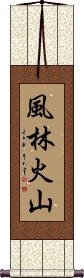
  7. Furinkazan

  8. Undaunted After Repeated Setbacks

  9. Shin Kakuto-Ryu

10. Fight / Beat Someone

11. Boxing

12. Shinkage-Ryu

13. Krav Maga

14. Savate

15. Kakuto Karate

16. Toukon-Ryu

17. Fight for a Goal

18. Zhang Fei

19. Jissen Kobudo

20. Zen Do Kai / Zendokai

21. Marine Corps

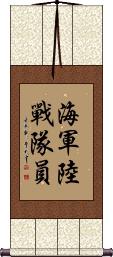
22. Marine

23. Kobudo

24. Five Codes of Tang Soo Do

25. Shadow Warrior

26. Monkey Fist

27. Southern Praying Mantis

28. Frightful Demon / Asura

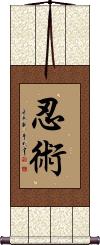
29. Ninjutsu / Ninjitsu

30. Musashi

31. Hapkido


Fighting Spirit

 tou ki
Fighting Spirit Scroll

闘気 is an alternate Japanese title for “fighting spirit.”

This one is more like “fighting energy.” The second character is “ki,” the same “ki” in Aikido. This “ki” is the spiritual energy that all martial arts practitioners must master and focus on.

Fighting Spirit

Alternate Japanese version

 tou kon
Fighting Spirit Scroll

闘魂 is an alternate title with the meaning “fighting spirit” or “the will to fight.”

Fighting Spirit

 tou shi
Fighting Spirit Scroll

This literally means “fighting spirit” or “the will to fight.”

As in the spirit that a warrior, soldier, athlete, or fighter must possess.

Fighting Spirit

The Will to Fight

 dòu zhì
Fighting Spirit Scroll

斗志 literally means fighting spirit in Chinese.

As in the spirit that a warrior, soldier, athlete, or fighter must possess.

斗Note: There is more than one way to write the first character of this word. It is sometimes written like the version shown to the right (yes, it's completely different but has the same meaning & pronunciation). If you have a preference, please let us know in the special instructions about your order.

 quán jī
Boxing Scroll

拳擊 is the term used in Chinese to refer to the original Olympic sport of combat and fighting.

If you like to strap on your boxing gloves and go a few rounds or are just a fan of boxing, this could make a nice wall scroll for you.

Note that Japanese use the same first character (which means fist) but a different Kanji for the second. Please see our Japanese boxing entry for that version.

Strive / Struggle

 fèn dòu
Strive / Struggle Scroll

奮鬥 means strive (as in to put great effort into something or a cause).

It can also be translated as a struggle.


斗 The second character of this word can also be written as shown to the right. Yes. it’s very different. If you want this alternate version, just let us know when you place your order (in the special instructions).

Strive / Struggle

 fun tou
Strive / Struggle Scroll

奮闘 is the Japanese version of a word that means strive (as in to put great effort into something or a cause).

It can also be translated as a struggle. There's a very similar version used in Chinese with the same meaning.

Attack When The Enemy Has Low Morale

 bì qí ruì qì jī qí duò guī
Attack When The Enemy Has Low Morale Scroll

避其鋭氣擊其惰歸 is a Chinese proverb that literally translates as: Avoid [your enemy's] fighting spirit [and] attack [when] his [morale is] declining.

Figuratively, this means: Avoid the enemy when his morale is high and strike him when his morale is flagging.

Hand-to-Hand Fighting / Grappling

Kakuto

 kakutou / kakuto
Hand-to-Hand Fighting / Grappling Scroll

挌闘 is a Japanese word that means hand-to-hand fighting, grappling, or scuffling.

In the old days, this might refer to a street fight but now it can apply to martial arts and MMA techniques or bouts.


Sometimes written as 挌闘 instead of 格闘 (first Kanji varies slightly)

Value of Warrior Generals

 bīng zài jīng ér bú zài duō jiàng zài móu ér bú zài yǒng
Value of Warrior Generals Scroll

兵在精而不在多將在謀而不在勇 is a proverb that informs how it is better to have warriors of quality, rather than just a large quantity of warriors in your army/force.

This literally means: [Just as] warriors [are valued for their] quality and not [just] for quantity, [so] generals [are valued] for their tactics, not [just] for [their] bravery.


See Also:  兵在精而不在多

Furinkazan

military strategy

 fēng lín huǒ shān
 fuu rin ka zan
Furinkazan Scroll

風林火山 is the battle strategy and proverb of Japanese feudal lord Takeda Shingen (1521-1573 AD).

This came from the Art of War by Chinese strategist and tactician Sun Tzu (Sunzi).

You can think of this as an abbreviation to remind officers and troops how to conduct battle.

風林火山 is a word list: Wind, Forest, Fire, Mountain.

The more expanded meaning is supposed to be...

“Swift as the wind, quiet as the forest, fierce as fire, and immovable as a mountain”

“As fast as the wind, as quiet as the forest, as daring as fire, and immovable as the mountain”

“Move as swift as the wind, stay as silent as a forest, attack as fierce as fire, undefeatable defense like a mountain”

“Move swiftly like the wind, stay silent like the forest, attack fiercely like fire, take a tactical position on the mountain”


See Also:  Art of War

Undaunted After Repeated Setbacks

Persistence to overcome all challenges

 bǎi zhé bù náo
 hyaku setsu su tou
Undaunted After Repeated Setbacks Scroll

百折不撓 is a Chinese proverb that means “Be undaunted in the face of repeated setbacks.”

More directly translated, it reads, “[Overcome] a hundred setbacks, without flinching.” 百折不撓 is of Chinese origin but is commonly used in Japanese and somewhat in Korean (same characters, different pronunciation).

This proverb comes from a long, and occasionally tragic story of a man that lived sometime around 25-220 AD. His name was Qiao Xuan, and he never stooped to flattery but remained an upright person at all times. He fought to expose the corruption of higher-level government officials at great risk to himself.

Then when he was at a higher level in the Imperial Court, bandits were regularly capturing hostages and demanding ransoms. But when his own son was captured, he was so focused on his duty to the Emperor and the common good that he sent a platoon of soldiers to raid the bandits' hideout, and stop them once and for all even at the risk of his own son's life. While all of the bandits were arrested in the raid, they killed Qiao Xuan's son at first sight of the raiding soldiers.

Near the end of his career, a new Emperor came to power, and Qiao Xuan reported to him that one of his ministers was bullying the people and extorting money from them. The new Emperor refused to listen to Qiao Xuan and even promoted the corrupt Minister. Qiao Xuan was so disgusted that in protest, he resigned from his post as minister (something almost never done) and left for his home village.

His tombstone reads “Bai Zhe Bu Nao” which is now a proverb used in Chinese culture to describe a person of strong will who puts up stubborn resistance against great odds.

My Chinese-English dictionary defines these 4 characters as “keep on fighting despite all setbacks,” “be undaunted by repeated setbacks,” and “be indomitable.”

Our translator says it can mean “never give up” in modern Chinese.

Although the first two characters are translated correctly as “repeated setbacks,” the literal meaning is “100 setbacks” or “a rope that breaks 100 times.” The last two characters can mean “do not yield” or “do not give up.”
Most Chinese, Japanese, and Korean people will not take this absolutely literal meaning but will instead understand it as the title suggests above. If you want a single big word definition, it would be indefatigability, indomitableness, persistence, or unyielding.


See Also:  Tenacity | Fortitude | Strength | Perseverance | Persistence

Shin Kakuto-Ryu

 shin kaku tou ryuu
Shin Kakuto-Ryu Scroll

This is the title for Shinkakutō-ryū or Shin Kakuto Ryu in Japanese martial arts.

新格闘流 or Shinkakutō-ryū means “New Standard Fighting Style” or just “New Fighting Style.”

Fight / Beat Someone

 dòu
 
Fight / Beat Someone Scroll

斗 is how to express the act of fighting in Chinese.

Generally, this means fighting against someone or some force whether physically or metaphorically.

Note: There is more than one way to write this character. You will notice variations on the next page after you click “Select and Customize.” If you have a preference, please let us know when you place your order.

Please note that there is a secondary pronunciation and meaning of this character. It can also mean “measuring cup” or in Japanese “sake dipper” or even “The Big Dipper.” In Japanese and Korean, this does not have the fighting meaning associated with it. You should, therefore, select this character only if your audience is Chinese, or you are a big fan of sake dippers or The Big Dipper (as that is how it will be read by Japanese and Korean people).

 ken tou
Boxing Scroll

拳闘 is the term used in Japanese Kanji to refer to the original Olympic sport of combat and fighting.

This can also be translated as prizefighting.

The first Kanji means fist. The second means fight. So when literally translated, this means “fistfight” (though understood in Japanese as a more refined sport, versus street fighting).

Note: A completely different second character is used in the Chinese word for boxing but a Chinese person would still be able to guess the meaning of these Kanji.

Shinkage-Ryu

Style of Japanese sword fighting

 shin kage ryuu
Shinkage-Ryu Scroll

新陰流 is the title for “Shinkage-Ryu,” and the style of Japanese fencing or sword fighting.

 yǐ sè liè gé dòu shù
Krav Maga Scroll

以色列格斗術 is the title for “Krav Maga” or “קרב מגע” in Chinese (Mandarin).

以色列 = Israel/Israeli.

格斗術 = Fighting Techniques.

 sobatto
Savate Scroll

ソバット is the Japanese Katakana for the French word, Savate, meaning “kick-fighting” or “French boxing.”


Note: Because this title is entirely Japanese Katakana, it should be written by a Japanese calligrapher.

Kakuto Karate

 kaku tou kara te
Kakuto Karate Scroll

格闘空手 is Kakutō Karate and means Fighting Karate and/or Combat Karate.

 tou kon ryuu
Toukon-Ryu Scroll

闘魂流 is the name of the Japaense style of Karate known as Toukon-Ryu.

The meaning is “Fighting Spirit Style.”

Fight for a Goal

 zhēng
 
Fight for a Goal Scroll

爭 is the way to express the idea of fighting for a goal.

This can also mean struggling or arguing. 爭 is okay for a Chinese audience, and while it is a word in Korean, this character is seldom seen alone in Korean grammar.

 zhāng fēi
 chou hi
Zhang Fei Scroll

張飛 is the name of General Zhang Fei, of the Shu Kingdom. He was blood-brother of Liu Bei in the semi-historical novel “Romance of the Three Kingdoms.” Zhang Fei is famous for his heroic and fearsome fighting and his love of wine.

In Japanese, this can be the name Chouhi.

Jissen Kobudo

 jissen ko bu dou
Jissen Kobudo Scroll

実戦古武道 is the title Jissen Kobudo in Japanese Kanji.

Jissen or 実戦 means combat, battle, or fighting.

Kobudo or 古武道 is the title used for Okinawan martial arts. The literal translation would be something like “Old Martial Way.”

Zen Do Kai / Zendokai

 zen dou kai
Zen Do Kai / Zendokai Scroll

This is the martial arts title Zendokai.

The first two characters refer to Zen ascetic practices or Zen teachings. Noting that Zen or 禅 means meditation and Dou/Do or 道 means way.

Kai or 会 (originally written 會) in this context means society, association, or club.

Zendokai Karate beyond the normal fighting skills invites the practitioner to notice and observe their own body with mindfulness and self-awareness and can re-acquire and hone their genuine self.

Marine Corps

 hǎi jūn lù zhàn duì
Marine Corps Scroll

海軍陸戰隊 is the Chinese way to express “Marine Corps.” This could be the Marine Corps of virtually any country that has an amphibious military force.

Let me know if you want a more specific title, such as British Royal Marines or U.S. Marine Corps.

The Chinese title for Marines is very verbose...
Breaking down each character this means:
“ocean/sea military/arms shore/land fighting/war/battle corps/team/group.”


See Also:  Military

Marine

Amphibious Warrior

 hǎi jūn lù zhàn duì yuán
Marine Scroll

海軍陸戰隊員 is the Chinese way to express “Marine.” (as in a member of the Marine Corps). It is not country-specific, so it could be the Royal Marines, U.S. Marines, Chinese Marines, etc.
In Australian English, they would translate this as “Naval Infantryman.”

Breaking down each character this means:
“ocean/sea military/arms shore/land fighting/war/battle corps/team/group person/member.” Note that the first two characters are presented together but outside of this phrase mean “navy” (sea military).


See Also:  Warrior | Military | Navy | Art of War

 gǔ wǔ dào
 ku bu dou
Kobudo Scroll

古武道 is the title for Kubudo, which can be defined as Okinawan weapons fighting.

The literal translation would be something like “Old Martial Way.” The last two characters are often translated as “martial arts” so “Old Martial Arts” is another possible translation.

Please note that even though these are Chinese characters and can be pronounced in Chinese, this is a Japanese-only title. It is not often used nor understood in Chinese. So please consider this to only be appropriate for a Japanese audience.

Five Codes of Tang Soo Do

 guó jiā zhōng chéng fù mǔ xiào dào péng yǒu yǒu xìn shā shēng yǒu zé lín zhàn wú tuì
Five Codes of Tang Soo Do Scroll

国家忠诚父母孝道朋友有信杀生有择临战无退 are the five codes of Tang Soo Do.

I suggest you have this arranged in five columns when you get to the options page for your custom calligraphy wall scroll.

Here are my translations of each of the five codes:
國家忠誠 Be loyal to your country.
父母孝道 In regards to parents, behave in a filial way.
朋友有信 Be faithful in friendship.
殺生有擇 When fighting for life and death, make noble choices.
臨戰無退 No retreat in battle.

Note: “Tang Soo Do” is a romanization of 唐手道. It's 당수도 in Korean Hangul. It can also be romanized as “Tangsudo” or “Dangsudo.”

Shadow Warrior

 yīng wǔ zhǔ
 kagemusha
Shadow Warrior Scroll

影武者 is the title for Shadow Warrior in Chinese and Japanese.

This may refer to a few video games that share this English title, or a Japanese movie called Kagemusha.

If you are looking for the Japanese TV show, that was originally 影の軍団 (Kage no Gundan), which more literally means “Army of Shadows,” but was re-titled Shadow Warrior when released outside Japan in English.

In Japan, this title can also refer to a body double or decoy of an army general or leader used to avoid assassination. It can also be somebody who does all the work (or fighting) behind the scenes (not getting much, if any, credit).


Shadow Warrior

 hóu quán
Monkey Fist Scroll

猴拳 literally means what you think, it's the “Monkey Fist” school of Kung Fu. A style that mimics the punches and movements of monkeys and apes.

Becoming popular during the Qing Dynasty, this style can trace its origins back to as early as the Song Dynasty. Some of the romance and popularity of this style comes from the novel “Journey to the West” which features the Monkey King and his fighting skills.

This novel and martial arts style has spawned a stream of Hong Kong movies featuring the Monkey King and other Kung Fu style variations such as “Drunken Monkey” and “Monkey Stealing Peaches” (a technique of disabling your opponent by grabbing and yanking on his testicles).


Note: This kind of makes sense in Korean Hanja and Japanese Kanji but probably unknown by all Koreans and Japanese except those who have an interest in this form of Kung Fu.

Southern Praying Mantis

 nán pài táng láng
Southern Praying Mantis Scroll

南派螳螂 can be translated literally as “Southern School Praying Mantis” or “Southern Style Praying Mantis.”

Despite its name, the Southern Praying Mantis style of Chinese martial arts is unrelated to the Northern Praying Mantis style. Southern Praying Mantis is instead related most closely to fellow Hakka styles such as Dragon and more distantly to the Fujian family of styles that includes Fujian White Crane, Five Ancestors, and Wing Chun.

This style of martial arts focuses more on fighting skills rather than aesthetics.

Of course, you already knew that if you were looking for this term.

Note: This title can be pronounced and does have meaning in Korean but only to Koreans familiar with Chinese martial arts.

Frightful Demon / Asura

 ē xiū luó
 ashura
Frightful Demon / Asura Scroll

This demon title comes from the ancient Sanskrit word Asura.

阿修羅 is often used in Buddhism when describing various demons. Sometimes defined as “Fighting and battling a giant demon.”

In the context of Buddhism: This title originally meant a spirit, spirits, or even the gods (perhaps before 1700 years ago). It now generally indicates titanic demons, enemies of the gods, with whom, especially Indra, they wage constant war. They are defined as “not devas,” “ugly,” and “without wine.” There are four classes of asuras, separated according to their manner of rebirth. They can be egg-born, womb-born, transformation-born, and spawn- or water-born. Their abode is in the ocean, north of Sumeru but certain of the weaker dwell in a western mountain cave. They have realms, rulers, and palaces, as have the devas.

In terms of power, Asuras rank above humans but below most other deities. They live near the coastal foot of Mount Sumeru (on the northern side). Their domain is partially or wholly in the ocean.

Ninjutsu / Ninjitsu

 rěn shù
 ninjutsu
Ninjutsu / Ninjitsu Scroll

忍術 is the “art of the ninja” in Japanese. Most Japanese people associate ninjas with romance and reverence for Japan's ancient past. But most will accept that the ninja is an idea or way of life whose time has passed. However, this has not stopped floods of movies about ninjas and dojos offering Ninjutsu training from keeping the idea of the ninja alive in modern times.

My modern Japanese dictionary defines this as “assassination, stealth, and combat techniques” or “fighting art of the ninja.”

忍Note that when writing this as Kanji, Japanese tend to write the first character in the form shown to the right. Because this is specifically a Japanese title, we only suggest a Japanese calligrapher for this selection - and you will get the form shown to the right if you do that (please ignore the fact that some of the images you see during the following pages in the options process will be the Chinese/alternate form).

Musashi

The most famous Samurai

 mu sashi
Musashi Scroll

Miyamoto Musashi is probably the most famous Samurai in all of Japanese history.

武蔵 is the short title for a man long in legend. While coming from a lower class, his new sword and fighting techniques put him on par with the best that feudal Japan had to offer. His long career started with his first duel at age 13!

He is credited with using two swords at once and never losing a single battle in his career. After becoming a Buddhist, and getting older, like many old warriors, he took up a peaceful and solitary life until his death around 1645 A.D.

Note: Technically, Musashi is his given name, and Miyamoto is his surname. However, it's suggested that he assumed both of these names and had a few other names in childhood, as well as being given a Buddhist name. It's hard to know what to call him, as with most Kanji, there are multiple pronunciations. The characters for Musashi can also be pronounced Takezō. But everyone in modern times seems to know him by the name Musashi.

Hapkido

Korean Martial Art of re-directing force
 hé qì dào
 ai ki do
Hapkido Scroll

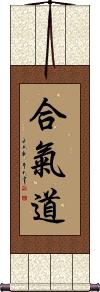
Hapkido or 合氣道 is a mostly-defensive martial art in Korea.

Hapkido has some connection to the Aikido of Japan. They are written with the same characters in both languages. However, it should be noted that the Korean Hanja characters shown here are the traditional Chinese form - but in modern Japan, the middle character was slightly simplified.
Note: You can consider this to be the older Japanese written form of Aikido. Titles on older books and signs about Aikido use this form.

The connection between Japanese Aikido and Korean Hapkido is muddled in history. The issue is probably due to the difficult relationship between the two countries around WWII. Many Koreans became virtual slaves to the Japanese during that period. After WWII, many things in Korea were disassociated from having any Japanese origin. The relationship has greatly mellowed out now.

Looking at the characters, the first means “union” or “harmony.”
The second character means “universal energy” or “spirit.”
The third means “way” or “method.”
One way to translate this into English is the “Harmonizing Energy Method.” This makes sense, as Hapkido has more to do with redirecting energy than fighting strength against strength.

More Hapkido info

More notes:
1. Sometimes Hapkido is Romanized as “hap ki do,” “hapki-do” “hab gi do” or “hapgido.”

2. Korean Hanja characters are actually Chinese characters that usually hold the same meaning in both languages. There was a time when these characters were the standard and only written form of Korean. The development of modern Korean Hangul characters is a somewhat recent event in the greater scope of history. There was a time when Chinese characters were the written form of many languages in places known in modern times as North Korea, South Korea, Japan, Vietnam, Singapore, Hong Kong, Taiwan, Mainland China, and a significant portion of Malaysia. Even today, more people in the world can read Chinese characters than English.

3. While these Korean Hanja characters can be pronounced in Chinese, this word is not well-known in China and is not considered part of the Chinese lexicon.


The following table may be helpful for those studying Chinese or Japanese...

Title CharactersRomaji (Romanized Japanese)Various forms of Romanized Chinese
Fighting Spirit闘氣
闘気气
tou ki / touki / to ki
Fighting Spirit闘魂tou kon / toukon / to kon
Fighting Spirit闘誌
闘志
tou shi / toushi / to shi
Fighting Spirit斗志dòu zhì / dou4 zhi4 / dou zhi / douzhitou chih / touchih
Boxing拳擊
拳击
quán jī / quan2 ji1 / quan ji / quanjich`üan chi / chüanchi / chüan chi
Strive
Struggle
奮鬥 / 奮斗
奋斗 / 奋鬥
fèn dòu / fen4 dou4 / fen dou / fendoufen tou / fentou
Strive
Struggle
奮闘 / 奮鬥
奋斗 / 奋鬥
fun tou / funtou / fun to
Attack When The Enemy Has Low Morale避其鋭氣擊其惰歸
避其锐气击其惰归
bì qí ruì qì jī qí duò guī
bi4 qi2 rui4 qi4 ji1 qi2 duo4 gui1
bi qi rui qi ji qi duo gui
biqiruiqijiqiduogui
pi ch`i jui ch`i chi ch`i to kuei
pichijuichichichitokuei
pi chi jui chi chi chi to kuei
Hand-to-Hand Fighting
Grappling
格闘 / 挌闘
格闘
kakutou / kakuto
kakuto / kakuto
Value of Warrior Generals兵在精而不在多將在謀而不在勇
兵在精而不在多将在谋而不在勇
bīng zài jīng ér bú zài duō jiàng zài móu ér bú zài yǒng
bing1 zai4 jing1 er2 bu2 zai4 duo1 jiang4 zai4 mou2 er2 bu2 zai4 yong3
bing zai jing er bu zai duo jiang zai mou er bu zai yong
ping tsai ching erh pu tsai to chiang tsai mou erh pu tsai yung
Furinkazan風林火山
风林火山
fuu rin ka zan
fuurinkazan
fu rin ka zan
fēng lín huǒ shān
feng1 lin2 huo3 shan1
feng lin huo shan
fenglinhuoshan
Undaunted After Repeated Setbacks百折不撓
百折不挠
hyaku setsu su tou
hyakusetsusutou
hyaku setsu su to
bǎi zhé bù náo
bai3 zhe2 bu4 nao2
bai zhe bu nao
baizhebunao
pai che pu nao
paichepunao
Shin Kakuto-Ryu新格闘流shin kaku tou ryuu
shinkakutouryuu
shin kaku to ryu
Fight
Beat Someone
dòu / dou4 / doutou
Boxing拳闘
拳斗
ken tou / kentou / ken to
Shinkage-Ryu新陰流shin kage ryuu
shinkageryuu
shin kage ryu
Krav Maga以色列格斗術
以色列格斗术
yǐ sè liè gé dòu shù
yi3 se4 lie4 ge2 dou4 shu4
yi se lie ge dou shu
yiseliegedoushu
i se lieh ko tou shu
iseliehkotoushu
Savateソバットsobatto
Kakuto Karate格闘空手kaku tou kara te
kakutoukarate
kaku to kara te
Toukon-Ryu闘魂流tou kon ryuu
toukonryuu
to kon ryu
Fight for a Goal
zhēng / zheng1 / zhengcheng
Zhang Fei張飛
张飞
chou hi / chouhi / cho hizhāng fēi
zhang1 fei1
zhang fei
zhangfei
chang fei
changfei
Jissen Kobudo実戦古武道jissen ko bu dou
jissenkobudou
jisen ko bu do
Zen Do Kai
Zendokai
禅道会zen dou kai
zendoukai
zen do kai
Marine Corps海軍陸戰隊
海军陆战队
hǎi jūn lù zhàn duì
hai3 jun1 lu4 zhan4 dui4
hai jun lu zhan dui
haijunluzhandui
hai chün lu chan tui
haichünluchantui
Marine海軍陸戰隊員
海军陆战队员
hǎi jūn lù zhàn duì yuán
hai3 jun1 lu4 zhan4 dui4 yuan2
hai jun lu zhan dui yuan
haijunluzhanduiyuan
hai chün lu chan tui yüan
haichünluchantuiyüan
Kobudo古武道ku bu dou / kubudou / ku bu dogǔ wǔ dào
gu3 wu3 dao4
gu wu dao
guwudao
ku wu tao
kuwutao
Five Codes of Tang Soo Do國家忠誠父母孝道朋友有信殺生有擇臨戰無退
国家忠诚父母孝道朋友有信杀生有择临战无退
guó jiā zhōng chéng fù mǔ xiào dào péng yǒu yǒu xìn shā shēng yǒu zé lín zhàn wú tuì
guo2 jia1 zhong1 cheng2 fu4 mu3 xiao4 dao4 peng2 you3 you3 xin4 sha1 sheng1 you3 ze2 lin2 zhan4 wu2 tui4
guo jia zhong cheng fu mu xiao dao peng you you xin sha sheng you ze lin zhan wu tui
kuo chia chung ch`eng fu mu hsiao tao p`eng yu yu hsin sha sheng yu tse lin chan wu t`ui
kuo chia chung cheng fu mu hsiao tao peng yu yu hsin sha sheng yu tse lin chan wu tui
Shadow Warrior影武者kagemushayīng wǔ zhǔ
ying1 wu3 zhu3
ying wu zhu
yingwuzhu
ying wu chu
yingwuchu
Monkey Fist猴拳hóu quán / hou2 quan2 / hou quan / houquanhou ch`üan / houchüan / hou chüan
Southern Praying Mantis南派螳螂nán pài táng láng
nan2 pai4 tang2 lang2
nan pai tang lang
nanpaitanglang
nan p`ai t`ang lang
nanpaitanglang
nan pai tang lang
Frightful Demon
Asura
阿修羅
阿修罗
ashuraē xiū luó
e1 xiu1 luo2
e xiu luo
exiuluo
o hsiu lo
ohsiulo
Ninjutsu
Ninjitsu
忍術
忍术
ninjutsurěn shù / ren3 shu4 / ren shu / renshujen shu / jenshu
Musashi武蔵mu sashi / musashi
Hapkido合氣道
合气道
ai ki do / aikidohé qì dào
he2 qi4 dao4
he qi dao
heqidao
ho ch`i tao
hochitao
ho chi tao
In some entries above you will see that characters have different versions above and below a line.
In these cases, the characters above the line are Traditional Chinese, while the ones below are Simplified Chinese.


Dictionary

Lookup Art of Fighting in my Japanese & Chinese Dictionary


Successful Chinese Character and Japanese Kanji calligraphy searches within the last few hours...


50th AnniversaryAadenAadonAakashAaroAbayaAbbasAbbeyAbbieAbhishekAbigaiAbundance and ProsperityAdamAdamarisAdapt and OvercomeAddieAdejahAdelineAdityaAdnanAdonisAdrianaAdriannaAdrielAguilarAhmadAimiAishaAjayAkbarAkilaAlanaAleishaAlessaAlessandraAlexAlexandraAlexandriaAlfiAliceAlinaAlishaAliyaAllaAllahAllyAlmedaAlmighty OmnipotentAloraAlvinAlyshaAlyssaAlyssiaAmadAmalAmelAminAmirAnasAndreAndreiAndyAngelAnilAnjaniAnne-SophieAntonAntonellaAntonioAnyaArelyAriaArisaArlenArmanArmandoAshrafAslamAubreeAubreyAuraAureliaAvengerAyanAydenAymanAzuraBa Gua ZhangBaileeBaileyBashaBasilBayuBeautyBeauty of NatureBellaBelovedBennettBhumikaBiancaBibekBibiBishalBlack Tiger FistBlairBlessed by GodBradenBradyBraedenBraydenBristolBritneyBrockBryanBrysonBubbaBuddha Dharma SanghaButterflyCallieCamdenCarenCarleenCarmenCasperChantalChanteChelseaChen SurnameCherryChevelleChinoChop Wood Carry WaterChristinaClaireCobraColeCompassionConnieConnorConstanceCorbinCosmoCourageCristianCullenCyanCyrilDamarisDanaDaniDaniealDanielleDaniloDaodejingDaodejing Tao Te Ching - Chapter 54DaphneDariaDark AngelDarrenDarrylDaruDavianDeath Before DishonorDeepikaDefenseDerrickDeterminationDevonDharmaDianaDillowDimaDogenDominicDoveDragonDragon WarriorDrewDuncanDurellDwightEdieEduardoEdwardsElaineEldiEleanorEleonorEliezerElinElishaEllieElmerElsieElviraEmanEmelineEmiliaEmmettEnlightenment

All of our calligraphy wall scrolls are handmade.

When the calligrapher finishes creating your artwork, it is taken to my art mounting workshop in Beijing where a wall scroll is made by hand from a combination of silk, rice paper, and wood.
After we create your wall scroll, it takes at least two weeks for air mail delivery from Beijing to you.

Allow a few weeks for delivery. Rush service speeds it up by a week or two for $10!

When you select your calligraphy, you'll be taken to another page where you can choose various custom options.


A nice Chinese calligraphy wall scroll

The wall scroll that Sandy is holding in this picture is a "large size"
single-character wall scroll.
We also offer custom wall scrolls in small, medium, and an even-larger jumbo size.

A professional Chinese Calligrapher

Professional calligraphers are getting to be hard to find these days.
Instead of drawing characters by hand, the new generation in China merely type roman letters into their computer keyboards and pick the character that they want from a list that pops up.

There is some fear that true Chinese calligraphy may become a lost art in the coming years. Many art institutes in China are now promoting calligraphy programs in hopes of keeping this unique form of art alive.

Trying to learn Chinese calligrapher - a futile effort

Even with the teachings of a top-ranked calligrapher in China, my calligraphy will never be good enough to sell. I will leave that to the experts.

A high-ranked Chinese master calligrapher that I met in Zhongwei

The same calligrapher who gave me those lessons also attracted a crowd of thousands and a TV crew as he created characters over 6-feet high. He happens to be ranked as one of the top 100 calligraphers in all of China. He is also one of very few that would actually attempt such a feat.


Check out my lists of Japanese Kanji Calligraphy Wall Scrolls and Old Korean Hanja Calligraphy Wall Scrolls.

Some people may refer to this entry as Art of Fighting Kanji, Art of Fighting Characters, Art of Fighting in Mandarin Chinese, Art of Fighting Characters, Art of Fighting in Chinese Writing, Art of Fighting in Japanese Writing, Art of Fighting in Asian Writing, Art of Fighting Ideograms, Chinese Art of Fighting symbols, Art of Fighting Hieroglyphics, Art of Fighting Glyphs, Art of Fighting in Chinese Letters, Art of Fighting Hanzi, Art of Fighting in Japanese Kanji, Art of Fighting Pictograms, Art of Fighting in the Chinese Written-Language, or Art of Fighting in the Japanese Written-Language.

104 people have searched for Art of Fighting in Chinese or Japanese in the past year.
Art of Fighting was last searched for by someone else on Oct 18th, 2025