I am shipping orders on Thursday this week. News and More Info

Many custom options...

Tan Paper and Copper Silk Love Wall Scroll
Red Paper and Ivory Silk Love Wall Scroll
Orange Paper Love Scroll
Crazy Blue and Gold Silk Love Scroll


And formats...

Love Vertical Portrait
Love Horizontal Wall Scroll
Love Vertical Portrait

Self Awareness in Chinese / Japanese...

Buy a Self Awareness calligraphy wall scroll here!

Personalize your custom “Self Awareness” project by clicking the button next to your favorite “Self Awareness” title below...


  1. Introspection / Self-Awareness

  2. Awareness

  3. Self Awareness Becomes a Buddha

  4. Perception

  5. 8. Right Concentration / Perfect Concentration

  6. Kensho - Initial Enlightenment

  7. The True and Complete Enlightenment

  8. Mono no Aware

  9. Kensho Jobutsu - Enlightenment - Path to Buddha
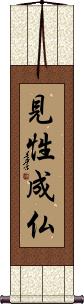
10. Zen Do Kai / Zendokai

11. Spirit / Spiritual Essence

12. Dragon

13. Mind of the Beginner

14. Lingering Mind

15. Happy

16. Realization and Knowledge

17. 7. Right Mindfulness / Right Memory / Perfect Mindfulness

18. Kingdom of Heaven

19. Kingfisher

20. Shaolin

21. Wake Up to Reality

22. 6. Right Effort / Right Endeavor / Perfect Effort

23. Self Consciousness

24. Consciousness of Self

25. Enlightened Warrior

26. Broken Mirror Rejoined

27. Shaolin Chang Chuan


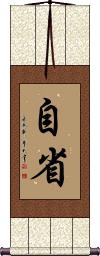
Introspection / Self-Awareness

 zì xǐng
 jisei
Introspection / Self-Awareness Scroll

自省 is the Chinese, Japanese Kanji, and old Korean Hanja means: to examine oneself; to reflect on one's shortcomings; introspection; self-awareness; self-criticism; self-examination; reflection.

In Japanese, this can be the given name, Jisei.

 jué / jiào
 gaku / satoru
 
Awareness Scroll

覺 can mean to feel; to figure out; thinking; awake; aware; bodhi; knowing; understanding; enlightenment; illumination; apprehend; perceive; realize.

覺 is a character that is impossible to define in a single word.

This term is often associated with Buddhism where it's understood to be: Illumination, enlightenment, or awakening in regard to the real in contrast to the seeming. However, it can also refer to enlightenment in regard to morality and evil.


Notes:

In Japanese, this can be the personal name Satoru.

In certain context, and only when pronounced as "jiao" in Chinese, it can refer to a nap, sleep or the state of sleeping. However, as a single character on a wall scroll, everyone will read this with the awareness or enlightenment context.

By no means is this the only way to write enlightenment. In fact, you should only choose this character if you are looking more for a word meaning awareness.


See Also:  Enlightenment | Wisdom | Knowledge

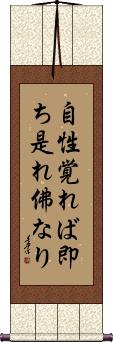
Self Awareness Becomes a Buddha

 Jishou satore ba sunawachi kore butsu nari
Self Awareness Becomes a Buddha Scroll

自性覚れば即ち是れ佛なり is a Zen quote that means “If one realizes one's own nature, one becomes a Buddha.”

The inference here is that if you understand who you really are, and become truly aware of yourself and your original nature, you are well on your way to becoming a liberated person (a Buddha).


Note: Because this selection contains some special Japanese Hiragana characters, it should be written by a Japanese calligrapher.

 gǎn zhī
 kan chi
Perception Scroll

感知 is the Chinese, Japanese Kanji, and old Korean Hanja for perception, awareness, or the act of sensing and noticing.

8. Right Concentration / Perfect Concentration

Samyak Samadhi / Samma Samadhi

 zhèng dìng
 sei jou
8. Right Concentration / Perfect Concentration Scroll

正定 is one of the Noble Eightfold Paths of Buddhism. Right Concentration, along with Right Effort and Right Mindfulness, constitute the path to Concentration or Perfect Thought.

Right Concentration has to do with leaving behind sensuality, unwholesome states, as well as pleasure and pain. 正定 is a complex idea, but once you have achieved the shedding of worldly sensation, you can truly concentrate and find a higher level of awareness.

Another definition: Concentration of mind that finds its high point in the four absorptions.


This term is exclusively used by devout Buddhists. It is not a common term, and is remains an unknown concept to most Japanese and Chinese people.


See Also:  Buddhism | Enlightenment | Noble Eightfold Path

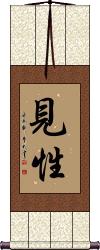
Kensho - Initial Enlightenment

 jiàn xìng
 ken shou
Kensho - Initial Enlightenment Scroll

見性 has the same meaning as Satori but refers to the initial state or initial experience of enlightenment.

This can also mean “self-discovery,” “self-awareness,” or “consciousness of one's character.”

In a very religious context, this means to behold the Buddha nature within oneself.


This term is exclusively used by devout Buddhists. It is not a common term, and is remains an unknown concept to most Japanese and Chinese people. Some Japanese people will dispute whether this title is valid in the Japanese language. Only order this if you are sure this title is right for you.


See Also:  Buddhism | Enlightenment

The True and Complete Enlightenment

 zhēn jué
 shinkaku
The True and Complete Enlightenment Scroll

眞覺 means true and complete enlightenment.

This can refer to the perfect nirvana of the Buddha or the perception of ultimate truth or true awareness of all things (reality and unreality).

Mono no Aware

 mono no awa-re
Mono no Aware Scroll

This translates as “the pathos of things,” “an empathy toward things,” or “a sensitivity to ephemera.”

物の哀れ is a Japanese proverb for the awareness of impermanence, or transience of things.

Both things and the emotions about those things do not last forever.


Note: Because this selection contains some special Japanese Hiragana characters, it should be written by a Japanese calligrapher.

Kensho Jobutsu - Enlightenment - Path to Buddha

 ken shou jou butsu
Kensho Jobutsu - Enlightenment - Path to Buddha Scroll

見性成仏 or Kenshō Jōbutsu is the initial enlightenment that leads to self-awareness, becoming Buddha, and the path to enter Nirvana.

Kenshō Jōbutsu is a complex concept in Japanese Buddhism. 見性成仏 is probably better translated as “Seeing one’s nature and becoming a Buddha.”


See Also:  Buddhism | Enlightenment | Initial Enlightenment

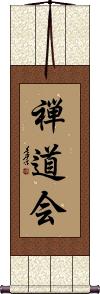
Zen Do Kai / Zendokai

 zen dou kai
Zen Do Kai / Zendokai Scroll

This is the martial arts title Zendokai.

The first two characters refer to Zen ascetic practices or Zen teachings. Noting that Zen or 禅 means meditation and Dou/Do or 道 means way.

Kai or 会 (originally written 會) in this context means society, association, or club.

Zendokai Karate beyond the normal fighting skills invites the practitioner to notice and observe their own body with mindfulness and self-awareness and can re-acquire and hone their genuine self.

Spirit / Spiritual Essence

 shén
 shin / kami
 
Spirit / Spiritual Essence Scroll

神 is the simplest way to write spirit in Chinese, Japanese Kanji, and old Korean.

This single character alone will conjure up ideas of the spiritual world. 神 can also be translated as “vital awareness” as in the fact that one must know they exist to exist (I think, therefore, I am).

Other translations include:
God, deity, mysterious, divine essence, lively, spiritual being, divinity, supernatural, soul, mind, nerves, and energy. In some extended context, it can mean genius or unusual.

Japanese romanizations vary a lot when this character is combined into other words. However, shin is the original pronunciation taken from Chinese into Japanese. You'll also see it romanized as kami, gami, jin, and a few others, depending on context.

Dragon

Year of the Dragon / Zodiac Sign
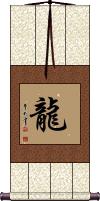
 lóng
 ryuu / tatsu
Dragon Scroll

龍 is the character for dragon in Chinese, old Korean Hanja, and Japanese Kanji.

The dragon is a creature of myth and legend that dominates Chinese, Japanese, and even European folklore. In China, the dragon is the symbol of the Emperor, strength, and power, and the Chinese dragon is known as the god of water.

From the Chinese Zodiac, if you were born in the year of the Dragon, you . . .

Have a strong body and spirit.
Are full of energy.
Have vast goals.
Have a deep level of self-awareness.
Will do whatever you can to “save face.”


See also our Chinese Zodiac or Dragon Calligraphy pages.

Mind of the Beginner

Shoshin

 chū xīn
 sho shin
Mind of the Beginner Scroll

初心 is often translated in Japanese as “beginner's mind” or “beginner's spirit.”

In Chinese, the dictionary definition is “one's original intention.”

The first character means first, initial, primary, junior, beginning, or basic.

The second character means heart, mind, soul, or essence.

初心 is one of the five spirits of the warrior (budo) and is often used as a Japanese martial arts tenet. Under that context, places such as the Budo Dojo define it this way: The state of shoshin is that of a beginners mind. It is a state of awareness that always remains fully conscious, aware, and prepared to see things for the first time. The attitude of shoshin is essential to continued learning.

Lingering Mind

Zanshin

 cán xīn
 zan shin
Lingering Mind Scroll

First off, 殘心 should only be used in the context of Japanese martial arts. In Chinese, it's a rather sad title (like a broken heart). In Chinese, the first character alone means destroyed, spoiled, ruined, injured, cruel, oppressive, savage, incomplete, or disabled. However, in Japanese, it's remainder, leftover, balance, or lingering.
The second character means heart, mind, soul, or essence in both languages.

殘心 is one of the five spirits of the warrior (budo) and is often used as a Japanese martial arts tenet. Under that context, places such as the Budo Dojo define it this way: The spirit of zanshin is the state of the remaining or lingering spirit. It is often described as a sustained and heightened state of awareness and mental follow-through. However, true zanshin is a state of focus or concentration before, during, and after the execution of a technique, where a link or connection between uke and nage is preserved. Zanshin is the state of mind that allows us to stay spiritually connected, not only to a single attacker but to multiple attackers and even an entire context; a space, a time, an event.


残In modern Japan (and Simplified Chinese), they use a different version of the first character, as seen to the right. Click on this character to the right instead of the button above if you want this modern Japanese version of lingering mind / zanshin.

 xīn
 kin
 
Happy Scroll

欣 is the type of happiness that you feel on the inside. It is the feeling of being released and delighted as well as being in a state of contentment. 欣 is more the internal happiness that perhaps only shows by the smile on your face. It can also be translated as “to take pleasure in” or “to rejoice.”

Note: 欣 is often used in compound words - especially in Korean Hanja.
As Japanese Kanji, this is so rare, that most Japanese people are not aware of its existence.


See Also:  Happiness

Realization and Knowledge

 zhī
 chi
 
Realization and Knowledge Scroll

知 means realization or true knowing.

This can also translate as to know, to be aware, wisdom, or higher knowledge.

From older Buddhist ideas, this can represent विद्या (Vidyā or Vidya) or ज्ञान (Jñāna or Jnana) and even the combination Sanskrit word विज्ञान (Vijñāna or Vijnana) which can translate as wisdom arising from perception or knowing.

However, 知 should be distinguished as true knowing versus having a relative understanding or 會.

7. Right Mindfulness / Right Memory / Perfect Mindfulness

Samyak Smriti / Samyak Smrti / Samma Sati

 zhèng niàn
 sei nen
7. Right Mindfulness / Right Memory / Perfect Mindfulness Scroll

正念 is one of the Noble Eightfold Paths of Buddhism. Right Mindfulness, along with Right Effort and Right Concentration, constitute the path to Concentration or Perfect Thought.

Right Mindfulness is about remaining focused on one's body, feelings, mind, and mental qualities. It's also about being ardent, aware, and mindful, and supposes that you've already put aside worldly desire and aversion.

Monk Bhikkhu Bodhi described this as “The mind is deliberately kept at the level of bare attention, a detached observation of what is happening within us and around us in the present moment.” When practicing right mindfulness, the mind is trained to remain in the present, open, quiet, and alert, contemplating the present event.

Another definition: Ongoing mindfulness of body, feelings, thinking, and objects of thought.


This term is exclusively used by devout Buddhists. It is not a common term, and is remains an unknown concept to most Japanese and Chinese people.


See Also:  Buddhism | Enlightenment | Noble Eightfold Path

Kingdom of Heaven

 tiān guó
 tengoku
Kingdom of Heaven Scroll

天国 is the same meaning and pronunciation as our other entry for “Kingdom of Heaven,” but the second character was simplified in Japan and mainland China to this version.

Choose the appearance that you like best (they will be somewhat universally understood - as most people are aware of this simplification in places where they still use all traditional characters - such as Taiwan and Hong Kong). You can consider the other version to be the “ancient version.”

 kawasemi
Kingfisher Scroll

川蝉 is a common Japanese title for the kingfisher (Alcedo atthis).

There are a few ways to name this little greenish bird in Japanese, so be aware this is not the only or absolute kingfisher title.

Shaolin

Little Forest

 shǎo lín
 sho rin
Shaolin Scroll

The 少林 or Shaolin monks of China have been practicing the art of Kung Fu for thousands of years. While there are many schools of Kung Fu in China, Shaolin are one of the more religiously devout and disciplined.

The title of Shaolin actually refers to a specific Buddhist monastery. It should be noted that the Shaolin were famous in China long before the Kung Fu TV show. Their fame in China is due to the monks' heroic and swift rescue of an emperor during the Tang Dynasty. Most Chinese people are not keenly aware of the Kung Fu TV show and have no idea who David Carradine is or anything about his character, Kwai Chang Caine.

Note: The literal meaning of 少林 is “little forest.”

The fame of the Shaolin has spread all over Asia, as even though this is a Chinese title, the same characters are used in Japanese with the same meaning.

Wake Up to Reality

 xǐng wù
 shō go
Wake Up to Reality Scroll

省悟 is a Chinese word that means “to wake up to reality,” “to come to oneself,” “to realize,” “to see the truth,” or “to reflect and become aware.”

省悟 is often used in the context of Buddhism.

In Japanese, this has the same meaning but is more often used as a given name, Seigo.

6. Right Effort / Right Endeavor / Perfect Effort

Samyag Vyayama / Samma Vayama

 zhèng jīng jìn
 sei shou jin
6. Right Effort / Right Endeavor / Perfect Effort Scroll

正精進 is one of the Noble Eightfold Paths of Buddhism. Right Effort, along with Right Mindfulness and Right Concentration, constitute the path to Concentration or Perfect Thought.

The proper effort is not the effort to make something particular happen. It is the effort to be aware and awake in each moment, the effort to overcome laziness and defilement, and the effort to make each activity of our daily meditation. This concept is about pursuing wholesome things that promote good karma.

Another definition: Cultivation of what is karmically wholesome and avoidance of what is karmically unwholesome.


This term is exclusively used by devout Buddhists. It is not a common term, and is remains an unknown concept to most Japanese and Chinese people.


See Also:  Buddhism | Enlightenment | Noble Eightfold Path

Self Consciousness

 jiishiki
Self Consciousness Scroll

自意識 is the idea of being conscious and self-aware in Japanese Kanji and old Korean Hanja.

This is not a normal word in Chinese.

Consciousness of Self

 zì jué
 jikaku
Consciousness of Self Scroll

自覺 is the idea of being conscious, self-aware, and sometimes “on one's own initiative.”


覚After WWII, they started using a simplified form of the second Kanji for this word in Japan. That version is shown to the right, and you can click on that Kanji if you want the modern Japanese form. Otherwise, the characters shown in the upper left are the correct ones for ancient/old/traditional Chinese, Japanese, and Korean.

Enlightened Warrior

 jué xǐng wǔ shì
Enlightened Warrior Scroll

覺醒武士 is not a commonly used title in Chinese but is sometimes used in Martial arts and military contexts to refer to a warrior who seems always to be fully aware, enlightened, knowledgeable, noble, and just.

The first two characters are a word that means: to awaken; to come to realize; awakened to the truth; the truth dawns upon one; scales fall from the eyes; to become aware.

The last two characters mean warrior but can also refer to a samurai, soldier, or fighter.

Broken Mirror Rejoined

Used in modern times for divorced couples that come back together

 pò jìng chóng yuán
Broken Mirror Rejoined Scroll

破鏡重圓 is about a husband and wife who were separated and reunited.

About 1500 years ago in China, there lived a beautiful princess named Le Chang. She and her husband Xu De Yan loved each other very much. But when the army of the Sui Dynasty was about to attack their kingdom, disposed of all of their worldly possessions and prepared to flee into exile.

They knew that in the chaos, they might lose track of each other, so the one possession they kept was a bronze mirror which is a symbol of unity for a husband and wife. They broke the mirror into two pieces, and each of them kept half of the mirror. They decided that if separated, they would try to meet at the fair during the 15th day of the first lunar month (which is the lantern festival). Unfortunately, the occupation was brutal, and the princess was forced to become the mistress of the new commissioner of the territory, Yang Su.

At the Lantern Festival the next year, the husband came to the fair to search for his wife. He carried with him his half of the mirror. As he walked through the fair, he saw the other half of the mirror for sale at a junk market by a servant of the commissioner. The husband recognized his wife's half of the mirror immediately, and tears rolled down his face as he was told by the servant about the bitter and loveless life that the princess had endured.

As his tears dripped onto the mirror, the husband scratched a poem into his wife's half of the mirror:


You left me with the severed mirror,
The mirror has returned, but absent are you,
As I gaze in the mirror, I seek your face,
I see the moon, but as for you, I see not a trace.


The servant brought the inscribed half of the mirror back to the princess. For many days, the princess could not stop crying when she found that her husband was alive and still loved her.

Commissioner Yang Su, becoming aware of this saga, realized that he could never obtain the princess's love. He sent for the husband and allowed them to reunite.

This proverb, 破鏡重圓, is now used to describe a couple who has been torn apart for some reason (usually divorce) but have come back together (or remarried).
It seems to be more common these days in America for divorced couples to reconcile and get married to each other again. This will be a great gift if you know someone who is about to remarry their ex.

Shaolin Chang Chuan

 shào lín cháng quán
Shaolin Chang Chuan Scroll

少林長拳 is a combination of two titles. The first two characters mean little forest, as in the little forest of the Shaolin monks (shao lin = little forest). The second two characters mean “long fist.”

This title is specific to a particular technique - if you are studying Shaolin Chang Chuan, then you are already aware of all the ramifications.


The following table may be helpful for those studying Chinese or Japanese...

Title CharactersRomaji (Romanized Japanese)Various forms of Romanized Chinese
Introspection
Self-Awareness
自省jiseizì xǐng / zi4 xing3 / zi xing / zixingtzu hsing / tzuhsing
Awareness
gaku / satorujué / jiào
jue2 / jiao4
jue / jiao
jue/jiao
chüeh chiao
chüehchiao
Self Awareness Becomes a Buddha自性覚れば即ち是れ佛なりJishou satore ba sunawachi kore butsu nari
Jisho satore ba sunawachi kore butsu nari
Perception感知kan chi / kanchigǎn zhī / gan3 zhi1 / gan zhi / ganzhikan chih / kanchih
8. Right Concentration
Perfect Concentration
正定sei jou / seijou / sei jozhèng dìng
zheng4 ding4
zheng ding
zhengding
cheng ting
chengting
Kensho - Initial Enlightenment見性
见性
ken shou / kenshou / ken shojiàn xìng
jian4 xing4
jian xing
jianxing
chien hsing
chienhsing
The True and Complete Enlightenment眞覺
眞觉
shinkakuzhēn jué / zhen1 jue2 / zhen jue / zhenjuechen chüeh / chenchüeh
Mono no Aware物の哀れmono no awa-re
mononoawa-re
Kensho Jobutsu - Enlightenment - Path to Buddha見性成佛
見性成仏
ken shou jou butsu
kenshoujoubutsu
ken sho jo butsu
Zen Do Kai
Zendokai
禅道会zen dou kai
zendoukai
zen do kai
Spirit
Spiritual Essence
shin / kamishén / shen2 / shen
Dragon
ryuu / tatsu
ryu / tatsu
lóng / long2 / longlung
Mind of the Beginner初心sho shin / shoshinchū xīn / chu1 xin1 / chu xin / chuxinch`u hsin / chuhsin / chu hsin
Lingering Mind殘心
残心
zan shin / zanshincán xīn / can2 xin1 / can xin / canxints`an hsin / tsanhsin / tsan hsin
Happykinxīn / xin1 / xinhsin
Realization and Knowledgechizhī / zhi1 / zhichih
7. Right Mindfulness
Right Memory
Perfect Mindfulness
正念sei nen / seinenzhèng niàn
zheng4 nian4
zheng nian
zhengnian
cheng nien
chengnien
Kingdom of Heaven天國
天国
tengokutiān guó / tian1 guo2 / tian guo / tianguot`ien kuo / tienkuo / tien kuo
Kingfisher川蝉kawasemi
Shaolin少林sho rin / shorinshǎo lín / shao3 lin2 / shao lin / shaolin
Wake Up to Reality省悟shō go / shōgoxǐng wù / xing3 wu4 / xing wu / xingwuhsing wu / hsingwu
6. Right Effort
Right Endeavor
Perfect Effort
正精進
正精进
sei shou jin
seishoujin
sei sho jin
zhèng jīng jìn
zheng4 jing1 jin4
zheng jing jin
zhengjingjin
cheng ching chin
chengchingchin
Self Consciousness自意識
自意识
jiishiki / jishiki
Consciousness of Self自覺
自觉 / 自覚
jikakuzì jué / zi4 jue2 / zi jue / zijuetzu chüeh / tzuchüeh
Enlightened Warrior覺醒武士
觉醒武士
jué xǐng wǔ shì
jue2 xing3 wu3 shi4
jue xing wu shi
juexingwushi
chüeh hsing wu shih
chüehhsingwushih
Broken Mirror Rejoined破鏡重圓
破镜重圆
pò jìng chóng yuán
po4 jing4 chong2 yuan2
po jing chong yuan
pojingchongyuan
p`o ching ch`ung yüan
pochingchungyüan
po ching chung yüan
Shaolin Chang Chuan少林長拳
少林长拳
shào lín cháng quán
shao4 lin2 chang2 quan2
shao lin chang quan
shaolinchangquan
shao lin ch`ang ch`üan
shaolinchangchüan
shao lin chang chüan
In some entries above you will see that characters have different versions above and below a line.
In these cases, the characters above the line are Traditional Chinese, while the ones below are Simplified Chinese.


Dictionary

Lookup Self Awareness in my Japanese & Chinese Dictionary


Successful Chinese Character and Japanese Kanji calligraphy searches within the last few hours...


50th AnniversaryAadenAadonAakashAaroAbayaAbbasAbbeyAbbieAbhishekAbigaiAbundance and ProsperityAdamAdamarisAdapt and OvercomeAddieAddyAdejahAdelineAdityaAdnanAdonisAdrianaAdriannaAdrielAguilarAhmadAileenAimiAishaAjayAkbarAkilaAlanaAleishaAlessaAlessandraAlessioAlexAlexandraAlexandriaAlfiAliaAliceAlinaAlishaAliyaAllaAllahAlliAllyAlmedaAlmighty OmnipotentAloraAlvinAlyshaAlyssaAlyssiaAmadAmalAmelAminAmirAnasAndreAndreiAndyAngelAnilAnjaniAnne-SophieAntonAntonellaAntonioApolloArelyAriaArisaArlenArloArmanArunaAshrafAslamAubreeAubreyAudiAuraAureliaAvengerAyanAydenAymanAzuraBa Gua ZhangBaileeBaileyBashaBasilBayuBeautyBeauty of NatureBellaBelovedBeniBennettBhumikaBiancaBibekBibiBible VerseBillieBishalBlack Tiger FistBlacksmithBlairBlessed by GodBradenBradyBraedenBraydenBristolBritneyBrockBryanBrysonBubbaBuddha Dharma SanghaButterflyCallieCamdenCarenCarleenCarmenCasperCassieCecilienChantalChanteChelseaChen SurnameCherryChevelleChinoChop Wood Carry WaterChristinaClaireCobraColeCompassionConnieConnorConstanceCorbinCosmoCourageCristianCullenCyrilDamarisDanaDaniDaniaDaniealDanielleDaniloDaodejingDaodejing Tao Te Ching - Chapter 54DaphneDariaDark AngelDarrenDarrylDaruDavianDeath Before DishonorDeepikaDefenseDerrickDeterminationDevonDharmaDianaDillowDimaDogenDominicDouglasDoveDragonDrewDuncanDustinDwightEdieEduardoEdwardsEldiEleanorEleonor

All of our calligraphy wall scrolls are handmade.

When the calligrapher finishes creating your artwork, it is taken to my art mounting workshop in Beijing where a wall scroll is made by hand from a combination of silk, rice paper, and wood.
After we create your wall scroll, it takes at least two weeks for air mail delivery from Beijing to you.

Allow a few weeks for delivery. Rush service speeds it up by a week or two for $10!

When you select your calligraphy, you'll be taken to another page where you can choose various custom options.


A nice Chinese calligraphy wall scroll

The wall scroll that Sandy is holding in this picture is a "large size"
single-character wall scroll.
We also offer custom wall scrolls in small, medium, and an even-larger jumbo size.

A professional Chinese Calligrapher

Professional calligraphers are getting to be hard to find these days.
Instead of drawing characters by hand, the new generation in China merely type roman letters into their computer keyboards and pick the character that they want from a list that pops up.

There is some fear that true Chinese calligraphy may become a lost art in the coming years. Many art institutes in China are now promoting calligraphy programs in hopes of keeping this unique form of art alive.

Trying to learn Chinese calligrapher - a futile effort

Even with the teachings of a top-ranked calligrapher in China, my calligraphy will never be good enough to sell. I will leave that to the experts.

A high-ranked Chinese master calligrapher that I met in Zhongwei

The same calligrapher who gave me those lessons also attracted a crowd of thousands and a TV crew as he created characters over 6-feet high. He happens to be ranked as one of the top 100 calligraphers in all of China. He is also one of very few that would actually attempt such a feat.


Check out my lists of Japanese Kanji Calligraphy Wall Scrolls and Old Korean Hanja Calligraphy Wall Scrolls.

Some people may refer to this entry as Self Awareness Kanji, Self Awareness Characters, Self Awareness in Mandarin Chinese, Self Awareness Characters, Self Awareness in Chinese Writing, Self Awareness in Japanese Writing, Self Awareness in Asian Writing, Self Awareness Ideograms, Chinese Self Awareness symbols, Self Awareness Hieroglyphics, Self Awareness Glyphs, Self Awareness in Chinese Letters, Self Awareness Hanzi, Self Awareness in Japanese Kanji, Self Awareness Pictograms, Self Awareness in the Chinese Written-Language, or Self Awareness in the Japanese Written-Language.

90 people have searched for Self Awareness in Chinese or Japanese in the past year.
Self Awareness was last searched for by someone else on Nov 29th, 2025